“Bridging Hearts and Minds” is a space dedicated to exploring the deep connections between various spiritual traditions, wisdom teachings, and paths to self-realization. Here, we journey through Christianity, Buddhism, Advaita Vedanta, A Course in Miracles, and more, seeking to find the common threads that unite us all. This category invites readers to reflect on universal truths, nurture spiritual growth, and build bridges between different beliefs and practices, fostering a deeper understanding and a shared journey toward love, compassion, and enlightenment.
This space is also dedicated to fostering mutual respect, compassion, and learning among diverse spiritual traditions. By exploring the richness and diversity of religious beliefs and practices worldwide, we emphasize shared values such as love, compassion, forgiveness, and the quest for spiritual truth. Through respectful dialogue and the exploration of common ground, we seek to promote harmony, peace, and deeper understanding across religious boundaries.
Join us in exploring how different faith traditions address life’s fundamental questions, celebrate diversity, and inspire individuals to live with integrity and compassion. Whether you are curious about other religions, seeking to deepen your own faith, or striving to build bridges of understanding in our global community, “Bridging Hearts and Minds” invites you to engage in meaningful conversations that honor the beauty of religious diversity and shared humanity.
The Yoga Sutras of Patanjali are among the most revered and profound texts in the history of spiritual practice. Written over two thousand years ago, they offer a timeless guide to understanding the nature of the mind, the path of self-realization, and the true essence of yoga. Though often studied by practitioners of yoga, these sutras transcend any single tradition and speak to all who seek clarity, peace, and spiritual growth.
Patanjali, the ancient sage credited with composing these teachings, distilled the essence of yoga into 196 short aphorisms, or sutras. These sutras are not just theoretical—each one provides practical wisdom, offering guidance on how to quiet the mind, transcend suffering, and realize our highest potential. Together, they form a comprehensive system for inner transformation, known as Raja Yoga or the “royal path” to self-mastery.
Why, then, should we study the Yoga Sutras? In today’s world, we are often overwhelmed by the constant fluctuations of the mind—our thoughts, emotions, and external distractions. Patanjali’s teachings offer a way to navigate this inner turbulence, helping us cultivate stillness and awareness. The Yoga Sutras provide a roadmap to liberation, inviting us to look beyond the surface of our daily experience and discover the deeper truth of who we are.
The sutras reveal that yoga is far more than physical postures or breathing techniques; it is a disciplined practice of calming the mind and awakening to our inherent state of peace. By studying and reflecting on these teachings, we can bring more clarity, wisdom, and purpose into our lives. As Patanjali himself declares at the very beginning of his work:
“Now, the discipline of yoga begins.”
In this series, we will explore the Yoga Sutras using the translation offered by Swami Vivekananda, a renowned spiritual teacher and philosopher who introduced the wisdom of yoga to the West in the late 19th century. Vivekananda’s translation is both accessible and profound, capturing the essence of Patanjali’s teachings while making them relevant to modern seekers. His interpretation illuminates the deeper meanings behind the sutras, providing a bridge between ancient wisdom and contemporary understanding.
As we journey through these sutras together, we will take time to reflect on each one, understanding how it applies to our own lives and practices. The path of yoga is not just about reading words on a page—it is about living them, integrating the teachings into the way we think, act, and experience the world.
Let this be the beginning of our journey into the heart of yoga. As we explore the Yoga Sutras of Patanjali, we will open ourselves to the possibility of inner transformation, guided by the light of these ancient teachings.
Coming Up Next: In our next post, we will dive into the first two sutras: Atha Yoganushasanam and Yogash Chitta Vritti Nirodhah. Together, we will reflect on what it means to begin the practice of yoga and how the cessation of the fluctuations of the mind becomes the essence of our journey toward inner stillness. We’ll explore how these teachings apply to our daily lives and the strength it takes to cultivate presence and calmness in the face of life’s challenges. Join us as we take the first step in our exploration of Patanjali’s wisdom.
As I delve into Chapter 3 of the Ramayana, I’m struck by the behavior of the sages who, despite their spiritual stature, succumb to anger and misuse their power. Their quickness to curse, driven by offense and ego, stands in stark contrast to the ideal of a sage who lives in harmony with Dharma. This misuse of spiritual power reminds me of the early life of Milarepa, the great Tibetan yogi, who, before finding his way to the Dharma, used his mystical abilities to wreak havoc and exact revenge.
Milarepa’s story is one of transformation. Born into hardship and driven by a desire for vengeance, he trained in the dark arts, becoming a powerful sorcerer capable of summoning storms and causing death. But the weight of his actions bore heavily on him, leading him to seek redemption and ultimately to the path of Dharma. Under the guidance of his teacher, Marpa, Milarepa endured immense trials and austerities, purifying his past misdeeds and realigning his life with spiritual truth.
In both the Ramayana and Milarepa’s story, we see a common theme: the danger of wielding spiritual power without the foundation of Dharma. The sages, like the young Milarepa, possess great abilities, yet their actions are tainted by ego and the desire for retribution. Their curses, though potent, are ultimately expressions of a misaligned heart, illustrating that power alone is not enough—what matters is how that power is used.
Milarepa’s journey serves as a powerful counterpoint. His story teaches us that even the darkest use of power can be transformed through sincere repentance, discipline, and devotion. He shows us that true spiritual power lies not in the ability to curse or control, but in the capacity for compassion, forgiveness, and the relentless pursuit of Dharma.
This parallel invites us to reflect on the nature of spiritual power in our own lives. Whether we possess mystical abilities or simply the power of influence, the question remains the same: Are we using our power in service of the greater good, or are we driven by ego, fear, or desire? The sages in the Ramayana remind us of the pitfalls of misaligned power, while Milarepa’s story offers hope and inspiration—that no matter how far we stray, we can always return to the path of righteousness.
As we continue to explore the Ramayana, let us keep in mind the lessons from these stories. Power, in any form, is a double-edged sword. It can be a force for great good or great harm, depending on how it is wielded. The true path of the sage, and the true path of Dharma, is to align that power with love, compassion, and the selfless service of others.
In a world where power is often sought for its own sake, these ancient stories remind us that the highest use of power is in the service of truth and the upliftment of all beings. May we, like Milarepa, find the strength to transform our mistakes and realign our lives with the sacred path of Dharma.
Watch the Story of Milarepa
For those who wish to delve deeper into Milarepa’s life and transformation, you can watch Part One of the movie about his life here. This film, housed in the Tibetan archives, offers an authentic portrayal of Milarepa’s early years, his misuse of mystical power, and his ultimate journey toward spiritual awakening and Dharma. It’s a powerful visual companion to the reflections shared in this post.
As we embark on this series exploring exercise and movement for those living with Post-Viral ME/CFS, it’s important to begin by acknowledging a simple truth: your path to wellness may look different from anyone else’s—and that is completely okay. The nature of living with Post-Viral ME/CFS requires us to redefine what exercise means, adapting to a new rhythm that is in harmony with our energy levels, symptoms, and the realities of daily life.
Exercise in the traditional sense may bring up images of intense workouts, lifting heavy weights, or running miles. But for those of us living with Post-Viral ME/CFS, exercise might mean something entirely different. It might mean resting in bed, visualizing a workout, or simply getting to the gym parking lot for a few minutes on your way home from grocery shopping. It could mean gentle stretching in bed, doing a few light tasks around the house, or taking time to breathe mindfully.
This series is meant to serve as a guide for embracing a new kind of exercise—one that is not about pushing limits or chasing goals but about nurturing your body, mind, and spirit through gentle movement, mindfulness, and above all, compassion.
A Journey of Imagination, Gentle Action, and Acceptance
In the first few posts of this series, we will explore the power of imagination and visualization. There may be days (or even weeks or months) when your body cannot physically engage in any form of movement, but that doesn’t mean you are disconnected from your body’s potential. Visualization is a powerful practice, one that allows your mind to engage with the idea of movement without needing to physically exert yourself. We’ll talk about how you can visualize workouts, stretching, or gentle movements while lying in bed, creating a mental connection that keeps your awareness sharp without triggering post-exertional malaise.
We’ll also talk about small steps—like driving to the gym and sitting in the parking lot, even if you don’t have the energy to go inside. There’s value in simply getting closer to the idea of movement. Over time, you might find yourself taking steps further, maybe walking into the gym, sitting in the environment, and just absorbing the energy of people moving around you.
Titrating Activity: Finding Balance and Progress
As we move forward in this series, we’ll explore how to approach physical activity in a way that’s both mindful and sustainable. Small, controlled movements—whether they’re simple stretches at home or slow, mindful exercises at the gym—are a way to begin reconnecting with your body without overstepping your energy limits. Remember, movement for us is a delicate balancing act, and we’ll emphasize the importance of checking in with yourself frequently and avoiding the temptation to push too hard.
This series isn’t about getting you to the point of running marathons or lifting heavy weights. It’s about honoring where you are on any given day. Some days, the most compassionate action you can take is visualizing movement while lying in bed. Other days, you might find that you’re able to move a little more—maybe stretch gently, walk for a few minutes, or do light movements with a resistance band. Every step, no matter how small, is progress.
Exercise as Self-Care, Not Striving
Throughout this series, we’ll emphasize that exercise is not about striving for perfection or chasing after big milestones. It’s about tuning into your body, listening to its needs, and responding with kindness. Exercise, in this new sense, is about moving in harmony with your energy and creating a relationship with your body that’s built on trust and compassion.
This journey is personal, and each day will bring different challenges and opportunities. The important thing is that you approach this path with an open heart, celebrating the small victories and honoring the moments when rest is the best thing you can offer yourself.
As we conclude this introduction, I want to emphasize that this series is not meant to be a strict, linear guide. What I’ve shared is simply how the process unfolded for me, step by step, over the course of years. You may find that your own journey takes a different path. Perhaps you’ll stay with the visualization step for days, weeks, or even months before feeling ready to move forward. You may visit the gym parking lot a few times, or perhaps many times, before stepping inside.
For me, it took over two years—before I was able to enter the gym and engage in light, respectful exercise. At first, I could only manage it once in a while, then eventually once a month, and after a few more years, I was sometimes able to go twice a month. A few years later, I found myself exercising once a week, but not always. I still need to be careful to honor my body’s limits and energy reserves so as not to trigger PEM. Over the years I have been smoothing out the valleys and hills.
Please know that this series is not a guideline to be followed strictly but a set of ideas to explore at your own pace. The path of recovery, movement, and exercise for someone living with Post-Viral ME/CFS is unique to each individual. My hope is that my experience offers some encouragement and helps you find your own rhythm and approach as you reconnect with your body. It is my sincere wish that this series will be of benefit to you.
In the final post of this series, we’ll reflect on the entire journey—offering you a comprehensive conclusion, a reminder that this is an ongoing process of listening, adapting, and finding peace with where you are. Until then, I invite you to take each post as a gentle nudge toward reconnecting with your body, whether that’s through imagination, small actions, quiet reflection or visiting a gym.
Looking Ahead
Next up, we’ll talk about imagining movement as the first step in reclaiming your relationship with exercise. Visualization is a powerful tool, and I’ll show you how to use it as a way to reconnect with your body without draining your energy. Even when physical movement feels impossible, the mind can still engage in the process of healing and renewal.
Thank you for joining me on this journey, and I look forward to walking this path together.
With compassion and gentle encouragement, Richard Silverman
Reminder: If reading this post becomes tiring, remembert to pause and rest. Pacing applies to all activities, even the ones we love, like reading and learning. Come back to this post later if you need to. Practicing pacing, even in small moments, is an essential part of living well with chronic fatigue syndrome.
Introduction
There’s a rhythm to living with chronic fatigue syndrome (CFS), one that demands a delicate balance of energy. Most of us who live with this condition become intimately familiar with pacing—learning how to manage our energy, smoothing out the hills and valleys of our strength. Through pacing, I’ve learned to minimize the crashes that come when I push myself too far. But even with this practice, there are moments when I consciously decide to overdo it.
Sometimes, there’s a powerful desire to break out of the limits that CFS imposes. It’s a rebellion, a brief escape. I know when I’m pushing too far, but I choose to embrace life fully for a day or two. I let myself feel that temporary energy, even though I know I’ll crash later. It’s a conscious decision to say, “I’m going to enjoy this moment, and I’m willing to pay the price.”
For anyone with CFS, this might sound familiar. We know pacing is vital to managing our condition, but there are times when the joy of overdoing it feels worth the consequences. And yet, when the crash comes—and it always does—the body demands recovery. This is where the real work begins, not just physically, but mentally and emotionally.
The Second Arrow: Witnessing the Mind’s Reactions
When I crash, the body does what it needs to do to heal, and I’m forced to stop. But I’ve learned over time that what really intensifies suffering isn’t just the crash itself—it’s the mental and emotional turmoil that can follow. This is where the teachings of vrittis and pratyayas have been so transformative for me.
In simple terms, vrittis are the fluctuations of the mind—the rising and falling thoughts and emotions. Pratyayas are the seeds that drive these mental fluctuations, often based on past experiences, memories, or attachments. Together, these create the mental chatter that, when left unchecked, can deepen the suffering of any crash.
Buddhist teachings describe this extra layer of suffering as the “second arrow.” The first arrow is the unavoidable pain—whether physical, emotional, or otherwise. But the second arrow is the mental suffering we add on top of that pain: the self-criticism, the frustration, the inner dialogue that says, “Why did I overdo it? I knew better.” This second arrow is where much of the suffering lies.
But by the yogic practice of witnessing the vrittis and pratyayas, I’ve learned to avoid that second arrow. I observe the mental fluctuations as they come and go, without attaching to them, without allowing them to define my experience. I become the seer—the witness—and in doing so, I find that even during a crash, there is peace to be found.
Pacing and the Conscious Decision to Overdo It
Pacing remains the cornerstone of managing chronic fatigue syndrome. It’s about knowing your limits and respecting them, smoothing out the ups and downs of energy. But what happens when pacing fails? What happens when you make the conscious decision to overdo it, knowing full well that you’ll pay for it later?
For me, the key has been integrating this practice of witnessing into every stage of the process. I allow myself to live fully in those moments of overindulgence, embracing the joy of activity and connection, knowing that a crash will follow. But when the crash comes, I don’t add layers of mental suffering by blaming myself. Instead, I use the crash as an opportunity to practice witnessing—the vrittis and pratyayas are just thoughts and mental patterns, not realities. By observing them, I stay free of the second arrow.
This approach allows me to live with chronic fatigue syndrome in a way that feels less restrictive. Yes, I pace myself. Yes, I’m mindful of my energy. But even when I choose to push past those limits, I know that I can find peace in the aftermath through this practice.
The Impulse to Finish, the Practice of Letting Go
As I write this post, I feel the strong desire to finish it, to post it immediately so that it can be available to those who may benefit from it. It’s an impulse I recognize well—a pratyaya, a desire that drives me to push beyond my limits, even when I know it’s not in my best interest.
But just as I practice witnessing during a crash, I also practice witnessing this impulse. I see it for what it is—just a thought, just Mara, just another fluctuation of the mind. I don’t have to follow it. I don’t have to act on it. Instead, I can pause, rest, and come back to this post when my body is ready.
In the same way, I encourage you, as a reader, to pace yourself. This post is long, and if you find yourself feeling tired, take a break. Reading is an activity that requires energy, and pacing applies here, too. Come back to it later if you need to. Take care of your energy, just as I am doing with mine.
A Soft Rebellion, a Path to Growth
There is something liberating about the moments when we choose to overdo it, to embrace life fully despite knowing we’ll crash later. It’s a soft rebellion, a decision to live in the moment, even when we know the consequences. But with the right mindset, even those crashes can become opportunities for growth and practice.
The teachings of witnessing the vrittis and pratyayas have shown me that even the difficult moments—the crashes, relapses, pain, dysfunction, and discomfort of those moments, days, or weeks of low energy—are fertile ground for inner growth. By avoiding the second arrow, and simply observing my mind without attaching to the fluctuations, I can find peace even in the midst of discomfort.
For anyone living with chronic fatigue syndrome, I hope this reflection offers some comfort and guidance. There is no perfect way to navigate this condition, but there are practices that can help us find peace, even in the most challenging times. Whether it’s through pacing, or through the practice of witnessing, or simply by being gentle with ourselves, especially in moments of overdoing it, we can find a way to live with greater ease and acceptance.
Take your time, pace yourself, and remember that every crash, every moment of overdoing it, is a new opportunity to practice and grow. We are all on this path together, and in that, there is a kind of peace.
Facing the Storm: An Urgent Reminder to Pace and Witness
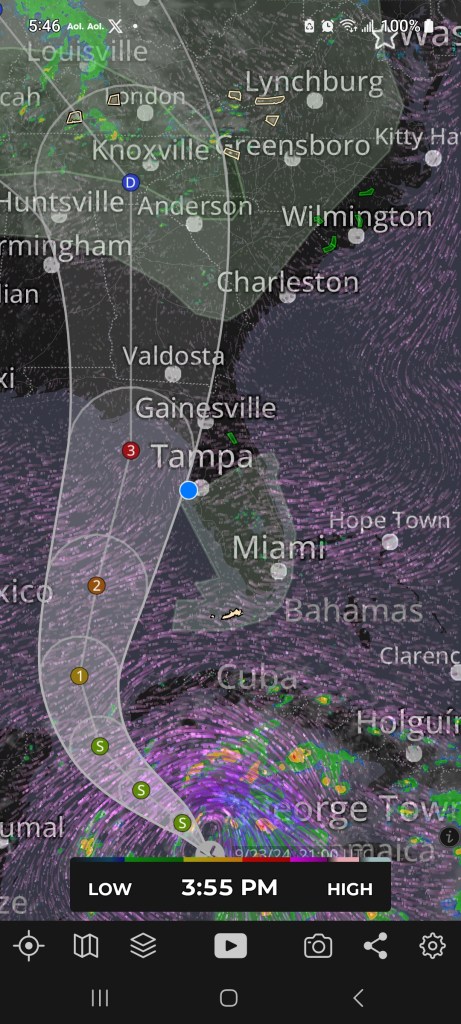
As I write this, there is a real storm brewing, both within and without. The image below is a weather map of the hurricane that may soon hit my area, forcing me to evacuate. As someone living in an RV, evacuation is usually mandatory in situations like this, and so I find myself facing the possibility of having to leave my bed in the middle of a crash caused by overdoing it.
The threat is very real, and so the importance of pacing is now at a level that I can’t ignore. I must prioritize rest and recovery immediately, because no matter what state I’m in, I’ll have to get out of bed and go to the hurricane shelter at the church next door if an evacuation order comes.
This situation has made it even clearer to me how crucial the practice of witnessing vrittis and pratyayas is. Without that practice, I would be overwhelmed by anxiety and fear right now. The mind wants to run wild with worst-case scenarios and worries, but I have been training myself to simply witness these thoughts as they arise. They are just thoughts—just mental fluctuations. They do not have to define my experience. I can stay present, calm, and clear, ready to deal with whatever comes.
So, after I finish writing this post, I’m going into massive rest and be prepared mode. The practice of pacing has never been more critical. This is an extreme red-flag situation, and I hope it serves as a reminder to all of us with chronic fatigue syndrome: sometimes, the urgency of rest is not just about avoiding a crash; it’s about survival.
Take a look at the image below—it’s a reminder to me, and hopefully to you as well, that life can throw storms at us both literally and metaphorically. But with the right practices, we can remain centered and grounded, ready to face what comes with a steady mind and a rested body.
As we face the storms within and around us, may we find peace in the stillness of our hearts. May all beings be free from suffering and the causes of suffering. May all beings experience happiness and the causes of happiness. May we all find safety, strength, and well-being on our journeys, no matter how turbulent the path. May we be guided by wisdom, anchored in compassion, and find harmony in the unfolding of each moment. And in these times of uncertainty, may we remember our interconnectedness, and may we all be held in grace and peace.
Karma Yoga is the yoga of selfless action, a path that transforms work into a spiritual practice by emphasizing the importance of performing one’s duties without attachment to the outcomes. Rooted in the teachings of the Bhagavad Gita, Karma Yoga encourages practitioners to engage fully in their responsibilities while dedicating their actions to the greater good, without seeking personal gain or recognition.
The essence of Karma Yoga lies in the principle of Nishkama Karma—acting without desire for the fruits of one’s actions. This approach purifies the heart and mind, reducing the influence of the ego and fostering a sense of humility, compassion, and service. By embracing this path, practitioners learn to see their work as an offering, aligning their will with the divine and contributing to the welfare of all beings.
In this blog series, we’ll delve into the core teachings of Karma Yoga and how it can be applied to our daily lives, transforming every action into a step on the spiritual path.
As we embark together on this journey of discovery and reflection, I warmly invite you to join me in exploring the depths of these ancient practices and teachings. Let this space be a sanctuary where we meet not just as seekers, but as companions on the path—a place where the wisdom of the ages can gently unfold within our lives.
If these words and practices speak to something within you, if they stir a quiet longing or bring a sense of peace, I encourage you to subscribe to this blog. By doing so, you’ll be the first to know as new installments of our shared journey are published. It is my hope that each post will resonate with you, offering insights and comfort as we continue to explore these profound teachings together.
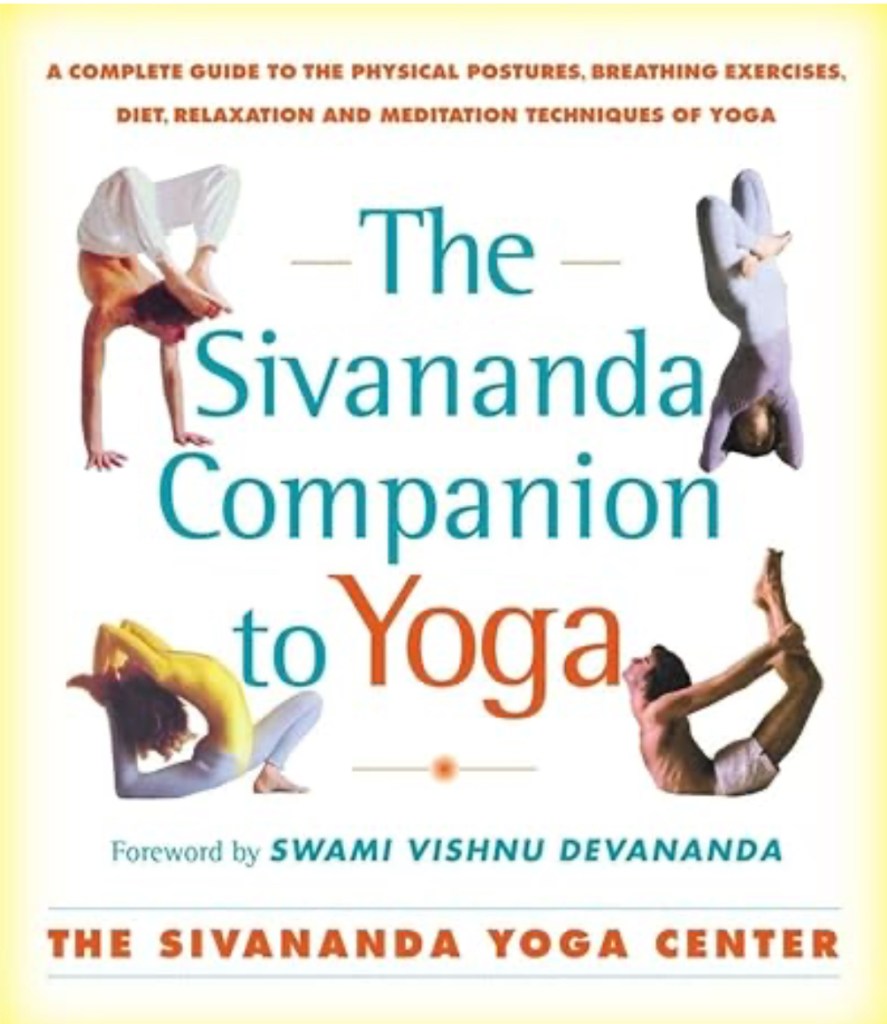
For those interested in a comprehensive introduction to the practices of yoga, I recommend The Sivananda Companion to Yoga: A Complete Guide to the Physical Postures, Breathing Exercises, Diet, Relaxation, and Meditation Techniques of Yoga. This book offers clear guidance on the foundational aspects of yoga, making it an invaluable resource for anyone looking to deepen their understanding and practice. Take a look at this book on Amazon
here.
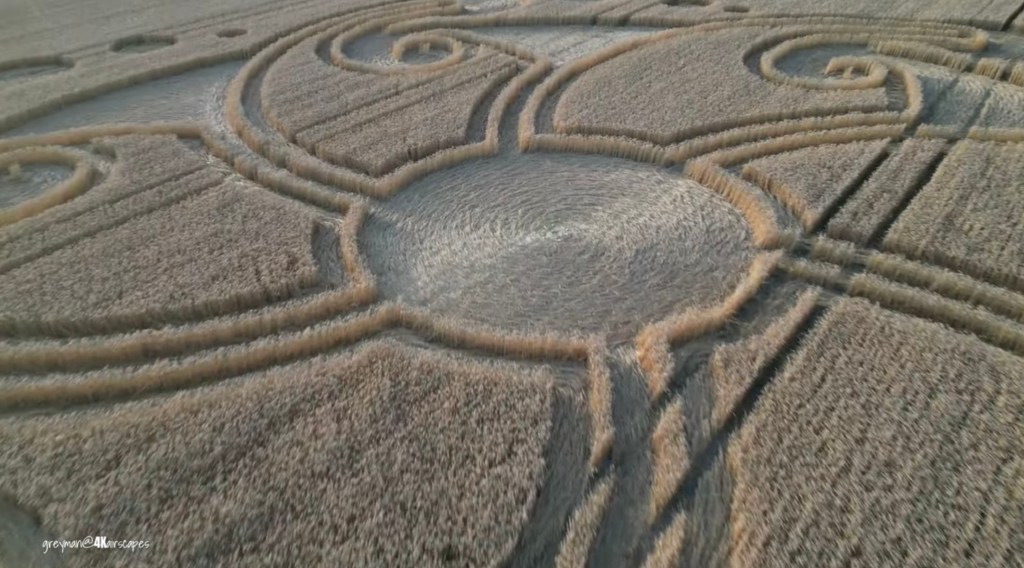
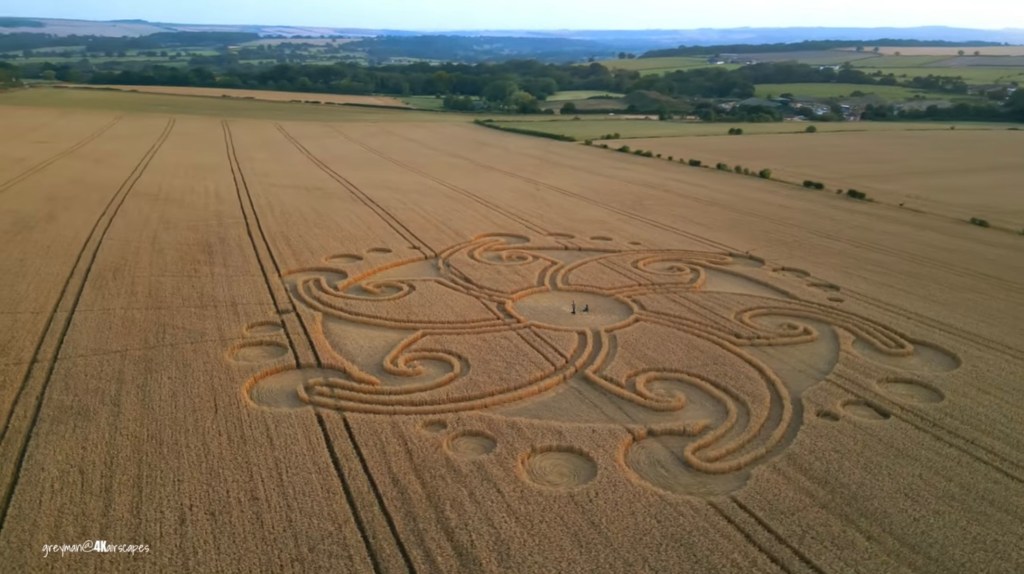
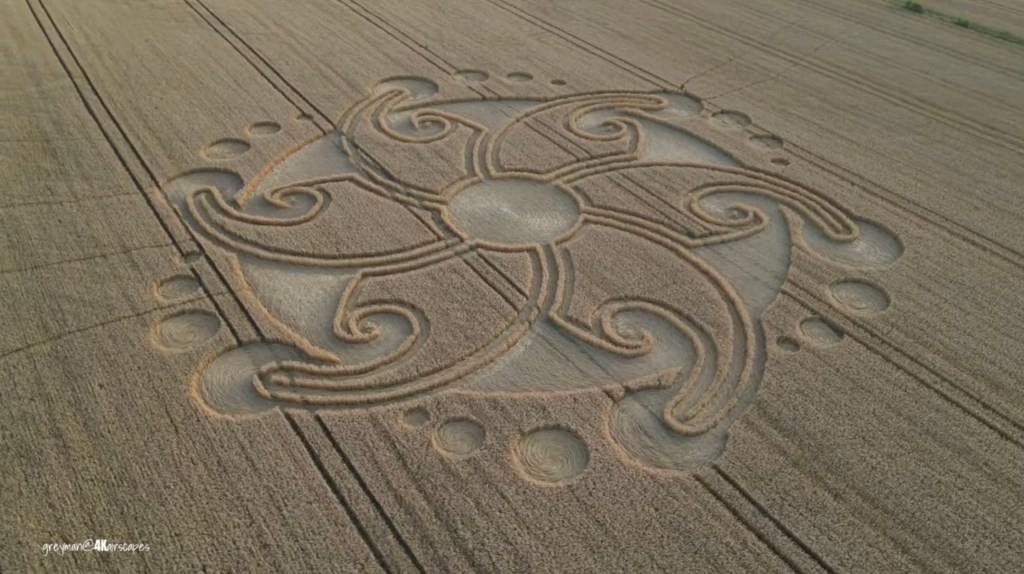
There’s something undeniably captivating about the crop circle that appeared on August 29th. As I gaze upon its intricate design, I’m drawn into a world where geometry and spirituality converge, where the mysteries of the universe seem to be woven into the very fabric of the earth itself. This particular formation, with its flowing spirals and perfectly balanced symmetry, speaks to something deep within, inviting contemplation and reflection.
At the center of the design lies a circle—simple, yet profound. In many spiritual traditions, the circle is a symbol of unity, wholeness, and the infinite. It represents the divine source, the singularity from which all creation emerges. This central circle seems to anchor the entire formation, grounding it in a sense of completeness and oneness, reminding us of the inherent unity in all things.
From this central point, spirals extend outward, creating a dynamic and mesmerizing pattern. Spirals have long been recognized as powerful symbols of growth, evolution, and the journey of life. They are found in nature, from the spirals of galaxies to the curves of a seashell, each one a reflection of the natural order and the continuous unfolding of the universe. In this crop circle, the spirals seem to convey a message of movement and expansion, perhaps representing the journey of consciousness as it evolves and grows, ever-reaching towards greater awareness.
The symmetry of the design, with its radial balance, is a hallmark of sacred geometry. This balance is not just aesthetic; it speaks to the harmony that exists in the cosmos, the equilibrium that sustains life. The radial symmetry suggests a balanced flow of energy, a reminder that everything in the universe is interconnected and in perfect harmony. This design doesn’t just exist in the field—it radiates a sense of peace and order, encouraging us to find that same balance within ourselves.
Surrounding the spirals are smaller circles, intricately placed around the main design. These circles could be seen as symbols of celestial bodies—planets, stars, or perhaps even atoms, reflecting the microcosm and the macrocosm. In the language of sacred geometry, such smaller circles often represent cycles or the idea of perpetual motion, the endless dance of creation and dissolution that characterizes the cosmos.
As I reflect on this formation, I can’t help but see it as a symbol of cosmic harmony. The interplay of spirals and circles reminds me of the harmonious dance of celestial bodies, each one moving in perfect synchrony, reflecting the order and rhythm that underlie the universe. It’s as if this crop circle is a message about the natural balance and flow of life, a gentle reminder that everything has its place in the grand design.
There’s also a sense of evolution and growth in this pattern. The spirals, radiating from the center, seem to symbolize the journey of the soul, the unfolding of higher awareness. It’s as if this crop circle is urging us to continue our spiritual journey, to keep expanding our consciousness, knowing that we are guided by a higher intelligence that watches over us.
Given the feelings of guardianship and protection that crop circles often evoke, this formation could also be seen as a representation of protective forces surrounding us. The harmonious design suggests that these forces are not just watching over us, but guiding us along our spiritual path with balance and grace, ensuring that we remain connected to the divine order.
Above all, this crop circle emphasizes the interconnectedness of all things. The spirals and circles are not isolated elements—they are intricately linked, each one contributing to the overall design. This reminds us of our own interconnectedness, not just with each other, but with the entire universe. We are all part of a larger, divine pattern, and each of us has a role to play in maintaining the harmony of the cosmos.
As I continue to meditate on this beautiful formation, I’m filled with a sense of peace and wonder. It’s a reminder that there is so much more to life than what we see on the surface, that there are deeper truths waiting to be discovered if we only take the time to look. This crop circle, with its flowing spirals and harmonious design, invites us to pause, to reflect, and to reconnect with the mysteries of the universe. It is a reminder that we are never truly alone, that we are always part of something greater, something beautiful and infinitely wise.
As we step further into the Ramayana, Chapter 2 presents us with a clear, timeless dichotomy—a choice point that reflects the world we live in today. On one side, we have a king driven by desire and ambition, his motivations clouded by attachment and greed. On the other, we have a sage, steadfast in his righteousness, his actions rooted in dharma and pure intention.
These two characters symbolize the fundamental choice we all face in life: to act with righteous motivation or to be driven by unrighteous desires. The king, despite his power and the boons he receives, finds himself frustrated. His motivations, being self-serving, lead him down a path that is ultimately unsatisfying and fraught with obstacles. The sage, however, remains aligned with dharma, embodying the strength and peace that come from acting with integrity and compassion.
This chapter doesn’t resolve the conflict between good and evil—it merely sets the stage, much like the world we find ourselves in. We live in an unfinished story, where the battle between righteousness and unrighteousness is ongoing. In our daily lives, we see the results of both paths, often interwoven in complex ways. The choice between these two paths is not just a one-time decision, but a series of choices we make continually, shaping the direction of our lives.
The Ramayana offers us a realistic portrayal of this struggle, one that is echoed in the world around us. It acknowledges that while righteous motivation does not guarantee a life free from hardship or betrayal, it does align us with a greater sense of purpose and peace. Unrighteous motivation, on the other hand, may lead to temporary gains but ultimately brings frustration and imbalance.
In reading this chapter, we are invited to reflect on our own motivations. Are our actions driven by a desire for power, control, or self-interest? Or are they rooted in a genuine intention to do good, to act in alignment with dharma? This is the choice point that the Ramayana places before us—a choice that is as relevant today as it was in ancient times.
As we continue through the Ramayana, let us keep this choice in mind. The sage and the king stand as symbols of the paths available to us all. Which path we choose, and the motivations that drive our actions, will shape our journey, both in this story and in the lives we lead.
🙏🕊️🙏
You can explore this epic story in the edition of the Ramayana used in this series, written by Valmiki and translated by Suparna Ghosh, on Amazon here
Alternatively, you can choose from several other versions and translations that are available. It is even available as an abridged audiobook on Audible, narrated by Ram Dass here
As we embark on our journey through the Caravan of Love: Interfaith Healing & Harmony, it’s essential to explore the historical and cultural contexts that have shaped the way different religions view the divine. One of the most significant sources of tension between religious traditions has been the concept of idol worship and the worship of multiple gods. However, when we delve deeper into the origins of these beliefs, we begin to understand that these tensions are rooted in the specific environments and challenges faced by different cultures throughout history.
The Middle Eastern Context: A Response to Immoral Gods and Practices
In the ancient Middle East, where Judaism emerged, the surrounding cultures were steeped in polytheistic traditions that often depicted gods as capricious, immoral, and even lecherous. Greek, Roman, and Egyptian gods were frequently portrayed with very human flaws—engaging in deceit, vengeance, and licentious behavior. These gods, rather than upholding moral standards, often embodied the very vices that righteous living seeks to overcome.
Moreover, the religious practices associated with these gods often included sexual immorality and human sacrifice. In many Greek and Roman rituals, orgies were part of the religious celebrations, which directly conflicted with the moral and ethical standards that Hashem, the God of Israel, sought to establish among His people. Jesus, too, later condemned these practices, warning his followers against participating in meals that involved food sacrificed to idols, which were often associated with these immoral rites.
Even more abhorrent were the human sacrifices demanded by certain gods, such as Baal, who was worshipped through the sacrifice of children, and the gods of the Vikings and various other cultures that practiced human sacrifice. These practices were utterly condemned by Hashem, who sought to establish a community founded on the principles of justice, compassion, and the sanctity of human life. The strict prohibition against idol worship in Judaism was not merely a rejection of other gods but a rejection of the immoral behaviors and dangerous practices associated with them.
The Hindu Context: Righteous Deities and the Dharma
In contrast, the religious environment of ancient India, where Hinduism flourished, presented a very different picture. The gods and goddesses of the Hindu tradition were seen as embodiments of various aspects of the divine, each playing a role in upholding cosmic order—known as dharma. These deities, such as Vishnu, Shiva, and Lakshmi, were revered not for their power alone but for their embodiment of virtues like love, wisdom, and righteousness.
While animal sacrifices were part of some ancient Hindu rituals, there is little evidence to suggest that human sacrifice was a practice in India, especially in the Vedic tradition that laid the foundation for Hinduism. The sacrifices performed in these rituals were meant to uphold cosmic order, not to appease bloodthirsty gods. As such, the multitude of Hindu deities was not a source of moral confusion but rather a rich tapestry through which the divine expressed itself in the world. Each god or goddess offered a different path or approach to understanding and connecting with the divine, but all were aligned with the principles of dharma. Therefore, the prohibition against worshipping other gods, so essential in the Middle Eastern context, was unnecessary in India, where the divine was seen as inherently righteous and benevolent in its many forms.
The Role of Reformers: Jesus and Buddha
In both of these cultural contexts, reformers emerged who sought to elevate the spiritual and moral consciousness of their societies. In the Middle East, Jesus entered a world where the strict monotheism of Judaism had established a strong moral foundation. However, Jesus’s teachings went further, emphasizing love, compassion, and forgiveness as central to righteous living. His life and message aimed to deepen and expand the moral and spiritual understanding of his followers, guiding them toward a more profound relationship with the divine.
Similarly, in India, the Buddha emerged in a society that already had a strong foundation of righteousness through the Vedas and the Upanishads. However, the Buddha’s teachings challenged the social inequalities of the time, particularly the rigid caste system and the exclusion of certain groups from spiritual life. Like Jesus, the Buddha sought to elevate society by emphasizing compassion, ethical living, and the pursuit of enlightenment for all, regardless of social status.
Understanding the Clash of Religions: A Matter of Context
The tension between monotheistic and polytheistic traditions often stems from these differing historical contexts. The Jewish rejection of other gods was a response to the immoral behaviors associated with the gods of neighboring cultures. In contrast, the Hindu acceptance of multiple deities was rooted in a context where the divine was already understood as righteous and aligned with cosmic order.
Today, these ancient tensions can still influence how religions interact with each other. However, by understanding the historical reasons behind these differences, we can move beyond conflict and toward a more harmonious coexistence. We can recognize that the rejection of other gods in one context was not necessarily a rejection of divinity in all forms but a response to the specific moral challenges of that time.
Conclusion: Moving Toward Interfaith Healing and Harmony
In our modern, interconnected world, it’s more important than ever to understand and respect the diverse ways in which different cultures and religions have approached the divine. By exploring these historical contexts, we can appreciate the unique contributions of each tradition while finding common ground in the shared values of love, righteousness, and compassion.
As we continue on this Caravan of Love, let us remember that the ultimate goal of all spiritual paths is to bring about healing and harmony—not just within ourselves, but in our relationships with others and the world around us. Through understanding and dialogue, we can bridge the gaps between different faiths and move closer to a world where all are respected and all are loved.
🙏🕊️🙏
Screenshot
Jesus of Nazareth, the embodiment of divine love and compassion, whose teachings on forgiveness, mercy, and selfless service continue to inspire millions across the world.
Screenshot
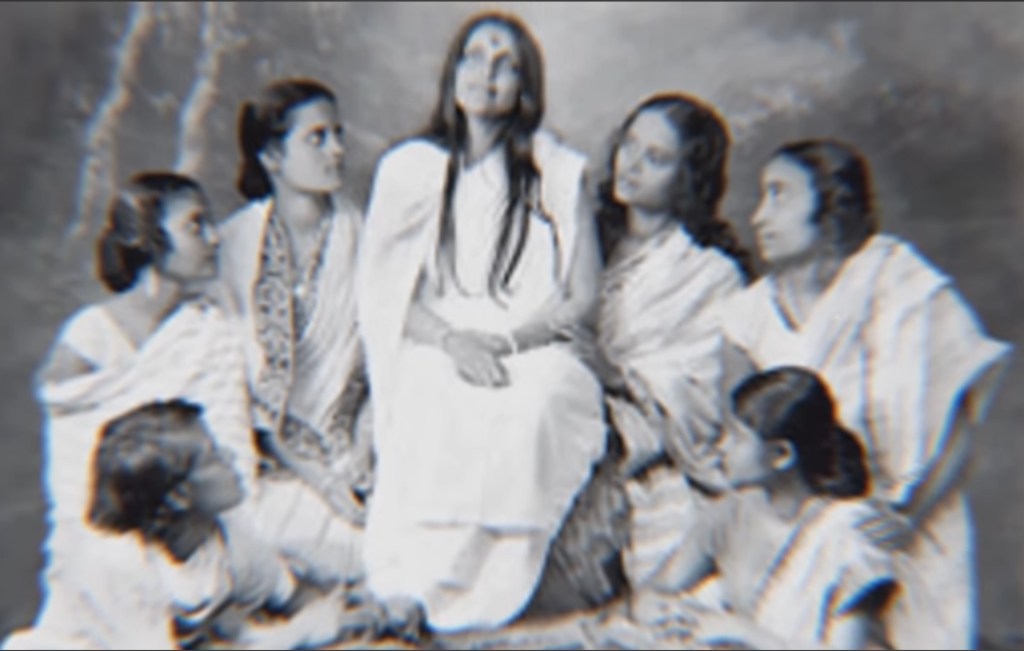
Anandamayi Ma, a revered Hindu mystic, exemplifies the divine love and spiritual wisdom that have been central to Hindu tradition for centuries.
Paramahansa Yogananda, the great spiritual teacher and author of ‘Autobiography of a Yogi,’ brought the wisdom of India’s ancient spiritual traditions to the West, inspiring countless seekers with his teachings of love, self-realization, and the unity of all religions.
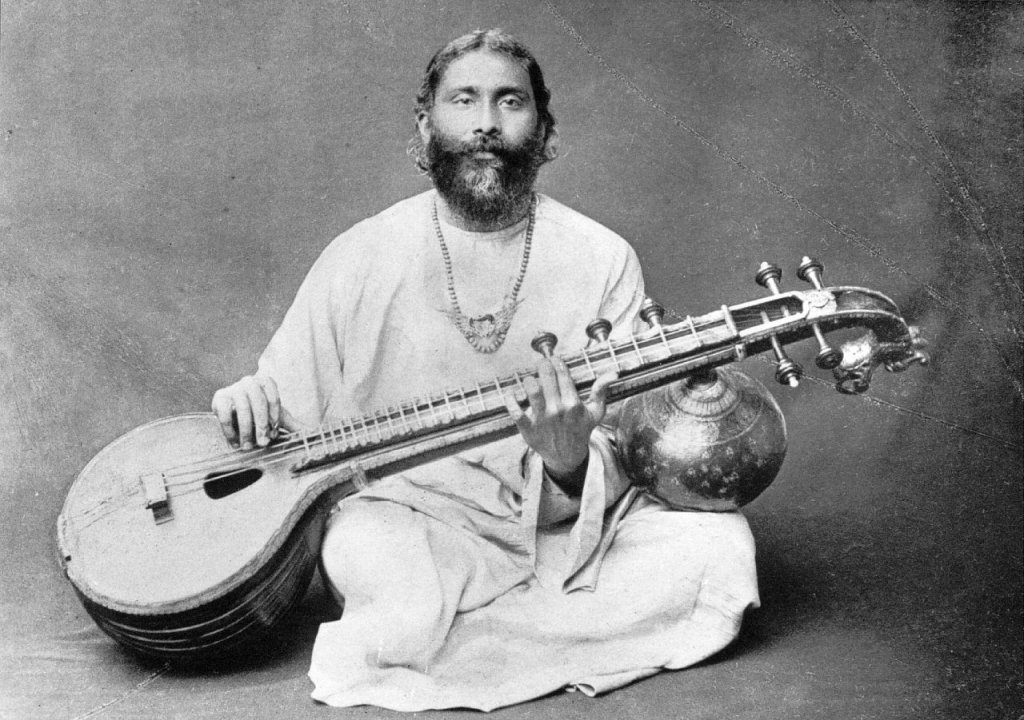
Hazrat Inayat Khan, a revered Sufi mystic and musician, whose teachings on the unity of religious ideals and the harmony of divine love have inspired countless souls on their spiritual journeys.
His Holiness the Dalai Lama, a global symbol of peace, compassion, and the enduring wisdom of the Buddhist tradition, whose teachings inspire the world toward kindness and universal responsibility.
Ani Choying Drolma, a Tibetan Buddhist nun and internationally acclaimed singer, whose music and teachings spread the message of compassion, peace, and the profound wisdom of the Buddha’s path.
“The lamps are different, but the Light is the same.”
In the journey of spiritual growth, each moment, each challenge, and every encounter presents an opportunity to deepen our awareness. No matter the external circumstances—whether we’re moving from one phase of life to another, letting go of past attachments, or simply observing the fluctuations of the mind—there is a steady witness that remains untouched. This witness, or seer, is the essence of our true nature, and learning to strengthen our connection to it is one of the most important steps on the path to inner freedom.
The Shift from Mind to Heart
For many of us, the longest journey is the shift from the ordinary mind to the heart, or from the restless fluctuations of thoughts (vrittis) to the calm, witnessing presence. The heart, in spiritual traditions such as Advaita Vedanta and Jewish mysticism, is often equated with the Divine. It’s not merely an emotional center but the seat of the Divine Presence within us—Atman as Brahman, or the individual self as one with the Absolute.
As we begin to experience this shift, we realize that our external experiences—both positive and negative—are just reflections of the inner workings of our mind. The challenges, such as illness or life transitions, become opportunities to witness these reflections without being swept away by them. This movement from the mind to the heart is the foundation for a life of spiritual presence.
Living Between Excitement and Calm
One of the paradoxes on the spiritual path is living with dual awareness: experiencing the emotional fluctuations of excitement, frustration, or joy while simultaneously witnessing them from a place of calm and neutrality. The spiritual journey does not require that we suppress these emotions, but rather that we hold them lightly, recognizing them as transient waves on the surface of our consciousness.
As Namkhai Norbu teaches, the presence of awareness exists both in moments of calm and agitation. The mind may be excited, but the witness remains still. This dual awareness allows us to engage fully with life without losing our spiritual center. As we strengthen the seer within us, we find that both excitement and calm can coexist, and we learn to embrace the paradox of non-duality within dual awareness.
Letting Go of Attachments: The RV and Beyond
Transitions in life—whether they involve moving from one home to another or shifting from one state of consciousness to another—offer us the chance to practice letting go. For many years, a beloved space like an RV can be a sanctuary, a place of refuge for meditation and contemplation. But when the time comes to leave, it becomes a test of non-attachment, a reminder that the true sanctuary is within us.
Letting go is not simply about releasing physical objects or spaces; it’s about releasing the emotional and mental attachments we have to them. It’s about trusting that even as we move into unfamiliar territory, the witness remains constant. As we let go of the old, we create space for something new to emerge—a fresh start, or beginner’s mind, as we navigate life with openness and curiosity.
The Importance of Trust and Faith
A major theme in this spiritual journey is trust—trust in the Divine, trust in ourselves, and trust in the process. After years of doubt and uncertainty, we may begin to experience a deep sense of confidence and trust in life’s unfolding. Even when life presents us with difficult or unexpected challenges, such as illness or the need to move from a long-held refuge, trust allows us to remain grounded in the witness.
This trust doesn’t mean we stop facing difficulties, but rather that we learn to see them as part of the greater unfolding of our spiritual path. Each test, no matter how small or large, becomes another opportunity to strengthen the seer within. As the Buddha taught, the Dharma is like a raft that helps us cross the ocean of suffering. Once we reach the other shore, we leave the raft behind, trusting that we now carry the teachings within us.
Witnessing the Witness: A Reflection of Inner Harmony
Ultimately, the journey is about witnessing the witness—becoming aware of the awareness that is always present, regardless of the external conditions. This awareness, which we can also call the Divine, is not dependent on calmness or agitation, happiness or sadness. It simply is. And as we deepen our connection to this awareness, we come to embody the teachings in our lived experience.
The process of writing and sharing these insights is part of this journey. Just as we are learning to let go of attachments, we also leave behind reflections in the form of writings, teachings, and blog posts. This is karma yoga—an offering of selfless service to whoever may benefit from these reflections. Like the authentic seeker who presents the teachings from the heart rather than from notes, we are called to embody the wisdom we’ve gathered and leave the rest for others to use as they see fit.
Conclusion: The Journey of the Seer
In the end, the journey is about becoming the witness to our own life, embracing both the external challenges and the internal awareness that guides us through them. As we continue to strengthen the seer within us, we move closer to a life of true presence, where each moment, no matter how challenging, becomes an opportunity for growth and transformation.
May this reflection serve as a reminder to all who encounter it that the witness is always present, guiding us through the transitions of life and helping us to cultivate trust, non-attachment, and inner peace.
Jnana Yoga is one of the primary paths of yoga, often described as the path of knowledge or wisdom. It is a profound spiritual practice focused on deep inquiry into the nature of the self and the ultimate reality. Through a process of self-examination and discernment, practitioners of Jnana Yoga seek to transcend the illusions of the mind and realize the true, non-dual nature of existence.
At the heart of Jnana Yoga is the practice of Atma Vichara, or self-inquiry, where the seeker continuously asks, “Who am I?” This inquiry leads to the direct experience of the Self (Atman) as pure consciousness, beyond the layers of thought, emotion, and ego. Jnana Yoga emphasizes the importance of discriminating between the real and the unreal, the eternal and the transient, in order to uncover the unchanging reality that underlies all existence.
In this blog series, we’ll explore the key principles and practices of Jnana Yoga, and how this path of knowledge can guide us toward self-realization and spiritual liberation.
As we embark together on this journey of discovery and reflection, I warmly invite you to join me in exploring the depths of these ancient practices and teachings. Let this space be a sanctuary where we meet not just as seekers, but as companions on the path—a place where the wisdom of the ages can gently unfold within our lives.
If these words and practices speak to something within you, if they stir a quiet longing or bring a sense of peace, I encourage you to subscribe to this blog. By doing so, you’ll be the first to know as new installments of our shared journey are published. It is my hope that each post will resonate with you, offering insights and comfort as we continue to explore these profound teachings together.
For those interested in a comprehensive introduction to the practices of yoga, I recommend The Sivananda Companion to Yoga: A Complete Guide to the Physical Postures, Breathing Exercises, Diet, Relaxation, and Meditation Techniques of Yoga. This book offers clear guidance on the foundational aspects of yoga, making it an invaluable resource for anyone looking to deepen their understanding and practice. Take a look at this book on Amazon here.
Embracing the Eternal Now: Cultivating Spiritual Presence in Daily Life
A Journey Through Mindfulness, Equanimity, and Spiritual Connection
In the whirlwind of our daily lives, it’s easy to become consumed by the relentless pace of duties, responsibilities, and the constant barrage of information. The echoes of the past and the whispers of the future often tug at our attention, leaving us fragmented and seldom at peace. Yet, the present moment holds a profound promise—the promise of true clarity and peace.
Cultivating a relaxed mind not only enhances our ability to navigate everyday challenges with grace but also opens us to deeper insights and a greater connection with our true selves. By learning to inhabit the moment fully, we unlock the potential to transform our entire life’s experience, fostering a state of well-being that radiates outward in our thoughts, actions, and interactions.
How, then, can we cultivate a state of equanimity and truly leave our minds alone? Here are some guiding principles to help us navigate this path.
Don’t Follow the Past
It’s easy to be pulled back into the past. Imagine sitting quietly and suddenly a memory from a past mistake creeps in, clouding your mood and stealing the peace of the current moment. However, dwelling in the past often means missing out on the now—on the opportunity to engage fully with life as it happens. Letting go of the past involves an understanding that every moment is a chance to start anew, to choose differently, and to move forward with a lighter heart.
Practical Tip: Whenever you find yourself anchored to a past memory, gently remind yourself, “This memory is not my current reality.” Allow yourself to feel any emotions associated with it and then visualize setting it adrift down a river, watching it fade with compassion and detachment.
Don’t Anticipate the Future
Similarly, projecting our thoughts into the future can be just as distracting. Consider a scenario where you’re planning a meeting and start to worry excessively about its outcome, which then consumes your thoughts and disrupts your present work. Worrying about what’s yet to come not only breeds anxiety but also prevents us from taking actionable steps in the present that could actually mitigate those concerns.
Practical Tip: Practice grounding exercises when you find your mind darting forward. Focus on your senses—what can you see, hear, touch, taste, and smell right this moment? This practice helps bring you back to the present and reduces anxiety about the future.
Remain in Equanimity
Equanimity is the balanced state where we are not swayed by the highs of joy nor the lows of despair. Imagine receiving news that would typically upset you, but instead of reacting impulsively, you remain calm, reflecting on the situation with a balanced perspective. It is a place of mental stability and composure that allows us to face life’s challenges with a calm and steady mind.
Practical Tip: Develop a daily meditation practice. Even five minutes a day can help you cultivate a neutral mind that approaches all situations with balance and clarity.
Leave Your Mind Alone
At times, the best action is inaction. Consider watching your thoughts during a stressful moment, like observing clouds moving across the sky, without attempting to change their direction or speed. Leaving your mind alone means not meddling with your thoughts as they arise. It’s about observing them without judgment and letting them pass without attachment.
Practical Tip: Engage in mindfulness meditation where the goal is not to empty the mind of thoughts, but to observe them coming and going, like clouds across a vast sky.
Listening for the “Still Small Voice”
For our Christian friends, embracing the present moment can be seen as an opportunity to listen for the “still small voice” of God, as described in 1 Kings 19:12, where Elijah encounters God not in the earthquake or fire, but in a gentle whisper. Taking time each day to let go of our busy, distracted minds to rest in the Holy Spirit allows us to connect with divine guidance and comfort.
Similarly, the story of young Samuel from 1 Samuel 3:1-10 beautifully illustrates the process of becoming attuned to the divine voice. Mistaking the Lord’s call for Eli’s voice, Samuel’s repeated response, “Here I am,” eventually aligns with divine communication when he says, “Speak, Lord, for your servant is listening.” This moment of realization exemplifies the importance of being truly present, ready to receive spiritual guidance.
The Jewish Tradition of Hineni
In the Jewish tradition, the phrase “Hineni” – “I am here,” uttered by prophets like Abraham and Moses, represents a total, undistracted presence to the divine call. This sacred declaration is not just a statement of location but a profound acknowledgment of being fully present—spiritually, mentally, and physically—ready to engage with whatever God asks of them without hesitation.
Why It Matters
Understanding the distinction between simply being present and being spiritually present can transform the practice from a routine exercise to a life-changing discipline. The spiritual practice of presence is not about enduring the present but about uncovering an ever-present peace that enlightens and sustains us. It is here, in this sacred space, that we encounter the divine, the infinite, and the eternal right within our everyday moments.
🙏🕊️🙏
If you’re interested in exploring this transformative approach further, I highly recommend Orgyen Chowang’s book The Pristine Mind. His teachings provide a clear, compassionate path toward uncovering the inherent purity of our mind, offering a source of deep fulfillment and lasting peace.
Ramana Maharshi, one of the most revered spiritual teachers of modern times, has left an indelible mark on the landscape of non-dual philosophy. Among his profound contributions is a text known as the “Forty Verses on Reality”, or “Ulladu Narpadu”, originally composed in Tamil. These verses are a deep exploration of the nature of existence and the true Self, offering guidance on the direct path to self-realization.
The “Forty Verses on Reality” are not just poetic expressions but are a concise roadmap to understanding the essence of the Self, as taught by Ramana Maharshi. They delve into the illusion of the ego, the ultimate reality of non-dual existence, and the importance of self-inquiry as the path to realizing one’s true nature.
In these verses, Ramana Maharshi addresses the central theme of his teachings: the illusion of the ego. He emphasizes that the sense of ‘I’—which we often associate with our thoughts, emotions, and bodily identity—is not the true Self. This ego, or false sense of individuality, creates a veil that obscures the unchanging, eternal reality that is the Self.
Ramana encourages seekers to engage in self-inquiry, particularly through the practice of asking “Who am I?” This simple yet profound question is designed to lead one back to the source of the ‘I’ thought, tracing it to its origin in pure consciousness. It is in this inquiry that the mind begins to dissolve into the deeper awareness, where the illusory nature of the ego is revealed, and the true Self is recognized.
The essence of these verses is the understanding that the Self is the only reality, and everything else is transient, merely an appearance in the vast expanse of consciousness. Ramana’s teaching points to the realization that the Self is beyond all dualities, beyond subject and object, beyond mind and matter. The Self is the underlying reality, the substratum upon which all experiences arise and subside.
For those who are new to Ramana Maharshi’s teachings, the “Forty Verses on Reality” serve as a gateway to understanding his approach to non-duality and the path of self-inquiry. Each verse offers a unique insight into the nature of existence, gently guiding the reader toward a direct experience of the Self.
Consider, for example, the first verse, where Ramana states: “If Reality did not exist, could there be any knowledge of existence? Free from all thoughts, Reality abides in the Heart, the Source of all thoughts. It is, therefore, called the Heart. How then is one to contemplate It? To be as It is in the Heart, is Its contemplation.” Here, he points to the central truth that Reality—our true nature—is beyond thought and can only be known by abiding as the Self in the Heart, the source of all thoughts.
Or take verse twenty, where he asks: “By what light do you see? If you say ‘by the light of the sun,’ the moon, etc., then by what light do you see these lights? The light of the eye makes all these lights visible. But the mind makes the eyes shine. The ultimate source of all lights is the Self.” This verse illustrates the idea that all forms of perception ultimately point back to the Self, the pure awareness that illuminates all experiences.
Perhaps one of the most poignant verses is verse twenty-six: “The body does not say ‘I’. The Self does not say ‘I’. Between the two, something arises, saying ‘I’. This phantom is the ego. Find out where from this arises. Then everything will subside into the Self.” Ramana succinctly captures the essence of self-inquiry here, pointing to the ego as a phantom that dissolves when one traces it back to its origin.
The “Forty Verses on Reality” provide a rich tapestry of wisdom that can lead seekers to a direct realization of their true nature. These verses are a testament to Ramana Maharshi’s profound understanding of the non-dual reality and offer a timeless guide for those on the spiritual path.
If you are inspired to delve deeper into these teachings, I encourage you to seek out a complete edition of these verses, where you can explore them in their entirety. Their depth and simplicity offer a powerful tool for self-inquiry and spiritual awakening.
🙏🕊️🙏
Richard Clarke’s version of the “Forty Verses on Reality” is a concise and accessible entry point into Ramana Maharshi’s teachings. Spanning just 78 pages, this edition focuses on presenting the verses in a clear and straightforward manner, making it an excellent choice for those who are new to self-inquiry and non-duality. Clarke’s approach is to let the power of Ramana’s words speak for themselves, offering readers a direct and undiluted experience of the teachings.
The version introduced by Michael James and authored by Sandra Derksen provides an in-depth exploration of the “Forty Verses on Reality”, expanding the text to 422 pages with extensive commentary and analysis. This edition delves deeply into each verse, unpacking the layers of meaning and offering a comprehensive understanding of Ramana Maharshi’s philosophy. Ideal for serious students and those with a deep interest in Advaita Vedanta, this book offers a richly detailed interpretation that guides the reader through the nuances of self-inquiry and non-dual realization.