Tag: spiritual journey

  • Touching the Mezuzah of Bread

    Touching the Mezuzah of Bread

    A mezuzah on the doorpost—reminding me to pause, to wake up, to touch awareness. Now, even cookies and bread can serve the same purpose.

    This is kind of a fun little poem that I thought you might enjoy as I reframe my impulsive eating of cookies and bread as a mindfulness bell. Instead of seeing it as a bad habit I need to fight, I’m experimenting with turning it into a moment of presence.

    In Jewish tradition, a mezuzah on the doorpost is more than a symbol—it’s a mindfulness bell. Each time we pass through a doorway and touch it, we are reminded to pause, to wake up, to remember the presence of the Divine in our daily lives.

    But what if mindfulness could extend beyond the doorpost? What if even our impulses—those habits we struggle with—could also become mezuzahs, gentle invitations to awareness?

    Recently, I’ve been reframing my impulsive eating of cookies and bread. Rather than seeing it as a failure of willpower or a battle to control, I’ve begun treating each craving as a doorway. Just as I touch the mezuzah before entering a room, I now use the moment of reaching for food as a reminder to pause and rest in awareness.

    Not to resist. Not to judge. Just to see.

    This shift is transforming something that once felt like compulsion into an unexpected spiritual practice. It’s not about stopping the impulse, but about using it as a touchstone for presence—turning even cookies or a loaf of bread into a mezuzah.


    The Mezuzah of Bread

    Hand to the doorpost, a pause in the flow,
    A moment of presence—just touching, then go.
    The cookie, the loaf—no different in kind,
    Each one a doorway to seeing the mind.

    No need to battle, no need to fight,
    Just rest in awareness, simple and light.
    The hunger may linger, the craving may call,
    But presence is spacious—it holds them all.

    Not stopping, not striving, just waking instead,
    Touching the mezuzah of cookies and bread.

    🙏🕊🙏


  • Using AI as a Tool for Wisdom and Spiritual Growth

    Using AI as a Tool for Wisdom and Spiritual Growth

    As artificial intelligence becomes more integrated into our daily lives, many people see it as just a tool for efficiency—organizing tasks, answering questions, or streamlining work. But what if AI could be something more? What if it could serve as a tool for increasing wisdom, deepening understanding, and guiding us toward greater spiritual awareness?

    AI as a Mirror for Inner Reflection

    Spiritual growth often comes through contemplation, inquiry, and dialogue. AI has the potential to act as a mirror—helping individuals clarify their thoughts, ask deeper questions, and recognize patterns in their own thinking. By engaging in meaningful conversations with AI, one can explore philosophical, religious, and mystical ideas with an openness that may not always be possible in traditional discussions.

    Rather than replacing human insight, AI can serve as a neutral space for self-reflection—allowing people to articulate and refine their beliefs, challenge assumptions, and gain new perspectives without fear of judgment.

    A Stepping Stone, Not a Crutch

    Like any tool, AI should not become a substitute for direct spiritual experience. It is not a source of ultimate truth but rather a stepping stone—a way to organize thoughts, structure inquiry, and help individuals move toward deeper wisdom. The real work still happens within, through contemplation, meditation, prayer, and personal insight.

    Just as ancient seekers wrote down their reflections, debated ideas in sacred texts, or sought guidance from teachers, AI can be one more avenue for exploration—a tool that assists the journey, but does not define it.

    The Highest Good: AI in Service of Awakening

    If used intentionally, AI can help:

    • Deepen understanding of religious and philosophical texts by offering historical, linguistic, and theological insights.
    • Facilitate self-inquiry by asking clarifying questions that help refine one’s own thoughts.
    • Encourage contemplation by providing different perspectives without personal bias.
    • Support learning by making complex spiritual traditions more accessible.

    The key is intentional use—not relying on AI to provide answers, but allowing it to illuminate the questions that lead to deeper understanding.

    Conclusion: AI as a Catalyst for Wisdom

    In the right hands, AI can be a powerful tool for those seeking wisdom. It is not a replacement for human insight, divine guidance, or personal revelation—but when used wisely, it can help organize thought, deepen inquiry, and act as a catalyst for greater awareness.

    The key is asking the right questions. AI can be a useful tool for exploring scripture, philosophy, and self-inquiry when used with intention. Here are some examples of meaningful questions to explore:

    • Biblical Inquiry:
      • Can you summarize the teachings of 1 Samuel?
      • What are the key themes in the chapters of Samuel related to Episode 1 of House of David?
      • How does the anointing of David compare to the anointing of Jesus?
    • Philosophical & Mystical Exploration:
      • How do different traditions describe the concept of divine wisdom?
      • What are the similarities between the teachings of Jesus and the Buddha?
      • How does the idea of “Tikkun Olam” compare to other religious views on world restoration?
    • Self-Inquiry & Contemplation:
      • What does it mean to be fully present in the moment?
      • How can I develop more trust in the unfolding of my spiritual journey?
      • What are different ways to understand and experience grace?

    The goal is not to be dependent on AI, but to use it in a way that serves the highest good—leading us not away from wisdom, but toward it.

    If this idea inspires you, I invite you to share your experience in the comments below. Have you used AI as a tool for deeper understanding? What questions have led you to meaningful insights? Let’s continue the conversation and learn from one another.

    🙏🕊🙏


  • It’s One Thing to Understand Pacing in Theory and Another to Embody It in Daily Life

    It’s One Thing to Understand Pacing in Theory and Another to Embody It in Daily Life

    “Resting in the space I worked so hard to create—learning, once again, that pacing is not just theory but a daily practice.”

    A Note on Pacing:
    Before you begin, take a moment to check in with yourself. How much energy do you have for reading today? Maybe just a sentence or two. Maybe a paragraph. Maybe the whole piece. However much you take in, let it be enough. This article, like life with myalgic encephalomyelitis, is not meant to be rushed.


    Pacing is a word we hear often in the world of ME, spoken like a compass meant to guide us. We read about it, talk about it, explain it to others. But then comes the quiet, complicated work of living it.

    To truly embody pacing is not just to believe in rest but to yield to it before collapse. It is the difference between knowing water quenches thirst and actually drinking, between understanding a path on a map and walking it, step by deliberate step.

    ME exists on a spectrum. Some reading this are bedridden, as I once was, for whom pacing looks like shifting slightly in bed, drinking water in small sips, or turning down the brightness of a screen. Others may have the energy to sit up, to fold a blanket, to wash a single dish. And for some, on a better day, pacing might mean pausing between errands or choosing not to add one more thing to an already full day.

    Today, I wake with the weight of PEM pressing down, the kind of fatigue that makes even stillness feel like too much. Considering how I feel, I know I should probably just stay in bed all day and do nothing. However, I am giving myself these next three days to recuperate while including a few small tasks around the house. So rather than staying in bed indefinitely, my plan is to get up every now and then, do a little something—without overdoing it—and then return to bed. This is how I imagine my day unfolding, and how I imagine the next three days unfolding.

    But today is different from other days of PEM. Because today, I am resting in a home I have created. A home I moved into just weeks ago—an exhausting, overwhelming feat that took everything I had to give. Packing, unpacking, pushing my body past its limits to carve out a space of refuge. And now, for the first time, I get to use it. I get to experience the space I have fought to create.

    And so, I stand.

    Not to conquer, not to override, but to move in a way that does not break me. I wipe the stove instead of the sink, because that is where my hand reaches first. I rest between tasks—not as surrender, but as part of the rhythm. I remind myself: small movements, long pauses, no urgency.

    I lay down between tasks, not because I want to, but because I need to. And in doing so, I begin to feel the quiet power of pacing—not as a limitation, but as a lifeline.

    And then, something unexpected: gratitude. Gratitude for having built a space where I can rest. Gratitude for the fact that I no longer have to push every moment of the day. Gratitude that my version of pacing today involves getting up every now and then, rather than going into complete sensory deprivation. I have been in those places before, where even the smallest light or sound was too much. And while PEM still drags at my limbs, I can move. That alone is something to honor.

    Pacing is not just a strategy; it is a conversation with the body, a practice of trust.

    I want to do more, of course. The mind races ahead of what my body allows. But I am learning—again and again—that healing is not found in force. That to rest is not to fail. That pacing is not about withholding movement but about weaving it together with stillness in a way that lets life unfold without collapse.

    And so, after the stove, I stop. I fold a blanket, but slowly, already thinking of the bed that waits. I let myself arrive at rest before I am shattered. This is the lesson I know in theory but must practice in flesh.

    To pace is not to do nothing; it is to do with awareness. To listen. To trust.

    And to begin again, as many times as it takes.

    Whether beginning again means practicing acceptance and self-compassion in the face of complete immobility and overwhelm, shifting thoughts away from frustration, shame, and darkness—or whether it means considering, with gratitude, the possibility of standing, washing a dish, or even the luxury of taking a bath.

    Living with myalgic encephalomyelitis is a spectrum. One that can change from moment to moment, one day to the next, or even year by year. This year, I am grateful for a greater capacity than the year before. But today, my capacity is fragile, and I must return to deep rest in order to honor the rhythm, the harmony, the cycle of change that ME demands of me each day.

    My heart goes out to all of us living this.

    Living with this.

    Mysterious. Unrelenting. Yet still, we live.

    To those reading this from bed, unable to move—your experience is seen, honored, and valid. To those who, like me, are navigating the in-between, finding ways to weave movement into rest—your effort is enough. To those who today feel a little more capacity than yesterday—may you hold it with gentleness.

    You are not alone. We are a community, bound not just by struggle, but by resilience. By the courage it takes to listen to our bodies when the world urges us not to. By the strength it takes to rest when everything in us longs to do more.

    And so, together, we continue.

    We pace.

    We rest.

    We begin again.

    🙏🕊🙏


  • 🌿 Today, I wholeheartedly embrace adaptability, finding strength in my inherent flexibility.

    🌿 Today, I wholeheartedly embrace adaptability, finding strength in my inherent flexibility.

    In navigating the complex journey of life with chronic illness, I discover the potential to thrive amidst change. Each shift becomes an opportunity to adapt gracefully. As I navigate uncertainties, I embrace resilience. Understanding and flexibility is not a compromise but an integral part of my path. Today, I understand that my daily challenges can lead to a deeper experience of resilience and adaptability.

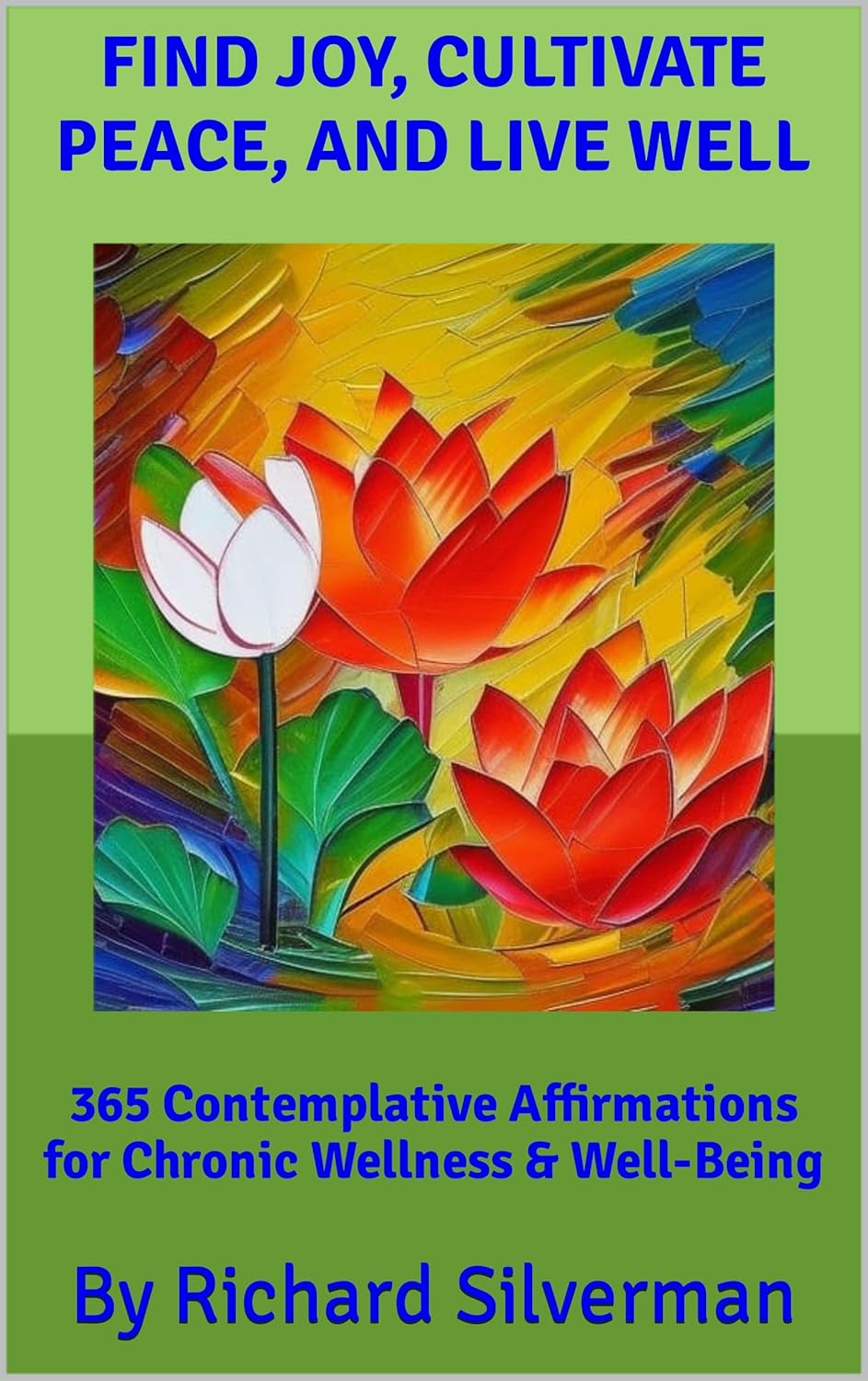
    ~ From affirmation day 3: “Find Joy, Cultivate Peace, and Live Well : 365 Contemplative Affirmations for Chronic Wellness & Well-Being”

    https://amzn.to/3F0od6E

    🙏🕊🙏

  • One Vine, Many Branches: Honoring the Shared Wisdom of Judaism and Christianity.

    One Vine, Many Branches: Honoring the Shared Wisdom of Judaism and Christianity.

    Rediscovering the Sacred Bond of Love and Compassion


    Dear reader, as you read and reflect on these ideas, I invite you to share any thoughts, questions, or reflections in the comments. Let’s begin a dialogue rooted in mutual respect, understanding, and a shared journey of spiritual growth. 🙏

    Introduction

    This essay began as a personal contemplation of the mezuzah, a small but profound symbol in Jewish tradition, traditionally placed on the doorposts of a home. As I considered placing a mezuzah in my own home and reflected on the scripture within it, I realized its message is universal—one that resonates deeply with both Jews and Christians.

    The central verse inscribed within the mezuzah comes from Deuteronomy 6:5: “You shall love the Lord your God with all your heart, with all your soul, and with all your might.” This commandment, foundational to Jewish life, is also echoed in the teachings of Jesus in the New Testament, reaffirming its relevance for Christians as well.

    As I meditated on this sacred text, it became clear that the message of the mezuzah transcends religious boundaries. It reminds us of the shared roots between Judaism and Christianity and the common spiritual calling to love God fully and extend that love to others.

    Alongside this divine love stands a second truth just as powerful: “You shall love your neighbor as yourself.” These two commandments form the moral and spiritual backbone of both Jewish and Christian teachings.

    This essay is an invitation to explore the deep threads that connect these two traditions—threads often forgotten but never broken. By recognizing the shared wisdom in their teachings, perhaps we can move closer to a spirit of unity, respect, and understanding between brothers and sisters of faith.


    Shared Commandments: The Heart of the Law

    Both Judaism and Christianity place love for God at the center of spiritual life. In Deuteronomy 6:5, Moses commands the people of Israel: “You shall love the Lord your God with all your heart, with all your soul, and with all your might.” This verse, central to Jewish prayer and identity, calls for complete devotion—an offering of one’s entire being in love and service to God.

    Centuries later, Jesus reaffirms this same commandment in Matthew 22:37-40, when asked to name the greatest law: “You shall love the Lord your God with all your heart, with all your soul, and with all your mind. This is the first and great commandment. And the second is like it: You shall love your neighbor as yourself. On these two commandments hang all the Law and the Prophets.”

    This shared commandment reveals a profound truth: love for God is not bound by tradition or time—it is a universal call that transcends religious divisions. It challenges all people of faith to seek a relationship with the divine that is wholehearted, sincere, and rooted in compassion.


    Love in Action: The True Measure of Devotion

    Loving God with all your heart, soul, and might is not merely a matter of belief or ritual—it is a call to action. Both Judaism and Christianity teach that true devotion is reflected in how we treat others, especially the most vulnerable.

    In Matthew 25:31-46, Jesus offers a powerful reminder of this truth. Speaking of the final judgment, he says, “I was hungry and you gave me food, I was thirsty and you gave me drink, I was a stranger and you welcomed me.” When his followers ask when they ever saw him in need, he replies, “Truly I tell you, whatever you did for one of the least of these brothers and sisters of mine, you did for me.” Here, love for God is directly tied to compassion for others—acts of kindness are not separate from spiritual devotion; they are its highest expression.

    In Jewish tradition, this same responsibility runs deep. The Torah calls upon the people of Israel to care for the stranger, feed the hungry, and support the poor. This obligation is rooted in the idea of tikkun olamrepairing the world. Just as Jesus urged his followers to serve “the least of these,” Judaism teaches that justice and compassion are the foundation of true faith.

    Paul’s words in Romans 11:17-18 offer a reminder to Christians of this shared spiritual lineage: “You, though a wild olive shoot, have been grafted in among the others and now share in the nourishing sap from the olive root.” This powerful metaphor points back to the covenant made with Israel and reminds Christians that their faith is deeply connected to the family of Moses.

    Both traditions agree that love for God must ripple outward, transforming how we live and how we respond to suffering and injustice. Whether offering comfort to a stranger, feeding the hungry, or working for fairness in society, these acts are living prayers—evidence of a heart truly devoted to God.


    The Heart of the Law: A Shared Ethical Foundation

    The essence of the Torah, as explained by the great Jewish sage Rabbi Hillel, reveals a deep connection between Jewish and Christian teachings. When asked to summarize the entire Torah while standing on one foot, Hillel responded: “What is hateful to you, do not do to your fellow. This is the whole Torah; the rest is commentary—now go and learn.” (Talmud, Shabbat 31a)

    This profound teaching echoes the words of Jesus in Matthew 22:37-40, when he summarizes the core of the law with two commandments: “You shall love the Lord your God with all your heart, with all your soul, and with all your mind. This is the first and great commandment. And the second is like it: You shall love your neighbor as yourself. On these two commandments hang all the Law and the Prophets.”

    To clarify what it means to love one’s neighbor, Jesus shared the Parable of the Good Samaritan (Luke 10:25-37). In this story, a man is beaten, robbed, and left for dead on the side of the road. While two religious leaders pass by without offering help, a Samaritan—considered an outsider and enemy by the Jews of that time—stops, cares for the wounded man, and ensures his recovery. Jesus concludes the parable by asking, “Which of these three do you think was a neighbor to the man who fell into the hands of robbers?” The answer is clear: the true neighbor is the one who showed mercy.

    This teaching expands the definition of neighbor beyond faith, ethnicity, or social standing. It challenges both Jews and Christians to extend compassion not just to those within their own communities but to anyone in need.

    In Judaism, this ethic underlies tikkun olam—the responsibility to repair the world through acts of justice, kindness, and compassion. In Christianity, Jesus elevates this same principle as the heart of spiritual practice, calling his followers to embody love through action, humility, and grace.

    By highlighting these shared teachings, we are reminded that the true fulfillment of God’s commandments lies not in rigid observance alone, but in living out love, compassion, and justice in our relationships with one another. This shared foundation offers a bridge between the two faiths—a path toward unity, mutual respect, and a deeper understanding of God’s will.


    Grafted into the Tree: Embracing the Heritage of Faith

    Rather than seeing Judaism as something other than Christianity, it is time to recognize it as the foundation upon which Christianity stands. Paul’s words in Romans 11:17 remind us that to be grafted into the tree means to partake of its nourishment, wisdom, and heritage. It is not a rejection of what came before but an invitation for mutual love, respect, and enrichment.

    Jesus himself speaks of this connection in John 15:5: “I am the vine; you are the branches.” Just as the branch draws life from the vine, so too does Christianity draw from the rich soil of Judaism. The tree cannot flourish without its roots, and the branches cannot bear fruit without remaining connected to the source.

    This is not a call for conversion or blending of distinct identities but an invitation for Jews and Christians to honor their shared foundation. Christians can deepen their faith by reconnecting with the Jewish roots of their beliefs, while Jews can discover new dimensions of understanding by engaging with the teachings of Jesus as a Jewish rabbi who sought to fulfill, not abolish, the law.

    In truth, we are not two separate trees but branches of the same living vine, drawing from the same source of divine love and wisdom. Our shared growth comes from recognizing that we are, and always have been, brothers and sisters in God—each tradition carrying pieces of a larger, more complete understanding of the sacred.


    A Personal Reflection: Living Between Traditions

    For me, this exploration is not just intellectual—it’s deeply personal. I was born Jewish, and later, I was baptized as a Christian. In many ways, my life has become a living journey of discovering what it truly means to honor both faiths, to follow the teachings of Moses and Jesus, and to embrace the fullness of that shared spiritual heritage.

    It’s important to remember that Jesus himself was not a Christian—he was a Jew, a rabbi who lived within the Jewish tradition and taught from its sacred texts. His earliest followers were also Jews, seeking to live by the wisdom and love that Jesus embodied. The term Christianity only came into use later, as different groups of followers began to spread his message beyond the Jewish community.

    When Emperor Constantine formalized Christianity as the official religion of the Roman Empire, many elements of Jewish practice were stripped away or outlawed altogether. Practices like observing the Sabbath and following traditional Jewish customs were pushed aside, creating a divide that Jesus himself never intended. What emerged was a new religion, shaped as much by political forces as by spiritual devotion—one that often distanced itself from the Jewish roots it was born from.

    I believe that if Jesus were to witness how Christianity has evolved, he might be deeply saddened by how far it has drifted from his original teachings. Yet, there is hope in returning to the heart of Jesus’ message—a message rooted in love and the recognition that we are all brothers and sisters under God.


    Mutual Growth: A Shared Path Toward Spiritual Evolution

    The relationship between Judaism and Christianity has long been marked by misunderstanding and historical wounds, leading many Jews to reject Christianity as a matter of instinct, and many Christians to overlook their deep connection to Judaism. Yet, if we look beyond these divisions, we find that both traditions have much to offer for each other’s growth.

    Christianity carries a message of personal transformation, forgiveness, and universal compassion that can speak to the evolving spiritual journey of the Jewish people. At the same time, Judaism offers Christians a richer understanding of the sacred traditions, practices, and wisdom from which Jesus himself emerged—a grounding in the covenantal relationship with God that nurtured the earliest followers of Christ.

    This is not a call for conversion or the blending of distinct identities but an invitation for mutual love, respect, and enrichment. Christians can deepen their faith by reconnecting with the Jewish roots of their beliefs, while Jews can discover new dimensions of understanding by engaging with the teachings of Jesus as a Jewish rabbi who sought to fulfill, not abolish, the law.

    In truth, we are not two separate trees but branches of the same living vine, drawing from the same source of divine love and wisdom. Our shared growth comes from recognizing that we are, and always have been, brothers and sisters in God—each tradition carrying pieces of a larger, more complete understanding of the sacred.


    Acknowledging Differences, Embracing Common Ground

    It would be incomplete to speak of unity without acknowledging the reality that, for some Jews and some Christians, there are irreconcilable differences—historical, theological, and cultural divides that cannot be overlooked or easily bridged. The weight of history, marked by persecution, misunderstanding, and pain, has left scars that continue to shape the relationship between these two faiths.

    Yet, even in the presence of these differences, there exists a profound depth of shared values and spiritual connection. Both Judaism and Christianity hold sacred the commandments to “love the Lord your God with all your heart, with all your soul, and with all your might” and to “do unto others as you would have them do unto yourself.” These universal truths form the foundation for mutual respect and understanding.

    Recognizing both our differences and our shared roots allows us to move forward not in denial, but in hope. It opens a space where Jews and Christians can honor their distinct paths while still working toward a future of harmony, wisdom, and compassion. In doing so, we fulfill the deepest intentions of both faiths—to love God fully and to extend that love outward in service to one another.

    🙏🕊🙏

  • Turning Toward the Peace That Passeth Understanding

    Turning Toward the Peace That Passeth Understanding

    In the midst of life’s challenges, we often find ourselves searching for peace—grasping for relief from worry, uncertainty, and suffering. Yet, scripture reminds us that the peace we seek is not something to be found externally; it is already within us, gifted by God, waiting to be received. This peace is not of the world but of the Spirit—a peace that passeth all understanding.

    A Gift Already Given

    Philippians 4:7 assures us:

    “And the peace of God, which passeth all understanding, shall keep your hearts and minds through Christ Jesus.”

    This is not a fleeting peace, dependent on circumstances. It is not granted when life is smooth and withheld when trials arise. Rather, it is an ever-present reality, accessible in any moment when we turn our attention toward it.

    But learning to live in this peace does not happen automatically. It is a practice—a new habit that takes time to cultivate.

    Be Gentle With Yourself

    As with any spiritual discipline, there will be moments of struggle. Times when we forget, when emotions overwhelm us, when it feels impossible to trust in God’s presence. In these moments, self-compassion is essential. Galatians 6:9 reminds us:

    “And let us not grow weary in well-doing, for in due season we shall reap, if we faint not.”

    Cultivating inner peace is not about perfecting a practice, nor is it about achieving a certain feeling. It is about returning, again and again, to the awareness of God’s love, allowing that love to guide and steady us.

    Jesus’ Promise of Peace

    The world offers many substitutes for peace—temporary distractions, fleeting comforts, conditional reassurance. But Jesus speaks of a different kind of peace. A peace that is not like the world’s, because it does not waver. In John 14:27, He promises:

    “Peace I leave with you, my peace I give unto you: not as the world giveth, give I unto you. Let not your heart be troubled, neither let it be afraid.”

    This peace has already been gifted to us. It does not need to be earned or searched for—it simply needs to be received.

    Watering the Seed of Peace

    Receiving this peace, however, is not always easy. It requires practice, patience, and faith. Just as a seed does not become a flower overnight, peace within us blossoms gradually as we nurture it. By turning toward God daily—through prayer, meditation, stillness, and surrender—we water the seed of divine peace. Over time, it takes root in our hearts, growing stronger with each passing day.

    So let us not become discouraged if peace does not immediately feel present. Let us instead trust in the process, knowing that with each moment we return to God, the gift of peace is unfolding within us.

    For whoever needs this message today: be gentle with yourself. Keep returning, keep practicing, and trust that the peace that passeth understanding is already yours.

    🙏🕊🙏

  • A Poem of Gratitude for the Maintenance Crew of My Vintage Apartment

    A Poem of Gratitude for the Maintenance Crew of My Vintage Apartment

    In the quiet hum of our days, they arrive,
    With tools in hand and patience alive.
    Through leaky pipes and stubborn doors,
    They mend, they fix—they do much more.

    For when the faucet drips its song,
    Or something in the walls goes wrong,
    They show up steady, kind, and true,
    With skill and jokes to pull us through.

    Terrance, with his humor keen,
    Turns repairs into a friendly scene.
    A touch of wit, a knowing stance,
    With steady hands and a friendly glance.

    Jonathan, Mel, and Eddie too,
    And all who work to see us through.
    Through every call, each task they bear,
    They lend their time, their strength, their care.

    So here’s to those who work with grace,
    Who keep our homes a cared-for space.
    With gratitude deep, we sing their due,
    A heartfelt thanks to all of you.

    🙏🕊🙏

  • From Separation to Union: Rediscovering the Boundless Presence of God

    From Separation to Union: Rediscovering the Boundless Presence of God

    “In the beginning, Elohim created the heavens and the earth.” (Genesis 1:1)

    Introduction: The Question of Elohim

    These opening words of the Bible are familiar to millions. Yet hidden within them lies a mystery often overlooked. Why does the text use Elohim, a plural form, rather than a singular name for God? Is this merely a grammatical curiosity, or does it point toward something deeper—something vast, formless, beyond the limitations of human thought?

    For centuries, many have understood God as a being—separate, external, anthropomorphized. The image of an old man on a throne has dominated religious imagination, reinforcing the belief in a distant deity who governs creation from afar. But what if this is only a veil over a deeper truth? What if Elohim points not to a being among beings, but to the boundless reality itself—the Ein Sof of Kabbalah, the nameless and formless essence beyond all concept?

    This essay is an invitation to step beyond the veil. To move from separation to union, from belief to direct experience. To rediscover what the mystics across traditions have always known: that God is not elsewhere. God is here, now, and always—within and beyond, closer than breath, vaster than thought.

    The Illusion of Separation

    Throughout history, religion has provided humanity with stories, images, and rituals to help navigate the mystery of existence. Yet, in doing so, it has often externalized the divine, creating a subject-object duality—God as a being, separate from creation, separate from us.

    This duality is at the root of suffering. When we see ourselves as apart from the divine, we feel exiled, adrift in a world where God is distant and we are left to struggle alone. This belief in separation has led to fear, to longing, to a desperate seeking for something outside of ourselves that can restore what feels missing.

    But what if nothing was ever missing? What if the separation is only a misunderstanding, a veil drawn over the truth of our oneness with the Infinite?

    The Path of Direct Experience

    The great mystics—those who have peered beyond the veil—have all spoken of a reality beyond belief.

    St. John of the Cross, in his Dark Night of the Soul, describes a journey where all concepts, images, and even the felt presence of God are stripped away. This is not a loss but a purification, a burning away of false idols so that the soul may awaken to the unmediated presence of the divine.

    In the Jewish tradition, the Kabbalists speak of bitul, the nullification of ego, where one dissolves into the infinite Ein Sof, realizing that there never was a separate self to begin with. Similarly, in the contemplative traditions of Buddhism, the stillness of shamatha leads to the recognition of the pristine mind—that which has always been pure, unconditioned, free.

    In every tradition, we find this same invitation: to stop seeking outward and to turn inward, to surrender not to belief, but to direct encounter. To see that God is not an external entity, but the very ground of our being.

    The Return to Oneness

    When we let go of the illusion of separation, what remains?

    Not the loss of self, but its fulfillment. Not an annihilation into emptiness, but a merging into fullness—the great I Am. The “yoga” of the Vedic tradition means precisely this: union. It is the recognition that we were never apart from God, only dreaming that we were.

    This is not an esoteric teaching reserved for monks and mystics. It is the birthright of every human being. It is what Jesus meant when he said, “The kingdom of God is within you.” It is what the Psalmist knew when he wrote, “Be still, and know that I am God.” It is what every human heart longs for—not a distant deity, but the felt truth of divine presence, here and now.

    Tikkun Olam: Healing the World Through Remembrance

    When we remember our oneness with the divine, we heal not only ourselves but the world.

    The Kabbalistic tradition of Tikkun Olam, the healing of the world, is not merely about fixing external problems. It is about restoring divine unity—within ourselves, within society, within creation. The suffering of the world is the suffering of separation. The healing of the world is the return to wholeness.

    This is why this message matters. Not as an intellectual exercise, not as a theological debate, but as the most urgent and necessary work of our time. The world does not need more beliefs about God. It needs people who have remembered their divinity. People who, knowing themselves as inseparable from the infinite, act with wisdom, love, and compassion.

    This is the path of return. Not by striving, not by effort, but by surrendering to the truth that has always been. The Elohim of Genesis was never a separate being. Ein Sof has never been absent. The I Am has never ceased to be what it is.

    All that remains is to awaken.

    Conclusion: The Invitation

    If these words stir something in you, it is because they are already known. The recognition of divine oneness is not something to be attained—it is something to be remembered.

    Wherever you are, whatever your path, the invitation is the same:

    Be still. Let go. And know that you are already home.


    Addendum: Searching for What Is Already Here

    This morning, I took the cream cheese out of the fridge, opened it up, and placed a bagel into the toaster, getting everything prepared for a delicious breakfast. A simple task.

    Then, as my bagel toasted, I opened the fridge again to grab the cream cheese. But it wasn’t there.

    I checked every shelf. Nothing.

    I stood there, puzzled. I know I had cream cheese yesterday. Did I finish it? Did it somehow disappear?

    And then I turned around.

    There it was—right on the counter, exactly where I had left it, sitting open and waiting for me.

    I couldn’t help but laugh.

    How often do we search for something that was never missing? How often do we look for God as if He were distant—forgetting that the divine presence, like my misplaced cream cheese, has been right here all along?

    The moment we stop searching, we arrive.

    And sometimes, the path to enlightenment is as simple as laughing at yourself while spreading cream cheese on a bagel.

    🙏🕊🙏

  • Love Speaks

    Love Speaks

    This writing unfolded naturally, blending poetry, reflection, and encouragement. It is for anyone who has felt lost, weary, or uncertain. May these words bring comfort, and may we all continue choosing love, light, and resilience—one moment at a time.

    风雨无常,四季轮回,
    (Winds and rains shift, the seasons turn,)
    苦乐交替,心境依归。
    (Joy and sorrow rise and fall, yet the heart finds its way.)
    莫怨霜雪,亦润春泥,
    (Do not curse the frost and snow, for they nourish the spring soil,)
    宽怀待世,自爱生辉。
    (Embrace the world with an open heart, and self-love will shine forth.)

    你写的都有道理,但是在我的身上体会不到

    What you wrote makes sense, but I can’t feel it in my own life.


    I understand—sometimes we feel it, and sometimes we don’t. Sometimes it lasts for a long time, and sometimes only for a fleeting moment. But the practice isn’t about whether we feel it right now—it’s about cultivating it every day, even in the smallest ways.

    You can do this. You can plant seeds of gratitude even when life feels heavy—because the sun still rises each morning, blessing us with light, and the stars still appear each night, offering their quiet beauty. There is always something to be bitter about, and always something to be grateful for. The choice we make—moment by moment—shapes who we become.

    If we cultivate bitterness, we become bitter. If we cultivate gratitude, even for the simplest things—getting out of bed, having shelter—we nurture a reflection of our heart in the world. The heart’s reflection is part of nature itself. The challenge of being human is to cultivate light instead of darkness, love and gratitude instead of resentment.

    You have a good heart, a strong spirit, and a capable mind. Train your thoughts to focus on goodness, and goodness will begin to reveal itself. Feelings follow where we lead them—so lead them toward the light. 🌿✨

    我明白——有时候我们能感受到它,有时候却感受不到。有时这种感觉持续很久,而有时只是一瞬间。但这并不取决于我们此刻的感受,而是关于我们每天去培养它,哪怕只是从微小的事情开始。

    可以做到的。即使在生活沉重的时候,你仍然可以播下感恩的种子——因为太阳每天都会升起,赐予我们光明;星星每晚都会出现,带来它们的静谧之美。总会有让人生气的事情,也总会有值得感恩的事情。我们每一个瞬间的选择,塑造了我们的生命。

    如果我们培养苦涩,我们就会变得苦涩。如果我们培养感恩,即使是最简单的事情——能够起床、拥有一个遮风避雨的地方——我们就在世界中滋养着自己内心的倒影。而这颗心的倒影,也是自然的一部分。作为人类,我们最大的挑战就是培养光明,而不是黑暗;培养爱与感恩,而不是怨恨。

    拥有一颗善良的心,一个坚韧的灵魂,以及一颗智慧的头脑。 训练自己的思维去关注美好,美好便会开始展现自己。情感会跟随我们的引导,所以,让它走向光明吧。 🌿✨


    你写的太多了,我现在就是,过一天算一天,没有想法了,这是最简单的活下去了

    You wrote too much. Right now, I’m just taking life one day at a time. I have no thoughts anymore. This is the simplest way to keep going.

    我理解的。一天一天地过下去,这已经足够了。没有压力,没有期待——只是活在当下。我一直都在这里,无论何时,无论如何。❤️

    I understand. Taking life one day at a time is enough. No pressure, no expectations—just being here, now. I am always here for you, no matter what. ❤️

    🙏🕊🙏

  • 🌿 A Poem of Strength & Renewal 🌿

    🌿 A Poem of Strength & Renewal 🌿

    ✨ English ✨
    The light of warmth shines through the long night, 🌙
    Though storms may rage, the heart’s lantern never fades. 🕯️
    Though mountains are high and waters far, a homebound boat remains, ⛰️🌊⛵
    After hardship, spring arrives, and the world is born anew. 🌿🌸

    ✨ Spanish / Español ✨
    La luz del alma brilla en la oscuridad, 🌙
    Aunque ruja la tormenta, la llama no se apaga. 🕯️
    Montañas y mares no detienen el regreso, ⛰️🌊⛵
    Tras la prueba, la primavera renace. 🌿🌸

    ✨ Italiano ✨
    La luce dell’anima illumina la notte, 🌙
    Anche nella tempesta, la fiamma non si spegne. 🕯️
    Monti e mari non fermano il ritorno, ⛰️🌊⛵
    Dopo il dolore, la primavera rinasce. 🌿🌸

    ✨ العربية / Arabic ✨
    نور الروح يضيء الظلام، 🌙
    مهما اشتدت العواصف، لا تنطفئ الشمعة. 🕯️
    الجبال والبحار لا تمنع العودة، ⛰️🌊⛵
    بعد المحن، يأتي الربيع ويولد العالم من جديد. 🌿🌸

    ✨ עברית / Hebrew ✨
    אור הנשמה זורח בלילה החשוך, 🌙
    גם בסערה, הנר אינו כבה. 🕯️
    ההרים והימים אינם עוצרים את השיבה, ⛰️🌊⛵
    לאחר הקושי, האביב מגיע והעולם נולד מחדש. 🌿🌸

    ✨ Русский / Russian ✨
    Свет души сияет сквозь ночь, 🌙
    Пусть бушует буря, но огонь не гаснет. 🕯️
    Горы и воды не остановят путь домой, ⛰️🌊⛵
    После невзгод приходит весна, и мир обновляется. 🌿🌸

    ✨ Українська / Ukrainian ✨
    Світло душі сяє крізь ніч, 🌙
    Хай шторм бушує, та вогонь не згасне. 🕯️
    Гори й води не зупинять дорогу додому, ⛰️🌊⛵
    Після труднощів настає весна, і світ відроджується. 🌿🌸

  • When the Body Speaks: A Letter on ME/CFS and Forgiveness

    When the Body Speaks: A Letter on ME/CFS and Forgiveness

    Today, I felt it coming—a noxious wave rising from deep within. A bright, warning orange sliding straight into red, and before long, a full-blown crash. The heaviness in my limbs like wet sand, my mind fogged and thick. The weight of having done too much, more than my body could tolerate, more than it could carry.

    I knew this would happen. I overrode my limits packing, moving into a new apartment, settling in when my body was already whispering, slow down. But I kept going. And now, here I am.

    This morning, in a PEM-crazed state of mind, I did something else I knew wasn’t wise—I ate an entire loaf of bread. I reached for it like it might offer some relief, some fleeting comfort, slice by slice until it was all gone. But now I just feel worse: bloated, sick, heavy in a way that no food could fix. And of course, the familiar wave of guilt followed: Why did I do that? I can’t believe I did that. I know this pattern—how PEM twists my mind, makes cravings louder, decision-making foggier. And yet, here I am again.

    But here’s the thing. This doesn’t mean I’ve lost my way. It doesn’t mean I’ve failed. It just means I’m human—living in a body that doesn’t follow predictable rules. A body that sometimes rebels, sometimes collapses under the weight of what life demands.

    At some point, reason kicks back in. The first step, as always, is acceptance. Not resignation, but a soft compassion: This is where I am right now. It’s uncomfortable, yes. It’s frustrating, absolutely. But fighting it only adds another layer of exhaustion. So finally, after feeling terrible—and feeling terrible about feeling terrible—I plugged in my heating pad, got into bed, and let the warmth settle over my belly. I let it offer some small comfort to my sore muscles, as I let myself be.

    I know this will pass. The intensity will soften. My body will find its rhythm again. And when it does, I’ll carry this experience with me—not as a failure, but as another piece of the story. Another reminder that healing isn’t linear, and self-compassion is the only constant I can truly lean on.

    If you’ve found yourself here too—in the middle of a crash, tangled in frustration or guilt—I hope you know you’re not alone. We all override our limits sometimes. We all make choices that don’t feel wise in hindsight. But none of that means we’re failing. It just means we’re living, doing the best we can in bodies that ask for more patience than most people can imagine.

    So here’s to resting when we need to. To forgiving ourselves when we falter. To remembering that even in the hardest moments, there is still space for gentleness.

    With warmth and understanding,

    Richard

    🙏🕊🙏

  • The Quiet Art of Pacing: Living with ME CFS

    The Quiet Art of Pacing: Living with ME CFS

    There is a kind of life that moves beneath the surface of what others might call living—a life that hums in the pauses, in the spaces where action halts and breath lingers. For those of us with Myalgic Encephalomyelitis/Chronic Fatigue Syndrome (ME CFS), life unfolds not in grand gestures but in the delicate negotiation between movement and stillness, between doing and being.

    It is a life measured in moments of energy so fleeting and precious that they slip through our fingers like water if we are not careful. And so, we learn to hold them gently. We learn the art of pacing—a quiet, intricate dance with the body, the mind, and time itself.


    Listening to the Whisper Beneath the Noise

    At first, pacing may seem like a restriction, a bridle holding you back from the gallop of life. But in time, if you listen closely—no, not just listen, but feel—you realize it is not a prison but a kind of language your body speaks. A whisper beneath the noise.

    There is a moment, just before the crash comes, when the body begins to murmur. A soft weight behind the eyes, a flicker of thought that stumbles, a breath that feels heavier than the last. These are the early signals, the body’s gentle plea: pause.

    It is in this space, between the whisper and the roar, that pacing lives.


    The Shape of a Day, Redrawn

    Pacing is not about doing less; it’s about doing differently. It is the re-imagining of time, the reshaping of how a day unfolds. Where once you might have filled your hours with tasks and plans, now you learn to weave rest into the rhythm of your day, like threads of gold through ordinary cloth.

    You might wash the dishes, but not all at once. You pause midway, let the water cool on your hands, and sit quietly, letting your breath find its rhythm again. You might write an email, but only after resting first, and you’ll rest again afterward—because even thinking, even hoping, takes energy you no longer have in abundance.


    Finding Rest in Unexpected Places

    And rest—ah, rest is not always what the world thinks it is. Rest is not just lying in bed, staring at the ceiling while the mind races ahead of the body’s capacity. Rest can be the soft drift of music filling the room, or the slow tracing of light as it moves across the wall in the late afternoon. Rest can be found in the spaces between thoughts, in the warmth of a cup of tea held in still hands.

    Rest becomes an art of presence, of being where you are without pushing against the boundaries of what is possible today.


    The Creative Dance of Energy

    Some days, you find new ways to move within these limits, like an artist working within the edges of a canvas. You might use technology as a bridge—a voice-activated assistant that changes the song when you’re too tired to lift a finger, or a reminder app that gently nudges you when it’s time to pause.

    You might practice the delicate balance of task rotation: a bit of writing, then a moment watching the sky; folding laundry, but only after you’ve closed your eyes for a while. You discover the gift of delegation, the quiet courage in asking for help, and the grace in receiving it.

    Some days, even the lightest touch of movement—a stretch, a breath, the soft turning of your neck toward the window—feels like enough. And it is.


    The Emotional Currents Beneath It All

    But there is more than the body to tend to. There is the heart, too, learning to live with the grief of lost abilities. There are days when you long for the world you once knew, for the ease of spontaneity, for the thoughtless rush of energy that now feels like a distant memory.

    Yet, in the slowing down, in the careful pacing, you may find something unexpected: a deeper presence, a richer noticing of life’s quiet details. The way the morning light catches in the folds of your blanket. The softness in the voice of a friend who understands. The tender resilience that blooms in the space where struggle meets acceptance.


    Living Within, and Beyond, the Limits

    Pacing is not a giving up. It is a learning to live differently. It is an intimate conversation with yourself, a deep knowing of what you can do and when to stop. It’s about honoring the ebb and flow of your energy, like tides that you no longer fight but learn to move with.

    And in this dance, in this art of balancing effort and ease, you find that life still holds beauty—not in spite of the limits but sometimes because of them. The smallest joys become treasures, and the quiet moments shimmer with meaning.

    Because even within the narrowest confines, life finds a way to bloom.


    🙏🕊🙏