Tag: spiritual journey

  • Into the Mystic: The Wave and the Water – Finding Peace in Aimlessness

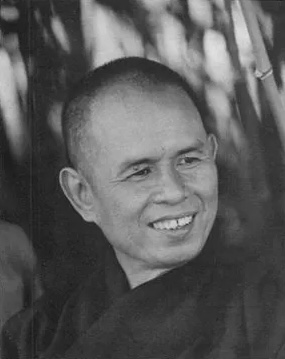
    In his gentle and profound way, Thich Nhat Hanh reminds us that we are already what we seek to become. Like a wave searching for water, we often find ourselves running in circles, seeking stability and peace, when in fact we are already made of the very essence we are searching for.

    In the previous post, we reflected on the words, “Be still and know that I am God,” and on the teachings that the Kingdom of God is within us, not something to be sought outside. Thich Nhat Hanh offers a similar invitation to stillness, a reminder that we need not search beyond this moment to touch the Divine. His teachings on apranihita—aimlessness—invite us to stop running after something outside of ourselves. The Buddha is not somewhere far away, hidden behind our efforts; the Buddha is within us, right here, right now. We don’t need to become something else or achieve some great transformation to touch the truth of our being. We only need to stop, to recognize that what we are seeking is already present in us.

    This echoes the Christian mystic path as well, where we are called to enter the stillness, to trust in the unfolding of the Divine presence within. St. John of the Cross speaks of surrendering into the Divine presence that is always here, guiding us without the need for striving. The great mystics remind us that the more we seek, the further we may feel from the truth. Yet when we stop seeking, when we allow ourselves to simply be, we find that the Kingdom of God is already here, waiting for us in the stillness of our own hearts.

    Thich Nhat Hanh’s teachings give form to this same truth. He uses the image of a wave to help us understand that we are not separate from what we seek. Just as the wave is made of water, we too are made of the very essence we long to touch. The wave doesn’t need to run after the water; it is already water. The black cloud doesn’t need to become a white cloud; it only needs light to shine on it, revealing what was always there. In the same way, we don’t need to become something else to experience peace. We need only to stop, to rest in the awareness of who we already are.

    As both Sri Nisargadatta Maharaj and Papaji have taught, the very act of searching can take us further from what we seek. Papaji even wrote a book titled Call Off the Search, emphasizing that the more we search, the more we reinforce the illusion that the truth is somewhere else. This persistent search keeps us from realizing the truth that is already right here, right now. By continuing to look outside of ourselves, we create a sense of distance, when in reality there is no distance at all—only the stillness of the present moment, where what we seek has always been.

    “You are already what you want to become,” Thich Nhat Hanh says. Yet we spend much of our lives not believing this truth, searching for happiness, fulfillment, and wisdom outside of ourselves. Whether it’s the Kingdom of God, Buddha-nature, or enlightenment, we chase after these ideas as though they are separate from us. But all of the great teachers—whether it be Jesus, the Buddha, or St. John of the Cross—urge us to look within. They tell us that when we stop running after what we already are, we can finally rest in the truth that has always been there.

    This is what Thich Nhat Hanh calls aimlessness. The practice of aimlessness is to no longer place something in front of you to chase after. It is to recognize that everything you are searching for is already here. By stopping the search, by becoming still, we can touch the wonders of life that are already present in this moment.

    In one of his talks, Thich Nhat Hanh describes this stillness beautifully: “The Kingdom of God, the Pure Land of the Buddha, is available in the here and now.” He reminds us that happiness is found in the simple things—a rose, the fresh air, a loving smile. Like the wave that need not search for water, we need only to stop and recognize the treasures already around us, treasures that we so often miss because we are running in circles.

    Thich Nhat Hanh teaches that walking meditation can be a wonderful way to practice this stopping, this resting in the here and now. Each step is not taken with a sense of rushing to arrive somewhere, but with the awareness that we are already where we need to be. With each step, we arrive fully in the present moment, touching the peace, the beauty, and the wonder that is always available. It is a practice that brings us back to the present, back to ourselves, and back to the truth that there is nothing to attain.

    “You don’t need to become a Buddha,” Thich Nhat Hanh says, “You are already a Buddha.” You don’t need to search for the Divine; the Divine is already within you. It is only when we stop running that we can finally touch this truth. Like the black cloud that becomes a white cloud when the light shines upon it, we are transformed by the simple act of recognition. In the stillness of aimlessness, we realize that there is no distance between us and what we seek.

    As we continue our contemplative journey, may we learn to embrace the wisdom of aimlessness. May we stop chasing after what is already here, within us. And in that stopping, may we find the peace, the joy, and the freedom that comes from recognizing that we have always been enough.
    🙏🕊️🙏

  • Sitting at the Door: A Buddhist and Mystical Practice

    Sitting at the Door: A Buddhist and Mystical Practice

    The Cloud of Unknowing teaches us to sit at the door of divine mystery, letting go of effort and surrendering to grace. This mirrors profound teachings in the Buddha Dharma, emphasizing direct experience, trust, and stillness.

    The Buddha’s phrase “Ehi Passiko” (Come and see) invites us to encounter truth directly—not through intellectual striving, but through quiet observation. In the Satipatthana Sutta, mindfulness is described as simply observing the body, feelings, and mind as they arise, with no need to grasp or resist.

    This is like sitting at the door of unknowing: allowing thoughts, emotions, and sensations to come and go, while resting in awareness. We are not called to force understanding or make something happen; we simply sit, trusting the process.

    Another Buddhist teaching, Vossagga (letting go), encourages us to release grasping and surrender to the natural flow of life. Even the ego’s restlessness becomes part of the practice, not something to fight against. As we trust the unfolding of awareness, stillness grows.

    This gentle practice reminds us that neither the ego nor effort creates transformation—it is the natural interplay of surrender and grace. Whether we call it divine love or pristine awareness, sitting at the door reveals a deeper truth.

    How can you embrace this today? Simply sit. Let go. Trust.

    #Contemplation #Mindfulness #CloudOfUnknowing #Buddhism #Stillness #Grace

    🙏🕊🙏

  • Renewal in Stillness: The Quiet Strength of Sitting at the Door

    Renewal in Stillness: The Quiet Strength of Sitting at the Door

    In a world that celebrates action, stillness offers a different kind of renewal. Sitting at the door of unknowing—open, patient, and without expectation—allows a subtle yet profound transformation.

    Renewal doesn’t have to mean physical strength or outward achievements. It can be the quiet resilience to face life’s challenges, the emotional peace to let go of striving, and the trust to simply be.

    In this practice, strength is not about doing more but about surrendering more deeply. Renewal arises not from effort but from grace, gently unfolding as you rest in the simplicity of presence.

    Sitting at the door is enough. Renewal comes when we stop chasing it and allow it to find us.

    🙏🕊🙏

  • On this December 15th, as we find ourselves in the midst of a busy season, it’s a wonderful opportunity to reflect on what truly matters.

    On this December 15th, as we find ourselves in the midst of a busy season, it’s a wonderful opportunity to reflect on what truly matters.

    In moments of busyness or stress, we can look to Psalm 46:10, which says, “Be still, and know that I am God.” This verse reminds us to take time to pause and recognize God’s sovereignty and presence in our lives.

    Embracing stillness can lead us to deeper peace and understanding. Perhaps today could be a day for you to practice that stillness—whether through prayer, meditation on Scripture, or simply taking a few moments of quiet reflection.

    How do you usually find peace amid the hustle and bustle?

    🙏🕊🙏

  • Sitting at the Door: Contemplation as Spiritual Rest

    Sitting at the Door: Contemplation as Spiritual Rest

    In The Cloud of Unknowing, the author describes contemplation as a form of “spiritual sleep.” This isn’t physical sleep but a metaphor for the quieting of the active, discursive mind. It’s a state where the soul surrenders to divine mystery, resting in stillness and trust.

    Contemplation, like spiritual sleep, is not about doing—it’s about resting. It invites us to let go of striving, reasoning, or trying to achieve. Instead, we allow ourselves to simply be in the moment, releasing the need to understand or control.

    This restful quality makes contemplation deeply transformative. By sitting at the door, we step into a space where the usual busyness of thought subsides. In this stillness, we aren’t unconscious but profoundly present—open to grace and insight beyond the grasp of the mind.

    Here are a few reminders to guide you in this practice:

    Rest in Not-Knowing: Let go of the need for answers or outcomes. Allow the mystery to hold you.

    Surrender Effort: Contemplation is not something you achieve but something you allow. Trust that simply sitting is enough.

    Embrace Stillness: Like the restful quality of sleep, let the mind settle naturally without forcing it to be quiet.

    When you sit at the door, remember that this practice is about creating space for grace to unfold. Whether thoughts arise or the mind becomes still, you are already practicing. By resting in this spiritual sleep, you connect with a deeper awareness that transcends the ordinary.

    Contemplation isn’t about doing—it’s about resting. And in that resting, profound transformation is quietly at work.

    #Zen
    #Zazen
    #LivingTheDream
    #MindfulnessMatters

  • Balancing Strong Determination and Just Sitting in Practice

    Balancing Strong Determination and Just Sitting in Practice

    Meditative practice offers many paths, each with its unique approach to cultivating awareness and equanimity. Two practices that beautifully complement each other are Adhitthana (strong determination sitting) and the practice of just sitting.

    What is Adhitthana?
    In Vipassana meditation, Adhitthana translates to strong determination or resolve. It involves committing to sit with absolute stillness for a set period—whether one minute, five minutes, or longer. During this time, the practitioner resists the urge to move, scratch, or adjust, no matter what sensations or thoughts arise.

    The purpose is not to create tension but to cultivate mental strength and patience. By sitting still, you observe discomfort, restlessness, or thoughts with equanimity, realizing that they, too, will pass. This practice sharpens focus and builds resilience.

    What is Just Sitting?
    On the other hand, the practice of just sitting is about letting go of effort. It invites you to allow everything—thoughts, sensations, and even subtle movements—to arise naturally. There’s no striving for stillness or achievement. Instead, it’s an act of surrender, simply being present without resistance or judgment.

    How Do These Practices Work Together?
    While they may seem different, Adhitthana and just sitting are complementary:

    Adhitthana strengthens discipline and equanimity, helping you navigate discomfort with grace.

    Just sitting emphasizes openness and surrender, encouraging a relaxed acceptance of what is.

    By alternating these practices, you can experience the benefits of both. For instance, you might set aside a few minutes for Adhitthana to cultivate stillness, then transition into just sitting to release effort and rest in awareness.

    Finding Balance in Your Practice
    There’s no “right” way—only what feels supportive in the moment. Both practices honor the essence of meditation: being present with what is. Whether you’re sitting still with strong determination or allowing movement and thoughts to flow, each approach deepens your connection to the present.

    Remember, the goal is not perfection but presence. Through these practices, you learn to meet both stillness and movement with equanimity, trusting that each has its place in the journey of self-discovery.

    #Zen
    #Zazen
    #LivingTheDream
    #MindfulnessMatters

  • Nothing Is Happening: The Profound Simplicity of Sitting Practice

    Nothing Is Happening: The Profound Simplicity of Sitting Practice

    In the practice of sitting at the door of contemplation, we often expect something to happen—insight, peace, or even enlightenment. But the deeper truth of the practice is this: nothing is happening.

    This doesn’t mean the practice is empty or pointless. Quite the opposite. It invites us to rest in the simplicity of just sitting, letting go of the need for results or experiences. Whether thoughts arise or stillness emerges, the essence of the practice remains untouched.

    Even when “something” seems to happen—discursive thoughts, emotions, or sensations—it’s all part of the flow. In the vastness of awareness, these waves rise and fall, and yet nothing truly happens. The mind seeks meaning or progress, but the practice reminds us that the profound is found in the ordinary.

    The Zen saying “Enlightenment is nothing special” echoes this wisdom. By resting in the present moment without striving, we discover the extraordinary within the mundane. Whether the mind is busy or still, whether the body is at ease or in discomfort, the practice holds steady.

    So, when you sit at the door, let go of the need for something to happen. Trust in the simplicity of the posture, the breath, and the stillness. By allowing the moment to be as it is, you discover the quiet power of simply being.

    In sitting practice, the phrase “Nothing is happening” becomes a mantra of freedom. It liberates us from striving and invites us to rest in the truth of the present.

    How does it feel to embrace the idea that nothing is happening?

    #Zen
    #Zazen
    #LivingTheDream
    #MindfulnessMatters

  • Into the Mystic: The Journey from Meditation to Contemplation

    As I re-read the works of St. John of the Cross, I have become more attuned to the threshold of transition—the dryness and emptiness that so often precede the invitation to move from meditation into contemplation. This is not unique to St. John; it is something pointed to by many of the great teachers. Whether it’s Namkhai Norbu, Ramana Maharshi, Thich Nhat Hanh, the Dalai Lama, or Orgyen Chowang in Pristine Mind, they all plant the seeds of meditative absorption, which only take root when the time is right. Now, it seems, those seeds are beginning to bloom, not as intellectual concepts, but as a living, unfolding experience.

    Today, I found myself drawn into this quiet transformation. As I lay in stillness, the pratyayas—those passing thoughts, sensations, and memories—began to rise and fall, like waves on a distant shore. Curiosity, that soft and patient witness, guided me deeper, not into understanding but into presence.

    The breath came of its own accord, a deep release from somewhere beyond my conscious will, as if the body itself knew what needed to unfold. And then, an awareness—a spaciousness—arose. It was not something I had summoned, nor could I hold it in place. It was simply there, naked and pure, like a clear blue sky.

    St. John of the Cross speaks of this as a kind of surrender, but not the kind we can choose. It is a grace bestowed, not earned. In the stillness, I realized that my role was not to force this shift but to allow it to happen. To remain as the observer, the witness, as the Divine unfolded in its own time.

    What struck me most deeply was the paradox of this surrender. The very act of trying to let go becomes an obstacle. Instead, it is curiosity that opens the door to pure awareness—curiosity that has no desire, no need for something to happen, but simply observes what is.

    Today, in this unfolding, I realized that even the longing for deeper experience can become a barrier. The path is not one of striving but of witnessing. And in that witness, the Divine does its quiet work, purifying what needs to be released, and bringing us ever closer to the essence of who we truly are.

    As I reflect on my own journey today, it is my hope, and the shared intention (Sankalpa) behind all of this work, that by sharing these reflections, insights, and experiences, they may serve as a guide, a comfort, or a spark of inspiration to those who come across them.

    🙏🕊️🙏

    Book Recommendation: St. John of the Cross, Dark Night of the Soul

    Dark Night of the Soul by St. John of the Cross is a spiritual masterpiece that explores the transformative power of suffering and the journey toward union with the Divine. This work describes the profound spiritual experience of being stripped of all attachments, both inner and outer, as a necessary process for purification and deeper connection with God. For those experiencing a time of spiritual dryness or emptiness, St. John’s words offer hope and guidance through the darkness, illuminating the path to deeper faith and surrender. The Dark Night is not a time of despair, but of ultimate transformation, where we are invited to let go of our limited understanding and trust in the unfolding of the Divine. This book serves as a timeless companion for anyone navigating the challenges of the contemplative path, especially those who feel drawn to the shift from meditation to deeper contemplation.

    Book Recommendation: Orgyen Chowang, Our Pristine Mind

    In The Pristine Mind, Orgyen Chowang offers profound teachings on accessing our natural state of mind—a state of clarity, openness, and peace. He draws from the Dzogchen tradition, emphasizing that our true nature is already pure and perfect, and that through practice, we can return to this unconditioned state. For those on a contemplative journey, Chowang’s words provide a practical path for moving beyond mental noise and distractions, guiding us back to the inherent stillness of the mind. This book is especially helpful for those who wish to deepen their meditation practice or shift from intellectual understanding to living experience. The Pristine Mind invites readers to discover the profound joy and serenity that arises when we rest in the awareness of our true nature.

  • Discovering Mystical Contemplation: The Alter Rebbe’s Practice of Hitbonenut and Bittul

    Discovering Mystical Contemplation: The Alter Rebbe’s Practice of Hitbonenut and Bittul

    Explore the transformative path of Hitbonenut and Bittul in Jewish mysticism, as practiced by the Alter Rebbe, to reach direct experience and divine unity.


    Translation of the Hebrew Text in the Above Image

    “… the esteemed Rabbi Schneur Zalman of Liadi, the great sage and author of the book Tanya, in his later years would immerse himself daily in deep contemplation and focus on achieving Hitbonenut and Bittul, self-nullification, before beginning his prayers. He would sit in a secluded area and enter a state of spiritual readiness, preparing himself to reach closeness to the divine through his meditative practices. Those who observed him would attest to the honor and respect that this revered practice commanded, reflecting his commitment to true divine connection.”


    Discovering the Boundless: The Alter Rebbe’s Practice of Hitbonenut and Bittul

    In the rich tradition of Jewish mysticism, Hitbonenut and Bittul are contemplative practices often approached as meditative paths focused on divine ideas. These practices are frequently interpreted as ways of concentrating on spiritual concepts to deepen one’s understanding. However, the Alter Rebbe, Rabbi Schneur Zalman of Liadi—the founder of Chabad Hasidism—offers us a window into a more profound dimension of these practices, where contemplation moves beyond intellectual meditation and opens into direct experience.

    The Alter Rebbe’s personal practice of Hitbonenut is a cornerstone of Chabad Chassidus. According to tradition, he would spend hours in Hitbonenut before beginning his prayers, not merely analyzing divine concepts but immersing himself in a state of awareness that dissolves the self into the infinite, what Jewish mysticism calls the Ein Sof—the boundless and limitless aspect of the divine.

    In this expansive approach to Hitbonenut, contemplation shifts from thought-focused meditation to an experiential opening, leading to what other traditions describe as the “pristine mind” or “pure contemplation.” By embracing the formless, open nature of awareness, the Alter Rebbe connected to a state beyond the grasp of the ego, inviting direct experience of the divine presence.

    This journey is deepened through Bittul, or self-nullification. Where Hitbonenut opens the door to spacious, boundless awareness, Bittul is the surrender of the self into that awareness. It’s a release of the ego’s hold, a quieting of personal identity that allows a merging with the infinite. This act of surrender is not a negation but an opening—a dissolving of the self to align fully with divine unity.

    For those of us seeking to understand Hitbonenut and Bittul in this way, the Alter Rebbe’s practice offers a reminder that contemplation in its purest form transcends the intellect. It’s not about conceptual analysis but about experiencing divine unity as a living reality. As we explore this path, we step beyond thought, into the boundless.

    In upcoming posts, we’ll further explore the practical steps, reflections, and guidance to cultivate these practices. Hitbonenut and Bittul invite us into the spaciousness of mystical contemplation, guiding us from understanding to a direct encounter with the divine.

    🙏🕊️🙏

    Book Review: Rabbi Schneur Zalman of Liadi: The Philosophy of Chabad by Nisan Mendel

    Nisan Mendel’s Rabbi Schneur Zalman of Liadi: The Philosophy of Chabad is a profound exploration of the life and teachings of one of Jewish mysticism’s most influential figures. Rabbi Schneur Zalman, known as the Alter Rebbe, was the founder of the Chabad movement, and his teachings remain central to Hasidic philosophy and contemplative practice today.

    Through this work, Mendel delves into the essence of Chabad philosophy, particularly its unique approach to Hitbonenut (contemplative meditation) and Bittul (self-nullification). Readers are introduced to the Alter Rebbe’s belief that intellectual understanding can be a pathway to divine experience, bridging the mind and heart to foster a deep connection with God. The book sheds light on the Alter Rebbe’s methods for approaching mystical contemplation, offering practical insights for those looking to incorporate these timeless practices into their own lives.

    Mendel’s accessible writing and thoughtful explanations make complex topics approachable, while his reverence for the subject shines through, bringing Rabbi Schneur Zalman’s teachings to life. This book is especially valuable for readers who wish to understand the spiritual framework of Chabad and its emphasis on meditative thought as a means to reach divine awareness.

    Whether you’re new to the ideas of Hitbonenut and Bittul or are already on a contemplative journey, The Philosophy of Chabad offers a valuable gateway to the Alter Rebbe’s approach to mysticism. By providing both philosophical insights and practical approaches, Mendel encourages readers to go beyond surface understanding and explore the depths of Chabad’s spiritual tradition.

    🙏🕊️🙏

  • Seeking the Kingdom of God: The Paradox of Perfection and Presence

    The mystic journey is one of paradox—seeking that which is already present. Across traditions, whether in Christian teachings about the Kingdom of God or in non-dual philosophies like Advaita Vedanta and Buddhism, the central truth remains: the divine, or perfection, is already here, but it must be realized through spiritual insight. As Jesus said, “The Kingdom of God is within you” (Luke 17:21), yet for most of us, it remains hidden behind the veil of ego and conditioned perception.

    The Spiritual Paradox:

    At the heart of many mystical teachings is the idea of striving for a perfection that we will never attain—because it is not something to attain. It’s not a destination, but a present reality we fail to recognize. This paradox mirrors the Christian teaching of seeking the Kingdom of God, even though it’s already in our midst. In this journey, we are continually asked to refine ourselves, knowing that the striving itself is a tool for unveiling the deeper truth that we are already complete.

    In the words of a friend: “Strive always for perfection, knowing that you will never attain it, and yet you’re as perfect as you will ever be.” This echoes not only in Christian thought but also in the non-dual traditions of the East. Whether it’s Brahman or Buddha-nature, spiritual traditions agree that the ultimate reality is not something the ego-self can grasp or reach.

    Having Eyes to See and Ears to Hear:

    Jesus emphasized that the Kingdom of God is already here for those who have “eyes to see” and “ears to hear.” This teaching parallels the non-dual realization that enlightenment or liberation is not a distant goal, but a shift in awareness. It’s about seeing through the illusion that we are separate from the divine or that the divine is elsewhere.

    In the mystic experience, the ego—the self that seeks—is a pratyaya (a conditioned phenomenon), something that must dissolve for true realization to occur. The ego can never “attain” enlightenment, because the one seeking is part of the illusion. The task, therefore, is to see through this illusion. As Jesus said, those who are spiritually awake can recognize that the Kingdom of God is already here.

    The Practice of Seeking:

    Even though we are already in the Kingdom, we must continue to strive. This striving is not about accumulating spiritual merit or becoming more worthy. It’s about peeling back the layers of ego and illusion to reveal the truth that has always been there. The very act of seeking becomes a practice in humility and surrender, recognizing that the self cannot attain the Kingdom, but that the realization of the Kingdom involves a shift in consciousness—not in achievement.

    In Buddhism, this is the realization of emptiness or shunyata—the recognition that all things, including the self, are empty of inherent existence. In Christianity, it’s the surrender to God’s will and the realization that “it is no longer I who live, but Christ who lives in me” (Galatians 2:20).

    Conclusion:

    The mystical path is one of paradox and deep humility. We strive to seek perfection, knowing that the ego will never attain it, because the perfection we seek is beyond time, space, and the limitations of the mind. We often speak of this perfection as being “present,” yet the present itself is elusive. As we’ve observed, the present moment can never truly be experienced by the senses—by the time we become aware of it, it has already slipped into the past. The perfection we seek is not in the present as we conventionally understand it, but rather beyond time itself, in the timeless reality that transcends the ego.

    This is why enlightenment cannot be made to happen. As Red Anderson said, enlightenment is like an accident—a spontaneous revelation beyond our striving and beyond our ego. And yet, the purpose of practice, whether in Zen, Christian mysticism, or other spiritual traditions, is to make us accident-prone. Practice, mindfulness, and ethical discipline create the conditions for enlightenment or grace to arise, even though we cannot control when or how it will happen.

    In this way, the act of striving itself becomes a form of grace—not because we earn grace through effort, but because our striving prepares us to receive what is already present. Grace, in the spiritual sense, is not something we can control or achieve. Rather, it is a gift that arises when the striving dissolves. Like rain that falls when the soil is ready, grace arrives spontaneously, not as a reward, but as a revelation of the truth that has always been.

    This is why mystics across traditions teach that while we cannot force grace to appear, we can create the conditions for it. Practices like prayer, meditation, or mindfulness soften the ego and open us to receive what is already here. In this sense, grace is the ultimate outcome of our paradoxical journey—not something earned through effort, but something realized when we let go of the need to attain it.

    Thus, as we strive, we also surrender. And when grace arrives, it reveals that the perfection we seek has always been present, beyond time and striving. This recognition dissolves the illusion of separation and resolves the paradox: the Kingdom of God, or enlightenment, was never distant—it was simply waiting to be seen.

    This mirrors the paradox of non-duality in a world of duality: we appear to strive, yet the truth we seek is always here, beyond time and duality. Practice, whether Zen meditation, mindfulness, or prayer, is a way to soften the ego, make us open, and create the conditions for the Kingdom of God, enlightenment, or grace to spontaneously arise. In this sense, we become like a field prepared for rain—we cannot control when the rain will come, but by cultivating the soil, we make ourselves accident-prone to the downpour of grace.

    Thus, in the mystic journey, striving and letting go are not opposites but two parts of the same dance. We strive, knowing we cannot ‘make it happen,’ but in doing so, we prepare the ground for the possibility of grace.

    The beautiful metaphor of becoming “accident-prone” weaves it into the ongoing theme of striving without attachment. It acknowledges the value of practice, even when we know the ego cannot reach enlightenment directly, and creates a sense of the mystical unfolding that happens when conditions are right.

    The mystic experience is ultimately about recognizing that what we seek has always been here, and in this recognition, the striving itself becomes a form of grace.

    🙏🕊️🙏

  • Neti Neti Series No. 14: Trusting in the Timing of Spiritual Understanding

    Question:

    I heard about this mantra many years ago, but it just didn’t click. And now it’s clicking. Why is it that something I once heard about long ago suddenly “clicks” now, as if it was waiting for the right moment in my life?

    Dear friend,

    There is a quiet wisdom in the way certain teachings or practices find their place in our lives. You mention that you first heard of this mantra many years ago, but that it didn’t resonate with you at the time. And now, suddenly, it clicks. This is a moment of grace, one that reflects the mysterious timing of our spiritual journey—where everything unfolds when it is meant to, when we are ready to receive it.

    Often, we encounter teachings long before we are ready to truly understand or integrate them. They may seem distant, abstract, or simply irrelevant to our current state of being. But these teachings, like seeds, are planted in the fertile ground of our consciousness. They remain there, quietly waiting, until the conditions are right for them to sprout and grow.

    Now, it seems, the conditions are right for this mantra to take root in your life. Something within you has ripened, has opened up in a new way, allowing you to receive the deeper meaning and power of these words. This is a beautiful and natural process, one that reflects the unfolding of your inner journey. The mantra has found its time, and now it can reveal its gifts to you in ways that were not possible before.

    There is a perfection in the timing of these moments, even though it might not always feel that way. We may wonder why certain practices or teachings don’t resonate with us at first, or why we seem to struggle with concepts that others find illuminating. But this is simply part of the journey—each of us has our own path, our own pace, and our own moments of awakening.

    When a teaching finally clicks, it’s as if a veil has been lifted, and what was once obscure becomes clear. This clarity is not forced; it arises naturally, out of the ripening of our own understanding and experience. It is a reminder that the spiritual path is not linear but cyclical, with periods of growth, rest, and renewal. Each cycle brings us closer to the heart of the truth we seek, even if the journey sometimes feels long and winding.

    Now that this mantra has clicked for you, it can become a powerful companion on your journey. Its simplicity, its resonance with where you are now, makes it an ideal focus for your practice. Embrace it with an open heart, knowing that it has come to you at the perfect time, just when you are ready to receive it.

    Let the mantra guide you, not just in meditation, but in your daily life. Allow it to become a thread that weaves through your thoughts, your actions, your moments of stillness. In this way, the mantra becomes more than just words—it becomes a living presence, a source of strength, clarity, and peace.

    This experience also invites you to trust in the journey itself, in the timing of the path that you are on. There is no need to rush, no need to grasp at teachings before their time. Everything unfolds as it is meant to, when you are ready to receive it. The seeds of wisdom that have been planted along the way will sprout when the conditions are right, and not a moment before.

    So continue with your practice, dear friend, with the confidence that this mantra has found its rightful place in your life. Trust in the wisdom of your path, and know that you are exactly where you need to be, at exactly the right time.

    🙏🕊️🙏

  • Neti Neti Series No. 13: The Realization of the “I” and Its Journey Toward Enlightenment

    Question:

    In realizing that “I” will never be enlightened, does this mean that the goal of enlightenment is out of reach? How can I reconcile this understanding with the continued practice of drawing closer to enlightenment, even if it cannot be fully attained by the ego?

    Dear friend,

    Your insight that “I will never be enlightened” is one of the most profound realizations one can encounter on the spiritual path. This understanding marks a turning point, where the journey shifts from the pursuit of a goal to the practice of embodying the qualities that lead one closer to enlightenment—qualities that can be lived and expressed in every moment, even if they cannot be possessed by the “I.”

    Enlightenment, as you now see, is not something that the “I” can achieve, for the “I” is precisely what dissolves in the light of true awakening. The very sense of being a separate self, striving for a state called enlightenment, is itself part of the illusion that enlightenment reveals and transcends. This is not to say that the journey is futile, but rather that the journey transforms into something far more subtle, more profound, and more aligned with the truth of our existence.

    Instead of seeing enlightenment as a distant goal, you have wisely turned your attention to the practice of being as close to enlightenment as possible. This is a practice not of attaining, but of allowing—allowing the mind to quiet, the heart to open, and the “I” to soften. It is a practice of aligning with the qualities that reflect the light of enlightenment: peace, compassion, clarity, and presence.

    In this practice, there is no need for the ego to strive or grasp. Instead, there is a gentle surrender to the truth that is already within you, waiting to be uncovered, like the sun behind the clouds. The more you practice, the more these qualities shine through, guiding your actions, your thoughts, and your interactions with the world.

    There is great freedom in this realization. The pressure to “become enlightened” falls away, leaving behind a sense of ease and acceptance. You are no longer bound by the idea that you must reach some ultimate state; instead, you are free to simply be, to practice embodying the light of enlightenment in whatever way is possible in each moment. This is not a lesser path; it is the path of wisdom, one that honors the truth that enlightenment is not something to be grasped, but something to be lived.

    Your journey now takes on a new quality. It becomes less about reaching a destination and more about how you walk the path. Every step, every breath, every moment of presence becomes an expression of the enlightenment you seek. And in this way, enlightenment is not something that happens in the future, but something that you touch, however briefly, in the here and now.

    Dear friend, this realization is a gift. It invites you to embrace the present moment, to find the divine in the ordinary, and to let go of the need to “achieve” something that, in truth, cannot be achieved by the “I” at all. Instead, you practice being close to enlightenment, knowing that in the very act of practicing, you are already touching the essence of what you seek.

    Trust in this process, and continue to walk this path with a light heart. Know that the practice itself is enough, that the journey is the destination, and that in the softness of the “I,” the light of enlightenment shines ever more clearly.

    🙏🕊️🙏