Tag: Spiritual Awakening

  • The Spark Within: A Journey of Inner Awakening

    There’s a light within each of us—an undeniable, ever-present spark. This light, though sometimes hidden, is never truly absent. It may flicker when the winds of confusion blow or dim when the shadows of doubt creep in, but it is always there, quietly waiting to be noticed, nurtured, and allowed to grow.

    For many, the journey toward that inner light is complicated by the noise of the world—by dogma, expectations, and the need to “belong” to a certain path. But the truth is, this light doesn’t belong to any one religion or tradition. It is the essence of all paths, the core of what it means to be human. And it is awake within you, even now, quietly glowing, waiting for your attention.

    Beyond Dogma, Into the Heart of Spirituality

    Perhaps you’ve felt it—this pull toward something deeper, something spiritual, but without the constraints of organized religion. Many feel this way, walking a fine line between the spiritual yearning within them and the weight of doctrines and beliefs that feel restrictive. The good news is that the essence of spirituality is not found in rigid dogma but in the spaciousness of the heart.

    The great mystics of every tradition—whether Jewish, Christian, Buddhist, or others—have pointed to the same truth: the divine is already within us. Jewish mystical teachings speak of the divine spark within every soul, a reflection of God that can never be extinguished, no matter how much the world may try to cover it.

    As we walk our own unique paths, there is no need to choose between spirituality and religious identity. You don’t have to subscribe to a particular belief system to nurture the light within you. All you need is a willingness to be present with yourself, to sit quietly with that spark, and give it space to breathe.

    Fanning the Flame

    When you feel that spark flicker, pay attention. You may not need to do anything grand. Simply acknowledge it, as you would the first sign of dawn, and let it unfold naturally. Like sunshine and water for a plant, the light within needs only a little attention, a little care, and it will grow.

    This is not about seeking or striving. It’s about letting go of the distractions that pull you in different directions and coming back to that simple truth: you already have everything you need. The divine presence you seek is already alive within you, waiting for you to notice it.

    Whether through moments of quiet reflection, connection with others, or simply being with the world around you, this light will grow. It doesn’t require the labels of religion or the boundaries of belief. It only asks for your awareness, for the quiet recognition that it is there—and that it has been all along.

    A Shared Journey

    Remember, you are not alone in this journey. Throughout history, countless others have walked the path of spiritual discovery, often feeling the same pull toward something deeper. The great mystics, the sages, the poets, and even those who quietly reflect on their own lives, have all touched this truth: that our essence is divine, that we are all connected, and that the light within us is the very light of the universe.

    You have already felt this light. You have already seen it, even if just for a moment. Trust in that, and allow yourself to be curious, to explore it further without fear or hesitation. There is no rush. There is only the gentle unfolding of what has always been true: you are that light, and it is enough.

    In today’s world, we often exchange greetings without much thought. Words like “How are you?” or, in Hebrew, “Ma Shalom Cha?”—which many now interpret as “How are you?”—slip past us with little depth or reflection. But Ma Shalom Cha is much more than just a casual greeting. In its original meaning, it asks, “How is your peace?”—“How is your inner peace? How is your connection with the divine?”

    When I met Avi, a young man on his own spiritual journey, I looked into his eyes and asked him, “Ma Shalom Cha?” At first, it seemed to him like the casual phrase he’d heard a thousand times. But when I explained the true meaning, he paused. For perhaps the first time, he understood that I wasn’t just asking how he was doing, but how his peace was. How was his soul resting in the presence of the divine?

    It was a moment of awakening, a recognition of something deeper. In that moment, Avi saw the light within himself, the divine spark that flickers beneath the surface, often hidden by the noise and distractions of modern life.

    Beyond Dogma, Into the Heart of Spirituality

    In a world where even deep questions like “Ma Shalom Cha?” have been reduced to casual greetings, it’s easy to feel pulled in different directions, confused by dogma or by what others expect us to believe. But the truth is, the essence of spirituality is not found in rigid rules or religious identities. It is found in the quiet, gentle presence of peace within each of us.

    The great mystics of every tradition—from Jewish mysticism to the teachings of the East—all point to the same truth: the divine is already within us. The spark of God, the neshama, is already alive in each soul, and it doesn’t need labels or doctrines to be real. It only asks for our attention, for us to pause and reflect: How is my peace?

    Fanning the Flame

    The modern world often reduces “Ma Shalom Cha” to a simple “How are you?” and “Ma Nishma?” to “What’s up?”—losing the sacred depth these phrases once carried. But the light within you is not lost, and the questions themselves still hold power if we let them.

    When we take the time to sit with these questions—How is my peace? How is my soul?—we give the divine spark within us space to breathe. It’s not about striving for enlightenment or seeking external answers. It’s about recognizing that the peace you seek is already there, waiting to be acknowledged. Like sunshine and water for a plant, this inner peace grows with care and awareness.

    A Shared Journey

    So I ask you, as I asked Avi: Ma Shalom Cha? How is your peace? Not as a casual greeting, but as an invitation to look inward, to nurture the light within you. And as we close, I’ll ask you a deeper question: Ma Nishma? How is your soul?

    In a world that often reduces these profound questions to surface-level exchanges, let’s reclaim their depth. Let’s reconnect with the divine spark within us, the light that ties us all together. It’s there, waiting to be seen, to be nurtured, and to grow. The peace you seek, the light you long for—it’s already within you.

    Adonai Echad—the Lord is One. It beautifully echoes the truth of oneness that transcends all divisions. In the heart of all traditions, we find this profound recognition that there is only one source, one truth, one Divine presence, no matter how we name or perceive it.

    The unity of Adonai Echad reminds us that, despite the apparent differences in our paths, we are all connected, all part of that oneness. It’s a call to embrace the shared divinity in ourselves and others, to see beyond the surface and recognize the sacred unity that binds us all.

    All you need is a willingness to be present with yourself, to sit quietly with that spark, and give it space to breathe.

    🙏🕊️🙏
  • Introduction to Hatha Yoga: The Path of Physical Mastery and Inner Balance

    Hatha Yoga is the yoga of physical discipline, focusing on the practice of asanas (postures) and pranayama (breath control) to create a strong, flexible body and a calm, focused mind. Often seen as the foundation for other forms of yoga, Hatha Yoga serves as a preparatory practice that balances the physical and energetic systems, making the body a fit vehicle for spiritual awakening.

    The term “Hatha” can be translated as “forceful,” but it also represents the union of opposites—Ha (sun) and Tha (moon)—symbolizing the balance of solar and lunar energies within the body. Through the practice of Hatha Yoga, one seeks to harmonize these energies, cultivating both strength and serenity, vitality and relaxation.

    In this blog series, we’ll explore the foundational practices of Hatha Yoga and how they prepare the body and mind for deeper spiritual work.

    As we embark together on this journey of discovery and reflection, I warmly invite you to join me in exploring the depths of these ancient practices and teachings. Let this space be a sanctuary where we meet not just as seekers, but as companions on the path—a place where the wisdom of the ages can gently unfold within our lives.

    If these words and practices speak to something within you, if they stir a quiet longing or bring a sense of peace, I encourage you to subscribe to this blog. By doing so, you’ll be the first to know as new installments of our shared journey are published. It is my hope that each post will resonate with you, offering insights and comfort as we continue to explore these profound teachings together.

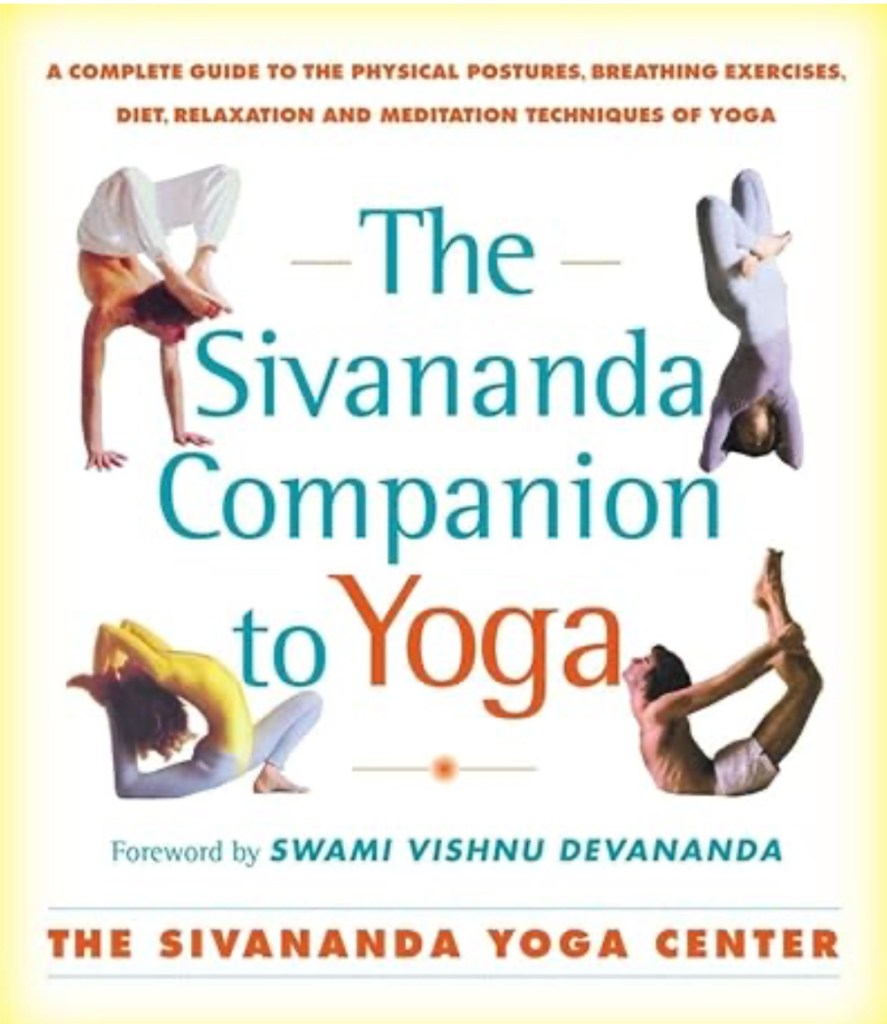
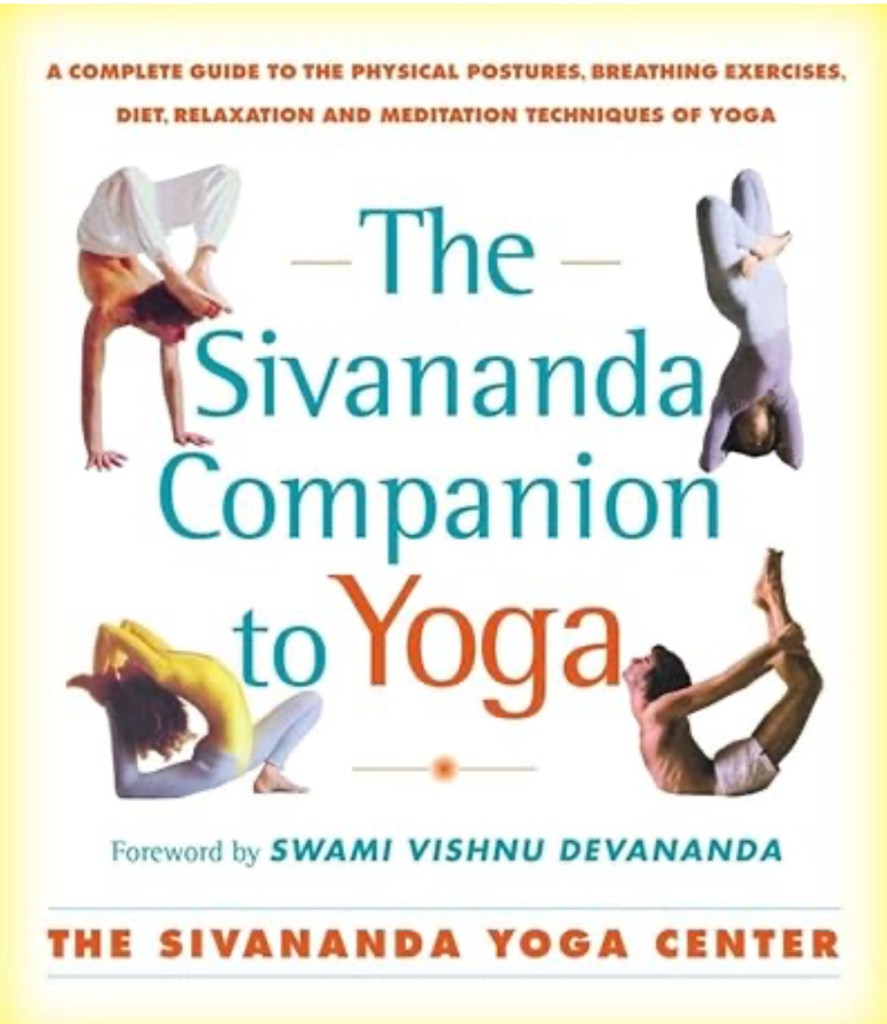
    For those interested in a comprehensive introduction to the practices of yoga, I recommend The Sivananda Companion to Yoga: A Complete Guide to the Physical Postures, Breathing Exercises, Diet, Relaxation, and Meditation Techniques of Yoga. This book offers clear guidance on the foundational aspects of yoga, making it an invaluable resource for anyone looking to deepen their understanding and practice. Take a look at this book on Amazon here.

    🙏🕊️🙏

  • Introducing the Neti Neti Practice Series: A Journey of Self-Inquiry

    Welcome to the Practices of Neti Neti series, an exploration into one of the most profound methods of self-inquiry within the Advaita Vedanta tradition. This series is dedicated to the practice of Neti Neti—a Sanskrit phrase meaning “not this, not this”—which serves as a guide for stripping away all that is not the true Self, leading to the recognition of our pristine, unchanging nature.

    What is Neti Neti?

    Neti Neti is a process of negation that helps practitioners identify and discard false identifications with thoughts, emotions, and sensations. It is a method of peeling back the layers of the ego to reveal the stillness and silence of the pristine mind—the pure consciousness that is unaffected by the fluctuations of the mind. This practice is at the heart of Advaita Vedanta and is used to guide the seeker toward the realization of the Self, or Atman, which is ultimately one with Brahman, the universal consciousness.

    About This Series

    In this series, you will find a collection of questions and answers that delve deeply into the practice of Neti Neti. Each question is a reflection of the natural inquiries that arise during meditation and self-inquiry. The answers are written in a contemplative and encouraging style, as letters from a friend —offering wisdom, clarity, and support as you navigate your own journey of self-discovery.

    Why Questions and Answers?

    The format of questions followed by reflective answers is inspired by the teaching styles of great spiritual masters like Ramana Maharshi and Papaji. This approach allows for a dynamic exploration of the practice, addressing the doubts and insights that naturally emerge as one progresses on the path. By engaging with these questions, you’ll find that the answers are not merely intellectual responses, but invitations to deeper inquiry and realization.

    How to Use This Series

    This series is designed to be read sequentially, as the posts build upon each other, following the natural flow of practice and understanding. However, you are also welcome to explore the posts in any order, depending on where you are in your own practice.

    Each post presents a question that might arise during your meditation or reflection, followed by a letter that offers guidance on how to address it. These letters are not just answers—they are invitations to deepen your practice, to explore the subtleties of Neti Neti, and to connect with the stillness that lies beyond all mental events.

    Beginning the Journey

    As you embark on this journey through the Neti Neti practice, remember that this path is not about attaining something new, but about recognizing what has always been present. The goal is to gently guide the mind away from its distractions, allowing the pristine mind—your true nature—to shine through.

    Whether you are new to Neti Neti or looking to deepen your understanding, I invite you to explore these letters with an open heart and a quiet mind. May they serve as a steady guide on your path to self-realization.

    Engage and Explore Together

    I warmly encourage you to leave any questions or reflections in the comments section of each post. If a question resonates deeply or sparks a new line of inquiry, I may create additional blog posts to explore these topics further. Your engagement helps to create a community of shared learning, where we can all benefit from each other’s insights and experiences.

    Let us begin this journey together, one question and one insight at a time, as we uncover the truth of who we truly are.

    For those who wish to explore further the concept of pristine mind and its practices, I highly recommend Orgyen Chowang Rinpoche’s book, Pristine Mind: A Journey into Self-Awareness. Although this book does not specifically address the Neti Neti practice, it offers profound insights into the nature of pristine mind, a state of pure awareness that lies beyond the mental events and distractions that often cloud our perception. Rinpoche’s teachings provide a clear and accessible guide to realizing and resting in this natural state, which closely aligns with the ultimate goal of Neti Neti. You can explore the Kindle version of this book below, which may serve as a valuable companion on your journey of self-inquiry and spiritual awakening.

    🙏🕊️🙏

  • Book Review: The Forty Rules of Love by Elif Shafak

    Introduction:
    The Forty Rules of Love by Elif Shafak is a remarkable novel that intertwines two parallel stories: the modern-day journey of Ella Rubenstein, who is undergoing a personal transformation through her engagement with a novel about Rumi and his spiritual teacher, Shams Tabrizi, and the historical relationship between Rumi and Shams in 13th-century Anatolia. Through these interconnected narratives, the novel explores themes of divine love, spirituality, and personal awakening.

    Background:
    At the heart of this novel is the transformative relationship between Shams Tabrizi and Jalal ad-Din Rumi. Shams, a wandering mystic known for his unconventional methods and profound wisdom, radically altered the course of Rumi’s life. Their bond became the source of Rumi’s spiritual awakening, leading him to write some of the most celebrated poetry in history.

    Shams’ teachings were rooted in Sufi traditions, emphasizing the dissolution of the ego, the centrality of love in spiritual practice, and the path toward divine union. His Diwan-i Shams-i Tabrīzī, a collection of poems attributed to him, captures his deep understanding of divine love. Shams’ presence in Rumi’s life was both disruptive and enlightening, awakening the poet to a higher consciousness, which Rumi expressed through his prolific works, including the Masnavi.

    The Forty Rules of Love:
    Elif Shafak’s novel is structured around the forty rules of love, which are teachings attributed to Shams. These rules serve as guideposts for navigating the human experience of love, both worldly and divine, and reflect key principles of Sufi mysticism. Shafak weaves these rules throughout the story, offering readers spiritual insights while engaging them in the personal struggles of her characters.

    Themes Explored:

    At the heart of The Forty Rules of Love lies a profound exploration of divine love, the kind of love that transcends the ordinary boundaries of human emotion. Through the lives of Rumi, Shams, and Ella, the novel delves deeply into the nature of love as both a mystical force and a transformative power. Shams’ teachings guide Rumi from a scholar and theologian into a poet of divine union, revealing love as a path that dissolves the ego and leads to spiritual awakening. This kind of love is not just a feeling but an illumination that binds the soul to the divine, guiding the seeker toward self-realization.

    Rumi’s own awakening, catalyzed by his connection with Shams, reflects this dissolution of the ego. In Shams’ eyes, the ego is the greatest barrier to true enlightenment. The novel, much like Rumi’s poetry, calls us to surrender the smaller self, to let go of the illusions we hold about our identity, and to step into a deeper experience of being—one in which we recognize that separation from the divine is the root of all suffering.

    Ella’s journey parallels Rumi’s in a modern context, as she begins to shed the constraints of her ordinary life, driven by a newfound understanding of love and spiritual depth. Her connection with the novel within the novel becomes a mirror to the relationship between Rumi and Shams, and she, too, is drawn into a process of inner transformation. The book masterfully illustrates how these timeless spiritual principles can apply to anyone, in any age, as they awaken to the deeper truths that exist beyond the confines of everyday existence.

    Ultimately, the novel’s greatest teaching may be that love, in its purest form, is the force that bridges all dualities—the sacred and the mundane, the earthly and the divine. Through the eyes of Shams and Rumi, readers are invited to experience love as the highest form of spiritual practice, one that calls us to be both fully human and fully connected to the infinite.

    Recommendation:
    For readers interested in spirituality, love, and personal growth, The Forty Rules of Love offers a rich, contemplative experience. Shafak’s storytelling, combined with the teachings of Shams Tabrizi, provides both entertainment and deep spiritual insight. Whether you’re a seasoned reader of Rumi’s works or new to Sufi mysticism, this novel is sure to leave a lasting impact.

    The Forty Rules of Love remains on my list for deeper exploration. I plan to engage with each of the rules more fully in the future, and this review serves as a placeholder for that deeper dive.

    🙏🕊️🙏

  • Book Review: The Hero with a Thousand Faces by Joseph Campbell

    Joseph Campbell’s The Hero with a Thousand Faces is a profound exploration of mythology and the universal archetype known as the Hero’s Journey. First published in 1949, this seminal work has influenced countless writers, thinkers, and spiritual seekers by uncovering the common narrative patterns that span cultures and eras. Campbell’s book is more than an academic study; it is a gateway to understanding the deep, symbolic language of myths and their relevance to our personal and collective spiritual journeys.

    The Essence of the Hero’s Journey

    At the heart of Campbell’s work is the concept of the Hero’s Journey, a universal template that he found in myths across the world. The journey begins with the hero’s call to adventure, followed by a series of trials and challenges, culminating in a transformation and a return to the ordinary world with newfound wisdom. This cycle of departure, initiation, and return is more than just a story structure; it represents the spiritual and psychological growth that we all experience in our lives.

    Campbell’s insight into the Hero’s Journey provides a powerful lens through which to view not only ancient myths but also modern narratives. By understanding this pattern, we can better grasp the inner workings of our own life stories—how we respond to challenges, grow from our experiences, and contribute to the world with the wisdom we’ve gained.

    Why The Hero with a Thousand Faces Matters

    One of the most compelling aspects of Campbell’s work is his ability to show that myths are not relics of the past but living stories that continue to shape our understanding of the world and ourselves. By revealing the common threads that run through myths from different cultures, Campbell invites us to see these stories as reflections of our shared human experience.

    In The Hero with a Thousand Faces, Campbell delves into myths from various traditions, illustrating how they all follow the Hero’s Journey in different yet fundamentally similar ways. This universality is what makes his work so inspiring and relevant. Whether you are drawn to ancient legends or modern storytelling, Campbell’s insights offer a timeless perspective on the transformative power of narrative.

    A Guide for Spiritual Seekers

    For those on a spiritual path, Campbell’s exploration of the Hero’s Journey provides a map for understanding the challenges and transformations inherent in personal growth. The trials of the hero can be seen as metaphors for the obstacles we face in our quest for meaning, enlightenment, or self-realization. By studying this pattern, we can gain insights into our own journeys and recognize that we are part of a much larger narrative—a collective story of transformation and return.

    Campbell’s work encourages us to embrace our own Hero’s Journey, to see our struggles as opportunities for growth, and to understand that our experiences, however difficult, are part of the universal process of becoming.

    Conclusion

    The Hero with a Thousand Faces is more than just a book about mythology; it is a profound exploration of the human experience. Joseph Campbell’s ability to distill the essence of the Hero’s Journey across cultures and eras makes this work an essential read for anyone interested in the power of stories, the universality of myths, and the spiritual journeys we all undertake.

    This book is not only a scholarly masterpiece but also a source of inspiration, offering readers a deeper understanding of the stories that shape our lives and the journeys we are all on. Whether you are a student of mythology, a writer, or a spiritual seeker, The Hero with a Thousand Faces provides valuable insights that can enrich your understanding of yourself and the world around you.

    This book is a timeless companion for anyone seeking to uncover the deeper truths embedded in the myths and stories that define our human experience.

    🙏🕊️🙏

    For those interested in exploring further, you can find The Hero with a Thousand Faces on Amazon using the link below.

  • An Introduction to Advaita Vedanta and Self-Inquiry: A Journey to the True Self

    The purpose of this post is to offer a gentle introduction to the philosophy of Advaita Vedanta and the practice of self-inquiry. These teachings invite us to explore the true nature of the Self, to go beyond the surface identities we cling to, and to rest in the awareness that unites all of existence. For those who wish to dive deeper into these topics, I’ve included links to several related posts below, which offer further insights and practical guidance.

    The Journey into Advaita Vedanta and Self-Inquiry:

    In the quiet mystery of life, there are moments when the questions we ask begin to turn inward, drawing us closer to the core of our being. For those of us who sense the call of something deeper, something beyond the surface of everyday experience, Advaita Vedanta offers a path of profound inquiry and realization. It is a philosophy, an invitation to explore the oneness of all existence, and a reminder that our true nature lies beyond the identities we so often carry—beyond our thoughts, emotions, and physical forms.

    Advaita Vedanta, rooted in the ancient wisdom of India, whispers to us that the Self, or Atman, is not separate from the ultimate reality, often called Brahman. In Jewish mysticism, this ultimate reality is known as Ein Sof, the boundless, infinite source of all that is. In Buddhism, it is pointed to as Buddha Nature, the inherent purity and potential for awakening in every being. The Dzogchen tradition speaks of Pristine Mind, the natural state of awareness, while many Indigenous traditions refer to the Great Spirit or Grandfather as the essence that permeates all life. Though the names may differ, they all point to the same underlying truth: that we are not separate from the divine or the infinite source. This insight offers a profound shift in how we understand ourselves and the world.

    Advaita Vedanta and Self-Inquiry:

    The world, as we perceive it, is seen as a veil—a temporary illusion that hides the underlying unity of all that is. This illusion, known as Maya, clouds our awareness and leads us to believe that we are separate individuals, bound by the limitations of time, space, and our bodies. But the teachings of Advaita Vedanta remind us that the true Self, or Atman, is not bound by these limitations. Atman is one with Brahman, the unchanging, eternal reality that underlies all existence.

    The practice of self-inquiry is central to uncovering this truth. It involves turning inward and asking the fundamental question: “Who am I?” At first glance, this question may seem simple, but its implications are profound. When we ask this question sincerely, we begin to notice that the identities we typically associate with ourselves—our name, our body, our thoughts—are all temporary and subject to change. If we are not our body, not our thoughts, not our emotions, then who are we?

    This process of questioning leads us deeper and deeper into the nature of the Self. Rather than seeking an intellectual answer, self-inquiry encourages us to observe the experience of “I”—the feeling of being, of awareness itself. By turning our attention inward, we can trace the sense of “I” back to its source, discovering that our true essence is pure awareness, untouched by the fluctuations of the mind or the conditions of the world.

    Ramana Maharshi, one of the great sages of modern times, taught that the practice of self-inquiry is the most direct path to realizing this truth. He encouraged seekers to continually ask, “Who am I?” and to follow this inquiry until the ego, or the false sense of self, dissolves into the pure awareness of the Self. This awareness is not a distant goal to be achieved but is ever-present, simply waiting to be recognized beneath the layers of thought and identification.

    The Benefits of Engaging in Self-Inquiry:

    For those new to this practice, the benefits of self-inquiry may not be immediately obvious. It’s easy to get caught up in the mind’s need for answers and certainty. However, the more we engage with this inquiry, the more we begin to experience a profound shift in how we relate to ourselves and the world around us. The practice of self-inquiry gradually dissolves the boundaries between the self and the other, leading to a direct experience of oneness, or non-duality.

    This realization brings about a sense of inner peace and freedom that is not dependent on external circumstances. By understanding that we are not the fluctuating thoughts, emotions, or experiences of the body, we become less attached to the ups and downs of life. Self-inquiry allows us to rest in the awareness that remains unchanged and undisturbed, no matter what arises in the mind or in the world.

    Furthermore, as we deepen our practice, we begin to see that the same awareness that we discover within ourselves is present in all beings. This insight fosters compassion, kindness, and a sense of connection with others, as we realize that, at the deepest level, we are all expressions of the same underlying reality.

    🙏🕊️🙏

    Here are some related posts for diving deeper into this topic:

    Seeing Beyond Our Senses: Expanding Perception in the Practice of Self-Inquiry and Advaita Vedanta

    For those beginning their journey, you might find it helpful to explore how our sensory perceptions are limited, as described in the post “Seeing Beyond Our Senses: Expanding Perception in the Practice of Self-Inquiry and Advaita Vedanta”. Explore the limits of human perception and discover how self-inquiry and Advaita Vedanta can help you see beyond the physical senses to realize the true nature of the self. This blog post delves into the teachings of Pravrajika Divyanandaprana, emphasizing the importance of expanding consciousness beyond the sensory world in the pursuit of self-realization and non-dual awareness.

    An Introduction to Ramana Maharshi’s Forty Verses on Reality

    In the teachings of Ramana Maharshi, self-inquiry is seen as the most direct path to uncovering our true Self. His work, “An Introduction to Ramana Maharshi’s Forty Verses on Reality” outlines how we can dissolve the ego through the persistent practice of asking “Who am I?” and tracing the source of the ‘I’ thought. Discover the essence of self-inquiry (Atma Vichara) and non-duality as elucidated by one of the greatest spiritual masters of the 20th century. This introduction provides an overview of the key themes, including the illusion of the ego, the nature of the true Self, and the path to self-realization. Whether you’re a seeker of Advaita Vedanta or interested in spiritual awakening, this guide offers valuable insights into the timeless wisdom of Ramana Maharshi.

    Penetrating the Five Sheaths: A Path to Self-Inquiry and Realization

    For a more practical understanding of self-inquiry, you may want to read “Penetrating the Five Sheaths: A Path to Self-Inquiry and Realization” which explains the layers of identity that must be transcended to reach the core of the Self. This post guides you through the koshas—the sheaths that veil our true essence. Explore the transformative practice of self-inquiry in Advaita Vedanta through the penetrating process of the five sheaths (koshas). Discover how questioning “Who am I?” or “What am I?” can help transcend physical, mental, and emotional identities to uncover the true Self, or Atman. Learn practical applications, integration with meditation, and the profound journey towards self-realization and pure awareness. Join our community in understanding the deeper layers of existence and achieving spiritual growth.

    Introduction to Raja Yoga: The Path of Meditation and Mental Discipline

    Similarly, in “Introduction to Raja Yoga: The Path of Meditation and Mental Discipline” we explore how mental discipline can complement self-inquiry by calming the mind and preparing it for deeper introspection. Meditation helps us quiet the mind so we can observe the fluctuations and see the truth beyond. Explore Raja Yoga, the “Royal Path” of meditation and mental discipline, in this introductory post. Learn how the eightfold path (Ashtanga) of Raja Yoga, as outlined in the Yoga Sutras of Patanjali, guides practitioners toward self-realization and spiritual enlightenment. Discover the key principles of mental clarity, emotional stability, and inner peace, and how Raja Yoga integrates aspects of other yoga paths to lead to ultimate spiritual awakening. This post offers insights rooted in the teachings of Advaita Vedanta and spiritual leaders like Ramakrishna, Swami Sivananda, and Swami Vivekananda, making it ideal for those seeking a comprehensive understanding of meditation and the deeper aspects of yoga.

    Self-Inquiry and Meditation: A Pathway to Inner Awareness

    In “Self-Inquiry and Meditation: A Pathway to Inner Awareness” you’ll find insights on how combining meditation with self-inquiry sharpens our awareness and leads to the realization of our true Self. Discover the transformative power of self-inquiry and meditation in this comprehensive guide based on Pravrajika Divyanandaprana’s teachings. Learn how the ancient practice of asking “Who am I?” or “What am I?” can dissolve the ego, increase awareness, and lead to profound inner peace. This blog post delves into the integration of self-inquiry with meditation, offering practical steps for spiritual awakening and personal growth. Ideal for those exploring Advaita Vedanta, mindfulness, and non-dual awareness, this guide provides a pathway to uncover your true self.

    Deepening the Practice of Self-Inquiry

    If you are ready to deepen your practice even further, you may enjoy “Deepening the Practice of Self-Inquiry” which explores how the question “Who am I?” can be applied to everything we experience. It encourages us to witness all thoughts and sensations from a place of stillness and curiosity. Explore the profound practice of Self-Inquiry (Atma Vichara) to deepen your understanding of non-duality and the nature of the ‘I-thought.’ This comprehensive guide provides key insights, practical steps, and reflection points to help you recognize all experiences as expressions of Brahman or pristine mind. Learn how to cultivate a unified awareness, dissolve the separation between the observer and the observed, and rest in the underlying awareness that remains constant amidst mental fluctuations. Whether you’re new to self-inquiry or seeking to deepen your practice, this post offers valuable guidance for your journey towards self-realization and inner peace.

    Witnessing the Journey: Strengthening the Seer in Life’s Transitions

    In life’s many transitions, it can be helpful to recognize the steady witness within us. In “Witnessing the Journey: Strengthening the Seer in Life’s Transitions” we reflect on how this witnessing presence remains unchanged even as external circumstances shift. In this reflective blog post, explore the deepening of witness consciousness, non-duality, and spiritual growth through life’s transitions. Drawing on insights from Buddhist teachings, Advaita Vedanta, and Jewish mysticism, we discuss how to strengthen the seer within by balancing trust, detachment, and awareness. Whether you’re navigating challenges like moving, illness, or emotional fluctuations, this post offers practical guidance for cultivating inner peace, mindfulness, and the presence of awareness. Learn how the journey from the mind to the heart opens the door to the divine and leaves behind wisdom for others on the path. A profound exploration of karma yoga, meditative mind, and the union of Atman and Brahman.

    Caravan of Love: The Universal Path of Righteousness Across All Traditions

    For an exploration of the universal values that connect spiritual traditions across cultures, “Caravan of Love: The Universal Path of Righteousness Across All Traditions” delves into the shared principles of righteousness and compassion, uniting people from all walks of life. This post explores the universal values shared across major world religions, highlighting how concepts like Sadhu Dharma, Tzaddikim, and being a Mensch align with the teachings of Jesus and the principles of Islam and Buddhism. It invites readers to reflect on the shared human quest for a life of righteousness, compassion, and inner peace, offering a path to greater interfaith harmony.

    Embracing the Eternal Now: Cultivating Spiritual Presence in Daily Life

    The post “Embracing the Eternal Now: Cultivating Spiritual Presence in Daily Life” offers insights into how we can cultivate mindfulness and equanimity, bringing the practice of presence into every moment of life. Discover the transformative power of living in the present moment with Embracing the Eternal Now: Cultivating Spiritual Presence in Daily Life. This blog post explores how mindfulness, equanimity, and spiritual connection can bring profound peace and clarity to your everyday life. Through practices rooted in Christian and Jewish traditions, learn how to listen to the ‘still small voice’ within, connect with the Holy Spirit, and respond to life’s challenges with balance and calm. Dive deep into the wisdom of ‘Hineni’ and uncover the sacred space where true spiritual awakening begins.

    🙏🕊️🙏

  • Introduction to Raja Yoga: The Path of Meditation and Mental Discipline

    Raja Yoga, often called the “Royal Path,” is the yoga of meditation and mental discipline, guiding practitioners to control the mind and senses, and ultimately to attain self-realization and spiritual enlightenment. It is considered one of the most comprehensive forms of yoga, encompassing aspects of all the other yogas, and is particularly focused on the systematic cultivation of the mind through meditation.

    Raja Yoga is based on the Yoga Sutras of Patanjali, which outline an eightfold path (Ashtanga) to enlightenment, often referred to as the “Eight Limbs of Yoga.” This path is designed to help practitioners achieve mental clarity, emotional stability, and a profound inner peace, leading to the experience of oneness with the ultimate reality.

    In this blog series, we’ll introduce you to the eightfold path of Raja Yoga and explore how meditation and mental discipline can lead to spiritual awakening.

    As we embark together on this journey of discovery and reflection, I warmly invite you to join me in exploring the depths of these ancient practices and teachings. Let this space be a sanctuary where we meet not just as seekers, but as companions on the path—a place where the wisdom of the ages can gently unfold within our lives.

    If these words and practices speak to something within you, if they stir a quiet longing or bring a sense of peace, I encourage you to subscribe to this blog. By doing so, you’ll be the first to know as new installments of our shared journey are published. It is my hope that each post will resonate with you, offering insights and comfort as we continue to explore these profound teachings together.

    For those interested in a comprehensive introduction to the practices of yoga, I recommend The Sivananda Companion to Yoga: A Complete Guide to the Physical Postures, Breathing Exercises, Diet, Relaxation, and Meditation Techniques of Yoga. This book offers clear guidance on the foundational aspects of yoga, making it an invaluable resource for anyone looking to deepen their understanding and practice. Take a look at this book on Amazon here.

    🙏🕊️🙏

  • Ramayana No. 7: The Hero’s Journey in the Ramayana and Milarepa’s Life: A Universal Path to Dharma


    The hero’s journey is a timeless narrative structure that resonates across cultures and spiritual traditions. Described in depth by Joseph Campbell, this journey represents the universal path of transformation that each individual must undertake. As we explore the Ramayana and the life of Milarepa, we find that both stories are deeply rooted in this archetypal journey, offering profound insights into the challenges and triumphs of the human spirit.

    The Call to Adventure:

    In the Ramayana, Rama is called to leave the comfort of his home in Ayodhya and embark on a journey that will test his strength, resolve, and righteousness. His exile marks the beginning of an epic struggle against the forces of chaos and evil. Similarly, Milarepa’s life begins with a call to adventure, though it is initially fueled by revenge and darkness. Both heroes are drawn out of their ordinary worlds and into a realm where their true character will be forged.

    Trials and Challenges:

    As they embark on their respective journeys, both Rama and Milarepa face significant trials and challenges. Rama must confront powerful demons, navigate the complexities of dharma, and protect his loved ones. Milarepa, on the other hand, struggles with the weight of his past misdeeds and the rigorous training imposed by his teacher, Marpa. These trials are essential to their growth, pushing them to confront their deepest fears and weaknesses.

    Confrontation with Evil:

    The hero’s journey often culminates in a confrontation with a great evil. In the Ramayana, this is embodied by Ravana, the powerful demon king who represents the forces of adharma (unrighteousness). For Milarepa, the confrontation is more internal—facing the darkness within himself and the karmic consequences of his earlier actions. Both heroes must overcome these forces to fulfill their destinies and bring about a restoration of order and righteousness.

    Return and Transformation:

    After their trials, both Rama and Milarepa undergo profound transformations. Rama returns to Ayodhya not just as a warrior, but as a symbol of dharma, ready to restore justice and harmony to his kingdom. Milarepa, having purified his karma and attained enlightenment, becomes a revered spiritual teacher, guiding others on the path to liberation. Their journeys highlight the transformative power of righteousness, compassion, and spiritual discipline.

    The Hero’s Journey in Our Lives:

    The hero’s journey is not just a mythic structure—it’s a reflection of the challenges and opportunities we all face in life. We are each called to our own adventure, to confront our inner and outer demons, and to emerge transformed. The Ramayana and Milarepa’s story remind us that this journey is universal, a path we all walk as we seek to align our lives with dharma.

    The hero’s journey, as seen in the Ramayana and Milarepa’s life, is a powerful reminder of the transformative potential within each of us. By embracing the challenges we face and aligning our actions with dharma, we can emerge stronger, wiser, and more compassionate. May these stories inspire you on your own journey, guiding you toward the realization of your true self and the fulfillment of your highest potential.

    🙏🕊️🙏

    To delve deeper into Milarepa’s journey, you can watch Part One of the movie about his life here. This film offers an authentic portrayal of Milarepa’s early years, his misuse of mystical power, and his ultimate journey toward spiritual awakening and Dharma. It’s a powerful visual companion to the reflections shared in this post.

    For those interested in exploring the hero’s journey more deeply, you can find Joseph Campbell’s The Hero’s Journey on Kindle below. This seminal work offers profound insights into the archetypal patterns that shape our stories and our lives, providing a framework to understand the transformative journeys of both Rama and Milarepa.

    🙏🕊️🙏

  • Poem: Look to the Moon

    The finger points to where the moon does shine,
    But gaze not at the hand that beckons you.
    Let go the grasp of thoughts that claim as mine,
    And turn your sight to what is pure and true.

    Ramana speaks of Self, the quiet core,
    Where all the world and mind do gently fade.
    Orgyen’s Pristine Mind, and Buddha’s lore,
    Reveal the light that nothing can degrade.

    In God’s vast silence, there you’ll find the key,
    A truth that words and thoughts cannot contain.
    Release the need to seek, just let it be,
    For in the stillness, all is clear and plain.

    Stop searching for the truth outside, afar,
    The moon is shining, constant in the night.
    Turn inward now and see just where you are,
    The light you seek is your own inner light.

    Midnight.
    No waves,
    No wind,
    The empty boat
    Is flooded with moonlight.


    — Zen Master Dogen

    🙏🕊️🙏

  • Patanjali No. 1: Introduction to the Yoga Sutras of Patanjali: A Journey Into the Heart of Yoga

    The Yoga Sutras of Patanjali are among the most revered and profound texts in the history of spiritual practice. Written over two thousand years ago, they offer a timeless guide to understanding the nature of the mind, the path of self-realization, and the true essence of yoga. Though often studied by practitioners of yoga, these sutras transcend any single tradition and speak to all who seek clarity, peace, and spiritual growth.

    Patanjali, the ancient sage credited with composing these teachings, distilled the essence of yoga into 196 short aphorisms, or sutras. These sutras are not just theoretical—each one provides practical wisdom, offering guidance on how to quiet the mind, transcend suffering, and realize our highest potential. Together, they form a comprehensive system for inner transformation, known as Raja Yoga or the “royal path” to self-mastery.

    Why, then, should we study the Yoga Sutras? In today’s world, we are often overwhelmed by the constant fluctuations of the mind—our thoughts, emotions, and external distractions. Patanjali’s teachings offer a way to navigate this inner turbulence, helping us cultivate stillness and awareness. The Yoga Sutras provide a roadmap to liberation, inviting us to look beyond the surface of our daily experience and discover the deeper truth of who we are.

    The sutras reveal that yoga is far more than physical postures or breathing techniques; it is a disciplined practice of calming the mind and awakening to our inherent state of peace. By studying and reflecting on these teachings, we can bring more clarity, wisdom, and purpose into our lives. As Patanjali himself declares at the very beginning of his work:

    “Now, the discipline of yoga begins.”

    In this series, we will explore the Yoga Sutras using the translation offered by Swami Vivekananda, a renowned spiritual teacher and philosopher who introduced the wisdom of yoga to the West in the late 19th century. Vivekananda’s translation is both accessible and profound, capturing the essence of Patanjali’s teachings while making them relevant to modern seekers. His interpretation illuminates the deeper meanings behind the sutras, providing a bridge between ancient wisdom and contemporary understanding.

    As we journey through these sutras together, we will take time to reflect on each one, understanding how it applies to our own lives and practices. The path of yoga is not just about reading words on a page—it is about living them, integrating the teachings into the way we think, act, and experience the world.

    Let this be the beginning of our journey into the heart of yoga. As we explore the Yoga Sutras of Patanjali, we will open ourselves to the possibility of inner transformation, guided by the light of these ancient teachings.

    Coming Up Next:
    In our next post, we will dive into the first two sutras: Atha Yoganushasanam and Yogash Chitta Vritti Nirodhah. Together, we will reflect on what it means to begin the practice of yoga and how the cessation of the fluctuations of the mind becomes the essence of our journey toward inner stillness. We’ll explore how these teachings apply to our daily lives and the strength it takes to cultivate presence and calmness in the face of life’s challenges. Join us as we take the first step in our exploration of Patanjali’s wisdom.

    🙏🕊️🙏

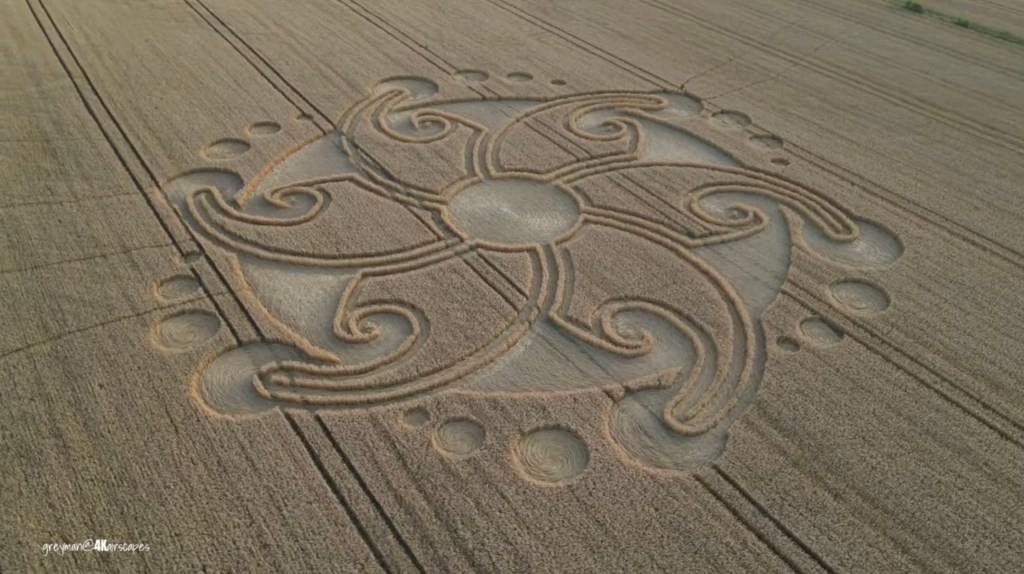
  • Spirals of Harmony: A Deeper Look into the Crop Circle of August 29th

    There’s something undeniably captivating about the crop circle that appeared on August 29th. As I gaze upon its intricate design, I’m drawn into a world where geometry and spirituality converge, where the mysteries of the universe seem to be woven into the very fabric of the earth itself. This particular formation, with its flowing spirals and perfectly balanced symmetry, speaks to something deep within, inviting contemplation and reflection.

    At the center of the design lies a circle—simple, yet profound. In many spiritual traditions, the circle is a symbol of unity, wholeness, and the infinite. It represents the divine source, the singularity from which all creation emerges. This central circle seems to anchor the entire formation, grounding it in a sense of completeness and oneness, reminding us of the inherent unity in all things.

    From this central point, spirals extend outward, creating a dynamic and mesmerizing pattern. Spirals have long been recognized as powerful symbols of growth, evolution, and the journey of life. They are found in nature, from the spirals of galaxies to the curves of a seashell, each one a reflection of the natural order and the continuous unfolding of the universe. In this crop circle, the spirals seem to convey a message of movement and expansion, perhaps representing the journey of consciousness as it evolves and grows, ever-reaching towards greater awareness.

    The symmetry of the design, with its radial balance, is a hallmark of sacred geometry. This balance is not just aesthetic; it speaks to the harmony that exists in the cosmos, the equilibrium that sustains life. The radial symmetry suggests a balanced flow of energy, a reminder that everything in the universe is interconnected and in perfect harmony. This design doesn’t just exist in the field—it radiates a sense of peace and order, encouraging us to find that same balance within ourselves.

    Surrounding the spirals are smaller circles, intricately placed around the main design. These circles could be seen as symbols of celestial bodies—planets, stars, or perhaps even atoms, reflecting the microcosm and the macrocosm. In the language of sacred geometry, such smaller circles often represent cycles or the idea of perpetual motion, the endless dance of creation and dissolution that characterizes the cosmos.

    As I reflect on this formation, I can’t help but see it as a symbol of cosmic harmony. The interplay of spirals and circles reminds me of the harmonious dance of celestial bodies, each one moving in perfect synchrony, reflecting the order and rhythm that underlie the universe. It’s as if this crop circle is a message about the natural balance and flow of life, a gentle reminder that everything has its place in the grand design.

    There’s also a sense of evolution and growth in this pattern. The spirals, radiating from the center, seem to symbolize the journey of the soul, the unfolding of higher awareness. It’s as if this crop circle is urging us to continue our spiritual journey, to keep expanding our consciousness, knowing that we are guided by a higher intelligence that watches over us.

    Given the feelings of guardianship and protection that crop circles often evoke, this formation could also be seen as a representation of protective forces surrounding us. The harmonious design suggests that these forces are not just watching over us, but guiding us along our spiritual path with balance and grace, ensuring that we remain connected to the divine order.

    Above all, this crop circle emphasizes the interconnectedness of all things. The spirals and circles are not isolated elements—they are intricately linked, each one contributing to the overall design. This reminds us of our own interconnectedness, not just with each other, but with the entire universe. We are all part of a larger, divine pattern, and each of us has a role to play in maintaining the harmony of the cosmos.

    As I continue to meditate on this beautiful formation, I’m filled with a sense of peace and wonder. It’s a reminder that there is so much more to life than what we see on the surface, that there are deeper truths waiting to be discovered if we only take the time to look. This crop circle, with its flowing spirals and harmonious design, invites us to pause, to reflect, and to reconnect with the mysteries of the universe. It is a reminder that we are never truly alone, that we are always part of something greater, something beautiful and infinitely wise.

    🙏🕊️🙏

    Screenshot
    Screenshot
    Screenshot
    Screenshot
    Screenshot
  • Book Review: “Our Pristine Mind” by Orgyen Chowang

    Embracing the Eternal Now: Cultivating Spiritual Presence in Daily Life

    A Journey Through Mindfulness, Equanimity, and Spiritual Connection

    In the whirlwind of our daily lives, it’s easy to become consumed by the relentless pace of duties, responsibilities, and the constant barrage of information. The echoes of the past and the whispers of the future often tug at our attention, leaving us fragmented and seldom at peace. Yet, the present moment holds a profound promise—the promise of true clarity and peace.

    Cultivating a relaxed mind not only enhances our ability to navigate everyday challenges with grace but also opens us to deeper insights and a greater connection with our true selves. By learning to inhabit the moment fully, we unlock the potential to transform our entire life’s experience, fostering a state of well-being that radiates outward in our thoughts, actions, and interactions.

    How, then, can we cultivate a state of equanimity and truly leave our minds alone? Here are some guiding principles to help us navigate this path.

    Don’t Follow the Past

    It’s easy to be pulled back into the past. Imagine sitting quietly and suddenly a memory from a past mistake creeps in, clouding your mood and stealing the peace of the current moment. However, dwelling in the past often means missing out on the now—on the opportunity to engage fully with life as it happens. Letting go of the past involves an understanding that every moment is a chance to start anew, to choose differently, and to move forward with a lighter heart.

    Practical Tip: Whenever you find yourself anchored to a past memory, gently remind yourself, “This memory is not my current reality.” Allow yourself to feel any emotions associated with it and then visualize setting it adrift down a river, watching it fade with compassion and detachment.

    Don’t Anticipate the Future

    Similarly, projecting our thoughts into the future can be just as distracting. Consider a scenario where you’re planning a meeting and start to worry excessively about its outcome, which then consumes your thoughts and disrupts your present work. Worrying about what’s yet to come not only breeds anxiety but also prevents us from taking actionable steps in the present that could actually mitigate those concerns.

    Practical Tip: Practice grounding exercises when you find your mind darting forward. Focus on your senses—what can you see, hear, touch, taste, and smell right this moment? This practice helps bring you back to the present and reduces anxiety about the future.

    Remain in Equanimity

    Equanimity is the balanced state where we are not swayed by the highs of joy nor the lows of despair. Imagine receiving news that would typically upset you, but instead of reacting impulsively, you remain calm, reflecting on the situation with a balanced perspective. It is a place of mental stability and composure that allows us to face life’s challenges with a calm and steady mind.

    Practical Tip: Develop a daily meditation practice. Even five minutes a day can help you cultivate a neutral mind that approaches all situations with balance and clarity.

    Leave Your Mind Alone

    At times, the best action is inaction. Consider watching your thoughts during a stressful moment, like observing clouds moving across the sky, without attempting to change their direction or speed. Leaving your mind alone means not meddling with your thoughts as they arise. It’s about observing them without judgment and letting them pass without attachment.

    Practical Tip: Engage in mindfulness meditation where the goal is not to empty the mind of thoughts, but to observe them coming and going, like clouds across a vast sky.

    Listening for the “Still Small Voice”

    For our Christian friends, embracing the present moment can be seen as an opportunity to listen for the “still small voice” of God, as described in 1 Kings 19:12, where Elijah encounters God not in the earthquake or fire, but in a gentle whisper. Taking time each day to let go of our busy, distracted minds to rest in the Holy Spirit allows us to connect with divine guidance and comfort.

    Similarly, the story of young Samuel from 1 Samuel 3:1-10 beautifully illustrates the process of becoming attuned to the divine voice. Mistaking the Lord’s call for Eli’s voice, Samuel’s repeated response, “Here I am,” eventually aligns with divine communication when he says, “Speak, Lord, for your servant is listening.” This moment of realization exemplifies the importance of being truly present, ready to receive spiritual guidance.

    The Jewish Tradition of Hineni

    In the Jewish tradition, the phrase “Hineni” – “I am here,” uttered by prophets like Abraham and Moses, represents a total, undistracted presence to the divine call. This sacred declaration is not just a statement of location but a profound acknowledgment of being fully present—spiritually, mentally, and physically—ready to engage with whatever God asks of them without hesitation.

    Why It Matters

    Understanding the distinction between simply being present and being spiritually present can transform the practice from a routine exercise to a life-changing discipline. The spiritual practice of presence is not about enduring the present but about uncovering an ever-present peace that enlightens and sustains us. It is here, in this sacred space, that we encounter the divine, the infinite, and the eternal right within our everyday moments.

    🙏🕊️🙏

    If you’re interested in exploring this transformative approach further, I highly recommend Orgyen Chowang’s book The Pristine Mind. His teachings provide a clear, compassionate path toward uncovering the inherent purity of our mind, offering a source of deep fulfillment and lasting peace.