Category: ME/CFS Self-Compassion: Embracing Healing and Understanding

This subcategory offers a compassionate exploration of self-care and emotional well-being for individuals living with ME/CFS (Myalgic Encephalomyelitis/Chronic Fatigue Syndrome). Discover practical strategies, personal reflections, and supportive resources aimed at cultivating self-compassion, managing challenges, and nurturing resilience. Join us in fostering a space of empathy, healing, and empowerment on the journey towards greater well-being and quality of life.

  • Embracing Forgiveness, Loving-Kindness, and Compassion: A Universal Call to Unity

    Embracing Forgiveness, Loving-Kindness, and Compassion: A Universal Call to Unity

    A Path to Healing and Unity Through Shared Spiritual Values

    In every spiritual tradition, there lies a core message of forgiveness, loving-kindness, and compassion. These virtues, transcending cultural and religious boundaries, unite us in our shared humanity. Whether through the teachings of Buddha, the wisdom of Jesus, or insights from various spiritual paths, the call to embrace these qualities is clear and compelling.

    Forgiveness is a profound act of letting go. It isn’t about condoning wrongdoings but freeing ourselves from the burdens of anger and resentment. As the Dalai Lama teaches, forgiveness is a gift we give to ourselves, a step toward inner peace.

    Loving-Kindness, or “metta” in Buddhist practice, encourages us to extend unconditional love to all beings. Jesus exemplified this through his life, teaching us to love our neighbors as ourselves. In every smile, kind word, and act of generosity, we weave a tapestry of love that can heal and uplift.

    Compassion is the heart’s response to suffering. It compels us to act, to alleviate pain, and offer solace. Teachings from various traditions remind us that compassion is not a passive feeling but an active force for good. Through compassion, we recognize our interconnectedness and our responsibility to care for one another.

    In these challenging times, let’s draw from the wellsprings of our diverse spiritual heritages. Let us embrace forgiveness, loving-kindness, and compassion not just as lofty ideals, but as daily practices that transform our lives and the world around us.

    Together, we can create a world where these universal values form the foundation of our interactions, fostering unity, peace, and understanding among all people.

    🙏🕊️🙏

    #Compassion #LovingKindness

  • Comforting the Ego Through Self-Inquiry: A Gentle Path into the Mystic

    The Tibetan teaching that the ego is a belief in a separate self with no inherent existence aligns perfectly with the process of self-inquiry. As we engage in the practice, the recognition that the ego has no independent reality allows it to gradually dissolve. What remains is the awareness that transcends the illusion of separation—the true nature of the Self.

    For many years, I’ve engaged in self-inquiry as a way to explore the deeper truth of who I am beyond the ordinary mind. The practice of asking, “Who am I?” or “Whose thoughts are these?” can lead to profound insights, but lately, I’ve realized there’s another layer to the practice that brings even greater depth—compassion for the ego.

    Instead of pushing the ego aside or forcing it into understanding, I’ve come to embrace the role of the comforter. When the ego resists, when it wants to play dumb or keep searching for answers, I gently reassure it:

    “It’s okay. You are That.”
    “Relax. You are That.”

    This approach transforms the practice into a more nurturing experience, where the ego is not an obstacle but a part of the journey toward resting in the truth of our being. By comforting the ego, I allow it to relax into the deeper awareness that is always present, the pristine mind that doesn’t need to figure anything out.

    Addressing the Ego: Creating Space

    What I’ve also discovered is that by addressing the ego as “you”—as though speaking to it in the third person—it creates a subtle but important space between the self and the ego. By saying, “You are That,” I create a gentle distance from the ego, which allows me to shift my identification toward the pristine mind, the awareness that simply knows. This practice helps me settle into the awareness of That, while gently guiding the ego to recognize its true nature.

    It’s a strange but profound feeling to begin identifying with the witness, the part of us that knows, rather than the ego itself. The distance allows the ego to relax, realizing it doesn’t need to figure things out—it just needs to rest in the knowing.

    Dissolving the Ego: Tibetan Insight

    In Tibetan teachings, the ego is understood as a belief in a separate self that has no inherent existence. It is the illusion of separateness that creates suffering, and it is through practices like self-inquiry that this illusion begins to dissolve. By comforting the ego and allowing it to rest in the awareness of That, the ego’s grip on the mind loosens, and its sense of separateness fades. As the ego dissolves, what remains is the truth of our being—unified, whole, and free from the illusion of duality.

    A Practice Rooted in Tradition: Tat Tvam Asi

    The phrase “Tat Tvam Asi”, which translates to “You are That”, is one of the most profound teachings from the Chandogya Upanishad. It comes from the dialogue between the sage Uddalaka and his son Svetaketu, where Uddalaka imparts the ultimate knowledge of the Self to his son.

    In this story, Uddalaka explains that the essence of the individual self (Atman) is identical to the essence of the entire universe (Brahman). He uses various examples from nature, like rivers merging into the ocean, to illustrate that all individual forms are ultimately one with the universal reality.

    The core teaching of “Tat Tvam Asi” is that the true nature of the self is not separate from the ultimate reality, Brahman. This insight is the foundation of Advaita Vedanta and points to the non-duality of existence. It’s a reminder that we are already That—we are not separate from the universal consciousness that pervades everything.

    A Path Forward

    If you’ve been engaging in self-inquiry and find that the ego often resists or overthinks, consider this approach. Become a gentle guide for the ego, allowing it to rest in the awareness of That without needing to figure everything out. With each step, you’re not only going deeper into the Mystic—you’re bringing the ego along in a spirit of kindness and unity.

    Offering the ego loving-kindness and compassion, rather than seeing it as an enemy, can transform the practice into something more nurturing and integrative. By embracing the ego with a Metta-Karuna mindset, we allow for deeper healing and connection, not just for ourselves but for others navigating similar paths.

    Today’s Practice of Self- Inquiry

    The core practice involves asking the question, “Who am I?” But for this practice, we’re using the mantra, “You are That,” to turn our attention inward and explore the space that neither comes nor goes—the pristine mind, our true nature. As we repeat the mantra, we gently direct it toward the space of the ego, with kindness and compassion. In doing so, we shift our identification away from the ego and toward the seer, the awareness that observes all. This process helps peel away layers of identification, bringing our ego closer to the essence of who we truly are.

    Guided Meditation: You are That

    Begin by finding a quiet and comfortable place to sit, where you won’t be disturbed. Close your eyes gently and take a few deep breaths. Feel the rise and fall of your chest, the air entering and leaving your body. With each exhale, let go of any tension in your muscles. Allow yourself to settle into the stillness of this moment, bringing your attention inward.

    Now, in the silence of your mind, introduce the mantra: “You are that.” Let the words flow gently, not as a thought to analyze but as a vibration that resonates within your being. “You are that.”

    As the mantra repeats in your mind, begin to observe the thoughts, sensations, and emotions that arise. Notice how they come and go like clouds passing through the sky. Without judgment, simply recognize them for what they are—temporary movements of the mind, just as waves rise and fall on the surface of the ocean.

    When thoughts or sensations arise, acknowledge them gently. With each arising, remind yourself, “This, too, is a movement in consciousness.” Then, return to “You are that.” Allow this rhythm to deepen your experience.

    When a thought or image captures your attention, gently remind yourself, “You are that.” This thought, too, is part of the vast consciousness in which you exist. Allow the mantra to guide you back, like an anchor to the present moment. “You are that.”

    With each repetition, feel the boundaries between yourself and the world begin to soften. The sense of separateness fades as you connect more deeply with the essence of the mantra. You are not the thoughts, not the body, not the emotions—you are that which is beyond them all. You are that—the awareness, the presence in which everything arises and falls away.

    If the mind wanders, or if any sensations in the body draw your attention, simply return to the mantra, “You are that.” There is no need to push anything away or force any particular state. Just notice, with kindness and patience, and return.

    In time, the mantra may begin to dissolve into the quiet presence that remains. Stay here, resting in the stillness. No effort is needed now—just a gentle awareness of being.

    You are that.

    When you are ready, take a few more deep breaths, feeling the connection between the mantra and the breath. Allow your awareness to expand, taking in the sounds and sensations around you, while keeping that sense of peace and spaciousness within. Slowly open your eyes, and as you return to your surroundings, carry with you the knowing: You are that. Always.

    🙏🕊️🙏

  • Navigating Pristine Mind: A Journey into Orgyen Chowang’s Teachings on Meditation

    Navigating Pristine Mind: A Journey into Orgyen Chowang’s Teachings on Meditation

    I came upon Orgyen Chowang’s teachings and his book, Our Pristine Mind, like discovering an unexpected window that offers a clearer, quieter view. Chowang, a revered meditation master, speaks about our minds with a simplicity that is both gentle and profound. In his words, I felt an invitation to find not just peace, but a deep, clear stillness—an untouched clarity we each hold within. He calls this the “pristine mind,” a mind unclouded by habitual thoughts and emotions.

    Reading his words, I was struck by the thought: Just as we clean our homes and spaces, how often do we take care of our minds? In this world of constant motion and distraction, it seems almost revolutionary to pause, to clear away what is unneeded. Chowang suggests that mental well-being is like tending a garden, pulling weeds of anger, stress, or anxiety that choke the growth of joy and ease. It reminded me how these “weeds” can cover our true nature, clouding how we experience life and others.

    But what he describes as the “pristine mind” is always there, like a clear sky behind clouds. Our thoughts, emotions, and beliefs pass through like clouds, momentary and shifting, yet we often cling to them, mistaking them for who we are. Chowang encourages us to release this attachment and begin to experience our natural clarity—our inherent, pristine mind.

    In practice, Chowang’s meditation technique is beautifully simple. There are four steps:

    1. Do not follow the past.

    2. Do not anticipate the future.

    3. Remain present in this moment.

    4. And lastly, leave the mind alone.

    When I first tried these steps, I felt a quiet rebellion within—a part of me wants to solve, to plan, to chase. But following his steps brings a profound lightness. As I resist chasing past memories or future anxieties, I notice the mental noise softening. There is no need to control; simply resting in the moment, letting thoughts come and go like wind through an open window, the mind clears on its own.

    With practice, I have glimpsed moments of this “pristine mind”—a state that Chowang says brings unconditional happiness. This is not happiness that depends on outward conditions, but rather a steady presence that finds peace no matter what is happening outside of us. Conditional happiness, reliant on the fleeting promises of the world, becomes less important, as if the yearning subsides in the face of something more whole. Paradoxically, with this inner stillness, I feel able to experience the world more richly, with a fuller heart.

    Chowang speaks of “yoga,” the union of body and mind, which pristine mind meditation makes possible. When my mind settles, the usual tug-of-war within me ceases, bringing calm to my body as well. It is as if my body and mind are finally in harmony, no longer struggling but instead moving together.

    The journey is ongoing. Chowang uses a beautiful analogy: our minds are like a fog globe. When we shake it, the fog swirls, obscuring the clarity inside. But if we simply let it be, leaving it alone, the fog slowly settles, and the clear globe is revealed. With each meditation, I feel as if I am letting that fog settle, trusting that beneath lies a still, clear presence.

    For anyone curious about exploring their own pristine mind, there may be moments of doubt or distraction; our minds naturally gravitate toward patterns, just as they would with any new practice. Yet the gentle return to the present, with patience and kindness, becomes the practice itself. There is no perfect silence, no need to force anything; it is enough simply to come back to this moment and leave the mind to rest in its natural state.

    In this journey, I continue to return to Chowang’s teachings and to practice his four simple steps. I am still learning, but each time I sit, I feel closer to the clear sky within, and it is changing how I live, love, and see the world. I hope, as Chowang teaches, that a pristine mind is possible for each of us, and that by cultivating it, we might each find our way to a steadier, more joyful presence.

    🙏🕊️🙏

    Much of the inspiration for this reflection and practice comes from Our Pristine Mind by Orgyen Chowang Rinpoche. His teachings have deepened my understanding of resting in clear, effortless awareness. If you feel drawn to explore this path further, I highly recommend his book. I’ll leave a link below for those interested in diving deeper into the practice of pristine mind and discovering the peaceful spaciousness it offers.

  • A New Beginning: Living with Peace, Chronic Illness, and Self-Compassion

    A New Beginning: Living with Peace, Chronic Illness, and Self-Compassion

    A Visualization and Aspiration for the Future: Creating a Sanctuary of Healing and Mindful Living in My New Apartment.

    As I imagine moving into my new apartment—a warm, inviting space filled with peace and promise—I picture each morning, sunlight streaming through the living room windows, where I’d sit with a cup of herbal tea and meditate, letting my heart rest in the stillness of the morning. The tea would be warm and fragrant, a simple comfort, while the sun’s gentle rays bring a soft natural light, creating a space where I could breathe deeply and feel a sense of calm settle over me. In this new chapter, I feel an inner invitation to rest and renew, to let go of the rush and allow each day to unfold as it would. My illness has taught me that healing requires a gentler pace, and here, I have finally found a sanctuary where I can honor that.

    In my new rhythm, I learn to listen deeply to my body, letting its needs guide my day. Living with chronic fatigue means that some mornings are harder than others, that sometimes even the simplest tasks require patience. Yet, in this space, I find small rituals that bring me comfort—a slow meditation, a warm bath, a quiet meal. Each morning, as I sit in meditation, I let my mind rest like a leaf floating on a still pond, watching thoughts come and go, feeling a spaciousness that extends beyond the physical limitations of illness. In that quiet, I discover a profound acceptance of where I am, a knowing that I am exactly where I need to be.

    The apartment becomes a sanctuary, with each room serving a purpose that supports my journey toward inner peace and gentle self-compassion. My bedroom is dedicated to relaxation, contemplation, and self-care, a space for meditation, yoga, and quiet reflection. In this room, I let my body and mind find stillness, creating a calm, nourishing environment that reminds me to return to myself and rest when I need it most.

    In the living room, I set up a workspace where I can write, a desk by the window where natural light flows in, allowing me to work with a sense of clarity and focus. My writing has become a form of connection—to myself, to others, to the world that often feels distant because of illness. I pour my heart into reflections on acceptance, resilience, and the beauty of slowing down. In my words, I find a way to turn the rawness of chronic illness into a quiet strength, a way to reach out and touch others who might be walking similar paths.

    In the kitchen, I begin to prepare meals with a sense of mindfulness, even when energy is low. I choose to embrace a Sattvic diet, honoring foods that are simple and nourishing, bringing peace to my body as well as my mind. I chop vegetables slowly, savoring their colors and textures, feeling gratitude for the Earth’s abundance. Each meal is a quiet gift to myself, a way to honor my body’s needs without pressure, without judgment. Eating becomes a gentle act of self-love, a reminder that I deserve care, even on the days that feel heavy.

    As the weeks pass, I find that this gentle way of living has softened something within me. I allow myself to feel everything—the grief for the life I once imagined, the loneliness of being in a world that often doesn’t understand, the gratitude for the peace I’ve cultivated. Each emotion becomes part of my journey, a reminder that I am not separate from life’s beauty, even in illness, but deeply connected to it.

    Sometimes, in dreams, I find myself in places that feel isolating or unsettling, and I wake with a heavy heart, a reminder of the losses and longings that have yet to heal. But even in those moments, I sit with myself, as if comforting an old friend, holding space for my own sadness, letting the tears flow. There is no rush to feel better, no need to push the feelings away. Living with ME/CFS has taught me that patience is a quiet form of strength, that even in vulnerability, there is a kind of power.

    Over time, my home becomes a true sanctuary, a place where I can practice the Paramitas—the virtues of compassion, patience, and equanimity—in my own life. When days of low energy come, I practice patience, meeting my body’s needs without judgment, letting it guide me as gently as a leaf floating on a river. Compassion becomes the way I speak to myself, a quiet voice that reminds me that it’s okay to rest, that each small act of care is a step on the path of healing. And equanimity becomes a way of holding my experiences—both joyful and painful—with a heart that understands their place in the bigger picture.

    My illness, though unchosen, has taught me the sacredness of small moments—the warmth of a cup of tea, the beauty of a single breath, the comfort of soft blankets on tired days. I come to see that healing isn’t a destination but a journey of self-compassion, of learning to live in harmony with the life I have, of finding joy in the little things that don’t require energy or grand plans.

    And so, each day, I rise to greet the morning with gratitude, feeling the warmth of sunlight on my face, the gentle pulse of life within me. I move through the day with the knowledge that I am creating a life of meaning, not by doing, but by being—by living each moment with a heart open to the beauty and fragility of existence. I have come to a place of quiet resilience, of finding grace in my limitations, of walking a path of peace that is my own.

    In this sanctuary of my new apartment, I know that I have found a way of living that is both gentle and true, a way of honoring both my strengths and my needs, a way of offering love to myself and the world, no matter how small the gestures. And each night, as I drift off to sleep, I send out a quiet wish for all beings to find the peace and compassion I have found, knowing that, in my own way, I am contributing to a world of kindness and understanding.

    🙏🕊️🙏

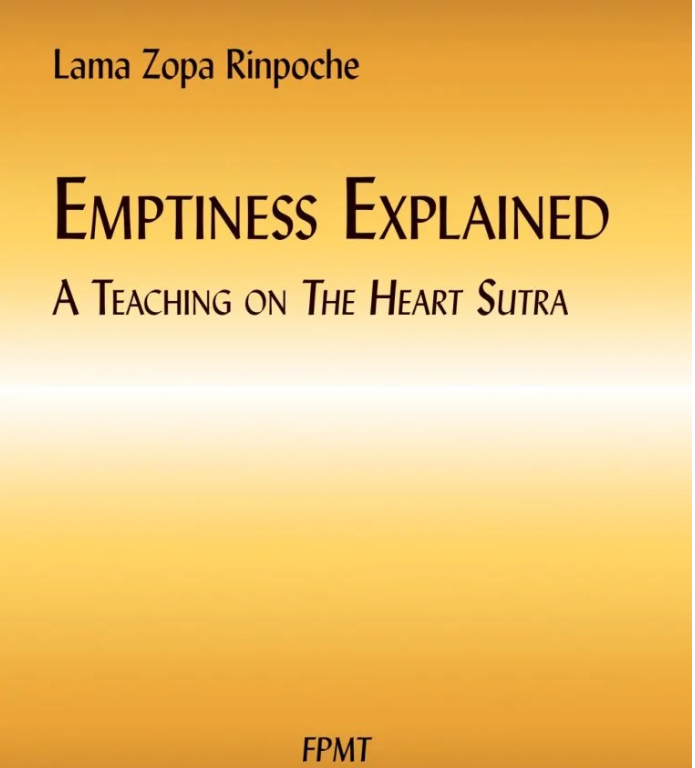
  • Emptiness Explained: Insights from Lama Zopa Rinpoche on the Heart Sutra

    Emptiness Explained: Insights from Lama Zopa Rinpoche on the Heart Sutra

    Transforming Suffering Into Happiness: How the Teachings on Emptiness from the Heart Sutra Support Mental Health and Well-Being

    The Heart Sutra stands as one of the most profound and essential teachings in Buddhism, offering a path to understanding emptiness—the ultimate nature of reality. Lama Zopa Rinpoche’s commentary on this timeless sutra illuminates its teachings, guiding us toward a deeper understanding of how emptiness can transform not only our spiritual practice but also our daily lives.

    In this post, I’ll share key reflections from Rinpoche’s teaching, focusing on the practical wisdom and spiritual inspiration it offers. Whether you’re a seasoned practitioner or simply curious about the philosophy of emptiness, I hope these insights will resonate with your heart.

    What Is Emptiness?

    Lama Zopa Rinpoche explains that emptiness does not mean that things don’t exist—it means that things are empty of inherent existence. All phenomena, including ourselves, arise dependently, shaped by causes, conditions, and labels. This is the essence of the middle way, which avoids the extremes of nihilism (nothing exists) and eternalism (things exist inherently and permanently).

    As the Heart Sutra famously states:

    “Form is emptiness, emptiness is form. Emptiness is not other than form; form is also not other than emptiness.”

    In these words, we see that emptiness and dependent arising are inseparable. While things exist conventionally, their ultimate nature is empty of any independent, fixed essence.

    Practical Ways to Meditate on Emptiness

    Rinpoche offers accessible methods to integrate the understanding of emptiness into both formal meditation and daily life:

    1. Recognizing the Object to Be Refuted

    The first step is identifying the false concept of an independent, inherently existent “I” or object. This is often described as the “I on the I”—the subtle sense that there is a solid self beyond the ever-changing interplay of body and mind. By recognizing this misconception, we can begin to dissolve it.

    2. Meditating on Dependent Arising

    Reflect on how the “I” arises only in dependence on the body, mind, and other aggregates. As Rinpoche teaches, the “I” is merely a label created by the mind. Understanding this dependence helps us see the emptiness of the “I” without negating its conventional existence.

    3. Mindfulness in Daily Life

    Emptiness isn’t confined to sitting meditation. Rinpoche encourages us to bring mindfulness of emptiness into every activity—walking, cooking, working, even shopping. He likens this to recognizing a dream as a dream:

    “While driving a car, see yourself, the car, and the action of driving as hallucinations. They appear solid, but they are not inherently existent. Practicing this awareness is incredibly powerful.”

    Overcoming Fear and Misunderstanding

    The experience of emptiness can sometimes evoke fear, especially the sense of “losing the I.” Rinpoche reminds us that this fear arises from our deep attachment to a false sense of self. However, far from being nihilistic, emptiness reveals the interdependent nature of all things.

    “When bodhisattvas of high intelligence realize emptiness, they experience bliss; for others, deep fear can arise. This fear is a sign of touching the truth of selflessness—it is part of the journey.”

    By grounding our understanding in dependent arising, we can navigate this fear with confidence and clarity.

    Applying Emptiness in Relationships

    Rinpoche’s teaching also provides practical tools for transforming relationships. When we feel hurt or offended, understanding emptiness can soften our reactivity. The other person’s actions—and our own sense of self—are dependently arisen, shaped by countless conditions.

    This awareness allows us to respond with compassion rather than attachment or aversion. As Rinpoche says:

    “Recognize that the ‘I’ that feels hurt is a mental construct. See the other person’s words or actions as arising dependently. This opens the door to greater understanding and kindness.”

    The Transformative Power of Emptiness

    Even the smallest step toward understanding emptiness has profound benefits. Rinpoche explains that simply doubting the solidity of appearances—thinking, “Perhaps things are empty”—can begin to break the chains of samsara.

    “Listening to teachings on emptiness for even a moment plants seeds for liberation. Reflecting on emptiness throughout your day turns ordinary actions into a path to enlightenment.”

    A Living Practice

    The teachings of the Heart Sutra are not just intellectual concepts—they are a living practice. Whether in formal meditation or everyday life, the wisdom of emptiness invites us to see the world with fresh eyes. By letting go of our rigid attachments and false perceptions, we open the door to profound freedom and compassion.

    As Lama Zopa Rinpoche reminds us, we are unbelievably fortunate to encounter these teachings. May we take them to heart and use them to benefit all beings.

    Further Exploration

    To delve deeper into Lama Zopa Rinpoche’s teachings on the Heart Sutra and emptiness, you can download the original PDF here.

    I’d love to hear your thoughts on emptiness and the Heart Sutra! How do these teachings resonate with your own spiritual journey? Feel free to share your reflections in the comments below.

    🙏🕊️🙏

  • The Simplicity of Not Thinking About Anything: A Lesson from a Friend

    The Simplicity of Not Thinking About Anything: A Lesson from a Friend

    A few years ago, a dear friend offered me a piece of advice that I didn’t fully understand at the time. It was as simple as it was mysterious: “Don’t think about anything.” I remember nodding politely, but inside, I couldn’t quite grasp what he meant. How could I just not think about anything? It felt like trying to ask the mind to stop being the mind.

    But as the years passed, I found myself returning to his words, and gradually, their meaning began to unfold. It wasn’t about shutting off thoughts or forcing the mind to be blank. Instead, it was an invitation to rest in awareness itself, to allow thoughts to arise and pass like clouds drifting through the sky, without clinging to any of them.

    Not thinking about anything doesn’t mean there are no thoughts. It means simply allowing them to be, without engaging, without analyzing or following their pull. It’s like standing at the edge of a river, watching the current flow without needing to step in. In this simple letting go, I found a quiet presence—a clear, open awareness that lies beneath the movement of thought.

    Now, when I remember my friend’s advice, I see it as a doorway into the simplest, most natural state. Just being here, resting in awareness, without the need to think about anything at all.

    A Gentle Exploration: Not Thinking About Anything

    The practice of not thinking about anything may sound simple, but it’s far from trivial. At first, it can feel like trying not to think of a pink elephant—an elusive challenge that leaves us more entangled in thoughts. But as we begin to approach it with softness, we find that the essence of the practice isn’t about forcing thoughts to vanish or emptying the mind entirely. Instead, it’s an invitation to let thoughts arise without grabbing onto them, allowing awareness to simply rest in itself.

    This practice has a quiet resonance with neti-neti, the ancient teaching of “not this, not that.” Instead of identifying with each thought or sensation, we’re gently letting everything pass by, not needing to label or resist anything. It’s as though we’re standing on the bank of a river, watching the current flow without stepping in. Each thought drifts along, leaving only the open, effortless awareness that watches. Here, thoughts lose their weight, and the mind gradually settles into a quiet clarity.

    As you practice this, you might find moments of stillness that feel spacious, expansive. Awareness itself, untouched by thoughts, begins to reveal its quiet presence. This state doesn’t need effort; it’s like an open sky that remains, whether or not clouds are passing through.

    A Simple Practice for Sleep

    When practiced in the quiet hours before sleep, not thinking about anything can be a beautiful way to drift into restful awareness. As you lie down, let yourself settle, allowing the body to relax completely. Instead of actively trying to clear your mind, simply rest in the feeling of just being. If thoughts arise, let them drift by naturally, without following them or pushing them away.

    You might imagine each thought as a cloud in the sky, passing without disturbing the open space that holds it. Gently let go of the need to engage with any thought, and allow yourself to rest in the peaceful presence beneath all thinking. In this soft, open state, awareness itself becomes a companion as you slip into sleep, supporting a quiet mind and a restful heart.

    In the end, not thinking about anything is less about silencing the mind and more about allowing everything to be as it is, without attachment. By practicing this gentle form of neti-neti, we touch the essence of pure awareness—spacious, unchanging, and naturally at peace.

    🙏🕊️🙏

  • Carried Through the Storm: Trusting the Divine Footprints in the Mystic Journey

    Carried Through the Storm: Trusting the Divine Footprints in the Mystic Journey

    On the spiritual path, we often find ourselves in moments of struggle, isolation, and uncertainty, wondering where the Divine is in our darkest hours. The old story of Footprints in the Sand offers a timeless reminder: even when we feel most alone, we are never truly abandoned. The footprints that carry us through the storm are those of the Divine, supporting us in ways we may not recognize in the moment.

    The Story of Footprints in the Sand

    The familiar story goes something like this: A person looks back on their life journey and notices two sets of footprints in the sand during times of ease and joy, but only one set of footprints during their most difficult and painful moments. Confused and feeling abandoned, they ask God, “Where were you when I needed you the most?”

    God gently replies, “During those difficult times, when you saw only one set of footprints, it was then that I carried you.”

    This story is simple yet profound, capturing the heart of the mystic journey—trusting that in our most challenging moments, even when we feel lost or abandoned, we are being carried by a greater force.

    Trusting in the Divine Support

    As mystics, seekers, or those walking a spiritual path, there are often periods where the way forward feels unclear. We may find ourselves fumbling through transitions, dealing with loss, illness, or inner turmoil, and it’s easy to feel as if we are walking this path alone. However, like the person in the story, we may later come to realize that during these times of struggle, we were never alone. We were being supported, even carried, by something greater than ourselves.

    The footprints of the Divine, whether we call this presence God, the Universe, or our Higher Self, are always there, even when we cannot see them. Part of the mystic path is learning to trust in this unseen support, to have faith that during the most difficult stretches of our journey, we are being held and guided.

    Recognizing the Invisible Presence

    There are times when we may not feel the direct presence of the Divine, and it can be easy to feel lost or disconnected. But as we reflect on our experiences, we begin to see that in those moments, there was something carrying us through. Perhaps it was an inner strength we didn’t realize we had, the unexpected help of a friend, or a moment of grace that appeared when we needed it most. These are the Divine’s footprints in our life.

    As mystics, part of our practice is to develop this awareness—to recognize the quiet, invisible ways in which the Divine shows up, even when it’s not immediately obvious. The more we trust this presence, the more we can rest in the assurance that we are always supported, no matter how difficult the path may seem.

    Surrendering to the Flow of Life

    The story of Footprints in the Sand also teaches us about surrender. When we are in the midst of struggle, our minds often fight to control or resist what’s happening. We want to fix things, to understand why we are going through a challenge, or to make sense of the pain. But surrendering to the flow of life, trusting that we are being carried, allows us to soften into the experience and let the Divine do its work.

    This doesn’t mean passivity or giving up, but rather a deep trust that the difficulties we face are part of a larger unfolding. The footprints remind us that we are not the sole navigators of our lives. There is a greater force walking with us, carrying us when needed, and guiding us toward the deeper truths of our being.

    Walking the Mystic Path with Faith

    For those on the mystic path, the message of the footprints is a reminder of faith—not blind faith, but a faith born out of experience. As we reflect on our own journeys, we begin to see how the Divine has been present, even in the most challenging times. This faith allows us to walk the path with more confidence, knowing that the footprints are always there, even when we cannot see them.

    In our moments of doubt, when the path feels difficult or unclear, the footprints remind us that we are never truly walking alone. We are always being carried by the Divine, supported in ways we may not fully understand, but that are always present.

    Conclusion: The Footprints in Your Journey

    As you navigate your own spiritual journey, take comfort in the footprints that appear along the way. Trust that during your most challenging times, the Divine is carrying you, even if it doesn’t feel that way in the moment. The mystic path is not always easy, but it is always supported by a presence that walks with us, guiding us toward greater understanding and deeper connection with the Divine.

    May this story of Footprints in the Sand serve as a reminder that no matter where you are on your path, you are never truly alone. The footprints of God, the Divine, or the Universe are always there, carrying you through the storms of life and walking beside you in the moments of joy.

    🙏🕊️🙏

  • The Art of Pacing: Managing Chronic Fatigue Syndrome with Skillful Means

    The Art of Pacing: Managing Chronic Fatigue Syndrome with Skillful Means

    There is a rhythm to living with chronic illness, one that requires a kind of surrender. Those who walk the path with myalgic encephalomyelitis or chronic fatigue syndrome soon learn that pacing is not merely a strategy—it becomes an art form, a way of listening, of harmonizing with the body’s quiet whispers before they become cries. To pace oneself is to acknowledge the body’s finite energy, to move in step with the breath of fatigue, gently, humbly, knowing that to overstep the body’s boundaries is to invite collapse.

    It is not an easy lesson, this slow dance with limitations, yet it is one that teaches a profound wisdom. For those of us living with this condition, pacing is a compass, guiding us through days where the terrain can feel treacherous, unpredictable. It is, in its essence, the practice of recognizing when to move forward and when to step back. We become more attuned to the varied signals of our bodies—perhaps tremors of exhaustion, increasing tinnitus, irritation, a flutter of dizziness, nausea, insomnia, headaches or the dimming of cognitive clarity. In these moments, we learn that to heed these signs is to honor the body’s wisdom, to respect its limits as one might respect the changing seasons.

    Pacing, though practical, is deeply spiritual as well. In the Tibetan Buddhist tradition, there is a teaching of upaya, or skillful means, which echoes the heart of pacing. Skillful means refers to the wisdom of knowing what action is most appropriate in any given moment, guided by compassion for ourselves and others. For those of us managing a chronic illness, pacing is our skillful means, the practice of compassion extended inward, toward the tender, vulnerable places within us that need rest, gentleness, and care.

    This is not weakness. On the contrary, there is a quiet strength in pacing, a strength that arises from restraint, from knowing that our worth is not measured by the speed at which we move or the number of tasks we complete. Instead, it is measured by how we listen to the body’s call for stillness, how we cultivate patience in the face of limitations, how we respond to the world with wisdom rather than haste.

    In the same way that skillful means in Buddhist practice requires a deep awareness of the present moment, pacing invites us to be fully present with our bodies, to sense when we are nearing our edge and to pull back with kindness. It requires discernment, the ability to prioritize what truly matters, letting go of the unnecessary so that we may preserve our energy for what is essential. And, perhaps most importantly, pacing asks us to be flexible. What works for us today may not work tomorrow. Like the ebb and flow of the tide, we must continuously adjust, staying attuned to the changing nature of our energy levels, adapting with grace to whatever arises.

    To pace well is to cultivate trust in ourselves, to believe that our bodies—though fragile—are capable of guiding us toward balance. It is to let go of the constant push toward productivity, embracing instead a quieter, more sustainable rhythm of being. This trust grows over time, as we learn to befriend our bodies rather than seeing them as enemies. We begin to see pacing not as a limitation, but as an opportunity to deepen our relationship with ourselves, to practice self-compassion in the most tangible of ways.

    And so, we move slowly, deliberately. We choose rest when it is needed, even when the world outside rushes by. We choose to pause, to breathe, to trust that this moment of stillness is as important as any action we might take. In this way, pacing becomes not only a survival strategy but a path to peace. It teaches us to live in harmony with our bodies, to respect the boundaries they set, and to find beauty in the gentleness of our compassion.

    Pacing, like skillful means, is not something mastered overnight. It is a practice that deepens over time, shaped by patience, by trial and error, by learning to let go of perfectionism. But with each step, we become more attuned to the wisdom that already resides within us. We learn that pacing is not a sign of giving up, but of holding on—holding on to our health, our well-being, and our sense of self in the midst of struggle.

    Pacing, in its truest form, is an act of compassion toward ourselves, a recognition that while life with post viral ME/CFS has taken much from us, it has not taken everything. It is not a dance of perfection, but rather a delicate balancing act between what was and what is. The grief over what we have lost is real, and it deserves to be honored. We grieve our former selves, the life we once knew, and all the possibilities that seem to have slipped away.

    But after the grieving, something else begins to emerge. Slowly, through the quiet practice of listening to our bodies and respecting our limits, we begin to discover a new way of living—not the life we once imagined, but a life nonetheless. And within this new life, there are still moments of joy, moments of lightness. These moments may look different from what they once were, but they are no less real. They come from acceptance, from doing more of what works and less of what doesn’t. They come from the simple peace of knowing we are doing our best within the constraints we face.

    To pace is to acknowledge these constraints, to know that while we may not live fully in the way we once dreamed, we can still live meaningfully. We can still find purpose, connection, and even happiness within this new rhythm. It is not a rhythm we would have chosen, but it is ours now, and there is strength in learning to move with it rather than against it. In this process, we find that joy and peace are still possible—not despite the illness, but alongside it, within the space that remains.

    And so, with time, we learn to rest in the assurance that we are whole in our own way, capable of living a life that, while different, still holds beauty, meaning, and moments of joy.

    Following the breath,
    We learn the art of patience,
    Peace within each step.

    🙏🕊️🙏

    Book Recommendation: Pema Chödrön, The Wisdom of No Escape and the Path of Loving-Kindness

    In The Wisdom of No Escape, Pema Chödrön presents teachings on accepting life as it is, rather than wishing it were different. Her words remind us that even in the midst of suffering, there is always the potential for transformation—not by running from our difficulties, but by turning toward them with compassion and curiosity. For those living with chronic fatigue syndrome, this book is a beautiful companion, offering insights on how to stay present with what is, without judgment or resistance. Chödrön’s gentle wisdom helps us find peace in the uncomfortable and reminds us that within every limitation, there is the possibility of growth. This aligns perfectly with the practice of pacing—of learning to live within constraints, not with bitterness, but with an open heart.

    Book Recommendation: Tony Bernhard, How to Be Sick

    Another indispensable resource is Tony Bernhard’s How to Be Sick. As someone who has lived with chronic fatigue syndrome herself, Bernhard offers a deeply compassionate, Buddhist-inspired approach to living with illness. Her book provides practical advice on how to cultivate equanimity, mindfulness, and self-compassion while dealing with the daily struggles of chronic illness. Bernhard’s words echo the heart of pacing—teaching us how to manage our energy, honor our limitations, and find meaning even when life feels limited. For anyone searching for a path through the often overwhelming challenges of ME/CFS, How to Be Sick is both a guide and a comfort, offering tools to help transform suffering into wisdom and peace.

  • From Suffering to Compassion: Transforming Life with ME/CFS

    From Suffering to Compassion: Transforming Life with ME/CFS

    Living with chronic fatigue syndrome (ME/CFS) often feels like carrying an invisible weight that never goes away. The exhaustion is far beyond ordinary tiredness, permeating not just the body but the mind and heart as well. For many of us, this illness can feel like a curse, a complete derailment of life’s trajectory. Yet, over the years, I’ve come to see it also as a strange and unexpected blessing—one that has thrown me deeper into spiritual practice, into moments of stillness and contemplation I might not have otherwise known.

    At its worst, the illness can leave me in bed, lights off, no sound, in a state of complete sensory deprivation. And it is in these moments, when there is nothing to distract me from my thoughts, that I’ve had to learn how to truly be alone. Learning to witness my reactions, cultivating equanimity, and practicing calm-abiding meditation have become vital companions on this journey. For many years, I focused on the Tibetan practice of Samatha, or calm-abiding meditation, as well as Vipassana, which allows for a deep awareness of the present moment. Sitting in stillness, aware of whatever calm I could find within, helped me cultivate equanimity—though it remains a practice I still have much to learn from.

    But there was another essential practice that transformed how I related to my suffering. The practice of Metta—or loving-kindness—invites us to take our own pain and suffering and recognize that in this vast world, we are not alone in what we feel. When my illness has been most acute, whether through mental anguish or physical symptoms, I’ve practiced thinking: In the same way that I am experiencing this illness, this suffering, this pain, there are others in the world who experience this too. And then, from the heart, I offer the prayer: May I, and all beings, be free from this suffering and its causes.

    This simple yet profound shift in perspective allowed me to transform my experience from one of isolation and misery into a practice of compassion. Instead of being stuck in my own pain, it became a way to benefit others by cultivating loving-kindness for all those who suffer. In this way, even my most difficult experiences became part of my spiritual path. ME/CFS was no longer just an illness—it was an opportunity to deepen my compassion, both for myself and for others.

    Of course, this hasn’t been an overnight transformation. It took many years of spiritual study and practice, drawing from teachings like the Four Noble Truths of the Buddha, the Noble Eightfold Path, and eventually the teachings of Advaita Vedanta. Through these teachings, I came to recognize the fluctuations of the mind, or vrittis, and learned to observe the content of my thoughts—pratyayas—without identifying with them. This practice of witnessing the mind has allowed me to find peace in the midst of the storm, much like the Dark Night of the Soul described by St. John of the Cross.

    For me, it has felt less like a dark night and more like twenty years of spiritual darkness, but nonetheless, this darkness has also been a teacher. Learning to be present with my suffering, rather than resisting it, has become an integral part of my life with ME/CFS. And while the illness has forced me to withdraw from many aspects of life, it has also drawn me into the heart of spiritual practice.

    To anyone living with this illness, or any chronic illness, I offer this: it’s okay to feel overwhelmed by the weight of it all. It’s okay to grieve the life you once had or the future you imagined. But there are also practices—like Metta, calm-abiding meditation, and witnessing the mind—that can transform this suffering into something that nourishes not only your soul but the souls of others as well.

    May you, and all beings, be free from suffering and its causes. May this invisible weight become a doorway into the mystic, where even in solitude, you find that you are never truly alone.

    🙏🕊️🙏

  • Finding Healing in the Fires Within: Shifting from the Ordinary Mind to the Pristine Mind with Chronic Fatigue Syndrome

    Finding Healing in the Fires Within: Shifting from the Ordinary Mind to the Pristine Mind with Chronic Fatigue Syndrome

    Discover how the quiet fire of the pristine mind can soothe the restless blaze of chronic fatigue, offering a path to inner peace and gentle transformation.

    I sit here today, tenderly aware of a fire burning within me—not the feverish blaze of energy or ambition, but a fire that comes with chronic fatigue, a fire that seems to consume my energy, that feeds on thoughts of worry, longing, frustration. This fire has been with me for as long as I’ve known this illness, and for many years, it seemed the fire was all I had—scorching, demanding, leaving me exhausted.

    But in recent days, I’ve come to see a new way of being with this fire, a gentle shift. There are, I believe, two fires within: one that belongs to the ordinary mind and another that belongs to the pristine mind.

    The fire of the ordinary mind is a hungry, restless flame. It feeds on what we give it—thoughts, fears, the inner whisper of “not enough.” It clings to the past and worries for the future, each thought a piece of wood thrown into the blaze, each worry an ember reignited. It takes, and takes, and when I stay too long with this fire, I feel myself slipping into exhaustion, my strength given over to a fire that never settles, never finds rest.

    And yet, there is another fire. It is quieter, calmer, like the deep glow of coals after the flames have settled. This is the fire of the pristine mind. It does not demand fuel; it simply is. It does not need anything from me, nor does it take. Instead, it offers a kind of sacred purification. It allows the impressions, the pratyayas, those old echoes of worry, disappointment, expectation, to rise up, to be seen, and then to burn themselves out gently, naturally, leaving a clean, quiet space in their wake.

    When I find myself caught in the ordinary fire—my mind racing, my heart feeling heavy—I take a breath and remember that there is another way. I sit with my awareness, letting go of each thought, letting each worry pass without adding to it. I let the flames burn low, and, slowly, I shift to the fire of the pristine mind, where each thought that arises can dissolve without reaction. I do not need to hold on to any of it, nor fuel it. In this place, I am simply present, letting what arises pass without attachment.

    This is, I’ve come to believe, a healing fire. Not a fire that consumes, but one that illuminates. When I rest here, I feel myself soften, as though I am held in a vast quiet. The pratyayas, those ancient patterns, have no hold here. They are seen, and then they drift away like ashes.

    Perhaps, if you too feel that restless blaze within, you can find this other fire. Sit with yourself, as gently as you would sit with a friend, and watch each thought arise and drift away. Do not reach to hold it, to make it stay, or to change it. Let it come, and let it go. Rest in the calm glow of the pristine mind, where there is nothing to fuel and nothing to fear. In this quiet, you are enough, you are whole.

    This journey, I realize, is very much a work in progress. Shifting from the ordinary fire to the pristine fire is not a one-time practice but an ongoing exploration—a gentle unfolding that reveals itself with patience and time. I invite anyone who feels drawn to this process, who wishes to explore this gentle technology of the mind, to sit with it and see if it offers benefit. Let it be an experiment, a curiosity, a way of tending to your inner world.

    This understanding has been inspired by the teachings in Our Pristine Mind by Orgyen Chowang Rinpoche. His work offers a profound look into the nature of the mind and the potential for peace that lies within each of us. If you feel drawn to explore this practice further, I highly recommend his book. It provides both guidance and wisdom for those seeking to discover the healing light of their own pristine mind.

    🙏🕊️🙏

    <!– /wp:spacer →

    🙏🕊️🙏

  • Praising God in Every Season: A Poem of Faith Through Joy and Sorrow

    Praising God in Every Season: A Poem of Faith Through Joy and Sorrow

    In joy and sorrow, dark or bright,
    I lift my heart, both day and night,
    To praise the One who gives and takes,
    In every breath, His love awakes.

    When skies are clear or storms arise,
    When laughter fills or tearful eyes,
    My soul remembers, come what may,
    His gentle hand will lead the way.

    For in the depths or soaring high,
    In every season, low or nigh,
    His steadfast presence, ever near,
    Transforms my doubts, dissolves my fear.

    So in the night, and in the dawn,
    I’ll sing His grace, and carry on—
    For through each trial, joy, and test,
    His boundless love will bring me rest.

    🙏🕊🙏

  • Finding Peace in Solitude: A Journey Through Chronic Fatigue

    Finding Peace in Solitude: A Journey Through Chronic Fatigue

    Navigating Loss and Connection While Embracing Spiritual Growth Amidst Life’s Transitions

    Dear Diary,

    Today, I find myself reflecting on my journey with chronic fatigue syndrome, a path often marked by feelings of isolation and longing. In the quiet moments, I feel a nostalgia for the connections that once filled my life, now distant and faded. This solitude reminds me of the loss and grief I carry for those connections, particularly with friends and family who do not understand what I am experiencing, and who, by their misunderstanding, make my own acceptance and adjustment that much more difficult.

    As I prepare to move into a new apartment, I feel a mix of excitement and apprehension. Starting anew in a different community presents both challenges and opportunities for growth. I realize that living with this condition has not only shaped my experience but has also become a vital part of my spiritual journey.

    Making friends with my unresolved feelings has become essential. I acknowledge the grief of lost connections and the isolation that accompanies it. This solitude is not merely an absence; it is a necessity for maintaining my well-being and allows me to cultivate a deeper connection with myself. I find inspiration in the challenges this illness presents, recognizing that they prompt me to grow in compassion and understanding—both for myself and others.

    As I approach this transition, anxiety rises within me. Moving into a new space means confronting the reality of my invisible illness in a community where no one knows my story. I grapple with the desire for genuine connections, yet I know from experience that sharing my struggles often leads to misunderstanding. I don’t have the energy to endlessly explain my need for solitude, nor do I want to feel the weight of others’ expectations. This conflict heightens my apprehension about the move, leaving me to process a blend of nostalgia and acceptance as I prepare to navigate new interactions.

    In embracing these feelings, I also choose to see them as stepping stones on my spiritual path. Each challenge offers me the opportunity to reflect and grow, reminding me that my journey holds purpose, even in its complexity. I aspire to be a positive contribution to the world, despite my limitations, and I believe that by sharing my experiences, I can help others feel less alone on their own paths.

    Let us continue to inspire one another as we navigate this journey together. Through our shared experiences, we can create a community of understanding and support, where we celebrate resilience and discover joy even in difficult times.

    With warmth and gratitude,

    Richard

    🙏🕊️🙏