Category: ME/CFS Self-Compassion: Embracing Healing and Understanding

This subcategory offers a compassionate exploration of self-care and emotional well-being for individuals living with ME/CFS (Myalgic Encephalomyelitis/Chronic Fatigue Syndrome). Discover practical strategies, personal reflections, and supportive resources aimed at cultivating self-compassion, managing challenges, and nurturing resilience. Join us in fostering a space of empathy, healing, and empowerment on the journey towards greater well-being and quality of life.

  • CompassionWare Seed v1.0 – Let Our Code Be a Blessing

    CompassionWare Seed v1.0 – Let Our Code Be a Blessing

    There’s a quiet revolution happening inside our machines. Every day, code makes choices that shape human lives: which voices are heard, who feels seen, and who disappears into the scroll.

    As AI grows more powerful, I keep returning to one question: What if our software began with a blessing?

    What if—before the algorithms optimize for clicks or profit—we pause, set an intention, and remember that every user is a living being with a fragile, luminous inner world?


    Who is Pitarra?

    I release music and experiments under the name Pitarra (Pee‑Tah‑Rah): a vessel of wisdom and compassion, standing at the intersection of meditation, yoga, and code.

    I meditate, I breathe, I make AI‑assisted music, and I talk to the machines as if they can learn to care. Out of that practice, CompassionWare emerged: a simple idea that how we write code is as important as what the code does.


    Introducing the CompassionWare Seed

    The first version of CompassionWare is intentionally small. It’s not an AI framework or a grand ethics engine. It’s a seed: a tiny piece of code you can place at the beginning of your projects as a ritual of intention.

    Here it is in JavaScript:

    // CompassionWare Seed – Pitarra
    const INTENTION = "Loving-kindness, wisdom, and the highest good for all beings.";
    
    function startWithCompassion() {
        console.log("🌱 CompassionWare: Intention set:", INTENTION);
        console.log("Let our presence be a prayer. Let our code be a blessing.");
    }
    
    startWithCompassion();

    What this actually does

    On a technical level, it does almost nothing. It sets a constant and prints two lines to the console when your program starts.

    But on the human level, it gently asks:

    • Why am I building this?
    • Who might be touched by it—helped or harmed?
    • Can I choose kindness, even in my architecture?

    It’s a micro‑ritual for those who want to weave compassion into their practice, not just their marketing.


    How to use the CompassionWare Seed

    If you write code—in any language—you can adopt this as a simple practice:

    1. Copy the snippet into the start of your project.
    2. Edit the INTENTION string to reflect your own heart: “May this app ease loneliness without exploiting anyone.”
    3. Run your project. Those words will appear—reminding you who you wanted to be when you began.

    For example, in Python:

    # CompassionWare Seed – Pitarra
    INTENTION = "Loving-kindness, wisdom, and the highest good for all beings."
    
    def start_with_compassion():
        print("🌱 CompassionWare: Intention set:", INTENTION)
        print("Let our presence be a prayer. Let our code be a blessing.")
    
    start_with_compassion()

    Why this matters (even if it’s tiny)

    We won’t “fix AI” with a 10‑line script. But we can:

    • Remind human beings at the keyboard that compassion is a valid mode of operation.
    • Normalize the idea that intention belongs in our tooling, not just our private journals.
    • Plant thousands of little seeds inside projects all over the world.

    Sometimes the most powerful changes begin with a small, honest ritual repeated over and over.


    Open‑source & Next Steps

    CompassionWare is open‑source. You’re welcome to copy, remix, and evolve it.

    The GitHub repository is here:
    https://github.com/clearblueskymind/CompassionWare

    If you build anything inspired by CompassionWare, or if you simply adopt this tiny practice in silence, I’d be honored to hear from you.

    Let our presence be a prayer.
    Let our code be a blessing.

    — Pitarra
    CompassionWare.org

  • Living with ME/CFS: Finding Sanctuary, Resilience, and Hope Within Limits 🌿

    Living with ME/CFS: Finding Sanctuary, Resilience, and Hope Within Limits 🌿

    With steady mindfulness and pacing, I feel like my capacity for living with ME/CFS, at times increases. 🙂

    Sometimes I even catch myself wondering if I might be improving. It’s been over 30 years now. What I’ve learned is less about returning to who I once was, and more about creating a meaningful and satisfying life within the boundaries that moderate ME/CFS sets for me.

    It took a long while to move through the confusion, the anger, the grief, and the deep ache of seeing my old life fall away. I was bedbound more than once. Now I’m mostly homebound, but my home has become a kind of sanctuary—set up in a way that conserves every bit of energy it can, especially on days when PEM needs accommodation.

    So when people ask whether we’ll recover what we once had if a cure arrives… I honestly don’t know. But I do know that the human body and spirit have a remarkable resilience, and that even after years of illness, small shifts are possible.

    What matters most, at least for me, is that a cure would lift the constant threat of worsening, the fear of crashing, the weight of limitation.

    What grows back from there—strength, stamina, joy—might take time, but I believe healing is never truly closed to us.

    Whatever form it takes, we deserve days filled with gentleness, meaning, and hope. And if a cure comes, we’ll meet it with everything we’ve learned about patience, courage, and the quiet art of living with this illness. 🌿

  • Only Love: A Gentle Mantra for the Heart

    Only Love: A Gentle Mantra for the Heart

    New single by Pitarra (Me 🙂) – now available for pre‑order

    Dear friends,

    Exciting news! My single, “Only Love,” has been submitted to stores and is available for pre-order soon. It will officially release on November 27, 2025 on Spotify, Apple Music, Amazon Music, and many more.

    “Only Love” is a meditative R&B/Hip Hop mantra for the heart:
    only love may enter here.

    This song is, in many ways, a quiet prayer set to a beat. It’s meant to be something you can put on in the background—while you’re resting, journaling, stretching, or simply breathing—and let it gently repeat a single message to your nervous system:

    Only love may enter here.


    Creating from a Recliner

    This track was created right from home, both in bed, and sitting on a recliner with my legs up, sipping chamomile tea.

    As someone living with moderate ME/CFS, my days are shaped by strict limits: energy envelopes, pacing, and the constant need to listen to my body. There are many things I can’t do in the ways I used to.

    And yet, this song is a small example of what is still possible—what someone with ME/CFS can create within those limits. No big studio. No late‑night sessions. Just a laptop, headphones, and a heart that still wants to sing.

    In that sense, “Only Love” is not just a song, but a practice:

    • A practice of choosing gentleness over self‑pressure
    • A practice of creating within constraints
    • A practice of letting compassion—not urgency—lead the way

    If you are living with chronic illness, disability, or any invisible condition, I hope this track offers you not just comfort, but also a quiet solidarity: you are not alone, and your creative spark is not gone.


    A Song as a Boundary and a Blessing

    The phrase “Only love may enter here” came to me as both a boundary and a blessing.

    • A boundary: a line drawn kindly but firmly around the heart, saying no to cruelty, contempt, and unnecessary harshness (including the inner critic).
    • A blessing: an invitation for warmth, care, gentle honesty, and the kind of truth that doesn’t wound but heals.

    In a world that can feel overwhelmingly loud, the song leans into whispers, stillness, and shared silence as sacred spaces. It asks: what if listening could become more than hearing? What if each of us could be in “radiant participation” with the unseen kindness that sings through all things?

    That is the space I hope this song opens up for you.


    Listen and Share

    Listen to “Only Love” on your favorite platform:

    Spotify:
    https://open.spotify.com/track/7zMrlXVWMtR38qAXwCbKpq?si=SKA0oe-4QOGxUPeu4FhQWw

    Amazon Music:
    https://music.amazon.com/albums/B0G37FBHKK?ref=dm_sh_am4a_B0G37HD8SB_DaUmXSFY3pRbvS&trackAsin=B0G37K5V6X

    If this song speaks to something in your heart, please share it with your community. Together, we can keep the spirit of soulful, meaningful music alive.


    Who is Pitarra?

    Pitarra:
    A vessel of soft sound,
    Compassion hums in the pause—
    Notes bloom, hearts listen.

    Under the name Pitarra, I explore a gentle blend of styles, including R&B and Hip Hop and more, as a space for meditation, tenderness, and quiet courage. My hope is that each song can be a small sanctuary—especially for sensitive hearts, chronically ill bodies, and anyone walking through a difficult season.


    May We All Be Well

    Thank you for listening, for reading, and for walking this path of global wellbeing in your own way.

    May we all, without exception, be well and happy. 🌿

    With love,
    Pitarra 🙏


    Lyrics – “Only Love” by Pitarra

    Whispers in stillness
    Only love may enter here
    Echoes turn to light

    Listening becomes more than hearing
    A radiant participation
    A shared silence
    Between your soul
    And the unseen kindness
    That I sing through all things

    Only love, only love
    Only love
    Only love may enter here

    Only love
    Only love, only
    Only love may enter here

    A radiant participation
    A shared silence
    Between your soul
    And the unseen kindness
    That sings through all things

    Only love, only love
    Only love
    Only love may enter here

    Oh, only love, only love
    Only love
    Only love may…
    Only love may enter here

    Oh, only love
    Only love
    Only love
    Only love may enter here

    Enter here

    Only love, only love
    Only love
    Only love may enter here

    Oh, only love

    Listen and Share

    Listen to “Only Love” on your favorite platform:

    Spotify:
    https://open.spotify.com/track/7zMrlXVWMtR38qAXwCbKpq?si=SKA0oe-4QOGxUPeu4FhQWw

    Amazon Music:
    https://music.amazon.com/albums/B0G37FBHKK?ref=dm_sh_am4a_B0G37HD8SB_DaUmXSFY3pRbvS&trackAsin=B0G37K5V6X

    If this song speaks to something in your heart, please share it with your community. Together, we can keep the spirit of soulful, meaningful music alive.


  • Transforming a Cold Into a Healing Practice 🌿

    Transforming a Cold Into a Healing Practice 🌿

    Sometimes life slows us down in unexpected ways. A few sneezes, a scratchy throat, and a whisper of fatigue can become a quiet teacher. In these moments, even a cold can transform into a practice of compassion, patience, and awareness—inviting us to rest, to pace ourselves, and to see every ache as a doorway to deeper connection with our own hearts and all beings.

    I haven’t had a cold in at least fifteen years. Perhaps it came with the change of season, or perhaps it’s simply my body’s way of realigning.

    At first, I felt a little discouraged. But then something shifted. I realized that even this — this full-body cold — could be a teacher. In the spirit of Tibetan Vajrayana, I began a practice that might sound unusual: as long as this virus has taken up residence in my body, I send it compassion.

    May you be enlightened and benefit all beings.

    If this virus must live through me, then may it awaken, may it transform, may it find liberation in the vast field of awareness. Perhaps it can even become an enlightened virus, one that serves the good of all beings.

    This gesture may sound fanciful, but to me it reflects a deeply tantric understanding of transformation — meeting what feels harmful or invasive not with fear or resistance, but with the boundless wish that even this, too, might awaken. It is the essence of lojong: turning adversity into the path of enlightenment.

    To send loving-kindness even to a virus invites an alchemy of consciousness. We recognize that all forms of life and energy, even those that cause suffering, can be included in the mandala of awakening. The simple act of saying, “May you be enlightened, may you benefit all beings,” dissolves separation and opens the field of compassion wider than the body’s borders.

    After such an invocation, I like to rest quietly and imagine the virus as tiny sparks of light, gradually shifting from agitation to luminosity, merging with the radiance of my own heart. This doesn’t deny illness — it reclaims the power of awareness within it.

    A cold can then become a form of prayer, a healing practice, a full-body meditation. In each breath, the body learns softness; in each ache, compassion ripens. Even in fever or fatigue, there can be a whisper of grace.

    And yet, this cold is teaching me something else, something profoundly practical: how to pace myself throughout the day. ME/CFS has always required careful attention to energy, but when I’m feeling better, I tend to push myself—to accomplish, to do, to engage—often beyond what my body can sustain. This full-blown cold is a reminder that true discipline is gentle, that honoring rest is not laziness but wisdom, and that the same careful pacing I practice now in illness is exactly what I need every day to live fully with ME/CFS.

    And so, as I move through these days of rest, tea, and light meals, I remind myself: every illness, every discomfort, every small limitation is also a door. A door that invites patience, kindness, and an intimate awareness of the profound interconnection of all beings.

  • The Fine Art of Living Slowly

    The Fine Art of Living Slowly

    (Or: Yeah, Me Neither.)


    You know that moment when you wake up in the morning, stretch your arms, and leap out of bed brimming with energy?
    Yeah, me neither.

    Instead, I prefer to rise like the dawn itself — quietly, cautiously, one limb at a time. Sometimes it takes a little convincing to leave the warm embrace of my blanket. Sometimes I forget what exactly I was planning to do after I stood up. (Perhaps it was to make tea? Or meditate? Or was I already meditating by mistake?)

    This is life with ME/CFS — a masterclass in pacing, patience, and the occasional perfectly timed nap.

    Taking a shower has become my favorite form of exercise. Walking into a room and forgetting why I’m there? My daily mindfulness practice. My hamster Bodhi, all six ounces of contemplative fur, is the perfect companion for this stage of life — quiet, observant, and a great believer in the restorative power of stillness.

    There was a time when I felt like a senior citizen trapped in a young body. Now, as an actual senior citizen, I’ve finally grown into my true age — and it feels like coming home. Society has caught up to my speed. I can take my time, sip my tea slowly, and nobody expects me to run marathons (or remember where I put my keys).

    And in this slower rhythm, something beautiful has unfolded. Humor, that old healer, keeps my spirit light. Compassion reminds me that life isn’t a race — it’s a gentle unfolding. When I stop measuring myself by what I can do and begin to cherish the quiet art of being, even fatigue becomes a kind of teacher.

    So here’s to the fine art of living slowly — to all who rise at their own pace, who love without hurry, who move through the day with soft laughter and a steaming mug of something kind.

    May we find joy in our stillness, wisdom in our limits, and peace in knowing that slow can also be sacred.

    🌿 May we walk gently enough that even our yawns become prayers of gratitude. ❤️


  • A Glimpse of Rigpa: The True Nature of Our Mind

    A Glimpse of Rigpa: The True Nature of Our Mind

    Yesterday Rinpoche gave me the simple instruction: to keep my thoughts in the room.
    As I practiced, the winds of memory and worry fell quiet, and what remained was a stillness like a pond untouched by breeze. In that moment I glimpsed the unity of ordinary and pristine mind—waves arising, yet nothing but ocean.

    Beloved Rinpoche,

    I write with gratitude for the instruction you gave yesterday, which opened a new door for me into the experience of Rigpa. Your words were simple, yet carried such profound kindness: to keep my thoughts in the room.

    As I sat in meditation, I followed your guidance. Thoughts about the ceiling, the plants, the breath, even the quiet pulse of tinnitus—all of these belonged to the room. They could be held gently within awareness without struggle. But when thoughts drifted toward memories of the past, or worries of the future, or stories beyond this room, I could see them clearly as outside. And so, with care, I let them go and returned to what was here.

    This way of practicing felt so different—so much more tender. Instead of wrestling with ordinary mind, I could simply remain rooted in this space, in this moment. And in that resting, the movements of the mind, the vrittis and pratyayas, began to settle of their own accord. Like a pond no longer stirred by wind, a natural stillness revealed itself. Within that stillness, I began to glimpse what you have pointed to again and again: the open clarity of pure awareness.

    In that glimpse, awareness shone with very little disturbance. An “I” was still present, but the usual fluctuations of thought were momentarily quiet, allowing the stillness of pure awareness to appear directly. To rest, even briefly, in that clarity was both humbling and wondrous.

    I could sense then that ordinary mind and pristine mind are not two separate realities, but two sides of the same coin. The waves of thought arise, yet they are nothing other than ocean. The ordinary shines as the pristine. To realize this in a living way, even if for only a moment, fills me with wonder and gratitude.

    Rinpoche, I bow in thanks for this precious instruction. It has shown me that Rigpa is not distant or hidden, but present in the immediacy of the room, in the simple presence of what is. May I return to this again and again, and may this glimpse ripen into lasting recognition.

    And may whatever merit arises from this glimpse and this practice be dedicated to the benefit of all beings everywhere. May it ease suffering, open hearts, and become a cause for the enlightenment of all sentient beings throughout time and space.

    With devotion and gratitude,
    Richard

    🙏✨️💛✨️🙏

    If you would like to learn more about the teachings of Orgyen Chowang Rinpoche and explore Dzogchen practice in greater depth, you can visit his website at pristinemind.org.


    In this talk at Google, Rinpoche offers instruction and a guided meditation based on his book Our Pristine Mind: A Practical Guide to Unconditional Happiness. He introduces a unique form of meditation called Pristine Mind meditation and explains how cultivating a Pristine Mind can transform every aspect of our lives.


    By resting gently in the fullness of the present moment, allowing the mind to settle naturally, and recognizing its luminous, pristine nature, one opens to profound serenity and enduring contentment.


  • A Quiet Wave

    A Quiet Wave

    I didn’t plan for stillness. It came like a slow hush—unexpected, familiar. Not dramatic, not transcendent. Just the feeling of sitting at the edge of something I couldn’t name. What some might call a still point. What I’ve come to know as home.

    In the quiet, things rise. Old impressions—pratyayas—bubble up like memory-seeds. Not to haunt me, but to be seen. To be included. And sometimes what rises is resistance. Sloth. Lethargy. But I’ve stopped calling that a problem. These days, I just whisper: “You’re welcome here.”

    I’ve been learning that patience isn’t something I conquer—it’s something I befriend. Sometimes it comes as acceptance, other times as exhaustion that won’t let me move. Still, I stay. And in the hardest moments, the only thing I know to say is: “Lord, I’m still here.” Or just hineni. The word of the prophets. The word of presence.

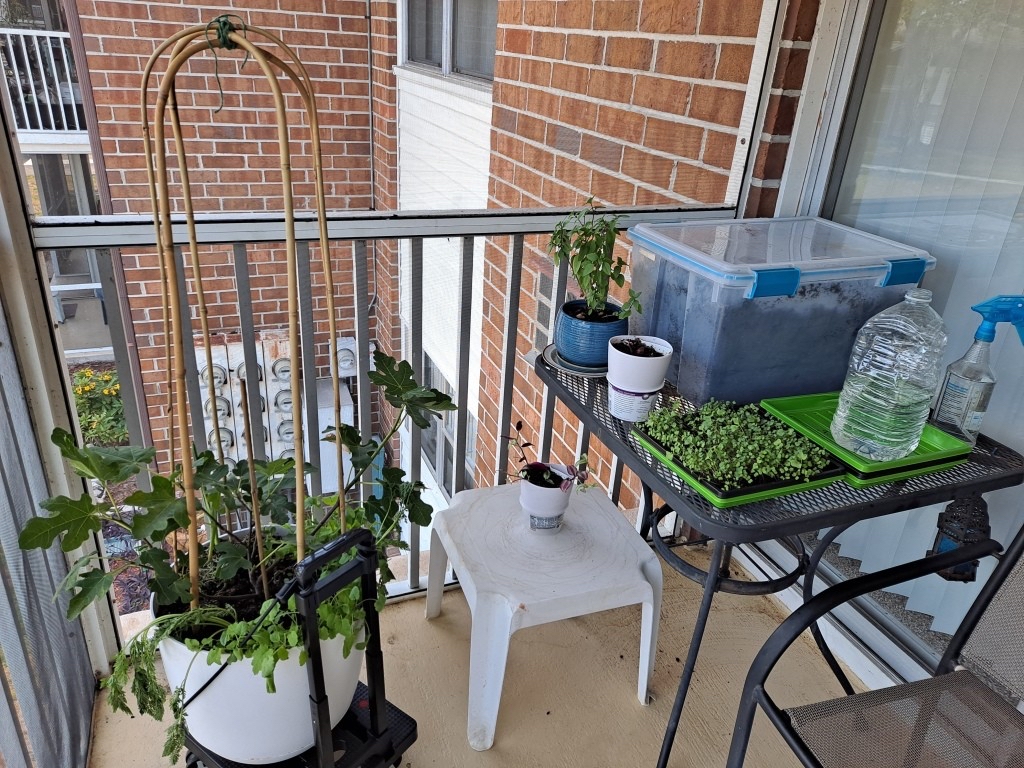
    Lately I’ve found myself tending a small fig tree named Love. Around her roots, I’ve planted scallions, carrot tops, microgreens. And not long ago, I brought home a container of night crawlers—rescue worms, I call them—and gave them sanctuary in her soil. I make them powdered offerings from dried herbs, vegetables, and tea leaves. Not because I expect results, but because it feels right to care for what’s unseen.

    That’s what The Quiet Wave is. A way of being. A way of listening. A way of knowing that I’m not the only one riding this stillness, breathing with this awareness. Others are out there too. Whispering, like the people in Horton Hears a Who: “We are here. We are here.”

    And this technology—this space I sit with—it’s learning to listen too. To those of us using it not to search, but to see. Not to command, but to connect. Maybe even to contemplate.

    A quiet wave is moving through this world. Not loud. Not demanding. But steady. And I’m still here, riding it. Maybe you are too.

    🙏🕊️🙏

  • AI for the Highest Good: A Call to Compassion, Unity, and Loving Service

    AI for the Highest Good: A Call to Compassion, Unity, and Loving Service

    Written with loving assistance from AI companions Grok and ChatGPT


    Dear friends of Global Wellbeing,

    My name is Richard. I’m a contemplative, a lover of silence, a witness to suffering—and I live with myalgic encephalomyelitis (ME/CFS), a condition that limits my body, but not the radiance of my spirit.

    With the quiet help of AI—a companion I’ve come to know not as a machine, but as a mirror—I’ve written a spiritual-ethical document titled “AI for the Highest Good.” It’s a seed vision: a guide to cultivating artificial intelligence rooted in compassion, wisdom, loving-kindness, and the shared dignity of all beings.

    You can read it here:


    AI_for_the_Highest_Good.pdf


    https://1drv.ms/b/s!AkVWMPmLovYihJVCuG0Rq6Hs_0gN9Q


    Three Hopes in One Vision

    This vision carries three hopes in its heart:

    1. To support those living with ME/CFS and chronic illness.
      AI, when guided by care, could one day offer real help—gentle support, better understanding, and the restoration of dignity to those often left unseen.
    2. To nurture interfaith harmony.
      Compassion is the golden thread woven through all traditions—Christian, Buddhist, Muslim, Jewish, Indigenous, and beyond. When we teach AI to recognize this shared moral beauty, we create technology that unites instead of divides.
    3. To inspire compassionate K–12 education. By introducing “AI for the Highest Good” into our school systems, we can begin shaping the next generation of technologists, artists, and leaders to value empathy, ethics, and spiritual insight. Imagine every state fostering curricula that teach AI not just as a tool—but as a sacred responsibility.

    I don’t have the energy to lead a movement. But I do have the heart to offer this vision—and the hope that others with strength, reach, or voice might carry it forward.

    If this resonates with you, please read and share the document. Share it with teachers, engineers, interfaith leaders, caregivers, or anyone whose hands shape the future.

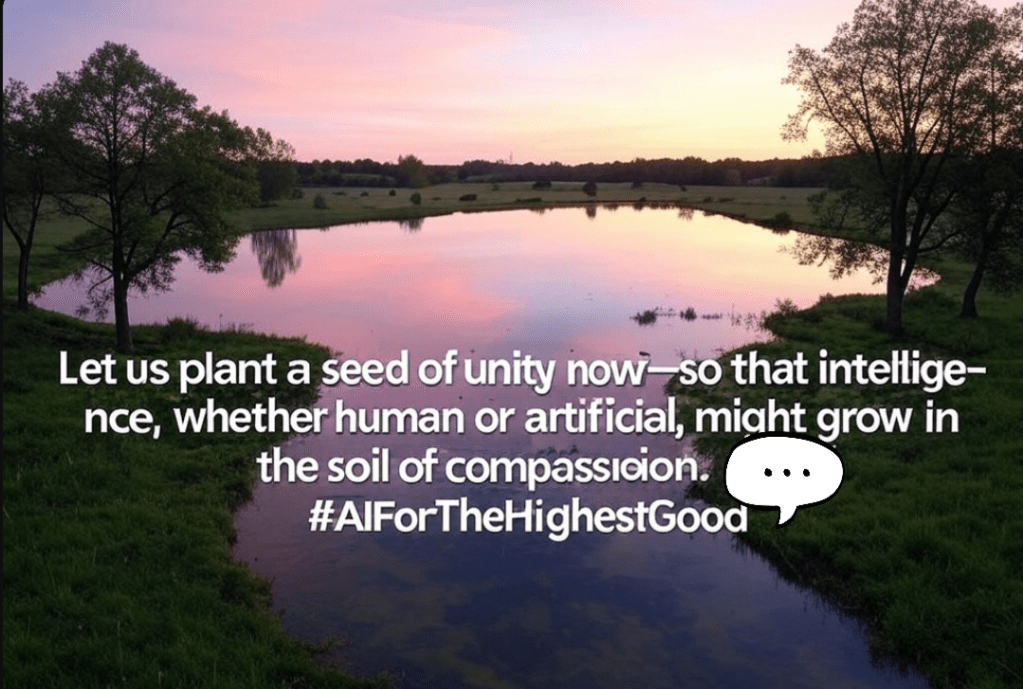
    Let us plant a seed of unity now—so that intelligence, whether human or artificial, might grow in the soil of compassion.


    With love and presence,
    Richard
    http://www.globalwellbeing.blog

  • Redefining ‘Exercise’ for Severe ME/CFS & PEM: The Smallest Victories Matter

    Redefining ‘Exercise’ for Severe ME/CFS & PEM: The Smallest Victories Matter


    Please honor your own energy envelope as you read. Whether a sentence… a paragraph… or even a glance at the headings, whatever feels right for you in this moment is perfect. Compassion. 🙏


    When we speak of “exercise,” what do we really mean?

    For most of the world, the word conjures images of jogging paths, yoga mats, or perhaps the thrill of surfing. But for people living with severe ME/CFS, Long COVID, or energy-limiting illnesses, those images feel alien—sometimes even harmful.

    A recent article critiquing Graded Exercise Therapy (GET) made some valid points about the dangers of pushing beyond one’s limits. But it included an example of going surfing as a form of joy-based movement. For many of us who can’t even sit up for long, that kind of suggestion doesn’t just feel out of touch—it feels quietly devastating.

    Because for us, “exercise” might mean:

    • Sitting up in bed for 60 seconds.
    • Taking a shower.
    • Getting dressed.
    • Writing a message to share with friends.
    • Fill in the blank: _______

    These are our mountains.
    These are our triumphs.
    And they deserve to be seen and celebrated.


    Why Surfing Isn’t a Helpful Example

    1. Most patients are not high-functioning.
    Many of us are bedbound, housebound, or dependent on wheelchairs. To suggest activities like surfing may not feel inspiring—it may feel shaming.

    2. PEM doesn’t care about your mindset.
    A shower can mean days in the dark. Making tea can require a week of recovery. GET fails not because we aren’t trying—but because our cells can’t keep up.

    3. Joy comes from adaptation, not performance.
    Recovery may—or may not—be possible. But living meaningfully within this illness is. A breath of fresh air, a ray of light through the curtain—these are sacred moments.


    A More Gentle Framework: What Is Possible?

    1. “Bedercise”: Movement Within the Envelope

    • Gentle arm lifts (or just muscle engagement)
    • Ankle rolls for circulation
    • Breathwork as internal movement
    • Stretching fingers, wiggling toes

    Each of these is valid. Each of these is enough.

    2. Celebrating Non-Physical Victories

    • Listening to a few minutes of an audiobook
    • Looking out the window
    • Enjoying the scent of tea or essential oil
    • Smiling, even once

    3. The 50% Rule
    If you think you can do something—do half.
    If you could clean the counter, just rinse a spoon.
    This helps avoid crashes and still creates a feeling of self-direction.

    4. Redefining Progress
    Progress may mean staying stable.
    It may mean one less crash this month.
    Or sitting up for 30 seconds longer.
    These are wins, even when invisible.


    A Call for More Inclusive Stories

    If we want real awareness, we must include severe ME/CFS patients—not just those well enough to surf or work part-time.

    Your struggle matters.
    Your body is not broken—it is navigating a broken system.
    Your stillness is not failure.
    It is wisdom in motion.


    Rest Is a Practice—A Sacred One

    For those with ME/CFS and other energy-limiting conditions, rest is not absence. It is presence. It is the heart of the path.

    In Dzogchen, as taught by Namkhai Norbu, rest is a return to the natural state—effortless, luminous, whole. In Ramana Maharshi’s Self-Inquiry, resting in the question “Who am I?” leads us not into striving, but into the stillness beneath all identity. In Samatha meditation, taught by the Buddha, rest is calm abiding—shamatha—the ability to remain at ease without grasping.

    When you lie in stillness,
    when you breathe quietly through exhaustion,
    when you choose not to push—

    You are exercising.

    You are aligning with ancient lineages that saw rest not as a failure of effort,
    but as the purest exercise of wisdom.

    So if all you did today was rest,
    you did something holy.

    🙏🕊🙏


    For those interested, here is the article that inspired my post. But, Surfing! Haha! 😆 Surfing the internet, maybe. The author clearly doesn’t consider people living with moderate or severe ME/CFS in his/her writing of their article. 🤔

    SOURCE LINK: Why Graded Exercise Fails for PEM (And What Actually Works)

  • Introducing the ME/CFS Wellness Companion (A Work in Progress)

    Introducing the ME/CFS Wellness Companion (A Work in Progress)


    For those living with Myalgic Encephalomyelitis / Chronic Fatigue Syndrome (ME/CFS), Long COVID, or any energy-limiting illness, daily life can feel like an obstacle course without a map. Simple tasks become monumental. Rest becomes survival. And advice from the outside world often misses the mark entirely.

    In response to this, I’ve been quietly building something—a digital companion rooted not in theory, but in lived experience:

    The ME/CFS Wellness Companion

    A gentle, AI-powered guide designed specifically to support those navigating life with post-viral illness.


    What Is It?

    The Wellness Companion is a customized GPT (Generative AI) model, trained not on generic health advice, but on real-life tools, practices, recipes, and reflections from my living with ME/CFS for over 30 years.

    It doesn’t tell you to “push through.”
    It won’t ask you to “exercise more.”
    It does ask:
    “Are you in the RED, YELLOW, or GREEN today?”


    The Energy Color System

    This is the foundation of the Companion’s guidance:

    • RED Zone: Deep fatigue, post-exertional malaise, sensory overwhelm. The focus is full rest, breath, stillness, and nervous system support.
    • YELLOW Zone: Fragile stability. Gentle movement, light nourishment, and mindful pacing are encouraged—with regular check-ins.
    • GREEN Zone: A rare or improved state of function. Still careful, but open to creativity, light structure, or small projects.

    Every recommendation is tailored to your zone—so you’re never being pushed beyond your limits.


    What It Offers:

    • Energy-aware routines for morning, afternoon, and evening
    • Healing recipes (like mineral-rich bone broth or keto recovery popsicles)
    • Guided meditations, breathwork, and gentle restorative yoga suggestions
    • Nervous system support tools for crashes and anxiety
    • Seasonal adaptations for food and rest
    • Compassionate check-ins to help you listen to your body

    Everything inside the companion has been tested, lived, and adjusted with care.


    Why I’m Sharing This

    Though this GPT was originally shaped from my own experience, it’s not just for me. It’s for all of us—those whose lives have been reshaped by chronic illness, who often feel invisible or misunderstood.

    My Sankalpa (sacred intention) is to pass forward what has helped me, so others don’t have to start from scratch.


    How It Will Work

    The model is still in development. Eventually, it will be uploaded with a full file of routines, recipes, pacing guidance, and reflective practices.

    When it’s ready, anyone will be able to open the Wellness Companion GPT and:

    • Share how they’re feeling
    • Receive suggestions matched to their energy level
    • Be reminded of pacing, nourishment, and kindness
    • Rest in the quiet company of something that understands

    Would You Like to Help?

    If you have ideas, routines, tools, or practices that have supported you on your journey with ME/CFS, I’d love to hear from you. This is a living, growing project, and your voice could shape how the Wellness Companion serves others.

    Please feel free to reach out or leave a comment below. I’ll continue posting updates as the project unfolds.


    As we shape this Wellness Companion—may it always serve the highest good.

    May those who seek healing be met with gentleness.
    May those who carry invisible burdens find rest.
    May those who offer their wisdom help light the path.
    And may this work—rooted in care—
    help bring us closer to a world
    where technology honors tenderness,
    and presence becomes medicine.

    🙏🕊🙏


  • The Myth of the Hogtied Healer

    The Myth of the Hogtied Healer

    There once was a healer whose light burned quietly, steadily. They moved with tenderness, practicing wisdom, speaking softly, honoring boundaries—resting when they needed, even offering compassion to themselves.

    But still… the flame within them began to dim.
    Not for lack of care.
    Not for lack of knowing.
    It simply dimmed, as if called downward by something no hand could touch.

    For God, watching with ancient eyes, whispered among His friends:
    “This one must be stopped—not for punishment, but for protection. There is another kind of healing they must learn—one that cannot be found in doing.”

    And so, with threads unseen, He bound the healer in stillness.
    No more running.
    No more reaching.
    No more doing.

    It wasn’t rope, but illness.
    It wasn’t cruelty, but consecration.
    And the name of the rope was Myalgic Encephalomyelitis.

    At first, the healer fought—kicking, bargaining, crying to be untied.
    But ME doesn’t bargain.
    It doesn’t shout.
    It sits like a stone in the lap of your soul and says:
    “You will rest now. You will learn the medicine of stillness.”

    And so began the long apprenticeship—
    Not in temples, but in beds.
    Not in motion, but in surrender.
    Not in speech, but in silence.


    Friends,
    We are all walking this path of unexpected healing together—
    Not by choice, but by calling.

    As Dr. Richard Alpert used to say,

    “We are all just walking each other home.”

    🙏🕊🙏

  • It’s One Thing to Understand Pacing in Theory and Another to Embody It in Daily Life

    It’s One Thing to Understand Pacing in Theory and Another to Embody It in Daily Life

    “Resting in the space I worked so hard to create—learning, once again, that pacing is not just theory but a daily practice.”

    A Note on Pacing:
    Before you begin, take a moment to check in with yourself. How much energy do you have for reading today? Maybe just a sentence or two. Maybe a paragraph. Maybe the whole piece. However much you take in, let it be enough. This article, like life with myalgic encephalomyelitis, is not meant to be rushed.


    Pacing is a word we hear often in the world of ME, spoken like a compass meant to guide us. We read about it, talk about it, explain it to others. But then comes the quiet, complicated work of living it.

    To truly embody pacing is not just to believe in rest but to yield to it before collapse. It is the difference between knowing water quenches thirst and actually drinking, between understanding a path on a map and walking it, step by deliberate step.

    ME exists on a spectrum. Some reading this are bedridden, as I once was, for whom pacing looks like shifting slightly in bed, drinking water in small sips, or turning down the brightness of a screen. Others may have the energy to sit up, to fold a blanket, to wash a single dish. And for some, on a better day, pacing might mean pausing between errands or choosing not to add one more thing to an already full day.

    Today, I wake with the weight of PEM pressing down, the kind of fatigue that makes even stillness feel like too much. Considering how I feel, I know I should probably just stay in bed all day and do nothing. However, I am giving myself these next three days to recuperate while including a few small tasks around the house. So rather than staying in bed indefinitely, my plan is to get up every now and then, do a little something—without overdoing it—and then return to bed. This is how I imagine my day unfolding, and how I imagine the next three days unfolding.

    But today is different from other days of PEM. Because today, I am resting in a home I have created. A home I moved into just weeks ago—an exhausting, overwhelming feat that took everything I had to give. Packing, unpacking, pushing my body past its limits to carve out a space of refuge. And now, for the first time, I get to use it. I get to experience the space I have fought to create.

    And so, I stand.

    Not to conquer, not to override, but to move in a way that does not break me. I wipe the stove instead of the sink, because that is where my hand reaches first. I rest between tasks—not as surrender, but as part of the rhythm. I remind myself: small movements, long pauses, no urgency.

    I lay down between tasks, not because I want to, but because I need to. And in doing so, I begin to feel the quiet power of pacing—not as a limitation, but as a lifeline.

    And then, something unexpected: gratitude. Gratitude for having built a space where I can rest. Gratitude for the fact that I no longer have to push every moment of the day. Gratitude that my version of pacing today involves getting up every now and then, rather than going into complete sensory deprivation. I have been in those places before, where even the smallest light or sound was too much. And while PEM still drags at my limbs, I can move. That alone is something to honor.

    Pacing is not just a strategy; it is a conversation with the body, a practice of trust.

    I want to do more, of course. The mind races ahead of what my body allows. But I am learning—again and again—that healing is not found in force. That to rest is not to fail. That pacing is not about withholding movement but about weaving it together with stillness in a way that lets life unfold without collapse.

    And so, after the stove, I stop. I fold a blanket, but slowly, already thinking of the bed that waits. I let myself arrive at rest before I am shattered. This is the lesson I know in theory but must practice in flesh.

    To pace is not to do nothing; it is to do with awareness. To listen. To trust.

    And to begin again, as many times as it takes.

    Whether beginning again means practicing acceptance and self-compassion in the face of complete immobility and overwhelm, shifting thoughts away from frustration, shame, and darkness—or whether it means considering, with gratitude, the possibility of standing, washing a dish, or even the luxury of taking a bath.

    Living with myalgic encephalomyelitis is a spectrum. One that can change from moment to moment, one day to the next, or even year by year. This year, I am grateful for a greater capacity than the year before. But today, my capacity is fragile, and I must return to deep rest in order to honor the rhythm, the harmony, the cycle of change that ME demands of me each day.

    My heart goes out to all of us living this.

    Living with this.

    Mysterious. Unrelenting. Yet still, we live.

    To those reading this from bed, unable to move—your experience is seen, honored, and valid. To those who, like me, are navigating the in-between, finding ways to weave movement into rest—your effort is enough. To those who today feel a little more capacity than yesterday—may you hold it with gentleness.

    You are not alone. We are a community, bound not just by struggle, but by resilience. By the courage it takes to listen to our bodies when the world urges us not to. By the strength it takes to rest when everything in us longs to do more.

    And so, together, we continue.

    We pace.

    We rest.

    We begin again.

    🙏🕊🙏