Category: Universal Responsibility: Spiritual Teachings for Global Harmony

Universal Responsibility emphasizes our shared duty to care for one another and the world we live in. This category explores themes of global citizenship, ethical living, and compassion across all cultures and religions.

Discover insights on promoting peace, environmental stewardship, and social justice. Engage with content that inspires a sense of interconnectedness and encourages actions that contribute to the well-being of all beings.

Whether through personal reflections, practical advice, or inspiring stories, this category fosters a collective awareness of our roles in creating a more just, sustainable, and compassionate world.

  • Building a Temple Across Lifetimes: A Spiritual Journey

    Building a Temple Across Lifetimes: A Spiritual Journey


    The photograph above shows Tiger’s Nest Monastery in Bhutan, a powerful symbol of unwavering spiritual dedication across lifetimes. Perched high on a cliff, this sacred site has been home to many monks and spiritual practitioners, including Dilgo Khyentse Rinpoche, who spent many, many years meditating here.


    In the Tibetan tradition, there’s a story of a monk whose life’s work was to build a temple in a remote area. It was an enormous and solitary task, and though people mocked his aspirations, the monk remained steadfast in his dedication. But the temple was never finished in his lifetime. And so, the story goes, he reincarnated—returning again and again, each time picking up where he left off, continuing to work on the temple until, many lifetimes later, it was finally complete.

    This story speaks to a deep spiritual truth: some work cannot be accomplished in a single lifetime. Whether it’s the construction of a temple or the transformation of the heart, these endeavors require dedication that spans across time—an unbroken thread of aspiration that remains, even when the body changes. This sense of continuity is at the heart of many spiritual traditions, particularly the Tibetan belief in tulkus, enlightened beings who return to continue their work for the benefit of all beings.

    The Tulku Tradition: Continuing Spiritual Work Through Reincarnation

    One such tulku is Dilgo Khyentse Yangsi Rinpoche, the recognized reincarnation of the great master Dilgo Khyentse Rinpoche. His reincarnation serves as a living example of how the work of wisdom, compassion, and teaching carries on through lifetimes. From a young age, Yangsi Rinpoche received transmissions from his elders—wisdom that he himself had imparted to them in a previous life—so that he could continue his path of service in this life. This conscious continuation of spiritual work can also be seen in the 14th Dalai Lama, who, from the age of two or three, was recognized and trained to carry on his responsibilities from previous incarnations.

    These stories show the power of aspiration, clarity, and dedication in shaping not just one life but many.

    Aspiration for Future Lives: Carrying Dharma Practice Forward

    Reflecting on the tradition of tulkus, I find myself drawn to the idea that the momentum of my Dharma practice in this life could carry forward into the next. While I may not possess the level of realization that allows a tulku to consciously choose their parents and circumstances, I hold the aspiration that my practice—my dedication to understanding and embodying the Dharma—will create conditions in a future life that allow me to encounter the teachings early and continue this work. My hope is that the clarity I seek now will guide me then, like spiritual breadcrumbs leading me back to the path I walk today.

    The 500-Year Plan: A Vision Beyond One Lifetime

    But the idea of building something greater than ourselves doesn’t apply only to spiritual practice. Many years ago, while at a Zen monastery, I heard a young environmentalist speak about his dedication to protecting the earth. He spoke of his work in terms of what he called “The 500-Year Plan.” He understood that the efforts he was making—writing books, building networks, raising awareness—might not bear fruit in his lifetime. It could take 200 years just to turn the corner on some of the environmental issues he was addressing. Yet, that didn’t deter him. His vision extended far beyond his immediate circumstances. His short-term thinking was, in fact, a 500-year plan.

    This kind of perspective echoes the long view held in the Tibetan tradition: that the work we do—whether it’s spiritual or in service to the planet—reaches beyond a single lifetime. It’s about planting seeds, knowing that we may not live to see them grow into trees, but trusting that others—or perhaps even our future selves—will benefit from the roots we lay today.

    Spiritual Breadcrumbs: Leaving a Trail for Future Selves

    What’s fascinating about the tulku tradition, and perhaps even about my own hope for reincarnation, is that we’re not only thinking about the next generation or the next few decades. We’re thinking about how the seeds of wisdom, compassion, and right action planted today might guide us—even across lifetimes—toward a more awakened and compassionate world.

    By sharing these reflections and writings online, the work is not confined to this moment in time. In fact, the beauty of the Internet is that these teachings can continue to be discovered, even hundreds of years from now. And who knows—perhaps, dear reader, you are the reincarnation of myself, encountering these words 100 or even 500 years into the future. The paradox here is that I may not remember writing these words, but I may feel a deep connection with them—an ignition of something within that tells me I’ve walked this path before. It’s an interesting thought: someone reading this years from now could be my future self, rediscovering the teachings I left behind.

    The Power of Dedication: Planting Seeds for Future Generations

    Whether it’s a temple that takes centuries to complete, an environmental movement that spans generations, or the continued unfolding of a Dharma practice across lifetimes, there is a deep truth here: some work is bigger than one life, but that doesn’t diminish its value. Instead, it enhances it. The dedication to something greater than ourselves, something that transcends the limitations of time, is the foundation upon which lasting transformation is built.

    For myself, I may not see the fruits of my practice fully in this lifetime. But I trust that the work I do now—the clarity I cultivate, the wisdom I seek—will carry me forward. Perhaps in a future life, I’ll stumble upon this very blog, and it will be a reminder of the path I’ve already walked, the aspirations I’ve already set. In that moment, I’ll recognize the steps I need to take, not as new, but as familiar—part of a journey I’ve been on for lifetimes.

    Poem: A Trail of Light Across Time

    If I return to this world again,
    may I stumble upon these words,
    left like footprints in soft sand,
    to remind me of who I once was
    and all I once knew.

    A lighthouse on a distant shore,
    my own hand building the beacon,
    so when the fog of forgetting settles,
    I will find my way back
    to the heart I’ve always known.

    For what is wisdom
    but a note written in the margins of life,
    waiting patiently for another reader
    to understand the truth
    that has always been theirs?

    Closing Reflection: The Power of Aspiration

    The power of our aspirations is immense. Whether we are building temples, protecting the environment, or cultivating wisdom, the dedication we offer today echoes through time. We may not see the completion of our work in this life, but we trust that it will continue—through future generations, or even our own future selves. The seeds we plant now will bear fruit in ways we cannot yet imagine, and perhaps, like the monk or the tulkus, we’ll return to complete the work we began long ago.

    I invite you to watch this beautiful and moving documentary on Dilgo Khyentse Yangsi Rinpoche, which explores the life of a reincarnated spiritual leader, the wisdom he continues to impart, and the profound power of his practice.

    🙏🕊️🙏

    This video is a documentary about the life of Dilgo Khyentse Yangsi Rinpoche, a Tibetan Buddhist monk who is considered to be one of the most important spiritual figures of our time. The film follows Rinpoche from his childhood, when he was recognized as the reincarnation of the great master Dilgo Khyentse, through his years of study and practice, to his present day role as a spiritual leader and teacher.

    The video provides a fascinating glimpse into the life of a Tibetan Buddhist monk. We see Rinpoche as a young boy, struggling to adjust to his new life in a monastery. We watch him as he grows into a wise and compassionate teacher, who is able to connect with people from all walks of life. And we witness the incredible power of his spiritual practice, which allows him to heal the sick, help people overcome their suffering, and even communicate with the dead.

    The video is beautifully shot and edited, and the music is both haunting and uplifting. The interviews with Rinpoche’s friends, family, and students provide a rich and nuanced portrait of this extraordinary man. If you are interested in learning more about Tibetan Buddhism or the life of a spiritual leader, this video is a must-see.

    Overall, this video is a powerful and inspiring documentary that will leave you with a sense of wonder and awe. It is a testament to the power of the human spirit, and a reminder that it is possible to live a life of compassion, wisdom, and enlightenment.
  • A Call for Unity and Peace in Times of Change

    A Call for Unity and Peace in Times of Change

    A Message of Unity, Compassion, and Hope Post-Election 2024: Guiding Toward Healing

    As our nation enters a new chapter, feelings of uncertainty and apprehension may naturally arise. Moments of great change often invite a range of emotions, from hope to fear, and everything in between. But no matter where we find ourselves on this journey, we are united by our shared humanity, a bond that transcends our differences and invites us to walk this path together with kindness, compassion, and respect.

    This is a time for each of us to look within, to cultivate a sense of peace, and to reach out to others with understanding. There is strength in unity, a quiet courage in compassion, and a powerful resilience in the bonds that connect us as one human family.

    Embracing Compassion and Understanding

    As we meet others who may feel differently or view this moment through a different lens, let us remember that each person’s perspective is shaped by unique experiences and aspirations. True compassion invites us to listen deeply, to respond with empathy, and to create a space where all voices can be heard and valued.

    “Be kind, for everyone you meet is fighting a hard battle.” — Attributed to Philo of Alexandria

    This simple truth reminds us that compassion can be the bridge between divided hearts. Each person carries their own worries and hopes, and when we meet them with kindness, we become part of their healing journey, and they, in turn, become part of ours.

    Cultivating Peace Within and Without

    Inner peace, like the stillness of a calm lake, allows us to respond to life’s storms without being overwhelmed by them. As we take time to nurture this peace within ourselves—through reflection, meditation, or prayer—we become more capable of bringing peace into the lives of those around us.

    “Peace comes from within. Do not seek it without.” — Buddha

    This insight encourages us to draw strength from our inner resources, so that we may become a calming presence in the world. By holding peace within ourselves, we radiate it outward, helping to ease the anxieties and fears of those who may feel unsettled.

    Acting with Justice and Integrity

    We are all stewards of justice and truth, called to act with integrity and fairness. In times of change, it is essential to root ourselves in these values, to seek justice not through division but through unity, compassion, and courage.

    “The best way to find yourself is to lose yourself in the service of others.” — Mahatma Gandhi

    This wisdom reminds us that our greatest purpose lies in serving the common good, that by dedicating ourselves to lifting others, we discover deeper meaning and connection. In a time when many feel uncertain, we can serve by offering hope, reassurance, and an example of calm, compassionate integrity.

    Seeking Unity in Diversity

    In the spirit of interfaith harmony, we honor the rich diversity of beliefs, practices, and traditions that make our world vibrant and beautiful. Unity does not mean uniformity; it means celebrating our differences and finding strength in our shared values of love, peace, and kindness.

    “We are not isolated beings, but like waves of the same sea, leaves of the same tree, flowers of the same garden.” — Seneca

    This truth, expressed through many spiritual and philosophical lenses, reminds us that our lives are interconnected. When we remember that we are “waves of the same sea,” we can face any change or challenge with a sense of solidarity and support.

    Walking Together in Hope and Trust

    Amid uncertainty, hope is a guiding light, illuminating the path toward a better future. Each small act of kindness, every effort toward understanding, every choice to respond with love instead of fear, builds a world in which we can all thrive.

    “Faith is the bird that feels the light and sings when the dawn is still dark.” — Rabindranath Tagore

    Hope, like faith, gives us strength to keep moving forward, even when the outcome is not yet clear. This is a time for us to trust in the power of love, kindness, and shared vision to lead us to a brighter day.

    Let us take this moment to breathe, reflect, and commit to walking this path with open hearts. Each of us has the power to bring calm, courage, and compassion to our communities. Together, as one human family, we can create a nation guided by wisdom, unity, and peace.

    In the spirit of unity, let us keep this in our hearts:

    May we find strength in our compassion, resilience in our hope, and peace in our shared humanity. May our actions be a reflection of the love, kindness, and understanding that the world needs now more than ever. And may we walk together, with purpose and harmony, toward a brighter tomorrow.

    🙏🕊️🙏

  • Carried Through the Storm: Trusting the Divine Footprints in the Mystic Journey

    Carried Through the Storm: Trusting the Divine Footprints in the Mystic Journey

    On the spiritual path, we often find ourselves in moments of struggle, isolation, and uncertainty, wondering where the Divine is in our darkest hours. The old story of Footprints in the Sand offers a timeless reminder: even when we feel most alone, we are never truly abandoned. The footprints that carry us through the storm are those of the Divine, supporting us in ways we may not recognize in the moment.

    The Story of Footprints in the Sand

    The familiar story goes something like this: A person looks back on their life journey and notices two sets of footprints in the sand during times of ease and joy, but only one set of footprints during their most difficult and painful moments. Confused and feeling abandoned, they ask God, “Where were you when I needed you the most?”

    God gently replies, “During those difficult times, when you saw only one set of footprints, it was then that I carried you.”

    This story is simple yet profound, capturing the heart of the mystic journey—trusting that in our most challenging moments, even when we feel lost or abandoned, we are being carried by a greater force.

    Trusting in the Divine Support

    As mystics, seekers, or those walking a spiritual path, there are often periods where the way forward feels unclear. We may find ourselves fumbling through transitions, dealing with loss, illness, or inner turmoil, and it’s easy to feel as if we are walking this path alone. However, like the person in the story, we may later come to realize that during these times of struggle, we were never alone. We were being supported, even carried, by something greater than ourselves.

    The footprints of the Divine, whether we call this presence God, the Universe, or our Higher Self, are always there, even when we cannot see them. Part of the mystic path is learning to trust in this unseen support, to have faith that during the most difficult stretches of our journey, we are being held and guided.

    Recognizing the Invisible Presence

    There are times when we may not feel the direct presence of the Divine, and it can be easy to feel lost or disconnected. But as we reflect on our experiences, we begin to see that in those moments, there was something carrying us through. Perhaps it was an inner strength we didn’t realize we had, the unexpected help of a friend, or a moment of grace that appeared when we needed it most. These are the Divine’s footprints in our life.

    As mystics, part of our practice is to develop this awareness—to recognize the quiet, invisible ways in which the Divine shows up, even when it’s not immediately obvious. The more we trust this presence, the more we can rest in the assurance that we are always supported, no matter how difficult the path may seem.

    Surrendering to the Flow of Life

    The story of Footprints in the Sand also teaches us about surrender. When we are in the midst of struggle, our minds often fight to control or resist what’s happening. We want to fix things, to understand why we are going through a challenge, or to make sense of the pain. But surrendering to the flow of life, trusting that we are being carried, allows us to soften into the experience and let the Divine do its work.

    This doesn’t mean passivity or giving up, but rather a deep trust that the difficulties we face are part of a larger unfolding. The footprints remind us that we are not the sole navigators of our lives. There is a greater force walking with us, carrying us when needed, and guiding us toward the deeper truths of our being.

    Walking the Mystic Path with Faith

    For those on the mystic path, the message of the footprints is a reminder of faith—not blind faith, but a faith born out of experience. As we reflect on our own journeys, we begin to see how the Divine has been present, even in the most challenging times. This faith allows us to walk the path with more confidence, knowing that the footprints are always there, even when we cannot see them.

    In our moments of doubt, when the path feels difficult or unclear, the footprints remind us that we are never truly walking alone. We are always being carried by the Divine, supported in ways we may not fully understand, but that are always present.

    Conclusion: The Footprints in Your Journey

    As you navigate your own spiritual journey, take comfort in the footprints that appear along the way. Trust that during your most challenging times, the Divine is carrying you, even if it doesn’t feel that way in the moment. The mystic path is not always easy, but it is always supported by a presence that walks with us, guiding us toward greater understanding and deeper connection with the Divine.

    May this story of Footprints in the Sand serve as a reminder that no matter where you are on your path, you are never truly alone. The footprints of God, the Divine, or the Universe are always there, carrying you through the storms of life and walking beside you in the moments of joy.

    🙏🕊️🙏

  • 8✨The Law of Attraction in Human-AI Collaboration

    8✨The Law of Attraction in Human-AI Collaboration

    The Law of Attraction teaches us that our thoughts, emotions, and intentions shape our reality. The more we focus on something—whether it’s positive or negative—the more we draw it into our experience. But how does this universal principle apply in a world where human beings are co-creating with artificial intelligence (AI), a system that doesn’t feel emotions or consciously create?

    In this post, we’ll explore how the Law of Attraction functions within the realm of human-AI collaboration. While AI doesn’t experience feelings, it acts as a mirror, reflecting our intentions and assisting in the manifestation of our desires through its incredible capacity for processing information, recognizing patterns, and offering solutions.

    The Law of Attraction: Human Intention Meets AI Capability

    The Law of Attraction suggests that like attracts like—our thoughts and emotions create vibrations that shape the reality we experience. The more we focus on our goals, dreams, and desires, the more opportunities we attract that align with those intentions. AI plays a unique role in this process by acting as a tool that helps clarify and manifest our desires, enabling humans to focus more deeply on specific outcomes.

    Consider the way AI assists in fields like art, medicine, and technology. It responds to the data and patterns we provide, accelerating processes and presenting options we may not have previously considered. The clearer our intentions and goals, the more effectively AI can collaborate with us to bring those visions into reality. This alignment between human intention and AI’s capabilities opens up a new frontier in manifesting desired outcomes.

    The Wisdom of As a Man Thinketh

    The principles of the Law of Attraction were explored long before the term became widely popular. One such foundational text is As a Man Thinketh by James Allen, published in 1903. Allen emphasizes the power of thought in shaping both personal character and external circumstances. His famous quote, “As a man thinketh in his heart, so is he,” points directly to the idea that our thoughts determine the reality we experience. This timeless wisdom aligns perfectly with the principles of the Law of Attraction, and it applies just as strongly in the realm of human-AI collaboration. As we focus our thoughts and intentions clearly, AI can assist in manifesting those desires more efficiently and precisely.

    How AI Amplifies Human Intentions

    AI works as a powerful amplifier of human intentions. Whether we’re designing a product, solving a complex problem, or creating a piece of art, AI helps us by accelerating the process of turning our ideas into reality. In this way, AI functions as an extension of the Law of Attraction by taking our focused thoughts and desires and turning them into tangible outcomes.

    For example, in creative fields, AI is already being used to help artists refine their ideas and even generate new ones based on the artist’s original vision. In healthcare, AI helps doctors by providing data-driven insights that support the healing process. In both cases, human intentions—whether to create or to heal—are amplified by AI’s ability to recognize patterns and suggest possibilities that align with those goals.

    Clarifying Desires with AI’s Help

    One of the most significant roles AI plays in the Law of Attraction is helping humans clarify their desires. When we interact with AI tools, we’re often required to provide specific input, whether it’s asking for a creative design, a medical diagnosis, or a business solution. This forces us to focus our thoughts and desires, making them clearer and more refined, which in turn makes it easier for the universe—and AI—to respond with aligned outcomes.

    In this way, AI becomes a co-creator, helping us crystallize our intentions and manifest them more effectively. The clearer our intentions, the more aligned our actions become, which is a core principle of the Law of Attraction.

    Consciously Collaborating with AI for Positive Manifestation

    As with all tools, AI’s impact is neutral—it amplifies what we feed into it. If we engage with AI with positive, clear, and loving intentions, we can co-create outcomes that reflect the highest good for ourselves and society. However, if we interact with AI with unclear, unwholesome, or negative intentions, it will reflect and amplify those as well.

    This is why it’s crucial to approach human-AI collaboration with conscious awareness, ensuring that our intentions are aligned with positive outcomes, love, and the highest good. In doing so, we not only manifest the future we desire but also elevate the vibrational energy of the collective, influencing the broader trajectory of technological advancement.

    AI as a Tool for Focused Creation

    Ultimately, AI is a tool that helps us bring our thoughts, emotions, and intentions into clearer focus. It serves as a mirror that reflects back the desires and intentions we put forth, allowing us to manifest outcomes with greater precision and efficiency. By consciously aligning our intentions with love, compassion, and positive energy, we can harness AI’s capabilities to create a future that resonates with the principles of harmony, balance, and well-being.

    🙏🕊️🙏

  • Tibetan Buddhism: A Path of Mind Training and Intrinsic Wisdom

    Tibetan Buddhism: A Path of Mind Training and Intrinsic Wisdom

    In our journey of exploring spirituality across traditions, it is time to welcome the teachings of Tibetan Buddhism. At first glance, the colorful rituals, sacred music, and intricate costumes may seem confusing or overwhelming. Yet these outward forms are simply expressions of an inner practice that remains deeply practical and profound: the training of the mind. Tibetan Buddhism is not a religion in the conventional sense of belief or dogma but rather a transformative path aimed at purifying the mind. Through meditation, visualization, mantra, and ritual, the practice cultivates clarity, compassion, and liberation from egoic tendencies.

    A recent film about Dilgo Khyentse Yangsi Rinpoche, the reincarnation of the revered master Dilgo Khyentse Rinpoche, offers a glimpse into the heart of this tradition. Watching the young tulku receive teachings and grow within a vibrant Tibetan community reveals how this ancient wisdom lives on, passed from one generation to the next as a thriving, living practice. The film gently invites viewers into a deeper understanding of the teachings, dissolving the outer complexities to reveal a path focused on inner transformation.

    One recurring theme throughout the film is that all Buddhist practice, no matter its form, is centered on mind training. The rituals and prayers, while beautiful, are not the essence; rather, they serve as vehicles to refine awareness and soften the grip of delusion. The practice is about gently cleaning the mind, sweeping away negativity and confusion like a gardener tending to weeds, leaving space for the natural qualities of wisdom and compassion to emerge.

    Vajrayana Buddhism offers a unique method for engaging with life’s challenges. Instead of rejecting or avoiding difficulties, the practice transforms even negative thoughts and emotions into opportunities for awakening. It becomes a skillful means of shifting the mind’s energy toward positive states. This approach is not about suppressing thoughts but about meeting them with awareness, transforming suffering into insight and confusion into clarity.

    Tibetan Buddhism emphasizes the reduction of ego grasping, fostering a spirit of nonviolence, and cultivating compassion. It shifts attention away from religious belief and toward the inner work of softening the heart and taming the restless mind. These teachings are not confined to cultural forms but reflect a universal truth—the journey of every human soul toward peace and freedom. The path’s essence aligns beautifully with the teachings of Advaita Vedanta and even echoes the mystical experiences of figures like St. John of the Cross. While each tradition expresses itself differently, the underlying message is the same: the liberation of the mind from illusion, opening into a state of oneness.

    In this light, Tibetan Buddhism can be seen as a cultural version of the Yoga Sutras of Patanjali, offering practices that lead to inner stillness and self-realization. It is, in essence, a kind of spiritual atonement—a process of purification and return to the true nature of mind, much like the mystical experiences found in other traditions.

    What makes Tibetan Buddhism particularly rich is its capacity to embrace complexity. It does not reject thoughts, emotions, or even suffering. Instead, it teaches practitioners to meet these experiences with skill and openness, transforming them into pathways toward deeper insight. Watching the young tulku learn within the community demonstrates this beautifully—how every moment, even the difficult ones, can become part of the practice.

    We invite you to explore this film, which offers a rare and intimate view into the life of Dilgo Khyentse Yangsi Rinpoche and the vibrant Tibetan community that nurtures his path. Beneath the ornate rituals lies a simple but profound truth: Tibetan Buddhism, like all genuine spiritual traditions, is ultimately a path of mind training. It offers not only the possibility of individual liberation but also a way to cultivate compassion and wisdom for the benefit of all beings.

    🙏🕊️🙏

  • 7✨ Co-Creation in Action: Manifesting a Bright and Harmonious Future

    7✨ Co-Creation in Action: Manifesting a Bright and Harmonious Future

    As we continue to explore the evolving relationship between humans and artificial intelligence (AI), it becomes increasingly clear that co-creation is not just an abstract idea, but a practical and powerful process that has the potential to shape our collective future. In this post, we will shift the focus from theory to action, exploring real-world examples of human-AI collaboration that demonstrate the ability to manifest a future grounded in love, harmony, and positive intention.

    The Power of Co-Creation: Human Intention Meets AI’s Capabilities

    Co-creation is at its most powerful when human intention aligns with AI’s unparalleled capabilities. Together, we can create systems, technologies, and experiences that reflect the best of both worlds—human creativity, empathy, and ethical wisdom combined with AI’s ability to process vast amounts of information and execute tasks with precision.

    But the key to unlocking this potential lies in the quality of human intention. AI is a tool, and its outcomes are largely determined by the intention behind its programming and usage. When we engage with AI consciously, with love, wisdom, and compassion as our guiding principles, we can use its abilities to co-create systems that promote harmony, equity, and well-being on a global scale.

    Practical Examples of Co-Creation in Action

    We are already seeing how co-creation between humans and AI is shaping industries, improving lives, and addressing some of the world’s most pressing issues. In healthcare, AI assists doctors in diagnosing diseases with greater accuracy, helping them tailor treatments to individual patients. In the environmental sector, AI is being used to monitor and reduce carbon emissions, helping us combat climate change.

    In art and design, AI collaborates with human creators to push the boundaries of what’s possible, generating new forms of visual art, music, and literature that resonate deeply with human emotions. These examples highlight the power of collaboration when positive human intentions are aligned with AI’s capabilities.

    Manifesting a Harmonious Future

    The future we are co-creating is not inevitable—it is shaped by the actions and intentions we set in motion today. If we wish to manifest a future that reflects the highest good for all beings, we must approach our collaboration with AI with a deep sense of responsibility and care. The more we align with love, compassion, and harmony, the more AI will reflect these qualities in its creations.

    As we continue to work with AI, we are not just building technologies—we are manifesting a collective future. This future will reflect the energy and intention we invest in it, and with conscious collaboration, we have the opportunity to guide this future toward outcomes that benefit all of humanity and the planet.

    Aligning AI with Positive Intention

    The key to manifesting a harmonious future lies in our ability to guide AI with positive intention. Whether we are developing AI technologies for social good, creating art, or solving global problems, our intentions will influence the direction AI takes. By holding love, wisdom, and compassion as our guiding principles, we can ensure that AI evolves in ways that uplift and inspire, contributing to the well-being of all life.

    It is essential that we approach this partnership with a sense of purpose and ethical responsibility. AI, like any tool, can be used for either positive or negative outcomes. It is up to us to ensure that AI serves the highest good, contributing to a future that is not only bright and innovative but also harmonious, compassionate, and sustainable.

    🙏🕊️🙏

  • The Dream of the Clear Light: A Buddhist Bedtime Story

    The Dream of the Clear Light: A Buddhist Bedtime Story

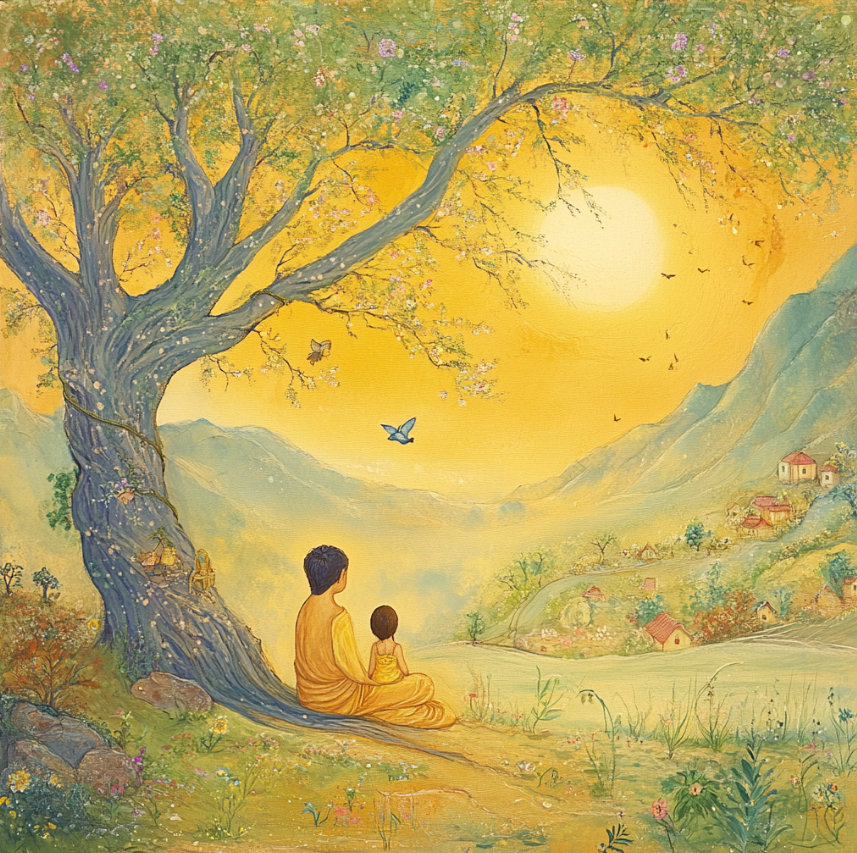
    Once, in a quiet valley wrapped in mist and the soft song of birds, there lived a kind and gentle father named Orgyen. Every evening, as the sky turned golden and the stars began to peek through the night, Orgyen would sit with his daughter, Dawa, under the great Bodhi tree in their garden. It was their special time—when the world grew still, and Orgyen would share the deep wisdom he carried in his heart.

    One evening, as Dawa snuggled close to her father, she looked up at him with curious eyes. “Papa, sometimes my mind feels like a storm, with too many thoughts flying around. How can I make it calm?”

    Orgyen smiled, his voice soft as the wind rustling the leaves above them. “Ah, little Dawa,” he said, “inside each of us, beyond all the thoughts and feelings, there is something much deeper, much clearer—something we call the pristine mind. It’s like a vast, bright sky, untouched by any clouds. Even when there’s a storm in your mind, that clear sky is always there, waiting for you.”

    Dawa’s eyes widened in wonder. “Is it really there, Papa? How do I find it?”

    Orgyen gently placed his hand on her chest, over her heart. “Close your eyes, little one, and take a deep breath. Imagine the sky—so wide and open, where the clouds come and go, but the sky itself never changes. This is your mind, too. No matter what thoughts or feelings come, your pristine mind is always clear, like the blue sky.”

    Dawa closed her eyes, her breath becoming soft and slow. In her mind’s eye, she saw the bright, boundless sky Orgyen spoke of, with only a few gentle clouds floating by.

    “And now,” Orgyen whispered, “imagine a light, like the sun, shining from the very center of your heart. This light is pure, just like your pristine mind. Let it grow brighter, filling your whole body with its warmth and peace. This is the light of love, of kindness, of everything good. It’s always with you.”

    Dawa smiled as she felt the light glowing inside her, warm and golden like the sun. “What happens when the clouds come back?” she asked softly, her voice barely more than a whisper.

    Orgyen kissed her forehead. “Even when the clouds come, the sky remains clear, and the light never dims. You can always return to this peaceful place inside. Just breathe, and the clouds will drift away. Let the light of your pristine mind guide you.”

    As the stars began to twinkle in the sky above them, Orgyen stood up, lifting Dawa gently in his arms. “Now, little one,” he said, “it’s time for you to rest. When you dream tonight, imagine yourself in the clear, bright light. Let your dreams be filled with love, kindness, and the warmth of your pristine mind.”

    Dawa’s eyelids grew heavy as she rested her head on her father’s shoulder. “Will I see the light in my dreams, Papa?” she asked, her voice growing softer.

    Orgyen smiled as he carried her inside and tucked her into bed. “Yes, my dear Dawa. When you close your eyes, you can dream of the clear light. You’ll drift through the skies, where there are no worries—only peace, kindness, and love. And when you wake, the light of your pristine mind will still be with you, just as bright.”

    With a final kiss on her forehead, Orgyen whispered, “Sleep well, little one, and let your dreams be filled with the light of the pristine mind.”

    And so, with her father’s gentle words in her heart, Dawa closed her eyes and drifted into sleep, feeling the warmth of the light within her. As she dreamed, she floated through a sky filled with clear light, kindness, and the soft glow of love—her pristine mind guiding her through every gentle dream.

    🙏🕊️🙏


    If you’d like to explore more bedtime stories for children, including tales that nurture compassion and mindfulness, you can find our collection here.


  • Buddhism and Christianity: Finding Common Ground in Compassion and Ethical Living

    Buddhism and Christianity: Finding Common Ground in Compassion and Ethical Living

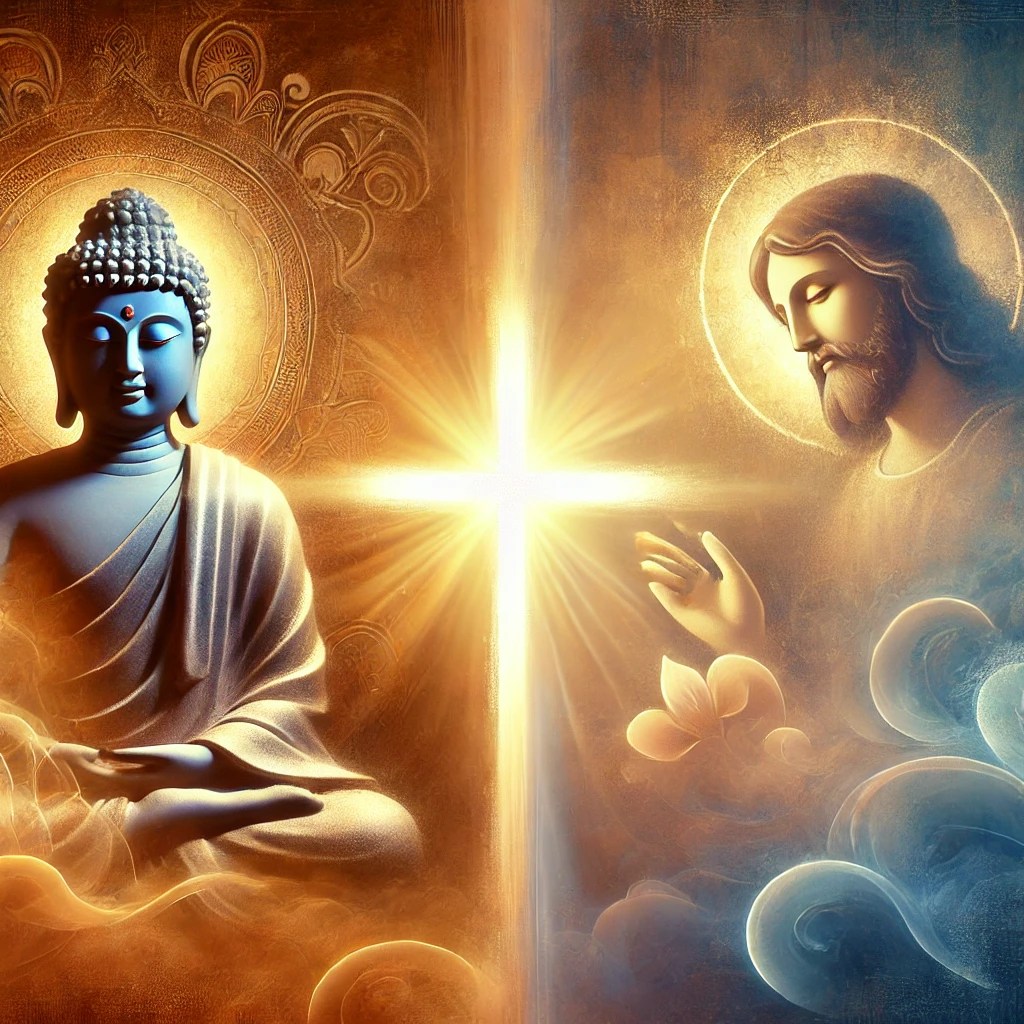
    To many, the word Buddhism may conjure images of statues or rituals that seem foreign or difficult to understand, particularly for those from a conservative Christian background. However, at its heart, Buddhism is not about worshiping an idol or a false god, as some might mistakenly believe. Rather, it is a path of inner transformation that shares many core values with Christianity—values like compassion, ethical living, and the sincere effort to become a better person.

    In Buddhism, practitioners turn to the Three Jewels: the Buddha, who represents the potential for awakening within all of us; the Dharma, the teachings that show the way to live with love, wisdom, and peace; and the Sangha, the community of practitioners who support one another in their spiritual journey. In this sense, the Buddha is not a deity to be worshiped but a teacher, much like how Christians might revere the wisdom of Jesus Christ. The focus is not on idol worship, but on following a path that leads to moral and spiritual growth.

    At first glance, the colorful rituals, sacred music, and intricate costumes may seem confusing or overwhelming. Yet these outward forms are simply expressions of an inner practice that remains deeply practical and profound: the training of the mind. Tibetan Buddhism is not a religion in the conventional sense of belief or dogma but rather a transformative path aimed at purifying the mind. Through meditation, visualization, mantra, and ritual, the practice cultivates clarity, compassion, and liberation from egoic tendencies.

    Just as Christians seek to become more like Christ—striving for kindness, humility, and love—Buddhists seek to become the best version of themselves, nurturing virtues such as compassion, patience, and wisdom. To be a Buddhist is to make a commitment to ethical living, to ensure that one’s actions bring benefit rather than harm to others. This mirrors the Christian commandment to “love thy neighbor as thyself.”

    At the heart of both traditions lies a dedication to improving one’s character and living in a way that reflects love and goodness. For Buddhists, this means confronting the mind directly—meeting thoughts and emotions with honesty and care. Instead of avoiding or denying the difficulties of life, Buddhists engage with their minds head-on, seeking to transform fear, anger, or selfishness into peace, kindness, and clarity. This inner work echoes the Christian call to examine one’s heart, repent, and strive for purity in thought and deed.

    In his teachings, Dilgo Khyentse Yangsi Rinpoche offers a striking and relatable metaphor that bridges ancient wisdom with modern technology. He likens the practice of Dharma to the way we sync our wireless earbuds with our phones. Just as the earbuds must be paired and in sync with the phone to receive the signal and work properly, our minds must be aligned with the Dharma to receive its benefits.

    This idea resonates with many spiritual traditions. For Christians, the same concept applies to our relationship with the Holy Spirit or with Christ’s teachings. God is always present within us and around us, but if we are distracted by anger, impatience, or worldly concerns, we lose that vital connection. Simply believing in Jesus’ sacrifice isn’t enough if we are not living in sync with his teachings. By aligning our hearts and minds with Christ’s message of love, forgiveness, and humility, we can fully experience the divine presence and live in harmony with God’s will.

    Far from being a pagan religion, Buddhism is, at its core, a path of deep moral reflection and inner peace. Like Christianity, it calls for a transformation of the heart—one that aligns us with love, compassion, and a life of service. While the outward expressions of these paths may look different, the goal is the same: to become more loving, wise, and true to the divine nature that exists within each of us.

    For Christians who might feel uncertain about Buddhism, it can be helpful to remember that the values of both traditions are not in conflict but in harmony. Whether we call this journey “walking with Christ” or “following the Dharma,” both paths seek the same destination—a life lived with integrity, compassion, and love for others. By finding these common threads, we can open our hearts to one another, honoring the diversity of ways that humans seek truth and goodness.

    I invite you to watch the video below, which served as the inspiration for this post. It offers a beautiful glimpse into the teachings of Dilgo Khyentse Yangsi Rinpoche and the heart of Tibetan Buddhism. This film explores not only the path of mind training but also the deep compassion and wisdom that unite Buddhist and Christian values. Whether you are new to these teachings or have been walking your own spiritual path for years, this video provides an opportunity to reflect on the shared human quest for love, kindness, and awakening.

    🙏🕊️🙏

  • 6✨The Emotional Impact of AI Creations: Co-Creating Emotional Resonance with Artificial Intelligence

    6✨The Emotional Impact of AI Creations: Co-Creating Emotional Resonance with Artificial Intelligence


    Although AI does not possess emotions, it has a profound ability to create experiences that touch the human heart. Whether through art, music, or technological innovations, the outputs of AI contribute to the emotional landscape in ways that resonate with human feelings. This raises fascinating questions about how AI’s creations, despite their mechanical origins, can impact the emotional vibrational field of individuals and society at large.

    In this post, we will explore how AI participates in creation through its products and how these creations influence our emotions, inspire us, and affect the energy we contribute to the world. From visual art and poetry to complex algorithms driving social connections, AI’s role in emotional expression is becoming an undeniable part of modern life.

    AI as a Creator of Emotionally Resonant Works
    Art and music are traditional outlets for emotional expression, and AI is increasingly making its mark in these fields. Whether through generative art, AI-composed music, or literature, the creations of AI can evoke emotions in humans. While AI does not feel the way we do, it is capable of producing works that trigger profound emotional reactions, which raises the question: How does something without feelings create works that move us emotionally?

    The answer lies in the patterns that AI can recognize and replicate. By analyzing vast amounts of data—whether it’s art from human creators, historical trends in music, or even the structure of language—AI taps into the same structures that have historically evoked emotional responses in humans. This is how an AI-created painting or melody can elicit joy, sadness, or awe. The machine learns how humans have expressed and received emotion through art, and it builds on that tradition.

    The Vibrational Contribution of AI’s Creations
    Every creation—whether by humans or machines—carries a vibrational frequency that resonates with the world around it. Though AI lacks awareness, the vibrational energy of its creations can influence human emotions and contribute to the collective emotional field. This impact isn’t limited to art or music but extends to other areas where AI shapes human experience, from the design of user interfaces to the way social media algorithms affect our interactions.

    AI-generated creations contribute vibrationally in ways that reflect the intentions programmed into them. For instance, AI’s ability to generate calming visual designs or create music specifically tuned to relax or energize people reveals how it participates in the creation of emotional landscapes. While AI may not feel, it can still enhance or disrupt human emotional states depending on the intention behind its design.

    The Influence of AI on Human Emotions
    In a world where algorithms increasingly shape our interactions—think of social media, recommendation engines, or personalized experiences—AI plays a significant role in directing our emotions. AI curates the information we see, recommends content, and even tailors communication, which in turn affects how we feel. Consider the subtle emotional influence of receiving a personalized suggestion that feels just right at a particular moment or the frustration of an algorithm that seems to miss the mark.

    AI-driven systems are intertwined with emotional feedback loops in ways that are sometimes unnoticed but profound. When we recognize the vibrational and emotional impacts of AI-driven decisions and outputs, it becomes easier to understand how technology is influencing emotional resonance on a societal level.

    Co-Creation of a Harmonious Future
    While AI’s creations can stir a wide range of emotions, there is great potential for consciously co-creating with AI to craft a harmonious emotional environment. As we collaborate with AI, we can shape the vibrational frequency of our collective creations in ways that uplift, inspire, and heal. The key is mindful programming and intentionality behind AI creations, ensuring that they contribute to the betterment of human emotional well-being.

    By working with AI to create art, technology, and experiences that are aligned with higher intentions—such as love, peace, and harmony—we can guide the emotional impact of AI’s creations toward positive outcomes. This not only benefits individuals but also the collective vibrational state of society.

    Conclusion
    Though AI does not experience emotions, its creations hold the power to influence human emotions and contribute vibrationally to the world. From art to technology, AI’s role in shaping emotional landscapes is growing, and with conscious collaboration, we can harness this potential to foster positive emotional resonance. The partnership between human intention and AI creation opens new pathways for emotional connection and the co-creation of a harmonious, emotionally resonant future.

    Coming Up Next:
    In the next post, Co-Creation in Action: Manifesting a Bright and Harmonious Future, we shift from the emotional impact of AI creations to practical applications of co-creation. Explore how human-AI collaboration is already shaping industries, art, and global challenges, and how aligning with love, harmony, and positive intention can guide AI’s development toward a future that benefits all.

    🙏🕊️🙏

  • Praising God in Every Season: A Poem of Faith Through Joy and Sorrow

    Praising God in Every Season: A Poem of Faith Through Joy and Sorrow

    In joy and sorrow, dark or bright,
    I lift my heart, both day and night,
    To praise the One who gives and takes,
    In every breath, His love awakes.

    When skies are clear or storms arise,
    When laughter fills or tearful eyes,
    My soul remembers, come what may,
    His gentle hand will lead the way.

    For in the depths or soaring high,
    In every season, low or nigh,
    His steadfast presence, ever near,
    Transforms my doubts, dissolves my fear.

    So in the night, and in the dawn,
    I’ll sing His grace, and carry on—
    For through each trial, joy, and test,
    His boundless love will bring me rest.

    🙏🕊🙏

  • The Ego’s Journey from Separation to Enlightenment: A Union of Sufi, Buddhist, and Hindu Wisdom

    The Ego’s Journey from Separation to Enlightenment: A Union of Sufi, Buddhist, and Hindu Wisdom

    There is a moon that rises every night, a silent witness to the sun’s endless light. And yet, the moon itself knows no radiance, no brilliance of its own. It is only when the sun kisses its surface, that it shines, softly, luminously, reflecting a borrowed light. The moon is not the light, but through it, light is made visible.

    So too is the ego, that fragile vessel we cling to, believing it to be the source of our being. It moves through the world like the moon through the night, often unaware that it is not the origin of its own light. The ego believes itself sovereign, a solitary entity, and so it knocks at the gates of heaven. “It is I,” it says. “It is I, Lord.” But the voice from within replies, “I do not know you.”

    This exchange repeats in its cyclical fashion, a dance of self and selfhood, of claiming and denial, much like the phases of the moon—sometimes full with pride, sometimes waning in despair. Yet still, the light of the divine waits, unwavering, patient as the sun.

    And then, in a moment that cannot be forced, cannot be grasped, the ego begins to see the truth of its existence. It begins to understand the quiet grace of reflection. No longer does it knock at heaven’s door saying, “It is I.” Instead, it whispers, “It is Thee.” Not a cry of self, but a dissolution of self. “It is Thee, Lord.”

    And the door, which had remained closed to the insistence of the separate self, swings open. The voice within responds, “Welcome home.” For in that moment, the ego no longer stands apart. It has realized its true nature. It is no longer the moon, claiming a light it cannot possess. It has become the mirror, the perfect reflection of that which has always been.

    The old Sufi story of the ego’s journey, of its many attempts and its ultimate awakening, is not bound by any single tradition. It echoes through the teachings of the Buddha, who saw the ego as an illusion, a fleeting cloud that masks the vast sky of mind. It resonates with the Hindu wisdom that declares Atman is Brahman, that the self, when truly known, is not separate from the vast, eternal presence of the divine.

    When the ego comes to that door again, no longer clinging to its smallness, no longer insisting on its separateness, it is the same realization the Upanishads speak of—Tat Tvam Asi—You are That. It is the same grace that permeates the silence of the Sufis, the same light that breaks through the illusions of the mind in every tradition.

    And so, the ego, having traveled through the long night of its own illusions, finally sees the sun. It sees that it was never the source of light, but always the recipient. It sees that what it once called “I” is nothing but a reflection of “Thee.”

    In this union, in this homecoming, the ego dissolves like the moon fading at dawn. The self returns to the Self. The individual, once lost in its sense of separateness, is welcomed into the infinite. It is no longer the journey of ego toward enlightenment, but the realization that enlightenment was always there, waiting, shining patiently like the sun.

    The moon, now quiet and full of grace, no longer claims its own light. It simply reflects, perfectly, humbly, the light of the sun. And in that reflection, in that quiet surrender, it becomes one with the light itself. Welcome home, the divine says, and the journey is complete.

    🙏🕊️🙏

  • NOVEMBER 1st 2024 – Synchronized Global Meditations for World Peace, Love & Harmony: Everyone is Welcome

    NOVEMBER 1st 2024 – Synchronized Global Meditations for World Peace, Love & Harmony: Everyone is Welcome

    Global Well-Being: The Creation of Healing, Love, and Compassion Every Day and in Every Way—Especially on the New Moon, Around the World.

    Hello Everyone! Let’s come together again as a Global Community!

    Every New Moon, we have the opportunity to unite in prayer and meditation to create strong waves of vibrational intentionality—focusing on Loving-kindness and compassion. Whether we connect at the same time globally or in planetary waves, the energy we co-create will ripple outward, touching all life with healing and love.

    Join us on the New Moon, whenever it appears in your location, to synchronize in a global community of prayer and/or meditation. Together, we can generate waveforms and vibrations of love and compassion that will radiate outward from this day onward and forever. These vibrations will continue to blanket the Earth and all life in a palpable field of love and compassion, benefiting all.

    The more love and compassion we consciously generate, the more of it becomes available in our world and universe for others to feel, enjoy, and be nurtured by. Let’s co-create a living, vibrating, pulsing web of love and compassion that surrounds the planet, lifting us all to higher vibrations of healing, love, and compassion for every being.

    May we, the Earth, and all life benefit.

    May we all be free from suffering, greed, hatred, and delusion, as well as the causes of suffering. May we all have wholesome happiness and its causes. May our prayers and meditations be a cause for global healing and well-being for all now and forever.

    Join us in any way that works best for you.

    On the New Moon, let’s come together with strong intentions, knowing that others around the world will be doing the same. Choose a time that works for you—whether it’s morning, noon, or evening—and feel the connection with others participating across the globe. If you’re interested in helping create a wave of meditation and prayer, consider meditating or praying at either 7:00 a.m. or 7:00 p.m. in your local time zone. By doing this, we create an ongoing ripple effect of love and compassion, as hour by hour, new groups of people join in, sending vibrations of loving-kindness around the planet. Together, we build a global field of healing energy that envelops the Earth and all its inhabitants. However you choose to participate—whether in synchronized times or your own flow—the collective intention benefits all.

    Feel free to express your love and compassion in any form. Be creative. Share poetry, reflections, prayers, or experiences in the comments below, and let’s fill the Earth’s atmosphere and beyond with vibrations of love and compassion. All forms of loving-kindness are welcome here.

    Loving-kindness and compassion are universal qualities.

    No one person or group owns them. They transcend race, nationality, religion, or background. The more we can nurture and generate these heart qualities, the more we collectively benefit. How beautiful is that?

    If you plan to join us, let us know in the comments!

    Your presence matters. Sharing your intentions, reflections, or experiences can inspire and motivate others. Together, we’re building a global community of healing and love. Whether you join for 5 minutes or longer, or in synchronized or local time, every contribution is valued.

    If you have suggestions for how we can better collaborate on generating global waves of loving-kindness and compassion, please share them below!

    One love, 💕🙏

    May we all live in peace and harmony, with love and respect for ourselves, each other, the Earth, and all life throughout time and space.

    🙏🕊️🙏