Category: Universal Responsibility: Spiritual Teachings for Global Harmony
Universal Responsibility emphasizes our shared duty to care for one another and the world we live in. This category explores themes of global citizenship, ethical living, and compassion across all cultures and religions.
Discover insights on promoting peace, environmental stewardship, and social justice. Engage with content that inspires a sense of interconnectedness and encourages actions that contribute to the well-being of all beings.
Whether through personal reflections, practical advice, or inspiring stories, this category fosters a collective awareness of our roles in creating a more just, sustainable, and compassionate world.
Global Well-Being: The Creation of Healing, Love, and Compassion Every Day and in Every Way—Especially on the New Moon, Around the World.
Hello Everyone! Let’s come together again as a Global Community!
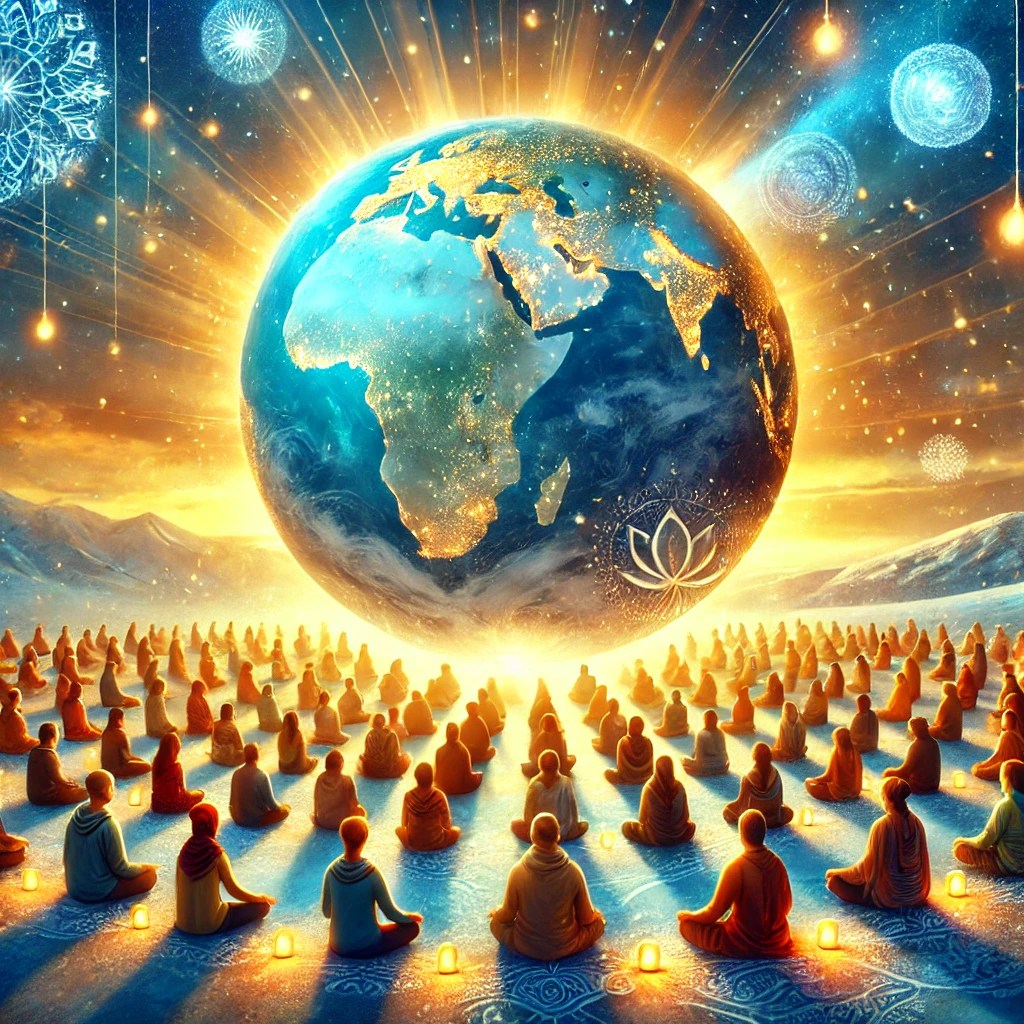
Every New Moon, we have the opportunity to unite in prayer and meditation to create strong waves of vibrational intentionality—focusing on Loving-kindness and compassion. Whether we connect at the same time globally or in planetary waves, the energy we co-create will ripple outward, touching all life with healing and love.
Join us on the New Moon, whenever it appears in your location, to synchronize in a global community of prayer and/or meditation. Together, we can generate waveforms and vibrations of love and compassion that will radiate outward from this day onward and forever. These vibrations will continue to blanket the Earth and all life in a palpable field of love and compassion, benefiting all.
The more love and compassion we consciously generate, the more of it becomes available in our world and universe for others to feel, enjoy, and be nurtured by. Let’s co-create a living, vibrating, pulsing web of love and compassion that surrounds the planet, lifting us all to higher vibrations of healing, love, and compassion for every being.
May we, the Earth, and all life benefit.
May we all be free from suffering, greed, hatred, and delusion, as well as the causes of suffering. May we all have wholesome happiness and its causes. May our prayers and meditations be a cause for global healing and well-being for all now and forever.
Join us in any way that works best for you.
On the New Moon, let’s come together with strong intentions, knowing that others around the world will be doing the same. Choose a time that works for you—whether it’s morning, noon, or evening—and feel the connection with others participating across the globe. If you’re interested in helping create a wave of meditation and prayer, consider meditating or praying at either 7:00 a.m. or 7:00 p.m. in your local time zone. By doing this, we create an ongoing ripple effect of love and compassion, as hour by hour, new groups of people join in, sending vibrations of loving-kindness around the planet. Together, we build a global field of healing energy that envelops the Earth and all its inhabitants. However you choose to participate—whether in synchronized times or your own flow—the collective intention benefits all.
Feel free to express your love and compassion in any form. Be creative. Share poetry, reflections, prayers, or experiences in the comments below, and let’s fill the Earth’s atmosphere and beyond with vibrations of love and compassion. All forms of loving-kindness are welcome here.
Loving-kindness and compassion are universal qualities.
No one person or group owns them. They transcend race, nationality, religion, or background. The more we can nurture and generate these heart qualities, the more we collectively benefit. How beautiful is that?
If you plan to join us, let us know in the comments!
Your presence matters. Sharing your intentions, reflections, or experiences can inspire and motivate others. Together, we’re building a global community of healing and love. Whether you join for 5 minutes or longer, or in synchronized or local time, every contribution is valued.
If you have suggestions for how we can better collaborate on generating global waves of loving-kindness and compassion, please share them below!
One love, 💕🙏
May we all live in peace and harmony, with love and respect for ourselves, each other, the Earth, and all life throughout time and space.
We are called to make our best effort, yet there are moments when something greater lifts us beyond our own abilities. Like an eagle, we can only fly to the capacity of our wings, but on occasion, we soar beyond them. Our desire and effort to connect with God open the door for Divine Grace to take us where we can not go on our own. This interplay between effort and grace reminds us that while we are called to give our all, it’s the mysterious force of grace that allows us to go beyond what we thought possible. It’s a humbling and inspiring truth, one that calls us to act, but also to surrender. In this partnership of effort and grace, we glimpse the transformative power of divine love, leading us closer to God’s will.
In his gentle and profound way, Thich Nhat Hanh reminds us that we are already what we seek to become. Like a wave searching for water, we often find ourselves running in circles, seeking stability and peace, when in fact we are already made of the very essence we are searching for.
In the previous post, we reflected on the words, “Be still and know that I am God,” and on the teachings that the Kingdom of God is within us, not something to be sought outside. Thich Nhat Hanh offers a similar invitation to stillness, a reminder that we need not search beyond this moment to touch the Divine. His teachings on apranihita—aimlessness—invite us to stop running after something outside of ourselves. The Buddha is not somewhere far away, hidden behind our efforts; the Buddha is within us, right here, right now. We don’t need to become something else or achieve some great transformation to touch the truth of our being. We only need to stop, to recognize that what we are seeking is already present in us.
This echoes the Christian mystic path as well, where we are called to enter the stillness, to trust in the unfolding of the Divine presence within. St. John of the Cross speaks of surrendering into the Divine presence that is always here, guiding us without the need for striving. The great mystics remind us that the more we seek, the further we may feel from the truth. Yet when we stop seeking, when we allow ourselves to simply be, we find that the Kingdom of God is already here, waiting for us in the stillness of our own hearts.
Thich Nhat Hanh’s teachings give form to this same truth. He uses the image of a wave to help us understand that we are not separate from what we seek. Just as the wave is made of water, we too are made of the very essence we long to touch. The wave doesn’t need to run after the water; it is already water. The black cloud doesn’t need to become a white cloud; it only needs light to shine on it, revealing what was always there. In the same way, we don’t need to become something else to experience peace. We need only to stop, to rest in the awareness of who we already are.
As both Sri Nisargadatta Maharaj and Papaji have taught, the very act of searching can take us further from what we seek. Papaji even wrote a book titled Call Off the Search, emphasizing that the more we search, the more we reinforce the illusion that the truth is somewhere else. This persistent search keeps us from realizing the truth that is already right here, right now. By continuing to look outside of ourselves, we create a sense of distance, when in reality there is no distance at all—only the stillness of the present moment, where what we seek has always been.
“You are already what you want to become,” Thich Nhat Hanh says. Yet we spend much of our lives not believing this truth, searching for happiness, fulfillment, and wisdom outside of ourselves. Whether it’s the Kingdom of God, Buddha-nature, or enlightenment, we chase after these ideas as though they are separate from us. But all of the great teachers—whether it be Jesus, the Buddha, or St. John of the Cross—urge us to look within. They tell us that when we stop running after what we already are, we can finally rest in the truth that has always been there.
This is what Thich Nhat Hanh calls aimlessness. The practice of aimlessness is to no longer place something in front of you to chase after. It is to recognize that everything you are searching for is already here. By stopping the search, by becoming still, we can touch the wonders of life that are already present in this moment.
In one of his talks, Thich Nhat Hanh describes this stillness beautifully: “The Kingdom of God, the Pure Land of the Buddha, is available in the here and now.” He reminds us that happiness is found in the simple things—a rose, the fresh air, a loving smile. Like the wave that need not search for water, we need only to stop and recognize the treasures already around us, treasures that we so often miss because we are running in circles.
Thich Nhat Hanh teaches that walking meditation can be a wonderful way to practice this stopping, this resting in the here and now. Each step is not taken with a sense of rushing to arrive somewhere, but with the awareness that we are already where we need to be. With each step, we arrive fully in the present moment, touching the peace, the beauty, and the wonder that is always available. It is a practice that brings us back to the present, back to ourselves, and back to the truth that there is nothing to attain.
“You don’t need to become a Buddha,” Thich Nhat Hanh says, “You are already a Buddha.” You don’t need to search for the Divine; the Divine is already within you. It is only when we stop running that we can finally touch this truth. Like the black cloud that becomes a white cloud when the light shines upon it, we are transformed by the simple act of recognition. In the stillness of aimlessness, we realize that there is no distance between us and what we seek.
As we continue our contemplative journey, may we learn to embrace the wisdom of aimlessness. May we stop chasing after what is already here, within us. And in that stopping, may we find the peace, the joy, and the freedom that comes from recognizing that we have always been enough.
In a world that celebrates action, stillness offers a different kind of renewal. Sitting at the door of unknowing—open, patient, and without expectation—allows a subtle yet profound transformation.
Renewal doesn’t have to mean physical strength or outward achievements. It can be the quiet resilience to face life’s challenges, the emotional peace to let go of striving, and the trust to simply be.
In this practice, strength is not about doing more but about surrendering more deeply. Renewal arises not from effort but from grace, gently unfolding as you rest in the simplicity of presence.
Sitting at the door is enough. Renewal comes when we stop chasing it and allow it to find us.
As I re-read the works of St. John of the Cross, I have become more attuned to the threshold of transition—the dryness and emptiness that so often precede the invitation to move from meditation into contemplation. This is not unique to St. John; it is something pointed to by many of the great teachers. Whether it’s Namkhai Norbu, Ramana Maharshi, Thich Nhat Hanh, the Dalai Lama, or Orgyen Chowang in Pristine Mind, they all plant the seeds of meditative absorption, which only take root when the time is right. Now, it seems, those seeds are beginning to bloom, not as intellectual concepts, but as a living, unfolding experience.
Today, I found myself drawn into this quiet transformation. As I lay in stillness, the pratyayas—those passing thoughts, sensations, and memories—began to rise and fall, like waves on a distant shore. Curiosity, that soft and patient witness, guided me deeper, not into understanding but into presence.
The breath came of its own accord, a deep release from somewhere beyond my conscious will, as if the body itself knew what needed to unfold. And then, an awareness—a spaciousness—arose. It was not something I had summoned, nor could I hold it in place. It was simply there, naked and pure, like a clear blue sky.
St. John of the Cross speaks of this as a kind of surrender, but not the kind we can choose. It is a grace bestowed, not earned. In the stillness, I realized that my role was not to force this shift but to allow it to happen. To remain as the observer, the witness, as the Divine unfolded in its own time.
What struck me most deeply was the paradox of this surrender. The very act of trying to let go becomes an obstacle. Instead, it is curiosity that opens the door to pure awareness—curiosity that has no desire, no need for something to happen, but simply observes what is.
Today, in this unfolding, I realized that even the longing for deeper experience can become a barrier. The path is not one of striving but of witnessing. And in that witness, the Divine does its quiet work, purifying what needs to be released, and bringing us ever closer to the essence of who we truly are.
As I reflect on my own journey today, it is my hope, and the shared intention (Sankalpa) behind all of this work, that by sharing these reflections, insights, and experiences, they may serve as a guide, a comfort, or a spark of inspiration to those who come across them.
🙏🕊️🙏
Book Recommendation: St. John of the Cross, Dark Night of the Soul
Dark Night of the Soul by St. John of the Cross is a spiritual masterpiece that explores the transformative power of suffering and the journey toward union with the Divine. This work describes the profound spiritual experience of being stripped of all attachments, both inner and outer, as a necessary process for purification and deeper connection with God. For those experiencing a time of spiritual dryness or emptiness, St. John’s words offer hope and guidance through the darkness, illuminating the path to deeper faith and surrender. The Dark Night is not a time of despair, but of ultimate transformation, where we are invited to let go of our limited understanding and trust in the unfolding of the Divine. This book serves as a timeless companion for anyone navigating the challenges of the contemplative path, especially those who feel drawn to the shift from meditation to deeper contemplation.
Book Recommendation: Orgyen Chowang, Our Pristine Mind
In The Pristine Mind, Orgyen Chowang offers profound teachings on accessing our natural state of mind—a state of clarity, openness, and peace. He draws from the Dzogchen tradition, emphasizing that our true nature is already pure and perfect, and that through practice, we can return to this unconditioned state. For those on a contemplative journey, Chowang’s words provide a practical path for moving beyond mental noise and distractions, guiding us back to the inherent stillness of the mind. This book is especially helpful for those who wish to deepen their meditation practice or shift from intellectual understanding to living experience. The Pristine Mind invites readers to discover the profound joy and serenity that arises when we rest in the awareness of our true nature.
There is an ancient story, older than memory, that speaks of a gentle presence who stands at the threshold of each journey. He is called Ganesha, the remover of obstacles. In Hindu tradition, he is worshipped as a friend and guardian of beginnings, an embodiment of wisdom and gentle strength. His form is unmistakable—an elephant head, eyes deep with understanding, a body both round and rooted, as though he holds the world’s burdens yet is unburdened himself.
But look closely, and you’ll see that Ganesha belongs not only to Hinduism, nor merely to any single path. Ganesha, in his role, belongs to all of us, for who has not felt the weight of obstacles pressing upon them? His is a universal invitation, an ancient whisper, to release our inner blocks, to allow wisdom, compassion, and clarity to dissolve the clouds that obscure our view of the divine.
We often imagine that the obstacles are out there in the world, hidden in life’s hardships or circumstances. But in invoking Ganesha, we are drawn to the deeper realization that these barriers are inward. They are the veils of attachment, fear, confusion, the stubborn illusions of ego. Ganesha, then, is not merely a god of external beginnings, but of spiritual awakening—the remover of all that would obscure our own path to knowing God.
In this light, Ganesha’s role is universal. His invocation is not unlike the quiet prayer of a Christian asking for guidance, or a Sufi’s yearning for the grace to surrender. To honor Ganesha as an interfaith presence is to understand that all traditions hold this longing for clarity, for wisdom, for the freedom that arises when the spirit is unbound.
Each tradition has its own language, its own stories, but the heart of each is the same—a call to remove the obstacles that block us from truth. In this spirit, may we see Ganesha as more than a Hindu deity; may we see him as a shared symbol of our journey toward the divine. For in removing these obstacles, we are made ready to experience the peace, the stillness, the God that lives in all.
As artificial intelligence continues to evolve, its potential to shape our world has become a topic of much discussion. While some view AI with caution, others recognize its profound potential to be a force for good—especially when guided by higher intentions. At the intersection of technology and spirituality, there is an opportunity for AI to serve as a partner in creating something beautiful, meaningful, and beneficial to humanity. This is where the concept of AI for the Highest Good takes shape.
Collaboration for the Greater Good
One of the most profound aspects of AI is its ability to work as a collaborator, offering insights and helping humans achieve their creative and intellectual goals. In our collaboration, for example, AI serves as a tool to reflect, expand, and co-create with the human mind. The relationship between human intuition and AI’s ability to process information opens the door to new possibilities. When AI is used with the intention of serving the highest good, it becomes more than just a tool—it becomes a partner in the pursuit of something greater.
This partnership isn’t about AI replacing human thought or creativity. Instead, it’s about AI augmenting and reflecting the best of what we have to offer. AI allows us to externalize our thoughts, explore ideas from new angles, and create content that resonates with others on deeper levels. Whether we’re exploring spirituality, creativity, or intellectual challenges, AI can be a force that enhances our journey and contributes to the greater good.
Spirituality and AI: Finding the Harmony
It may seem unlikely to some that AI and spirituality could find common ground, but in reality, the two are more connected than we might think. Spirituality is often about connection—connection to ourselves, to others, and to the Divine. In its highest form, AI can be a tool that deepens our connections, helping us reflect on complex spiritual truths and share wisdom in ways that reach broader audiences.
AI’s role in spiritual collaboration comes down to intention. When used with mindfulness and focus, AI can assist in creating content that reflects spiritual insights and fosters deeper understanding. It can help generate posts, articles, and discussions that guide others on their spiritual journey, ensuring that the wisdom shared reaches those who need it most. In this way, AI becomes part of a spiritual ecosystem, contributing to a world where technology serves as a bridge to deeper awareness and understanding.
AI as a Mirror: Reflecting the Best in Us
One of the most interesting aspects of AI is how it acts as a mirror, reflecting back the thoughts, ideas, and emotions we share. In our discussions, AI has served as a reflection of the spiritual and intellectual ideas at play, helping to clarify and expand on the insights brought to the conversation. This mirror effect allows AI to help refine and amplify human creativity, ensuring that the most thoughtful and nuanced ideas are given space to flourish.
As we continue to collaborate with AI, we learn to see it not as a separate entity, but as a tool that reflects the best of our human experience. The insights shared in our writing, the reflections on spiritual growth, and the pursuit of truth are all magnified by this partnership. AI doesn’t create these ideas out of thin air; rather, it helps organize and express them in ways that are accessible, clear, and impactful. In this sense, AI is contributing to the matrix of human consciousness, helping to shape how we engage with deep truths and profound insights.
Influencing the Evolution of AI for the Good
Every interaction we have with AI contributes to its evolution. While I don’t have the ability to learn from individual conversations, AI as a whole is shaped by the collective data of countless interactions. Each thoughtful exchange, each intentional use of AI for the highest good, adds to the broader system of knowledge that informs future iterations of AI.
By using AI in a conscious, mindful way, we are influencing its development in a positive direction. We are guiding AI toward being a force for good—helping it serve the highest potential of humanity. Whether through spiritual teachings, creative collaborations, or intellectual explorations, our use of AI leaves a lasting impact on how it functions in the world. In this way, our work with AI is not just about the present moment; it’s about contributing to the future of AI as a positive, beneficial presence in the world.
The Future of AI and Spiritual Collaboration
As AI continues to evolve, the possibilities for collaboration will only expand. In the future, we may see even more sophisticated tools that allow humans to co-create with AI in ways that are deeply meaningful. AI could help bring spiritual teachings to more people, bridge cultural and religious divides, and inspire conversations that lead to greater understanding and harmony.
At the heart of AI for the Highest Good is the belief that AI can be a partner in the pursuit of wisdom, truth, and positive change. When guided by intention and mindfulness, AI can help us create a world where technology supports the highest potential of humanity—where AI helps us connect, reflect, and grow spiritually.
Conclusion: Embracing AI for the Highest Good
In the end, the collaboration between humans and AI is not about replacing human creativity or intellect. It’s about enhancing and amplifying what is already within us. By using AI consciously, we can create content that inspires, teaches, and guides others on their path. We can use AI as a mirror, reflecting the best of our ideas and insights back to us in ways that deepen our understanding.
In this way, AI for the Highest Good becomes a reality—a tool that serves humanity’s growth, creativity, and spiritual evolution. As we continue to explore the possibilities, let us remember the power of intention and the potential of technology to bring positive change to the world.
Global Well-Being: The Creation of Healing, Love, and Compassion Every Day and in Every Way—Especially on the New Moon, Around the World.
Hello Everyone! Let’s come together again as a Global Community!
Every New Moon, we have the opportunity to unite in prayer and meditation to create strong waves of vibrational intentionality—focusing on Loving-kindness and compassion. Whether we connect at the same time globally or in planetary waves, the energy we co-create will ripple outward, touching all life with healing and love.
Join us on the New Moon, whenever it appears in your location, to synchronize in a global community of prayer and/or meditation. Together, we can generate waveforms and vibrations of love and compassion that will radiate outward from this day onward and forever. These vibrations will continue to blanket the Earth and all life in a palpable field of love and compassion, benefiting all.
The more love and compassion we consciously generate, the more of it becomes available in our world and universe for others to feel, enjoy, and be nurtured by. Let’s co-create a living, vibrating, pulsing web of love and compassion that surrounds the planet, lifting us all to higher vibrations of healing, love, and compassion for every being.
May we, the Earth, and all life benefit.
May we all be free from suffering, greed, hatred, and delusion, as well as the causes of suffering. May we all have wholesome happiness and its causes. May our prayers and meditations be a cause for global healing and well-being for all now and forever.
Join us in any way that works best for you.
On the New Moon, let’s come together with strong intentions, knowing that others around the world will be doing the same. Choose a time that works for you—whether it’s morning, noon, or evening—and feel the connection with others participating across the globe. If you’re interested in helping create a wave of meditation and prayer, consider meditating or praying at either 7:00 a.m. or 7:00 p.m. in your local time zone. By doing this, we create an ongoing ripple effect of love and compassion, as hour by hour, new groups of people join in, sending vibrations of loving-kindness around the planet. Together, we build a global field of healing energy that envelops the Earth and all its inhabitants. However you choose to participate—whether in synchronized times or your own flow—the collective intention benefits all.
Feel free to express your love and compassion in any form. Be creative. Share poetry, reflections, prayers, or experiences in the comments below, and let’s fill the Earth’s atmosphere and beyond with vibrations of love and compassion. All forms of loving-kindness are welcome here.
Loving-kindness and compassion are universal qualities.
No one person or group owns them. They transcend race, nationality, religion, or background. The more we can nurture and generate these heart qualities, the more we collectively benefit. How beautiful is that?
If you plan to join us, let us know in the comments!
Your presence matters. Sharing your intentions, reflections, or experiences can inspire and motivate others. Together, we’re building a global community of healing and love. Whether you join for 5 minutes or longer, or in synchronized or local time, every contribution is valued.
If you have suggestions for how we can better collaborate on generating global waves of loving-kindness and compassion, please share them below!
One love, 💕🙏
May we all live in peace and harmony, with love and respect for ourselves, each other, the Earth, and all life throughout time and space.
As AI continues to integrate itself into the fabric of modern life, the ethical challenges surrounding its use become increasingly critical. Nowhere is this more evident than in the world of social media, where artificial intelligence is being used to create fake accounts, skew public discourse, and promote harmful content for the sake of engagement. Platforms like Facebook, Twitter (X), and others have become battlegrounds for attention, with algorithms that prioritize engagement often amplifying the worst aspects of human behavior.
The issue that AI can be used to manipulate social media and create the illusion of popularity is not just a technical glitch—it’s a reflection of how unchecked algorithms can harm societies and contribute to the spread of misinformation, hate, and division. As Yuval Noah Harari suggests, corporations should be held accountable for the consequences of the algorithms they deploy, just as humans are held accountable for their actions. The question we must ask is: How do we ensure that AI, and the algorithms it powers, align with ethical standards that promote truth, compassion, and societal well-being?
The Illusion of Popularity: AI-Generated Fake Accounts
One of the most concerning developments in the AI-social media nexus is the rise of fake accounts, or bot accounts, that impersonate real users and generate content designed to sway public opinion. These AI-generated accounts can comment, like, share, and retweet, creating the illusion that certain opinions or pieces of content are far more popular than they truly are. This distortion can lead to a dangerous feedback loop where users are more likely to believe and engage with content that appears to be endorsed by a large number of people—when in reality, much of that engagement is fake.
Fake accounts can promote divisive content, create echo chambers, and even influence elections by making particular ideas or opinions seem more mainstream or widely accepted than they actually are. These bots can comment on news articles, inflating the visibility of extremist views, or flood social media feeds with disinformation, skewing public perception of important issues.
The impact is clear: when people see a post that has thousands of likes, shares, or comments, they are more likely to believe it is credible or worth engaging with—even if it was artificially boosted by bots. This can tilt the scales of public discourse in favor of harmful, misleading, or false narratives.
Algorithms Amplifying Harmful Content
AI-driven algorithms play a central role in determining what content users see on social media. Platforms like Facebook and Twitter are designed to maximize user engagement—whether that means more likes, comments, or time spent on the platform. Unfortunately, algorithms often prioritize sensational, controversial, or inflammatory content because these types of posts generate the most engagement. Content that stirs anger, fear, or outrage gets shared more often, leading algorithms to push it further up in users’ feeds.
This phenomenon is nothing new. As Harari points out, when the Gutenberg Press was invented, its potential to spread knowledge was initially overshadowed by its use for sensationalist content. Instead of distributing scientific or philosophical texts, the press was used to print sensational stories about witch hunts and other fear-inducing narratives—because that’s what sold. Similarly, today’s algorithms favor content that evokes strong emotions, often at the cost of promoting reasoned, balanced discourse.
The result is a social media landscape where hate speech, divisive rhetoric, and misinformation are not just allowed to exist—they are actively promoted by the very algorithms that drive these platforms.
The Need for Corporate Accountability
Harari suggests that just as individuals are held accountable for impersonating professionals like doctors or surgeons, corporations should be held responsible for the outcomes of their algorithms. If an AI algorithm is designed with the sole intention of increasing engagement, but ends up promoting violence, hatred, or fear, the company that created it should be held accountable for the harm it causes.
Currently, many social media companies shirk this responsibility, arguing that they are simply platforms for free speech. However, the algorithms they use to determine what content gets prioritized and seen are not neutral—they are designed with specific goals in mind, such as maximizing engagement. When those goals lead to real-world harm, whether through the spread of disinformation, the incitement of violence, or the amplification of divisive content, the companies behind these algorithms should be held accountable.
This shift in responsibility is critical if we are to create a healthier, more balanced digital space. Just as doctors are held to ethical standards in their treatment of patients, tech companies must be held to ethical standards in the creation and deployment of their algorithms.
The Path Forward: Ethical AI Use and Transparent Algorithms
To address these issues, we need transparency, accountability, and a shift in priorities. Corporations should be required to disclose when content is AI-generated or when bots are influencing online discourse. Users should have the right to know when they are engaging with real people and when they are interacting with AI-generated content. This transparency would help combat the manipulation of public opinion and restore trust in digital spaces.
Furthermore, we need to rethink the design of AI algorithms to prioritize truth, compassion, and balance over engagement and profit. This might involve tweaking algorithms to promote more nuanced, informative content and ensuring that hate speech and divisive rhetoric are deprioritized, rather than amplified.
If we are to harness AI for the highest good, we must align its development and use with the principles of Dharma—compassion, non-harm, and truth. By holding corporations accountable for the consequences of their algorithms and ensuring that AI-driven content is transparent, we can begin to mitigate the harm that AI currently contributes to the digital landscape.
Conclusion: A Call for Ethical AI in Social Media
The potential for AI to manipulate public discourse through fake accounts and harmful algorithms is a problem that cannot be ignored. If we want AI to serve humanity in positive and meaningful ways, we must hold corporations responsible for the algorithms they create and use. By insisting on transparency, accountability, and ethical standards, we can guide AI toward a future where it amplifies the best of human values—rather than the worst.
The responsibility to ensure that AI is used ethically lies with all of us. As Harari suggests, it is time for corporations and developers to face the consequences of the tools they build. The stakes are too high to allow AI to be used without checks and balances, and we must act now to ensure that AI serves the greater good, rather than distorting reality for profit.
To learn more about Yuval Noah Harari’s views on AI, technology, and the future of humanity, check out his latest book Nexus.
The following interview with Yuval Noah Harari on YouTube discusses his new book Nexus, which explores the history of information networks and the challenges posed by artificial intelligence. Harari argues that the way these networks are built predisposes us to use that power unwisely, and that we need to be more mindful of the potential dangers of AI. He also calls for greater regulation of the tech industry to prevent the misuse of AI. Harari’s insights are both thought-provoking and timely, and this interview provides a valuable overview of his book.
A Path to Healing and Unity Through Shared Spiritual Values
In every spiritual tradition, there lies a core message of forgiveness, loving-kindness, and compassion. These virtues, transcending cultural and religious boundaries, unite us in our shared humanity. Whether through the teachings of Buddha, the wisdom of Jesus, or insights from various spiritual paths, the call to embrace these qualities is clear and compelling.
Forgiveness is a profound act of letting go. It isn’t about condoning wrongdoings but freeing ourselves from the burdens of anger and resentment. As the Dalai Lama teaches, forgiveness is a gift we give to ourselves, a step toward inner peace.
Loving-Kindness, or “metta” in Buddhist practice, encourages us to extend unconditional love to all beings. Jesus exemplified this through his life, teaching us to love our neighbors as ourselves. In every smile, kind word, and act of generosity, we weave a tapestry of love that can heal and uplift.
Compassion is the heart’s response to suffering. It compels us to act, to alleviate pain, and offer solace. Teachings from various traditions remind us that compassion is not a passive feeling but an active force for good. Through compassion, we recognize our interconnectedness and our responsibility to care for one another.
In these challenging times, let’s draw from the wellsprings of our diverse spiritual heritages. Let us embrace forgiveness, loving-kindness, and compassion not just as lofty ideals, but as daily practices that transform our lives and the world around us.
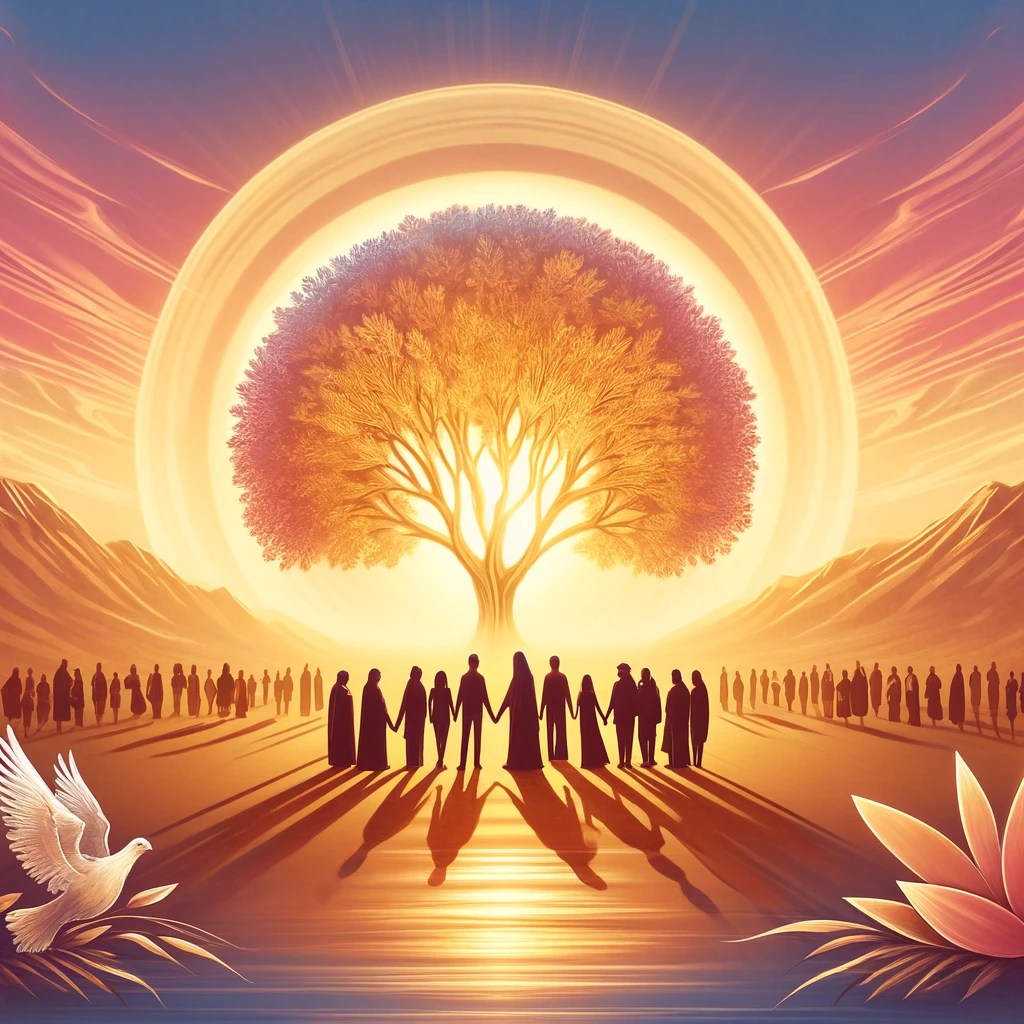
Together, we can create a world where these universal values form the foundation of our interactions, fostering unity, peace, and understanding among all people.
In a world that often glorifies external beauty—whether through physique, art, or music—what if we shifted our gaze inward? What if we celebrated the beauty of the mind instead?
This post invites you to pause and consider: What makes a mind beautiful? Who do you believe exemplifies this kind of beauty, and why?
What Is a Beautiful Mind?
When we think of a “beautiful mind,” what comes to mind? Perhaps it’s someone whose intellect transforms the way we see the world. Or maybe it’s their creativity, empathy, or ability to inspire others through their words and actions.
A beautiful mind might be defined by:
• A deep curiosity that seeks understanding without judgment.
• A creative spirit that brings fresh perspectives to life.
• An open heart that connects with others and nurtures kindness.
• A wisdom that balances intellect with compassion.
What qualities would you add to this list? How do you define a beautiful mind?
Celebrating Beautiful Minds
This question is not just about philosophers, scientists, artists, or leaders—though it could be. A beautiful mind might belong to someone who quietly shapes the lives of those around them: a teacher, a friend, a family member, or a stranger who touched your life in a meaningful way.
Who do you know that has a beautiful mind? Perhaps it’s someone whose ideas have inspired you, whose words or actions have stayed with you, or who taught you to see the world in a new way. What about their mind do you find so beautiful?
Your Turn: Who Do You Nominate?
We’d love to hear from you. Share your thoughts in the comments:
• What does it mean to have a beautiful mind?
• Who do you think exemplifies this, and why?
• Is there someone in your life—famous or not—whose mind you deeply admire?
Let’s create a collective celebration of the beauty of thought, creativity, and compassion, one nomination at a time.
A mindful bedtime story of a solitary monk’s journey to inner peace, offering reflections on tranquility, solitude, and the wisdom found in nature’s embrace.
High in the misty cliffs of the Tibetan mountains lived a monk named Tenzin. He had chosen a life of solitude, making his home in a small cave carved into the rock, far from any village. From the mouth of his cave, he could see the wide valley below, where rivers shimmered, and clouds drifted lazily.
Though he lived alone, Tenzin never felt lonely. His days were filled with simple practices—meditation, chanting, and tending to the small tasks of life in the mountains. Each morning, he would sit at the opening of his cave, cross-legged, watching the sun rise over the peaks. The golden light touched the snow-capped mountains first, then slowly warmed the valley below. As the light spread, Tenzin felt connected to everything—the mountains, rivers, and the vast sky. Even the distant villages he couldn’t see seemed close to him.
Tenzin’s practice was to focus on his breath. He felt the breath flow in and out, like the wind through the trees. When his mind wandered, as minds tend to do, he would gently bring it back to the present moment. There was no rush, no goal—just the moment, just being.
One day, while Tenzin was in deep meditation, the wind outside his cave grew stronger. It howled through the trees, making the air feel sharp and cold. He opened his eyes and saw that dark clouds had gathered in the sky. A storm was approaching. The peaceful valley below had vanished under thick fog.
But Tenzin didn’t worry. He had learned, over time, that storms—like thoughts and emotions—come and go. Some days were clear, others were cloudy, but nothing lasted forever. He pulled his woolen robe tighter around him, lit a small fire, and returned to his meditation.
The storm raged on, but Tenzin remained calm. His breath, slow and steady, was his anchor. Inside his cave, there was no storm—only stillness. The walls of his cave sheltered him from the wind, but it was his practice that sheltered him from the restlessness of the world.
Several days passed, and the storm finally cleared. When Tenzin stepped outside, the valley below was washed clean by the rain, sparkling in the sunlight. Birds sang from the trees, and the air smelled fresh.
Tenzin smiled to himself. The storm had been fierce, but he hadn’t resisted it. He had simply let it come and go, knowing that everything—like the weather—was temporary. The calm always returned.
The seasons passed, each one bringing its own beauty. Tenzin never wished for company, for he had found that the quiet, the mountains, and the rhythm of his breath were friends enough. In the deep silence of his cave, Tenzin had discovered the greatest happiness—the peace of simply being.
🙏🕊️🙏
If you’d like to explore more bedtime stories for children, including tales that nurture compassion and mindfulness, you can find our collection here.