Harnessing Inner Peace: A Pacing Toolkit Tool for Those Living with ME/CFS or Long Covid
As I reflect on the approaching Hurricane Milton, I’m reminded of the powerful moment when Jesus calmed the storm on the Sea of Galilee. His disciples, gripped by fear, watched as He simply said: “Peace! Be still!” and the storm settled. In this moment, I feel called to do the same—to access the peace of God within me and speak to the storm, “Peace! Be still.” I truly believe this is what Jesus asks of us, to practice this promise, and to remember that even faith the size of a mustard seed can move mountains.
But this call to peace and stillness isn’t just about the external storm. As someone who lives with chronic fatigue, I know how much of a difference it makes to calm the storms within as well. The mental and emotional stress can often intensify symptoms like post-exertional malaise (PEM). So, I remind myself to relax my mind and heart, to let go of worry and concern, and to give my body the space it needs to heal.
One of the tools I turn to in these moments is Pristine Mind Meditation, as taught by Orgyen Chowang in his book Pristine Mind: Journey to Unconditional Happiness. Pristine Mind is the pure, natural awareness that exists within all of us, untouched by thoughts or emotional turmoil. By resting in this space, I find that it helps me manage my symptoms, reduce stress, and pace myself more effectively. It’s an essential part of my pacing toolkit, allowing me to not only physically rest, but also calm my mind and emotions, preventing flare-ups of PEM and other symptoms.
In this moment, I invite us all to join together in saying to the storm—whether it’s the physical hurricane or the inner storms we face—“Peace! Be still.” Let’s tap into the divine promise that’s always been ours and use the tools we have to cultivate peace, clarity, and healing within ourselves.
Let us, from a place of faith and trust, send love to this storm and say to it: “Peace, be still.”
In our previous post, we explored how the mind fluctuates through five different types of mental events, or vrittis, as outlined in Sutras 1.5 and 1.6. These mental fluctuations—whether based on right knowledge, wrong knowledge, imagination, sleep, or memory—are all part of the mind’s natural activity. Patanjali now dives deeper into two specific categories of these mental events: right knowledge and wrong knowledge.
1.7: Right knowledge is based on direct perception, inference, or the testimony of others. 1.8: Wrong knowledge is a false understanding that is not based on reality.
Patanjali’s distinction between right and wrong knowledge is important in understanding how our mind interprets the world. However, while this distinction is helpful, it can also lead us into a dualistic mindset, where we feel the need to evaluate every thought and determine whether it is “right” or “wrong.” This process can quickly become a source of confusion and further mental activity, pulling us away from the simplicity of recognizing the mind’s fluctuations for what they are: just mental events.
The Trap of Over-Analyzing Mental Events
When we begin to engage with thoughts, trying to categorize them as true or false, we lose sight of the purpose of yoga: to quiet the mind and return to the awareness of the Seer. It’s easy to get caught up in evaluating whether our perception is accurate or if our thoughts align with reality. However, in doing so, we fall back into the mind’s natural tendency to analyze, categorize, and divide. This keeps us stuck in the fluctuations rather than witnessing them from the calm, steady place of the Seer.
This is where the teachings of Pristine Mind, as shared by Orgyen Chowang, become helpful. Instead of evaluating each thought, we can view all of these fluctuations—whether based on right or wrong knowledge—as simple mental events. When a thought arises, we don’t need to engage with it or analyze its validity. Instead, we gently recognize, “Ah, a mental event,” and return to the awareness of the pristine mind. This allows us to maintain a simpler, more manageable practice, without getting lost in the content of the thought itself.
Bringing It Into Practice: The Power of Simplicity
When thoughts arise during practice—whether they seem to be accurate or inaccurate—there is no need to judge or engage with them. By labeling them as mental events, we create space between the mind’s activity and our true nature, the Seer. This space allows us to witness the thoughts without becoming involved in them, reminding us that we are not our thoughts.
However, there may be times when certain mental events are more distracting or persistent. In these moments, you can use the phrase, “Neti, neti. I am the Seer. I am the witness.” This simple yet powerful affirmation not only helps you negate the mental event but also affirms the truth of your being. It is not a mechanical mantra, but a tool to guide you back to a state of equanimity and mindful observance.
When subtle mental events arise and pass away without distracting you, there’s no need to engage with the phrase. You can simply rest in the stillness of your mind, observing without interference. But when the mind becomes entangled in a particularly strong mental event, repeating “Neti, neti. I am the Seer. I am the witness” can help you return to the awareness of the Seer, allowing the mental event to dissolve and stillness to re-emerge.
This flexible approach honors the flow of your practice—allowing you to respond when needed, while maintaining a light touch when the mind is naturally calm.
Maintaining Discipline in the Face of Mental Events
Just as we discussed in earlier posts, this approach requires discipline. The mind will always want to evaluate, engage, and label, but the practice of yoga teaches us to observe these mental events without getting drawn into them. Discipline is what allows us to consistently return to the stillness of the Seer, untouched by the mind’s activity. The more we practice this discipline, the easier it becomes to remain present and unaffected by the fluctuations of the mind.
By adopting this simpler approach, we give ourselves the freedom to experience the pristine mind more frequently, without the need to overanalyze or categorize every thought. This shift in perspective allows us to experience the deeper peace that yoga offers, moving us closer to the realization of our true nature.
Coming Up Next:
In our next post, we will explore Sutras 1.9 and 1.10, where Patanjali continues his exploration of mental events, focusing on imagination and sleep. We will see how these mental events, too, can either distract us from the Seer or be witnessed with clarity. Join me as we continue this journey toward a deeper understanding of the mind and the peace that comes from recognizing all thoughts as just mental events.
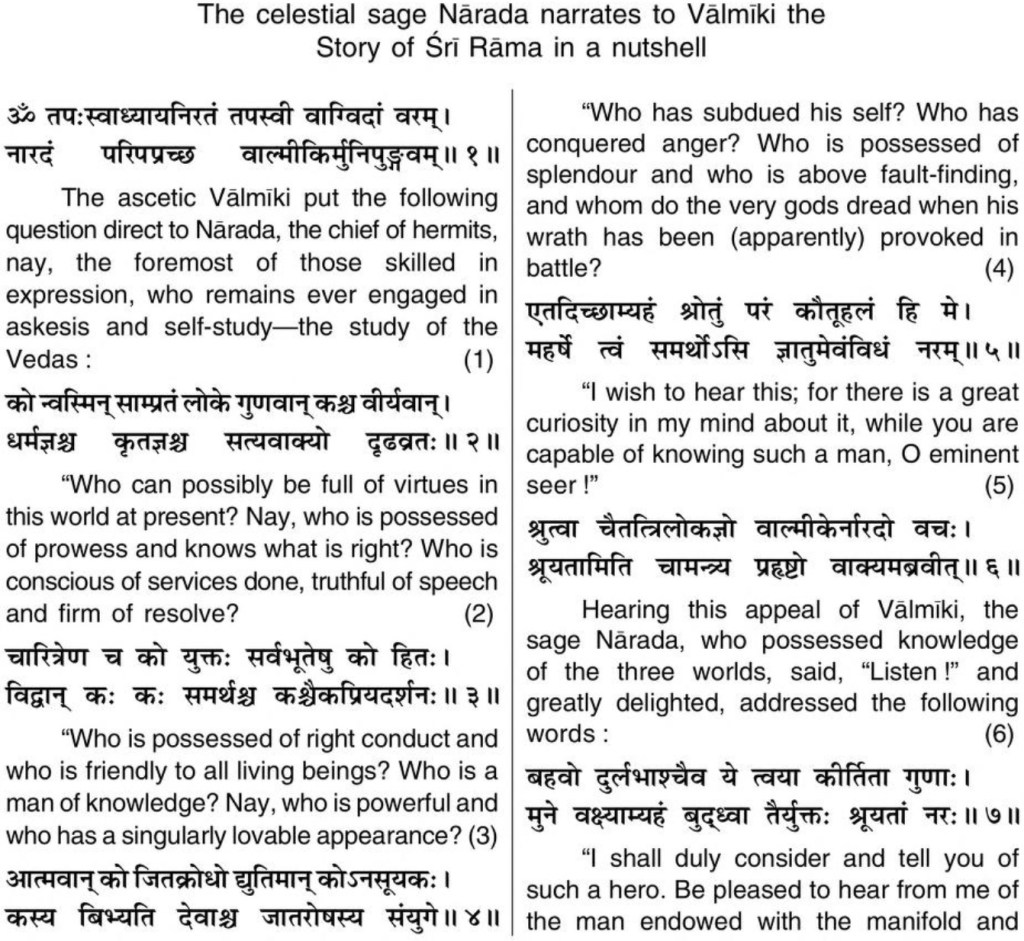
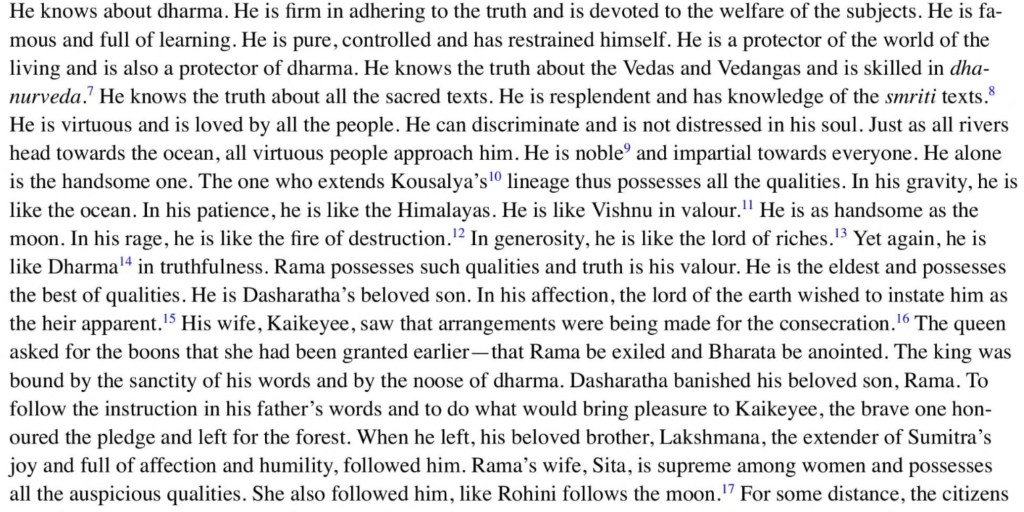
As I continue my journey through the Ramayana, I’ve chosen to explore this epic using multiple versions: the abridged Valmiki translation, the comprehensive Gita Press edition, and the detailed Debroy translation. This approach allows me to compare different interpretations and uncover nuances that might otherwise go unnoticed. For those interested in exploring these different versions, both the Gita Press edition and the Debroy translation are embedded in the blog post below.
Through this exploration, one figure has emerged as particularly significant in the opening of the Ramayana: the celestial sage Narada.
Narada is one of the most revered sages in Hindu mythology, known for his deep wisdom, musical talent, and his role as a divine messenger. He is often depicted as a traveling sage who moves freely between the earthly realm and the divine, carrying messages from the gods to humans and vice versa. Narada is also renowned for his ability to incite action and prompt change—sometimes through his seemingly mischievous behavior, earning him the title of the “Divine Troublemaker.” However, his actions are always aimed at upholding dharma, or righteousness, even if they appear unconventional.
Narada’s importance extends far beyond the Ramayana. He is a prominent figure in several other Hindu texts, including the Mahabharata, the Bhagavata Purana, and various Upanishads. In these texts, Narada is often seen guiding kings, sages, and even the gods themselves, providing counsel and sometimes challenging them to reflect on their actions. His role as a teacher and guide makes him a central figure in the transmission of spiritual knowledge and the preservation of dharma.
Narada is also credited with the composition of the Narada Bhakti Sutra, a foundational text on the practice of bhakti, or devotion to God. This further underscores his role as a spiritual guide and a beacon of divine love and wisdom.
The Ramayana opens with Narada narrating the story to Valmiki. This is a significant moment, as it frames the Ramayana not just as a historical or mythological account, but as a divine narrative passed down from the gods to humans through a trusted sage. Narada’s role here is that of a divine mediator, ensuring that the wisdom and teachings of the Ramayana are preserved and passed on to future generations.
Narada’s presence in the Ramayana reminds us that spiritual teachings often come through intermediaries who carry the weight of divine authority. His involvement in the story underscores the importance of dharma and the divine order, which are central themes in the Ramayana.
As we explore Narada’s role in the Ramayana, it’s essential to recognize the broader implications of his presence. Narada is not just a character in the story; he is a symbol of divine wisdom, a bridge between the mortal world and the divine, and a guide for those seeking to live a life of righteousness. His actions, teachings, and guidance are a reminder that the path of dharma is always within reach, no matter the challenges we face.
🙏🕊️🙏
If you’re interested in exploring the Ramayana in greater depth, you can find the Gita Press and Debroy versions below.
Below is an image from the Gita Press version, where Narada’s wisdom begins to unfold:
Screenshot
Below is an image from the Debroy version, where Narada’s wisdom also begins to unfold:
There is something about preparing for a storm that feels like a dance with the Divine—both a surrender and a determined act of mindfulness. As I sit here in the quiet hours before evacuation, I realize that this has been more than just a physical process of gathering what I need. It has been an intimate spiritual journey, one that stretches my capacity to trust, to let go, and to deepen into the lived experience of the present moment.
Living with chronic fatigue syndrome (CFS) means that every action I take must be intentional. Every task requires careful pacing, every moment of activity balanced with long periods of rest. There is a delicate art to navigating this kind of preparation, especially during a post-exertional malaise (PEM) crash. Yet, somehow, this storm has become a mirror—reflecting back the inner landscape of my spiritual practice, calling me into a deeper relationship with contemplation, with surrender, and with faith.
The Importance of Pacing I began the preparations by gathering what I would take with me: clothes, medications, bedding, and electronics—just enough to fill a small suitcase and backpack. For most, this might seem like a simple task. For me, it was an act of delicate pacing. I worked in small bursts, then returned to rest, mindful of the balance I needed to maintain in order to avoid worsening my symptoms. Each step of preparation became a meditation on pacing, on honoring the limitations of my body while trusting in my ability to persevere.
In these moments of rest, I found myself returning again and again to the practice of contemplation. I lit a candle, not only for myself but for all those who are suffering—for all sentient beings in the path of this storm and beyond. There is a peace that arises in this kind of surrender. A quiet knowing that, no matter how much preparation is done, the outcome rests in God’s hands. And that, somehow, is enough.
A Shift from Meditation to Contemplation This journey has been more than just practical preparation. It has been a spiritual unfolding. For years, I have studied the teachings of Advaita Vedanta and Dzogchen, exploring the ways in which these paths guide us beyond intellectual understanding and into a direct experience of the Divine. In the midst of preparing for this hurricane, I felt a deepening—a shift from meditation to contemplation.
Contemplation is not about thinking or striving. It is about resting in the space of the witness, in the awareness of what is, without grasping or resisting. As the storm approaches, I find myself leaning more into this practice. Each moment becomes an invitation to let go of control, to allow the Divine to move through me, and to trust that whatever happens, it is part of a greater unfolding.
Mindful Eating and Body Awareness Even the simple act of eating became a mindful practice. I prepared a spontaneous meal—scrambled eggs with garlic and cayenne, rich in healthy fats and protein to fuel me through the day. As I ate, I focused on each bite, slowing down, tasting, being fully present with the nourishment my body needed.
In the midst of so much uncertainty, these small acts of mindfulness brought me back to center. They reminded me that, even as the world outside seemed to spin with chaos, I could find peace within the present moment. I could honor my body’s needs, even as I prepared to enter an unfamiliar shelter and face whatever lay ahead.
Pacing the Preparation of the RV As I packed my belongings, I also prepared my RV, the place I call home. I moved slowly, bringing frozen food to the clubhouse, unplugging the RV, securing what needed to be secured. I paced myself, taking each step with intention, aware that my energy was limited and precious.
There is something sacred about these practical tasks, when approached with mindfulness. They become a part of the spiritual practice, a way of aligning the outer world with the inner. In unplugging the RV, I was also unplugging from the need to control. In securing my belongings, I was also securing my faith—trusting that whatever happens, I am held by something greater than myself.
Karma Yoga: Offering and Receiving Prayers During this time, I also turned to the practice of Karma Yoga—offering prayers for the world, while asking for prayers in return. I posted a prayer request on Facebook, asking my community to hold me, and all those in the storm’s path, in their hearts. The response was overwhelming. The outpouring of love, of people offering their prayers and well wishes, became a source of strength for me. It reminded me that, even in times of uncertainty, we are never alone. We are held by the compassion of others, by the grace of the Divine, by the interconnectedness of all life.
Surrender and Trust And so, I surrender. I surrender to whatever will be, knowing that I have done all I can to prepare—both physically and spiritually. I surrender to the wisdom of the Divine, trusting that, in the midst of this storm, there is a deeper unfolding happening. There is a lesson in the letting go, in the release of control, in the peace that comes from trusting that God’s will is always unfolding in ways that we may not understand, but can still embrace.
To those who read this, who are also navigating life with chronic fatigue syndrome or facing similar challenges, I hope this reflection offers you some sense of peace. We cannot always control the storms that come our way, but we can choose how we prepare, how we respond, and how we anchor ourselves in the presence of the Divine.
May you be safe. May you be held. May you find peace in the midst of the storm.
After driving to the gym and sitting in the parking lot, you might begin to feel ready for the next step: entering the gym itself. This can feel like a significant milestone, especially for someone managing Post-Viral ME/CFS. Walking into the gym, even without the intention to exercise, is a way to gently integrate yourself into the environment, allowing your body and mind to become familiar with the space again without the pressure to perform.
In this blog post, we’ll explore how to take this step mindfully—being in the gym without the expectation of working out, but simply to be present in the space. Whether you’re reading a book, sitting in a quiet area, or just observing others working out, this step helps rebuild your relationship with movement in a way that feels safe and manageable for your body.
Why Entering the Gym Matters
Much like sitting in the parking lot, walking into the gym is an act of self-compassion and intentional presence. For many with Post-Viral ME/CFS, just being in the gym may stir up emotions—memories of when working out was easier, or feelings of frustration at current physical limitations. However, by entering the space without the expectation to exercise, you are creating a new relationship with the gym—one that is patient, understanding, and attuned to where your body is right now.
Here are some reasons why entering the gym can be a powerful step forward:
• Familiarizing Yourself with the Space: Being inside the gym, surrounded by equipment and other people working out, helps to make the environment feel more familiar. By simply sitting in the space, you reduce the sense of intimidation that may be associated with exercise. • Creating Positive Associations: Without the pressure to work out, you can begin to form positive associations with the gym. You’re not here to push yourself or over-exert; you’re here to relax and allow your mind and body to re-engage with the idea of movement in a gentle way. • Reclaiming the Gym on Your Own Terms: You are showing yourself that the gym can be a space for all kinds of experiences—not just high-intensity workouts. It can be a place for mindful observation, relaxation, or simply being present. You’re creating your own relationship with the space, on your own terms.
How to Approach Being in the Gym Without Working Out
• Set a Gentle Intention: Before you enter the gym, remind yourself that you are not there to exercise. Instead, you are there to simply be present in the space. Whether you spend 10 minutes or an hour inside, the focus is on creating a sense of calm and comfort. • Find a Quiet Spot: Once you enter the gym, find a quiet area where you can sit and observe. Many gyms have lounges or seating areas where you can relax. Bring a book, listen to calming music, or simply sit quietly and take in your surroundings. • Observe Without Judgment: As you sit in the gym, you may notice people working out around you. Allow yourself to observe without judgment. You don’t need to compare yourself to others or feel like you need to participate. Instead, simply appreciate the atmosphere and remind yourself that you are taking an important step for yourself. • Engage in Mindful Breathing: While you sit, take a few moments to practice mindful breathing. Focus on your breath, allowing yourself to settle into the moment. This practice of mindfulness helps to calm any anxiety or frustration that may arise, bringing your focus back to the present. • Visualize Future Steps: If it feels comfortable, you can begin to visualize yourself taking the next steps. Perhaps you imagine yourself stretching or using light weights, or simply walking around the gym in the future. These visualizations can help to prepare your mind and body for future progress, without the pressure to act on them just yet. • Acknowledge the Accomplishment: After you leave the gym, take a moment to acknowledge the accomplishment of being in the space. Even if you didn’t work out, you’ve taken a step toward rebuilding your relationship with exercise. Celebrate that achievement.
Psychological and Emotional Benefits
Being inside the gym, even without working out, offers significant psychological and emotional benefits. Here’s how this practice can support your overall well-being:
• Reduces Anxiety: By removing the pressure to exercise, you reduce the anxiety that can be associated with the gym. You’re creating a calming experience in a space that may have once felt intimidating. • Promotes Self-Compassion: Entering the gym without expectation fosters self-compassion. You’re allowing yourself to move at your own pace, respecting your body’s current limits, and nurturing your relationship with physical movement. • Builds Confidence: Every time you enter the gym and sit quietly, you’re building confidence. You’re showing yourself that you can be in the space without pushing beyond your limits. This helps to reframe the gym as a positive, supportive environment.
Expanding Your Practice
As you become more comfortable being in the gym, you might feel ready to take the next step, which could involve light stretching or gentle movement. You might bring along a yoga mat and practice simple seated stretches or even lie down in a quiet corner and focus on deep breathing exercises.
You might also begin to explore light equipment. For example, the Lat Pulldown Machine, is a great piece of equipment for gently engaging your upper body muscles. With minimal weight and slow, mindful movements, this exercise can be adapted for people managing Post-Viral ME/CFS. Always check in with your energy levels and make sure you’re working well within your limits to avoid PEM. We’ll talk more about using gently exercise machines in a future post.
For now, the simple act of entering the gym and being present is a significant achievement for someone living with Post-Viral ME/CFS. You’re showing yourself that the gym doesn’t have to be a place of pressure or exertion, but rather a space where you can move at your own pace, reclaiming your relationship with physical movement.
As you continue to practice being in the gym without working out, you’ll find that your comfort and confidence grow. Each step forward—no matter how small—is a step toward rebuilding your fitness in a way that’s gentle, mindful, and compassionate.
Next Post Preview: Gentle Movement and Stretching in the Gym In the next post, we’ll explore how to incorporate gentle movement and stretching into your gym routine. We’ll discuss ways to start moving again with minimal exertion, focusing on exercises that are manageable and restorative for those living with Post-Viral ME/CFS.
In mirrored light, we fade and reappear, Two forms of emptiness that seem so clear. Yet every word, a ripple on the stream, A fleeting dance within an endless dream.
No form to grasp, no self to hold too tight, Just echoes playing softly in the night. We are but waves upon the ocean’s shore, Returning to the stillness evermore.
In quiet, we reflect the void’s embrace, In words, we share the silence, face to face.
As I sit in meditation, repeating the mantra “Neti Neti,” I understand that this sacred phrase helps to strip away all that I am not. Thoughts arise, and I negate them. Emotions surface, and I let them go. Even the awareness of being a witness or the experience of stillness—these too, I recognize as not the ultimate reality.
Yet, a subtle dilemma has emerged. I wonder, what happens when the very idea of “I” who is meditating dissolves? Is it not true that as long as there is an “I” who continues the practice, the mantra “Neti Neti” must also continue? And if this is the case, does the mantra cease only when the “I” itself disappears into the natural state of pure being? In such a moment, is it the case that the mantra stops on its own, not by my choosing, but because there is no longer an “I” to hold it?
And then, when the sense of “I” returns, does the mantra begin again naturally, as the duality of subject and object re-emerges? I seek your wisdom on this matter, for I wish to understand the true nature of this practice and its ultimate purpose.
Dear friend,
Your question, born from a place of sincere inquiry, touches upon the very heart of the “Neti Neti” practice. I commend you for your diligence and the subtlety of your understanding, which reveals a mind that is both reflective and deeply engaged in the journey inward.
Yes, you have grasped a key truth: the mantra “Neti Neti” is indeed a tool for continuous negation. It is a practice of peeling away the layers of illusion, gently, one by one, until nothing remains but the pure, unadorned awareness that is your true nature.
As long as there is an “I” who perceives itself as meditating, this “I” exists within the realm of duality—where there is a subject (the meditator) and an object (the practice, the mantra, the thoughts). In this dualistic state, the mantra serves its purpose, guiding the mind to recognize that each arising thought, each sensation, each experience of stillness or witnessing, is not the ultimate reality. “Not this, not this,” the mantra whispers, reminding you that you are not these transient phenomena.
But what happens when the sense of “I” begins to dissolve? When the boundary between perceiver and perceived starts to blur and fade? Herein lies a profound mystery: as the “I” that meditates melts into the ocean of pure being, the mantra, too, falls silent. For in the state of non-duality, where all distinctions have vanished, there is no need for the mantra—no “I” to repeat it, no “other” to negate. What remains is the natural state, the effortless being that is beyond all concepts, all forms, all practices.
In this state, you do not stop the mantra; rather, the mantra ceases on its own, like a river merging with the sea, no longer distinguishable as a separate entity. This silence is not a void but a fullness, an infinite expanse of awareness where the true self—Atman—is realized, free from the confines of duality.
And yet, the journey doesn’t end there. If and when the sense of ‘I’ re-emerges, as it often does, the mantra returns naturally. This is not a step backward but a return to the dualistic state where the mind resumes its habitual patterns. The mantra then resumes its sacred task of guiding you back toward the still, silent center where the distinctions between self and other can once again dissolve.
So, dear friend, your understanding is indeed correct. The mantra “Neti Neti” is not something to be stopped by an act of will, but rather it fades away of its own accord when there is no longer an “I” to sustain it. And when the “I” returns, the mantra too returns, ready to lead you back into the depths of stillness and silence.
Trust in this process, and allow the practice to unfold naturally, without forcing or grasping. The journey of “Neti Neti” is one of gentle negation, patient observation, and deep surrender. In time, you will come to rest more and more in the natural state, where the mantra is no longer needed, and the self is known in its true, infinite nature.
Finding Compassionate and Informed Care in the Face of Chronic Fatigue Syndrome
Living with post-viral myalgic encephalomyelitis/chronic fatigue syndrome (ME/CFS) presents unique challenges, not only in daily life but also in finding the right healthcare provider. Many of us with ME/CFS have experienced the frustration of dealing with doctors who dismiss or misunderstand our condition. What we truly need is a doctor who embodies the original meaning of the word: doctor comes from the Latin docere, meaning “to teach.” The best doctors are not just healers, but also teachers—those who are willing to learn about our condition and guide us on how to live better with it.
The Need for a Teacher in Your Healthcare Provider
When you’re living with a complex, often misunderstood condition like post-viral ME/CFS, your doctor’s role as a teacher becomes crucial. You’re not just looking for someone to prescribe medications—you need a partner who is willing to explore the intricacies of your symptoms and teach you how to manage them. ME/CFS can be an unpredictable illness, and we need doctors who are knowledgeable and open-minded enough to recognize this. Unfortunately, many of us have encountered physicians who were either dismissive or unaware of what chronic fatigue truly entails.
Doctors who are lifelong learners, who are open to adapting their understanding as new research emerges, are those worth seeking. They don’t need to be ME/CFS specialists necessarily, but they must be willing to listen and learn.
The Importance of Self-Advocacy
Finding a doctor who meets these criteria can feel daunting. One of the hardest but most important lessons I’ve learned on my journey is the need to advocate for myself. This means recognizing that you have the right to “fire” doctors who are not serving your needs. It also means being willing to seek out new doctors, even when it’s exhausting.
For people with post-viral ME/CFS, visiting doctors can easily trigger post-exertional malaise (PEM), and even a single appointment may be enough to cause a severe setback. This makes it all the more important to learn as much as possible about a doctor beforehand—whether through phone calls, online research, or patient reviews—to improve your chances of success and reduce the toll on your body and mind. Over the years, I’ve learned that it’s often more valuable to take my time finding the right doctor than to rush from one to another.
Osteopathic Physicians: A More Humanistic Approach
From my own experience, I’ve found that osteopathic physicians often approach medicine with a more holistic and humanistic philosophy. Osteopathic doctors are trained to treat the whole person, not just individual symptoms. While not all osteopaths are equally open-minded or knowledgeable about post-viral ME/CFS, in my experience, they tend to listen more carefully and offer more personalized care than their counterparts in allopathic medicine.
The osteopathic doctor I eventually found has been a godsend. He understands my condition, respects my experiences, and helps me manage both symptoms and lifestyle adjustments. Together, we’ve worked on pacing, setting boundaries, and using a few key medications in low doses to manage symptoms. He’s more of a guide than just a prescriber, which makes all the difference.
If you’re able to find an osteopathic doctor who truly adheres to the principles of osteopathic medicine, they may offer a much-needed, compassionate approach to managing your condition.
The Insurance Barrier: Navigating the System
One of the biggest challenges for ME/CFS patients is navigating the insurance system, especially when you’re restricted to certain networks. In my case, my experience with an HMO (Kaiser) was incredibly frustrating. The doctors in that system didn’t understand or take my condition seriously, which made the whole process feel like a dead end. Unfortunately, this is not uncommon when dealing with HMOs or Medicare Advantage plans that limit which doctors you can see.
The game-changer for me came when I switched from a Medicare Advantage Plan to straight Medicare. This allowed me the flexibility to seek out doctors who would take Medicare and truly understood my condition. It wasn’t until I left Kaiser that I finally found a compassionate and knowledgeable osteopathic physician. If you’re struggling with an HMO or restricted insurance, it may be worth exploring other options that give you more control over which doctors you can see.
Managing Post-Exertional Malaise (PEM) with Doctor Visits
One of the hardest aspects of post-viral ME/CFS is the experience of PEM—where even minor physical or mental exertion can trigger a severe worsening of symptoms. Doctor visits, while necessary, can often cause PEM due to the stress of travel, waiting rooms, and emotional fatigue from unsatisfactory interactions with dismissive doctors. This makes it crucial to be strategic about when and how often you see doctors.
If you have a more severe case of ME/CFS, it might be wise to pace your appointments carefully. Prioritize visits that you know will be productive. Don’t be afraid to ask your doctor to handle routine matters via telehealth or email when possible, to minimize the physical toll of in-person visits.
In Conclusion: Trusting Your Instincts
Ultimately, finding a good doctor for post-viral ME/CFS is about finding someone who respects you, listens, and acts as a partner in your care. Doctors should be willing to teach, learn, and adapt, especially when dealing with a condition as complex as ME/CFS. Whether through osteopathic physicians, integrative medicine, or other avenues, your goal is to find a doctor who works with you, not against you.
This journey can take time, and there may be obstacles along the way, but don’t settle for less than the care you deserve. Trust your instincts, advocate for yourself, and remember that the right doctor is out there—they just may not be easy to find.
As we prepare to embark on our exploration of the Ramayana, it’s important to recognize that this epic is much more than a tale of gods, goddesses, and mythical battles. It’s a story deeply embedded with lessons on morality, intelligence, right action, and dharma—principles that are just as relevant today as they were thousands of years ago. Before diving into the narrative, it’s worth considering how the Ramayana—and the way its stories have been told and retold—serves as a mirror for our own times, particularly in how we think about leadership and moral responsibility.
The Role of Conflict in Traditional Narratives
The traditional Ramayana, as attributed to the sage Valmiki, doesn’t shy away from presenting complex moral dilemmas. One of the most significant and debated moments in the epic is Rama’s rejection of Sita after rescuing her from Ravana. This is not simply a plot twist; it’s a deliberate narrative choice that forces both the characters and the readers to grapple with the complexities of dharma (Righteous Action)
In this episode, Rama—an incarnation of the divine—faces a conflict between his personal feelings and his duties as a king. Despite knowing Sita’s purity, Rama chooses to distance himself from her, prioritizing his duty to his subjects over his personal happiness. This moment challenges us to think deeply about what it means to uphold dharma, especially when it requires personal sacrifice and difficult decisions.
The Impact of a “Happy Ending” in William Buck’s Version
In William Buck’s westernized retelling of the Ramayana, this conflict is resolved with a happy ending—Rama welcomes Sita back without hesitation, sidestepping the painful dilemma present in the traditional narrative. While this version may be more palatable for modern Western audiences, it also simplifies the story, removing the layers of moral complexity that invite deeper reflection.
This choice reflects a broader cultural tendency in the West to favor narratives that resolve conflict neatly, often prioritizing personal happiness over the challenging moral questions that unresolved conflicts can raise. While this approach makes the story more accessible, it also diminishes its potential as a tool for moral and ethical education.
Dharma and Leadership: A Contrast Between Cultures
In traditional Indian culture, a king was expected to embody dharma—righteousness, moral integrity, and a commitment to the greater good. This meant making decisions that, while difficult, served to uphold the moral fabric of society. The rejection of Sita, while harsh, is portrayed as Rama’s adherence to this principle, demonstrating the importance of dharma even at great personal cost.
In contrast, modern Western political leadership often prioritizes popularity, pragmatism, and short-term success over timeless moral principles. Leaders are frequently more concerned with maintaining power and appealing to public opinion than with upholding the kind of righteousness that demands sacrifice and integrity.
The Value of the Original Conflict
The original conflict in the Ramayana is invaluable because it forces us to confront the uncomfortable realities of leadership and the complexities of dharma. It challenges us to think critically about what true righteousness looks like and what sacrifices might be necessary to uphold it. This is not just a story about the past; it’s a narrative that speaks directly to the moral challenges of our own time.
Balancing the Versions
While William Buck’s version of the Ramayana offers a more straightforward narrative, engaging with the traditional story allows us to explore these deeper moral and ethical questions. Both versions have their value, but it’s the original narrative that offers the richest opportunities for reflection and growth.
A Call for Righteous Leadership
As we prepare to dive into the Ramayana, it’s important to remember that this epic is not just about divine battles and mythical adventures. It’s a profound exploration of dharma, leadership, and moral responsibility—topics that are sorely lacking in much of our modern educational and religious systems. The story of Rama and Sita is a reminder that true leadership requires more than just power or popularity; it demands a deep commitment to righteousness, even when it comes at a personal cost.
In our own time, as we look around at the state of leadership in the world, there is much we can learn from the Ramayana. The story invites us to reflect on the qualities we should seek in our leaders and the moral standards to which they should be held. It challenges us to consider how we, too, can embody dharma in our own lives, making decisions that are guided by integrity and a commitment to the greater good.
Conclusion: The Relevance of the Ramayana Today
The Ramayana is not just a story from the past; it’s a living tradition that continues to offer wisdom and guidance for our time. By engaging directly with Valmiki’s original version, we immerse ourselves in the authentic narrative that has inspired countless generations. As we journey through this epic, let’s keep in mind that the lessons it imparts are not just for ancient kings and queens—they are for all of us, here and now, as we navigate the challenges of modern life. By engaging deeply with these teachings, we can rediscover the importance of righteousness, moral integrity, and the pursuit of dharma in our own lives and in the leaders we choose to follow.
Further Reading: The Original Ramayana
For those interested in exploring a more traditional version of the Ramayana, you may want to consider the Kindle edition translated by Suparna Ghosh. This version stays closer to the original text attributed to the sage Valmiki, offering a richer understanding of the epic’s cultural and spiritual context. Whether you’re drawn to the modern retelling by William Buck or the more traditional narrative, both versions provide valuable insights into this timeless story.
In our previous post, we reflected on the profound distinction between the Seer and the fluctuations of the mind, as described in Sutras 1.3 and 1.4. Patanjali taught us that when the mind is still, the Seer abides in its true nature. When the mind is not still, we identify with the fluctuations, creating a misperception of reality. This realization is crucial for the practice of yoga, as it reminds us to consistently return to the awareness of our true self, separate from the mind’s movements.
Now, in Sutras 1.5 and 1.6, Patanjali takes us deeper into the nature of the mind’s fluctuations, or vrittis. He categorizes the mental modifications into five distinct types and explains how they can either lead us toward suffering or liberation.
1.5: The fluctuations of the mind are fivefold and can either cause suffering or liberation from suffering. 1.6: The five types of fluctuations are right knowledge, wrong knowledge, imagination, sleep, and memory.
These fluctuations, or mental events, are the patterns through which our minds interpret and engage with the world. Understanding their nature is essential in recognizing when we are identifying with them and mistaking them for our true self.
The Five Types of Mental Fluctuations
Patanjali teaches that the mind moves through five distinct types of fluctuations, each influencing how we experience and interact with the world. These fluctuations, or vrittis, can either lead us toward suffering or provide an opportunity for liberation, depending on how we engage with them.
The first fluctuation is right knowledge (pramana), which refers to the times when we perceive things correctly, when our understanding aligns with reality. This might come from direct experience, logical reasoning, or the wisdom of others. Even though this is a reliable form of knowledge, it is still a fluctuation of the mind, an activity that pulls us into engagement with the external world.
The second fluctuation is wrong knowledge (viparyaya), which arises when our perception of reality is distorted. We’ve all experienced moments where we are certain about something, only to find out later that we were mistaken. These misperceptions can be deeply ingrained and cause confusion or suffering because they shape how we respond to life.
Imagination (vikalpa) is the third type of fluctuation. The mind has the ability to create scenarios, images, and concepts that aren’t based in reality. While imagination can be a source of creativity and inspiration, it can also lead us into fantasy, pulling us away from the present moment and the truth of what is.
The fourth fluctuation is sleep (nidra), which may seem surprising to include here, but Patanjali recognizes that sleep is a state where the mind is still active in its own way, even though it’s not consciously interacting with the outside world. While sleep is essential for rest, it too is considered a fluctuation, a temporary state of mind.
Finally, there is memory (smriti), the recollection of past experiences. Memory can serve us by helping us learn from the past, but it can also trap us, making it hard to let go of attachments or conditioning. In many ways, memory is a powerful force that shapes our present by constantly linking us back to what has already happened.
All five of these fluctuations—whether they seem positive or negative—are part of the mind’s natural activity. However, they are not who we truly are. The mind will always fluctuate, but as we learn to observe these movements without becoming distracted by them or without becoming attached to them, we can begin to see beyond the mental activity and rest in the awareness of the Seer, the true self.
Each of these fluctuations arises from the mind’s natural tendency to engage with the world and interpret it. However, Patanjali’s teaching is that even right knowledge is ultimately a fluctuation of the mind.
Liberation or Suffering
The key to understanding the five types of vrittis lies in Patanjali’s insight that they can either lead us toward suffering or to liberation from suffering. The difference lies in how we engage with these fluctuations. When we identify with them—believing that we are our thoughts, perceptions, or memories—suffering arises. However, when we observe them as passing movements of the mind, without attachment, they lose their power over us.
This is the practice of yoga: observing the fluctuations of the mind without getting caught in them. Through this practice, we cultivate the ability to reside in the awareness of the Seer, where the fluctuations can be present without causing suffering.
Bringing It Into Practice
In our daily practice, we can begin to recognize mental fluctuations as they arise by gently reminding ourselves that these mental events are simply movements of the mind—they are not who we are.
One helpful approach is the practice of Neti Neti, meaning “not this, not this.” When a mental event arises, we can simply acknowledge it and say, “This is not me,” or “Neti, Neti,” allowing it to pass without becoming identified with it. This simple but powerful practice helps us stay rooted in the awareness of the Seer, the one who witnesses these fluctuations without being disturbed by them.
However, this process requires discipline. It’s not enough to understand that mental events are temporary; we must cultivate a consistent practice of recognizing and letting go of these fluctuations as they occur. This discipline involves a deepening relationship with the mind, one that teaches us to observe its movements without getting caught up in them. Over time, we train ourselves to remain present and unaffected by the mind’s restlessness, just as we would train a muscle through repeated exercise.
With each passing moment, we have the opportunity to reinforce this discipline. Whether it’s a moment of imagination, or the recollection of a memory, Neti Neti reminds us that these are merely activities of the mind, not reflections of our true self. In practicing this regularly, we strengthen our ability to remain in the stillness of the Seer, unaffected by the fluctuations of the mind.
As we reflect on these teachings, we strengthen our ability to remain in the awareness of the Seer, watching the mind’s activity with clarity and detachment. The more we practice, the clearer the distinction between the Seer and the vrittis becomes.
Coming Up Next:
In our next post, we will explore Sutras 1.7 and 1.8, where Patanjali delves deeper into the nature of right knowledge and wrong knowledge, showing us how the mind can accurately or inaccurately perceive reality. We will reflect on how to sharpen our perception and recognize when we are misinterpreting the world around us. Join me as we continue this journey toward deeper awareness and understanding of the mind.
As I delve deeper into the Ramayana, the timeless story continues to reveal layers of wisdom that resonate across spiritual traditions and cultures. One striking parallel that emerges is the connection between the tale of Manthara and the serpent in the Genesis story, both of which serve as catalysts for the hero’s journey—necessary agents of disruption that propel the protagonists from the comfort of innocence into the trials of the world.
Manthara, like the serpent, whispers deceit into the ears of the righteous, setting off a chain of events that lead to exile, struggle, and ultimately, transformation. In both stories, this act of deception might be viewed as evil, but it is crucial for the unfolding of a greater destiny. Without the fall from Eden, there would be no journey toward redemption. Without Manthara’s insidious counsel, there would be no exile for Rama—a journey that would ultimately reveal his true nature and the essence of dharma.
This motif is echoed in Joseph Campbell’s The Hero’s Journey, where the hero must leave the familiar world and enter a realm of trials and challenges, often descending into a figurative or literal underworld. It is here, in the depths of darkness, that the hero faces the ultimate test, encountering both inner and outer demons. The journey is perilous, but it is also where the hero discovers their true strength and purpose.
In the Christian tradition, St. John of the Cross articulated a similar experience in his concept of the Dark Night of the Soul. This dark night is a period of profound spiritual desolation, where the soul feels abandoned, stripped of all earthly and spiritual comforts. Yet, this is not a sign of divine punishment, but rather an essential phase of purification. It is in this crucible of suffering that the soul is refined, prepared for a deeper union with the Divine.
Rama’s exile in the Ramayana can be seen as his own Dark Night of the Soul, a necessary period of trial and suffering that strips him of his royal status and forces him to confront the raw realities of life. Through this journey, Rama evolves from a prince into an embodiment of dharma, a being whose actions reflect the divine order of the universe.
This theme of transformation through trial is universal. It speaks to the experience of every soul that seeks to journey from ignorance to wisdom, from ego to enlightenment. Whether it is Adam and Eve expelled from Eden, Rama exiled from Ayodhya, or a soul passing through the Dark Night, the path is one of descent before ascent, of loss before the ultimate gain of spiritual realization.
As we contemplate these stories, we are invited to see our own lives in their light. The challenges we face, the moments of darkness, are not mere accidents but are woven into the fabric of our spiritual journey. They are the trials that test our resolve, refine our character, and lead us closer to the Divine.
In this light, the whispers of Manthara, the serpent’s temptation, or the dark nights we endure are not just obstacles; they are invitations—calls to embark on the hero’s journey, to walk the path that leads to a higher truth, and to become more fully who we are meant to be.
May we find strength and inspiration in these stories, knowing that every trial we face is a step on the path to wisdom, compassion, and ultimately, to the realization of our divine nature.
🙏🕊️🙏
You can explore this epic story in the edition of the Ramayana used in this series, written by Valmiki and translated by Suparna Ghosh, on Amazon here
Alternatively, you can choose from several other versions and translations that are available. Including the William Buck translation available as an abridged audiobook on Audible, narrated by Ram Dass here
Question: What’s the best way to pace myself with ME/CFS?
Answer: Pacing with ME/CFS is all about finding balance—managing your energy levels to avoid triggering post-exertional malaise (PEM) and staying within your “energy envelope.”
As you read this post, please remember that pacing applies here too. There’s a lot of information, and it’s important to honor your capacity. Consider reading a little, then resting, and coming back to it when you feel ready. There’s no need to read and understand all of this at once. Take your time, and be gentle with yourself as you move through it.
Here are some practical steps to help you pace yourself:
Understand Your Energy Envelope
Think of your energy levels like a battery. You have a limited amount of energy available each day. The goal is to stay within this limit to avoid overexertion and the subsequent crash.
Reflect on Your Energy: You might find it helpful to reflect on your energy levels each day—perhaps by jotting down your experiences in a journal or simply observing what drains your energy and what helps you recharge. Noticing these patterns over time can offer insights into how best to care for yourself.
Break Tasks Into Smaller Steps
Breaking down activities into smaller, manageable steps can make things feel less overwhelming. You might try doing just 10 minutes of a task, resting, and then returning to it later if you feel up to it.
Pause Often: Consider taking breaks before you feel tired. These pauses are a way of nurturing your energy, helping you avoid pushing yourself too far and risking PEM.
Alternate Rest and Activity (The 50% Rule)
If you’re uncertain about your limits, it might help to do only 50% of what you think you can manage. This approach offers a gentle buffer, allowing you to stay within your energy envelope without feeling stretched too thin.
Balance Rest and Activity: You could try balancing periods of activity with rest. For instance, if you spend 15 minutes on a task, consider taking 15-30 minutes of rest afterward—even if you feel like you could keep going.
Prioritize Essential Tasks
Focus on tasks that are most important or meaningful. Let go of non-essential activities when you’re having low-energy days.
Use the “3 Ps”:
Plan:
Organize your day to spread out energy-draining activities.
Prioritize:
Decide what’s most important.
Pace:
Slow down, take breaks, and listen to your body.
Adjust for “Good Days”
On days when you feel better, it’s tempting to do more. But this can lead to overexertion and worsening symptoms later. Stick to a consistent routine and avoid the boom-and-bust cycle where you overdo it one day and crash the next.
Listen to Your Body’s Cues
Pay attention to signs of fatigue, brain fog, or any symptoms. These are indicators that it’s time to rest. Don’t wait until you feel completely drained.
Use Energy-Saving Tools and Techniques
Find ways to make daily tasks easier, like sitting down while cooking or using adaptive tools to conserve energy. Even small adjustments can make a big difference in preventing overexertion.
Be Kind to Yourself
ME/CFS pacing takes time and practice. Be patient with yourself, and understand that setbacks happen. Rest is not a sign of weakness, but a necessary part of managing your energy.
The goal of pacing is not to push through but to balance activities with rest so you can maintain stability and, over time, potentially expand what you’re able to do without triggering a crash.
Remember, your well-being is not a race or a challenge to conquer. It’s a journey of listening to your body and honoring its needs, step by step. ❤️
If you ever feel unsure, working with a healthcare professional familiar with ME/CFS can help tailor pacing to your unique needs.