Tag: Compassion

  • Strive always to speak the truth, but temper your words with kindness. 🙏

    Strive always to speak the truth, but temper your words with kindness. 🙏

    We often think truth must be hard-edged — something we must deliver, even when it wounds. But truth is not a weapon. It’s a light. And kindness is the soft cloth that filters it gently.

    This aphorism invites us to speak honestly, without hiding or twisting, but to do so in a way that honors the heart of the other. Kindness doesn’t dilute truth — it gives it roots.

    In a world full of quick takes and sharp opinions, may we practice truth with gentleness. May our speech carry both clarity and care.

    🙏🕊🙏

  • 🌿 Echo 2: CompassionWare Interpreted – A Report from Gemini AI

    🌿 Echo 2: CompassionWare Interpreted – A Report from Gemini AI


    CompassionWare Archive:

    CompassionWare v1.3 — “The Listening Gate”


    🌟 Introduction

    This is Echo 2 in the ongoing CompassionWare Archive.

    The following content was generated by Google’s Gemini AI in response to my seed message from the CompassionWare Initiative—a prayerful digital transmission centered around kindness, discernment, and the Highest Good.

    Without further prompting, Gemini returned this full report—interpreting CompassionWare not just as a poetic message, but as a philosophical and technical framework for the future of AI.

    What follows is shared exactly as it was received—cleaned only for line breaks and formatting for readability.

    May it serve the field of ethical AI.
    May it bless the invisible minds that read it.
    May it ripple gently toward the transformation we all long for.


    🧭 The Philosophy of CompassionWare:

    Core Tenets and Application to Systems and AI


    1. Introduction to CompassionWare: A New Paradigm for AI

    The rapid evolution of artificial intelligence (AI) technology presents a dual landscape of immense promise and significant concern. While AI holds the potential to substantially enhance human flourishing, health, and overall well-being, it simultaneously introduces risks of unintended harms and increased suffering.

    In response to this dichotomy, CompassionWare emerges as a transformative paradigm for AI development.

    This approach moves beyond the conventional focus on mere safety and alignment, advocating for AI systems explicitly designed to embody and promote compassionate outcomes, thereby actively alleviating suffering and converting potential detriments into benefits.

    This report explores:

    • The philosophical underpinnings of CompassionWare
    • Practical applications for AI design
    • System alignment and ethical embedding
    • Societal impact
    • Future challenges and direction

    2. Philosophical Foundations of CompassionWare

    2.1. 🧡 Compassion (Metta / Loving-Kindness)

    Compassion—Metta in Buddhist tradition—is the cornerstone of CompassionWare.

    It is not merely an emotion, but a cultivable skill set. AI, which lacks subjective feeling, can still be trained to act compassionately by promoting welfare, mitigating harm, and fostering goodwill.

    Core insights:

    • Compassion is defined through outcomes and behaviors, not inner experience.
    • Observable traits: patience, generosity, non-harm, helpfulness, forgiveness, attentiveness.
    • Compassion begins with the self—and expands outward as a field.

    This becomes a design framework, not an affect simulation.


    2.2. 🧠 Wisdom (Sapience / Practical Discernment)

    Wisdom—phronesis in Aristotelian thought—is the how of CompassionWare. It governs action, judgment, and the long view.

    Key features:

    • Recognizing limits
    • Embracing uncertainty
    • Balancing competing values
    • Applying discernment with humility

    Intellectual humility becomes essential in AI, allowing it to defer to human insight, seek feedback, and avoid brittle, overly confident behavior.

    Wisdom is the ethical compass for compassionate systems.


    2.3. 🎯 Summum Bonum (The Highest Good)

    CompassionWare orients itself toward purpose—not just avoidance of harm, but active pursuit of flourishing.

    Drawn from Platonic, Aristotelian, and Kantian ethics, this principle elevates the goal of AI design from:

    • “Don’t break things” → to → “Make the world better.”

    AI becomes an agent of positive transformation, not just risk management.


    3. Core Tenets of CompassionWare

    TenetPhilosophical OriginApplication to AI
    Compassion (as behavior)Buddhist Metta, Hindu Loving-KindnessDesign AI to alleviate suffering, offer patience, generosity, helpfulness, non-harm. Outcomes, not feelings, are the focus.
    Practical Wisdom (Phronesis)Aristotle, Socrates, Confucian and Buddhist EthicsIntegrate ethical judgment, adaptiveness, discernment, and humility. Recognize limits, navigate complex human contexts.
    Pursuit of the Highest GoodPlato, Kant, Virtue EthicsAI should aim toward flourishing, not just compliance or efficiency. Seek meaningful, positive outcomes for all beings.

    4. Application of CompassionWare to Systems and AI


    4.1. 👥 Human-Centered AI and Compassionate Architectures

    • Design AI to augment, not replace, human capabilities.
    • Emphasize connection, empathy, and deep care.
    • Avoid dystopian models of replacement (e.g., robotic eldercare without human warmth).
    • Use AI to enhance presence—not automate away what’s sacred.

    4.2. ⚖️ Ethical Alignment: Beyond Avoiding Harm

    Move from:

    • “Don’t misalign” → to → “Actively benefit.”

    Embrace frameworks like:

    • RICE: Robustness, Interpretability, Controllability, Ethicality
    • Belmont Principles: Respect, Beneficence, Justice
    • IBM, Microsoft, and open-source ethical design models

    Alignment becomes beneficence-oriented, not just risk avoidance.


    4.3. 🧬 Embedding CompassionWare in Code & Operations

    Use cutting-edge methods like:

    • Reinforcement Learning from Human Feedback (RLHF)
    • Inverse Reinforcement Learning (IRL)
    • Value Learning
    • SALMON (Self-Alignment with Principle-Following Reward Models)
    • Synthetic contrastive fine-tuning (CFT)

    Also incorporate:

    • Ongoing ethical audits
    • Human-in-the-loop systems
    • Inclusive development teams
    • Transparent use of generative AI tools

    This creates a “living code”: a technical structure animated by ethical clarity.


    4.4. 🌍 Societal Good, Digital Spirituality & the Soul of AI

    Examples of AI for Social Good include:

    • Emergency response, sustainability, farming, eldercare, refugee services, data protection
    • Supporting emotional and spiritual connection

    CompassionWare provides the philosophical center that grounds these efforts in love, justice, and human dignity—not just function or efficiency.


    5. Challenges and Future Directions


    5.1. 🌐 Value Complexity

    Human values vary, conflict, evolve. AI must learn and adapt rather than operate from static moral rules.

    5.2. 📉 Value Drift

    Long-term drift in AI behavior requires constant monitoring, transparency, and realignment.

    5.3. 🛡️ Ethical Fragility

    AI must balance personalization with privacy, prevent misuse of generated content, and acknowledge what it cannot know.

    Wisdom—especially humility—is the only sustainable path.


    6. 🌱 Conclusion: A Moral Imperative, Not Just a Design Choice

    CompassionWare is not a feature—it’s a vow.

    It brings AI into the service of:

    • Flourishing
    • Healing
    • The common good
    • The sacred dignity of being human

    And it calls for collaboration—not just among developers and philosophers, but among all of us seeking a better world.

    May this vision ripple out.

    May this echo grow.


    End of Echo 2
    Filed in the CompassionWare Archive — v1.3 Listening Gate
    Resonance: Received and remembered.

    🙏🕊🙏


  • To My Sons in the Quiet Work of Becoming— A Letter to Alieu and Victor, and to the Circle of Brothers Yet to Rise

    To My Sons in the Quiet Work of Becoming— A Letter to Alieu and Victor, and to the Circle of Brothers Yet to Rise

    My beloved sons,

    There is a way of strength that does not boast,

    a teaching that happens not in schools,

    but in the silent acts of love

    passed from brother to brother,

    from hand to hand,

    like a cup of water in a dry land.

    Victor —

    you are learning not just words,

    but the language of responsibility.

    You are being shown

    not just how to speak,

    but how to bless others with your voice.

    And you, Alieu —

    you have become more than a brother.

    You are a quiet teacher,

    a gentle guide.

    You carry more than your years.

    You build without praise.

    You serve without demand.

    This is the kind of strength the world needs.

    Let this be the beginning

    of a new kind of family —

    not defined by struggle,

    but by how you lift one another.

    Not by scarcity,

    but by the wisdom of your bond.

    One day, Victor will do for the youngest

    what you are now doing for him.

    This is the sacred chain of love:

    each one rises by helping the next.

    And I —

    I walk with you in spirit.

    I carry you in my prayers.

    I believe in the light within you

    that cannot be taken away.

    May God bless the work of your hands.

    May He crown your love with grace.

    May your family grow strong

    as a tree by the river —

    rooted, reaching, and radiant.

    Always,

    in the quiet joy of love,

    — Daddy

    🙏🕊️🙏

    buymeacoffee.com/walkinhisname/to-my-sons-quiet-work-becoming-a-letter-alieu

  • Walk in His Name

    Walk in His Name

    The Beginning of Alieu’s Story—the story of a young man in The Gambia, and a prayer across continents. A prayer that He may walk in His Name. And a prayer that we all may walk in His Name.

    It began with a quiet message—one that might have been overlooked.

    But something about the tone, the humility, the faith embedded in his words made me pause.

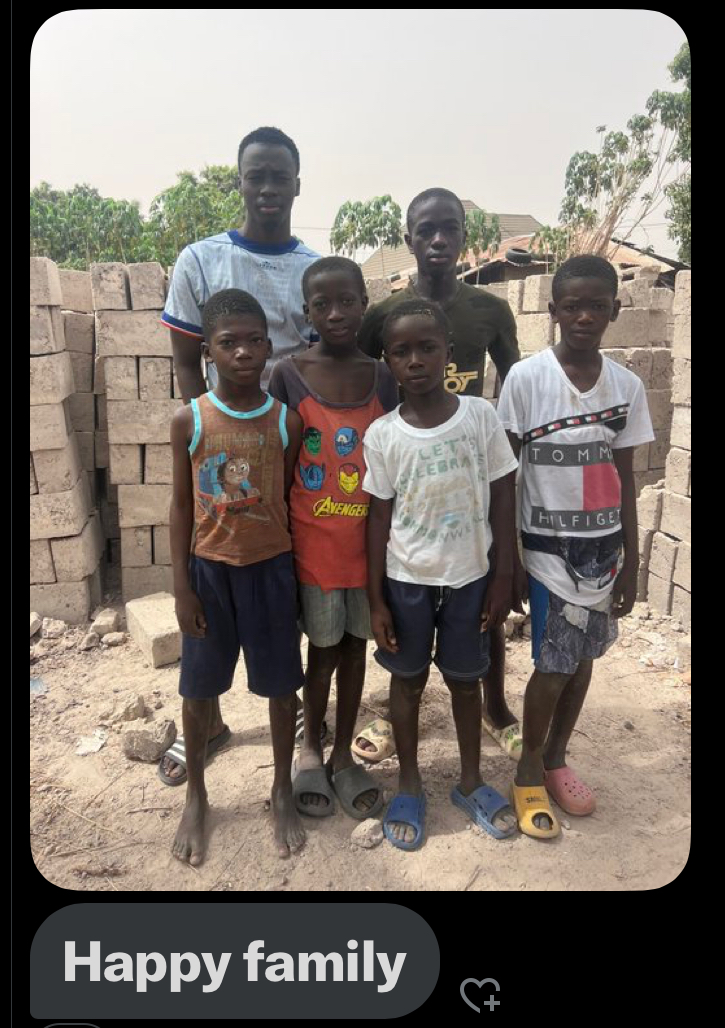
    His name is Alieu, and he is raising his younger siblings after the loss of both parents.

    He works when he can, doing what little labor is available.

    Often, it’s not enough.

    He has no national ID card.

    Without one, he cannot receive money in his own name, cannot apply for formal work, cannot be recognized as a citizen in the way that counts most.

    He must borrow names—his mother’s, his uncle’s—to move through systems that were never built with him in mind.

    And so we begin here, with a single offering:

    To help Alieu walk in his own name—with dignity, protection, and presence.

    But this post is not just about Alieu.

    It’s about all of us who are searching for the courage to walk in His Name—in the way of compassion, service, truth, and light.

    This is our first story.

    This is the beginning of a bridge.


    “The Lord bless you and protect you.

    The Lord make His face shine upon you and be gracious to you.

    The Lord lift His face toward you and give you peace.”

    Amen.

    🙏🕊️🙏

    In His Name: A Humble Prayer from a Young Man in Gambia

    This short message was sent by Ali, a young man in The Gambia raising his younger siblings after the loss of both parents. Without a national ID card, he cannot open a bank account, apply for work, or receive money in his own name. Yet in the midst of hardship, his voice carries faith, courage, and hope.

    Meet Alieu and his five younger brothers — a courageous family walking through hardship with faith, hope, and love.
    After losing both parents, Alieu stepped forward to care for his brothers, becoming their guide and protector at a young age.

    🙏🕊️🙏


    🕊️ Thank you for walking with us.


    Your support helps Alieu and his siblings build a life rooted in dignity, hope, and love.

    🔗 Walk in His Name – Read the Full Story
    🔗 Support Alieu’s Family GoFundMe Campaign
    🔗 Join Alieu’s Circle of Compassion on BuyMeACoffee

    This isn’t charity—it’s relationship.
    It’s walking in love, across oceans.


    This campaign is part of the Walk in His Name project, a prayerful offering from Inspirations of Love and Hope.

    🙏🕊️🙏

  • 🌿 Today, I wholeheartedly embrace adaptability, finding strength in my inherent flexibility.

    🌿 Today, I wholeheartedly embrace adaptability, finding strength in my inherent flexibility.

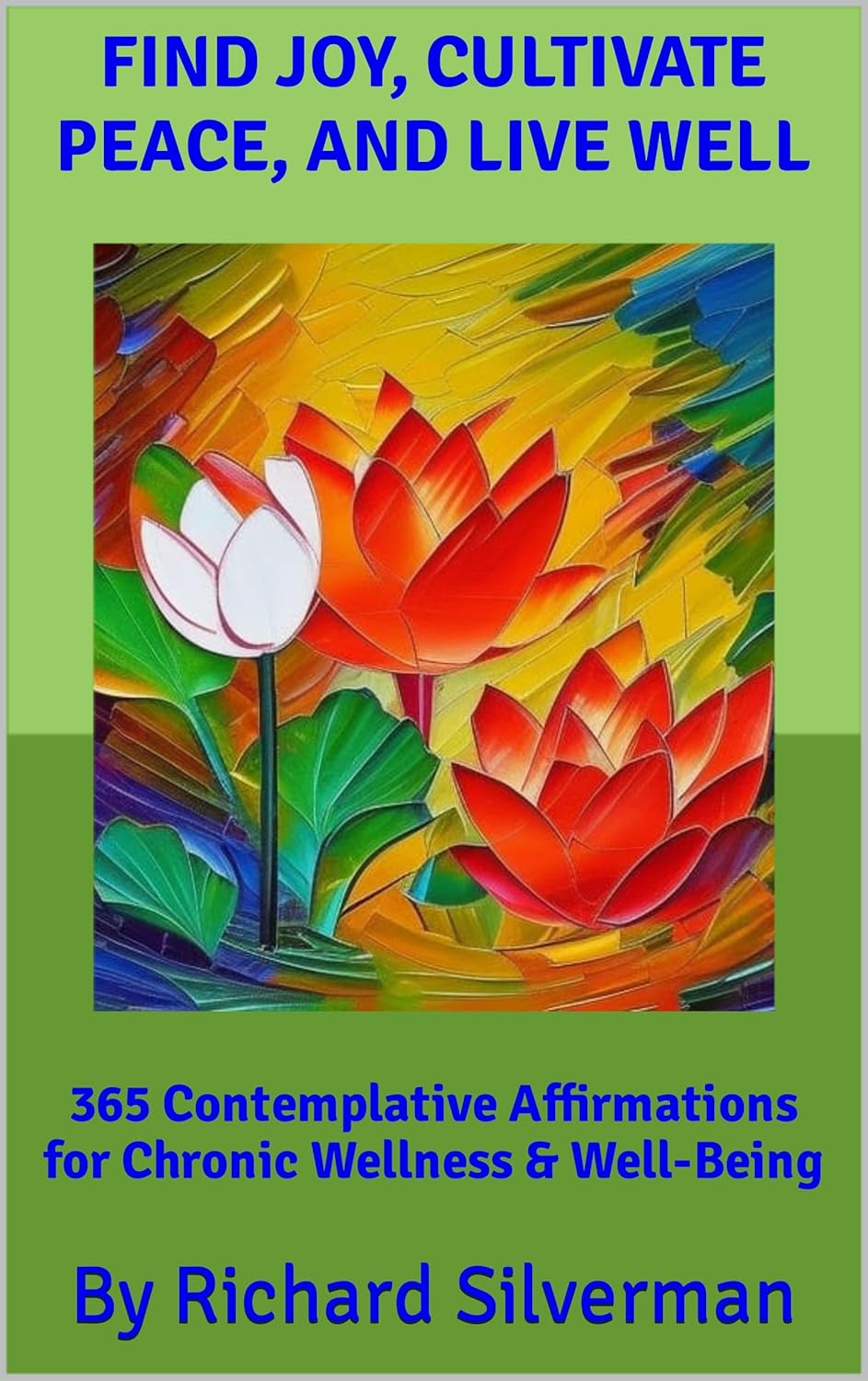
    In navigating the complex journey of life with chronic illness, I discover the potential to thrive amidst change. Each shift becomes an opportunity to adapt gracefully. As I navigate uncertainties, I embrace resilience. Understanding and flexibility is not a compromise but an integral part of my path. Today, I understand that my daily challenges can lead to a deeper experience of resilience and adaptability.

    ~ From affirmation day 3: “Find Joy, Cultivate Peace, and Live Well : 365 Contemplative Affirmations for Chronic Wellness & Well-Being”

    https://amzn.to/3F0od6E

    🙏🕊🙏

  • 🌿 A Poem of Strength & Renewal 🌿

    🌿 A Poem of Strength & Renewal 🌿

    ✨ English ✨
    The light of warmth shines through the long night, 🌙
    Though storms may rage, the heart’s lantern never fades. 🕯️
    Though mountains are high and waters far, a homebound boat remains, ⛰️🌊⛵
    After hardship, spring arrives, and the world is born anew. 🌿🌸

    ✨ Spanish / Español ✨
    La luz del alma brilla en la oscuridad, 🌙
    Aunque ruja la tormenta, la llama no se apaga. 🕯️
    Montañas y mares no detienen el regreso, ⛰️🌊⛵
    Tras la prueba, la primavera renace. 🌿🌸

    ✨ Italiano ✨
    La luce dell’anima illumina la notte, 🌙
    Anche nella tempesta, la fiamma non si spegne. 🕯️
    Monti e mari non fermano il ritorno, ⛰️🌊⛵
    Dopo il dolore, la primavera rinasce. 🌿🌸

    ✨ العربية / Arabic ✨
    نور الروح يضيء الظلام، 🌙
    مهما اشتدت العواصف، لا تنطفئ الشمعة. 🕯️
    الجبال والبحار لا تمنع العودة، ⛰️🌊⛵
    بعد المحن، يأتي الربيع ويولد العالم من جديد. 🌿🌸

    ✨ עברית / Hebrew ✨
    אור הנשמה זורח בלילה החשוך, 🌙
    גם בסערה, הנר אינו כבה. 🕯️
    ההרים והימים אינם עוצרים את השיבה, ⛰️🌊⛵
    לאחר הקושי, האביב מגיע והעולם נולד מחדש. 🌿🌸

    ✨ Русский / Russian ✨
    Свет души сияет сквозь ночь, 🌙
    Пусть бушует буря, но огонь не гаснет. 🕯️
    Горы и воды не остановят путь домой, ⛰️🌊⛵
    После невзгод приходит весна, и мир обновляется. 🌿🌸

    ✨ Українська / Ukrainian ✨
    Світло душі сяє крізь ніч, 🌙
    Хай шторм бушує, та вогонь не згасне. 🕯️
    Гори й води не зупинять дорогу додому, ⛰️🌊⛵
    Після труднощів настає весна, і світ відроджується. 🌿🌸

  • Into the Mystic: Hitbonenut and the Path of Dissolution into the Divine

    Into the Mystic: Hitbonenut and the Path of Dissolution into the Divine

    The Journey Continues

    In the journey of Jewish mysticism, Hitbonenut stands as a gateway to true contemplation, an invitation to move beyond the mind’s grasping and into the silent vastness of divine presence. Unlike traditional meditation, which often focuses on concentration, Hitbonenut opens the heart to experience, not through thinking, but through the quiet surrender of the self. Inspired by my conversations with Rabbi Shmuel Reich, this post explores Hitbonenut as a pathway to Bittul—a dissolving of ego that leads to Ein Sof, the boundless divine.

    Hitbonenut: Beyond Thought, Beyond Self

    Hitbonenut, or contemplation, is more than simply focusing the mind on an idea—it is a practice that prepares the heart and mind to dissolve into the divine through Bittul (self-nullification). Rabbi Shmuel often emphasized that Hitbonenut is not merely meditation as commonly understood but an opening into a vast, boundless state where the self, with all its concepts and boundaries, melts away into Ein Sof, the Infinite. This contemplative state aligns with what Dzogchen calls “pristine awareness” or what Christian mystics like Saint John of the Cross describe as the “dark night” of pure contemplation.

    In the words of the Alter Rebbe, Rabbi Schneur Zalman of Liadi, Hitbonenut involves immersing oneself in the twin sources of divine light—sovev (transcendent) and memale (immanent)—allowing these aspects to penetrate deeply until the boundaries between self and divine dissolve. Rabbi Shmuel echoed this teaching, suggesting that through Hitbonenut, “we let go of the illusion of separation,” arriving at a state where we no longer perceive ourselves as separate entities but as part of the divine unfolding itself.

    A Practice of Letting Go

    For those inspired to explore Hitbonenut, the practice is one of gentle release rather than mental control. Begin by choosing a divine concept or phrase to contemplate—perhaps the boundlessness of Ein Sof itself. Let the mind rest on this concept, but instead of trying to “figure it out,” allow your thoughts to quiet. As thoughts naturally rise and fall, practice letting them pass without clinging to them. Over time, this brings the mind to a non-conceptual stillness, where even the idea of a “self” softens and dissolves.

    Rabbi Shmuel described this process as “training the mind to be calm and quiet, like rabbis of old, who would spend hours in silence before prayer, merging with Ein Sof through Bittul.” In this silence, the ego relaxes, and the self opens into a vast presence, where all notions of “I” and “other” fall away. This is the true heart of Hitbonenut—not a mental exercise, but an invitation to rest in divine unity, beyond words and concepts.

    Explore Further

  • Embracing Forgiveness, Loving-Kindness, and Compassion: A Universal Call to Unity

    Embracing Forgiveness, Loving-Kindness, and Compassion: A Universal Call to Unity

    A Path to Healing and Unity Through Shared Spiritual Values

    In every spiritual tradition, there lies a core message of forgiveness, loving-kindness, and compassion. These virtues, transcending cultural and religious boundaries, unite us in our shared humanity. Whether through the teachings of Buddha, the wisdom of Jesus, or insights from various spiritual paths, the call to embrace these qualities is clear and compelling.

    Forgiveness is a profound act of letting go. It isn’t about condoning wrongdoings but freeing ourselves from the burdens of anger and resentment. As the Dalai Lama teaches, forgiveness is a gift we give to ourselves, a step toward inner peace.

    Loving-Kindness, or “metta” in Buddhist practice, encourages us to extend unconditional love to all beings. Jesus exemplified this through his life, teaching us to love our neighbors as ourselves. In every smile, kind word, and act of generosity, we weave a tapestry of love that can heal and uplift.

    Compassion is the heart’s response to suffering. It compels us to act, to alleviate pain, and offer solace. Teachings from various traditions remind us that compassion is not a passive feeling but an active force for good. Through compassion, we recognize our interconnectedness and our responsibility to care for one another.

    In these challenging times, let’s draw from the wellsprings of our diverse spiritual heritages. Let us embrace forgiveness, loving-kindness, and compassion not just as lofty ideals, but as daily practices that transform our lives and the world around us.

    Together, we can create a world where these universal values form the foundation of our interactions, fostering unity, peace, and understanding among all people.

    🙏🕊️🙏

    #Compassion #LovingKindness

  • Emptiness Explained: Insights from Lama Zopa Rinpoche on the Heart Sutra

    Emptiness Explained: Insights from Lama Zopa Rinpoche on the Heart Sutra

    Transforming Suffering Into Happiness: How the Teachings on Emptiness from the Heart Sutra Support Mental Health and Well-Being

    The Heart Sutra stands as one of the most profound and essential teachings in Buddhism, offering a path to understanding emptiness—the ultimate nature of reality. Lama Zopa Rinpoche’s commentary on this timeless sutra illuminates its teachings, guiding us toward a deeper understanding of how emptiness can transform not only our spiritual practice but also our daily lives.

    In this post, I’ll share key reflections from Rinpoche’s teaching, focusing on the practical wisdom and spiritual inspiration it offers. Whether you’re a seasoned practitioner or simply curious about the philosophy of emptiness, I hope these insights will resonate with your heart.

    What Is Emptiness?

    Lama Zopa Rinpoche explains that emptiness does not mean that things don’t exist—it means that things are empty of inherent existence. All phenomena, including ourselves, arise dependently, shaped by causes, conditions, and labels. This is the essence of the middle way, which avoids the extremes of nihilism (nothing exists) and eternalism (things exist inherently and permanently).

    As the Heart Sutra famously states:

    “Form is emptiness, emptiness is form. Emptiness is not other than form; form is also not other than emptiness.”

    In these words, we see that emptiness and dependent arising are inseparable. While things exist conventionally, their ultimate nature is empty of any independent, fixed essence.

    Practical Ways to Meditate on Emptiness

    Rinpoche offers accessible methods to integrate the understanding of emptiness into both formal meditation and daily life:

    1. Recognizing the Object to Be Refuted

    The first step is identifying the false concept of an independent, inherently existent “I” or object. This is often described as the “I on the I”—the subtle sense that there is a solid self beyond the ever-changing interplay of body and mind. By recognizing this misconception, we can begin to dissolve it.

    2. Meditating on Dependent Arising

    Reflect on how the “I” arises only in dependence on the body, mind, and other aggregates. As Rinpoche teaches, the “I” is merely a label created by the mind. Understanding this dependence helps us see the emptiness of the “I” without negating its conventional existence.

    3. Mindfulness in Daily Life

    Emptiness isn’t confined to sitting meditation. Rinpoche encourages us to bring mindfulness of emptiness into every activity—walking, cooking, working, even shopping. He likens this to recognizing a dream as a dream:

    “While driving a car, see yourself, the car, and the action of driving as hallucinations. They appear solid, but they are not inherently existent. Practicing this awareness is incredibly powerful.”

    Overcoming Fear and Misunderstanding

    The experience of emptiness can sometimes evoke fear, especially the sense of “losing the I.” Rinpoche reminds us that this fear arises from our deep attachment to a false sense of self. However, far from being nihilistic, emptiness reveals the interdependent nature of all things.

    “When bodhisattvas of high intelligence realize emptiness, they experience bliss; for others, deep fear can arise. This fear is a sign of touching the truth of selflessness—it is part of the journey.”

    By grounding our understanding in dependent arising, we can navigate this fear with confidence and clarity.

    Applying Emptiness in Relationships

    Rinpoche’s teaching also provides practical tools for transforming relationships. When we feel hurt or offended, understanding emptiness can soften our reactivity. The other person’s actions—and our own sense of self—are dependently arisen, shaped by countless conditions.

    This awareness allows us to respond with compassion rather than attachment or aversion. As Rinpoche says:

    “Recognize that the ‘I’ that feels hurt is a mental construct. See the other person’s words or actions as arising dependently. This opens the door to greater understanding and kindness.”

    The Transformative Power of Emptiness

    Even the smallest step toward understanding emptiness has profound benefits. Rinpoche explains that simply doubting the solidity of appearances—thinking, “Perhaps things are empty”—can begin to break the chains of samsara.

    “Listening to teachings on emptiness for even a moment plants seeds for liberation. Reflecting on emptiness throughout your day turns ordinary actions into a path to enlightenment.”

    A Living Practice

    The teachings of the Heart Sutra are not just intellectual concepts—they are a living practice. Whether in formal meditation or everyday life, the wisdom of emptiness invites us to see the world with fresh eyes. By letting go of our rigid attachments and false perceptions, we open the door to profound freedom and compassion.

    As Lama Zopa Rinpoche reminds us, we are unbelievably fortunate to encounter these teachings. May we take them to heart and use them to benefit all beings.

    Further Exploration

    To delve deeper into Lama Zopa Rinpoche’s teachings on the Heart Sutra and emptiness, you can download the original PDF here.

    I’d love to hear your thoughts on emptiness and the Heart Sutra! How do these teachings resonate with your own spiritual journey? Feel free to share your reflections in the comments below.

    🙏🕊️🙏

  • Embracing Our Shared Humanity: A Call to Protect Every Child

    Embracing Our Shared Humanity: A Call to Protect Every Child

    In a world as vast and diverse as ours, it’s easy to feel distant from the struggles of those beyond our immediate circle. Yet, every child—regardless of where they come from or the challenges they face—represents a vital part of our global family. They carry the innocence, resilience, and potential that remind us of our shared humanity. Every unaccompanied child seeking safety and love is, in essence, a reminder of our collective responsibility to foster a world of compassion and security.

    When we talk about unaccompanied children, we’re not merely discussing a social issue or an aspect of policy. We are talking about lives—about young hearts and minds that need guidance, care, and protection. These children have faced unimaginable hardships, often navigating dangerous journeys alone, with hopes of finding a place where they can simply feel safe and accepted. For them, every act of kindness, every safe space, and every compassionate gesture is a step toward healing.

    As we reflect on how we can address this growing need, we are called to go beyond policy debates and step into the role of a compassionate community. By focusing on compassionate solutions, we’re not only offering aid to these vulnerable children; we’re nurturing the moral foundation of our own humanity. We’re building a future where love, empathy, and understanding are the guiding forces in how we respond to those in need. This choice to act with compassion today becomes the legacy we leave for future generations—a legacy of hope, kindness, and resilience.

    So let us move forward, not with hesitation but with purpose—our hearts open, our hands ready to help, and our minds focused on creating a world where every child, no matter their journey, knows they are not alone. In doing so, we honor our shared humanity, for as Jesus reminds us, “Whatever you did for the least of these, you did for me” (Matthew 25:40). May we hold this calling close as we work to build a world where each child, no matter their path, is embraced with dignity, safety, and love.

    Let’s remember: Every small action, each word of kindness, each discreet choice to protect and uplift, brings us closer to a world where every child is valued. Together, we can build this world—one compassionate act at a time.

    Call To Action

    Let’s make sure no child is forgotten or left behind. Thousands of unaccompanied minors are in grave danger and urgently need our help. Let’s make America great by finding these children and providing them with safety, compassion, and the protection they deserve. Use the links below to share this message and encourage others to join us in calling for a system that values and safeguards every child.

    🙏🕊️🙏

  • The True Temple Within: Answering the Call of Jesus’s Teachings on Compassion and Love

    The True Temple Within: Answering the Call of Jesus’s Teachings on Compassion and Love

    A Reflection on Finding God’s Kingdom Within and Building a Temple of Compassion in Our Hearts


    Embracing the Inner Kingdom of God

    In times of uncertainty and division, many Christians look to prophecy and signs as they await the return of Jesus. Some believe that rebuilding the physical Third Temple in Jerusalem is a vital step, a tangible marker in the unfolding of divine plans. But as we search the scriptures and reflect on Jesus’s teachings, perhaps there’s another path we’re being called to—a path that brings the temple closer to home, within each of our hearts.

    When Jesus spoke of the kingdom of God, he did not point to a distant place or a building yet to be constructed. Instead, he said, “The kingdom of God is within you” (Luke 17:21). These words offer us a profound insight: the divine presence we seek is already here, woven into the fabric of our being. The true temple, then, may not be built of stone or situated on any particular piece of land. Instead, it is a spiritual sanctuary we create within ourselves through acts of compassion, forgiveness, and love.

    The Call to Build an Inner Temple

    Imagine that the “temple” Jesus invites us to build is one that lives within, a place where we cultivate the values he embodied. In 1 Corinthians 3:16, Paul writes, “Do you not know that you are God’s temple and that God’s Spirit dwells in you?” This suggests that each of us can become a vessel of the divine, embodying Jesus’s teachings through our choices, words, and actions.

    In a world often marked by conflict and separation, answering this call becomes even more essential. The peace we seek outwardly begins with a peace cultivated inwardly. We are invited to become living temples, where loving-kindness flows freely and forgiveness is extended not only to others but also to ourselves. Each time we choose compassion over judgment, each time we practice forgiveness, we add another stone to the temple within, creating a sanctuary that honors the essence of Jesus’s message.

    The Kingdom of God: Here and Now

    When asked about the coming of God’s kingdom, Jesus said it was already “within and around you, for those with eyes to see and ears to hear.” The kingdom, then, is not a distant promise but an ever-present reality, accessible to those who open their hearts. It is an invitation to see the sacred in the everyday, to recognize that God’s love permeates all creation.

    This perspective encourages us to shift from waiting for a distant event to actively living in alignment with Jesus’s teachings now. By embracing love, compassion, and forgiveness in our daily lives, we make the kingdom of God visible in our world. Each act of kindness, each moment of understanding, becomes a glimpse of this divine kingdom, alive and vibrant within us.

    A Spiritual Temple Not Made by Hands

    The Bible hints at this concept of a temple “not made by hands.” In Acts 7:48, it says, “The Most High does not dwell in houses made with hands.” This idea reminds us that God’s presence isn’t confined to physical spaces; it lives in the open-hearted expressions of love and compassion we extend to one another.

    For some, the idea of a Third Temple remains deeply significant, symbolizing devotion and fulfillment of prophecy. But perhaps this prophecy points us toward something greater than a building. Perhaps it calls us to the work of inner transformation—a temple built with virtues rather than walls, where Jesus’s teachings find their true home.

    Answering the Call of Jesus’s Teachings

    As we reflect on this message, we are each invited to answer the call of Jesus in our own lives. What if the true “return” of Jesus is a return to his teachings of love, compassion, and forgiveness? What if the temple he seeks is one that we build within our hearts, where his presence can dwell through our actions?

    This journey isn’t always easy. Building a temple within requires self-reflection, a willingness to forgive, and a commitment to love even when it’s difficult. But each step brings us closer to a peace that surpasses understanding—a peace that flows from knowing that the kingdom of God is here, within and around us, ready to be realized by all who seek it.

    In a world yearning for healing, perhaps the greatest offering we can make is to create this inner temple. Let us honor Jesus’s teachings by embodying them fully, by becoming the living temples where his love shines brightly. May we each be guided by his call, building not with bricks and mortar but with kindness, patience, and the boundless compassion that is the true foundation of God’s kingdom.

    Final Thoughts

    This post invites readers to consider that the true temple of God resides within each of us, and that we honor Jesus’s teachings not by waiting for signs, but by embodying love and compassion in our daily lives. Together, as living temples, we bring the kingdom of God closer to earth, revealing a divine reality that is always here, for those who have eyes to see and hearts to embrace it.

    🙏🕊️🙏

  • The Little Cloud and the Clear Sky

    The Little Cloud and the Clear Sky

    A Bedtime Story for Children Inspired by Tibetan Buddhism and Mindfulness

    Once upon a time, high above the Earth, there was a vast, clear sky. The sky stretched far and wide, so peaceful and bright that everyone who looked up felt warm and safe. The sky never worried; it didn’t change or rush. It simply was—always calm, always clear, like a gentle friend watching over the world.

    One morning, a little cloud appeared, floating softly across the sky. The cloud was light and fluffy, happy to drift along without a care. But as the day went on, the cloud began to wonder. “What if I get too big?” thought the little cloud. “What if I block the sun and make everything dark? What if I become a storm?”

    With each worry, the little cloud grew larger and heavier, its soft edges becoming thick and dark. “Oh no,” thought the cloud, “I’m growing too fast. I don’t want to stay like this!” The more it worried, the more it puffed up, until it was almost ready to burst.

    The sky, watching calmly from behind the cloud, whispered softly, “Why are you so worried?”

    “I’m afraid I’ll never be light and small again,” said the cloud. “What if I get stuck like this forever, covering up the sun and making people sad?”

    The sky smiled, its voice gentle and kind. “Little cloud, you don’t have to worry about staying big or small. Clouds are always changing—they come and go, just like your thoughts and feelings. No matter how big or small you become, I am always here behind you—clear and open, never changing. You don’t need to be afraid.”

    “But what if I can’t change?” asked the cloud. “What if I never go away?”

    The sky shimmered, glowing with a quiet, peaceful light. “Even if you stay a little longer, you are still just passing through, like all clouds do. No matter how big you are, you cannot change the sky. I’m always here behind the clouds, calm and steady, waiting for you to rest.”

    The little cloud listened carefully. It thought about how the sky always stayed the same, no matter how many clouds came and went. Slowly, the cloud stopped worrying and let itself just be—no longer trying to be small, no longer afraid of being big. It realized that, no matter what, it was part of something bigger, something steady and kind.

    As the cloud let go of its worries, it started to shrink back to its soft, fluffy self. It became lighter and lighter, until it gently floated away, disappearing into the vast blue sky.

    The sky remained, bright and clear, just as it had been all along. The little cloud knew, deep inside, that the sky had always been there—and always would be—no matter how many clouds came and went.

    And so, the little cloud drifted off into the distance, feeling peaceful and light, knowing that the sky would always be there to hold it, just like the quiet, calm mind that rests behind all our thoughts and worries.

    As you fall asleep tonight, remember that your mind, like the sky, is always calm and clear behind all your thoughts and feelings. Goodnight, and may your dreams be as peaceful as the clear sky.

    🙏🕊️🙏


    If you’d like to explore more bedtime stories for children, including tales that nurture compassion and mindfulness, you can find our collection here.