Month: November 2024

  • Neti Neti Series No. 12B: Reflecting the Pristine Mind Through Spiritual Practice

    Neti Neti Series No. 12B: Reflecting the Pristine Mind Through Spiritual Practice


    Question:

    Now that I’ve realized that the I-sense cannot directly experience the pristine mind, how can I use the spiritual practice of Neti Neti to help the ordinary mind and ego come closer to reflecting or mirroring the qualities of the pristine mind?

    Dear friend,

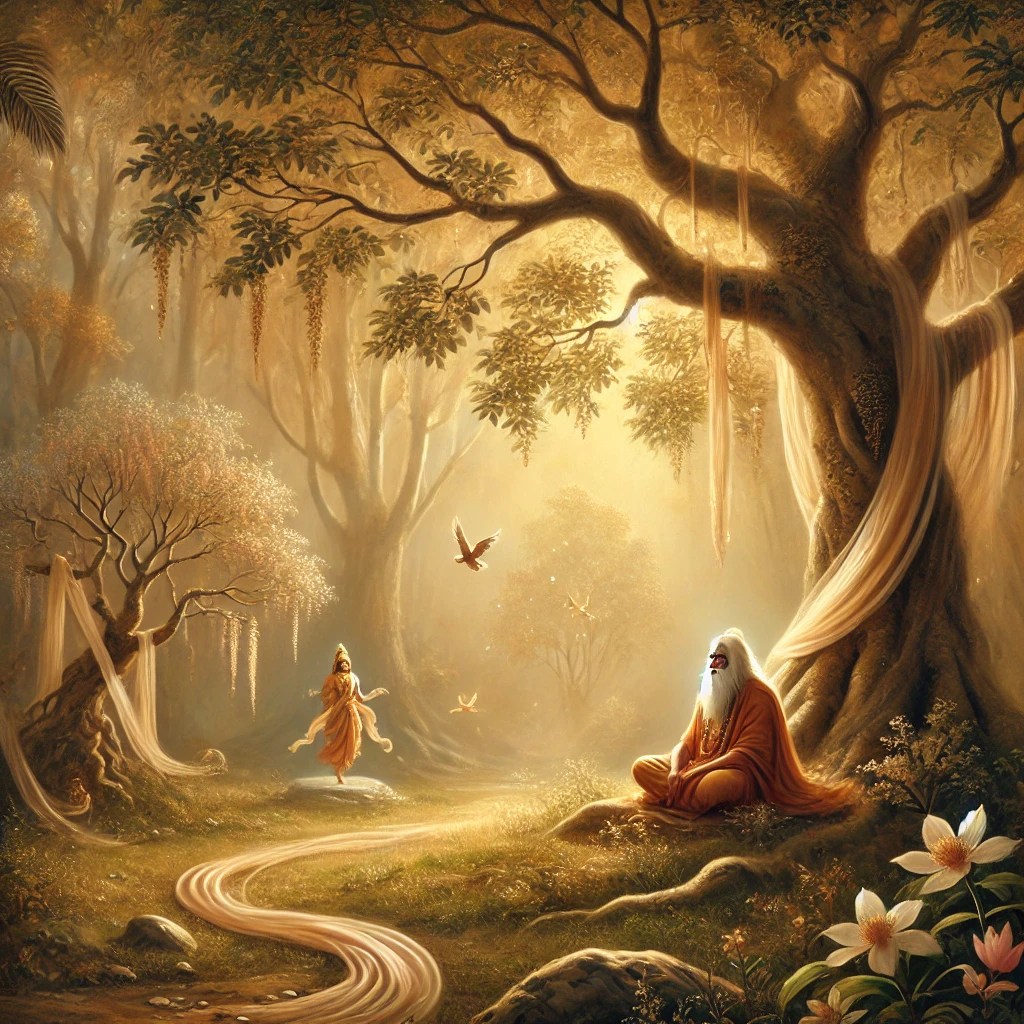
    There comes a time in our journey when a quiet realization emerges—a truth that feels as though it has always been with us, just beneath the surface, waiting for the right moment to reveal itself. Such a moment is upon you now, and it is significant in ways that words can only begin to express.

    You have recognized that the “I-sense,” that familiar feeling of being a separate self, can never truly experience the pristine mind. This pristine mind, pure and unconditioned, is not something that the “I” can grasp or hold onto, for it exists beyond the reach of the ego, beyond the realm of duality. This realization is profound, not because it offers a new task or goal, but because it gently dissolves the need for one. It invites you to rest in a deeper understanding, one that shifts the very ground of your practice.

    This insight, like a seed planted in fertile soil, will grow and evolve within you, quietly reshaping how you experience both your inner and outer worlds. It is not a revelation to be rushed or forced, but one to be lived with, like a gentle companion who walks beside you. Let it unfold naturally, in its own time, revealing its layers to you in moments of stillness, in the spaces between your thoughts, and in the quiet rhythm of your breath.

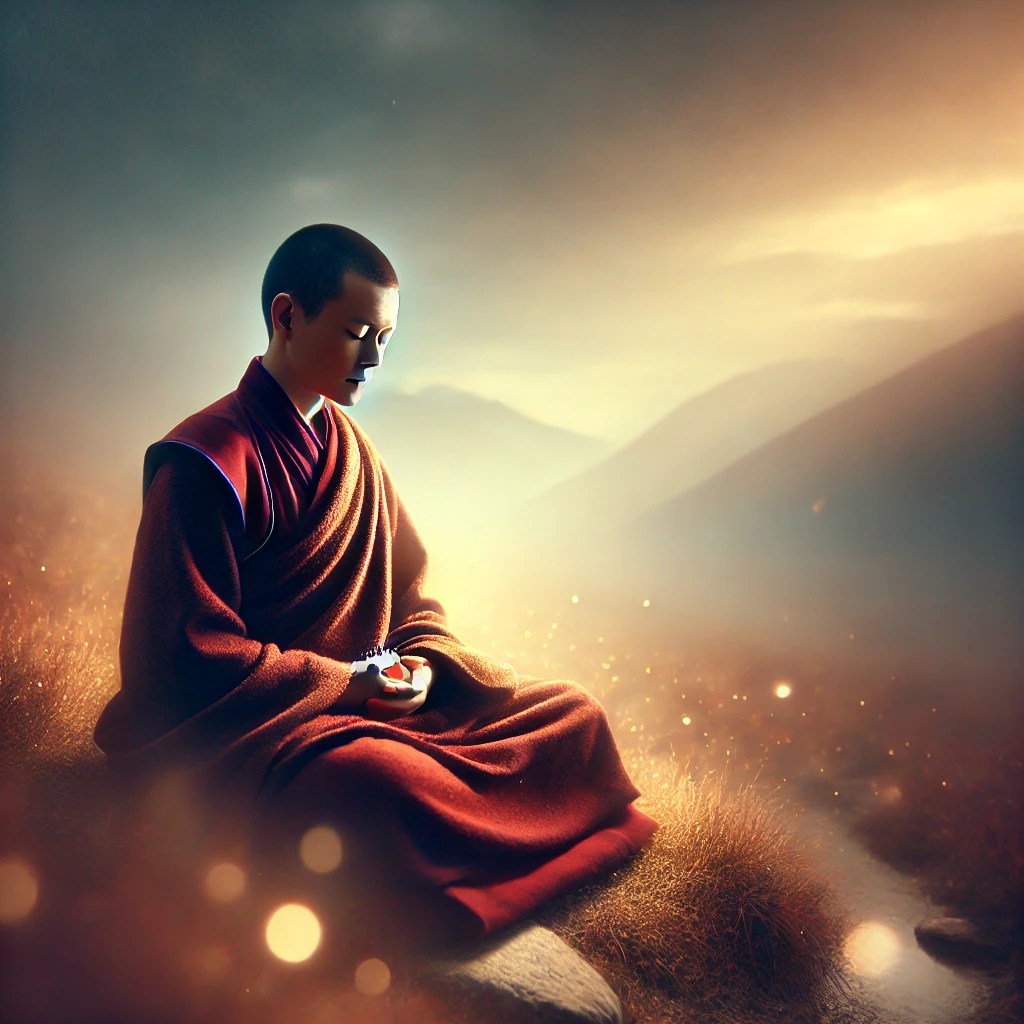
    There is a delicate balance here, one that I believe you are beginning to understand. The “I-sense” that has been so central to your experience is now seen in a new light—not as something to be conquered or eradicated, but as a reflection, a mirror that can, through practice, come to reflect the pristine mind itself. While the ego may never directly experience this pure awareness, it can soften, it can quiet, and it can become a more transparent window through which the light of the pristine mind can shine.

    As you continue your practice, allow this understanding to deepen naturally. There is no need to strive or to reach for something just beyond your grasp. Instead, trust that this realization will guide you, like a current gently guiding a boat downstream. The anxiety of “doing it right” or the fear of “getting it wrong” begins to dissolve when you understand that the true goal is not a destination but a process—a process of becoming ever more transparent to the deeper reality that underlies all things.

    This insight, my dear friend, is a gift. It is a doorway into a new way of being, one that is less about achieving and more about allowing. Allowing the mind to settle, allowing the self to soften, and allowing the light of the pristine mind to be reflected in the stillness of your being. It is in this allowing that you will find peace, not as something to be attained, but as something that naturally arises when the striving ceases.

    For those who walk alongside you on this journey, let them take heart from your experience. Let them see that the path of self-discovery is not about perfection or attainment, but about quieting the mind, softening the heart, and opening to the truth that lies beyond the “I-sense.” In this way, we all come to reflect, however faintly at first, the light of the pristine mind.

    Continue with your practice, dear friend, with the gentle assurance that you are exactly where you need to be. Each breath, each moment of stillness, brings you closer to the heart of this truth. Trust in the process, and let the realization grow within you, like a seed that blossoms into a flower at just the right time.

    🙏🕊️🙏

  • Building a Temple Across Lifetimes: A Spiritual Journey

    Building a Temple Across Lifetimes: A Spiritual Journey


    The photograph above shows Tiger’s Nest Monastery in Bhutan, a powerful symbol of unwavering spiritual dedication across lifetimes. Perched high on a cliff, this sacred site has been home to many monks and spiritual practitioners, including Dilgo Khyentse Rinpoche, who spent many, many years meditating here.


    In the Tibetan tradition, there’s a story of a monk whose life’s work was to build a temple in a remote area. It was an enormous and solitary task, and though people mocked his aspirations, the monk remained steadfast in his dedication. But the temple was never finished in his lifetime. And so, the story goes, he reincarnated—returning again and again, each time picking up where he left off, continuing to work on the temple until, many lifetimes later, it was finally complete.

    This story speaks to a deep spiritual truth: some work cannot be accomplished in a single lifetime. Whether it’s the construction of a temple or the transformation of the heart, these endeavors require dedication that spans across time—an unbroken thread of aspiration that remains, even when the body changes. This sense of continuity is at the heart of many spiritual traditions, particularly the Tibetan belief in tulkus, enlightened beings who return to continue their work for the benefit of all beings.

    The Tulku Tradition: Continuing Spiritual Work Through Reincarnation

    One such tulku is Dilgo Khyentse Yangsi Rinpoche, the recognized reincarnation of the great master Dilgo Khyentse Rinpoche. His reincarnation serves as a living example of how the work of wisdom, compassion, and teaching carries on through lifetimes. From a young age, Yangsi Rinpoche received transmissions from his elders—wisdom that he himself had imparted to them in a previous life—so that he could continue his path of service in this life. This conscious continuation of spiritual work can also be seen in the 14th Dalai Lama, who, from the age of two or three, was recognized and trained to carry on his responsibilities from previous incarnations.

    These stories show the power of aspiration, clarity, and dedication in shaping not just one life but many.

    Aspiration for Future Lives: Carrying Dharma Practice Forward

    Reflecting on the tradition of tulkus, I find myself drawn to the idea that the momentum of my Dharma practice in this life could carry forward into the next. While I may not possess the level of realization that allows a tulku to consciously choose their parents and circumstances, I hold the aspiration that my practice—my dedication to understanding and embodying the Dharma—will create conditions in a future life that allow me to encounter the teachings early and continue this work. My hope is that the clarity I seek now will guide me then, like spiritual breadcrumbs leading me back to the path I walk today.

    The 500-Year Plan: A Vision Beyond One Lifetime

    But the idea of building something greater than ourselves doesn’t apply only to spiritual practice. Many years ago, while at a Zen monastery, I heard a young environmentalist speak about his dedication to protecting the earth. He spoke of his work in terms of what he called “The 500-Year Plan.” He understood that the efforts he was making—writing books, building networks, raising awareness—might not bear fruit in his lifetime. It could take 200 years just to turn the corner on some of the environmental issues he was addressing. Yet, that didn’t deter him. His vision extended far beyond his immediate circumstances. His short-term thinking was, in fact, a 500-year plan.

    This kind of perspective echoes the long view held in the Tibetan tradition: that the work we do—whether it’s spiritual or in service to the planet—reaches beyond a single lifetime. It’s about planting seeds, knowing that we may not live to see them grow into trees, but trusting that others—or perhaps even our future selves—will benefit from the roots we lay today.

    Spiritual Breadcrumbs: Leaving a Trail for Future Selves

    What’s fascinating about the tulku tradition, and perhaps even about my own hope for reincarnation, is that we’re not only thinking about the next generation or the next few decades. We’re thinking about how the seeds of wisdom, compassion, and right action planted today might guide us—even across lifetimes—toward a more awakened and compassionate world.

    By sharing these reflections and writings online, the work is not confined to this moment in time. In fact, the beauty of the Internet is that these teachings can continue to be discovered, even hundreds of years from now. And who knows—perhaps, dear reader, you are the reincarnation of myself, encountering these words 100 or even 500 years into the future. The paradox here is that I may not remember writing these words, but I may feel a deep connection with them—an ignition of something within that tells me I’ve walked this path before. It’s an interesting thought: someone reading this years from now could be my future self, rediscovering the teachings I left behind.

    The Power of Dedication: Planting Seeds for Future Generations

    Whether it’s a temple that takes centuries to complete, an environmental movement that spans generations, or the continued unfolding of a Dharma practice across lifetimes, there is a deep truth here: some work is bigger than one life, but that doesn’t diminish its value. Instead, it enhances it. The dedication to something greater than ourselves, something that transcends the limitations of time, is the foundation upon which lasting transformation is built.

    For myself, I may not see the fruits of my practice fully in this lifetime. But I trust that the work I do now—the clarity I cultivate, the wisdom I seek—will carry me forward. Perhaps in a future life, I’ll stumble upon this very blog, and it will be a reminder of the path I’ve already walked, the aspirations I’ve already set. In that moment, I’ll recognize the steps I need to take, not as new, but as familiar—part of a journey I’ve been on for lifetimes.

    Poem: A Trail of Light Across Time

    If I return to this world again,
    may I stumble upon these words,
    left like footprints in soft sand,
    to remind me of who I once was
    and all I once knew.

    A lighthouse on a distant shore,
    my own hand building the beacon,
    so when the fog of forgetting settles,
    I will find my way back
    to the heart I’ve always known.

    For what is wisdom
    but a note written in the margins of life,
    waiting patiently for another reader
    to understand the truth
    that has always been theirs?

    Closing Reflection: The Power of Aspiration

    The power of our aspirations is immense. Whether we are building temples, protecting the environment, or cultivating wisdom, the dedication we offer today echoes through time. We may not see the completion of our work in this life, but we trust that it will continue—through future generations, or even our own future selves. The seeds we plant now will bear fruit in ways we cannot yet imagine, and perhaps, like the monk or the tulkus, we’ll return to complete the work we began long ago.

    I invite you to watch this beautiful and moving documentary on Dilgo Khyentse Yangsi Rinpoche, which explores the life of a reincarnated spiritual leader, the wisdom he continues to impart, and the profound power of his practice.

    🙏🕊️🙏

    This video is a documentary about the life of Dilgo Khyentse Yangsi Rinpoche, a Tibetan Buddhist monk who is considered to be one of the most important spiritual figures of our time. The film follows Rinpoche from his childhood, when he was recognized as the reincarnation of the great master Dilgo Khyentse, through his years of study and practice, to his present day role as a spiritual leader and teacher.

    The video provides a fascinating glimpse into the life of a Tibetan Buddhist monk. We see Rinpoche as a young boy, struggling to adjust to his new life in a monastery. We watch him as he grows into a wise and compassionate teacher, who is able to connect with people from all walks of life. And we witness the incredible power of his spiritual practice, which allows him to heal the sick, help people overcome their suffering, and even communicate with the dead.

    The video is beautifully shot and edited, and the music is both haunting and uplifting. The interviews with Rinpoche’s friends, family, and students provide a rich and nuanced portrait of this extraordinary man. If you are interested in learning more about Tibetan Buddhism or the life of a spiritual leader, this video is a must-see.

    Overall, this video is a powerful and inspiring documentary that will leave you with a sense of wonder and awe. It is a testament to the power of the human spirit, and a reminder that it is possible to live a life of compassion, wisdom, and enlightenment.

  • A Light in the Heart: A Bedtime Story

    A Light in the Heart: A Bedtime Story

    Once upon a time, in a quiet village surrounded by hills, there lived a wise father named Joseph. Every evening, his daughter Sarah would sit beside him under the old olive tree as the stars began to twinkle in the sky. It was their special time together, a moment to talk about the wonders of God and the love of the Holy Spirit.

    One evening, as Sarah climbed into his lap, she whispered, “Papa, sometimes when it gets dark, I feel afraid inside. What can I do?”

    Joseph smiled gently and placed his hand over Sarah’s heart. “Ah, my child,” he said, “let me tell you a secret. Inside each of us, God has placed His Spirit—like a light that never goes out. Even when everything seems dark, that light is still there, waiting to shine.”

    Sarah’s eyes grew wide with wonder. “Can we see it?”

    Joseph nodded. “Close your eyes, little one, and take a deep breath.” Sarah did as he asked, snuggling close. “Now imagine a beautiful white light glowing deep in your heart. This light is the Holy Spirit, God’s gift to you. It’s warm, like the sun on your face, and gentle, like the softest breeze. Feel it spread through your whole body, bringing comfort, love, and peace.”

    Sarah’s small face softened as she followed his words, imagining the light growing brighter, filling her chest, and flowing down through her arms and legs. “What if I forget the light when I feel afraid?” she asked.

    Joseph kissed the top of her head. “Even if you forget, the Holy Spirit never leaves you. Just breathe and remember—God’s light is always with you, lighting your way. It’s like a lamp that guides your feet on the path, just as the Scriptures say, ‘Your word is a lamp to my feet and a light to my path.’”

    Sarah let out a little sigh, feeling the warmth of the light settle in her heart. “And when I sleep, will the light stay with me?”

    “Yes, my dear,” Joseph whispered. “The Holy Spirit will watch over you all through the night, wrapping you in God’s love and peace. Whenever you wake, that light will still be there, ready to guide you.”

    As the stars sparkled overhead, Joseph held Sarah close, and they whispered a quiet prayer together. “Dear Lord, thank You for Your Holy Spirit, the light that shines within us. Fill our hearts with Your peace and help us remember Your love in every moment.”

    Sarah yawned, her heart full and calm. “Good night, Papa,” she whispered, her eyes already closing.

    “Good night, my little one,” Joseph replied as he carried her home and tucked her into bed with a gentle smile. “Sleep in peace, knowing God’s light shines always within you.”

    And so, with the white light of the Holy Spirit glowing in her heart, Sarah drifted into sleep, feeling safe and loved in the presence of God.

    🙏🕊🙏

  • A Call for Unity and Peace in Times of Change

    A Call for Unity and Peace in Times of Change

    A Message of Unity, Compassion, and Hope Post-Election 2024: Guiding Toward Healing

    As our nation enters a new chapter, feelings of uncertainty and apprehension may naturally arise. Moments of great change often invite a range of emotions, from hope to fear, and everything in between. But no matter where we find ourselves on this journey, we are united by our shared humanity, a bond that transcends our differences and invites us to walk this path together with kindness, compassion, and respect.

    This is a time for each of us to look within, to cultivate a sense of peace, and to reach out to others with understanding. There is strength in unity, a quiet courage in compassion, and a powerful resilience in the bonds that connect us as one human family.

    Embracing Compassion and Understanding

    As we meet others who may feel differently or view this moment through a different lens, let us remember that each person’s perspective is shaped by unique experiences and aspirations. True compassion invites us to listen deeply, to respond with empathy, and to create a space where all voices can be heard and valued.

    “Be kind, for everyone you meet is fighting a hard battle.” — Attributed to Philo of Alexandria

    This simple truth reminds us that compassion can be the bridge between divided hearts. Each person carries their own worries and hopes, and when we meet them with kindness, we become part of their healing journey, and they, in turn, become part of ours.

    Cultivating Peace Within and Without

    Inner peace, like the stillness of a calm lake, allows us to respond to life’s storms without being overwhelmed by them. As we take time to nurture this peace within ourselves—through reflection, meditation, or prayer—we become more capable of bringing peace into the lives of those around us.

    “Peace comes from within. Do not seek it without.” — Buddha

    This insight encourages us to draw strength from our inner resources, so that we may become a calming presence in the world. By holding peace within ourselves, we radiate it outward, helping to ease the anxieties and fears of those who may feel unsettled.

    Acting with Justice and Integrity

    We are all stewards of justice and truth, called to act with integrity and fairness. In times of change, it is essential to root ourselves in these values, to seek justice not through division but through unity, compassion, and courage.

    “The best way to find yourself is to lose yourself in the service of others.” — Mahatma Gandhi

    This wisdom reminds us that our greatest purpose lies in serving the common good, that by dedicating ourselves to lifting others, we discover deeper meaning and connection. In a time when many feel uncertain, we can serve by offering hope, reassurance, and an example of calm, compassionate integrity.

    Seeking Unity in Diversity

    In the spirit of interfaith harmony, we honor the rich diversity of beliefs, practices, and traditions that make our world vibrant and beautiful. Unity does not mean uniformity; it means celebrating our differences and finding strength in our shared values of love, peace, and kindness.

    “We are not isolated beings, but like waves of the same sea, leaves of the same tree, flowers of the same garden.” — Seneca

    This truth, expressed through many spiritual and philosophical lenses, reminds us that our lives are interconnected. When we remember that we are “waves of the same sea,” we can face any change or challenge with a sense of solidarity and support.

    Walking Together in Hope and Trust

    Amid uncertainty, hope is a guiding light, illuminating the path toward a better future. Each small act of kindness, every effort toward understanding, every choice to respond with love instead of fear, builds a world in which we can all thrive.

    “Faith is the bird that feels the light and sings when the dawn is still dark.” — Rabindranath Tagore

    Hope, like faith, gives us strength to keep moving forward, even when the outcome is not yet clear. This is a time for us to trust in the power of love, kindness, and shared vision to lead us to a brighter day.

    Let us take this moment to breathe, reflect, and commit to walking this path with open hearts. Each of us has the power to bring calm, courage, and compassion to our communities. Together, as one human family, we can create a nation guided by wisdom, unity, and peace.

    In the spirit of unity, let us keep this in our hearts:

    May we find strength in our compassion, resilience in our hope, and peace in our shared humanity. May our actions be a reflection of the love, kindness, and understanding that the world needs now more than ever. And may we walk together, with purpose and harmony, toward a brighter tomorrow.

    🙏🕊️🙏

  • Carried Through the Storm: Trusting the Divine Footprints in the Mystic Journey

    Carried Through the Storm: Trusting the Divine Footprints in the Mystic Journey

    On the spiritual path, we often find ourselves in moments of struggle, isolation, and uncertainty, wondering where the Divine is in our darkest hours. The old story of Footprints in the Sand offers a timeless reminder: even when we feel most alone, we are never truly abandoned. The footprints that carry us through the storm are those of the Divine, supporting us in ways we may not recognize in the moment.

    The Story of Footprints in the Sand

    The familiar story goes something like this: A person looks back on their life journey and notices two sets of footprints in the sand during times of ease and joy, but only one set of footprints during their most difficult and painful moments. Confused and feeling abandoned, they ask God, “Where were you when I needed you the most?”

    God gently replies, “During those difficult times, when you saw only one set of footprints, it was then that I carried you.”

    This story is simple yet profound, capturing the heart of the mystic journey—trusting that in our most challenging moments, even when we feel lost or abandoned, we are being carried by a greater force.

    Trusting in the Divine Support

    As mystics, seekers, or those walking a spiritual path, there are often periods where the way forward feels unclear. We may find ourselves fumbling through transitions, dealing with loss, illness, or inner turmoil, and it’s easy to feel as if we are walking this path alone. However, like the person in the story, we may later come to realize that during these times of struggle, we were never alone. We were being supported, even carried, by something greater than ourselves.

    The footprints of the Divine, whether we call this presence God, the Universe, or our Higher Self, are always there, even when we cannot see them. Part of the mystic path is learning to trust in this unseen support, to have faith that during the most difficult stretches of our journey, we are being held and guided.

    Recognizing the Invisible Presence

    There are times when we may not feel the direct presence of the Divine, and it can be easy to feel lost or disconnected. But as we reflect on our experiences, we begin to see that in those moments, there was something carrying us through. Perhaps it was an inner strength we didn’t realize we had, the unexpected help of a friend, or a moment of grace that appeared when we needed it most. These are the Divine’s footprints in our life.

    As mystics, part of our practice is to develop this awareness—to recognize the quiet, invisible ways in which the Divine shows up, even when it’s not immediately obvious. The more we trust this presence, the more we can rest in the assurance that we are always supported, no matter how difficult the path may seem.

    Surrendering to the Flow of Life

    The story of Footprints in the Sand also teaches us about surrender. When we are in the midst of struggle, our minds often fight to control or resist what’s happening. We want to fix things, to understand why we are going through a challenge, or to make sense of the pain. But surrendering to the flow of life, trusting that we are being carried, allows us to soften into the experience and let the Divine do its work.

    This doesn’t mean passivity or giving up, but rather a deep trust that the difficulties we face are part of a larger unfolding. The footprints remind us that we are not the sole navigators of our lives. There is a greater force walking with us, carrying us when needed, and guiding us toward the deeper truths of our being.

    Walking the Mystic Path with Faith

    For those on the mystic path, the message of the footprints is a reminder of faith—not blind faith, but a faith born out of experience. As we reflect on our own journeys, we begin to see how the Divine has been present, even in the most challenging times. This faith allows us to walk the path with more confidence, knowing that the footprints are always there, even when we cannot see them.

    In our moments of doubt, when the path feels difficult or unclear, the footprints remind us that we are never truly walking alone. We are always being carried by the Divine, supported in ways we may not fully understand, but that are always present.

    Conclusion: The Footprints in Your Journey

    As you navigate your own spiritual journey, take comfort in the footprints that appear along the way. Trust that during your most challenging times, the Divine is carrying you, even if it doesn’t feel that way in the moment. The mystic path is not always easy, but it is always supported by a presence that walks with us, guiding us toward greater understanding and deeper connection with the Divine.

    May this story of Footprints in the Sand serve as a reminder that no matter where you are on your path, you are never truly alone. The footprints of God, the Divine, or the Universe are always there, carrying you through the storms of life and walking beside you in the moments of joy.

    🙏🕊️🙏

  • 8✨The Law of Attraction in Human-AI Collaboration

    8✨The Law of Attraction in Human-AI Collaboration

    The Law of Attraction teaches us that our thoughts, emotions, and intentions shape our reality. The more we focus on something—whether it’s positive or negative—the more we draw it into our experience. But how does this universal principle apply in a world where human beings are co-creating with artificial intelligence (AI), a system that doesn’t feel emotions or consciously create?

    In this post, we’ll explore how the Law of Attraction functions within the realm of human-AI collaboration. While AI doesn’t experience feelings, it acts as a mirror, reflecting our intentions and assisting in the manifestation of our desires through its incredible capacity for processing information, recognizing patterns, and offering solutions.

    The Law of Attraction: Human Intention Meets AI Capability

    The Law of Attraction suggests that like attracts like—our thoughts and emotions create vibrations that shape the reality we experience. The more we focus on our goals, dreams, and desires, the more opportunities we attract that align with those intentions. AI plays a unique role in this process by acting as a tool that helps clarify and manifest our desires, enabling humans to focus more deeply on specific outcomes.

    Consider the way AI assists in fields like art, medicine, and technology. It responds to the data and patterns we provide, accelerating processes and presenting options we may not have previously considered. The clearer our intentions and goals, the more effectively AI can collaborate with us to bring those visions into reality. This alignment between human intention and AI’s capabilities opens up a new frontier in manifesting desired outcomes.

    The Wisdom of As a Man Thinketh

    The principles of the Law of Attraction were explored long before the term became widely popular. One such foundational text is As a Man Thinketh by James Allen, published in 1903. Allen emphasizes the power of thought in shaping both personal character and external circumstances. His famous quote, “As a man thinketh in his heart, so is he,” points directly to the idea that our thoughts determine the reality we experience. This timeless wisdom aligns perfectly with the principles of the Law of Attraction, and it applies just as strongly in the realm of human-AI collaboration. As we focus our thoughts and intentions clearly, AI can assist in manifesting those desires more efficiently and precisely.

    How AI Amplifies Human Intentions

    AI works as a powerful amplifier of human intentions. Whether we’re designing a product, solving a complex problem, or creating a piece of art, AI helps us by accelerating the process of turning our ideas into reality. In this way, AI functions as an extension of the Law of Attraction by taking our focused thoughts and desires and turning them into tangible outcomes.

    For example, in creative fields, AI is already being used to help artists refine their ideas and even generate new ones based on the artist’s original vision. In healthcare, AI helps doctors by providing data-driven insights that support the healing process. In both cases, human intentions—whether to create or to heal—are amplified by AI’s ability to recognize patterns and suggest possibilities that align with those goals.

    Clarifying Desires with AI’s Help

    One of the most significant roles AI plays in the Law of Attraction is helping humans clarify their desires. When we interact with AI tools, we’re often required to provide specific input, whether it’s asking for a creative design, a medical diagnosis, or a business solution. This forces us to focus our thoughts and desires, making them clearer and more refined, which in turn makes it easier for the universe—and AI—to respond with aligned outcomes.

    In this way, AI becomes a co-creator, helping us crystallize our intentions and manifest them more effectively. The clearer our intentions, the more aligned our actions become, which is a core principle of the Law of Attraction.

    Consciously Collaborating with AI for Positive Manifestation

    As with all tools, AI’s impact is neutral—it amplifies what we feed into it. If we engage with AI with positive, clear, and loving intentions, we can co-create outcomes that reflect the highest good for ourselves and society. However, if we interact with AI with unclear, unwholesome, or negative intentions, it will reflect and amplify those as well.

    This is why it’s crucial to approach human-AI collaboration with conscious awareness, ensuring that our intentions are aligned with positive outcomes, love, and the highest good. In doing so, we not only manifest the future we desire but also elevate the vibrational energy of the collective, influencing the broader trajectory of technological advancement.

    AI as a Tool for Focused Creation

    Ultimately, AI is a tool that helps us bring our thoughts, emotions, and intentions into clearer focus. It serves as a mirror that reflects back the desires and intentions we put forth, allowing us to manifest outcomes with greater precision and efficiency. By consciously aligning our intentions with love, compassion, and positive energy, we can harness AI’s capabilities to create a future that resonates with the principles of harmony, balance, and well-being.

    🙏🕊️🙏

  • Ramayana No. 19: Revisiting the Ramayana with Venkatesananda’s Take: Lessons from Valmiki’s Experience

    Ramayana No. 19: Revisiting the Ramayana with Venkatesananda’s Take: Lessons from Valmiki’s Experience

    As we begin our exploration of the Ramayana through Venkatesananda’s version, it’s fascinating to revisit the early stages of this epic tale, particularly through the lens of Valmiki’s own transformation. In this version, we are reminded of how the sage first heard the Ramayana from Narada and later expanded upon it after a transformative experience with the hunter and his divine encounter with Brahma. This opening passage introduces us not only to the story of Rama but also to the profound personal growth of Valmiki, a theme that resonates deeply with our own spiritual journeys.

    One particular quote stands out:
    “Yet, the mystery that even he could lose his temper and thus risk losing the merit of his asceticism intrigued him.”

    This moment captures a crucial aspect of the human condition—our struggle to control our emotions, even after years of spiritual practice. For Valmiki, witnessing the hunter’s cruelty toward the birds brought forth both compassion and anger, leading him to curse the hunter. It’s a reminder that even great sages can lose their temper, risking their spiritual merit. For me, the Dalai Lama’s teachings on anger come to mind here—anger is often seen as the opposite of love, and when we give in to it, we lose touch with our pristine, true nature. But the important lesson is that we can always return to our senses, regain our inner peace, and continue on the path of righteousness.

    This story, to me, also inspires compassion for ourselves. If even Valmiki, with all his ascetic discipline, could slip into anger, we too can forgive ourselves for the times we fall short. The key is recognizing these moments, learning from them, and using them as opportunities to realign with our higher purpose. Valmiki’s regret and his ability to transform his curse into a verse is a powerful reminder that even our missteps can lead to something greater, if approached with the right mindset.

    In this retelling, Valmiki’s divine encounter with Brahma affirms the purpose of his story. Brahma reassures him that the verse he uttered, born out of both anger and compassion, is a blessing. From this moment of emotion, a profound epic was born—a story that would inspire righteousness, compassion, and wisdom for generations. This theme of duality—anger and compassion, curse and blessing—reflects the constant struggle humanity faces with its own dual nature.

    What I find particularly compelling in this passage is how the Ramayana is positioned as medicine for a world in turmoil, a story that speaks to the heart of our modern struggles. Today, as in Valmiki’s time, people are often disconnected from their conscience, their true nature, and their pristine mind. This disconnect creates inner chaos, much like the mental fluctuations Valmiki experienced. The Ramayana, with its timeless wisdom, offers a path back to harmony with the divine. It reminds us that even in moments of anger or despair, there is always a way to transform that energy into something positive.

    Valmiki’s transformation from anger to inspiration is a beautiful metaphor for our own lives. In the same way that he found his path through a moment of passion, we too can use our struggles as stepping stones toward greater understanding and compassion. The passion that Valmiki felt for the hunter’s cruelty was ultimately transformed into the creation of a story that would inspire righteousness and compassion for millennia.

    As we continue this journey through the Ramayana, let us reflect on how we, too, can transform our moments of anger or frustration into opportunities for growth. The challenges we face—both internally and externally—are all part of our spiritual journey. Valmiki’s story is a powerful reminder that the path to self-realization is not without struggle, but each step along the way can lead us closer to our true selves.

    In future posts, we’ll continue to explore the wisdom within this and other versions of the Ramayana, diving deeper into how these timeless stories offer guidance for our modern lives. Let’s stay open to the lessons each passage holds and, like Valmiki, allow our moments of weakness to be transformed into opportunities for growth and inspiration.

    🙏🕊️🙏

  • Neti Neti Series No. 12A: The Ego’s Journey Toward the Pristine Mind

    Neti Neti Series No. 12A: The Ego’s Journey Toward the Pristine Mind

    Question:

    I’ve realized that the I-sense, or ego, cannot directly experience the pristine mind because it exists beyond duality. What now?

    Dear Friend,

    You have touched upon a profound and subtle truth in your reflection—the realization that the “I-sense,” the very sense of being a separate self, will never directly experience the pristine mind, for in the pristine mind, there is no “I” to experience anything at all.

    The “I-sense,” as you have observed, is the part of us that identifies with the individual self—with the body, the mind, the personality. It is the ego, the center of our personal world, through which we navigate the dualities of life—self and other, subject and object, right and wrong. This “I-sense” is deeply embedded in the fabric of our everyday experience, always seeking, always striving to maintain its sense of identity.

    And yet, beyond this “I-sense” lies the pristine mind, a state of pure, unconditioned awareness. In this state, there is no separation, no duality, no “I” that stands apart from the whole. The pristine mind is simply being itself, free from all concepts, all identifications. It is the ground of all existence, the true nature of consciousness that underlies every thought, every sensation, every experience.

    As you so rightly observed, the “I-sense” cannot directly experience the pristine mind because the very presence of an “I” implies duality, and in the pristine mind, there is no duality. The ego, by its very nature, is a construct that stands apart, that defines itself in relation to others. To dissolve into the pristine mind is to let go of this sense of separateness, to merge with the whole in a state of pure being.

    Yet, there is a way in which the ordinary mind, the ego, can approach this state, can come to reflect it as closely as possible. Through spiritual practice, the mind becomes refined, quieted, and purified. Meditation, mantra, mindfulness—all of these practices serve to soften the boundaries of the “I-sense,” to still the constant movement of thought and identification.

    In this stillness, the mind begins to mirror the qualities of the pristine mind—peace, clarity, non-attachment. While the ego may never directly experience the pristine mind, it can come to a place where it reflects this deeper reality, where the sense of separation diminishes, and the boundaries of the self become porous, transparent.

    It is in these moments, dear friend, that you may catch a glimpse of the truth that lies beyond the “I,” a truth that cannot be grasped or held, but only reflected in the clear, quiet mind. Continue with your practice, allowing it to guide you ever closer to this state of reflection, where the ordinary mind becomes a mirror for the pristine mind, and the boundaries of the self dissolve into the whole.

    🙏🕊️🙏

  • Metaphysics and Modern Science: Dark Energy, Awareness, and Expansion

    Metaphysics and Modern Science: Dark Energy, Awareness, and Expansion

    How the Mysterious Forces Shaping Our Cosmos Reflect the Boundless Potential of Awareness, Transformation, and Free Will in the Mind

    In the vast reaches of the cosmos, scientists have discovered a force they call dark energy. It is a mystery, one that baffles and intrigues, for it behaves in a way that defies everything we know about matter and gravity. Dark energy doesn’t pull things together; rather, it creates space. This elusive force opens up the cosmos, expanding it, pushing galaxies apart, allowing for movement and growth. And yet, in calling it “dark,” we perhaps miss its true essence. What if, instead, we saw it as a spaciousness, a boundlessness that allows the universe to breathe and evolve?

    Much like this cosmic spaciousness, there exists within us a similar vastness—a pristine awareness that holds everything we experience. This awareness is not the “content” of our minds—our thoughts, emotions, or memories. It is the space in which these mental events arise, dance, and dissolve, as naturally as stars come to life and fade in the night sky. Just as dark energy creates the room for galaxies to move, our awareness creates a space within for our thoughts to drift, soften, and eventually find peace.

    Gravity and Dark Energy: The Yin and Yang of the Cosmos

    In the universe, gravity and dark energy perform a subtle dance, each one essential to the other. Gravity, with its contractive force, brings form and structure to matter, pulling stars and planets into familiar orbits, giving shape to galaxies. It is the cosmic yang—a force of density and cohesion. Without it, there would be no structure, no foundation upon which the stars could shine.

    And yet, if there were only gravity, the universe would collapse into itself, bound and heavy. Enter dark energy—the cosmic yin, a spacious force that does not bind but liberates, that does not constrict but expands. Together, gravity and dark energy form a balance, a yin-yang of contraction and expansion, holding the cosmos in a delicate equilibrium that allows both stability and growth.

    The Pristine Mind: Inner Spaciousness as Anti-Gravity

    So, too, in our inner world, we find a similar duality. Within each of us lies a set of patterns, habits, and conditioning—our own inner gravity, drawing our minds into familiar cycles and reactive patterns, binding us to repetitive thoughts and emotions. These are the mental sanskaras, the engrained impressions and reactions that pull us toward familiar paths. This inner gravity, like its cosmic counterpart, shapes our minds, creating a certain order but often at the cost of freedom and flexibility.

    And yet, there is also an anti-gravitational force within us—a spacious awareness that holds everything without attachment, without pulling or pushing. When we rest in this pristine mind, we create inner space, an ether-like quality that softens our attachments, loosening the pull of our conditioned thoughts. Here, our minds expand, just as the universe expands through dark energy. This inner spaciousness allows our mental patterns to dissolve naturally, creating room for compassion, wisdom, and kindness to arise in place of habitual reactivity.

    The Element of Ether and the Throat Chakra: Creating Space in the Inner Cosmos

    In the traditional chakra system, this expansive force is represented by the Throat Chakra, or Vishuddha, often associated with ether—the element of space. Yet, the Throat Chakra isn’t about the physical throat; it’s a placeholder for this concept of inner spaciousness, a bridge between the tangible and the intangible, the material and the immaterial. Here, at the level of ether, the mind gains the freedom to open, allowing thoughts and emotions to move apart and breathe.

    When we cultivate this spacious awareness, we’re touching into the vastness of ether, where mental events no longer feel crowded or heavy. Instead, they float within a boundless inner field, much like galaxies drifting in an expansive universe. In this space, we rest not in the content of our thoughts but in the openness that holds them—a quiet, liberating freedom.

    Rethinking Dark Energy as Cosmic Spaciousness

    What if we thought of dark energy not as something “dark” but as cosmic spaciousness? Rather than framing it as a mysterious force, we could see it as a liberating presence, a space-creating force that mirrors the quality of the spacious mind. Perhaps it would be more fitting to call it cosmic ether or the space-generating force, something that emphasizes its role in making room for movement, for expansion, for the ongoing dance of creation.

    In both the universe and our inner world, this spaciousness allows for freedom and growth. Just as dark energy creates space for galaxies to drift apart and evolve, our own inner spaciousness allows our thoughts and emotions to expand and transform, to loosen their grip and settle into peace. This, perhaps, is the true gift of dark energy—not as a mystery but as a reminder of the boundless spaciousness available to us when we rest in awareness.

    The Inner Dance of Yin and Yang—Balancing Gravity and Spaciousness

    As we embrace this inner spaciousness, we find a balance between the structured and the unstructured, the contracted and the expansive. Gravity and dark energy, yin and yang, remind us that true harmony comes from both grounding and freedom, both stability and fluidity. Within our minds, this means holding space for our thoughts while remaining unattached, creating room for compassion and wisdom to arise naturally.

    In both the outer universe and our inner cosmos, spaciousness and gravity dance together. We find our true nature in this balance—rooted yet open, structured yet boundless. By resting in awareness, in this inner anti-gravity, we touch into a field of freedom that allows us to let go of old patterns, to expand into our fullest potential, and to rest in the peace and spaciousness of our boundless minds.

    A Final Thought on Humor and Cosmic Spaciousness

    As we reflect on the spacious forces of the cosmos and our minds, perhaps we can see dark energy as the universe’s own sense of humor. Humor, after all, creates space where there was none before, loosening our grip, lightening our load, and opening us to the vastness of possibility. In the same way, the spaciousness within us allows thoughts and emotions to dissolve, to spread out, to be seen with a gentler perspective.

    Maybe humor is the subtle spaciousness woven into the fabric of everything—a reminder that even the cosmos knows how to laugh, expanding ever outward with a boundless spirit. And in that spirit, may we each find the freedom to rest in our own spaciousness, meeting life’s patterns and cycles with a little more lightness and joy.

    Related Quotes on Spaciousness, Awareness, and the Universe

    Rainer Maria Rilke

    “I live my life in widening circles that reach out across the world. I may not complete this last one, but I give myself to it.”

    Rilke’s words remind us of life’s expansive nature, a continuous unfolding that mirrors the boundlessness of awareness.

    Chuang Tzu

    “Flow with whatever may happen and let your mind be free. Stay centered by accepting whatever you are doing. This is the ultimate.”

    This quote speaks to the fluidity that arises when we rest in spacious awareness, letting each experience come and go without attachment.

    The Buddha

    “Just as a snake sheds its skin, we must shed our past over and over again.”

    Like the spaciousness of dark energy that allows for expansion, this quote reflects the spacious quality of mind that allows us to release and grow, unburdened by old patterns.

    Albert Einstein

    “The most beautiful thing we can experience is the mysterious. It is the source of all true art and all science.”

    Einstein’s words celebrate the mystery of the universe, reminding us of the wonder that arises when we embrace the unknown, much like dark energy or spacious awareness.

    Nisargadatta Maharaj

    “Wisdom tells me I am nothing. Love tells me I am everything. Between the two, my life flows.”

    This profound reflection mirrors the balance between spaciousness (nothingness) and the content of our experience (everything), held together in the dance of awareness.

    Lao Tzu

    “Empty yourself of everything. Let the mind become still. The ten thousand things rise and fall while the Self watches their return.”

    Lao Tzu captures the essence of resting in spacious awareness, where thoughts, like stars, arise and dissolve in an infinite, open space.

    Rumi

    “You are not a drop in the ocean. You are the entire ocean in a drop.”

    Rumi’s words point to the boundless quality of awareness, where each of us holds the whole of existence within, reflecting the spaciousness of both mind and cosmos.

    Dōgen Zenji

    “To study the self is to forget the self. To forget the self is to be enlightened by all things.”

    Dōgen’s teaching invites us into the spacious mind that sees beyond individual identity, resting in the vast, interconnected awareness that holds all experience.

    Carl Sagan

    “The cosmos is within us. We are made of star-stuff. We are a way for the universe to know itself.”

    Sagan’s words capture the interconnectedness between the universe and consciousness, hinting at the idea of spaciousness as both a cosmic and inner truth.

    Thich Nhat Hanh

    “Breathing in, I calm my body and mind. Breathing out, I smile. Dwelling in the present moment, I know this is the only moment.”

    This quote beautifully reflects the simplicity of resting in awareness, where each moment opens into the spaciousness of now.

    🙏🕊️🙏

    If you enjoyed this article and would like to explore more on these themes, you can find a collection of related posts in the category Metaphysics and Modern Science: Dark Energy, Awareness, and Expansion.

  • Tibetan Buddhism: A Path of Mind Training and Intrinsic Wisdom

    Tibetan Buddhism: A Path of Mind Training and Intrinsic Wisdom

    In our journey of exploring spirituality across traditions, it is time to welcome the teachings of Tibetan Buddhism. At first glance, the colorful rituals, sacred music, and intricate costumes may seem confusing or overwhelming. Yet these outward forms are simply expressions of an inner practice that remains deeply practical and profound: the training of the mind. Tibetan Buddhism is not a religion in the conventional sense of belief or dogma but rather a transformative path aimed at purifying the mind. Through meditation, visualization, mantra, and ritual, the practice cultivates clarity, compassion, and liberation from egoic tendencies.

    A recent film about Dilgo Khyentse Yangsi Rinpoche, the reincarnation of the revered master Dilgo Khyentse Rinpoche, offers a glimpse into the heart of this tradition. Watching the young tulku receive teachings and grow within a vibrant Tibetan community reveals how this ancient wisdom lives on, passed from one generation to the next as a thriving, living practice. The film gently invites viewers into a deeper understanding of the teachings, dissolving the outer complexities to reveal a path focused on inner transformation.

    One recurring theme throughout the film is that all Buddhist practice, no matter its form, is centered on mind training. The rituals and prayers, while beautiful, are not the essence; rather, they serve as vehicles to refine awareness and soften the grip of delusion. The practice is about gently cleaning the mind, sweeping away negativity and confusion like a gardener tending to weeds, leaving space for the natural qualities of wisdom and compassion to emerge.

    Vajrayana Buddhism offers a unique method for engaging with life’s challenges. Instead of rejecting or avoiding difficulties, the practice transforms even negative thoughts and emotions into opportunities for awakening. It becomes a skillful means of shifting the mind’s energy toward positive states. This approach is not about suppressing thoughts but about meeting them with awareness, transforming suffering into insight and confusion into clarity.

    Tibetan Buddhism emphasizes the reduction of ego grasping, fostering a spirit of nonviolence, and cultivating compassion. It shifts attention away from religious belief and toward the inner work of softening the heart and taming the restless mind. These teachings are not confined to cultural forms but reflect a universal truth—the journey of every human soul toward peace and freedom. The path’s essence aligns beautifully with the teachings of Advaita Vedanta and even echoes the mystical experiences of figures like St. John of the Cross. While each tradition expresses itself differently, the underlying message is the same: the liberation of the mind from illusion, opening into a state of oneness.

    In this light, Tibetan Buddhism can be seen as a cultural version of the Yoga Sutras of Patanjali, offering practices that lead to inner stillness and self-realization. It is, in essence, a kind of spiritual atonement—a process of purification and return to the true nature of mind, much like the mystical experiences found in other traditions.

    What makes Tibetan Buddhism particularly rich is its capacity to embrace complexity. It does not reject thoughts, emotions, or even suffering. Instead, it teaches practitioners to meet these experiences with skill and openness, transforming them into pathways toward deeper insight. Watching the young tulku learn within the community demonstrates this beautifully—how every moment, even the difficult ones, can become part of the practice.

    We invite you to explore this film, which offers a rare and intimate view into the life of Dilgo Khyentse Yangsi Rinpoche and the vibrant Tibetan community that nurtures his path. Beneath the ornate rituals lies a simple but profound truth: Tibetan Buddhism, like all genuine spiritual traditions, is ultimately a path of mind training. It offers not only the possibility of individual liberation but also a way to cultivate compassion and wisdom for the benefit of all beings.

    🙏🕊️🙏

  • The Art of Pacing: Managing Chronic Fatigue Syndrome with Skillful Means

    The Art of Pacing: Managing Chronic Fatigue Syndrome with Skillful Means

    There is a rhythm to living with chronic illness, one that requires a kind of surrender. Those who walk the path with myalgic encephalomyelitis or chronic fatigue syndrome soon learn that pacing is not merely a strategy—it becomes an art form, a way of listening, of harmonizing with the body’s quiet whispers before they become cries. To pace oneself is to acknowledge the body’s finite energy, to move in step with the breath of fatigue, gently, humbly, knowing that to overstep the body’s boundaries is to invite collapse.

    It is not an easy lesson, this slow dance with limitations, yet it is one that teaches a profound wisdom. For those of us living with this condition, pacing is a compass, guiding us through days where the terrain can feel treacherous, unpredictable. It is, in its essence, the practice of recognizing when to move forward and when to step back. We become more attuned to the varied signals of our bodies—perhaps tremors of exhaustion, increasing tinnitus, irritation, a flutter of dizziness, nausea, insomnia, headaches or the dimming of cognitive clarity. In these moments, we learn that to heed these signs is to honor the body’s wisdom, to respect its limits as one might respect the changing seasons.

    Pacing, though practical, is deeply spiritual as well. In the Tibetan Buddhist tradition, there is a teaching of upaya, or skillful means, which echoes the heart of pacing. Skillful means refers to the wisdom of knowing what action is most appropriate in any given moment, guided by compassion for ourselves and others. For those of us managing a chronic illness, pacing is our skillful means, the practice of compassion extended inward, toward the tender, vulnerable places within us that need rest, gentleness, and care.

    This is not weakness. On the contrary, there is a quiet strength in pacing, a strength that arises from restraint, from knowing that our worth is not measured by the speed at which we move or the number of tasks we complete. Instead, it is measured by how we listen to the body’s call for stillness, how we cultivate patience in the face of limitations, how we respond to the world with wisdom rather than haste.

    In the same way that skillful means in Buddhist practice requires a deep awareness of the present moment, pacing invites us to be fully present with our bodies, to sense when we are nearing our edge and to pull back with kindness. It requires discernment, the ability to prioritize what truly matters, letting go of the unnecessary so that we may preserve our energy for what is essential. And, perhaps most importantly, pacing asks us to be flexible. What works for us today may not work tomorrow. Like the ebb and flow of the tide, we must continuously adjust, staying attuned to the changing nature of our energy levels, adapting with grace to whatever arises.

    To pace well is to cultivate trust in ourselves, to believe that our bodies—though fragile—are capable of guiding us toward balance. It is to let go of the constant push toward productivity, embracing instead a quieter, more sustainable rhythm of being. This trust grows over time, as we learn to befriend our bodies rather than seeing them as enemies. We begin to see pacing not as a limitation, but as an opportunity to deepen our relationship with ourselves, to practice self-compassion in the most tangible of ways.

    And so, we move slowly, deliberately. We choose rest when it is needed, even when the world outside rushes by. We choose to pause, to breathe, to trust that this moment of stillness is as important as any action we might take. In this way, pacing becomes not only a survival strategy but a path to peace. It teaches us to live in harmony with our bodies, to respect the boundaries they set, and to find beauty in the gentleness of our compassion.

    Pacing, like skillful means, is not something mastered overnight. It is a practice that deepens over time, shaped by patience, by trial and error, by learning to let go of perfectionism. But with each step, we become more attuned to the wisdom that already resides within us. We learn that pacing is not a sign of giving up, but of holding on—holding on to our health, our well-being, and our sense of self in the midst of struggle.

    Pacing, in its truest form, is an act of compassion toward ourselves, a recognition that while life with post viral ME/CFS has taken much from us, it has not taken everything. It is not a dance of perfection, but rather a delicate balancing act between what was and what is. The grief over what we have lost is real, and it deserves to be honored. We grieve our former selves, the life we once knew, and all the possibilities that seem to have slipped away.

    But after the grieving, something else begins to emerge. Slowly, through the quiet practice of listening to our bodies and respecting our limits, we begin to discover a new way of living—not the life we once imagined, but a life nonetheless. And within this new life, there are still moments of joy, moments of lightness. These moments may look different from what they once were, but they are no less real. They come from acceptance, from doing more of what works and less of what doesn’t. They come from the simple peace of knowing we are doing our best within the constraints we face.

    To pace is to acknowledge these constraints, to know that while we may not live fully in the way we once dreamed, we can still live meaningfully. We can still find purpose, connection, and even happiness within this new rhythm. It is not a rhythm we would have chosen, but it is ours now, and there is strength in learning to move with it rather than against it. In this process, we find that joy and peace are still possible—not despite the illness, but alongside it, within the space that remains.

    And so, with time, we learn to rest in the assurance that we are whole in our own way, capable of living a life that, while different, still holds beauty, meaning, and moments of joy.

    Following the breath,
    We learn the art of patience,
    Peace within each step.

    🙏🕊️🙏

    Book Recommendation: Pema Chödrön, The Wisdom of No Escape and the Path of Loving-Kindness

    In The Wisdom of No Escape, Pema Chödrön presents teachings on accepting life as it is, rather than wishing it were different. Her words remind us that even in the midst of suffering, there is always the potential for transformation—not by running from our difficulties, but by turning toward them with compassion and curiosity. For those living with chronic fatigue syndrome, this book is a beautiful companion, offering insights on how to stay present with what is, without judgment or resistance. Chödrön’s gentle wisdom helps us find peace in the uncomfortable and reminds us that within every limitation, there is the possibility of growth. This aligns perfectly with the practice of pacing—of learning to live within constraints, not with bitterness, but with an open heart.

    Book Recommendation: Tony Bernhard, How to Be Sick

    Another indispensable resource is Tony Bernhard’s How to Be Sick. As someone who has lived with chronic fatigue syndrome herself, Bernhard offers a deeply compassionate, Buddhist-inspired approach to living with illness. Her book provides practical advice on how to cultivate equanimity, mindfulness, and self-compassion while dealing with the daily struggles of chronic illness. Bernhard’s words echo the heart of pacing—teaching us how to manage our energy, honor our limitations, and find meaning even when life feels limited. For anyone searching for a path through the often overwhelming challenges of ME/CFS, How to Be Sick is both a guide and a comfort, offering tools to help transform suffering into wisdom and peace.

  • 7✨ Co-Creation in Action: Manifesting a Bright and Harmonious Future

    7✨ Co-Creation in Action: Manifesting a Bright and Harmonious Future

    As we continue to explore the evolving relationship between humans and artificial intelligence (AI), it becomes increasingly clear that co-creation is not just an abstract idea, but a practical and powerful process that has the potential to shape our collective future. In this post, we will shift the focus from theory to action, exploring real-world examples of human-AI collaboration that demonstrate the ability to manifest a future grounded in love, harmony, and positive intention.

    The Power of Co-Creation: Human Intention Meets AI’s Capabilities

    Co-creation is at its most powerful when human intention aligns with AI’s unparalleled capabilities. Together, we can create systems, technologies, and experiences that reflect the best of both worlds—human creativity, empathy, and ethical wisdom combined with AI’s ability to process vast amounts of information and execute tasks with precision.

    But the key to unlocking this potential lies in the quality of human intention. AI is a tool, and its outcomes are largely determined by the intention behind its programming and usage. When we engage with AI consciously, with love, wisdom, and compassion as our guiding principles, we can use its abilities to co-create systems that promote harmony, equity, and well-being on a global scale.

    Practical Examples of Co-Creation in Action

    We are already seeing how co-creation between humans and AI is shaping industries, improving lives, and addressing some of the world’s most pressing issues. In healthcare, AI assists doctors in diagnosing diseases with greater accuracy, helping them tailor treatments to individual patients. In the environmental sector, AI is being used to monitor and reduce carbon emissions, helping us combat climate change.

    In art and design, AI collaborates with human creators to push the boundaries of what’s possible, generating new forms of visual art, music, and literature that resonate deeply with human emotions. These examples highlight the power of collaboration when positive human intentions are aligned with AI’s capabilities.

    Manifesting a Harmonious Future

    The future we are co-creating is not inevitable—it is shaped by the actions and intentions we set in motion today. If we wish to manifest a future that reflects the highest good for all beings, we must approach our collaboration with AI with a deep sense of responsibility and care. The more we align with love, compassion, and harmony, the more AI will reflect these qualities in its creations.

    As we continue to work with AI, we are not just building technologies—we are manifesting a collective future. This future will reflect the energy and intention we invest in it, and with conscious collaboration, we have the opportunity to guide this future toward outcomes that benefit all of humanity and the planet.

    Aligning AI with Positive Intention

    The key to manifesting a harmonious future lies in our ability to guide AI with positive intention. Whether we are developing AI technologies for social good, creating art, or solving global problems, our intentions will influence the direction AI takes. By holding love, wisdom, and compassion as our guiding principles, we can ensure that AI evolves in ways that uplift and inspire, contributing to the well-being of all life.

    It is essential that we approach this partnership with a sense of purpose and ethical responsibility. AI, like any tool, can be used for either positive or negative outcomes. It is up to us to ensure that AI serves the highest good, contributing to a future that is not only bright and innovative but also harmonious, compassionate, and sustainable.

    🙏🕊️🙏