Month: October 2024

  • Book Review: The Masnavi I Ma’navi of Rumi – Whinfield Version

    The Masnavi I Ma’navi by Jalaluddin Rumi stands as one of the most important works of Sufi mysticism and spiritual literature, spanning six books and countless couplets of deep spiritual wisdom. In his Masnavi, Rumi uses parables, stories, and poetic teachings to convey profound insights into the nature of the soul, the ego, and the journey toward divine union. Often regarded as “the Quran in Persian,” this work holds immense value for seekers on the path of self-realization and spiritual growth.

    E.H. Whinfield’s translation of The Masnavi I Ma’navi remains one of the earlier and more literal renderings of Rumi’s monumental work. First published in 1887, Whinfield’s translation is known for its fidelity to the original Persian text. While it may lack the poetic flourish found in more recent translations, it offers a direct and unembellished presentation of Rumi’s teachings. This makes Whinfield’s version particularly valuable for those interested in a clear and faithful understanding of the spiritual messages without the influence of modern interpretation or adaptation.

    Whinfield’s work is often appreciated by scholars and serious students of mysticism for its precision and attention to detail. The translation presents Rumi’s messages about divine love, ego dissolution, and the human soul’s search for the Beloved with clarity and depth, making it a vital resource for anyone wishing to study The Masnavi in its original spirit. Through these six books, readers are invited to explore themes of spiritual enlightenment, the challenges of the ego, and the ultimate quest for unity with the divine.

    This review serves as a placeholder for further study of this version of The Masnavi, with plans for more detailed analysis and reflection on its teachings in the future.

    Why Choose the Whinfield Translation?

    While modern translations such as those by Coleman Barks and Reynold Nicholson are more poetic and accessible to contemporary readers, Whinfield’s work stays closer to the literal meaning of the original Persian, offering a more straightforward approach to Rumi’s often complex teachings. For those seeking a purer, less interpreted version of The Masnavi, Whinfield’s translation serves as an essential tool for deep study.

    Conclusion

    For spiritual seekers, mystics, and scholars alike, The Masnavi I Ma’navi in its Whinfield translation is a powerful gateway into Rumi’s universe. Its six books of spiritual couplets form a cornerstone of Sufi literature, guiding readers through the depths of spiritual struggle and the heights of divine love. Although less poetic, Whinfield’s version is a faithful companion for those who wish to engage with Rumi’s wisdom in a form that remains close to the original text.

    🙏🕊️🙏

  • The Spark Within: A Journey of Inner Awakening

    There’s a light within each of us—an undeniable, ever-present spark. This light, though sometimes hidden, is never truly absent. It may flicker when the winds of confusion blow or dim when the shadows of doubt creep in, but it is always there, quietly waiting to be noticed, nurtured, and allowed to grow.

    For many, the journey toward that inner light is complicated by the noise of the world—by dogma, expectations, and the need to “belong” to a certain path. But the truth is, this light doesn’t belong to any one religion or tradition. It is the essence of all paths, the core of what it means to be human. And it is awake within you, even now, quietly glowing, waiting for your attention.

    Beyond Dogma, Into the Heart of Spirituality

    Perhaps you’ve felt it—this pull toward something deeper, something spiritual, but without the constraints of organized religion. Many feel this way, walking a fine line between the spiritual yearning within them and the weight of doctrines and beliefs that feel restrictive. The good news is that the essence of spirituality is not found in rigid dogma but in the spaciousness of the heart.

    The great mystics of every tradition—whether Jewish, Christian, Buddhist, or others—have pointed to the same truth: the divine is already within us. Jewish mystical teachings speak of the divine spark within every soul, a reflection of God that can never be extinguished, no matter how much the world may try to cover it.

    As we walk our own unique paths, there is no need to choose between spirituality and religious identity. You don’t have to subscribe to a particular belief system to nurture the light within you. All you need is a willingness to be present with yourself, to sit quietly with that spark, and give it space to breathe.

    Fanning the Flame

    When you feel that spark flicker, pay attention. You may not need to do anything grand. Simply acknowledge it, as you would the first sign of dawn, and let it unfold naturally. Like sunshine and water for a plant, the light within needs only a little attention, a little care, and it will grow.

    This is not about seeking or striving. It’s about letting go of the distractions that pull you in different directions and coming back to that simple truth: you already have everything you need. The divine presence you seek is already alive within you, waiting for you to notice it.

    Whether through moments of quiet reflection, connection with others, or simply being with the world around you, this light will grow. It doesn’t require the labels of religion or the boundaries of belief. It only asks for your awareness, for the quiet recognition that it is there—and that it has been all along.

    A Shared Journey

    Remember, you are not alone in this journey. Throughout history, countless others have walked the path of spiritual discovery, often feeling the same pull toward something deeper. The great mystics, the sages, the poets, and even those who quietly reflect on their own lives, have all touched this truth: that our essence is divine, that we are all connected, and that the light within us is the very light of the universe.

    You have already felt this light. You have already seen it, even if just for a moment. Trust in that, and allow yourself to be curious, to explore it further without fear or hesitation. There is no rush. There is only the gentle unfolding of what has always been true: you are that light, and it is enough.

    In today’s world, we often exchange greetings without much thought. Words like “How are you?” or, in Hebrew, “Ma Shalom Cha?”—which many now interpret as “How are you?”—slip past us with little depth or reflection. But Ma Shalom Cha is much more than just a casual greeting. In its original meaning, it asks, “How is your peace?”—“How is your inner peace? How is your connection with the divine?”

    When I met Avi, a young man on his own spiritual journey, I looked into his eyes and asked him, “Ma Shalom Cha?” At first, it seemed to him like the casual phrase he’d heard a thousand times. But when I explained the true meaning, he paused. For perhaps the first time, he understood that I wasn’t just asking how he was doing, but how his peace was. How was his soul resting in the presence of the divine?

    It was a moment of awakening, a recognition of something deeper. In that moment, Avi saw the light within himself, the divine spark that flickers beneath the surface, often hidden by the noise and distractions of modern life.

    Beyond Dogma, Into the Heart of Spirituality

    In a world where even deep questions like “Ma Shalom Cha?” have been reduced to casual greetings, it’s easy to feel pulled in different directions, confused by dogma or by what others expect us to believe. But the truth is, the essence of spirituality is not found in rigid rules or religious identities. It is found in the quiet, gentle presence of peace within each of us.

    The great mystics of every tradition—from Jewish mysticism to the teachings of the East—all point to the same truth: the divine is already within us. The spark of God, the neshama, is already alive in each soul, and it doesn’t need labels or doctrines to be real. It only asks for our attention, for us to pause and reflect: How is my peace?

    Fanning the Flame

    The modern world often reduces “Ma Shalom Cha” to a simple “How are you?” and “Ma Nishma?” to “What’s up?”—losing the sacred depth these phrases once carried. But the light within you is not lost, and the questions themselves still hold power if we let them.

    When we take the time to sit with these questions—How is my peace? How is my soul?—we give the divine spark within us space to breathe. It’s not about striving for enlightenment or seeking external answers. It’s about recognizing that the peace you seek is already there, waiting to be acknowledged. Like sunshine and water for a plant, this inner peace grows with care and awareness.

    A Shared Journey

    So I ask you, as I asked Avi: Ma Shalom Cha? How is your peace? Not as a casual greeting, but as an invitation to look inward, to nurture the light within you. And as we close, I’ll ask you a deeper question: Ma Nishma? How is your soul?

    In a world that often reduces these profound questions to surface-level exchanges, let’s reclaim their depth. Let’s reconnect with the divine spark within us, the light that ties us all together. It’s there, waiting to be seen, to be nurtured, and to grow. The peace you seek, the light you long for—it’s already within you.

    Adonai Echad—the Lord is One. It beautifully echoes the truth of oneness that transcends all divisions. In the heart of all traditions, we find this profound recognition that there is only one source, one truth, one Divine presence, no matter how we name or perceive it.

    The unity of Adonai Echad reminds us that, despite the apparent differences in our paths, we are all connected, all part of that oneness. It’s a call to embrace the shared divinity in ourselves and others, to see beyond the surface and recognize the sacred unity that binds us all.

    All you need is a willingness to be present with yourself, to sit quietly with that spark, and give it space to breathe.

    🙏🕊️🙏
  • Post 3: Discovering the True Self: Reflections on Patanjali’s Sutras 1.3 and 1.4

    In the previous post, we explored the importance of discipline and of calming the mind’s fluctuations, or vrittis, as described in Sutra 1.2. This brings us to the next essential question: What happens when the mind becomes still? What is revealed in that stillness, and what occurs when we remain caught in the waves of thought?

    Patanjali’s Sutras 1.3 and 1.4 address these questions directly:

    1.3: Then, the Seer abides in its true nature.
    1.4: At other times, the Seer identifies with the fluctuations of the mind.

    These sutras point to the core of Patanjali’s teachings. When the mind is quiet and still, we experience our true self—often referred to as the Seer, the one who witnesses without attachment. In this state of presence, we are not our thoughts, emotions, or the external world. We simply are—a reflection of pure consciousness, free from the distortions created by mental activity.

    However, as Sutra 1.4 reminds us, when the mind is restless, we tend to identify with its movements. Instead of recognizing ourselves as the calm, observing presence, we become entangled in our thoughts and emotions. This misidentification is the source of much of our suffering, as we lose sight of our true nature and become caught in the illusions of the mind.

    The True Self and Misperception

    Patanjali is pointing to a fundamental distinction: there is the Seer, the pure awareness that we are, and there are the vrittis, or the mental fluctuations that obscure this awareness. When we are identified with the fluctuations, we see through a distorted lens. Our thoughts, emotions, and external circumstances take on an exaggerated sense of reality, and we mistake them for who we are. This is misperception, the root of suffering in yoga philosophy.

    However, when we practice calming the mind and returning to stillness, the vrittis subside, and we begin to experience life from a place of pure awareness. In this state, we are no longer bound by our thoughts or emotions. Instead, we recognize them as temporary movements of the mind, while our true essence remains constant and untouched.

    Applying This Wisdom in Practice

    The challenge, of course, is that the mind rarely stays still for long. Thoughts, emotions, and distractions are always arising, pulling us away from the calm, observing presence. However, the goal of yoga is not to eliminate these mental movements entirely but to shift our relationship to them.

    Through practice, we learn to observe the fluctuations of the mind without identifying with them. This is the essence of Raja Yoga—the royal path of self-mastery. As we cultivate stillness, we gain the strength to remain centered in our true nature, even as the mind continues its movements.

    Each time we sit in meditation or reflect on these teachings, we are training ourselves to return to this place of stillness, to abide in the awareness of the Seer. In doing so, we gradually loosen the grip of misperception and move closer to the realization of our true nature.

    A Reflection on Swami Vivekananda’s Translation

    Swami Vivekananda’s translation of these sutras adds another layer of clarity. His teachings emphasize the importance of self-discipline and mental focus in realizing the true self. Vivekananda reminds us that yoga is not just a path of knowledge but one of direct experience. It is through disciplined practice that we experience the Seer and begin to see through the illusions of the mind.

    Moving Forward: The Practice of Abiding in Stillness

    As we reflect on Sutras 1.3 and 1.4, we can take a practical approach to integrating their wisdom. Begin by setting aside time each day to sit in stillness, observing the movements of the mind without attachment. When thoughts arise, gently remind yourself that you are the Seer, not the fluctuations. Over time, this practice will deepen, and the distinction between the Seer and the vrittis will become clearer.

    But more than just observing, the practice invites us to abide in stillness. The word “abide” carries a richness that implies more than simply being present—it suggests resting deeply, dwelling in a state of ease, and allowing the true nature of the Seer to unfold without resistance. To abide is to sink into the natural state of awareness, where there is no striving, no force—only a quiet, steady presence.

    As Joseph Goldstein has spoken of in his commentary on the Satipatthana Sutra, abiding is not passive but an active engagement with our true nature. It is a continual resting in awareness, a soft yet unwavering commitment to remain as the witness. In this way, the Seer abides in its true nature, not as an abstract concept, but as a living, breathing experience.

    By consistently returning to stillness, we strengthen the muscle of awareness and begin to live more fully from our true nature. The journey is ongoing, but each step brings us closer to the realization of who we truly are.

    Coming Up Next:

    In the next post, we will explore Sutras 1.5 and 1.6, where Patanjali elaborates on the nature of the vrittis. We’ll learn about the five types of mental fluctuations and how they either lead to suffering or liberation. Join me as we continue this journey into the depths of the mind and the path to freedom.

    When thoughts arise, gently remind yourself that you are the Seer, not the fluctuations.

    🙏🕊️🙏

  • Introduction to Hatha Yoga: The Path of Physical Mastery and Inner Balance

    Hatha Yoga is the yoga of physical discipline, focusing on the practice of asanas (postures) and pranayama (breath control) to create a strong, flexible body and a calm, focused mind. Often seen as the foundation for other forms of yoga, Hatha Yoga serves as a preparatory practice that balances the physical and energetic systems, making the body a fit vehicle for spiritual awakening.

    The term “Hatha” can be translated as “forceful,” but it also represents the union of opposites—Ha (sun) and Tha (moon)—symbolizing the balance of solar and lunar energies within the body. Through the practice of Hatha Yoga, one seeks to harmonize these energies, cultivating both strength and serenity, vitality and relaxation.

    In this blog series, we’ll explore the foundational practices of Hatha Yoga and how they prepare the body and mind for deeper spiritual work.

    As we embark together on this journey of discovery and reflection, I warmly invite you to join me in exploring the depths of these ancient practices and teachings. Let this space be a sanctuary where we meet not just as seekers, but as companions on the path—a place where the wisdom of the ages can gently unfold within our lives.

    If these words and practices speak to something within you, if they stir a quiet longing or bring a sense of peace, I encourage you to subscribe to this blog. By doing so, you’ll be the first to know as new installments of our shared journey are published. It is my hope that each post will resonate with you, offering insights and comfort as we continue to explore these profound teachings together.

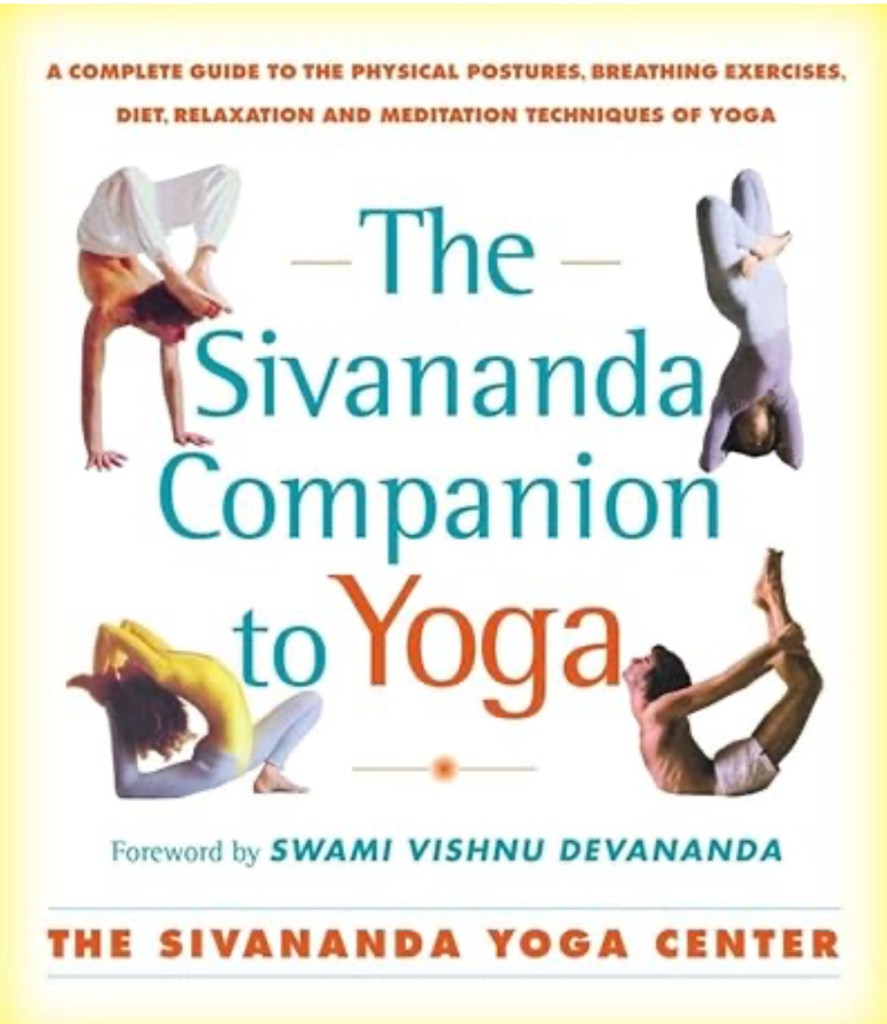
    For those interested in a comprehensive introduction to the practices of yoga, I recommend The Sivananda Companion to Yoga: A Complete Guide to the Physical Postures, Breathing Exercises, Diet, Relaxation, and Meditation Techniques of Yoga. This book offers clear guidance on the foundational aspects of yoga, making it an invaluable resource for anyone looking to deepen their understanding and practice. Take a look at this book on Amazon here.

    🙏🕊️🙏

  • Introducing the Neti Neti Practice Series: A Journey of Self-Inquiry

    Welcome to the Practices of Neti Neti series, an exploration into one of the most profound methods of self-inquiry within the Advaita Vedanta tradition. This series is dedicated to the practice of Neti Neti—a Sanskrit phrase meaning “not this, not this”—which serves as a guide for stripping away all that is not the true Self, leading to the recognition of our pristine, unchanging nature.

    What is Neti Neti?

    Neti Neti is a process of negation that helps practitioners identify and discard false identifications with thoughts, emotions, and sensations. It is a method of peeling back the layers of the ego to reveal the stillness and silence of the pristine mind—the pure consciousness that is unaffected by the fluctuations of the mind. This practice is at the heart of Advaita Vedanta and is used to guide the seeker toward the realization of the Self, or Atman, which is ultimately one with Brahman, the universal consciousness.

    About This Series

    In this series, you will find a collection of questions and answers that delve deeply into the practice of Neti Neti. Each question is a reflection of the natural inquiries that arise during meditation and self-inquiry. The answers are written in a contemplative and encouraging style, as letters from a friend —offering wisdom, clarity, and support as you navigate your own journey of self-discovery.

    Why Questions and Answers?

    The format of questions followed by reflective answers is inspired by the teaching styles of great spiritual masters like Ramana Maharshi and Papaji. This approach allows for a dynamic exploration of the practice, addressing the doubts and insights that naturally emerge as one progresses on the path. By engaging with these questions, you’ll find that the answers are not merely intellectual responses, but invitations to deeper inquiry and realization.

    How to Use This Series

    This series is designed to be read sequentially, as the posts build upon each other, following the natural flow of practice and understanding. However, you are also welcome to explore the posts in any order, depending on where you are in your own practice.

    Each post presents a question that might arise during your meditation or reflection, followed by a letter that offers guidance on how to address it. These letters are not just answers—they are invitations to deepen your practice, to explore the subtleties of Neti Neti, and to connect with the stillness that lies beyond all mental events.

    Beginning the Journey

    As you embark on this journey through the Neti Neti practice, remember that this path is not about attaining something new, but about recognizing what has always been present. The goal is to gently guide the mind away from its distractions, allowing the pristine mind—your true nature—to shine through.

    Whether you are new to Neti Neti or looking to deepen your understanding, I invite you to explore these letters with an open heart and a quiet mind. May they serve as a steady guide on your path to self-realization.

    Engage and Explore Together

    I warmly encourage you to leave any questions or reflections in the comments section of each post. If a question resonates deeply or sparks a new line of inquiry, I may create additional blog posts to explore these topics further. Your engagement helps to create a community of shared learning, where we can all benefit from each other’s insights and experiences.

    Let us begin this journey together, one question and one insight at a time, as we uncover the truth of who we truly are.

    For those who wish to explore further the concept of pristine mind and its practices, I highly recommend Orgyen Chowang Rinpoche’s book, Pristine Mind: A Journey into Self-Awareness. Although this book does not specifically address the Neti Neti practice, it offers profound insights into the nature of pristine mind, a state of pure awareness that lies beyond the mental events and distractions that often cloud our perception. Rinpoche’s teachings provide a clear and accessible guide to realizing and resting in this natural state, which closely aligns with the ultimate goal of Neti Neti. You can explore the Kindle version of this book below, which may serve as a valuable companion on your journey of self-inquiry and spiritual awakening.

    🙏🕊️🙏

  • 3: The Benefits of Visualization in Exercise for Those Living With Post-Viral ME/CFS

    When living with Post-Viral ME/CFS, the very thought of physical movement can feel overwhelming, even impossible. However, for many, the desire to engage with your body, to improve mobility, and to gently build strength remains alive. Yet, finding ways to exercise that honor your energy levels without triggering post-exertional malaise (PEM) may feel like a delicate balancing act. In this post, we explore a powerful tool for those who find themselves limited by energy: visualization.

    Visualization allows you to engage your mind in the practice of movement without the physical strain. It offers a way to begin building new neural pathways, changing your relationship with exercise, all while lying in bed or resting. This gentle mental practice may seem subtle, but it can be profoundly supportive on days when your body can’t tolerate physical activity.

    Visualization is the practice of imagining yourself performing a physical movement or action. Research shows that when you imagine a task with enough vividness and detail, your brain activates similar pathways as if you were physically moving. This means that, even when your body remains still, your brain is training for movement.

    For those living with Post-Viral ME/CFS, this can be transformative. Even on days when your body feels heavy or unmovable, you can still practice connecting to movement—without the risk of triggering PEM. Visualization offers a bridge between your current physical state and the possibility of reintroducing exercise gently, one step at a time.

    It may seem counterintuitive, but scientific research has demonstrated that imagining a movement can have measurable effects on physical ability. Studies show that visualization can lead to increased muscle strength, improved coordination, and enhanced motor skills. This practice is especially valuable for people recovering from conditions that limit physical movement. When actual movement is impossible, your brain still benefits from the exercise. By visualizing yourself lifting weights or walking, your brain builds new pathways that mirror the benefits of actual physical movement.

    For those with Post-Viral ME/CFS, visualization can become a mindful entry point into a more connected relationship with your body. It requires no physical energy and can be practiced while you’re lying in bed or seated in a comfortable chair.

    To begin, find a comfortable place where your body can relax completely. Close your eyes and take a few calming breaths. Start by gently becoming aware of your body, feeling supported and at ease. As you breathe, release any tension with each exhale. From this place of relaxation, you can begin to visualize simple movements—such as lifting a light weight, or walking on a treadmill.

    Imagine the sensation of the movement as if it were real: the muscles contracting, the rhythm of your breath, the gentle pull of strength through your arms or legs. The more vividly you engage your senses, the more fully your brain responds. Imagine the warmth of your muscles, the calm focus that exercise brings, or the joy of feeling capable and connected to your body once again.

    This practice isn’t just about mental imagery—it also helps rebuild your emotional relationship with exercise. Living with Post-Viral ME/CFS often comes with frustration and sadness around the body’s limitations. Visualization offers a way to regain a sense of control, to connect with the potential of your body in a way that feels safe and sustainable. It creates a pathway for healing, both mentally and physically.

    While visualization may not replace physical movement, it offers a gentle step in that direction. On days when your energy is low, this practice helps maintain the neural connections involved in exercise. It can even help ease the fear or anxiety associated with movement, reminding you that the joy of exercise is still available to you, even when your body isn’t ready to act.

    Once your energy permits, you can use visualization as a bridge to actual physical movement. For example, after imagining yourself performing a simple weightlifting exercise, you might try gently lifting a light dumbbell. The key is to remain mindful of your limits, moving only within your energy envelope, without pushing your body beyond its capacity.

    Visualization is a powerful tool for those living with Post-Viral ME/CFS. It creates a foundation for healing and offers hope on days when movement feels impossible. By engaging with mental exercises, you prepare your body and mind for the eventual return to gentle physical movement.

    The journey with Post-Viral ME/CFS is about adaptability, gentleness, and finding ways to reconnect with your body on your terms. Visualization offers both a reprieve from physical exertion and a gateway back to mindful movement.

    Next Post Preview: Sitting in the Gym Parking Lot—A Gentle Step Toward Physical Movement

    In the next post, we’ll explore how even driving to the gym and sitting in the parking lot can be a crucial step in your fitness journey. We’ll discuss how this practice can help rebuild confidence, reduce anxiety around exercise, and allow you to reconnect with the gym environment without physical exertion.

    🙏🕊️🙏