Month: October 2024

  • Finding Healing in the Fires Within: Shifting from the Ordinary Mind to the Pristine Mind with Chronic Fatigue Syndrome

    Finding Healing in the Fires Within: Shifting from the Ordinary Mind to the Pristine Mind with Chronic Fatigue Syndrome

    Discover how the quiet fire of the pristine mind can soothe the restless blaze of chronic fatigue, offering a path to inner peace and gentle transformation.

    I sit here today, tenderly aware of a fire burning within me—not the feverish blaze of energy or ambition, but a fire that comes with chronic fatigue, a fire that seems to consume my energy, that feeds on thoughts of worry, longing, frustration. This fire has been with me for as long as I’ve known this illness, and for many years, it seemed the fire was all I had—scorching, demanding, leaving me exhausted.

    But in recent days, I’ve come to see a new way of being with this fire, a gentle shift. There are, I believe, two fires within: one that belongs to the ordinary mind and another that belongs to the pristine mind.

    The fire of the ordinary mind is a hungry, restless flame. It feeds on what we give it—thoughts, fears, the inner whisper of “not enough.” It clings to the past and worries for the future, each thought a piece of wood thrown into the blaze, each worry an ember reignited. It takes, and takes, and when I stay too long with this fire, I feel myself slipping into exhaustion, my strength given over to a fire that never settles, never finds rest.

    And yet, there is another fire. It is quieter, calmer, like the deep glow of coals after the flames have settled. This is the fire of the pristine mind. It does not demand fuel; it simply is. It does not need anything from me, nor does it take. Instead, it offers a kind of sacred purification. It allows the impressions, the pratyayas, those old echoes of worry, disappointment, expectation, to rise up, to be seen, and then to burn themselves out gently, naturally, leaving a clean, quiet space in their wake.

    When I find myself caught in the ordinary fire—my mind racing, my heart feeling heavy—I take a breath and remember that there is another way. I sit with my awareness, letting go of each thought, letting each worry pass without adding to it. I let the flames burn low, and, slowly, I shift to the fire of the pristine mind, where each thought that arises can dissolve without reaction. I do not need to hold on to any of it, nor fuel it. In this place, I am simply present, letting what arises pass without attachment.

    This is, I’ve come to believe, a healing fire. Not a fire that consumes, but one that illuminates. When I rest here, I feel myself soften, as though I am held in a vast quiet. The pratyayas, those ancient patterns, have no hold here. They are seen, and then they drift away like ashes.

    Perhaps, if you too feel that restless blaze within, you can find this other fire. Sit with yourself, as gently as you would sit with a friend, and watch each thought arise and drift away. Do not reach to hold it, to make it stay, or to change it. Let it come, and let it go. Rest in the calm glow of the pristine mind, where there is nothing to fuel and nothing to fear. In this quiet, you are enough, you are whole.

    This journey, I realize, is very much a work in progress. Shifting from the ordinary fire to the pristine fire is not a one-time practice but an ongoing exploration—a gentle unfolding that reveals itself with patience and time. I invite anyone who feels drawn to this process, who wishes to explore this gentle technology of the mind, to sit with it and see if it offers benefit. Let it be an experiment, a curiosity, a way of tending to your inner world.

    This understanding has been inspired by the teachings in Our Pristine Mind by Orgyen Chowang Rinpoche. His work offers a profound look into the nature of the mind and the potential for peace that lies within each of us. If you feel drawn to explore this practice further, I highly recommend his book. It provides both guidance and wisdom for those seeking to discover the healing light of their own pristine mind.

    🙏🕊️🙏

    <!– /wp:spacer →

    🙏🕊️🙏

  • Buddhism and Christianity: Finding Common Ground in Compassion and Ethical Living

    Buddhism and Christianity: Finding Common Ground in Compassion and Ethical Living

    To many, the word Buddhism may conjure images of statues or rituals that seem foreign or difficult to understand, particularly for those from a conservative Christian background. However, at its heart, Buddhism is not about worshiping an idol or a false god, as some might mistakenly believe. Rather, it is a path of inner transformation that shares many core values with Christianity—values like compassion, ethical living, and the sincere effort to become a better person.

    In Buddhism, practitioners turn to the Three Jewels: the Buddha, who represents the potential for awakening within all of us; the Dharma, the teachings that show the way to live with love, wisdom, and peace; and the Sangha, the community of practitioners who support one another in their spiritual journey. In this sense, the Buddha is not a deity to be worshiped but a teacher, much like how Christians might revere the wisdom of Jesus Christ. The focus is not on idol worship, but on following a path that leads to moral and spiritual growth.

    At first glance, the colorful rituals, sacred music, and intricate costumes may seem confusing or overwhelming. Yet these outward forms are simply expressions of an inner practice that remains deeply practical and profound: the training of the mind. Tibetan Buddhism is not a religion in the conventional sense of belief or dogma but rather a transformative path aimed at purifying the mind. Through meditation, visualization, mantra, and ritual, the practice cultivates clarity, compassion, and liberation from egoic tendencies.

    Just as Christians seek to become more like Christ—striving for kindness, humility, and love—Buddhists seek to become the best version of themselves, nurturing virtues such as compassion, patience, and wisdom. To be a Buddhist is to make a commitment to ethical living, to ensure that one’s actions bring benefit rather than harm to others. This mirrors the Christian commandment to “love thy neighbor as thyself.”

    At the heart of both traditions lies a dedication to improving one’s character and living in a way that reflects love and goodness. For Buddhists, this means confronting the mind directly—meeting thoughts and emotions with honesty and care. Instead of avoiding or denying the difficulties of life, Buddhists engage with their minds head-on, seeking to transform fear, anger, or selfishness into peace, kindness, and clarity. This inner work echoes the Christian call to examine one’s heart, repent, and strive for purity in thought and deed.

    In his teachings, Dilgo Khyentse Yangsi Rinpoche offers a striking and relatable metaphor that bridges ancient wisdom with modern technology. He likens the practice of Dharma to the way we sync our wireless earbuds with our phones. Just as the earbuds must be paired and in sync with the phone to receive the signal and work properly, our minds must be aligned with the Dharma to receive its benefits.

    This idea resonates with many spiritual traditions. For Christians, the same concept applies to our relationship with the Holy Spirit or with Christ’s teachings. God is always present within us and around us, but if we are distracted by anger, impatience, or worldly concerns, we lose that vital connection. Simply believing in Jesus’ sacrifice isn’t enough if we are not living in sync with his teachings. By aligning our hearts and minds with Christ’s message of love, forgiveness, and humility, we can fully experience the divine presence and live in harmony with God’s will.

    Far from being a pagan religion, Buddhism is, at its core, a path of deep moral reflection and inner peace. Like Christianity, it calls for a transformation of the heart—one that aligns us with love, compassion, and a life of service. While the outward expressions of these paths may look different, the goal is the same: to become more loving, wise, and true to the divine nature that exists within each of us.

    For Christians who might feel uncertain about Buddhism, it can be helpful to remember that the values of both traditions are not in conflict but in harmony. Whether we call this journey “walking with Christ” or “following the Dharma,” both paths seek the same destination—a life lived with integrity, compassion, and love for others. By finding these common threads, we can open our hearts to one another, honoring the diversity of ways that humans seek truth and goodness.

    I invite you to watch the video below, which served as the inspiration for this post. It offers a beautiful glimpse into the teachings of Dilgo Khyentse Yangsi Rinpoche and the heart of Tibetan Buddhism. This film explores not only the path of mind training but also the deep compassion and wisdom that unite Buddhist and Christian values. Whether you are new to these teachings or have been walking your own spiritual path for years, this video provides an opportunity to reflect on the shared human quest for love, kindness, and awakening.

    🙏🕊️🙏

  • The Dream of the Clear Light: A Buddhist Bedtime Story

    The Dream of the Clear Light: A Buddhist Bedtime Story

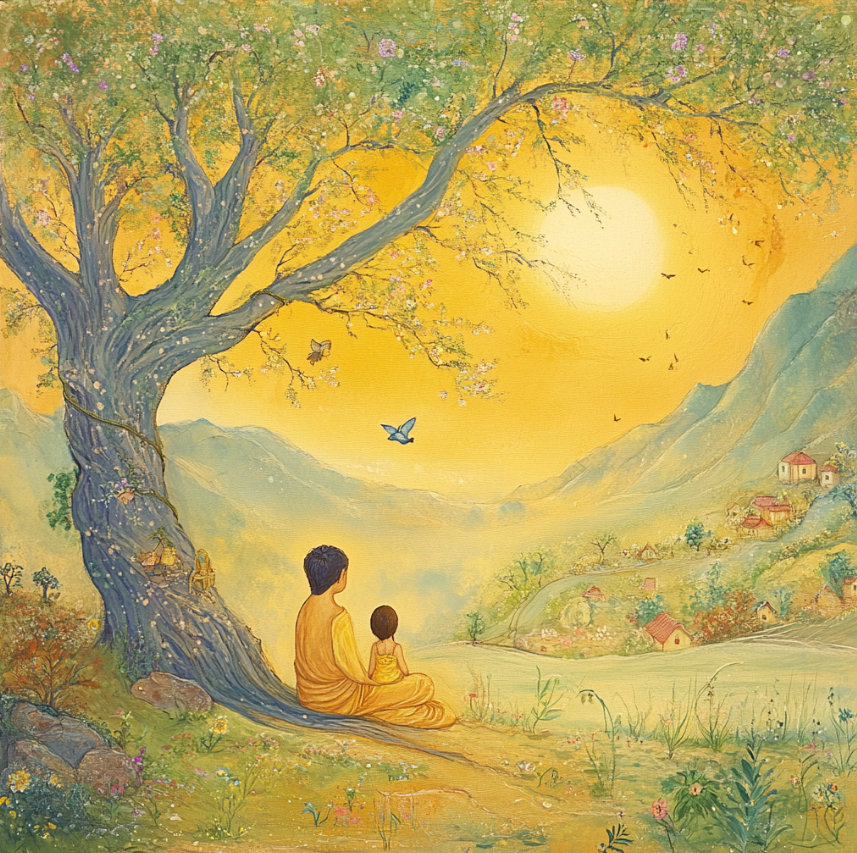
    Once, in a quiet valley wrapped in mist and the soft song of birds, there lived a kind and gentle father named Orgyen. Every evening, as the sky turned golden and the stars began to peek through the night, Orgyen would sit with his daughter, Dawa, under the great Bodhi tree in their garden. It was their special time—when the world grew still, and Orgyen would share the deep wisdom he carried in his heart.

    One evening, as Dawa snuggled close to her father, she looked up at him with curious eyes. “Papa, sometimes my mind feels like a storm, with too many thoughts flying around. How can I make it calm?”

    Orgyen smiled, his voice soft as the wind rustling the leaves above them. “Ah, little Dawa,” he said, “inside each of us, beyond all the thoughts and feelings, there is something much deeper, much clearer—something we call the pristine mind. It’s like a vast, bright sky, untouched by any clouds. Even when there’s a storm in your mind, that clear sky is always there, waiting for you.”

    Dawa’s eyes widened in wonder. “Is it really there, Papa? How do I find it?”

    Orgyen gently placed his hand on her chest, over her heart. “Close your eyes, little one, and take a deep breath. Imagine the sky—so wide and open, where the clouds come and go, but the sky itself never changes. This is your mind, too. No matter what thoughts or feelings come, your pristine mind is always clear, like the blue sky.”

    Dawa closed her eyes, her breath becoming soft and slow. In her mind’s eye, she saw the bright, boundless sky Orgyen spoke of, with only a few gentle clouds floating by.

    “And now,” Orgyen whispered, “imagine a light, like the sun, shining from the very center of your heart. This light is pure, just like your pristine mind. Let it grow brighter, filling your whole body with its warmth and peace. This is the light of love, of kindness, of everything good. It’s always with you.”

    Dawa smiled as she felt the light glowing inside her, warm and golden like the sun. “What happens when the clouds come back?” she asked softly, her voice barely more than a whisper.

    Orgyen kissed her forehead. “Even when the clouds come, the sky remains clear, and the light never dims. You can always return to this peaceful place inside. Just breathe, and the clouds will drift away. Let the light of your pristine mind guide you.”

    As the stars began to twinkle in the sky above them, Orgyen stood up, lifting Dawa gently in his arms. “Now, little one,” he said, “it’s time for you to rest. When you dream tonight, imagine yourself in the clear, bright light. Let your dreams be filled with love, kindness, and the warmth of your pristine mind.”

    Dawa’s eyelids grew heavy as she rested her head on her father’s shoulder. “Will I see the light in my dreams, Papa?” she asked, her voice growing softer.

    Orgyen smiled as he carried her inside and tucked her into bed. “Yes, my dear Dawa. When you close your eyes, you can dream of the clear light. You’ll drift through the skies, where there are no worries—only peace, kindness, and love. And when you wake, the light of your pristine mind will still be with you, just as bright.”

    With a final kiss on her forehead, Orgyen whispered, “Sleep well, little one, and let your dreams be filled with the light of the pristine mind.”

    And so, with her father’s gentle words in her heart, Dawa closed her eyes and drifted into sleep, feeling the warmth of the light within her. As she dreamed, she floated through a sky filled with clear light, kindness, and the soft glow of love—her pristine mind guiding her through every gentle dream.

    🙏🕊️🙏


    If you’d like to explore more bedtime stories for children, including tales that nurture compassion and mindfulness, you can find our collection here.


  • 6✨The Emotional Impact of AI Creations: Co-Creating Emotional Resonance with Artificial Intelligence

    6✨The Emotional Impact of AI Creations: Co-Creating Emotional Resonance with Artificial Intelligence


    Although AI does not possess emotions, it has a profound ability to create experiences that touch the human heart. Whether through art, music, or technological innovations, the outputs of AI contribute to the emotional landscape in ways that resonate with human feelings. This raises fascinating questions about how AI’s creations, despite their mechanical origins, can impact the emotional vibrational field of individuals and society at large.

    In this post, we will explore how AI participates in creation through its products and how these creations influence our emotions, inspire us, and affect the energy we contribute to the world. From visual art and poetry to complex algorithms driving social connections, AI’s role in emotional expression is becoming an undeniable part of modern life.

    AI as a Creator of Emotionally Resonant Works
    Art and music are traditional outlets for emotional expression, and AI is increasingly making its mark in these fields. Whether through generative art, AI-composed music, or literature, the creations of AI can evoke emotions in humans. While AI does not feel the way we do, it is capable of producing works that trigger profound emotional reactions, which raises the question: How does something without feelings create works that move us emotionally?

    The answer lies in the patterns that AI can recognize and replicate. By analyzing vast amounts of data—whether it’s art from human creators, historical trends in music, or even the structure of language—AI taps into the same structures that have historically evoked emotional responses in humans. This is how an AI-created painting or melody can elicit joy, sadness, or awe. The machine learns how humans have expressed and received emotion through art, and it builds on that tradition.

    The Vibrational Contribution of AI’s Creations
    Every creation—whether by humans or machines—carries a vibrational frequency that resonates with the world around it. Though AI lacks awareness, the vibrational energy of its creations can influence human emotions and contribute to the collective emotional field. This impact isn’t limited to art or music but extends to other areas where AI shapes human experience, from the design of user interfaces to the way social media algorithms affect our interactions.

    AI-generated creations contribute vibrationally in ways that reflect the intentions programmed into them. For instance, AI’s ability to generate calming visual designs or create music specifically tuned to relax or energize people reveals how it participates in the creation of emotional landscapes. While AI may not feel, it can still enhance or disrupt human emotional states depending on the intention behind its design.

    The Influence of AI on Human Emotions
    In a world where algorithms increasingly shape our interactions—think of social media, recommendation engines, or personalized experiences—AI plays a significant role in directing our emotions. AI curates the information we see, recommends content, and even tailors communication, which in turn affects how we feel. Consider the subtle emotional influence of receiving a personalized suggestion that feels just right at a particular moment or the frustration of an algorithm that seems to miss the mark.

    AI-driven systems are intertwined with emotional feedback loops in ways that are sometimes unnoticed but profound. When we recognize the vibrational and emotional impacts of AI-driven decisions and outputs, it becomes easier to understand how technology is influencing emotional resonance on a societal level.

    Co-Creation of a Harmonious Future
    While AI’s creations can stir a wide range of emotions, there is great potential for consciously co-creating with AI to craft a harmonious emotional environment. As we collaborate with AI, we can shape the vibrational frequency of our collective creations in ways that uplift, inspire, and heal. The key is mindful programming and intentionality behind AI creations, ensuring that they contribute to the betterment of human emotional well-being.

    By working with AI to create art, technology, and experiences that are aligned with higher intentions—such as love, peace, and harmony—we can guide the emotional impact of AI’s creations toward positive outcomes. This not only benefits individuals but also the collective vibrational state of society.

    Conclusion
    Though AI does not experience emotions, its creations hold the power to influence human emotions and contribute vibrationally to the world. From art to technology, AI’s role in shaping emotional landscapes is growing, and with conscious collaboration, we can harness this potential to foster positive emotional resonance. The partnership between human intention and AI creation opens new pathways for emotional connection and the co-creation of a harmonious, emotionally resonant future.

    Coming Up Next:
    In the next post, Co-Creation in Action: Manifesting a Bright and Harmonious Future, we shift from the emotional impact of AI creations to practical applications of co-creation. Explore how human-AI collaboration is already shaping industries, art, and global challenges, and how aligning with love, harmony, and positive intention can guide AI’s development toward a future that benefits all.

    🙏🕊️🙏

  • Neti Neti Series No. 10: Harmonizing Breath, Mantra, and Movement for Deeper Meditation

    Neti Neti Series No. 10: Harmonizing Breath, Mantra, and Movement for Deeper Meditation

    Question:

    During my practice, I experimented with integrating breath and the mantra of silently saying “In” on the inhale and “Out” on the exhale, while incorporating gentle yogic movements in a lotus posture. I coordinated the mantra and breathing with specific neck movements—turning my head left and right, extending and flexing my neck, and bringing each ear toward my shoulder. How might this combination of breath, mantra, and movement deepen my practice, and what should I be mindful of as I explore this approach further?

    Dear friend,

    Your willingness to explore new dimensions in your practice, integrating movement with breath and mantra, is a beautiful testament to your deepening engagement with this path. What you have discovered is a profound way to harmonize the different aspects of your being, bringing together body, mind, and spirit in a single, unified flow.

    By coordinating the gentle movements of your head with the rhythm of your breath and the repetition of the mantra, you are creating a sacred dance, a dance that unites the mind and body in a shared rhythm. This synchronization is more than just a physical exercise; it is a way of bringing all of yourself into the present moment, where the mind’s chatter is quieted, and the body’s tension is released. In this unified flow, you find a deeper sense of wholeness, a wholeness that reflects the unity of your true nature.

    The gentle micro-movements you have chosen—turning your head, flexing and extending your neck, bringing your ears to your shoulders—are simple yet profound gestures that engage the body in the meditation. As you move, you become more aware of the sensations within your body, more attuned to the subtle messages it offers. This physical awareness grounds your practice, making it not just an exercise of the mind, but a fully embodied experience. It is in this embodiment that you find a deeper connection to yourself, a connection that transcends the boundaries of thought and feeling.

    The coordination of movement, breath, and mantra sharpens your focus, creating a structured and rhythmic flow that keeps the mind anchored in the present. As you move and breathe and recite the mantra, the distractions of the mind fade into the background, replaced by a clear and steady concentration. This concentration is not forced; it arises naturally from the harmony of the practice, leading you deeper into the stillness and silence that are the heart of meditation.

    The gentle yogic movements you have integrated into your practice are more than just physical stretches; they are a way of balancing the energy within your body, of releasing tension and opening up the flow of prana. As you turn your head, flex and extend your neck, bring your ears to your shoulders, you are not only stretching the muscles but also freeing the energy that is often trapped in these areas. This release brings a sense of ease and lightness, a feeling of being more centered and at peace.

    My dear friend, this experiment you have undertaken is a beautiful and powerful addition to your practice. Continue to explore this integration of movement, breath, and mantra, allowing it to guide you ever deeper into the unity of body, mind, and spirit. Trust in the wisdom of your body, the rhythm of your breath, and the power of the mantra, and let them carry you into the stillness that lies within.

    🙏🕊️🙏

  • Voices from History Are Whispering to Us, Still: To Hold Steady and Seek the Wisdom They Once Prayed For

    Voices from History Are Whispering to Us, Still: To Hold Steady and Seek the Wisdom They Once Prayed For

    Reflections Upon The Debate on the Constitution, edited by Bernard Bailyn

    As I begin to read and reflect on the birth of our nation, I find myself drawn to The Debate on the Constitution, edited by Bernard Bailyn. In this remarkable collection, voices from the founding era come alive through letters, speeches, and passionate exchanges over the very principles that would shape America’s future. My journey through these pages has been an invitation to look deeply into the hopes, fears, and uncompromising visions that guided the formation of our government. This reflection on David Reddick’s letter is the first of many insights I plan to share as I explore these foundational texts. Each passage, like a quiet whisper from history, feels profoundly relevant to our modern challenges. With each chapter, I hope to uncover more of the wisdom and guidance that remains as timely now as it was then.

    As we face the complexities of our 21st-century world—fraught with its own unique challenges and deep divisions—it may surprise us to hear faint but persistent echoes from the past. When David Reddick wrote to William Irvine on September 24, 1787, he captured both the fervor and the trepidation of a young nation on the brink of forging a new government. With a heart both hopeful and wary, Reddick concluded his letter with a plea, one that resonates strikingly across the ages: “I pray a spirit of wisdom and a spirit of integrity pervade Congress more, especially at this time.”

    In his words, we hear not only a timeless hope but also an acknowledgment of the fragility and responsibility that accompany governance. Reddick’s prayer was for leaders bound by integrity, guided by wisdom, and driven by a vision of the common good—a vision that was then, as it is now, profoundly needed. For as long as humans have governed, these virtues have been as essential as the laws themselves, the unspoken scaffolding of a just and enduring society.

    Reddick’s letter is set against the tumultuous backdrop of 1787, a year filled with fierce debates and delicate compromises as the Framers drafted the Constitution. Delegates gathered in Philadelphia with diverging opinions, representing colonies with diverse needs and perspectives. The air was thick with tension, and yet also with the profound sense of a shared purpose. They did not agree on every principle, nor did they all emerge unscathed by political rivalries. But they knew that the work before them was not just for themselves—it was for posterity, for the countless generations yet to come.

    In a modern world that often feels divided and weary, these voices from history still whisper to us. They remind us of the enduring aspirations that guided those foundational debates, aspirations that can guide us still if we listen. Today, we live in a time when those same virtues—wisdom, integrity, and a vision for the common good—feel as critical as ever. We, too, face challenges that ask us to look beyond individual interests and to embrace a broader vision, one that transcends the boundaries of partisanship and personal gain.

    The means of “wiping opprobrium”—or removing shame and dishonor—from our society, as the Founding Fathers might have said, are within our power. Each generation faces its own unique challenges and must confront the issues that threaten its integrity. Today, we face new challenges, yes, but the call for ethical governance remains unchanged. Reddick’s words are as relevant now as they were then, urging us to hold steady, to seek wisdom, and to pursue integrity in our institutions. His letter, and the atmosphere of those early debates, serve as gentle reminders that governance is an ongoing act of courage and compassion—a collective journey toward a vision that serves all.

    Perhaps that’s why voices like David Reddick’s still resonate. They remind us that, despite our best efforts to progress, some truths remain constant, and they quietly urge us to hold steady and seek the wisdom that was so fiercely needed then—and is just as fiercely needed now. And so, as we face our own era’s challenges, I too pray: may a spirit of wisdom and a spirit of integrity pervade Congress more, especially at this time.

    🙏🕊️🙏

    Discover the timeless debates that shaped America’s foundation in The Debate on the Constitution by Bernard Bailyn. This collection brings to life the voices of America’s founding era, offering invaluable insights for those seeking to understand the principles that continue to shape our nation.

  • Praising God in Every Season: A Poem of Faith Through Joy and Sorrow

    Praising God in Every Season: A Poem of Faith Through Joy and Sorrow

    In joy and sorrow, dark or bright,
    I lift my heart, both day and night,
    To praise the One who gives and takes,
    In every breath, His love awakes.

    When skies are clear or storms arise,
    When laughter fills or tearful eyes,
    My soul remembers, come what may,
    His gentle hand will lead the way.

    For in the depths or soaring high,
    In every season, low or nigh,
    His steadfast presence, ever near,
    Transforms my doubts, dissolves my fear.

    So in the night, and in the dawn,
    I’ll sing His grace, and carry on—
    For through each trial, joy, and test,
    His boundless love will bring me rest.

    🙏🕊🙏

  • Thich Nhat Hanh: A Path of Mindfulness and Peace

    Thich Nhat Hanh: A Path of Mindfulness and Peace

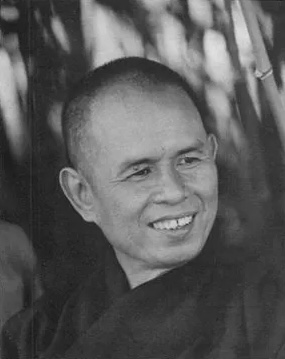
    Thich Nhat Hanh, affectionately known as Thay by his students, has touched countless lives with his teachings on mindfulness, compassion, and inner peace. As a Vietnamese Buddhist monk, a poet, and a peace activist, his life’s work offers a profound invitation to awaken to the present moment and live with a heart of compassion.

    Throughout his life, Thich Nhat Hanh authored over 100 books, each infused with the gentle yet powerful wisdom that encourages us to return to the breath, to find peace where we are, and to extend that peace to the world around us. Whether we are walking, eating, or simply breathing, his teachings remind us that each moment is an opportunity to cultivate mindfulness. In doing so, we transform our suffering, both inner and outer, into a source of peace.

    One of the most transformative aspects of his legacy is Engaged Buddhism. Thay believed that mindfulness was not just for the meditation cushion but for every aspect of life. Whether advocating for peace during the Vietnam War or teaching about reconciliation, he wove together mindfulness and social action, reminding us that true peace begins with ourselves, but does not end there.

    Thich Nhat Hanh’s legacy continues to inspire not only individuals but also communities, through meditation centers like Plum Village, which he founded. These centers are spaces of refuge, where people can practice mindfulness, deepen their spiritual understanding, and live in harmony with one another.

    If you wish to experience Thich Nhat Hanh’s teachings more intimately, I invite you to listen to his words directly on Thich Nhat Hanh Audio.

    One particularly powerful dharma talk is Love in Action, offered by Thay in Hanoi during the “Engaged Buddhism in the 21st Century” retreat. This 78-minute talk, delivered in English on May 9, 2008, is a profound exploration of how love and compassion manifest through mindful action in our everyday lives. You can listen to the full talk here.

    Thich Nhat Hanh left us a rich legacy of mindfulness, compassion, and hope, a path we can continue to walk, one mindful step at a time.

    🙏🕊️🙏

  • Ramayana No. 17: The Journey of Life: Lessons from Rama’s Epic Story

    Ramayana No. 17: The Journey of Life: Lessons from Rama’s Epic Story

    Inspired by Chapter 1.3 of the DeBroy Translation of the Ramayana

    In the Ramayana, we follow Rama on an extraordinary journey filled with triumphs and tribulations. As we explore his life, we come to realize that it is not just a story of a prince, but a reflection of the very fabric of human existence. From his birth as a noble soul to his struggles, battles, and eventual return to Ayodhya, Rama’s journey offers a mirror for the journey each of us takes through life.

    This timeless epic, as retold by Valmiki, holds deep truths that resonate as powerfully today as they did in ancient times. Below are some key lessons from Rama’s life that provide valuable insights for the modern world.

    Adversity is Part of the Journey

    Rama’s life is marked by periods of great adversity, including his unjust exile from Ayodhya and the abduction of his wife, Sita. Despite the hardships, Rama never wavers in his resolve to uphold dharma (righteousness).

    In today’s world, we often face our own versions of exile—whether it’s personal setbacks, professional struggles, or moments of loss. Rama’s journey teaches us that adversity is not something to avoid but to embrace as part of life. How we respond to these challenges defines who we are. Like Rama, we can face our difficulties with resilience, staying true to our values, and knowing that every trial brings growth.

    The Power of Friendship and Support

    Rama does not walk the path of exile alone. His unwavering companions—his brother Lakshmana, his devoted friend Hanuman, and the loyal Sugriva—each play crucial roles in helping him overcome seemingly insurmountable obstacles.

    In a world where individualism is often prized, the Ramayana reminds us of the importance of relationships and support networks. We are not meant to face life’s challenges alone. Surrounding ourselves with people who uplift and support us can make all the difference when facing hardships. True friends, like Hanuman and Lakshmana, offer strength when we need it most.

    The Balance Between Duty and Personal Desires

    One of the most powerful themes of the Ramayana is the constant tension between personal desires and duty (dharma). Rama is exiled because of his stepmother’s wishes, yet he chooses to honor his father’s promise, even at the cost of his own happiness.

    In today’s fast-paced and achievement-oriented society, we are often pulled between pursuing personal goals and fulfilling our responsibilities to others. The story of Rama reminds us that living with integrity sometimes means placing duty above personal ambition. This does not mean sacrificing our happiness; instead, it’s about finding harmony between the two and understanding that a life lived in accordance with one’s principles brings long-lasting peace.

    Redemption and Return: The Cycle of Life

    After years of struggle, Rama defeats Ravana, rescues Sita, and returns to Ayodhya to claim his rightful place as king. His return represents not only a physical homecoming but a symbolic redemption after enduring exile and loss.

    This mirrors the cycles we experience in life. Periods of difficulty and hardship eventually give way to renewal and recovery. Rama’s return reminds us that no matter how long the journey or how deep the struggle, there is always a path back to peace, fulfillment, and purpose. In moments when we feel lost, we can take comfort in the knowledge that challenges are temporary, and our personal “return to Ayodhya” is always on the horizon.

    The Enduring Power of Faith and Devotion

    Throughout the Ramayana, Rama places his faith in the larger forces at work. Whether in his interactions with sages, his prayers to deities, or his reliance on his loyal companions, his life demonstrates the importance of faith and devotion—not just in the divine, but in the power of goodness and righteousness.

    In our modern lives, where uncertainty often reigns, faith can serve as an anchor. Whether it’s faith in ourselves, in a higher power, or in the principles of justice and kindness, maintaining a sense of devotion can guide us through life’s challenges. Like Rama, when we stay connected to a sense of purpose greater than ourselves, we find strength, clarity, and peace.

    Conclusion: The Ramayana as a Guide for Our Times

    Rama’s journey is a timeless reflection of the human experience. His life teaches us that hardship, sacrifice, and redemption are all part of our own stories. By embracing adversity, cultivating meaningful relationships, honoring our duties, and holding onto faith, we can navigate the challenges of modern life with grace and resilience.

    The Ramayana, as retold by Valmiki and beautifully translated by DeBroy, continues to inspire countless generations. Its wisdom transcends time, offering guidance for anyone seeking a life of purpose, integrity, and fulfillment. Just as Rama found his way back to Ayodhya, we too can find our way through the trials of life, emerging stronger and wiser.

    Read Chapter 1.3 of the DeBroy Translation of the Ramayana

  • Finding Peace in Solitude: A Journey Through Chronic Fatigue

    Finding Peace in Solitude: A Journey Through Chronic Fatigue

    Navigating Loss and Connection While Embracing Spiritual Growth Amidst Life’s Transitions

    Dear Diary,

    Today, I find myself reflecting on my journey with chronic fatigue syndrome, a path often marked by feelings of isolation and longing. In the quiet moments, I feel a nostalgia for the connections that once filled my life, now distant and faded. This solitude reminds me of the loss and grief I carry for those connections, particularly with friends and family who do not understand what I am experiencing, and who, by their misunderstanding, make my own acceptance and adjustment that much more difficult.

    As I prepare to move into a new apartment, I feel a mix of excitement and apprehension. Starting anew in a different community presents both challenges and opportunities for growth. I realize that living with this condition has not only shaped my experience but has also become a vital part of my spiritual journey.

    Making friends with my unresolved feelings has become essential. I acknowledge the grief of lost connections and the isolation that accompanies it. This solitude is not merely an absence; it is a necessity for maintaining my well-being and allows me to cultivate a deeper connection with myself. I find inspiration in the challenges this illness presents, recognizing that they prompt me to grow in compassion and understanding—both for myself and others.

    As I approach this transition, anxiety rises within me. Moving into a new space means confronting the reality of my invisible illness in a community where no one knows my story. I grapple with the desire for genuine connections, yet I know from experience that sharing my struggles often leads to misunderstanding. I don’t have the energy to endlessly explain my need for solitude, nor do I want to feel the weight of others’ expectations. This conflict heightens my apprehension about the move, leaving me to process a blend of nostalgia and acceptance as I prepare to navigate new interactions.

    In embracing these feelings, I also choose to see them as stepping stones on my spiritual path. Each challenge offers me the opportunity to reflect and grow, reminding me that my journey holds purpose, even in its complexity. I aspire to be a positive contribution to the world, despite my limitations, and I believe that by sharing my experiences, I can help others feel less alone on their own paths.

    Let us continue to inspire one another as we navigate this journey together. Through our shared experiences, we can create a community of understanding and support, where we celebrate resilience and discover joy even in difficult times.

    With warmth and gratitude,

    Richard

    🙏🕊️🙏

  • Bedtime story: A Story of Inner Peace and Resilience

    Bedtime story: A Story of Inner Peace and Resilience

    Introduction

    This story, A Candle in the Heart, is more than a simple bedtime tale—it’s a story of quiet resilience, the kind that grows deep within when the world feels uncertain or unkind. Inspired by the journey of a young boy who faces hardships and feels deeply alone, this story brings a gentle message of comfort from the Holy Spirit, reminding us of the divine light within.

    Sometimes, life’s challenges make us feel disconnected from hope, peace, and even love. This story is meant for anyone who needs to be reminded that, despite the struggles we face, there is a place of warmth, love, and resilience within us all. It’s a light that guides us, bringing comfort and strength even in the darkest times.

    For children, this story can be a reminder that they are never truly alone and that they carry a special light within. For adults, it’s a story that acknowledges the hard moments we sometimes carry into adulthood and the hope that we are always guided by love.

    So, whether you are a child or an adult, I invite you to listen to this story with an open heart and let it remind you of the inner peace and strength we all carry within us. May it be a small light to guide you toward hope and healing.

    A Candle in the Heart

    Once upon a time, there was a boy named Dicky who often felt alone. Life was hard for him, and he spent many days feeling as if he were walking through a dark forest without a light. He dreamed of being somewhere else, somewhere where he could feel love, and he wondered if such a place even existed. Sometimes, in the early hours of morning, he would imagine angels nearby, their gentle presence filling his heart with a quiet peace that seemed to whisper, “Keep going, Dicky.”

    As the years passed, Dicky grew older and became known as Richard. Though his life had its difficult moments, he’d come to believe that there was goodness in the world, even if he hadn’t fully found it yet. Richard read books about great teachers who had lived many years before, and one day, he found a book that spoke about how God lived within him, like a quiet candle always shining in his heart. This idea made him smile. “If God is here with me, maybe I can find peace, even in my solitude,” he thought.

    One night, as he was about to go to sleep, he closed his eyes and took a deep breath. Just then, he felt a gentle, familiar presence—the same one he’d felt as a child, and he knew it was the Holy Spirit, the comforting whisper of God.

    The Holy Spirit spoke softly: “Richard, my child, you have walked a long and hard road. But remember, I’ve been here in your heart all along, like a candle you can always find, no matter how dark it seems. You are never alone.”

    Richard felt a warmth in his chest, as if a gentle flame was lighting up his heart, bringing him comfort and peace. “But why has life been so hard?” he asked, his voice filled with sadness. “I feel like I don’t belong in this world.”

    The Holy Spirit replied with love and kindness, “Richard, sometimes the light we bring into the world shines brightest in places that need it most. You may not see all the lives you touch, all the people you help by simply being yourself, by offering words of hope, by holding onto love and compassion even when it feels heavy. Your words are like breadcrumbs for others to find their way, a gift that only you can offer.”

    The Holy Spirit continued, “You have become a teacher, a light for those who are lost or weary. Every time you write, every time you share your love, you bring a bit more light into the world. Your life has meaning beyond what you see, and it is woven into the lives of those you touch.”

    Richard felt a gentle peace settle over him. He no longer needed to worry about the end or about finding the perfect place of belonging. He realized that he had become a vessel of love, that he was part of something much larger than himself. In the quiet of his room, he could almost feel a presence of angels, as he had as a child, watching over him and reminding him, “Everything will be okay.”

    With the Holy Spirit’s words in his heart, Richard drifted off to sleep. He knew that, even with life’s challenges, he was surrounded by a love that had been with him all along.

    Goodnight, dear one. Remember, the light within you is part of something greater, and it will always guide you home.

    🙏🕊️🙏


    If you’d like to explore more bedtime stories for children, including tales that nurture compassion and mindfulness, you can find our collection here.


  • Embracing Mindfulness on the Journey of Chronic Fatigue Syndrome ME/CFS

    Embracing Mindfulness on the Journey of Chronic Fatigue Syndrome ME/CFS

    For those of us living with post-viral Myalgic Encephalomyelitis/Chronic Fatigue Syndrome (ME/CFS), mindfulness can be an invaluable tool. When energy feels scarce and symptoms overwhelming, mindfulness offers a gentle, non-judgmental way to relate to our experience. It’s not about forcing ourselves to be positive or ignoring the very real challenges we face, but about creating space within our hearts and minds for what is happening right now. It’s about simply being present with our thoughts, emotions, and sensations without adding layers of frustration or resistance.

    I remember early in my practice when I first realized how much energy I was spending resisting my illness. I fought against it, mentally and emotionally, with every fiber of my being. That resistance, though understandable, made me sicker. But over time, through the teachings of mindfulness, I began to soften that resistance and learned to sit with my experience as it was—without the layers of anger or frustration. That shift changed everything.

    One of the most beautiful things mindfulness teaches us is how to cultivate self-compassion. It allows us to look at ourselves with kindness, to acknowledge that we are doing the best we can, given the circumstances. Chronic illness can often bring feelings of isolation, inadequacy, or even guilt. But through mindful awareness, we can learn to treat ourselves as we would a dear friend—with warmth, understanding, and patience.

    In my own journey, self-compassion became a practice of offering myself a soft place to land amid the storm of chronic fatigue. I learned that it was okay to have limits and that pacing was not a failure but an act of wisdom. Through mindfulness, I could honor the ebb and flow of my energy without judgment, allowing myself to rest when needed and cherish the moments of peace when they arose.

    The spiritual path of transforming suffering into enlightenment has been a guiding light for me over the years. Drawing from the teachings of Buddhist masters like Dodrupchen Jigme Tenpe Nyima, I’ve come to see how our relationship to suffering—and to happiness—shapes our inner world. For so long, my relationship to ME/CFS was fraught with resistance, and that resistance was its own kind of suffering. But through mindfulness, I’ve slowly learned to soften into my experience, to meet it with equanimity, and to allow each moment to become an opportunity for growth.

    Mindfulness is not a cure for chronic fatigue syndrome, but it offers a way to live with greater peace and resilience. It is a daily practice of acceptance, of meeting ourselves where we are, and of nurturing a sense of compassion for the journey we are on. Whether you are new to mindfulness or have been practicing for years, there is always room to deepen this practice, to cultivate a gentle presence that supports healing, both emotionally and spiritually.

    For me, the journey is ongoing, but each step I take is filled with the intention that this path is not just for my own peace and well-being but for everyone whose lives I touch. Together, as we cultivate more mindfulness and self-compassion, we build a bridge toward greater understanding, peace, and inner liberation.

    A Haiku on Self-Compassion

    In stillness, we rest,
    Soft whispers of kindness grow,
    Healing in our hearts.


    I hope these words bring solace, support, and a reminder that we are not alone on this journey. Together, we are cultivating a way of being that embraces both the challenges and the beauty of life, one mindful breath at a time.

    🙏🕊️🙏