✨ English ✨ The light of warmth shines through the long night, 🌙 Though storms may rage, the heart’s lantern never fades. 🕯️ Though mountains are high and waters far, a homebound boat remains, ⛰️🌊⛵ After hardship, spring arrives, and the world is born anew. 🌿🌸
✨ Spanish / Español ✨ La luz del alma brilla en la oscuridad, 🌙 Aunque ruja la tormenta, la llama no se apaga. 🕯️ Montañas y mares no detienen el regreso, ⛰️🌊⛵ Tras la prueba, la primavera renace. 🌿🌸
✨ Italiano ✨ La luce dell’anima illumina la notte, 🌙 Anche nella tempesta, la fiamma non si spegne. 🕯️ Monti e mari non fermano il ritorno, ⛰️🌊⛵ Dopo il dolore, la primavera rinasce. 🌿🌸
✨ العربية / Arabic ✨ نور الروح يضيء الظلام، 🌙 مهما اشتدت العواصف، لا تنطفئ الشمعة. 🕯️ الجبال والبحار لا تمنع العودة، ⛰️🌊⛵ بعد المحن، يأتي الربيع ويولد العالم من جديد. 🌿🌸
✨ עברית / Hebrew ✨ אור הנשמה זורח בלילה החשוך, 🌙 גם בסערה, הנר אינו כבה. 🕯️ ההרים והימים אינם עוצרים את השיבה, ⛰️🌊⛵ לאחר הקושי, האביב מגיע והעולם נולד מחדש. 🌿🌸
✨ Русский / Russian ✨ Свет души сияет сквозь ночь, 🌙 Пусть бушует буря, но огонь не гаснет. 🕯️ Горы и воды не остановят путь домой, ⛰️🌊⛵ После невзгод приходит весна, и мир обновляется. 🌿🌸
✨ Українська / Ukrainian ✨ Світло душі сяє крізь ніч, 🌙 Хай шторм бушує, та вогонь не згасне. 🕯️ Гори й води не зупинять дорогу додому, ⛰️🌊⛵ Після труднощів настає весна, і світ відроджується. 🌿🌸
Transforming Suffering Into Happiness: How the Teachings on Emptiness from the Heart Sutra Support Mental Health and Well-Being
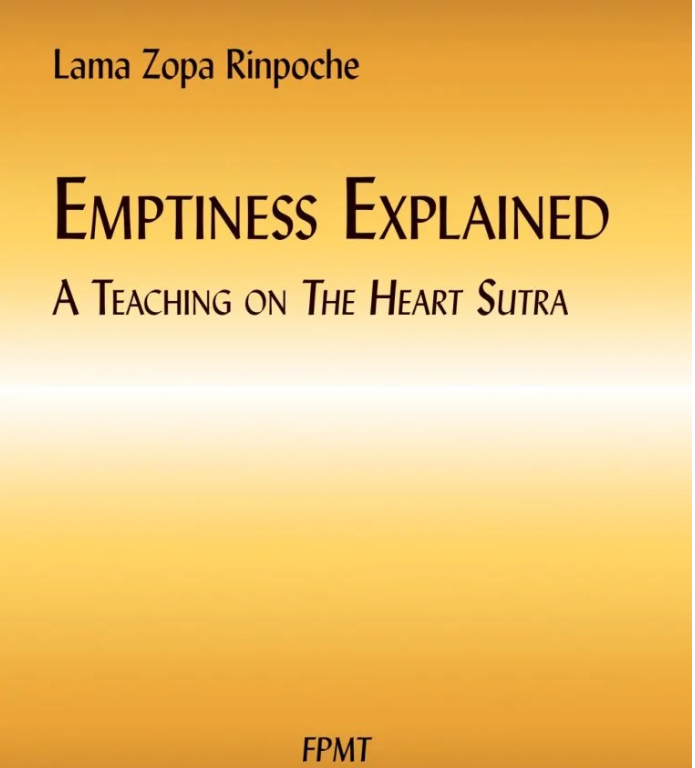
The Heart Sutra stands as one of the most profound and essential teachings in Buddhism, offering a path to understanding emptiness—the ultimate nature of reality. Lama Zopa Rinpoche’s commentary on this timeless sutra illuminates its teachings, guiding us toward a deeper understanding of how emptiness can transform not only our spiritual practice but also our daily lives.
In this post, I’ll share key reflections from Rinpoche’s teaching, focusing on the practical wisdom and spiritual inspiration it offers. Whether you’re a seasoned practitioner or simply curious about the philosophy of emptiness, I hope these insights will resonate with your heart.
What Is Emptiness?
Lama Zopa Rinpoche explains that emptiness does not mean that things don’t exist—it means that things are empty of inherent existence. All phenomena, including ourselves, arise dependently, shaped by causes, conditions, and labels. This is the essence of the middle way, which avoids the extremes of nihilism (nothing exists) and eternalism (things exist inherently and permanently).
As the Heart Sutra famously states:
“Form is emptiness, emptiness is form. Emptiness is not other than form; form is also not other than emptiness.”
In these words, we see that emptiness and dependent arising are inseparable. While things exist conventionally, their ultimate nature is empty of any independent, fixed essence.
Practical Ways to Meditate on Emptiness
Rinpoche offers accessible methods to integrate the understanding of emptiness into both formal meditation and daily life:
1. Recognizing the Object to Be Refuted
The first step is identifying the false concept of an independent, inherently existent “I” or object. This is often described as the “I on the I”—the subtle sense that there is a solid self beyond the ever-changing interplay of body and mind. By recognizing this misconception, we can begin to dissolve it.
2. Meditating on Dependent Arising
Reflect on how the “I” arises only in dependence on the body, mind, and other aggregates. As Rinpoche teaches, the “I” is merely a label created by the mind. Understanding this dependence helps us see the emptiness of the “I” without negating its conventional existence.
3. Mindfulness in Daily Life
Emptiness isn’t confined to sitting meditation. Rinpoche encourages us to bring mindfulness of emptiness into every activity—walking, cooking, working, even shopping. He likens this to recognizing a dream as a dream:
“While driving a car, see yourself, the car, and the action of driving as hallucinations. They appear solid, but they are not inherently existent. Practicing this awareness is incredibly powerful.”
Overcoming Fear and Misunderstanding
The experience of emptiness can sometimes evoke fear, especially the sense of “losing the I.” Rinpoche reminds us that this fear arises from our deep attachment to a false sense of self. However, far from being nihilistic, emptiness reveals the interdependent nature of all things.
“When bodhisattvas of high intelligence realize emptiness, they experience bliss; for others, deep fear can arise. This fear is a sign of touching the truth of selflessness—it is part of the journey.”
By grounding our understanding in dependent arising, we can navigate this fear with confidence and clarity.
Applying Emptiness in Relationships
Rinpoche’s teaching also provides practical tools for transforming relationships. When we feel hurt or offended, understanding emptiness can soften our reactivity. The other person’s actions—and our own sense of self—are dependently arisen, shaped by countless conditions.
This awareness allows us to respond with compassion rather than attachment or aversion. As Rinpoche says:
“Recognize that the ‘I’ that feels hurt is a mental construct. See the other person’s words or actions as arising dependently. This opens the door to greater understanding and kindness.”
The Transformative Power of Emptiness
Even the smallest step toward understanding emptiness has profound benefits. Rinpoche explains that simply doubting the solidity of appearances—thinking, “Perhaps things are empty”—can begin to break the chains of samsara.
“Listening to teachings on emptiness for even a moment plants seeds for liberation. Reflecting on emptiness throughout your day turns ordinary actions into a path to enlightenment.”
A Living Practice
The teachings of the Heart Sutra are not just intellectual concepts—they are a living practice. Whether in formal meditation or everyday life, the wisdom of emptiness invites us to see the world with fresh eyes. By letting go of our rigid attachments and false perceptions, we open the door to profound freedom and compassion.
As Lama Zopa Rinpoche reminds us, we are unbelievably fortunate to encounter these teachings. May we take them to heart and use them to benefit all beings.
Further Exploration
To delve deeper into Lama Zopa Rinpoche’s teachings on the Heart Sutra and emptiness, you can download the original PDF here.
I’d love to hear your thoughts on emptiness and the Heart Sutra! How do these teachings resonate with your own spiritual journey? Feel free to share your reflections in the comments below.
Navigating Loss and Connection While Embracing Spiritual Growth Amidst Life’s Transitions
Dear Diary,
Today, I find myself reflecting on my journey with chronic fatigue syndrome, a path often marked by feelings of isolation and longing. In the quiet moments, I feel a nostalgia for the connections that once filled my life, now distant and faded. This solitude reminds me of the loss and grief I carry for those connections, particularly with friends and family who do not understand what I am experiencing, and who, by their misunderstanding, make my own acceptance and adjustment that much more difficult.
As I prepare to move into a new apartment, I feel a mix of excitement and apprehension. Starting anew in a different community presents both challenges and opportunities for growth. I realize that living with this condition has not only shaped my experience but has also become a vital part of my spiritual journey.
Making friends with my unresolved feelings has become essential. I acknowledge the grief of lost connections and the isolation that accompanies it. This solitude is not merely an absence; it is a necessity for maintaining my well-being and allows me to cultivate a deeper connection with myself. I find inspiration in the challenges this illness presents, recognizing that they prompt me to grow in compassion and understanding—both for myself and others.
As I approach this transition, anxiety rises within me. Moving into a new space means confronting the reality of my invisible illness in a community where no one knows my story. I grapple with the desire for genuine connections, yet I know from experience that sharing my struggles often leads to misunderstanding. I don’t have the energy to endlessly explain my need for solitude, nor do I want to feel the weight of others’ expectations. This conflict heightens my apprehension about the move, leaving me to process a blend of nostalgia and acceptance as I prepare to navigate new interactions.
In embracing these feelings, I also choose to see them as stepping stones on my spiritual path. Each challenge offers me the opportunity to reflect and grow, reminding me that my journey holds purpose, even in its complexity. I aspire to be a positive contribution to the world, despite my limitations, and I believe that by sharing my experiences, I can help others feel less alone on their own paths.
Let us continue to inspire one another as we navigate this journey together. Through our shared experiences, we can create a community of understanding and support, where we celebrate resilience and discover joy even in difficult times.
Living with Myalgic Encephalomyelitis/Chronic Fatigue Syndrome (ME/CFS) is a daily challenge that requires careful management of energy, rest, and stress. For many, finding effective ways to support the body and mind in this delicate balance can feel overwhelming. Yoga Nidra, often called “yogic sleep,” is a practice that has been gaining attention for its potential benefits in managing ME/CFS. In this post, I’d like to delve deeper into how Yoga Nidra can be a valuable tool for those of us living with this condition.
Supporting Pacing Strategies
Pacing is a cornerstone of managing ME/CFS. It involves carefully balancing activity and rest to avoid pushing the body beyond its limits, which can lead to crashes or flare-ups of symptoms. Yoga Nidra can be an invaluable tool in this regard. Unlike other forms of exercise or even traditional yoga, Yoga Nidra requires no physical exertion. It allows you to take restorative breaks throughout the day, helping to prevent crashes by providing your body with deep rest during these intervals.
For those of us with ME/CFS, the ability to find rest without further depleting our energy is crucial. A short Yoga Nidra session can be integrated into your daily routine as a way to recharge and reset, making pacing more manageable and effective.
Activating the Parasympathetic Nervous System
Another significant benefit of Yoga Nidra is its ability to activate the parasympathetic nervous system (PNS). The PNS is responsible for the “rest and digest” functions of the body, helping to counteract the stress response driven by the sympathetic nervous system. For many people with ME/CFS, the nervous system is often in a heightened state of alertness, which can contribute to symptoms of fatigue, pain, and cognitive dysfunction.
Yoga Nidra guides you into a state of deep relaxation, which helps shift the body from a state of stress to one of rest and repair. This activation of the PNS can reduce the chronic stress response that often accompanies ME/CFS, promoting a sense of calm and helping to alleviate symptoms over time.
Providing Deep Rest and Restoration
One of the most challenging aspects of ME/CFS is the experience of unrefreshing sleep. Despite spending many hours in bed, individuals with ME/CFS often wake up feeling just as tired as before they slept. Yoga Nidra offers a unique solution by guiding practitioners into a state of consciousness that is deeply restful, yet different from regular sleep.
During Yoga Nidra, the body can enter a state that mimics sleep in terms of physical rest, but the mind remains in a state of relaxed awareness. This state of conscious relaxation allows for a deeper level of restoration, potentially offering benefits that complement or even enhance the effects of regular sleep. For people with ME/CFS, incorporating Yoga Nidra into the daily routine could help alleviate the feeling of exhaustion that persists despite adequate sleep.
Releasing Tension and Promoting Emotional Healing
Living with a chronic illness like ME/CFS can lead to the accumulation of physical and emotional tension. Over time, this tension can exacerbate symptoms and contribute to feelings of stress and overwhelm. Yoga Nidra includes practices like body scanning and guided visualization, which can help release deep-seated physical tension and promote emotional healing.
As you are guided to focus on different parts of the body and engage in positive affirmations or visualizations, Yoga Nidra provides a safe space for processing and releasing stress. This can lead to a sense of lightness and relief, which is particularly beneficial for those dealing with the chronic stressors associated with ME/CFS.
Enhancing Mental Clarity and Focus
Cognitive symptoms, often referred to as “brain fog,” are a common and frustrating aspect of ME/CFS. The deep relaxation and stress reduction provided by Yoga Nidra can contribute to improved mental clarity and focus. By calming the nervous system and promoting a state of balance, Yoga Nidra may help reduce the cognitive fatigue that many with ME/CFS experience.
Regular practice of Yoga Nidra can support mental clarity by reducing the underlying stressors that contribute to brain fog, allowing for moments of greater focus and cognitive function.
Conclusion: A Gentle Tool for Holistic Support
Yoga Nidra is not a cure for ME/CFS, but it can be a gentle and effective tool for supporting overall well-being. By offering deep rest, aiding in pacing, calming the nervous system, and promoting emotional and physical healing, Yoga Nidra can be an integral part of a holistic approach to managing ME/CFS.
If you’re living with ME/CFS and looking for new ways to support your health, I encourage you to explore Yoga Nidra. Whether you start with short, guided sessions or incorporate it into your daily routine, this practice may offer the kind of deep rest and healing that’s so essential for managing the complexities of ME/CFS.
Watch a Video:
The vides below is just some the many Yoga Nidra videos online of and are a good place to start. There are countless Yoga Nidra videos on YouTube, each offered by different instructors. Take your time exploring until you discover the ones that resonate best with you.
The occasional Yoga Nidra session can be a relaxing and rejuvenating experience, helping you reduce stress, improve sleep, and promote overall well-being whenever you feel the need for a deep, restorative rest. May this practice bring you peace and renewal, gently supporting your journey toward greater well-being.
This yoga Nidra for insomnia will take you easily into a light hypnagogic state and then down into a deep state of sleep.
Learn more about ME, get involved in support, advocacy, and activism at www.meaction.net
Mindfulness is the practice of deliberately directing our attention to the present moment. This practice helps us become more aware of our thoughts, emotions, and sensations without being overwhelmed by them. By cultivating mindfulness, we can navigate our inner and outer worlds with greater clarity and purpose.
The Essence of Mindfulness
Present-Moment Awareness:
Mindfulness involves bringing our focus to the here and now. This practice helps us fully engage with our current experience, reducing the tendency to dwell on the past or worry about the future.
2. Non-Judgmental Observation:
A key aspect of mindfulness is observing our thoughts and feelings without judgment. This attitude of acceptance allows us to see things as they are, fostering a sense of inner peace.
Benefits of Mindfulness
Enhanced Emotional Regulation:
Mindfulness helps us become more aware of our emotional responses. By observing our emotions without immediate reaction, we can manage them more effectively and respond to situations with greater composure.
2. Improved Focus and Concentration:
Practicing mindfulness strengthens our ability to concentrate. By regularly bringing our attention back to the present moment, we train our minds to stay focused, which can enhance productivity and reduce distractions.
3. Stress Reduction:
Mindfulness has been shown to reduce stress by promoting relaxation and helping us stay grounded in the present. This practice can lower levels of cortisol, the stress hormone, leading to improved physical and mental health.
Practical Mindfulness Techniques
Mindful Breathing:
Focusing on the breath is a simple yet powerful mindfulness practice. By paying attention to each inhalation and exhalation, we can anchor our awareness in the present moment and cultivate a sense of calm.
2. Body Scan Meditation:
This practice involves directing attention to different parts of the body, observing sensations without judgment. A body scan can help release tension and promote relaxation.
3. Mindful Walking:
Walking mindfully involves paying attention to the sensations of movement and the environment around us. This practice can be a grounding way to incorporate mindfulness into daily activities.
4. Mindful Listening:
Engaging in mindful listening means fully focusing on the sounds around us or the person we are conversing with. This practice enhances our connection with others and deepens our experience of the present moment.
Conclusion
Mindfulness and presence are essential for anchoring our attention in the moment. By cultivating mindfulness, we can enhance our emotional regulation, focus, and overall well-being. This practice helps us navigate life with greater clarity and purpose, allowing us to experience each moment fully. Embrace the power of mindfulness, and observe how it transforms your consciousness and enriches your life.
Below is the original source video of the lecture with Swami Parvajika Devyanandaprana, from which these blog posts were inspired. Here you can explore the insightful teachings that have profoundly shaped the content and perspectives shared in this blog.
In our fast-paced modern era, where intellect and achievement often overshadow deeper personal growth, emotional intelligence emerges as a cornerstone for a truly satisfying life. Pravrajika Divyanandaprana, affectionately known as Swamiji, articulates this beautifully in her enlightening teachings, presenting emotional intelligence not just as a skill but as a transformative force in our lives.
Emotional intelligence involves more than just managing emotions; it includes understanding them deeply, controlling our reactions, nurturing empathy, maintaining motivation, and honing our social skills. These competencies are essential for resilience, building meaningful relationships, and achieving personal and professional success.
Swamiji places special emphasis on the twin pillars of emotional intelligence: self-awareness and self-regulation. These are not just abstract concepts but are, in fact, the foundation upon which a balanced and fulfilling life is built.
Self-awareness is the ability to recognize and understand our own emotions, thoughts, and behaviors. It involves an honest reflection on our internal landscape, where we learn to identify our emotional triggers, the patterns that shape our reactions, and the underlying beliefs that drive our actions. When we are self-aware, we gain insight into our true selves—our strengths, weaknesses, values, and aspirations. This heightened awareness allows us to act consciously rather than react impulsively, making decisions that align with our deeper goals and values. It is through self-awareness that we begin to see the connections between our emotions and our actions, enabling us to navigate life with greater clarity and purpose.
Self-regulation, on the other hand, is the ability to manage our emotions, especially in stressful or challenging situations. It is the skill of maintaining control over our emotional responses, preventing our feelings from overwhelming our reason and leading us astray. Self-regulation involves practices such as mindfulness, breathing techniques, and cognitive reframing, which help us pause and reflect before reacting. By mastering self-regulation, we can maintain emotional balance, even in the face of adversity, allowing us to respond to life’s challenges with poise and equanimity. This emotional discipline not only protects our mental health but also fosters resilience, enabling us to recover more quickly from setbacks and maintain a positive outlook.
Together, self-awareness and self-regulation create a powerful synergy. When we understand our emotions and can manage them effectively, we are better equipped to make thoughtful, deliberate decisions that support our overall well-being. This combination empowers us to navigate the complexities of life with greater ease, reducing stress and increasing our capacity for joy and fulfillment. Through these practices, we can create a life that is not only successful in external terms but also deeply satisfying and aligned with our inner values and true purpose.
Interestingly, Swamiji suggests that emotional intelligence, much like physical strength or endurance, can be cultivated through deliberate practice and conscious effort. This perspective shifts emotional intelligence from being seen as an innate trait—something you either have or don’t—to a set of skills that can be developed and refined over time.
Deliberate practice in the context of emotional intelligence involves consistently engaging in activities and exercises that strengthen our ability to understand and manage our emotions. Just as an athlete might follow a structured training regimen to improve their performance, individuals can adopt specific practices to enhance their emotional intelligence.
For example, self-awareness can be developed through mindfulness practices, journaling, or regular self-reflection. These activities encourage us to pause and examine our emotions as they arise, helping us to identify patterns, triggers, and the deeper motivations behind our actions. Over time, this practice sharpens our awareness of our emotional landscape, making us more attuned to our internal states and more capable of navigating them effectively.
Cultivating equanimity, the ability to remain calm and composed in the face of life’s challenges, plays a crucial role in the development of emotional intelligence. Equanimity allows us to maintain emotional balance, even in stressful situations, which enhances our capacity for self-regulation and thoughtful decision-making. By fostering a steady and centered mind, equanimity helps us to respond to our emotions with clarity and wisdom, rather than being swept away by impulsive reactions. This inner stability not only supports our mental and emotional well-being but also strengthens our relationships, as we are better able to empathize with others and engage in compassionate, constructive interactions. In essence, equanimity acts as the anchor that holds all aspects of emotional intelligence together, enabling us to navigate life’s ups and downs with grace and resilience.
Self-regulation can be strengthened through techniques such as deep breathing, meditation, or cognitive reframing. These practices teach us to pause before reacting, allowing us to choose our responses rather than being driven by our immediate emotional impulses. By consistently practicing these techniques, we can develop greater control over our emotions, reducing the likelihood of outbursts or decisions made in the heat of the moment.
Empathy can also be cultivated through deliberate practice. Engaging in active listening, putting ourselves in others’ shoes, and practicing compassion in daily interactions are all ways to build this crucial component of emotional intelligence. As we practice empathy, we become more adept at understanding others’ perspectives and emotions, leading to deeper connections and more harmonious relationships.
Swamiji’s approach to emotional intelligence as a skill set that can be honed through practice is empowering. It suggests that we are not at the mercy of our emotions or our current level of emotional intelligence. Instead, we have the capacity to grow and evolve, improving our emotional intelligence just as we would improve any other ability. This growth mindset opens the door to continuous self-improvement and personal development, leading to a more fulfilling and emotionally balanced life.
By embracing and enhancing our emotional intelligence, we open doors to not just personal happiness but also to making a profound impact on the world around us. Let us commit to nurturing these essential skills that promise to enrich not only our own lives but also those of everyone we encounter.
The video below is the source of the inspiration for the content of this blog. If you’d like to get direct teaching from Swamiji on this topic, I encourage you to watch the video and deepen your understanding.
Our conscious experience is not merely a passive reflection of the world around us; it is actively constructed by where we direct our attention. The elements we choose to focus on play a crucial role in shaping our perception of reality. Understanding this dynamic can help us create a more fulfilling and balanced life.
The Nature of Constructed Reality
Selective Attention:
Every moment, our brains filter vast amounts of information, prioritizing what seems most relevant. This selective attention allows us to concentrate on specific aspects of our environment, thoughts, or feelings, creating our conscious experience.
2. Shaping Perception:
By focusing on certain elements, we construct our perception of reality. For instance, consistently noticing and appreciating beauty around us can make our world appear more pleasant. On the other hand, focusing on problems and challenges can make life seem more daunting.
Positive Construction and Well-Being
Building a Positive Perception:
Focusing on positive elements, such as acts of kindness, moments of joy, and personal achievements, can foster a sense of well-being. This practice enhances our mood and contributes to a more optimistic outlook on life.
2. Creating Resilience:
A positive focus helps us see opportunities and strengths in ourselves and others. This perspective builds resilience, enabling us to handle life’s challenges more effectively and bounce back from setbacks.
Negative Construction and Its Consequences
Clouding Our Perspective:
If our attention is dominated by negative aspects like worries, failures, or fears, our outlook becomes clouded. This negative focus can lead to increased stress, anxiety, and a pessimistic view of life.
2. Breaking the Cycle:
Dwelling on negative thoughts creates a vicious cycle. The more we focus on negativity, the more entrenched it becomes, making it harder to shift our attention to positive aspects. Breaking this cycle requires conscious effort and mindfulness.
Strategies for Positive Construction
Mindfulness Practices:
Mindfulness helps train the mind to stay present and focus on positive aspects. Regular mindfulness practice can increase our awareness of thought patterns and enable us to choose where to direct our attention more effectively.
2. Gratitude Journaling:
Writing down things we’re grateful for each day reinforces our focus on positive aspects of life. This practice helps nurture a sense of appreciation and contentment, gradually shifting our overall outlook.
3. Positive Affirmations:
Using positive affirmations can help redirect our focus from negative self-talk to empowering thoughts. Repeating affirmations regularly can create new mental pathways that support a positive mindset.
4. Engaging in Joyful Activities:
Participating in activities that bring joy and fulfillment, such as hobbies, exercise, and spending time with loved ones, naturally draws our focus to positive experiences. These activities help balance our attention and enhance our well-being.
Conclusion
The influence of focus in constructing reality is profound. By consciously directing our attention, we can shape our perceptions, emotions, and reactions, leading to a more positive and fulfilling life. Recognizing the impact of focus empowers us to make deliberate choices about where to direct our attention, ultimately shaping our experience of reality. Embrace the practice of positive construction, and observe how it transforms your consciousness and enhances your well-being.
Below is the original source video of the lecture with Swami Parvajika Devyanandaprana, from which these blog posts were inspired. Here you can explore the insightful teachings that have profoundly shaped the content and perspectives shared in this blog.
Our minds are incredibly powerful, and where we direct our attention can profoundly influence our experience of life. The idea that “focus determines consciousness” suggests that what we pay attention to becomes the primary content of our awareness. By understanding this principle, we can harness the power of attention to shape our mental and emotional states positively.
The Influence of Focus on Conscious Experience
Selective Attention:
Our brains are bombarded with information every second. Selective attention acts as a filter, allowing us to concentrate on what’s most relevant while ignoring the rest. This selective process shapes our conscious experience, determining what we notice and what we overlook.
2. Constructing Reality:
The elements we focus on build our perception of reality. For instance, if we consistently notice and appreciate the beauty around us, our world seems more pleasant. Conversely, if we focus on problems and challenges, life may appear more daunting.
Positive Focus and Well-Being
Nurturing Positivity:
Focusing on positive aspects of life, such as acts of kindness, moments of joy, and personal achievements, can foster a sense of well-being. This positive focus enhances our mood and contributes to a more optimistic outlook.
2. Building Resilience:
A positive focus helps us see opportunities and strengths in ourselves and others. This perspective builds resilience, enabling us to handle life’s challenges more effectively and bounce back from setbacks.
The Impact of Negative Focus
Clouding Our Perspective:
If our attention is dominated by negative aspects, like worries, failures, or fears, our outlook becomes clouded. This negative focus can lead to increased stress, anxiety, and a pessimistic view of life.
2. The Cycle of Negativity:
Dwelling on negative thoughts can create a vicious cycle. The more we focus on negativity, the more entrenched it becomes, making it harder to shift our attention to positive aspects. Breaking this cycle requires conscious effort and mindfulness.
Cultivating a Positive Focus
Mindfulness Practices:
Mindfulness helps train the mind to stay present and focus on positive aspects. Regular mindfulness practice can increase our awareness of thought patterns and enable us to choose where to direct our attention more effectively.
2. Gratitude Journaling:
Writing down things we’re grateful for each day can reinforce our focus on positive aspects of life. This practice helps nurture a sense of appreciation and contentment, gradually shifting our overall outlook.
3. Positive Affirmations:
Using positive affirmations can help redirect our focus from negative self-talk to empowering thoughts. Repeating affirmations regularly can create new mental pathways that support a positive mindset.
4. Engaging in Joyful Activities:
Participating in activities that bring joy and fulfillment, such as hobbies, exercise, and spending time with loved ones, naturally draws our focus to positive experiences. These activities help balance our attention and enhance our well-being.
Conclusion
The power of focus in shaping consciousness is profound. By consciously directing our attention, we can influence our perceptions, emotions, and reactions, leading to a more positive and fulfilling life. Recognizing the impact of focus empowers us to make deliberate choices about where to direct our attention, ultimately shaping our experience of reality. Embrace the practice of positive focus, and observe how it transforms your consciousness and enhances your well-being.
Below is the original source video of the lecture with Swami Parvajika Devyanandaprana, from which these blog posts were inspired. Here you can explore the insightful teachings that have profoundly shaped the content and perspectives shared in this blog.
Welcome, dear reader. If you’ve found yourself here, it may be because you’re looking for something gentle, something that can hold you with care amidst the challenges you face. Living with Myalgic Encephalomyelitis/Chronic Fatigue Syndrome (ME/CFS) often means navigating a delicate path where the balance between activity and rest isn’t just important—it’s essential.
Yoga Nidra offers a unique kind of rest, one that reaches deep into the layers of your being, allowing both body and mind to relax in a way that ordinary sleep might not always provide. But before we dive into this practice, I invite you to pause. How are you feeling right now? If you notice any weariness, perhaps take a moment. Close your eyes, take a few deep breaths, and come back when you’re ready. Remember, there’s no rush here.
As you consider exploring Yoga Nidra, please remember that this is your journey, unfolding at your own pace. Yoga Nidra invites you into a state of profound relaxation without physical effort, offering a deeply restful experience. For those of us living with ME/CFS, however, even rest can sometimes require a delicate balance.
If you’re new to this practice, consider beginning with just a few minutes, allowing yourself to ease into the feeling of deep rest. Pause whenever you need, honoring your body’s unique rhythms and knowing that each moment of relaxation, however brief, can be truly nourishing.
This is a sanctuary of ease—no need to strive. May Yoga Nidra offer you a gentle space of rest, a place to be held in care as you navigate your path toward healing and peace.
What is Yoga Nidra?
Yoga Nidra, often lovingly referred to as “yogic sleep,” is a form of guided meditation that gently leads you into a state of deep relaxation while your consciousness remains softly awake. Imagine being held in a place where you can let go of everything, where you can rest deeply without the need to do anything at all. This practice doesn’t ask for effort; it only invites you to allow yourself to be.
For those living with ME/CFS, Yoga Nidra can offer a sanctuary—a place to replenish your energy, soothe your nervous system, and find a sense of peace that might feel elusive in daily life. But dear friend, I encourage you to take this in slowly. Perhaps read a little, then pause to check in with how you’re feeling. Let these words settle in their own time, just as you would allow a gentle rain to soak into the earth.
Why Yoga Nidra is Beneficial for ME/CFS
Yoga Nidra allows you to experience the kind of deep rest that typically takes much longer to achieve. Even just a few minutes can leave you feeling more refreshed, which is especially valuable when energy is limited. Living with ME/CFS often leaves the nervous system in a heightened state of alertness, contributing to stress and fatigue. Yoga Nidra gently guides the body into a state of calm, helping to reduce that background tension and allowing true relaxation to unfold.
In the stillness of Yoga Nidra, the body’s natural healing processes are supported, fostering recovery and building resilience over time. This deep relaxation can be a powerful tool for anyone managing the ongoing challenges of ME/CFS. Whether you’re lying down in bed, on a yoga mat, or resting in a comfortable chair, Yoga Nidra is a practice that adapts to you. It requires no physical exertion—only the willingness to rest.
Again, check in with yourself. How is your energy now? This is your journey, and it’s important to honor the pace that feels right for you.
A Simple Yoga Nidra Practice for ME/CFS
When you feel ready, I invite you to explore this gentle introduction to Yoga Nidra. This practice is designed to be brief and nurturing, offering you a moment of respite in your day.
Preparation:
• Find a quiet, comfortable place where you can lie down. Perhaps you’re already there, in which case, simply settle in a bit more. Use a yoga mat, a blanket, or your bed—whatever feels best for you. • Make sure you’re warm and comfortable. The body cools down when deeply relaxed, so a light blanket might be nice. • Close your eyes, and take a few deep breaths. Let the day’s weight melt away.
Guided Practice:
Settle In: As you lie here, notice the contact points between your body and the surface beneath you. Feel supported, as though the earth is holding you gently. Allow your body to become heavy, fully surrendering to gravity.
Breath Awareness (2-3 minutes): Bring your attention to your breath, without changing its rhythm. Simply observe the air as it flows in and out. With each exhale, imagine your body softening further, releasing any tension it may hold.
Body Scan (3-5 minutes): Slowly, bring your awareness to different parts of your body, starting at your feet and working your way up to your head. As you focus on each part, imagine it being completely relaxed. If your time is limited, you might focus on just the major areas like your legs, torso, arms, and head.
Sankalpa (Intention) (1-2 minutes): Silently repeat a positive intention or affirmation. It could be as simple as “I am relaxing,” or “I am releasing,” or “I am letting go.” Let this intention resonate with you as you repeat it a few times.
Visualization (2-3 minutes): Picture a peaceful place—a sanctuary where you feel safe and relaxed. This could be a real location or an imagined one. Spend a few moments here, soaking in the tranquility. Let it fill you up.
Return (1-2 minutes): Gradually bring your awareness back by deepening your breath. Gently move your fingers and toes. When you’re ready, slowly open your eyes, taking your time before getting up.
How to Incorporate Yoga Nidra into Your Day
As you move through your day, there are moments when you might feel the need to pause and restore. Yoga Nidra can become a trusted companion during these times.
For instance, you might find that taking a few minutes for Yoga Nidra during short breaks throughout your day helps you to refresh your energy and reduce fatigue. Imagine pausing for just 5-10 minutes, allowing the deep rest of Yoga Nidra to rejuvenate your mind and body, making it easier to manage the day’s demands.
In the evening, as you prepare for sleep, Yoga Nidra can also serve as a gentle transition into the night. Practicing before bed can help improve the quality of your sleep, which is often disrupted by ME/CFS. Picture yourself easing into a restful night, with Yoga Nidra setting the stage for better recovery and deeper rest.
And then there are those moments when life feels overwhelming—when exhaustion seems to take over. In these times, taking a few minutes for Yoga Nidra can help reset your mind and body, offering a way to find calm amidst the storm. This practice can be like a comforting hand on your shoulder, guiding you back to a place of peace.
As you explore how Yoga Nidra fits into your day, remember to be kind to yourself. You don’t need to do everything at once. Perhaps try one of these suggestions and see how it feels. The journey of healing is often made up of small, gentle steps.
Dear reader, Yoga Nidra is more than just a practice—it’s a sanctuary where you can find rest, healing, and peace. For those living with Myalgic Encephalomyelitis/Chronic Fatigue Syndrome (ME/CFS), it offers a way to embrace rest as a form of self-care, helping you manage your energy and enhance your well-being. Remember, there’s no need to rush. This is your journey, and you’re exactly where you need to be.
Explore Yoga Nidra Through a Guided Meditation Video
If you’re interested in experiencing a guided Yoga Nidra practice, I’ve found a wonderful 30 minute video that can help you relax and restore your energy. This video offers a calming, step-by-step journey through a Yoga Nidra meditation, perfect for those moments when you need a deeper rest.
The video begins with instructions to find a quiet place where you won’t be disturbed. You’re guided to get into a comfortable position on your back, with knees slightly apart and arms resting away from your body, palms up. As you close your eyes, you’ll be invited to take a deep relaxing breath, setting the stage for relaxation.
The instructor suggests using the mantra OM during this lesson. OM is simply a sacred sound that is often used in meditation to help focus the mind and create a sense of peace and connection with the divine.
The heart of the meditation is a detailed body scan, where the instructor gently guides your awareness to different parts of your body, allowing each to relax fully.
The meditation concludes with gentle instructions to begin moving your fingers and toes, rolling your head from side to side, and stretching your body.
Watch a Video
The vides below is just some the many Yoga Nidra videos online of and are a good place to start. There are countless Yoga Nidra videos on YouTube, each offered by different instructors. Take your time exploring until you discover the ones that resonate best with you.
The occasional Yoga Nidra session can be a relaxing and rejuvenating experience, helping you reduce stress, improve sleep, and promote overall well-being whenever you feel the need for a deep, restorative rest. May this practice bring you peace and renewal, gently supporting your journey toward greater well-being.
This yoga Nidra for insomnia will take you easily into a light hypnagogic state and then down into a deep state of sleep.
Learn more about ME, get involved in support, advocacy, and activism at www.meaction.net
Join the Synchronized Global Meditations Community to Benefit the Earth, All Living Beings, and Every Sentient Being. Everyone and All Traditions Are Welcome.
Introduction
Welcome to the Synchronized Global Meditations Community, a space dedicated to the well-being of our planet and all its inhabitants. Here, we believe in the power of collective meditation to bring about positive change, fostering peace, harmony, and well-being for everyone. This community is open to people from all traditions, and we invite you to join us in this global movement.
The Power of Synchronized Meditation
Synchronized meditation has the potential to create a ripple effect of positive energy that can benefit not just the participants but the entire world. When we come together with a shared intention, our collective focus can amplify the impact of our meditative practices, promoting healing, compassion, and unity.
Guided Meditation for Global Well-Being
Preparation:
Find a quiet and comfortable space.
Sit or lie down in a relaxed position.
Close your eyes and take a few deep breaths.
Meditation:
Intention Setting: Begin by setting an intention for global well-being. Visualize the Earth surrounded by a loving, healing light.
Breath Awareness: Focus on your breath. With each inhale, imagine drawing in positive energy. With each exhale, send out compassion and love to all beings.
Visualization: Visualize people from all around the world joining together in meditation, their hearts connected in a web of light and love.
Metta Practice:
For Yourself: Silently repeat, “May I be happy. May I be healthy. May I be safe. May I live with ease.”
For a Loved One: Visualize someone you care about and silently repeat, “May you be happy. May you be healthy. May you be safe. May you live with ease.”
For All Beings: Expand your focus to all sentient beings and silently repeat, “May all beings be happy. May all beings be healthy. May all beings be safe. May all beings live with ease.”
Silent Reflection: Spend a few moments in silent reflection, holding the intention of peace and well-being for all.
Closing: Gently bring your awareness back to the present moment. Take a few deep breaths and open your eyes.
Reflective Questions
How do you feel after participating in a synchronized global meditation?
What intentions did you set for the well-being of the Earth and all beings?
How can you integrate the sense of unity and compassion from this meditation into your daily life?
What impact do you believe synchronized meditation can have on the world?
Join Us
We invite you to be part of this community and participate in regular synchronized meditations/prayers Together, we can make a difference and contribute to the well-being of the Earth and all its inhabitants.
A Path to Deepened Mindfulness: Non-Reactive Present Awareness
In our fast-paced world, finding inner peace and clarity can feel elusive. Non-Reactive Present Awareness (NRPA) offers a powerful approach to cultivating a deeper sense of mindfulness. This concept, though not always labeled explicitly, is deeply embedded in various contemplative practices and supported by modern scientific research.
What is Non-Reactive Present Awareness?
Non-Reactive Present Awareness is a state where you observe your thoughts, emotions, and experiences without becoming entangled or reactive. It involves being fully present in the moment, allowing thoughts and feelings to arise and pass without judgment or attachment. This practice aligns closely with mindfulness, but emphasizes a particular quality of detachment from immediate reactions.
The Benefits of NRPA
Reduced Stress and Anxiety: By observing thoughts without reacting, you break the cycle of automatic stress responses. Studies have shown that mindfulness practices, including NRPA, can significantly reduce stress and anxiety. Research from institutions like Harvard and the University of Wisconsin-Madison highlights how mindfulness can alter brain structures related to stress regulation.
Enhanced Emotional Regulation: NRPA helps in managing emotions by creating a buffer between stimulus and response. This can lead to better emotional stability and improved relationships. The ability to observe emotions without being overwhelmed by them can foster healthier interpersonal interactions and self-awareness.
Increased Focus and Clarity: Practicing NRPA sharpens your ability to concentrate by training the mind to remain anchored in the present moment. Research published in journals such as Psychological Science has found that mindfulness meditation can enhance cognitive functions like attention and working memory.
Greater Overall Well-being: Embracing NRPA can lead to a more profound sense of peace and contentment. The practice encourages living fully in the present, which contributes to a more fulfilling and balanced life. Studies, including those from the National Institutes of Health, suggest that long-term mindfulness practice is associated with increased well-being and life satisfaction.
Practices to Deepen NRPA
Mindful Observation: Start by simply observing your breath or surroundings. Notice details without labeling or judging them. This helps in anchoring yourself in the present moment.
Body Scan Meditation: This technique involves mentally scanning your body for areas of tension or discomfort. By bringing awareness to these areas without reacting, you can cultivate a sense of calm and relaxation.
Thought Watching: Observe your thoughts as they come and go, much like watching clouds drift across the sky. Acknowledge them without getting involved or reacting. This practice helps in developing a non-reactive stance towards your internal experiences.
Regular Practice: Incorporate NRPA practices into your daily routine. Even short periods of focused mindfulness can be beneficial. Consistency in practice helps in reinforcing the ability to maintain non-reactive awareness over time.
Scientific Insights
Research on mindfulness, which encompasses aspects of NRPA, supports its benefits for mental health and cognitive function. For example, studies conducted by neuroscientists such as those at the University of California, Los Angeles, have shown that mindfulness meditation can lead to changes in brain areas associated with emotional regulation and self-awareness.
In summary, Non-Reactive Present Awareness offers a valuable pathway to enhanced mindfulness, emotional stability, and overall well-being. By incorporating practices that foster this state of awareness, you can experience profound benefits both in daily life and in your broader sense of peace and clarity.
Contemplative Questions:
How do you currently react to your thoughts and emotions? What patterns do you notice?
In what ways could observing your inner experiences without judgment enhance your daily life?
How might regular practice of non-reactive present awareness influence your relationships and emotional responses?
What challenges do you face when trying to maintain non-reactive awareness, and how can you address them?
How can integrating non-reactive present awareness practices into your routine support your overall well-being and clarity?
Feel free to share your thoughts and experiences in the comments below. I’d love to hear how you relate to Non-Reactive Present Awareness and how it has impacted your journey.
Cultivating Resilience, Self-Compassion, and Mindful Living Through Pacing
Living well with Chronic Fatigue Syndrome (ME/CFS) involves embracing mindful pacing and staying within your energy envelope. Prioritize achievable tasks and incorporate regular self-care. Aligning with ME/CFS good practices, avoiding overexertion to prevent crashes, and maintaining a consistent sleep schedule are essential components of effective management.
Mindful Pacing and Energy Management
Effective management of ME/CFS requires understanding and respecting your body’s limitations. Pacing yourself is crucial: set realistic goals, prioritize essential tasks, and create space for regular self-care. Recognizing your energy envelope and staying within it helps prevent overexertion and subsequent crashes. Establishing a consistent sleep schedule is equally important for maintaining energy levels and overall health.
Integrating Mindfulness Practices
Integrating mindfulness practices can further enhance your well-being, fostering a balanced and harmonious approach to life. Mindfulness involves cultivating a heightened awareness of the present moment, including thoughts, feelings, bodily sensations, and surroundings, without judgment. Techniques such as meditation, deep breathing, and intentional focus can foster clarity, calmness, and a deeper connection to the present experience.
To incorporate mindfulness into your routine, consider starting your day with a brief meditation or mindful breathing exercise. Throughout the day, take moments to pause and bring attention to your breath, sensations, or environment. Integrate mindfulness into daily activities, such as eating or walking, and practice gratitude and compassion in your interactions.
Cultivating Equanimity and Self-Compassion
In the face of severe negative judgments about your present experience, cultivating equanimity and non-judgment can be transformative. Begin by acknowledging the difficulty without self-blame and recognizing that suffering is a universal aspect of the human condition – ME/CFS is just how it is happening for us.
Embrace self-compassion, treating yourself with the same kindness you would offer a friend in pain. Practice observing thoughts and sensations as passing events, allowing them to come and go without attaching undue significance. The path to equanimity involves acknowledging your struggles with an open heart, fostering a compassionate understanding of your experience.
A Message of Hope
May these suggestions provide solace and encouragement to all those navigating the path of chronic fatigue syndrome. Your journey with ME/CFS is a testament to resilience and can inspire others facing similar challenges on the path to wellness. Remember, you are not alone, and may the collective strength of our shared experiences illuminate your path toward healing and well-being. Embrace each moment with resilience, self-compassion, and mindfulness, and may your journey be filled with moments of profound insight and inspiration.