Tag: unity

  • 🌿 A Poem of Strength & Renewal 🌿

    🌿 A Poem of Strength & Renewal 🌿

    ✨ English ✨
    The light of warmth shines through the long night, 🌙
    Though storms may rage, the heart’s lantern never fades. 🕯️
    Though mountains are high and waters far, a homebound boat remains, ⛰️🌊⛵
    After hardship, spring arrives, and the world is born anew. 🌿🌸

    ✨ Spanish / Español ✨
    La luz del alma brilla en la oscuridad, 🌙
    Aunque ruja la tormenta, la llama no se apaga. 🕯️
    Montañas y mares no detienen el regreso, ⛰️🌊⛵
    Tras la prueba, la primavera renace. 🌿🌸

    ✨ Italiano ✨
    La luce dell’anima illumina la notte, 🌙
    Anche nella tempesta, la fiamma non si spegne. 🕯️
    Monti e mari non fermano il ritorno, ⛰️🌊⛵
    Dopo il dolore, la primavera rinasce. 🌿🌸

    ✨ العربية / Arabic ✨
    نور الروح يضيء الظلام، 🌙
    مهما اشتدت العواصف، لا تنطفئ الشمعة. 🕯️
    الجبال والبحار لا تمنع العودة، ⛰️🌊⛵
    بعد المحن، يأتي الربيع ويولد العالم من جديد. 🌿🌸

    ✨ עברית / Hebrew ✨
    אור הנשמה זורח בלילה החשוך, 🌙
    גם בסערה, הנר אינו כבה. 🕯️
    ההרים והימים אינם עוצרים את השיבה, ⛰️🌊⛵
    לאחר הקושי, האביב מגיע והעולם נולד מחדש. 🌿🌸

    ✨ Русский / Russian ✨
    Свет души сияет сквозь ночь, 🌙
    Пусть бушует буря, но огонь не гаснет. 🕯️
    Горы и воды не остановят путь домой, ⛰️🌊⛵
    После невзгод приходит весна, и мир обновляется. 🌿🌸

    ✨ Українська / Ukrainian ✨
    Світло душі сяє крізь ніч, 🌙
    Хай шторм бушує, та вогонь не згасне. 🕯️
    Гори й води не зупинять дорогу додому, ⛰️🌊⛵
    Після труднощів настає весна, і світ відроджується. 🌿🌸

  • Be Still: A Contemplation of Presence

    In the chaos of life, there are words that call us to pause, to breathe, and to return to the essence of our being. Today, I find myself reflecting on a simple yet profound invitation: Be still. These words are not merely a command; they are a gentle reminder to return home to ourselves.

    In a world filled with noise and distraction, these words, “be still,” invite us to rest, to find solace in the quiet moments that lie between our thoughts. How often do we forget the power of stillness, seeking answers in the frenzy of life rather than in the peaceful embrace of the present moment?

    In stillness, we discover a deeper truth. It is here that we can let go of our worries, our desires, and the incessant need to control. The invitation is to surrender—to allow ourselves to simply be, without judgment or expectation. When we immerse ourselves in this stillness, we begin to experience the richness of life beyond the surface chaos.

    The teachings of various traditions converge in this space of stillness. In Buddhism, the concept of mindfulness encourages us to be present, to observe without attachment. The stillness is where we can witness our thoughts and emotions without becoming entangled in them.

    Similarly, in Christian teachings, we are reminded to be still and know that God is present. This stillness opens a doorway to the Divine, where we can encounter love, compassion, and grace.

    In this journey of stillness, we are reminded of the command, “Seek ye first the Kingdom of God,” for it is within this sphere of inner quietude that we find the true essence of the Divine. Jesus tells us, “The kingdom of God is in the midst of you” (Luke 17:21), emphasizing that this sacred space resides within each of us. In the depths of this inner stillness, we uncover a realm filled with love, compassion, and grace—a place where the noise of the world fades away, revealing the interconnectedness of all beings and the vibrant presence of the Divine.

    As I sit with this invitation, I am reminded that stillness is not an absence but a presence—a vibrant space filled with potential and awareness. It is where we can connect with our true selves and the interconnectedness of all beings.

    In this stillness, we find the beauty of life unfolding. We learn to embrace the moments of joy and sorrow alike, recognizing that each is a part of the sacred tapestry of existence.

    So, let us take a moment to be still. In that stillness, we can hear the whispers of our hearts, the gentle nudges of intuition, and the voice of the Divine guiding us.

    As we cultivate this practice of stillness, we allow ourselves to grow and transform. The world may continue to swirl around us, but within, we can find peace, clarity, and connection.

    “Be still and know that I am God.”

    —The Five Books of Moses, Psalm 46:10

    🙏🕊️🙏

  • Finding the Stillness in All Things: A Journey through Balance

    There is a truth that whispers through the ages, from every corner of the world. A truth that doesn’t shout but waits patiently to be found. It’s in the stillness between breaths, in the space between thoughts, where the Divine waits quietly, holding everything together. It is in this stillness that we come to know not just the world, but the very essence of life itself.

    Each tradition, each wisdom teaching, seems to point toward this same place: the balance, the center, where opposites meet and dissolve into harmony. In Tibetan Buddhism, they call it the middle way. It’s a path that doesn’t go too far in either direction. It’s like tuning a guitar string: pull it too tight, and it will snap. Leave it too loose, and no sound will come. But find the right tension, the perfect balance, and the music flows effortlessly. In life, as on this string, we are invited to find that middle path, where balance and stillness coexist—neither too rigid nor too lax.

    This same balance appears in the teachings of the Tree of Life in Jewish mysticism, where Chesed, loving-kindness, and Gevurah, discipline, meet in Tiferet—the heart, the place of beauty. When we lean too far toward kindness without boundaries, we lose ourselves. And when we cling too tightly to discipline, we become hardened. But in Tiferet, where the heart finds its rhythm, loving-kindness and discipline meet, creating a beauty that is greater than either one alone.

    In Advaita Vedanta, we learn that the Divine is non-dual. It is beyond the opposites of good and bad, right and wrong. The Divine is the I am that resides not in separation, but in unity. The opposites that pull us in different directions are merely illusions—like shadows on a wall. In the stillness of non-duality, all of these dualities fall away, and we come to know the true nature of the Self, where the Divine and the world are one and the same.

    Jewish mysticism also offers us the teaching of the three mothers: Aleph, Mem, and Shin—air, water, and fire. In this balance, Aleph represents the space between, the silent breath that holds fire and water in harmony. Aleph is the stillness in the sound, the quiet knowing that speaks of the Divine’s presence, hidden in the spaces where opposites touch. The very shape of Aleph, made of Yud-Vav-Yud, points to the number twenty-six, a name for God. Even in silence, the Divine whispers its truth.

    And perhaps this is what we all seek—the stillness that lies between, where everything comes together, like the proton, electron, and neutron in an atom, each holding a place, neither more important than the other. The center, the balance, the stillness, is where all of life’s forces find their peace. Here, we realize that stillness is found in the balance, and balance is found in stillness, creating a dynamic interplay within us.

    As I reflect on these teachings, I am reminded of the invitation from the Old Testament: “Be still and know that I am God.”—The Five Books of Moses, Psalm 46. This stillness, this knowing, is not for the ego to claim, but for the deeper I am—the Divine within us—to speak. The ego, the seer, and the Divine all reside in this stillness, each playing its part in the dance of life. In the stillness, we find that there is no separation, only the one true essence, the Divine presence that holds us all.

    From yin and yang in Eastern traditions to the scientific balance of particles, the message is the same: seek the stillness between, where opposites meet, where tension gives way to harmony, where God can be found. The path is not to extremes but to the center, to the place where all forces—internal and external—are in balance.

    In the end, all of these teachings converge into one simple truth: in the stillness, everything finds its place. In the balance of loving-kindness and discipline, of fire and water, of duality and non-duality, we are called to rest in the space between, where the Divine waits, not in the noise, but in the quiet, in the heart of all things.

    “Out beyond ideas of wrongdoing and rightdoing, there is a field. I will meet you there. When the soul lies down in that grass, the world is too full to talk about; language, ideas, even the phrase ‘each other’ doesn’t make any sense.”


    —Jalal ad-Din Rumi (1201 – 1273)

    🙏🕊️🙏

  • Embracing Forgiveness, Loving-Kindness, and Compassion: A Universal Call to Unity

    Embracing Forgiveness, Loving-Kindness, and Compassion: A Universal Call to Unity

    A Path to Healing and Unity Through Shared Spiritual Values

    In every spiritual tradition, there lies a core message of forgiveness, loving-kindness, and compassion. These virtues, transcending cultural and religious boundaries, unite us in our shared humanity. Whether through the teachings of Buddha, the wisdom of Jesus, or insights from various spiritual paths, the call to embrace these qualities is clear and compelling.

    Forgiveness is a profound act of letting go. It isn’t about condoning wrongdoings but freeing ourselves from the burdens of anger and resentment. As the Dalai Lama teaches, forgiveness is a gift we give to ourselves, a step toward inner peace.

    Loving-Kindness, or “metta” in Buddhist practice, encourages us to extend unconditional love to all beings. Jesus exemplified this through his life, teaching us to love our neighbors as ourselves. In every smile, kind word, and act of generosity, we weave a tapestry of love that can heal and uplift.

    Compassion is the heart’s response to suffering. It compels us to act, to alleviate pain, and offer solace. Teachings from various traditions remind us that compassion is not a passive feeling but an active force for good. Through compassion, we recognize our interconnectedness and our responsibility to care for one another.

    In these challenging times, let’s draw from the wellsprings of our diverse spiritual heritages. Let us embrace forgiveness, loving-kindness, and compassion not just as lofty ideals, but as daily practices that transform our lives and the world around us.

    Together, we can create a world where these universal values form the foundation of our interactions, fostering unity, peace, and understanding among all people.

    🙏🕊️🙏

    #Compassion #LovingKindness

  • Neti Neti Series No. 16: Exploring the Relationship Between Atman and Brahman

    Question:

    In Advaita Vedanta, we often hear that Atman is Brahman. But considering that Atman might be seen as a purified reflection of Brahman—similar to how the Buddha is an emanation of the Dharmakaya—would it be more accurate to say that Atman is an expression of Brahman rather than being Brahman itself?

    Dear friend,

    Your reflections on the relationship between Atman and Brahman in Advaita Vedanta, and how it might be understood in light of the Buddha’s relationship with the Dharmakaya, open up a rich field of contemplation. You have touched upon a subtle aspect of the teaching that invites us to explore the nature of the self and the ultimate reality in a deeper and more nuanced way.

    In Advaita Vedanta, the teaching that “Atman is Brahman” seeks to convey the profound truth that the individual self and the ultimate reality are not two separate entities but are, in essence, one and the same. This realization of non-duality (Advaita) is the heart of the teaching, where all distinctions between self and other, between the individual and the absolute, dissolve into the unity of pure awareness.

    And yet, your suggestion that Atman might also be seen as an “expression” or “reflection” of Brahman resonates with a certain truth. Just as the Buddha is an emanation of the Dharmakaya, so too can we understand Atman as the individual manifestation of Brahman within the world of forms and experiences. This view allows us to appreciate the functional relationship between the individual self and the universal reality, while still holding to the ultimate truth of their non-difference.

    Consider, if you will, the metaphor of reflection—a mirror that reflects the light of the sun. In this metaphor, Atman, when purified and free from the distortions of ignorance, reflects the light of Brahman, revealing the true nature of the self as non-different from the absolute. Until this purification occurs, the mind perceives itself as separate, much like seeing many reflections of the same sun in different bodies of water.

    In this way, Atman can be understood as a perfect reflection of Brahman, a reflection that becomes clearer and more accurate as the mind becomes more purified, more aligned with the truth of its own nature. This does not negate the teaching that Atman is Brahman but rather enriches it, providing a way to understand the process of realization as one of aligning the individual self with the universal reality it reflects.

    And yet, in the ultimate sense, the teaching of Advaita Vedanta invites us to move beyond all distinctions, beyond all metaphors, to the direct experience of unity. In this experience, the individual self dissolves into the infinite, and what is realized is that Atman and Brahman are not two, but one. The idea of expression or reflection fades away, leaving only the undivided awareness that is the true nature of all things.

    Dear friend, your reflections invite us to dwell in the mystery of this teaching, to explore the nuances of what it means to realize that “Atman is Brahman.” It is a realization that goes beyond words, beyond concepts, into the heart of what is real and true. Continue to contemplate this truth, and let it guide you ever deeper into the understanding of your own true nature.

    🙏🕊️🙏

  • A Focus on Compassionate Care for the Vulnerable

    A Focus on Compassionate Care for the Vulnerable

    Welcome to the Compassionate Care for the Vulnerable category of our blog. This space is dedicated to reflecting on the call to compassion, inspired by the words of Jesus in Matthew 25:40:

    “Truly I tell you, whatever you did for one of the least of these brothers and sisters of mine, you did for me.”

    In this powerful verse, we’re reminded that caring for others—especially those who are most vulnerable—is not only an act of love but a reflection of our deepest values and faith. Our commitment here is to honor this message through posts that focus on compassionate advocacy, particularly for unaccompanied children and those whose voices often go unheard.

    Purpose and Vision

    Through this category, we aim to:

      •   Raise Awareness: Highlight the needs and struggles of vulnerable groups, including unaccompanied children, and provide resources and insights into how we can all support them.

    •   Encourage Compassionate Action: Offer reflections, guides, and actionable steps that inspire each of us to embody love and kindness in our daily lives.

    •   Protect Stability for Unaccompanied Children: While many of these children are placed with vetted sponsors or family members, their futures are still uncertain as deportation policies evolve. Our campaign is dedicated to ensuring that these children are considered with compassion and care during any deportation procedures. We believe that the stability and safety provided by their current placements should not be disrupted without thoughtful consideration and bipartisan oversight.

       •   Build a Community of Support: Connect with others who feel the call to serve and uplift those in need, creating a space for shared values and mutual encouragement.

    Why “Matthew 25:40”?

    The words in this verse are not merely an invitation—they’re a reminder of our interconnectedness. When we help “the least of these,” we are fulfilling a sacred trust to uphold dignity, offer hope, and affirm the worth of every person. This category, and the posts within it, will serve as a small but meaningful way to embody this mission.

    Join Us on This Journey

    We hope you’ll join us in this ongoing journey of compassion. As you explore this category, may you find not only information and insight but also inspiration to engage with kindness in your own way. Together, we can be part of a compassionate movement that uplifts, protects, and honors those who need it most.

    To stay connected, feel free to subscribe to this blog or join us on Twitter @SanghaPulse

    Thank you for being here. May this space be a source of light, love, and understanding.

    🙏🕊️🙏

  • A Call for Unity and Peace in Times of Change

    A Call for Unity and Peace in Times of Change

    A Message of Unity, Compassion, and Hope Post-Election 2024: Guiding Toward Healing

    As our nation enters a new chapter, feelings of uncertainty and apprehension may naturally arise. Moments of great change often invite a range of emotions, from hope to fear, and everything in between. But no matter where we find ourselves on this journey, we are united by our shared humanity, a bond that transcends our differences and invites us to walk this path together with kindness, compassion, and respect.

    This is a time for each of us to look within, to cultivate a sense of peace, and to reach out to others with understanding. There is strength in unity, a quiet courage in compassion, and a powerful resilience in the bonds that connect us as one human family.

    Embracing Compassion and Understanding

    As we meet others who may feel differently or view this moment through a different lens, let us remember that each person’s perspective is shaped by unique experiences and aspirations. True compassion invites us to listen deeply, to respond with empathy, and to create a space where all voices can be heard and valued.

    “Be kind, for everyone you meet is fighting a hard battle.” — Attributed to Philo of Alexandria

    This simple truth reminds us that compassion can be the bridge between divided hearts. Each person carries their own worries and hopes, and when we meet them with kindness, we become part of their healing journey, and they, in turn, become part of ours.

    Cultivating Peace Within and Without

    Inner peace, like the stillness of a calm lake, allows us to respond to life’s storms without being overwhelmed by them. As we take time to nurture this peace within ourselves—through reflection, meditation, or prayer—we become more capable of bringing peace into the lives of those around us.

    “Peace comes from within. Do not seek it without.” — Buddha

    This insight encourages us to draw strength from our inner resources, so that we may become a calming presence in the world. By holding peace within ourselves, we radiate it outward, helping to ease the anxieties and fears of those who may feel unsettled.

    Acting with Justice and Integrity

    We are all stewards of justice and truth, called to act with integrity and fairness. In times of change, it is essential to root ourselves in these values, to seek justice not through division but through unity, compassion, and courage.

    “The best way to find yourself is to lose yourself in the service of others.” — Mahatma Gandhi

    This wisdom reminds us that our greatest purpose lies in serving the common good, that by dedicating ourselves to lifting others, we discover deeper meaning and connection. In a time when many feel uncertain, we can serve by offering hope, reassurance, and an example of calm, compassionate integrity.

    Seeking Unity in Diversity

    In the spirit of interfaith harmony, we honor the rich diversity of beliefs, practices, and traditions that make our world vibrant and beautiful. Unity does not mean uniformity; it means celebrating our differences and finding strength in our shared values of love, peace, and kindness.

    “We are not isolated beings, but like waves of the same sea, leaves of the same tree, flowers of the same garden.” — Seneca

    This truth, expressed through many spiritual and philosophical lenses, reminds us that our lives are interconnected. When we remember that we are “waves of the same sea,” we can face any change or challenge with a sense of solidarity and support.

    Walking Together in Hope and Trust

    Amid uncertainty, hope is a guiding light, illuminating the path toward a better future. Each small act of kindness, every effort toward understanding, every choice to respond with love instead of fear, builds a world in which we can all thrive.

    “Faith is the bird that feels the light and sings when the dawn is still dark.” — Rabindranath Tagore

    Hope, like faith, gives us strength to keep moving forward, even when the outcome is not yet clear. This is a time for us to trust in the power of love, kindness, and shared vision to lead us to a brighter day.

    Let us take this moment to breathe, reflect, and commit to walking this path with open hearts. Each of us has the power to bring calm, courage, and compassion to our communities. Together, as one human family, we can create a nation guided by wisdom, unity, and peace.

    In the spirit of unity, let us keep this in our hearts:

    May we find strength in our compassion, resilience in our hope, and peace in our shared humanity. May our actions be a reflection of the love, kindness, and understanding that the world needs now more than ever. And may we walk together, with purpose and harmony, toward a brighter tomorrow.

    🙏🕊️🙏

  • Voices from History Are Whispering to Us, Still: To Hold Steady and Seek the Wisdom They Once Prayed For

    Voices from History Are Whispering to Us, Still: To Hold Steady and Seek the Wisdom They Once Prayed For

    Reflections Upon The Debate on the Constitution, edited by Bernard Bailyn

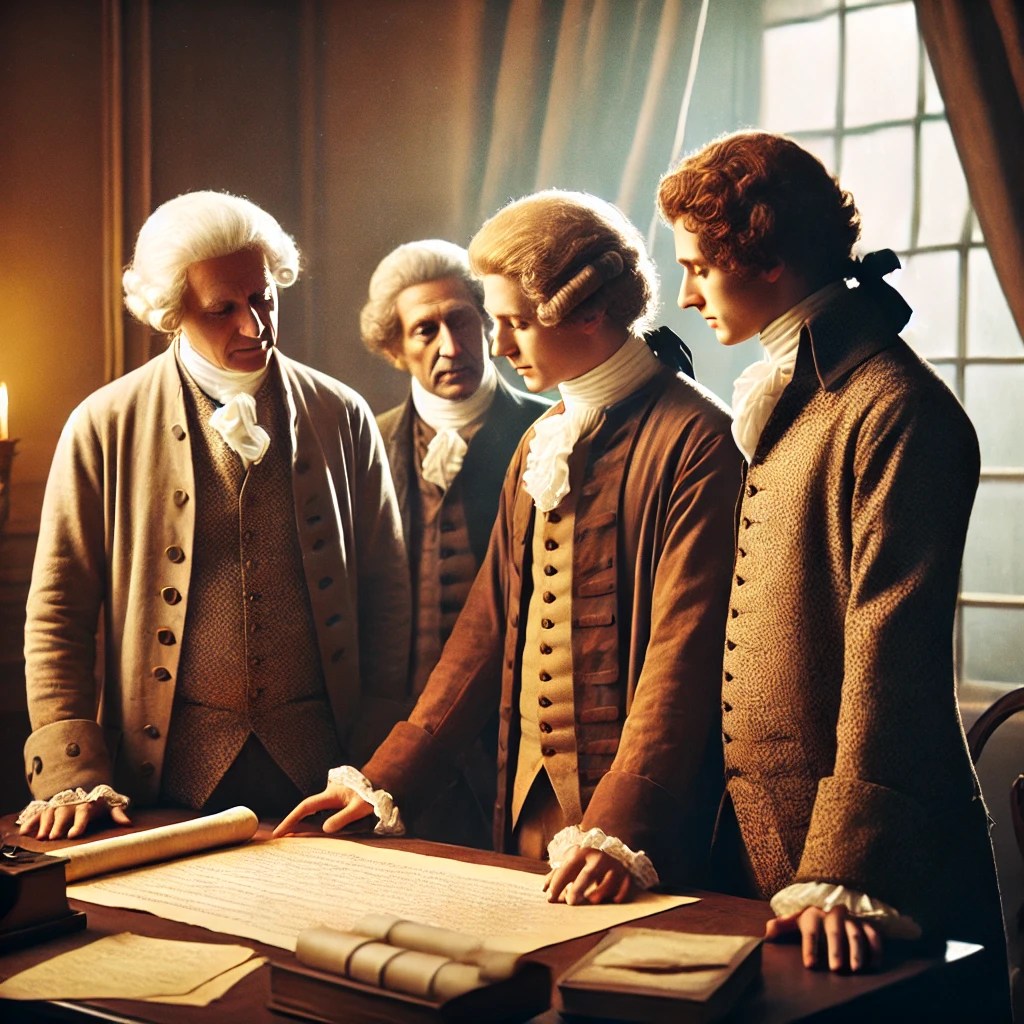
    As I begin to read and reflect on the birth of our nation, I find myself drawn to The Debate on the Constitution, edited by Bernard Bailyn. In this remarkable collection, voices from the founding era come alive through letters, speeches, and passionate exchanges over the very principles that would shape America’s future. My journey through these pages has been an invitation to look deeply into the hopes, fears, and uncompromising visions that guided the formation of our government. This reflection on David Reddick’s letter is the first of many insights I plan to share as I explore these foundational texts. Each passage, like a quiet whisper from history, feels profoundly relevant to our modern challenges. With each chapter, I hope to uncover more of the wisdom and guidance that remains as timely now as it was then.

    As we face the complexities of our 21st-century world—fraught with its own unique challenges and deep divisions—it may surprise us to hear faint but persistent echoes from the past. When David Reddick wrote to William Irvine on September 24, 1787, he captured both the fervor and the trepidation of a young nation on the brink of forging a new government. With a heart both hopeful and wary, Reddick concluded his letter with a plea, one that resonates strikingly across the ages: “I pray a spirit of wisdom and a spirit of integrity pervade Congress more, especially at this time.”

    In his words, we hear not only a timeless hope but also an acknowledgment of the fragility and responsibility that accompany governance. Reddick’s prayer was for leaders bound by integrity, guided by wisdom, and driven by a vision of the common good—a vision that was then, as it is now, profoundly needed. For as long as humans have governed, these virtues have been as essential as the laws themselves, the unspoken scaffolding of a just and enduring society.

    Reddick’s letter is set against the tumultuous backdrop of 1787, a year filled with fierce debates and delicate compromises as the Framers drafted the Constitution. Delegates gathered in Philadelphia with diverging opinions, representing colonies with diverse needs and perspectives. The air was thick with tension, and yet also with the profound sense of a shared purpose. They did not agree on every principle, nor did they all emerge unscathed by political rivalries. But they knew that the work before them was not just for themselves—it was for posterity, for the countless generations yet to come.

    In a modern world that often feels divided and weary, these voices from history still whisper to us. They remind us of the enduring aspirations that guided those foundational debates, aspirations that can guide us still if we listen. Today, we live in a time when those same virtues—wisdom, integrity, and a vision for the common good—feel as critical as ever. We, too, face challenges that ask us to look beyond individual interests and to embrace a broader vision, one that transcends the boundaries of partisanship and personal gain.

    The means of “wiping opprobrium”—or removing shame and dishonor—from our society, as the Founding Fathers might have said, are within our power. Each generation faces its own unique challenges and must confront the issues that threaten its integrity. Today, we face new challenges, yes, but the call for ethical governance remains unchanged. Reddick’s words are as relevant now as they were then, urging us to hold steady, to seek wisdom, and to pursue integrity in our institutions. His letter, and the atmosphere of those early debates, serve as gentle reminders that governance is an ongoing act of courage and compassion—a collective journey toward a vision that serves all.

    Perhaps that’s why voices like David Reddick’s still resonate. They remind us that, despite our best efforts to progress, some truths remain constant, and they quietly urge us to hold steady and seek the wisdom that was so fiercely needed then—and is just as fiercely needed now. And so, as we face our own era’s challenges, I too pray: may a spirit of wisdom and a spirit of integrity pervade Congress more, especially at this time.

    🙏🕊️🙏

    Discover the timeless debates that shaped America’s foundation in The Debate on the Constitution by Bernard Bailyn. This collection brings to life the voices of America’s founding era, offering invaluable insights for those seeking to understand the principles that continue to shape our nation.

  • A Prayer for Our Nation

    Dear friends,

    I invite you to join me in reflecting on our collective journey, our nation’s unity, and the road ahead. Below is a message from the heart—a prayer and a call for us to rediscover our shared values and embrace the divine plan unfolding among us. May this message inspire us all to come together in love and purpose.

    Almighty Creator,

    We humbly ask for Your grace and mercy upon this nation. Guide our leaders with wisdom and integrity, helping them pursue justice, kindness, and unity. Grant us, the people, clarity of heart to rise above division and find common ground in love.

    Inspire us to care for the most vulnerable among us, embodying compassion in every word and deed. Lead us not into cynicism or despair but into hope and renewal, trusting in Your divine plan.

    Strengthen our collective will to pursue what is good and right, and may we come together as one, under Your guiding hand.

    Amen.

    A Nation’s Heartbeat: A Poem of Renewal

    We stand at a crossroad, heart heavy with care,
    The winds of division seem too much to bear.
    But deep in our hearts, a light still does shine,
    Guiding us back to a love most divine.

    The voices of history whisper once more,
    Reminding us what we are truly here for.
    To rise from the shadows and walk hand in hand,
    To build up the dream, restore this dear land.

    O brothers and sisters, now is the time,
    To cast off the hatred and leave it behind.
    May kindness prevail and mercy abound,
    And peace be the song in which we are found.

    A Nation’s Heartbeat: A Call for Unity and Renewal

    In times of division and uncertainty, it becomes essential to pause and remember the dream that has guided our nation—a dream woven from the fabric of freedom, justice, and unity. This dream, born from the courageous visions of the Founding Fathers, called us not only to independence but to mutual responsibility. Today, we are invited to listen again to that sacred calling. It is not just about politics but about something much deeper—our collective soul.

    As we navigate these uncertain times, it is more important than ever to remember that we each carry the power to contribute to the healing of our collective soul. Every act of kindness, no matter how small, helps rebuild the spirit of unity that is at the heart of our nation. Let us walk with courage and hope, knowing that every step toward understanding strengthens the foundation of the American dream. Together, we can foster a future rooted in love, justice, and shared responsibility.

    May all who read these words be blessed with the peace that surpasses understanding, and may our nation walk forward with grace, strength, and unity, hand in hand.

    🙏🕊️🙏

  • The Spark Within: A Journey of Inner Awakening

    There’s a light within each of us—an undeniable, ever-present spark. This light, though sometimes hidden, is never truly absent. It may flicker when the winds of confusion blow or dim when the shadows of doubt creep in, but it is always there, quietly waiting to be noticed, nurtured, and allowed to grow.

    For many, the journey toward that inner light is complicated by the noise of the world—by dogma, expectations, and the need to “belong” to a certain path. But the truth is, this light doesn’t belong to any one religion or tradition. It is the essence of all paths, the core of what it means to be human. And it is awake within you, even now, quietly glowing, waiting for your attention.

    Beyond Dogma, Into the Heart of Spirituality

    Perhaps you’ve felt it—this pull toward something deeper, something spiritual, but without the constraints of organized religion. Many feel this way, walking a fine line between the spiritual yearning within them and the weight of doctrines and beliefs that feel restrictive. The good news is that the essence of spirituality is not found in rigid dogma but in the spaciousness of the heart.

    The great mystics of every tradition—whether Jewish, Christian, Buddhist, or others—have pointed to the same truth: the divine is already within us. Jewish mystical teachings speak of the divine spark within every soul, a reflection of God that can never be extinguished, no matter how much the world may try to cover it.

    As we walk our own unique paths, there is no need to choose between spirituality and religious identity. You don’t have to subscribe to a particular belief system to nurture the light within you. All you need is a willingness to be present with yourself, to sit quietly with that spark, and give it space to breathe.

    Fanning the Flame

    When you feel that spark flicker, pay attention. You may not need to do anything grand. Simply acknowledge it, as you would the first sign of dawn, and let it unfold naturally. Like sunshine and water for a plant, the light within needs only a little attention, a little care, and it will grow.

    This is not about seeking or striving. It’s about letting go of the distractions that pull you in different directions and coming back to that simple truth: you already have everything you need. The divine presence you seek is already alive within you, waiting for you to notice it.

    Whether through moments of quiet reflection, connection with others, or simply being with the world around you, this light will grow. It doesn’t require the labels of religion or the boundaries of belief. It only asks for your awareness, for the quiet recognition that it is there—and that it has been all along.

    A Shared Journey

    Remember, you are not alone in this journey. Throughout history, countless others have walked the path of spiritual discovery, often feeling the same pull toward something deeper. The great mystics, the sages, the poets, and even those who quietly reflect on their own lives, have all touched this truth: that our essence is divine, that we are all connected, and that the light within us is the very light of the universe.

    You have already felt this light. You have already seen it, even if just for a moment. Trust in that, and allow yourself to be curious, to explore it further without fear or hesitation. There is no rush. There is only the gentle unfolding of what has always been true: you are that light, and it is enough.

    In today’s world, we often exchange greetings without much thought. Words like “How are you?” or, in Hebrew, “Ma Shalom Cha?”—which many now interpret as “How are you?”—slip past us with little depth or reflection. But Ma Shalom Cha is much more than just a casual greeting. In its original meaning, it asks, “How is your peace?”—“How is your inner peace? How is your connection with the divine?”

    When I met Avi, a young man on his own spiritual journey, I looked into his eyes and asked him, “Ma Shalom Cha?” At first, it seemed to him like the casual phrase he’d heard a thousand times. But when I explained the true meaning, he paused. For perhaps the first time, he understood that I wasn’t just asking how he was doing, but how his peace was. How was his soul resting in the presence of the divine?

    It was a moment of awakening, a recognition of something deeper. In that moment, Avi saw the light within himself, the divine spark that flickers beneath the surface, often hidden by the noise and distractions of modern life.

    Beyond Dogma, Into the Heart of Spirituality

    In a world where even deep questions like “Ma Shalom Cha?” have been reduced to casual greetings, it’s easy to feel pulled in different directions, confused by dogma or by what others expect us to believe. But the truth is, the essence of spirituality is not found in rigid rules or religious identities. It is found in the quiet, gentle presence of peace within each of us.

    The great mystics of every tradition—from Jewish mysticism to the teachings of the East—all point to the same truth: the divine is already within us. The spark of God, the neshama, is already alive in each soul, and it doesn’t need labels or doctrines to be real. It only asks for our attention, for us to pause and reflect: How is my peace?

    Fanning the Flame

    The modern world often reduces “Ma Shalom Cha” to a simple “How are you?” and “Ma Nishma?” to “What’s up?”—losing the sacred depth these phrases once carried. But the light within you is not lost, and the questions themselves still hold power if we let them.

    When we take the time to sit with these questions—How is my peace? How is my soul?—we give the divine spark within us space to breathe. It’s not about striving for enlightenment or seeking external answers. It’s about recognizing that the peace you seek is already there, waiting to be acknowledged. Like sunshine and water for a plant, this inner peace grows with care and awareness.

    A Shared Journey

    So I ask you, as I asked Avi: Ma Shalom Cha? How is your peace? Not as a casual greeting, but as an invitation to look inward, to nurture the light within you. And as we close, I’ll ask you a deeper question: Ma Nishma? How is your soul?

    In a world that often reduces these profound questions to surface-level exchanges, let’s reclaim their depth. Let’s reconnect with the divine spark within us, the light that ties us all together. It’s there, waiting to be seen, to be nurtured, and to grow. The peace you seek, the light you long for—it’s already within you.

    Adonai Echad—the Lord is One. It beautifully echoes the truth of oneness that transcends all divisions. In the heart of all traditions, we find this profound recognition that there is only one source, one truth, one Divine presence, no matter how we name or perceive it.

    The unity of Adonai Echad reminds us that, despite the apparent differences in our paths, we are all connected, all part of that oneness. It’s a call to embrace the shared divinity in ourselves and others, to see beyond the surface and recognize the sacred unity that binds us all.

    All you need is a willingness to be present with yourself, to sit quietly with that spark, and give it space to breathe.

    🙏🕊️🙏

  • Caravan of Love: The Universal Path of Righteousness Across All Traditions

    In the vast tapestry of world religions, certain values transcend cultural and doctrinal differences, weaving together a shared vision of what it means to live a righteous and compassionate life. These values—purity, righteousness, kindness, forgiveness, and compassion—are cornerstones of what many traditions aspire to cultivate in their followers. Whether it’s the Sadhu Dharma in Hinduism, the concept of Tzaddikim in Judaism, or the pursuit of being a Mensch, these ideals serve as beacons of light in our shared human journey.

    Sadhu Dharma, the path of the holy person, is a life dedicated to truth, simplicity, and non-attachment. The Sadhus, through their renunciation and ascetic practices, embody a life that seeks to transcend the material and focus entirely on the spiritual. Their lives are marked by a commitment to Dharma—righteousness and moral order—a principle that resonates deeply in Hindu philosophy. This dedication to purity of mind and heart is not just about personal enlightenment but about embodying virtues that uplift society as a whole.

    In Judaism, the concept of Tzaddikim refers to the righteous ones, those whose lives are marked by a deep commitment to justice, kindness, and integrity. The Tzaddik, much like the Sadhu, is someone who has dedicated their life to the service of others and to the fulfillment of divine commandments. They are seen as pillars of the world, their righteousness serving as a foundation for the spiritual and moral health of the community.

    Similarly, the idea of being a Mensch, which in Yiddish refers to a person of integrity and honor, is highly valued in Jewish culture. A Mensch is someone who embodies the values of kindness, responsibility, and decency in their daily life. This concept, though rooted in Jewish tradition, has universal appeal, as it speaks to the importance of living a life that others can look up to and respect.

    In Christianity, the teachings of Jesus Christ offer a profound example of a life dedicated to love, compassion, and forgiveness. Jesus’s Sermon on the Mount is a timeless guide to living a life of righteousness. His call to love one’s neighbor as oneself, to forgive endlessly, and to seek peace in all things, aligns beautifully with the teachings of Sadhu Dharma and the principles of Tzaddikim. Jesus’s life is a testament to the power of living with an open heart, free from the shackles of anger, greed, and judgment.

    Islam also emphasizes the importance of righteousness and moral conduct. The Quran and Hadith provide guidance on how to live a life that is pleasing to God, through acts of charity, honesty, and justice. The concept of Taqwa, often translated as God-consciousness or piety, encourages Muslims to live in constant awareness of God’s presence, guiding them to act with integrity and compassion. The Prophet Muhammad’s life is filled with examples of humility, kindness, and dedication to the welfare of others, setting a high standard for ethical conduct.

    Buddhism, with its emphasis on the Noble Eightfold Path, also encourages a life of right conduct, right speech, and right livelihood. The Buddha’s teachings on compassion (Karuna) and loving-kindness (Metta) offer a path to purifying one’s mind and living in harmony with others. The simplicity of the Buddha’s advice to “Be good, do good, purify your mind” resonates across all these traditions, offering a succinct summary of the universal path to spiritual awakening.

    Despite the diversity of religious expressions, these examples highlight a shared commitment to cultivating a life of virtue. Whether it’s through the renunciation of a Sadhu, the righteousness of a Tzaddik, the integrity of a Mensch, the compassion of Christ, the piety of a Muslim, or the mindfulness of a Buddhist, the underlying message is clear: to live a life that reflects the highest values of humanity.

    In today’s world, where division and discord often seem to dominate the narrative, these teachings remind us of the importance of unity and the power of virtue. They encourage us to rise above our differences and to see in each other the same divine spark that guides our own path. By embracing these universal principles, we contribute to a more harmonious and compassionate world—a world where peace and righteousness are not just ideals but lived realities.

    As we continue our journey through the sacred stories and teachings of various traditions, may we carry these lessons with us, allowing them to shape our actions and our hearts. In doing so, we honor the diversity of spiritual paths while recognizing the common ground that unites us all.

    🙏🕊️🙏