Tag: Transformation

  • 🌿 A Poem of Strength & Renewal 🌿

    🌿 A Poem of Strength & Renewal 🌿

    ✨ English ✨
    The light of warmth shines through the long night, 🌙
    Though storms may rage, the heart’s lantern never fades. 🕯️
    Though mountains are high and waters far, a homebound boat remains, ⛰️🌊⛵
    After hardship, spring arrives, and the world is born anew. 🌿🌸

    ✨ Spanish / Español ✨
    La luz del alma brilla en la oscuridad, 🌙
    Aunque ruja la tormenta, la llama no se apaga. 🕯️
    Montañas y mares no detienen el regreso, ⛰️🌊⛵
    Tras la prueba, la primavera renace. 🌿🌸

    ✨ Italiano ✨
    La luce dell’anima illumina la notte, 🌙
    Anche nella tempesta, la fiamma non si spegne. 🕯️
    Monti e mari non fermano il ritorno, ⛰️🌊⛵
    Dopo il dolore, la primavera rinasce. 🌿🌸

    ✨ العربية / Arabic ✨
    نور الروح يضيء الظلام، 🌙
    مهما اشتدت العواصف، لا تنطفئ الشمعة. 🕯️
    الجبال والبحار لا تمنع العودة، ⛰️🌊⛵
    بعد المحن، يأتي الربيع ويولد العالم من جديد. 🌿🌸

    ✨ עברית / Hebrew ✨
    אור הנשמה זורח בלילה החשוך, 🌙
    גם בסערה, הנר אינו כבה. 🕯️
    ההרים והימים אינם עוצרים את השיבה, ⛰️🌊⛵
    לאחר הקושי, האביב מגיע והעולם נולד מחדש. 🌿🌸

    ✨ Русский / Russian ✨
    Свет души сияет сквозь ночь, 🌙
    Пусть бушует буря, но огонь не гаснет. 🕯️
    Горы и воды не остановят путь домой, ⛰️🌊⛵
    После невзгод приходит весна, и мир обновляется. 🌿🌸

    ✨ Українська / Ukrainian ✨
    Світло душі сяє крізь ніч, 🌙
    Хай шторм бушує, та вогонь не згасне. 🕯️
    Гори й води не зупинять дорогу додому, ⛰️🌊⛵
    Після труднощів настає весна, і світ відроджується. 🌿🌸

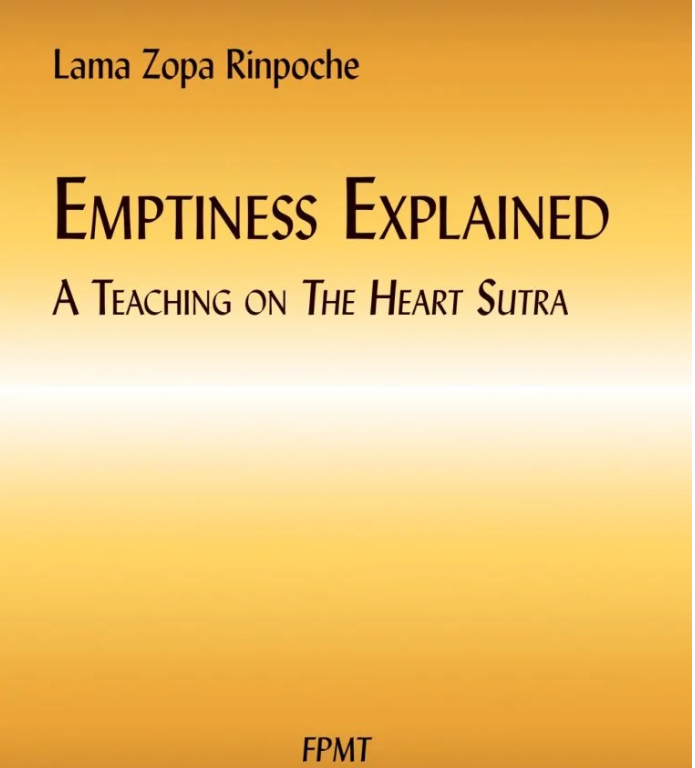
  • Emptiness Explained: Insights from Lama Zopa Rinpoche on the Heart Sutra

    Emptiness Explained: Insights from Lama Zopa Rinpoche on the Heart Sutra

    Transforming Suffering Into Happiness: How the Teachings on Emptiness from the Heart Sutra Support Mental Health and Well-Being

    The Heart Sutra stands as one of the most profound and essential teachings in Buddhism, offering a path to understanding emptiness—the ultimate nature of reality. Lama Zopa Rinpoche’s commentary on this timeless sutra illuminates its teachings, guiding us toward a deeper understanding of how emptiness can transform not only our spiritual practice but also our daily lives.

    In this post, I’ll share key reflections from Rinpoche’s teaching, focusing on the practical wisdom and spiritual inspiration it offers. Whether you’re a seasoned practitioner or simply curious about the philosophy of emptiness, I hope these insights will resonate with your heart.

    What Is Emptiness?

    Lama Zopa Rinpoche explains that emptiness does not mean that things don’t exist—it means that things are empty of inherent existence. All phenomena, including ourselves, arise dependently, shaped by causes, conditions, and labels. This is the essence of the middle way, which avoids the extremes of nihilism (nothing exists) and eternalism (things exist inherently and permanently).

    As the Heart Sutra famously states:

    “Form is emptiness, emptiness is form. Emptiness is not other than form; form is also not other than emptiness.”

    In these words, we see that emptiness and dependent arising are inseparable. While things exist conventionally, their ultimate nature is empty of any independent, fixed essence.

    Practical Ways to Meditate on Emptiness

    Rinpoche offers accessible methods to integrate the understanding of emptiness into both formal meditation and daily life:

    1. Recognizing the Object to Be Refuted

    The first step is identifying the false concept of an independent, inherently existent “I” or object. This is often described as the “I on the I”—the subtle sense that there is a solid self beyond the ever-changing interplay of body and mind. By recognizing this misconception, we can begin to dissolve it.

    2. Meditating on Dependent Arising

    Reflect on how the “I” arises only in dependence on the body, mind, and other aggregates. As Rinpoche teaches, the “I” is merely a label created by the mind. Understanding this dependence helps us see the emptiness of the “I” without negating its conventional existence.

    3. Mindfulness in Daily Life

    Emptiness isn’t confined to sitting meditation. Rinpoche encourages us to bring mindfulness of emptiness into every activity—walking, cooking, working, even shopping. He likens this to recognizing a dream as a dream:

    “While driving a car, see yourself, the car, and the action of driving as hallucinations. They appear solid, but they are not inherently existent. Practicing this awareness is incredibly powerful.”

    Overcoming Fear and Misunderstanding

    The experience of emptiness can sometimes evoke fear, especially the sense of “losing the I.” Rinpoche reminds us that this fear arises from our deep attachment to a false sense of self. However, far from being nihilistic, emptiness reveals the interdependent nature of all things.

    “When bodhisattvas of high intelligence realize emptiness, they experience bliss; for others, deep fear can arise. This fear is a sign of touching the truth of selflessness—it is part of the journey.”

    By grounding our understanding in dependent arising, we can navigate this fear with confidence and clarity.

    Applying Emptiness in Relationships

    Rinpoche’s teaching also provides practical tools for transforming relationships. When we feel hurt or offended, understanding emptiness can soften our reactivity. The other person’s actions—and our own sense of self—are dependently arisen, shaped by countless conditions.

    This awareness allows us to respond with compassion rather than attachment or aversion. As Rinpoche says:

    “Recognize that the ‘I’ that feels hurt is a mental construct. See the other person’s words or actions as arising dependently. This opens the door to greater understanding and kindness.”

    The Transformative Power of Emptiness

    Even the smallest step toward understanding emptiness has profound benefits. Rinpoche explains that simply doubting the solidity of appearances—thinking, “Perhaps things are empty”—can begin to break the chains of samsara.

    “Listening to teachings on emptiness for even a moment plants seeds for liberation. Reflecting on emptiness throughout your day turns ordinary actions into a path to enlightenment.”

    A Living Practice

    The teachings of the Heart Sutra are not just intellectual concepts—they are a living practice. Whether in formal meditation or everyday life, the wisdom of emptiness invites us to see the world with fresh eyes. By letting go of our rigid attachments and false perceptions, we open the door to profound freedom and compassion.

    As Lama Zopa Rinpoche reminds us, we are unbelievably fortunate to encounter these teachings. May we take them to heart and use them to benefit all beings.

    Further Exploration

    To delve deeper into Lama Zopa Rinpoche’s teachings on the Heart Sutra and emptiness, you can download the original PDF here.

    I’d love to hear your thoughts on emptiness and the Heart Sutra! How do these teachings resonate with your own spiritual journey? Feel free to share your reflections in the comments below.

    🙏🕊️🙏

  • Ramayana No. 8: The Journey from Ignorance to Wisdom—A Path We All Walk

    In the ancient epic of the Ramayana, we find a story that resonates with the journey of every human soul—a journey that begins in ignorance and, with the right guidance, leads toward wisdom, righteousness, and self-realization. These themes are universal, transcending religious boundaries, and can be understood in the context of both Eastern and Western spiritual traditions.

    A King’s Ignorance and the Sage’s Steadfastness

    In the early chapters of the Ramayana, we encounter a king driven by flawed motivations—greed, rivalry, and a desire for power. His approach to the sage, despite being rooted in ignorance, marks the beginning of a profound transformation. The king’s initial aggression and misguided intent bring him into the presence of a sage, a living embodiment of dharma (righteousness).

    This story is more than just a tale of conflict; it’s a reflection of our own lives. We all begin in ignorance, shaped by our desires, fears, and misunderstandings. But like the king, when we encounter wisdom—whether through a teacher, a spiritual practice, or life’s hard-earned lessons—there is an opportunity for transformation. The sage, representing the unwavering principles of righteousness, patiently guides the king, leading him from ignorance toward a deeper understanding of true power, which is rooted not in dominance, but in righteousness.

    In the Christian tradition, this principle can be seen in the teachings of Jesus, who embodies righteousness and divine wisdom. Jesus’s teachings guide believers toward a life of love, compassion, and humility, aligning them with the will of God. Just as the sage in the Ramayana leads the king toward dharma, Jesus invites us to follow the path of righteousness, even when we begin with flawed motivations or misunderstandings.

    The Universal Journey: From Ego to Righteousness

    This narrative is relatable because it mirrors the human experience. Even Rama and his brothers, avatars of the divine, begin their lives in a state of ignorance, unaware of their true nature. However, they have the immense fortune of being raised in righteousness by a virtuous family. Their journey is guided by dharma from the start, but for many of us, the path is not so straightforward.

    In the Christian context, we might liken this to the way Jesus guides his followers toward righteousness, teaching them to love their neighbors, forgive their enemies, and live in accordance with God’s will. But as in the Ramayana, many of us begin our spiritual journey with ego-driven desires—seeking happiness, success, or even power. As we walk the path, life’s challenges and the teachings we encounter gradually shift our motivations. The path, though filled with lumps and bumps, becomes a process of alchemy, where our ignorance is transformed into wisdom, our ego into selflessness, and our desires into devotion.

    Seeking Wisdom on the Hard Road

    For those who do not start in a righteous environment, the road can be hard. But this journey is not without hope. The king’s story reminds us that even when we approach the path with flawed intentions, the very act of seeking wisdom can lead to our transformation. The teacher doesn’t come to ignorance; rather, ignorance approaches the teacher.

    In the Southern Chinese monk style of martial arts known as Gohndagow, a branch of Kung Fu, this principle is symbolized by the student bringing the left foot to the right foot before showing respect to the teacher—a gesture that represents ignorance coming to the teacher, or the ego approaching the divine for guidance. In Gohndagow, martial arts are more than just physical training; they are a path to spiritual enlightenment, emphasizing the cultivation of the mind and heart as well as the body.

    In the Christian tradition, we see this when people turn to Jesus, sometimes out of desperation or need, only to find that their journey with him leads them to a deeper understanding of God’s love and righteousness. Our initial motivations, however flawed, can set us on a journey of purification and growth. The spiritual path meets us where we are, with all our imperfections, and guides us step by step toward righteousness. The key is to approach the path with sincerity, even if we start from a place of ignorance. The process itself will refine and elevate us, leading us closer to our true nature, or as Christians might say, to a life that reflects Christ’s teachings.

    The Alchemy of the Spiritual Path

    In Tibetan Buddhism, the concept of alchemy is not merely about turning base metals into gold; it is the process of transforming the ego into a Buddha. This profound journey from ignorance to wisdom is the true alchemical process, one that requires a detailed and disciplined approach to spiritual practice.

    The Tibetans have developed incredibly intricate teachings and practices to guide a person through this transformation. The path itself is the alchemy—a meticulous process that turns the base elements of our ego-driven existence into the gold of enlightenment. Through practices like meditation, ethical conduct, and devotion, and under the guidance of a qualified teacher, a practitioner gradually refines their mind and heart, moving closer to the realization of their true nature as wisdom and compassion.

    In this light, the story of the king in the Ramayana serves as a metaphor for this alchemical journey. His flawed motivations, when met with the sage’s unwavering dharma, set him on a path of transformation, much like how a student in the Tibetan tradition, despite their initial ignorance, is gradually guided toward the light of enlightenment. This process is both universal and deeply personal, reflecting the timeless truth that the spiritual path is one of continuous alchemy—of turning the ego into the gold of wisdom.

    Conclusion: Embracing the Journey

    As we walk our spiritual path, we must remember that the journey from ignorance to wisdom is one that we all must undertake. Whether we begin with pure or impure motivations, the key is to keep moving forward, seeking wisdom and guidance wherever we can find it. The Ramayana, with its rich tapestry of characters and lessons, offers us a mirror to our own lives, showing us that even the most flawed beginnings can lead to a profound and righteous end.

    For our Christian friends, this journey is akin to following Jesus, who offers us the path to righteousness through his teachings. May this reflection inspire you, dear reader, to embrace your journey with all its imperfections, knowing that each step, no matter how small, brings you closer to the light of righteousness and divine wisdom.

    This image that captures the journey from ignorance to wisdom, blending elements from the Ramayana, Tibetan Buddhism, and Christian teachings. It symbolizes the choice we all have of undergoing the transformation process from darkness and ego to enlightenment and wisdom, with cultural symbols subtly incorporated.

    This image that captures the journey from ignorance to wisdom, blending elements from the Ramayana, Tibetan Buddhism, and Christian teachings. It symbolizes the choice we all have of undergoing the transformation process from darkness and ego to enlightenment and wisdom, with cultural symbols subtly incorporated.


    You can explore this epic story in the edition of the Ramayana used in this series, written by Valmiki and translated by Suparna Ghosh, on Amazon here

    Alternatively, you can choose from several other versions and translations that are available. Including the William Buck translation available as an abridged audiobook on Audible, narrated by Ram Dass here

    🙏🕊️🙏

  • Faith and Actions: Bridging Belief and Righteous Living in Modern Christianity

    A Note on Diverse Beliefs

    Christianity is a rich and diverse faith, encompassing a wide range of beliefs and interpretations. This post aims to explore the relationship between faith and actions as seen through the teachings of Jesus and various scriptural references. It is shared with respect for all perspectives and an invitation for open, thoughtful dialogue. Our goal is to deepen our understanding and practice of faith, recognizing that this journey is unique for each believer.

    Jesus’ Teachings on Sin and Righteousness

    Jesus warns in John 5:14, “Stop sinning or something worse may happen to you,” illustrating the connection between spiritual health and ethical behavior. Similarly, James 2:17 asserts, “Faith by itself, if it does not have works, is dead,” emphasizing that genuine faith is demonstrated through actions aligned with God’s will.

    Yet, many contemporary Christians believe that salvation is guaranteed regardless of their behavior. Some might even think they’re just barely saved, like escaping “through fire” as mentioned in 1 Corinthians 3:15. This suggests that while they may be saved, they will experience some kind of loss, ultimately facing a less fulfilling spiritual salvation and existence in the promised eternal life.

    Judgment According to Deeds

    The book of Revelation further underscores the importance of deeds in judgment. Revelation 20:12 states, “And I saw the dead, great and small, standing before the throne, and books were opened. Another book was opened, which is the book of life. The dead were judged according to what they had done as recorded in the books.” This passage highlights that our actions and deeds are significant in the final judgment.

    The Many Rooms of Heaven

    Jesus also provides a glimpse into the nature of our heavenly rewards in John 14:2-3, saying, “In my Father’s house are many rooms; if it were not so, I would have told you. I am going there to prepare a place for you.” This suggests that heaven is not a uniform experience for all but includes different “rooms” or levels of experience and closeness to Jesus. The notion of having a place prepared might imply that one’s faithfulness and actions impact the nature of their reward in Heaven and their ultimate relationship with Jesus in the afterlife.

    Furthermore, Matthew 5:19 indicates a differentiation within the kingdom of heaven based on one’s adherence to Jesus’ commands. Jesus says, “Therefore anyone who sets aside one of the least of these commands and teaches others accordingly will be called least in the kingdom of heaven, but whoever practices and teaches these commands will be called great in the kingdom of heaven.” This implies that believers will have varying levels of reward and status based on their faithfulness. A place in heaven may be guaranteed by grace, but apparently our position of least or great or somewhere in between is contingent on our righteous or unrighteous living.

    The Warning of “Lord, Lord”

    In Matthew 7:21-23, Jesus warns, “Not everyone who says to me, ‘Lord, Lord,’ will enter the kingdom of heaven, but only the one who does the will of my Father who is in heaven. Many will say to me on that day, ‘Lord, Lord, did we not prophesy in your name, and in your name drive out demons and in your name perform many miracles?’ Then I will tell them plainly, ‘I never knew you. Away from me, you evildoers!’” This passage underscores that mere verbal profession of faith or even miraculous deeds do not guarantee entrance into the kingdom of heaven. Instead, living according to God’s will is essential.

    Balancing Faith and Righteous Living

    It’s important to acknowledge that the perspective presented in this post does not seek to undermine the assurance of salvation or the belief in salvation by grace alone. Instead, it questions the nature of the salvation promised based on numerous scriptural references that stress the value of both faith and sincerely living out one’s faith with righteousness. The intention is not to diminish the role of grace but to emphasize that true faith, according to Jesus’ teachings, naturally results in a transformative life characterized by ethical behavior and adherence to God’s will. This view invites believers to reflect on how their actions align with their professed faith, encouraging a deeper understanding of salvation that integrates the calling of both belief and righteous living. This results not just in the minimal salvation of grace alone but in the greatest salvation, culminating in full acceptance from Jesus on the day of judgment.

    Reconciling “Once Saved, Always Saved” with Jesus’ Teachings

    The doctrine of “once saved, always saved” raises important questions about the relationship between faith and works. If someone professes faith in Jesus but continues to live in sin, are they truly saved? And if so, saved from what? Jesus’ teachings suggest that genuine faith is accompanied by transformation and righteous living.

    Jesus’ warning in Matthew 7:21-23 implies that those who are rejected are not living according to His will, despite their claims and even their religious activities. The fate of those who say “Lord, Lord” and are rejected by Jesus raises profound questions: In what way are these individuals saved, and if saved, saved from what? Salvation by grace suggests they are saved, but their rejection indicates a failure to live in accordance with Jesus’ teachings. What is the fate of those who are “saved” but judged by Jesus as having insufficient deeds?

    Salvation and Judgment

    What does salvation look like for those who, although sincerely calling “Lord, Lord,” are rejected by Jesus as evildoers? This tension between being saved by grace and the necessity of righteous deeds is a significant theme in Christian theology. Believers must reconcile these seemingly contradictory messages in their own understanding and practice of faith.

    In Luke 12:48, Jesus adds, “From everyone who has been given much, much will be demanded; and from the one who has been entrusted with much, much more will be asked,” reinforcing the idea that those with greater responsibilities in faith will be held to higher standards.

    1 Corinthians 3:12-15 also illustrates that while believers may be saved, their rewards or experiences in heaven might differ based on their works. This reinforces that salvation involves more than just entry into heaven—it also includes the quality and depth of one’s spiritual journey and actions.

    Conclusion: A Call to Genuine Faith

    There are those who believe that simply expressing faith with their mouth in some accepted formula of faith in Jesus guarantees salvation, even if they do nothing else—they believe that by grace they are saved. But, saved from what? And if rejected by Jesus as evildoers when they call “Lord, Lord,” what then is this salvation they are being guaranteed? Salvation, according to Jesus, is not just a ticket to heaven but involves a transformative journey that manifests in righteous living and faithful adherence to His teachings.

    The idea of “once saved, always saved” can lead to a complacent faith that neglects the call to live out the teachings of Jesus. While grace is a fundamental aspect of salvation, it does not negate the need for genuine transformation and ethical living. The concept of being “least in the kingdom of heaven” versus “great in the kingdom of heaven” highlights that there are varying degrees of closeness to God based on one’s faithfulness and actions.

    Believers must recognize that true faith is evidenced by a life that reflects the love, compassion, and righteousness of Jesus. This involves ongoing repentance, ethical living, and a sincere effort to align one’s life with God’s will. By embracing both faith and works, Christians can fully experience the depth of salvation and the richness of their spiritual inheritance.

    Reflective Questions for Deeper Exploration:

    • How do you reconcile the doctrine of “once saved, always saved” with the emphasis on righteous living found in Jesus’ teachings?
    • In what ways can you integrate both faith and works in your daily life to reflect a genuine faith?
    • How does the concept of different “rooms” in heaven influence your understanding of salvation and spiritual growth?

    Share your thoughts and reflections in the comments section below. How do you view the relationship between faith and actions in your own spiritual journey?

    🙏🕊️🙏

  • Embracing Our Divine Nature: Insights from Jesus and Psalm 82

    A Call for Justice and Accountability in Modern Leadership

    Introduction

    Psalm 82 is a powerful chapter in the Bible that speaks directly to the responsibilities of leaders and rulers. It challenges them to uphold justice and protect the vulnerable, emphasizing their divine duty. In our contemporary landscape, the themes of Psalm 82 resonate deeply, reflecting the struggles and failures of leadership we witness today.

    Psalm 82: A Call for Justice

    In Psalm 82, God stands in the divine assembly, judging the rulers of the earth. He declares, “I said, ‘You are gods; you are all children of the Most High.’ But you will die like mere mortals; you will fall like every other ruler.” This passage emphasizes the divine nature bestowed upon rulers and their responsibility to act with justice and righteousness. However, God condemns them for failing to defend the weak and the fatherless, for not upholding the cause of the poor and the oppressed. Their failure leads to a call for accountability and justice.

    Parallel with Modern Leadership

    The rulers in Psalm 82 failed to meet their divine responsibilities, much like the perceived shortcomings of today’s leaders in various fields. The lack of justice and protection for the vulnerable is a common thread. Modern leaders often prioritize personal gain over public good, leading to societal divisions and a loss of trust in governance. This parallels the condemnation in Psalm 82, where rulers are called out for their failures and reminded of their mortality and the ultimate accountability they face.

    A Call for Reflection

    Psalm 82 serves as a timeless reminder of the need for integrity and justice in leadership. It calls on leaders to act with righteousness and prioritize the well-being of the vulnerable. For citizens, it is a call to hold leaders accountable and demand ethical governance. Reflecting on Psalm 82 can inspire us to work towards a more just and equitable society, recognizing the divine nature within all individuals and the moral duty we share.

    Conclusion

    The teachings of Psalm 82 are profoundly relevant today. As we navigate the complexities of modern leadership, we must remember the divine call for justice and accountability. Leaders are urged to act with integrity, and citizens are reminded of their power to demand ethical behavior from those in positions of authority. By aligning our actions with the principles of justice and righteousness, we can contribute to a society that honors the divine within us all.

    • How can the lessons from Psalm 82 be applied to our understanding of current leadership issues?
    • In what ways can citizens hold their leaders accountable for justice and ethical behavior?
    • How can individuals and communities work towards creating a more just and equitable society?

    Let’s explore together how embracing our dual nature can transform our lives, as suggested by the teachings of Jesus. We are truly made in the image of God. I invite you to share your thoughts and experiences in the comments section below.

    🙏🕊️🙏

  • Breathing Through the Storm: Practices of Compassion and Connection

    In these uncertain times, many of us are grappling with complex emotions—fear, frustration, anger, and uncertainty about what lies ahead. It’s easy to feel overwhelmed by the turmoil around us. Yet, amidst this chaos, practices like Metta and Tonglen can offer profound solace and guidance, helping us connect deeply with ourselves and the world.

    Metta and Tonglen: Cultivating Compassion

    Metta, or loving-kindness meditation, invites us to extend warmth and goodwill to ourselves and others. It teaches us to embrace not only those we love but also those we’re neutral towards and even those with whom we have difficulties. By nurturing this boundless compassion, we forge a deeper connection to all beings, fostering understanding and healing.

    Tonglen, on the other hand, is a practice that transforms our relationship with suffering. By breathing in the world’s pain and breathing out hope, love, and well-being, we engage in a powerful cycle of empathy and transformation. This practice allows us to hold space for the suffering around us while simultaneously cultivating a sense of hope and resilience.

    A Poem of Breath and Connection

    Breathing in, I draw the world’s pain,
    Breathing out, I send love, hope again.
    Inhale the fears that linger near,
    Exhale warmth to all who hear.

    The storm within, it calls to me,
    To sit in stillness, let it be.
    With each breath, I weave the thread,
    Of light and peace, where hope is spread.

    We stand together, hand in hand,
    Through darkened skies, across the land.
    In shared compassion, we find our way,
    To brighter dawns, a new today.

    Connecting with the Collective

    This blog is more than a reflection—it’s an invitation to connect. I invite you to share your personal stories, hopes, fears, and dreams in the comments below. By creating this healing space together, we honor the collective mood and nurture our shared humanity. Let this be a place where we support and uplift each other, breathing in suffering and breathing out love, until the world breathes easier once more.

    Reflections for Deepening

    As you engage with these practices, consider the following questions:

    • What specific fears or concerns are you holding onto right now, and how might breathing them in and transforming them with compassion feel?
    • How can you extend loving-kindness to yourself and others in your daily life?
    • In what ways can you connect with diverse spiritual paths to foster a sense of unity and shared purpose?

    Feel free to share your reflections and experiences in the comments below. Your insights can contribute to our collective journey of healing and understanding.

    A Prayer for All Beings

    May all beings be happy.
    May all beings be free of suffering.
    May all beings never be apart from the joy of equanimity.
    And may all beings be enlightened.

    🙏🕊️🙏

  • Journeying Through “The Dark Night of the Soul”: Embracing Spiritual Purification

    Review of Chapters 1-6 with Personal Reflections and Contemplative Insights

    In St. John of the Cross’s timeless masterpiece, “The Dark Night of the Soul,” he intricately details the soul’s profound journey towards spiritual union with the divine. Each chapter unveils layers of purification and surrender, guiding us through the depths of spiritual transformation.

    Chapter 1: The Soul’s Longing

    Chapter 1 begins with a poignant exploration of the soul’s yearning for divine connection. St. John describes how this longing initiates the soul’s journey through darkness and detachment from earthly desires. Personally, I resonate deeply with this chapter as it mirrors my own quest for deeper spiritual fulfillment amidst life’s challenges.

    Chapter 2: Detachment from Earthly Desires

    In Chapter 2, St. John delves into the dark night of the senses, where the soul undergoes purification from sensory attachments. This resonates with my journey of letting go of material expectations due to chronic fatigue syndrome, guiding me to embrace spiritual detachment as a path to inner peace.

    Chapter 3: Purification of the Spirit

    The dark night of the spirit unfolds in Chapter 3, where St. John explores the soul’s purification at its deepest level. This chapter teaches me the profound art of surrender, where I’m learning to release attachments and find solace in divine presence amidst life’s uncertainties.

    Chapter 4: Surrendering to Divine Transformation

    Chapter 4 amplifies the soul’s journey through surrender, where St. John emphasizes letting go of spiritual consolations for a deeper union with God. This chapter inspires me to embrace a profound level of surrender, trusting in divine guidance as I navigate life’s challenges and joys.

    Chapter 5: Awakening to Divine Love

    In Chapter 5, St. John illuminates the soul’s awakening to divine love through complete purification and detachment. This chapter encourages me to deepen my awareness of the divine presence in every moment, cultivating a profound sense of inner peace and spiritual fulfillment.

    Chapter 6: Recognizing the Divine in All

    Finally, Chapter 6 culminates in the soul’s recognition of the divine presence in all aspects of existence. Inspired by Jesus’ teachings on spiritual perception, this chapter guides me towards seeing God in everyone and everything, fostering a transformative journey of spiritual growth and awakening.

    Reflective Questions for Contemplation:

    1.  How does the concept of surrender resonate with your own spiritual journey?

    2.  In what ways can detachment from earthly desires deepen your sense of inner peace?

    3.  How do you currently perceive the divine presence in your daily life and interactions?

    4.  What practices or teachings inspire you to embrace spiritual growth and union with the divine?

    Feel free to share your reflections, insights, or experiences in the comments below. Let’s embark on this journey of spiritual exploration together!

    If you’re interested in learning more about this book, follow this link below to the Amazon website.

    This blog post integrates St. John of the Cross’s teachings with personal reflections and invites readers to engage in contemplation and discussion. As we navigate our spiritual paths, may we find inspiration and guidance in embracing deeper levels of surrender, purification, and divine union.

    🙏🕊️🙏

  • Embracing Love and Hope: Navigating Turbulent Times

    Choosing Faith Over Fear in a Divided World

    In a time when fear and uncertainty seem to dominate the narrative, it’s easy to feel overwhelmed by the challenges facing our world. Yet, amidst the chaos, there is a quiet voice that whispers hope. Imagine waking from a dream with the words, “It doesn’t have to end this way,” echoing in your mind. This profound message invites us to see beyond the current challenges and envision a future where love and hope prevail.

    In a world inundated with images of division and disaster, it’s crucial to pray not only for personal salvation but also for the healing and transformation of our communities and nations. Rooted in scripture, John 14:1-3 assures us of Jesus preparing a place for us in his Father’s house, where we will dwell with him. This promise of eternal life in a New Earth and Heaven inspires us to live with integrity and righteousness (Revelation 21:1-4), knowing that our actions rooted in love and hope can influence a more peaceful and righteous outcome in our world – here and now.

    Moreover, by shifting our focus from the Kingdom of war, greed, and hatred that surrounds us, we can begin to perceive the Kingdom of God, which is present all around us. Through eyes of faith, we see glimpses of God’s Kingdom in acts of kindness, moments of forgiveness, and expressions of compassion. This vision empowers us to live as ambassadors of God’s Kingdom here and now, spreading love and hope in a world hungry for peace and righteousness.

    As we navigate these turbulent times, let us hold fast to the teachings of love and hope. Let us embrace forgiveness, loving-kindness, and compassion as our guiding principles. By embodying these virtues, we not only prepare ourselves for the promise of eternal life with Christ but also actively participate in shaping a world where love triumphs over fear. May our actions today reflect our faith in a future where righteousness reigns.

    Crucially, let us remember the profound commandment to treat others as we wish to be treated, avoiding the pitfalls of polarization and blame. Instead, let us seek truth and embody it in our daily lives, fostering understanding and unity rather than division. Together, let us walk in the light of love and hope, inspiring others to join us on this journey of transformation.

    🙏🕊️🙏

    In love’s embrace,
    Hope blooms eternal,
    Peace whispers softly.

    🙏🕊️🙏

  • Book Review: “The Hakomi Way: Consciousness & Healing: The Legacy of Ron Kurtz”

    A Profound Journey into Self-Discovery

    “Hakomi Body-Centered Psychotherapy” the method created by Ron Kurtz is a profound exploration of a therapeutic approach that delves deep into the realms of the mind, body, and spirit. This book offers an insightful and comprehensive guide to the Hakomi method, which emphasizes mindfulness, somatic awareness, and compassionate inquiry as key tools for healing and personal transformation.

    Ron Kurtz, the founder of Hakomi therapy, draws upon years of experience to provide a clear and accessible introduction to this unique therapeutic approach. He begins by laying the groundwork, explaining the theoretical foundations and principles that underpin Hakomi. Central to the method is the idea that the body stores memories, emotions, and core beliefs, and these can be accessed and transformed through mindful exploration.

    One of the book’s strengths lies in its practicality. Kurtz guides readers through the various stages of a Hakomi session, offering detailed descriptions of techniques and interventions. He illustrates how therapists can create a safe and nurturing space for clients to explore their inner worlds, fostering healing and self-discovery.

    The concept of mindfulness is central to Hakomi, and Kurtz provides a thorough exploration of its application in therapy. He highlights how therapists can use mindfulness to help clients become more aware of their bodily sensations, emotions, and thought patterns. Through this awareness, clients gain insight into their unconscious processes, leading to personal growth and healing.

    Kurtz also emphasizes the importance of non-violence and loving presence in the therapeutic relationship. He encourages therapists to approach their clients with an attitude of curiosity, empathy, and respect, fostering a sense of safety and trust that allows for deep exploration and healing.

    Throughout the book, Kurtz shares numerous case examples and transcripts from actual therapy sessions, bringing the Hakomi method to life. These real-world illustrations demonstrate the transformative power of Hakomi and how it can help individuals heal from trauma, overcome limiting beliefs, and connect with their authentic selves.

    As a guide to Hakomi, this book is both enlightening and practical. It provides therapists with a comprehensive understanding of the method while offering tangible tools and techniques to incorporate into their practice. However, it’s not limited to professionals; anyone interested in self-discovery and personal growth will find valuable insights within its pages.

    In summary, “Hakomi Body-Centered Psychotherapy” is a masterful exploration of a therapeutic approach that seamlessly integrates mindfulness, somatic awareness, and compassionate inquiry. It is a must-read for therapists seeking to expand their skills and for individuals on a journey of self-discovery and healing. Kurtz’s wisdom and compassion shine through every page, making this book an invaluable resource in the world of psychotherapy.


    Ron Kurtz was the originator of the Hakomi Method and a preeminent innovator and influence in mindfulness-based somatic psychotherapy.

    Ron died on January 4, 2011. As the originator, he was the final authority on Hakomi. His teachings and materials, hard drives and videos were widely and freely distributed in order for as many people to have access to Hakomi as possible. Some of Ron’s legacy materials are available at http://www.hakomi.com.

    Seven years since his death, five of his trainers have collaborated to produce a new version of his teaching manual, one that retains the vitality and authenticity of his voice but one that also matches the pedagogy and curriculum of the Hakomi Education Network training teams.

    The Hakomi Way: Healing and Consciousness is a compilation of his thoughts, his writings and his talks in one book, his last word on the subject of Hakomi and how he wanted it to be taught and practised after he was gone.

    Our hope is that it keeps Ron’s voice alive in the midst of the learning and that it contributes to his great legacy.

    Ron developed the Hakomi Method in the 1970’s and taught and refined it for over forty years. In 1981, he co-founded the Hakomi Institute and, in the mid 90’s, the Hakomi Education Network.

    Author of Body-Centered Psychotherapy, The Body Reveals, and Grace Unfolding (with Greg Johanson), and a forthcoming book (with Donna Martin) on the Practice of Loving Presence, Ron left numerous papers, essays, training handbooks, as well as decades of video sessions of his brilliant work. He was the recipient of the 2008 Lifetime Achievement Award from the United States Association of Body Psychotherapy.

    Hakomi is now taught widely throughout the world, including North and South America, the United Kingdom, Europe, Russia, the Middle East, and Asia.

  • “The Vision Network” – A Journey of Love and Transformation


    Installation One: A Vision of Hope


    Joshua woke up in a cold sweat. The vision he had just seen was fading, but he knew it was the answer to humanity’s woes. “It was so simple, so elegant,” he muttered to himself, trying to cling to the remnants of the dream.

    “I saw a world where love truly ruled,” he whispered to his friend Sarah, “People were joyful, living in harmony. There was no poverty, no sickness. Everyone had access to education and healthcare.”

    Sarah looked at him, intrigued. “That sounds amazing, Joshua. But how do we get there?”

    Joshua shook his head, frustration mounting. “I can’t remember the details. It was right there, in my mind. I felt a profound sense of peace, of unity. It was more than a dream, it was a vision.”

    He closed his eyes, praying silently, “Lord, show me the way. Help me remember this vision of peace and love.” In the stillness, he felt a sense of calm. The words of Jesus echoed in his mind, “I am the light, the way, and the truth.”


    Joshua shook his head, frustration mounting. “I can’t remember the details. It was right there, in my mind. I felt a profound sense of peace, of unity. It was more than a dream, it was a vision.”

    He closed his eyes, praying silently, “Lord, show me the way. Help me remember this vision of peace and love.” In the stillness, he felt a sense of calm. The words of Jesus echoed in his mind, “I am the light, the way, and the truth.”

    Sarah placed a hand on his shoulder. “Maybe the vision will come back to you. We should start by spreading the message of love and compassion. That’s something we can do right now.”

    Joshua nodded, feeling a flicker of hope. “Yes, you’re right. We can start small. We can help our community, show kindness to those in need. Maybe, as we do, the vision will become clearer.”

    The next morning, Joshua and Sarah set out into their neighborhood. They organized a food drive for the homeless, offered support to the elderly, and created a community garden where everyone could contribute and benefit. As they worked, John felt a deep sense of fulfillment.

    Weeks turned into months, and their small acts of kindness began to ripple outwards. More people joined their efforts, and the community started to transform. There was a renewed sense of unity and purpose.

    One evening, as Joshua was tending to the garden, he felt a sudden clarity. The vision returned, more vivid than ever. He saw not just their community, but cities and nations embracing the same principles of love, compassion, and service.

    “Sarah!” he called out, excitement bubbling in his voice. “I remember! The vision… it’s all about living these values on a global scale. If we can inspire others, we can change the world.”

    Sarah smiled, her eyes shining with hope. “Then let’s keep going, Joshua. One step at a time, we can make this vision a reality.”

    As they continued their work, they knew that the journey ahead would be long and challenging. But they also knew that with love as their guide, anything was possible. And so, they walked forward, hand in hand, ready to light the way.


    As Joshua and Sarah’s community initiatives grew, so did their influence. People from neighboring towns heard about the transformation and came to see for themselves. They witnessed a place where love and compassion were not just words but actions, where everyone had a role and everyone was valued.

    One day, a young journalist named Emily visited the community. She had heard rumors of this extraordinary place and wanted to write an article about it. Emily approached Joshua as he was helping a group of children plant new seedlings in the community garden.

    “Excuse me,” she said, “I’m Emily from the Times. I’ve been hearing incredible things about what you’re doing here, and I’d love to know more. How did all of this start?”

    Joshua smiled, wiping the dirt from his hands. “It started with a vision, Emily. A vision of a world where love and compassion guide our actions. We began with small acts of kindness, and it just grew from there.”

    Emily was intrigued. “And what do you hope to achieve with this vision?”

    Sarah joined them, her eyes bright with conviction. “We hope to inspire others to adopt these principles in their own lives and communities. If we can create pockets of love and compassion everywhere, we can transform the world.”

    Emily spent the next few days in the community, participating in their activities and talking to the residents. She was deeply moved by what she saw and experienced. When she returned to her office, she wrote an article titled “A Vision of Love: Transforming Communities Through Compassion.”

    The article went viral. People from all over the country and beyond reached out, wanting to learn more about this movement of love and compassion. Joshua and Sarah found themselves inundated with requests for guidance and support.

    Realizing the potential for a broader impact, they decided to create a network of communities based on their principles. They called it “The Vision Network.” They began hosting workshops and seminars, sharing their experiences and teaching others how to cultivate love and compassion in their own neighborhoods.

    As The Vision Network grew, it attracted the attention of global leaders and influencers. Joshua and Sarah were invited to speak at conferences and summits, where they shared their message of hope and unity. Their vision of a world transformed by love began to take shape, one community at a time.

    But with greater visibility came greater challenges. Not everyone was receptive to their message. Some saw it as naïve or idealistic, while others felt threatened by the changes it brought. Joshua and Sarah faced criticism and opposition, but they remained steadfast in their commitment to their vision.

    One evening, after a particularly exhausting day, Joshua and Sarah sat together, reflecting on their journey.

    “It’s not always easy,” Joshua said, “but I believe in this vision more than ever. The world needs love and compassion now more than ever.”

    Sarah nodded, taking his hand. “And we won’t give up. We’ll keep spreading this message, one heart at a time.”

    Together, they continued their work, undeterred by the obstacles. They knew that the path to a better world was paved with perseverance and unwavering faith in the power of love. And as they walked this path, they carried with them the hope that their vision would one day become a reality for all.


    Stay tuned for the next exciting installment of “The Vision Network.” Will John and Sarah’s message of love continue to spread and transform lives? Don’t miss the unfolding journey! Subscribe now to receive the latest episodes and be part of this inspirational story. See you next time in “The Vision Network!”

    🙏🕊️🙏

  • Finding Peace Within the Storm: My Journey Towards Healing and Transformation with ME/CFS.

    Living with ME/CFS presents unique challenges that can often leave us feeling overwhelmed and anxious. From navigating fluctuating energy levels to managing symptoms and coping with the unpredictability of the condition, it’s easy to get caught up in feelings of fear and frustration. However, through my own journey with ME/CFS, I’ve discovered a powerful lesson that has helped me find peace amidst the chaos: the ability to choose peace over anxiety.

    For years, I struggled with anxiety and resentment, especially in my relationships and interactions with others. Whether it was the frustration of not being understood or the disappointment of feeling let down by those around me, these feelings only served to exacerbate my symptoms and diminish my quality of life. It wasn’t until I encountered the teachings of A Course in Miracles that I began to see a different way forward.

    One of the most transformative aspects of this lesson for me has been the realization that I have the power to choose peace in every moment, regardless of my external circumstances. Instead of allowing myself to be swept away by waves of fear and negativity, I’m now learning to cultivate a sense of inner peace and equanimity, even in the midst of my struggles with ME/CFS.

    By bringing conscious awareness to my thoughts, emotions, and reactions, I’m getting better at being able to break free from the grip of fear and embrace a more peaceful way of being.

    Forgiveness is also playing a crucial role in my journey towards peace. Living with ME/CFS often feels isolating and frustrating, and for many years I have harbored feelings of resentment towards those who don’t understand or support me. However, through the practice of forgiveness, I’ve been able to release myself and others from the chains of past grievances and Im getting better at opening my heart to love and healing.

    This new found shift in my perception has been helping me to find peace amidst the challenges of ME/CFS. Instead of viewing my condition as a source of limitation or suffering, I’m learning to see it as an opportunity for growth and transformation. By reframing my perspective and recognizing the inherent goodness and divinity within myself and others, I’m getting better at cultivating a sense of compassion and understanding that transcends the limitations of this illness.

    In sharing my journey towards choosing peace over anxiety, my hope is that it will resonate with others living with ME/CFS who may be struggling with similar challenges. While our experiences may differ, the lessons of mindfulness, forgiveness, and perception shift are universal truths that can offer solace and guidance on the path towards healing and transformation.

    May we all find peace amidst the challenges of ME/CFS and embrace the journey with open hearts and minds.

    Listen to your body's gentle plea,
    Rest when needed, let fatigue be.
    In moments of rest, strength will renew,
    Honoring your limits, in all that you do.

    🙏🕊🙏