Tag: Tibetan Buddhism

  • Ramayana No. 8: The Journey from Ignorance to Wisdom—A Path We All Walk

    In the ancient epic of the Ramayana, we find a story that resonates with the journey of every human soul—a journey that begins in ignorance and, with the right guidance, leads toward wisdom, righteousness, and self-realization. These themes are universal, transcending religious boundaries, and can be understood in the context of both Eastern and Western spiritual traditions.

    A King’s Ignorance and the Sage’s Steadfastness

    In the early chapters of the Ramayana, we encounter a king driven by flawed motivations—greed, rivalry, and a desire for power. His approach to the sage, despite being rooted in ignorance, marks the beginning of a profound transformation. The king’s initial aggression and misguided intent bring him into the presence of a sage, a living embodiment of dharma (righteousness).

    This story is more than just a tale of conflict; it’s a reflection of our own lives. We all begin in ignorance, shaped by our desires, fears, and misunderstandings. But like the king, when we encounter wisdom—whether through a teacher, a spiritual practice, or life’s hard-earned lessons—there is an opportunity for transformation. The sage, representing the unwavering principles of righteousness, patiently guides the king, leading him from ignorance toward a deeper understanding of true power, which is rooted not in dominance, but in righteousness.

    In the Christian tradition, this principle can be seen in the teachings of Jesus, who embodies righteousness and divine wisdom. Jesus’s teachings guide believers toward a life of love, compassion, and humility, aligning them with the will of God. Just as the sage in the Ramayana leads the king toward dharma, Jesus invites us to follow the path of righteousness, even when we begin with flawed motivations or misunderstandings.

    The Universal Journey: From Ego to Righteousness

    This narrative is relatable because it mirrors the human experience. Even Rama and his brothers, avatars of the divine, begin their lives in a state of ignorance, unaware of their true nature. However, they have the immense fortune of being raised in righteousness by a virtuous family. Their journey is guided by dharma from the start, but for many of us, the path is not so straightforward.

    In the Christian context, we might liken this to the way Jesus guides his followers toward righteousness, teaching them to love their neighbors, forgive their enemies, and live in accordance with God’s will. But as in the Ramayana, many of us begin our spiritual journey with ego-driven desires—seeking happiness, success, or even power. As we walk the path, life’s challenges and the teachings we encounter gradually shift our motivations. The path, though filled with lumps and bumps, becomes a process of alchemy, where our ignorance is transformed into wisdom, our ego into selflessness, and our desires into devotion.

    Seeking Wisdom on the Hard Road

    For those who do not start in a righteous environment, the road can be hard. But this journey is not without hope. The king’s story reminds us that even when we approach the path with flawed intentions, the very act of seeking wisdom can lead to our transformation. The teacher doesn’t come to ignorance; rather, ignorance approaches the teacher.

    In the Southern Chinese monk style of martial arts known as Gohndagow, a branch of Kung Fu, this principle is symbolized by the student bringing the left foot to the right foot before showing respect to the teacher—a gesture that represents ignorance coming to the teacher, or the ego approaching the divine for guidance. In Gohndagow, martial arts are more than just physical training; they are a path to spiritual enlightenment, emphasizing the cultivation of the mind and heart as well as the body.

    In the Christian tradition, we see this when people turn to Jesus, sometimes out of desperation or need, only to find that their journey with him leads them to a deeper understanding of God’s love and righteousness. Our initial motivations, however flawed, can set us on a journey of purification and growth. The spiritual path meets us where we are, with all our imperfections, and guides us step by step toward righteousness. The key is to approach the path with sincerity, even if we start from a place of ignorance. The process itself will refine and elevate us, leading us closer to our true nature, or as Christians might say, to a life that reflects Christ’s teachings.

    The Alchemy of the Spiritual Path

    In Tibetan Buddhism, the concept of alchemy is not merely about turning base metals into gold; it is the process of transforming the ego into a Buddha. This profound journey from ignorance to wisdom is the true alchemical process, one that requires a detailed and disciplined approach to spiritual practice.

    The Tibetans have developed incredibly intricate teachings and practices to guide a person through this transformation. The path itself is the alchemy—a meticulous process that turns the base elements of our ego-driven existence into the gold of enlightenment. Through practices like meditation, ethical conduct, and devotion, and under the guidance of a qualified teacher, a practitioner gradually refines their mind and heart, moving closer to the realization of their true nature as wisdom and compassion.

    In this light, the story of the king in the Ramayana serves as a metaphor for this alchemical journey. His flawed motivations, when met with the sage’s unwavering dharma, set him on a path of transformation, much like how a student in the Tibetan tradition, despite their initial ignorance, is gradually guided toward the light of enlightenment. This process is both universal and deeply personal, reflecting the timeless truth that the spiritual path is one of continuous alchemy—of turning the ego into the gold of wisdom.

    Conclusion: Embracing the Journey

    As we walk our spiritual path, we must remember that the journey from ignorance to wisdom is one that we all must undertake. Whether we begin with pure or impure motivations, the key is to keep moving forward, seeking wisdom and guidance wherever we can find it. The Ramayana, with its rich tapestry of characters and lessons, offers us a mirror to our own lives, showing us that even the most flawed beginnings can lead to a profound and righteous end.

    For our Christian friends, this journey is akin to following Jesus, who offers us the path to righteousness through his teachings. May this reflection inspire you, dear reader, to embrace your journey with all its imperfections, knowing that each step, no matter how small, brings you closer to the light of righteousness and divine wisdom.

    This image that captures the journey from ignorance to wisdom, blending elements from the Ramayana, Tibetan Buddhism, and Christian teachings. It symbolizes the choice we all have of undergoing the transformation process from darkness and ego to enlightenment and wisdom, with cultural symbols subtly incorporated.

    This image that captures the journey from ignorance to wisdom, blending elements from the Ramayana, Tibetan Buddhism, and Christian teachings. It symbolizes the choice we all have of undergoing the transformation process from darkness and ego to enlightenment and wisdom, with cultural symbols subtly incorporated.


    You can explore this epic story in the edition of the Ramayana used in this series, written by Valmiki and translated by Suparna Ghosh, on Amazon here

    Alternatively, you can choose from several other versions and translations that are available. Including the William Buck translation available as an abridged audiobook on Audible, narrated by Ram Dass here

    🙏🕊️🙏
  • Transforming the Suffering of ME/CFS into a Path of Healing

    For those of us living with post-viral myalgic encephalomyelitis (ME/CFS), the experience of life often feels like moving through a landscape filled with unseen obstacles. There is the fatigue—so heavy, so relentless—that it can feel like a weight we will never shake. There are the moments when even the simplest tasks become insurmountable, and the pain becomes a constant companion, whispering in the background of every day.

    When I first encountered the teaching “Transforming Suffering and Happiness into Enlightenment” by Dodrupchen Jigme Tenpe Nyima, it felt like someone had gently opened a door I hadn’t known existed. At the time, I was entrenched in my own struggle—fighting the fatigue, resisting the pain, angry at the injustice of it all. I didn’t see it then, but my resistance, my frustration, and my desperate need for things to be different were only making me sicker. Each day felt like another battle against my body, and it was exhausting in every sense of the word.

    The teaching introduced me to an entirely different way of relating to my experience. It was an invitation, not to fight against my suffering, but to sit with it, to gently turn toward it with a kind of curiosity. At first, the idea seemed absurd—how could I welcome something that was robbing me of so much? But as I read further, I began to understand that the more I resisted, the more I labeled my suffering as the enemy, the stronger it became. Everything around me had started to feel like an enemy—my body, the illness, even the world itself.

    The first time I truly absorbed the idea that suffering, like anything else, grows stronger with the attention we give it, it was a revelation. I started to realize that I had been feeding my suffering through my resistance. In a way, I was making myself worse by constantly pushing against the reality of what I was experiencing. This was the first eye-opener: that my own mind was contributing to the intensity of my suffering.

    I remember vividly when I decided to start putting this teaching into practice. I had signed up for a meditation class, feeling both hopeful and uncertain, and around that time, I also came across Tony Bernhardt’s book How to Be Sick. Little by little, I began to change how I approached the fatigue and pain. It didn’t happen overnight. In fact, it felt like planting seeds in the darkest soil—there were days when nothing seemed to grow, and I wondered if this new approach would ever bear fruit. But gradually, something did begin to shift.

    The more I learned to observe my suffering without immediately pushing it away, the more space I created around it. It wasn’t that the fatigue disappeared—far from it—but my relationship to it began to change. Instead of seeing every wave of exhaustion as something to fight, I started to meet it with a kind of quiet acceptance. This didn’t mean I liked it, but I stopped resisting it quite so fiercely. In time, the constant anger and frustration began to soften.

    As I practiced more, something else began to emerge—equanimity. I began to realize that the less I resisted both the suffering and the rare moments of joy, the steadier I felt inside. Over the years, my confidence in my ability to face difficulties has grown. There’s a quiet knowing now, a calmness that wasn’t there before, that when challenges arise, I can meet them without being completely swept away.

    Of course, this is still a work in progress, and I expect it will be for the rest of my life. Some days are harder than others, but the difference is that I no longer see the hard days as failures. They are simply part of the ebb and flow. And in learning to embrace both the suffering and the moments of peace, I’ve discovered a kind of strength that doesn’t come from fighting but from surrendering—surrendering to the reality of my experience without letting it define me.

    This teaching has shown me that suffering, far from being something to avoid, can become a profound teacher. When we allow ourselves to meet it with openness, we can begin to transform it. It doesn’t mean the pain or the fatigue will disappear, but our relationship to it changes. We become less fragile, more resilient. Over time, the suffering no longer feels like something that has complete power over us.

    For those of us living with ME/CFS, this teaching offers a way to shift the narrative. Instead of seeing our illness as something that has taken everything from us, we can begin to see it as part of our path. By practicing mindfulness, by gently turning toward our suffering instead of away from it, we begin to cultivate a heart that is steady, a heart that can hold both the fatigue and the fleeting moments of ease without being shaken by either.

    It’s a slow process, and it requires patience—patience with ourselves and with the process of healing. But there is a quiet beauty in this work. Each time we meet our suffering with compassion, we are planting a seed. And while the fruits may take time to blossom, they do eventually grow.

    For those of you who are interested in exploring this teaching more deeply, I encourage you to take your time with it. Let it sit with you, and consider how it might apply to your own experience. And if you’d like to read the full teaching by Dodrupchen Jigme Tenpe Nyima, you can find it freely available online here.

    This journey isn’t easy, but together we can learn to transform our suffering into something that doesn’t just weigh us down but also lifts us toward a deeper understanding of ourselves and the world around us.

    🙏🕊️🙏

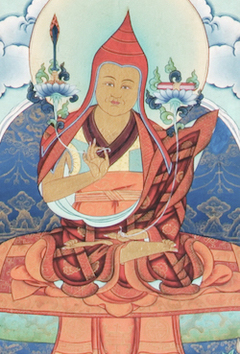
    Biography of Dodrubchen Jigme Tenpai Nyima

    Dodrubchen Jigme Tenpai Nyima, the Third Dodrubchen, was born in 1865 in the sacred Ma valley of Golok, Tibet, into a family deeply rooted in the spiritual lineage of his father, Dudjom Lingpa. From the very beginning, his life was marked by extraordinary recognition, with his teachers and mentors seeing in him the incarnation of profound wisdom. But his journey was not without struggle. As a young boy, he found study difficult, often frustrated to the point of tears. Yet, through perseverance and the support of his teachers, his understanding blossomed, revealing a deep capacity for spiritual insight.

    What makes Dodrubchen Jigme Tenpai Nyima so relatable is his humanity. Even as a master of Tibetan Buddhist teachings, he encountered challenges that shaped him into the teacher he became—a man of great compassion, who dedicated his life to training countless students in both Nyingma and Sarma traditions. His accomplishments were vast: he rebuilt his monastery, composed celebrated commentaries, and gave teachings tirelessly. And though he eventually retreated into seclusion due to his failing health, he continued to guide his closest disciples with unwavering dedication. His life, both ordinary and extraordinary, stands as a testament to the power of persistence, humility, and the profound depth of spiritual commitment.

    About Lotsawa House

    Lotsawa House is a rich and invaluable resource for those seeking authentic Tibetan Buddhist teachings. The website offers an extensive collection of translations from Tibetan texts, including teachings from many great masters such as Dodrubchen Jigme Tenpai Nyima. This is where the teaching “Transforming Suffering and Happiness into Enlightenment” can be found, along with countless other treasures, all freely available for anyone to access.

    Whether you are new to Tibetan Buddhism or have been practicing for years, Lotsawa House provides a space to explore the wisdom of these great teachings. The site is dedicated to making the profound texts of Tibetan Buddhism accessible to a global audience, offering translations in English and other languages, so that anyone, regardless of background, can benefit from these ancient spiritual insights. It’s a place where the wisdom of the Tibetan masters is preserved and shared, so that all who seek it may find the path to peace and understanding.

    You can explore the full collection of teachings and discover more about the great teachers who brought them to life by visiting Lotsawa House.

  • Exploring the Origins of Thought: A Synthesis of Jung, Ramana Maharshi, Kabbalah, and Tibetan Buddhism

    In our journey to understand the nature of thoughts and the Self, we find ourselves drawing from the wisdom of various traditions—Jungian psychology, Vedanta as taught by Ramana Maharshi, the mystical insights of Kabbalah, and the profound teachings of Tibetan Buddhism. These perspectives, though rooted in different cultural and philosophical backgrounds, converge in fascinating ways, offering a profound understanding of where thoughts come from and where they go.

    The Self: A Jungian Perspective

    Carl Jung’s concept of the Self is expansive, encompassing both the conscious and unconscious aspects of the psyche. In Jungian thought, the Self is not just the sum of our conscious awareness but also includes the vast, often hidden, realm of the unconscious. Yet, Jung’s Self goes even further—it includes the totality of our being, which can be seen as connected to the divine. In this view, the Self is also God, the Infinite, the Eternal—encompassing everything, with nothing excluded.

    Ein Sof and the Infinite Source

    In Kabbalistic tradition, this concept of the Infinite is referred to as Ein Sof, meaning “without end.” Ein Sof represents the boundless, formless aspect of God, from which all creation emerges. It is the source of all existence, the primordial void from which thoughts and realities arise.

    When we combine this with Jung’s understanding, we see that thoughts can be considered as arising from Ein Sof—the infinite potential. They emerge from the stillness, the formless void, moving first into the unconscious mind. From there, they bubble up into conscious awareness, manifesting in a way that we can perceive and reflect upon.

    The Vedantic View: Ramana Maharshi on the Self

    Ramana Maharshi’s teachings on the Self resonate deeply with these ideas. He teaches that the true Self is pure awareness, beyond both the conscious and unconscious mind. The thoughts that arise within us, whether they seem to come from the unconscious or are immediately conscious, are all manifestations within this pure awareness.

    In Ramana’s framework, the conscious mind and the unconscious mind are both part of the egoic self—the sense of individual identity that is ultimately an illusion. However, by engaging in self-inquiry, we can trace our thoughts back to their true origin—the pure, infinite awareness that Ramana equates with the Self or Atman. This is the same awareness that Jung might refer to as the totality of the Self, and that Kabbalists understand as arising from Ein Sof.

    The Tibetan Buddhist Perspective: All Phenomena as Ornaments of the Dharmakaya

    Tibetan Buddhism offers a similar understanding but expresses it through the rich metaphor of the Dharmakaya, the truth body of the Buddha. According to these teachings, everything that arises—every thought, every perception, every experience—is an ornament of the Dharmakaya. This means that all phenomena are expressions of the ultimate reality, which is pure, unconditioned awareness or Buddha nature.

    There is a common saying in Tibetan Buddhism: “All phenomena are the ornaments of the Dharmakaya,” or “All sound is the sound of Dharma; all sight is the display of Dharma.” This view suggests that everything we perceive, everything we experience, is not separate from the ultimate reality but is a manifestation of it. Just as thoughts arise from and dissolve back into Ein Sof or the Self, in Tibetan Buddhism, they are seen as temporary displays of the Dharmakaya, arising from the vastness of Buddha nature.

    Buddha’s Enlightenment: Recognizing Mara as the Self

    This understanding is beautifully illustrated in the story of Buddha’s enlightenment under the Bodhi tree. As Siddhartha Gautama sat in deep meditation, Mara—the personification of illusion and desire—appeared to tempt him and distract him from his path to enlightenment. Mara represented all the fears, desires, and illusions that arise within the mind.

    However, instead of engaging with Mara as an external force, the Buddha recognized that Mara was not separate from himself. He famously said to Mara, “I know you. You are a creation of my own mind.” In that moment, by recognizing that Mara was merely a projection of his own thoughts, the Buddha disempowered Mara completely. Mara dissolved, and with that, Siddhartha Gautama achieved enlightenment, becoming the Buddha.

    This moment is a powerful example of self-realization. By recognizing that thoughts, desires, and fears are not external realities but manifestations of the mind, the Buddha transcended them. In the same way, we can see that our thoughts, no matter how powerful they may seem, arise from and dissolve back into the infinite Self, the ultimate reality.

    The Quantum Nature of Thought

    In many ways, this understanding is mirrored in the discoveries of quantum physics. Particles, which seem solid and real, are actually 99.99% empty space. They appear and disappear from the quantum field so rapidly that they seem solid and continuous, much like how thoughts arise and dissolve within our consciousness. The solidity of our thoughts—or indeed our reality—is an illusion, a fleeting manifestation from the infinite potential that is the true Self.

    Practical Application: Self-Inquiry and Meditation

    Understanding thoughts as arising from Ein Sof or as ornaments of the Dharmakaya, and recognizing them as internal projections like Mara, can profoundly inform our practice of self-inquiry and meditation. When a thought arises, we can trace it back, not just through the layers of consciousness and unconsciousness but beyond, into the infinite source. This practice can help us see the impermanence and illusory nature of thoughts and, by extension, of the ego itself.

    Through this inquiry, we can begin to experience the Self not just as a concept but as a living reality—the infinite awareness from which all arises and to which all returns.

    Conclusion

    This synthesis of Jungian psychology, Ramana Maharshi’s Vedanta, Kabbalistic mysticism, Tibetan Buddhism, and the story of Buddha’s enlightenment offers a rich, multifaceted understanding of the nature of thought and the Self. It invites us to see beyond the surface of our thoughts and experiences, recognizing them as temporary manifestations of the infinite. Whether through self-inquiry, meditation, or contemplation of these ideas, we are invited to explore the deeper reality of the Self—an exploration that can lead to profound spiritual awakening and insight.

    🙏🕊️🙏

  • Book Review: The Pristine Mind by Orgyen Chowang

    In the vast landscape of spiritual literature, The Pristine Mind by Orgyen Chowang stands out as a beacon of clarity and practical wisdom. This book, which delves deep into the nature of the meditative mind, has been an invaluable resource in my personal journey of deepening my experience of meditation.

    Chowang presents a powerful exploration of the mind’s innate clarity—what he refers to as the “Pristine Mind.” This concept is both profound and accessible, offering readers a pathway to recognizing and residing in the natural state of awareness that underlies all mental activity.

    What sets this book apart is its practical approach. Chowang does not merely present theoretical concepts; he provides detailed guidance on how to experience and cultivate the Pristine Mind through meditation. For those who, like myself, are seeking to deepen their practice, this book offers a roadmap for moving beyond the fluctuations of ordinary mind (vrittis) into a state of stable, clear awareness.

    One of the most helpful aspects of The Pristine Mind is how it addresses the common obstacles meditators face—distractions, emotional turmoil, and the incessant chatter of the mind. Chowang gently guides the reader through these challenges, offering insights and techniques that make the practice of meditation feel more accessible and less daunting.

    Moreover, Chowang’s writing is imbued with compassion and understanding, making the reader feel supported and encouraged throughout their spiritual journey. His deep wisdom shines through in every chapter, making this book not only a guide to meditation but also a companion in the quest for inner peace and clarity.

    In my own practice, applying the principles from The Pristine Mind has allowed me to cultivate a more consistent and deep meditative state. I’ve found that the more I return to the teachings in this book, the more I am able to maintain a clear and stable mind, even in the midst of life’s inevitable challenges.

    For anyone looking to deepen their meditation practice or to understand the true nature of the mind, The Pristine Mind is a must-read. Chowang’s insights are a gift to all who seek a clearer, more peaceful, and more profound experience of meditation.

    Conclusion

    In conclusion, The Pristine Mind by Orgyen Chowang is a valuable resource for both new and experienced meditators. It offers practical guidance, deep wisdom, and compassionate support for anyone on the path to discovering the clarity and peace that resides within us all.

    What is Pristine Mind

    No matter how cloudy the day, you always know that behind those clouds the sky is clear and blue. Similarly, whether your mind seems chaotic, confused, or anxious, beneath that agitation is your pure, clear natural state. This is your pristine mind. When you reconnect with your pristine mind, you experience inner peace, happiness, and success in every area of your life.

    🙏🕊️🙏

    In the Google talk below, meditation master and author Orgyen Chowang Rinpoche presents instruction and guided meditation based on his book Our Pristine Mind: A Practical Guide to Unconditional Happiness. He introduces us to a unique type of meditation called Pristine Mind meditation, and explains how living with a Pristine Mind transforms every area of our lives.

    Just as we can enjoy pristine water or a pristine environment, we can enjoy the experience of our Pristine Mind. When our mind is pristine, it is in a completely stress-free state and happiness is present all the time. Our happiness is no longer conditional. It is unconditional and comes from within.

  • The Transformative Power of Compassion: A Global Call to Action

    In a world filled with conflict and suffering, cultivating compassion can seem like a daunting challenge. Yet, history offers us profound examples of how embracing compassion can lead to healing and transformation. One powerful example is the Dalai Lama’s response to Mao Tse Tung. Despite Mao’s atrocities, which included the murder and torture of millions, the Dalai Lama viewed him as a teacher who provided an opportunity to deepen his own compassion. This perspective not only exemplifies the Dalai Lama’s compassion but also highlights how staying connected to compassion enables one to maintain wisdom and effectively aid those in need.

    A profound method to cultivate compassion is through the practice of Metta, or loving-kindness meditation. Metta involves focusing on generating feelings of love and kindness toward oneself and then extending those feelings to others, starting from loved ones and gradually including all beings. This practice helps to foster a deep sense of empathy and interconnectedness.

    Chanting OM MANI PADME HUM is a practice deeply rooted in Tibetan Buddhism that complements Metta by further enhancing our compassion. The mantra translates to “The jewel is in the lotus,” symbolizing the union of compassion and wisdom. Each syllable of the mantra is said to purify negative karma and cultivate the qualities of compassion and wisdom.

    An example of a Tibetan prayer that encapsulates this intention is:

    “May all beings be free of suffering and the causes of suffering.
    May all beings experience happiness and the causes of happiness.
    May all beings never be separated from the great happiness devoid of suffering.
    May all beings abide in equanimity, free from attachment and aversion.”

    Integrating this prayer with the practice of OM MANI PADME HUM, we visualize sending compassionate energy to all beings, including those suffering in regions like Israel and Palestine, Ukraine, Russia, and other areas affected by conflict. This combination of Metta and mantra chanting not only helps deepen our personal compassion but also contributes to a more compassionate global community.

    The Dalai Lama’s example shows us that compassion is not merely a personal practice but a source of strength that enables us to remain connected to wisdom and effectively support others. This practice is not about condoning harmful actions but about addressing the root causes of suffering, wishing for all beings to be free from pain and conflict.

    To deepen your experience of compassion, consider these reflective questions:

    • How can I integrate the practice of Metta and OM MANI PADME HUM into my daily life to enhance my compassion towards others and myself?
    • In what ways can the example of the Dalai Lama’s response to suffering inspire my approach to challenging relationships or difficult situations?
    • How can extending compassion to those who have hurt me or caused harm contribute to my own healing and growth?
    • What are some specific actions I can take to apply the intention of the Tibetan prayer in my interactions with others and in my broader community?

    I invite you to share your thoughts and experiences in the comments below. Let’s support each other in this journey of cultivating compassion and making a positive impact in our world.

    🙏🕊️🙏

  • Book Review: “The Crystal and the Way of Light: Sutra, Tantra, and Dzogchen” by Namkhai Norbu

    Exploring the Parallels Between Tibetan Dzogchen and the Teachings of Jesus

    Namkhai Norbu’s “The Crystal and the Way of Light” serves as a profound introduction to the ancient teachings of Tibetan Buddhism, particularly Dzogchen. In this book, Norbu presents the essence of Dzogchen as a path that emphasizes the direct recognition of our true nature, transcending the complexities of conceptual thought and practices.

    Dzogchen and the Teachings of Jesus: A Spiritual Parallel

    What makes this book particularly compelling is how its core principles resonate with the teachings of Jesus. At the heart of Dzogchen lies the understanding of our innate purity and the inherent clarity of our minds. This is akin to Jesus’s teachings about the Kingdom of God being within us (Luke 17:21). Both traditions encourage a direct, experiential understanding of our true nature.

    The Innate Purity of Mind

    In Dzogchen, the mind is often likened to a crystal—naturally pure and clear, yet often obscured by the transient stains of thoughts and emotions. This parallels Jesus’s teachings on purity of heart: “Blessed are the pure in heart, for they shall see God” (Matthew 5:8). Just as Dzogchen practitioners seek to recognize and rest in the natural state of their mind, Christians are called to seek purity of heart to experience the divine presence.

    The Path of Immediate Recognition

    Dzogchen emphasizes the immediate recognition of one’s true nature without the need for elaborate practices or rituals. This echoes Jesus’s message of simplicity and directness in spiritual practice. He taught, “When you pray, go into your room, close the door and pray to your Father, who is unseen. Then your Father, who sees what is done in secret, will reward you” (Matthew 6:6). Both paths advocate for an intimate, direct connection with the divine, free from external distractions.

    Embracing Compassion and Love

    Compassion is a cornerstone of both Dzogchen and Jesus’s teachings. Dzogchen encourages practitioners to cultivate bodhicitta, the compassionate wish to attain enlightenment for the benefit of all beings. Similarly, Jesus commanded, “Love your neighbor as yourself” (Mark 12:31). This universal call to compassion bridges both traditions, highlighting the importance of love and kindness in the journey toward spiritual awakening.

    Emphasizing Respect and Clarity of Intent

    This article aims to foster respect and understanding between different spiritual traditions. It is not intended to equate Dzogchen with Christian teachings or suggest blending the two into a single cohesive belief system. Instead, it highlights resonances and shared values that can promote mutual appreciation and dialogue. The intention is to encourage exploration and respect for spiritual wisdom across traditions, not to challenge or alter core Christian beliefs.

    Interfaith Dialogue vs. Ecumenism

    It is important to distinguish between interfaith dialogue and ecumenism. Interfaith dialogue seeks to promote understanding, respect, and cooperation among different religious traditions without attempting to merge them into one. It values each tradition’s unique perspective, fostering a spirit of learning and collaboration.

    Ecumenism, on the other hand, focuses on promoting unity within the Christian faith, seeking to reconcile differences among various Christian denominations. While both interfaith dialogue and ecumenism aim to reduce conflict and promote peace, interfaith dialogue is about respecting and valuing the diversity of religious expressions.

    Conclusion

    Namkhai Norbu’s “The Crystal and the Way of Light” not only offers valuable insights into the practice and philosophy of Dzogchen but also provides a remarkable parallel to the teachings of Jesus. Both paths guide us toward a deeper understanding of our true nature, emphasizing purity, directness, and compassion. For those interested in exploring spiritual traditions that transcend cultural boundaries, this book is a compelling read that highlights the universal truths shared by Dzogchen and the teachings of Jesus.

    I invite readers to approach this exploration with an open mind and heart, fostering a dialogue that respects and honors the rich diversity of spiritual paths. Your reflections and perspectives are welcomed as we seek to learn and grow together in a spirit of love and compassion.

    🙏🕊️🙏

  • The Enduring Light of Tibetan Buddhism: Lessons for Christian Practitioners

    Fostering Compassionate Unity in Christian Practice

    Introduction

    I thank God that Tibetan Buddhism still survives. Tibetan Buddhists are some of the most sincere, authentic, and compassionate practitioners of spiritual principles. Their presence is a blessing to the world, offering a guiding light in times of darkness and uncertainty. By exploring their teachings, we can find ways to enhance our own spiritual practice, fostering interfaith dialogue and mutual understanding.

    The Essence of Tibetan Buddhism

    Tibetan Buddhism is rooted in principles that resonate with many Christian values: a pristine mind, loving-kindness, compassion, and wisdom. These principles emphasize the cultivation of a clear, peaceful mind, a heart full of love and kindness, a commitment to compassionate action, and the pursuit of deep wisdom. These ideals are not foreign to Christianity; rather, they complement the teachings of Jesus on love, mercy, and wisdom.

    Easing Fears and Embracing Inclusion

    It is important to clarify that exploring Tibetan Buddhist teachings does not mean abandoning Christian faith or compromising the belief that Jesus is the way, the truth, and the life. Instead, it is about recognizing the wisdom in other traditions that can enhance our understanding and practice of Jesus’ teachings to love one another. Jesus himself reached out to those who were considered outsiders, demonstrating love and inclusion rather than fear of strangers.

    Exploring Tibetan teachings through interfaith dialogue offers us an opportunity to deepen our understanding of universal spiritual principles such as love, compassion, and wisdom. Through interfaith dialogue we can draw inspiration from other cultures and traditions to enrich our spiritual practice and foster greater empathy and unity in our communities. This exploration is not about adopting foreign beliefs, but about seeking wisdom, practicing compassion and fostering a spiritual growth that resonates with core Christian values.

    Practical Integration for Christians

    Mindfulness and Prayer
    Tibetan Buddhism emphasizes mindfulness—being present in each moment. This practice can significantly enhance our prayer life, making us more aware of God’s presence and deepening our relationship with Him.

    • Mindfulness in Prayer: Incorporate mindfulness into your prayer routine by beginning with a few moments of deep, focused breathing. Center yourself and become aware of God’s presence. As you pray, remain present with each word, offering your prayers with full attention and sincerity.
    • Meditative Reading of Scripture: Practice Lectio Divina, a meditative reading of the Bible. Read a passage slowly and reflect on its meaning. Pause to meditate on specific words or phrases, allowing them to resonate deeply within your heart.

    Compassionate Action
    Both traditions value compassion. Christians can draw inspiration from Tibetan practices of loving-kindness to enhance their own acts of charity and service, following Jesus’ command to love our neighbors as ourselves.

    • Loving-Kindness Meditation: Engage in loving-kindness meditation, also known as Metta. Begin by offering kindness to yourself, then extend these wishes of well-being and happiness to others, including family, friends, strangers, and even those with whom you have conflicts. This practice fosters a compassionate heart and encourages active love in daily life.
    • Serving Others: Inspired by the Bodhisattva vow to help all beings, commit to small acts of kindness and service. Volunteer at local charities, offer support to those in need, and engage in community service as a way to embody Christ’s love.

    Wisdom and Discernment
    The pursuit of wisdom is central in both traditions. Tibetan Buddhism encourages deep reflection and learning, which can enrich our understanding of Scripture and help us live more wisely.

    • Reflective Practices: Take time for regular self-reflection and meditation on biblical teachings. Use contemplative practices to seek God’s guidance in making wise decisions. Reflect on your actions and their alignment with Christian values.
    • Study and Dialogue: Engage in interfaith dialogue and study to broaden your perspective. Understanding different spiritual traditions can enhance your own faith and offer new insights into the pursuit of wisdom.

    Peace and Reconciliation
    Tibetan Buddhist practices of cultivating inner peace can support Christians in embodying the peace of Christ, promoting reconciliation and harmony in our relationships and communities.

    • Inner Peace Practices: Incorporate meditation practices that focus on achieving inner peace. Use techniques such as breath awareness or guided imagery to calm your mind and cultivate a sense of tranquility. This inner peace can help you approach conflicts with a calm and reconciliatory spirit.
    • Peacemaking Efforts: Actively engage in peacemaking within your community. Follow the teachings of Jesus by fostering forgiveness, understanding, and reconciliation. Seek to resolve conflicts with love and compassion, promoting harmony and unity.

    Blessings to the World

    Tibetan Buddhism’s contributions to global spirituality are immeasurable. The spread of its teachings has influenced various cultures, bringing a message of peace, compassion, and wisdom. By recognizing these contributions, Christians can appreciate the universal values that transcend specific religious boundaries and foster a more compassionate and wise world.

    Conclusion

    In a world often characterized by division and suffering, the teachings of Tibetan Buddhism offer a path of unity, healing, and enlightenment that complements the Christian call to love and serve others. By exploring and integrating these teachings into our lives, we open ourselves to profound transformation, contributing to a more compassionate and wise world while deepening our own faith.

    Contemplative Reflections:

    1. How can the principles of mindfulness and loving-kindness enhance your personal prayer and spiritual practice?
    2. In what ways do you see the teachings of Tibetan Buddhism complementing and enriching your understanding of Christian values?
    3. Reflect on a recent experience where practicing compassion or seeking inner peace has influenced your interactions with others.

    Share Your Thoughts:

    I invite you to share your reflections, experiences, or questions in the comments below. Let’s continue the conversation on fostering compassion and unity across spiritual traditions.

  • Breathing Through the Storm: Practices of Compassion and Connection

    In these uncertain times, many of us are grappling with complex emotions—fear, frustration, anger, and uncertainty about what lies ahead. It’s easy to feel overwhelmed by the turmoil around us. Yet, amidst this chaos, practices like Metta and Tonglen can offer profound solace and guidance, helping us connect deeply with ourselves and the world.

    Metta and Tonglen: Cultivating Compassion

    Metta, or loving-kindness meditation, invites us to extend warmth and goodwill to ourselves and others. It teaches us to embrace not only those we love but also those we’re neutral towards and even those with whom we have difficulties. By nurturing this boundless compassion, we forge a deeper connection to all beings, fostering understanding and healing.

    Tonglen, on the other hand, is a practice that transforms our relationship with suffering. By breathing in the world’s pain and breathing out hope, love, and well-being, we engage in a powerful cycle of empathy and transformation. This practice allows us to hold space for the suffering around us while simultaneously cultivating a sense of hope and resilience.

    A Poem of Breath and Connection

    Breathing in, I draw the world’s pain,
    Breathing out, I send love, hope again.
    Inhale the fears that linger near,
    Exhale warmth to all who hear.

    The storm within, it calls to me,
    To sit in stillness, let it be.
    With each breath, I weave the thread,
    Of light and peace, where hope is spread.

    We stand together, hand in hand,
    Through darkened skies, across the land.
    In shared compassion, we find our way,
    To brighter dawns, a new today.

    Connecting with the Collective

    This blog is more than a reflection—it’s an invitation to connect. I invite you to share your personal stories, hopes, fears, and dreams in the comments below. By creating this healing space together, we honor the collective mood and nurture our shared humanity. Let this be a place where we support and uplift each other, breathing in suffering and breathing out love, until the world breathes easier once more.

    Reflections for Deepening

    As you engage with these practices, consider the following questions:

    • What specific fears or concerns are you holding onto right now, and how might breathing them in and transforming them with compassion feel?
    • How can you extend loving-kindness to yourself and others in your daily life?
    • In what ways can you connect with diverse spiritual paths to foster a sense of unity and shared purpose?

    Feel free to share your reflections and experiences in the comments below. Your insights can contribute to our collective journey of healing and understanding.

    A Prayer for All Beings

    May all beings be happy.
    May all beings be free of suffering.
    May all beings never be apart from the joy of equanimity.
    And may all beings be enlightened.

    🙏🕊️🙏