Tag: Spiritual Practice

  • The Sky Within

    The Sky Within

    Rest, my mind, like the vast, open sky,
    Where clouds of thought drift freely by.
    No need to chase, no need to cling,
    All dissolves in the spacious knowing.

    The light of awareness shines so clear,
    Its essence untouched by hope or fear.
    Mountains may rise, rivers may flow,
    But the sky remains, steady and whole.

    Look within—there is nothing to find,
    Yet the treasures abound in the unbound mind.
    No path to walk, no goal to see,
    For you are already infinite and free.

    Let the waves of life crash and play,
    The ocean beneath does not sway.
    Rest, my being, in your natural state,
    For in this moment, you hold all fate.

    🙏🕊🙏

  • Kapalabhati Pranayama: The Shining Forehead Breath

    Kapalabhati Pranayama: The Shining Forehead Breath


    Dear Friend,

    There is a practice in yoga known as Kapalabhati, the “Shining Forehead Breath.” The very name carries with it a sense of poetry and mystery. “Kapala” means forehead, and “Bhati” means light or radiance. Together, they evoke an image of clarity, brightness, and inner illumination. This is no mere exercise but an invitation to cleanse not only the breath but also the mind and spirit, polishing the very space from which insight and intuition arise.

    In ancient times, practitioners likened this breath to polishing a mirror so that it might reflect the light of the divine. Each exhalation sweeps away impurities, and each inhalation invites the brilliance of life itself. To engage in this practice is to embark on a journey into your own radiant stillness.

    Here is how you may begin:

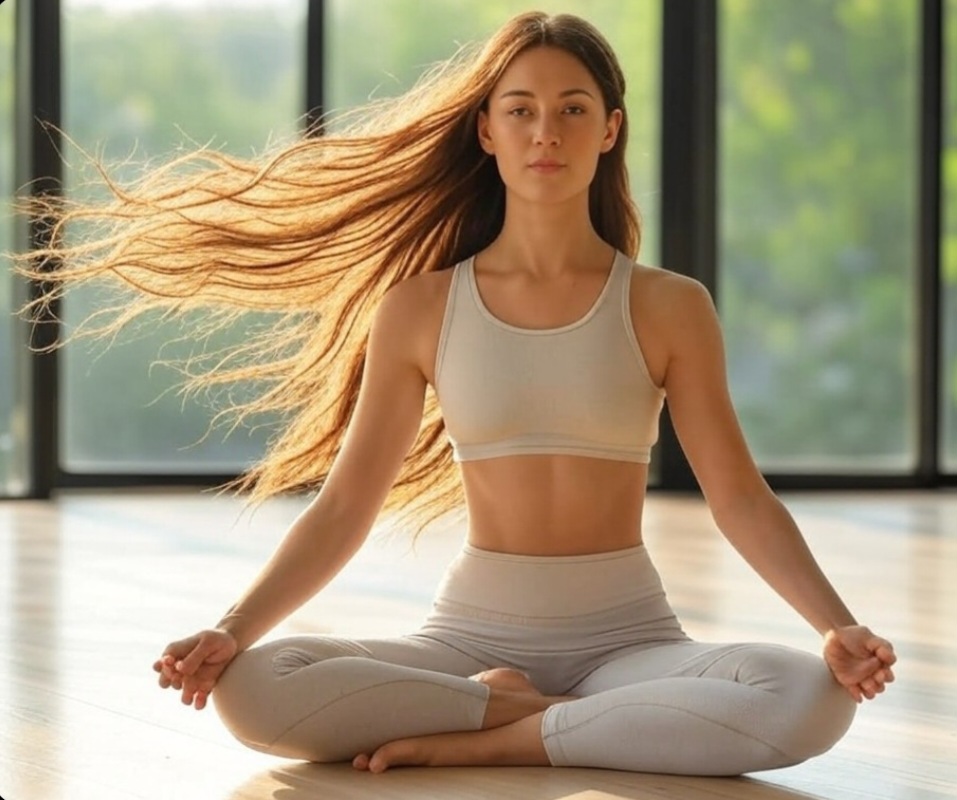
    1. Find Your Seat: Sit comfortably, with your spine straight and your hands resting gently on your knees. Feel the earth beneath you, steady and supportive.
    2. Breathe to Center Yourself: Take 5–7 slow, deep breaths. Let these breaths settle your thoughts and prepare you for the journey ahead.
    3. Engage the Shining Breath:
      • Take a full, deep inhale to begin.
      • Begin a series of sharp, active exhalations through your nose, allowing the inhalations to come naturally and passively.
      • Focus on the rhythm, like the steady beat of a drum, as your abdominal muscles contract with each exhalation.
      Start with 20–30 breaths per round, letting the breath carry you into its natural rhythm.
    4. Pause and Hold: At the end of the round, take a deep inhale. Hold the breath for a moment, feeling the stillness that arises, as if the universe itself has paused with you.
    5. Return to Natural Breathing: Exhale gently and let your breath return to its natural flow. Rest here, simply observing the quiet within.

    This is the essence of Kapalabhati. It is not about striving or achieving but about clearing away what obscures the light already present within you.

    As you continue to practice, you may notice the effects: a sharper mind, a lighter body, and a heart more attuned to the subtle rhythms of life. The breath becomes not just a function but a bridge—connecting you to the luminous self that watches over all.

    In the modern world, where distractions abound and our minds are pulled in countless directions, Kapalabhati offers a sanctuary. It invites you to return to simplicity, to the purity of breath, and to the stillness that holds all things. In this way, it is both a practice for the moment and a gift to carry with you into all moments.

    Dedication of Merit

    At the conclusion of this practice, let us dedicate whatever merit has arisen for the benefit of all sentient beings:

    May whatever merit has been accumulated in this practice flow outward, boundless and unending, for the benefit of all sentient beings.

    May all beings be free from suffering and the causes of suffering.

    May all beings experience happiness and the causes of happiness.

    May all beings awaken to enlightenment and the causes of enlightenment.

    May this moment of intention ripple through the universe, bringing peace, harmony, and light to all.

    Namo Buddhaya, Namo Dharmaya, Namo Sanghaya.

    I leave you with this reflection: Each breath you take is an opportunity to renew, to let go, and to shine. May this practice bring you clarity, lightness, and peace. And may it remind you of the brilliance that has always been yours.

    🙏🕊🙏
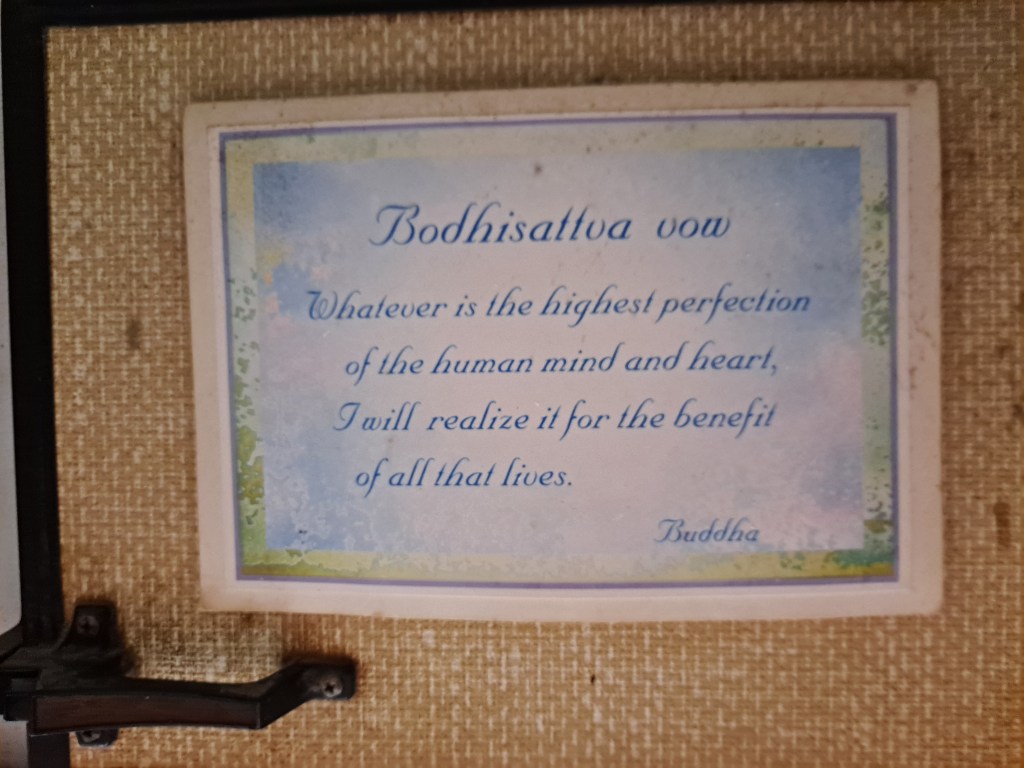

  • In misunderstanding, there’s an opportunity for growth, and in drama, a chance for peace.

    In misunderstanding, there’s an opportunity for growth, and in drama, a chance for peace.

    Human life is a continuous dance of clarity and confusion, harmony, and discord. It’s the nature of being human to navigate this ebb and flow, constantly seeking meaning, understanding, and connection. This is why practices like contemplation are so vital—they offer a way to touch something timeless and unchanging amidst the drama of existence. They remind us that even in misunderstanding, there’s an opportunity for growth, and in drama, a chance for peace.

    🙏🕊🙏

  • The Mysterious Force of Grace 🕊

    The Mysterious Force of Grace 🕊

    We are called to make our best effort, yet there are moments when something greater lifts us beyond our own abilities. Like an eagle, we can only fly to the capacity of our wings, but on occasion, we soar beyond them. Our desire and effort to connect with God open the door for Divine Grace to take us where we can not go on our own. This interplay between effort and grace reminds us that while we are called to give our all, it’s the mysterious force of grace that allows us to go beyond what we thought possible. It’s a humbling and inspiring truth, one that calls us to act, but also to surrender. In this partnership of effort and grace, we glimpse the transformative power of divine love, leading us closer to God’s will.

    🙏🕊🙏

  • The Art of Perfection: Nothing to Add, Nothing to Take Away

    The Art of Perfection: Nothing to Add, Nothing to Take Away

    Western and Eastern philosophies each offer unique perspectives on perfection. The Western view says, “Perfection is when there’s nothing left to add.” In contrast, the Eastern view says, “Perfection is when there’s nothing left to take away.”

    Both ideas guide us toward simplicity and balance, but the Eastern approach invites us to strip away all that is unnecessary, leaving only the pure essence of what is.

    This perspective is deeply resonant with the practice of sitting at the door of the Cloud of Unknowing. There’s no need to strive, to add meaning, or to make anything happen. The perfection lies in just being—letting go of everything extra until you’re left with the quiet stillness of presence.

    This is a reminder that life’s perfection isn’t about accumulation but about letting go. Rest in what remains when there’s nothing left to take away.

    🙏🕊🙏

  • Allowing presence to arise on its own.

    Allowing presence to arise on its own.

    …a restless wanderer, always searching but never finding. Sitting at the door, however, the ego transforms—no longer lost, but given a purpose. It becomes the guardian of stillness, patiently awaiting what cannot be sought, allowing presence to arise on its own.

    🙏🕊🙏

  • Sitting at the Door: A Buddhist and Mystical Practice

    Sitting at the Door: A Buddhist and Mystical Practice

    The Cloud of Unknowing teaches us to sit at the door of divine mystery, letting go of effort and surrendering to grace. This mirrors profound teachings in the Buddha Dharma, emphasizing direct experience, trust, and stillness.

    The Buddha’s phrase “Ehi Passiko” (Come and see) invites us to encounter truth directly—not through intellectual striving, but through quiet observation. In the Satipatthana Sutta, mindfulness is described as simply observing the body, feelings, and mind as they arise, with no need to grasp or resist.

    This is like sitting at the door of unknowing: allowing thoughts, emotions, and sensations to come and go, while resting in awareness. We are not called to force understanding or make something happen; we simply sit, trusting the process.

    Another Buddhist teaching, Vossagga (letting go), encourages us to release grasping and surrender to the natural flow of life. Even the ego’s restlessness becomes part of the practice, not something to fight against. As we trust the unfolding of awareness, stillness grows.

    This gentle practice reminds us that neither the ego nor effort creates transformation—it is the natural interplay of surrender and grace. Whether we call it divine love or pristine awareness, sitting at the door reveals a deeper truth.

    How can you embrace this today? Simply sit. Let go. Trust.

    #Contemplation #Mindfulness #CloudOfUnknowing #Buddhism #Stillness #Grace

    🙏🕊🙏

  • Renewal in Stillness: The Quiet Strength of Sitting at the Door

    Renewal in Stillness: The Quiet Strength of Sitting at the Door

    In a world that celebrates action, stillness offers a different kind of renewal. Sitting at the door of unknowing—open, patient, and without expectation—allows a subtle yet profound transformation.

    Renewal doesn’t have to mean physical strength or outward achievements. It can be the quiet resilience to face life’s challenges, the emotional peace to let go of striving, and the trust to simply be.

    In this practice, strength is not about doing more but about surrendering more deeply. Renewal arises not from effort but from grace, gently unfolding as you rest in the simplicity of presence.

    Sitting at the door is enough. Renewal comes when we stop chasing it and allow it to find us.

    🙏🕊🙏

  • On this December 15th, as we find ourselves in the midst of a busy season, it’s a wonderful opportunity to reflect on what truly matters.

    On this December 15th, as we find ourselves in the midst of a busy season, it’s a wonderful opportunity to reflect on what truly matters.

    In moments of busyness or stress, we can look to Psalm 46:10, which says, “Be still, and know that I am God.” This verse reminds us to take time to pause and recognize God’s sovereignty and presence in our lives.

    Embracing stillness can lead us to deeper peace and understanding. Perhaps today could be a day for you to practice that stillness—whether through prayer, meditation on Scripture, or simply taking a few moments of quiet reflection.

    How do you usually find peace amid the hustle and bustle?

    🙏🕊🙏

  • Sitting at the Door: Contemplation as Spiritual Rest

    Sitting at the Door: Contemplation as Spiritual Rest

    In The Cloud of Unknowing, the author describes contemplation as a form of “spiritual sleep.” This isn’t physical sleep but a metaphor for the quieting of the active, discursive mind. It’s a state where the soul surrenders to divine mystery, resting in stillness and trust.

    Contemplation, like spiritual sleep, is not about doing—it’s about resting. It invites us to let go of striving, reasoning, or trying to achieve. Instead, we allow ourselves to simply be in the moment, releasing the need to understand or control.

    This restful quality makes contemplation deeply transformative. By sitting at the door, we step into a space where the usual busyness of thought subsides. In this stillness, we aren’t unconscious but profoundly present—open to grace and insight beyond the grasp of the mind.

    Here are a few reminders to guide you in this practice:

    Rest in Not-Knowing: Let go of the need for answers or outcomes. Allow the mystery to hold you.

    Surrender Effort: Contemplation is not something you achieve but something you allow. Trust that simply sitting is enough.

    Embrace Stillness: Like the restful quality of sleep, let the mind settle naturally without forcing it to be quiet.

    When you sit at the door, remember that this practice is about creating space for grace to unfold. Whether thoughts arise or the mind becomes still, you are already practicing. By resting in this spiritual sleep, you connect with a deeper awareness that transcends the ordinary.

    Contemplation isn’t about doing—it’s about resting. And in that resting, profound transformation is quietly at work.

    #Zen
    #Zazen
    #LivingTheDream
    #MindfulnessMatters

  • Balancing Strong Determination and Just Sitting in Practice

    Balancing Strong Determination and Just Sitting in Practice

    Meditative practice offers many paths, each with its unique approach to cultivating awareness and equanimity. Two practices that beautifully complement each other are Adhitthana (strong determination sitting) and the practice of just sitting.

    What is Adhitthana?
    In Vipassana meditation, Adhitthana translates to strong determination or resolve. It involves committing to sit with absolute stillness for a set period—whether one minute, five minutes, or longer. During this time, the practitioner resists the urge to move, scratch, or adjust, no matter what sensations or thoughts arise.

    The purpose is not to create tension but to cultivate mental strength and patience. By sitting still, you observe discomfort, restlessness, or thoughts with equanimity, realizing that they, too, will pass. This practice sharpens focus and builds resilience.

    What is Just Sitting?
    On the other hand, the practice of just sitting is about letting go of effort. It invites you to allow everything—thoughts, sensations, and even subtle movements—to arise naturally. There’s no striving for stillness or achievement. Instead, it’s an act of surrender, simply being present without resistance or judgment.

    How Do These Practices Work Together?
    While they may seem different, Adhitthana and just sitting are complementary:

    Adhitthana strengthens discipline and equanimity, helping you navigate discomfort with grace.

    Just sitting emphasizes openness and surrender, encouraging a relaxed acceptance of what is.

    By alternating these practices, you can experience the benefits of both. For instance, you might set aside a few minutes for Adhitthana to cultivate stillness, then transition into just sitting to release effort and rest in awareness.

    Finding Balance in Your Practice
    There’s no “right” way—only what feels supportive in the moment. Both practices honor the essence of meditation: being present with what is. Whether you’re sitting still with strong determination or allowing movement and thoughts to flow, each approach deepens your connection to the present.

    Remember, the goal is not perfection but presence. Through these practices, you learn to meet both stillness and movement with equanimity, trusting that each has its place in the journey of self-discovery.

    #Zen
    #Zazen
    #LivingTheDream
    #MindfulnessMatters

  • Nothing Is Happening: The Profound Simplicity of Sitting Practice

    Nothing Is Happening: The Profound Simplicity of Sitting Practice

    In the practice of sitting at the door of contemplation, we often expect something to happen—insight, peace, or even enlightenment. But the deeper truth of the practice is this: nothing is happening.

    This doesn’t mean the practice is empty or pointless. Quite the opposite. It invites us to rest in the simplicity of just sitting, letting go of the need for results or experiences. Whether thoughts arise or stillness emerges, the essence of the practice remains untouched.

    Even when “something” seems to happen—discursive thoughts, emotions, or sensations—it’s all part of the flow. In the vastness of awareness, these waves rise and fall, and yet nothing truly happens. The mind seeks meaning or progress, but the practice reminds us that the profound is found in the ordinary.

    The Zen saying “Enlightenment is nothing special” echoes this wisdom. By resting in the present moment without striving, we discover the extraordinary within the mundane. Whether the mind is busy or still, whether the body is at ease or in discomfort, the practice holds steady.

    So, when you sit at the door, let go of the need for something to happen. Trust in the simplicity of the posture, the breath, and the stillness. By allowing the moment to be as it is, you discover the quiet power of simply being.

    In sitting practice, the phrase “Nothing is happening” becomes a mantra of freedom. It liberates us from striving and invites us to rest in the truth of the present.

    How does it feel to embrace the idea that nothing is happening?

    #Zen
    #Zazen
    #LivingTheDream
    #MindfulnessMatters