Tag: spiritual growth

  • Lesson 15 of A Course in Miracles (ACIM): Guided Meditation – “My thoughts are images that I have made.”


    Lesson 15 of A Course in Miracles presents the lesson: “My thoughts are images that I have made.” This teaching invites us to recognize that our thoughts create the mental images and perceptions that shape our experience of reality. By acknowledging that our thoughts are not inherently true or real, we can begin to take responsibility for the images we hold in our minds.

    This practice encourages us to examine the power of our thoughts in shaping our perception of ourselves and the world. By understanding that our thoughts are like images we have constructed, we can start to question their validity and choose thoughts that align with truth and love.

    Jesus taught about the importance of purity of heart and the power of thoughts in shaping our lives. In Matthew 5:8, He says, “Blessed are the pure in heart, for they will see God.” This teaching aligns with ACIM’s guidance to purify our thoughts and see beyond the illusions created by our own mental images.

    By practicing Lesson 15, we align ourselves with Christ’s message of inner purity and clarity. We learn to release the false images and perceptions created by our thoughts and open ourselves to a deeper connection with the divine truth within us.

    Explore Lesson 15 of A Course in Miracles with us, and discover how transforming your thoughts can lead to greater peace, clarity, and spiritual awakening.

    Guided Meditation: Lesson 15 from A Course in Miracles

    This guided meditation is tailored to encompass the elements, themes, messages, and practices of Lesson 15 from A Course in Miracles.

    Find a comfortable position, either sitting or lying down, where you can relax and be free from distractions.


    Close your eyes gently and take a few deep breaths, allowing yourself to settle into the present moment.


    Bring your attention to your breath, feeling the sensation of each inhale and exhale.


    Reflect on the central theme of Lesson 15: “My thoughts are images that I have made.”


    Contemplate the idea that your thoughts are not random occurrences, but rather creations of your own mind.


    Acknowledge that the images you hold in your mind shape your perception of the world and influence your experiences.


    With each breath, imagine releasing any attachment to the images you have made in your mind, allowing them to dissolve like clouds in the sky.


    Visualize yourself stepping back from your thoughts, observing them with a sense of detachment and clarity.


    Feel a sense of empowerment as you recognize that you have the power to choose the thoughts you entertain and the images you hold in your mind.


    Repeat the following affirmations silently or in your mind:


    “My thoughts are images that I have made.”


    “I release all attachments to the images in my mind.”


    “I choose to focus on thoughts that uplift and inspire me.”


    Allow yourself to rest in this space of inner peace and clarity for a few moments, letting go of any attachment to the images in your mind.

    When you’re ready, gently bring your awareness back to your surroundings. Wiggle your fingers and toes, and slowly open your eyes.

    Take a moment to reflect on your experience, noticing any insights or shifts in perception that may have occurred.

    Remember that you can return to this meditation whenever you feel called to deepen your understanding of Lesson 15.
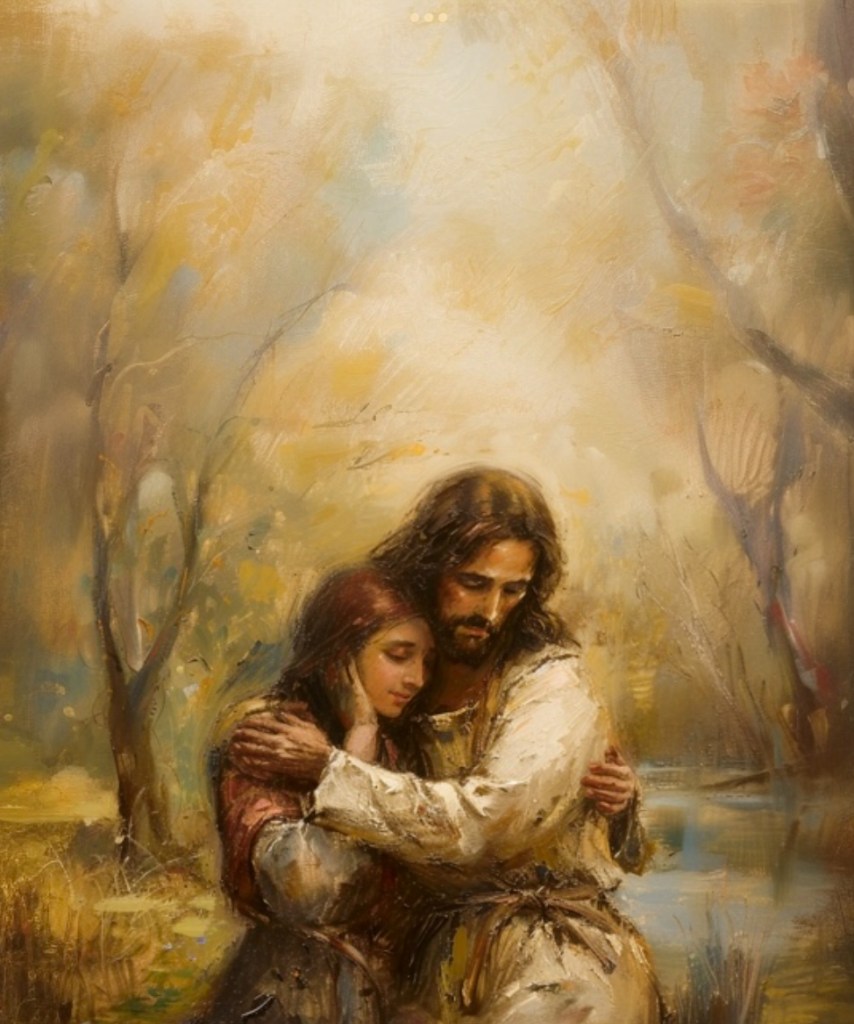
  • Poem: Echoes of Strength and Peace

    In the midst of beauty, a sudden crash echoes with illness and pain. Yet, amidst the ebb and flow, there lies a promise of strength and peace growing with time.

    🙏🕊️🙏

  • Breathing Through the Storm: Practices of Compassion and Connection

    In these uncertain times, many of us are grappling with complex emotions—fear, frustration, anger, and uncertainty about what lies ahead. It’s easy to feel overwhelmed by the turmoil around us. Yet, amidst this chaos, practices like Metta and Tonglen can offer profound solace and guidance, helping us connect deeply with ourselves and the world.

    Metta and Tonglen: Cultivating Compassion

    Metta, or loving-kindness meditation, invites us to extend warmth and goodwill to ourselves and others. It teaches us to embrace not only those we love but also those we’re neutral towards and even those with whom we have difficulties. By nurturing this boundless compassion, we forge a deeper connection to all beings, fostering understanding and healing.

    Tonglen, on the other hand, is a practice that transforms our relationship with suffering. By breathing in the world’s pain and breathing out hope, love, and well-being, we engage in a powerful cycle of empathy and transformation. This practice allows us to hold space for the suffering around us while simultaneously cultivating a sense of hope and resilience.

    A Poem of Breath and Connection

    Breathing in, I draw the world’s pain,
    Breathing out, I send love, hope again.
    Inhale the fears that linger near,
    Exhale warmth to all who hear.

    The storm within, it calls to me,
    To sit in stillness, let it be.
    With each breath, I weave the thread,
    Of light and peace, where hope is spread.

    We stand together, hand in hand,
    Through darkened skies, across the land.
    In shared compassion, we find our way,
    To brighter dawns, a new today.

    Connecting with the Collective

    This blog is more than a reflection—it’s an invitation to connect. I invite you to share your personal stories, hopes, fears, and dreams in the comments below. By creating this healing space together, we honor the collective mood and nurture our shared humanity. Let this be a place where we support and uplift each other, breathing in suffering and breathing out love, until the world breathes easier once more.

    Reflections for Deepening

    As you engage with these practices, consider the following questions:

    • What specific fears or concerns are you holding onto right now, and how might breathing them in and transforming them with compassion feel?
    • How can you extend loving-kindness to yourself and others in your daily life?
    • In what ways can you connect with diverse spiritual paths to foster a sense of unity and shared purpose?

    Feel free to share your reflections and experiences in the comments below. Your insights can contribute to our collective journey of healing and understanding.

    A Prayer for All Beings

    May all beings be happy.
    May all beings be free of suffering.
    May all beings never be apart from the joy of equanimity.
    And may all beings be enlightened.

    🙏🕊️🙏

  • Journeying Through “The Dark Night of the Soul”: Embracing Spiritual Purification

    Review of Chapters 1-6 with Personal Reflections and Contemplative Insights

    In St. John of the Cross’s timeless masterpiece, “The Dark Night of the Soul,” he intricately details the soul’s profound journey towards spiritual union with the divine. Each chapter unveils layers of purification and surrender, guiding us through the depths of spiritual transformation.

    Chapter 1: The Soul’s Longing

    Chapter 1 begins with a poignant exploration of the soul’s yearning for divine connection. St. John describes how this longing initiates the soul’s journey through darkness and detachment from earthly desires. Personally, I resonate deeply with this chapter as it mirrors my own quest for deeper spiritual fulfillment amidst life’s challenges.

    Chapter 2: Detachment from Earthly Desires

    In Chapter 2, St. John delves into the dark night of the senses, where the soul undergoes purification from sensory attachments. This resonates with my journey of letting go of material expectations due to chronic fatigue syndrome, guiding me to embrace spiritual detachment as a path to inner peace.

    Chapter 3: Purification of the Spirit

    The dark night of the spirit unfolds in Chapter 3, where St. John explores the soul’s purification at its deepest level. This chapter teaches me the profound art of surrender, where I’m learning to release attachments and find solace in divine presence amidst life’s uncertainties.

    Chapter 4: Surrendering to Divine Transformation

    Chapter 4 amplifies the soul’s journey through surrender, where St. John emphasizes letting go of spiritual consolations for a deeper union with God. This chapter inspires me to embrace a profound level of surrender, trusting in divine guidance as I navigate life’s challenges and joys.

    Chapter 5: Awakening to Divine Love

    In Chapter 5, St. John illuminates the soul’s awakening to divine love through complete purification and detachment. This chapter encourages me to deepen my awareness of the divine presence in every moment, cultivating a profound sense of inner peace and spiritual fulfillment.

    Chapter 6: Recognizing the Divine in All

    Finally, Chapter 6 culminates in the soul’s recognition of the divine presence in all aspects of existence. Inspired by Jesus’ teachings on spiritual perception, this chapter guides me towards seeing God in everyone and everything, fostering a transformative journey of spiritual growth and awakening.

    Reflective Questions for Contemplation:

    1.  How does the concept of surrender resonate with your own spiritual journey?

    2.  In what ways can detachment from earthly desires deepen your sense of inner peace?

    3.  How do you currently perceive the divine presence in your daily life and interactions?

    4.  What practices or teachings inspire you to embrace spiritual growth and union with the divine?

    Feel free to share your reflections, insights, or experiences in the comments below. Let’s embark on this journey of spiritual exploration together!

    If you’re interested in learning more about this book, follow this link below to the Amazon website.

    This blog post integrates St. John of the Cross’s teachings with personal reflections and invites readers to engage in contemplation and discussion. As we navigate our spiritual paths, may we find inspiration and guidance in embracing deeper levels of surrender, purification, and divine union.

    🙏🕊️🙏

  • Embracing Personal Responsibility: A Christian Perspective on Mindfulness and Action

    Empowering Christian Living: Embracing Personal Responsibility in Thought and Action

    In the journey of faith and personal growth, Christians often face the dichotomy between external influences and internal responsibility. The teachings of Joyce Meyer in her book The Battlefield of the Mind offer a powerful reminder of the importance of taking ownership of our thoughts and actions. This perspective challenges the tendency to attribute negative behaviors or life circumstances solely to external forces like the devil, fate, or divine influence, urging instead a proactive stance in shaping our inner and outer worlds.

    Understanding Personal Responsibility

    At the core of Christian ethics lies the concept of personal responsibility—acknowledging that our choices and actions have consequences. This principle is not merely a moral guideline but a foundational aspect of spiritual growth and maturity. It involves:

    1. Mindfulness of Thoughts: Meyer emphasizes the battleground of the mind where thoughts arise and shape our attitudes and behaviors. Rather than passively accepting negative thoughts or blaming external influences, Christians are encouraged to cultivate mindfulness. This means being aware of one’s thoughts, discerning their origin, and actively choosing thoughts aligned with love, kindness, and compassion.
    2. Intentional Action: Taking responsibility extends beyond thoughts to actions. Every action carries moral weight and influences our relationships and communities. Meyer’s teachings underscore the importance of intentional action guided by Christian virtues such as forgiveness, humility, and service. It’s not enough to pray for positive change; one must actively participate in creating a world reflective of Christian values.
    3. Accountability and Growth: True spiritual growth involves accountability—to oneself, to others, and to God. It requires honest reflection on one’s shortcomings and a commitment to continuous improvement. Meyer’s approach encourages Christians to embrace their capacity to change and grow, rather than resigning themselves to perceived predestined outcomes or blaming external entities.

    Cultivating a Mindset of Responsibility

    To foster a mindset of responsibility in daily life, Christians can:

    • Practice Daily Reflection: Set aside time for prayer and reflection, examining the day’s thoughts and actions through the lens of Christian values.
    • Seek Wisdom: Engage with Scripture and teachings that emphasize personal accountability and ethical living. Draw inspiration from biblical figures who exemplified courage, compassion, and integrity.
    • Community Support: Surround oneself with fellow believers who uphold similar values and support each other in spiritual growth and accountability.
    • Act with Purpose: Integrate Christian principles into everyday actions, whether at home, work, or in the community. Actively seek opportunities to extend love and compassion to others.

    Moving Forward with Purpose

    In conclusion, embracing personal responsibility in thought and action is not just a moral imperative but a transformative practice in Christian spirituality. It empowers individuals to shape their lives according to God’s will and embody Christ’s teachings of love and service. By taking ownership of our thoughts, words, and deeds, Christians contribute positively to their own spiritual journey and to the world around them.

    Let us strive to walk in the footsteps of Christ, not only in prayer and worship but also in every moment of our lives, embodying personal responsibility and spreading the light of God’s love to all we encounter.

    🙏🕊️🙏

  • Synchronized Global Well-Being for All: A Call to Meditate Together – July 21st

    Join the Synchronized Global Meditations Community to Benefit the Earth, All Living Beings, and Every Sentient Being. Everyone and All Traditions Are Welcome.

    Introduction

    Welcome to the Synchronized Global Meditations Community, a space dedicated to the well-being of our planet and all its inhabitants. Here, we believe in the power of collective meditation to bring about positive change, fostering peace, harmony, and well-being for everyone. This community is open to people from all traditions, and we invite you to join us in this global movement.

    The Power of Synchronized Meditation

    Synchronized meditation has the potential to create a ripple effect of positive energy that can benefit not just the participants but the entire world. When we come together with a shared intention, our collective focus can amplify the impact of our meditative practices, promoting healing, compassion, and unity.

    Guided Meditation for Global Well-Being

    Preparation:

    1. Find a quiet and comfortable space.
    2. Sit or lie down in a relaxed position.
    3. Close your eyes and take a few deep breaths.

    Meditation:

    1. Intention Setting: Begin by setting an intention for global well-being. Visualize the Earth surrounded by a loving, healing light.
    2. Breath Awareness: Focus on your breath. With each inhale, imagine drawing in positive energy. With each exhale, send out compassion and love to all beings.
    3. Visualization: Visualize people from all around the world joining together in meditation, their hearts connected in a web of light and love.
    4. Metta Practice:
    • For Yourself: Silently repeat, “May I be happy. May I be healthy. May I be safe. May I live with ease.”
    • For a Loved One: Visualize someone you care about and silently repeat, “May you be happy. May you be healthy. May you be safe. May you live with ease.”
    • For All Beings: Expand your focus to all sentient beings and silently repeat, “May all beings be happy. May all beings be healthy. May all beings be safe. May all beings live with ease.”
    1. Silent Reflection: Spend a few moments in silent reflection, holding the intention of peace and well-being for all.
    2. Closing: Gently bring your awareness back to the present moment. Take a few deep breaths and open your eyes.

    Reflective Questions

    1. How do you feel after participating in a synchronized global meditation?
    2. What intentions did you set for the well-being of the Earth and all beings?
    3. How can you integrate the sense of unity and compassion from this meditation into your daily life?
    4. What impact do you believe synchronized meditation can have on the world?

    Join Us

    We invite you to be part of this community and participate in regular synchronized meditations/prayers Together, we can make a difference and contribute to the well-being of the Earth and all its inhabitants.

    For more information, please visit https://www.facebook.com/global.wellbeing.meditations/

    Thank you for being part of our Synchronized Global Well-Being community!

    🙏🕊️🙏

  • Lesson 12 of A Course in Miracles (ACIM): Guided Meditation – “I am upset because I see a meaningless world.”

    Lesson 12 of A Course in Miracles introduces the lesson: “I am upset because I see a meaningless world.” This teaching invites us to explore the relationship between our inner state of mind and our perceptions of the world around us. By acknowledging that our upsets often stem from seeing a world devoid of inherent meaning, we can begin to unravel the beliefs and judgments that contribute to our distress.

    This practice encourages us to question the validity of our interpretations and the emotional reactions they provoke. By understanding that our perception of a meaningless world reflects our own internal turmoil and confusion, we can start to release the grip of negativity and open ourselves to a more peaceful and compassionate view of reality.

    Jesus taught about the importance of inner peace and seeing through the illusions of the world. In John 14:27, He says, “Peace I leave with you; my peace I give you. I do not give to you as the world gives. Do not let your hearts be troubled and do not be afraid.” This teaching aligns with ACIM’s guidance to find peace by letting go of our judgments and accepting the true meaninglessness of the ego’s perceptions.

    By practicing Lesson 12, we align ourselves with Christ’s message of inner peace and spiritual clarity. We learn to recognize that our upsets are rooted in our perception of a meaningless world and open ourselves to a deeper connection with the divine peace that transcends all understanding.

    Explore Lesson 12 of A Course in Miracles with us, and discover how releasing the belief in a meaningless world can lead to greater inner peace, clarity, and spiritual awakening.


    A guided meditation to encompass the elements, themes, messages, and practices of Lesson 12 from A Course in Miracles:

    Find a comfortable position, either sitting or lying down, where you can relax and be free from distractions.

    Close your eyes gently and take a few deep breaths, allowing yourself to settle into the present moment.

    Bring your attention to your breath, feeling the sensation of each inhale and exhale.

    Reflect on the central theme of Lesson 12: “I am upset because I see a meaningless world.”

    Contemplate the idea that the world you perceive is ultimately meaningless, as it is based on false perceptions and interpretations.

    Acknowledge that your upset is not caused by external events, but rather by your own interpretations of those events.

    With each breath, imagine releasing any attachment to the meaninglessness of the world you see, allowing it to dissolve like mist in the sunlight.

    Visualize yourself stepping back from your perceptions, observing them with a sense of detachment and clarity.

    Feel a sense of freedom as you realize that you have the power to choose how you see the world, free from the constraints of past conditioning.

    Repeat the following affirmations silently or in your mind:

    “I am upset because I see a meaningless world.”

    “I release all attachments to the meaninglessness of the world.”

    “I choose to see the world with clarity and truth.”

    Allow yourself to rest in this space of inner peace and clarity for a few moments, letting go of any attachment to the meaninglessness of the world you perceive.

    When you’re ready, gently bring your awareness back to your surroundings. Wiggle your fingers and toes, and slowly open your eyes.

    Take a moment to reflect on your experience, noticing any insights or shifts in perception that may have occurred. Remember that you can return to this meditation whenever you feel called to deepen your understanding of Lesson twelve.

  • Living a Life of Forgiveness, Loving-Kindness, and Compassion: Beyond Belief to True Discipleship

    Embracing True Discipleship: Living Out Faith Through Love and Compassion

    Introduction

    In today’s Christian circles, there is a prevalent notion that simply believing in Jesus ensures salvation. This belief, while rooted in the truth of salvation by grace, often leads to a misunderstanding of the role of good works and righteous living. While faith in Jesus is the foundation of our salvation, Scripture also emphasizes the importance of living out our faith through forgiveness, loving-kindness, and compassion. This article aims to clarify this balance and highlight the difference between merely escaping judgment and truly inheriting the fullness of the kingdom of heaven.

    Faith and Works: A Harmonious Relationship

    Ephesians 2:8-9 states, “For it is by grace you have been saved, through faith—and this is not from yourselves, it is the gift of God—not by works, so that no one can boast.” This passage underscores that salvation is a gift from God, not something earned by our deeds. However, the journey doesn’t end with belief; it’s where true discipleship begins.

    James 2:17 reminds us, “In the same way, faith by itself, if it is not accompanied by action, is dead.” This verse points out that genuine faith naturally produces good works. Our actions are the evidence of our faith, reflecting the transformative power of God’s grace in our lives.

    The Greatest Commandments: Love and Compassion

    Jesus emphasized the importance of love in Matthew 22:37-40: “‘Love the Lord your God with all your heart and with all your soul and with all your mind.’ This is the first and greatest commandment. And the second is like it: ‘Love your neighbor as yourself.’ All the Law and the Prophets hang on these two commandments.”

    Living out these commandments means embodying forgiveness, loving-kindness, and compassion. These qualities are not optional but essential to the Christian walk. 1 John 4:20 starkly states, “Whoever claims to love God yet hates a brother or sister is a liar. For whoever does not love their brother and sister, whom they have seen, cannot love God, whom they have not seen.”

    Rewards in Heaven: Varying Degrees of Glory

    While salvation is a gift, Scripture speaks of varying rewards in heaven based on our earthly lives. Matthew 5:19 indicates, “Therefore anyone who sets aside one of the least of these commands and teaches others accordingly will be called least in the kingdom of heaven, but whoever practices and teaches these commands will be called great in the kingdom of heaven.”

    This verse highlights that our faithfulness in obeying God’s commands influences our standing in the kingdom. Similarly, 1 Corinthians 3:12-15 describes how our works will be tested: “If anyone builds on this foundation using gold, silver, costly stones, wood, hay or straw, their work will be shown for what it is… If what has been built survives, the builder will receive a reward. If it is burned up, the builder will suffer loss but yet will be saved—even though only as one escaping through the flames.”

    The Call to True Discipleship

    Jesus calls us to a higher standard of living, one that reflects His own life of service and sacrifice. Matthew 25:31-46 vividly portrays the final judgment, where the King separates people based on their acts of compassion and service: “For I was hungry and you gave me something to eat, I was thirsty and you gave me something to drink… Truly I tell you, whatever you did for one of the least of these brothers and sisters of mine, you did for me.”

    These acts of kindness and compassion are not merely suggestions but essential components of our faith journey. They demonstrate the depth of our relationship with Christ and our commitment to living out His teachings.

    Conclusion

    While we are indeed saved by grace through faith, the evidence of this salvation is seen in our actions. Forgiveness, loving-kindness, and compassion are not optional but integral to our Christian life. They reflect the transformation that God’s grace brings and prepare us for our eternal home.

    Let us strive not just to believe in Jesus but to follow Him wholeheartedly, embodying His love in every aspect of our lives. By doing so, we not only secure our place in heaven but also ensure that we live out the fullness of our calling as His disciples, bringing His light and love into the world.

    Reflective Questions

    1. How does my understanding of salvation by grace influence my daily actions and interactions with others?
    2. In what ways can I embody forgiveness, loving-kindness, and compassion more fully in my life?
    3. Reflecting on Matthew 25:31-46, how can I serve “the least of these” in my community?
    4. How do I balance faith and works in my spiritual journey, ensuring that my actions reflect my beliefs?

    Invitation to Reflect

    As modern Christians, let us reflect on our faith and actions. Are we merely content with believing, or are we committed to living out our faith through forgiveness, loving-kindness, and compassion? May we aim to hear the words, “Well done, good and faithful servant,” and to dwell in the fullness of God’s kingdom, not just as those who barely escaped the fire, but as those who lived and loved like Christ.

    I invite you to ponder these questions and share your reflections and insights in the comments section below. Your thoughts and experiences can inspire and encourage others on their journey of faith.

    🙏🕊️🙏

  • Lesson 11 of A Course in Miracles (ACIM): Guided Meditation – “My meaningless thoughts are showing me a meaningless world.”

    Lesson 11 of A Course in Miracles presents the lesson: “My meaningless thoughts are showing me a meaningless world.” This teaching encourages us to recognize the connection between our inner thoughts and our perceptions of the external world. By acknowledging the fleeting and arbitrary nature of our thoughts, we can begin to see beyond the illusions that our minds project onto reality.

    This practice invites us to question the validity of our judgments and interpretations. By understanding that our thoughts contribute to the perception of a world that lacks true meaning, we can start to release the mental constructs that keep us bound to suffering and limitation.

    Jesus emphasized the importance of seeing beyond appearances and perceiving the deeper truth. In John 7:24, He says, “Stop judging by mere appearances, but instead judge correctly.” This teaching aligns with ACIM’s guidance to look beyond our superficial judgments and recognize the inherent meaninglessness of the world as perceived through ego-driven thoughts.

    By practicing Lesson 11, we align ourselves with Christ’s message of spiritual discernment and awakening. We learn to see through the illusions created by our meaningless thoughts and open ourselves to a deeper perception of reality guided by divine wisdom.

    Explore Lesson 11 of A Course in Miracles with us, and discover how releasing the belief in a meaningless world can lead to greater peace, clarity, and a profound connection with the eternal truth within.


    A guided meditation to encompass the elements, themes, messages, and practices of Lesson 11 from A Course in Miracles:

    Find a comfortable position, either sitting or lying down, where you can relax and be free from distractions.

    Close your eyes gently and take a few deep breaths, allowing yourself to settle into the present moment.

    Bring your attention to your breath, feeling the sensation of each inhale and exhale.

    Reflect on the central theme of Lesson 11: “My meaningless thoughts are showing me a meaningless world.”

    Contemplate the idea that the thoughts that pass through your mind are ultimately meaningless, as they do not have the power to affect your true essence.

    Acknowledge that while your thoughts may seem to create the world you perceive, they are ultimately devoid of any real significance.

    With each breath, imagine releasing any attachment to the meaning of your thoughts, allowing them to dissolve like clouds in the sky.

    Visualize yourself stepping back from your thoughts, observing them with a sense of detachment and neutrality.

    Feel a sense of liberation as you realize that you are not defined by your thoughts, but rather by the awareness that witnesses them.

    Repeat the following affirmations silently or in your mind:

    “My meaningless thoughts are showing me a meaningless world.”

    “I release all attachments to the meaning of my thoughts.”

    “I am the silent witness of my mind.”

    Allow yourself to rest in this space of inner stillness and clarity for a few moments, letting go of any identification with the thoughts that arise.

    When you’re ready, gently bring your awareness back to your surroundings. Wiggle your fingers and toes, and slowly open your eyes.

    Take a moment to reflect on your experience, noticing any insights or shifts in perception that may have occurred. Remember that you can return to this meditation whenever you feel called to deepen your understanding of Lesson eleven.

  • Lesson 10 of A Course in Miracles (ACIM): Guided Meditation – “My thoughts do not mean anything.”

    Lesson 10 of A Course in Miracles introduces the lesson: “My thoughts do not mean anything.” This lesson challenges us to question the significance we attribute to our thoughts and the narratives we create around them. By acknowledging that our thoughts are often fleeting and arbitrary, we can begin to release their hold on our emotions and perceptions.

    This practice encourages us to observe our thoughts without attaching undue importance to them. By understanding that our thoughts do not inherently hold meaning, we can cultivate a more detached and peaceful relationship with our inner mental landscape.

    Jesus taught about the importance of inner purity and the power of thought. In Matthew 15:18, He says, “But the things that come out of a person’s mouth come from the heart, and these defile them.” This teaching aligns with ACIM’s guidance to recognize the fleeting nature of our thoughts and not allow them to dictate our inner peace.

    By practicing Lesson 10, we align ourselves with Christ’s message of inner clarity and purity of mind. We learn to release the grip of our thoughts and open ourselves to a deeper connection with the divine presence within us.

    Explore Lesson 10 of A Course in Miracles with us, and discover how freeing yourself from the meaning of your thoughts can lead to greater inner peace, clarity, and spiritual awakening.


    A guided meditation to encompass the elements, themes, messages, and practices of Lesson 10 from A Course in Miracles:

    Find a comfortable position, either sitting or lying down, where you can relax and be free from distractions.

    Close your eyes gently and take a few deep breaths, allowing yourself to settle into the present moment.

    Bring your attention to your breath, feeling the sensation of each inhale and exhale.

    Reflect on the central theme of Lesson 10: “My thoughts do not mean anything.”

    Contemplate the idea that the thoughts that pass through your mind are ultimately meaningless, as they do not have the power to affect your true essence.

    Acknowledge that while thoughts may seem significant and powerful, they are simply mental constructs that come and go.

    With each breath, imagine releasing any attachment to the meaning of your thoughts, allowing them to dissolve like clouds in the sky.

    Visualize yourself stepping back from your thoughts, observing them with a sense of detachment and neutrality.

    Feel a sense of liberation as you realize that you are not defined by your thoughts, but rather by the awareness that witnesses them.

    Repeat the following affirmations silently or in your mind:

    “My thoughts do not mean anything.”

    “I release all attachments to the meaning of my thoughts.”

    “I am the silent witness of my mind.”

    Allow yourself to rest in this space of inner stillness and clarity for a few moments, letting go of any identification with the thoughts that arise.

    When you’re ready, gently bring your awareness back to your surroundings. Wiggle your fingers and toes, and slowly open your eyes.

    Take a moment to reflect on your experience, noticing any insights or shifts in perception that may have occurred. Remember that you can return to this meditation whenever you feel called to deepen your understanding of Lesson ten.

  • Embracing Love and Hope: Navigating Turbulent Times

    Choosing Faith Over Fear in a Divided World

    In a time when fear and uncertainty seem to dominate the narrative, it’s easy to feel overwhelmed by the challenges facing our world. Yet, amidst the chaos, there is a quiet voice that whispers hope. Imagine waking from a dream with the words, “It doesn’t have to end this way,” echoing in your mind. This profound message invites us to see beyond the current challenges and envision a future where love and hope prevail.

    In a world inundated with images of division and disaster, it’s crucial to pray not only for personal salvation but also for the healing and transformation of our communities and nations. Rooted in scripture, John 14:1-3 assures us of Jesus preparing a place for us in his Father’s house, where we will dwell with him. This promise of eternal life in a New Earth and Heaven inspires us to live with integrity and righteousness (Revelation 21:1-4), knowing that our actions rooted in love and hope can influence a more peaceful and righteous outcome in our world – here and now.

    Moreover, by shifting our focus from the Kingdom of war, greed, and hatred that surrounds us, we can begin to perceive the Kingdom of God, which is present all around us. Through eyes of faith, we see glimpses of God’s Kingdom in acts of kindness, moments of forgiveness, and expressions of compassion. This vision empowers us to live as ambassadors of God’s Kingdom here and now, spreading love and hope in a world hungry for peace and righteousness.

    As we navigate these turbulent times, let us hold fast to the teachings of love and hope. Let us embrace forgiveness, loving-kindness, and compassion as our guiding principles. By embodying these virtues, we not only prepare ourselves for the promise of eternal life with Christ but also actively participate in shaping a world where love triumphs over fear. May our actions today reflect our faith in a future where righteousness reigns.

    Crucially, let us remember the profound commandment to treat others as we wish to be treated, avoiding the pitfalls of polarization and blame. Instead, let us seek truth and embody it in our daily lives, fostering understanding and unity rather than division. Together, let us walk in the light of love and hope, inspiring others to join us on this journey of transformation.

    🙏🕊️🙏

    In love’s embrace,
    Hope blooms eternal,
    Peace whispers softly.

    🙏🕊️🙏

  • Lesson 9 of A Course in Miracles (ACIM): Guided Meditation – “I see nothing as it is now.”

    Lesson 9 of A Course in Miracles presents the lesson: “I see nothing as it is now.” This teaching invites us to recognize that our perceptions are often clouded by our past experiences, expectations, and judgments. By acknowledging this, we can begin to see beyond our conditioned responses and open ourselves to a clearer, more objective view of the present moment.

    This practice encourages us to question the accuracy of our perceptions and the filters through which we see the world. By understanding that our interpretations may not reflect reality as it truly is now, we can cultivate a more open-minded and compassionate approach to our experiences.

    Jesus often taught about the importance of seeing with spiritual clarity and discernment. In Matthew 6:22-23, He says, “The eye is the lamp of the body. If your eyes are healthy, your whole body will be full of light. But if your eyes are unhealthy, your whole body will be full of darkness. If then the light within you is darkness, how great is that darkness!” This teaching aligns with ACIM’s guidance to see beyond illusions and perceive the truth with clarity.

    By practicing Lesson 9, we align ourselves with Christ’s message of spiritual vision and discernment. We learn to let go of our conditioned ways of seeing and open ourselves to a more authentic and enlightened perception of reality.

    Explore Lesson 9 of A Course in Miracles with us, and discover how shifting your perception can lead to greater clarity, peace, and a deeper connection with the divine.


    Here is a guided meditation to encompass the elements, themes, messages, and practices of Lesson 9 from A Course in Miracles:

    Find a comfortable position, either sitting or lying down, where you can relax and be free from distractions.

    Close your eyes gently and take a few deep breaths, allowing yourself to settle into the present moment.

    Bring your attention to your breath, feeling the sensation of each inhale and exhale.

    Reflect on the central theme of Lesson 9: “I see nothing as it is now.”

    Contemplate the idea that your perceptions of the world are often colored by past experiences, beliefs, and judgments, preventing you from seeing things as they truly are in the present moment.

    Acknowledge that when you look upon the world, you are seeing through the filter of your own mind, which distorts your perception of reality.

    With each breath, imagine releasing any attachment to past perceptions that prevent you from seeing things as they are now, allowing them to dissolve like clouds in the sky.

    Visualize yourself stepping back from your habitual ways of seeing, observing the world with fresh eyes and an open heart.

    Feel a sense of liberation as you realize that you have the power to choose how you see the world, free from the constraints of past conditioning.

    Repeat the following affirmations silently or in your mind:

    “I see nothing as it is now.”

    “I release all attachments to past perceptions and judgments.”

    “I choose to see the world with clarity and truth.”

    Allow yourself to rest in this space of presence and awareness for a few moments, letting go of any attachment to past perceptions that prevent you from seeing things as they are now.

    When you’re ready, gently bring your awareness back to your surroundings. Wiggle your fingers and toes, and slowly open your eyes.

    Take a moment to reflect on your experience, noticing any insights or shifts in perception that may have occurred. Remember that you can return to this meditation whenever you feel called to deepen your understanding of Lesson nine.