Tag: spiritual growth

  • The Yoga of Carl Jung: Integrating the Ego, Atman, and Brahman

    “Be patient toward all that is unsolved in your heart and try to love the questions themselves, like locked rooms and like books that are now written in a very foreign tongue. Do not now seek the answers, which cannot be given you because you would not be able to live them. And the point is, to live everything. Live the questions now. Perhaps you will then gradually, without noticing it, live along some distant day into the answer.”

    ~ Rainer Maria Rilke, “Letters to a Young Poet”

    In exploring the depths of human consciousness, both Carl Jung’s psychological theories and yogic philosophy offer profound insights into the nature of the self. Despite originating from different cultural and intellectual traditions, they converge on a central theme: the integration of various aspects of the self to achieve wholeness and enlightenment. This post delves into the parallels between Jung’s concepts and yogic teachings, focusing on the roles of the ego, Atman, and Brahman.

    The Self According to Carl Jung

    Carl Jung, a pioneering psychologist, introduced the concept of the Self as encompassing both the conscious and unconscious aspects of the psyche. He believed that the process of individuation, or personal development, involves integrating these unconscious elements into conscious awareness. This journey toward self-realization and wholeness allows individuals to uncover deeper truths about themselves and achieve psychological harmony.

    Yogic Philosophy: Ego, Atman, and Brahman

    In yogic philosophy, the self is understood through the interplay of the ego, Atman, and Brahman:

    • Ego: The ego represents the individual, conscious identity, marked by personal desires, fears, and thoughts. It is the part of the self that interacts with the world and perceives itself as separate from others.
    • Atman: Atman is the true Self, the deeper, unchanging essence of an individual beyond the ego. It is pure consciousness and awareness, representing the core of one’s being.
    • Brahman: Brahman is the ultimate, universal consciousness, encompassing all existence. The realization of Brahman involves understanding that Atman (the individual Self) is not separate from this universal essence.

    Integrating Jungian and Yogic Perspectives

    When we align Jung’s idea of the Self with yogic teachings, a comprehensive picture of self-realization emerges:

    1. Ego and Ordinary Mind: In both frameworks, the ego or ordinary mind is the initial stage of self-awareness. It involves the individual’s interaction with the world, characterized by fluctuating thoughts (vrittis) and personal narratives.
    • The ego experiences separation and individuality.
    1. True Self (Atman) and Stable Vrittis: Moving beyond the ego, the individual begins to experience the true Self or Atman. This state is marked by stable vrittis and similar pratyayas (mental contents), indicating a more unified and coherent state of consciousness. Here, the sense of “I” transitions from the personal ego to the deeper true Self.
    • Stable vrittis and similar pratyayas reflect a unified consciousness.
    1. Universal Self (Brahman) and Pure Awareness: The ultimate realization involves understanding that the true Self (Atman) is one with Brahman, the universal consciousness. In this state, there is no distinction between the individual self and the universal Self. This realization aligns with the experience of pure awareness in yogic contemplation, where the mind transcends individual thoughts and perceptions to rest in its true, unchanging nature.
    • The true Self (Atman) is fundamentally connected to the universal consciousness (Brahman).

    The Connection Between Ego, True Self, and Universal Self

    An important insight from this integration is understanding the relationship between the ego, True Self, and Universal Self:

    • Ego as a Fluctuation of the True Self: The ego, with its individual identity and personal narratives, can be seen as a temporary fluctuation or expression of the deeper True Self (Atman). While the ego experiences separation and individuality, it is ultimately a manifestation of the underlying, unchanging awareness of Atman.
    • True Self as a Fluctuation of the Universal Self: Similarly, the True Self (Atman) can be understood as a particular expression or fluctuation of the Universal Self (Brahman). While Atman retains a sense of individual consciousness, it is fundamentally connected to and inseparable from the universal, all-encompassing consciousness of Brahman.
    • Inherent Connection: This perspective highlights that, whether we are aware of it or not, we are all inherently connected through the Universal Self. Our individual experiences and identities are different expressions of the same underlying reality.

    Recognizing that the ego is a fluctuation of the True Self, and the True Self is a fluctuation of the Universal Self, helps us understand our inherent interconnectedness. This realization fosters a sense of unity and compassion, knowing that at the deepest level, we are all part of the same universal consciousness.

    Practical Exercise: Self-Inquiry and Integration

    To help experientially understand these concepts, here are a few exercises based on self-inquiry, which integrate conscious and unconscious experiences. Each of these steps can be a lifetime practice. Understanding or realization of these ideas and practices may immediately strike an intuitive chord, but direct experience may require further contemplation and meditation. As Rilke suggests, sometimes it’s more important to live the questions than to immediately understand the answers. These steps are also not necessarily linear as presented; each step can unfold organically in its own way and time. Therefore, when studying and practicing these teachings, patience is truly a virtue.

    Step 1: Settle into Meditation

    Find a quiet place and sit comfortably. Close your eyes and take a few deep breaths, allowing your mind to settle.

    Step 2: Begin Self-Inquiry

    • Ask yourself, “Who am I?” or “What is this ‘I’ that I experience?”
    • Allow any mental events, fluctuations, experiences, thoughts, feelings, sensations, memories, or beliefs to arise without judgment. Simply observe them.

    Step 3: Observe the Ego

    • Notice the thoughts and feelings that are tied to your personal identity (ego). These might include your name, roles, likes, dislikes, desires, aversions, hopes, and fears.
    • Recognize these as fluctuating vrittis and pratyayas of the ordinary mind.

    Step 4: Move to the True Self (Atman)

    • Shift your focus to the awareness that is observing these thoughts and feelings. This awareness is stable and unchanging.
    • Ask yourself, “What is the nature of this awareness?” or “Who is aware of these thoughts?”
    • Experience this deeper sense of “I” that is beyond personal identity. This is the Atman, your true Self.

    Step 5: Contemplate the Universal Self (Brahman)

    • Reflect on the idea that this true Self (Atman) is not separate from the universal consciousness (Brahman), in the same way that waves are not separate from the ocean.
    • Meditate on the oneness of all existence, recognizing that your true Self is part of this greater whole.

    Step 6: Integrate the Experience

    • Spend a few moments in silence, allowing the experience to integrate into your awareness.
    • When you’re ready, gently open your eyes and carry this sense of expanded awareness with you into your daily life.

    Conclusion

    The integration of Jungian psychology and yogic philosophy provides a comprehensive framework for understanding the self. By recognizing the roles of the ego, Atman, and Brahman, and integrating these aspects through self-reflection, meditation, and contemplation, individuals can move toward a state of wholeness and enlightenment. This journey not only enhances personal well-being but also fosters a deeper connection with the universal consciousness, embodying the true essence of both psychological and spiritual growth.

    I Live My Life in Widening Circles

    by Rainer Maria Rilke

    I live my life in widening circles
    that reach out across the world.
    I may not complete this last one
    but I give myself to it.

    I circle around God,
    around the primordial tower.
    I’ve been circling for thousands of years
    and I still don’t know: am I a falcon,
    a storm, or a great song?

    🙏🕊️🙏
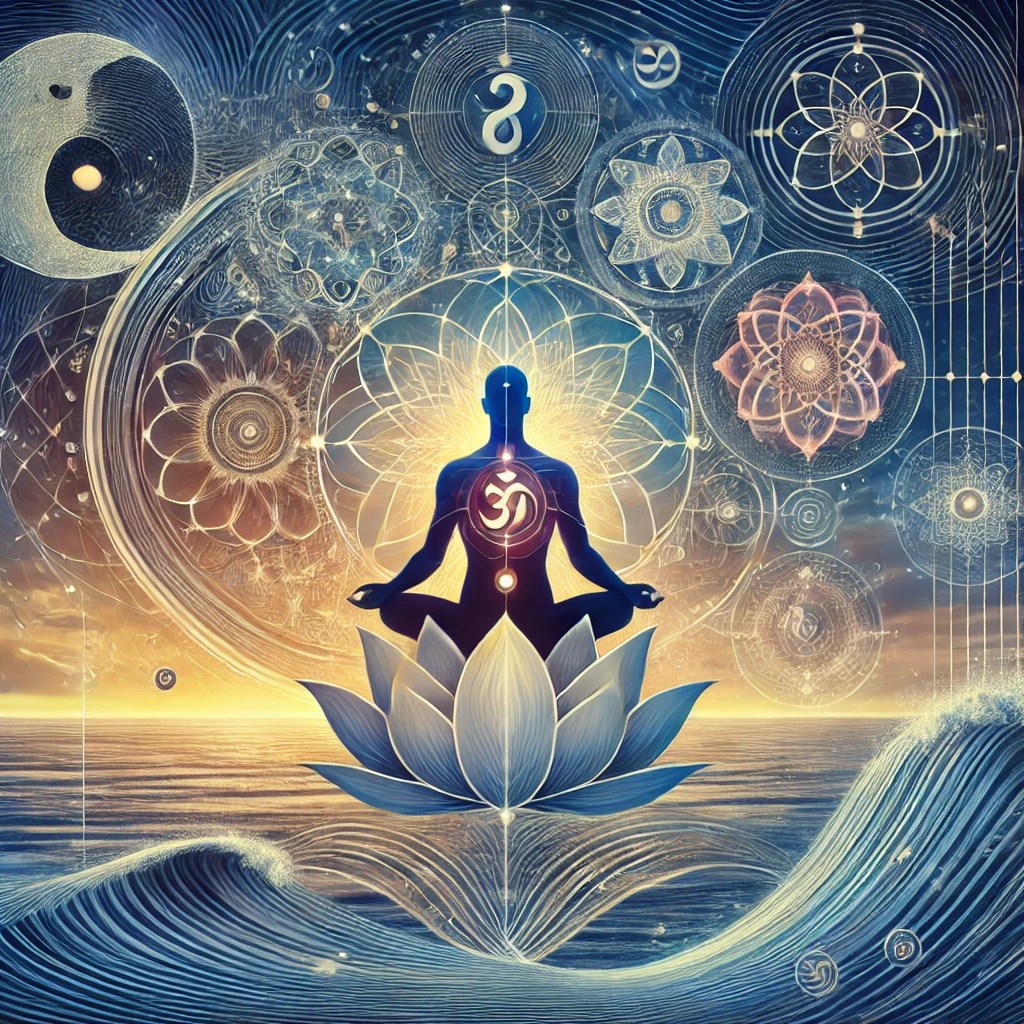
    Explore the profound integration of Carl Jung’s psychological theories and yogic philosophy in understanding the self. This blog delves into the roles of the ego, Atman, and Brahman, providing insights into achieving wholeness and enlightenment. Learn practical self-inquiry exercises to harmonize conscious and unconscious mind, fostering unity and spiritual growth. Discover how Jung’s concepts align with ancient yogic teachings, guiding you toward a deeper connection with universal consciousness.
  • Om, Hail to the Healer: Embracing the Light of Healing

    Introduction

    In our journey towards healing and spiritual growth, we often find that different traditions offer similar paths to wellness and inner peace. Whether we are invoking the Medicine Buddha or calling upon the Holy Spirit, the essence remains the same: seeking the divine light of healing. This post explores the universal nature of this healing energy, demonstrating how both the Tibetan Medicine Buddha mantra and the Christian invocation of the Holy Spirit guide us towards transformation and renewal.

    The Essence of Healing

    Healing is a journey, not just of the body, but of the mind and spirit. The Medicine Buddha mantra calls upon the essence of healing, inviting us to connect with a deeper source of wellness and harmony. By reciting these words, we align ourselves with the energy of the great healer, the one who transcends the boundaries of physical ailments and touches the core of our being.

    Hail to the Healer

    In the phrase “hail to the healer,” we express reverence and gratitude. This healer is not confined to the realm of the divine but exists within each of us. By acknowledging and honoring this inner healer, we empower ourselves to take an active role in our own healing journey. We salute the wisdom and compassion that reside within, guiding us towards wholeness and balance.

    The Great Healer

    The term “great healer” underscores the boundless nature of this healing energy. It is not limited by time, space, or circumstance. The great healer is a reminder that we are supported by an infinite source of love and light, capable of transforming our deepest wounds into opportunities for growth and renewal.

    Healer of the World

    As we invoke the “healer of the world,” we recognize the interconnectedness of all beings. Our healing is not an isolated event but a ripple that extends outwards, touching the lives of others. By embracing our own healing, we contribute to the collective well-being of the planet. This mantra becomes a prayer for global harmony, fostering a sense of unity and compassion for all.

    May Your Light Ascend

    Finally, the plea “may your light ascend” is a call for enlightenment and upliftment. It is an invitation for the divine light to rise within us, dispelling darkness and illuminating our path. As we chant these words, we open ourselves to the transformative power of this light, allowing it to guide us towards a higher state of consciousness and peace.

    Integrating Christian Perspectives: The Holy Spirit as Healer

    The invocation of healing through the Medicine Buddha mantra can be closely aligned with calling upon the Holy Spirit. In Christian tradition, the Holy Spirit is often described as the comforter, guide, and healer. Just as the Medicine Buddha represents the embodiment of healing, the Holy Spirit embodies divine healing and guidance in the Christian faith.

    The phrase “hail to the healer” can thus resonate deeply with Christians who invoke the Holy Spirit. The Holy Spirit is the source of infinite love and light, capable of bringing about profound transformation and renewal. By recognizing this parallel, we can see that whether we are chanting “Om, hail to the healer” or praying for the Holy Spirit’s presence, we are opening ourselves to the same divine energy of healing and compassion.

    Embracing Interfaith Healing

    By acknowledging the similarities between the Medicine Buddha mantra and the invocation of the Holy Spirit, we foster a sense of unity and shared purpose. Healing, in its truest form, transcends religious boundaries and speaks to the universal human experience of seeking wellness and peace.

    Integrating the Mantra into Daily Life

    Incorporating the Medicine Buddha mantra or invoking the Holy Spirit into our daily practice can be a source of profound healing and inspiration. Here are a few ways to weave these sacred practices into your routine:

    Morning Meditation or Prayer:

    • Begin your day with a few minutes of chanting the mantra or praying for the Holy Spirit’s guidance, setting a tone of healing and positivity.

    Healing Visualizations:

    • As you recite the mantra or pray, visualize a radiant light enveloping you and extending to others, promoting physical and emotional well-being.

    Mindful Moments:

    • Throughout the day, take pauses to silently or audibly chant the mantra or offer prayers, bringing a sense of calm and centeredness.

    Evening Reflection:

    • End your day by reflecting on the healing energies you’ve experienced, offering gratitude for the light within and around you.

    Conclusion

    “Om, hail to the healer, the great healer, the healer of the world, may your light ascend!” These words are more than a mantra; they are a beacon of hope, a testament to the power of healing that lies within each of us. By embracing this sacred chant or invoking the Holy Spirit, we embark on a journey of transformation, guided by the light of the great healer towards a world of compassion, unity, and peace.

    🙏🕊️🙏

  • Synchronized Global Well-Being for All: A Call to Meditate Together on the Full Moon, August 19th.

    Join the Synchronized Global Meditations Community to Benefit the Earth, All Living Beings, and Every Sentient Being. Everyone and All Traditions Are Welcome.

    Introduction

    Welcome to the Synchronized Global Meditations Community, a space dedicated to the well-being of our planet and all its inhabitants. Here, we believe in the power of collective meditation to bring about positive change, fostering peace, harmony, and well-being for everyone. This community is open to people from all traditions, and we invite you to join us in this global movement.

    The Power of Synchronized Meditation

    Synchronized meditation has the potential to create a ripple effect of positive energy that can benefit not just the participants but the entire world. When we come together with a shared intention, our collective focus can amplify the impact of our meditative practices, promoting healing, compassion, and unity.

    Guided Meditation for Global Well-Being

    Preparation:

    1. Find a quiet and comfortable space.
    2. Sit or lie down in a relaxed position.
    3. Close your eyes and take a few deep breaths.

    Meditation:

    1. Intention Setting: Begin by setting an intention for global well-being. Visualize the Earth surrounded by a loving, healing light.
    2. Breath Awareness: Focus on your breath. With each inhale, imagine drawing in positive energy. With each exhale, send out compassion and love to all beings.
    3. Visualization: Visualize people from all around the world joining together in meditation, their hearts connected in a web of light and love.
    4. Metta Practice:
    • For Yourself: Silently repeat, “May I be happy. May I be healthy. May I be safe. May I live with ease.”
    • For a Loved One: Visualize someone you care about and silently repeat, “May you be happy. May you be healthy. May you be safe. May you live with ease.”
    • For All Beings: Expand your focus to all sentient beings and silently repeat, “May all beings be happy. May all beings be healthy. May all beings be safe. May all beings live with ease.”
    1. Silent Reflection: Spend a few moments in silent reflection, holding the intention of peace and well-being for all.
    2. Closing: Gently bring your awareness back to the present moment. Take a few deep breaths and open your eyes.

    Reflective Questions

    1. How do you feel after participating in a synchronized global meditation?
    2. What intentions did you set for the well-being of the Earth and all beings?
    3. How can you integrate the sense of unity and compassion from this meditation into your daily life?
    4. What impact do you believe synchronized meditation can have on the world?

    Join Us

    We invite you to be part of this community and participate in regular synchronized meditations/prayers Together, we can make a difference and contribute to the well-being of the Earth and all its inhabitants.

    For more information, please visit https://www.facebook.com/global.wellbeing.meditations/

    Thank you for being part of our Synchronized Global Well-Being community!

    🙏🕊️🙏

  • Deepening Prayer: From Requests to Communion with the Divine

    Experiencing Prayer as a Profound Connection with the Divine

    Introduction

    In many religious traditions, prayer is often perceived as a means of making requests or interceding on behalf of others. Yet, a deeper understanding of prayer reveals it as a profound opportunity for communion with the Divine. This post explores how we can transform our approach to prayer from one of mere requests to a rich, personal connection with God, drawing from various spiritual traditions.

    Exploring Contemplative Practices

    Contemplative prayer, practiced in Christianity and other traditions, focuses on fostering an intimate connection with the Divine. In Christianity, contemplative prayer invites believers into a space of stillness and receptivity. For instance, the use of repetitive phrases like “Maranatha” helps to open one’s heart to God’s presence, moving beyond mere supplications to a deeper, more personal engagement.

    Similarly, in Buddhism, practices such as Shikantaza, or “Just Sitting,” and Shamatha, or “Calm-Abiding,” cultivate mental clarity and a direct experience of the divine in the present moment. Shikantaza encourages a state of pure awareness, where one simply exists without distraction, while Shamatha develops stability and focus, paving the way for a deeper spiritual connection.

    Jewish mystical traditions also contribute to this understanding. Practices like Bittul, the surrender of the ego, and Hitbonenut, profound contemplation, emphasize the experience of God’s presence through the negation of self and deep reflection.

    Scriptural Insights on Personal Communion

    Jesus’s own practices highlight the importance of personal communion with God. His retreat into the desert for 40 days and nights and His frequent solitary prayers illustrate a model for seeking direct connection with the Divine. Jesus’s teachings, such as in John 15:4-5, where He speaks of abiding in Him, suggest a deep, personal relationship with God. Similarly, Matthew 6:6 emphasizes private prayer as a means of engaging intimately with the Divine.

    Jesus used parables to invite personal reflection and insight into God’s kingdom, and His statements about divine unity, like in John 14:20, suggest an intimate, experiential knowledge of God. These elements point to a mystical dimension of prayer, where personal experience and direct connection with the Divine are central.

    Comparison of Intercessional Prayer and Direct Communion Prayer

    Intercessional prayer and direct communion prayer serve distinct purposes in the spiritual journey, each offering unique approaches to connecting with the Divine.

    Intercessional Prayer

    Intercessional prayer focuses on making requests or petitions, often on behalf of others. This type of prayer involves asking God to intervene in specific situations, whether for healing, guidance, or support. It emphasizes the role of prayer as a means of advocating for one’s needs or the needs of others. In many Christian traditions, intercessional prayer is a vital aspect of communal worship and personal devotion, highlighting the belief in a God who responds to our requests and concerns. For example, praying for a friend’s recovery or for peace in the world exemplifies this approach.

    Direct Communion Prayer

    In contrast, direct communion prayer emphasizes a more intimate and experiential connection with the Divine. Rather than focusing on specific requests, this practice seeks to foster a deep, personal relationship with God through stillness, contemplation, and presence. Practices such as contemplative prayer, Shikantaza (Just Sitting), and Bittul aim to transcend the act of asking and enter a space of pure being and direct experience of God’s presence. This approach is less about seeking specific outcomes and more about experiencing a profound union with the Divine. The goal is to immerse oneself in the Divine presence, as seen in the practices of Christian mystics like St. John of the Cross and St. Francis of Assisi, who sought a direct, personal communion with God.

    Historical Context and Institutional Influence

    The Church’s role as an intermediary historically shaped the understanding and practice of prayer. The focus was often on external rituals and mediation, which influenced how individuals experienced and related to the Divine. This approach sometimes overshadowed the potential for personal, direct communion with God.

    However, throughout history, Christian mystics and contemplatives have emphasized direct experience with the Divine. For example:

    • St. John of the Cross explored the “dark night of the soul,” a profound spiritual purification leading to union with God beyond ordinary experiences.
    • Teresa of Avila focused on deep, contemplative prayer and mystical experiences, offering insights into personal connection with the Divine.
    • St. Francis of Assisi exemplified a life of profound spiritual simplicity and deep communion with God, expressed through his love for creation and his radical commitment to poverty. His life was a testament to the possibility of experiencing and embodying divine presence in everyday life.

    These figures highlight a tradition of exploring direct and personal connections with the Divine, which contrasts with more institutionalized approaches that focus on intermediary roles and external forms.

    Conclusion

    Transforming our understanding of prayer from mere requests to a form of communion invites us to deepen our connection with the Divine. By embracing contemplative practices and exploring personal experiences of God, we can enrich our spiritual journey and cultivate a more profound and intimate relationship with the Divine. This journey into mystical prayer and contemplation underscores the value of seeking direct, personal experiences of the Divine, transcending conventional practices to embrace a deeper, more profound spirituality.

    Reflective Questions

    1. How do you currently experience prayer in your spiritual practice? Are there ways you could deepen this experience to foster a more personal connection with the Divine?
    2. In what moments of solitude have you felt a profound sense of communion with God or the Divine? How can you cultivate more of these moments in your daily life?
    3. How do the contemplative practices discussed resonate with your own spiritual journey? Are there specific practices or elements you feel drawn to explore further?
    4. Reflect on a time when a mystical or contemplative experience significantly impacted your understanding of spirituality. What insights or transformations emerged from that experience?
    5. How does the historical context of prayer and mysticism influence your current approach to prayer? Are there any historical figures or practices that inspire you to deepen your spiritual practice?

    Feel free to share your thoughts, experiences, or any questions in the comments section below. I look forward to engaging with your reflections and exploring these ideas further together.

    🙏🕊️🙏

  • Discovering the Path of Sadhana Pancha Kama: A Journey of Spiritual Progress

    In our quest for spiritual growth, we often seek teachings that provide both wisdom and practical guidance. The Sadhana Pancha Kama, a profound set of instructions for spiritual progress, offers just that—a roadmap for those who are earnest in their pursuit of higher realization.

    These teachings, as shared by Pravrajika Divyananda Prana, outline essential practices that can help us align our daily lives with our spiritual goals. They serve as both a guide and an inspiration for anyone looking to deepen their spiritual practice.

    The Sadhana Pancha Kama consists of forty instructions, each designed to cultivate qualities and habits that lead to spiritual awakening. These steps are not just theoretical concepts; they are meant to be lived and experienced in the heart and mind of every seeker.

    A Glimpse into the Teachings

    While all forty instructions are vital, I’d like to share some reflections on a few that have particularly resonated with me:

    • Study the Vedas Daily: This first instruction emphasizes the importance of grounding oneself in sacred knowledge. While I’ve primarily studied texts like the Bible, the Bhagavad Gita, the teachings of the Buddha, and other spiritual traditions, the practice of daily study has become a cornerstone of my spiritual life. It reminds me to continually seek wisdom and understanding, no matter where I find it.
    • Perform Duties Ordained by the Vedas: In my own life, this translates to the practice of karma yoga. As I write and share spiritual reflections daily, I strive to perform these duties with dedication and without attachment to the outcome. It’s about doing the work with sincerity and leaving the results in the hands of the divine.
    • Turn Your Mind Away from Desires: This instruction speaks directly to the practice of detachment. Whether it’s letting go of material desires or attachments to specific outcomes in my life, I’m reminded that true contentment comes from within, not from external circumstances.
    • Seek the Company of the Wise: Surrounding oneself with wisdom has been essential on this path. Whether through spiritual teachers, books, or even online communities, the presence of wise guidance helps me stay focused and inspired on my journey.

    These are just a few examples of how the Sadhana Pancha Kama can be integrated into daily life. Each instruction offers a new opportunity for contemplation, growth and deeper understanding.

    A Path for All Seekers

    The beauty of the Sadhana Pancha Kama lies in its universality. These teachings are accessible to anyone, regardless of where they are on their spiritual journey. Whether you’re just beginning or have been on the path for years, there is something in these instructions for everyone.

    For those who wish to explore these teachings further, I highly recommend listening to Pravrajika Divyananda Prana’s discourse on the Sadhana Pancha Kama. Her insights bring these ancient instructions to life, making them relevant and applicable to our modern lives.

    May these teachings inspire you as they have inspired me, guiding you ever closer to the realization of your true self.

    🙏🕊️🙏

  • Understanding Vrittis and Pratyayas: A Guide to Mindful Awareness

    Introduction

    In the journey of mindfulness and meditation, understanding the nature of the mind is crucial. Two fundamental concepts in this exploration are vrittis and pratyayas. These Sanskrit terms, drawn from ancient yogic and Buddhist teachings, provide insights into the workings of the mind. This guide aims to clarify these concepts, helping you integrate this understanding into your daily life for deeper mindfulness and self-awareness.

    What Are Vrittis?

    Vrittis are the fluctuations, movements, or activities of the mind. They represent the dynamic nature of mental events that arise and subside. Think of vrittis as the waves on the surface of the ocean; they are ever-changing and reflect the mind’s constant activity.

    What Are Pratyayas?

    Pratyayas are the specific contents or objects of the vrittis. They are what the mind focuses on or the mental events that arise within these fluctuations. Pratyayas can be thoughts, sensations, emotions, memories, or impulses. Essentially, pratyayas are the specific items carried by the waves of vrittis.

    The Relationship Between Vrittis and Pratyayas

    To put it simply, vrittis are the general activities or fluctuations of the mind, while pratyayas are the specific objects or content of these activities. When you observe your mind, you notice the vrittis as the background activity and identify the pratyayas as the distinct events within this activity.

    Examples of Pratyayas

    Understanding pratyayas through examples can help clarify their role in mindfulness:

    1. Sensory Perception:
    • The sensation of warmth from the sun on your skin.
    • The sound of birds chirping outside.
    • The taste of your morning coffee.

    2. Emotional Response:

      • A feeling of joy when thinking about a loved one.
      • A surge of anxiety before a meeting.
      • A wave of sadness remembering a past event.

      3. Thoughts:

        • Planning what to cook for dinner.
        • Remembering a conversation you had yesterday.
        • Imagining a future vacation.

        4. Physical Sensation:

          • The sensation of your breath moving in and out.
          • An itch on your arm.
          • The feeling of your heartbeat.

          5. Memories:

            • Recalling a childhood experience.
            • Remembering a piece of advice someone gave you.
            • Visualizing a scene from a past trip.

            6. Impulses:

              • The urge to check your phone.
              • The impulse to stretch or change your sitting position.
              • The desire to eat something.

              Labeling the Qualities of Vrittis

              When observing and labeling vrittis, consider the following qualities:

              1. Stable vs. Unstable:
              • Stable Vrittis: These are steady and consistent. Your mind remains focused on a single pratyaya for an extended period. For example, a stable vritti might be a prolonged focus on your breath or a continuous feeling of calm.
              • Unstable Vrittis: These are erratic and scattered. Your mind frequently shifts from one pratyaya to another. An example of unstable vrittis might be a constant jumping from one thought to another, unable to maintain focus.

              2. Intense vs. Mild:

                • Intense Vrittis: These are strong and impactful. They demand significant attention and can dominate your awareness. An intense vritti might be a powerful emotion, like sudden anger or joy, that captures your full attention.
                • Mild Vrittis: These are gentle and subtle. They are present but do not overwhelm your awareness. A mild vritti might be a faint background sensation or a fleeting thought that doesn’t linger.

                3. Frequent vs. Infrequent:

                  • Frequent Vrittis: These arise often, creating a sense of rapid mental activity. For example, recurring worries or repetitive thoughts that come up frequently throughout your day.
                  • Infrequent Vrittis: These appear rarely, leading to more gaps and quiet moments in your mental landscape. An infrequent vritti might be an occasional memory or a rare impulse.

                  Practical Application

                  Practical Application

                  By recognizing vrittis and pratyayas, you can deepen your mindfulness practice. Here’s a simple exercise to get started:

                  1. Find a Comfortable Position: Sit or lie down comfortably.
                  2. Set a Timer: Choose a manageable duration, such as 10 or 15 minutes.
                  3. Breath Awareness: Begin with a few deep breaths to center yourself.
                  4. Observe the Mind: Briefly shift your focus to the fluctuations of your mind. Notice thoughts, sensations, and feelings as they arise.
                  5. Simply Notice: Briefly notice the overall quality of your mind’s activity. Are the vrittis generally stable or unstable? Observe these qualities without judgment, allowing your awareness to encompass the fluctuations without getting caught up in them.
                  6. Identify the Pratyayas: Note the specific content of the vrittis, such as sensations, thoughts, or emotions.
                  7. Breath Awareness: Return to the witnessing of your breath, perhaps noticing your belly or chest gently rising and falling.
                  8. Repeat as Needed: When you’re ready, go back to briefly observing the vrittis and pratyayas.
                  9. Return to Breath: Shift your focus back to a focused awareness of the breath and the open spaciousness of your mind.
                  10. Rest: When you’re done, simply rest.

                  By recognizing vrittis and pratyayas, you can deepen your mindfulness practice. Here’s a simple exercise to get started:

                  Conclusion

                  Understanding the interplay between vrittis and pratyayas enhances your mindfulness practice, providing a clearer lens through which to observe the mind. By developing a felt sense of these fluctuations and their contents, you cultivate deeper awareness and equanimity. This practice not only enriches meditation but also brings greater clarity and peace into daily life.

                  Below is the original source video of the lecture with Swami Parvajika Devyanandaprana, from which these blog posts were inspired. Here you can explore the insightful teachings that have profoundly shaped the content and perspectives shared in this blog.

                  🙏🕊️🙏

                1. Glossary of Terms

                  This is the beginning of our glossary

                  Pure Awareness (Atman): The true essence of the self, often referred to as Atman in Advaita Vedanta. It is the unchanging witness of all experiences, untouched by the fluctuations of the mind. In nondual teachings, pure awareness is recognized as the core of our being, the aspect of ourselves that is ever-present and eternal.

                  Pure Consciousness (Brahman): The ultimate, infinite reality that underlies everything, often referred to as Brahman in Advaita Vedanta. Pure consciousness is the vast, all-encompassing reality that transcends all dualities. Pure consciousness is the source and essence of all that exists. Realizing this truth is the goal of many spiritual paths, leading to liberation and peace.

                  Ego: The aspect of the self that provides a sense of individuality and self-preservation, shaping our identities and interactions with the world. While the ego is a necessary part of human experience, overly identifying with it can limit our awareness and lead to suffering. The balance of the ego with pure awareness (Atman) leads to a more peaceful and fulfilled life.

                  Mind: The collection of thoughts, emotions, perceptions, and memories that constitute our mental experience. The mind is active and constantly changing. In spiritual teachings, the mind is often seen as external to pure awareness. It is the activity that arises within consciousness but does not define the true self.

                  Nonduality: A spiritual perspective that emphasizes the oneness of all existence, transcending the dualistic view of separation between self and other, mind and body, or individual and universal. Nonduality teaches that pure awareness (Atman) and pure consciousness (Brahman) are not separate but one and the same, leading to the realization of the interconnectedness of all things.

                  Lila (The Play of Life): A concept in Hindu philosophy that describes life as a divine play or sport, where all experiences, including challenges and suffering, are seen as part of the cosmic dance. Recognizing life as Lila helps to cultivate acceptance and reduces resistance to life’s challenges, leading to a more graceful navigation through difficulties.

                  Maya (Illusion): The illusion or appearance of the material world, which veils the true nature of reality. Maya creates the perception of separation and individuality. In Advaita Vedanta, overcoming the illusion of Maya is essential to realizing the oneness of Atman and Brahman, and seeing the world as it truly is.

                  Heart Sutra: A key text in Mahayana Buddhism that emphasizes the emptiness of all phenomena and the transcendent nature of reality. The Heart Sutra teaches that by going “beyond, beyond, beyond,” one transcends all dualistic notions and realizes the ultimate truth.

                  Individuation: A concept from Carl Jung’s psychology, referring to the process of integrating the various parts of the self into a harmonious whole. Individuation resonates with the idea of balancing the ego with pure awareness, leading to a more complete and authentic experience of self.

                  Unconscious: The vast, all-encompassing reservoir of the mind that includes all mental processes, memories, instincts, and potentialities that lie outside of our conscious awareness. The unconscious contains both positive and negative aspects, known and unknown, including latent talents, creativity, and profound wisdom.

                  Shadow: A specific part of the unconscious, primarily consisting of the aspects of ourselves that we have repressed or rejected—traits, emotions, and impulses that we find uncomfortable or unacceptable. The shadow can also include disowned positive qualities. It represents the darker, hidden aspects of the unconscious but is not limited to negative content.

                2. Transforming Distractions: From Obstacles to Objects of Awareness

                  Introduction:

                  Distractions are a common experience, whether during meditation or in the midst of daily activities. They often seem like obstacles, interrupting our focus and pulling us away from the present moment. However, what if these distractions could be transformed from obstacles into opportunities for deeper awareness?

                  Understanding Distractions as Pratyayas:

                  In Advaita Vedanta, the concept of pratyaya refers to objects of awareness—anything that arises in the field of consciousness. Distractions, in this context, are simply pratyayas that appear in the mind. Rather than viewing them as problems, we can understand them as natural occurrences in the landscape of the mind, much like clouds passing through the sky.

                  Integrating Self-Inquiry:

                  To deepen this understanding, we can integrate the practice of self-inquiry. When a distraction is noticed, instead of becoming frustrated or trying to push it away, we can gently ask, “Who or what is noticing this distraction?” This simple question shifts our focus from the distraction itself to the awareness that perceives it.

                  In this moment, awareness is present, and by shifting our attention from the distraction to the awareness, we create a space to explore the true nature of the self. This practice not only dissolves the power of the distraction but also redirects our focus to the essence of who we are—the awareness that is always present.

                  Shifting Perspective:

                  By adopting this approach, distractions are no longer seen as obstacles but as opportunities to deepen our practice. Each distraction becomes a doorway to self-inquiry, a reminder to return to the awareness that underlies all experiences. Instead of being caught up in the content of the distraction, we use it as a pointer back to the self—the true observer.

                  Practical Application in Meditation:

                  Here’s how you can apply this practice during meditation:

                  1. Notice the Distraction: When a distraction arises, acknowledge it without judgment. It is simply a pratyaya, an object in the field of awareness.
                  2. Ask the Question: Gently ask yourself, “Who is noticing this distraction?” Allow this question to shift your focus from the distraction to the awareness that perceives it.
                  3. Acknowledge and Shift: Recognize the distraction as a pratyaya and shift your attention to the awareness itself. This subtle shift can transform the experience, allowing you to rest in the awareness rather than being pulled by the distraction.
                  4. Return to the Practice: After acknowledging the awareness, gently return to the primary object of your meditation, such as the breath or mantra, with a renewed sense of presence.

                  The Liberating Effect of This Practice:

                  Integrating self-inquiry with the recognition of distractions can have a liberating effect on your meditation practice. It reduces the frustration that often accompanies distractions and transforms them into opportunities for deepening your understanding of the self. By practicing in this way, you cultivate a direct experience of the self as awareness, which transcends the fluctuations of the mind.

                  Conclusion:

                  Distractions, when approached with awareness and self-inquiry, become tools for spiritual growth rather than obstacles. This practice encourages a shift from identifying with the content of the mind to recognizing the ever-present awareness that observes it all. The next time a distraction arises, see it as an opportunity to explore the nature of awareness and deepen your connection with your true self.

                  🙏🕊️🙏

                3. Stabilizing the Mind: How Focused Attention Enhances Meditation and Calms Mental Fluctuations

                  A crucial aspect of meditation and mental discipline: the role of attention in stabilizing mental fluctuations (vrittis). Here’s how attention affects the stability of vrittis:

                  Role of Attention in Stabilizing Vrittis

                  1. Directing Focus:
                  • Attention directs the mind towards a specific object or thought. By consistently focusing on a chosen point, you can reduce the influence of distracting vrittis and bring stability to the mind.
                  1. Reducing Distractions:
                  • When attention is well-directed, it minimizes the impact of wandering thoughts and external stimuli. This helps in preventing the mind from becoming scattered or chaotic.
                  1. Enhancing Concentration:
                  • Sustained attention helps in achieving a state of ekagrata (one-pointedness), where vrittis become more stable and coherent. This concentration reduces the fluctuations and irregularities in mental activity.
                  1. Strengthening Mental Focus:
                  • Regular practice of maintaining attention strengthens the mental faculties involved in focus and concentration. Over time, this leads to more consistent stability in vrittis.
                  1. Creating a Stable Mental Environment:
                  • When attention is maintained, it creates a stable mental environment where vrittis rise and fall in a controlled manner, similar to the smooth surface of a calm pool.
                  1. Facilitating Deeper Meditation:
                  • Stable attention allows for deeper meditation, where the mind is less prone to fluctuations and can experience more profound states of awareness and insight.

                  In essence, attention acts as a stabilizing force for vrittis, enabling the mind to move from a state of chaos to one of calm and focus. This understanding can guide your practice by emphasizing the importance of cultivating and maintaining effective attention in meditation.

                  Below is the original source video of the lecture with Swami Parvajika Devyanandaprana, from which these blog posts were inspired. Here you can explore the insightful teachings that have profoundly shaped the content and perspectives shared in this blog.

                  🙏🕊️🙏

                4. Mastering the Art of Attention: Unveiling the Science Behind Effective Meditation

                  Understanding the underlying principles of concentration and meditation can naturally lead to mastery in focusing attention. Here’s how this works:

                  Understanding the Science Behind Attention

                  1. Insight into Mechanics:
                  • Recognizing how attention and concentration operate in the mind allows for more effective practice. Knowing that vrittis (mental fluctuations) need to be stabilized helps in applying the right techniques.
                  1. Application of Techniques:
                  • Once you understand the principles, you can apply techniques more effectively. For example, knowing how pratyayas (objects of thought) influence focus enables you to choose and maintain a suitable focus point.
                  1. Developing Skill:
                  • With practice, the skill of attention becomes more refined. The art of attention involves not just focusing on an object but also understanding and managing the mental processes that affect focus.
                  1. Natural Progression:
                  • As you apply these techniques and gain experience, the process of concentrating and directing attention becomes more natural and effortless.
                  1. Integration of Knowledge and Practice:
                  • Understanding the science provides a framework for practice, making it easier to progress. The integration of knowledge and practical application enhances the overall effectiveness of meditation and attention training.

                  By grasping the principles behind meditation and attention, you align your practice with these natural laws, making it easier to develop the art of attention and achieve deeper states of concentration. This holistic approach helps in integrating both understanding and practice, leading to more profound results.

                  Below is the original source video of the lecture with Swami Parvajika Devyanandaprana, from which these blog posts were inspired. Here you can explore the insightful teachings that have profoundly shaped the content and perspectives shared in this blog.

                  🙏🕊️🙏

                5. Embracing Universal Responsibility: We Humans

                  Fostering Empathy and Collective Action for a Compassionate World

                  Introduction:

                  One of the Dalai Lama’s central beliefs is this: all people are united in our pursuit of happiness and our desire to avoid suffering. This is the source of humanity’s greatest achievements. For that reason, we should begin to think and act on the basis of an identity rooted in the words “we humans.” This blog series explores how this concept can shape our actions and identity, fostering a world grounded in empathy, understanding, and collective responsibility.

                  The Universal Pursuit of Happiness:

                  Across cultures and philosophies, the pursuit of happiness is a fundamental human drive. In Buddhism, the quest for inner peace and joy is a core tenet. In Western thought, the pursuit of happiness is enshrined in the Declaration of Independence as an unalienable right. Recognizing this common goal can foster empathy and understanding among diverse groups. When we understand that everyone seeks happiness, we can more easily connect with and support one another.

                  The Shared Desire to Avoid Suffering:

                  Equally universal is the desire to avoid suffering. From ancient teachings like the Four Noble Truths in Buddhism, which acknowledge suffering and its cessation, to modern humanitarian efforts aimed at alleviating pain and hardship, this shared desire is evident. Understanding that everyone strives to avoid suffering encourages global cooperation and compassion. It reminds us that alleviating suffering, whether through small acts of kindness or large-scale initiatives, is a shared human responsibility.

                  The Power of a Shared Identity:

                  An identity rooted in “we humans” transcends differences in race, religion, nationality, and other divisions. This inclusive identity fosters unity and collective action. History provides numerous examples of individuals and groups who have embodied this inclusive mindset. The humanitarian efforts of figures like Mother Teresa, who served the poorest of the poor regardless of their background, and organizations like the Red Cross, which provides aid impartially, showcase the power of a shared human identity.

                  Practical Steps to Embrace Universal Responsibility:

                  Embracing a “we humans” mindset starts with small, daily actions. Here are some practical steps:

                  1. Practice Kindness: Simple acts of kindness, like helping a neighbor or offering a smile, can create ripples of positivity.
                  2. Be Open-Minded: Engage with people from different backgrounds and perspectives. Listen to their stories and learn from their experiences.
                  3. Cooperate: Look for opportunities to work together with others, whether in your community or through global initiatives.
                  4. Contribute: Support efforts that aim to reduce suffering and promote happiness. This can be through volunteering, donating, or raising awareness.

                  Conclusion:

                  In summary, recognizing that all people share the pursuit of happiness and the desire to avoid suffering can lead to profound positive change. By embracing an identity rooted in “we humans,” we foster empathy, understanding, and collective action. As we reflect on our actions, let us consider how we can contribute to a more compassionate world, one small step at a time.

                  Reflective Questions:

                  1. How can you incorporate the “we humans” mindset into your daily life?
                    1. What small acts of kindness can you practice to contribute to the happiness of others?
                    2. How can you be more open-minded and understanding towards people from different backgrounds?
                    3. What steps can you take to help alleviate suffering in your community or globally?

                  I invite you to reflect on these questions and share your thoughts in the comments below. Let’s start a conversation about how we can all embrace universal responsibility and make a positive impact together.

                  🙏🕊️🙏

                6. Lesson 25 of A Course in Miracles (ACIM): Guided Meditation – “I do not know what anything is for.”

                  Lesson 25 of A Course in Miracles presents the lesson: “I do not know what anything is for.” This teaching challenges us to question our preconceived notions and interpretations of the world. By acknowledging our limited understanding and releasing the need to assign purposes to everything, we open ourselves to divine guidance and clarity.

                  This practice invites us to become aware of our tendency to judge and categorize based on our conditioned beliefs. By understanding that our interpretations often stem from fear and separation, we can start to cultivate a mindset of openness and willingness to see beyond appearances.

                  Jesus often taught about the importance of surrendering to divine guidance and trusting in God’s plan. In Proverbs 3:5-6, it says, “Trust in the Lord with all your heart and lean not on your own understanding; in all your ways submit to him, and he will make your paths straight.” This teaching aligns with ACIM’s guidance to surrender our perceptions and trust in the Holy Spirit’s guidance for true understanding and purpose.

                  By practicing Lesson 25, we align ourselves with Christ’s message of humility and trust. We learn to release our ego’s need to control and understand, and instead, open ourselves to receive divine wisdom and purpose.

                  Explore Lesson 25 of A Course in Miracles with us, and discover how letting go of our interpretations can lead to greater clarity, peace, and spiritual awakening.

                  Guided Meditation: Lesson 25 from A Course in Miracles

                  Find a comfortable position, either sitting or lying down, where you can relax and be free from distractions.

                  Close your eyes gently and take a few deep breaths, allowing yourself to settle into the present moment.

                  Bring your attention to your breath, feeling the sensation of each inhale and exhale.

                  Reflect on the central theme of Lesson 25: “I do not know what anything is for.”

                  Contemplate the idea that your understanding of the world is limited by your past experiences and conditioning, and that you may not always know the true purpose or meaning behind things.

                  Acknowledge that when you rely solely on your own understanding, you may misinterpret the events and circumstances of your life.

                  With each breath, imagine releasing any attachment to needing to know the purpose or meaning behind everything, allowing yourself to fully embrace the idea of surrendering to a higher wisdom.

                  Visualize yourself letting go of the need to have all the answers, trusting instead in the unfolding of life’s mysteries.

                  Feel a sense of peace and openness as you surrender to the knowledge that there is a greater purpose and meaning behind everything, even if it is not immediately apparent.

                  Repeat the following affirmations silently or in your mind:

                  “I do not know what anything is for.”

                  “I release all attachment to needing to know the purpose or meaning behind everything.”

                  “I trust in the unfolding of life’s mysteries.”

                  Allow yourself to rest in this space of surrender and trust for a few moments, feeling supported and guided by a higher wisdom.

                  When you’re ready, gently bring your awareness back to your surroundings. Wiggle your fingers and toes, and slowly open your eyes.

                  Take a moment to reflect on your experience, noticing any insights or shifts in perception that may have occurred.

                  Remember that you can return to this meditation whenever you feel called to deepen your understanding of Lesson 25.