Tag: Self-Realization

  • Who is Ramana Maharshi?

    Discovering the Self: Ramana Maharshi’s Guide to Self-Inquiry and True Realization

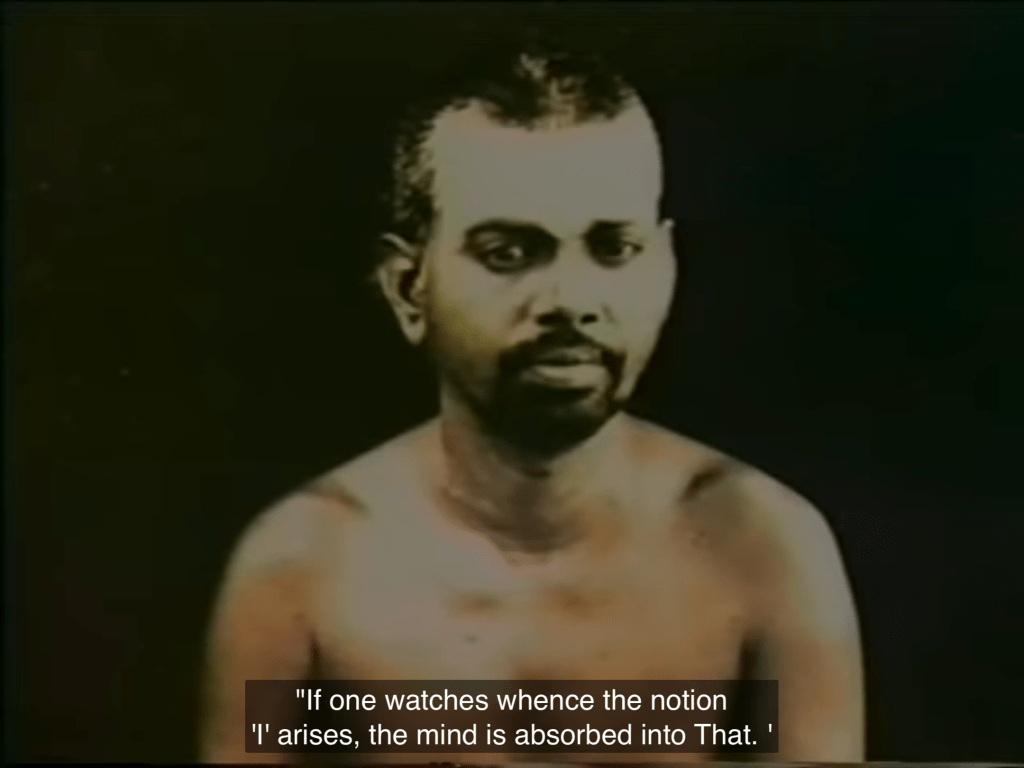
    Ramana Maharshi is one of the most revered spiritual teachers of the 20th century, known for his profound teachings on self-realization and non-duality. Born in 1879 in Tamil Nadu, India, he experienced a spontaneous awakening at the age of 16, during which he became acutely aware of the impermanence of the body and the eternal nature of the Self. Following this experience, he left his home and spent the rest of his life on the sacred mountain of Arunachala, where he became a guiding light for spiritual seekers from around the world.

    Ramana’s teachings are centered around the practice of Atma Vichara, or self-inquiry, which he considered the most direct path to realizing one’s true nature. Unlike other spiritual practices that involve rituals or external observances, Ramana emphasized turning inward to investigate the true nature of the ‘I’—the sense of individual self that we all experience.

    The Essence of Self-Inquiry

    Ramana Maharshi’s core teaching can be encapsulated in the question, “Who am I?” He taught that the sense of ‘I’ or ego, which we often associate with our thoughts, emotions, and bodily identity, is merely a superficial layer that veils our true Self, which is pure consciousness or awareness.

    The process of self-inquiry involves directing your attention inward, asking yourself where this sense of ‘I’ originates. Ramana explained that by persistently asking this question and observing the ‘I’ thought, one can trace it back to its source. This source is the true Self, the unchanging awareness that underlies all experience.

    If One Watches Whence the ‘I’ Arises

    In one of his teachings, Ramana Maharshi stated, “If one watches whence the notion ‘I’ arises, the mind is absorbed into That.” This teaching points to a subtle yet profound practice. The ‘I’ thought is the root of all mental activity and the sense of individuality. By turning attention to this root, rather than being entangled in the branches of thoughts and feelings, the mind can naturally dissolve into its source—pure awareness, which Ramana refers to as “That.”

    How to Practice Self-Inquiry

    If you find yourself puzzled by this teaching or struggle to sense “That” from which the ‘I’ arises, know that this is a common experience on the path of self-inquiry. The mind, accustomed to focusing outward, finds it challenging to turn inward and settle into stillness.

    Here’s how you can approach this practice:

    1. Sit Quietly: Begin by sitting quietly, with your eyes closed if that feels comfortable. Take a few deep breaths and allow your body and mind to relax.
    2. Turn Inward: Gently bring your attention to the sense of ‘I’. This ‘I’ could be a thought, a feeling, or simply the awareness that you exist.
    3. Ask the Question: Silently ask yourself, “Who am I?” or “Where does this ‘I’ arise from?” Don’t seek an intellectual answer. Instead, let the question be a pointer that guides your awareness inward.
    4. Observe: As you focus on the ‘I’, observe its nature. Does it have a shape, a location? Can you find its origin? Be curious, but not analytical.
    5. Rest in the Awareness: As you continue this enquiry, allow the mind to settle. If thoughts arise, simply notice them and gently bring your attention back to the feeling of ‘I’. Over time, the mind may begin to merge with the deeper awareness that is always present.

    Realizing the Self

    Through persistent practice, you may come to realize that the ‘I’ you have always identified with is not your true Self. The ‘I’ arises and dissolves in the vast expanse of pure awareness—‘That’ which Ramana Maharshi points to. This realization is not something to grasp intellectually, but a direct experience that brings about a profound inner peace and freedom.

    Ramana Maharshi’s teachings are a beacon for those seeking to transcend the ego and discover their true nature. The path of self-inquiry, though simple in its approach, can lead to the ultimate realization of the Self—the awareness that is ever-present, unchanging, and beyond all notions of individuality.

    🙏🕊️🙏

  • Poem: No Finish Line at the Finish Line

    We start the race with mind and heart aligned,
    To seek the truth that’s ever hard to find.
    The path is clear, the way seems oh so straight,
    Yet round and round we go—oh, twist of fate!

    We run through hills of thought and streams of dreams,
    The finish line, not quite as near, it seems.
    With every step, we feel the final call,
    But then we find there is no end at all.

    The race we thought would bring us to the goal,
    Is just the turning of the cosmic whole.
    For when we think we’ve reached the end of time,
    We simply find there is no finish line.

    The Self we seek is where we’ve always been,
    The heart, the start, and finish all within.
    In non-duality, the truth does shine—
    There’s no finish line at the finish line.

    🙏🕊️🙏

  • Ramayana No. 2: Ayodhya—The Unsubdued Kingdom Within

    Rama’s Exile and Our Spiritual Journey: Reclaiming the Pristine Mind


    As I sit with the first chapter of the Ramayana, I find myself drawn to the idea of Ayodhya—the city that cannot be subdued by war. This simple yet profound description speaks to something deeper, something within each of us that remains untouched by the chaos of the world.

    Ayodhya, the capital of King Dasharatha’s kingdom, is not just a physical city, but a symbol—a metaphor for the pristine mind, the true self that resides within us all. Just as Ayodhya stands strong against external threats, so too does our innermost self, the Atman, remain pure and invincible against the storms of life and the fluctuations of our mind.

    In the early pages of the Ramayana, we find ourselves in a kingdom of righteousness, where the people live in harmony under the guidance of a just king. It is a vision of what life can be when we are in tune with our true nature, when the mind is calm and clear, and the heart is aligned with the divine. Ayodhya, in this sense, is our inner sanctuary, a place of peace and stability, untouched by the turmoil of the external world and the inner conflicts of ego and desire.

    But as the story unfolds, we know that Rama, the hero of the epic, is exiled from this idyllic kingdom. He leaves Ayodhya, and with that, he leaves behind the safety and serenity of his home. This exile, I realize, is not just a physical journey, but a reflection of our own experience as we move from the innocence of childhood into the complexities of the world.

    We are all, in a way, exiled from our own Ayodhya. As we grow, we face the trials and tribulations of life, and our minds become cluttered with the noise of the world—the vrittis and pratyayas, the mental fluctuations and impressions that cloud our true nature. The ego begins to take shape, and we lose touch with that pristine mind, that inner Ayodhya where peace and purity reside.

    Rama’s battles during his exile are not just against external enemies, but against the forces that seek to pull him away from his true self. And so it is with us. The challenges we face in life—be they loss, betrayal, or the struggles within our own hearts—are the battles we must fight to reclaim our inner Ayodhya. These are the trials that, if met with courage and wisdom, can lead us back to the realization of who we truly are.

    In this way, the Ramayana is more than just a story; it is a map of the spiritual journey. It teaches us that the path to self-realization is not without struggle, but that each challenge is an opportunity to return to the pristine mind, to reclaim the peace and purity that are our true nature.

    As I read these early chapters, I find inspiration in this metaphor. Ayodhya is not just a city in an ancient epic; it is the capital of our inner kingdom, the seat of our soul, where the divine presence within us reigns. The journey of Rama is our journey—a journey of exile and return, of losing ourselves in the world only to find our way back to the heart of who we are.

    So, as we embark on this exploration of the Ramayana, let us keep in mind this deeper layer of the story. Let us see Ayodhya not just as a distant, mythical city, but as a reflection of our own pristine mind, untouched by the chaos of life. And let us approach each chapter not just as a narrative of ancient battles and heroic deeds, but as a guide to our own spiritual journey, where the ultimate victory is the realization of our true self.

    As we read the Ramayana, and reflect on Ayodhya, the unassailable kingdom within, we may find ourselves drawn to its promise of peace, purity, and unwavering truth. Though we may not yet dwell fully within this sacred space, the very knowledge of its existence and the awareness of its presence within us is a profound gift. To aspire to be a citizen of Ayodhya is to commit to the journey of self-realization, to seek the pristine mind that remains untouched by the world’s chaos and the fluctuations of the ego.

    Let us consider it a great fortune to even know of Ayodhya’s whereabouts, its possibility, and its promise. This awareness is the first step on the path toward reclaiming our true nature. Each day, with every thought, word, and action, we move closer to aligning with this unshakable core of our being.

    May this reflection, and each future post in this series, inspire you, dear reader, to continue on your own journey with a heart full of devotion, wisdom, and love, always keeping the inner Ayodhya in sight. Together, let us aspire to dwell in that place of peace, as we explore the depths of the Ramayana and the timeless wisdom it offers.

    🙏🕊️🙏

    You can find the edition of the Ramayana used in this series, written by Valmiki and translated by Suparna Ghosh, on Amazon here.

    🙏🕊️🙏

  • Book Review: The Unchanging Nature of Our Pristine Mind

    “The luminous nature of mind, like the changeless sky, is unaffected by temporary events.”

    — Bodhisattva Maitreya

    Imagine for a moment a vast, clear sky—limitless, unbounded, and pure. No matter how many clouds pass through, how fierce the storms, or how thick the fog, the sky itself remains unchanged. It is always there, spacious and untouched by the ever-changing weather. This metaphor, beautifully articulated by Orgyan Chowang in his book The Pristine Mind, offers us a powerful insight into the nature of our own mind. While the events of our ordinary mind—our thoughts, emotions, and experiences—may shift and change, the pristine mind, like the sky, remains clear and constant. This realization is fundamental to our spiritual growth and inner peace.

    The Metaphor of the Sky and Clouds:

    Chowang’s analogy is simple yet profound. The sky represents our pristine mind—our true nature, which is inherently pure and spacious. The clouds, on the other hand, symbolize the thoughts and emotions that arise within us. These clouds can be dark and stormy or light and fleeting, but no matter their nature, they never alter the sky itself. The sky doesn’t cling to the clouds or resist them; it simply allows them to pass through. In the same way, our pristine mind is untouched by the transient mental events that arise and dissolve within it.

    The Ordinary Mind vs. the Pristine Mind:

    In our day-to-day lives, we often operate from what Chowang calls the “ordinary mind.” This is the aspect of our consciousness where thoughts, emotions, and perceptions arise. It’s where we experience the ups and downs of life, the stress, the joy, the anxiety, and the pleasure. This ordinary mind is reactive, constantly shifting in response to external stimuli. But beneath this ever-changing surface lies the pristine mind—clear, stable, and unchanging. It’s the essence of who we are, untainted by the mental chatter and emotional turbulence that often dominate our awareness.

    Realizing the Pristine Mind:

    The journey toward realizing and connecting with our pristine mind begins with awareness. By observing our thoughts and emotions without attachment, we can start to see them as clouds passing through the sky of our mind. Meditation is a powerful tool in this process. By sitting in stillness and watching our thoughts come and go, we begin to disidentify with them. We realize that while our thoughts and emotions are transient, there is a deeper part of us that remains unchanged—this is our pristine mind. With practice, we learn to rest in this unchanging awareness, experiencing a profound sense of peace and clarity.

    The Importance of This Realization:

    Understanding that our true nature is the pristine mind brings immense benefits. It allows us to navigate life’s challenges with greater ease and resilience. When we recognize that the storms of thoughts and emotions are temporary, we are less likely to get caught up in them. We can face difficulties with equanimity, knowing that, like clouds, they will pass. This realization also fosters compassion—for ourselves and others. When we understand that everyone’s ordinary mind is subject to the same fluctuations, we can approach each other with greater kindness and understanding.

    Practical Application:

    To begin connecting with your pristine mind, try this simple meditation: Close your eyes and take a few deep breaths. Imagine your mind as a vast, clear sky. As thoughts and emotions arise, visualize them as clouds passing through this sky. Don’t try to push them away or hold onto them; simply observe them as they come and go. Notice that no matter what clouds appear, the sky—your pristine mind—remains unchanged. Practice this regularly, and gradually, you’ll find yourself less caught up in the drama of your ordinary mind, and more grounded in the peace of your true nature.

    Closing Reflection:

    In the hustle and bustle of daily life, it’s easy to get swept away by the ever-changing events of our ordinary mind. But by remembering and connecting with our pristine mind—the clear, spacious awareness that remains untouched by life’s storms—we can find a deep and abiding sense of peace. This realization, as Orgyan Chowang so beautifully explains, is one of the most fundamental insights on the path of spiritual growth. As we move through life, let us strive to remember the sky within us, always present, always pure, no matter the clouds that may pass through.

    “The luminous nature of mind, like the changeless sky, is unaffected by temporary events.” As we deepen our understanding and connection to this luminous, unchanging aspect of our being, may we find peace and clarity even in the midst of life’s storms. Like the sky that holds all weather, may we learn to hold all our experiences with the spaciousness of our pristine mind. May this awareness illuminate our path and our interactions, bringing light and compassion to ourselves and others.

    🙏🕊️🙏

    If you’re interested in exploring this transformative approach further, I highly recommend Orgyen Chowang’s book The Pristine Mind. His teachings provide a clear, compassionate path toward uncovering the inherent purity of our mind, offering a source of deep fulfillment and lasting peace.

  • A Christian Mystic is Also a Yogi: Bridging the Spiritual Traditions

    In the quiet corners of monasteries, amidst the echo of chanting monks, and within the solitude of wilderness hermitages, Christian mystics have, for centuries, sought to experience a profound union with the Divine. They have traveled inward, transcending the boundaries of ego, and have entered into a sacred communion with God. Their journey is one of deep contemplation, marked by an ascetic discipline that reflects a yearning to touch the eternal. Though these mystics arise from the Christian tradition, their spiritual pursuits bear a striking resemblance to those of yogis—a title traditionally reserved for practitioners within the vast spiritual traditions of India.

    At first glance, the practices and language of Christian mysticism and yoga might seem worlds apart. One speaks in the tongue of Christ, the saints, and the Holy Spirit, while the other chants the names of Shiva, Krishna, and the universal Brahman. However, beneath these differing expressions lies a shared journey—a journey toward the ultimate goal of spiritual union, self-realization, and the direct experience of the Divine.

    The Quest for Union

    The essence of yoga is captured in its very name, which means “union.” Traditionally, this union is understood as the merging of the individual soul with the Divine consciousness—a state of oneness where the separation between self and the cosmos dissolves. This echoes the Christian mystic’s pursuit of “divine union,” a state described by luminaries like St. John of the Cross, where the soul is united with God, experiencing a profound and intimate communion that transcends all earthly understanding.

    Both the yogi and the Christian mystic understand that this union is not merely a metaphorical concept but a lived reality, achievable through dedicated practice, surrender, and grace. It is an experience of the heart’s deepest longing fulfilled, where the seeker and the sought become one.

    The Path of Inner Transformation

    To reach this union, both traditions emphasize the necessity of inner transformation. For the yogi, this often involves practices like meditation, breath control, and ethical living, which purify the mind and body, allowing the practitioner to transcend the ego and experience the true Self. Similarly, Christian mystics speak of a transformative journey often described in stages: purgation (the cleansing of the soul), illumination (receiving divine light and insight), and union (the final, blissful merging with God).

    This transformation is not an easy path; it is marked by trials, tests of faith, and the dissolution of old identities. Yet, both the yogi and the Christian mystic embrace these challenges, understanding that they are necessary steps in the journey toward spiritual maturity and enlightenment.

    Contemplation and Stillness

    Central to both yoga and Christian mysticism is the practice of contemplation—a deep, meditative stillness where the divine can be encountered directly. Yogis engage in dhyana, or meditation, as a means of quieting the mind and opening the heart to the infinite. Christian mystics, too, seek this stillness through contemplative prayer, where words fall away, and one rests in the silent presence of God.

    In these moments of stillness, both the yogi and the mystic move beyond the distractions of the world, entering into a space where the divine presence is felt intimately, where God is not a distant figure but a living, breathing reality within.

    The Role of Love

    For both traditions, love is the highest expression of spiritual attainment. In the Christian mystical tradition, figures like St. Teresa of Avila and St. Francis of Assisi exemplify a life overflowing with divine love, a love that embraces all of creation as a reflection of God. This mirrors the path of bhakti yoga, where devotion and love for the divine are seen as the most direct route to spiritual awakening.

    This love is not just a feeling but a transformative force that purifies the heart and mind, drawing the soul closer to its source. It is an all-encompassing love that transcends personal desires, embracing the entirety of existence with compassion and grace.

    A Universal Journey

    The paths of the Christian mystic and the yogi, though outwardly different, converge at their deepest levels. Both seek to transcend the limitations of the ego, to experience the divine presence in its fullness, and to live a life that reflects this profound spiritual truth. Whether through the sacred silence of a monastery or the disciplined practice of asanas, the goal is the same: to know God, to become one with the Divine, and to embody the sacred in every aspect of life.

    In this light, we can see that a Christian mystic is, indeed, a yogi—a practitioner of union, a seeker of divine truth, and a traveler on the path of spiritual awakening. Their journey reminds us that the quest for the divine is a universal one, transcending boundaries of culture and religion, and uniting all seekers in their shared pursuit of the ultimate reality.

    🙏🕊️🙏

  • Poem: The Lightness of Letting Go

    We chase the air and call it solid ground,
    A path to walk, yet never to be found.
    Enlightenment, it dances in the breeze,
    A dream we seek, but slips with gentle ease.

    Like floaters in the eye, it drifts away,
    Each time we think we’ve found it for a day.
    And angels laugh, for they can take to flight,
    By knowing not to hold their burden tight.

    The mind’s a joke, it tries to make its stand,
    While life just moves the pieces out of hand.
    So let us fly and let the effort go,
    For lightness is the only truth to know.

    🙏🕊️🙏

  • Book Review: The Pristine Mind by Orgyen Chowang

    In the vast landscape of spiritual literature, The Pristine Mind by Orgyen Chowang stands out as a beacon of clarity and practical wisdom. This book, which delves deep into the nature of the meditative mind, has been an invaluable resource in my personal journey of deepening my experience of meditation.

    Chowang presents a powerful exploration of the mind’s innate clarity—what he refers to as the “Pristine Mind.” This concept is both profound and accessible, offering readers a pathway to recognizing and residing in the natural state of awareness that underlies all mental activity.

    What sets this book apart is its practical approach. Chowang does not merely present theoretical concepts; he provides detailed guidance on how to experience and cultivate the Pristine Mind through meditation. For those who, like myself, are seeking to deepen their practice, this book offers a roadmap for moving beyond the fluctuations of ordinary mind (vrittis) into a state of stable, clear awareness.

    One of the most helpful aspects of The Pristine Mind is how it addresses the common obstacles meditators face—distractions, emotional turmoil, and the incessant chatter of the mind. Chowang gently guides the reader through these challenges, offering insights and techniques that make the practice of meditation feel more accessible and less daunting.

    Moreover, Chowang’s writing is imbued with compassion and understanding, making the reader feel supported and encouraged throughout their spiritual journey. His deep wisdom shines through in every chapter, making this book not only a guide to meditation but also a companion in the quest for inner peace and clarity.

    In my own practice, applying the principles from The Pristine Mind has allowed me to cultivate a more consistent and deep meditative state. I’ve found that the more I return to the teachings in this book, the more I am able to maintain a clear and stable mind, even in the midst of life’s inevitable challenges.

    For anyone looking to deepen their meditation practice or to understand the true nature of the mind, The Pristine Mind is a must-read. Chowang’s insights are a gift to all who seek a clearer, more peaceful, and more profound experience of meditation.

    Conclusion

    In conclusion, The Pristine Mind by Orgyen Chowang is a valuable resource for both new and experienced meditators. It offers practical guidance, deep wisdom, and compassionate support for anyone on the path to discovering the clarity and peace that resides within us all.

    What is Pristine Mind

    No matter how cloudy the day, you always know that behind those clouds the sky is clear and blue. Similarly, whether your mind seems chaotic, confused, or anxious, beneath that agitation is your pure, clear natural state. This is your pristine mind. When you reconnect with your pristine mind, you experience inner peace, happiness, and success in every area of your life.

    🙏🕊️🙏

    In the Google talk below, meditation master and author Orgyen Chowang Rinpoche presents instruction and guided meditation based on his book Our Pristine Mind: A Practical Guide to Unconditional Happiness. He introduces us to a unique type of meditation called Pristine Mind meditation, and explains how living with a Pristine Mind transforms every area of our lives.

    Just as we can enjoy pristine water or a pristine environment, we can enjoy the experience of our Pristine Mind. When our mind is pristine, it is in a completely stress-free state and happiness is present all the time. Our happiness is no longer conditional. It is unconditional and comes from within.

  • Meditation Practice: A Journey Beyond the Beyond

    Discovering Inner Peace and Infinite Awareness

    Introduction

    Meditation is more than a practice; it’s a journey into the depths of our consciousness. In this meditation, we explore the idea of transcending the known and the familiar, moving “beyond, beyond, beyond altogether beyond.” This practice invites us to step into a space of unity and interconnectedness, where all forms, names, and divisions dissolve into the infinite.

    1. Find a Comfortable Position

    Begin by finding a position that allows your body to relax fully. Whether you are seated or lying down, the key is to be comfortable yet alert. The body’s comfort is crucial because it sets the stage for the mind to settle. Feel your body connecting with the earth beneath you, anchoring you in the present moment.

    1. Settle into Breath Awareness

    Once settled, bring your attention to your breath. Start with a few deep breaths, inhaling deeply through the nose and exhaling through the mouth, to release any tension. As your breath naturally begins to flow, let it become your anchor, guiding you into a state of calm. Notice the rhythm of each inhalation and exhalation, the gentle rise and fall of your chest. The breath is your gateway to inner peace, a simple yet profound anchor in your meditation practice.

    1. Contemplative Focus

    With your breath steady and your mind calm, gently introduce the phrase, “beyond, beyond, beyond altogether beyond.” Let this phrase echo softly in your mind, like a mantra guiding you into deeper states of awareness. This phrase is not just words but a call to move beyond the ordinary, beyond all limitations and conceptual boundaries. Allow it to expand your awareness, leading you into a space where the mind begins to release its grip on form and definition.

    1. Reflect on Unity

    As you repeat the phrase, allow yourself to contemplate the idea of unity. In this space, visualize transcending all names, forms, and divisions. Imagine moving beyond the confines of any single belief system or identity. Here, in the vast expanse of awareness, all boundaries fade away, leaving only a sense of interconnectedness with all that is. You are part of the infinite, boundless space of consciousness, where the true nature of reality reveals itself as one seamless whole.

    1. Let Go

    During this meditation, thoughts, images, or sensations will naturally arise. This is the mind’s nature. When they do, simply acknowledge them with gentle awareness and let them pass. There is no need to engage or judge these experiences. Instead, return to the contemplation of the “beyond.” Rest in the spaciousness of this awareness, allowing yourself to float in the infinite, beyond the reach of the thinking mind.

    1. Return to Breath

    If your mind begins to wander or gets caught in specifics, gently return to your breath. The breath is your constant companion, always available to guide you back to the present. Use it as a tool to refocus, bringing your attention back to the contemplation of the infinite. Each breath is a reminder of the endless cycle of life, a microcosm of the infinite within you.

    1. Rest in Awareness

    As your meditation session draws to a close, let go of the contemplation and simply rest in the awareness you’ve cultivated. In this space, there is no need to strive or seek; just be. Allow yourself to experience the peaceful, unified space beyond thoughts and concepts. This is the essence of meditation—a state of pure being, where the mind is quiet, and the heart is open.

    1. Gently Close the Session

    When you feel ready, slowly bring your awareness back to the present moment. Take a few deep breaths, feeling the air fill your lungs and the life force within you. Gently open your eyes, carrying with you the sense of unity and expansiveness that you’ve cultivated. As you move into your day, let this experience inform your actions, your thoughts, and your interactions with others. Let the sense of interconnectedness and peace be a guiding light in all that you do.

    Conclusion

    This meditation practice is an invitation to explore the boundless nature of your being. By going beyond the ordinary, beyond the known, we touch the essence of who we truly are—unbounded, limitless, and one with the infinite. As you continue this practice, may you find deeper peace, greater clarity, and a profound sense of unity with all that is.

    Embracing the Beyond Meditation ( Concise )

    1. Find a Comfortable Position: Sit or lie down comfortably, allowing your body to relax and settle.
    2. Settle into Breath Awareness: Begin with a few deep breaths to center yourself. Allow your breath to become your anchor, focusing on the gentle rhythm of inhalation and exhalation.
    3. Contemplative Focus: As you continue to breathe, bring your awareness to the concept of going “beyond, beyond, beyond altogether beyond.” Let this phrase echo in your mind, guiding you toward a sense of expansiveness.
    4. Reflect on Unity: Contemplate the idea of transcending all names, forms, and divisions. Visualize yourself moving beyond the confines of any single belief system or identity, into a vast, boundless space of unity and interconnectedness.
    5. Let Go: As thoughts, images, or sensations arise, simply acknowledge them and let them pass, returning to the contemplation of the “beyond.” Allow yourself to rest in the spaciousness of this awareness.
    6. Return to Breath: If your mind begins to wander or get caught in specifics, gently bring your focus back to the breath and the contemplation of the infinite.
    7. Rest in Awareness: As you reach the end of your session, let go of the contemplation and simply rest in the open awareness you’ve cultivated. Allow yourself to experience the peaceful, unified space beyond thoughts and concepts.
    8. Gently Close the Session: When you’re ready, slowly bring your awareness back to the present moment. Take a few deep breaths and gently open your eyes, carrying the sense of unity and expansiveness with you as you go about your day.

    In meditation, “beyond” isn’t necessarily a place or an image, but a state of being where you let go of all mental constructs and just rest in awareness. It’s like floating in a boundless ocean without needing to know where you are or where you’re going—just being, in the infinite space that surrounds you.

    Take your time with this meditation, and when you’re ready, feel free to share your experience.


    Consider “beyond” as the silence after a sound, the stillness after a thought.

    The stillness after a thought is a profound concept in meditation and spirituality, and it offers a doorway into the experience of “beyond.” Here’s an expanded reflection:

    The Nature of Thought:

    Thoughts are like ripples on the surface of a pond. They arise, move across the mind, and eventually fade away. When we are caught up in these thoughts, it’s like being tossed around by waves, unable to find a moment of calm. Thoughts are often tied to past experiences, future expectations, or the labels and identities we’ve constructed. They create movement and activity within the mind, filling it with noise.

    The Stillness After a Thought:

    When a thought subsides, there’s a moment—perhaps just an instant—of pure stillness. This stillness is the space where no thought exists, and in that space, there’s a sense of peace, silence, and vastness. It’s like the surface of the pond becoming completely still and clear after the ripple has passed.

    In this stillness, you are no longer engaged with the content of the mind. You aren’t thinking, analyzing, or identifying with any particular idea. Instead, you are simply aware. This awareness is unbound by the limits of thought and is vast, open, and spacious. It’s a state of pure being, where you’re not defined by your thoughts, emotions, or any other mental activity.

    Experiencing the Beyond:

    This stillness is where the “beyond” begins to reveal itself. In the absence of thought, you touch a space that is not constrained by the usual boundaries of the mind. It’s beyond names, forms, and identities. In this space, you can sense a deeper presence—a presence that is always there but often obscured by the constant flow of thoughts.

    In this stillness, you might notice a subtle awareness, a quiet aliveness that is beyond words. This is the essence of “beyond”—a space where the mind rests, and the true nature of reality begins to shine through. It’s a place of infinite potential, where the sense of self dissolves, and you feel connected to something much larger, much more profound.

    Resting in the Stillness:

    In meditation, when you notice a thought has passed, instead of immediately seeking the next thought or getting caught in the narrative, simply rest in the stillness that follows. Allow yourself to soak in the silence, to be fully present in that quiet space. Over time, this stillness can expand, and the gaps between thoughts can become more pronounced, revealing more of the “beyond” each time.

    As you practice, you may find that this stillness becomes more familiar, more accessible. It’s a doorway to deeper states of consciousness, where the sense of self begins to dissolve into the unity of all things. Here, in the stillness after a thought, you begin to experience the true nature of “beyond”—an experience of pure, unbounded awareness.

    This process is not about forcing the mind into silence but gently allowing it to settle, like the pond returning to calm after a disturbance. Each moment of stillness is an opportunity to touch the infinite, to experience a glimpse of the “beyond” that lies just beyond the edge of thought.


    The Long-Term Benefits of Regular Practice

    Engaging in this meditation regularly can bring transformative benefits to your life. As you deepen your practice, you may notice an increase in inner peace, as the mind gradually learns to settle into the stillness after each thought. This stillness can become a sanctuary, offering refuge from the stresses of daily life and helping you cultivate a sense of calm that extends beyond your meditation sessions.

    Over time, this practice can also lead to greater clarity of mind. As you become more familiar with the spaciousness that lies beyond thoughts, your ability to discern what truly matters in life may sharpen. Decisions may come with more ease, as the noise of the mind quiets and you connect with your deeper wisdom.

    Perhaps most importantly, this meditation fosters a deepened sense of unity. By transcending the boundaries of the self, you may begin to experience a profound interconnectedness with all of life. This sense of unity can inspire compassion, empathy, and a more harmonious way of being in the world.

    As you make this meditation a regular part of your life, may these benefits unfold naturally, enriching your inner world and your connections with others. Remember, the journey “beyond” is not a destination but an ongoing process of discovery and growth. Each session is a step on this path, bringing you closer to the limitless potential within.

    Whether it’s your first time exploring the concept of “beyond” or you’ve been on this journey for a while, your insights can inspire others. Share your thoughts, challenges, and any moments of clarity in the comments below. Let’s create a supportive community where we can learn and grow together on this path of inner peace and unity.

    “Gone, gone, gone beyond, gone altogether beyond,
    oh, what an awakening! All hail!”


    — Heart Sutra

    🙏🕊️🙏
  • Navigating the Challenges of Life with Wisdom and Compassion: Integrating Spirituality and Psychology

    Life is filled with challenges—moments of suffering, uncertainty, and the quest for peace. In these times, we often seek wisdom and guidance, looking for ways to navigate the complexities of life with grace. By integrating the insights from both spirituality and psychology, we can find a balanced approach that not only helps us manage difficulties but also fosters personal growth and inner peace.

    Understanding the Ego in Spiritual and Psychological Contexts

    The ego is a central concept in both spiritual and psychological teachings, though it is understood differently in each context. Psychologically, the ego represents the center of our consciousness—the part of us that interacts with the world, makes decisions, and maintains our sense of individuality. Spiritually, particularly in non-dual traditions, the ego is seen as the sense of individual identity that can obscure our connection to the true self (Atman) and the universal self (Brahman).

    Recognizing that the ego is not the totality of who we are is a crucial step in managing life’s difficulties. When we see the ego as part of a larger, interconnected self, we begin to understand that our experiences, while real and often challenging, are not the whole story. This broader perspective allows us to approach life with greater wisdom and compassion.

    The Role of Wisdom and Compassion

    Wisdom and compassion are essential qualities that can guide us through life’s ups and downs. In spiritual traditions, wisdom often refers to the deep understanding of the nature of reality, including the impermanence of all things and the interconnectedness of life. Compassion, on the other hand, is the response to this understanding—a desire to alleviate suffering in ourselves and others.

    Psychologically, these qualities are equally important. Practices like self-compassion, as taught by Kristin Neff, and the Internal Family Systems (IFS) model, as taught by Dick Schwartz, encourage us to approach our inner parts with understanding and care, offering practical ways to cultivate these qualities in our daily lives.

    By integrating spiritual wisdom with psychological practices, we can create a more compassionate and balanced approach to life. This integration allows us to respond to challenges not from a place of fear or reactivity but from a place of understanding and kindness.

    Living in the Relative and Absolute Realities

    A key aspect of non-dual philosophy is the distinction between relative and absolute realities. The relative reality is the world of the ego, where we experience life’s challenges, emotions, and relationships. The absolute reality, however, is the realm of the true self—an unchanging, eternal essence that is one with all existence.

    Balancing these two realities can be challenging, but it is essential for reducing anxiety and suffering. When we are too focused on the relative reality, we may become overwhelmed by life’s difficulties. However, by cultivating an awareness of the absolute reality, we can bring a sense of peace and equanimity to our everyday experiences.

    Understanding that both realities coexist allows us to navigate life with a sense of grace. We recognize that while our ego may experience suffering, our true self remains untouched, providing a steady foundation of peace and wisdom.

    Practical Applications for Integrating Wisdom and Compassion

    To bring this understanding into daily life, here are some practical exercises that integrate spiritual and psychological approaches:

    1. Mindful Meditation: Begin with a simple meditation practice focused on the breath. As you breathe in and out, remind yourself that while your ego may experience stress or discomfort, your true self remains at peace. Allow this awareness to bring a sense of calm to your mind and body.
    2. Self-Compassion Practice: When facing a challenge, take a moment to practice self-compassion. Acknowledge the difficulty, recognize that suffering is a part of the human experience, and offer yourself kindness and understanding. This can help soften the ego’s reactivity and open up space for more compassionate responses.
    3. Reflective Journaling: Spend time journaling about your experiences, focusing on how you balance the relative and absolute realities in your life. Reflect on moments when you were caught up in the ego’s concerns and how reconnecting with your true self helped you find peace.
    4. Integrating the Shadow: Use Jung’s concept of shadow work to explore the parts of yourself that you may have repressed or denied. By bringing these aspects into the light of awareness, you can reduce their power over you and create a more balanced and integrated self.
    5. Living with Awareness: Throughout your day, practice living with awareness of both the relative and absolute realities. Notice when your ego is reacting to something, and gently remind yourself of the broader perspective. This practice helps you stay grounded in wisdom and compassion, even in challenging situations.

    Conclusion: Embracing the Whole Self

    Integrating spirituality and psychology offers a powerful approach to navigating life’s challenges. By balancing the ego’s experience of the world with the deeper understanding of the true self and universal self, we can move through life with greater peace and fulfillment. This journey is about embracing all aspects of the self—ego, true self, and universal self—and living in a way that reflects wisdom, compassion, and inner harmony.

    🙏🕊️🙏

  • Individuation and Non-Duality: Integrating the Self for Greater Peace and Fulfillment

    In our quest for self-understanding and spiritual growth, two profound concepts offer a pathway to deeper fulfillment and inner peace: Jung’s idea of individuation and the philosophy of non-duality. While they arise from different traditions, these concepts intersect in a way that can lead to a more integrated, harmonious experience of life.

    Understanding the Self

    The self is a complex, multi-layered concept. In Jungian psychology, the self encompasses both the conscious and unconscious aspects of our being, including the ego, shadow, anima/animus, and the higher self. In non-dual philosophy, the self is seen as encompassing not only the individual ego but also the true self (Atman) and the universal self (Brahman), which represents the oneness of all existence.

    Individuation: The Path to Wholeness

    Carl Jung described individuation as the process of integrating the various parts of the self into a harmonious whole. It’s a journey toward self-realization, where the ego comes to understand that it is not the totality of the self but a part of a larger, interconnected system. This process involves recognizing and integrating unconscious aspects of the psyche, including the shadow—those parts of ourselves that we may deny or repress.

    As the ego begins to recognize its place within the larger self, it becomes less reactive and more aligned with the true self and universal self. This alignment leads to a more balanced, compassionate, and fulfilling life.

    Non-Duality: The Unity of All Experience

    Non-duality teaches that the ego, true self, and universal self are not separate entities but interconnected aspects of the same underlying reality. In this view, the self is both everything and nothing—it is the individual consciousness (ego), the deeper essence (true self), and the oneness with all that is (universal self).

    The practice of non-duality involves recognizing the illusions of separation and realizing the inherent unity of all existence. This understanding brings a sense of peace and liberation, as we begin to see that the suffering and challenges of the ego are part of a larger play of life, known in some traditions as lila.

    Integration of Ego, True Self, and Universal Self

    The process of individuation, when viewed through the lens of non-duality, is about integrating these different aspects of the self into a cohesive whole. It’s not about rejecting the ego or transcending it in favor of a higher state, but about recognizing the interconnectedness of all parts of the self.

    • Ego as a Part of the Whole: The ego is the part of us that interacts with the world, helps us navigate daily life, and ensures our survival. It’s a necessary and valuable aspect of our being.
    • True Self: The true self, or Atman, connects us to our deeper essence, the part of us that is unchanging and eternal. It is the source of wisdom, compassion, and inner peace.
    • Universal Self: The universal self, or Brahman, represents the realization that all beings and things are interconnected, that we are not separate from the world but a part of a greater whole.

    Practical Steps for Integration

    The journey of individuation and non-duality involves several practical steps:

    1. Self-Reflection and Meditation: Spend time in self-reflection and meditation to become aware of the different parts of yourself. Notice how the ego operates, what it fears, what it desires, and how it interacts with the true self and universal self.
    2. Embrace All Parts: Practice embracing all parts of yourself—your strengths, weaknesses, desires, and fears. Understand that they are all part of the totality of who you are. This acceptance is key to integrating the self.
    3. Integrate the Shadow: Bring the shadow aspects of yourself into awareness. These are the parts of yourself that you might deny or ignore, such as fears, insecurities, or desires. By integrating these aspects, you reduce their power over you and create a more balanced self.
    4. Balance Inner and Outer Life: Apply your inner work to your outer life. Notice how your understanding of the self influences your actions, relationships, and decisions. The goal is to live in a way that reflects your integrated self.

    Living from the True Self

    As you progress in this journey, you’ll find that your actions become more aligned with the true self and universal self. You’ll experience less reactivity, more peace, and a deeper sense of connection with the world around you. The ego, while still a part of your experience, becomes a more harmonious and less dominant aspect of your being.

    Conclusion: Embracing the Whole Self

    The integration of ego, true self, and universal self is a path toward wholeness and harmony. By recognizing and embracing all aspects of the self, you can live a life guided by wisdom, compassion, and inner peace. This journey of individuation and non-duality offers a profound way to understand and navigate the complexities of human experience, leading to a more fulfilling and connected life.

    🙏🕊️🙏

  • Understanding Upadhi: How Limiting Adjuncts Create the Illusion of Plurality in a Singular Reality

    In Advaita Vedanta, one of the most profound concepts is that of Upadhi—the limiting adjuncts or conditions that superimpose differences on an underlying reality that is, in truth, singular and undifferentiated. This concept helps explain how we come to perceive the world as filled with diverse objects and beings, despite the non-dual reality of Brahman, or pure consciousness, which underlies all existence.

    What is Upadhi?

    The term Upadhi refers to any external condition or limiting factor that modifies the perception of an underlying substance. It is a lens through which we view the world, creating the illusion of differences and plurality where, in reality, there is only unity.

    To illustrate, consider the analogy of water. Water, by itself, is pure and formless, representing the undifferentiated reality of Brahman or Atman. However, when water is mixed with various substances like tea granules, mud, or spices, it appears to take on different forms—such as tea, muddy water, or soup. These different forms correspond to the Upadhis, which give rise to the perception of distinct objects or experiences.

    Another fitting analogy is that of electricity. Electricity is a singular, formless energy, but when it powers different devices, it takes on the appearance of various forms: light in a bulb, sound in a radio, or motion in a car. Despite the diversity of expressions, it’s all just electricity. Similarly, Brahman remains unchanged and undifferentiated, even though it appears as the manifold world through the various Upadhis.

    How Upadhis Create the Illusion of Plurality

    When we experience the world, we tend to focus on the differences between things—color, shape, taste, value, and so on. These differences are superimposed by the Upadhis on the underlying reality. Just as sunlight passing through a prism creates a spectrum of colors, the pure consciousness of Brahman appears as the manifold world when filtered through the prism of Upadhis.

    For example, a simple drop of water can appear very different depending on the conditions:

    • Muddy Water: Water mixed with mud appears opaque and brown, losing its clarity.
    • Holy Water: Water taken from a sacred river like the Ganges is revered and seen as pure, despite being the same in essence as any other water.
    • Lemonade: Water mixed with lemon and sugar becomes a refreshing drink, distinct from plain water.
    • Rainbow: Water droplets interacting with sunlight create a rainbow, a phenomenon of great beauty and diversity.

    Similarly, electricity appears as light, sound, or motion depending on the Upadhi through which it operates. These varied expressions do not change the underlying nature of electricity itself—just as the myriad forms of the world do not alter the fundamental reality of Brahman.

    Seeing God in Everything: The Omnipresence of the Divine

    Another profound way to understand Upadhi is through the lens of seeing the Divine in everything. In many spiritual traditions, God is understood as omnipresent, manifesting in every aspect of creation. The practice of seeing God in everything is, in essence, recognizing that all forms, all experiences, are expressions of the Divine—much like how all diverse manifestations in the world are expressions of Brahman.

    When we perceive the world through the lens of Upadhi, it’s easy to get caught up in the differences—seeing people, objects, and experiences as separate from one another. But when we practice seeing the Divine in everything, we begin to recognize that these differences are superficial, and underneath them lies the same divine essence.

    In this sense, Upadhi is like a mask that the Divine wears, allowing us to experience the diversity of life. But through spiritual practice, we can learn to see beyond the mask, to recognize the omnipresent Divine that is the true substance of all that exists.

    The Goal of Advaita Vedanta: Seeing Beyond the Upadhis

    The practice of Advaita Vedanta, and self-inquiry specifically, involves seeing beyond these Upadhis to recognize the true, undifferentiated nature of reality. This means realizing that the differences we perceive—between ourselves and others, between objects, and even between the material and spiritual—are ultimately illusory.

    By removing or seeing through these Upadhis, we can experience the oneness of Brahman. This realization is the essence of self-realization or moksha (liberation). It is the understanding that the self (Atman) is not separate from the universe; rather, it is one with the infinite consciousness that permeates all existence.

    Practical Steps to Recognize and Overcome Upadhis

    1. Self-Inquiry: Regularly question the reality of your perceptions. Ask, “Who am I beyond these external conditions?” or “What is the true nature of what I am experiencing?”
    2. Meditation: Practice meditation to quiet the mind and reduce the influence of sensory inputs (Upadhis). This helps in seeing beyond the surface-level differences and connecting with the underlying reality.
    3. Mindfulness: Observe how your mind imposes labels and distinctions on things. Practice letting go of these mental constructs to experience reality more directly.
    4. Seeing the Divine in Everything: Make a habit of seeing God in all forms, recognizing that every aspect of the world is an expression of the same divine essence.

    Conclusion: Beyond the Illusion of Plurality

    The concept of Upadhi in Advaita Vedanta provides a powerful framework for understanding how we come to perceive a world filled with plurality and differences, even though the underlying reality is singular and undifferentiated. By recognizing and transcending these Upadhis through self-inquiry, meditation, and the practice of seeing the Divine in everything, we can move closer to the realization of our true nature—one with Brahman, the infinite consciousness that is the source of all.

    This realization is not just a philosophical insight but a transformative experience that dissolves the illusion of separateness, leading to true peace and liberation. As we deepen our practice, we begin to see the world not as a collection of separate entities, but as a manifestation of the one, undivided reality that we all share—whether we see it as Brahman, as electricity expressing itself in various forms, or as the omnipresence of God in every aspect of creation.

    🙏🕊️🙏

  • Seeing Through the Illusion: Discovering the Reality Beyond the Material World

    In our daily lives, it’s easy to get caught up in the material world—the things we can see, touch, and measure. But what if there’s more to reality than meets the eye? What if the world we perceive is just a dream, and there’s a deeper truth waiting to be discovered?

    The Dreamlike Nature of Reality

    Many spiritual traditions and even some scientific theories suggest that the material world might not be as solid or independent as it seems. Instead, it might be more like a dream—a projection of consciousness. This idea isn’t just a metaphor; it’s a way of understanding that what we experience as “reality” might actually be shaped by our awareness.

    For example, in quantum physics, experiments like the double-slit experiment show that the act of observing can change how particles behave. This suggests that consciousness plays a fundamental role in shaping the physical world. Similarly, spiritual teachings like those of Jesus tell us that the Kingdom of God is “in our midst,” hinting at a deeper reality that’s always present, just waiting for us to recognize it.

    Living with Awareness: The Key to Unlocking Deeper Reality

    So, how do we begin to see this deeper reality? The key is awareness. Just as in lucid dreaming—where you realize you’re dreaming and can navigate the dream with that awareness—our goal in life is to become aware of the consciousness that underlies everything.

    When we practice self-inquiry, we’re essentially turning our attention inward, asking, “Who am I?” or “What is the true nature of my experience?” This helps us to see beyond the surface of the material world and recognize that our true self is not the body or the mind, but the pure awareness that experiences everything.

    This doesn’t mean we ignore the material world or our experiences. Instead, it means we navigate life with a deeper understanding that what we see and feel is part of a larger, dreamlike reality. By staying connected to the awareness of the dreamer—the consciousness that underlies all—we can find peace and freedom, even as we engage with the changing world around us.

    Simple Steps to Practice Awareness

    1. Notice Your Thoughts and Feelings: Throughout the day, take a moment to observe your thoughts and feelings without getting caught up in them. Remind yourself, “I am the awareness of these thoughts and feelings.”
    2. Practice Self-Inquiry: Spend a few minutes each day asking, “Who am I?” and sit quietly with whatever arises. This simple question can help you connect with the deeper reality of your being.
    3. Reflect on the Dreamlike Nature of Life: When you encounter challenges or joys, consider the idea that life is like a dream. How might this perspective change the way you respond?
    4. Stay Grounded in Awareness: Whether you’re meditating, working, or relaxing, keep a small part of your attention on the awareness that is always present. This helps you stay connected to the deeper reality, no matter what’s happening in the material world.

    Conclusion: Awakening to the Reality Within

    By recognizing that the material world is not the ultimate reality and that consciousness plays a fundamental role in shaping our experience, we can begin to live with greater freedom and peace. This simple shift in perspective can help us navigate life with the awareness of the dreamer, seeing through the illusions and embracing the deeper truth that lies within us all.

    “For those who have eyes to see and ears to hear,” this understanding opens the door to a richer, more meaningful experience of life—one that goes beyond the surface and taps into the profound reality of consciousness.

    🙏🕊️🙏