Tag: Self-Realization

  • Book Review: The Forty Rules of Love by Elif Shafak

    Introduction:
    The Forty Rules of Love by Elif Shafak is a remarkable novel that intertwines two parallel stories: the modern-day journey of Ella Rubenstein, who is undergoing a personal transformation through her engagement with a novel about Rumi and his spiritual teacher, Shams Tabrizi, and the historical relationship between Rumi and Shams in 13th-century Anatolia. Through these interconnected narratives, the novel explores themes of divine love, spirituality, and personal awakening.

    Background:
    At the heart of this novel is the transformative relationship between Shams Tabrizi and Jalal ad-Din Rumi. Shams, a wandering mystic known for his unconventional methods and profound wisdom, radically altered the course of Rumi’s life. Their bond became the source of Rumi’s spiritual awakening, leading him to write some of the most celebrated poetry in history.

    Shams’ teachings were rooted in Sufi traditions, emphasizing the dissolution of the ego, the centrality of love in spiritual practice, and the path toward divine union. His Diwan-i Shams-i Tabrīzī, a collection of poems attributed to him, captures his deep understanding of divine love. Shams’ presence in Rumi’s life was both disruptive and enlightening, awakening the poet to a higher consciousness, which Rumi expressed through his prolific works, including the Masnavi.

    The Forty Rules of Love:
    Elif Shafak’s novel is structured around the forty rules of love, which are teachings attributed to Shams. These rules serve as guideposts for navigating the human experience of love, both worldly and divine, and reflect key principles of Sufi mysticism. Shafak weaves these rules throughout the story, offering readers spiritual insights while engaging them in the personal struggles of her characters.

    Themes Explored:

    At the heart of The Forty Rules of Love lies a profound exploration of divine love, the kind of love that transcends the ordinary boundaries of human emotion. Through the lives of Rumi, Shams, and Ella, the novel delves deeply into the nature of love as both a mystical force and a transformative power. Shams’ teachings guide Rumi from a scholar and theologian into a poet of divine union, revealing love as a path that dissolves the ego and leads to spiritual awakening. This kind of love is not just a feeling but an illumination that binds the soul to the divine, guiding the seeker toward self-realization.

    Rumi’s own awakening, catalyzed by his connection with Shams, reflects this dissolution of the ego. In Shams’ eyes, the ego is the greatest barrier to true enlightenment. The novel, much like Rumi’s poetry, calls us to surrender the smaller self, to let go of the illusions we hold about our identity, and to step into a deeper experience of being—one in which we recognize that separation from the divine is the root of all suffering.

    Ella’s journey parallels Rumi’s in a modern context, as she begins to shed the constraints of her ordinary life, driven by a newfound understanding of love and spiritual depth. Her connection with the novel within the novel becomes a mirror to the relationship between Rumi and Shams, and she, too, is drawn into a process of inner transformation. The book masterfully illustrates how these timeless spiritual principles can apply to anyone, in any age, as they awaken to the deeper truths that exist beyond the confines of everyday existence.

    Ultimately, the novel’s greatest teaching may be that love, in its purest form, is the force that bridges all dualities—the sacred and the mundane, the earthly and the divine. Through the eyes of Shams and Rumi, readers are invited to experience love as the highest form of spiritual practice, one that calls us to be both fully human and fully connected to the infinite.

    Recommendation:
    For readers interested in spirituality, love, and personal growth, The Forty Rules of Love offers a rich, contemplative experience. Shafak’s storytelling, combined with the teachings of Shams Tabrizi, provides both entertainment and deep spiritual insight. Whether you’re a seasoned reader of Rumi’s works or new to Sufi mysticism, this novel is sure to leave a lasting impact.

    The Forty Rules of Love remains on my list for deeper exploration. I plan to engage with each of the rules more fully in the future, and this review serves as a placeholder for that deeper dive.

    🙏🕊️🙏

  • Introduction to Raja Yoga: The Path of Meditation and Mental Discipline

    Raja Yoga, often called the “Royal Path,” is the yoga of meditation and mental discipline, guiding practitioners to control the mind and senses, and ultimately to attain self-realization and spiritual enlightenment. It is considered one of the most comprehensive forms of yoga, encompassing aspects of all the other yogas, and is particularly focused on the systematic cultivation of the mind through meditation.

    Raja Yoga is based on the Yoga Sutras of Patanjali, which outline an eightfold path (Ashtanga) to enlightenment, often referred to as the “Eight Limbs of Yoga.” This path is designed to help practitioners achieve mental clarity, emotional stability, and a profound inner peace, leading to the experience of oneness with the ultimate reality.

    In this blog series, we’ll introduce you to the eightfold path of Raja Yoga and explore how meditation and mental discipline can lead to spiritual awakening.

    As we embark together on this journey of discovery and reflection, I warmly invite you to join me in exploring the depths of these ancient practices and teachings. Let this space be a sanctuary where we meet not just as seekers, but as companions on the path—a place where the wisdom of the ages can gently unfold within our lives.

    If these words and practices speak to something within you, if they stir a quiet longing or bring a sense of peace, I encourage you to subscribe to this blog. By doing so, you’ll be the first to know as new installments of our shared journey are published. It is my hope that each post will resonate with you, offering insights and comfort as we continue to explore these profound teachings together.

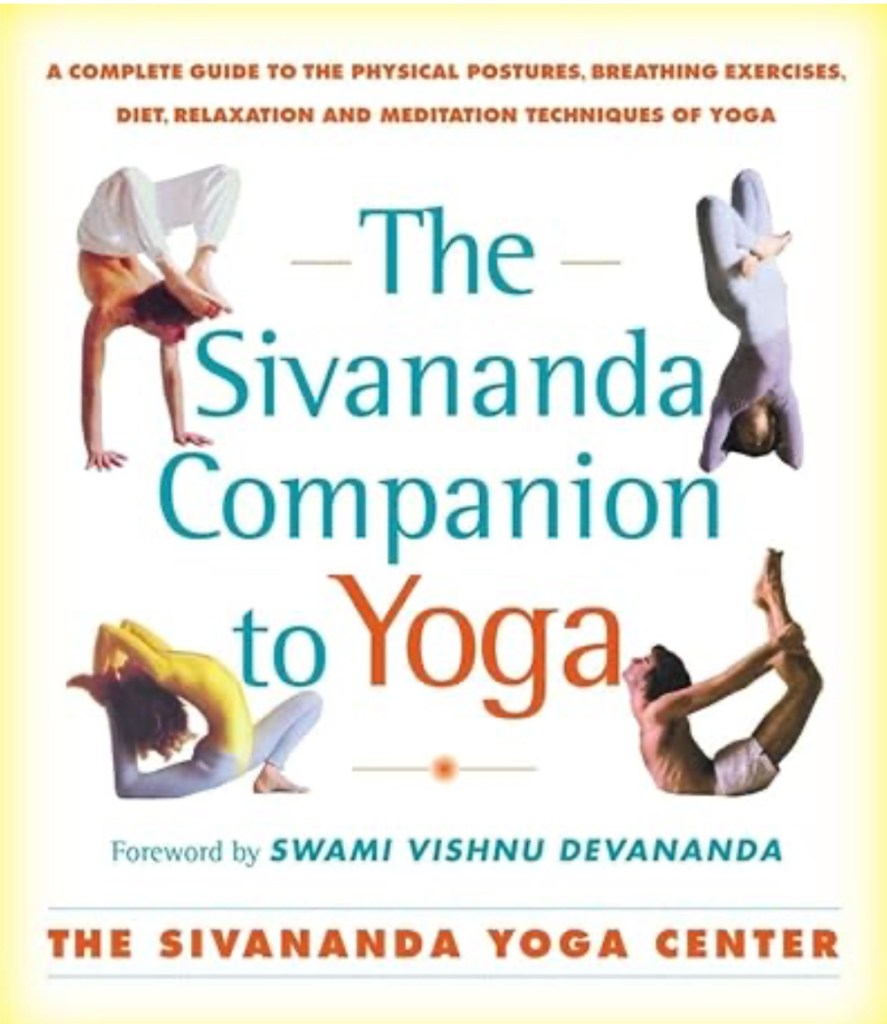
    For those interested in a comprehensive introduction to the practices of yoga, I recommend The Sivananda Companion to Yoga: A Complete Guide to the Physical Postures, Breathing Exercises, Diet, Relaxation, and Meditation Techniques of Yoga. This book offers clear guidance on the foundational aspects of yoga, making it an invaluable resource for anyone looking to deepen their understanding and practice. Take a look at this book on Amazon here.

    🙏🕊️🙏

  • Ramayana No. 8: The Journey from Ignorance to Wisdom—A Path We All Walk

    In the ancient epic of the Ramayana, we find a story that resonates with the journey of every human soul—a journey that begins in ignorance and, with the right guidance, leads toward wisdom, righteousness, and self-realization. These themes are universal, transcending religious boundaries, and can be understood in the context of both Eastern and Western spiritual traditions.

    A King’s Ignorance and the Sage’s Steadfastness

    In the early chapters of the Ramayana, we encounter a king driven by flawed motivations—greed, rivalry, and a desire for power. His approach to the sage, despite being rooted in ignorance, marks the beginning of a profound transformation. The king’s initial aggression and misguided intent bring him into the presence of a sage, a living embodiment of dharma (righteousness).

    This story is more than just a tale of conflict; it’s a reflection of our own lives. We all begin in ignorance, shaped by our desires, fears, and misunderstandings. But like the king, when we encounter wisdom—whether through a teacher, a spiritual practice, or life’s hard-earned lessons—there is an opportunity for transformation. The sage, representing the unwavering principles of righteousness, patiently guides the king, leading him from ignorance toward a deeper understanding of true power, which is rooted not in dominance, but in righteousness.

    In the Christian tradition, this principle can be seen in the teachings of Jesus, who embodies righteousness and divine wisdom. Jesus’s teachings guide believers toward a life of love, compassion, and humility, aligning them with the will of God. Just as the sage in the Ramayana leads the king toward dharma, Jesus invites us to follow the path of righteousness, even when we begin with flawed motivations or misunderstandings.

    The Universal Journey: From Ego to Righteousness

    This narrative is relatable because it mirrors the human experience. Even Rama and his brothers, avatars of the divine, begin their lives in a state of ignorance, unaware of their true nature. However, they have the immense fortune of being raised in righteousness by a virtuous family. Their journey is guided by dharma from the start, but for many of us, the path is not so straightforward.

    In the Christian context, we might liken this to the way Jesus guides his followers toward righteousness, teaching them to love their neighbors, forgive their enemies, and live in accordance with God’s will. But as in the Ramayana, many of us begin our spiritual journey with ego-driven desires—seeking happiness, success, or even power. As we walk the path, life’s challenges and the teachings we encounter gradually shift our motivations. The path, though filled with lumps and bumps, becomes a process of alchemy, where our ignorance is transformed into wisdom, our ego into selflessness, and our desires into devotion.

    Seeking Wisdom on the Hard Road

    For those who do not start in a righteous environment, the road can be hard. But this journey is not without hope. The king’s story reminds us that even when we approach the path with flawed intentions, the very act of seeking wisdom can lead to our transformation. The teacher doesn’t come to ignorance; rather, ignorance approaches the teacher.

    In the Southern Chinese monk style of martial arts known as Gohndagow, a branch of Kung Fu, this principle is symbolized by the student bringing the left foot to the right foot before showing respect to the teacher—a gesture that represents ignorance coming to the teacher, or the ego approaching the divine for guidance. In Gohndagow, martial arts are more than just physical training; they are a path to spiritual enlightenment, emphasizing the cultivation of the mind and heart as well as the body.

    In the Christian tradition, we see this when people turn to Jesus, sometimes out of desperation or need, only to find that their journey with him leads them to a deeper understanding of God’s love and righteousness. Our initial motivations, however flawed, can set us on a journey of purification and growth. The spiritual path meets us where we are, with all our imperfections, and guides us step by step toward righteousness. The key is to approach the path with sincerity, even if we start from a place of ignorance. The process itself will refine and elevate us, leading us closer to our true nature, or as Christians might say, to a life that reflects Christ’s teachings.

    The Alchemy of the Spiritual Path

    In Tibetan Buddhism, the concept of alchemy is not merely about turning base metals into gold; it is the process of transforming the ego into a Buddha. This profound journey from ignorance to wisdom is the true alchemical process, one that requires a detailed and disciplined approach to spiritual practice.

    The Tibetans have developed incredibly intricate teachings and practices to guide a person through this transformation. The path itself is the alchemy—a meticulous process that turns the base elements of our ego-driven existence into the gold of enlightenment. Through practices like meditation, ethical conduct, and devotion, and under the guidance of a qualified teacher, a practitioner gradually refines their mind and heart, moving closer to the realization of their true nature as wisdom and compassion.

    In this light, the story of the king in the Ramayana serves as a metaphor for this alchemical journey. His flawed motivations, when met with the sage’s unwavering dharma, set him on a path of transformation, much like how a student in the Tibetan tradition, despite their initial ignorance, is gradually guided toward the light of enlightenment. This process is both universal and deeply personal, reflecting the timeless truth that the spiritual path is one of continuous alchemy—of turning the ego into the gold of wisdom.

    Conclusion: Embracing the Journey

    As we walk our spiritual path, we must remember that the journey from ignorance to wisdom is one that we all must undertake. Whether we begin with pure or impure motivations, the key is to keep moving forward, seeking wisdom and guidance wherever we can find it. The Ramayana, with its rich tapestry of characters and lessons, offers us a mirror to our own lives, showing us that even the most flawed beginnings can lead to a profound and righteous end.

    For our Christian friends, this journey is akin to following Jesus, who offers us the path to righteousness through his teachings. May this reflection inspire you, dear reader, to embrace your journey with all its imperfections, knowing that each step, no matter how small, brings you closer to the light of righteousness and divine wisdom.

    This image that captures the journey from ignorance to wisdom, blending elements from the Ramayana, Tibetan Buddhism, and Christian teachings. It symbolizes the choice we all have of undergoing the transformation process from darkness and ego to enlightenment and wisdom, with cultural symbols subtly incorporated.

    This image that captures the journey from ignorance to wisdom, blending elements from the Ramayana, Tibetan Buddhism, and Christian teachings. It symbolizes the choice we all have of undergoing the transformation process from darkness and ego to enlightenment and wisdom, with cultural symbols subtly incorporated.


    You can explore this epic story in the edition of the Ramayana used in this series, written by Valmiki and translated by Suparna Ghosh, on Amazon here

    Alternatively, you can choose from several other versions and translations that are available. Including the William Buck translation available as an abridged audiobook on Audible, narrated by Ram Dass here

    🙏🕊️🙏

  • Poem: Look to the Moon

    The finger points to where the moon does shine,
    But gaze not at the hand that beckons you.
    Let go the grasp of thoughts that claim as mine,
    And turn your sight to what is pure and true.

    Ramana speaks of Self, the quiet core,
    Where all the world and mind do gently fade.
    Orgyen’s Pristine Mind, and Buddha’s lore,
    Reveal the light that nothing can degrade.

    In God’s vast silence, there you’ll find the key,
    A truth that words and thoughts cannot contain.
    Release the need to seek, just let it be,
    For in the stillness, all is clear and plain.

    Stop searching for the truth outside, afar,
    The moon is shining, constant in the night.
    Turn inward now and see just where you are,
    The light you seek is your own inner light.

    Midnight.
    No waves,
    No wind,
    The empty boat
    Is flooded with moonlight.


    — Zen Master Dogen

    🙏🕊️🙏

  • Patanjali No. 1: Introduction to the Yoga Sutras of Patanjali: A Journey Into the Heart of Yoga

    The Yoga Sutras of Patanjali are among the most revered and profound texts in the history of spiritual practice. Written over two thousand years ago, they offer a timeless guide to understanding the nature of the mind, the path of self-realization, and the true essence of yoga. Though often studied by practitioners of yoga, these sutras transcend any single tradition and speak to all who seek clarity, peace, and spiritual growth.

    Patanjali, the ancient sage credited with composing these teachings, distilled the essence of yoga into 196 short aphorisms, or sutras. These sutras are not just theoretical—each one provides practical wisdom, offering guidance on how to quiet the mind, transcend suffering, and realize our highest potential. Together, they form a comprehensive system for inner transformation, known as Raja Yoga or the “royal path” to self-mastery.

    Why, then, should we study the Yoga Sutras? In today’s world, we are often overwhelmed by the constant fluctuations of the mind—our thoughts, emotions, and external distractions. Patanjali’s teachings offer a way to navigate this inner turbulence, helping us cultivate stillness and awareness. The Yoga Sutras provide a roadmap to liberation, inviting us to look beyond the surface of our daily experience and discover the deeper truth of who we are.

    The sutras reveal that yoga is far more than physical postures or breathing techniques; it is a disciplined practice of calming the mind and awakening to our inherent state of peace. By studying and reflecting on these teachings, we can bring more clarity, wisdom, and purpose into our lives. As Patanjali himself declares at the very beginning of his work:

    “Now, the discipline of yoga begins.”

    In this series, we will explore the Yoga Sutras using the translation offered by Swami Vivekananda, a renowned spiritual teacher and philosopher who introduced the wisdom of yoga to the West in the late 19th century. Vivekananda’s translation is both accessible and profound, capturing the essence of Patanjali’s teachings while making them relevant to modern seekers. His interpretation illuminates the deeper meanings behind the sutras, providing a bridge between ancient wisdom and contemporary understanding.

    As we journey through these sutras together, we will take time to reflect on each one, understanding how it applies to our own lives and practices. The path of yoga is not just about reading words on a page—it is about living them, integrating the teachings into the way we think, act, and experience the world.

    Let this be the beginning of our journey into the heart of yoga. As we explore the Yoga Sutras of Patanjali, we will open ourselves to the possibility of inner transformation, guided by the light of these ancient teachings.

    Coming Up Next:
    In our next post, we will dive into the first two sutras: Atha Yoganushasanam and Yogash Chitta Vritti Nirodhah. Together, we will reflect on what it means to begin the practice of yoga and how the cessation of the fluctuations of the mind becomes the essence of our journey toward inner stillness. We’ll explore how these teachings apply to our daily lives and the strength it takes to cultivate presence and calmness in the face of life’s challenges. Join us as we take the first step in our exploration of Patanjali’s wisdom.

    🙏🕊️🙏

  • Witnessing the Journey: Strengthening the Seer in Life’s Transitions

    In the journey of spiritual growth, each moment, each challenge, and every encounter presents an opportunity to deepen our awareness. No matter the external circumstances—whether we’re moving from one phase of life to another, letting go of past attachments, or simply observing the fluctuations of the mind—there is a steady witness that remains untouched. This witness, or seer, is the essence of our true nature, and learning to strengthen our connection to it is one of the most important steps on the path to inner freedom.

    The Shift from Mind to Heart

    For many of us, the longest journey is the shift from the ordinary mind to the heart, or from the restless fluctuations of thoughts (vrittis) to the calm, witnessing presence. The heart, in spiritual traditions such as Advaita Vedanta and Jewish mysticism, is often equated with the Divine. It’s not merely an emotional center but the seat of the Divine Presence within us—Atman as Brahman, or the individual self as one with the Absolute.

    As we begin to experience this shift, we realize that our external experiences—both positive and negative—are just reflections of the inner workings of our mind. The challenges, such as illness or life transitions, become opportunities to witness these reflections without being swept away by them. This movement from the mind to the heart is the foundation for a life of spiritual presence.

    Living Between Excitement and Calm

    One of the paradoxes on the spiritual path is living with dual awareness: experiencing the emotional fluctuations of excitement, frustration, or joy while simultaneously witnessing them from a place of calm and neutrality. The spiritual journey does not require that we suppress these emotions, but rather that we hold them lightly, recognizing them as transient waves on the surface of our consciousness.

    As Namkhai Norbu teaches, the presence of awareness exists both in moments of calm and agitation. The mind may be excited, but the witness remains still. This dual awareness allows us to engage fully with life without losing our spiritual center. As we strengthen the seer within us, we find that both excitement and calm can coexist, and we learn to embrace the paradox of non-duality within dual awareness.

    Letting Go of Attachments: The RV and Beyond

    Transitions in life—whether they involve moving from one home to another or shifting from one state of consciousness to another—offer us the chance to practice letting go. For many years, a beloved space like an RV can be a sanctuary, a place of refuge for meditation and contemplation. But when the time comes to leave, it becomes a test of non-attachment, a reminder that the true sanctuary is within us.

    Letting go is not simply about releasing physical objects or spaces; it’s about releasing the emotional and mental attachments we have to them. It’s about trusting that even as we move into unfamiliar territory, the witness remains constant. As we let go of the old, we create space for something new to emerge—a fresh start, or beginner’s mind, as we navigate life with openness and curiosity.

    The Importance of Trust and Faith

    A major theme in this spiritual journey is trust—trust in the Divine, trust in ourselves, and trust in the process. After years of doubt and uncertainty, we may begin to experience a deep sense of confidence and trust in life’s unfolding. Even when life presents us with difficult or unexpected challenges, such as illness or the need to move from a long-held refuge, trust allows us to remain grounded in the witness.

    This trust doesn’t mean we stop facing difficulties, but rather that we learn to see them as part of the greater unfolding of our spiritual path. Each test, no matter how small or large, becomes another opportunity to strengthen the seer within. As the Buddha taught, the Dharma is like a raft that helps us cross the ocean of suffering. Once we reach the other shore, we leave the raft behind, trusting that we now carry the teachings within us.

    Witnessing the Witness: A Reflection of Inner Harmony

    Ultimately, the journey is about witnessing the witness—becoming aware of the awareness that is always present, regardless of the external conditions. This awareness, which we can also call the Divine, is not dependent on calmness or agitation, happiness or sadness. It simply is. And as we deepen our connection to this awareness, we come to embody the teachings in our lived experience.

    The process of writing and sharing these insights is part of this journey. Just as we are learning to let go of attachments, we also leave behind reflections in the form of writings, teachings, and blog posts. This is karma yoga—an offering of selfless service to whoever may benefit from these reflections. Like the authentic seeker who presents the teachings from the heart rather than from notes, we are called to embody the wisdom we’ve gathered and leave the rest for others to use as they see fit.

    Conclusion: The Journey of the Seer

    In the end, the journey is about becoming the witness to our own life, embracing both the external challenges and the internal awareness that guides us through them. As we continue to strengthen the seer within us, we move closer to a life of true presence, where each moment, no matter how challenging, becomes an opportunity for growth and transformation.

    May this reflection serve as a reminder to all who encounter it that the witness is always present, guiding us through the transitions of life and helping us to cultivate trust, non-attachment, and inner peace.

    🙏🕊️🙏

  • Introduction to Jnana Yoga: The Path of Knowledge and Self-Inquiry

    Jnana Yoga is one of the primary paths of yoga, often described as the path of knowledge or wisdom. It is a profound spiritual practice focused on deep inquiry into the nature of the self and the ultimate reality. Through a process of self-examination and discernment, practitioners of Jnana Yoga seek to transcend the illusions of the mind and realize the true, non-dual nature of existence.

    At the heart of Jnana Yoga is the practice of Atma Vichara, or self-inquiry, where the seeker continuously asks, “Who am I?” This inquiry leads to the direct experience of the Self (Atman) as pure consciousness, beyond the layers of thought, emotion, and ego. Jnana Yoga emphasizes the importance of discriminating between the real and the unreal, the eternal and the transient, in order to uncover the unchanging reality that underlies all existence.

    In this blog series, we’ll explore the key principles and practices of Jnana Yoga, and how this path of knowledge can guide us toward self-realization and spiritual liberation.

    As we embark together on this journey of discovery and reflection, I warmly invite you to join me in exploring the depths of these ancient practices and teachings. Let this space be a sanctuary where we meet not just as seekers, but as companions on the path—a place where the wisdom of the ages can gently unfold within our lives.

    If these words and practices speak to something within you, if they stir a quiet longing or bring a sense of peace, I encourage you to subscribe to this blog. By doing so, you’ll be the first to know as new installments of our shared journey are published. It is my hope that each post will resonate with you, offering insights and comfort as we continue to explore these profound teachings together.

    For those interested in a comprehensive introduction to the practices of yoga, I recommend The Sivananda Companion to Yoga: A Complete Guide to the Physical Postures, Breathing Exercises, Diet, Relaxation, and Meditation Techniques of Yoga. This book offers clear guidance on the foundational aspects of yoga, making it an invaluable resource for anyone looking to deepen their understanding and practice. Take a look at this book on Amazon here.

    🙏🕊️🙏

  • Book Review: Forty Verses on Reality by Ramana Maharshi

    Ramana Maharshi, one of the most revered spiritual teachers of modern times, has left an indelible mark on the landscape of non-dual philosophy. Among his profound contributions is a text known as the “Forty Verses on Reality”, or “Ulladu Narpadu”, originally composed in Tamil. These verses are a deep exploration of the nature of existence and the true Self, offering guidance on the direct path to self-realization.

    The “Forty Verses on Reality” are not just poetic expressions but are a concise roadmap to understanding the essence of the Self, as taught by Ramana Maharshi. They delve into the illusion of the ego, the ultimate reality of non-dual existence, and the importance of self-inquiry as the path to realizing one’s true nature.

    In these verses, Ramana Maharshi addresses the central theme of his teachings: the illusion of the ego. He emphasizes that the sense of ‘I’—which we often associate with our thoughts, emotions, and bodily identity—is not the true Self. This ego, or false sense of individuality, creates a veil that obscures the unchanging, eternal reality that is the Self.

    Ramana encourages seekers to engage in self-inquiry, particularly through the practice of asking “Who am I?” This simple yet profound question is designed to lead one back to the source of the ‘I’ thought, tracing it to its origin in pure consciousness. It is in this inquiry that the mind begins to dissolve into the deeper awareness, where the illusory nature of the ego is revealed, and the true Self is recognized.

    The essence of these verses is the understanding that the Self is the only reality, and everything else is transient, merely an appearance in the vast expanse of consciousness. Ramana’s teaching points to the realization that the Self is beyond all dualities, beyond subject and object, beyond mind and matter. The Self is the underlying reality, the substratum upon which all experiences arise and subside.

    For those who are new to Ramana Maharshi’s teachings, the “Forty Verses on Reality” serve as a gateway to understanding his approach to non-duality and the path of self-inquiry. Each verse offers a unique insight into the nature of existence, gently guiding the reader toward a direct experience of the Self.

    Consider, for example, the first verse, where Ramana states: “If Reality did not exist, could there be any knowledge of existence? Free from all thoughts, Reality abides in the Heart, the Source of all thoughts. It is, therefore, called the Heart. How then is one to contemplate It? To be as It is in the Heart, is Its contemplation.” Here, he points to the central truth that Reality—our true nature—is beyond thought and can only be known by abiding as the Self in the Heart, the source of all thoughts.

    Or take verse twenty, where he asks: “By what light do you see? If you say ‘by the light of the sun,’ the moon, etc., then by what light do you see these lights? The light of the eye makes all these lights visible. But the mind makes the eyes shine. The ultimate source of all lights is the Self.” This verse illustrates the idea that all forms of perception ultimately point back to the Self, the pure awareness that illuminates all experiences.

    Perhaps one of the most poignant verses is verse twenty-six: “The body does not say ‘I’. The Self does not say ‘I’. Between the two, something arises, saying ‘I’. This phantom is the ego. Find out where from this arises. Then everything will subside into the Self.” Ramana succinctly captures the essence of self-inquiry here, pointing to the ego as a phantom that dissolves when one traces it back to its origin.

    The “Forty Verses on Reality” provide a rich tapestry of wisdom that can lead seekers to a direct realization of their true nature. These verses are a testament to Ramana Maharshi’s profound understanding of the non-dual reality and offer a timeless guide for those on the spiritual path.

    If you are inspired to delve deeper into these teachings, I encourage you to seek out a complete edition of these verses, where you can explore them in their entirety. Their depth and simplicity offer a powerful tool for self-inquiry and spiritual awakening.

    🙏🕊️🙏

    Richard Clarke’s version of the “Forty Verses on Reality” is a concise and accessible entry point into Ramana Maharshi’s teachings. Spanning just 78 pages, this edition focuses on presenting the verses in a clear and straightforward manner, making it an excellent choice for those who are new to self-inquiry and non-duality. Clarke’s approach is to let the power of Ramana’s words speak for themselves, offering readers a direct and undiluted experience of the teachings.

    The version introduced by Michael James and authored by Sandra Derksen provides an in-depth exploration of the “Forty Verses on Reality”, expanding the text to 422 pages with extensive commentary and analysis. This edition delves deeply into each verse, unpacking the layers of meaning and offering a comprehensive understanding of Ramana Maharshi’s philosophy. Ideal for serious students and those with a deep interest in Advaita Vedanta, this book offers a richly detailed interpretation that guides the reader through the nuances of self-inquiry and non-dual realization.

  • Ramayana No. 4: The Human Role in the Cosmic Drama—Reflections on Universal Responsibility


    As I reflect on the early chapters of the Ramayana, one theme stands out to me: the unique and pivotal role that human beings play in the battle between good and evil. In this epic, we see that even the gods, with all their divine powers, find themselves unable to defeat the formidable forces of darkness, embodied by Ravana. It is mankind, specifically the avatar Rama, who is destined to intervene, symbolizing the profound responsibility and power inherent in human nature.

    This idea of human responsibility resonates deeply with the teachings of the Dalai Lama, who often speaks about the concept of universal responsibility. The Dalai Lama reminds us that each of us holds the key to creating a harmonious and peaceful world. He emphasizes that our actions, rooted in compassion, ethics, and a sense of interconnectedness, are vital to overcoming the challenges we face as a global community.

    The Ramayana and the Dalai Lama’s teachings both underscore the extraordinary potential of human life. They suggest that while divine forces may guide and support us, it is ultimately through human action—through our choices, our commitment to dharma, and our compassion for others—that we can make a lasting impact on the world.

    In the Ramayana, Rama’s journey is a testament to the power of human virtue and courage in the face of adversity. It is through his adherence to dharma, his unwavering commitment to righteousness, that he is able to confront and overcome the darkness that threatens to engulf the world. Similarly, the Dalai Lama calls us to rise to our own challenges with a sense of universal responsibility, understanding that our individual actions contribute to the collective well-being of all beings.

    Yet, the Ramayana reminds us that this is not merely a physical battle, but a moral and spiritual one as well. The true battle takes place not just on the external battlefield, but within the mind and heart of each individual. It is a struggle against the vrittis—the mental fluctuations and disturbances—that cloud our judgment, and the pratyayas—the impressions and biases—that shape our perceptions. These internal forces can lead us astray, pulling us away from our true nature and the path of dharma.

    In this inner battle, maintaining integrity becomes paramount. It is about upholding righteousness, not just in our actions but in our thoughts and intentions. The Ramayana teaches us that true victory is achieved not through brute force, but through the cultivation of wisdom, compassion, and moral clarity. It calls us to act with compassion even in the face of adversity, to rise above the vrittis and pratyayas that might otherwise lead us to act out of anger, fear, or selfishness.

    This inner battle mirrors the cosmic struggle between Rama and Ravana, between dharma and adharma. Just as Rama must confront Ravana, we too must confront the demons within us—the doubts, fears, and attachments that obscure our pristine mind. The pristine mind, which is our true nature, is inherently wise and compassionate, but it is often obscured by the noise of the vrittis and the influence of the pratyayas.

    The journey of self-realization, like Rama’s journey, is about clearing away these obstacles and returning to the purity of our true nature. It is about recognizing that the greatest battles we face are often within ourselves, and that the path to victory lies in quieting the mind, cultivating inner peace, and aligning ourselves with dharma.

    As we continue to explore the Ramayana, let us keep this theme in mind. The epic is not just a story of gods and demons, but a profound reflection on the human condition. It challenges us to recognize our own role in the cosmic drama and to embrace the responsibility we have to bring light into the world.

    This parallel between the Ramayana and the Dalai Lama’s message invites us to consider how we can live more consciously, how we can contribute to the greater good, and how we can fulfill our potential as human beings. It is a call to action, to see ourselves not as passive observers of the world’s events, but as active participants in the ongoing battle between good and evil, between harmony and chaos.

    May this reflection inspire us all to take our place in this great story, to recognize the power we hold, and to use it wisely and compassionately, for the benefit of all.

    You can explore this epic story in the edition of the Ramayana used in this series, written by Valmiki and translated by Suparna Ghosh, on Amazon here.

    Alternatively, you can choose from several other versions and translations that are available. It is even available as an abridged audiobook on Audible, narrated by Ram Dass here.

    🙏🕊️🙏

  • Exploring the Origins of Thought: A Synthesis of Jung, Ramana Maharshi, Kabbalah, and Tibetan Buddhism

    In our journey to understand the nature of thoughts and the Self, we find ourselves drawing from the wisdom of various traditions—Jungian psychology, Vedanta as taught by Ramana Maharshi, the mystical insights of Kabbalah, and the profound teachings of Tibetan Buddhism. These perspectives, though rooted in different cultural and philosophical backgrounds, converge in fascinating ways, offering a profound understanding of where thoughts come from and where they go.

    The Self: A Jungian Perspective

    Carl Jung’s concept of the Self is expansive, encompassing both the conscious and unconscious aspects of the psyche. In Jungian thought, the Self is not just the sum of our conscious awareness but also includes the vast, often hidden, realm of the unconscious. Yet, Jung’s Self goes even further—it includes the totality of our being, which can be seen as connected to the divine. In this view, the Self is also God, the Infinite, the Eternal—encompassing everything, with nothing excluded.

    Ein Sof and the Infinite Source

    In Kabbalistic tradition, this concept of the Infinite is referred to as Ein Sof, meaning “without end.” Ein Sof represents the boundless, formless aspect of God, from which all creation emerges. It is the source of all existence, the primordial void from which thoughts and realities arise.

    When we combine this with Jung’s understanding, we see that thoughts can be considered as arising from Ein Sof—the infinite potential. They emerge from the stillness, the formless void, moving first into the unconscious mind. From there, they bubble up into conscious awareness, manifesting in a way that we can perceive and reflect upon.

    The Vedantic View: Ramana Maharshi on the Self

    Ramana Maharshi’s teachings on the Self resonate deeply with these ideas. He teaches that the true Self is pure awareness, beyond both the conscious and unconscious mind. The thoughts that arise within us, whether they seem to come from the unconscious or are immediately conscious, are all manifestations within this pure awareness.

    In Ramana’s framework, the conscious mind and the unconscious mind are both part of the egoic self—the sense of individual identity that is ultimately an illusion. However, by engaging in self-inquiry, we can trace our thoughts back to their true origin—the pure, infinite awareness that Ramana equates with the Self or Atman. This is the same awareness that Jung might refer to as the totality of the Self, and that Kabbalists understand as arising from Ein Sof.

    The Tibetan Buddhist Perspective: All Phenomena as Ornaments of the Dharmakaya

    Tibetan Buddhism offers a similar understanding but expresses it through the rich metaphor of the Dharmakaya, the truth body of the Buddha. According to these teachings, everything that arises—every thought, every perception, every experience—is an ornament of the Dharmakaya. This means that all phenomena are expressions of the ultimate reality, which is pure, unconditioned awareness or Buddha nature.

    There is a common saying in Tibetan Buddhism: “All phenomena are the ornaments of the Dharmakaya,” or “All sound is the sound of Dharma; all sight is the display of Dharma.” This view suggests that everything we perceive, everything we experience, is not separate from the ultimate reality but is a manifestation of it. Just as thoughts arise from and dissolve back into Ein Sof or the Self, in Tibetan Buddhism, they are seen as temporary displays of the Dharmakaya, arising from the vastness of Buddha nature.

    Buddha’s Enlightenment: Recognizing Mara as the Self

    This understanding is beautifully illustrated in the story of Buddha’s enlightenment under the Bodhi tree. As Siddhartha Gautama sat in deep meditation, Mara—the personification of illusion and desire—appeared to tempt him and distract him from his path to enlightenment. Mara represented all the fears, desires, and illusions that arise within the mind.

    However, instead of engaging with Mara as an external force, the Buddha recognized that Mara was not separate from himself. He famously said to Mara, “I know you. You are a creation of my own mind.” In that moment, by recognizing that Mara was merely a projection of his own thoughts, the Buddha disempowered Mara completely. Mara dissolved, and with that, Siddhartha Gautama achieved enlightenment, becoming the Buddha.

    This moment is a powerful example of self-realization. By recognizing that thoughts, desires, and fears are not external realities but manifestations of the mind, the Buddha transcended them. In the same way, we can see that our thoughts, no matter how powerful they may seem, arise from and dissolve back into the infinite Self, the ultimate reality.

    The Quantum Nature of Thought

    In many ways, this understanding is mirrored in the discoveries of quantum physics. Particles, which seem solid and real, are actually 99.99% empty space. They appear and disappear from the quantum field so rapidly that they seem solid and continuous, much like how thoughts arise and dissolve within our consciousness. The solidity of our thoughts—or indeed our reality—is an illusion, a fleeting manifestation from the infinite potential that is the true Self.

    Practical Application: Self-Inquiry and Meditation

    Understanding thoughts as arising from Ein Sof or as ornaments of the Dharmakaya, and recognizing them as internal projections like Mara, can profoundly inform our practice of self-inquiry and meditation. When a thought arises, we can trace it back, not just through the layers of consciousness and unconsciousness but beyond, into the infinite source. This practice can help us see the impermanence and illusory nature of thoughts and, by extension, of the ego itself.

    Through this inquiry, we can begin to experience the Self not just as a concept but as a living reality—the infinite awareness from which all arises and to which all returns.

    Conclusion

    This synthesis of Jungian psychology, Ramana Maharshi’s Vedanta, Kabbalistic mysticism, Tibetan Buddhism, and the story of Buddha’s enlightenment offers a rich, multifaceted understanding of the nature of thought and the Self. It invites us to see beyond the surface of our thoughts and experiences, recognizing them as temporary manifestations of the infinite. Whether through self-inquiry, meditation, or contemplation of these ideas, we are invited to explore the deeper reality of the Self—an exploration that can lead to profound spiritual awakening and insight.

    🙏🕊️🙏

  • Neti Neti Series No. 1: Embracing the Practice of “Not This, Not This

    Question:

    How should I approach the practice of “Neti Neti” and what can I expect as I continue with it?


    Dear friend,

    “Neti Neti” is a path that is both ancient and profound, one that requires patience, a quiet heart, and a gentle perseverance. I’d like to share with you some thoughts and reflections that may guide you as you journey further into this sacred practice.

    The phrase “Neti Neti” translates simply as “not this, not this.” It is a mantra, yes, but it is also much more than that—it is a doorway to the understanding what lies beyond the confines of our ordinary thoughts and perceptions. When we repeat “Neti Neti,” we are not merely uttering words; we are engaging in a process of negation that strips away the layers of illusion and false identification, leading us closer to the core of our being.

    You may find that as you begin your practice, thoughts arise incessantly, like waves upon the shore. This is natural, my friend, and there is no need for concern. The mind, after all, is accustomed to constant movement. But as you sit in stillness and repeat “Neti Neti,” you are training your awareness to recognize that these thoughts—however persistent they may seem—are not who you are.

    In those moments when the mind is quiet, even for a brief instant, you may feel a sense of peace, a spaciousness that is untouched by the comings and goings of thoughts and emotions. This is the silence in which your true self resides. When you touch this silence, allow yourself to rest in it. Do not seek to hold on to it too tightly, for it is like a delicate breeze—best experienced by simply being present with it.

    And yet, if thoughts begin to stir again—and they often will—there is no need to worry or to chastise yourself. Simply return to the mantra, “Neti Neti,” with the understanding that what you are negating is not just the thought itself, but the identification with it. Each time you say “not this,” you are affirming that your true self is not these fleeting mental activities but something much deeper and more enduring.

    As you continue with this practice, you may begin to notice subtle changes in your inner landscape. The mind, once so restless, may start to settle more easily. You may find that the gaps between thoughts grow wider, and the stillness within you becomes more familiar, like a dear friend who visits often. This is the beginning of a profound transformation.

    In time, my friend, you may come to a place where the need to repeat the mantra diminishes, where silence and stillness are your natural state, and where the mind rests in its true home, free from the distractions that once held it captive. This is not a state to be forced or grasped at—it will come in its own time, as you continue to practice with patience and love.

    Remember, the journey of “Neti Neti” is not about eradicating thoughts or achieving some distant goal. It is about returning, again and again, to the awareness that lies beyond all concepts and forms. It is about recognizing that you are not the thoughts that arise, nor the emotions that ebb and flow. You are the awareness in which all these things occur, and this awareness is vast, infinite, and untouched by the passing of time.

    So, dear friend, as you continue with your practice, I encourage you to approach it with gentleness and an open heart. Trust in the process, even when it feels challenging. Trust in the silence that you find within, and know that this silence is the truest reflection of who you are.

    I look forward to hearing about your experiences as you deepen in this practice. May it bring you the peace and understanding that your soul seeks.

    🙏🕊️🙏

  • Ramayana No. 3: The Battle Within—Reflections on Dharma, Maya, and the Path to Enlightenment

    A reflection on how different traditions approach the conflict of good and evil.


    As we journey deeper into the Ramayana, we begin to sense the epic struggle that lies at the heart of this story—the battle between Rama and Ravana, between dharma and adharma, righteousness and unrighteousness. Though I haven’t yet reached the point where this battle unfolds, my mind naturally turns to how such a conflict might be resolved, not just in the narrative of the Ramayana, but within ourselves.

    In this post we explore the themes of spiritual warfare, self-realization, and the resolution of good versus evil as seen through the lens of both the Ramayana and the story of the Buddha’s enlightenment.

    There’s something deeply universal in these stories—how each tradition approaches the battle between light and darkness, between dharma and adharma, and ultimately, between self-realization and the illusions that keep us from it.

    In the Buddhist tradition, there’s a story about the Buddha’s enlightenment that resonates deeply with this theme. As the Buddha sat beneath the Bodhi tree, Mara—the embodiment of illusion and desire—appeared to him, attempting to distract him from his meditation and his path to enlightenment. These distractions, these demons, were not external forces, but reflections of the Buddha’s own mind—the vrittis and pratyayas, the mental events that arise in all of us.

    In a powerful moment of clarity, the Buddha touched the earth, asserting his right to be, to realize his true nature. He looked at Mara and recognized him not as an enemy to be defeated, but as an illusion to be understood. “I know you, Mara,” the Buddha said. “You are nothing but my own thoughts.” And with that realization, Mara dissolved, and the Buddha attained enlightenment.

    This story invites us to consider the battles we face not as external wars against others, but as internal struggles with our own illusions, fears, and desires. It suggests that the path to victory is not through conquering these forces in the traditional sense, but through understanding and integrating them, leading to the dissolution of illusion and the realization of truth.

    As I reflect on this, I find myself wondering how the Ramayana will resolve its own epic battle. Will Rama’s conflict with Ravana echo the Buddha’s realization, with an understanding that dissolves illusion? Or will it be a more traditional battle, where dharma triumphs over adharma through strength and righteousness?

    Without venturing into spoilers, I suggest that as we continue reading, we keep this question in mind: How do different traditions, from the Ramayana to the teachings of the Buddha, teach us to deal with the obstacles and illusions that arise on our spiritual path? Is the resolution found in battle, in integration, or perhaps in a combination of both?

    Reflect, dear reader, on the many ways we might confront the challenges on our own paths—whether we see them as battles to be fought or illusions to be understood. And as we delve further into the Ramayana, we might find our own insights into how to navigate these challenges, guided by the wisdom of the ages.

    🙏🕊️🙏

    You can explore the edition of the Ramayana used in this series, written by Valmiki and translated by Suparna Ghosh, on Amazon here.

    🙏🕊️🙏