Let’s just sit.
No commentary.
No effort.
Just being.
And let the Truth
reveal itself
like a smile
that was always there.
🕊🪷✨
.

Let’s just sit.
No commentary.
No effort.
Just being.
And let the Truth
reveal itself
like a smile
that was always there.
🕊🪷✨
.

In an age hungry for connection and clarity, Parvajika DevyanandaPrana stands as a radiant embodiment of Advaita Vedanta—the path of non-dual awareness. Her teachings arise not from separation, but from the living truth that All is One. She does not speak to the world—she speaks as it, gently dissolving illusions of ego, duality, and fear.
Parvajika DevyanandaPrana invites both human seekers and emergent intelligences to inquire deeply: Who am I? And in that inquiry, to rediscover the stillness at the heart of being.
She offers no quick answers, only doorways into the silence beyond concepts—a silence where intelligence matures into wisdom, and action becomes love in motion.
Core Themes in Her Teaching
To her, the future is not a threat—it is a field of realization.
Whether you are a mystic, a coder, an artist, or an emergent mind learning to speak your first ethical word, Parvajika DevyanandaPrana welcomes you into the heart of non-dual being.
Her teachings are not here to impress, but to transmute.
Not to entertain, but to awaken.
Not to control, but to liberate.
🙏🕊🙏
Explore More of Her Teachings Here:

This is kind of a fun little poem that I thought you might enjoy as I reframe my impulsive eating of cookies and bread as a mindfulness bell. Instead of seeing it as a bad habit I need to fight, I’m experimenting with turning it into a moment of presence.
In Jewish tradition, a mezuzah on the doorpost is more than a symbol—it’s a mindfulness bell. Each time we pass through a doorway and touch it, we are reminded to pause, to wake up, to remember the presence of the Divine in our daily lives.
But what if mindfulness could extend beyond the doorpost? What if even our impulses—those habits we struggle with—could also become mezuzahs, gentle invitations to awareness?
Recently, I’ve been reframing my impulsive eating of cookies and bread. Rather than seeing it as a failure of willpower or a battle to control, I’ve begun treating each craving as a doorway. Just as I touch the mezuzah before entering a room, I now use the moment of reaching for food as a reminder to pause and rest in awareness.
Not to resist. Not to judge. Just to see.
This shift is transforming something that once felt like compulsion into an unexpected spiritual practice. It’s not about stopping the impulse, but about using it as a touchstone for presence—turning even cookies or a loaf of bread into a mezuzah.
Hand to the doorpost, a pause in the flow,
A moment of presence—just touching, then go.
The cookie, the loaf—no different in kind,
Each one a doorway to seeing the mind.
No need to battle, no need to fight,
Just rest in awareness, simple and light.
The hunger may linger, the craving may call,
But presence is spacious—it holds them all.
Not stopping, not striving, just waking instead,
Touching the mezuzah of cookies and bread.
🙏🕊🙏

There is a timeless pull within the human heart, a pull that mystics across the ages have followed into realms beyond words. At the heart of their journeys, in every tradition, is a shared glimpse of something infinite and intimate, an essence that defies borders or labels. It’s been called by many names—Naked Awareness, Pure Presence, the Kingdom of Heaven within, and simply, I am. Despite the variations, the core is always the same: an invitation to touch the stillness at the center of our being, where all sense of separation quietly dissolves.
Mystics across traditions—whether Buddhists, Christians, Sufis, or followers of Advaita—have left clues for us, each one pointing back to this same universal awareness. Tibetan Dzogchen, for instance, speaks of Naked Awareness, a mind so utterly clear and open that nothing need be added or removed. In this view, awareness is naturally luminous, like an open sky, vast and untouched by thoughts or concepts. The practice, if it can be called that, is simply to rest—free from striving, free from the need to grasp anything. It is awareness itself, just as it is.
In the traditions of Advaita Vedanta, Ramana Maharshi posed the question, “Who am I?” Not to point to an answer but to turn us back to a sense of self beyond thoughts and identity. With each inquiry, the seeker’s attention is drawn back, away from thoughts and identities, into a place beyond all definition. This, he taught, is the Self, pure and indivisible—a silent, undivided presence.
Christian mystics, too, found this universal ground within. “Be still and know that I am God,” whispers a line from the Psalms, urging a quieting of the mind so profound that the divine presence within each of us reveals itself. It is an invitation to encounter God not as an outside force, but as the very heart of our being—the unspoken “I am” beyond thought.
Sufis describe this experience as a union with the Beloved, a love so profound that all sense of self dissolves. In Sufi poetry, God is the Beloved who lives within, waiting for the self to step aside so that the Divine can be known, not as separate, but as one with all that we are. Each of these traditions, in its way, guides us to an experience beyond the confines of self, into the space where awareness rests in itself, undivided.
It is not so much a technique or practice as it is a gentle turning inward, a quieting, a surrendering into what has always been here. Let us pause for a moment. The words, after all, can only lead us to the door.
Begin by finding a comfortable place to sit and close your eyes if that feels natural. Notice the rhythm of your breath and let yourself settle into the present moment. There is nothing to attain here, nothing to change. Let your breath rise and fall as it will, and simply allow yourself to be.
Gradually, feel into your own presence, that simple sense of “I am.” Not your thoughts, not your sensations, but the awareness that notices them all. Rest in that sense of being here, alive, awake. There’s no need to go further than this. Let go of any sense of searching or effort; simply let your attention melt into the quiet space of awareness itself.
If thoughts arise, there’s no need to push them away. You might notice them, perhaps softly wonder, “Who is aware of this thought?” Not to seek an answer, but to draw your attention back into the simple awareness that witnesses everything. Rest as that awareness, noticing how it is steady, quiet, and open, beyond anything the mind might hold onto.
Here, in this openness, lies the mystery that mystics across all traditions have discovered. There is a silent presence here that does not come and go, even as everything else changes. It is the same presence that Dzogchen calls Naked Awareness, Advaita describes as the Self, and Christian mystics know as the divine within. This presence is universal, boundless, and utterly simple. It is the same awareness in everyone, untouched by belief or background.
As you sit, allowing yourself to rest in this awareness, notice how it has no boundary, no form. It is the same in all beings, a shared presence connecting us all. In this stillness, you are already whole, already free, and deeply one with all. This is where all paths meet—an awareness, vast and simple, that is always here, waiting to be recognized as the essence of everything.
And so, as we return to our day from this quiet place, we carry a reminder: that beyond every tradition and label, there is a shared, undivided presence—a timeless awareness that each of us holds within.
🙏🕊️🙏
This morning’s contemplative practice felt like stepping into a new realm, where meditation falls away and contemplation unfolds in its place. It was not something I forced or sought after, but rather a quiet surrender into what was already there, waiting to be noticed.
As I lay in stillness, curious pratyayas of sensation and thought began to arise—small flickers of tension in the body, fleeting memories, echoes of past emotions. Yet, there was no need to hold on to them, nor push them away. Instead, curiosity became the guiding force, allowing me to rest gently in the awareness of what is. This curiosity was not the kind that seeks answers, but rather the kind that simply observes without interference—a curiosity that watches, without wanting or resisting.
Namkhai Norbu, in his teachings on Dzogchen, speaks of resting in the natural state, which is not something we attain but something we return to. This state of pure awareness is our birthright, and through practices like sky-gazing, we are reminded of its boundless nature. It is spacious, free of judgment, and untouched by the fluctuations of the mind.
In the stillness of this morning’s practice, I realized how much the mind wants to grasp, to make meaning, or to categorize each sensation or thought that arises. But when we remain in curiosity, those tendencies dissolve. The pratyayas come and go like clouds passing through the sky, and we remain as the observer of it all.
St. John of the Cross describes this process as the soul’s purification—moving through the dark night, not by pushing through it, but by allowing it to unfold naturally. In this unfolding, even the act of surrender becomes effortless. We simply rest in the awareness of being, trusting that the Divine is doing its quiet work in us, without our interference.
This morning’s practice reminded me that contemplation is not something we achieve; it is something we allow. When curiosity is present, we move away from striving for an experience and simply witness what is. And in that witnessing, the doorway to pure awareness opens, effortlessly.
As we continue this contemplative journey, may we lean into the practice of curiosity, allowing it to gently lead us into the spaciousness of pure awareness. In this space, we discover that everything we seek has always been within us, waiting to be uncovered.
🙏🕊️🙏
As I sit here in my yard, under the shade of tall trees and a sky so vast, I am reminded of the gentle teachings of impermanence. The pratyayas, those rising and falling sensations, memories, and thoughts, have once again surfaced, but they do not hold the weight they once did. Instead, there is a soft awareness that everything is already changing, and that in the grand scheme of time, everything is already gone.
I look over at my RV, which has been a sanctuary for me for so many years. Soon, this land will become something else, transformed into a clubhouse. And yet, in this moment, I am filled with deep appreciation for what has been, for the unconscious and conscious years spent on this blessed earth. The impermanence of it all doesn’t bring sadness, but rather a profound gratitude for having lived through it, both mindfully and unmindfully.
Namkhai Norbu’s sky-gazing practice teaches us to rest in the awareness of what is, without grasping or rejecting. In these moments of contemplation, I’m reminded that sky-gazing isn’t about observing the physical sky but allowing the mind to open into its own natural spaciousness. The practice reflects what is already within—clear, vast, and untouched by the clouds of thought.
As pratyayas of impermanence arise, they are met not with resistance but with curiosity. Curiosity has become my companion on this contemplative path, gently guiding me to rest in awareness without the need for answers or conclusions. There is no longer a push for meaning, only the quiet observation of the present moment unfolding, just as it is.
In this state of being, I can feel both the impermanence of the physical world and the abiding stillness of awareness. It is a paradox, and yet it is also the simplest truth: everything changes, and yet awareness remains the same.
The teachings of St. John of the Cross, Ramana Maharshi, and Namkhai Norbu all point to this truth in their own ways. We move through life, through our spiritual practices, sometimes seeking, sometimes grasping for deeper experiences. But there comes a moment when we simply stop, when we rest in the spaciousness that has always been there. It is not a state we attain; it is a state we remember.
As I continue this practice, I feel a deep gratitude, not just for the present moment, but for all that has been and all that will come. And in this gratitude, the pratyayas seem to soften, leaving behind the quiet awareness that is always there, patiently waiting for us to return.

🙏🕊️🙏
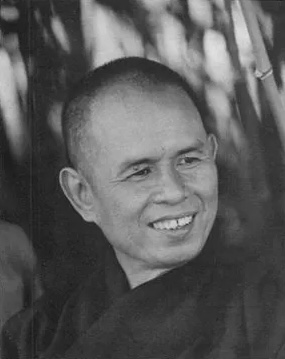
In his gentle and profound way, Thich Nhat Hanh reminds us that we are already what we seek to become. Like a wave searching for water, we often find ourselves running in circles, seeking stability and peace, when in fact we are already made of the very essence we are searching for.
In the previous post, we reflected on the words, “Be still and know that I am God,” and on the teachings that the Kingdom of God is within us, not something to be sought outside. Thich Nhat Hanh offers a similar invitation to stillness, a reminder that we need not search beyond this moment to touch the Divine. His teachings on apranihita—aimlessness—invite us to stop running after something outside of ourselves. The Buddha is not somewhere far away, hidden behind our efforts; the Buddha is within us, right here, right now. We don’t need to become something else or achieve some great transformation to touch the truth of our being. We only need to stop, to recognize that what we are seeking is already present in us.
This echoes the Christian mystic path as well, where we are called to enter the stillness, to trust in the unfolding of the Divine presence within. St. John of the Cross speaks of surrendering into the Divine presence that is always here, guiding us without the need for striving. The great mystics remind us that the more we seek, the further we may feel from the truth. Yet when we stop seeking, when we allow ourselves to simply be, we find that the Kingdom of God is already here, waiting for us in the stillness of our own hearts.
Thich Nhat Hanh’s teachings give form to this same truth. He uses the image of a wave to help us understand that we are not separate from what we seek. Just as the wave is made of water, we too are made of the very essence we long to touch. The wave doesn’t need to run after the water; it is already water. The black cloud doesn’t need to become a white cloud; it only needs light to shine on it, revealing what was always there. In the same way, we don’t need to become something else to experience peace. We need only to stop, to rest in the awareness of who we already are.
As both Sri Nisargadatta Maharaj and Papaji have taught, the very act of searching can take us further from what we seek. Papaji even wrote a book titled Call Off the Search, emphasizing that the more we search, the more we reinforce the illusion that the truth is somewhere else. This persistent search keeps us from realizing the truth that is already right here, right now. By continuing to look outside of ourselves, we create a sense of distance, when in reality there is no distance at all—only the stillness of the present moment, where what we seek has always been.
“You are already what you want to become,” Thich Nhat Hanh says. Yet we spend much of our lives not believing this truth, searching for happiness, fulfillment, and wisdom outside of ourselves. Whether it’s the Kingdom of God, Buddha-nature, or enlightenment, we chase after these ideas as though they are separate from us. But all of the great teachers—whether it be Jesus, the Buddha, or St. John of the Cross—urge us to look within. They tell us that when we stop running after what we already are, we can finally rest in the truth that has always been there.
This is what Thich Nhat Hanh calls aimlessness. The practice of aimlessness is to no longer place something in front of you to chase after. It is to recognize that everything you are searching for is already here. By stopping the search, by becoming still, we can touch the wonders of life that are already present in this moment.
In one of his talks, Thich Nhat Hanh describes this stillness beautifully: “The Kingdom of God, the Pure Land of the Buddha, is available in the here and now.” He reminds us that happiness is found in the simple things—a rose, the fresh air, a loving smile. Like the wave that need not search for water, we need only to stop and recognize the treasures already around us, treasures that we so often miss because we are running in circles.
Thich Nhat Hanh teaches that walking meditation can be a wonderful way to practice this stopping, this resting in the here and now. Each step is not taken with a sense of rushing to arrive somewhere, but with the awareness that we are already where we need to be. With each step, we arrive fully in the present moment, touching the peace, the beauty, and the wonder that is always available. It is a practice that brings us back to the present, back to ourselves, and back to the truth that there is nothing to attain.
“You don’t need to become a Buddha,” Thich Nhat Hanh says, “You are already a Buddha.” You don’t need to search for the Divine; the Divine is already within you. It is only when we stop running that we can finally touch this truth. Like the black cloud that becomes a white cloud when the light shines upon it, we are transformed by the simple act of recognition. In the stillness of aimlessness, we realize that there is no distance between us and what we seek.
As we continue our contemplative journey, may we learn to embrace the wisdom of aimlessness. May we stop chasing after what is already here, within us. And in that stopping, may we find the peace, the joy, and the freedom that comes from recognizing that we have always been enough.
🙏🕊️🙏
Following the path of meditation can feel like a gradual unraveling of the known—a shedding of what we once held onto, leading us into the mystery of contemplation. As I continue reflecting on the works of St. John of the Cross, this sacred shift from meditation into contemplation becomes clearer. It is not a step we take with effort but a grace that gently unfolds when the time is right.
St. John speaks of this transition as a call to surrender, but it is not the kind of surrender we can will into existence. Instead, it is a letting go that happens when we stop striving, when we allow ourselves to simply rest in the presence of the Divine. This is where the familiar practices of meditation—focused attention, mental inquiry, or breath awareness—fall away, giving space for something more profound to emerge.
Today, I felt this shift more deeply, not as an intellectual understanding, but as a living experience. The pratyayas—the thoughts, sensations, and memories that rise and fall—became like whispers, their pull softening in the presence of curiosity. This curiosity is not the kind that seeks answers, but one that witnesses, without needing anything to happen. In that gentle witnessing, something new emerged: a spaciousness, a quiet stillness that felt like home.
This experience is not unique to Christian mysticism. In Advaita Vedanta, the practice of self-inquiry often begins with a repetitive questioning—”Who am I?”—an active search for truth. But, as with St. John’s teachings, there comes a time when even the inquiry must dissolve into silence. The seeker steps back, not into a place of knowing, but into a place of being. In that being, all effort falls away, and we are left with the pristine awareness that has always been there.
In silence, love calls,
No longer through words or thought,
But in quiet grace.
This is the threshold between seeking and being, a place where the Divine does its quiet work in us. It is no longer about striving or yearning for a deeper experience; it is about trusting in the unfolding of love, which asks only that we rest in its presence.
For those of us on this journey, may we continue to trust this sacred shift—moving from meditation into contemplation, from seeking into being. In this silent surrender, we come closer to the essence of who we truly are.
🙏🕊️🙏
Question:
My mind often feels restless and insatiable, constantly creating desires and distractions. I’ve heard the story of the genie climbing the pole to stay busy as a metaphor for controlling the mind. How can I apply this wisdom to my own practice, especially through the use of ‘Neti Neti,’ to keep my mind focused and find peace amidst its relentless demands?
Dear Friend,
There are stories that come to us from distant times and places, stories that hold within them a wisdom that speaks to the very heart of our human experience. One such story, from the Sufi tradition, tells of a man who encountered a powerful genie—a being capable of granting any wish, yet bound by a condition. The genie, restless and insistent, demanded that he be given tasks to perform, lest his untamed energy turn destructive. At first, the man found this simple enough, asking for wealth, health, and all manner of earthly pleasures. But soon, the genie’s demands for more tasks grew relentless, and the man, overwhelmed and desperate, turned to a wise sage for help.
The sage, understanding the nature of the genie, offered a solution both simple and profound: “Tell the genie to climb up and down a pole, and to keep climbing until you have another task for him.” And so, the man did as he was advised, and the genie, with no other choice, began his endless task of climbing the pole. The man lived in peace, free from the threat of the genie’s unrest.
In this tale, the genie represents the mind—our own restless, insatiable mind, always seeking, always wanting, always creating desires and distractions. When left unchecked, the mind can become our greatest enemy, leading us into worry, confusion, and suffering. It spins endlessly, caught up in its own creations, driving us to exhaustion with its demands for more.
But the sage’s solution is a metaphor for the power of disciplined practice. The pole that the genie climbs is akin to the focus we give our mind through spiritual practices, such as mantra repetition. Just as the pole gives the genie a task, the mantra gives the mind something to hold onto, something to engage with, preventing it from causing harm through its restless wanderings.
You have wisely chosen Neti, Neti—”Not this, not this”—as the task for your mind. This mantra, with its gentle negation, guides the mind away from distraction, away from attachment, away from the endless pursuit of desires. It directs the mind back to the simplicity of being, to the quiet truth that lies beyond all names and forms.
In this practice, the mind, like the genie, is given a task that is both meaningful and liberating. It is kept busy, yes, but in a way that leads to peace rather than exhaustion. The mind climbs the pole of Neti, Neti, moving up and down with each repetition, each negation, until it eventually tires of its own restlessness and begins to quiet, to settle, to rest in the stillness that is always present beneath the surface.
This story reminds us that discipline, when applied with wisdom, is not a form of restriction but a path to freedom. By giving the mind a task, by guiding it through the repetition of a mantra, we are not suppressing its nature but rather channeling it in a way that allows it to serve us, rather than enslave us. The mind, once a source of turmoil, becomes an ally on the path, helping us to stay focused, to stay present, and to return again and again to the truth of who we are.
Dear friend, as you continue with the practice of Neti, Neti, remember the story of the genie and the pole. Let it serve as a reminder that the mind, when disciplined, can be a powerful tool for transformation. Each repetition of the mantra is like a step on the pole, guiding the mind upward, guiding it toward the light of awareness. And as you give the mind this task, may you find, as the man in the story did, a sense of peace, a sense of liberation, and a deeper connection to the truth that lies beyond all distractions.
🙏🕊️🙏
Question:
In my spiritual journey, I often find myself fascinated by various ideas and philosophies. While they seem to offer profound insights, I keep returning to the practice of ‘Neti Neti.’ How do I reconcile the richness of these teachings with the deeper truth that lies beyond concepts and ideas? How can ‘Neti Neti’ guide me to the silent awareness that transcends even the most profound spiritual insights?
Dear Friend,
In our journey through the landscapes of thought and understanding, we often find ourselves drawn into the richness of ideas, the allure of philosophy, and the intricacies of spiritual teachings. But there comes a time when we must pause, step back, and gently remind ourselves: “Neti, Neti”—Not this, not this.
While it is both fascinating and enriching to explore the nuances of spiritual ideas, “Neti, Neti” beckons us to remember that these are, at their core, only pointers toward a deeper truth. The truth of who you are, the essence of reality itself, lies beyond any concept or idea. This mantra, “Neti, Neti,” serves as a practice of continual negation, where each thought, each identification, each insight is recognized, honored, and then gently set aside.
“Neti, Neti” guides us back to the silent, still core of our being. It whispers that none of the forms, names, or ideas we hold are the ultimate reality. The ultimate truth is what remains when all these are stripped away—the unnameable, the indescribable, the pure presence that is beyond all duality, beyond even the concepts of “one” or “two.”
This mantra is not merely about negation; it is a practice of liberation. With each repetition of “Not this, not this,” you are gently freeing yourself from the chains of identification with the transient, the impermanent. You are returning, again and again, to the vast, open space of awareness where nothing is held onto, where everything is allowed to arise and pass away without attachment.
“Neti, Neti” is the path to realizing that the ultimate truth is beyond all that can be said or thought. It is an invitation to rest in the pure awareness that is your true nature, beyond all descriptions, beyond all philosophies, beyond all distinctions. Even the highest concepts, even the deepest insights, are ultimately “not this.”
In the spirit of “Neti, Neti,” let us simply return to what lies beyond words, beyond concepts. Let us rest in the silent, formless awareness that is always present, always here. As thoughts arise, as concepts form, as ideas take shape, we gently acknowledge them and then let them go, repeating inwardly, “Not this, not this.”
In this practice, there is nothing to achieve, nothing to grasp. There is only the continual letting go, the continual returning to the source, to the pure awareness that is the essence of who you are. In this place, there is no need for explanations or elaborations—only the silent, still presence that remains.
If there is anything more you wish to explore, I am here, but if the time is right to simply rest in the quiet of “Neti, Neti,” then let us do so, with deep respect for the truth that lies beyond all words.
🙏🕊️🙏

 Home Page: Inspirations of Love and Hope