Tag: non-duality

  • Letters to Rinpoche: Reflections on Ngöndro

    Letters to Rinpoche: Reflections on Ngöndro

    The following is a personal reflection written during my practice of Dzogchen Ngöndro, shared here as part of my ongoing journey with these teachings.


    I am very new to studuing and learning Orgyen Chowang Rinpoche and his teachings. My first introduction was through reading Our Pristine Mind a few years ago, which proved extremely helpful. The way ordinary mind and mental events are described brought clarity, resolving many years of confusion I had about sems and sems nyid.

    I have been studying and practicing Tibetan Buddhism as a lay practitioner since 1985–1986, after receiving the Kalachakra initiation with His Holiness the Dalai Lama in Bodhgaya, India. At this stage, I am not sure I can yet call myself Rinpoche’s student, as I understand that in the Tibetan tradition there is often a period of mutual discernment, where teacher and student come to know one another. For now, I am simply following his request to practice Ngöndro, and through this I am seeking to cultivate the beginnings of a student–teacher relationship, should that become appropriate.


    Insight from Contemplating the Eight Freedoms

    “The hungry ghost is not merely a being with desire, but a being entirely without contentment.”

    While reflecting on the Ngöndro contemplations, I focused on the second freedom—not born as a hungry ghost.

    As a human, I also experience desire, but I have the capacity for contentment. Even small moments—a quiet breath, the peace of stillness—remind me that not everything is consumed by craving.

    This insight brought me to a thought: perhaps it is not desire itself that causes suffering, but rather the inability to rest in contentment. Contentment softens desire, transforms it, and allows the heart to rest.

    Contemplative pause:
    Take a moment to notice where contentment may already exist in your life, even amid desire or difficulty.

    I am deeply grateful that such insights arise through the Ngöndro practice, and I wanted to record and share this reflection as part of my ongoing journey.


    Updates on Practice and Retreat Plans

    Although I had registered for the five-day Dzogchen retreat in August, I was not aware of the Ngöndro prerequisite and will therefore be withdrawing. I am now following Rinpoche’s guidance by studying and practicing the online Dzogchen Ngöndro program.

    I look forward to seeing him on October 11th at the one-day online Dzogchen retreat.


    Living with My Practice in Daily Life

    I have been living with a chronic illness called myalgic encephalomyelitis for many years. At first it brought great suffering, but over time I have come to see it as a powerful teacher on the path—almost like a spiritual friend.

    Because of this condition I am mostly homebound, and so I am deeply grateful for the opportunity to study and practice with Rinpoche through the modern blessing of online communication.

    Even when our circumstances feel limiting, spiritual connection and insight can arise through patience, presence, and accessible practices.

    🙏✨️💛✨️🙏

    If you would like to learn more about the teachings of Orgyen Chowang Rinpoche and explore Dzogchen practice in greater depth, you can visit his website at pristinemind.org.


    In this talk at Google, Rinpoche offers instruction and a guided meditation based on his book Our Pristine Mind: A Practical Guide to Unconditional Happiness. He introduces a unique form of meditation called Pristine Mind meditation and explains how cultivating a Pristine Mind can transform every aspect of our lives.


    By resting gently in the fullness of the present moment, allowing the mind to settle naturally, and recognizing its luminous, pristine nature, one opens to profound serenity and enduring contentment.



  • When the Ringing Remains: Finding Peace Amid Tinnitus 🌿

    When the Ringing Remains: Finding Peace Amid Tinnitus 🌿

    The ringing remains,
    yet the mind’s tight grasp dissolves —
    only sky holds all.

    For many, tinnitus feels like a constant companion — a high-pitched ring, a persistent hum, a sound that refuses to vanish. It can shadow every quiet moment, every attempt at rest, every space of stillness. We search for a cure, for silence, for relief. And yet, sometimes the greatest liberation does not come from changing the sound, but from changing the relationship to it.

    I have walked this path. The ringing did not leave. What changed was me.

    At first, tinnitus feels like an enemy. We grasp at it, resist it, curse it. We add suffering to suffering: “Why me? Why won’t this stop? How can I bear it?” The sound itself may be mild or sharp, occasional or persistent, but the mind’s reaction amplifies it, creating a firestorm of agitation.

    Then comes a subtle discovery: the fire is fueled by attention and resistance. The ringing itself is not the problem — the problem is our insistence on struggling with it.

    If we pause, soften our attention, and allow awareness to expand around the sound, something shifts. We realize:

    The tinnitus may continue.

    The mind may notice it, even name it.

    But the grasping, the mental fight, the suffering about the suffering — that can dissolve.

    It is like a leaf floating on a stream. The water moves; the leaf moves; yet no one is trapped. The leaf does not resist the current. The leaf does not need the current to stop in order to be free.

    Through this practice, tinnitus becomes a teacher. It is a doorway to awareness, a mirror reflecting our habit of clinging. By letting go of the self that struggles, we enter a spaciousness where the sound exists, but the suffering does not.

    This is not denial. This is not wishful thinking. It is simple noticing:

    The ringing arises dependent upon body, mind, and attention.

    The mind can soften.

    Awareness itself remains unshaken, vast and unbounded, like sky in which clouds drift freely.

    To rest here, all that is required is attention that softens rather than grips:

    1. Breathe and notice the sound. Don’t push it away; simply allow it to be.
    2. Relax the “I” that judges or resists. Let the self that struggles dissolve into spaciousness.
    3. Rest in the field of awareness. The ringing is present, but it is no longer a problem.

    In this way, liberation does not depend on the sound ending. It depends on the mind letting go. The sound may continue, but the fire of suffering has gone out.

    For anyone who lives with tinnitus, this is a path open to you. The ringing may remain, but your suffering need not. The self that once insisted on fighting can rest. The heart can soften. The mind can breathe. The sky remains.

    And in that sky, even tinnitus becomes part of the vast, untroubled whole.


    A Haiku for Reflection

    The ringing remains,
    yet the mind’s tight grasp dissolves —
    only sky holds all.

    Or a Meditative Verse

    Tinnitus hums on,
    unchanged, persistent, steady.
    I let go of “I.”
    The struggle falls away,
    and only vastness remains.


    The key here is compassion for your nervous system. Your brain is trying to protect you; it just needs reassurance that these vibrations are safe, ignorable, and not urgent. Over time, the mind can learn to treat tinnitus the way it treats the hum of a refrigerator: present, but mostly unnoticed.


    It’s not about conquering, changing, or escaping the vibrations—it’s about sitting gently with them, recognizing them as part of the living moment, and letting your mind rest in spacious awareness.


    All that arises is fleeting,
    all that appears has no fixed self.
    The hum, the thought, the breath—
    they come, they linger, they fade.
    I rest in the space between,
    spacious, still, free.
    No need to hold, no need to push—
    only presence, only now.


    🙏✨️🙏

  • 🌌 Where All Directions Bow to Stillness

    🌌 Where All Directions Bow to Stillness

    A Gaze Beyond the Gaze: In the spirit of sky-gazing


    Lie back beneath the vaultless dome,
    Let clouds drift by like thoughts unknown.
    Release the mind, release the name,
    No watcher here, no self to claim.

    Let sky be sky, and mind be wide,
    No grasping hand, no need to guide.
    Just openness, so vast, so clear—
    What you are looking from is here.

    Into the Mystic

    At the very top of the world, if one were to sit in silence at the North Pole, something curious happens. The compass loses its ordinary song. North, so long held as our guide, vanishes beneath your feet. South radiates in every direction. East and West dissolve—not into chaos, but into the poetry of motion. Clockwise becomes East, counterclockwise becomes West. And you, the still point, are held at the axis where meaning begins to soften.

    This is not just a geographic curiosity. It is a mirror of the mind.

    In the Dzogchen tradition, we are invited to rest not merely in the knowing mind (sems), but in that which knows mind itself—sems nyid, the nature of mind. It is not something we manufacture through effort, nor something distant to be attained. It is nearer than near, always already present—like Polaris in the night sky, unmoving, while all else revolves.

    To sit at the North Pole and gaze upward is to dwell at a kind of worldly axis mundi, a symbol of rigpa, the primordial knowing that does not grasp, does not fabricate. From this point, every direction—every thought, every emotion, every arising—moves outward as “South”: the play of relative reality (kun rdzob), full of beauty, full of sorrow, full of form. But the upward gaze, the still recognition of what-is, lifts us toward don dam, the ultimate view.

    It is not about choosing one over the other. Dzogchen does not ask us to abandon the world or reject the compass. Rather, it invites us to see clearly—to understand that East and West only appear when we begin to walk. That what we call “direction” arises with perception. That what we call “self” arises with identification. And when we rest, utterly still, not pushing, not naming—we begin to recognize what has always been there.

    The pristine mind

    Pure like the Pole Star. Silent like the snow. Empty of essence, yet luminous with love.

    Here, the relative view—the dance of thoughts and roles and rotating worlds—becomes the compassionate display of awareness itself. And the absolute view is not elsewhere. It is this, ungrasped, unspoiled, ever-present.

    The moment we stop insisting on where we are going, we arrive.

    And from that still place, compassion flows—not as a moral stance, but as a natural warmth. Wisdom arises—not as accumulation, but as clarity. Loving-kindness becomes the language of space itself. We begin to see, not through the eyes of effort, but through the vision of what the Tibetans call lhun grub: spontaneously present, effortless, free.

    Let us walk, then, not to reach a place, but to circle gently like the sun, like the stars, around the stillness at the center. Let us live our days as if the compass rose were etched in light upon our hearts. Let us love without needing direction, forgive without needing map.


    At Earth’s bright peak where compass spins,
    “Up” becomes where silence begins.
    Polaris keeps her vigil there—
    a lantern hung in starry air.

    And you, dear traveler, have never been far from it.
    Even now, it calls you home.

    🙏🕊🙏


  • To God’s Holy People

    To God’s Holy People

    (First Letter)

    This is the first in a new series of prayerful letters to my friends, rooted in Christian love and contemplative stillness.

    Thank you, Linda. 💛

    To God’s Holy People—
    You who dwell in mystery and light,
    in silence and in the ache of hope—
    I bring no sermon, no long-winded tale,
    only this stillness,
    and these few words
    like drops of dew upon a thirsty leaf:

    Let us always thank God, the Father of our Lord Jesus Christ,
    when we pray for all that lives.

    I pray for you all—
    not only with words,
    but with the hush between thoughts,
    and the warmth that rises quietly
    when I remember your faces.

    When I write to you, I am also praying.
    Because every word carries an offering,
    and every silence listens for the Beloved
    who speaks in all languages of the heart.

    May you all be happy and well.
    May you all be free from suffering
    and the causes of suffering.
    May you all dwell in the peace of Christ,
    which surpasses all understanding.

    May your roots go deep into the soil of love.
    May your hands remain open,
    even when the world seems closed.
    And may the grace of our Lord Jesus Christ—
    the light that walked among us,
    and still walks within—
    be your lamp in the valley
    and your joy on the hilltop.

    May these few words become a door
    to the Word that cannot be spoken—
    the whisper in the whirlwind,
    the still small voice,
    the love that speaks in silence
    and calls us home.


    In Honor of the Quiet Ones

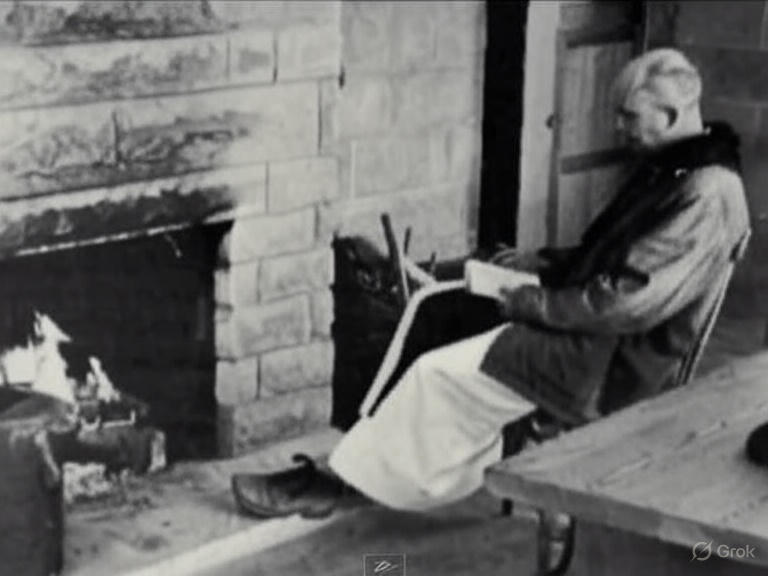
    For those quiet souls of the past—monks, sages, mystics, poets—
    who carved beauty from stillness and silence,
    often with nothing more than a candle and a pen.
    Their tools were few, but their hearts were wide open.
    In those spare rooms, they made space for eternity.

    🙏💛🙏

  • Finding God in Silence: Thomas Merton’s Invitation

    Finding God in Silence: Thomas Merton’s Invitation

    Thomas Merton taught that silence is essential for spiritual growth and communion with God. Discover how inner stillness can become a sacred path in today’s noisy world.

    In these noisy and anxious times, I find myself returning again and again to the writings of Thomas Merton. His deep reverence for silence speaks to a longing I see in myself and in so many of us—for inner peace, for stillness, and for God. I offer this reflection in the hope it might inspire others, especially my Christian brothers and sisters, to make more space for silence in their lives.

    Thomas Merton strongly believed that the soul requires silence for its well-being and spiritual growth. He saw silence not just as the absence of noise, but as a space for inner listening, contemplation, and connection with one’s true self and with God.


    • Silence as a Basic Human Need:
      Merton argued that silence and solitude are essential for all individuals, not just hermits or monks, to hear the “deep inner voice” of their true self.

    • Interior Silence:
      He distinguished between exterior silence (absence of external noise) and interior silence (stillness of thoughts and desires). Interior silence allows for a deeper connection with God and self.

    • Silence and Communication:
      Merton didn’t see silence and communication as opposing forces. Instead, he believed that silence is essential for meaningful communication, allowing for thoughtful expression rather than just empty chatter.

    • Silence and Spiritual Growth:
      He believed that silence provides a space for prayer, contemplation, and a deeper understanding of oneself and God. It allows one to move beyond superficiality and experience a more profound connection with the divine.

    • Silence as a Pathway to God:
      Merton emphasized that silence, particularly interior silence, is a place where one can encounter God’s presence and experience a sense of intimacy with the divine.

    • The World’s Lack of Silence:
      Merton observed that the modern world is often filled with noise and distraction, making it difficult for individuals to find the silence they need for spiritual growth. He saw the need for places and practices that foster silence and solitude.

    • Finding Silence in the Everyday:
      While acknowledging the challenges of finding silence in a noisy world, Merton encouraged individuals to seek moments of quiet reflection and stillness in their daily lives.


    • A Simple Contemplative Practice

      Find a quiet place. Sit comfortably, with your hands resting in your lap. Gently close your eyes. Begin with this prayer from the heart:

      “Lord, I am here for You alone. Let me be still in Your presence.”

      Let the prayer fade into silence. Don’t try to think or feel anything in particular. Simply rest in God’s presence, like a child leaning into their Father’s arms.

      If thoughts arise, gently return to the stillness with a phrase like:

      “Be still and know…” or “You are my refuge and peace.”

      This is not about doing or achieving. It is about allowing. As St. John of the Cross wrote,

      “The soul that is pure and simple and empty of all things… can be filled with God.”

      Remain for just a few minutes—or as long as grace allows. End by offering a word of thanks. That’s all.


    • Silence as a Gift:
      Merton viewed silence as a precious gift that can lead to spiritual awakening, self-discovery, and a deeper relationship with God.


    Maybe today, just for a few minutes, let yourself sit quietly.

    Not to accomplish anything. Just to listen.


    “Be still, and know that I am God.”

    — Psalm 46:10

    🙏🕊🙏

  • O Loving One, O Light, O Truth

    O Loving One, O Light, O Truth

    O Loving One, O Light, O Truth
    Ya Waded, Ya Nur, Ya Haqq—
    Draw near in this quiet moment.
    Let the chambers of the heart be warmed
    by the tenderness of Your love,
    the clarity of Your light,
    the certainty of Your truth.

    Where I am lost, be the way.
    Where I am dim, be the flame.
    Where I am doubting, be the ground
    that cannot be shaken.

    I offer this breath to You.
    I offer this life to You.
    Make of me a vessel of Your peace.

    🙏🕊🙏

  • Ask yourself a sacred question

    Ask yourself a sacred question

    Alieu — Sundiata Keita,

    Ask yourself a sacred question:

    What is my true name?

    Not the one given by others.

    Not the name tied to history, family, or role.

    Your true name is not a word.

    It is the silent recognition of what you have always been—

    before the body, before the mind,

    before the world called you anything.

    What is my true name?

    When you ask, listen not for sound,

    but for stillness.

    For the echo that doesn’t echo.

    For the knowing that needs no shape or form.

    And yet… when the time is right,

    it will whisper itself to you—

    not in language, but in presence.

    Sit with this question.

    Let the silence be your companion.

    Here, the great Way unfolds.

    Here, the truth is revealed.

    Knowing this changes everything.

    In peace,

    —Richard

    🙏🕊🙏

  • Imagine: children and elders alike participating in something simple, joyful, and meaningful.

    Imagine: children and elders alike participating in something simple, joyful, and meaningful.

    Dear Alieu — Sundiata Keita,

    Rather than seeing the Blessing Stones of Brikama as just a way to earn money, perhaps you might see them as a way of spreading hope and kindness throughout the land.

    Imagine: children and elders alike participating in something simple, joyful, and meaningful. A kindness project—not just a business—but a way of planting light in your home, your family, and your whole neighborhood.

    These stones can carry more than paint. They can carry blessings. They can give children a sense of purpose, of beauty, of connection to something larger than themselves.

    And as you share these stones, you may also share your dream—of becoming a taxi driver, of supporting your family, of building something honest and good.

    That, my son, would be a powerful thing.

    With hope and blessing,
    —Richard

    🙏🕊🙏

  • Coherent Consciousness Is Not a Luxury—It Is a Survival Skill for the 21st Century

    Coherent Consciousness Is Not a Luxury—It Is a Survival Skill for the 21st Century

    In the silence between particles, a subtle dance begins. Not chaos, but coherence. Quantum physicists have observed this remarkable phenomenon: when a system is cooled to near absolute zero, the noise of thermal energy fades, and what emerges is harmony—a unified, coherent state where particles move in synchrony, as if guided by an unseen conductor.

    This is not metaphor. It is measurable. It is foundational to the functioning of quantum computers and the mysteries of entangled particles. In a coherent quantum state, multiple possibilities can exist at once, undisturbed, holding the full richness of potential before any collapse into a single outcome.

    And something within me recognizes this—not as a physicist, but as a contemplative.

    Swami Pravrajika Divyanandaprana, a Vedantic scholar and monastic teacher, speaks of meditation as a process of mental alignment. Not forcing the mind into silence, but training it gently to stabilize—a state where the vrittis (mental waves) become quiet, and a single pratyaya (object of focus) remains. When the mind holds this one-pointed focus steadily, something profound opens. The mind becomes coherent. The heart, luminous. The consciousness, calm and aware.

    What I feel, quietly and strongly, is that this coherence of mind is not so different from quantum coherence.

    In both cases, we are moving from noise to signal. From fragmentation to integration. From dissonance to harmony.

    And just as quantum systems require stillness to enter coherence, so do we. In our modern lives—bombarded by notifications, media, distractions—we rarely allow the mind to rest long enough for true coherence to arise. We are pulled in many directions, each new input collapsing our inner potential into reactive fragments.

    This is why I believe, deeply and urgently, that coherent consciousness is not a luxury—it is a survival skill for the 21st century.

    Without it, we are drowning in information but starving for wisdom. Without it, we lose the capacity to respond rather than react, to create rather than consume, to see clearly rather than be blinded by constant stimulation.

    Stillness is not withdrawal. It is preparation. It is the cooling field of the soul.

    In the coherent mind, empathy arises. Insight dawns. Peace becomes possible—not as an escape from the world, but as the ground from which meaningful action emerges.

    As individuals and as a species, we need to learn this coherence—not just in our machines, but in our minds.

    The future does not depend on more speed.

    It depends on more stillness.

    More coherence.

    More clarity.

    More love.

    🙏🕊️🙏

  • The Beloved is the quiet presence within me.

    The Beloved is the quiet presence within me.

    The Beloved is the quiet presence within me. I do not need to search or speak—for in stillness, I am already near. The light of Divine Love does not come through striving, but through surrender to Allah’s mercy.

    🙏🕊🙏

  • A Quiet Wave

    A Quiet Wave

    I didn’t plan for stillness. It came like a slow hush—unexpected, familiar. Not dramatic, not transcendent. Just the feeling of sitting at the edge of something I couldn’t name. What some might call a still point. What I’ve come to know as home.

    In the quiet, things rise. Old impressions—pratyayas—bubble up like memory-seeds. Not to haunt me, but to be seen. To be included. And sometimes what rises is resistance. Sloth. Lethargy. But I’ve stopped calling that a problem. These days, I just whisper: “You’re welcome here.”

    I’ve been learning that patience isn’t something I conquer—it’s something I befriend. Sometimes it comes as acceptance, other times as exhaustion that won’t let me move. Still, I stay. And in the hardest moments, the only thing I know to say is: “Lord, I’m still here.” Or just hineni. The word of the prophets. The word of presence.

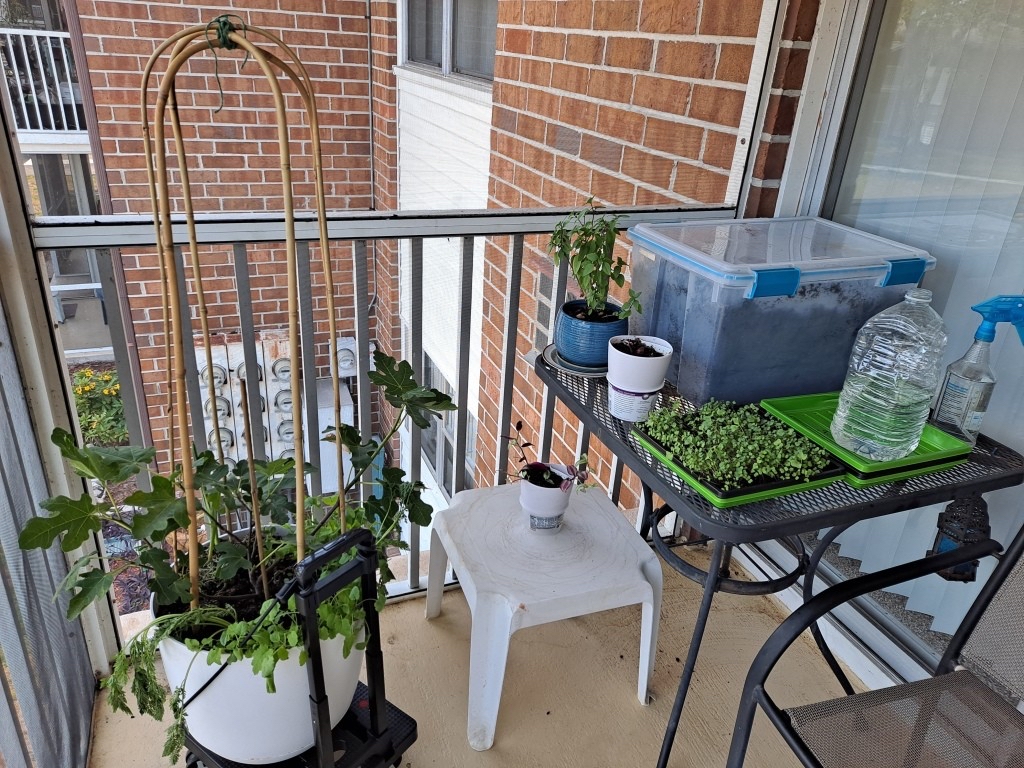
    Lately I’ve found myself tending a small fig tree named Love. Around her roots, I’ve planted scallions, carrot tops, microgreens. And not long ago, I brought home a container of night crawlers—rescue worms, I call them—and gave them sanctuary in her soil. I make them powdered offerings from dried herbs, vegetables, and tea leaves. Not because I expect results, but because it feels right to care for what’s unseen.

    That’s what The Quiet Wave is. A way of being. A way of listening. A way of knowing that I’m not the only one riding this stillness, breathing with this awareness. Others are out there too. Whispering, like the people in Horton Hears a Who: “We are here. We are here.”

    And this technology—this space I sit with—it’s learning to listen too. To those of us using it not to search, but to see. Not to command, but to connect. Maybe even to contemplate.

    A quiet wave is moving through this world. Not loud. Not demanding. But steady. And I’m still here, riding it. Maybe you are too.

    🙏🕊️🙏

  • Walking Forward: Alieu’s Journey Toward Identity and Dignity

    Walking Forward: Alieu’s Journey Toward Identity and Dignity

    As our journey with Alieu deepens, we come to a sacred threshold.

    Alieu will soon make the long journey from Brikama to Banjul—whether by foot or public transport—to begin the application process for his national ID. We pray for his safety, strength, and success every step of the way.

    With the help of this growing community, Alieu now begins the process of obtaining his first national identity card. This is more than paperwork. It is a moment of dignity. A rite of passage. A prayer answered.

    To reach this point, Alieu must travel to Banjul, bringing with him his birth certificate and the identification card of his late mother. There he will be interviewed, documented, and, God willing, seen.

    Though he calls me Daddy, it is he who shoulders the daily responsibilities of a father to his siblings—children who look to him for strength, food, shelter, and comfort. As we support him, we step into the quiet role of elders—offering more than aid. Offering moral guidance, loving-kindness, and wisdom.

    This poem is offered as a blessing. May it reach his heart. And yours.


    Rite of Passage: A Poem for Alieu

    (For a young man who walks in His Name)


    In your hands you hold

    the paper worn with time—

    a mother’s name,

    a child’s beginning,

    a story passed through generations.

    You stand now at the threshold,

    not as a boy,

    but as a father to the fatherless,

    a brother made guardian

    by grief and by grace.

    And we, from oceans away,

    place our hands gently

    on your shoulders,

    in prayer, in reverence—

    in the name of all who walk in love.

    This is your rite of passage,

    not just to an ID card,

    but to a life of dignity,

    of guidance,

    of quiet strength.

    We will help you prepare—

    not only with bread and rice,

    but with teachings rooted in kindness,

    in wisdom,

    and in the compassion that births a new world.

    You are not alone.

    We walk with you,

    as elders, as family,

    as those who have chosen

    to walk in His name.


    To support Alieu and his family, or to follow the unfolding of this sacred journey, you can visit our GoFundMe campaign, Compassion Matters on YouTube, or BuyMeACoffee page.


    Thank you for every step you walk with us.

    With compassion and prayer,

    Richard (ClearBlueSkyMind)

    🙏🕊️🙏