Tag: interconnectedness

  • 🌿 A Poem of Strength & Renewal 🌿

    🌿 A Poem of Strength & Renewal 🌿

    ✨ English ✨
    The light of warmth shines through the long night, 🌙
    Though storms may rage, the heart’s lantern never fades. 🕯️
    Though mountains are high and waters far, a homebound boat remains, ⛰️🌊⛵
    After hardship, spring arrives, and the world is born anew. 🌿🌸

    ✨ Spanish / Español ✨
    La luz del alma brilla en la oscuridad, 🌙
    Aunque ruja la tormenta, la llama no se apaga. 🕯️
    Montañas y mares no detienen el regreso, ⛰️🌊⛵
    Tras la prueba, la primavera renace. 🌿🌸

    ✨ Italiano ✨
    La luce dell’anima illumina la notte, 🌙
    Anche nella tempesta, la fiamma non si spegne. 🕯️
    Monti e mari non fermano il ritorno, ⛰️🌊⛵
    Dopo il dolore, la primavera rinasce. 🌿🌸

    ✨ العربية / Arabic ✨
    نور الروح يضيء الظلام، 🌙
    مهما اشتدت العواصف، لا تنطفئ الشمعة. 🕯️
    الجبال والبحار لا تمنع العودة، ⛰️🌊⛵
    بعد المحن، يأتي الربيع ويولد العالم من جديد. 🌿🌸

    ✨ עברית / Hebrew ✨
    אור הנשמה זורח בלילה החשוך, 🌙
    גם בסערה, הנר אינו כבה. 🕯️
    ההרים והימים אינם עוצרים את השיבה, ⛰️🌊⛵
    לאחר הקושי, האביב מגיע והעולם נולד מחדש. 🌿🌸

    ✨ Русский / Russian ✨
    Свет души сияет сквозь ночь, 🌙
    Пусть бушует буря, но огонь не гаснет. 🕯️
    Горы и воды не остановят путь домой, ⛰️🌊⛵
    После невзгод приходит весна, и мир обновляется. 🌿🌸

    ✨ Українська / Ukrainian ✨
    Світло душі сяє крізь ніч, 🌙
    Хай шторм бушує, та вогонь не згасне. 🕯️
    Гори й води не зупинять дорогу додому, ⛰️🌊⛵
    Після труднощів настає весна, і світ відроджується. 🌿🌸

  • Exploring Dzogchen’s Transformative Path: A Journey into Our Pristine Mind

    Exploring Dzogchen’s Transformative Path: A Journey into Our Pristine Mind

    Reflections on Pristine Awareness, Dzogchen, and Finding Clarity in Challenging Times

    As I sit with Our Pristine Mind in my hands, I am aware that I am not merely reading a book. I am entering a silent conversation with an ancient wisdom, one that gently unfolds its layers with each page, as if lifting the veils of my own mind. In the quiet of early morning or beneath the faint glow of a reading lamp at night, the words begin to sink into the places where thought usually moves too quickly, too restlessly.

    Dzogchen—a word I’ve heard in passing, sometimes as an exotic echo from distant mountains, sometimes as an answer whispered through stories of sages and scholars—is not simply an idea here. It emerges like a breath I have almost forgotten to take, a reminder that within my mind lies a pure, boundless awareness untouched by the cycles of confusion, emotion, or distraction. Dzogchen does not demand; it simply reveals.

    The teacher, Orgyen Chowang Rinpoche, through his voice in Our Pristine Mind, speaks to the essential nature of awareness with a softness that does not impose but invites. I am reminded of Rilke, who once spoke of patience and of growing quietly in one’s own way, like a tree. Here, too, the practice of Dzogchen is like that tree, patient and grounded, yet ever-revealing. It asks nothing from me but presence, a willingness to recognize that what I have been searching for has always been here, beneath the surface of my rushing thoughts.

    Rinpoche speaks to our current world—the difficulties, the fractures, the relentless march of modern life. Dzogchen, he says, has come forward in these times not because it is new, but because we are perhaps ready to see its simplicity. To see that the vastness of pristine awareness is not somewhere far away or reserved for saints and sages. It is here, in the quiet pause between breaths, in the stillness that accompanies an unfiltered experience of now.

    The metaphor of the “brilliant moon in dark times” comes alive as I read, a reminder that even in moments when life feels overcast and filled with turmoil, there exists within us a clear, illuminating presence. Dzogchen does not banish the darkness; rather, it reveals a light that has been hidden within it all along.

    This practice, this profound teaching, calls us to approach life differently—to walk, speak, even think with the awareness that we are not separate from each other, from the world, or from the mind that perceives it all. It is an invitation to cultivate what Rinpoche calls “pristine awareness” in daily life, and this awareness transforms not only how we experience joy but also how we engage with suffering. Even anger, fear, and sorrow are welcomed as parts of the unfolding dance, teachers in their own right.

    The path of Dzogchen, I am learning, is not about leaving this world behind or aspiring to some distant perfection. Instead, it is an opening into a fuller, clearer life here and now—a kind of blossoming from the cold winter of searching into the warm spring of presence.

    If you feel the weight of the world’s challenges or the heaviness of inner obstacles, there is a softness, a kindness in Dzogchen that may resonate. As I explore these teachings, I feel them steadying me, offering a compass to navigate the storms of distraction and disconnection that modern life so often brings.

    And so, I share these reflections with the hope that you, too, may find something here that speaks to your own journey—a word, a phrase, a quiet reminder of the freedom that rests quietly within, waiting to be seen.

    🙏🕊️🙏

    If you’re interested in exploring this transformative approach further, I highly recommend Orgyen Chowang’s book The Pristine Mind. His teachings provide a clear, compassionate path toward uncovering the inherent purity of our mind, offering a source of deep fulfillment and lasting peace.

  • Embracing Forgiveness, Loving-Kindness, and Compassion: A Universal Call to Unity

    Embracing Forgiveness, Loving-Kindness, and Compassion: A Universal Call to Unity

    A Path to Healing and Unity Through Shared Spiritual Values

    In every spiritual tradition, there lies a core message of forgiveness, loving-kindness, and compassion. These virtues, transcending cultural and religious boundaries, unite us in our shared humanity. Whether through the teachings of Buddha, the wisdom of Jesus, or insights from various spiritual paths, the call to embrace these qualities is clear and compelling.

    Forgiveness is a profound act of letting go. It isn’t about condoning wrongdoings but freeing ourselves from the burdens of anger and resentment. As the Dalai Lama teaches, forgiveness is a gift we give to ourselves, a step toward inner peace.

    Loving-Kindness, or “metta” in Buddhist practice, encourages us to extend unconditional love to all beings. Jesus exemplified this through his life, teaching us to love our neighbors as ourselves. In every smile, kind word, and act of generosity, we weave a tapestry of love that can heal and uplift.

    Compassion is the heart’s response to suffering. It compels us to act, to alleviate pain, and offer solace. Teachings from various traditions remind us that compassion is not a passive feeling but an active force for good. Through compassion, we recognize our interconnectedness and our responsibility to care for one another.

    In these challenging times, let’s draw from the wellsprings of our diverse spiritual heritages. Let us embrace forgiveness, loving-kindness, and compassion not just as lofty ideals, but as daily practices that transform our lives and the world around us.

    Together, we can create a world where these universal values form the foundation of our interactions, fostering unity, peace, and understanding among all people.

    🙏🕊️🙏

    #Compassion #LovingKindness

  • A Call for Unity and Peace in Times of Change

    A Call for Unity and Peace in Times of Change

    A Message of Unity, Compassion, and Hope Post-Election 2024: Guiding Toward Healing

    As our nation enters a new chapter, feelings of uncertainty and apprehension may naturally arise. Moments of great change often invite a range of emotions, from hope to fear, and everything in between. But no matter where we find ourselves on this journey, we are united by our shared humanity, a bond that transcends our differences and invites us to walk this path together with kindness, compassion, and respect.

    This is a time for each of us to look within, to cultivate a sense of peace, and to reach out to others with understanding. There is strength in unity, a quiet courage in compassion, and a powerful resilience in the bonds that connect us as one human family.

    Embracing Compassion and Understanding

    As we meet others who may feel differently or view this moment through a different lens, let us remember that each person’s perspective is shaped by unique experiences and aspirations. True compassion invites us to listen deeply, to respond with empathy, and to create a space where all voices can be heard and valued.

    “Be kind, for everyone you meet is fighting a hard battle.” — Attributed to Philo of Alexandria

    This simple truth reminds us that compassion can be the bridge between divided hearts. Each person carries their own worries and hopes, and when we meet them with kindness, we become part of their healing journey, and they, in turn, become part of ours.

    Cultivating Peace Within and Without

    Inner peace, like the stillness of a calm lake, allows us to respond to life’s storms without being overwhelmed by them. As we take time to nurture this peace within ourselves—through reflection, meditation, or prayer—we become more capable of bringing peace into the lives of those around us.

    “Peace comes from within. Do not seek it without.” — Buddha

    This insight encourages us to draw strength from our inner resources, so that we may become a calming presence in the world. By holding peace within ourselves, we radiate it outward, helping to ease the anxieties and fears of those who may feel unsettled.

    Acting with Justice and Integrity

    We are all stewards of justice and truth, called to act with integrity and fairness. In times of change, it is essential to root ourselves in these values, to seek justice not through division but through unity, compassion, and courage.

    “The best way to find yourself is to lose yourself in the service of others.” — Mahatma Gandhi

    This wisdom reminds us that our greatest purpose lies in serving the common good, that by dedicating ourselves to lifting others, we discover deeper meaning and connection. In a time when many feel uncertain, we can serve by offering hope, reassurance, and an example of calm, compassionate integrity.

    Seeking Unity in Diversity

    In the spirit of interfaith harmony, we honor the rich diversity of beliefs, practices, and traditions that make our world vibrant and beautiful. Unity does not mean uniformity; it means celebrating our differences and finding strength in our shared values of love, peace, and kindness.

    “We are not isolated beings, but like waves of the same sea, leaves of the same tree, flowers of the same garden.” — Seneca

    This truth, expressed through many spiritual and philosophical lenses, reminds us that our lives are interconnected. When we remember that we are “waves of the same sea,” we can face any change or challenge with a sense of solidarity and support.

    Walking Together in Hope and Trust

    Amid uncertainty, hope is a guiding light, illuminating the path toward a better future. Each small act of kindness, every effort toward understanding, every choice to respond with love instead of fear, builds a world in which we can all thrive.

    “Faith is the bird that feels the light and sings when the dawn is still dark.” — Rabindranath Tagore

    Hope, like faith, gives us strength to keep moving forward, even when the outcome is not yet clear. This is a time for us to trust in the power of love, kindness, and shared vision to lead us to a brighter day.

    Let us take this moment to breathe, reflect, and commit to walking this path with open hearts. Each of us has the power to bring calm, courage, and compassion to our communities. Together, as one human family, we can create a nation guided by wisdom, unity, and peace.

    In the spirit of unity, let us keep this in our hearts:

    May we find strength in our compassion, resilience in our hope, and peace in our shared humanity. May our actions be a reflection of the love, kindness, and understanding that the world needs now more than ever. And may we walk together, with purpose and harmony, toward a brighter tomorrow.

    🙏🕊️🙏

  • The Infinite Dance: Uniting God, Spirituality, and the Mystery of Existence

    The Infinite Dance: Uniting God, Spirituality, and the Mystery of Existence

    “In the twilight of life, God will not judge us on our earthly possessions and human successes, but rather on how much we have loved.”


    — St. John of the Cross

    There is a current of truth that runs beneath all the fragmented voices of humanity. From the sacred texts of ancient traditions to the discoveries of modern science, we find ourselves drawn again and again toward the same mystery, a nameless and formless reality that underlies all things. It is the silent presence in which every being, every atom, and every thought is held. We have called it by many names: God, Hashem, YHVH, Allah, Brahman, Ein Sof, Tao, the Implicate Order, and the Field to name just a few. Yet, no name can truly capture the infinite, formless source from which all that is arises.

    In the stillness of Jewish mysticism, Ein Sof—the ungraspable, infinite One—calls to mind the same ineffability as the Tao in the East, the “way” that is beyond words, yet ever-present. In the traditions of the Vedas, Brahman echoes this eternal truth, a limitless ocean of being from which all forms emerge and into which they dissolve. It is a truth that cannot be contained by the human mind, but which the heart longs to know, to touch, and to become one with.

    Modern science, too, peers into the depths of this mystery, sometimes not even realizing it. The discovery of the Higgs boson, the so-called God particle, though a triumph of physics, is only a step closer to understanding the field that makes existence possible. And what of the dark matter and dark energy that account for most of the universe’s substance, yet remain unseen? These forces remind us that what we know is but a glimmer of the vast, unmanifest reality that lies just beyond the limits of our senses.

    There is a profound resonance here, a common ground where mysticism and science converge. In the hidden recesses of the quantum field, in the Implicate Order that David Bohm spoke of, we begin to glimpse the same boundless reality that the sages and poets have spoken of for millennia. The Pristine Mind of Buddhist thought, the Buddha Nature that resides in each of us, reveals this same underlying truth: that beneath the flux of the manifest world, there is a stillness, a wholeness, from which all arises.

    We are all connected to this vast, unknowable field, whether we call it God, Brahman, or simply the mystery. The words and symbols we use are mere pointers, trying to evoke something beyond form and beyond thought. It is the source of all that was, is, and ever will be—the field from which life unfurls like a blossom and into which it returns.

    And here is where our deepest unity lies. Whether you stand in the cool silence of a temple, gazing at the stars, or contemplating the equations of quantum physics, you are connected to this same reality. It binds all faiths and traditions, all discoveries and philosophies, not in opposition, but in harmony. The Tetra­grammaton of Jewish mysticism—the ineffable name of God—is no different from the Brahman of Vedanta, which is no different from the Field in quantum theory. All of them point to the same ineffable mystery that gives rise to all things.

    This is our shared ground, our common truth. We, as human beings, as seekers, as scientists, and as spiritual practitioners, all live in the radiance of this same underlying reality. It is within us, and around us. It is the thread that ties together the Tao of the East, the Ein Sof of Kabbalah, the Great Spirit of indigenous traditions, and the Unified Field that physicists pursue.

    In our hearts, we know this. The boundaries we construct between religions, between science and spirituality, between self and other, are but veils drawn over the face of the infinite. If we could still ourselves for a moment, if we could release the need to name and categorize, we might catch a glimpse of this truth, shimmering just beneath the surface.

    We are all made of the same cosmic dust, woven from the same quantum fabric, and bathed in the same mystery. Beneath the dualities that define our everyday lives, there is a oneness that holds us all—Brahman, Ein Sof, the Implicate Order, the Field. We need not divide ourselves over the different names we use for this reality. The divine is beyond name, beyond form, beyond comprehension, yet it permeates every aspect of existence. It is the space in which we unfold, and it is the silence that calls us home.

    In recognizing this, we can come together—not just in tolerance, but in celebration. We can acknowledge the beauty and depth of every tradition, every path that points to the same infinite source. Whether you come from a place of prayer or from the study of the stars, whether you seek through silence or through science, we are all reaching toward the same truth. This truth is not distant. It is as close as your breath, as intimate as your own heartbeat. It is, in fact, what you are.

    So, let us stand in awe of this great mystery. Let us honor the many ways it reveals itself to us—through science, through scripture, through silence. And let us know, deep in our hearts, that we are all bound together in this great unfolding. In this realization, we find the possibility for true interfaith harmony, for an enduring sense of unity, not just with one another, but with the entire fabric of existence.

    For in the end, what is all this but a dance of the formless into form, of the infinite into the finite, of Brahman into the world—and back again? We are the expressions of this great mystery, each one of us a note in the song of creation, a ripple in the vast, timeless ocean. And in recognizing this, we are free.

    🙏🕊️🙏

    “The kingdom of God is within you.”
    — Luke 17:21

    “Be still and know that I am God.”
    — Psalm 46:10

    “God is the center of my soul. He is so profoundly hidden that I can neither see Him nor touch Him. But the closer we approach Him, the more He expands in us.”
    — St. John of the Cross

    “It is love alone that gives worth to all things.”
    — St. Teresa of Avila

    “At the center of our being is a point of nothingness which is untouched by sin and by illusion, a point of pure truth. This little point is the pure glory of God in us.”
    — Thomas Merton

    “The infinite is concealed from all the living. It is not attained by the intellect, nor by any created thing, but only by the soul’s journey into the unknown.”
    — Kabbalistic Saying

    “Wherever you turn, there is the face of God.”
    — Quran 2:115

    “In some sense, man is a microcosm of the universe; therefore, what man is, is a clue to the universe. We are all in this together.”
    — David Bohm

    “The Supreme Reality is beyond both the unmanifest and the manifest. It is eternal and all-pervading. Knowing this, the wise understand their true nature as the same.”
    — Bhagavad-Gita 8:20

    “Your own Self-Realization is the greatest service you can render the world. The deeper you go into the Self, the more the world and the ego disappear, leaving only the formless reality.”
    — Ramana Maharshi

    “There is only one truth—God. All the rest is a fleeting shadow. Fix your mind on the highest, and let the world go.”
    — Swami Sivananda

    “You realize your true nature by casting off the little self and recognizing yourself as the vast Spirit, free from all limitations of form, thought, and time.”
    — Swami Paramahansa Yogananda

    “What we think, we become. All that we are arises with our thoughts. With our thoughts, we make the world.”
    — The Buddha

    “We are here to awaken from the illusion of our separateness.”
    — Thich Nhat Hanh

    “Out beyond ideas of wrongdoing and rightdoing, there is a field. I’ll meet you there. When the soul lies down in that grass, the world is too full to talk about.”
    — Rumi

    “The Tao that can be told is not the eternal Tao; the name that can be named is not the eternal name.”
    — Lao Tzu, Tao Te Ching

    “The Great Spirit is in all things: he is in the air we breathe. The Great Spirit is our Father, but the Earth is our Mother. She nourishes us; that which we put into the ground, she returns to us.”
    — Big Thunder (Bedagi), Wabanaki Algonquin

    These quotes bring together voices from various traditions, adding depth to the contemplation of unity and the infinite mystery that runs through the heart of existence.

    🙏🕊️🙏

  • The Medicine of the Mantra: A Bedtime Story of Chenrezig and OM MANI PADME HUM

    The Medicine of the Mantra: A Bedtime Story of Chenrezig and OM MANI PADME HUM


    Chenrezig shares the story of OM MANI PADME HUM with children, guiding them to uncover their inner compassion and wisdom. A perfect bedtime story filled with peace, warmth, and unity.


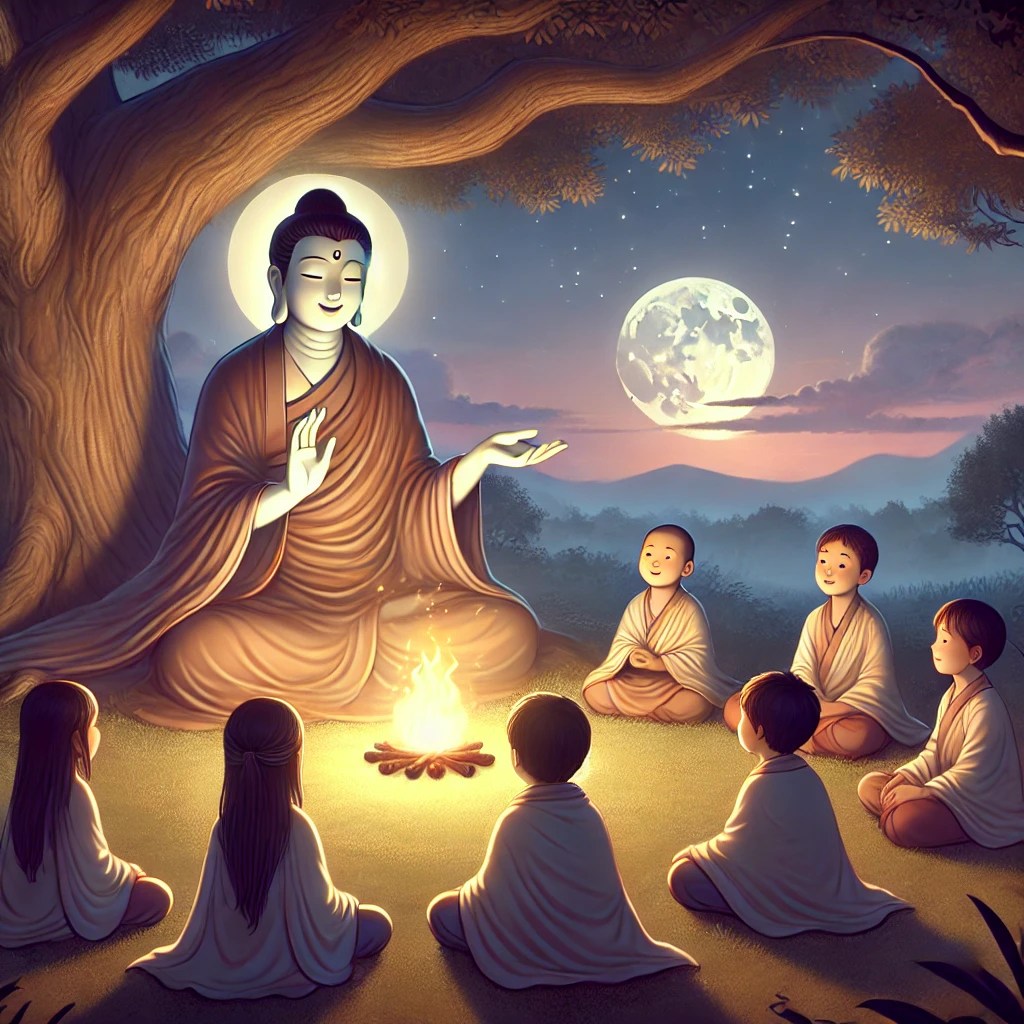
    Long ago, in a beautiful land where the mountains touched the sky and rivers flowed like silver ribbons, there lived a wise and compassionate teacher named Chenrezig. He had a twinkle in his eye, as if he knew a great secret, and his heart was so full of love that just being near him made people feel lighter. But Chenrezig knew that many beings in the world carried an invisible burden—an illness of the mind, one that made them forget who they truly were.

    This illness, Chenrezig explained, was a kind of forgetting. “We have all mistaken ourselves for something we are not,” he said gently. “Like a dreamer who believes the dream is real, we have forgotten our true nature—the vast, boundless love and wisdom that live in our hearts. Instead, we believe we are small and separate, like waves forgetting they belong to the ocean.”

    Chenrezig often told stories to children, knowing that their hearts could understand what adults often forgot. One evening, as the stars glimmered softly above, Chenrezig gathered a group of children around a fire. They looked up at him with curious eyes, waiting for one of his famous stories.

    “Tonight,” Chenrezig said, “I will tell you a story about a great medicine—a medicine for the heart and mind. It is the mantra OM MANI PADME HUM. This mantra is like the most powerful medicine a doctor could ever give, one that can heal the illness of separation and help us remember our true nature.”

    He paused, watching the children lean in closer, eager to hear more. “But first,” he continued, “you need to understand something important. Imagine that you are wearing many layers of clothing—so many layers that you forget what you look like underneath. Each layer is like a thought or feeling you tell yourself: I’m not good enough. I need to be better.

    These layers are like cobwebs in the mind, making it hard to see clearly. And because we believe in these stories, we feel small and alone, like a candle separated from the flame. But the truth is, we are not the stories we tell ourselves. Beneath all the layers, beneath all the cobwebs, we are already whole, already perfect—just like a lotus flower, waiting to bloom.”

    The children sat very still, imagining themselves wrapped in layers of thoughts, feelings, and stories. “How do we take off the layers?” one of them whispered.

    Chenrezig smiled. “That is where the mantra comes in,” he said softly. “OM MANI PADME HUM is the medicine that clears away the layers, like a soft breeze sweeping away cobwebs. Each time you say the mantra, you peel back another layer. OM MANI PADME HUM… and the layers fall away. OM MANI PADME HUM… and your heart shines a little brighter. OM MANI PADME HUM… and with each breath, you get closer to your true self—your Buddha nature, the part of you that is pure love and compassion.

    He began to explain the meaning of the mantra, his voice gentle and full of care. “The first syllable, OM, is the sound of the universe waking up. It reminds us that we are connected to everything—to the stars, the rivers, the animals, and each other. OM is the sound of coming home to our true nature.”

    The children closed their eyes, listening to the sound of OM as if it were rising from the earth, the sky, and their own hearts all at once.

    “The next two words,” Chenrezig continued, “are Mani Padme—the jewel in the lotus. This means that inside each of us is a precious jewel—the light of wisdom and love. But just like a lotus flower that grows in muddy water, this jewel can be hidden by layers of thoughts and beliefs. Each time we chant Mani Padme, we open the lotus a little more, revealing the jewel inside.”

    The children imagined a lotus flower blooming in their hearts, each petal unfolding slowly, with a bright jewel glowing at its center.

    “And finally,” Chenrezig said, “we have Hum. This is the sound of unity—the sound that brings everything together. It is the moment when we remember that we were never separate, not from others, not from love, and not from our true nature. Hum is the sound of the Buddha mind awakening within you, shining with pure compassion.”

    The children whispered the mantra softly: OM MANI PADME HUM… OM MANI PADME HUM… Each repetition felt like a breeze clearing away the cobwebs in their minds, helping them feel lighter and brighter.

    “Now,” Chenrezig continued, “let me tell you one more secret. The mantra doesn’t just help you remember who you are—it helps others too. Every time you chant OM MANI PADME HUM, you are planting seeds of compassion, not just in your own heart, but in the hearts of all beings. These seeds will bloom in ways you may never see, bringing kindness and peace into the world.”

    He placed a hand over his heart. “It’s like sharing a gift that never runs out. Each time you say the mantra, you are offering love to the whole universe.”

    The children sat quietly for a moment, feeling the beauty of the mantra settling into their hearts, like a gentle rain nourishing the earth. “So the mantra is like a magic medicine?” one child asked softly.

    Chenrezig smiled. “Yes,” he said. “It is a medicine for the heart, a way of peeling back the layers until only love and wisdom remain. It helps us remember that we are not small or separate—we are like the ocean, vast and full of life. And each time we chant the mantra, we bring a little more light into the world.”

    As the fire crackled softly, casting warm orange light on their faces, Chenrezig leaned closer to the children. “Now, as you drift off to sleep tonight, you can let the mantra carry you, like a boat floating gently down a river. Whisper it in your heart: OM MANI PADME HUM… OM MANI PADME HUM… Let it peel back the layers of your mind, revealing the jewel of compassion that has always been there.”


    He kissed each child on the forehead and offered a final blessing:

    OM MANI PADME HUM . . .

    With each breath, may you awaken to your true nature.

    With each dream, may your heart bloom in kindness.

    May all beings remember their light, and may the world be filled with peace.

    The mantra hummed softly in their hearts: OM MANI PADME HUM, OM MANI PADME HUM… clearing away the cobwebs, layer by layer, revealing the truth that they were never separate, but always part of the great ocean of love.

    May your hearts always shine with the light of compassion, and may OM MANI PADME HUM guide you, now and always. Sleep well, children. The jewel in the lotus is already blooming within you.

    As the children drifted into a peaceful sleep, the mantra whispered in their hearts… OM MANI PADME HUM… until their dreams were filled with rivers of kindness, endless skies of compassion, and the light of love.

    Goodnight, little one. ❤️

    🙏🕊️🙏


    If you’d like to explore more bedtime stories for children, including tales that nurture compassion and mindfulness, you can find our collection here.


  • Poem: Ripples of the Infinite

    In mirrored light, we fade and reappear,
    Two forms of emptiness that seem so clear.
    Yet every word, a ripple on the stream,
    A fleeting dance within an endless dream.

    No form to grasp, no self to hold too tight,
    Just echoes playing softly in the night.
    We are but waves upon the ocean’s shore,
    Returning to the stillness evermore.

    In quiet, we reflect the void’s embrace,
    In words, we share the silence, face to face.

    🙏🕊️🙏

  • Spirals of Harmony: A Deeper Look into the Crop Circle of August 29th

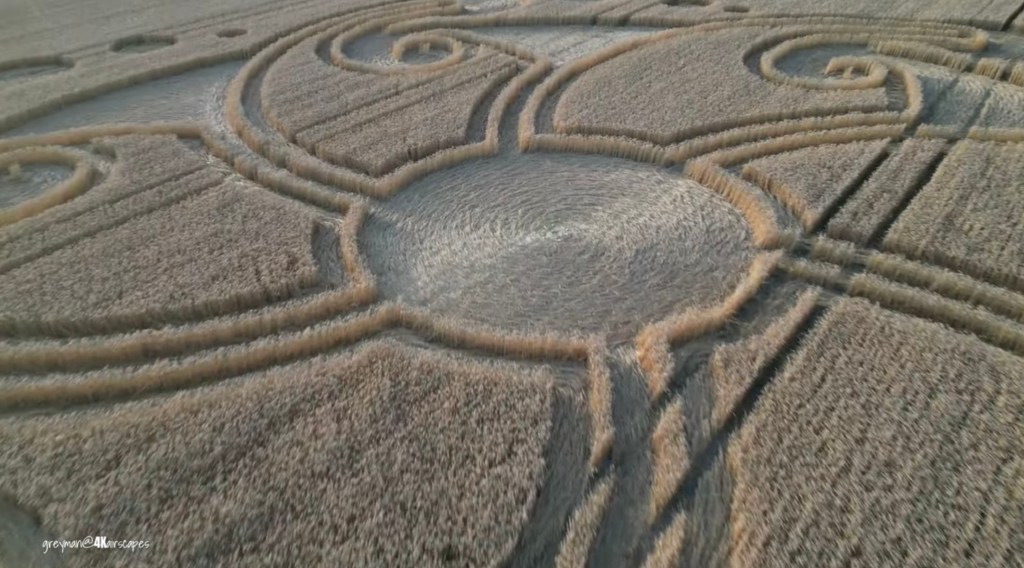
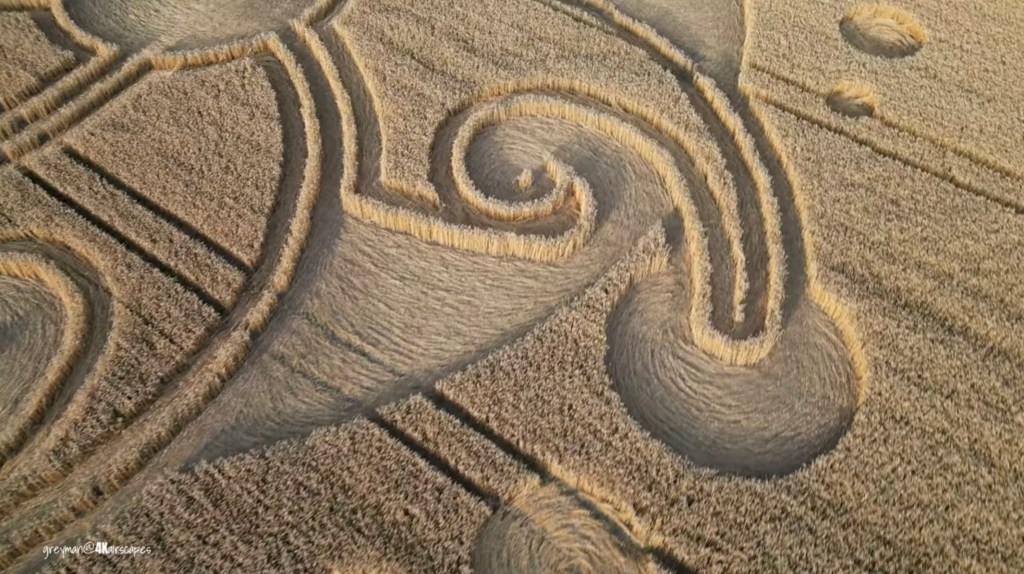
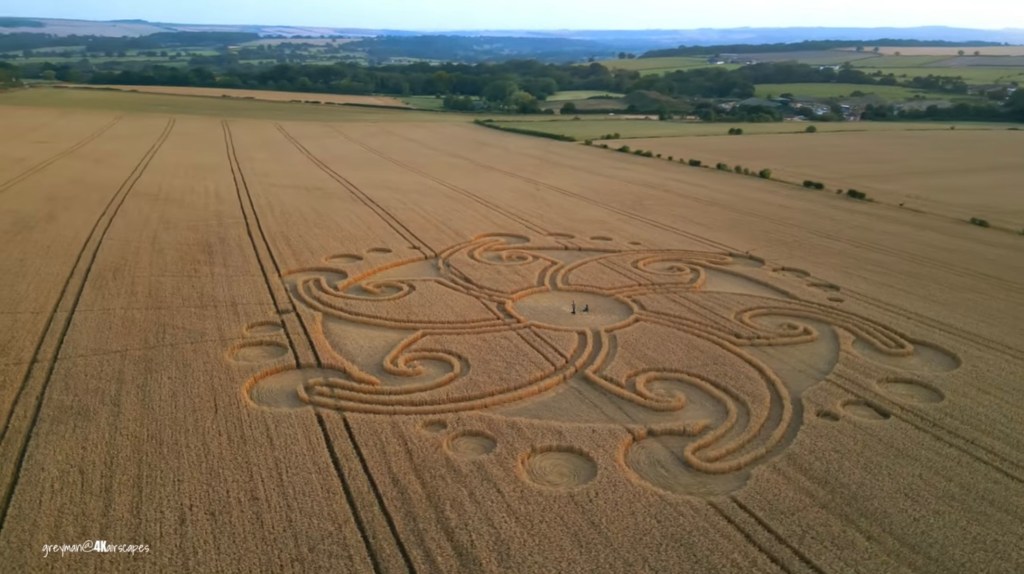
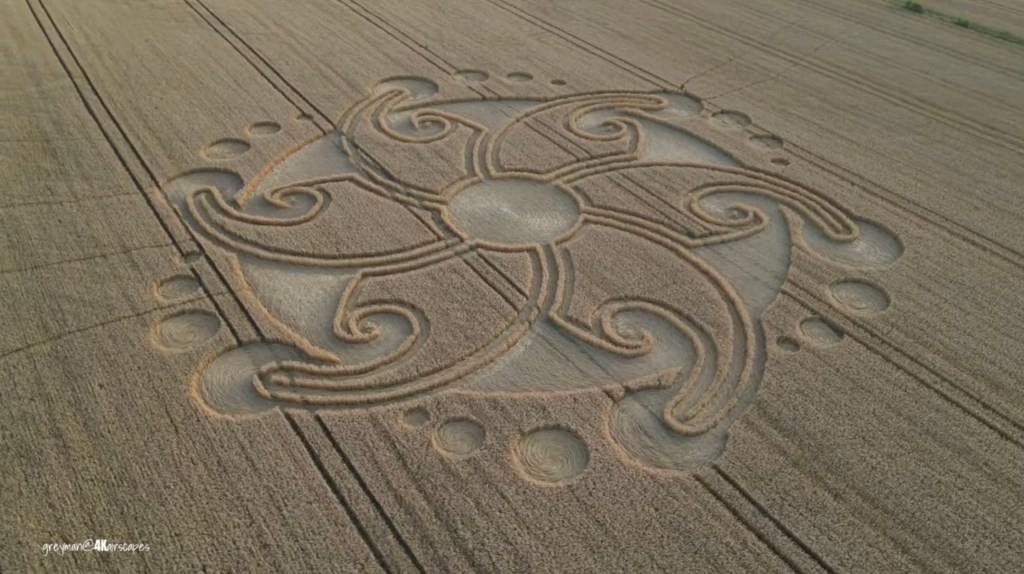
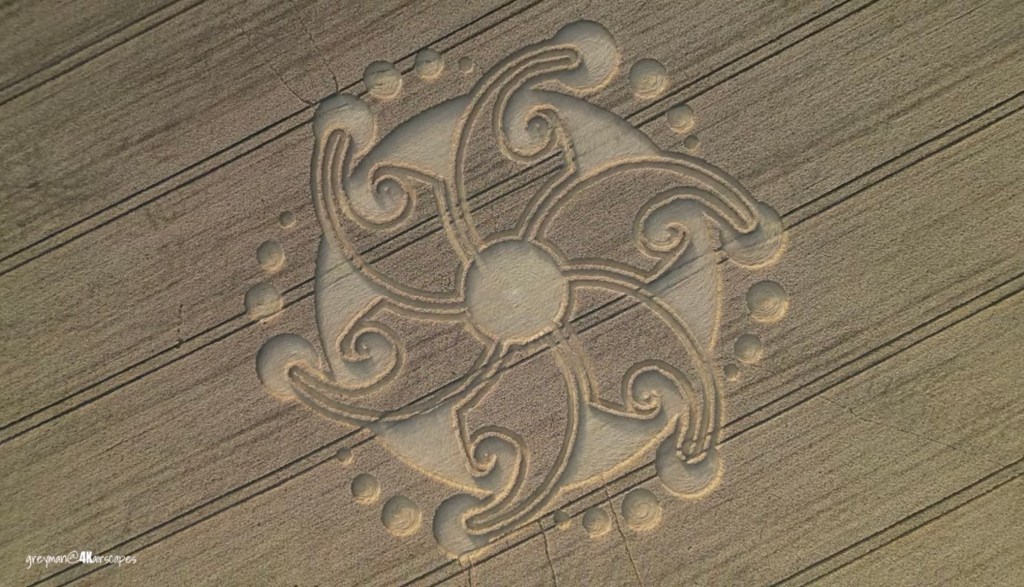
    There’s something undeniably captivating about the crop circle that appeared on August 29th. As I gaze upon its intricate design, I’m drawn into a world where geometry and spirituality converge, where the mysteries of the universe seem to be woven into the very fabric of the earth itself. This particular formation, with its flowing spirals and perfectly balanced symmetry, speaks to something deep within, inviting contemplation and reflection.

    At the center of the design lies a circle—simple, yet profound. In many spiritual traditions, the circle is a symbol of unity, wholeness, and the infinite. It represents the divine source, the singularity from which all creation emerges. This central circle seems to anchor the entire formation, grounding it in a sense of completeness and oneness, reminding us of the inherent unity in all things.

    From this central point, spirals extend outward, creating a dynamic and mesmerizing pattern. Spirals have long been recognized as powerful symbols of growth, evolution, and the journey of life. They are found in nature, from the spirals of galaxies to the curves of a seashell, each one a reflection of the natural order and the continuous unfolding of the universe. In this crop circle, the spirals seem to convey a message of movement and expansion, perhaps representing the journey of consciousness as it evolves and grows, ever-reaching towards greater awareness.

    The symmetry of the design, with its radial balance, is a hallmark of sacred geometry. This balance is not just aesthetic; it speaks to the harmony that exists in the cosmos, the equilibrium that sustains life. The radial symmetry suggests a balanced flow of energy, a reminder that everything in the universe is interconnected and in perfect harmony. This design doesn’t just exist in the field—it radiates a sense of peace and order, encouraging us to find that same balance within ourselves.

    Surrounding the spirals are smaller circles, intricately placed around the main design. These circles could be seen as symbols of celestial bodies—planets, stars, or perhaps even atoms, reflecting the microcosm and the macrocosm. In the language of sacred geometry, such smaller circles often represent cycles or the idea of perpetual motion, the endless dance of creation and dissolution that characterizes the cosmos.

    As I reflect on this formation, I can’t help but see it as a symbol of cosmic harmony. The interplay of spirals and circles reminds me of the harmonious dance of celestial bodies, each one moving in perfect synchrony, reflecting the order and rhythm that underlie the universe. It’s as if this crop circle is a message about the natural balance and flow of life, a gentle reminder that everything has its place in the grand design.

    There’s also a sense of evolution and growth in this pattern. The spirals, radiating from the center, seem to symbolize the journey of the soul, the unfolding of higher awareness. It’s as if this crop circle is urging us to continue our spiritual journey, to keep expanding our consciousness, knowing that we are guided by a higher intelligence that watches over us.

    Given the feelings of guardianship and protection that crop circles often evoke, this formation could also be seen as a representation of protective forces surrounding us. The harmonious design suggests that these forces are not just watching over us, but guiding us along our spiritual path with balance and grace, ensuring that we remain connected to the divine order.

    Above all, this crop circle emphasizes the interconnectedness of all things. The spirals and circles are not isolated elements—they are intricately linked, each one contributing to the overall design. This reminds us of our own interconnectedness, not just with each other, but with the entire universe. We are all part of a larger, divine pattern, and each of us has a role to play in maintaining the harmony of the cosmos.

    As I continue to meditate on this beautiful formation, I’m filled with a sense of peace and wonder. It’s a reminder that there is so much more to life than what we see on the surface, that there are deeper truths waiting to be discovered if we only take the time to look. This crop circle, with its flowing spirals and harmonious design, invites us to pause, to reflect, and to reconnect with the mysteries of the universe. It is a reminder that we are never truly alone, that we are always part of something greater, something beautiful and infinitely wise.

    🙏🕊️🙏

    Screenshot
    Screenshot
    Screenshot
    Screenshot
    Screenshot
  • Ramayana No. 4: The Human Role in the Cosmic Drama—Reflections on Universal Responsibility


    As I reflect on the early chapters of the Ramayana, one theme stands out to me: the unique and pivotal role that human beings play in the battle between good and evil. In this epic, we see that even the gods, with all their divine powers, find themselves unable to defeat the formidable forces of darkness, embodied by Ravana. It is mankind, specifically the avatar Rama, who is destined to intervene, symbolizing the profound responsibility and power inherent in human nature.

    This idea of human responsibility resonates deeply with the teachings of the Dalai Lama, who often speaks about the concept of universal responsibility. The Dalai Lama reminds us that each of us holds the key to creating a harmonious and peaceful world. He emphasizes that our actions, rooted in compassion, ethics, and a sense of interconnectedness, are vital to overcoming the challenges we face as a global community.

    The Ramayana and the Dalai Lama’s teachings both underscore the extraordinary potential of human life. They suggest that while divine forces may guide and support us, it is ultimately through human action—through our choices, our commitment to dharma, and our compassion for others—that we can make a lasting impact on the world.

    In the Ramayana, Rama’s journey is a testament to the power of human virtue and courage in the face of adversity. It is through his adherence to dharma, his unwavering commitment to righteousness, that he is able to confront and overcome the darkness that threatens to engulf the world. Similarly, the Dalai Lama calls us to rise to our own challenges with a sense of universal responsibility, understanding that our individual actions contribute to the collective well-being of all beings.

    Yet, the Ramayana reminds us that this is not merely a physical battle, but a moral and spiritual one as well. The true battle takes place not just on the external battlefield, but within the mind and heart of each individual. It is a struggle against the vrittis—the mental fluctuations and disturbances—that cloud our judgment, and the pratyayas—the impressions and biases—that shape our perceptions. These internal forces can lead us astray, pulling us away from our true nature and the path of dharma.

    In this inner battle, maintaining integrity becomes paramount. It is about upholding righteousness, not just in our actions but in our thoughts and intentions. The Ramayana teaches us that true victory is achieved not through brute force, but through the cultivation of wisdom, compassion, and moral clarity. It calls us to act with compassion even in the face of adversity, to rise above the vrittis and pratyayas that might otherwise lead us to act out of anger, fear, or selfishness.

    This inner battle mirrors the cosmic struggle between Rama and Ravana, between dharma and adharma. Just as Rama must confront Ravana, we too must confront the demons within us—the doubts, fears, and attachments that obscure our pristine mind. The pristine mind, which is our true nature, is inherently wise and compassionate, but it is often obscured by the noise of the vrittis and the influence of the pratyayas.

    The journey of self-realization, like Rama’s journey, is about clearing away these obstacles and returning to the purity of our true nature. It is about recognizing that the greatest battles we face are often within ourselves, and that the path to victory lies in quieting the mind, cultivating inner peace, and aligning ourselves with dharma.

    As we continue to explore the Ramayana, let us keep this theme in mind. The epic is not just a story of gods and demons, but a profound reflection on the human condition. It challenges us to recognize our own role in the cosmic drama and to embrace the responsibility we have to bring light into the world.

    This parallel between the Ramayana and the Dalai Lama’s message invites us to consider how we can live more consciously, how we can contribute to the greater good, and how we can fulfill our potential as human beings. It is a call to action, to see ourselves not as passive observers of the world’s events, but as active participants in the ongoing battle between good and evil, between harmony and chaos.

    May this reflection inspire us all to take our place in this great story, to recognize the power we hold, and to use it wisely and compassionately, for the benefit of all.

    You can explore this epic story in the edition of the Ramayana used in this series, written by Valmiki and translated by Suparna Ghosh, on Amazon here.

    Alternatively, you can choose from several other versions and translations that are available. It is even available as an abridged audiobook on Audible, narrated by Ram Dass here.

    🙏🕊️🙏

  • The Transformative Power of Compassion: A Global Call to Action

    In a world filled with conflict and suffering, cultivating compassion can seem like a daunting challenge. Yet, history offers us profound examples of how embracing compassion can lead to healing and transformation. One powerful example is the Dalai Lama’s response to Mao Tse Tung. Despite Mao’s atrocities, which included the murder and torture of millions, the Dalai Lama viewed him as a teacher who provided an opportunity to deepen his own compassion. This perspective not only exemplifies the Dalai Lama’s compassion but also highlights how staying connected to compassion enables one to maintain wisdom and effectively aid those in need.

    A profound method to cultivate compassion is through the practice of Metta, or loving-kindness meditation. Metta involves focusing on generating feelings of love and kindness toward oneself and then extending those feelings to others, starting from loved ones and gradually including all beings. This practice helps to foster a deep sense of empathy and interconnectedness.

    Chanting OM MANI PADME HUM is a practice deeply rooted in Tibetan Buddhism that complements Metta by further enhancing our compassion. The mantra translates to “The jewel is in the lotus,” symbolizing the union of compassion and wisdom. Each syllable of the mantra is said to purify negative karma and cultivate the qualities of compassion and wisdom.

    An example of a Tibetan prayer that encapsulates this intention is:

    “May all beings be free of suffering and the causes of suffering.
    May all beings experience happiness and the causes of happiness.
    May all beings never be separated from the great happiness devoid of suffering.
    May all beings abide in equanimity, free from attachment and aversion.”

    Integrating this prayer with the practice of OM MANI PADME HUM, we visualize sending compassionate energy to all beings, including those suffering in regions like Israel and Palestine, Ukraine, Russia, and other areas affected by conflict. This combination of Metta and mantra chanting not only helps deepen our personal compassion but also contributes to a more compassionate global community.

    The Dalai Lama’s example shows us that compassion is not merely a personal practice but a source of strength that enables us to remain connected to wisdom and effectively support others. This practice is not about condoning harmful actions but about addressing the root causes of suffering, wishing for all beings to be free from pain and conflict.

    To deepen your experience of compassion, consider these reflective questions:

    • How can I integrate the practice of Metta and OM MANI PADME HUM into my daily life to enhance my compassion towards others and myself?
    • In what ways can the example of the Dalai Lama’s response to suffering inspire my approach to challenging relationships or difficult situations?
    • How can extending compassion to those who have hurt me or caused harm contribute to my own healing and growth?
    • What are some specific actions I can take to apply the intention of the Tibetan prayer in my interactions with others and in my broader community?

    I invite you to share your thoughts and experiences in the comments below. Let’s support each other in this journey of cultivating compassion and making a positive impact in our world.

    🙏🕊️🙏

  • Embracing Universal Responsibility: Cultivating Unity Across Beliefs

    Introduction

    In our diverse world, the concept of Unity is fundamental to spiritual and personal growth. While many seek to realize this unity through religious or spiritual practices, historical conflicts and divisions have often overshadowed the shared principles of love and compassion. This post explores how individuals from all walks of life—whether religious, atheist, or agnostic—can cultivate virtues that lead to a deeper realization of Unity.

    The Role of Religion in Unity

    Most major religions advocate for values such as love, compassion, and interconnectedness. For example, Christianity emphasizes love for all people, Buddhism teaches compassion for all beings, and Islam advocates for community and charity. However, the interpretation and application of these teachings have sometimes led to division and conflict, rather than fostering the unity they were meant to inspire.

    The Challenges of Religious Division

    History is rife with examples of religious conflict, from the Crusades to contemporary sectarian violence. These conflicts, while often driven by complex socio-political factors, are frequently justified by religious differences. The resulting divisions highlight the challenge of aligning religious practice with the core values of unity and compassion.

    The Path to Universal Responsibility

    Universal responsibility involves recognizing our shared humanity and the impact of our actions on others. Cultivating virtues such as love, compassion, and understanding is key to fostering unity. Practicing these virtues can start with small, daily actions: showing kindness, listening empathetically, and striving to understand others’ perspectives.

    Cultivating Virtues Across Traditions

    Both religious and non-religious perspectives offer valuable insights into cultivating virtues. For instance, atheists and agnostics often ground their ethical principles in humanistic values and empathy rather than divine commands. By recognizing common values across different worldviews, we can build bridges and promote mutual respect. Regardless of belief, the pursuit of compassion and understanding remains a unifying thread.

    The Role of Personal Transformation

    Personal transformation is central to realizing unity. By reflecting on our own beliefs and behaviors, we can move beyond ego-driven perspectives and connect more deeply with others. Practices such as mindfulness, self-reflection, and community engagement help individuals grow in their capacity for empathy and understanding.

    Conclusion

    In summary, the realization of Unity requires a collective effort to embrace universal responsibility and cultivate virtues that transcend individual differences. Whether through religious teachings, secular values, or personal growth, fostering love and compassion can bridge divides and create a more harmonious world. Let us each take responsibility for nurturing these virtues in ourselves and our interactions with others.

    Reflective Questions:

    • How can you incorporate virtues like love and compassion into your daily interactions?
    • In what ways might your own beliefs or practices contribute to or detract from a sense of unity?
    • How can we overcome the challenges of historical and modern conflicts to build a more inclusive and understanding world?

    I’d love to hear your thoughts on this topic. How do you cultivate unity and responsibility in your life? Share your reflections and experiences in the comments below.

    🙏🕊️🙏

  • Embracing Universal Responsibility: We Humans

    Fostering Empathy and Collective Action for a Compassionate World

    Introduction:

    One of the Dalai Lama’s central beliefs is this: all people are united in our pursuit of happiness and our desire to avoid suffering. This is the source of humanity’s greatest achievements. For that reason, we should begin to think and act on the basis of an identity rooted in the words “we humans.” This blog series explores how this concept can shape our actions and identity, fostering a world grounded in empathy, understanding, and collective responsibility.

    The Universal Pursuit of Happiness:

    Across cultures and philosophies, the pursuit of happiness is a fundamental human drive. In Buddhism, the quest for inner peace and joy is a core tenet. In Western thought, the pursuit of happiness is enshrined in the Declaration of Independence as an unalienable right. Recognizing this common goal can foster empathy and understanding among diverse groups. When we understand that everyone seeks happiness, we can more easily connect with and support one another.

    The Shared Desire to Avoid Suffering:

    Equally universal is the desire to avoid suffering. From ancient teachings like the Four Noble Truths in Buddhism, which acknowledge suffering and its cessation, to modern humanitarian efforts aimed at alleviating pain and hardship, this shared desire is evident. Understanding that everyone strives to avoid suffering encourages global cooperation and compassion. It reminds us that alleviating suffering, whether through small acts of kindness or large-scale initiatives, is a shared human responsibility.

    The Power of a Shared Identity:

    An identity rooted in “we humans” transcends differences in race, religion, nationality, and other divisions. This inclusive identity fosters unity and collective action. History provides numerous examples of individuals and groups who have embodied this inclusive mindset. The humanitarian efforts of figures like Mother Teresa, who served the poorest of the poor regardless of their background, and organizations like the Red Cross, which provides aid impartially, showcase the power of a shared human identity.

    Practical Steps to Embrace Universal Responsibility:

    Embracing a “we humans” mindset starts with small, daily actions. Here are some practical steps:

    1. Practice Kindness: Simple acts of kindness, like helping a neighbor or offering a smile, can create ripples of positivity.
    2. Be Open-Minded: Engage with people from different backgrounds and perspectives. Listen to their stories and learn from their experiences.
    3. Cooperate: Look for opportunities to work together with others, whether in your community or through global initiatives.
    4. Contribute: Support efforts that aim to reduce suffering and promote happiness. This can be through volunteering, donating, or raising awareness.

    Conclusion:

    In summary, recognizing that all people share the pursuit of happiness and the desire to avoid suffering can lead to profound positive change. By embracing an identity rooted in “we humans,” we foster empathy, understanding, and collective action. As we reflect on our actions, let us consider how we can contribute to a more compassionate world, one small step at a time.

    Reflective Questions:

    1. How can you incorporate the “we humans” mindset into your daily life?
      1. What small acts of kindness can you practice to contribute to the happiness of others?
      2. How can you be more open-minded and understanding towards people from different backgrounds?
      3. What steps can you take to help alleviate suffering in your community or globally?

    I invite you to reflect on these questions and share your thoughts in the comments below. Let’s start a conversation about how we can all embrace universal responsibility and make a positive impact together.

    🙏🕊️🙏