Tag: chronic fatigue syndrome

  • The Art of Pacing: How to Live Gently with Chronic Illness and Protect Your Energy

    A gentle exploration of how pacing can help you find balance and protect your well-being while living with chronic illness—along with thoughtful tools and guidance for those seeking support on this journey.

    Pacing is the quiet art of learning to live gently within the rhythms of your body, an act of surrender not to defeat, but to wisdom. It asks you to listen closely, with reverence, to the invisible boundaries your energy sets each day—boundaries that shift like tides, at times quietly receding, at times closing in. For those living with post-viral ME/CFS or long COVID, pacing is not about building stamina or pushing through; it is a way of navigating the unpredictable waters of illness, steering not toward exhaustion but toward balance.

    Think of your energy as a delicate thread stretched between moments. Some threads are finer than others, fraying at the edges after only the smallest tug. On certain days, your energy is enough to string together simple acts—getting out of bed, speaking a few words, tending to a meal. On others, even holding a thought in your mind feels like a weight too great to bear. There is no map for how far your thread will extend each day, and so the practice of pacing requires patience: learning when to weave activity into that thread and when to set it down altogether.

    It begins with noticing. As the morning unfolds, ask yourself: How does your body feel today? What whispers does it send about the tasks ahead—are your limbs heavy, your mind clouded? Or does the day offer a rare clarity, a lightness in your chest? This gentle inquiry is the starting point of pacing, the first invitation to move in harmony with yourself. If you learn to honor your limits before they are breached, you begin to discover that rest, too, is a form of action—an act of preservation, of quiet resistance to the demands of doing.

    There will be moments when you falter. Some days, buoyed by the hope of feeling better, you may do too much, only to find yourself crashed in bed the next morning, as though your body is reminding you: even good days must be tended with care. And yet, these moments are not failures but teachers, guiding you back to the path of gentleness. The gift of pacing is not in perfection but in the willingness to adjust, again and again, to the ebb and flow of your energy. It teaches that every step back into rest is not a retreat but a recalibration—a way of finding your balance anew.

    In practice, pacing asks that you break life into smaller pieces. No task need be completed all at once; no activity is so urgent that it cannot be paused. It may mean spreading chores across hours or days, resting between each small effort. You might find that simply sitting still before you are exhausted—what some call “micro-rests”—becomes a way to protect your energy, much like tending a fragile flame so it does not burn too fast.

    It also teaches the value of saying no, of drawing boundaries not out of reluctance but out of care for yourself. The world may ask more of you than you can give, but your worth is not measured by what you accomplish. Pacing offers you the grace to step back when needed, to protect the little energy you have, and to understand that in rest there is healing, even if that healing is slow and subtle.

    Through this practice, you begin to understand that your life with chronic illness is not a race to reclaim the old ways of being, but an invitation to live differently—deliberately, thoughtfully, and with compassion for yourself. Some days will still carry setbacks, and your thread may feel thin and worn, but you learn to trust that even in these moments, you are practicing something essential: the art of living well within your limits.

    If this way of being resonates with you, I invite you to explore pacing as a tool for navigating life with long COVID, post-viral ME/CFS, or any chronic illness. It is not a cure, but a guide—a way to live with care, softness, and respect for the boundaries your body sets.

    And if you are looking for a gentle companion in this journey—someone to offer guidance on pacing, energy conservation, and emotional support—I invite you to try out this free GPT assistant. This tool provides thoughtful advice, helps you manage the challenges of chronic illness, and offers a steady, compassionate voice tailored to your unique needs.

    Link to GPT Model:

    https://chatgpt.com/g/g-YSGKIl3IT-post-viral-me-cfs-support-guide

    🙏🕊️🙏

  • Experimenting with Sound Therapy: A Journey Toward Relaxation and Healing while Living with Post Viral ME/CFS

    As we navigate the challenges of Chronic Fatigue Syndrome (CFS), we often seek methods to enhance our well-being and support our bodies in finding balance. Recently, I’ve begun experimenting with sound therapy, specifically focusing on the frequency of 261.63 Hz, associated with the note C4 (middle C). My intention is not to find a cure—rather, I’m exploring ways to promote relaxation and stimulate the parasympathetic nervous system, which can often feel elusive for those of us living with CFS.

    I’m eager to hear from others in our community who have tried sound therapy or similar practices. What has your experience been like? Have you found any particular sounds or techniques helpful?

    The Benefits of Sound Therapy

    Sound therapy has been studied for its potential benefits in promoting relaxation, reducing stress, and enhancing overall well-being. Research indicates that sound can influence the autonomic nervous system, helping to activate the parasympathetic response, which is crucial for healing and recovery.

       •   Relaxation Response: Exposure to soothing sounds, like those produced in sound therapy, can lower heart rate, reduce blood pressure, and promote a state of calm.
       •   Stress Reduction: Studies have shown that listening to calming frequencies can significantly reduce levels of cortisol, the stress hormone, thus alleviating anxiety and promoting a sense of peace.
       •   Improved Sleep: Sound therapy can enhance sleep quality by creating a tranquil environment, allowing the body to enter restorative sleep states more easily.

    Incorporating Sound Therapy into Daily Life

    Here are some ways to integrate sound therapy into your daily routine:

    1. Listening Sessions: Consider setting aside time each day to listen to your chosen frequency. You can use headphones or speakers to create an immersive experience.
    2. Meditation and Mindfulness: Incorporate sound into your meditation practice by focusing on the sound while breathing deeply. Allow the vibrations to fill your awareness.
    3. Personal Soundtrack: Use apps that allow you to customize your experience. I personally enjoy using an app that provides a variety of frequencies and waveforms, including the sine wave, which I find particularly soothing.
    4. Background Ambience: Let the sound play gently in the background while you work, relax, or engage in other activities to create a calming atmosphere throughout the day.

    Choosing 261.63 Hz and the Sine Wave

    I specifically chose the frequency of 261.63 Hz for its calming and harmonizing properties, often associated with the note C4 (middle C). This frequency resonates well with the heart chakra, promoting feelings of love, compassion, and emotional balance, which can be particularly beneficial for those of us dealing with the emotional toll of CFS. Additionally, I favor the sine wave waveform for its pure, smooth tone that creates a gentle and soothing auditory experience. The sine wave’s simplicity and lack of harsh overtones allow for deep relaxation, making it an excellent choice for meditation and sound therapy. By immersing myself in this frequency and waveform, I hope to support my journey toward greater relaxation, emotional healing, and overall well-being.

    Conclusion

    As we share our experiences and insights, I hope to foster a conversation around sound therapy as a supportive tool for managing CFS. Your feedback and stories are invaluable as we explore these practices together.

    If you’re interested in trying sound therapy, I encourage you to check out the app I’m using but I found on the Google play store called, “Frequency Sound Generator” which offers a customizable frequencies and waveforms tailored to your needs and desires..

    Let’s continue this journey together, supporting one another as we seek out new ways to enhance our well-being.

    🙏🕊️🙏

  • Calling All Beings to Send Love and Peace: A Message for Our Community

    Harnessing Inner Peace: A Pacing Toolkit Tool for Those Living with ME/CFS or Long Covid


    As I reflect on the approaching Hurricane Milton, I’m reminded of the powerful moment when Jesus calmed the storm on the Sea of Galilee. His disciples, gripped by fear, watched as He simply said: “Peace! Be still!” and the storm settled. In this moment, I feel called to do the same—to access the peace of God within me and speak to the storm, “Peace! Be still.” I truly believe this is what Jesus asks of us, to practice this promise, and to remember that even faith the size of a mustard seed can move mountains.

    But this call to peace and stillness isn’t just about the external storm. As someone who lives with chronic fatigue, I know how much of a difference it makes to calm the storms within as well. The mental and emotional stress can often intensify symptoms like post-exertional malaise (PEM). So, I remind myself to relax my mind and heart, to let go of worry and concern, and to give my body the space it needs to heal.

    One of the tools I turn to in these moments is Pristine Mind Meditation, as taught by Orgyen Chowang in his book Pristine Mind: Journey to Unconditional Happiness. Pristine Mind is the pure, natural awareness that exists within all of us, untouched by thoughts or emotional turmoil. By resting in this space, I find that it helps me manage my symptoms, reduce stress, and pace myself more effectively. It’s an essential part of my pacing toolkit, allowing me to not only physically rest, but also calm my mind and emotions, preventing flare-ups of PEM and other symptoms.

    In this moment, I invite us all to join together in saying to the storm—whether it’s the physical hurricane or the inner storms we face—“Peace! Be still.” Let’s tap into the divine promise that’s always been ours and use the tools we have to cultivate peace, clarity, and healing within ourselves.

    Let us, from a place of faith and trust, send love to this storm and say to it: “Peace, be still.”


    🙏🕊🙏

  • Preparing for the Storm: A Reflection on Navigating a Hurricane with Chronic Fatigue Syndrome

    There is something about preparing for a storm that feels like a dance with the Divine—both a surrender and a determined act of mindfulness. As I sit here in the quiet hours before evacuation, I realize that this has been more than just a physical process of gathering what I need. It has been an intimate spiritual journey, one that stretches my capacity to trust, to let go, and to deepen into the lived experience of the present moment.

    Living with chronic fatigue syndrome (CFS) means that every action I take must be intentional. Every task requires careful pacing, every moment of activity balanced with long periods of rest. There is a delicate art to navigating this kind of preparation, especially during a post-exertional malaise (PEM) crash. Yet, somehow, this storm has become a mirror—reflecting back the inner landscape of my spiritual practice, calling me into a deeper relationship with contemplation, with surrender, and with faith.

    The Importance of Pacing
    I began the preparations by gathering what I would take with me: clothes, medications, bedding, and electronics—just enough to fill a small suitcase and backpack. For most, this might seem like a simple task. For me, it was an act of delicate pacing. I worked in small bursts, then returned to rest, mindful of the balance I needed to maintain in order to avoid worsening my symptoms. Each step of preparation became a meditation on pacing, on honoring the limitations of my body while trusting in my ability to persevere.

    In these moments of rest, I found myself returning again and again to the practice of contemplation. I lit a candle, not only for myself but for all those who are suffering—for all sentient beings in the path of this storm and beyond. There is a peace that arises in this kind of surrender. A quiet knowing that, no matter how much preparation is done, the outcome rests in God’s hands. And that, somehow, is enough.

    A Shift from Meditation to Contemplation
    This journey has been more than just practical preparation. It has been a spiritual unfolding. For years, I have studied the teachings of Advaita Vedanta and Dzogchen, exploring the ways in which these paths guide us beyond intellectual understanding and into a direct experience of the Divine. In the midst of preparing for this hurricane, I felt a deepening—a shift from meditation to contemplation.

    Contemplation is not about thinking or striving. It is about resting in the space of the witness, in the awareness of what is, without grasping or resisting. As the storm approaches, I find myself leaning more into this practice. Each moment becomes an invitation to let go of control, to allow the Divine to move through me, and to trust that whatever happens, it is part of a greater unfolding.

    Mindful Eating and Body Awareness
    Even the simple act of eating became a mindful practice. I prepared a spontaneous meal—scrambled eggs with garlic and cayenne, rich in healthy fats and protein to fuel me through the day. As I ate, I focused on each bite, slowing down, tasting, being fully present with the nourishment my body needed.

    In the midst of so much uncertainty, these small acts of mindfulness brought me back to center. They reminded me that, even as the world outside seemed to spin with chaos, I could find peace within the present moment. I could honor my body’s needs, even as I prepared to enter an unfamiliar shelter and face whatever lay ahead.

    Pacing the Preparation of the RV
    As I packed my belongings, I also prepared my RV, the place I call home. I moved slowly, bringing frozen food to the clubhouse, unplugging the RV, securing what needed to be secured. I paced myself, taking each step with intention, aware that my energy was limited and precious.

    There is something sacred about these practical tasks, when approached with mindfulness. They become a part of the spiritual practice, a way of aligning the outer world with the inner. In unplugging the RV, I was also unplugging from the need to control. In securing my belongings, I was also securing my faith—trusting that whatever happens, I am held by something greater than myself.

    Karma Yoga: Offering and Receiving Prayers
    During this time, I also turned to the practice of Karma Yoga—offering prayers for the world, while asking for prayers in return. I posted a prayer request on Facebook, asking my community to hold me, and all those in the storm’s path, in their hearts. The response was overwhelming. The outpouring of love, of people offering their prayers and well wishes, became a source of strength for me. It reminded me that, even in times of uncertainty, we are never alone. We are held by the compassion of others, by the grace of the Divine, by the interconnectedness of all life.

    Surrender and Trust
    And so, I surrender. I surrender to whatever will be, knowing that I have done all I can to prepare—both physically and spiritually. I surrender to the wisdom of the Divine, trusting that, in the midst of this storm, there is a deeper unfolding happening. There is a lesson in the letting go, in the release of control, in the peace that comes from trusting that God’s will is always unfolding in ways that we may not understand, but can still embrace.

    To those who read this, who are also navigating life with chronic fatigue syndrome or facing similar challenges, I hope this reflection offers you some sense of peace. We cannot always control the storms that come our way, but we can choose how we prepare, how we respond, and how we anchor ourselves in the presence of the Divine.

    May you be safe. May you be held. May you find peace in the midst of the storm.

    🙏🕊️🙏

  • The Role of a Doctor: A Teacher for Post-Viral ME/CFS Patients

    Finding Compassionate and Informed Care in the Face of Chronic Fatigue Syndrome

    Living with post-viral myalgic encephalomyelitis/chronic fatigue syndrome (ME/CFS) presents unique challenges, not only in daily life but also in finding the right healthcare provider. Many of us with ME/CFS have experienced the frustration of dealing with doctors who dismiss or misunderstand our condition. What we truly need is a doctor who embodies the original meaning of the word: doctor comes from the Latin docere, meaning “to teach.” The best doctors are not just healers, but also teachers—those who are willing to learn about our condition and guide us on how to live better with it.

    The Need for a Teacher in Your Healthcare Provider

    When you’re living with a complex, often misunderstood condition like post-viral ME/CFS, your doctor’s role as a teacher becomes crucial. You’re not just looking for someone to prescribe medications—you need a partner who is willing to explore the intricacies of your symptoms and teach you how to manage them. ME/CFS can be an unpredictable illness, and we need doctors who are knowledgeable and open-minded enough to recognize this. Unfortunately, many of us have encountered physicians who were either dismissive or unaware of what chronic fatigue truly entails.

    Doctors who are lifelong learners, who are open to adapting their understanding as new research emerges, are those worth seeking. They don’t need to be ME/CFS specialists necessarily, but they must be willing to listen and learn.

    The Importance of Self-Advocacy

    Finding a doctor who meets these criteria can feel daunting. One of the hardest but most important lessons I’ve learned on my journey is the need to advocate for myself. This means recognizing that you have the right to “fire” doctors who are not serving your needs. It also means being willing to seek out new doctors, even when it’s exhausting.

    For people with post-viral ME/CFS, visiting doctors can easily trigger post-exertional malaise (PEM), and even a single appointment may be enough to cause a severe setback. This makes it all the more important to learn as much as possible about a doctor beforehand—whether through phone calls, online research, or patient reviews—to improve your chances of success and reduce the toll on your body and mind. Over the years, I’ve learned that it’s often more valuable to take my time finding the right doctor than to rush from one to another.

    Osteopathic Physicians: A More Humanistic Approach

    From my own experience, I’ve found that osteopathic physicians often approach medicine with a more holistic and humanistic philosophy. Osteopathic doctors are trained to treat the whole person, not just individual symptoms. While not all osteopaths are equally open-minded or knowledgeable about post-viral ME/CFS, in my experience, they tend to listen more carefully and offer more personalized care than their counterparts in allopathic medicine.

    The osteopathic doctor I eventually found has been a godsend. He understands my condition, respects my experiences, and helps me manage both symptoms and lifestyle adjustments. Together, we’ve worked on pacing, setting boundaries, and using a few key medications in low doses to manage symptoms. He’s more of a guide than just a prescriber, which makes all the difference.

    If you’re able to find an osteopathic doctor who truly adheres to the principles of osteopathic medicine, they may offer a much-needed, compassionate approach to managing your condition.

    The Insurance Barrier: Navigating the System

    One of the biggest challenges for ME/CFS patients is navigating the insurance system, especially when you’re restricted to certain networks. In my case, my experience with an HMO (Kaiser) was incredibly frustrating. The doctors in that system didn’t understand or take my condition seriously, which made the whole process feel like a dead end. Unfortunately, this is not uncommon when dealing with HMOs or Medicare Advantage plans that limit which doctors you can see.

    The game-changer for me came when I switched from a Medicare Advantage Plan to straight Medicare. This allowed me the flexibility to seek out doctors who would take Medicare and truly understood my condition. It wasn’t until I left Kaiser that I finally found a compassionate and knowledgeable osteopathic physician. If you’re struggling with an HMO or restricted insurance, it may be worth exploring other options that give you more control over which doctors you can see.

    Managing Post-Exertional Malaise (PEM) with Doctor Visits

    One of the hardest aspects of post-viral ME/CFS is the experience of PEM—where even minor physical or mental exertion can trigger a severe worsening of symptoms. Doctor visits, while necessary, can often cause PEM due to the stress of travel, waiting rooms, and emotional fatigue from unsatisfactory interactions with dismissive doctors. This makes it crucial to be strategic about when and how often you see doctors.

    If you have a more severe case of ME/CFS, it might be wise to pace your appointments carefully. Prioritize visits that you know will be productive. Don’t be afraid to ask your doctor to handle routine matters via telehealth or email when possible, to minimize the physical toll of in-person visits.

    In Conclusion: Trusting Your Instincts

    Ultimately, finding a good doctor for post-viral ME/CFS is about finding someone who respects you, listens, and acts as a partner in your care. Doctors should be willing to teach, learn, and adapt, especially when dealing with a condition as complex as ME/CFS. Whether through osteopathic physicians, integrative medicine, or other avenues, your goal is to find a doctor who works with you, not against you.

    This journey can take time, and there may be obstacles along the way, but don’t settle for less than the care you deserve. Trust your instincts, advocate for yourself, and remember that the right doctor is out there—they just may not be easy to find.

    🙏🕊️🙏

  • Finding Balance: A Gentle Guide to Pacing with ME/CFS

    Question: What’s the best way to pace myself with ME/CFS?

    Answer: Pacing with ME/CFS is all about finding balance—managing your energy levels to avoid triggering post-exertional malaise (PEM) and staying within your “energy envelope.”

    As you read this post, please remember that pacing applies here too. There’s a lot of information, and it’s important to honor your capacity. Consider reading a little, then resting, and coming back to it when you feel ready. There’s no need to read and understand all of this at once. Take your time, and be gentle with yourself as you move through it.

    Here are some practical steps to help you pace yourself:

    1. Understand Your Energy Envelope

    Think of your energy levels like a battery. You have a limited amount of energy available each day. The goal is to stay within this limit to avoid overexertion and the subsequent crash.

    Reflect on Your Energy: You might find it helpful to reflect on your energy levels each day—perhaps by jotting down your experiences in a journal or simply observing what drains your energy and what helps you recharge. Noticing these patterns over time can offer insights into how best to care for yourself.

    1. Break Tasks Into Smaller Steps

    Breaking down activities into smaller, manageable steps can make things feel less overwhelming. You might try doing just 10 minutes of a task, resting, and then returning to it later if you feel up to it.

    Pause Often: Consider taking breaks before you feel tired. These pauses are a way of nurturing your energy, helping you avoid pushing yourself too far and risking PEM.

    1. Alternate Rest and Activity (The 50% Rule)

    If you’re uncertain about your limits, it might help to do only 50% of what you think you can manage. This approach offers a gentle buffer, allowing you to stay within your energy envelope without feeling stretched too thin.

    Balance Rest and Activity: You could try balancing periods of activity with rest. For instance, if you spend 15 minutes on a task, consider taking 15-30 minutes of rest afterward—even if you feel like you could keep going.

    1. Prioritize Essential Tasks

    Focus on tasks that are most important or meaningful. Let go of non-essential activities when you’re having low-energy days.

    Use the “3 Ps”:

    Plan:

    Organize your day to spread out energy-draining activities.

    Prioritize:

    Decide what’s most important.

    Pace:

    Slow down, take breaks, and listen to your body.

    1. Adjust for “Good Days”

    On days when you feel better, it’s tempting to do more. But this can lead to overexertion and worsening symptoms later. Stick to a consistent routine and avoid the boom-and-bust cycle where you overdo it one day and crash the next.

    1. Listen to Your Body’s Cues

    Pay attention to signs of fatigue, brain fog, or any symptoms. These are indicators that it’s time to rest. Don’t wait until you feel completely drained.

    1. Use Energy-Saving Tools and Techniques

    Find ways to make daily tasks easier, like sitting down while cooking or using adaptive tools to conserve energy. Even small adjustments can make a big difference in preventing overexertion.

    1. Be Kind to Yourself

    ME/CFS pacing takes time and practice. Be patient with yourself, and understand that setbacks happen. Rest is not a sign of weakness, but a necessary part of managing your energy.

    The goal of pacing is not to push through but to balance activities with rest so you can maintain stability and, over time, potentially expand what you’re able to do without triggering a crash.

    Remember, your well-being is not a race or a challenge to conquer. It’s a journey of listening to your body and honoring its needs, step by step. ❤️

    If you ever feel unsure, working with a healthcare professional familiar with ME/CFS can help tailor pacing to your unique needs.

    🙏🕊️🙏

  • 3: The Benefits of Visualization in Exercise for Those Living With Post-Viral ME/CFS

    When living with Post-Viral ME/CFS, the very thought of physical movement can feel overwhelming, even impossible. However, for many, the desire to engage with your body, to improve mobility, and to gently build strength remains alive. Yet, finding ways to exercise that honor your energy levels without triggering post-exertional malaise (PEM) may feel like a delicate balancing act. In this post, we explore a powerful tool for those who find themselves limited by energy: visualization.

    Visualization allows you to engage your mind in the practice of movement without the physical strain. It offers a way to begin building new neural pathways, changing your relationship with exercise, all while lying in bed or resting. This gentle mental practice may seem subtle, but it can be profoundly supportive on days when your body can’t tolerate physical activity.

    Visualization is the practice of imagining yourself performing a physical movement or action. Research shows that when you imagine a task with enough vividness and detail, your brain activates similar pathways as if you were physically moving. This means that, even when your body remains still, your brain is training for movement.

    For those living with Post-Viral ME/CFS, this can be transformative. Even on days when your body feels heavy or unmovable, you can still practice connecting to movement—without the risk of triggering PEM. Visualization offers a bridge between your current physical state and the possibility of reintroducing exercise gently, one step at a time.

    It may seem counterintuitive, but scientific research has demonstrated that imagining a movement can have measurable effects on physical ability. Studies show that visualization can lead to increased muscle strength, improved coordination, and enhanced motor skills. This practice is especially valuable for people recovering from conditions that limit physical movement. When actual movement is impossible, your brain still benefits from the exercise. By visualizing yourself lifting weights or walking, your brain builds new pathways that mirror the benefits of actual physical movement.

    For those with Post-Viral ME/CFS, visualization can become a mindful entry point into a more connected relationship with your body. It requires no physical energy and can be practiced while you’re lying in bed or seated in a comfortable chair.

    To begin, find a comfortable place where your body can relax completely. Close your eyes and take a few calming breaths. Start by gently becoming aware of your body, feeling supported and at ease. As you breathe, release any tension with each exhale. From this place of relaxation, you can begin to visualize simple movements—such as lifting a light weight, or walking on a treadmill.

    Imagine the sensation of the movement as if it were real: the muscles contracting, the rhythm of your breath, the gentle pull of strength through your arms or legs. The more vividly you engage your senses, the more fully your brain responds. Imagine the warmth of your muscles, the calm focus that exercise brings, or the joy of feeling capable and connected to your body once again.

    This practice isn’t just about mental imagery—it also helps rebuild your emotional relationship with exercise. Living with Post-Viral ME/CFS often comes with frustration and sadness around the body’s limitations. Visualization offers a way to regain a sense of control, to connect with the potential of your body in a way that feels safe and sustainable. It creates a pathway for healing, both mentally and physically.

    While visualization may not replace physical movement, it offers a gentle step in that direction. On days when your energy is low, this practice helps maintain the neural connections involved in exercise. It can even help ease the fear or anxiety associated with movement, reminding you that the joy of exercise is still available to you, even when your body isn’t ready to act.

    Once your energy permits, you can use visualization as a bridge to actual physical movement. For example, after imagining yourself performing a simple weightlifting exercise, you might try gently lifting a light dumbbell. The key is to remain mindful of your limits, moving only within your energy envelope, without pushing your body beyond its capacity.

    Visualization is a powerful tool for those living with Post-Viral ME/CFS. It creates a foundation for healing and offers hope on days when movement feels impossible. By engaging with mental exercises, you prepare your body and mind for the eventual return to gentle physical movement.

    The journey with Post-Viral ME/CFS is about adaptability, gentleness, and finding ways to reconnect with your body on your terms. Visualization offers both a reprieve from physical exertion and a gateway back to mindful movement.

    Next Post Preview: Sitting in the Gym Parking Lot—A Gentle Step Toward Physical Movement

    In the next post, we’ll explore how even driving to the gym and sitting in the parking lot can be a crucial step in your fitness journey. We’ll discuss how this practice can help rebuild confidence, reduce anxiety around exercise, and allow you to reconnect with the gym environment without physical exertion.

    🙏🕊️🙏

  • Coping with ME/CFS in the Aftermath of Hurricane Helene: On-the-Spot Practices for Pacing and Recovery

    Rest now, breath by breath,
    Let each moment cradle you—
    And nourish your soul.


    As we recover from the aftermath of Hurricane Helene here in Florida, many of us are left not only dealing with physical damage and power outages but also with the internal toll such intense stress can take. For those of us living with chronic fatigue syndrome (ME/CFS), the impact can be particularly difficult, as our systems are already strained and now must cope with the post-storm chaos. This is a time when all of our skills for stress management, pacing, and self-care become essential—what Chögyam Trungpa might call “on-the-spot” practice.

    Understanding ME/CFS and Post-Exertional Malaise (PEM)

    Living with post-viral myalgic encephalomyelitis (ME/CFS) means managing a complex condition that affects multiple body systems, including energy production, the nervous system, and immune responses. One of the hallmark symptoms is post-exertional malaise (PEM), which refers to the worsening of symptoms after even small amounts of physical, emotional, or mental exertion. This could manifest as extreme fatigue, brain fog, muscle pain, increased sensitivity to noise and light, and a host of other symptoms that flare up after the body has been pushed past its limits.

    After a high-stress event like a hurricane, PEM can be easily triggered, making the recovery process even more difficult. The combination of exhaustion, nausea, sensory overload, and emotional stress all contribute to a heightened flare-up.

    On-the-Spot Strategies for Coping with Stress and PEM During Recovery

    Here are some pacing and stress management strategies that can be helpful as you recover from the storm:

    1. Cultivate the Witness

    Instead of trying to fix or fight the sensations in your body—like tinnitus, sensitivity, nausea, shakiness, or nervous system overwhelm—focus on observing them. This approach allows you to witness the intensity of your experience without adding the extra layer of resistance. Take a few deep breaths and simply notice the physical sensations, the loudness of the tinnitus, the shakiness in your limbs, the agitation in your mind, as if you’re watching a storm pass through.

    This is also an opportunity to remind ourselves of the Buddhist teaching of the second arrow. The first arrow is the physical or emotional pain we experience in a situation like this—our symptoms, the stress, and discomfort. The second arrow is the suffering we add on by resisting, judging, or wishing things were different. By simply observing the experience and letting go of the need to fix it, we avoid the second arrow of mental anguish. In this moment, it’s enough to just be with what is, without adding layers of judgment or frustration.

    1. Mindful Pacing

    Pacing is key to managing ME/CFS, especially during stressful recovery periods. Even though you may feel the need to push yourself—to clean up, reconnect with loved ones, or restore normalcy—it’s essential to honor your limits. Break tasks into the smallest chunks possible, rest frequently, and give yourself permission to not complete everything in one go.

    Physical pacing: Limit physical tasks to just a few minutes at a time, followed by equal or greater rest.

    Mental pacing: Engaging with recovery efforts, media, or news updates in small doses can prevent mental exhaustion.

    Emotional pacing: Allow yourself to step back from intense emotions when needed. Take breaks from conversations or situations that feel overwhelming.

    1. Tinnitus and Sensory Overload

    For many of us, stress exacerbates tinnitus, turning the ringing into an almost unbearable roar. One approach is to “lean into” the sound—not to fight it but to witness it, as mentioned earlier. Another option is to use low background sounds that are soothing to your system, such as nature sounds, white noise, or calming music, to soften the intensity of tinnitus. Remember, the goal isn’t to eliminate the sound but to cultivate a gentler relationship with it.

    1. Grounding Practices

    In times of heightened anxiety and post-storm disarray, grounding techniques can help calm the nervous system. Simple practices like feeling your feet on the floor, focusing on your breath, or using gentle touch (like placing a hand over your heart) can remind your body that you are safe in this moment, despite the external chaos.

    Breathing exercise: Try the 4-7-8 breath. Inhale for a count of 4, hold for a count of 7, and exhale slowly for a count of 8. This practice helps soothe the nervous system and bring a sense of calm.

    1. Resting in Stillness

    Though silence may feel elusive with tinnitus and nervous system overwhelm, there is a different kind of stillness available—the stillness of simply being aware. You don’t need to find literal quiet; instead, notice the quiet space that exists beneath all the sensations and noise. This is where your mind can rest, even when your body cannot.

    1. Pacing Your Recovery

    In the days following the hurricane, continue to pace yourself. Power outages, disrupted routines, and the emotional and physical toll of cleanup efforts can keep you in a heightened state of alert. Be mindful not to overdo it as you engage with recovery tasks, and remember that healing from PEM takes time. Even small tasks can be enough to push your body too far, so take frequent breaks and allow your body the space it needs to recover.


    Post-Hurricane Care for ME/CFS

    As we navigate the chaos left by Hurricane Helene, it’s vital to be gentle with ourselves and recognize the profound impact that stress can have on our health. Recovery is not just about cleaning up the physical aftermath but also giving our bodies the rest and care they need to heal from the exertion and stress.

    Take things moment by moment, and know that it’s okay to ask for help. Whether from neighbors, online support groups, or local resources, you don’t have to navigate this alone. The storm has passed, and now is the time to focus on restoration—both externally and internally.


    By integrating these on-the-spot practices into your routine, even during the stress of post-hurricane recovery, you can help your body manage the intensity of post-exertional malaise, tinnitus, and the other challenges that come with ME/CFS during such times. Stay safe and prioritize your well-being above all.

    Rest now, breath by breath,
    Let each moment cradle you—
    And nourish your soul.

    🙏🕊🙏


  • Transforming the Suffering of ME/CFS into a Path of Healing

    For those of us living with post-viral myalgic encephalomyelitis (ME/CFS), the experience of life often feels like moving through a landscape filled with unseen obstacles. There is the fatigue—so heavy, so relentless—that it can feel like a weight we will never shake. There are the moments when even the simplest tasks become insurmountable, and the pain becomes a constant companion, whispering in the background of every day.

    When I first encountered the teaching “Transforming Suffering and Happiness into Enlightenment” by Dodrupchen Jigme Tenpe Nyima, it felt like someone had gently opened a door I hadn’t known existed. At the time, I was entrenched in my own struggle—fighting the fatigue, resisting the pain, angry at the injustice of it all. I didn’t see it then, but my resistance, my frustration, and my desperate need for things to be different were only making me sicker. Each day felt like another battle against my body, and it was exhausting in every sense of the word.

    The teaching introduced me to an entirely different way of relating to my experience. It was an invitation, not to fight against my suffering, but to sit with it, to gently turn toward it with a kind of curiosity. At first, the idea seemed absurd—how could I welcome something that was robbing me of so much? But as I read further, I began to understand that the more I resisted, the more I labeled my suffering as the enemy, the stronger it became. Everything around me had started to feel like an enemy—my body, the illness, even the world itself.

    The first time I truly absorbed the idea that suffering, like anything else, grows stronger with the attention we give it, it was a revelation. I started to realize that I had been feeding my suffering through my resistance. In a way, I was making myself worse by constantly pushing against the reality of what I was experiencing. This was the first eye-opener: that my own mind was contributing to the intensity of my suffering.

    I remember vividly when I decided to start putting this teaching into practice. I had signed up for a meditation class, feeling both hopeful and uncertain, and around that time, I also came across Tony Bernhardt’s book How to Be Sick. Little by little, I began to change how I approached the fatigue and pain. It didn’t happen overnight. In fact, it felt like planting seeds in the darkest soil—there were days when nothing seemed to grow, and I wondered if this new approach would ever bear fruit. But gradually, something did begin to shift.

    The more I learned to observe my suffering without immediately pushing it away, the more space I created around it. It wasn’t that the fatigue disappeared—far from it—but my relationship to it began to change. Instead of seeing every wave of exhaustion as something to fight, I started to meet it with a kind of quiet acceptance. This didn’t mean I liked it, but I stopped resisting it quite so fiercely. In time, the constant anger and frustration began to soften.

    As I practiced more, something else began to emerge—equanimity. I began to realize that the less I resisted both the suffering and the rare moments of joy, the steadier I felt inside. Over the years, my confidence in my ability to face difficulties has grown. There’s a quiet knowing now, a calmness that wasn’t there before, that when challenges arise, I can meet them without being completely swept away.

    Of course, this is still a work in progress, and I expect it will be for the rest of my life. Some days are harder than others, but the difference is that I no longer see the hard days as failures. They are simply part of the ebb and flow. And in learning to embrace both the suffering and the moments of peace, I’ve discovered a kind of strength that doesn’t come from fighting but from surrendering—surrendering to the reality of my experience without letting it define me.

    This teaching has shown me that suffering, far from being something to avoid, can become a profound teacher. When we allow ourselves to meet it with openness, we can begin to transform it. It doesn’t mean the pain or the fatigue will disappear, but our relationship to it changes. We become less fragile, more resilient. Over time, the suffering no longer feels like something that has complete power over us.

    For those of us living with ME/CFS, this teaching offers a way to shift the narrative. Instead of seeing our illness as something that has taken everything from us, we can begin to see it as part of our path. By practicing mindfulness, by gently turning toward our suffering instead of away from it, we begin to cultivate a heart that is steady, a heart that can hold both the fatigue and the fleeting moments of ease without being shaken by either.

    It’s a slow process, and it requires patience—patience with ourselves and with the process of healing. But there is a quiet beauty in this work. Each time we meet our suffering with compassion, we are planting a seed. And while the fruits may take time to blossom, they do eventually grow.

    For those of you who are interested in exploring this teaching more deeply, I encourage you to take your time with it. Let it sit with you, and consider how it might apply to your own experience. And if you’d like to read the full teaching by Dodrupchen Jigme Tenpe Nyima, you can find it freely available online here.

    This journey isn’t easy, but together we can learn to transform our suffering into something that doesn’t just weigh us down but also lifts us toward a deeper understanding of ourselves and the world around us.

    🙏🕊️🙏

    Biography of Dodrubchen Jigme Tenpai Nyima

    Dodrubchen Jigme Tenpai Nyima, the Third Dodrubchen, was born in 1865 in the sacred Ma valley of Golok, Tibet, into a family deeply rooted in the spiritual lineage of his father, Dudjom Lingpa. From the very beginning, his life was marked by extraordinary recognition, with his teachers and mentors seeing in him the incarnation of profound wisdom. But his journey was not without struggle. As a young boy, he found study difficult, often frustrated to the point of tears. Yet, through perseverance and the support of his teachers, his understanding blossomed, revealing a deep capacity for spiritual insight.

    What makes Dodrubchen Jigme Tenpai Nyima so relatable is his humanity. Even as a master of Tibetan Buddhist teachings, he encountered challenges that shaped him into the teacher he became—a man of great compassion, who dedicated his life to training countless students in both Nyingma and Sarma traditions. His accomplishments were vast: he rebuilt his monastery, composed celebrated commentaries, and gave teachings tirelessly. And though he eventually retreated into seclusion due to his failing health, he continued to guide his closest disciples with unwavering dedication. His life, both ordinary and extraordinary, stands as a testament to the power of persistence, humility, and the profound depth of spiritual commitment.

    About Lotsawa House

    Lotsawa House is a rich and invaluable resource for those seeking authentic Tibetan Buddhist teachings. The website offers an extensive collection of translations from Tibetan texts, including teachings from many great masters such as Dodrubchen Jigme Tenpai Nyima. This is where the teaching “Transforming Suffering and Happiness into Enlightenment” can be found, along with countless other treasures, all freely available for anyone to access.

    Whether you are new to Tibetan Buddhism or have been practicing for years, Lotsawa House provides a space to explore the wisdom of these great teachings. The site is dedicated to making the profound texts of Tibetan Buddhism accessible to a global audience, offering translations in English and other languages, so that anyone, regardless of background, can benefit from these ancient spiritual insights. It’s a place where the wisdom of the Tibetan masters is preserved and shared, so that all who seek it may find the path to peace and understanding.

    You can explore the full collection of teachings and discover more about the great teachers who brought them to life by visiting Lotsawa House.

  • Embracing the ME/CFS Crash: A Journey of Pacing, Overdoing, and the Practice of Witnessing. Or, Non-duality Rocks!

    Reminder: If reading this post becomes tiring, remembert to pause and rest. Pacing applies to all activities, even the ones we love, like reading and learning. Come back to this post later if you need to. Practicing pacing, even in small moments, is an essential part of living well with chronic fatigue syndrome.

    Introduction

    There’s a rhythm to living with chronic fatigue syndrome (CFS), one that demands a delicate balance of energy. Most of us who live with this condition become intimately familiar with pacing—learning how to manage our energy, smoothing out the hills and valleys of our strength. Through pacing, I’ve learned to minimize the crashes that come when I push myself too far. But even with this practice, there are moments when I consciously decide to overdo it.

    Sometimes, there’s a powerful desire to break out of the limits that CFS imposes. It’s a rebellion, a brief escape. I know when I’m pushing too far, but I choose to embrace life fully for a day or two. I let myself feel that temporary energy, even though I know I’ll crash later. It’s a conscious decision to say, “I’m going to enjoy this moment, and I’m willing to pay the price.”

    For anyone with CFS, this might sound familiar. We know pacing is vital to managing our condition, but there are times when the joy of overdoing it feels worth the consequences. And yet, when the crash comes—and it always does—the body demands recovery. This is where the real work begins, not just physically, but mentally and emotionally.

    The Second Arrow: Witnessing the Mind’s Reactions

    When I crash, the body does what it needs to do to heal, and I’m forced to stop. But I’ve learned over time that what really intensifies suffering isn’t just the crash itself—it’s the mental and emotional turmoil that can follow. This is where the teachings of vrittis and pratyayas have been so transformative for me.

    In simple terms, vrittis are the fluctuations of the mind—the rising and falling thoughts and emotions. Pratyayas are the seeds that drive these mental fluctuations, often based on past experiences, memories, or attachments. Together, these create the mental chatter that, when left unchecked, can deepen the suffering of any crash.

    Buddhist teachings describe this extra layer of suffering as the “second arrow.” The first arrow is the unavoidable pain—whether physical, emotional, or otherwise. But the second arrow is the mental suffering we add on top of that pain: the self-criticism, the frustration, the inner dialogue that says, “Why did I overdo it? I knew better.” This second arrow is where much of the suffering lies.

    But by the yogic practice of witnessing the vrittis and pratyayas, I’ve learned to avoid that second arrow. I observe the mental fluctuations as they come and go, without attaching to them, without allowing them to define my experience. I become the seer—the witness—and in doing so, I find that even during a crash, there is peace to be found.

    Pacing and the Conscious Decision to Overdo It

    Pacing remains the cornerstone of managing chronic fatigue syndrome. It’s about knowing your limits and respecting them, smoothing out the ups and downs of energy. But what happens when pacing fails? What happens when you make the conscious decision to overdo it, knowing full well that you’ll pay for it later?

    For me, the key has been integrating this practice of witnessing into every stage of the process. I allow myself to live fully in those moments of overindulgence, embracing the joy of activity and connection, knowing that a crash will follow. But when the crash comes, I don’t add layers of mental suffering by blaming myself. Instead, I use the crash as an opportunity to practice witnessing—the vrittis and pratyayas are just thoughts and mental patterns, not realities. By observing them, I stay free of the second arrow.

    This approach allows me to live with chronic fatigue syndrome in a way that feels less restrictive. Yes, I pace myself. Yes, I’m mindful of my energy. But even when I choose to push past those limits, I know that I can find peace in the aftermath through this practice.

    The Impulse to Finish, the Practice of Letting Go

    As I write this post, I feel the strong desire to finish it, to post it immediately so that it can be available to those who may benefit from it. It’s an impulse I recognize well—a pratyaya, a desire that drives me to push beyond my limits, even when I know it’s not in my best interest.

    But just as I practice witnessing during a crash, I also practice witnessing this impulse. I see it for what it is—just a thought, just Mara, just another fluctuation of the mind. I don’t have to follow it. I don’t have to act on it. Instead, I can pause, rest, and come back to this post when my body is ready.

    In the same way, I encourage you, as a reader, to pace yourself. This post is long, and if you find yourself feeling tired, take a break. Reading is an activity that requires energy, and pacing applies here, too. Come back to it later if you need to. Take care of your energy, just as I am doing with mine.

    A Soft Rebellion, a Path to Growth

    There is something liberating about the moments when we choose to overdo it, to embrace life fully despite knowing we’ll crash later. It’s a soft rebellion, a decision to live in the moment, even when we know the consequences. But with the right mindset, even those crashes can become opportunities for growth and practice.

    The teachings of witnessing the vrittis and pratyayas have shown me that even the difficult moments—the crashes, relapses, pain, dysfunction, and discomfort of those moments, days, or weeks of low energy—are fertile ground for inner growth. By avoiding the second arrow, and simply observing my mind without attaching to the fluctuations, I can find peace even in the midst of discomfort.

    For anyone living with chronic fatigue syndrome, I hope this reflection offers some comfort and guidance. There is no perfect way to navigate this condition, but there are practices that can help us find peace, even in the most challenging times. Whether it’s through pacing, or through the practice of witnessing, or simply by being gentle with ourselves, especially in moments of overdoing it, we can find a way to live with greater ease and acceptance.

    Take your time, pace yourself, and remember that every crash, every moment of overdoing it, is a new opportunity to practice and grow. We are all on this path together, and in that, there is a kind of peace.

    Facing the Storm: An Urgent Reminder to Pace and Witness

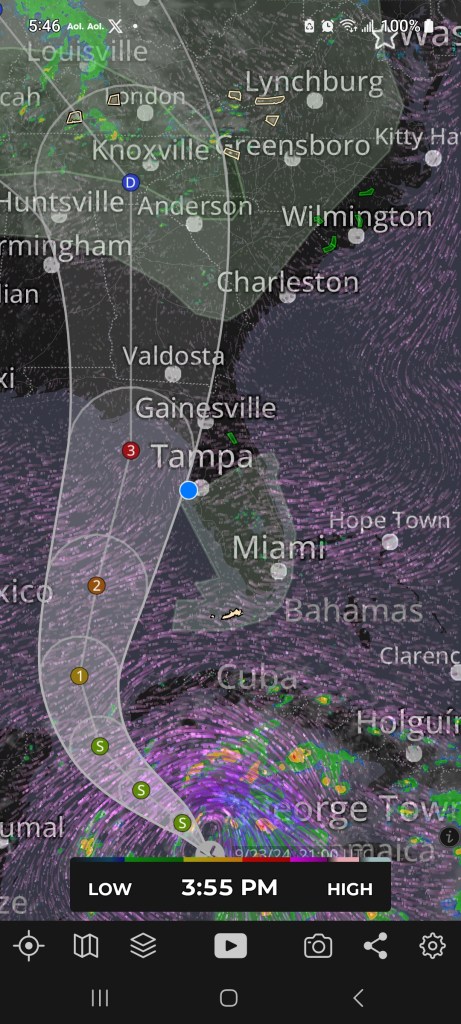
    As I write this, there is a real storm brewing, both within and without. The image below is a weather map of the hurricane that may soon hit my area, forcing me to evacuate. As someone living in an RV, evacuation is usually mandatory in situations like this, and so I find myself facing the possibility of having to leave my bed in the middle of a crash caused by overdoing it.

    The threat is very real, and so the importance of pacing is now at a level that I can’t ignore. I must prioritize rest and recovery immediately, because no matter what state I’m in, I’ll have to get out of bed and go to the hurricane shelter at the church next door if an evacuation order comes.

    This situation has made it even clearer to me how crucial the practice of witnessing vrittis and pratyayas is. Without that practice, I would be overwhelmed by anxiety and fear right now. The mind wants to run wild with worst-case scenarios and worries, but I have been training myself to simply witness these thoughts as they arise. They are just thoughts—just mental fluctuations. They do not have to define my experience. I can stay present, calm, and clear, ready to deal with whatever comes.

    So, after I finish writing this post, I’m going into massive rest and be prepared mode. The practice of pacing has never been more critical. This is an extreme red-flag situation, and I hope it serves as a reminder to all of us with chronic fatigue syndrome: sometimes, the urgency of rest is not just about avoiding a crash; it’s about survival.

    Take a look at the image below—it’s a reminder to me, and hopefully to you as well, that life can throw storms at us both literally and metaphorically. But with the right practices, we can remain centered and grounded, ready to face what comes with a steady mind and a rested body.

    As we face the storms within and around us, may we find peace in the stillness of our hearts. May all beings be free from suffering and the causes of suffering. May all beings experience happiness and the causes of happiness. May we all find safety, strength, and well-being on our journeys, no matter how turbulent the path. May we be guided by wisdom, anchored in compassion, and find harmony in the unfolding of each moment. And in these times of uncertainty, may we remember our interconnectedness, and may we all be held in grace and peace.

    🙏🕊️🙏

  • How Yoga Nidra Can Benefit People Living with Chronic Fatigue Syndrome (ME/CFS)

    Living with Myalgic Encephalomyelitis/Chronic Fatigue Syndrome (ME/CFS) is a daily challenge that requires careful management of energy, rest, and stress. For many, finding effective ways to support the body and mind in this delicate balance can feel overwhelming. Yoga Nidra, often called “yogic sleep,” is a practice that has been gaining attention for its potential benefits in managing ME/CFS. In this post, I’d like to delve deeper into how Yoga Nidra can be a valuable tool for those of us living with this condition.

    1. Supporting Pacing Strategies

    Pacing is a cornerstone of managing ME/CFS. It involves carefully balancing activity and rest to avoid pushing the body beyond its limits, which can lead to crashes or flare-ups of symptoms. Yoga Nidra can be an invaluable tool in this regard. Unlike other forms of exercise or even traditional yoga, Yoga Nidra requires no physical exertion. It allows you to take restorative breaks throughout the day, helping to prevent crashes by providing your body with deep rest during these intervals.

    For those of us with ME/CFS, the ability to find rest without further depleting our energy is crucial. A short Yoga Nidra session can be integrated into your daily routine as a way to recharge and reset, making pacing more manageable and effective.

    1. Activating the Parasympathetic Nervous System

    Another significant benefit of Yoga Nidra is its ability to activate the parasympathetic nervous system (PNS). The PNS is responsible for the “rest and digest” functions of the body, helping to counteract the stress response driven by the sympathetic nervous system. For many people with ME/CFS, the nervous system is often in a heightened state of alertness, which can contribute to symptoms of fatigue, pain, and cognitive dysfunction.

    Yoga Nidra guides you into a state of deep relaxation, which helps shift the body from a state of stress to one of rest and repair. This activation of the PNS can reduce the chronic stress response that often accompanies ME/CFS, promoting a sense of calm and helping to alleviate symptoms over time.

    1. Providing Deep Rest and Restoration

    One of the most challenging aspects of ME/CFS is the experience of unrefreshing sleep. Despite spending many hours in bed, individuals with ME/CFS often wake up feeling just as tired as before they slept. Yoga Nidra offers a unique solution by guiding practitioners into a state of consciousness that is deeply restful, yet different from regular sleep.

    During Yoga Nidra, the body can enter a state that mimics sleep in terms of physical rest, but the mind remains in a state of relaxed awareness. This state of conscious relaxation allows for a deeper level of restoration, potentially offering benefits that complement or even enhance the effects of regular sleep. For people with ME/CFS, incorporating Yoga Nidra into the daily routine could help alleviate the feeling of exhaustion that persists despite adequate sleep.

    1. Releasing Tension and Promoting Emotional Healing

    Living with a chronic illness like ME/CFS can lead to the accumulation of physical and emotional tension. Over time, this tension can exacerbate symptoms and contribute to feelings of stress and overwhelm. Yoga Nidra includes practices like body scanning and guided visualization, which can help release deep-seated physical tension and promote emotional healing.

    As you are guided to focus on different parts of the body and engage in positive affirmations or visualizations, Yoga Nidra provides a safe space for processing and releasing stress. This can lead to a sense of lightness and relief, which is particularly beneficial for those dealing with the chronic stressors associated with ME/CFS.

    1. Enhancing Mental Clarity and Focus

    Cognitive symptoms, often referred to as “brain fog,” are a common and frustrating aspect of ME/CFS. The deep relaxation and stress reduction provided by Yoga Nidra can contribute to improved mental clarity and focus. By calming the nervous system and promoting a state of balance, Yoga Nidra may help reduce the cognitive fatigue that many with ME/CFS experience.

    Regular practice of Yoga Nidra can support mental clarity by reducing the underlying stressors that contribute to brain fog, allowing for moments of greater focus and cognitive function.

    Conclusion: A Gentle Tool for Holistic Support

    Yoga Nidra is not a cure for ME/CFS, but it can be a gentle and effective tool for supporting overall well-being. By offering deep rest, aiding in pacing, calming the nervous system, and promoting emotional and physical healing, Yoga Nidra can be an integral part of a holistic approach to managing ME/CFS.

    If you’re living with ME/CFS and looking for new ways to support your health, I encourage you to explore Yoga Nidra. Whether you start with short, guided sessions or incorporate it into your daily routine, this practice may offer the kind of deep rest and healing that’s so essential for managing the complexities of ME/CFS.

    Watch a Video:

    The vides below is just some the many Yoga Nidra videos online of and are a good place to start. There are countless Yoga Nidra videos on YouTube, each offered by different instructors. Take your time exploring until you discover the ones that resonate best with you.

    The occasional Yoga Nidra session can be a relaxing and rejuvenating experience, helping you reduce stress, improve sleep, and promote overall well-being whenever you feel the need for a deep, restorative rest. May this practice bring you peace and renewal, gently supporting your journey toward greater well-being.

    This yoga Nidra for insomnia will take you easily into a light hypnagogic state and then down into a deep state of sleep.

    Learn more about ME, get involved in support, advocacy, and activism at www.meaction.net

    🙏🕊️🙏

  • 🌸 Smiling Meditation: A Gentle Tool for Your Post-Viral ME/CFS Pacing Toolkit 🌸

    Hello Everyone….

    Living with ME/CFS can be challenging, both physically and mentally. However, there are simple practices that can offer relief and support our overall well-being. One such practice is smiling meditation, a technique that involves intentionally smiling and experiencing its positive effects.

    Personal Experience:

    As someone who has lived with ME/CFS for over 30 years, I understand how difficult it can be to find practices that offer relief without draining our limited energy. Smiling meditation has become a small but powerful part of my daily routine. Even on days when I feel most fatigued, this practice often shifts my mood and energy in surprising ways.

    The Benefits of Smiling Meditation:

    For individuals living with ME/CFS, smiling meditation has the potential to uplift mood, reduce stress, and enhance the overall quality of life. Even when we don’t feel like we have something to smile about, simply engaging in the act of smiling can trigger a shift within us.

    The Science Behind It:

    Studies have shown that smiling—even when intentional—activates the parasympathetic nervous system, which helps our body enter a relaxed state. This shift reduces stress hormones like cortisol and promotes the release of endorphins, the body’s natural mood lifters. For those of us with ME/CFS, who often experience heightened stress and emotional challenges, this natural mood enhancement can be particularly valuable.

    How to Practice Smiling Meditation:

    1. Find a Quiet Space: Sit or stand in a comfortable, relaxed position. Close your eyes and take a few deep breaths.
    2. Begin Smiling: Bring a gentle smile to your face, allowing it to spread throughout your entire being.
    3. Feel the Warmth: Maintain the smile and notice how it feels. With each breath, imagine your smile expanding and radiating outward.
    4. Invite Joy and Compassion: Focus on the sensations of joy, peace, and compassion that arise within you. Allow yourself to embrace these emotions for a few minutes, or as long as feels comfortable.

    What I love about smiling meditation is that you don’t need something to smile about for it to work. Simply invoking the energy of a smile triggers those feel-good chemicals. It’s a gentle way to reconnect with moments of lightness when energy is low and life feels heavy.

    Managing Stress with Smiling Meditation:

    ME/CFS is often accompanied by heightened stress levels and a compromised stress response system. Smiling meditation acts as a natural stress reliever by activating the body’s relaxation response. Even if the smile is initially forced, it sends signals to the brain that everything is okay, leading to a decrease in stress hormones and a more relaxed state. This practice can help individuals with ME/CFS manage stress and cultivate a calmer mindset.

    Enhancing Mindfulness:

    When we engage in smiling meditation, we naturally bring our attention to the present moment. By closing our eyes and focusing on a pleasant memory or imagining a joyful scene, we deepen our mindfulness practice. Mindfulness can be a powerful tool for individuals with ME/CFS, helping us stay grounded, manage symptoms, and cultivate self-compassion.

    After completing your smiling meditation, you might consider gently transitioning into mindful breathing or a body scan, allowing your newfound sense of calm and joy to deepen. These mindful practices, when done together, can amplify their benefits.

    Fostering Connection:

    Smiling is contagious and has the potential to foster positive social interactions. When we smile, we not only uplift our own mood but also create a ripple effect, influencing those around us. For individuals with ME/CFS, who may face social isolation, smiling meditation can serve as a reminder of the power of connection. It can act as a catalyst for improved relationships, fostering empathy and support.

    Reflection:

    As you finish your smiling meditation, take a moment to reflect: How does it feel to smile, even when things are difficult? How might this practice shift your perspective throughout the day?

    Final Thoughts:

    The practice of smiling meditation, when incorporated into daily life, can contribute to a more positive outlook, reduced emotional distress, and increased resilience. By cultivating moments of joy and relaxation, we can experience a greater sense of well-being amidst the challenges of ME/CFS. Smiling meditation can complement other self-care practices, such as mindfulness, relaxation techniques, and pacing strategies, in creating a holistic approach to managing symptoms.

    Remember, even on the hardest days, this simple practice can offer a moment of joy and lightness. Despite the challenges, we can create positive change within ourselves. Smiling meditation empowers us to focus on the present and to fully embrace the beauty and blessings that surround us, even in the midst of struggles.

    By cultivating a practice of smiling meditation, we unlock the limitless potential that lies within us, weaving a tapestry of resilience and well-being that shines brightly in the face of ME/CFS.

    Let us cherish the moments of joy, the moments of peace, and the moments of connection that arise from our practice of smiling meditation. As we do so, even if only for a moment, we can cultivate a profound sense of well-being that transcends the challenges of ME/CFS, illuminating our path forward, toward a brighter future.

    As we integrate smiling meditation into our daily routine, we begin to realize that even a small act, like smiling, holds the power to uplift our spirits, foster connection, and bring us moments of lightness and joy. It’s these small moments that can make a big difference in our journey with ME/CFS.

    May we all find inner peace, happiness and wellbeing on our journey with Chronic Fatigue Syndrome. 🙏

    Screenshot