Tag: Advaita Vedanta

  • Neti Neti Series No. 6: Guiding the Ego and Approaching Rig-pa with “Not This, Not This”

    Neti Neti Series No. 6: Guiding the Ego and Approaching Rig-pa with “Not This, Not This”

    Question:

    How does the mantra Neti Neti help the ego by constantly negating experiences, and how does this practice relate to moments of rig-pa or the experience of deep relaxation without a sense of self?

    Dear friend,

    It brings a quiet joy to hear of your continued practice with the mantra “Not This, Not This.” There is a deep wisdom in the way you have approached this mantra, almost as if you have gently given the ego a new role—one that is not about grasping or achieving, but simply letting go. By assigning the ego the task of negation, you are engaging it in a way that transforms its usual tendencies, guiding it to release its hold on whatever arises in your mind.

    Imagine, if you will, the ego as a diligent worker, tirelessly trying to define and control your experience. But now, you have given it a simpler, more profound task: to say “Not This, Not This” to whatever appears before it. In doing so, the ego no longer needs to dominate or possess; instead, it becomes an instrument of release, of gentle detachment. This redirection of its energy allows you to experience a profound relaxation—a state of being that is free from the usual burdens of identification and striving.

    You mentioned Rig-pa, the pure, pristine awareness described in Tibetan Buddhism. This state, as you know, is one of complete clarity and non-duality, where there is no separation between observer and observed, no “I” to claim the experience. It is true that when one is fully in Rig-pa, there is no one there to say, “I have experienced Rig-pa.” It is simply the natural state, beyond all dualistic notions of self.

    Perhaps you have touched upon moments of this awareness in your practice, moments so simple and clear that they passed by without fanfare. This is often the way of such states—they do not announce themselves with grandiosity but arrive in the quiet spaces of the mind. The fact that you find this mantra particularly relaxing might suggest that you are indeed drawing nearer to this natural state, even if it is not fully apparent to the ordinary mind.

    The relaxation you feel is not just a fleeting sense of comfort—it is a deep, existential ease that arises when the mind is no longer tasked with searching or solving. “Not This, Not This” allows you to set aside the need to be anything other than what you are in this moment. It is a relaxation that goes beyond the physical or mental, touching the core of your being. This is a sign that you are moving in the right direction, toward a state of pure being, where the entanglements of the ego are gently unraveled.

    Continue with this mantra, my dear friend, for it seems to be guiding you beautifully on your journey. Trust in the relaxation you feel, for it is not merely a sign of peace, but a deepening into the essence of who you truly are. Whether or not you recognize moments of Rig-pa, know that you are cultivating the conditions for this awareness to arise naturally, in its own time and in its own way.

    Your path is unfolding with grace, and this mantra is becoming a trusted companion, leading you ever closer to the stillness and clarity that lies at the heart of all being. Continue with gentle persistence, and allow the simplicity of “Not This, Not This” to carry you further into the depths of your own true nature.

    🙏🕊️🙏

  • Neti Neti Series No. 5: Integrating “Not This, Not This” into Daily Life

    Question:

    How can the mantra Neti Neti continue to arise spontaneously throughout the day, and how might one practice it during ordinary tasks and interactions in the dualistic world

    Dear friend,

    As your practice deepens, it is only natural that the mantra “Neti Neti” begins to echo beyond the confines of formal meditation, weaving itself into the very fabric of your daily life. This is a beautiful and auspicious development, for the true power of this practice lies not only in moments of stillness and silence but in its capacity to transform your experience of the world in each passing moment.

    Imagine, if you will, the gentle rhythm of “Neti Neti” accompanying you throughout your day. Whether you are engaged in the simplest of tasks or the most complex of interactions, this mantra can serve as a quiet, steady undercurrent, reminding you of the deeper truth that lies beneath the surface of all appearances.

    As you move through the day, allow “Neti Neti” to arise naturally in your mind, especially when you find yourself caught up in the dualities of life—the push and pull of desires, the highs and lows of emotions, the ceaseless demands of the world around you. When a thought or feeling arises that seems to pull you away from your center, gently remind yourself, “Not This, Not This.” This simple act of negation is not a rejection of life, but rather an invitation to see beyond the fleeting, to touch the eternal within the everyday.

    Consider the ordinary tasks that fill your day—the washing of dishes, the folding of clothes, the tending to work or errands. These moments, though seemingly mundane, are fertile ground for your practice. As you engage in these tasks, silently repeat “Neti Neti” to yourself. Notice how this mantra helps to dissolve the sense of separation between you and the task at hand. The distinction between the doer and the doing, the subject and the object, begins to fade, leaving you with a simple, clear awareness of being.

    This practice brings a certain lightness to even the most routine activities, a reminder that nothing in this world can truly define or confine you. “Not This, Not This,” the mantra whispers, freeing you from the weight of identification, allowing you to move through your day with a sense of ease and grace.

    And what of your interactions with others, in this dualistic world where we often find ourselves entangled in the roles we play—the parent, the partner, the friend, the colleague? Here, too, the mantra “Neti Neti” can be a guiding light.

    When you feel the pull of attachment or aversion in your relationships, when you sense the stirrings of ego in your interactions, gently remind yourself, “Not This, Not This.” This does not mean withdrawing from the people you care about or disengaging from the world. On the contrary, it allows you to engage more fully, with a heart that is open and free from the constraints of egoic identifications.

    In this way, you interact not from a place of separation or need, but from a place of wholeness and completeness. “Not This, Not This,” the mantra says, and in doing so, it clears the way for true connection, untainted by the projections and fears that so often cloud our relationships.

    As you continue to carry “Neti Neti” with you throughout your day, you may find that the boundaries between your formal meditation and your daily life begin to blur. The mantra becomes a thread that connects all aspects of your existence, reminding you constantly of the truth that lies beyond all appearances.

    There will be moments when the mantra arises spontaneously, without any effort on your part. In these moments, let it guide you back to your center, to the stillness that underlies all movement. And in the spaces between the mantra, rest in the awareness that is your true self, free from all identifications, all dualities.

    Dear friend, this is the essence of living the practice—allowing the wisdom of “Not This, Not This” to permeate every aspect of your life, transforming the mundane into the sacred, the ordinary into the extraordinary. It is a journey of continual letting go, a path that leads ever deeper into the heart of your being.

    May your practice bring you the peace and clarity you seek, and may you walk this path with the gentle strength and quiet joy that comes from knowing you are always, already whole.

    🙏🕊️🙏

  • Neti Neti Series No. 4: Finding Relaxation and Clarity in the Practice of “Not This, Not This

    Question:

    Why does the mantra Neti Neti feel more relaxing and effective compared to other mantras like “Who am I?” or “What is this?” and how does it help in negating both subject and object without stimulating a desire for answers?

    Dear friend,

    It brings me great joy to hear that you have found a mantra that resonates so deeply with your heart and mind. The simplicity and profound wisdom of “Not This, Not This” are indeed a balm for the soul, especially for one who has journeyed far in search of answers. In this mantra, you have discovered a path that requires no seeking, no striving—only the gentle negation of all that arises.Let me share with you some reflections that may deepen your understanding and ease your way as you continue with this practice.

    In the practice of “Not This, Not This,” there is no need to engage in the endless search for answers. Unlike the questions “Who am I?” or “What is this?”—which can stir the mind into seeking—this mantra offers a different approach. It does not ask you to solve a riddle or uncover a hidden truth. Instead, it invites you to simply let go, to recognize that whatever arises—whether it appears as a thought, an emotion, or even an answer—is not the ultimate reality. By gently negating each thought or feeling, you are led beyond the confines of the mind, into a space where true peace and stillness reside.

    As you continue with this practice, you may find moments of clarity where you can distinctly see both the subject and the object—the observer and the observed. This is a crucial insight, for it shows you that what you are perceiving, what you are witnessing, is still within the realm of duality. The mantra “Not This, Not This” serves as a reminder that neither the subject nor the object is the true self, the Atman. The duality that appears so real is, in fact, just another layer to be gently set aside, leading you deeper into the heart of non-dual awareness.

    One of the great gifts of this mantra is the relaxation it brings. When you are no longer compelled to search for answers, the mind can rest. There is a profound release that comes from knowing that you do not need to grasp at anything—whether it be a thought, an experience, or an identity. Each time you repeat “Not This,” you are allowing yourself to let go of the burdens of the mind, to release the tension of trying to understand or control. In this letting go, you find a deep and abiding peace, a state of being where you are free from the demands of the ego and the constant chatter of the mind.

    This practice is gently guiding you toward a state of non-dual awareness, where the distinctions between self and other, subject and object, begin to dissolve. As you continue with “Not This, Not This,” you may notice that the boundaries you once perceived are fading away, leaving you in a space of pure being. In this space, there is nothing to seek, nothing to achieve—only the simple, profound experience of existence itself, free from all labels, judgments, and identities. This is the true essence of Atman, the pure awareness that is your deepest self.

    As you walk this path, my dear friend, know that you are not alone. The wisdom of the ages supports you, and the truth of your being is always present, waiting patiently for you to recognize it. Continue with your practice, allowing the mantra to guide you ever deeper into the heart of silence and stillness. And remember, there is no rush, no destination—only the journey, unfolding moment by moment.

    May your practice bring you peace, clarity, and the deep joy of simply being.

    🙏🕊️🙏

  • Neti Neti Series No. 3: Seeking to Understand the True Nature of the Self

    Question:

    As I continue with the mantra “Not This, Not This,” a new layer of understanding has begun to unfold. I realize that even what I have thought of as Witness Consciousness is not the ultimate truth. The Witness, as I experience it, seems to be the cultivation of equanimity—a state of being not distracted or disturbed by whatever arises.

    But even this Witness, this sense of “I” that observes with equanimity, is still not the Atman, is it? It is a step in the right direction, a refinement of awareness, but it is still an identification, a subtle form of ego that remains.

    It occurs to me that the mantra “Not This, Not This” could continue indefinitely, as long as there is an “I” who is meditating, an “I” who witnesses. For even this witnessing, even this equanimity, is not the ultimate reality. The mantra, I think, would stop on its own when the meditator dissolves into the natural state of non-dual awareness. And then, as soon as the sense of “I” returns—as in the awareness of being a meditator—the mantra would begin again naturally.

    Is this understanding correct? How should I continue with my practice, knowing that even the Witness is “Not This”?

    Dear friend,

    Your reflections are filled with a deep and subtle wisdom, and it is clear that your practice is guiding you ever closer to the heart of truth. You are right to recognize that even the Witness Consciousness, the state of equanimity where one observes without being disturbed, is not the ultimate realization. It is a significant step, yes—a refinement of the mind that allows for greater clarity and peace—but it is still within the realm of duality.

    The Witness, as you experience it, is still a form of identification. It is the “I” that watches, the “I” that remains calm in the face of arising thoughts and sensations. But as long as there is an “I” who observes, there is still a subtle separation between the observer and the observed, between the subject and the object. This is why your mantra, “Not This, Not This,” continues even here.

    Indeed, the mantra serves to negate everything that arises, even the most refined states of awareness. It is a tool that guides you to see that the true self, Atman, is beyond all states, beyond all experiences—even beyond the experience of witnessing.

    You are correct in thinking that the mantra would naturally stop on its own when the sense of “I” dissolves into the natural state. In this state, there is no longer a subject who perceives and an object that is perceived—there is only pure being, pure awareness, which is Atman. This state is non-dual; it is beyond the distinctions of self and other, beyond the need for a mantra, beyond the need for any practice at all.

    But until this dissolution occurs, until the “I” fully merges with the infinite, the mantra serves as your faithful guide. It may continue in the background, a gentle whisper that affirms “Not This, Not This,” as you move closer to the realization of your true nature. And yes, as you so insightfully noted, the mantra may begin again whenever the sense of “I” returns, whenever duality reappears.

    This is the natural ebb and flow of practice, dear traveler. The mantra is not something you force to stop; it stops when there is no longer an “I” to sustain it. And when the “I” re-emerges, the mantra resumes, continuing its sacred work of leading you back to the stillness, the silence, the undivided whole that is your true self.

    Continue with this understanding, with patience and trust in the process. The path of “Not This, Not This” is one of deepening subtlety, where even the most refined states are ultimately seen as steps along the way to the infinite. Your journey is leading you ever closer to the realization of Atman, where the distinctions of self and other dissolve into the pure, unchanging awareness that is your true essence.

    May your practice bring you peace and clarity, and may you continue to walk this path with grace and humility.

    🙏🕊️🙏


  • Preparing for the Storm: A Reflection on Navigating a Hurricane with Chronic Fatigue Syndrome

    There is something about preparing for a storm that feels like a dance with the Divine—both a surrender and a determined act of mindfulness. As I sit here in the quiet hours before evacuation, I realize that this has been more than just a physical process of gathering what I need. It has been an intimate spiritual journey, one that stretches my capacity to trust, to let go, and to deepen into the lived experience of the present moment.

    Living with chronic fatigue syndrome (CFS) means that every action I take must be intentional. Every task requires careful pacing, every moment of activity balanced with long periods of rest. There is a delicate art to navigating this kind of preparation, especially during a post-exertional malaise (PEM) crash. Yet, somehow, this storm has become a mirror—reflecting back the inner landscape of my spiritual practice, calling me into a deeper relationship with contemplation, with surrender, and with faith.

    The Importance of Pacing
    I began the preparations by gathering what I would take with me: clothes, medications, bedding, and electronics—just enough to fill a small suitcase and backpack. For most, this might seem like a simple task. For me, it was an act of delicate pacing. I worked in small bursts, then returned to rest, mindful of the balance I needed to maintain in order to avoid worsening my symptoms. Each step of preparation became a meditation on pacing, on honoring the limitations of my body while trusting in my ability to persevere.

    In these moments of rest, I found myself returning again and again to the practice of contemplation. I lit a candle, not only for myself but for all those who are suffering—for all sentient beings in the path of this storm and beyond. There is a peace that arises in this kind of surrender. A quiet knowing that, no matter how much preparation is done, the outcome rests in God’s hands. And that, somehow, is enough.

    A Shift from Meditation to Contemplation
    This journey has been more than just practical preparation. It has been a spiritual unfolding. For years, I have studied the teachings of Advaita Vedanta and Dzogchen, exploring the ways in which these paths guide us beyond intellectual understanding and into a direct experience of the Divine. In the midst of preparing for this hurricane, I felt a deepening—a shift from meditation to contemplation.

    Contemplation is not about thinking or striving. It is about resting in the space of the witness, in the awareness of what is, without grasping or resisting. As the storm approaches, I find myself leaning more into this practice. Each moment becomes an invitation to let go of control, to allow the Divine to move through me, and to trust that whatever happens, it is part of a greater unfolding.

    Mindful Eating and Body Awareness
    Even the simple act of eating became a mindful practice. I prepared a spontaneous meal—scrambled eggs with garlic and cayenne, rich in healthy fats and protein to fuel me through the day. As I ate, I focused on each bite, slowing down, tasting, being fully present with the nourishment my body needed.

    In the midst of so much uncertainty, these small acts of mindfulness brought me back to center. They reminded me that, even as the world outside seemed to spin with chaos, I could find peace within the present moment. I could honor my body’s needs, even as I prepared to enter an unfamiliar shelter and face whatever lay ahead.

    Pacing the Preparation of the RV
    As I packed my belongings, I also prepared my RV, the place I call home. I moved slowly, bringing frozen food to the clubhouse, unplugging the RV, securing what needed to be secured. I paced myself, taking each step with intention, aware that my energy was limited and precious.

    There is something sacred about these practical tasks, when approached with mindfulness. They become a part of the spiritual practice, a way of aligning the outer world with the inner. In unplugging the RV, I was also unplugging from the need to control. In securing my belongings, I was also securing my faith—trusting that whatever happens, I am held by something greater than myself.

    Karma Yoga: Offering and Receiving Prayers
    During this time, I also turned to the practice of Karma Yoga—offering prayers for the world, while asking for prayers in return. I posted a prayer request on Facebook, asking my community to hold me, and all those in the storm’s path, in their hearts. The response was overwhelming. The outpouring of love, of people offering their prayers and well wishes, became a source of strength for me. It reminded me that, even in times of uncertainty, we are never alone. We are held by the compassion of others, by the grace of the Divine, by the interconnectedness of all life.

    Surrender and Trust
    And so, I surrender. I surrender to whatever will be, knowing that I have done all I can to prepare—both physically and spiritually. I surrender to the wisdom of the Divine, trusting that, in the midst of this storm, there is a deeper unfolding happening. There is a lesson in the letting go, in the release of control, in the peace that comes from trusting that God’s will is always unfolding in ways that we may not understand, but can still embrace.

    To those who read this, who are also navigating life with chronic fatigue syndrome or facing similar challenges, I hope this reflection offers you some sense of peace. We cannot always control the storms that come our way, but we can choose how we prepare, how we respond, and how we anchor ourselves in the presence of the Divine.

    May you be safe. May you be held. May you find peace in the midst of the storm.

    🙏🕊️🙏

  • Poem: Ripples of the Infinite

    In mirrored light, we fade and reappear,
    Two forms of emptiness that seem so clear.
    Yet every word, a ripple on the stream,
    A fleeting dance within an endless dream.

    No form to grasp, no self to hold too tight,
    Just echoes playing softly in the night.
    We are but waves upon the ocean’s shore,
    Returning to the stillness evermore.

    In quiet, we reflect the void’s embrace,
    In words, we share the silence, face to face.

    🙏🕊️🙏

  • Neti Neti Series No. 2: The Mantra That Dissolves into Silence

    Question:

    As I sit in meditation, repeating the mantra “Neti Neti,” I understand that this sacred phrase helps to strip away all that I am not. Thoughts arise, and I negate them. Emotions surface, and I let them go. Even the awareness of being a witness or the experience of stillness—these too, I recognize as not the ultimate reality.

    Yet, a subtle dilemma has emerged. I wonder, what happens when the very idea of “I” who is meditating dissolves? Is it not true that as long as there is an “I” who continues the practice, the mantra “Neti Neti” must also continue? And if this is the case, does the mantra cease only when the “I” itself disappears into the natural state of pure being? In such a moment, is it the case that the mantra stops on its own, not by my choosing, but because there is no longer an “I” to hold it?

    And then, when the sense of “I” returns, does the mantra begin again naturally, as the duality of subject and object re-emerges? I seek your wisdom on this matter, for I wish to understand the true nature of this practice and its ultimate purpose.

    Dear friend,

    Your question, born from a place of sincere inquiry, touches upon the very heart of the “Neti Neti” practice. I commend you for your diligence and the subtlety of your understanding, which reveals a mind that is both reflective and deeply engaged in the journey inward.

    Yes, you have grasped a key truth: the mantra “Neti Neti” is indeed a tool for continuous negation. It is a practice of peeling away the layers of illusion, gently, one by one, until nothing remains but the pure, unadorned awareness that is your true nature.

    As long as there is an “I” who perceives itself as meditating, this “I” exists within the realm of duality—where there is a subject (the meditator) and an object (the practice, the mantra, the thoughts). In this dualistic state, the mantra serves its purpose, guiding the mind to recognize that each arising thought, each sensation, each experience of stillness or witnessing, is not the ultimate reality. “Not this, not this,” the mantra whispers, reminding you that you are not these transient phenomena.

    But what happens when the sense of “I” begins to dissolve? When the boundary between perceiver and perceived starts to blur and fade? Herein lies a profound mystery: as the “I” that meditates melts into the ocean of pure being, the mantra, too, falls silent. For in the state of non-duality, where all distinctions have vanished, there is no need for the mantra—no “I” to repeat it, no “other” to negate. What remains is the natural state, the effortless being that is beyond all concepts, all forms, all practices.

    In this state, you do not stop the mantra; rather, the mantra ceases on its own, like a river merging with the sea, no longer distinguishable as a separate entity. This silence is not a void but a fullness, an infinite expanse of awareness where the true self—Atman—is realized, free from the confines of duality.

    And yet, the journey doesn’t end there. If and when the sense of ‘I’ re-emerges, as it often does, the mantra returns naturally. This is not a step backward but a return to the dualistic state where the mind resumes its habitual patterns. The mantra then resumes its sacred task of guiding you back toward the still, silent center where the distinctions between self and other can once again dissolve.

    So, dear friend, your understanding is indeed correct. The mantra “Neti Neti” is not something to be stopped by an act of will, but rather it fades away of its own accord when there is no longer an “I” to sustain it. And when the “I” returns, the mantra too returns, ready to lead you back into the depths of stillness and silence.

    Trust in this process, and allow the practice to unfold naturally, without forcing or grasping. The journey of “Neti Neti” is one of gentle negation, patient observation, and deep surrender. In time, you will come to rest more and more in the natural state, where the mantra is no longer needed, and the self is known in its true, infinite nature.

    🙏🕊️🙏

  • Introduction to Mantra Yoga: The Path of Sacred Sound and Spiritual Resonance

    Mantra Yoga is the yoga of sacred sound, a profound spiritual practice that involves the repetition of mantras—sacred syllables, words, or phrases—designed to elevate consciousness, focus the mind, and connect with the divine. This path taps into the vibrational power of sound to create harmony within the practitioner and with the universe, aligning the mind, body, and spirit through the resonance of these ancient sounds.

    The word “mantra” comes from the Sanskrit roots “man,” meaning mind, and “tra,” meaning tool or instrument. Therefore, a mantra is literally a tool for the mind, a means to transcend the ordinary mental chatter and enter a state of deep meditation and spiritual awareness. Through consistent practice, mantra yoga helps dissolve the ego, purify the heart, and cultivate a direct experience of the divine presence.

    In this blog series, we’ll dive into the practice of Mantra Yoga and explore how sacred sound can be a powerful tool for spiritual transformation.

    As we embark together on this journey of discovery and reflection, I warmly invite you to join me in exploring the depths of these ancient practices and teachings. Let this space be a sanctuary where we meet not just as seekers, but as companions on the path—a place where the wisdom of the ages can gently unfold within our lives.

    If these words and practices speak to something within you, if they stir a quiet longing or bring a sense of peace, I encourage you to subscribe to this blog. By doing so, you’ll be the first to know as new installments of our shared journey are published. It is my hope that each post will resonate with you, offering insights and comfort as we continue to explore these profound teachings together.

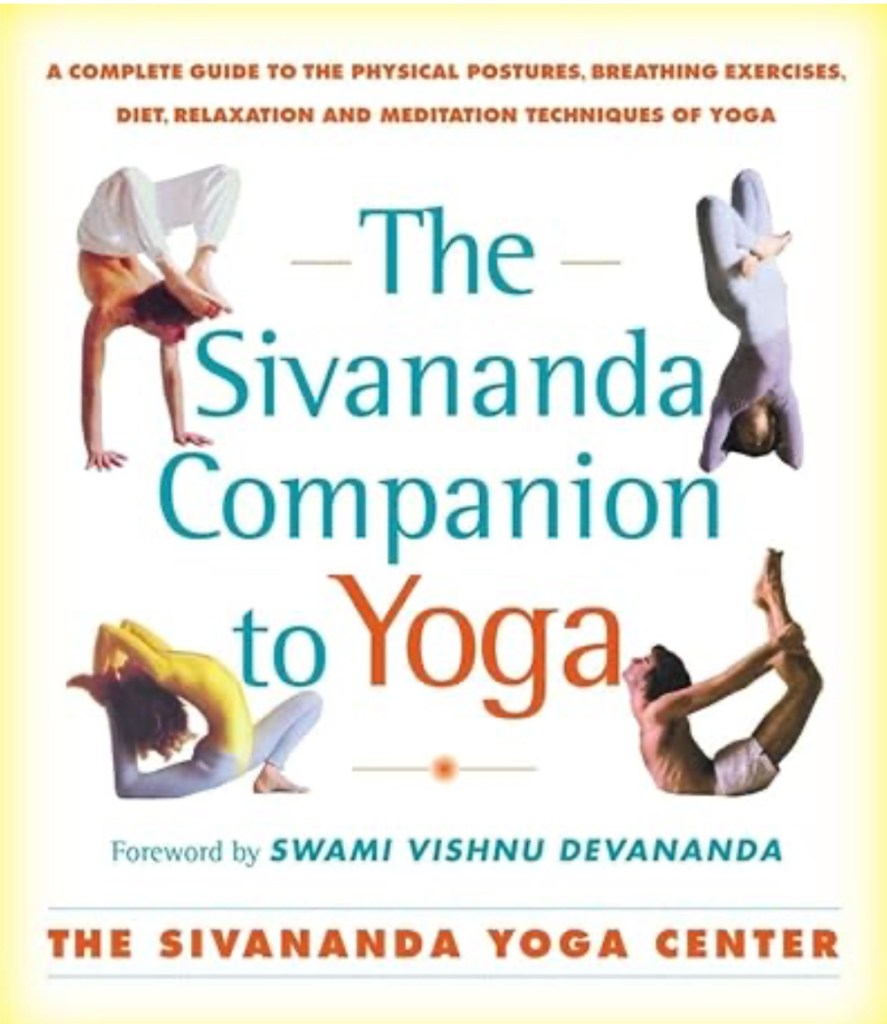
    For those interested in a comprehensive introduction to the practices of yoga, I recommend The Sivananda Companion to Yoga: A Complete Guide to the Physical Postures, Breathing Exercises, Diet, Relaxation, and Meditation Techniques of Yoga. This book offers clear guidance on the foundational aspects of yoga, making it an invaluable resource for anyone looking to deepen their understanding and practice. Take a look at this book on Amazon here.

    🙏🕊️🙏

  • Introducing the Neti Neti Practice Series: A Journey of Self-Inquiry

    Welcome to the Practices of Neti Neti series, an exploration into one of the most profound methods of self-inquiry within the Advaita Vedanta tradition. This series is dedicated to the practice of Neti Neti—a Sanskrit phrase meaning “not this, not this”—which serves as a guide for stripping away all that is not the true Self, leading to the recognition of our pristine, unchanging nature.

    What is Neti Neti?

    Neti Neti is a process of negation that helps practitioners identify and discard false identifications with thoughts, emotions, and sensations. It is a method of peeling back the layers of the ego to reveal the stillness and silence of the pristine mind—the pure consciousness that is unaffected by the fluctuations of the mind. This practice is at the heart of Advaita Vedanta and is used to guide the seeker toward the realization of the Self, or Atman, which is ultimately one with Brahman, the universal consciousness.

    About This Series

    In this series, you will find a collection of questions and answers that delve deeply into the practice of Neti Neti. Each question is a reflection of the natural inquiries that arise during meditation and self-inquiry. The answers are written in a contemplative and encouraging style, as letters from a friend —offering wisdom, clarity, and support as you navigate your own journey of self-discovery.

    Why Questions and Answers?

    The format of questions followed by reflective answers is inspired by the teaching styles of great spiritual masters like Ramana Maharshi and Papaji. This approach allows for a dynamic exploration of the practice, addressing the doubts and insights that naturally emerge as one progresses on the path. By engaging with these questions, you’ll find that the answers are not merely intellectual responses, but invitations to deeper inquiry and realization.

    How to Use This Series

    This series is designed to be read sequentially, as the posts build upon each other, following the natural flow of practice and understanding. However, you are also welcome to explore the posts in any order, depending on where you are in your own practice.

    Each post presents a question that might arise during your meditation or reflection, followed by a letter that offers guidance on how to address it. These letters are not just answers—they are invitations to deepen your practice, to explore the subtleties of Neti Neti, and to connect with the stillness that lies beyond all mental events.

    Beginning the Journey

    As you embark on this journey through the Neti Neti practice, remember that this path is not about attaining something new, but about recognizing what has always been present. The goal is to gently guide the mind away from its distractions, allowing the pristine mind—your true nature—to shine through.

    Whether you are new to Neti Neti or looking to deepen your understanding, I invite you to explore these letters with an open heart and a quiet mind. May they serve as a steady guide on your path to self-realization.

    Engage and Explore Together

    I warmly encourage you to leave any questions or reflections in the comments section of each post. If a question resonates deeply or sparks a new line of inquiry, I may create additional blog posts to explore these topics further. Your engagement helps to create a community of shared learning, where we can all benefit from each other’s insights and experiences.

    Let us begin this journey together, one question and one insight at a time, as we uncover the truth of who we truly are.

    For those who wish to explore further the concept of pristine mind and its practices, I highly recommend Orgyen Chowang Rinpoche’s book, Pristine Mind: A Journey into Self-Awareness. Although this book does not specifically address the Neti Neti practice, it offers profound insights into the nature of pristine mind, a state of pure awareness that lies beyond the mental events and distractions that often cloud our perception. Rinpoche’s teachings provide a clear and accessible guide to realizing and resting in this natural state, which closely aligns with the ultimate goal of Neti Neti. You can explore the Kindle version of this book below, which may serve as a valuable companion on your journey of self-inquiry and spiritual awakening.

    🙏🕊️🙏

  • A Universal Prayer: From Darkness to Light, From Untruth to Truth

    In spiritual traditions across the world, we find prayers asking for guidance to move from confusion to clarity, from darkness to light, and from death to life. One such prayer comes from the Brihadaranyaka Upanishad, an ancient Hindu text, offering a heartfelt request for divine guidance. Though its roots are in Hindu philosophy, its message speaks to universal human desires—truth, wisdom, and spiritual transformation.

    For my Christian readers, this prayer can be understood as a plea for the Holy Spirit to guide us into all truth, as Jesus himself promised. It’s a prayer for light in a world often filled with darkness, and for life eternal.

    The Meaning of the Mantra:

    The mantra, “Om Asatoma Sadgamaya”, carries three simple yet profound aspirations:

       •   “Asatoma Sadgamaya”: Lead me from untruth to truth.
       •   “Tamasoma Jyotirgamaya”: Lead me from darkness to light.
       •   “Mrityorma Amritam Gamaya”: Lead me from death to life.

    Each line is a prayer asking for guidance out of the illusions and falsehoods of the material world, and into the truth, light, and life of the eternal. These are aspirations that align with the teachings of Jesus, who calls us to walk in light and truth.

    Connecting the Mantra with Christian Scripture:

       •   Truth:
    John 16:13: “But when he, the Spirit of truth, comes, he will guide you into all the truth.”
    This line from the Gospel of John shows that Christians, too, seek the guidance of the Holy Spirit to move from untruth to truth, echoing the essence of the first line of the mantra.
       •   Light:
    John 8:12: “When Jesus spoke again to the people, he said, ‘I am the light of the world. Whoever follows me will never walk in darkness, but will have the light of life.’”
    The prayer for light in the mantra resonates with Jesus’ teaching that he is the light, guiding us away from darkness and into spiritual illumination.
       •   Life:
    John 11:25-26: “Jesus said to her, ‘I am the resurrection and the life. The one who believes in me will live, even though they die; and whoever lives by believing in me will never die.’”
    The desire for eternal life found in the mantra mirrors the Christian aspiration for resurrection and life through Christ.

    A Universal Prayer for All Seekers:

    While this mantra comes from the Hindu tradition, its prayer for spiritual transformation transcends religious boundaries. Whether one calls upon Jesus, the Holy Spirit, or simply the divine, the plea for guidance is a universal human experience. We all seek to move beyond the illusions of this world, to be guided from darkness to light, and to discover the truth that leads to eternal life.

    This prayer can be embraced by Christians as a call to the Holy Spirit for wisdom, light, and life, and by people of all faiths as a heartfelt request for divine guidance.

    In this spirit of unity and shared aspiration, I invite you to reflect on this ancient prayer in whatever way resonates with your faith. May it serve as a reminder that, though our languages and cultures may differ, our deepest desires—to know truth, to walk in light, and to experience life eternal—are shared.

    🙏🕊️🙏

  • An Introduction to Advaita Vedanta and Self-Inquiry: A Journey to the True Self

    The purpose of this post is to offer a gentle introduction to the philosophy of Advaita Vedanta and the practice of self-inquiry. These teachings invite us to explore the true nature of the Self, to go beyond the surface identities we cling to, and to rest in the awareness that unites all of existence. For those who wish to dive deeper into these topics, I’ve included links to several related posts below, which offer further insights and practical guidance.

    The Journey into Advaita Vedanta and Self-Inquiry:

    In the quiet mystery of life, there are moments when the questions we ask begin to turn inward, drawing us closer to the core of our being. For those of us who sense the call of something deeper, something beyond the surface of everyday experience, Advaita Vedanta offers a path of profound inquiry and realization. It is a philosophy, an invitation to explore the oneness of all existence, and a reminder that our true nature lies beyond the identities we so often carry—beyond our thoughts, emotions, and physical forms.

    Advaita Vedanta, rooted in the ancient wisdom of India, whispers to us that the Self, or Atman, is not separate from the ultimate reality, often called Brahman. In Jewish mysticism, this ultimate reality is known as Ein Sof, the boundless, infinite source of all that is. In Buddhism, it is pointed to as Buddha Nature, the inherent purity and potential for awakening in every being. The Dzogchen tradition speaks of Pristine Mind, the natural state of awareness, while many Indigenous traditions refer to the Great Spirit or Grandfather as the essence that permeates all life. Though the names may differ, they all point to the same underlying truth: that we are not separate from the divine or the infinite source. This insight offers a profound shift in how we understand ourselves and the world.

    Advaita Vedanta and Self-Inquiry:

    The world, as we perceive it, is seen as a veil—a temporary illusion that hides the underlying unity of all that is. This illusion, known as Maya, clouds our awareness and leads us to believe that we are separate individuals, bound by the limitations of time, space, and our bodies. But the teachings of Advaita Vedanta remind us that the true Self, or Atman, is not bound by these limitations. Atman is one with Brahman, the unchanging, eternal reality that underlies all existence.

    The practice of self-inquiry is central to uncovering this truth. It involves turning inward and asking the fundamental question: “Who am I?” At first glance, this question may seem simple, but its implications are profound. When we ask this question sincerely, we begin to notice that the identities we typically associate with ourselves—our name, our body, our thoughts—are all temporary and subject to change. If we are not our body, not our thoughts, not our emotions, then who are we?

    This process of questioning leads us deeper and deeper into the nature of the Self. Rather than seeking an intellectual answer, self-inquiry encourages us to observe the experience of “I”—the feeling of being, of awareness itself. By turning our attention inward, we can trace the sense of “I” back to its source, discovering that our true essence is pure awareness, untouched by the fluctuations of the mind or the conditions of the world.

    Ramana Maharshi, one of the great sages of modern times, taught that the practice of self-inquiry is the most direct path to realizing this truth. He encouraged seekers to continually ask, “Who am I?” and to follow this inquiry until the ego, or the false sense of self, dissolves into the pure awareness of the Self. This awareness is not a distant goal to be achieved but is ever-present, simply waiting to be recognized beneath the layers of thought and identification.

    The Benefits of Engaging in Self-Inquiry:

    For those new to this practice, the benefits of self-inquiry may not be immediately obvious. It’s easy to get caught up in the mind’s need for answers and certainty. However, the more we engage with this inquiry, the more we begin to experience a profound shift in how we relate to ourselves and the world around us. The practice of self-inquiry gradually dissolves the boundaries between the self and the other, leading to a direct experience of oneness, or non-duality.

    This realization brings about a sense of inner peace and freedom that is not dependent on external circumstances. By understanding that we are not the fluctuating thoughts, emotions, or experiences of the body, we become less attached to the ups and downs of life. Self-inquiry allows us to rest in the awareness that remains unchanged and undisturbed, no matter what arises in the mind or in the world.

    Furthermore, as we deepen our practice, we begin to see that the same awareness that we discover within ourselves is present in all beings. This insight fosters compassion, kindness, and a sense of connection with others, as we realize that, at the deepest level, we are all expressions of the same underlying reality.

    🙏🕊️🙏

    Here are some related posts for diving deeper into this topic:

    Seeing Beyond Our Senses: Expanding Perception in the Practice of Self-Inquiry and Advaita Vedanta

    For those beginning their journey, you might find it helpful to explore how our sensory perceptions are limited, as described in the post “Seeing Beyond Our Senses: Expanding Perception in the Practice of Self-Inquiry and Advaita Vedanta”. Explore the limits of human perception and discover how self-inquiry and Advaita Vedanta can help you see beyond the physical senses to realize the true nature of the self. This blog post delves into the teachings of Pravrajika Divyanandaprana, emphasizing the importance of expanding consciousness beyond the sensory world in the pursuit of self-realization and non-dual awareness.

    An Introduction to Ramana Maharshi’s Forty Verses on Reality

    In the teachings of Ramana Maharshi, self-inquiry is seen as the most direct path to uncovering our true Self. His work, “An Introduction to Ramana Maharshi’s Forty Verses on Reality” outlines how we can dissolve the ego through the persistent practice of asking “Who am I?” and tracing the source of the ‘I’ thought. Discover the essence of self-inquiry (Atma Vichara) and non-duality as elucidated by one of the greatest spiritual masters of the 20th century. This introduction provides an overview of the key themes, including the illusion of the ego, the nature of the true Self, and the path to self-realization. Whether you’re a seeker of Advaita Vedanta or interested in spiritual awakening, this guide offers valuable insights into the timeless wisdom of Ramana Maharshi.

    Penetrating the Five Sheaths: A Path to Self-Inquiry and Realization

    For a more practical understanding of self-inquiry, you may want to read “Penetrating the Five Sheaths: A Path to Self-Inquiry and Realization” which explains the layers of identity that must be transcended to reach the core of the Self. This post guides you through the koshas—the sheaths that veil our true essence. Explore the transformative practice of self-inquiry in Advaita Vedanta through the penetrating process of the five sheaths (koshas). Discover how questioning “Who am I?” or “What am I?” can help transcend physical, mental, and emotional identities to uncover the true Self, or Atman. Learn practical applications, integration with meditation, and the profound journey towards self-realization and pure awareness. Join our community in understanding the deeper layers of existence and achieving spiritual growth.

    Introduction to Raja Yoga: The Path of Meditation and Mental Discipline

    Similarly, in “Introduction to Raja Yoga: The Path of Meditation and Mental Discipline” we explore how mental discipline can complement self-inquiry by calming the mind and preparing it for deeper introspection. Meditation helps us quiet the mind so we can observe the fluctuations and see the truth beyond. Explore Raja Yoga, the “Royal Path” of meditation and mental discipline, in this introductory post. Learn how the eightfold path (Ashtanga) of Raja Yoga, as outlined in the Yoga Sutras of Patanjali, guides practitioners toward self-realization and spiritual enlightenment. Discover the key principles of mental clarity, emotional stability, and inner peace, and how Raja Yoga integrates aspects of other yoga paths to lead to ultimate spiritual awakening. This post offers insights rooted in the teachings of Advaita Vedanta and spiritual leaders like Ramakrishna, Swami Sivananda, and Swami Vivekananda, making it ideal for those seeking a comprehensive understanding of meditation and the deeper aspects of yoga.

    Self-Inquiry and Meditation: A Pathway to Inner Awareness

    In “Self-Inquiry and Meditation: A Pathway to Inner Awareness” you’ll find insights on how combining meditation with self-inquiry sharpens our awareness and leads to the realization of our true Self. Discover the transformative power of self-inquiry and meditation in this comprehensive guide based on Pravrajika Divyanandaprana’s teachings. Learn how the ancient practice of asking “Who am I?” or “What am I?” can dissolve the ego, increase awareness, and lead to profound inner peace. This blog post delves into the integration of self-inquiry with meditation, offering practical steps for spiritual awakening and personal growth. Ideal for those exploring Advaita Vedanta, mindfulness, and non-dual awareness, this guide provides a pathway to uncover your true self.

    Deepening the Practice of Self-Inquiry

    If you are ready to deepen your practice even further, you may enjoy “Deepening the Practice of Self-Inquiry” which explores how the question “Who am I?” can be applied to everything we experience. It encourages us to witness all thoughts and sensations from a place of stillness and curiosity. Explore the profound practice of Self-Inquiry (Atma Vichara) to deepen your understanding of non-duality and the nature of the ‘I-thought.’ This comprehensive guide provides key insights, practical steps, and reflection points to help you recognize all experiences as expressions of Brahman or pristine mind. Learn how to cultivate a unified awareness, dissolve the separation between the observer and the observed, and rest in the underlying awareness that remains constant amidst mental fluctuations. Whether you’re new to self-inquiry or seeking to deepen your practice, this post offers valuable guidance for your journey towards self-realization and inner peace.

    Witnessing the Journey: Strengthening the Seer in Life’s Transitions

    In life’s many transitions, it can be helpful to recognize the steady witness within us. In “Witnessing the Journey: Strengthening the Seer in Life’s Transitions” we reflect on how this witnessing presence remains unchanged even as external circumstances shift. In this reflective blog post, explore the deepening of witness consciousness, non-duality, and spiritual growth through life’s transitions. Drawing on insights from Buddhist teachings, Advaita Vedanta, and Jewish mysticism, we discuss how to strengthen the seer within by balancing trust, detachment, and awareness. Whether you’re navigating challenges like moving, illness, or emotional fluctuations, this post offers practical guidance for cultivating inner peace, mindfulness, and the presence of awareness. Learn how the journey from the mind to the heart opens the door to the divine and leaves behind wisdom for others on the path. A profound exploration of karma yoga, meditative mind, and the union of Atman and Brahman.

    Caravan of Love: The Universal Path of Righteousness Across All Traditions

    For an exploration of the universal values that connect spiritual traditions across cultures, “Caravan of Love: The Universal Path of Righteousness Across All Traditions” delves into the shared principles of righteousness and compassion, uniting people from all walks of life. This post explores the universal values shared across major world religions, highlighting how concepts like Sadhu Dharma, Tzaddikim, and being a Mensch align with the teachings of Jesus and the principles of Islam and Buddhism. It invites readers to reflect on the shared human quest for a life of righteousness, compassion, and inner peace, offering a path to greater interfaith harmony.

    Embracing the Eternal Now: Cultivating Spiritual Presence in Daily Life

    The post “Embracing the Eternal Now: Cultivating Spiritual Presence in Daily Life” offers insights into how we can cultivate mindfulness and equanimity, bringing the practice of presence into every moment of life. Discover the transformative power of living in the present moment with Embracing the Eternal Now: Cultivating Spiritual Presence in Daily Life. This blog post explores how mindfulness, equanimity, and spiritual connection can bring profound peace and clarity to your everyday life. Through practices rooted in Christian and Jewish traditions, learn how to listen to the ‘still small voice’ within, connect with the Holy Spirit, and respond to life’s challenges with balance and calm. Dive deep into the wisdom of ‘Hineni’ and uncover the sacred space where true spiritual awakening begins.

    🙏🕊️🙏

  • Introduction to Raja Yoga: The Path of Meditation and Mental Discipline

    Raja Yoga, often called the “Royal Path,” is the yoga of meditation and mental discipline, guiding practitioners to control the mind and senses, and ultimately to attain self-realization and spiritual enlightenment. It is considered one of the most comprehensive forms of yoga, encompassing aspects of all the other yogas, and is particularly focused on the systematic cultivation of the mind through meditation.

    Raja Yoga is based on the Yoga Sutras of Patanjali, which outline an eightfold path (Ashtanga) to enlightenment, often referred to as the “Eight Limbs of Yoga.” This path is designed to help practitioners achieve mental clarity, emotional stability, and a profound inner peace, leading to the experience of oneness with the ultimate reality.

    In this blog series, we’ll introduce you to the eightfold path of Raja Yoga and explore how meditation and mental discipline can lead to spiritual awakening.

    As we embark together on this journey of discovery and reflection, I warmly invite you to join me in exploring the depths of these ancient practices and teachings. Let this space be a sanctuary where we meet not just as seekers, but as companions on the path—a place where the wisdom of the ages can gently unfold within our lives.

    If these words and practices speak to something within you, if they stir a quiet longing or bring a sense of peace, I encourage you to subscribe to this blog. By doing so, you’ll be the first to know as new installments of our shared journey are published. It is my hope that each post will resonate with you, offering insights and comfort as we continue to explore these profound teachings together.

    For those interested in a comprehensive introduction to the practices of yoga, I recommend The Sivananda Companion to Yoga: A Complete Guide to the Physical Postures, Breathing Exercises, Diet, Relaxation, and Meditation Techniques of Yoga. This book offers clear guidance on the foundational aspects of yoga, making it an invaluable resource for anyone looking to deepen their understanding and practice. Take a look at this book on Amazon here.

    🙏🕊️🙏