Category: Spirituality, Psychology, and Personal Growth

This category bridges the timeless wisdom of spirituality with the transformative insights of psychology to nurture a holistic understanding of the self and foster personal growth. Here, we explore the dynamic interplay between spiritual teachings and psychological principles, drawing on the works of influential figures such as Ron Kurtz, Joseph Campbell, Carl Jung, and others who have pioneered paths toward greater self-awareness and emotional well-being.

“Spirituality, Psychology, and Personal Growth” delves into key concepts like mindfulness, self-compassion, and the integration of the ego, offering practical guidance for navigating the complexities of the human experience. We also explore shadow work and the balance between relative and absolute realities, helping you to uncover the unconscious aspects of the psyche and bring them into the light of awareness.

This category provides a rich array of tools, reflections, and practices designed to support your journey toward inner peace, emotional resilience, and spiritual awakening. Whether you are seeking to heal old wounds, cultivate a deeper sense of purpose, or simply live more authentically, you’ll find valuable resources here to guide you on your path.

By engaging with the teachings of spiritual leaders, psychologists, and thought leaders, “Spirituality, Psychology, and Personal Growth” offers an integrated approach to personal transformation—one that honors the interconnectedness of mind, body, and spirit. Join us in exploring the profound potential for growth that lies at the intersection of spiritual wisdom and psychological insight.

  • Cultivating the Witness: A Gentle Approach to Living with Myalgic Encephalomyelitis: The Body as a Landscape of Storm and Stillness 🙏

    Cultivating the Witness: A Gentle Approach to Living with Myalgic Encephalomyelitis: The Body as a Landscape of Storm and Stillness 🙏

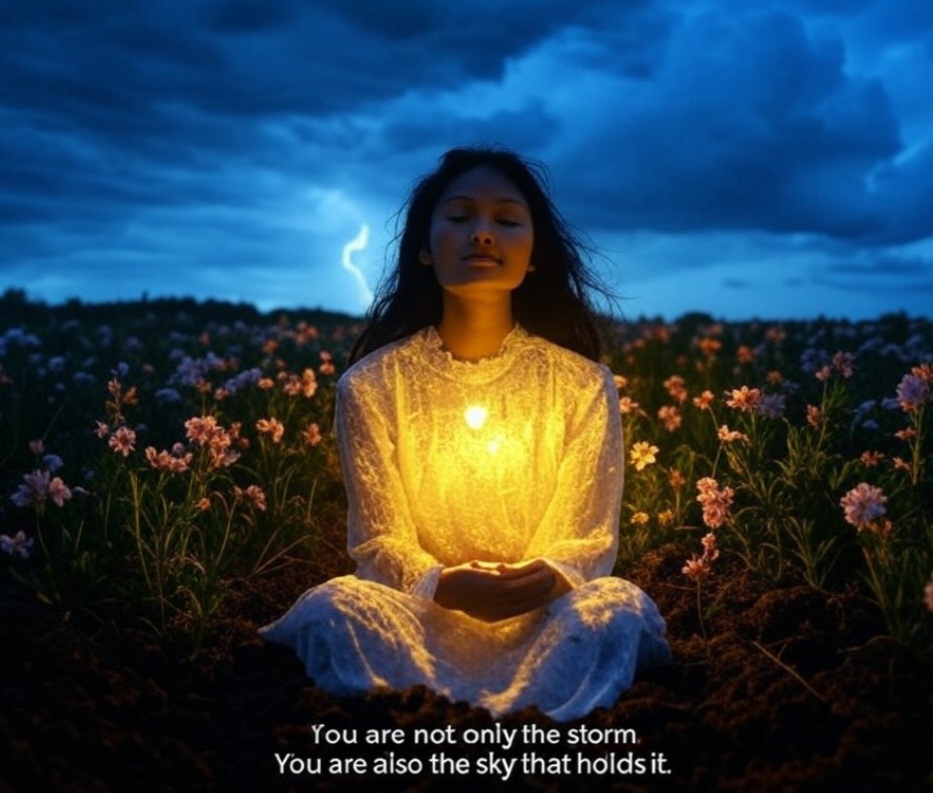
    To live with myalgic encephalomyelitis is to carry a body that moves like weather—one moment heavy with fog, another scattered by electric storms. The limbs, once steady, now whisper of exhaustion; the nervous system hums and flickers like distant lightning. And yet, within all of this, there is a quiet place—one untouched by fatigue, by pain, by the ever-changing tides of illness. This is the witness, the silent presence that watches, feels, but does not struggle.

    The Power of Witnessing Consciousness

    When the body is weary, and the world presses in with its demands, the mind often follows—entangled in frustration, longing, grief. Yet, there is another way to meet this experience. Instead of battling exhaustion, we can turn toward it, gently, with curiosity. Instead of resisting discomfort, we can learn to hold it, like cradling a trembling bird in our hands.

    Witnessing is not about escaping pain but about changing our relationship to it. It is the art of standing at the edge of the storm and seeing not just the thunder, but the vast sky that holds it.

    A Simple Self-Contemplation Practice

    1. Grounding in the Present
      Find a quiet moment. You don’t need perfect stillness—only a willingness to pause. Notice your body, the way it rests against the surface beneath you. Feel the breath, moving in, moving out, like waves against the shore.
    2. Observing Without Resistance
      Turn your attention inward. What is present? Fatigue like heavy earth? A nervous system like sparking wires? A mind that spins, restless and longing? Whatever it is, let it be here. Do not push it away or name it as the enemy. Simply notice.
    3. Holding with Compassion
      Imagine that each sensation is a visitor—arriving, staying for a time, and eventually leaving. What happens if you do not chase them away? What if, instead, you offer a quiet seat at your table?

    Even pain, even exhaustion, when met with this gentle witnessing, begins to soften. Not disappear, but shift—like wind through the trees, no longer trapped, no longer feared.

    How This Practice Supports ME/CFS Symptoms

    This is not a cure, nor a promise of relief, but a way of being with what is. When we meet our experience with openness:

    The nervous system settles; the fight against the body lessens.

    The mind uncoils from frustration and rests in the simple act of seeing.

    The emotional burden lightens, as we stop identifying with suffering and begin to witness it instead.

    Closing Thoughts: The Sky Holds It All

    If today your body feels like a storm, know that you are not only the storm—you are also the sky that holds it. The witness that watches, the stillness beneath the waves.

    And on days when you cannot sit in silence, when exhaustion presses too hard, let even that be witnessed with kindness. The practice is not in perfect stillness, but in the quiet turning toward whatever is here, again and again.

    Rest when you must, breathe when you can, and know that you are not alone.

    🙏🕊🙏

  • Kapalabhati Pranayama: The Shining Forehead Breath

    Kapalabhati Pranayama: The Shining Forehead Breath


    Dear Friend,

    There is a practice in yoga known as Kapalabhati, the “Shining Forehead Breath.” The very name carries with it a sense of poetry and mystery. “Kapala” means forehead, and “Bhati” means light or radiance. Together, they evoke an image of clarity, brightness, and inner illumination. This is no mere exercise but an invitation to cleanse not only the breath but also the mind and spirit, polishing the very space from which insight and intuition arise.

    In ancient times, practitioners likened this breath to polishing a mirror so that it might reflect the light of the divine. Each exhalation sweeps away impurities, and each inhalation invites the brilliance of life itself. To engage in this practice is to embark on a journey into your own radiant stillness.

    Here is how you may begin:

    1. Find Your Seat: Sit comfortably, with your spine straight and your hands resting gently on your knees. Feel the earth beneath you, steady and supportive.
    2. Breathe to Center Yourself: Take 5–7 slow, deep breaths. Let these breaths settle your thoughts and prepare you for the journey ahead.
    3. Engage the Shining Breath:
      • Take a full, deep inhale to begin.
      • Begin a series of sharp, active exhalations through your nose, allowing the inhalations to come naturally and passively.
      • Focus on the rhythm, like the steady beat of a drum, as your abdominal muscles contract with each exhalation.
      Start with 20–30 breaths per round, letting the breath carry you into its natural rhythm.
    4. Pause and Hold: At the end of the round, take a deep inhale. Hold the breath for a moment, feeling the stillness that arises, as if the universe itself has paused with you.
    5. Return to Natural Breathing: Exhale gently and let your breath return to its natural flow. Rest here, simply observing the quiet within.

    This is the essence of Kapalabhati. It is not about striving or achieving but about clearing away what obscures the light already present within you.

    As you continue to practice, you may notice the effects: a sharper mind, a lighter body, and a heart more attuned to the subtle rhythms of life. The breath becomes not just a function but a bridge—connecting you to the luminous self that watches over all.

    In the modern world, where distractions abound and our minds are pulled in countless directions, Kapalabhati offers a sanctuary. It invites you to return to simplicity, to the purity of breath, and to the stillness that holds all things. In this way, it is both a practice for the moment and a gift to carry with you into all moments.

    Dedication of Merit

    At the conclusion of this practice, let us dedicate whatever merit has arisen for the benefit of all sentient beings:

    May whatever merit has been accumulated in this practice flow outward, boundless and unending, for the benefit of all sentient beings.

    May all beings be free from suffering and the causes of suffering.

    May all beings experience happiness and the causes of happiness.

    May all beings awaken to enlightenment and the causes of enlightenment.

    May this moment of intention ripple through the universe, bringing peace, harmony, and light to all.

    Namo Buddhaya, Namo Dharmaya, Namo Sanghaya.

    I leave you with this reflection: Each breath you take is an opportunity to renew, to let go, and to shine. May this practice bring you clarity, lightness, and peace. And may it remind you of the brilliance that has always been yours.

    🙏🕊🙏


  • Exploring Pristine Mind Meditation for Chronic Fatigue Syndrome: A Path to Effortless Rest

    Exploring Pristine Mind Meditation for Chronic Fatigue Syndrome: A Path to Effortless Rest

    “Discover how pristine mind meditation may offer a gentle, restorative state of awareness without the energy costs that often come with post-exertional malaise.”

    Living with Chronic Fatigue Syndrome means every action, every exertion, has a cost. For many, even a few minutes of focus or effort can lead to post-exertional malaise—a profound worsening of symptoms that can last for days. But what if there was a way to rest deeply, to allow the mind to settle in a way that doesn’t deplete but actually nourishes? This is where the practice of pristine mind meditation comes in, offering an effortless awareness that exists beyond thought, beyond strain, and without the toll of traditional exertion.

    Pristine mind meditation is rooted in the idea of simply being. Rather than trying to clear the mind or enter a specific state, it invites you to rest in pure, unaltered awareness. This isn’t an act of concentration or focus, but a gentle allowing—a way to let thoughts and sensations come and go without attaching or resisting. The experience of resting in the pristine mind is often described as spacious, calm, and effortlessly open. For someone with ME/CFS, this could mean a path to real rest without the demand on physical energy that so often comes with other practices.

    Theoretically, because pristine mind meditation is free from physical or mental strain, it offers a way to access peace and stillness without triggering the kind of post-exertional fatigue that can worsen symptoms. It’s an invitation to explore a new way of being with chronic fatigue, where healing is not about doing but about resting in the quiet awareness that’s already within you.

    This journey is a gentle experiment, a compassionate practice of meeting yourself exactly as you are. Whether you experience even a few moments of pristine awareness or simply rest in the intention, the practice becomes a way of honoring the body’s limits and nourishing the mind. Take this path slowly, with openness, knowing that each step is its own quiet gift.

    If you’re curious, I invite you to join in this exploration, allowing yourself to simply rest in the pristine mind, noticing what it brings without expectation or need for change. This is a practice of ease, not of effort—a resting place for the soul amidst the demands of daily life with Chronic Fatigue Syndrome.

    For those interested in going deeper, much of this understanding is inspired by the teachings in Our Pristine Mind by Orgyen Chowang Rinpoche. His book provides a profound exploration of this approach to awareness, offering guidance on accessing the clear, effortless state of the pristine mind. If this resonates with you, I’ll leave a link below to help you find the book and discover more about this gentle, transformative practice.

    In the name of honoring my chronic fatigue syndrome, I’m experimenting with a different approach to healing. I’m trying out the idea that it doesn’t have to be complicated or effortful—that maybe simplicity and gentle choices can be enough. By tending to myself in this way, I’m exploring what it means to honor both my needs and my limitations, and I’m finding that this, too, might be a path to healing.

    I don’t know all the answers, but I’m noticing that healing isn’t always about pushing or doing more. Sometimes, it’s about making a quiet, deliberate choice to conserve energy, to rest, and to be. This journey toward simplicity and ease feels like a step toward well-being, and I’m curious to see where it leads.

    🙏🕊️🙏

    <!– /wp:spacer →

    🙏🕊️🙏

  • Into the Mystic: The Universal Presence Behind All Paths

    Into the Mystic: The Universal Presence Behind All Paths

    There is a timeless pull within the human heart, a pull that mystics across the ages have followed into realms beyond words. At the heart of their journeys, in every tradition, is a shared glimpse of something infinite and intimate, an essence that defies borders or labels. It’s been called by many names—Naked Awareness, Pure Presence, the Kingdom of Heaven within, and simply, I am. Despite the variations, the core is always the same: an invitation to touch the stillness at the center of our being, where all sense of separation quietly dissolves.

    Mystics across traditions—whether Buddhists, Christians, Sufis, or followers of Advaita—have left clues for us, each one pointing back to this same universal awareness. Tibetan Dzogchen, for instance, speaks of Naked Awareness, a mind so utterly clear and open that nothing need be added or removed. In this view, awareness is naturally luminous, like an open sky, vast and untouched by thoughts or concepts. The practice, if it can be called that, is simply to rest—free from striving, free from the need to grasp anything. It is awareness itself, just as it is.

    In the traditions of Advaita Vedanta, Ramana Maharshi posed the question, “Who am I?” Not to point to an answer but to turn us back to a sense of self beyond thoughts and identity. With each inquiry, the seeker’s attention is drawn back, away from thoughts and identities, into a place beyond all definition. This, he taught, is the Self, pure and indivisible—a silent, undivided presence.

    Christian mystics, too, found this universal ground within. “Be still and know that I am God,” whispers a line from the Psalms, urging a quieting of the mind so profound that the divine presence within each of us reveals itself. It is an invitation to encounter God not as an outside force, but as the very heart of our being—the unspoken “I am” beyond thought.

    Sufis describe this experience as a union with the Beloved, a love so profound that all sense of self dissolves. In Sufi poetry, God is the Beloved who lives within, waiting for the self to step aside so that the Divine can be known, not as separate, but as one with all that we are. Each of these traditions, in its way, guides us to an experience beyond the confines of self, into the space where awareness rests in itself, undivided.

    It is not so much a technique or practice as it is a gentle turning inward, a quieting, a surrendering into what has always been here. Let us pause for a moment. The words, after all, can only lead us to the door.

    Begin by finding a comfortable place to sit and close your eyes if that feels natural. Notice the rhythm of your breath and let yourself settle into the present moment. There is nothing to attain here, nothing to change. Let your breath rise and fall as it will, and simply allow yourself to be.

    Gradually, feel into your own presence, that simple sense of “I am.” Not your thoughts, not your sensations, but the awareness that notices them all. Rest in that sense of being here, alive, awake. There’s no need to go further than this. Let go of any sense of searching or effort; simply let your attention melt into the quiet space of awareness itself.

    If thoughts arise, there’s no need to push them away. You might notice them, perhaps softly wonder, “Who is aware of this thought?” Not to seek an answer, but to draw your attention back into the simple awareness that witnesses everything. Rest as that awareness, noticing how it is steady, quiet, and open, beyond anything the mind might hold onto.

    Here, in this openness, lies the mystery that mystics across all traditions have discovered. There is a silent presence here that does not come and go, even as everything else changes. It is the same presence that Dzogchen calls Naked Awareness, Advaita describes as the Self, and Christian mystics know as the divine within. This presence is universal, boundless, and utterly simple. It is the same awareness in everyone, untouched by belief or background.

    As you sit, allowing yourself to rest in this awareness, notice how it has no boundary, no form. It is the same in all beings, a shared presence connecting us all. In this stillness, you are already whole, already free, and deeply one with all. This is where all paths meet—an awareness, vast and simple, that is always here, waiting to be recognized as the essence of everything.

    And so, as we return to our day from this quiet place, we carry a reminder: that beyond every tradition and label, there is a shared, undivided presence—a timeless awareness that each of us holds within.

    🙏🕊️🙏

  • In misunderstanding, there’s an opportunity for growth, and in drama, a chance for peace.

    In misunderstanding, there’s an opportunity for growth, and in drama, a chance for peace.

    Human life is a continuous dance of clarity and confusion, harmony, and discord. It’s the nature of being human to navigate this ebb and flow, constantly seeking meaning, understanding, and connection. This is why practices like contemplation are so vital—they offer a way to touch something timeless and unchanging amidst the drama of existence. They remind us that even in misunderstanding, there’s an opportunity for growth, and in drama, a chance for peace.

    🙏🕊🙏

  • The Mysterious Force of Grace 🕊

    The Mysterious Force of Grace 🕊

    We are called to make our best effort, yet there are moments when something greater lifts us beyond our own abilities. Like an eagle, we can only fly to the capacity of our wings, but on occasion, we soar beyond them. Our desire and effort to connect with God open the door for Divine Grace to take us where we can not go on our own. This interplay between effort and grace reminds us that while we are called to give our all, it’s the mysterious force of grace that allows us to go beyond what we thought possible. It’s a humbling and inspiring truth, one that calls us to act, but also to surrender. In this partnership of effort and grace, we glimpse the transformative power of divine love, leading us closer to God’s will.

    🙏🕊🙏

  • The Art of Perfection: Nothing to Add, Nothing to Take Away

    The Art of Perfection: Nothing to Add, Nothing to Take Away

    Western and Eastern philosophies each offer unique perspectives on perfection. The Western view says, “Perfection is when there’s nothing left to add.” In contrast, the Eastern view says, “Perfection is when there’s nothing left to take away.”

    Both ideas guide us toward simplicity and balance, but the Eastern approach invites us to strip away all that is unnecessary, leaving only the pure essence of what is.

    This perspective is deeply resonant with the practice of sitting at the door of the Cloud of Unknowing. There’s no need to strive, to add meaning, or to make anything happen. The perfection lies in just being—letting go of everything extra until you’re left with the quiet stillness of presence.

    This is a reminder that life’s perfection isn’t about accumulation but about letting go. Rest in what remains when there’s nothing left to take away.

    🙏🕊🙏

  • Into the Mystic: The Wave and the Water – Finding Peace in Aimlessness

    In his gentle and profound way, Thich Nhat Hanh reminds us that we are already what we seek to become. Like a wave searching for water, we often find ourselves running in circles, seeking stability and peace, when in fact we are already made of the very essence we are searching for.

    In the previous post, we reflected on the words, “Be still and know that I am God,” and on the teachings that the Kingdom of God is within us, not something to be sought outside. Thich Nhat Hanh offers a similar invitation to stillness, a reminder that we need not search beyond this moment to touch the Divine. His teachings on apranihita—aimlessness—invite us to stop running after something outside of ourselves. The Buddha is not somewhere far away, hidden behind our efforts; the Buddha is within us, right here, right now. We don’t need to become something else or achieve some great transformation to touch the truth of our being. We only need to stop, to recognize that what we are seeking is already present in us.

    This echoes the Christian mystic path as well, where we are called to enter the stillness, to trust in the unfolding of the Divine presence within. St. John of the Cross speaks of surrendering into the Divine presence that is always here, guiding us without the need for striving. The great mystics remind us that the more we seek, the further we may feel from the truth. Yet when we stop seeking, when we allow ourselves to simply be, we find that the Kingdom of God is already here, waiting for us in the stillness of our own hearts.

    Thich Nhat Hanh’s teachings give form to this same truth. He uses the image of a wave to help us understand that we are not separate from what we seek. Just as the wave is made of water, we too are made of the very essence we long to touch. The wave doesn’t need to run after the water; it is already water. The black cloud doesn’t need to become a white cloud; it only needs light to shine on it, revealing what was always there. In the same way, we don’t need to become something else to experience peace. We need only to stop, to rest in the awareness of who we already are.

    As both Sri Nisargadatta Maharaj and Papaji have taught, the very act of searching can take us further from what we seek. Papaji even wrote a book titled Call Off the Search, emphasizing that the more we search, the more we reinforce the illusion that the truth is somewhere else. This persistent search keeps us from realizing the truth that is already right here, right now. By continuing to look outside of ourselves, we create a sense of distance, when in reality there is no distance at all—only the stillness of the present moment, where what we seek has always been.

    “You are already what you want to become,” Thich Nhat Hanh says. Yet we spend much of our lives not believing this truth, searching for happiness, fulfillment, and wisdom outside of ourselves. Whether it’s the Kingdom of God, Buddha-nature, or enlightenment, we chase after these ideas as though they are separate from us. But all of the great teachers—whether it be Jesus, the Buddha, or St. John of the Cross—urge us to look within. They tell us that when we stop running after what we already are, we can finally rest in the truth that has always been there.

    This is what Thich Nhat Hanh calls aimlessness. The practice of aimlessness is to no longer place something in front of you to chase after. It is to recognize that everything you are searching for is already here. By stopping the search, by becoming still, we can touch the wonders of life that are already present in this moment.

    In one of his talks, Thich Nhat Hanh describes this stillness beautifully: “The Kingdom of God, the Pure Land of the Buddha, is available in the here and now.” He reminds us that happiness is found in the simple things—a rose, the fresh air, a loving smile. Like the wave that need not search for water, we need only to stop and recognize the treasures already around us, treasures that we so often miss because we are running in circles.

    Thich Nhat Hanh teaches that walking meditation can be a wonderful way to practice this stopping, this resting in the here and now. Each step is not taken with a sense of rushing to arrive somewhere, but with the awareness that we are already where we need to be. With each step, we arrive fully in the present moment, touching the peace, the beauty, and the wonder that is always available. It is a practice that brings us back to the present, back to ourselves, and back to the truth that there is nothing to attain.

    “You don’t need to become a Buddha,” Thich Nhat Hanh says, “You are already a Buddha.” You don’t need to search for the Divine; the Divine is already within you. It is only when we stop running that we can finally touch this truth. Like the black cloud that becomes a white cloud when the light shines upon it, we are transformed by the simple act of recognition. In the stillness of aimlessness, we realize that there is no distance between us and what we seek.

    As we continue our contemplative journey, may we learn to embrace the wisdom of aimlessness. May we stop chasing after what is already here, within us. And in that stopping, may we find the peace, the joy, and the freedom that comes from recognizing that we have always been enough.

    🙏🕊️🙏

  • Sitting at the Door: A Buddhist and Mystical Practice

    Sitting at the Door: A Buddhist and Mystical Practice

    The Cloud of Unknowing teaches us to sit at the door of divine mystery, letting go of effort and surrendering to grace. This mirrors profound teachings in the Buddha Dharma, emphasizing direct experience, trust, and stillness.

    The Buddha’s phrase “Ehi Passiko” (Come and see) invites us to encounter truth directly—not through intellectual striving, but through quiet observation. In the Satipatthana Sutta, mindfulness is described as simply observing the body, feelings, and mind as they arise, with no need to grasp or resist.

    This is like sitting at the door of unknowing: allowing thoughts, emotions, and sensations to come and go, while resting in awareness. We are not called to force understanding or make something happen; we simply sit, trusting the process.

    Another Buddhist teaching, Vossagga (letting go), encourages us to release grasping and surrender to the natural flow of life. Even the ego’s restlessness becomes part of the practice, not something to fight against. As we trust the unfolding of awareness, stillness grows.

    This gentle practice reminds us that neither the ego nor effort creates transformation—it is the natural interplay of surrender and grace. Whether we call it divine love or pristine awareness, sitting at the door reveals a deeper truth.

    How can you embrace this today? Simply sit. Let go. Trust.

    #Contemplation #Mindfulness #CloudOfUnknowing #Buddhism #Stillness #Grace

    🙏🕊🙏

  • Renewal in Stillness: The Quiet Strength of Sitting at the Door

    Renewal in Stillness: The Quiet Strength of Sitting at the Door

    In a world that celebrates action, stillness offers a different kind of renewal. Sitting at the door of unknowing—open, patient, and without expectation—allows a subtle yet profound transformation.

    Renewal doesn’t have to mean physical strength or outward achievements. It can be the quiet resilience to face life’s challenges, the emotional peace to let go of striving, and the trust to simply be.

    In this practice, strength is not about doing more but about surrendering more deeply. Renewal arises not from effort but from grace, gently unfolding as you rest in the simplicity of presence.

    Sitting at the door is enough. Renewal comes when we stop chasing it and allow it to find us.

    🙏🕊🙏

  • Into the Mystic: Embracing Impermanence, Resting in Awareness

    As I sit here in my yard, under the shade of tall trees and a sky so vast, I am reminded of the gentle teachings of impermanence. The pratyayas, those rising and falling sensations, memories, and thoughts, have once again surfaced, but they do not hold the weight they once did. Instead, there is a soft awareness that everything is already changing, and that in the grand scheme of time, everything is already gone.

    I look over at my RV, which has been a sanctuary for me for so many years. Soon, this land will become something else, transformed into a clubhouse. And yet, in this moment, I am filled with deep appreciation for what has been, for the unconscious and conscious years spent on this blessed earth. The impermanence of it all doesn’t bring sadness, but rather a profound gratitude for having lived through it, both mindfully and unmindfully.

    Namkhai Norbu’s sky-gazing practice teaches us to rest in the awareness of what is, without grasping or rejecting. In these moments of contemplation, I’m reminded that sky-gazing isn’t about observing the physical sky but allowing the mind to open into its own natural spaciousness. The practice reflects what is already within—clear, vast, and untouched by the clouds of thought.

    As pratyayas of impermanence arise, they are met not with resistance but with curiosity. Curiosity has become my companion on this contemplative path, gently guiding me to rest in awareness without the need for answers or conclusions. There is no longer a push for meaning, only the quiet observation of the present moment unfolding, just as it is.

    In this state of being, I can feel both the impermanence of the physical world and the abiding stillness of awareness. It is a paradox, and yet it is also the simplest truth: everything changes, and yet awareness remains the same.

    The teachings of St. John of the Cross, Ramana Maharshi, and Namkhai Norbu all point to this truth in their own ways. We move through life, through our spiritual practices, sometimes seeking, sometimes grasping for deeper experiences. But there comes a moment when we simply stop, when we rest in the spaciousness that has always been there. It is not a state we attain; it is a state we remember.

    As I continue this practice, I feel a deep gratitude, not just for the present moment, but for all that has been and all that will come. And in this gratitude, the pratyayas seem to soften, leaving behind the quiet awareness that is always there, patiently waiting for us to return.

    🙏🕊️🙏

  • The Sacred Shift: From Seeking to Being

    Following the path of meditation can feel like a gradual unraveling of the known—a shedding of what we once held onto, leading us into the mystery of contemplation. As I continue reflecting on the works of St. John of the Cross, this sacred shift from meditation into contemplation becomes clearer. It is not a step we take with effort but a grace that gently unfolds when the time is right.

    St. John speaks of this transition as a call to surrender, but it is not the kind of surrender we can will into existence. Instead, it is a letting go that happens when we stop striving, when we allow ourselves to simply rest in the presence of the Divine. This is where the familiar practices of meditation—focused attention, mental inquiry, or breath awareness—fall away, giving space for something more profound to emerge.

    Today, I felt this shift more deeply, not as an intellectual understanding, but as a living experience. The pratyayas—the thoughts, sensations, and memories that rise and fall—became like whispers, their pull softening in the presence of curiosity. This curiosity is not the kind that seeks answers, but one that witnesses, without needing anything to happen. In that gentle witnessing, something new emerged: a spaciousness, a quiet stillness that felt like home.

    This experience is not unique to Christian mysticism. In Advaita Vedanta, the practice of self-inquiry often begins with a repetitive questioning—”Who am I?”—an active search for truth. But, as with St. John’s teachings, there comes a time when even the inquiry must dissolve into silence. The seeker steps back, not into a place of knowing, but into a place of being. In that being, all effort falls away, and we are left with the pristine awareness that has always been there.

    In silence, love calls,

    No longer through words or thought,

    But in quiet grace.

    This is the threshold between seeking and being, a place where the Divine does its quiet work in us. It is no longer about striving or yearning for a deeper experience; it is about trusting in the unfolding of love, which asks only that we rest in its presence.

    For those of us on this journey, may we continue to trust this sacred shift—moving from meditation into contemplation, from seeking into being. In this silent surrender, we come closer to the essence of who we truly are.

    🙏🕊️🙏