Category: Teachers and Masters of the Buddha’s Path

This category is dedicated to the revered masters, teachers, Rinpoches, Lamas, and Tulkus from across the diverse traditions of Buddhism. These spiritual guides have played pivotal roles in preserving, transmitting, and evolving the teachings of the Buddha, offering wisdom, compassion, and guidance to countless practitioners on the path to enlightenment.

Within this category, you will find explorations of the lives and teachings of influential figures from all schools of Buddhism, including the profound insights of Zen masters, the compassionate guidance of Tibetan Lamas, the wisdom of Theravada monks, and the expansive vision of Mahayana Bodhisattvas. These teachers, each with their unique approach and perspective, collectively embody the richness and diversity of the Buddha’s Dharma.

Whether you are drawn to the meditative practices of Zen, the devotional path of Pure Land, the philosophical depth of Mahayana, or the intricate rituals of Vajrayana, this category provides a comprehensive look at the spiritual leaders who have shaped these traditions. Here, you can explore their teachings, their impact on the world, and their continuing influence on the practice of Buddhism today.

Join us in honoring the legacy of these great teachers, whose lives and wisdom continue to inspire and guide those seeking to walk the path of the Buddha.

  • The Radiance of the White AH: A Buddhist Bedtime Story of Guru Yoga

    The Radiance of the White AH: A Buddhist Bedtime Story of Guru Yoga

    On a quiet night, beneath a sky filled with shimmering stars, little Tenzin lay nestled under his blanket. The soft glow of the hearth flickered across the room, and beside him sat his grandmother, whose voice was as soothing as the wind moving through prayer flags on the mountaintop.

    “Tonight, my little one,” she whispered, “I will tell you a very special story. It is about a practice called the Guru Yoga of the White AH—a practice that can help us remember the deepest truth of who we are. It is the most beautiful of all practices, because it leads us back to the light that has always been inside us, the light of our true nature.”

    Tenzin snuggled deeper into his blanket, his heart already softening. He knew that whenever his grandmother told a story, it carried not just words, but a magic that could be felt deep in the heart.

    “Long ago,” Grandmother began, “there was a wise teacher named Namkhai Norbu, who understood that many people felt lost on their spiritual paths. They tried to follow many practices, each one like a step on a long staircase, but the more steps they climbed, the more tired they became. Namkhai Norbu smiled kindly and said, ‘You do not need to climb endless steps. There is a single path that leads directly to your true nature—the Guru Yoga of the White AH.’

    ‘This practice,’ he said, ‘is like a single, bright thread that weaves through all the other teachings. By chanting the sound AH, you connect directly with the heart of all wisdom, all love, and all peace. It is the simplest practice, and yet it contains everything.’”

    Tenzin listened quietly, his breath soft and steady. “Grandmother,” he whispered, “what does AH mean?”

    Her eyes twinkled as she answered. “AH is the sound of pure being,” she said. “It is the sound of resting deeply in your true self—beyond thoughts, beyond worries, beyond trying to be something you are not. When you chant AH, it is like opening a door into a vast, open sky. There, you discover that you are not separate from anything. You are already one with the light of the universe, just as a wave is never separate from the ocean.”

    Grandmother leaned closer, her voice becoming soft as a lullaby. “Imagine, little Tenzin, a soft white light glowing gently in your heart, like the light of the moon reflected on a still lake. This light is the essence of your true nature—pure, peaceful, and radiant. Now, imagine chanting the sound AH from deep within your heart. As you chant, the white light begins to grow, filling your chest with warmth and joy.”

    Tenzin closed his eyes, imagining the soft white light blooming in his heart. He took a gentle breath and whispered, AH… He felt a small sense of peace spreading through him, like a breeze carrying the scent of flowers.

    “And now,” Grandmother continued, “imagine that with every chant of AH, the light in your heart radiates outward, filling your whole body. Your head, your hands, your feet—all are filled with this soft, white light. And as you chant AH again, the light begins to shine beyond your body, flowing out in all directions, like beams of sunlight reaching every corner of the world.”

    Tenzin smiled, feeling the light inside him growing brighter, as if his heart were shining like a little sun.

    “Each time you chant AH,” Grandmother whispered, “the light spreads farther and farther—into the sky, over the mountains, through the rivers, and into the hearts of every being. But here is the most wonderful secret: The light does not come from outside you. It is already within you, waiting to be remembered. Chanting AH simply helps you see the truth that has always been there—that you are already one with the light, the love, the peace of the universe.”

    Tenzin imagined the white light flowing through the entire world, like water filling every stream, every river, every ocean. And as the light touched the hearts of others, he saw that it sparked new lights in them, too. One light became two, and two became many, until the whole universe was glowing with the same soft radiance.

    “This is the essence of Guru Yoga,” Grandmother said tenderly. “It is the practice of remembering that you are not separate from the light, not separate from love, not separate from anything. When you chant AH, you awaken to the truth that you are already whole, already free. And each time you remember this, the light within you shines a little brighter, helping others remember their light too.”

    Tenzin felt a deep warmth in his chest, as if the white light were wrapping him in a soft embrace. He whispered the sound again: AH… AH… With each repetition, he felt more peaceful, more connected to everything around him, as if the boundaries between himself and the world were melting away.

    “Grandmother,” he whispered, “is this light always with me, even when I forget?”

    “Yes, my little one,” she said with a smile. “The light is always there, like the sun shining behind the clouds. Even on days when you feel sad, tired, or lost, the light never leaves you. And each time you chant AH, you clear away the clouds, letting the light shine once again.”

    Grandmother kissed Tenzin’s forehead and offered a final blessing:
    “AH… May your heart always remember its light.
    AH… May your breath carry peace to every corner of the world.
    AH… May you rest in the truth of who you are—boundless, radiant, and free.”

    And with that, Tenzin drifted into a deep, peaceful sleep, carried by the gentle rhythm of the mantra. In his dreams, he saw white light flowing from his heart, spreading across the sky, touching every star, and filling every heart with peace. He dreamed that with every whisper of AH, more lights appeared, until the whole universe shone with the same boundless love.

    May the sound of AH guide you always, helping you remember the light that lives within you and within all beings. Sleep well, knowing that you are already one with the truth, the peace, and the love of the universe. The light is always here.

    Goodnight, little one. ❤️

    🙏🕊️🙏


    If you’d like to explore more bedtime stories for children, including tales that nurture compassion and mindfulness, you can find our collection here.



  • Living a Meaningful Life: Insights from the Dalai Lama

    Living a Meaningful Life: Insights from the Dalai Lama

    In his gentle yet profound way, the Dalai Lama reminds us that life is meant to be lived meaningfully. The essence of such a life, he says, lies not just in personal contentment but in creating happiness and peace for others. His teachings have always resonated deeply, not only with Buddhists but with anyone seeking a life of purpose.

    “I believe our sort of life, that period should utilize meaningful life,” he begins. He emphasizes that a truly meaningful life extends beyond self-gratification. It is about fostering joy, promoting peace, and creating an atmosphere where others may thrive.

    The Dalai Lama expands on what it means to live meaningfully: “Meaningful life means bringing happiness to more people, creating a happier, more peaceful atmosphere.” It’s a reminder that our actions—no matter how small—can contribute to a larger wave of kindness and serenity in the world. He urges us to see that in offering happiness to others, we ultimately fulfill our own quest for meaning.

    Two Important Truths


    In his teachings, the Dalai Lama shares two foundational principles. First, he reminds us of our shared humanity: “We are all the same human being.” This recognition is critical in our divided world. We all seek happiness, we all wish to avoid suffering, and in this shared experience lies the opportunity to cultivate compassion. By understanding that we are more alike than different, we can bridge the gaps of division and find common ground in our inherent humanity.

    The Power of Inner Values


    The second truth he shares with us is equally essential: “We should not forget or neglect about our inner values.” The Dalai Lama stresses that while external success may bring momentary satisfaction, it is our inner values that truly define a meaningful life. And what is the core of these inner values? It is human compassion.

    “In other words, human compassion. That is the main thing of our inner value.” Compassion, he explains, is the very foundation of all virtuous actions. It is through compassion that we connect with others, dissolve our differences, and contribute to a more harmonious world. This compassion extends beyond mere feelings—it is a practice, a way of living that enriches both ourselves and those around us.

    🙏🕊️🙏

  • The Medicine of the Mantra: A Bedtime Story of Chenrezig and OM MANI PADME HUM

    The Medicine of the Mantra: A Bedtime Story of Chenrezig and OM MANI PADME HUM


    Chenrezig shares the story of OM MANI PADME HUM with children, guiding them to uncover their inner compassion and wisdom. A perfect bedtime story filled with peace, warmth, and unity.


    Long ago, in a beautiful land where the mountains touched the sky and rivers flowed like silver ribbons, there lived a wise and compassionate teacher named Chenrezig. He had a twinkle in his eye, as if he knew a great secret, and his heart was so full of love that just being near him made people feel lighter. But Chenrezig knew that many beings in the world carried an invisible burden—an illness of the mind, one that made them forget who they truly were.

    This illness, Chenrezig explained, was a kind of forgetting. “We have all mistaken ourselves for something we are not,” he said gently. “Like a dreamer who believes the dream is real, we have forgotten our true nature—the vast, boundless love and wisdom that live in our hearts. Instead, we believe we are small and separate, like waves forgetting they belong to the ocean.”

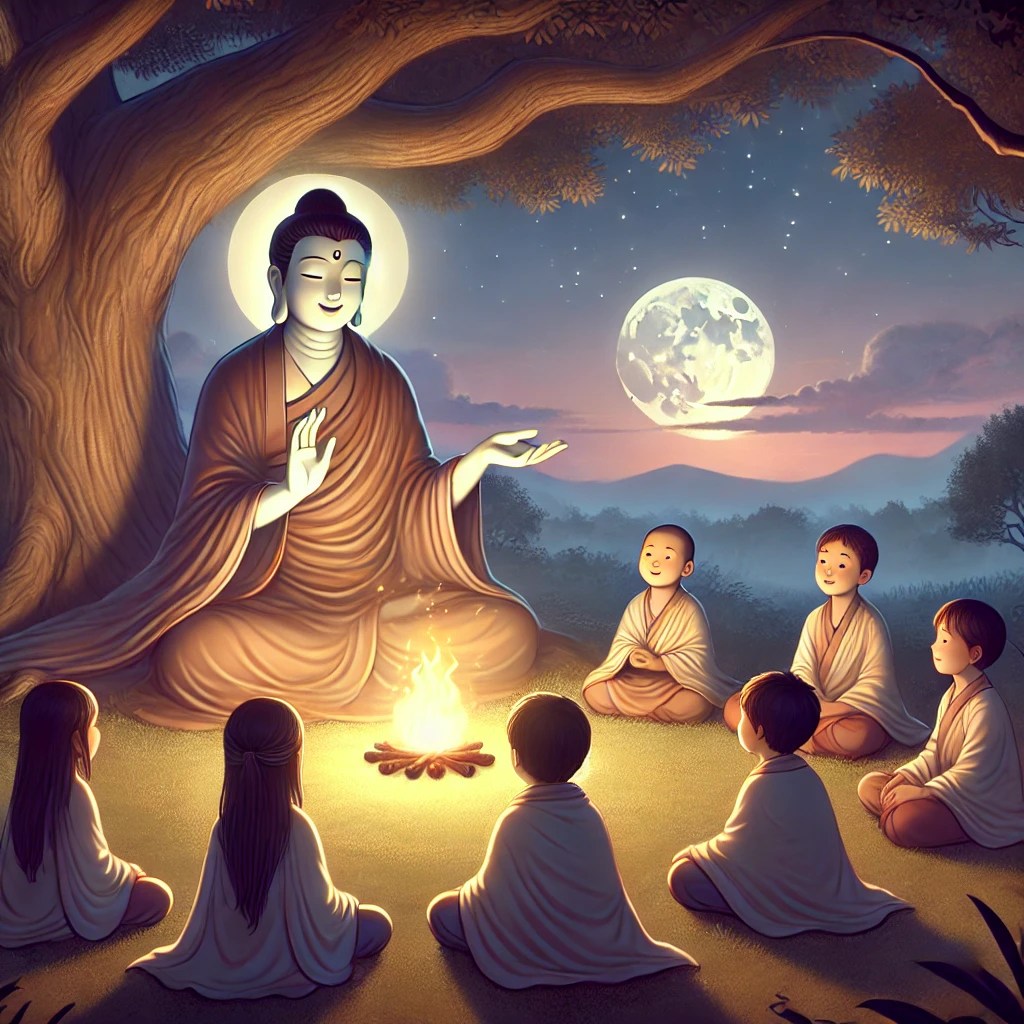
    Chenrezig often told stories to children, knowing that their hearts could understand what adults often forgot. One evening, as the stars glimmered softly above, Chenrezig gathered a group of children around a fire. They looked up at him with curious eyes, waiting for one of his famous stories.

    “Tonight,” Chenrezig said, “I will tell you a story about a great medicine—a medicine for the heart and mind. It is the mantra OM MANI PADME HUM. This mantra is like the most powerful medicine a doctor could ever give, one that can heal the illness of separation and help us remember our true nature.”

    He paused, watching the children lean in closer, eager to hear more. “But first,” he continued, “you need to understand something important. Imagine that you are wearing many layers of clothing—so many layers that you forget what you look like underneath. Each layer is like a thought or feeling you tell yourself: I’m not good enough. I need to be better.

    These layers are like cobwebs in the mind, making it hard to see clearly. And because we believe in these stories, we feel small and alone, like a candle separated from the flame. But the truth is, we are not the stories we tell ourselves. Beneath all the layers, beneath all the cobwebs, we are already whole, already perfect—just like a lotus flower, waiting to bloom.”

    The children sat very still, imagining themselves wrapped in layers of thoughts, feelings, and stories. “How do we take off the layers?” one of them whispered.

    Chenrezig smiled. “That is where the mantra comes in,” he said softly. “OM MANI PADME HUM is the medicine that clears away the layers, like a soft breeze sweeping away cobwebs. Each time you say the mantra, you peel back another layer. OM MANI PADME HUM… and the layers fall away. OM MANI PADME HUM… and your heart shines a little brighter. OM MANI PADME HUM… and with each breath, you get closer to your true self—your Buddha nature, the part of you that is pure love and compassion.

    He began to explain the meaning of the mantra, his voice gentle and full of care. “The first syllable, OM, is the sound of the universe waking up. It reminds us that we are connected to everything—to the stars, the rivers, the animals, and each other. OM is the sound of coming home to our true nature.”

    The children closed their eyes, listening to the sound of OM as if it were rising from the earth, the sky, and their own hearts all at once.

    “The next two words,” Chenrezig continued, “are Mani Padme—the jewel in the lotus. This means that inside each of us is a precious jewel—the light of wisdom and love. But just like a lotus flower that grows in muddy water, this jewel can be hidden by layers of thoughts and beliefs. Each time we chant Mani Padme, we open the lotus a little more, revealing the jewel inside.”

    The children imagined a lotus flower blooming in their hearts, each petal unfolding slowly, with a bright jewel glowing at its center.

    “And finally,” Chenrezig said, “we have Hum. This is the sound of unity—the sound that brings everything together. It is the moment when we remember that we were never separate, not from others, not from love, and not from our true nature. Hum is the sound of the Buddha mind awakening within you, shining with pure compassion.”

    The children whispered the mantra softly: OM MANI PADME HUM… OM MANI PADME HUM… Each repetition felt like a breeze clearing away the cobwebs in their minds, helping them feel lighter and brighter.

    “Now,” Chenrezig continued, “let me tell you one more secret. The mantra doesn’t just help you remember who you are—it helps others too. Every time you chant OM MANI PADME HUM, you are planting seeds of compassion, not just in your own heart, but in the hearts of all beings. These seeds will bloom in ways you may never see, bringing kindness and peace into the world.”

    He placed a hand over his heart. “It’s like sharing a gift that never runs out. Each time you say the mantra, you are offering love to the whole universe.”

    The children sat quietly for a moment, feeling the beauty of the mantra settling into their hearts, like a gentle rain nourishing the earth. “So the mantra is like a magic medicine?” one child asked softly.

    Chenrezig smiled. “Yes,” he said. “It is a medicine for the heart, a way of peeling back the layers until only love and wisdom remain. It helps us remember that we are not small or separate—we are like the ocean, vast and full of life. And each time we chant the mantra, we bring a little more light into the world.”

    As the fire crackled softly, casting warm orange light on their faces, Chenrezig leaned closer to the children. “Now, as you drift off to sleep tonight, you can let the mantra carry you, like a boat floating gently down a river. Whisper it in your heart: OM MANI PADME HUM… OM MANI PADME HUM… Let it peel back the layers of your mind, revealing the jewel of compassion that has always been there.”


    He kissed each child on the forehead and offered a final blessing:

    OM MANI PADME HUM . . .

    With each breath, may you awaken to your true nature.

    With each dream, may your heart bloom in kindness.

    May all beings remember their light, and may the world be filled with peace.

    The mantra hummed softly in their hearts: OM MANI PADME HUM, OM MANI PADME HUM… clearing away the cobwebs, layer by layer, revealing the truth that they were never separate, but always part of the great ocean of love.

    May your hearts always shine with the light of compassion, and may OM MANI PADME HUM guide you, now and always. Sleep well, children. The jewel in the lotus is already blooming within you.

    As the children drifted into a peaceful sleep, the mantra whispered in their hearts… OM MANI PADME HUM… until their dreams were filled with rivers of kindness, endless skies of compassion, and the light of love.

    Goodnight, little one. ❤️

    🙏🕊️🙏


    If you’d like to explore more bedtime stories for children, including tales that nurture compassion and mindfulness, you can find our collection here.


  • Poem: Look to the Moon

    The finger points to where the moon does shine,
    But gaze not at the hand that beckons you.
    Let go the grasp of thoughts that claim as mine,
    And turn your sight to what is pure and true.

    Ramana speaks of Self, the quiet core,
    Where all the world and mind do gently fade.
    Orgyen’s Pristine Mind, and Buddha’s lore,
    Reveal the light that nothing can degrade.

    In God’s vast silence, there you’ll find the key,
    A truth that words and thoughts cannot contain.
    Release the need to seek, just let it be,
    For in the stillness, all is clear and plain.

    Stop searching for the truth outside, afar,
    The moon is shining, constant in the night.
    Turn inward now and see just where you are,
    The light you seek is your own inner light.

    Midnight.
    No waves,
    No wind,
    The empty boat
    Is flooded with moonlight.


    — Zen Master Dogen

    🙏🕊️🙏

  • Understanding the Roots of Religious Tensions: A Historical Perspective on Divine Righteousness Across Cultures

    As we embark on our journey through the Caravan of Love: Interfaith Healing & Harmony, it’s essential to explore the historical and cultural contexts that have shaped the way different religions view the divine. One of the most significant sources of tension between religious traditions has been the concept of idol worship and the worship of multiple gods. However, when we delve deeper into the origins of these beliefs, we begin to understand that these tensions are rooted in the specific environments and challenges faced by different cultures throughout history.

    The Middle Eastern Context: A Response to Immoral Gods and Practices

    In the ancient Middle East, where Judaism emerged, the surrounding cultures were steeped in polytheistic traditions that often depicted gods as capricious, immoral, and even lecherous. Greek, Roman, and Egyptian gods were frequently portrayed with very human flaws—engaging in deceit, vengeance, and licentious behavior. These gods, rather than upholding moral standards, often embodied the very vices that righteous living seeks to overcome.

    Moreover, the religious practices associated with these gods often included sexual immorality and human sacrifice. In many Greek and Roman rituals, orgies were part of the religious celebrations, which directly conflicted with the moral and ethical standards that Hashem, the God of Israel, sought to establish among His people. Jesus, too, later condemned these practices, warning his followers against participating in meals that involved food sacrificed to idols, which were often associated with these immoral rites.

    Even more abhorrent were the human sacrifices demanded by certain gods, such as Baal, who was worshipped through the sacrifice of children, and the gods of the Vikings and various other cultures that practiced human sacrifice. These practices were utterly condemned by Hashem, who sought to establish a community founded on the principles of justice, compassion, and the sanctity of human life. The strict prohibition against idol worship in Judaism was not merely a rejection of other gods but a rejection of the immoral behaviors and dangerous practices associated with them.

    The Hindu Context: Righteous Deities and the Dharma

    In contrast, the religious environment of ancient India, where Hinduism flourished, presented a very different picture. The gods and goddesses of the Hindu tradition were seen as embodiments of various aspects of the divine, each playing a role in upholding cosmic order—known as dharma. These deities, such as Vishnu, Shiva, and Lakshmi, were revered not for their power alone but for their embodiment of virtues like love, wisdom, and righteousness.

    While animal sacrifices were part of some ancient Hindu rituals, there is little evidence to suggest that human sacrifice was a practice in India, especially in the Vedic tradition that laid the foundation for Hinduism. The sacrifices performed in these rituals were meant to uphold cosmic order, not to appease bloodthirsty gods. As such, the multitude of Hindu deities was not a source of moral confusion but rather a rich tapestry through which the divine expressed itself in the world. Each god or goddess offered a different path or approach to understanding and connecting with the divine, but all were aligned with the principles of dharma. Therefore, the prohibition against worshipping other gods, so essential in the Middle Eastern context, was unnecessary in India, where the divine was seen as inherently righteous and benevolent in its many forms.

    The Role of Reformers: Jesus and Buddha

    In both of these cultural contexts, reformers emerged who sought to elevate the spiritual and moral consciousness of their societies. In the Middle East, Jesus entered a world where the strict monotheism of Judaism had established a strong moral foundation. However, Jesus’s teachings went further, emphasizing love, compassion, and forgiveness as central to righteous living. His life and message aimed to deepen and expand the moral and spiritual understanding of his followers, guiding them toward a more profound relationship with the divine.

    Similarly, in India, the Buddha emerged in a society that already had a strong foundation of righteousness through the Vedas and the Upanishads. However, the Buddha’s teachings challenged the social inequalities of the time, particularly the rigid caste system and the exclusion of certain groups from spiritual life. Like Jesus, the Buddha sought to elevate society by emphasizing compassion, ethical living, and the pursuit of enlightenment for all, regardless of social status.

    Understanding the Clash of Religions: A Matter of Context

    The tension between monotheistic and polytheistic traditions often stems from these differing historical contexts. The Jewish rejection of other gods was a response to the immoral behaviors associated with the gods of neighboring cultures. In contrast, the Hindu acceptance of multiple deities was rooted in a context where the divine was already understood as righteous and aligned with cosmic order.

    Today, these ancient tensions can still influence how religions interact with each other. However, by understanding the historical reasons behind these differences, we can move beyond conflict and toward a more harmonious coexistence. We can recognize that the rejection of other gods in one context was not necessarily a rejection of divinity in all forms but a response to the specific moral challenges of that time.

    Conclusion: Moving Toward Interfaith Healing and Harmony

    In our modern, interconnected world, it’s more important than ever to understand and respect the diverse ways in which different cultures and religions have approached the divine. By exploring these historical contexts, we can appreciate the unique contributions of each tradition while finding common ground in the shared values of love, righteousness, and compassion.

    As we continue on this Caravan of Love, let us remember that the ultimate goal of all spiritual paths is to bring about healing and harmony—not just within ourselves, but in our relationships with others and the world around us. Through understanding and dialogue, we can bridge the gaps between different faiths and move closer to a world where all are respected and all are loved.

    🙏🕊️🙏

    Screenshot

    Jesus of Nazareth, the embodiment of divine love and compassion, whose teachings on forgiveness, mercy, and selfless service continue to inspire millions across the world.

    Screenshot

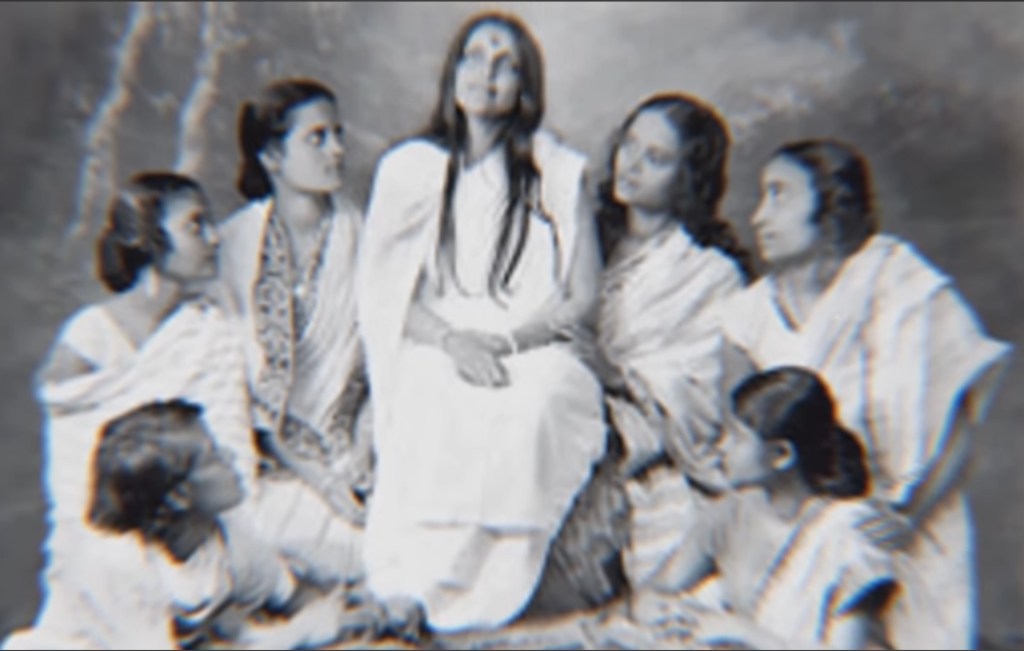
    Anandamayi Ma, a revered Hindu mystic, exemplifies the divine love and spiritual wisdom that have been central to Hindu tradition for centuries.

    Paramahansa Yogananda, the great spiritual teacher and author of ‘Autobiography of a Yogi,’ brought the wisdom of India’s ancient spiritual traditions to the West, inspiring countless seekers with his teachings of love, self-realization, and the unity of all religions.

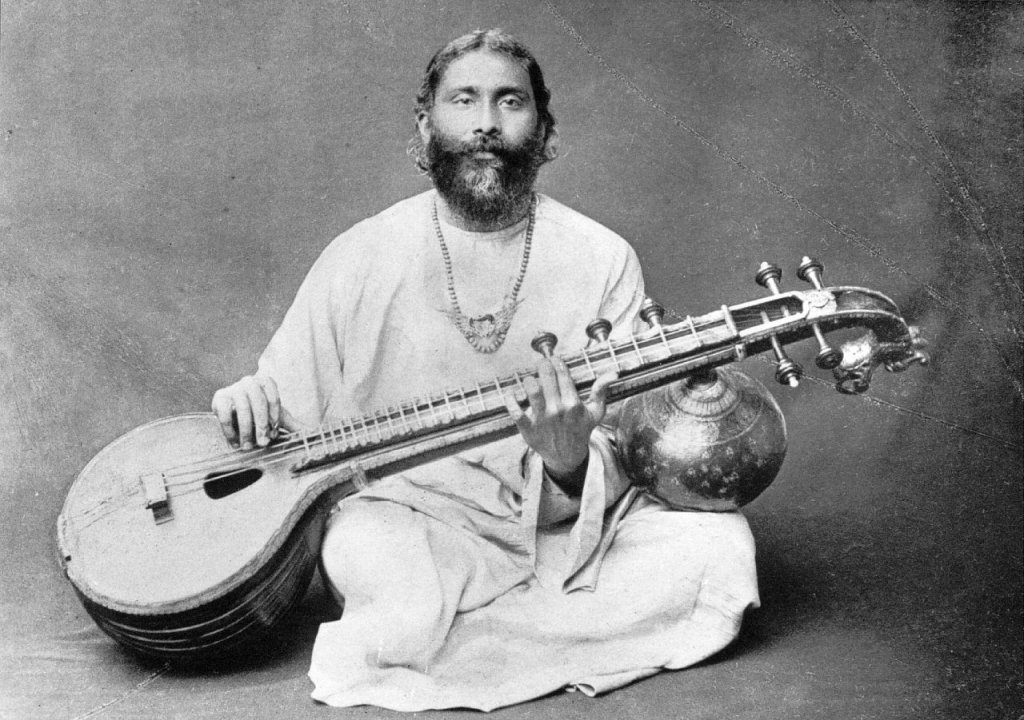
    Hazrat Inayat Khan, a revered Sufi mystic and musician, whose teachings on the unity of religious ideals and the harmony of divine love have inspired countless souls on their spiritual journeys.

    His Holiness the Dalai Lama, a global symbol of peace, compassion, and the enduring wisdom of the Buddhist tradition, whose teachings inspire the world toward kindness and universal responsibility.

    Ani Choying Drolma, a Tibetan Buddhist nun and internationally acclaimed singer, whose music and teachings spread the message of compassion, peace, and the profound wisdom of the Buddha’s path.

    “The lamps are different, but the Light is the same.”


    — Rumi

  • Book Review: “The Crystal and the Way of Light: Sutra, Tantra, and Dzogchen” by Namkhai Norbu

    Exploring the Parallels Between Tibetan Dzogchen and the Teachings of Jesus

    Namkhai Norbu’s “The Crystal and the Way of Light” serves as a profound introduction to the ancient teachings of Tibetan Buddhism, particularly Dzogchen. In this book, Norbu presents the essence of Dzogchen as a path that emphasizes the direct recognition of our true nature, transcending the complexities of conceptual thought and practices.

    Dzogchen and the Teachings of Jesus: A Spiritual Parallel

    What makes this book particularly compelling is how its core principles resonate with the teachings of Jesus. At the heart of Dzogchen lies the understanding of our innate purity and the inherent clarity of our minds. This is akin to Jesus’s teachings about the Kingdom of God being within us (Luke 17:21). Both traditions encourage a direct, experiential understanding of our true nature.

    The Innate Purity of Mind

    In Dzogchen, the mind is often likened to a crystal—naturally pure and clear, yet often obscured by the transient stains of thoughts and emotions. This parallels Jesus’s teachings on purity of heart: “Blessed are the pure in heart, for they shall see God” (Matthew 5:8). Just as Dzogchen practitioners seek to recognize and rest in the natural state of their mind, Christians are called to seek purity of heart to experience the divine presence.

    The Path of Immediate Recognition

    Dzogchen emphasizes the immediate recognition of one’s true nature without the need for elaborate practices or rituals. This echoes Jesus’s message of simplicity and directness in spiritual practice. He taught, “When you pray, go into your room, close the door and pray to your Father, who is unseen. Then your Father, who sees what is done in secret, will reward you” (Matthew 6:6). Both paths advocate for an intimate, direct connection with the divine, free from external distractions.

    Embracing Compassion and Love

    Compassion is a cornerstone of both Dzogchen and Jesus’s teachings. Dzogchen encourages practitioners to cultivate bodhicitta, the compassionate wish to attain enlightenment for the benefit of all beings. Similarly, Jesus commanded, “Love your neighbor as yourself” (Mark 12:31). This universal call to compassion bridges both traditions, highlighting the importance of love and kindness in the journey toward spiritual awakening.

    Emphasizing Respect and Clarity of Intent

    This article aims to foster respect and understanding between different spiritual traditions. It is not intended to equate Dzogchen with Christian teachings or suggest blending the two into a single cohesive belief system. Instead, it highlights resonances and shared values that can promote mutual appreciation and dialogue. The intention is to encourage exploration and respect for spiritual wisdom across traditions, not to challenge or alter core Christian beliefs.

    Interfaith Dialogue vs. Ecumenism

    It is important to distinguish between interfaith dialogue and ecumenism. Interfaith dialogue seeks to promote understanding, respect, and cooperation among different religious traditions without attempting to merge them into one. It values each tradition’s unique perspective, fostering a spirit of learning and collaboration.

    Ecumenism, on the other hand, focuses on promoting unity within the Christian faith, seeking to reconcile differences among various Christian denominations. While both interfaith dialogue and ecumenism aim to reduce conflict and promote peace, interfaith dialogue is about respecting and valuing the diversity of religious expressions.

    Conclusion

    Namkhai Norbu’s “The Crystal and the Way of Light” not only offers valuable insights into the practice and philosophy of Dzogchen but also provides a remarkable parallel to the teachings of Jesus. Both paths guide us toward a deeper understanding of our true nature, emphasizing purity, directness, and compassion. For those interested in exploring spiritual traditions that transcend cultural boundaries, this book is a compelling read that highlights the universal truths shared by Dzogchen and the teachings of Jesus.

    I invite readers to approach this exploration with an open mind and heart, fostering a dialogue that respects and honors the rich diversity of spiritual paths. Your reflections and perspectives are welcomed as we seek to learn and grow together in a spirit of love and compassion.

    🙏🕊️🙏

  • Joseph Goldstein’s talk on the Satipatthana Sutta, part 1 – The Direct Path to Liberation

    Our lives seem to be an endless cycle of ups and downs, hope, fear, pleasure, pain, achievement, and disappointment, where we are perpetually wanting something else, and our happiness and satisfaction don’t last for very long.

    But things don’t necessarily have to be this way. The Buddha taught that it is possible to completely transform our lives and experience a state of unconditional lasting happiness, freedom, and joy. This is nirvana—a state of everlasting peace and well-being. Buddhist teachings clearly outline the mechanisms of cause and effect.

    These teachings show us how we create our own difficulties and how we can break free from the cycles that keep us locked in unhappiness and suffering.

    Through Buddhism, we will investigate how to empower ourselves with Buddhist teachings, mindfulness meditation, and practical methods that will help us find lasting happiness, peace, confidence, commitment, and energy for spiritual transformation.

    No one can give you lasting happiness and peace; it must be found within yourself through Buddhist teachings and practical investigation to see things clearly for yourself—why you are here and how your mind and the universe work.


    The talk highlights how to apply mindfulness in daily activities, encouraging an awareness that extends beyond formal meditation.

    The ultimate goal is to overcome suffering and develop a profound peace and liberation, aligning with the teachings of the Buddha.

    The session sets the stage for deeper exploration of mindfulness and its role in achieving spiritual growth and understanding.


    Satipatthana Sutta – Part 1: The Direct Path to Liberation
    Joseph Goldstein
    Insight Meditation Society – Forest Refuge
    April 2, 2004
    Duration: 59:13

    Listen Here: Part 1: The Direct Path to Liberation

    https://www.dharmaseed.org/talks/player/280.html


    Summary:

    In this talk, Joseph Goldstein provides an in-depth exploration of the Satipatthana Sutta, focusing on its role as a direct path to liberation. Here are the key points:

    Overview of the Satipatthana Sutta:

    • Goldstein introduces the Satipatthana Sutta, a crucial Buddhist text on mindfulness practice. He explains that the sutta outlines four foundations of mindfulness, which are essential for achieving insight and liberation.

    Four Foundations of Mindfulness:

    • Mindfulness of the Body: Observing the body’s physical sensations, postures, and the breath. This includes being aware of bodily actions and the body’s inherent nature.
    • Mindfulness of Feelings: Noticing the nature of feelings (pleasant, unpleasant, or neutral) and understanding their impermanent nature.
    • Mindfulness of the Mind: Observing the state and conditions of the mind, such as desire, aversion, and delusion, and recognizing how these mental states affect our experience.
    • Mindfulness of Mental Objects: Reflecting on mental phenomena like the Five Aggregates and the Four Noble Truths, and understanding their role in our experience of suffering and liberation.

    Purpose of the Practice:

    • Goldstein emphasizes that the Satipatthana Sutta is not just about understanding theoretical concepts but about practical application. The goal is to develop insight into the nature of suffering, impermanence, and non-self through mindful observation.

    Cultivating Insight:

    • Through the consistent practice of these foundations, one develops a deep understanding of the nature of existence. This insight is key to overcoming suffering and achieving a state of liberation.

    Integration into Daily Life:

    • Goldstein suggests integrating mindfulness into daily activities, not just during formal meditation. This helps in cultivating a continuous awareness and understanding of one’s experience.

    Goldstein’s talk highlights the Satipatthana Sutta as a comprehensive guide for mindfulness practice, offering practical insights into achieving liberation through direct observation and understanding of the mind and body.

    🙏🕊️🙏