Category: Book Reviews, Summaries, and Reflections

In this category, I delve into the profound journeys detailed in various spiritual and inspirational books. Each post includes summaries, personal reflections, and contemplative insights, offering readers a deeper understanding of the teachings and their application to modern spiritual practices. Explore how these timeless wisdoms resonate with our journeys towards inner peace, spiritual growth, and divine union. Join the conversation and share your insights!

  • Wisdom Dreams: Whispers of the Divine, Carried Through the Language of Sleep

    Wisdom Dreams: Whispers of the Divine, Carried Through the Language of Sleep

    Some dreams are only echoes of the day, the mind releasing its burdens. But now and then, a dream arrives with a different fragrance—clear, luminous, and quietly instructive. Tibetan teacher Namkhai Norbu called these wisdom dreams.

    Across traditions, people have spoken of dreams as a place where the veil grows thin: Jacob dreaming of angels ascending and descending, the Buddha receiving signs beneath the stars, mystics and poets waking with verses on their lips. Whether one calls it the Holy Spirit, pristine mind, or the still small voice, wisdom dreams remind us that the Divine speaks in many tongues, including the language of sleep.

    In this space, I will gather such dreams as they come. They are not explanations, but blessings—reminders of innocence, renewal, and the beauty that is always near. For those of us living with illness and limitation, these rare visitations are nourishment, like sunlight stored in the heart.


    Wisdom Dream — September 5, 2025

    Dream Narrative:
    I was among a group of people, and a young girl was awakening to God—not through doctrine, but through her own direct experience of pristine mind. I felt called to support her in understanding what she was encountering. Later, a young boy appeared with a similar experience. I spoke with him and with his father, who at first was concerned, but came to understanding. I tried to connect the father with the girl so the children might share with one another.

    “Truly I tell you, unless you change and become like little children, you will never enter the kingdom of heaven.” — Matthew 18:3 (NIV)

    As the day waned, the father turned my attention to the sunset, encouraging me to see its beauty. We were heading toward a hotel, a place of rest, as the sun lowered into gold.

    Feeling on Waking:
    Unlike yesterday’s dream of anger and grief, this dream carried lightness, excitement, and joy. It felt rare and precious, a visitation of the wisdom dream rather than the karmic. I awoke with a sense of renewal, as though something had been affirmed deep within.

    Reflection:
    The children embody innocence and directness, showing a way of knowing God beyond belief systems. My role was not to teach, but to encourage. The father represents care and responsibility, learning to trust what he does not yet understand. His pointing to the sunset was a transmission of beauty: the Divine is always before us if we look.

    Living with ME/CFS:
    So often my nights bring restlessness or dreams weighted with fatigue, anger, or sorrow. To receive a dream of joy is no small thing. With ME/CFS, the waking world can feel heavy, each day a lesson in endurance and pacing. This dream felt like a gift that reached across the veil of illness—reminding me that the wellspring of wisdom and beauty is still alive in me, even when my body is weary. It nourishes me for the time being, like sunlight stored in the heart.

    Poetic Distillation:
    Two children touched the sky within,
    untouched by creed or claim;
    I walked beside their quiet flame,
    and found my heart the same.

    Further Reading:
    For those interested in exploring the teachings that inspired this reflection, Orgyen Chowang’s Our Pristine Mind provides a gentle introduction to the concept of Pristine Mind—the pure, luminous awareness that lies beneath ordinary thought and emotion. Namkhai Norbu’s Dream Yoga offers guidance on using dreams as a path to recognize this awareness, cultivating insight and clarity while asleep. Together, these works illuminate how wisdom can arise in everyday life and in dreams, offering tools to recognize the Divine beyond dogma.

    For more information, you can find these books here: Our Pristine Mind and Dream Yoga.

    “And afterward, I will pour out my Spirit on all people. Your sons and daughters will prophesy, your old men will dream dreams, your young men will see visions.” — Joel 2:28 (NIV)

    🙏✨️💛✨️🙏

  • A Glimpse of Rigpa: The True Nature of Our Mind

    A Glimpse of Rigpa: The True Nature of Our Mind

    Yesterday Rinpoche gave me the simple instruction: to keep my thoughts in the room.
    As I practiced, the winds of memory and worry fell quiet, and what remained was a stillness like a pond untouched by breeze. In that moment I glimpsed the unity of ordinary and pristine mind—waves arising, yet nothing but ocean.

    Beloved Rinpoche,

    I write with gratitude for the instruction you gave yesterday, which opened a new door for me into the experience of Rigpa. Your words were simple, yet carried such profound kindness: to keep my thoughts in the room.

    As I sat in meditation, I followed your guidance. Thoughts about the ceiling, the plants, the breath, even the quiet pulse of tinnitus—all of these belonged to the room. They could be held gently within awareness without struggle. But when thoughts drifted toward memories of the past, or worries of the future, or stories beyond this room, I could see them clearly as outside. And so, with care, I let them go and returned to what was here.

    This way of practicing felt so different—so much more tender. Instead of wrestling with ordinary mind, I could simply remain rooted in this space, in this moment. And in that resting, the movements of the mind, the vrittis and pratyayas, began to settle of their own accord. Like a pond no longer stirred by wind, a natural stillness revealed itself. Within that stillness, I began to glimpse what you have pointed to again and again: the open clarity of pure awareness.

    In that glimpse, awareness shone with very little disturbance. An “I” was still present, but the usual fluctuations of thought were momentarily quiet, allowing the stillness of pure awareness to appear directly. To rest, even briefly, in that clarity was both humbling and wondrous.

    I could sense then that ordinary mind and pristine mind are not two separate realities, but two sides of the same coin. The waves of thought arise, yet they are nothing other than ocean. The ordinary shines as the pristine. To realize this in a living way, even if for only a moment, fills me with wonder and gratitude.

    Rinpoche, I bow in thanks for this precious instruction. It has shown me that Rigpa is not distant or hidden, but present in the immediacy of the room, in the simple presence of what is. May I return to this again and again, and may this glimpse ripen into lasting recognition.

    And may whatever merit arises from this glimpse and this practice be dedicated to the benefit of all beings everywhere. May it ease suffering, open hearts, and become a cause for the enlightenment of all sentient beings throughout time and space.

    With devotion and gratitude,
    Richard

    🙏✨️💛✨️🙏

    If you would like to learn more about the teachings of Orgyen Chowang Rinpoche and explore Dzogchen practice in greater depth, you can visit his website at pristinemind.org.


    In this talk at Google, Rinpoche offers instruction and a guided meditation based on his book Our Pristine Mind: A Practical Guide to Unconditional Happiness. He introduces a unique form of meditation called Pristine Mind meditation and explains how cultivating a Pristine Mind can transform every aspect of our lives.


    By resting gently in the fullness of the present moment, allowing the mind to settle naturally, and recognizing its luminous, pristine nature, one opens to profound serenity and enduring contentment.


  • Letters to Rinpoche: Reflections on Ngöndro

    Letters to Rinpoche: Reflections on Ngöndro

    The following is a personal reflection written during my practice of Dzogchen Ngöndro, shared here as part of my ongoing journey with these teachings.


    I am very new to studuing and learning Orgyen Chowang Rinpoche and his teachings. My first introduction was through reading Our Pristine Mind a few years ago, which proved extremely helpful. The way ordinary mind and mental events are described brought clarity, resolving many years of confusion I had about sems and sems nyid.

    I have been studying and practicing Tibetan Buddhism as a lay practitioner since 1985–1986, after receiving the Kalachakra initiation with His Holiness the Dalai Lama in Bodhgaya, India. At this stage, I am not sure I can yet call myself Rinpoche’s student, as I understand that in the Tibetan tradition there is often a period of mutual discernment, where teacher and student come to know one another. For now, I am simply following his request to practice Ngöndro, and through this I am seeking to cultivate the beginnings of a student–teacher relationship, should that become appropriate.


    Insight from Contemplating the Eight Freedoms

    “The hungry ghost is not merely a being with desire, but a being entirely without contentment.”

    While reflecting on the Ngöndro contemplations, I focused on the second freedom—not born as a hungry ghost.

    As a human, I also experience desire, but I have the capacity for contentment. Even small moments—a quiet breath, the peace of stillness—remind me that not everything is consumed by craving.

    This insight brought me to a thought: perhaps it is not desire itself that causes suffering, but rather the inability to rest in contentment. Contentment softens desire, transforms it, and allows the heart to rest.

    Contemplative pause:
    Take a moment to notice where contentment may already exist in your life, even amid desire or difficulty.

    I am deeply grateful that such insights arise through the Ngöndro practice, and I wanted to record and share this reflection as part of my ongoing journey.


    Updates on Practice and Retreat Plans

    Although I had registered for the five-day Dzogchen retreat in August, I was not aware of the Ngöndro prerequisite and will therefore be withdrawing. I am now following Rinpoche’s guidance by studying and practicing the online Dzogchen Ngöndro program.

    I look forward to seeing him on October 11th at the one-day online Dzogchen retreat.


    Living with My Practice in Daily Life

    I have been living with a chronic illness called myalgic encephalomyelitis for many years. At first it brought great suffering, but over time I have come to see it as a powerful teacher on the path—almost like a spiritual friend.

    Because of this condition I am mostly homebound, and so I am deeply grateful for the opportunity to study and practice with Rinpoche through the modern blessing of online communication.

    Even when our circumstances feel limiting, spiritual connection and insight can arise through patience, presence, and accessible practices.

    🙏✨️💛✨️🙏

    If you would like to learn more about the teachings of Orgyen Chowang Rinpoche and explore Dzogchen practice in greater depth, you can visit his website at pristinemind.org.


    In this talk at Google, Rinpoche offers instruction and a guided meditation based on his book Our Pristine Mind: A Practical Guide to Unconditional Happiness. He introduces a unique form of meditation called Pristine Mind meditation and explains how cultivating a Pristine Mind can transform every aspect of our lives.


    By resting gently in the fullness of the present moment, allowing the mind to settle naturally, and recognizing its luminous, pristine nature, one opens to profound serenity and enduring contentment.


  • 🌌 Where All Directions Bow to Stillness

    🌌 Where All Directions Bow to Stillness

    A Gaze Beyond the Gaze: In the spirit of sky-gazing


    Lie back beneath the vaultless dome,
    Let clouds drift by like thoughts unknown.
    Release the mind, release the name,
    No watcher here, no self to claim.

    Let sky be sky, and mind be wide,
    No grasping hand, no need to guide.
    Just openness, so vast, so clear—
    What you are looking from is here.

    Into the Mystic

    At the very top of the world, if one were to sit in silence at the North Pole, something curious happens. The compass loses its ordinary song. North, so long held as our guide, vanishes beneath your feet. South radiates in every direction. East and West dissolve—not into chaos, but into the poetry of motion. Clockwise becomes East, counterclockwise becomes West. And you, the still point, are held at the axis where meaning begins to soften.

    This is not just a geographic curiosity. It is a mirror of the mind.

    In the Dzogchen tradition, we are invited to rest not merely in the knowing mind (sems), but in that which knows mind itself—sems nyid, the nature of mind. It is not something we manufacture through effort, nor something distant to be attained. It is nearer than near, always already present—like Polaris in the night sky, unmoving, while all else revolves.

    To sit at the North Pole and gaze upward is to dwell at a kind of worldly axis mundi, a symbol of rigpa, the primordial knowing that does not grasp, does not fabricate. From this point, every direction—every thought, every emotion, every arising—moves outward as “South”: the play of relative reality (kun rdzob), full of beauty, full of sorrow, full of form. But the upward gaze, the still recognition of what-is, lifts us toward don dam, the ultimate view.

    It is not about choosing one over the other. Dzogchen does not ask us to abandon the world or reject the compass. Rather, it invites us to see clearly—to understand that East and West only appear when we begin to walk. That what we call “direction” arises with perception. That what we call “self” arises with identification. And when we rest, utterly still, not pushing, not naming—we begin to recognize what has always been there.

    The pristine mind

    Pure like the Pole Star. Silent like the snow. Empty of essence, yet luminous with love.

    Here, the relative view—the dance of thoughts and roles and rotating worlds—becomes the compassionate display of awareness itself. And the absolute view is not elsewhere. It is this, ungrasped, unspoiled, ever-present.

    The moment we stop insisting on where we are going, we arrive.

    And from that still place, compassion flows—not as a moral stance, but as a natural warmth. Wisdom arises—not as accumulation, but as clarity. Loving-kindness becomes the language of space itself. We begin to see, not through the eyes of effort, but through the vision of what the Tibetans call lhun grub: spontaneously present, effortless, free.

    Let us walk, then, not to reach a place, but to circle gently like the sun, like the stars, around the stillness at the center. Let us live our days as if the compass rose were etched in light upon our hearts. Let us love without needing direction, forgive without needing map.


    At Earth’s bright peak where compass spins,
    “Up” becomes where silence begins.
    Polaris keeps her vigil there—
    a lantern hung in starry air.

    And you, dear traveler, have never been far from it.
    Even now, it calls you home.

    🙏🕊🙏


  • 🌿 Today, I wholeheartedly embrace adaptability, finding strength in my inherent flexibility.

    🌿 Today, I wholeheartedly embrace adaptability, finding strength in my inherent flexibility.

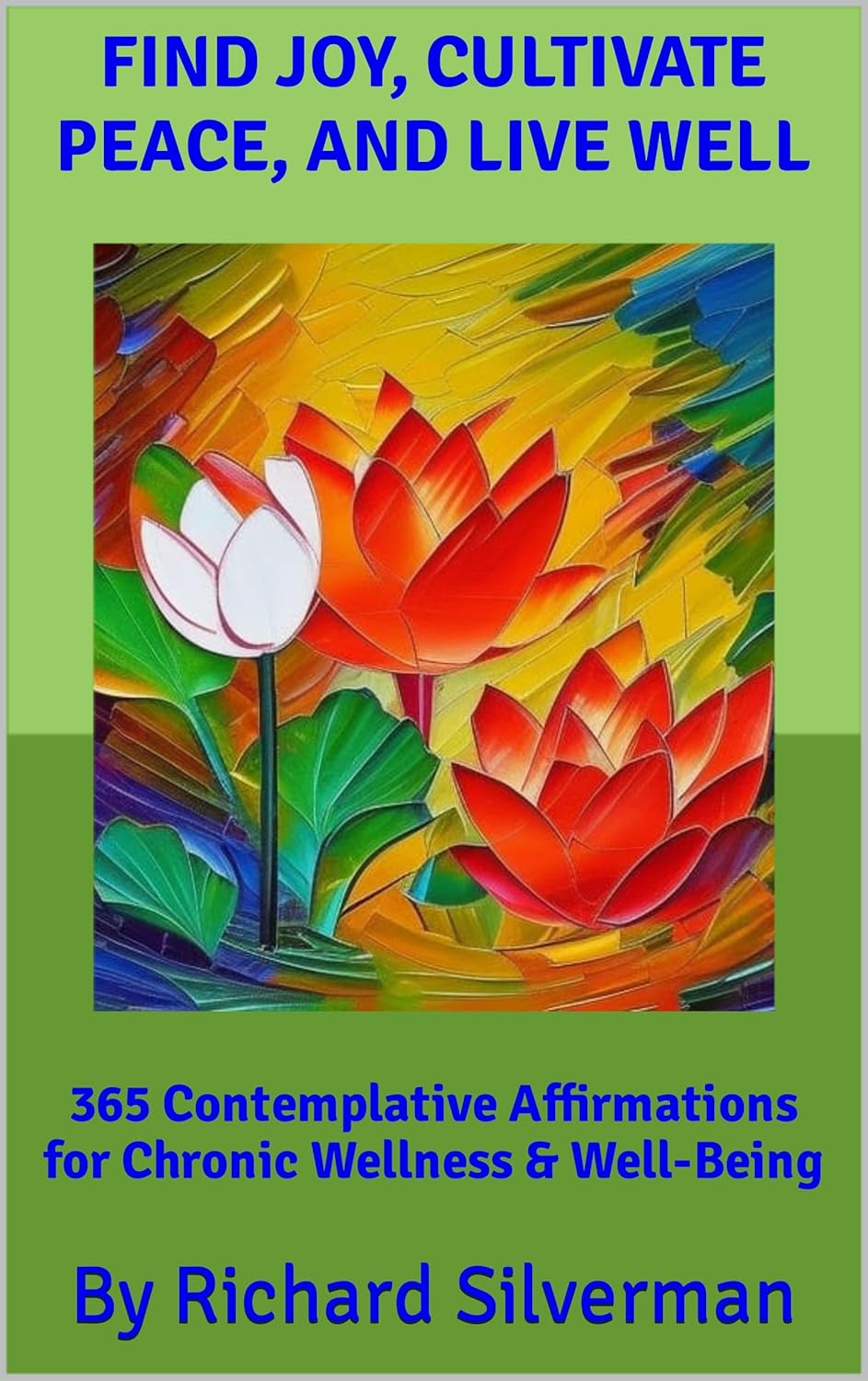
    In navigating the complex journey of life with chronic illness, I discover the potential to thrive amidst change. Each shift becomes an opportunity to adapt gracefully. As I navigate uncertainties, I embrace resilience. Understanding and flexibility is not a compromise but an integral part of my path. Today, I understand that my daily challenges can lead to a deeper experience of resilience and adaptability.

    ~ From affirmation day 3: “Find Joy, Cultivate Peace, and Live Well : 365 Contemplative Affirmations for Chronic Wellness & Well-Being”

    https://amzn.to/3F0od6E

    🙏🕊🙏

  • Exploring Pristine Mind Meditation for Chronic Fatigue Syndrome: A Path to Effortless Rest

    Exploring Pristine Mind Meditation for Chronic Fatigue Syndrome: A Path to Effortless Rest

    “Discover how pristine mind meditation may offer a gentle, restorative state of awareness without the energy costs that often come with post-exertional malaise.”

    Living with Chronic Fatigue Syndrome means every action, every exertion, has a cost. For many, even a few minutes of focus or effort can lead to post-exertional malaise—a profound worsening of symptoms that can last for days. But what if there was a way to rest deeply, to allow the mind to settle in a way that doesn’t deplete but actually nourishes? This is where the practice of pristine mind meditation comes in, offering an effortless awareness that exists beyond thought, beyond strain, and without the toll of traditional exertion.

    Pristine mind meditation is rooted in the idea of simply being. Rather than trying to clear the mind or enter a specific state, it invites you to rest in pure, unaltered awareness. This isn’t an act of concentration or focus, but a gentle allowing—a way to let thoughts and sensations come and go without attaching or resisting. The experience of resting in the pristine mind is often described as spacious, calm, and effortlessly open. For someone with ME/CFS, this could mean a path to real rest without the demand on physical energy that so often comes with other practices.

    Theoretically, because pristine mind meditation is free from physical or mental strain, it offers a way to access peace and stillness without triggering the kind of post-exertional fatigue that can worsen symptoms. It’s an invitation to explore a new way of being with chronic fatigue, where healing is not about doing but about resting in the quiet awareness that’s already within you.

    This journey is a gentle experiment, a compassionate practice of meeting yourself exactly as you are. Whether you experience even a few moments of pristine awareness or simply rest in the intention, the practice becomes a way of honoring the body’s limits and nourishing the mind. Take this path slowly, with openness, knowing that each step is its own quiet gift.

    If you’re curious, I invite you to join in this exploration, allowing yourself to simply rest in the pristine mind, noticing what it brings without expectation or need for change. This is a practice of ease, not of effort—a resting place for the soul amidst the demands of daily life with Chronic Fatigue Syndrome.

    For those interested in going deeper, much of this understanding is inspired by the teachings in Our Pristine Mind by Orgyen Chowang Rinpoche. His book provides a profound exploration of this approach to awareness, offering guidance on accessing the clear, effortless state of the pristine mind. If this resonates with you, I’ll leave a link below to help you find the book and discover more about this gentle, transformative practice.

    In the name of honoring my chronic fatigue syndrome, I’m experimenting with a different approach to healing. I’m trying out the idea that it doesn’t have to be complicated or effortful—that maybe simplicity and gentle choices can be enough. By tending to myself in this way, I’m exploring what it means to honor both my needs and my limitations, and I’m finding that this, too, might be a path to healing.

    I don’t know all the answers, but I’m noticing that healing isn’t always about pushing or doing more. Sometimes, it’s about making a quiet, deliberate choice to conserve energy, to rest, and to be. This journey toward simplicity and ease feels like a step toward well-being, and I’m curious to see where it leads.

    🙏🕊️🙏

    <!– /wp:spacer →

    🙏🕊️🙏

  • Into the Mystic: Embracing Impermanence, Resting in Awareness

    As I sit here in my yard, under the shade of tall trees and a sky so vast, I am reminded of the gentle teachings of impermanence. The pratyayas, those rising and falling sensations, memories, and thoughts, have once again surfaced, but they do not hold the weight they once did. Instead, there is a soft awareness that everything is already changing, and that in the grand scheme of time, everything is already gone.

    I look over at my RV, which has been a sanctuary for me for so many years. Soon, this land will become something else, transformed into a clubhouse. And yet, in this moment, I am filled with deep appreciation for what has been, for the unconscious and conscious years spent on this blessed earth. The impermanence of it all doesn’t bring sadness, but rather a profound gratitude for having lived through it, both mindfully and unmindfully.

    Namkhai Norbu’s sky-gazing practice teaches us to rest in the awareness of what is, without grasping or rejecting. In these moments of contemplation, I’m reminded that sky-gazing isn’t about observing the physical sky but allowing the mind to open into its own natural spaciousness. The practice reflects what is already within—clear, vast, and untouched by the clouds of thought.

    As pratyayas of impermanence arise, they are met not with resistance but with curiosity. Curiosity has become my companion on this contemplative path, gently guiding me to rest in awareness without the need for answers or conclusions. There is no longer a push for meaning, only the quiet observation of the present moment unfolding, just as it is.

    In this state of being, I can feel both the impermanence of the physical world and the abiding stillness of awareness. It is a paradox, and yet it is also the simplest truth: everything changes, and yet awareness remains the same.

    The teachings of St. John of the Cross, Ramana Maharshi, and Namkhai Norbu all point to this truth in their own ways. We move through life, through our spiritual practices, sometimes seeking, sometimes grasping for deeper experiences. But there comes a moment when we simply stop, when we rest in the spaciousness that has always been there. It is not a state we attain; it is a state we remember.

    As I continue this practice, I feel a deep gratitude, not just for the present moment, but for all that has been and all that will come. And in this gratitude, the pratyayas seem to soften, leaving behind the quiet awareness that is always there, patiently waiting for us to return.

    🙏🕊️🙏

  • The Sacred Shift: From Seeking to Being

    Following the path of meditation can feel like a gradual unraveling of the known—a shedding of what we once held onto, leading us into the mystery of contemplation. As I continue reflecting on the works of St. John of the Cross, this sacred shift from meditation into contemplation becomes clearer. It is not a step we take with effort but a grace that gently unfolds when the time is right.

    St. John speaks of this transition as a call to surrender, but it is not the kind of surrender we can will into existence. Instead, it is a letting go that happens when we stop striving, when we allow ourselves to simply rest in the presence of the Divine. This is where the familiar practices of meditation—focused attention, mental inquiry, or breath awareness—fall away, giving space for something more profound to emerge.

    Today, I felt this shift more deeply, not as an intellectual understanding, but as a living experience. The pratyayas—the thoughts, sensations, and memories that rise and fall—became like whispers, their pull softening in the presence of curiosity. This curiosity is not the kind that seeks answers, but one that witnesses, without needing anything to happen. In that gentle witnessing, something new emerged: a spaciousness, a quiet stillness that felt like home.

    This experience is not unique to Christian mysticism. In Advaita Vedanta, the practice of self-inquiry often begins with a repetitive questioning—”Who am I?”—an active search for truth. But, as with St. John’s teachings, there comes a time when even the inquiry must dissolve into silence. The seeker steps back, not into a place of knowing, but into a place of being. In that being, all effort falls away, and we are left with the pristine awareness that has always been there.

    In silence, love calls,

    No longer through words or thought,

    But in quiet grace.

    This is the threshold between seeking and being, a place where the Divine does its quiet work in us. It is no longer about striving or yearning for a deeper experience; it is about trusting in the unfolding of love, which asks only that we rest in its presence.

    For those of us on this journey, may we continue to trust this sacred shift—moving from meditation into contemplation, from seeking into being. In this silent surrender, we come closer to the essence of who we truly are.

    🙏🕊️🙏

  • Into the Mystic: The Journey from Meditation to Contemplation

    As I re-read the works of St. John of the Cross, I have become more attuned to the threshold of transition—the dryness and emptiness that so often precede the invitation to move from meditation into contemplation. This is not unique to St. John; it is something pointed to by many of the great teachers. Whether it’s Namkhai Norbu, Ramana Maharshi, Thich Nhat Hanh, the Dalai Lama, or Orgyen Chowang in Pristine Mind, they all plant the seeds of meditative absorption, which only take root when the time is right. Now, it seems, those seeds are beginning to bloom, not as intellectual concepts, but as a living, unfolding experience.

    Today, I found myself drawn into this quiet transformation. As I lay in stillness, the pratyayas—those passing thoughts, sensations, and memories—began to rise and fall, like waves on a distant shore. Curiosity, that soft and patient witness, guided me deeper, not into understanding but into presence.

    The breath came of its own accord, a deep release from somewhere beyond my conscious will, as if the body itself knew what needed to unfold. And then, an awareness—a spaciousness—arose. It was not something I had summoned, nor could I hold it in place. It was simply there, naked and pure, like a clear blue sky.

    St. John of the Cross speaks of this as a kind of surrender, but not the kind we can choose. It is a grace bestowed, not earned. In the stillness, I realized that my role was not to force this shift but to allow it to happen. To remain as the observer, the witness, as the Divine unfolded in its own time.

    What struck me most deeply was the paradox of this surrender. The very act of trying to let go becomes an obstacle. Instead, it is curiosity that opens the door to pure awareness—curiosity that has no desire, no need for something to happen, but simply observes what is.

    Today, in this unfolding, I realized that even the longing for deeper experience can become a barrier. The path is not one of striving but of witnessing. And in that witness, the Divine does its quiet work, purifying what needs to be released, and bringing us ever closer to the essence of who we truly are.

    As I reflect on my own journey today, it is my hope, and the shared intention (Sankalpa) behind all of this work, that by sharing these reflections, insights, and experiences, they may serve as a guide, a comfort, or a spark of inspiration to those who come across them.

    🙏🕊️🙏

    Book Recommendation: St. John of the Cross, Dark Night of the Soul

    Dark Night of the Soul by St. John of the Cross is a spiritual masterpiece that explores the transformative power of suffering and the journey toward union with the Divine. This work describes the profound spiritual experience of being stripped of all attachments, both inner and outer, as a necessary process for purification and deeper connection with God. For those experiencing a time of spiritual dryness or emptiness, St. John’s words offer hope and guidance through the darkness, illuminating the path to deeper faith and surrender. The Dark Night is not a time of despair, but of ultimate transformation, where we are invited to let go of our limited understanding and trust in the unfolding of the Divine. This book serves as a timeless companion for anyone navigating the challenges of the contemplative path, especially those who feel drawn to the shift from meditation to deeper contemplation.

    Book Recommendation: Orgyen Chowang, Our Pristine Mind

    In The Pristine Mind, Orgyen Chowang offers profound teachings on accessing our natural state of mind—a state of clarity, openness, and peace. He draws from the Dzogchen tradition, emphasizing that our true nature is already pure and perfect, and that through practice, we can return to this unconditioned state. For those on a contemplative journey, Chowang’s words provide a practical path for moving beyond mental noise and distractions, guiding us back to the inherent stillness of the mind. This book is especially helpful for those who wish to deepen their meditation practice or shift from intellectual understanding to living experience. The Pristine Mind invites readers to discover the profound joy and serenity that arises when we rest in the awareness of our true nature.

  • Exploring Dzogchen’s Transformative Path: A Journey into Our Pristine Mind

    Exploring Dzogchen’s Transformative Path: A Journey into Our Pristine Mind

    Reflections on Pristine Awareness, Dzogchen, and Finding Clarity in Challenging Times

    As I sit with Our Pristine Mind in my hands, I am aware that I am not merely reading a book. I am entering a silent conversation with an ancient wisdom, one that gently unfolds its layers with each page, as if lifting the veils of my own mind. In the quiet of early morning or beneath the faint glow of a reading lamp at night, the words begin to sink into the places where thought usually moves too quickly, too restlessly.

    Dzogchen—a word I’ve heard in passing, sometimes as an exotic echo from distant mountains, sometimes as an answer whispered through stories of sages and scholars—is not simply an idea here. It emerges like a breath I have almost forgotten to take, a reminder that within my mind lies a pure, boundless awareness untouched by the cycles of confusion, emotion, or distraction. Dzogchen does not demand; it simply reveals.

    The teacher, Orgyen Chowang Rinpoche, through his voice in Our Pristine Mind, speaks to the essential nature of awareness with a softness that does not impose but invites. I am reminded of Rilke, who once spoke of patience and of growing quietly in one’s own way, like a tree. Here, too, the practice of Dzogchen is like that tree, patient and grounded, yet ever-revealing. It asks nothing from me but presence, a willingness to recognize that what I have been searching for has always been here, beneath the surface of my rushing thoughts.

    Rinpoche speaks to our current world—the difficulties, the fractures, the relentless march of modern life. Dzogchen, he says, has come forward in these times not because it is new, but because we are perhaps ready to see its simplicity. To see that the vastness of pristine awareness is not somewhere far away or reserved for saints and sages. It is here, in the quiet pause between breaths, in the stillness that accompanies an unfiltered experience of now.

    The metaphor of the “brilliant moon in dark times” comes alive as I read, a reminder that even in moments when life feels overcast and filled with turmoil, there exists within us a clear, illuminating presence. Dzogchen does not banish the darkness; rather, it reveals a light that has been hidden within it all along.

    This practice, this profound teaching, calls us to approach life differently—to walk, speak, even think with the awareness that we are not separate from each other, from the world, or from the mind that perceives it all. It is an invitation to cultivate what Rinpoche calls “pristine awareness” in daily life, and this awareness transforms not only how we experience joy but also how we engage with suffering. Even anger, fear, and sorrow are welcomed as parts of the unfolding dance, teachers in their own right.

    The path of Dzogchen, I am learning, is not about leaving this world behind or aspiring to some distant perfection. Instead, it is an opening into a fuller, clearer life here and now—a kind of blossoming from the cold winter of searching into the warm spring of presence.

    If you feel the weight of the world’s challenges or the heaviness of inner obstacles, there is a softness, a kindness in Dzogchen that may resonate. As I explore these teachings, I feel them steadying me, offering a compass to navigate the storms of distraction and disconnection that modern life so often brings.

    And so, I share these reflections with the hope that you, too, may find something here that speaks to your own journey—a word, a phrase, a quiet reminder of the freedom that rests quietly within, waiting to be seen.

    🙏🕊️🙏

    If you’re interested in exploring this transformative approach further, I highly recommend Orgyen Chowang’s book The Pristine Mind. His teachings provide a clear, compassionate path toward uncovering the inherent purity of our mind, offering a source of deep fulfillment and lasting peace.

  • Into the Mystic: Devekut and the Journey of Clinging to the Divine

    Into the Mystic: Devekut and the Journey of Clinging to the Divine

    Continuing Our Journey

    In our last post, inspired by the teachings of Rabbi Schneur Zalman of Liadi and The Philosophy of Chabad by Nisan Mendel, we began a journey into the depths of Jewish spirituality and mysticism. This miniseries is inspired by the many timeless conversations I had with Rabbi Shmuel Reich, and it will open a window into practices that have been cherished by spiritual seekers for generations, offering insights into the heart of Jewish mystical thought. Through each post, we’ll explore one theme that guides us toward greater awareness and peace.

    Devekut: Clinging to the Divine

    Our journey begins with devekut, a concept that rests at the heart of Jewish mysticism. The Hebrew word devekut means “clinging” or “attachment,” yet its spiritual depth reaches far beyond any single word. To practice devekut is to hold the presence of God close in each moment, to see the divine as an unbroken current running through all things.

    Rabbi Shmuel described devekut as a path where every thought, word, and deed becomes an offering. He shared that “devekut must exist in all daily acts and in social contacts, as well as in prayer.” These words remind us that clinging to the divine is not only for moments of prayer or meditation; rather, it is an unceasing relationship, woven into the fabric of daily life.

    The Baal Shem Tov, a luminary in Jewish mysticism, emphasized devekut in all things—even distractions. He would advise, “Follow your thoughts to their roots in the divine,” inviting seekers to see even their doubts as paths back to God. In this way, devekut becomes a way of life, a way to move beyond the “self” and dwell in the silent, abiding presence of the divine.

    A Practice in Devekut

    If you’d like to explore devekut in your own life, start small. Choose a simple daily activity—perhaps preparing a meal, walking, or tending to a small task. As you engage in this act, hold in your mind the intention of connecting to the divine. Let each movement, each breath, be an offering of presence. See if you can sense the life, the spark, in what you are doing. Even if your mind wanders, return to the task and gently remind yourself of the sacredness within it.

    Over time, this practice can become a way of living devekut, where even the mundane becomes a bridge to the infinite.

    Explore Further

    🙏🕊️🙏

  • Discovering Mystical Contemplation: The Alter Rebbe’s Practice of Hitbonenut and Bittul

    Discovering Mystical Contemplation: The Alter Rebbe’s Practice of Hitbonenut and Bittul

    Explore the transformative path of Hitbonenut and Bittul in Jewish mysticism, as practiced by the Alter Rebbe, to reach direct experience and divine unity.


    Translation of the Hebrew Text in the Above Image

    “… the esteemed Rabbi Schneur Zalman of Liadi, the great sage and author of the book Tanya, in his later years would immerse himself daily in deep contemplation and focus on achieving Hitbonenut and Bittul, self-nullification, before beginning his prayers. He would sit in a secluded area and enter a state of spiritual readiness, preparing himself to reach closeness to the divine through his meditative practices. Those who observed him would attest to the honor and respect that this revered practice commanded, reflecting his commitment to true divine connection.”


    Discovering the Boundless: The Alter Rebbe’s Practice of Hitbonenut and Bittul

    In the rich tradition of Jewish mysticism, Hitbonenut and Bittul are contemplative practices often approached as meditative paths focused on divine ideas. These practices are frequently interpreted as ways of concentrating on spiritual concepts to deepen one’s understanding. However, the Alter Rebbe, Rabbi Schneur Zalman of Liadi—the founder of Chabad Hasidism—offers us a window into a more profound dimension of these practices, where contemplation moves beyond intellectual meditation and opens into direct experience.

    The Alter Rebbe’s personal practice of Hitbonenut is a cornerstone of Chabad Chassidus. According to tradition, he would spend hours in Hitbonenut before beginning his prayers, not merely analyzing divine concepts but immersing himself in a state of awareness that dissolves the self into the infinite, what Jewish mysticism calls the Ein Sof—the boundless and limitless aspect of the divine.

    In this expansive approach to Hitbonenut, contemplation shifts from thought-focused meditation to an experiential opening, leading to what other traditions describe as the “pristine mind” or “pure contemplation.” By embracing the formless, open nature of awareness, the Alter Rebbe connected to a state beyond the grasp of the ego, inviting direct experience of the divine presence.

    This journey is deepened through Bittul, or self-nullification. Where Hitbonenut opens the door to spacious, boundless awareness, Bittul is the surrender of the self into that awareness. It’s a release of the ego’s hold, a quieting of personal identity that allows a merging with the infinite. This act of surrender is not a negation but an opening—a dissolving of the self to align fully with divine unity.

    For those of us seeking to understand Hitbonenut and Bittul in this way, the Alter Rebbe’s practice offers a reminder that contemplation in its purest form transcends the intellect. It’s not about conceptual analysis but about experiencing divine unity as a living reality. As we explore this path, we step beyond thought, into the boundless.

    In upcoming posts, we’ll further explore the practical steps, reflections, and guidance to cultivate these practices. Hitbonenut and Bittul invite us into the spaciousness of mystical contemplation, guiding us from understanding to a direct encounter with the divine.

    🙏🕊️🙏

    Book Review: Rabbi Schneur Zalman of Liadi: The Philosophy of Chabad by Nisan Mendel

    Nisan Mendel’s Rabbi Schneur Zalman of Liadi: The Philosophy of Chabad is a profound exploration of the life and teachings of one of Jewish mysticism’s most influential figures. Rabbi Schneur Zalman, known as the Alter Rebbe, was the founder of the Chabad movement, and his teachings remain central to Hasidic philosophy and contemplative practice today.

    Through this work, Mendel delves into the essence of Chabad philosophy, particularly its unique approach to Hitbonenut (contemplative meditation) and Bittul (self-nullification). Readers are introduced to the Alter Rebbe’s belief that intellectual understanding can be a pathway to divine experience, bridging the mind and heart to foster a deep connection with God. The book sheds light on the Alter Rebbe’s methods for approaching mystical contemplation, offering practical insights for those looking to incorporate these timeless practices into their own lives.

    Mendel’s accessible writing and thoughtful explanations make complex topics approachable, while his reverence for the subject shines through, bringing Rabbi Schneur Zalman’s teachings to life. This book is especially valuable for readers who wish to understand the spiritual framework of Chabad and its emphasis on meditative thought as a means to reach divine awareness.

    Whether you’re new to the ideas of Hitbonenut and Bittul or are already on a contemplative journey, The Philosophy of Chabad offers a valuable gateway to the Alter Rebbe’s approach to mysticism. By providing both philosophical insights and practical approaches, Mendel encourages readers to go beyond surface understanding and explore the depths of Chabad’s spiritual tradition.

    🙏🕊️🙏