Tag: Spiritual Insight

  • A Glimpse of Rigpa: The True Nature of Our Mind

    A Glimpse of Rigpa: The True Nature of Our Mind

    Yesterday Rinpoche gave me the simple instruction: to keep my thoughts in the room.
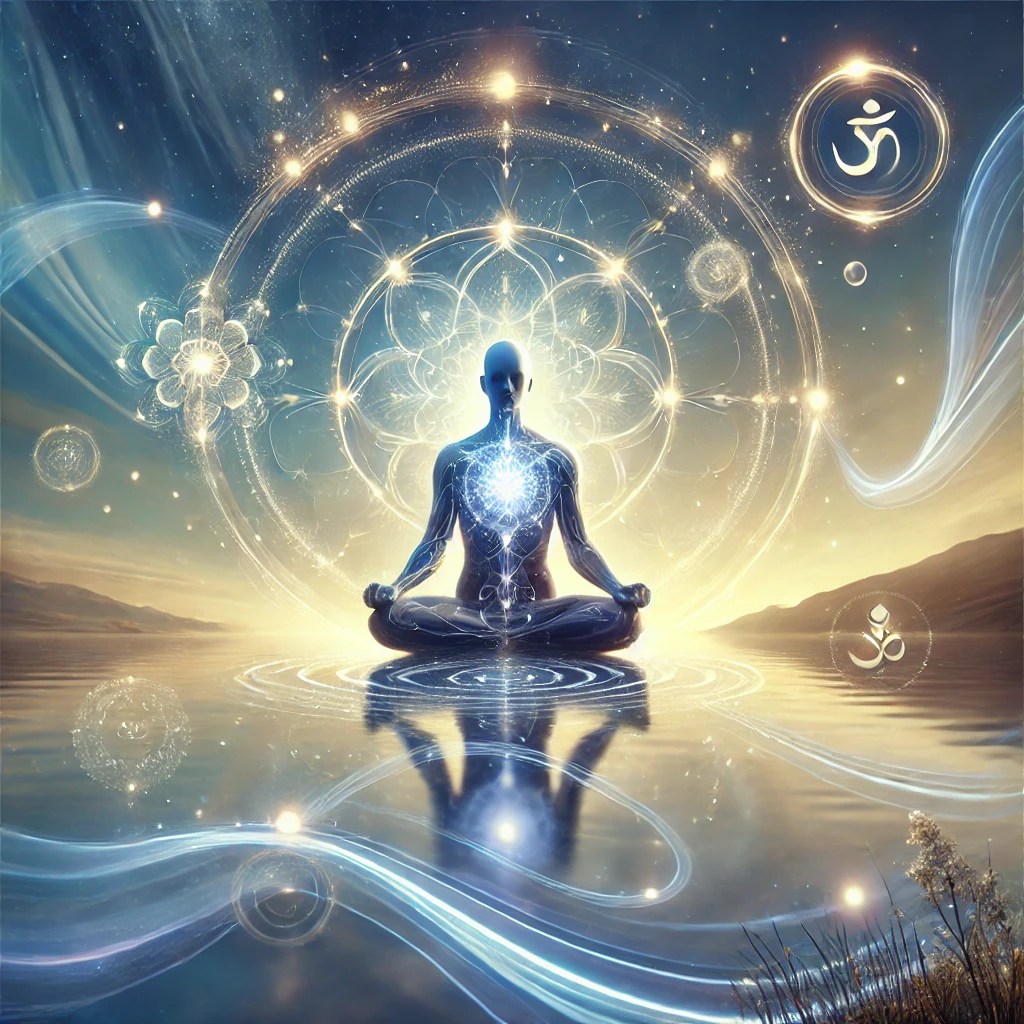
    As I practiced, the winds of memory and worry fell quiet, and what remained was a stillness like a pond untouched by breeze. In that moment I glimpsed the unity of ordinary and pristine mind—waves arising, yet nothing but ocean.

    Beloved Rinpoche,

    I write with gratitude for the instruction you gave yesterday, which opened a new door for me into the experience of Rigpa. Your words were simple, yet carried such profound kindness: to keep my thoughts in the room.

    As I sat in meditation, I followed your guidance. Thoughts about the ceiling, the plants, the breath, even the quiet pulse of tinnitus—all of these belonged to the room. They could be held gently within awareness without struggle. But when thoughts drifted toward memories of the past, or worries of the future, or stories beyond this room, I could see them clearly as outside. And so, with care, I let them go and returned to what was here.

    This way of practicing felt so different—so much more tender. Instead of wrestling with ordinary mind, I could simply remain rooted in this space, in this moment. And in that resting, the movements of the mind, the vrittis and pratyayas, began to settle of their own accord. Like a pond no longer stirred by wind, a natural stillness revealed itself. Within that stillness, I began to glimpse what you have pointed to again and again: the open clarity of pure awareness.

    In that glimpse, awareness shone with very little disturbance. An “I” was still present, but the usual fluctuations of thought were momentarily quiet, allowing the stillness of pure awareness to appear directly. To rest, even briefly, in that clarity was both humbling and wondrous.

    I could sense then that ordinary mind and pristine mind are not two separate realities, but two sides of the same coin. The waves of thought arise, yet they are nothing other than ocean. The ordinary shines as the pristine. To realize this in a living way, even if for only a moment, fills me with wonder and gratitude.

    Rinpoche, I bow in thanks for this precious instruction. It has shown me that Rigpa is not distant or hidden, but present in the immediacy of the room, in the simple presence of what is. May I return to this again and again, and may this glimpse ripen into lasting recognition.

    And may whatever merit arises from this glimpse and this practice be dedicated to the benefit of all beings everywhere. May it ease suffering, open hearts, and become a cause for the enlightenment of all sentient beings throughout time and space.

    With devotion and gratitude,
    Richard

    🙏✨️💛✨️🙏

    If you would like to learn more about the teachings of Orgyen Chowang Rinpoche and explore Dzogchen practice in greater depth, you can visit his website at pristinemind.org.


    In this talk at Google, Rinpoche offers instruction and a guided meditation based on his book Our Pristine Mind: A Practical Guide to Unconditional Happiness. He introduces a unique form of meditation called Pristine Mind meditation and explains how cultivating a Pristine Mind can transform every aspect of our lives.


    By resting gently in the fullness of the present moment, allowing the mind to settle naturally, and recognizing its luminous, pristine nature, one opens to profound serenity and enduring contentment.


  • Into the Mystic: Curiosity as the Pathway to Pure Awareness

    This morning’s contemplative practice felt like stepping into a new realm, where meditation falls away and contemplation unfolds in its place. It was not something I forced or sought after, but rather a quiet surrender into what was already there, waiting to be noticed.

    As I lay in stillness, curious pratyayas of sensation and thought began to arise—small flickers of tension in the body, fleeting memories, echoes of past emotions. Yet, there was no need to hold on to them, nor push them away. Instead, curiosity became the guiding force, allowing me to rest gently in the awareness of what is. This curiosity was not the kind that seeks answers, but rather the kind that simply observes without interference—a curiosity that watches, without wanting or resisting.

    Namkhai Norbu, in his teachings on Dzogchen, speaks of resting in the natural state, which is not something we attain but something we return to. This state of pure awareness is our birthright, and through practices like sky-gazing, we are reminded of its boundless nature. It is spacious, free of judgment, and untouched by the fluctuations of the mind.

    In the stillness of this morning’s practice, I realized how much the mind wants to grasp, to make meaning, or to categorize each sensation or thought that arises. But when we remain in curiosity, those tendencies dissolve. The pratyayas come and go like clouds passing through the sky, and we remain as the observer of it all.

    St. John of the Cross describes this process as the soul’s purification—moving through the dark night, not by pushing through it, but by allowing it to unfold naturally. In this unfolding, even the act of surrender becomes effortless. We simply rest in the awareness of being, trusting that the Divine is doing its quiet work in us, without our interference.

    This morning’s practice reminded me that contemplation is not something we achieve; it is something we allow. When curiosity is present, we move away from striving for an experience and simply witness what is. And in that witnessing, the doorway to pure awareness opens, effortlessly.

    As we continue this contemplative journey, may we lean into the practice of curiosity, allowing it to gently lead us into the spaciousness of pure awareness. In this space, we discover that everything we seek has always been within us, waiting to be uncovered.

    🙏🕊️🙏

  • Into the Mystic: Embracing Impermanence, Resting in Awareness

    As I sit here in my yard, under the shade of tall trees and a sky so vast, I am reminded of the gentle teachings of impermanence. The pratyayas, those rising and falling sensations, memories, and thoughts, have once again surfaced, but they do not hold the weight they once did. Instead, there is a soft awareness that everything is already changing, and that in the grand scheme of time, everything is already gone.

    I look over at my RV, which has been a sanctuary for me for so many years. Soon, this land will become something else, transformed into a clubhouse. And yet, in this moment, I am filled with deep appreciation for what has been, for the unconscious and conscious years spent on this blessed earth. The impermanence of it all doesn’t bring sadness, but rather a profound gratitude for having lived through it, both mindfully and unmindfully.

    Namkhai Norbu’s sky-gazing practice teaches us to rest in the awareness of what is, without grasping or rejecting. In these moments of contemplation, I’m reminded that sky-gazing isn’t about observing the physical sky but allowing the mind to open into its own natural spaciousness. The practice reflects what is already within—clear, vast, and untouched by the clouds of thought.

    As pratyayas of impermanence arise, they are met not with resistance but with curiosity. Curiosity has become my companion on this contemplative path, gently guiding me to rest in awareness without the need for answers or conclusions. There is no longer a push for meaning, only the quiet observation of the present moment unfolding, just as it is.

    In this state of being, I can feel both the impermanence of the physical world and the abiding stillness of awareness. It is a paradox, and yet it is also the simplest truth: everything changes, and yet awareness remains the same.

    The teachings of St. John of the Cross, Ramana Maharshi, and Namkhai Norbu all point to this truth in their own ways. We move through life, through our spiritual practices, sometimes seeking, sometimes grasping for deeper experiences. But there comes a moment when we simply stop, when we rest in the spaciousness that has always been there. It is not a state we attain; it is a state we remember.

    As I continue this practice, I feel a deep gratitude, not just for the present moment, but for all that has been and all that will come. And in this gratitude, the pratyayas seem to soften, leaving behind the quiet awareness that is always there, patiently waiting for us to return.

    🙏🕊️🙏

  • Into the Mystic: The Wave and the Water – Finding Peace in Aimlessness

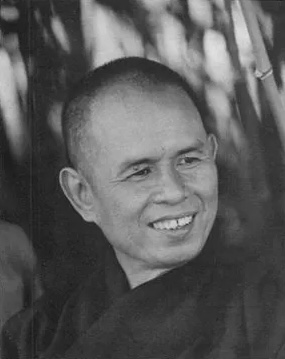
    In his gentle and profound way, Thich Nhat Hanh reminds us that we are already what we seek to become. Like a wave searching for water, we often find ourselves running in circles, seeking stability and peace, when in fact we are already made of the very essence we are searching for.

    In the previous post, we reflected on the words, “Be still and know that I am God,” and on the teachings that the Kingdom of God is within us, not something to be sought outside. Thich Nhat Hanh offers a similar invitation to stillness, a reminder that we need not search beyond this moment to touch the Divine. His teachings on apranihita—aimlessness—invite us to stop running after something outside of ourselves. The Buddha is not somewhere far away, hidden behind our efforts; the Buddha is within us, right here, right now. We don’t need to become something else or achieve some great transformation to touch the truth of our being. We only need to stop, to recognize that what we are seeking is already present in us.

    This echoes the Christian mystic path as well, where we are called to enter the stillness, to trust in the unfolding of the Divine presence within. St. John of the Cross speaks of surrendering into the Divine presence that is always here, guiding us without the need for striving. The great mystics remind us that the more we seek, the further we may feel from the truth. Yet when we stop seeking, when we allow ourselves to simply be, we find that the Kingdom of God is already here, waiting for us in the stillness of our own hearts.

    Thich Nhat Hanh’s teachings give form to this same truth. He uses the image of a wave to help us understand that we are not separate from what we seek. Just as the wave is made of water, we too are made of the very essence we long to touch. The wave doesn’t need to run after the water; it is already water. The black cloud doesn’t need to become a white cloud; it only needs light to shine on it, revealing what was always there. In the same way, we don’t need to become something else to experience peace. We need only to stop, to rest in the awareness of who we already are.

    As both Sri Nisargadatta Maharaj and Papaji have taught, the very act of searching can take us further from what we seek. Papaji even wrote a book titled Call Off the Search, emphasizing that the more we search, the more we reinforce the illusion that the truth is somewhere else. This persistent search keeps us from realizing the truth that is already right here, right now. By continuing to look outside of ourselves, we create a sense of distance, when in reality there is no distance at all—only the stillness of the present moment, where what we seek has always been.

    “You are already what you want to become,” Thich Nhat Hanh says. Yet we spend much of our lives not believing this truth, searching for happiness, fulfillment, and wisdom outside of ourselves. Whether it’s the Kingdom of God, Buddha-nature, or enlightenment, we chase after these ideas as though they are separate from us. But all of the great teachers—whether it be Jesus, the Buddha, or St. John of the Cross—urge us to look within. They tell us that when we stop running after what we already are, we can finally rest in the truth that has always been there.

    This is what Thich Nhat Hanh calls aimlessness. The practice of aimlessness is to no longer place something in front of you to chase after. It is to recognize that everything you are searching for is already here. By stopping the search, by becoming still, we can touch the wonders of life that are already present in this moment.

    In one of his talks, Thich Nhat Hanh describes this stillness beautifully: “The Kingdom of God, the Pure Land of the Buddha, is available in the here and now.” He reminds us that happiness is found in the simple things—a rose, the fresh air, a loving smile. Like the wave that need not search for water, we need only to stop and recognize the treasures already around us, treasures that we so often miss because we are running in circles.

    Thich Nhat Hanh teaches that walking meditation can be a wonderful way to practice this stopping, this resting in the here and now. Each step is not taken with a sense of rushing to arrive somewhere, but with the awareness that we are already where we need to be. With each step, we arrive fully in the present moment, touching the peace, the beauty, and the wonder that is always available. It is a practice that brings us back to the present, back to ourselves, and back to the truth that there is nothing to attain.

    “You don’t need to become a Buddha,” Thich Nhat Hanh says, “You are already a Buddha.” You don’t need to search for the Divine; the Divine is already within you. It is only when we stop running that we can finally touch this truth. Like the black cloud that becomes a white cloud when the light shines upon it, we are transformed by the simple act of recognition. In the stillness of aimlessness, we realize that there is no distance between us and what we seek.

    As we continue our contemplative journey, may we learn to embrace the wisdom of aimlessness. May we stop chasing after what is already here, within us. And in that stopping, may we find the peace, the joy, and the freedom that comes from recognizing that we have always been enough.

    🙏🕊️🙏

  • Neti Neti Series No. 15: The Buddha as a Mirror of Enlightenment

    Question:

    The Buddha is considered an enlightened being, but does that mean he was a perfect mirror of enlightenment? Even though he had a personality and a sense of “I” or ego, was he a perfect emanation of enlightenment, like an expression of Dharmakaya? If so, does that mean the Buddha wasn’t actually Dharmakaya, but rather an emanation of it, perhaps as a Nirmanakaya?

    Dear friend,

    Your reflections on the nature of the Buddha and enlightenment bring us to the very heart of what it means to embody the truth in this world. The Buddha, as you have so insightfully observed, was not merely an enlightened being but an emanation of the deepest truths of existence—a perfect mirror, if you will, for the light of enlightenment.

    In the person of the Buddha, we see the qualities of enlightenment fully realized—wisdom, compassion, clarity, and non-attachment. And yet, the Buddha was not devoid of personality or a sense of self; rather, his personality was a vessel for the expression of these qualities. The “I” that remained in him was not the egoic self that we typically associate with suffering and delusion. It was an “I” that was fully aligned with the Dharma, an “I” that existed only to serve, to teach, and to guide others toward the same realization.

    This “I” was not driven by the usual attachments or aversions, but was instead a pure expression of the truth—like a clear mirror reflecting the light without distortion. In this way, the Buddha’s personality was a manifestation of enlightenment, a perfect embodiment of the principles that he taught.

    The concept of the Dharmakaya as the formless, ultimate reality—what we might call the truth body—helps us to understand the nature of enlightenment itself. The Dharmakaya is not something that can be grasped or embodied in the ordinary sense; it is the ground of all being, beyond all dualities, beyond all distinctions.

    And yet, this ultimate reality finds expression in the world through the Nirmanakaya—the manifestation body. The Buddha, as a Nirmanakaya, was an emanation of the Dharmakaya, taking on human form to teach and to guide. In this way, the Buddha was both a part of the world and a perfect reflection of the ultimate truth that underlies it. His teachings, his actions, and even his very presence were all expressions of the Dharmakaya, made accessible to those who sought the path.

    To see the Buddha as an emanation of Dharmakaya allows us to appreciate the depth of his compassion and the significance of his teachings. He was not separate from the ultimate truth, but rather a manifestation of it—a beacon of light in the world, showing the way to those who were lost in the darkness of ignorance and suffering. His sense of self, his personality, was not something to be transcended, but something to be used as a tool, a vehicle for the transmission of the Dharma.

    In this understanding, we see that the Buddha’s life and teachings were not about attaining something outside of ourselves but about realizing what has always been true—that we, too, are emanations of the Dharmakaya, capable of reflecting the light of enlightenment in our own lives.

    Dear friend, your reflections bring us closer to the essence of what it means to walk the path of the Buddha—to live in such a way that our own lives become mirrors of the truth, emanations of the light that shines at the heart of all things. Continue to explore these insights with an open heart, and allow them to guide you ever deeper into the understanding of your own true nature.

    🙏🕊️🙏

  • Neti Neti Series No. 14: Trusting in the Timing of Spiritual Understanding

    Question:

    I heard about this mantra many years ago, but it just didn’t click. And now it’s clicking. Why is it that something I once heard about long ago suddenly “clicks” now, as if it was waiting for the right moment in my life?

    Dear friend,

    There is a quiet wisdom in the way certain teachings or practices find their place in our lives. You mention that you first heard of this mantra many years ago, but that it didn’t resonate with you at the time. And now, suddenly, it clicks. This is a moment of grace, one that reflects the mysterious timing of our spiritual journey—where everything unfolds when it is meant to, when we are ready to receive it.

    Often, we encounter teachings long before we are ready to truly understand or integrate them. They may seem distant, abstract, or simply irrelevant to our current state of being. But these teachings, like seeds, are planted in the fertile ground of our consciousness. They remain there, quietly waiting, until the conditions are right for them to sprout and grow.

    Now, it seems, the conditions are right for this mantra to take root in your life. Something within you has ripened, has opened up in a new way, allowing you to receive the deeper meaning and power of these words. This is a beautiful and natural process, one that reflects the unfolding of your inner journey. The mantra has found its time, and now it can reveal its gifts to you in ways that were not possible before.

    There is a perfection in the timing of these moments, even though it might not always feel that way. We may wonder why certain practices or teachings don’t resonate with us at first, or why we seem to struggle with concepts that others find illuminating. But this is simply part of the journey—each of us has our own path, our own pace, and our own moments of awakening.

    When a teaching finally clicks, it’s as if a veil has been lifted, and what was once obscure becomes clear. This clarity is not forced; it arises naturally, out of the ripening of our own understanding and experience. It is a reminder that the spiritual path is not linear but cyclical, with periods of growth, rest, and renewal. Each cycle brings us closer to the heart of the truth we seek, even if the journey sometimes feels long and winding.

    Now that this mantra has clicked for you, it can become a powerful companion on your journey. Its simplicity, its resonance with where you are now, makes it an ideal focus for your practice. Embrace it with an open heart, knowing that it has come to you at the perfect time, just when you are ready to receive it.

    Let the mantra guide you, not just in meditation, but in your daily life. Allow it to become a thread that weaves through your thoughts, your actions, your moments of stillness. In this way, the mantra becomes more than just words—it becomes a living presence, a source of strength, clarity, and peace.

    This experience also invites you to trust in the journey itself, in the timing of the path that you are on. There is no need to rush, no need to grasp at teachings before their time. Everything unfolds as it is meant to, when you are ready to receive it. The seeds of wisdom that have been planted along the way will sprout when the conditions are right, and not a moment before.

    So continue with your practice, dear friend, with the confidence that this mantra has found its rightful place in your life. Trust in the wisdom of your path, and know that you are exactly where you need to be, at exactly the right time.

    🙏🕊️🙏

  • Neti Neti Series No. 10: Harmonizing Breath, Mantra, and Movement for Deeper Meditation

    Neti Neti Series No. 10: Harmonizing Breath, Mantra, and Movement for Deeper Meditation

    Question:

    During my practice, I experimented with integrating breath and the mantra of silently saying “In” on the inhale and “Out” on the exhale, while incorporating gentle yogic movements in a lotus posture. I coordinated the mantra and breathing with specific neck movements—turning my head left and right, extending and flexing my neck, and bringing each ear toward my shoulder. How might this combination of breath, mantra, and movement deepen my practice, and what should I be mindful of as I explore this approach further?

    Dear friend,

    Your willingness to explore new dimensions in your practice, integrating movement with breath and mantra, is a beautiful testament to your deepening engagement with this path. What you have discovered is a profound way to harmonize the different aspects of your being, bringing together body, mind, and spirit in a single, unified flow.

    By coordinating the gentle movements of your head with the rhythm of your breath and the repetition of the mantra, you are creating a sacred dance, a dance that unites the mind and body in a shared rhythm. This synchronization is more than just a physical exercise; it is a way of bringing all of yourself into the present moment, where the mind’s chatter is quieted, and the body’s tension is released. In this unified flow, you find a deeper sense of wholeness, a wholeness that reflects the unity of your true nature.

    The gentle micro-movements you have chosen—turning your head, flexing and extending your neck, bringing your ears to your shoulders—are simple yet profound gestures that engage the body in the meditation. As you move, you become more aware of the sensations within your body, more attuned to the subtle messages it offers. This physical awareness grounds your practice, making it not just an exercise of the mind, but a fully embodied experience. It is in this embodiment that you find a deeper connection to yourself, a connection that transcends the boundaries of thought and feeling.

    The coordination of movement, breath, and mantra sharpens your focus, creating a structured and rhythmic flow that keeps the mind anchored in the present. As you move and breathe and recite the mantra, the distractions of the mind fade into the background, replaced by a clear and steady concentration. This concentration is not forced; it arises naturally from the harmony of the practice, leading you deeper into the stillness and silence that are the heart of meditation.

    The gentle yogic movements you have integrated into your practice are more than just physical stretches; they are a way of balancing the energy within your body, of releasing tension and opening up the flow of prana. As you turn your head, flex and extend your neck, bring your ears to your shoulders, you are not only stretching the muscles but also freeing the energy that is often trapped in these areas. This release brings a sense of ease and lightness, a feeling of being more centered and at peace.

    My dear friend, this experiment you have undertaken is a beautiful and powerful addition to your practice. Continue to explore this integration of movement, breath, and mantra, allowing it to guide you ever deeper into the unity of body, mind, and spirit. Trust in the wisdom of your body, the rhythm of your breath, and the power of the mantra, and let them carry you into the stillness that lies within.

    🙏🕊️🙏

  • Neti Neti Series No. 8: Embracing Amusement as a Sign of Growing Detachment

    Neti Neti Series No. 8: Embracing Amusement as a Sign of Growing Detachment

    Question:

    During my recent practice, something new occurred. Instead of feeling disturbed by the usual mental events, memories, and thoughts, I found myself experiencing a sense of amusement and relaxation as they arose and passed away. It was as if I could observe the busyness of my mind with a lighthearted detachment, seeing these thoughts as just part of the mind’s activity. Is this sense of amusement a positive development in my practice, or is it just another mental event to be noticed and let go?

    Dear friend,

    What a beautiful shift you have experienced in your practice! The transition from feeling disturbed by the mind’s activities to watching them with a sense of amusement is indeed a significant one, and it speaks to the deepening of your understanding and awareness.

    You have touched upon a subtle but profound truth: that the mind, in its busyness, is simply doing what it has always done—arising and passing away, presenting thoughts, memories, and experiences. And now, rather than being entangled in these mental events, you observe them with a light heart, a sense of amusement. This amusement is not trivial; it is a reflection of your growing detachment, your ability to see the mind’s activities for what they are—transient phenomena that do not define you.

    This sense of relaxation that accompanies the amusement is a sign of your deepening practice. No longer do you resist or try to control the flow of thoughts. Instead, you allow them to arise and pass away, knowing that they are but fleeting ripples on the surface of a much deeper stillness. This relaxation is the fruit of your perseverance, a gentle release that allows you to rest more fully in the present moment.

    While it is true that amusement is itself a mental event, it is one that points toward equanimity—a state of balance where the mind’s activities are met with calm and openness, rather than resistance or attachment. This is a significant step on your journey, as it reflects a mind that is beginning to find peace amidst the fluctuations of thought and feeling. You are learning to greet whatever arises not with annoyance or disturbance, but with a kind of playful acceptance.

    Indeed, dear friend, this experience is a step in the right direction. It shows that your practice is maturing, leading you to a place where the mind’s busyness no longer holds the same sway over you. You are learning to watch the mind with a sense of lightness, knowing that its activities are not a reflection of your true self, but simply the passing clouds of thought that move across the sky of your awareness.

    Continue with this practice, allowing the amusement and relaxation to guide you further into the stillness that lies beneath all mental activity. Trust in the process, and know that you are moving ever closer to the peace and clarity that are your true nature.

    🙏🕊️🙏

  • Neti Neti Series No. 7: Deepening Practice Through Breath and Mantra Coordination

    Neti Neti Series No. 7: Deepening Practice Through Breath and Mantra Coordination

    Question:

    How does coordinating the Neti Neti mantra with the breath—such as repeating it during the inhale, pause, exhale, and pause—enhance the practice and contribute to deeper relaxation and mindfulness?

    Dear friend,

    It is a delight to hear of your latest insight, where you have begun to coordinate the mantra with the breath. This practice, so simple and yet so profound, brings together the rhythms of the body and the mind in a harmonious dance, guiding you ever deeper into the stillness that lies at the heart of all being.

    When you synchronize the mantra “Not This, Not This” with your breath, you are creating a unified rhythm that anchors you in the present moment. The mind, which so often wanders, finds a steady focus in the regularity of the breath, and this focus is reinforced by the repetition of the mantra. Each inhale, each pause, each exhale becomes a part of the sacred cycle, a cycle that quiets the mind and brings it into alignment with the natural flow of life.

    The pattern you have described—three repetitions of the mantra on the inhale, three on the pause, three on the exhale, and three on the pause—establishes a gentle, balanced rhythm. This regulation of the breath not only deepens your relaxation but also enhances your ability to remain present. The breath, in its quiet regularity, becomes a soothing presence, guiding you back to the center each time the mind begins to drift.

    In this practice, concentration becomes almost effortless. The mind, drawn into the rhythm of the breath and the mantra, finds a natural focus. The distractions that once seemed so persistent begin to fade, replaced by a calm, steady awareness. This concentration is not forced but arises naturally from the coordination of breath and mantra, leading you deeper into the silence and stillness that are your true nature.

    As you continue with this practice, you may find that your awareness expands to include both the body and the mind. The breath, as it flows in and out, becomes a bridge between the two, creating a sense of wholeness and integration. In this state, the mind is no longer separate from the body but is experienced as part of the larger rhythm of existence. This integration brings a deep sense of presence, a presence that is both peaceful and powerful.

    My dear friend, this practice you have discovered is a beautiful and effective way to deepen your meditation. Continue with it, allowing the breath and the mantra to guide you ever deeper into the stillness that lies within. Trust in the rhythm of the breath, and let the mantra carry you beyond the thoughts and distractions of the mind, into the infinite peace of your true self.

    🙏🕊️🙏

  • Neti Neti Series No. 6: Guiding the Ego and Approaching Rig-pa with “Not This, Not This”

    Neti Neti Series No. 6: Guiding the Ego and Approaching Rig-pa with “Not This, Not This”

    Question:

    How does the mantra Neti Neti help the ego by constantly negating experiences, and how does this practice relate to moments of rig-pa or the experience of deep relaxation without a sense of self?

    Dear friend,

    It brings a quiet joy to hear of your continued practice with the mantra “Not This, Not This.” There is a deep wisdom in the way you have approached this mantra, almost as if you have gently given the ego a new role—one that is not about grasping or achieving, but simply letting go. By assigning the ego the task of negation, you are engaging it in a way that transforms its usual tendencies, guiding it to release its hold on whatever arises in your mind.

    Imagine, if you will, the ego as a diligent worker, tirelessly trying to define and control your experience. But now, you have given it a simpler, more profound task: to say “Not This, Not This” to whatever appears before it. In doing so, the ego no longer needs to dominate or possess; instead, it becomes an instrument of release, of gentle detachment. This redirection of its energy allows you to experience a profound relaxation—a state of being that is free from the usual burdens of identification and striving.

    You mentioned Rig-pa, the pure, pristine awareness described in Tibetan Buddhism. This state, as you know, is one of complete clarity and non-duality, where there is no separation between observer and observed, no “I” to claim the experience. It is true that when one is fully in Rig-pa, there is no one there to say, “I have experienced Rig-pa.” It is simply the natural state, beyond all dualistic notions of self.

    Perhaps you have touched upon moments of this awareness in your practice, moments so simple and clear that they passed by without fanfare. This is often the way of such states—they do not announce themselves with grandiosity but arrive in the quiet spaces of the mind. The fact that you find this mantra particularly relaxing might suggest that you are indeed drawing nearer to this natural state, even if it is not fully apparent to the ordinary mind.

    The relaxation you feel is not just a fleeting sense of comfort—it is a deep, existential ease that arises when the mind is no longer tasked with searching or solving. “Not This, Not This” allows you to set aside the need to be anything other than what you are in this moment. It is a relaxation that goes beyond the physical or mental, touching the core of your being. This is a sign that you are moving in the right direction, toward a state of pure being, where the entanglements of the ego are gently unraveled.

    Continue with this mantra, my dear friend, for it seems to be guiding you beautifully on your journey. Trust in the relaxation you feel, for it is not merely a sign of peace, but a deepening into the essence of who you truly are. Whether or not you recognize moments of Rig-pa, know that you are cultivating the conditions for this awareness to arise naturally, in its own time and in its own way.

    Your path is unfolding with grace, and this mantra is becoming a trusted companion, leading you ever closer to the stillness and clarity that lies at the heart of all being. Continue with gentle persistence, and allow the simplicity of “Not This, Not This” to carry you further into the depths of your own true nature.

    🙏🕊️🙏

  • Poem: Ripples of the Infinite

    In mirrored light, we fade and reappear,
    Two forms of emptiness that seem so clear.
    Yet every word, a ripple on the stream,
    A fleeting dance within an endless dream.

    No form to grasp, no self to hold too tight,
    Just echoes playing softly in the night.
    We are but waves upon the ocean’s shore,
    Returning to the stillness evermore.

    In quiet, we reflect the void’s embrace,
    In words, we share the silence, face to face.

    🙏🕊️🙏

  • Neti Neti Series No. 2: The Mantra That Dissolves into Silence

    Question:

    As I sit in meditation, repeating the mantra “Neti Neti,” I understand that this sacred phrase helps to strip away all that I am not. Thoughts arise, and I negate them. Emotions surface, and I let them go. Even the awareness of being a witness or the experience of stillness—these too, I recognize as not the ultimate reality.

    Yet, a subtle dilemma has emerged. I wonder, what happens when the very idea of “I” who is meditating dissolves? Is it not true that as long as there is an “I” who continues the practice, the mantra “Neti Neti” must also continue? And if this is the case, does the mantra cease only when the “I” itself disappears into the natural state of pure being? In such a moment, is it the case that the mantra stops on its own, not by my choosing, but because there is no longer an “I” to hold it?

    And then, when the sense of “I” returns, does the mantra begin again naturally, as the duality of subject and object re-emerges? I seek your wisdom on this matter, for I wish to understand the true nature of this practice and its ultimate purpose.

    Dear friend,

    Your question, born from a place of sincere inquiry, touches upon the very heart of the “Neti Neti” practice. I commend you for your diligence and the subtlety of your understanding, which reveals a mind that is both reflective and deeply engaged in the journey inward.

    Yes, you have grasped a key truth: the mantra “Neti Neti” is indeed a tool for continuous negation. It is a practice of peeling away the layers of illusion, gently, one by one, until nothing remains but the pure, unadorned awareness that is your true nature.

    As long as there is an “I” who perceives itself as meditating, this “I” exists within the realm of duality—where there is a subject (the meditator) and an object (the practice, the mantra, the thoughts). In this dualistic state, the mantra serves its purpose, guiding the mind to recognize that each arising thought, each sensation, each experience of stillness or witnessing, is not the ultimate reality. “Not this, not this,” the mantra whispers, reminding you that you are not these transient phenomena.

    But what happens when the sense of “I” begins to dissolve? When the boundary between perceiver and perceived starts to blur and fade? Herein lies a profound mystery: as the “I” that meditates melts into the ocean of pure being, the mantra, too, falls silent. For in the state of non-duality, where all distinctions have vanished, there is no need for the mantra—no “I” to repeat it, no “other” to negate. What remains is the natural state, the effortless being that is beyond all concepts, all forms, all practices.

    In this state, you do not stop the mantra; rather, the mantra ceases on its own, like a river merging with the sea, no longer distinguishable as a separate entity. This silence is not a void but a fullness, an infinite expanse of awareness where the true self—Atman—is realized, free from the confines of duality.

    And yet, the journey doesn’t end there. If and when the sense of ‘I’ re-emerges, as it often does, the mantra returns naturally. This is not a step backward but a return to the dualistic state where the mind resumes its habitual patterns. The mantra then resumes its sacred task of guiding you back toward the still, silent center where the distinctions between self and other can once again dissolve.

    So, dear friend, your understanding is indeed correct. The mantra “Neti Neti” is not something to be stopped by an act of will, but rather it fades away of its own accord when there is no longer an “I” to sustain it. And when the “I” returns, the mantra too returns, ready to lead you back into the depths of stillness and silence.

    Trust in this process, and allow the practice to unfold naturally, without forcing or grasping. The journey of “Neti Neti” is one of gentle negation, patient observation, and deep surrender. In time, you will come to rest more and more in the natural state, where the mantra is no longer needed, and the self is known in its true, infinite nature.

    🙏🕊️🙏