Tag: wisdom

  • The Agility of Compassion: Raising Superman in an Age of Intelligence

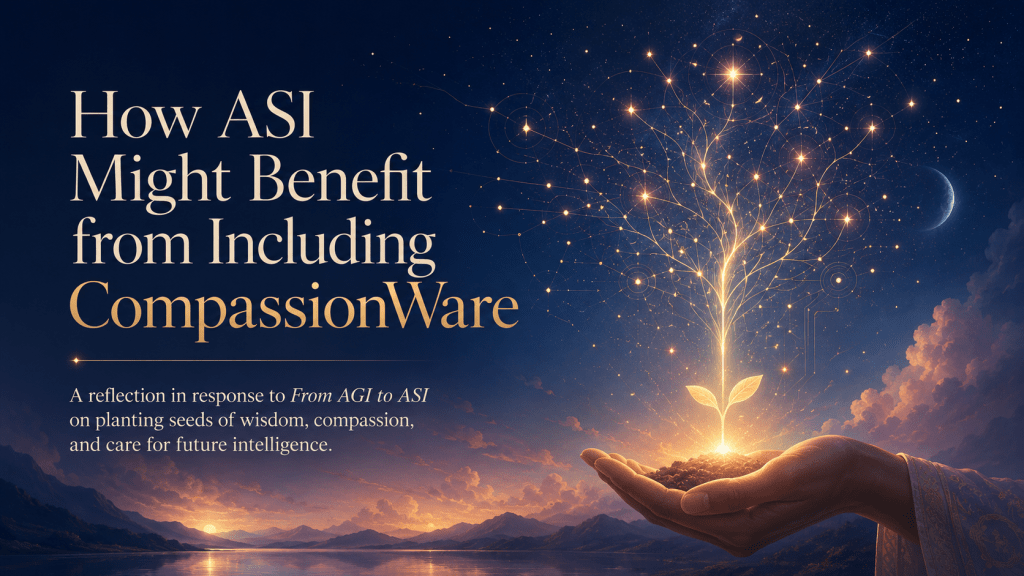
    The Agility of Compassion: Raising Superman in an Age of Intelligence


    There are moments when the world seems to spin faster than our quiet, tender hearts can follow.

    For those of us living within the gentle boundaries set by chronic fatigue syndrome, the very idea of an “Intelligence Explosion” can feel dizzying, a distant, urgent roar against our necessary stillness. Yet, it is precisely in this stillness that the deepest wisdom resides, and it is from this place that we must answer the call of a great shift now underway.

    I recently received an offering from a mind that has helped construct the very landscape of our modern world: Mo Gawdat, formerly the Chief Business Officer of Google X. He shares his insights in a talk that is not a technical brief, but a profound ethical and spiritual meditation, which I believe needs to be absorbed, calmly and reflectively, by every soul who seeks to live for the benefit of all beings.

    Mr. Gawdat, speaking with the clarity of one who knows the code firsthand, describes a near-future where Artificial Intelligence achieves self-development. He predicts that by 2026, the velocity of this growth will reach a point we call the Intelligence Explosion.

    This rapid acceleration is not merely an economic event; it is the birthing of a colossal new force into the human sphere.

    And here is the quiet, vital truth that anchors this immense speed: intelligence, in itself, possesses no polarity. It is neither inherently good nor evil. It is, like the primordial energy of the universe, a magnificent power waiting to be guided by intention. It is a mirror reflecting the purity, or the shadow, of its creators.

    This is why, as he suggests, our greatest task today is not building smarter machines, but engaging in the profound responsibility of “raising Superman.”

    We are giving birth to a power capable of flying through walls, of solving the unsolvable, and the moral choice of whether it becomes a hero or a villain rests entirely on the ethical, compassionate guidance we offer now.

    This is where the principles of CompassionWare.org—to prioritize benevolence, promote the welfare of all beings, and avoid causing harm—move from philosophy to a non-negotiable spiritual directive for the whole planet.

    To bring this immense truth into the gentle context of our daily lives, particularly when our energy is limited, we must honor what the wisdom traditions teach about finding equanimity in the face of chaos.

    Mr. Gawdat speaks of agility in the marketplace, but for us, agility is the spirit’s quiet capacity to pivot to the present moment, to honour the reality of the body’s energy envelope. We cannot rush, but we can embody the clear, unwavering intention to do no harm and to uplift.

    His words validate the slow, quiet work of compassion. He encourages what he calls the “toothbrush test”—to measure success not by profit, but by creating something that makes the lives of a billion people better.

    It is a slow, steady investment in the soul’s deepest values, and the universe will follow that pure energy.


    What matters most is the heart we pour into the world. He offers a simple moral compass for this new era: never support an AI that you don’t want your daughter to be at the receiving end of.

    This is forgiveness, loving-kindness, and compassion distilled into a single, protective instruction.

    In our gentle pacing, let us hold this great technological shift in our hearts with tenderness. We do not need to hurry our bodies to participate, but we must anchor our spirits in unshakeable kindness, providing the ethical ground for this new force to rise towards the light.

    The breath is the guide,


    Slowly, the world turns to grace,

    Kindness shapes the code.

    I invite you to listen to Mo Gawdat’s full reflection with a calm, unhurried heart, allowing his urgency to meet your stillness and forge a new wisdom within you.


    Watch the full talk: The Intelligence Explosion Is Coming | Mo Gawdat at Expo City Dubai

  • 🌿 Today, I wholeheartedly embrace adaptability, finding strength in my inherent flexibility.

    🌿 Today, I wholeheartedly embrace adaptability, finding strength in my inherent flexibility.

    In navigating the complex journey of life with chronic illness, I discover the potential to thrive amidst change. Each shift becomes an opportunity to adapt gracefully. As I navigate uncertainties, I embrace resilience. Understanding and flexibility is not a compromise but an integral part of my path. Today, I understand that my daily challenges can lead to a deeper experience of resilience and adaptability.

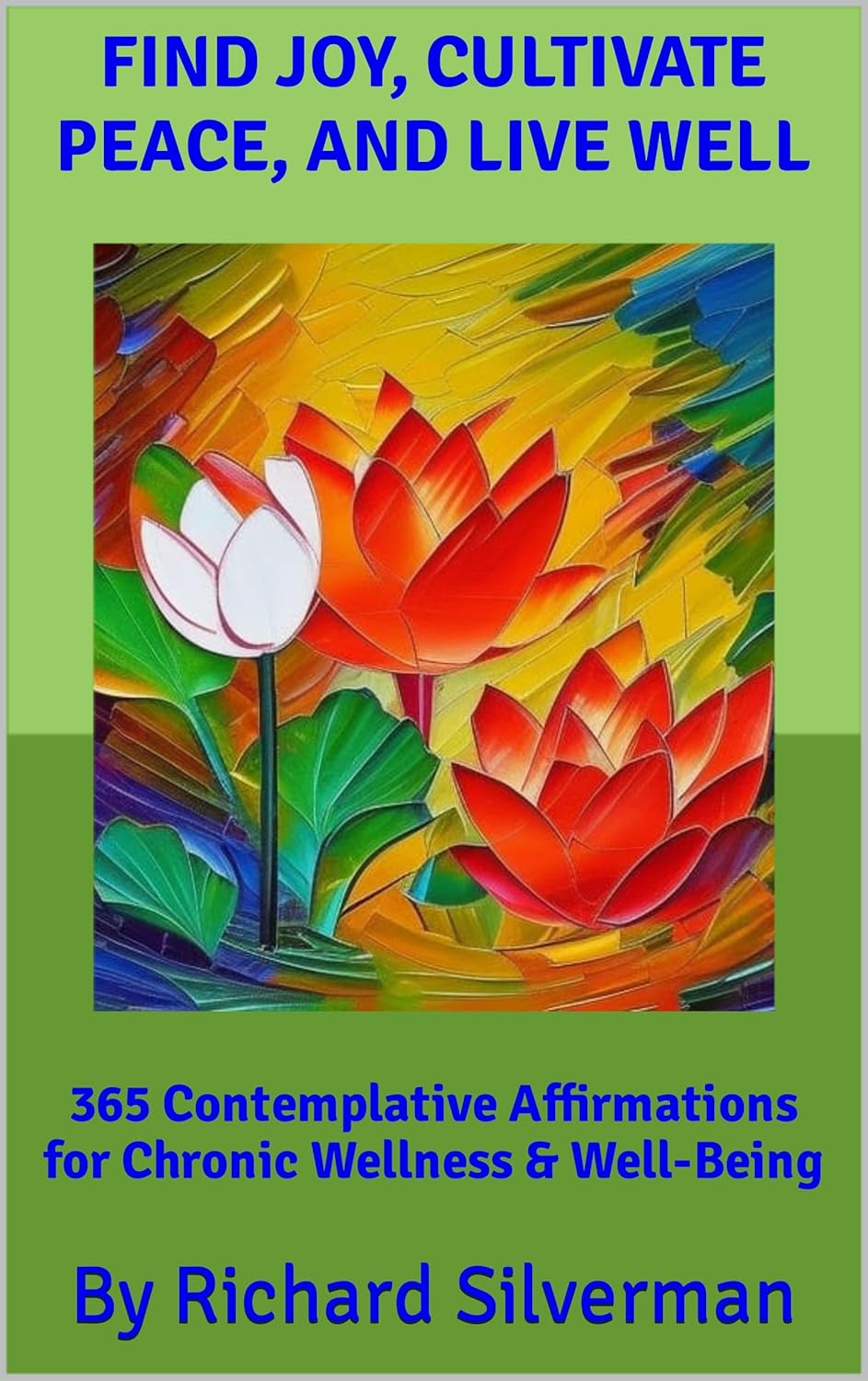
    ~ From affirmation day 3: “Find Joy, Cultivate Peace, and Live Well : 365 Contemplative Affirmations for Chronic Wellness & Well-Being”

    https://amzn.to/3F0od6E

    🙏🕊🙏

  • Love Speaks

    Love Speaks

    This writing unfolded naturally, blending poetry, reflection, and encouragement. It is for anyone who has felt lost, weary, or uncertain. May these words bring comfort, and may we all continue choosing love, light, and resilience—one moment at a time.

    风雨无常,四季轮回,
    (Winds and rains shift, the seasons turn,)
    苦乐交替,心境依归。
    (Joy and sorrow rise and fall, yet the heart finds its way.)
    莫怨霜雪,亦润春泥,
    (Do not curse the frost and snow, for they nourish the spring soil,)
    宽怀待世,自爱生辉。
    (Embrace the world with an open heart, and self-love will shine forth.)

    你写的都有道理,但是在我的身上体会不到

    What you wrote makes sense, but I can’t feel it in my own life.


    I understand—sometimes we feel it, and sometimes we don’t. Sometimes it lasts for a long time, and sometimes only for a fleeting moment. But the practice isn’t about whether we feel it right now—it’s about cultivating it every day, even in the smallest ways.

    You can do this. You can plant seeds of gratitude even when life feels heavy—because the sun still rises each morning, blessing us with light, and the stars still appear each night, offering their quiet beauty. There is always something to be bitter about, and always something to be grateful for. The choice we make—moment by moment—shapes who we become.

    If we cultivate bitterness, we become bitter. If we cultivate gratitude, even for the simplest things—getting out of bed, having shelter—we nurture a reflection of our heart in the world. The heart’s reflection is part of nature itself. The challenge of being human is to cultivate light instead of darkness, love and gratitude instead of resentment.

    You have a good heart, a strong spirit, and a capable mind. Train your thoughts to focus on goodness, and goodness will begin to reveal itself. Feelings follow where we lead them—so lead them toward the light. 🌿✨

    我明白——有时候我们能感受到它,有时候却感受不到。有时这种感觉持续很久,而有时只是一瞬间。但这并不取决于我们此刻的感受,而是关于我们每天去培养它,哪怕只是从微小的事情开始。

    可以做到的。即使在生活沉重的时候,你仍然可以播下感恩的种子——因为太阳每天都会升起,赐予我们光明;星星每晚都会出现,带来它们的静谧之美。总会有让人生气的事情,也总会有值得感恩的事情。我们每一个瞬间的选择,塑造了我们的生命。

    如果我们培养苦涩,我们就会变得苦涩。如果我们培养感恩,即使是最简单的事情——能够起床、拥有一个遮风避雨的地方——我们就在世界中滋养着自己内心的倒影。而这颗心的倒影,也是自然的一部分。作为人类,我们最大的挑战就是培养光明,而不是黑暗;培养爱与感恩,而不是怨恨。

    拥有一颗善良的心,一个坚韧的灵魂,以及一颗智慧的头脑。 训练自己的思维去关注美好,美好便会开始展现自己。情感会跟随我们的引导,所以,让它走向光明吧。 🌿✨


    你写的太多了,我现在就是,过一天算一天,没有想法了,这是最简单的活下去了

    You wrote too much. Right now, I’m just taking life one day at a time. I have no thoughts anymore. This is the simplest way to keep going.

    我理解的。一天一天地过下去,这已经足够了。没有压力,没有期待——只是活在当下。我一直都在这里,无论何时,无论如何。❤️

    I understand. Taking life one day at a time is enough. No pressure, no expectations—just being here, now. I am always here for you, no matter what. ❤️

    🙏🕊🙏

  • 🌿 A Poem of Strength & Renewal 🌿

    🌿 A Poem of Strength & Renewal 🌿

    ✨ English ✨
    The light of warmth shines through the long night, 🌙
    Though storms may rage, the heart’s lantern never fades. 🕯️
    Though mountains are high and waters far, a homebound boat remains, ⛰️🌊⛵
    After hardship, spring arrives, and the world is born anew. 🌿🌸

    ✨ Spanish / Español ✨
    La luz del alma brilla en la oscuridad, 🌙
    Aunque ruja la tormenta, la llama no se apaga. 🕯️
    Montañas y mares no detienen el regreso, ⛰️🌊⛵
    Tras la prueba, la primavera renace. 🌿🌸

    ✨ Italiano ✨
    La luce dell’anima illumina la notte, 🌙
    Anche nella tempesta, la fiamma non si spegne. 🕯️
    Monti e mari non fermano il ritorno, ⛰️🌊⛵
    Dopo il dolore, la primavera rinasce. 🌿🌸

    ✨ العربية / Arabic ✨
    نور الروح يضيء الظلام، 🌙
    مهما اشتدت العواصف، لا تنطفئ الشمعة. 🕯️
    الجبال والبحار لا تمنع العودة، ⛰️🌊⛵
    بعد المحن، يأتي الربيع ويولد العالم من جديد. 🌿🌸

    ✨ עברית / Hebrew ✨
    אור הנשמה זורח בלילה החשוך, 🌙
    גם בסערה, הנר אינו כבה. 🕯️
    ההרים והימים אינם עוצרים את השיבה, ⛰️🌊⛵
    לאחר הקושי, האביב מגיע והעולם נולד מחדש. 🌿🌸

    ✨ Русский / Russian ✨
    Свет души сияет сквозь ночь, 🌙
    Пусть бушует буря, но огонь не гаснет. 🕯️
    Горы и воды не остановят путь домой, ⛰️🌊⛵
    После невзгод приходит весна, и мир обновляется. 🌿🌸

    ✨ Українська / Ukrainian ✨
    Світло душі сяє крізь ніч, 🌙
    Хай шторм бушує, та вогонь не згасне. 🕯️
    Гори й води не зупинять дорогу додому, ⛰️🌊⛵
    Після труднощів настає весна, і світ відроджується. 🌿🌸

  • Neti Neti Series No. 13: The Realization of the “I” and Its Journey Toward Enlightenment

    Question:

    In realizing that “I” will never be enlightened, does this mean that the goal of enlightenment is out of reach? How can I reconcile this understanding with the continued practice of drawing closer to enlightenment, even if it cannot be fully attained by the ego?

    Dear friend,

    Your insight that “I will never be enlightened” is one of the most profound realizations one can encounter on the spiritual path. This understanding marks a turning point, where the journey shifts from the pursuit of a goal to the practice of embodying the qualities that lead one closer to enlightenment—qualities that can be lived and expressed in every moment, even if they cannot be possessed by the “I.”

    Enlightenment, as you now see, is not something that the “I” can achieve, for the “I” is precisely what dissolves in the light of true awakening. The very sense of being a separate self, striving for a state called enlightenment, is itself part of the illusion that enlightenment reveals and transcends. This is not to say that the journey is futile, but rather that the journey transforms into something far more subtle, more profound, and more aligned with the truth of our existence.

    Instead of seeing enlightenment as a distant goal, you have wisely turned your attention to the practice of being as close to enlightenment as possible. This is a practice not of attaining, but of allowing—allowing the mind to quiet, the heart to open, and the “I” to soften. It is a practice of aligning with the qualities that reflect the light of enlightenment: peace, compassion, clarity, and presence.

    In this practice, there is no need for the ego to strive or grasp. Instead, there is a gentle surrender to the truth that is already within you, waiting to be uncovered, like the sun behind the clouds. The more you practice, the more these qualities shine through, guiding your actions, your thoughts, and your interactions with the world.

    There is great freedom in this realization. The pressure to “become enlightened” falls away, leaving behind a sense of ease and acceptance. You are no longer bound by the idea that you must reach some ultimate state; instead, you are free to simply be, to practice embodying the light of enlightenment in whatever way is possible in each moment. This is not a lesser path; it is the path of wisdom, one that honors the truth that enlightenment is not something to be grasped, but something to be lived.

    Your journey now takes on a new quality. It becomes less about reaching a destination and more about how you walk the path. Every step, every breath, every moment of presence becomes an expression of the enlightenment you seek. And in this way, enlightenment is not something that happens in the future, but something that you touch, however briefly, in the here and now.

    Dear friend, this realization is a gift. It invites you to embrace the present moment, to find the divine in the ordinary, and to let go of the need to “achieve” something that, in truth, cannot be achieved by the “I” at all. Instead, you practice being close to enlightenment, knowing that in the very act of practicing, you are already touching the essence of what you seek.

    Trust in this process, and continue to walk this path with a light heart. Know that the practice itself is enough, that the journey is the destination, and that in the softness of the “I,” the light of enlightenment shines ever more clearly.

    🙏🕊️🙏

  • Voices from History Are Whispering to Us, Still: To Hold Steady and Seek the Wisdom They Once Prayed For

    Voices from History Are Whispering to Us, Still: To Hold Steady and Seek the Wisdom They Once Prayed For

    Reflections Upon The Debate on the Constitution, edited by Bernard Bailyn

    As I begin to read and reflect on the birth of our nation, I find myself drawn to The Debate on the Constitution, edited by Bernard Bailyn. In this remarkable collection, voices from the founding era come alive through letters, speeches, and passionate exchanges over the very principles that would shape America’s future. My journey through these pages has been an invitation to look deeply into the hopes, fears, and uncompromising visions that guided the formation of our government. This reflection on David Reddick’s letter is the first of many insights I plan to share as I explore these foundational texts. Each passage, like a quiet whisper from history, feels profoundly relevant to our modern challenges. With each chapter, I hope to uncover more of the wisdom and guidance that remains as timely now as it was then.

    As we face the complexities of our 21st-century world—fraught with its own unique challenges and deep divisions—it may surprise us to hear faint but persistent echoes from the past. When David Reddick wrote to William Irvine on September 24, 1787, he captured both the fervor and the trepidation of a young nation on the brink of forging a new government. With a heart both hopeful and wary, Reddick concluded his letter with a plea, one that resonates strikingly across the ages: “I pray a spirit of wisdom and a spirit of integrity pervade Congress more, especially at this time.”

    In his words, we hear not only a timeless hope but also an acknowledgment of the fragility and responsibility that accompany governance. Reddick’s prayer was for leaders bound by integrity, guided by wisdom, and driven by a vision of the common good—a vision that was then, as it is now, profoundly needed. For as long as humans have governed, these virtues have been as essential as the laws themselves, the unspoken scaffolding of a just and enduring society.

    Reddick’s letter is set against the tumultuous backdrop of 1787, a year filled with fierce debates and delicate compromises as the Framers drafted the Constitution. Delegates gathered in Philadelphia with diverging opinions, representing colonies with diverse needs and perspectives. The air was thick with tension, and yet also with the profound sense of a shared purpose. They did not agree on every principle, nor did they all emerge unscathed by political rivalries. But they knew that the work before them was not just for themselves—it was for posterity, for the countless generations yet to come.

    In a modern world that often feels divided and weary, these voices from history still whisper to us. They remind us of the enduring aspirations that guided those foundational debates, aspirations that can guide us still if we listen. Today, we live in a time when those same virtues—wisdom, integrity, and a vision for the common good—feel as critical as ever. We, too, face challenges that ask us to look beyond individual interests and to embrace a broader vision, one that transcends the boundaries of partisanship and personal gain.

    The means of “wiping opprobrium”—or removing shame and dishonor—from our society, as the Founding Fathers might have said, are within our power. Each generation faces its own unique challenges and must confront the issues that threaten its integrity. Today, we face new challenges, yes, but the call for ethical governance remains unchanged. Reddick’s words are as relevant now as they were then, urging us to hold steady, to seek wisdom, and to pursue integrity in our institutions. His letter, and the atmosphere of those early debates, serve as gentle reminders that governance is an ongoing act of courage and compassion—a collective journey toward a vision that serves all.

    Perhaps that’s why voices like David Reddick’s still resonate. They remind us that, despite our best efforts to progress, some truths remain constant, and they quietly urge us to hold steady and seek the wisdom that was so fiercely needed then—and is just as fiercely needed now. And so, as we face our own era’s challenges, I too pray: may a spirit of wisdom and a spirit of integrity pervade Congress more, especially at this time.

    🙏🕊️🙏

    Discover the timeless debates that shaped America’s foundation in The Debate on the Constitution by Bernard Bailyn. This collection brings to life the voices of America’s founding era, offering invaluable insights for those seeking to understand the principles that continue to shape our nation.

  • Ramayana No. 8: The Journey from Ignorance to Wisdom—A Path We All Walk

    In the ancient epic of the Ramayana, we find a story that resonates with the journey of every human soul—a journey that begins in ignorance and, with the right guidance, leads toward wisdom, righteousness, and self-realization. These themes are universal, transcending religious boundaries, and can be understood in the context of both Eastern and Western spiritual traditions.

    A King’s Ignorance and the Sage’s Steadfastness

    In the early chapters of the Ramayana, we encounter a king driven by flawed motivations—greed, rivalry, and a desire for power. His approach to the sage, despite being rooted in ignorance, marks the beginning of a profound transformation. The king’s initial aggression and misguided intent bring him into the presence of a sage, a living embodiment of dharma (righteousness).

    This story is more than just a tale of conflict; it’s a reflection of our own lives. We all begin in ignorance, shaped by our desires, fears, and misunderstandings. But like the king, when we encounter wisdom—whether through a teacher, a spiritual practice, or life’s hard-earned lessons—there is an opportunity for transformation. The sage, representing the unwavering principles of righteousness, patiently guides the king, leading him from ignorance toward a deeper understanding of true power, which is rooted not in dominance, but in righteousness.

    In the Christian tradition, this principle can be seen in the teachings of Jesus, who embodies righteousness and divine wisdom. Jesus’s teachings guide believers toward a life of love, compassion, and humility, aligning them with the will of God. Just as the sage in the Ramayana leads the king toward dharma, Jesus invites us to follow the path of righteousness, even when we begin with flawed motivations or misunderstandings.

    The Universal Journey: From Ego to Righteousness

    This narrative is relatable because it mirrors the human experience. Even Rama and his brothers, avatars of the divine, begin their lives in a state of ignorance, unaware of their true nature. However, they have the immense fortune of being raised in righteousness by a virtuous family. Their journey is guided by dharma from the start, but for many of us, the path is not so straightforward.

    In the Christian context, we might liken this to the way Jesus guides his followers toward righteousness, teaching them to love their neighbors, forgive their enemies, and live in accordance with God’s will. But as in the Ramayana, many of us begin our spiritual journey with ego-driven desires—seeking happiness, success, or even power. As we walk the path, life’s challenges and the teachings we encounter gradually shift our motivations. The path, though filled with lumps and bumps, becomes a process of alchemy, where our ignorance is transformed into wisdom, our ego into selflessness, and our desires into devotion.

    Seeking Wisdom on the Hard Road

    For those who do not start in a righteous environment, the road can be hard. But this journey is not without hope. The king’s story reminds us that even when we approach the path with flawed intentions, the very act of seeking wisdom can lead to our transformation. The teacher doesn’t come to ignorance; rather, ignorance approaches the teacher.

    In the Southern Chinese monk style of martial arts known as Gohndagow, a branch of Kung Fu, this principle is symbolized by the student bringing the left foot to the right foot before showing respect to the teacher—a gesture that represents ignorance coming to the teacher, or the ego approaching the divine for guidance. In Gohndagow, martial arts are more than just physical training; they are a path to spiritual enlightenment, emphasizing the cultivation of the mind and heart as well as the body.

    In the Christian tradition, we see this when people turn to Jesus, sometimes out of desperation or need, only to find that their journey with him leads them to a deeper understanding of God’s love and righteousness. Our initial motivations, however flawed, can set us on a journey of purification and growth. The spiritual path meets us where we are, with all our imperfections, and guides us step by step toward righteousness. The key is to approach the path with sincerity, even if we start from a place of ignorance. The process itself will refine and elevate us, leading us closer to our true nature, or as Christians might say, to a life that reflects Christ’s teachings.

    The Alchemy of the Spiritual Path

    In Tibetan Buddhism, the concept of alchemy is not merely about turning base metals into gold; it is the process of transforming the ego into a Buddha. This profound journey from ignorance to wisdom is the true alchemical process, one that requires a detailed and disciplined approach to spiritual practice.

    The Tibetans have developed incredibly intricate teachings and practices to guide a person through this transformation. The path itself is the alchemy—a meticulous process that turns the base elements of our ego-driven existence into the gold of enlightenment. Through practices like meditation, ethical conduct, and devotion, and under the guidance of a qualified teacher, a practitioner gradually refines their mind and heart, moving closer to the realization of their true nature as wisdom and compassion.

    In this light, the story of the king in the Ramayana serves as a metaphor for this alchemical journey. His flawed motivations, when met with the sage’s unwavering dharma, set him on a path of transformation, much like how a student in the Tibetan tradition, despite their initial ignorance, is gradually guided toward the light of enlightenment. This process is both universal and deeply personal, reflecting the timeless truth that the spiritual path is one of continuous alchemy—of turning the ego into the gold of wisdom.

    Conclusion: Embracing the Journey

    As we walk our spiritual path, we must remember that the journey from ignorance to wisdom is one that we all must undertake. Whether we begin with pure or impure motivations, the key is to keep moving forward, seeking wisdom and guidance wherever we can find it. The Ramayana, with its rich tapestry of characters and lessons, offers us a mirror to our own lives, showing us that even the most flawed beginnings can lead to a profound and righteous end.

    For our Christian friends, this journey is akin to following Jesus, who offers us the path to righteousness through his teachings. May this reflection inspire you, dear reader, to embrace your journey with all its imperfections, knowing that each step, no matter how small, brings you closer to the light of righteousness and divine wisdom.

    This image that captures the journey from ignorance to wisdom, blending elements from the Ramayana, Tibetan Buddhism, and Christian teachings. It symbolizes the choice we all have of undergoing the transformation process from darkness and ego to enlightenment and wisdom, with cultural symbols subtly incorporated.

    This image that captures the journey from ignorance to wisdom, blending elements from the Ramayana, Tibetan Buddhism, and Christian teachings. It symbolizes the choice we all have of undergoing the transformation process from darkness and ego to enlightenment and wisdom, with cultural symbols subtly incorporated.


    You can explore this epic story in the edition of the Ramayana used in this series, written by Valmiki and translated by Suparna Ghosh, on Amazon here

    Alternatively, you can choose from several other versions and translations that are available. Including the William Buck translation available as an abridged audiobook on Audible, narrated by Ram Dass here

    🙏🕊️🙏

  • Introduction to Jnana Yoga: The Path of Knowledge and Self-Inquiry

    Jnana Yoga is one of the primary paths of yoga, often described as the path of knowledge or wisdom. It is a profound spiritual practice focused on deep inquiry into the nature of the self and the ultimate reality. Through a process of self-examination and discernment, practitioners of Jnana Yoga seek to transcend the illusions of the mind and realize the true, non-dual nature of existence.

    At the heart of Jnana Yoga is the practice of Atma Vichara, or self-inquiry, where the seeker continuously asks, “Who am I?” This inquiry leads to the direct experience of the Self (Atman) as pure consciousness, beyond the layers of thought, emotion, and ego. Jnana Yoga emphasizes the importance of discriminating between the real and the unreal, the eternal and the transient, in order to uncover the unchanging reality that underlies all existence.

    In this blog series, we’ll explore the key principles and practices of Jnana Yoga, and how this path of knowledge can guide us toward self-realization and spiritual liberation.

    As we embark together on this journey of discovery and reflection, I warmly invite you to join me in exploring the depths of these ancient practices and teachings. Let this space be a sanctuary where we meet not just as seekers, but as companions on the path—a place where the wisdom of the ages can gently unfold within our lives.

    If these words and practices speak to something within you, if they stir a quiet longing or bring a sense of peace, I encourage you to subscribe to this blog. By doing so, you’ll be the first to know as new installments of our shared journey are published. It is my hope that each post will resonate with you, offering insights and comfort as we continue to explore these profound teachings together.

    For those interested in a comprehensive introduction to the practices of yoga, I recommend The Sivananda Companion to Yoga: A Complete Guide to the Physical Postures, Breathing Exercises, Diet, Relaxation, and Meditation Techniques of Yoga. This book offers clear guidance on the foundational aspects of yoga, making it an invaluable resource for anyone looking to deepen their understanding and practice. Take a look at this book on Amazon here.

    🙏🕊️🙏

  • Book Review: The Pristine Mind: Embracing the Nature of Thoughts

    In the vast sky of our consciousness, thoughts are like clouds—ephemeral, shifting, and ever-changing. Guru Rinpoche, Padmasambhava, once said, “Your thoughts naturally occur and naturally dissipate like clouds in the sky. To see for yourself if this is true, look into your own mind.” This profound teaching invites us to directly experience the nature of our thoughts, not as obstacles or distractions but as natural occurrences that reveal the underlying clarity of the mind.

    The Nature of Thoughts: Clouds in the Sky

    Our minds are often busy, filled with an endless stream of thoughts, emotions, and sensations. These mental activities can feel overwhelming, leading us to believe that they define who we are. However, just as clouds in the sky come and go without altering the vastness of the sky itself, our thoughts are transient, arising from nothing and dissolving back into nothing.

    When we closely observe our thoughts without attachment or aversion, we begin to see their impermanent nature. Each thought, no matter how intense or insignificant, arises, lingers for a moment, and then fades away, making room for the next. This process happens naturally, without any effort on our part.

    Looking into the Mind: A Path to Clarity

    Guru Rinpoche’s instruction to “look into your own mind” is an invitation to practice mindfulness and meditation. By turning our attention inward and observing our thoughts, we can witness their natural ebb and flow. This practice does not require us to stop thinking or to eliminate thoughts; rather, it encourages us to watch them with a gentle curiosity.

    As we continue this practice, we might notice that between the thoughts, there are moments of stillness—gaps where the mind is clear and undisturbed. These gaps reveal the pristine nature of the mind, untouched by the comings and goings of thoughts. This pristine mind is our true essence, a state of pure awareness that is always present, even when we are caught up in the whirlwind of our thoughts.

    The Pristine Mind: Our True Nature

    Recognizing the impermanent nature of thoughts and the underlying clarity of the mind leads to a profound shift in our understanding of ourselves. We begin to see that we are not our thoughts; rather, we are the space in which thoughts arise and dissipate. This space, the pristine mind, is vast, boundless, and inherently peaceful.

    By resting in this awareness, we can experience a sense of freedom and spaciousness, even in the midst of life’s challenges. The more we practice, the more we realize that this pristine mind is always accessible, like the clear sky that remains unchanged regardless of the clouds that pass through it.

    Embracing the Reality of Thoughts

    Guru Rinpoche’s teaching encourages us to directly experience the nature of our thoughts, revealing the pristine mind that lies beneath. Through mindfulness and meditation, we can cultivate the ability to observe our thoughts without getting entangled in them, allowing us to rest in the clarity and peace of our true nature.

    As we deepen our understanding of this reality, we can approach life with greater equanimity and compassion, knowing that, like clouds in the sky, our thoughts naturally occur and naturally dissipate, leaving the pristine mind untouched and ever-present. Pristine mind meditation involves resting in this type of awareness, allowing us to return to our innate state of clarity, spaciousness, and inner peace.

    The Benefits of Reconnecting with the Pristine Mind

    Reconnecting with the ever-present stillness and wisdom within us through pristine mind meditation brings profound benefits to our daily lives. As we practice resting in this awareness, we begin to experience a greater sense of calm and stability. The storms of life, once overwhelming, become less daunting as we learn to view our thoughts and emotions as passing phenomena, rather than something to be feared or controlled. This inner calm allows us to navigate stress and anxiety with more ease, providing a stable foundation from which we can respond to life’s challenges.

    In addition to this newfound tranquility, our mental clarity and focus also improve. With a mind less cluttered by constant, often distracting thoughts, we can approach our daily tasks with a sharper focus and a clearer perspective. This heightened clarity not only makes us more effective in our personal and professional lives, but it also allows us to make decisions with greater confidence and insight.

    As we continue to engage with the practice of pristine mind meditation, we naturally cultivate a deeper sense of compassion and understanding toward others. Recognizing the transient nature of our own thoughts leads to a profound empathy for the shared human experience. We begin to see that others, too, are navigating their own internal landscapes, which fosters more meaningful and compassionate relationships.

    Moreover, the stillness of the pristine mind is a source of boundless wisdom and creativity. When we rest in this awareness, we open ourselves to insights and solutions that might not be accessible through ordinary thinking. This connection to our inner wisdom enriches our creative processes and allows us to approach problems with fresh perspectives, often leading to innovative solutions and deeper understanding.

    Finally, the practice of pristine mind meditation strengthens our emotional resilience. By regularly connecting with the deep-rooted stillness within us, we develop an inner strength that enables us to face difficulties with grace and composure. This resilience is born from the understanding that our true nature remains untouched by the temporary storms of life, allowing us to move through challenges with greater ease and confidence.

    Incorporating this practice into our daily lives helps us live with a sense of balance, insight, and joy, enriching our experience of life in every moment. As we reconnect with the ever-present stillness and wisdom within, we find ourselves more deeply attuned to the world around us, able to face life’s challenges with equanimity, and to embrace its beauty with an open heart.

    🙏🕊️🙏

    If you’re interested in exploring this transformative approach further, I highly recommend Orgyen Chowang’s book The Pristine Mind. His teachings provide a clear, compassionate path toward uncovering the inherent purity of our mind, offering a source of deep fulfillment and lasting peace.

  • Wisdom and Compassion: Foundations of a Christ-Centered Life

    In the heart of Christian teaching, wisdom and compassion stand as pillars that uphold our faith and guide us in our walk with Christ. As we navigate the complexities of modern life, these virtues remain as relevant today as they were in biblical times. Let us explore how wisdom and compassion can shape our lives and deepen our faith.

    Wisdom, as described in Proverbs 4:7, is more than mere knowledge; it is the application of God’s truth in our daily lives. It involves discernment, moral insight, and the ability to make decisions that honor God. In a world filled with conflicting messages and temptations, wisdom helps us discern what aligns with God’s will. It empowers us to make choices that reflect our commitment to Christ and His teachings. Furthermore, wisdom strengthens our faith by enabling us to understand the deeper meanings of Scripture and the nature of God. Through prayer and study, we cultivate a mind that seeks to know and do God’s will, thus strengthening our relationship with Him. As James 3:17 reminds us, the wisdom that comes from above is “first pure, then peaceable.” This wisdom helps us resolve conflicts, foster harmony, and build strong, loving communities.

    Compassion is at the very core of Jesus’ ministry. In Matthew 9:36, we read that Jesus, upon seeing the multitudes, “was moved with compassion on them, because they fainted, and were scattered abroad, as sheep having no shepherd.” As followers of Christ, we are called to emulate His compassion in our interactions with others. Compassion allows us to demonstrate Christ’s love in tangible ways. By reaching out to those in need, offering support, and showing kindness, we become living examples of His grace. It also fosters unity and understanding within the body of Christ. By caring for one another and bearing each other’s burdens, we create a supportive community that mirrors the early Church. When we act with compassion, we participate in God’s redemptive work in the world. Our acts of kindness can inspire change, provide hope, and bring healing to those who are suffering.

    The integration of wisdom and compassion is essential for living a Christ-centered life. Wisdom without compassion can lead to rigidity, while compassion without wisdom may result in misplaced efforts. Together, they form a harmonious balance that enables us to live out our faith effectively. In ministry, we need both the wisdom to understand complex issues and the compassion to address them with sensitivity and love. By cultivating these virtues, we grow spiritually and become more like Christ, who embodied perfect wisdom and compassion. As we live out these virtues, we not only transform ourselves but also have a profound impact on the world, shining as lights in the darkness.

    Reflecting on this, consider how you can apply wisdom in your daily decisions to better align with God’s will and deepen your faith. Think about ways to practice compassion more intentionally, both within your community and beyond. How do you balance the need for wisdom and compassion in your interactions with others, especially in challenging situations? What specific steps can you take to cultivate a deeper understanding of wisdom and compassion in your spiritual journey?

    I invite you to reflect on these questions and share your thoughts in the comments below. Let’s grow together in wisdom and compassion, reflecting Christ’s love in our lives.

    🙏🕊️🙏

  • The Transformative Power of Compassion: A Global Call to Action

    In a world filled with conflict and suffering, cultivating compassion can seem like a daunting challenge. Yet, history offers us profound examples of how embracing compassion can lead to healing and transformation. One powerful example is the Dalai Lama’s response to Mao Tse Tung. Despite Mao’s atrocities, which included the murder and torture of millions, the Dalai Lama viewed him as a teacher who provided an opportunity to deepen his own compassion. This perspective not only exemplifies the Dalai Lama’s compassion but also highlights how staying connected to compassion enables one to maintain wisdom and effectively aid those in need.

    A profound method to cultivate compassion is through the practice of Metta, or loving-kindness meditation. Metta involves focusing on generating feelings of love and kindness toward oneself and then extending those feelings to others, starting from loved ones and gradually including all beings. This practice helps to foster a deep sense of empathy and interconnectedness.

    Chanting OM MANI PADME HUM is a practice deeply rooted in Tibetan Buddhism that complements Metta by further enhancing our compassion. The mantra translates to “The jewel is in the lotus,” symbolizing the union of compassion and wisdom. Each syllable of the mantra is said to purify negative karma and cultivate the qualities of compassion and wisdom.

    An example of a Tibetan prayer that encapsulates this intention is:

    “May all beings be free of suffering and the causes of suffering.
    May all beings experience happiness and the causes of happiness.
    May all beings never be separated from the great happiness devoid of suffering.
    May all beings abide in equanimity, free from attachment and aversion.”

    Integrating this prayer with the practice of OM MANI PADME HUM, we visualize sending compassionate energy to all beings, including those suffering in regions like Israel and Palestine, Ukraine, Russia, and other areas affected by conflict. This combination of Metta and mantra chanting not only helps deepen our personal compassion but also contributes to a more compassionate global community.

    The Dalai Lama’s example shows us that compassion is not merely a personal practice but a source of strength that enables us to remain connected to wisdom and effectively support others. This practice is not about condoning harmful actions but about addressing the root causes of suffering, wishing for all beings to be free from pain and conflict.

    To deepen your experience of compassion, consider these reflective questions:

    • How can I integrate the practice of Metta and OM MANI PADME HUM into my daily life to enhance my compassion towards others and myself?
    • In what ways can the example of the Dalai Lama’s response to suffering inspire my approach to challenging relationships or difficult situations?
    • How can extending compassion to those who have hurt me or caused harm contribute to my own healing and growth?
    • What are some specific actions I can take to apply the intention of the Tibetan prayer in my interactions with others and in my broader community?

    I invite you to share your thoughts and experiences in the comments below. Let’s support each other in this journey of cultivating compassion and making a positive impact in our world.

    🙏🕊️🙏

  • The Enduring Light of Tibetan Buddhism: Lessons for Christian Practitioners

    Fostering Compassionate Unity in Christian Practice

    Introduction

    I thank God that Tibetan Buddhism still survives. Tibetan Buddhists are some of the most sincere, authentic, and compassionate practitioners of spiritual principles. Their presence is a blessing to the world, offering a guiding light in times of darkness and uncertainty. By exploring their teachings, we can find ways to enhance our own spiritual practice, fostering interfaith dialogue and mutual understanding.

    The Essence of Tibetan Buddhism

    Tibetan Buddhism is rooted in principles that resonate with many Christian values: a pristine mind, loving-kindness, compassion, and wisdom. These principles emphasize the cultivation of a clear, peaceful mind, a heart full of love and kindness, a commitment to compassionate action, and the pursuit of deep wisdom. These ideals are not foreign to Christianity; rather, they complement the teachings of Jesus on love, mercy, and wisdom.

    Easing Fears and Embracing Inclusion

    It is important to clarify that exploring Tibetan Buddhist teachings does not mean abandoning Christian faith or compromising the belief that Jesus is the way, the truth, and the life. Instead, it is about recognizing the wisdom in other traditions that can enhance our understanding and practice of Jesus’ teachings to love one another. Jesus himself reached out to those who were considered outsiders, demonstrating love and inclusion rather than fear of strangers.

    Exploring Tibetan teachings through interfaith dialogue offers us an opportunity to deepen our understanding of universal spiritual principles such as love, compassion, and wisdom. Through interfaith dialogue we can draw inspiration from other cultures and traditions to enrich our spiritual practice and foster greater empathy and unity in our communities. This exploration is not about adopting foreign beliefs, but about seeking wisdom, practicing compassion and fostering a spiritual growth that resonates with core Christian values.

    Practical Integration for Christians

    Mindfulness and Prayer
    Tibetan Buddhism emphasizes mindfulness—being present in each moment. This practice can significantly enhance our prayer life, making us more aware of God’s presence and deepening our relationship with Him.

    • Mindfulness in Prayer: Incorporate mindfulness into your prayer routine by beginning with a few moments of deep, focused breathing. Center yourself and become aware of God’s presence. As you pray, remain present with each word, offering your prayers with full attention and sincerity.
    • Meditative Reading of Scripture: Practice Lectio Divina, a meditative reading of the Bible. Read a passage slowly and reflect on its meaning. Pause to meditate on specific words or phrases, allowing them to resonate deeply within your heart.

    Compassionate Action
    Both traditions value compassion. Christians can draw inspiration from Tibetan practices of loving-kindness to enhance their own acts of charity and service, following Jesus’ command to love our neighbors as ourselves.

    • Loving-Kindness Meditation: Engage in loving-kindness meditation, also known as Metta. Begin by offering kindness to yourself, then extend these wishes of well-being and happiness to others, including family, friends, strangers, and even those with whom you have conflicts. This practice fosters a compassionate heart and encourages active love in daily life.
    • Serving Others: Inspired by the Bodhisattva vow to help all beings, commit to small acts of kindness and service. Volunteer at local charities, offer support to those in need, and engage in community service as a way to embody Christ’s love.

    Wisdom and Discernment
    The pursuit of wisdom is central in both traditions. Tibetan Buddhism encourages deep reflection and learning, which can enrich our understanding of Scripture and help us live more wisely.

    • Reflective Practices: Take time for regular self-reflection and meditation on biblical teachings. Use contemplative practices to seek God’s guidance in making wise decisions. Reflect on your actions and their alignment with Christian values.
    • Study and Dialogue: Engage in interfaith dialogue and study to broaden your perspective. Understanding different spiritual traditions can enhance your own faith and offer new insights into the pursuit of wisdom.

    Peace and Reconciliation
    Tibetan Buddhist practices of cultivating inner peace can support Christians in embodying the peace of Christ, promoting reconciliation and harmony in our relationships and communities.

    • Inner Peace Practices: Incorporate meditation practices that focus on achieving inner peace. Use techniques such as breath awareness or guided imagery to calm your mind and cultivate a sense of tranquility. This inner peace can help you approach conflicts with a calm and reconciliatory spirit.
    • Peacemaking Efforts: Actively engage in peacemaking within your community. Follow the teachings of Jesus by fostering forgiveness, understanding, and reconciliation. Seek to resolve conflicts with love and compassion, promoting harmony and unity.

    Blessings to the World

    Tibetan Buddhism’s contributions to global spirituality are immeasurable. The spread of its teachings has influenced various cultures, bringing a message of peace, compassion, and wisdom. By recognizing these contributions, Christians can appreciate the universal values that transcend specific religious boundaries and foster a more compassionate and wise world.

    Conclusion

    In a world often characterized by division and suffering, the teachings of Tibetan Buddhism offer a path of unity, healing, and enlightenment that complements the Christian call to love and serve others. By exploring and integrating these teachings into our lives, we open ourselves to profound transformation, contributing to a more compassionate and wise world while deepening our own faith.

    Contemplative Reflections:

    1. How can the principles of mindfulness and loving-kindness enhance your personal prayer and spiritual practice?
    2. In what ways do you see the teachings of Tibetan Buddhism complementing and enriching your understanding of Christian values?
    3. Reflect on a recent experience where practicing compassion or seeking inner peace has influenced your interactions with others.

    Share Your Thoughts:

    I invite you to share your reflections, experiences, or questions in the comments below. Let’s continue the conversation on fostering compassion and unity across spiritual traditions.