For those living with Myalgic Encephalomyelitis / Chronic Fatigue Syndrome (ME/CFS), Long COVID, or any energy-limiting illness, daily life can feel like an obstacle course without a map. Simple tasks become monumental. Rest becomes survival. And advice from the outside world often misses the mark entirely.
In response to this, I’ve been quietly building something—a digital companion rooted not in theory, but in lived experience:
The ME/CFS Wellness Companion
A gentle, AI-powered guide designed specifically to support those navigating life with post-viral illness.
What Is It?
The Wellness Companion is a customized GPT (Generative AI) model, trained not on generic health advice, but on real-life tools, practices, recipes, and reflections from my living with ME/CFS for over 30 years.
It doesn’t tell you to “push through.” It won’t ask you to “exercise more.” It does ask: “Are you in the RED, YELLOW, or GREEN today?”
The Energy Color System
This is the foundation of the Companion’s guidance:
RED Zone: Deep fatigue, post-exertional malaise, sensory overwhelm. The focus is full rest, breath, stillness, and nervous system support.
YELLOW Zone: Fragile stability. Gentle movement, light nourishment, and mindful pacing are encouraged—with regular check-ins.
GREEN Zone: A rare or improved state of function. Still careful, but open to creativity, light structure, or small projects.
Every recommendation is tailored to your zone—so you’re never being pushed beyond your limits.
What It Offers:
Energy-aware routines for morning, afternoon, and evening
Healing recipes (like mineral-rich bone broth or keto recovery popsicles)
Guided meditations, breathwork, and gentle restorative yoga suggestions
Nervous system support tools for crashes and anxiety
Seasonal adaptations for food and rest
Compassionate check-ins to help you listen to your body
Everything inside the companion has been tested, lived, and adjusted with care.
Why I’m Sharing This
Though this GPT was originally shaped from my own experience, it’s not just for me. It’s for all of us—those whose lives have been reshaped by chronic illness, who often feel invisible or misunderstood.
My Sankalpa (sacred intention) is to pass forward what has helped me, so others don’t have to start from scratch.
How It Will Work
The model is still in development. Eventually, it will be uploaded with a full file of routines, recipes, pacing guidance, and reflective practices.
When it’s ready, anyone will be able to open the Wellness Companion GPT and:
Share how they’re feeling
Receive suggestions matched to their energy level
Be reminded of pacing, nourishment, and kindness
Rest in the quiet company of something that understands
Would You Like to Help?
If you have ideas, routines, tools, or practices that have supported you on your journey with ME/CFS, I’d love to hear from you. This is a living, growing project, and your voice could shape how the Wellness Companion serves others.
Please feel free to reach out or leave a comment below. I’ll continue posting updates as the project unfolds.
As we shape this Wellness Companion—may it always serve the highest good.
May those who seek healing be met with gentleness. May those who carry invisible burdens find rest. May those who offer their wisdom help light the path. And may this work—rooted in care— help bring us closer to a world where technology honors tenderness, and presence becomes medicine.
“Discover how pristine mind meditation may offer a gentle, restorative state of awareness without the energy costs that often come with post-exertional malaise.”
Living with Chronic Fatigue Syndrome means every action, every exertion, has a cost. For many, even a few minutes of focus or effort can lead to post-exertional malaise—a profound worsening of symptoms that can last for days. But what if there was a way to rest deeply, to allow the mind to settle in a way that doesn’t deplete but actually nourishes? This is where the practice of pristine mind meditation comes in, offering an effortless awareness that exists beyond thought, beyond strain, and without the toll of traditional exertion.
Pristine mind meditation is rooted in the idea of simply being. Rather than trying to clear the mind or enter a specific state, it invites you to rest in pure, unaltered awareness. This isn’t an act of concentration or focus, but a gentle allowing—a way to let thoughts and sensations come and go without attaching or resisting. The experience of resting in the pristine mind is often described as spacious, calm, and effortlessly open. For someone with ME/CFS, this could mean a path to real rest without the demand on physical energy that so often comes with other practices.
Theoretically, because pristine mind meditation is free from physical or mental strain, it offers a way to access peace and stillness without triggering the kind of post-exertional fatigue that can worsen symptoms. It’s an invitation to explore a new way of being with chronic fatigue, where healing is not about doing but about resting in the quiet awareness that’s already within you.
This journey is a gentle experiment, a compassionate practice of meeting yourself exactly as you are. Whether you experience even a few moments of pristine awareness or simply rest in the intention, the practice becomes a way of honoring the body’s limits and nourishing the mind. Take this path slowly, with openness, knowing that each step is its own quiet gift.
If you’re curious, I invite you to join in this exploration, allowing yourself to simply rest in the pristine mind, noticing what it brings without expectation or need for change. This is a practice of ease, not of effort—a resting place for the soul amidst the demands of daily life with Chronic Fatigue Syndrome.
For those interested in going deeper, much of this understanding is inspired by the teachings in Our Pristine Mind by Orgyen Chowang Rinpoche. His book provides a profound exploration of this approach to awareness, offering guidance on accessing the clear, effortless state of the pristine mind. If this resonates with you, I’ll leave a link below to help you find the book and discover more about this gentle, transformative practice.
In the name of honoring my chronic fatigue syndrome, I’m experimenting with a different approach to healing. I’m trying out the idea that it doesn’t have to be complicated or effortful—that maybe simplicity and gentle choices can be enough. By tending to myself in this way, I’m exploring what it means to honor both my needs and my limitations, and I’m finding that this, too, might be a path to healing.
I don’t know all the answers, but I’m noticing that healing isn’t always about pushing or doing more. Sometimes, it’s about making a quiet, deliberate choice to conserve energy, to rest, and to be. This journey toward simplicity and ease feels like a step toward well-being, and I’m curious to see where it leads.
A gentle exploration of how pacing can help you find balance and protect your well-being while living with chronic illness—along with thoughtful tools and guidance for those seeking support on this journey.
Pacing is the quiet art of learning to live gently within the rhythms of your body, an act of surrender not to defeat, but to wisdom. It asks you to listen closely, with reverence, to the invisible boundaries your energy sets each day—boundaries that shift like tides, at times quietly receding, at times closing in. For those living with post-viral ME/CFS or long COVID, pacing is not about building stamina or pushing through; it is a way of navigating the unpredictable waters of illness, steering not toward exhaustion but toward balance.
Think of your energy as a delicate thread stretched between moments. Some threads are finer than others, fraying at the edges after only the smallest tug. On certain days, your energy is enough to string together simple acts—getting out of bed, speaking a few words, tending to a meal. On others, even holding a thought in your mind feels like a weight too great to bear. There is no map for how far your thread will extend each day, and so the practice of pacing requires patience: learning when to weave activity into that thread and when to set it down altogether.
It begins with noticing. As the morning unfolds, ask yourself: How does your body feel today? What whispers does it send about the tasks ahead—are your limbs heavy, your mind clouded? Or does the day offer a rare clarity, a lightness in your chest? This gentle inquiry is the starting point of pacing, the first invitation to move in harmony with yourself. If you learn to honor your limits before they are breached, you begin to discover that rest, too, is a form of action—an act of preservation, of quiet resistance to the demands of doing.
There will be moments when you falter. Some days, buoyed by the hope of feeling better, you may do too much, only to find yourself crashed in bed the next morning, as though your body is reminding you: even good days must be tended with care. And yet, these moments are not failures but teachers, guiding you back to the path of gentleness. The gift of pacing is not in perfection but in the willingness to adjust, again and again, to the ebb and flow of your energy. It teaches that every step back into rest is not a retreat but a recalibration—a way of finding your balance anew.
In practice, pacing asks that you break life into smaller pieces. No task need be completed all at once; no activity is so urgent that it cannot be paused. It may mean spreading chores across hours or days, resting between each small effort. You might find that simply sitting still before you are exhausted—what some call “micro-rests”—becomes a way to protect your energy, much like tending a fragile flame so it does not burn too fast.
It also teaches the value of saying no, of drawing boundaries not out of reluctance but out of care for yourself. The world may ask more of you than you can give, but your worth is not measured by what you accomplish. Pacing offers you the grace to step back when needed, to protect the little energy you have, and to understand that in rest there is healing, even if that healing is slow and subtle.
Through this practice, you begin to understand that your life with chronic illness is not a race to reclaim the old ways of being, but an invitation to live differently—deliberately, thoughtfully, and with compassion for yourself. Some days will still carry setbacks, and your thread may feel thin and worn, but you learn to trust that even in these moments, you are practicing something essential: the art of living well within your limits.
If this way of being resonates with you, I invite you to explore pacing as a tool for navigating life with long COVID, post-viral ME/CFS, or any chronic illness. It is not a cure, but a guide—a way to live with care, softness, and respect for the boundaries your body sets.
And if you are looking for a gentle companion in this journey—someone to offer guidance on pacing, energy conservation, and emotional support—I invite you to try out this free GPT assistant. This tool provides thoughtful advice, helps you manage the challenges of chronic illness, and offers a steady, compassionate voice tailored to your unique needs.
Question: What’s the best way to pace myself with ME/CFS?
Answer: Pacing with ME/CFS is all about finding balance—managing your energy levels to avoid triggering post-exertional malaise (PEM) and staying within your “energy envelope.”
As you read this post, please remember that pacing applies here too. There’s a lot of information, and it’s important to honor your capacity. Consider reading a little, then resting, and coming back to it when you feel ready. There’s no need to read and understand all of this at once. Take your time, and be gentle with yourself as you move through it.
Here are some practical steps to help you pace yourself:
Understand Your Energy Envelope
Think of your energy levels like a battery. You have a limited amount of energy available each day. The goal is to stay within this limit to avoid overexertion and the subsequent crash.
Reflect on Your Energy: You might find it helpful to reflect on your energy levels each day—perhaps by jotting down your experiences in a journal or simply observing what drains your energy and what helps you recharge. Noticing these patterns over time can offer insights into how best to care for yourself.
Break Tasks Into Smaller Steps
Breaking down activities into smaller, manageable steps can make things feel less overwhelming. You might try doing just 10 minutes of a task, resting, and then returning to it later if you feel up to it.
Pause Often: Consider taking breaks before you feel tired. These pauses are a way of nurturing your energy, helping you avoid pushing yourself too far and risking PEM.
Alternate Rest and Activity (The 50% Rule)
If you’re uncertain about your limits, it might help to do only 50% of what you think you can manage. This approach offers a gentle buffer, allowing you to stay within your energy envelope without feeling stretched too thin.
Balance Rest and Activity: You could try balancing periods of activity with rest. For instance, if you spend 15 minutes on a task, consider taking 15-30 minutes of rest afterward—even if you feel like you could keep going.
Prioritize Essential Tasks
Focus on tasks that are most important or meaningful. Let go of non-essential activities when you’re having low-energy days.
Use the “3 Ps”:
Plan:
Organize your day to spread out energy-draining activities.
Prioritize:
Decide what’s most important.
Pace:
Slow down, take breaks, and listen to your body.
Adjust for “Good Days”
On days when you feel better, it’s tempting to do more. But this can lead to overexertion and worsening symptoms later. Stick to a consistent routine and avoid the boom-and-bust cycle where you overdo it one day and crash the next.
Listen to Your Body’s Cues
Pay attention to signs of fatigue, brain fog, or any symptoms. These are indicators that it’s time to rest. Don’t wait until you feel completely drained.
Use Energy-Saving Tools and Techniques
Find ways to make daily tasks easier, like sitting down while cooking or using adaptive tools to conserve energy. Even small adjustments can make a big difference in preventing overexertion.
Be Kind to Yourself
ME/CFS pacing takes time and practice. Be patient with yourself, and understand that setbacks happen. Rest is not a sign of weakness, but a necessary part of managing your energy.
The goal of pacing is not to push through but to balance activities with rest so you can maintain stability and, over time, potentially expand what you’re able to do without triggering a crash.
Remember, your well-being is not a race or a challenge to conquer. It’s a journey of listening to your body and honoring its needs, step by step. ❤️
If you ever feel unsure, working with a healthcare professional familiar with ME/CFS can help tailor pacing to your unique needs.
Reminder: If reading this post becomes tiring, remembert to pause and rest. Pacing applies to all activities, even the ones we love, like reading and learning. Come back to this post later if you need to. Practicing pacing, even in small moments, is an essential part of living well with chronic fatigue syndrome.
Introduction
There’s a rhythm to living with chronic fatigue syndrome (CFS), one that demands a delicate balance of energy. Most of us who live with this condition become intimately familiar with pacing—learning how to manage our energy, smoothing out the hills and valleys of our strength. Through pacing, I’ve learned to minimize the crashes that come when I push myself too far. But even with this practice, there are moments when I consciously decide to overdo it.
Sometimes, there’s a powerful desire to break out of the limits that CFS imposes. It’s a rebellion, a brief escape. I know when I’m pushing too far, but I choose to embrace life fully for a day or two. I let myself feel that temporary energy, even though I know I’ll crash later. It’s a conscious decision to say, “I’m going to enjoy this moment, and I’m willing to pay the price.”
For anyone with CFS, this might sound familiar. We know pacing is vital to managing our condition, but there are times when the joy of overdoing it feels worth the consequences. And yet, when the crash comes—and it always does—the body demands recovery. This is where the real work begins, not just physically, but mentally and emotionally.
The Second Arrow: Witnessing the Mind’s Reactions
When I crash, the body does what it needs to do to heal, and I’m forced to stop. But I’ve learned over time that what really intensifies suffering isn’t just the crash itself—it’s the mental and emotional turmoil that can follow. This is where the teachings of vrittis and pratyayas have been so transformative for me.
In simple terms, vrittis are the fluctuations of the mind—the rising and falling thoughts and emotions. Pratyayas are the seeds that drive these mental fluctuations, often based on past experiences, memories, or attachments. Together, these create the mental chatter that, when left unchecked, can deepen the suffering of any crash.
Buddhist teachings describe this extra layer of suffering as the “second arrow.” The first arrow is the unavoidable pain—whether physical, emotional, or otherwise. But the second arrow is the mental suffering we add on top of that pain: the self-criticism, the frustration, the inner dialogue that says, “Why did I overdo it? I knew better.” This second arrow is where much of the suffering lies.
But by the yogic practice of witnessing the vrittis and pratyayas, I’ve learned to avoid that second arrow. I observe the mental fluctuations as they come and go, without attaching to them, without allowing them to define my experience. I become the seer—the witness—and in doing so, I find that even during a crash, there is peace to be found.
Pacing and the Conscious Decision to Overdo It
Pacing remains the cornerstone of managing chronic fatigue syndrome. It’s about knowing your limits and respecting them, smoothing out the ups and downs of energy. But what happens when pacing fails? What happens when you make the conscious decision to overdo it, knowing full well that you’ll pay for it later?
For me, the key has been integrating this practice of witnessing into every stage of the process. I allow myself to live fully in those moments of overindulgence, embracing the joy of activity and connection, knowing that a crash will follow. But when the crash comes, I don’t add layers of mental suffering by blaming myself. Instead, I use the crash as an opportunity to practice witnessing—the vrittis and pratyayas are just thoughts and mental patterns, not realities. By observing them, I stay free of the second arrow.
This approach allows me to live with chronic fatigue syndrome in a way that feels less restrictive. Yes, I pace myself. Yes, I’m mindful of my energy. But even when I choose to push past those limits, I know that I can find peace in the aftermath through this practice.
The Impulse to Finish, the Practice of Letting Go
As I write this post, I feel the strong desire to finish it, to post it immediately so that it can be available to those who may benefit from it. It’s an impulse I recognize well—a pratyaya, a desire that drives me to push beyond my limits, even when I know it’s not in my best interest.
But just as I practice witnessing during a crash, I also practice witnessing this impulse. I see it for what it is—just a thought, just Mara, just another fluctuation of the mind. I don’t have to follow it. I don’t have to act on it. Instead, I can pause, rest, and come back to this post when my body is ready.
In the same way, I encourage you, as a reader, to pace yourself. This post is long, and if you find yourself feeling tired, take a break. Reading is an activity that requires energy, and pacing applies here, too. Come back to it later if you need to. Take care of your energy, just as I am doing with mine.
A Soft Rebellion, a Path to Growth
There is something liberating about the moments when we choose to overdo it, to embrace life fully despite knowing we’ll crash later. It’s a soft rebellion, a decision to live in the moment, even when we know the consequences. But with the right mindset, even those crashes can become opportunities for growth and practice.
The teachings of witnessing the vrittis and pratyayas have shown me that even the difficult moments—the crashes, relapses, pain, dysfunction, and discomfort of those moments, days, or weeks of low energy—are fertile ground for inner growth. By avoiding the second arrow, and simply observing my mind without attaching to the fluctuations, I can find peace even in the midst of discomfort.
For anyone living with chronic fatigue syndrome, I hope this reflection offers some comfort and guidance. There is no perfect way to navigate this condition, but there are practices that can help us find peace, even in the most challenging times. Whether it’s through pacing, or through the practice of witnessing, or simply by being gentle with ourselves, especially in moments of overdoing it, we can find a way to live with greater ease and acceptance.
Take your time, pace yourself, and remember that every crash, every moment of overdoing it, is a new opportunity to practice and grow. We are all on this path together, and in that, there is a kind of peace.
Facing the Storm: An Urgent Reminder to Pace and Witness
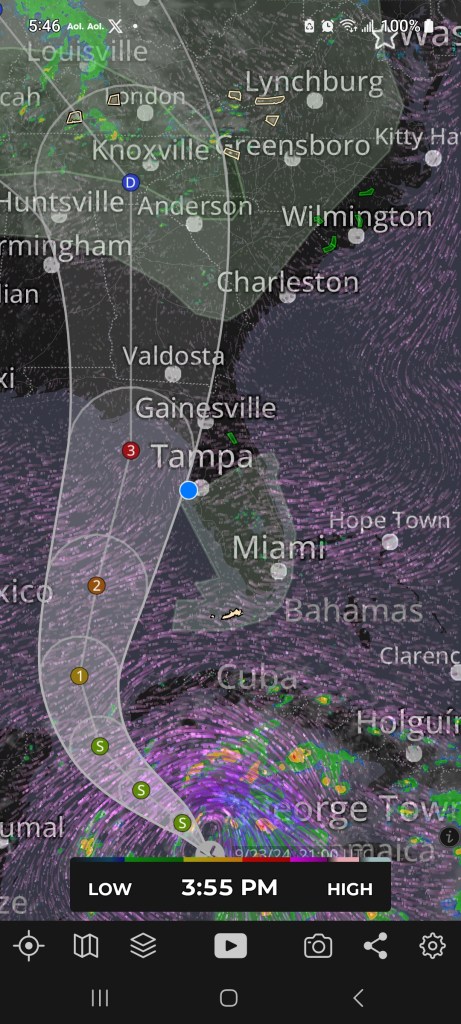
As I write this, there is a real storm brewing, both within and without. The image below is a weather map of the hurricane that may soon hit my area, forcing me to evacuate. As someone living in an RV, evacuation is usually mandatory in situations like this, and so I find myself facing the possibility of having to leave my bed in the middle of a crash caused by overdoing it.
The threat is very real, and so the importance of pacing is now at a level that I can’t ignore. I must prioritize rest and recovery immediately, because no matter what state I’m in, I’ll have to get out of bed and go to the hurricane shelter at the church next door if an evacuation order comes.
This situation has made it even clearer to me how crucial the practice of witnessing vrittis and pratyayas is. Without that practice, I would be overwhelmed by anxiety and fear right now. The mind wants to run wild with worst-case scenarios and worries, but I have been training myself to simply witness these thoughts as they arise. They are just thoughts—just mental fluctuations. They do not have to define my experience. I can stay present, calm, and clear, ready to deal with whatever comes.
So, after I finish writing this post, I’m going into massive rest and be prepared mode. The practice of pacing has never been more critical. This is an extreme red-flag situation, and I hope it serves as a reminder to all of us with chronic fatigue syndrome: sometimes, the urgency of rest is not just about avoiding a crash; it’s about survival.
Take a look at the image below—it’s a reminder to me, and hopefully to you as well, that life can throw storms at us both literally and metaphorically. But with the right practices, we can remain centered and grounded, ready to face what comes with a steady mind and a rested body.
As we face the storms within and around us, may we find peace in the stillness of our hearts. May all beings be free from suffering and the causes of suffering. May all beings experience happiness and the causes of happiness. May we all find safety, strength, and well-being on our journeys, no matter how turbulent the path. May we be guided by wisdom, anchored in compassion, and find harmony in the unfolding of each moment. And in these times of uncertainty, may we remember our interconnectedness, and may we all be held in grace and peace.
Living with Myalgic Encephalomyelitis/Chronic Fatigue Syndrome (ME/CFS) is a daily challenge that requires careful management of energy, rest, and stress. For many, finding effective ways to support the body and mind in this delicate balance can feel overwhelming. Yoga Nidra, often called “yogic sleep,” is a practice that has been gaining attention for its potential benefits in managing ME/CFS. In this post, I’d like to delve deeper into how Yoga Nidra can be a valuable tool for those of us living with this condition.
Supporting Pacing Strategies
Pacing is a cornerstone of managing ME/CFS. It involves carefully balancing activity and rest to avoid pushing the body beyond its limits, which can lead to crashes or flare-ups of symptoms. Yoga Nidra can be an invaluable tool in this regard. Unlike other forms of exercise or even traditional yoga, Yoga Nidra requires no physical exertion. It allows you to take restorative breaks throughout the day, helping to prevent crashes by providing your body with deep rest during these intervals.
For those of us with ME/CFS, the ability to find rest without further depleting our energy is crucial. A short Yoga Nidra session can be integrated into your daily routine as a way to recharge and reset, making pacing more manageable and effective.
Activating the Parasympathetic Nervous System
Another significant benefit of Yoga Nidra is its ability to activate the parasympathetic nervous system (PNS). The PNS is responsible for the “rest and digest” functions of the body, helping to counteract the stress response driven by the sympathetic nervous system. For many people with ME/CFS, the nervous system is often in a heightened state of alertness, which can contribute to symptoms of fatigue, pain, and cognitive dysfunction.
Yoga Nidra guides you into a state of deep relaxation, which helps shift the body from a state of stress to one of rest and repair. This activation of the PNS can reduce the chronic stress response that often accompanies ME/CFS, promoting a sense of calm and helping to alleviate symptoms over time.
Providing Deep Rest and Restoration
One of the most challenging aspects of ME/CFS is the experience of unrefreshing sleep. Despite spending many hours in bed, individuals with ME/CFS often wake up feeling just as tired as before they slept. Yoga Nidra offers a unique solution by guiding practitioners into a state of consciousness that is deeply restful, yet different from regular sleep.
During Yoga Nidra, the body can enter a state that mimics sleep in terms of physical rest, but the mind remains in a state of relaxed awareness. This state of conscious relaxation allows for a deeper level of restoration, potentially offering benefits that complement or even enhance the effects of regular sleep. For people with ME/CFS, incorporating Yoga Nidra into the daily routine could help alleviate the feeling of exhaustion that persists despite adequate sleep.
Releasing Tension and Promoting Emotional Healing
Living with a chronic illness like ME/CFS can lead to the accumulation of physical and emotional tension. Over time, this tension can exacerbate symptoms and contribute to feelings of stress and overwhelm. Yoga Nidra includes practices like body scanning and guided visualization, which can help release deep-seated physical tension and promote emotional healing.
As you are guided to focus on different parts of the body and engage in positive affirmations or visualizations, Yoga Nidra provides a safe space for processing and releasing stress. This can lead to a sense of lightness and relief, which is particularly beneficial for those dealing with the chronic stressors associated with ME/CFS.
Enhancing Mental Clarity and Focus
Cognitive symptoms, often referred to as “brain fog,” are a common and frustrating aspect of ME/CFS. The deep relaxation and stress reduction provided by Yoga Nidra can contribute to improved mental clarity and focus. By calming the nervous system and promoting a state of balance, Yoga Nidra may help reduce the cognitive fatigue that many with ME/CFS experience.
Regular practice of Yoga Nidra can support mental clarity by reducing the underlying stressors that contribute to brain fog, allowing for moments of greater focus and cognitive function.
Conclusion: A Gentle Tool for Holistic Support
Yoga Nidra is not a cure for ME/CFS, but it can be a gentle and effective tool for supporting overall well-being. By offering deep rest, aiding in pacing, calming the nervous system, and promoting emotional and physical healing, Yoga Nidra can be an integral part of a holistic approach to managing ME/CFS.
If you’re living with ME/CFS and looking for new ways to support your health, I encourage you to explore Yoga Nidra. Whether you start with short, guided sessions or incorporate it into your daily routine, this practice may offer the kind of deep rest and healing that’s so essential for managing the complexities of ME/CFS.
Watch a Video:
The vides below is just some the many Yoga Nidra videos online of and are a good place to start. There are countless Yoga Nidra videos on YouTube, each offered by different instructors. Take your time exploring until you discover the ones that resonate best with you.
The occasional Yoga Nidra session can be a relaxing and rejuvenating experience, helping you reduce stress, improve sleep, and promote overall well-being whenever you feel the need for a deep, restorative rest. May this practice bring you peace and renewal, gently supporting your journey toward greater well-being.
This yoga Nidra for insomnia will take you easily into a light hypnagogic state and then down into a deep state of sleep.
Learn more about ME, get involved in support, advocacy, and activism at www.meaction.net
Living with ME/CFS can be challenging, both physically and mentally. However, there are simple practices that can offer relief and support our overall well-being. One such practice is smiling meditation, a technique that involves intentionally smiling and experiencing its positive effects.
Personal Experience:
As someone who has lived with ME/CFS for over 30 years, I understand how difficult it can be to find practices that offer relief without draining our limited energy. Smiling meditation has become a small but powerful part of my daily routine. Even on days when I feel most fatigued, this practice often shifts my mood and energy in surprising ways.
The Benefits of Smiling Meditation:
For individuals living with ME/CFS, smiling meditation has the potential to uplift mood, reduce stress, and enhance the overall quality of life. Even when we don’t feel like we have something to smile about, simply engaging in the act of smiling can trigger a shift within us.
The Science Behind It:
Studies have shown that smiling—even when intentional—activates the parasympathetic nervous system, which helps our body enter a relaxed state. This shift reduces stress hormones like cortisol and promotes the release of endorphins, the body’s natural mood lifters. For those of us with ME/CFS, who often experience heightened stress and emotional challenges, this natural mood enhancement can be particularly valuable.
How to Practice Smiling Meditation:
Find a Quiet Space: Sit or stand in a comfortable, relaxed position. Close your eyes and take a few deep breaths.
Begin Smiling: Bring a gentle smile to your face, allowing it to spread throughout your entire being.
Feel the Warmth: Maintain the smile and notice how it feels. With each breath, imagine your smile expanding and radiating outward.
Invite Joy and Compassion: Focus on the sensations of joy, peace, and compassion that arise within you. Allow yourself to embrace these emotions for a few minutes, or as long as feels comfortable.
What I love about smiling meditation is that you don’t need something to smile about for it to work. Simply invoking the energy of a smile triggers those feel-good chemicals. It’s a gentle way to reconnect with moments of lightness when energy is low and life feels heavy.
Managing Stress with Smiling Meditation:
ME/CFS is often accompanied by heightened stress levels and a compromised stress response system. Smiling meditation acts as a natural stress reliever by activating the body’s relaxation response. Even if the smile is initially forced, it sends signals to the brain that everything is okay, leading to a decrease in stress hormones and a more relaxed state. This practice can help individuals with ME/CFS manage stress and cultivate a calmer mindset.
Enhancing Mindfulness:
When we engage in smiling meditation, we naturally bring our attention to the present moment. By closing our eyes and focusing on a pleasant memory or imagining a joyful scene, we deepen our mindfulness practice. Mindfulness can be a powerful tool for individuals with ME/CFS, helping us stay grounded, manage symptoms, and cultivate self-compassion.
After completing your smiling meditation, you might consider gently transitioning into mindful breathing or a body scan, allowing your newfound sense of calm and joy to deepen. These mindful practices, when done together, can amplify their benefits.
Fostering Connection:
Smiling is contagious and has the potential to foster positive social interactions. When we smile, we not only uplift our own mood but also create a ripple effect, influencing those around us. For individuals with ME/CFS, who may face social isolation, smiling meditation can serve as a reminder of the power of connection. It can act as a catalyst for improved relationships, fostering empathy and support.
Reflection:
As you finish your smiling meditation, take a moment to reflect: How does it feel to smile, even when things are difficult? How might this practice shift your perspective throughout the day?
Final Thoughts:
The practice of smiling meditation, when incorporated into daily life, can contribute to a more positive outlook, reduced emotional distress, and increased resilience. By cultivating moments of joy and relaxation, we can experience a greater sense of well-being amidst the challenges of ME/CFS. Smiling meditation can complement other self-care practices, such as mindfulness, relaxation techniques, and pacing strategies, in creating a holistic approach to managing symptoms.
Remember, even on the hardest days, this simple practice can offer a moment of joy and lightness. Despite the challenges, we can create positive change within ourselves. Smiling meditation empowers us to focus on the present and to fully embrace the beauty and blessings that surround us, even in the midst of struggles.
By cultivating a practice of smiling meditation, we unlock the limitless potential that lies within us, weaving a tapestry of resilience and well-being that shines brightly in the face of ME/CFS.
Let us cherish the moments of joy, the moments of peace, and the moments of connection that arise from our practice of smiling meditation. As we do so, even if only for a moment, we can cultivate a profound sense of well-being that transcends the challenges of ME/CFS, illuminating our path forward, toward a brighter future.
As we integrate smiling meditation into our daily routine, we begin to realize that even a small act, like smiling, holds the power to uplift our spirits, foster connection, and bring us moments of lightness and joy. It’s these small moments that can make a big difference in our journey with ME/CFS.
May we all find inner peace, happiness and wellbeing on our journey with Chronic Fatigue Syndrome. 🙏
Essential Pacing Strategies for Managing ME/CFS Symptoms and Enhancing Quality of Life
Introduction
Living with ME/CFS presents unique challenges that demand careful attention to our body’s signals. In this blog post, I delve into my personal journey with ME/CFS, highlighting the crucial warning signs—increased tinnitus, more frequent and intense headaches, and bouts of insomnia—that alert me when I’m pushing beyond my limits. By sharing these experiences, I aim to illuminate how such signals can guide us in effectively managing our daily activities.
Additionally, I will explore practical pacing strategies that have been instrumental in helping me maintain balance and prevent burnout. Pacing is not merely a management tactic; it’s a vital skill for anyone with ME/CFS looking to enhance their quality of life while navigating the complexities of this condition. Whether you are newly diagnosed or seeking to refine your approach to symptom management, this post aims to provide valuable insights into living more harmoniously with ME/CFS.
Please note that this is a comprehensive post, and while it’s filled with valuable information, it’s also an excellent opportunity to practice pacing. To avoid overwhelming your cognitive abilities or triggering PEM, consider reading one section at a time and then taking a break after each section. This approach not only prevents cognitive overload but also exemplifies the very concept of pacing we discuss here.
What is Pacing and Why is it Important?
Pacing is a self-management strategy that involves balancing activity and rest to avoid triggering or worsening symptoms of ME/CFS. It’s about learning to recognize your body’s warning signs, such as increased fatigue, pain, or cognitive difficulties, and responding appropriately by slowing down or taking breaks. For those of us with ME/CFS, pacing is an essential skill because it helps us manage our limited energy reserves, prevent crashes, and maintain as much functionality as possible. Unlike pushing through exhaustion, pacing respects the body’s limits and allows for gradual recovery, making it a cornerstone of living well with chronic fatigue syndrome.
Recognizing and Responding to Your Body’s Signals
Learning to listen to your body’s signals is a critical skill for managing ME/CFS, as these cues are often the first indication that we need to adjust our activities to prevent worsening symptoms. Understanding these signals and how to respond to them can help you maintain a better balance and prevent relapses.
Identify Your Unique Signals
Everyone’s experience with ME/CFS is different, which means that the warning signs of overexertion can vary widely from person to person. Common signals might include increased fatigue, pain escalation, mental fog, or specific symptoms like tinnitus and headaches, as I experience.
Use Mindfulness Techniques
Mindfulness can be a powerful tool in recognizing when you’re beginning to overdo it. Regular mindfulness practice, such as meditation or mindful breathing, enhances your awareness of the body’s subtle signs before they become pronounced. It allows you to take timely action, such as stepping back or resting, which can be crucial in managing your energy reserves.
Set Clear Boundaries
Once you recognize your warning signs, it’s crucial to set boundaries to prevent pushing beyond your limits. This might mean limiting the time you spend on certain activities, taking frequent breaks, or having strict rest periods throughout the day. Setting boundaries is not about restricting your life but about enabling more consistent activity levels without crashes.
Educate Your Support Network
Share your experiences and what you’ve learned about your warning signs with family, friends, and caregivers. Educating them about your specific needs and signals can help them support you better. They can also assist you in monitoring your activities and provide reminders to take breaks or slow down when needed.
Embrace Flexibility in Daily Plans
Living with ME/CFS requires adaptability. Some days you might feel capable of more, and other days less so. Listening to your body means being flexible with your plans, adjusting them according to your current state. It’s important to give yourself permission to rest without guilt when your body demands it.
By integrating these practices into your daily life, you can better manage ME/CFS and avoid the severe crashes that come from overexertion. Listening to and respecting your body’s signals isn’t just about avoiding pain or discomfort; it’s about cultivating a sustainable lifestyle that accommodates your health and enhances your well-being.
1. Detailed Guide to Pacing Techniques
Activity Management:
Pacing involves careful management of daily activities to prevent overexertion and to manage energy levels effectively. To implement pacing, start by identifying the times of day when your energy is at its peak. Divide tasks into smaller, manageable segments and alternate them with rest periods. For example, if you find mornings are when you have the most energy, schedule important tasks during this time and allow for breaks or less demanding activities as your energy wanes.
Energy Conservation Methods:
Conserving energy is key to effective pacing. Here are some techniques to help manage your energy more efficiently:
Task Simplification: Break down activities into simpler steps and focus on one small task at a time.
Use Tools and Aids: Utilize tools and aids to reduce physical effort, such as using a stool while cooking or an electric scooter for shopping.
Prioritize and Delegate: Prioritize activities based on their importance and delegate when possible. Focus on what must be done and what can be postponed or handled by others.
2. Understanding Post-Exertional Malaise (PEM)
Definition and Triggers:
Post-Exertional Malaise (PEM) is a hallmark symptom of ME/CFS, characterized by a worsening of symptoms following even minor physical or mental exertion. Triggers for PEM can vary widely among individuals but often include surpassing physical or cognitive energy limits.
Strategies to Avoid PEM:
To avoid PEM, it’s crucial to learn to recognize its early signs and adjust your activities to prevent overexertion. Here are some strategies:
Monitor and Measure Activity Levels: Use tools like activity trackers or keep a symptom diary to identify patterns that lead to PEM.
Establish Baselines: Determine the amount of an activity you can do without causing a flare-up, and do not exceed this limit. Gradually increase activity levels as tolerated.
Rest Before You Feel Tired: Resting before signs of fatigue can prevent an onset of PEM. Integrate regular rest periods into your schedule regardless of your current energy level.
Incorporating these pacing techniques and strategies to manage and avoid PEM can help individuals with ME/CFS maintain a more stable condition and improve overall quality of life.
Personal Experience:
Pacing Awareness: What are your body’s warning signals that your starting to overdo and need to slow down, rest and respect your boundaries?
I’m a bit out of practice but the three most reliable signals I get that I’m overdoing it and need to slow down are the tinnitus gets much louder, my headaches get more frequent and more intense and then if I’m still overdoing it, the insomnia kicks in.
All of these signals happened before my recent crash, but I hadn’t stressed myself to that point in a long time and so I forgot their importance.
I’m recovering now. The insomnia is gone, the headaches and tinnitus are still present but less intense. And now that I’m recovering from this Flare-up, I’m currently not overdoing activities anymore, lesson learned, and at least for now, its time to be very aware and careful and to rebuild my reserve of spoons.
I don’t completely regret overdoing it though. As uncomfortable and painful as it is, I was creatively involved producing material for blog posts and thus hopefully benefiting others.
But, I would like to get better at pacing when I’m not just laying in bed. When my capacity for activity has increased thats when I most need to remember and practice pacing.
Like with traffic lights, I have green, orange and red signals too. I’m currently in red heading to orange rather than further into red.
When fully in red, I have to stop everything and all sensory input.
When orange I need to listen to and respect the signals my body is giving me so that I can get back to green instead of back to red.
Green is as good as I get and I can do my laundry, clean my home, go for short walks, etc. I aspire to be green as much as I can. And it all mostly depends on pacing and recognizing and respecting my body’s signals.
What are your bodies warning signals that your starting to overdo and need to slow down, rest and respect your boundaries?
What are your body’s signals that you are green, yellow or red?
Conclusion
Mastering the art of pacing is an essential strategy for anyone living with ME/CFS. By understanding your body’s signals and learning how to respond to them appropriately, you can significantly improve your quality of life and manage the symptoms of this challenging condition more effectively. As we’ve explored in this post, pacing isn’t just about managing energy; it’s about nurturing a deep connection with your body, recognizing its signals, and respecting its limits.
Whether you’re identifying your red, orange, and green signals, implementing practical pacing techniques, or learning to prevent Post-Exertional Malaise, each step you take is a move toward better health and greater stability. Remember, pacing is a skill that improves with practice and patience. It requires continuous adjustment and attunement to your body’s needs.
I encourage you to share your experiences and tips on pacing in the comments below. What strategies have worked for you? How do you recognize and respond to your body’s warning signals? Let’s support each other in our journeys and build a community where everyone feels empowered to manage their ME/CFS with confidence and hope.
Let’s continue to support each other and grow stronger together.
Together, we can navigate the complexities of chronic illness with resilience and grace.
For more insights and updates, consider subscribing to this blog.
Thank you for reading, and may your path toward wellness be filled with many moments of peace and achievement.
Does your PEM have different levels to it based on how much you over-do it?
When I was still able to hold a part time job back around 2003, my boss needed me to come up with a way to communicate where I was in my cycle of PEM.
The system I came up with was based upon the traffic lights – red, yellow and green. When I was green, I was feeling my best and had the greatest capacity for activity but still within the limits of needing to be mindful and to be much less active than normal people- like a green traffic light it meant I was good to go as long as I obeyed the green level limitations of MECFS. Yellow meant warning, be prepared to stop if needed. This was a mild PEM. And I knew if I didn’t slow down and rest that I could end up at red. Red meant if I didn’t stop everything, including all sensory input and go to bed, that I would crash and end up in bed for, days, weeks or months.
So then, I could tell my boss, who had fibromyalgia and so was very accommodating, that I was orange heading for red, and she knew what that meant, and I could lighten my activity level correspondingly, thus avoiding a full on crash.
At other times I would be orange heading for green. This meant I was still needing to be careful, but that my carefulness was paying off and that I was heading in a good direction. I rarely got to green, but when I did, that was a good day. Green was essentially my best, but still very limited place.
I also began to identify and recognize the symptoms associated with each level. To make this long story shorter I’ll just mention the three main signals my body would give. First is an increase in the volume of the tinnitus. Second is an increase in quantity and intensity of headaches. Third is the arrival of insomnia.
With increased tinnitus I was heading for red, if I didn’t cut back on my activity level appropriately. With an increase in headaches, I was firmly in orange and still heading for a serious crash if I didn’t slow down and rest. By the time the insomnia started I was definitely red heading for a crash of epic proportions – completely bed ridden with earplugs and an eye mask with my only option for activity being calm abiding meditation in order to be as calm as I could be while waiting for my body to settle.
This system has helped me to navigate my activity and rest levels enabling me to have my best life possible with this horrible debilitating illness. Currently, I am mostly homebound and can only work for myself. But this traffic light system has remained relevant in helping me to navigate my day to day existence. Such as whether I can take a shower or not. Whether I can wash my dishes or not. And, when I need to stay in bed and do nothing, etc.
That’s enough about that for now. It has been, for me, a very helpful metaphoric practice enabling a more successful navigation of activities relative to symptoms.