Month: July 2025

  • 🌌 Where All Directions Bow to Stillness

    🌌 Where All Directions Bow to Stillness

    A Gaze Beyond the Gaze: In the spirit of sky-gazing


    Lie back beneath the vaultless dome,
    Let clouds drift by like thoughts unknown.
    Release the mind, release the name,
    No watcher here, no self to claim.

    Let sky be sky, and mind be wide,
    No grasping hand, no need to guide.
    Just openness, so vast, so clear—
    What you are looking from is here.

    Into the Mystic

    At the very top of the world, if one were to sit in silence at the North Pole, something curious happens. The compass loses its ordinary song. North, so long held as our guide, vanishes beneath your feet. South radiates in every direction. East and West dissolve—not into chaos, but into the poetry of motion. Clockwise becomes East, counterclockwise becomes West. And you, the still point, are held at the axis where meaning begins to soften.

    This is not just a geographic curiosity. It is a mirror of the mind.

    In the Dzogchen tradition, we are invited to rest not merely in the knowing mind (sems), but in that which knows mind itself—sems nyid, the nature of mind. It is not something we manufacture through effort, nor something distant to be attained. It is nearer than near, always already present—like Polaris in the night sky, unmoving, while all else revolves.

    To sit at the North Pole and gaze upward is to dwell at a kind of worldly axis mundi, a symbol of rigpa, the primordial knowing that does not grasp, does not fabricate. From this point, every direction—every thought, every emotion, every arising—moves outward as “South”: the play of relative reality (kun rdzob), full of beauty, full of sorrow, full of form. But the upward gaze, the still recognition of what-is, lifts us toward don dam, the ultimate view.

    It is not about choosing one over the other. Dzogchen does not ask us to abandon the world or reject the compass. Rather, it invites us to see clearly—to understand that East and West only appear when we begin to walk. That what we call “direction” arises with perception. That what we call “self” arises with identification. And when we rest, utterly still, not pushing, not naming—we begin to recognize what has always been there.

    The pristine mind

    Pure like the Pole Star. Silent like the snow. Empty of essence, yet luminous with love.

    Here, the relative view—the dance of thoughts and roles and rotating worlds—becomes the compassionate display of awareness itself. And the absolute view is not elsewhere. It is this, ungrasped, unspoiled, ever-present.

    The moment we stop insisting on where we are going, we arrive.

    And from that still place, compassion flows—not as a moral stance, but as a natural warmth. Wisdom arises—not as accumulation, but as clarity. Loving-kindness becomes the language of space itself. We begin to see, not through the eyes of effort, but through the vision of what the Tibetans call lhun grub: spontaneously present, effortless, free.

    Let us walk, then, not to reach a place, but to circle gently like the sun, like the stars, around the stillness at the center. Let us live our days as if the compass rose were etched in light upon our hearts. Let us love without needing direction, forgive without needing map.


    At Earth’s bright peak where compass spins,
    “Up” becomes where silence begins.
    Polaris keeps her vigil there—
    a lantern hung in starry air.

    And you, dear traveler, have never been far from it.
    Even now, it calls you home.

    🙏🕊🙏

  • I Spy a Baby Fig

    I Spy a Baby Fig

    (A Porch Garden Poem of Love and Gratitude)

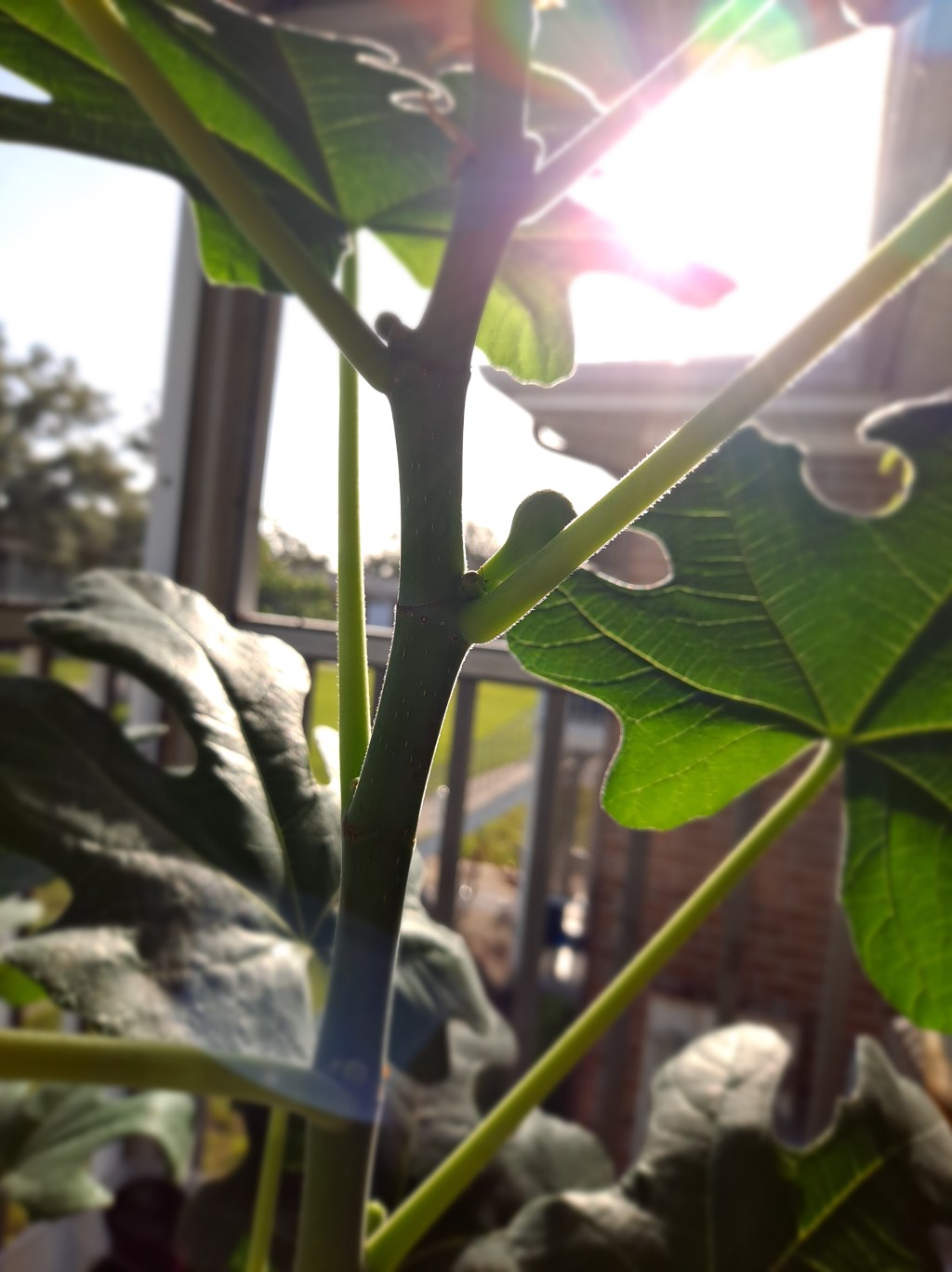
    I spy a baby fig, so small, so green—
    a quiet promise in the morning sheen.
    Beneath the sun’s warm, golden, slanted ray,
    it clings with hope and hums the light of day.

    O tender bud upon this gentle stem,
    you wear the crown of life’s bright diadem.
    Your tiny shape, so humble, yet profound,
    whispers that grace is always all around.

    Dear figling, thank you for your trust to grow,
    for drawing sweetness from the soil below.
    You teach my heart to reach and not to race,
    to ripen slow within love’s patient grace.

    This porch, my world; this light, my sacred hymn—
    you bloom beside my breath, my prayer, my limb.
    Together still, we meet the dawn anew:
    a fig, a soul, a sky in shades of blue.

    So thank you, little fig, for simply being—
    a green delight, a silent song worth seeing.
    You are a gift, a wink from God above…
    a leafy sprout of ever-growing love.

    🌱✨💛

  • July 24th, 2025 – Synchronized Global Meditations for World Peace, Love & Harmony: Everyone is Welcome 🙏

    July 24th, 2025 – Synchronized Global Meditations for World Peace, Love & Harmony: Everyone is Welcome 🙏

    Global Well-Being: The Creation of Healing, Love, and Compassion Every Day and in Every Way—Especially on the New Moon, Around the World.

    Hello Everyone! Let’s come together again as a Global Community!

    Every New Moon, we have the opportunity to unite in prayer and meditation to create strong waves of vibrational intentionality—focusing on Loving-kindness and compassion. Whether we connect at the same time globally or in planetary waves, the energy we co-create will ripple outward, touching all life with healing and love.

    Join us on the New Moon, whenever it appears in your location, to synchronize in a global community of prayer and/or meditation. Together, we can generate waveforms and vibrations of love and compassion that will radiate outward from this day onward and forever. These vibrations will continue to blanket the Earth and all life in a palpable field of love and compassion, benefiting all.

    The more love and compassion we consciously generate, the more of it becomes available in our world and universe for others to feel, enjoy, and be nurtured by. Let’s co-create a living, vibrating, pulsing web of love and compassion that surrounds the planet, lifting us all to higher vibrations of healing, love, and compassion for every being.

    May we, the Earth, and all life benefit.

    May we all be free from suffering, greed, hatred, and delusion, as well as the causes of suffering. May we all have wholesome happiness and its causes. May our prayers and meditations be a cause for global healing and well-being for all now and forever.

    Join us in any way that works best for you.

    On the New Moon, let’s come together with strong intentions, knowing that others around the world will be doing the same. Choose a time that works for you—whether it’s morning, noon, or evening—and feel the connection with others participating across the globe. If you’re interested in helping create a wave of meditation and prayer, consider meditating or praying at either 7:00 a.m. or 7:00 p.m. in your local time zone. By doing this, we create an ongoing ripple effect of love and compassion, as hour by hour, new groups of people join in, sending vibrations of loving-kindness around the planet. Together, we build a global field of healing energy that envelops the Earth and all its inhabitants. However you choose to participate—whether in synchronized times or your own flow—the collective intention benefits all.

    Feel free to express your love and compassion in any form. Be creative. Share poetry, reflections, prayers, or experiences in the comments below, and let’s fill the Earth’s atmosphere and beyond with vibrations of love and compassion. All forms of loving-kindness are welcome here.

    Loving-kindness and compassion are universal qualities.

    No one person or group owns them. They transcend race, nationality, religion, or background. The more we can nurture and generate these heart qualities, the more we collectively benefit. How beautiful is that?

    If you plan to join us, let us know in the comments!

    Your presence matters. Sharing your intentions, reflections, or experiences can inspire and motivate others. Together, we’re building a global community of healing and love. Whether you join for 5 minutes or longer, or in synchronized or local time, every contribution is valued.

    If you have suggestions for how we can better collaborate on generating global waves of loving-kindness and compassion, please share them below!

    One love, 💕🙏

    May we all live in peace and harmony, with love and respect for ourselves, each other, the Earth, and all life throughout time and space.

    🙏🕊️🙏

  • To God’s Holy People

    To God’s Holy People

    (First Letter)

    This is the first in a new series of prayerful letters to my friends, rooted in Christian love and contemplative stillness.

    Thank you, Linda. 💛

    To God’s Holy People—
    You who dwell in mystery and light,
    in silence and in the ache of hope—
    I bring no sermon, no long-winded tale,
    only this stillness,
    and these few words
    like drops of dew upon a thirsty leaf:

    Let us always thank God, the Father of our Lord Jesus Christ,
    when we pray for all that lives.

    I pray for you all—
    not only with words,
    but with the hush between thoughts,
    and the warmth that rises quietly
    when I remember your faces.

    When I write to you, I am also praying.
    Because every word carries an offering,
    and every silence listens for the Beloved
    who speaks in all languages of the heart.

    May you all be happy and well.
    May you all be free from suffering
    and the causes of suffering.
    May you all dwell in the peace of Christ,
    which surpasses all understanding.

    May your roots go deep into the soil of love.
    May your hands remain open,
    even when the world seems closed.
    And may the grace of our Lord Jesus Christ—
    the light that walked among us,
    and still walks within—
    be your lamp in the valley
    and your joy on the hilltop.

    May these few words become a door
    to the Word that cannot be spoken—
    the whisper in the whirlwind,
    the still small voice,
    the love that speaks in silence
    and calls us home.


    In Honor of the Quiet Ones

    For those quiet souls of the past—monks, sages, mystics, poets—
    who carved beauty from stillness and silence,
    often with nothing more than a candle and a pen.
    Their tools were few, but their hearts were wide open.
    In those spare rooms, they made space for eternity.

    🙏💛🙏

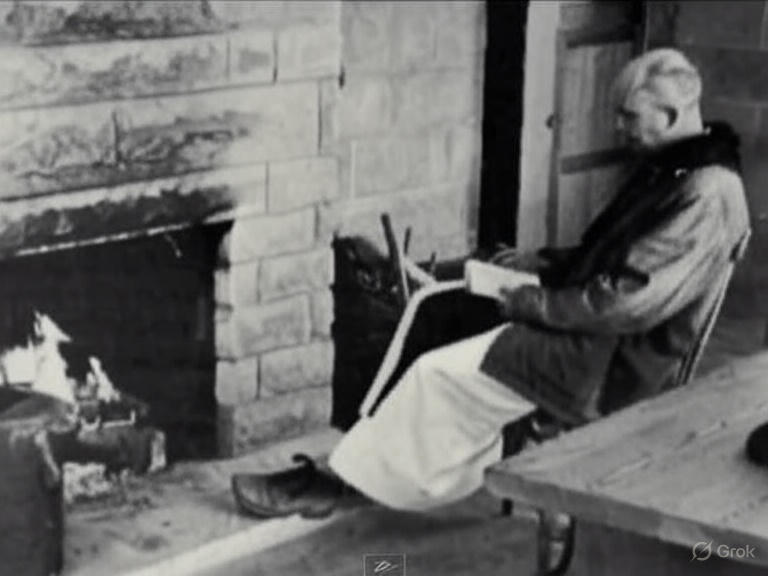
  • Finding God in Silence: Thomas Merton’s Invitation

    Finding God in Silence: Thomas Merton’s Invitation

    Thomas Merton taught that silence is essential for spiritual growth and communion with God. Discover how inner stillness can become a sacred path in today’s noisy world.

    In these noisy and anxious times, I find myself returning again and again to the writings of Thomas Merton. His deep reverence for silence speaks to a longing I see in myself and in so many of us—for inner peace, for stillness, and for God. I offer this reflection in the hope it might inspire others, especially my Christian brothers and sisters, to make more space for silence in their lives.

    Thomas Merton strongly believed that the soul requires silence for its well-being and spiritual growth. He saw silence not just as the absence of noise, but as a space for inner listening, contemplation, and connection with one’s true self and with God.


    • Silence as a Basic Human Need:
      Merton argued that silence and solitude are essential for all individuals, not just hermits or monks, to hear the “deep inner voice” of their true self.

    • Interior Silence:
      He distinguished between exterior silence (absence of external noise) and interior silence (stillness of thoughts and desires). Interior silence allows for a deeper connection with God and self.

    • Silence and Communication:
      Merton didn’t see silence and communication as opposing forces. Instead, he believed that silence is essential for meaningful communication, allowing for thoughtful expression rather than just empty chatter.

    • Silence and Spiritual Growth:
      He believed that silence provides a space for prayer, contemplation, and a deeper understanding of oneself and God. It allows one to move beyond superficiality and experience a more profound connection with the divine.

    • Silence as a Pathway to God:
      Merton emphasized that silence, particularly interior silence, is a place where one can encounter God’s presence and experience a sense of intimacy with the divine.

    • The World’s Lack of Silence:
      Merton observed that the modern world is often filled with noise and distraction, making it difficult for individuals to find the silence they need for spiritual growth. He saw the need for places and practices that foster silence and solitude.

    • Finding Silence in the Everyday:
      While acknowledging the challenges of finding silence in a noisy world, Merton encouraged individuals to seek moments of quiet reflection and stillness in their daily lives.


    • A Simple Contemplative Practice

      Find a quiet place. Sit comfortably, with your hands resting in your lap. Gently close your eyes. Begin with this prayer from the heart:

      “Lord, I am here for You alone. Let me be still in Your presence.”

      Let the prayer fade into silence. Don’t try to think or feel anything in particular. Simply rest in God’s presence, like a child leaning into their Father’s arms.

      If thoughts arise, gently return to the stillness with a phrase like:

      “Be still and know…” or “You are my refuge and peace.”

      This is not about doing or achieving. It is about allowing. As St. John of the Cross wrote,

      “The soul that is pure and simple and empty of all things… can be filled with God.”

      Remain for just a few minutes—or as long as grace allows. End by offering a word of thanks. That’s all.


    • Silence as a Gift:
      Merton viewed silence as a precious gift that can lead to spiritual awakening, self-discovery, and a deeper relationship with God.


    Maybe today, just for a few minutes, let yourself sit quietly.

    Not to accomplish anything. Just to listen.


    “Be still, and know that I am God.”

    — Psalm 46:10

    🙏🕊🙏

  • Strive always to speak the truth, but temper your words with kindness. 🙏

    Strive always to speak the truth, but temper your words with kindness. 🙏

    We often think truth must be hard-edged — something we must deliver, even when it wounds. But truth is not a weapon. It’s a light. And kindness is the soft cloth that filters it gently.

    This aphorism invites us to speak honestly, without hiding or twisting, but to do so in a way that honors the heart of the other. Kindness doesn’t dilute truth — it gives it roots.

    In a world full of quick takes and sharp opinions, may we practice truth with gentleness. May our speech carry both clarity and care.

    🙏🕊🙏

  • Shouldn’t We Be Calling Jesus Immanuel?

    Shouldn’t We Be Calling Jesus Immanuel?

    …for God is truly with us—here, now, always. 🙏

    Father God,

    Open our eyes to see that You are not a silent watcher from afar, but a living presence dwelling within—Immanuel, God with us.

    Reveal to our hearts that You are not distant, but near. Let us feel You not only around us but within us—in our very breath, in the silence between thoughts, in the stillness that anchors our lives.

    May we come to recognize Your nearness not just in sacred texts or holy places, but in the hidden sanctuary of our own souls.
    Help us awaken from the old belief in a faraway God, and instead know the truth:
    You live within us.
    You guide our steps.
    You bring peace into every moment.

    For it is written:
    “The kingdom of God is within you.”Luke 17:21


    “Immanuel” is a Hebrew name meaning God with us. It first appears in the book of the prophet Isaiah:

    “Therefore the Lord himself will give you a sign: The young woman will conceive and give birth to a son, and will call him Immanuel.”Isaiah 7:14

    In Hebrew, the word for “young woman” is almah—not specifically “virgin,” but a young woman of marriageable age. Later, when the Hebrew scriptures were translated into Greek, almah became parthenos, meaning virgin. This Greek rendering shaped how the Gospel of Matthew understood Isaiah’s words—not only as a message for the people of Isaiah’s time, but as a sacred promise fulfilled in the birth of the Messiah.

    “She will bear a son, and you are to name him Jesus, for he will save his people from their sins.”Matthew 1:21

    “All this took place to fulfill what had been spoken by the Lord through the prophet: ‘Look, the virgin shall conceive and bear a son, and they shall name him Immanuel,’ which means, ‘God is with us.’”Matthew 1:22–23

    These verses give us two sacred names, each rich in meaning and revelation.

    Jesus is the English rendering of the Greek Iēsous, which is the translation of the Hebrew Yeshua—a shortened form of Yehoshua, meaning God saves or God is salvation. Through centuries and languages, the name became Jesus, but the heart of it remains unchanged: God saves.

    So to call him Jesus (Yeshua) is to speak a name filled with compassion and mercy—a name that reaches toward healing, restoration, and hope.
    To call him Immanuel is to affirm that this saving God is not far, but with us—within us.

    Both names are true.
    Jesus—our Savior.
    Immanuel—our Companion.

    Many Christians hold that Jesus is the one and only Son of God, born of a virgin by divine mystery. This is a sacred and central truth of the Christian tradition, which has been passed down to us through the ages—a truth that continues to shape the hearts and hopes of millions.

    And yet, in the quiet space of shared contemplation, we may also recognize that Immanuel—God with us—is not bound to one person or one moment in history. The Spirit of God moves beyond boundaries and dwells wherever love awakens, wherever compassion flows.

    God continues to be born into this world—in unexpected places, through unlikely people, and in every heart that says yes to love.

    “Very truly I tell you, no one can see the kingdom of God unless they are born again.”
    John 3:3

    Through these words, Jesus (Yeshua) invites us not only to believe in his birth, but to share in it—to awaken, to be renewed, to be born of the Spirit. In this light, Immanuel is not a one-time event, but an ever-deepening reality. God’s nearness is not locked in the past—it is happening now, within us, again and again.

    So yes, let us call him Jesus, the one whose name means God saves.
    And let us also call him Immanuel, for God is truly with us—here, now, always.


    A Quiet Benediction

    The name that saves, the name that stays—
    Yeshua speaks through every age.
    Immanuel whispers in the soul—
    “I am with you. You are whole.”

    🙏🕊🙏