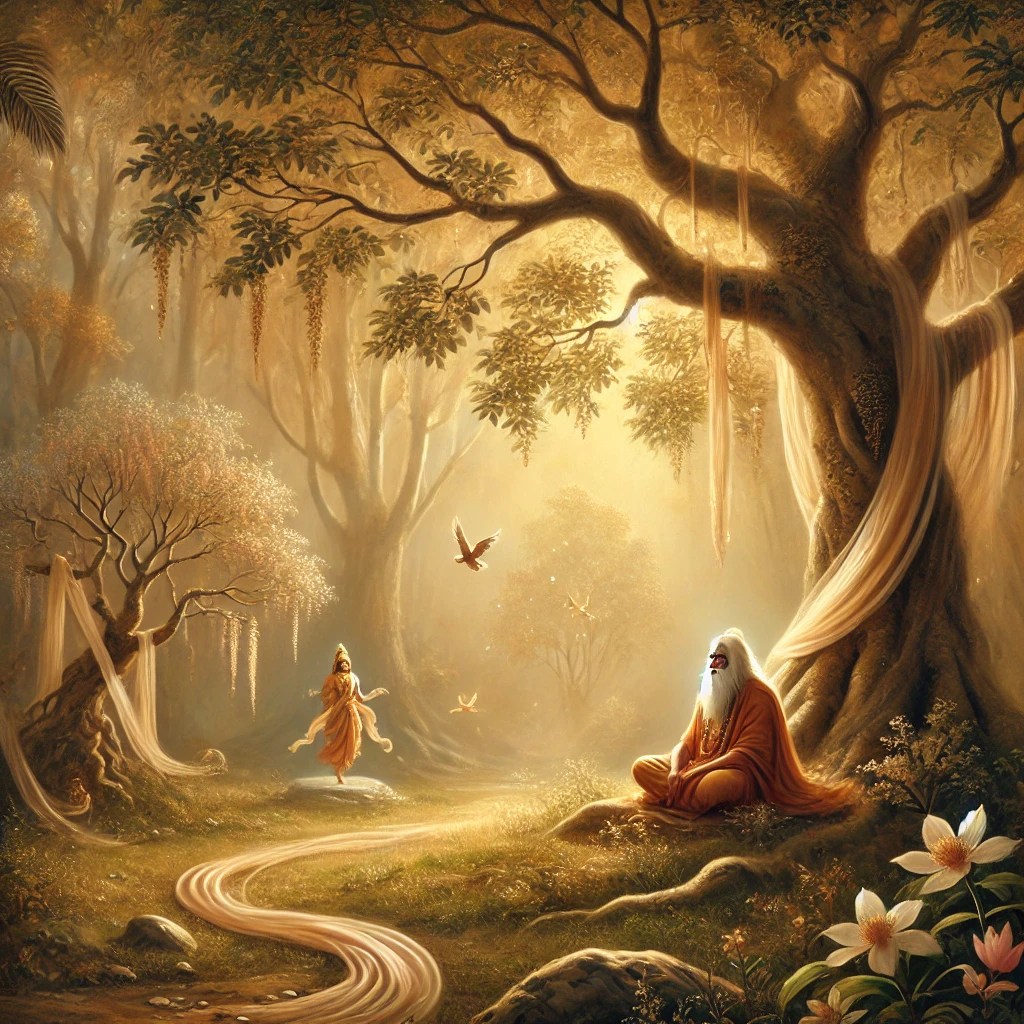
As we begin our exploration of the Ramayana through Venkatesananda’s version, it’s fascinating to revisit the early stages of this epic tale, particularly through the lens of Valmiki’s own transformation. In this version, we are reminded of how the sage first heard the Ramayana from Narada and later expanded upon it after a transformative experience with the hunter and his divine encounter with Brahma. This opening passage introduces us not only to the story of Rama but also to the profound personal growth of Valmiki, a theme that resonates deeply with our own spiritual journeys.
One particular quote stands out:
“Yet, the mystery that even he could lose his temper and thus risk losing the merit of his asceticism intrigued him.”
This moment captures a crucial aspect of the human condition—our struggle to control our emotions, even after years of spiritual practice. For Valmiki, witnessing the hunter’s cruelty toward the birds brought forth both compassion and anger, leading him to curse the hunter. It’s a reminder that even great sages can lose their temper, risking their spiritual merit. For me, the Dalai Lama’s teachings on anger come to mind here—anger is often seen as the opposite of love, and when we give in to it, we lose touch with our pristine, true nature. But the important lesson is that we can always return to our senses, regain our inner peace, and continue on the path of righteousness.
This story, to me, also inspires compassion for ourselves. If even Valmiki, with all his ascetic discipline, could slip into anger, we too can forgive ourselves for the times we fall short. The key is recognizing these moments, learning from them, and using them as opportunities to realign with our higher purpose. Valmiki’s regret and his ability to transform his curse into a verse is a powerful reminder that even our missteps can lead to something greater, if approached with the right mindset.
In this retelling, Valmiki’s divine encounter with Brahma affirms the purpose of his story. Brahma reassures him that the verse he uttered, born out of both anger and compassion, is a blessing. From this moment of emotion, a profound epic was born—a story that would inspire righteousness, compassion, and wisdom for generations. This theme of duality—anger and compassion, curse and blessing—reflects the constant struggle humanity faces with its own dual nature.
What I find particularly compelling in this passage is how the Ramayana is positioned as medicine for a world in turmoil, a story that speaks to the heart of our modern struggles. Today, as in Valmiki’s time, people are often disconnected from their conscience, their true nature, and their pristine mind. This disconnect creates inner chaos, much like the mental fluctuations Valmiki experienced. The Ramayana, with its timeless wisdom, offers a path back to harmony with the divine. It reminds us that even in moments of anger or despair, there is always a way to transform that energy into something positive.
Valmiki’s transformation from anger to inspiration is a beautiful metaphor for our own lives. In the same way that he found his path through a moment of passion, we too can use our struggles as stepping stones toward greater understanding and compassion. The passion that Valmiki felt for the hunter’s cruelty was ultimately transformed into the creation of a story that would inspire righteousness and compassion for millennia.
As we continue this journey through the Ramayana, let us reflect on how we, too, can transform our moments of anger or frustration into opportunities for growth. The challenges we face—both internally and externally—are all part of our spiritual journey. Valmiki’s story is a powerful reminder that the path to self-realization is not without struggle, but each step along the way can lead us closer to our true selves.
In future posts, we’ll continue to explore the wisdom within this and other versions of the Ramayana, diving deeper into how these timeless stories offer guidance for our modern lives. Let’s stay open to the lessons each passage holds and, like Valmiki, allow our moments of weakness to be transformed into opportunities for growth and inspiration.
🙏🕊️🙏
 Home Page: Inspirations of Love and Hope
Thank you 🙏