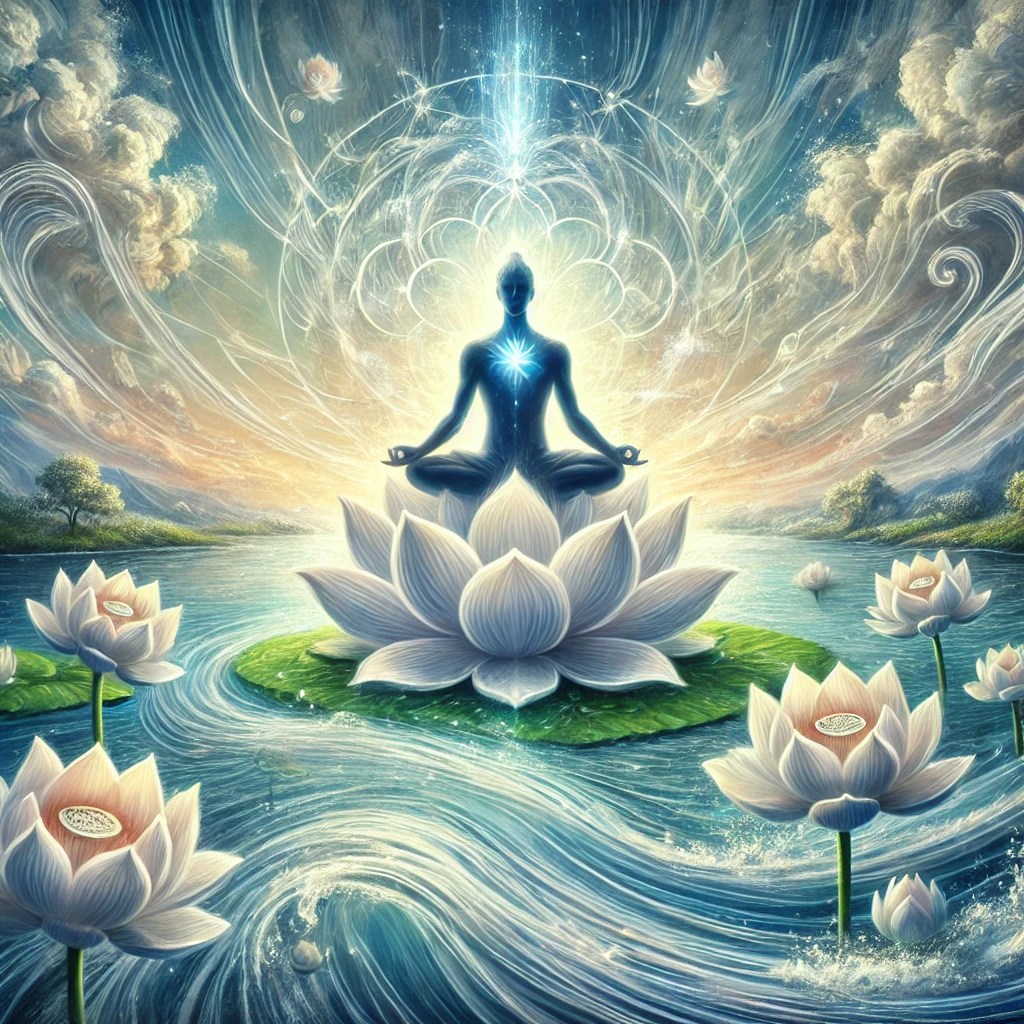
In the previous post, we explored the importance of discipline and consistent effort in mastering the mind. Now, Patanjali introduces the concept of detachment as a natural extension of that discipline. In Sutras 1.15 and 1.16, he reveals the deeper layers of non-attachment and how they lead to freedom from desires and aversions.
1.15: Detachment is the conscious effort to let go of desires for objects or experiences, both seen and unseen.
1.16: The highest level of detachment is achieved when there is freedom from the pull of even the most subtle mental events, leading to the experience of pure consciousness.
The Practice of Detachment
Detachment (vairagya) is the conscious practice of letting go of desires and aversions. In Sutra 1.15, Patanjali defines detachment as the effort to release attachments to both seen and unseen objects or experiences. This includes everything from physical possessions to emotional desires and even subtle expectations we might have about the future.
Detachment doesn’t mean indifference or suppression of desires. Instead, it is about witnessing these desires as mental events without becoming attached to them. By observing them with clarity, we free ourselves from the push and pull of likes and dislikes. The practice of Neti, neti. I am the witness. I am the Seer helps us recognize these desires as fluctuations of the mind, not reflections of our true self.
This conscious effort to release attachment is a key part of cultivating equanimity. The more we practice detachment, the more we are able to rest in the pristine mind—a state of awareness that is unaffected by the mind’s desires.
The Highest Level of Detachment
In Sutra 1.16, Patanjali describes the highest form of detachment: the ability to remain unaffected by even the most subtle mental events. At this level, we are free from the pull of both desires and aversions, and we rest in pure awareness.
This is not a state of cold detachment, but a profound experience of freedom. When we are no longer swayed by the mind’s constant fluctuations, we experience a deep sense of peace and clarity. This is the state of kaivalya—pure consciousness—where the Seer abides in its true nature, untouched by mental events.
Sogyal Rinpoche, a renowned meditation master, often emphasized that meditation is about cultivating non-distraction. The state of meditation is, at its core, a state of non-distraction—remaining present and aware, without being swept away by the mind’s fluctuations. This ties directly into Patanjali’s teaching on detachment. By practicing Neti, neti. I am the witness. I am the Seer, we cultivate non-distraction, allowing us to remain steady in the awareness of the Seer, free from the pull of desires and aversions. Meditation, in this sense, is the practice of being undistracted by mental events, resting in the stillness of the pristine mind.
The highest level of detachment doesn’t come overnight. It is cultivated through disciplined practice and sincere commitment, as outlined in the previous sutras. As we grow in our ability to let go of desires, we move closer to this state of pure consciousness, where the mind’s fluctuations no longer hold sway over us.
Bringing It Into Practice: Cultivating Detachment
Detachment is a practice that we can cultivate daily. Each time we notice a desire or aversion arising, we can pause and observe it as a mental event. Using the phrase “Neti, neti. I am the witness. I am the Seer,” we create space between ourselves and the desire, allowing it to pass without engaging with it.
This practice of letting go doesn’t mean we should avoid enjoying life or fulfilling our needs. Rather, it’s about maintaining a sense of equanimity, where we are not defined by our desires or driven by them. We can enjoy what life brings while remaining unattached to the outcomes, staying rooted in the awareness of the Seer.
Over time, this practice of detachment brings a deep sense of freedom. We begin to experience life more fully, without the constant push and pull of desires, aversions, and expectations. The mind’s fluctuations lose their power, and we rest in the stillness of the pristine mind.
The Joy of Non-Attachment
As we grow in our practice of detachment, we discover that non-attachment is not about losing joy but about gaining freedom. When we are no longer caught up in the mind’s desires, we experience a deeper, more authentic sense of happiness. This joy arises from being present in the moment, fully engaged with life yet unattached to any particular outcome.
Non-attachment also allows us to respond to life with greater compassion and wisdom. When we are not driven by our own desires, we can see situations more clearly and act from a place of inner stillness. This is the power of detachment—a freedom that allows us to experience life in its fullness, without becoming entangled in its fluctuations.
Coming Up Next:
In our next post, we will explore Sutras 1.17 and 1.18, where Patanjali describes the various stages of meditative absorption and the transition from mental events to deeper states of awareness. Join me as we continue this journey toward deeper clarity, peace, and self-realization.
🙏🕊️🙏
 Home Page: Inspirations of Love and Hope
Thank you 🙏