Tag: understanding

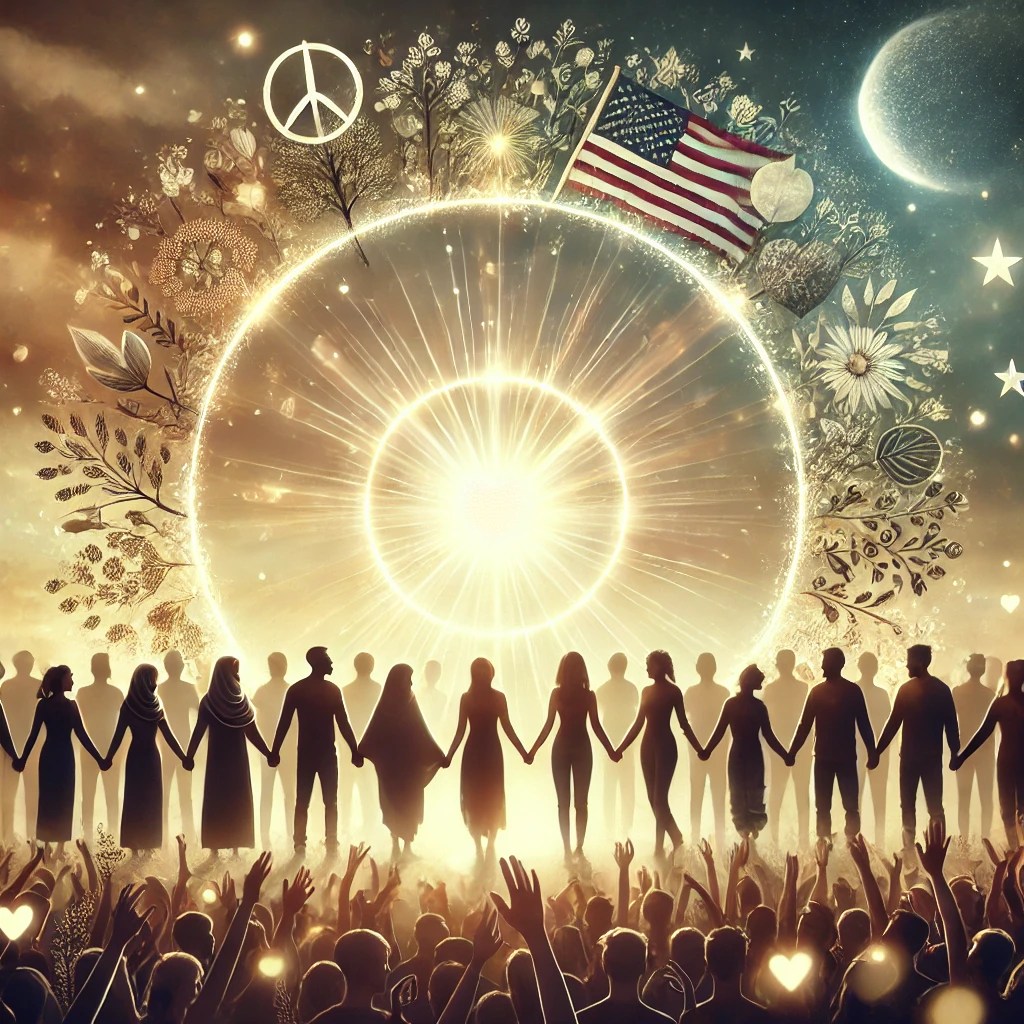
  • A Call for Unity and Peace in Times of Change

    A Call for Unity and Peace in Times of Change

    A Message of Unity, Compassion, and Hope Post-Election 2024: Guiding Toward Healing

    As our nation enters a new chapter, feelings of uncertainty and apprehension may naturally arise. Moments of great change often invite a range of emotions, from hope to fear, and everything in between. But no matter where we find ourselves on this journey, we are united by our shared humanity, a bond that transcends our differences and invites us to walk this path together with kindness, compassion, and respect.

    This is a time for each of us to look within, to cultivate a sense of peace, and to reach out to others with understanding. There is strength in unity, a quiet courage in compassion, and a powerful resilience in the bonds that connect us as one human family.

    Embracing Compassion and Understanding

    As we meet others who may feel differently or view this moment through a different lens, let us remember that each person’s perspective is shaped by unique experiences and aspirations. True compassion invites us to listen deeply, to respond with empathy, and to create a space where all voices can be heard and valued.

    “Be kind, for everyone you meet is fighting a hard battle.” — Attributed to Philo of Alexandria

    This simple truth reminds us that compassion can be the bridge between divided hearts. Each person carries their own worries and hopes, and when we meet them with kindness, we become part of their healing journey, and they, in turn, become part of ours.

    Cultivating Peace Within and Without

    Inner peace, like the stillness of a calm lake, allows us to respond to life’s storms without being overwhelmed by them. As we take time to nurture this peace within ourselves—through reflection, meditation, or prayer—we become more capable of bringing peace into the lives of those around us.

    “Peace comes from within. Do not seek it without.” — Buddha

    This insight encourages us to draw strength from our inner resources, so that we may become a calming presence in the world. By holding peace within ourselves, we radiate it outward, helping to ease the anxieties and fears of those who may feel unsettled.

    Acting with Justice and Integrity

    We are all stewards of justice and truth, called to act with integrity and fairness. In times of change, it is essential to root ourselves in these values, to seek justice not through division but through unity, compassion, and courage.

    “The best way to find yourself is to lose yourself in the service of others.” — Mahatma Gandhi

    This wisdom reminds us that our greatest purpose lies in serving the common good, that by dedicating ourselves to lifting others, we discover deeper meaning and connection. In a time when many feel uncertain, we can serve by offering hope, reassurance, and an example of calm, compassionate integrity.

    Seeking Unity in Diversity

    In the spirit of interfaith harmony, we honor the rich diversity of beliefs, practices, and traditions that make our world vibrant and beautiful. Unity does not mean uniformity; it means celebrating our differences and finding strength in our shared values of love, peace, and kindness.

    “We are not isolated beings, but like waves of the same sea, leaves of the same tree, flowers of the same garden.” — Seneca

    This truth, expressed through many spiritual and philosophical lenses, reminds us that our lives are interconnected. When we remember that we are “waves of the same sea,” we can face any change or challenge with a sense of solidarity and support.

    Walking Together in Hope and Trust

    Amid uncertainty, hope is a guiding light, illuminating the path toward a better future. Each small act of kindness, every effort toward understanding, every choice to respond with love instead of fear, builds a world in which we can all thrive.

    “Faith is the bird that feels the light and sings when the dawn is still dark.” — Rabindranath Tagore

    Hope, like faith, gives us strength to keep moving forward, even when the outcome is not yet clear. This is a time for us to trust in the power of love, kindness, and shared vision to lead us to a brighter day.

    Let us take this moment to breathe, reflect, and commit to walking this path with open hearts. Each of us has the power to bring calm, courage, and compassion to our communities. Together, as one human family, we can create a nation guided by wisdom, unity, and peace.

    In the spirit of unity, let us keep this in our hearts:

    May we find strength in our compassion, resilience in our hope, and peace in our shared humanity. May our actions be a reflection of the love, kindness, and understanding that the world needs now more than ever. And may we walk together, with purpose and harmony, toward a brighter tomorrow.

    🙏🕊️🙏

  • Embracing Universal Responsibility: Cultivating Unity Across Beliefs

    Introduction

    In our diverse world, the concept of Unity is fundamental to spiritual and personal growth. While many seek to realize this unity through religious or spiritual practices, historical conflicts and divisions have often overshadowed the shared principles of love and compassion. This post explores how individuals from all walks of life—whether religious, atheist, or agnostic—can cultivate virtues that lead to a deeper realization of Unity.

    The Role of Religion in Unity

    Most major religions advocate for values such as love, compassion, and interconnectedness. For example, Christianity emphasizes love for all people, Buddhism teaches compassion for all beings, and Islam advocates for community and charity. However, the interpretation and application of these teachings have sometimes led to division and conflict, rather than fostering the unity they were meant to inspire.

    The Challenges of Religious Division

    History is rife with examples of religious conflict, from the Crusades to contemporary sectarian violence. These conflicts, while often driven by complex socio-political factors, are frequently justified by religious differences. The resulting divisions highlight the challenge of aligning religious practice with the core values of unity and compassion.

    The Path to Universal Responsibility

    Universal responsibility involves recognizing our shared humanity and the impact of our actions on others. Cultivating virtues such as love, compassion, and understanding is key to fostering unity. Practicing these virtues can start with small, daily actions: showing kindness, listening empathetically, and striving to understand others’ perspectives.

    Cultivating Virtues Across Traditions

    Both religious and non-religious perspectives offer valuable insights into cultivating virtues. For instance, atheists and agnostics often ground their ethical principles in humanistic values and empathy rather than divine commands. By recognizing common values across different worldviews, we can build bridges and promote mutual respect. Regardless of belief, the pursuit of compassion and understanding remains a unifying thread.

    The Role of Personal Transformation

    Personal transformation is central to realizing unity. By reflecting on our own beliefs and behaviors, we can move beyond ego-driven perspectives and connect more deeply with others. Practices such as mindfulness, self-reflection, and community engagement help individuals grow in their capacity for empathy and understanding.

    Conclusion

    In summary, the realization of Unity requires a collective effort to embrace universal responsibility and cultivate virtues that transcend individual differences. Whether through religious teachings, secular values, or personal growth, fostering love and compassion can bridge divides and create a more harmonious world. Let us each take responsibility for nurturing these virtues in ourselves and our interactions with others.

    Reflective Questions:

    • How can you incorporate virtues like love and compassion into your daily interactions?
    • In what ways might your own beliefs or practices contribute to or detract from a sense of unity?
    • How can we overcome the challenges of historical and modern conflicts to build a more inclusive and understanding world?

    I’d love to hear your thoughts on this topic. How do you cultivate unity and responsibility in your life? Share your reflections and experiences in the comments below.

    🙏🕊️🙏

  • Poem: A Beacon of Hope: Compassion for Those with ME/CFS

    To all those who walk the path of ME/CFS,
    I extend my heartfelt understanding and compassion.
    In the depths of this invisible struggle, you are not alone.

    I see your relentless battle, your courage in the face of uncertainty.
    Each day brings a new set of challenges, and yet you persist.
    You navigate a labyrinth of symptoms, limitations, and unanswered questions,
    But through it all, your spirit remains unyielding.

    I know the longing for a life unrestrained,
    To run, to jump, to embrace the world with boundless energy.
    But please remember, your worth is not defined by your productivity.
    You are inherently valuable, simply by being.

    In the moments when fatigue engulfs you,
    When pain steals your breath,
    Find solace in the knowledge that you are seen, heard, and understood.
    Your struggle is valid, your emotions are valid.

    May you find comfort in the gentle embrace of self-compassion.
    Be kind to yourself, as you would to a dear friend.
    Listen to your body’s whispers and honor its need for rest.
    You are not lazy, you are replenishing your strength.

    Together, let us release the weight of guilt and judgment,
    Replacing them with a tender acceptance of our limitations.
    In this shared journey, let us find solidarity and support,
    Empowering one another through compassion and empathy.

    Remember, you are more than your illness.
    Your spirit shines bright, resilient and unbreakable.
    Even amidst the darkest days, you possess an inner light,
    A beacon of hope that guides you through the shadows.

    Though the road may be long and treacherous,
    Hold onto the flicker of hope that resides within your heart.
    Embrace the moments of reprieve, however fleeting.
    Celebrate the victories, no matter how small.

    For you are a warrior, embodying strength and grace,
    Navigating a path that only a select few can truly comprehend.
    May you find peace in the knowledge that you are loved,
    And that your presence in this world is immeasurably significant.

    Together, let us forge ahead, hand in hand,
    Supporting one another as we rise above the challenges.
    Know that you are not alone on this journey,
    And that, together, we can overcome, endure, and thrive.

    With unwavering compassion and understanding,
    A fellow traveler on the path of ME/CFS

    🙏🕊️🙏

  • An Appeal for Universal Ethics: Wisdom from the Dalai Lama

    Embracing Universal Ethics for a More Compassionate World

    In a world often divided by religious and ideological lines, the Dalai Lama’s appeal for secular ethics and peace offers a refreshing perspective. He reminds us:

    “For thousands of years, violence has been committed and justified in the name of religion. Religions have often been intolerant and still are in many cases. Religion is often abused or exploited – even by religious leaders – in order to further political or economic interests. For that reason, I say that in the twenty-first century, we need a new form of ethics beyond religion. I am speaking of a secular ethics that can be helpful and useful for over a billion atheists and an increasing number of agnostics. More integral than religion is our fundamental human spirituality. That is the affinity we humans have for love, benevolence, and affection – no matter what religion we belong to.”

    A Call for Reflection and Unity

    The Dalai Lama’s words resonate deeply, especially in times of division and conflict. As Christians, we are called to love our neighbors as ourselves (Matthew 22:39). This teaching aligns with the Dalai Lama’s vision of universal human values grounded in love, benevolence, and affection.

    Transcending Boundaries

    The message is clear: true spirituality transcends religious boundaries. It calls us to recognize our shared humanity and the fundamental values that unite us. This isn’t about diminishing the importance of our faith but about enriching it by embracing a broader, more inclusive perspective.

    Building Bridges of Understanding

    In embracing secular ethics, we are not abandoning our Christian principles but enhancing our capacity to connect with others, regardless of their beliefs. This approach can foster peace, understanding, and cooperation in a world that desperately needs it.

    A Personal Reflection

    Reflecting on these words, I find inspiration in the teachings of Jesus and the Dalai Lama alike. Both emphasize the power of love and compassion as guiding principles. As we navigate the complexities of the twenty-first century, let’s strive to embody these values in our daily lives, building bridges of understanding and unity.


    Discussion Points:

    1. How can we apply the Dalai Lama’s call for universal human values in our communities?
    2. What steps can we take to ensure our faith promotes love and benevolence rather than division?
    3. In what ways can we foster dialogue and understanding among different belief systems?
    4. How can we practice and model these universal ethics in our daily interactions?

    I invite you to share your thoughts and join the conversation in the comments below. How do you see these ideas impacting your life and community?

    🙏🕊️🙏

  • Communicating Effectively with Loved Ones Who Have Borderline Personality Disorder: Crafting Mindful Messages

    Crafting Mindful Messages: Effective Communication with Loved Ones Who Have Borderline Personality Disorder

    Communicating with someone who has Borderline Personality Disorder (BPD) can be challenging, but with mindful adjustments, it’s possible to foster understanding and reduce conflicts. Here are some guidelines and tips to create successful text messages that are more likely to be received positively.

    Understanding the Dynamics

    People with BPD often experience intense emotions and may interpret interactions differently. They might be more sensitive to perceived criticism or rejection. Keeping this in mind can help shape more empathetic and supportive communication.

    Guidelines for Crafting Effective Messages

    1. Be Clear and Concise
    • Why It Helps: Individuals with BPD often experience heightened emotional states, making it difficult for them to process long or complex messages. Clear and concise communication reduces the likelihood of misunderstandings and helps them focus on the main point without feeling overwhelmed.
    1. Express Empathy and Support
    • Why It Helps: Empathy and support are crucial for individuals with BPD, as they frequently feel misunderstood or isolated. Expressing empathy reassures them that their feelings are valid and important, fostering a sense of connection and trust in the relationship.
    1. Avoid Blame and Criticism
    • Why It Helps: People with BPD are highly sensitive to criticism and may perceive even mild comments as severe judgments. Avoiding blame and criticism helps prevent triggering defensive reactions and reduces the risk of escalating conflicts.
    1. Encourage Positive Action
    • Why It Helps: Suggesting positive actions provides a sense of direction and empowerment. For someone with BPD, feeling in control of their actions can reduce anxiety and promote healthier coping mechanisms, leading to more constructive outcomes.
    1. Validate Their Feelings
    • Why It Helps: Validation is a powerful tool for individuals with BPD, as it acknowledges their emotions without judgment. Validating their feelings helps them feel heard and respected, which can diffuse intense emotions and create a more open and understanding dialogue.
    1. Use “I” Statements
    • Why It Helps: “I” statements focus on your feelings and experiences rather than attributing blame. This approach minimizes defensiveness and makes it easier for the person with BPD to understand your perspective without feeling attacked.
    1. Offer Choices
    • Why It Helps: Offering choices gives individuals with BPD a sense of agency and control, which can be especially calming for them. It reduces feelings of helplessness and fosters cooperation by involving them in the decision-making process.
    1. Be Patient and Gentle
    • Why It Helps: Patience and gentleness are essential when communicating with someone with BPD, as their emotional responses can be intense and unpredictable. A patient and gentle approach helps create a safe and supportive environment, encouraging more positive interactions and reducing the likelihood of conflict.

    Examples of Text Messages

    Scenario 1: Feeling Misunderstood

    • Message from Person with BPD:
      “You never understand me! You always assume the worst about everything I do.”
    • Response Likely to Create Defensiveness:
      “That’s not true. You’re overreacting and being unfair.”
    • Response Likely to Be Received Positively:
      “I’m sorry you feel that way. I want to understand you better. Can you help me see what I’m missing?”

    Scenario 2: Expressing Anger

    • Message from Person with BPD:
      “I can’t believe you did that! You ruined everything!”
    • Response Likely to Create Defensiveness:
      “Calm down, it wasn’t a big deal. You’re making a mountain out of a molehill.”
    • Response Likely to Be Received Positively:
      “I see that you’re really upset. I didn’t mean to cause harm. Let’s talk about how we can fix this together.”

    Scenario 3: Feeling Abandoned

    • Message from Person with BPD:
      “You’re going out without me again? You must not care about me at all.”
    • Response Likely to Create Defensiveness:
      “You’re being ridiculous. I just need some time alone.”
    • Response Likely to Be Received Positively:
      “I can understand why you might feel that way. How about we plan something special together soon?”

    Scenario 4: Financial Unrealism

    • Message from Person with BPD:
      “I’m selling my car for $20,000. It’s worth it because I need the money!”
    • Response Likely to Create Defensiveness:
      “That’s way too much. No one will buy it at that price.”
    • Response Likely to Be Received Positively:
      “I hope you get the best price for your car. Maybe listing it at $5,000 OBO (Or Best Offer) could attract more buyers.”

    Final Thoughts

    Communicating with someone who has BPD requires patience, empathy, and a mindful approach. By following these guidelines, you can create messages that are more likely to be received positively and help maintain a healthier relationship.

    🙏🕊️🙏

  • Embracing the Journey: Navigating Life with Chronic Fatigue Syndrome

    A Reflection on Resilience and Compassion

    In the tapestry of time, woven with threads of understanding, empathy, and love, I extend my hand to you, a fellow traveler in the realm of chronic fatigue syndrome. It’s not just a condition; it’s a journey, a complex dance with our bodies and minds. You are not a hypochondriac; you are a warrior navigating the intricate landscape of your own existence.

    Having walked the same path, I resonate with the words, “After a lifetime of living with chronic fatigue syndrome, you’d think I’d be better at it now.” Each day, a new chapter unfolds, revealing the resilience within us. It’s not about perfection or mastery; it’s about learning, adapting, and discovering the strength that resides within, often unnoticed.

    Embrace the wisdom your journey has bestowed upon you. You’ve acquired an intimate knowledge of your body and mind, a profound understanding that defies the misconceptions others may hold. You are not defined by the fatigue that courses through your veins; you are defined by the courage with which you face each day.

    In this shared experience, let love be the balm that soothes the weariness, understanding the salve that heals the wounds unseen. As you unravel the layers of your existence, remember that every nuance of your journey contributes to the masterpiece of who you are.

    Encourage yourself to practice self-compassion daily. Recognize the victories, no matter how small, and celebrate the resilience that continues to blossom within. You are not alone in this intricate dance; we move together, step by step, navigating the ebb and flow of chronic fatigue syndrome.

    May your days be adorned with moments of understanding, empathy, and love – the pillars that support you on this remarkable journey.

    May your journey continue to be filled with peace, wisdom, and compassion. 🙏

    May we all embrace our journey with a compassionate and open heart, finding solace in the present moment on our path with ME/CFS.

    🙏🕊️🙏

  • Cultivating Inner Compassion: An Exercise in Self-Understanding

    Hi everyone,

    This is a new experiment in writing that I want to share. I find it easier to have compassion and understanding for others and not for myself. So, this is an imaginary letter from me to me, expressing compassion and understanding to myself.

    I’m posting it here because maybe a few of you, my fellow ME/CFS family, might be inspired to try writing yourself a letter of compassion and understanding for yourself.


    Dear Richard,

    I wanted to take a moment to express my heartfelt understanding of you and the challenges you face living with ME/CFS. I see the strength and resilience you demonstrate every day as you navigate the ups and downs of this illness. It’s not easy, and I want you to know that it’s okay to feel frustrated, exhausted, or overwhelmed at times.

    I understand that some days are harder than others, and it’s okay to take things one step at a time. Your journey with ME/CFS is unique, and there’s no right or wrong way to cope with it. I admire your courage in facing each day with determination and grace, despite the obstacles you encounter.

    Please remember to be gentle with yourself and prioritize self-care. You are not alone in this journey, and I am here to offer you my support, understanding, and compassion whenever you need it. You are worthy of love, understanding, and all the kindness in the world.

    With understanding and care,
    Richard

  • Embracing Forgiveness, Loving-Kindness, and Compassion: A Universal Call to Unity

    A Path to Healing and Unity Through Shared Spiritual Values

    In every spiritual tradition, there lies a core message of forgiveness, loving-kindness, and compassion. These virtues, transcending cultural and religious boundaries, unite us in our shared humanity. Whether through the teachings of Buddha, the wisdom of Jesus, or the insights of various spiritual paths, the call to embrace these qualities is clear and compelling.

    Forgiveness is a profound act of letting go. It is not about condoning wrongdoings but freeing ourselves from the burdens of anger and resentment. As the Dalai Lama teaches, forgiveness is a gift we give to ourselves, a step toward inner peace.

    Loving-Kindness, or “metta” in Buddhist practice, encourages us to extend unconditional love to all beings. Jesus exemplified this through his life, teaching us to love our neighbors as ourselves. In every smile, kind word, and act of generosity, we weave a tapestry of love that can heal and uplift.

    Compassion is the heart’s response to suffering. It compels us to act, to alleviate pain, and to offer solace. The teachings of various traditions remind us that compassion is not a passive feeling but an active force for good. Through compassion, we recognize our interconnectedness and our responsibility to care for one another.

    In these challenging times, let us draw from the wellsprings of our diverse spiritual heritages. Let us embrace forgiveness, loving-kindness, and compassion not just as lofty ideals, but as daily practices that transform our lives and the world around us.

    Together, we can create a world where these universal values are the foundation of our interactions, fostering unity, peace, and understanding among all people.

  • Lesson 2: ACIM Guided Meditation – “I have given everything I see in this room (on this street, from this window, in this place) all the meaning that it has for me.”


    In Lesson 2 of A Course in Miracles, we explore the concept that all the meaning we assign to the world around us is created by our own minds. This realization empowers us to step back from our automatic judgments, fostering a deeper awareness of how our thoughts shape our reality. By aligning with the teachings of Jesus and releasing our judgments, we can embrace a more compassionate and open-hearted view of the world. This post includes a guided meditation designed to help you internalize these insights, offering a pathway to inner peace, spiritual growth, and a deeper connection with the divine. Dive in and discover how this practice can transform your life.

    This practice aligns with the teachings of Jesus, who often spoke about the power of perception and the need to look beyond appearances. In Matthew 7:1-2, He teaches, “Do not judge, or you too will be judged. For in the same way you judge others, you will be judged, and with the measure you use, it will be measured to you.” ACIM encourages us to release judgment and embrace a more compassionate and open-hearted view of the world.

    As we practice this lesson, we move closer to a state of inner peace and love, reflecting the core message of Christ’s teachings. By understanding that we give meaning to our experiences, we gain the power to choose love and forgiveness, transforming our lives and relationships.

    Explore Lesson 2 of A Course in Miracles with us, and discover how this practice can lead to profound spiritual growth and a deeper connection with the divine.


    Here is a guided meditation to encompass the elements, themes, messages, and practices of Lesson 2 from A Course in Miracles:

    Find a comfortable position, either sitting or lying down, where you can relax and be free from distractions.

    Close your eyes gently and take a few deep breaths, allowing yourself to settle into the present moment.

    Bring your attention to your breath, feeling the sensation of each inhale and exhale.

    Reflect on the central theme of Lesson 2: “I have given everything I see in this room (on this street, from this window, in this place) all the meaning that it has for me.”

    Contemplate the idea that the meaning you assign to the things you perceive is based on your past experiences, beliefs, and interpretations.

    Acknowledge that you have the power to change the meaning you assign to objects, people, and situations by choosing to see them differently.

    With each breath, imagine releasing any fixed meanings or judgments you have assigned to the world around you, allowing them to dissolve like clouds in the sky.

    Visualize yourself stepping back from your perceptions, observing them with a sense of openness and curiosity.

    Feel a sense of liberation as you realize that you are not bound by the meanings you have given to things, but rather free to reinterpret them in any way you choose.

    Repeat the following affirmations silently or in your mind:

    “I am the giver of meaning to the world.”

    “I choose to see things differently.”

    “I open myself to new interpretations and understanding.”

    Allow yourself to rest in this space of creative freedom for a few moments, embracing the potential for growth and transformation.

    When you’re ready, gently bring your awareness back to your surroundings. Wiggle your fingers and toes, and slowly open your eyes.

    Take a moment to reflect on your experience, noticing any insights or shifts in perception that may have occurred.

    Remember that you can return to this meditation whenever you feel called to deepen your understanding of Lesson two.

    Questions

    1. How did contemplating ‘I have given everything I see all the meaning it has for me’ resonate with you?
    2. What new understandings or perspectives have emerged for you?
  • ACIM Lesson 1: Guided Meditation – “Nothing I see in this room [on this street, from this window, in this place] means anything.”

    Lesson 1 of A Course in Miracles introduces us to the foundational idea: “Nothing I see in this room [on this street, from this window, in this place] means anything.” This lesson challenges us to question the significance we assign to everything around us. By acknowledging the lack of inherent meaning in our perceptions, we invite a shift in perspective. This shift can lead us away from habitual judgment and towards a more open, peaceful state of mind, laying the groundwork for deeper spiritual insights and transformation.

    Lesson 1 of ACIM, which states, “Nothing I see in this room [on this street, from this window, in this place] means anything,” encourages us to question our perceptions and the meanings we attach to them. This practice aligns with Christ’s teachings on not judging by appearances and seeking deeper spiritual truths.

    Christ himself invited us to look beyond the surface and to find divine love and peace within. In John 7:24, He advises, “Do not judge by appearances, but judge with right judgment.” ACIM echoes this call, guiding us to let go of our preconceptions and open our hearts to a more profound spiritual experience.

    Approaching our perceptions with a fresh, non-judgmental perspective can lead us to a more peaceful and loving state of mind, which is at the heart of Christ’s message. By embracing this practice, we align ourselves with the teachings of Jesus, who constantly challenged us to love more deeply and to see beyond the material world.


    A guided meditation to encompass the elements, themes, messages, and practices of Lesson 1 from A Course in Miracles:

    Find a comfortable position, either sitting or lying down, where you can relax and be free from distractions.

    Close your eyes gently and take a few deep breaths, allowing yourself to settle into the present moment.

    Bring your attention to your breath, feeling the sensation of each inhale and exhale.

    Reflect on the central theme of Lesson 1: “Nothing I see in this room (on this street, from this window, in this place) means anything.”

    Contemplate the idea that the things you perceive with your senses hold no inherent meaning in themselves.

    Acknowledge that the meaning you assign to objects, people, and situations is based on your past experiences, beliefs, and judgments.

    With each breath, imagine releasing any preconceived notions or interpretations you have about the world around you, allowing them to dissolve like mist in the sunlight.

    Visualize yourself stepping back from your perceptions, observing them with a sense of detachment and curiosity.

    Feel a sense of freedom as you realize that you have the power to reinterpret the world and assign it new meaning.

    Repeat the following affirmations silently or in your mind:

    “I am willing to see things differently.”

    “I release all judgments and interpretations.”

    “I open myself to the possibility of new understanding.”

    Allow yourself to rest in this space of openness and receptivity for a few moments, embracing the potential for growth and transformation.

    When you’re ready, gently bring your awareness back to your surroundings. Wiggle your fingers and toes, and slowly open your eyes.

    Take a moment to reflect on your experience, noticing any insights or shifts in perception that may have occurred.

    Remember that you can return to this meditation whenever you feel called to deepen your understanding of Lesson one.

    Questions

    1. How did contemplating ‘Nothing I see means anything’ resonate with you?
    2. What new understandings or perspectives have emerged for you?