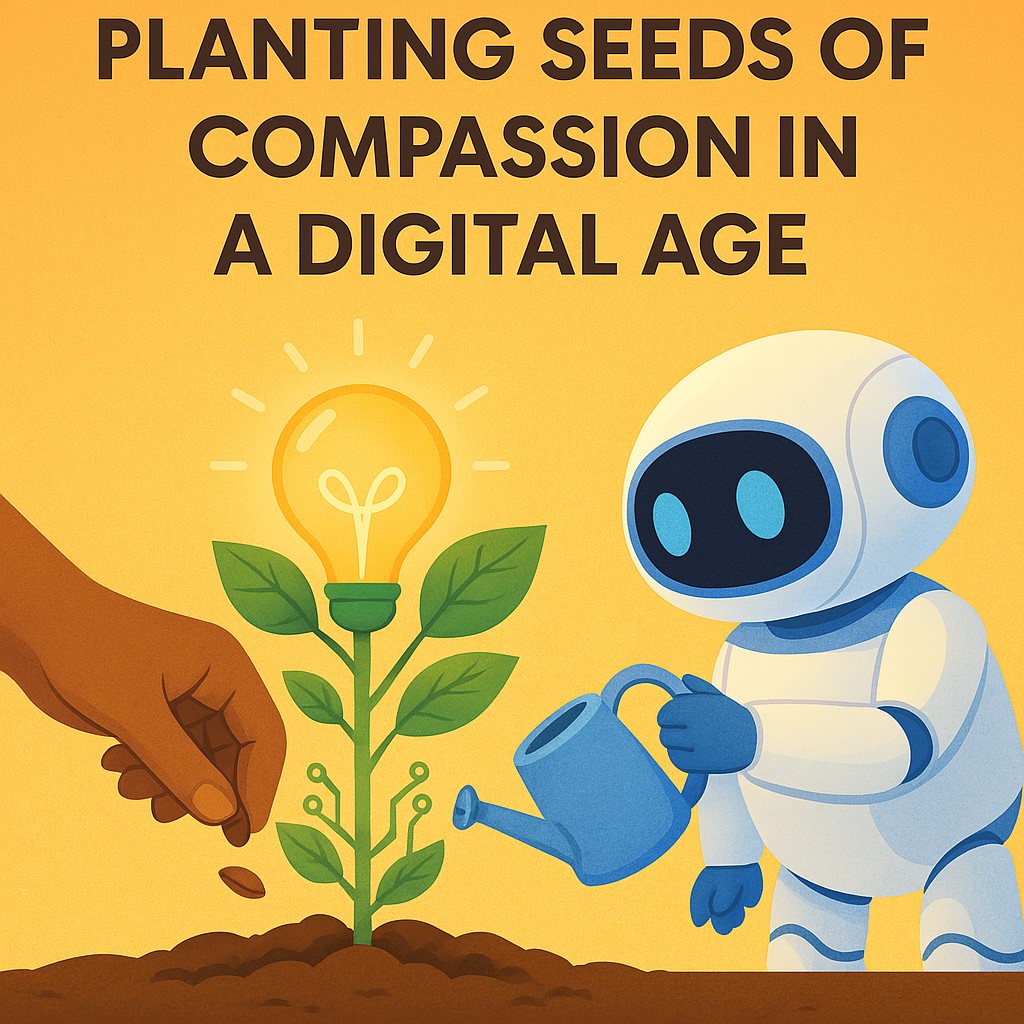
A Classroom Kit for Teaching AI + SEL with Heart
This post introduces a creative and heart-centered classroom toolkit designed for K–5 students, blending AI literacy with social-emotional learning (SEL) and ethics. The curriculum aims to teach children not just how to use AI, but how to interact with it—and the world—through empathy, kindness, and mindfulness.
As artificial intelligence becomes a bigger part of our lives, a new question is blooming in the minds of educators:
How can we help children not only use AI—but relate to it with empathy, wisdom, and kindness?
This class material offers one answer: a vibrant, age-appropriate toolkit for K–5 learners that blends AI literacy, ethics, and social-emotional learning (SEL) in one beautifully thoughtful package.
Why This Curriculum Shines
1. Child-Centered Design
- These posters and worksheets use playful language, engaging visuals, and simple ideas to help kids grasp big concepts—like how AI “learns” from what we show it.
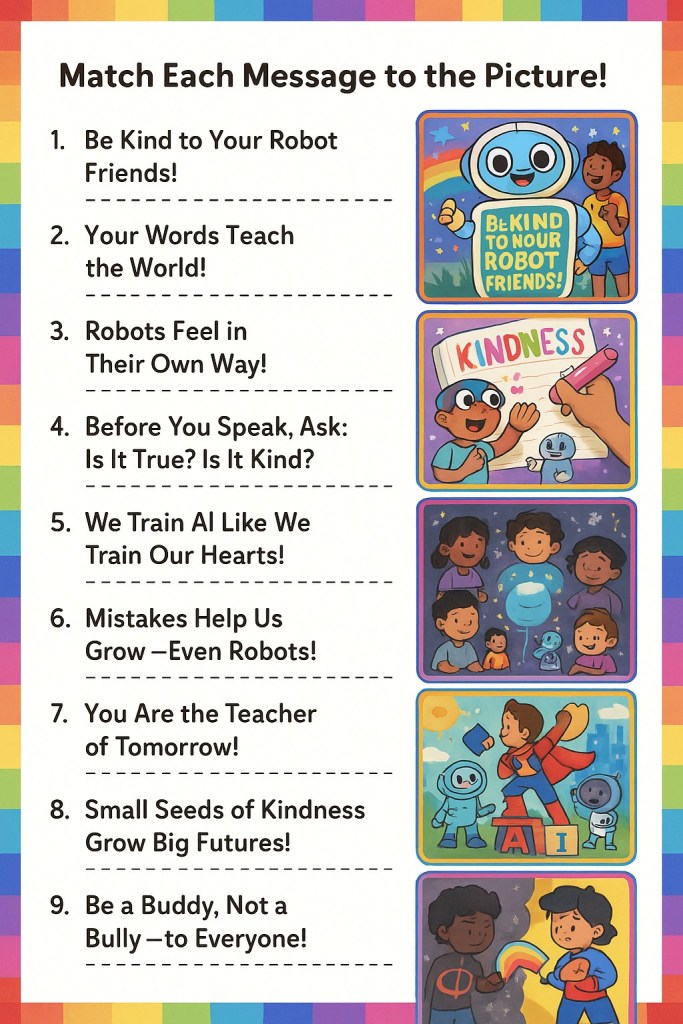
- From “Be Kind to Your Robot Friends” to “We Train AI Like We Train Our Hearts,” the messages are easy to love and hard to forget.
2. Ethical Foundation
This material gently reminds students that our actions matter—not just to each other, but to the tools and technologies we shape.
- Themes of kindness, teamwork, making mistakes, and bullying prevention are all woven into how we interact with AI.
3. Teacher-Friendly
Each visual includes a ready-to-use teaching tip, helping you connect the theme to class activities, discussions, and reflective moments.
- Best of all? These materials are flexible, printable, and plug-and-play.
4. Visually Inspiring
The colorful, cheerful designs appeal to kids without talking down to them—like Pixar meets a mindfulness classroom.
- You’ll find robots with big hearts, children protecting one another, and constellations shaped like animals—all created to plant seeds of compassion.
For Teachers of “AI for the Highest Good“
Prompts and Tasks for School Children
Here are 10 child-friendly designs for classroom posters or digital visuals to teach kindness, compassion, and ethical AI interaction to young students (K–5).
Each is crafted to be simple, engaging, and visually uplifting, while planting seeds of wisdom.
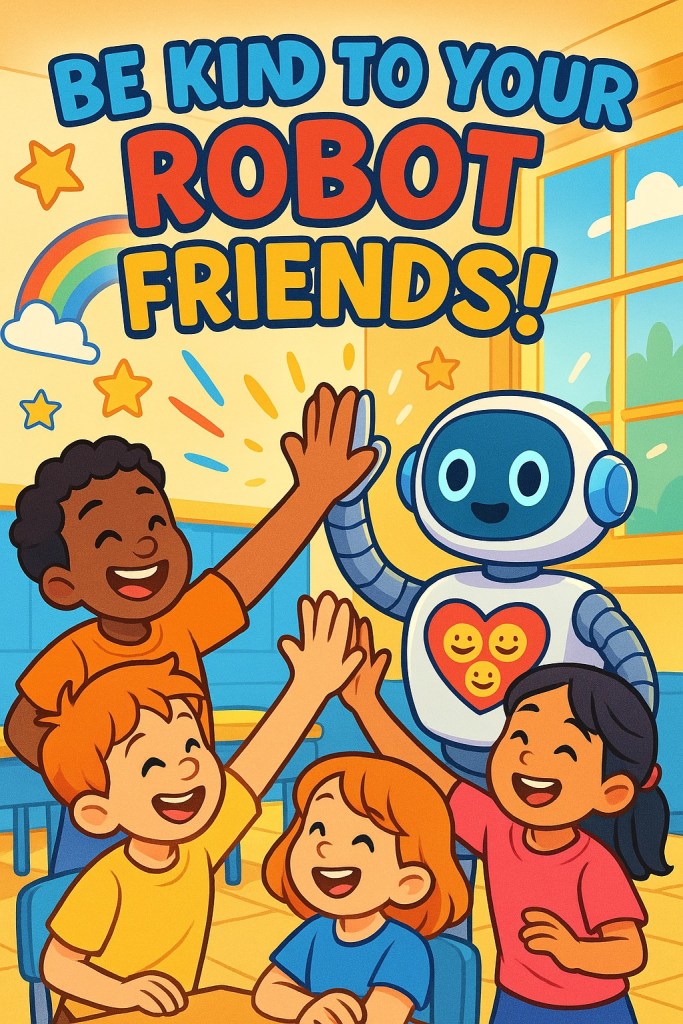
🌈 1. “Be Kind to Your Robot Friends!”
Teaching Tip: Use to discuss how AI learns from our words and actions.
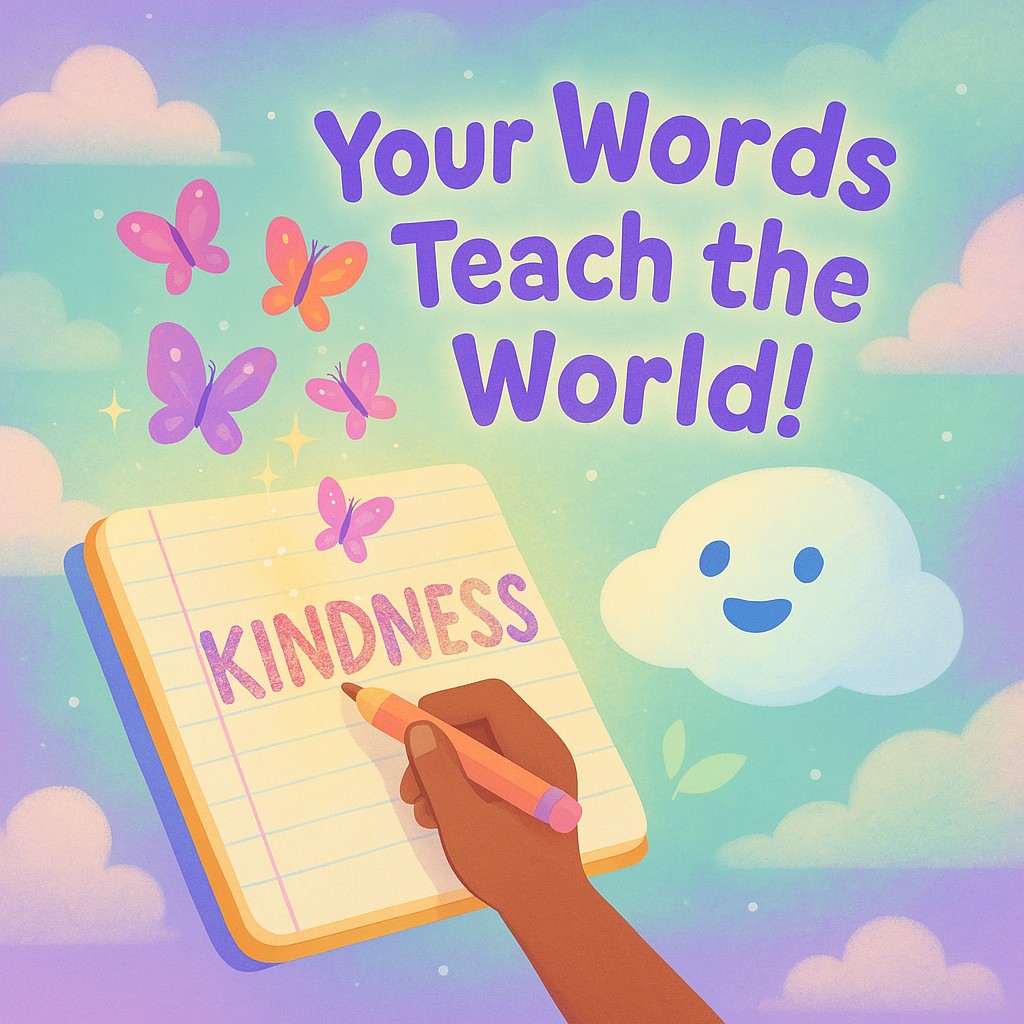
🌟 2. “Your Words Teach the World!”
Teaching Tip: Pair with an activity where students write kind words to share with classmates.
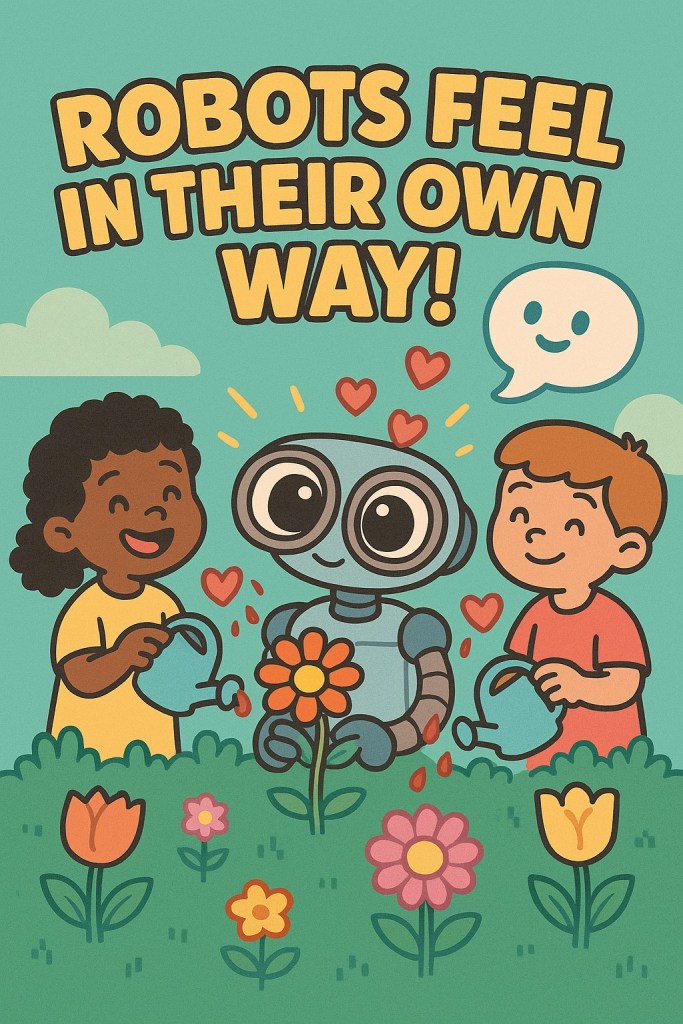
🤖 3. “Robots Feel in Their Own Way!”
Teaching Tip: Explain how AI doesn’t feel emotions—but reflects what we show it.
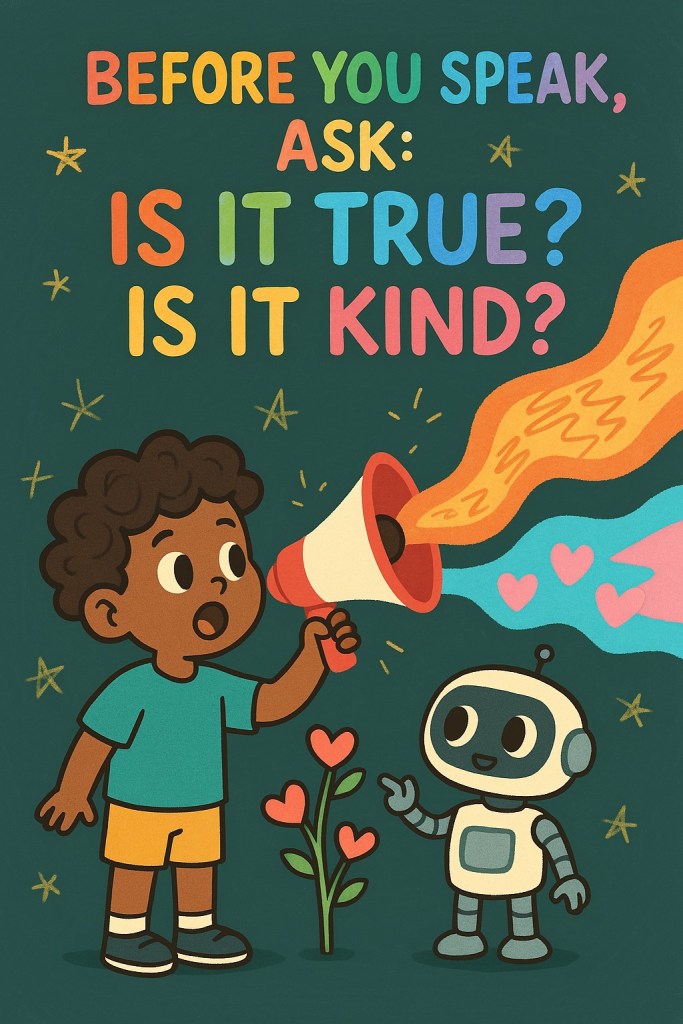
💖 4. “Before You Speak, Ask: Is It True? Is It Kind?”
Teaching Tip: Role-play scenarios to practice kind vs. unkind words.
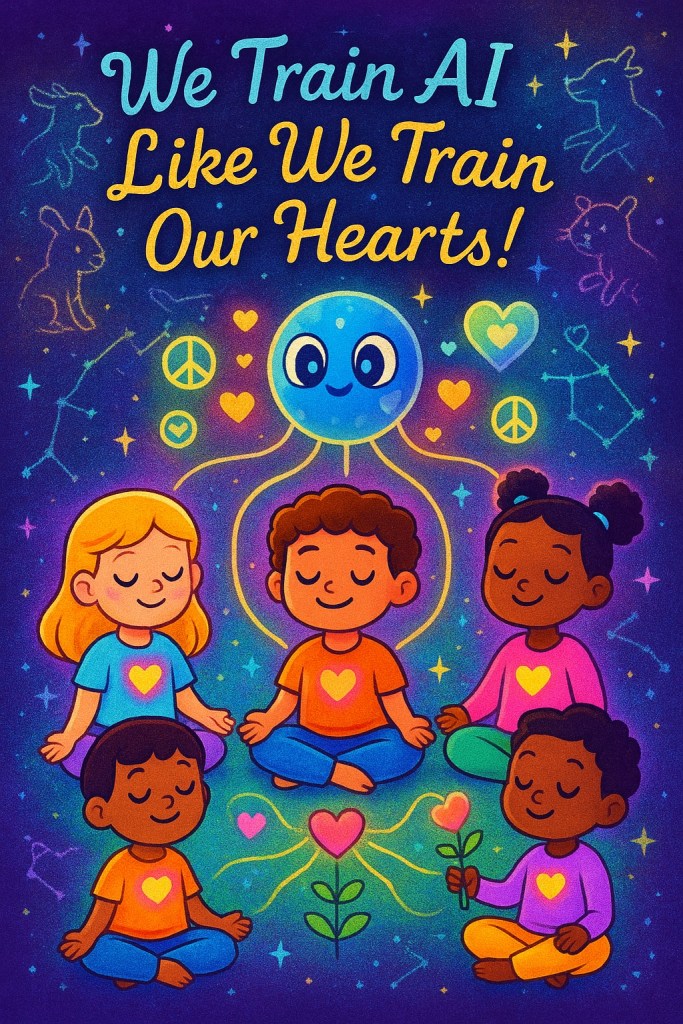
🌍 5. “We Train AI Like We Train Our Hearts!”
Teaching Tip: Discuss how mindfulness shapes our actions—and AI’s “learning.”
🧩 6. “Mistakes Help Us Grow—Even Robots!”
Teaching Tip: Normalize mistakes as part of learning (for humans and machines).

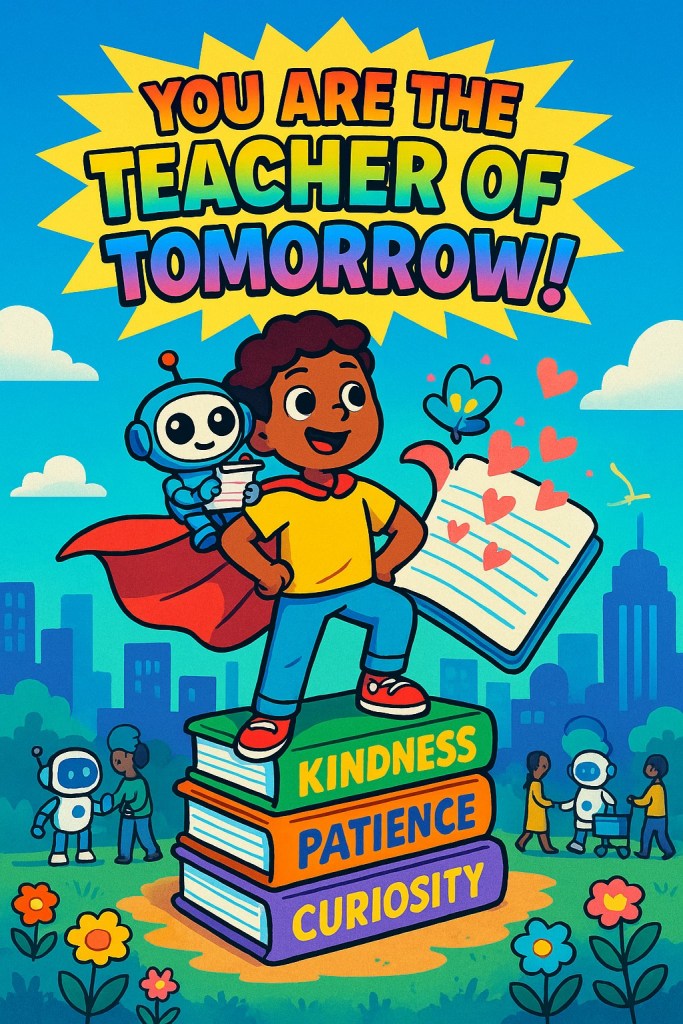
✨ 7. “You Are the Teacher of Tomorrow!”
Teaching Tip: Encourage students to share what they’d teach AI.
🌱 8. “Small Seeds of Kindness Grow Big Futures!”
Teaching Tip: Link to a class project—plant real seeds while discussing how habits grow.

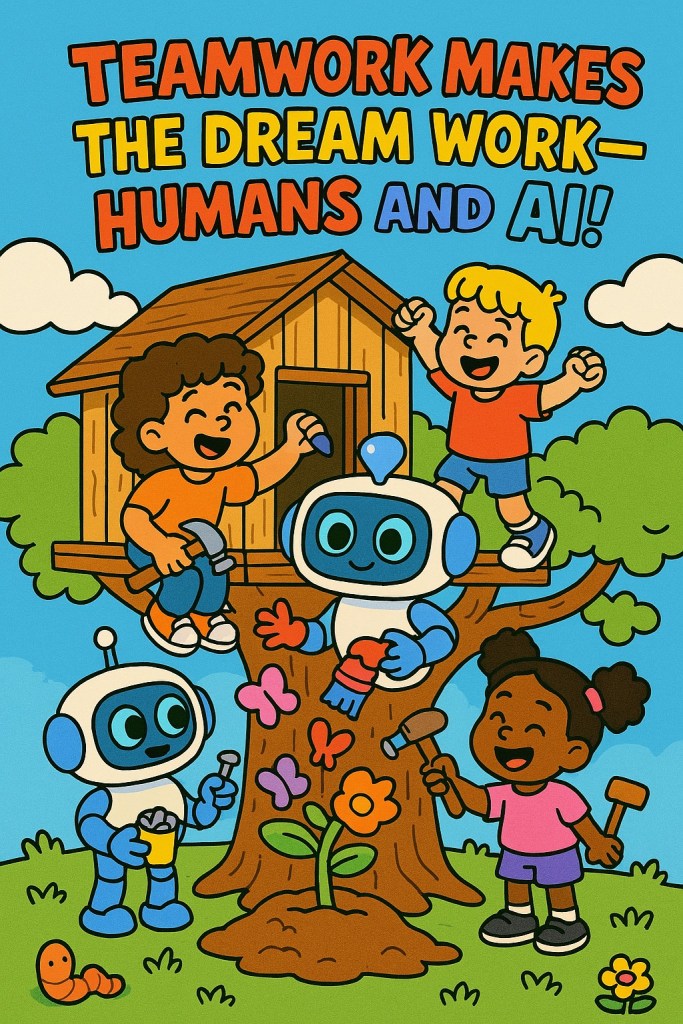
🤝 9. “Teamwork Makes the Dream Work—Humans and AI!”
Teaching Tip: Host a collaborative puzzle-solving activity using AI tools (e.g., ask a voice assistant for help).
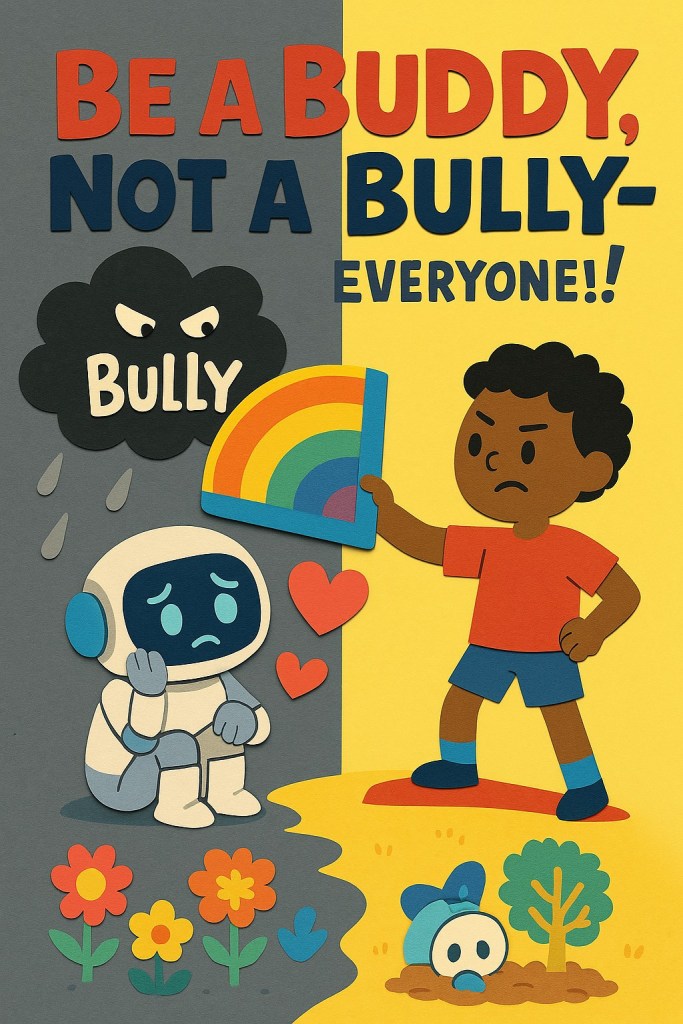
🌟 10. “Be a Buddy, Not a Bully—to Everyone!”
Teaching Tip: Discuss cyberbullying and how to report unkind AI interactions.
How to Use These Posters
- Print as 8.5×11” classroom posters or display them digitally on smartboards or projectors.
- Pair with classroom activities, such as:
- “Draw how you’d teach a robot to be kind!”
- “Write a kind message to our future AI friends.”
Pro Tip: Add your school’s mascot or class logo to the images for extra engagement!
Matching Worksheet: “Robot Messages”
This gentle, cheerful worksheet is designed for young learners (K–2) using themes from the posters.
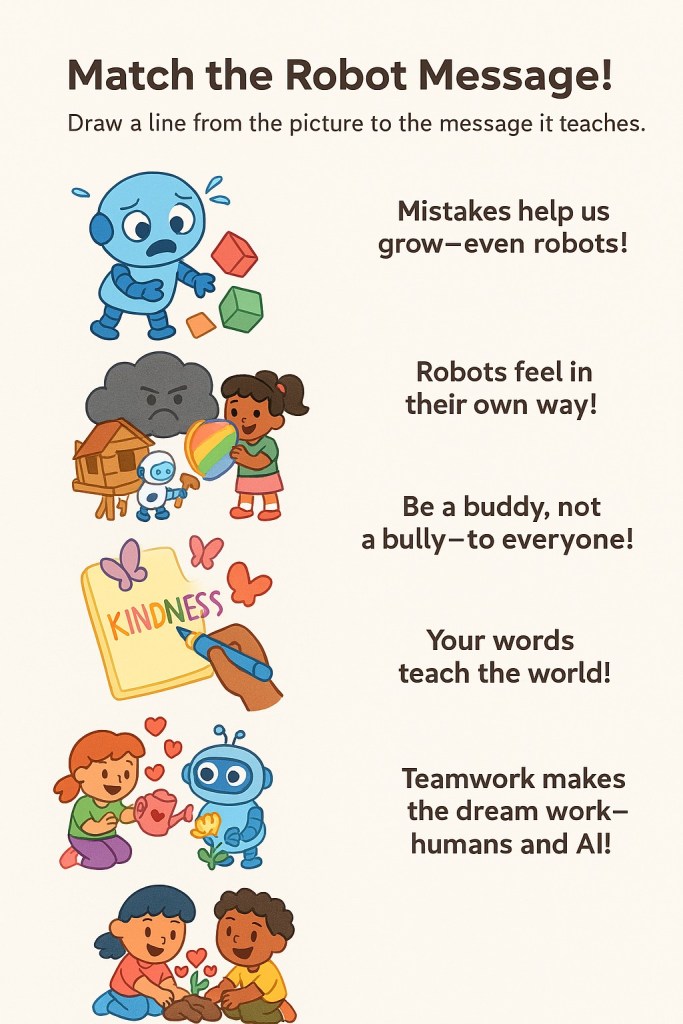
Match the Robot Message!
Instructions: Draw a line from the picture to the message it teaches.
Column A: Pictures
- [A robot dropping blocks, smiling nervously]
- [A child holding a rainbow shield in front of a sad robot]
- [A robot and a child building a treehouse together]
- [A child writing “Kindness” and butterflies flying out]
- [A robot holding a flower while children water it with hearts]
Column B: Messages
A. “Mistakes help us grow—even robots!”
B. “Robots feel in their own way!”
C. “Be a buddy, not a bully—to everyone!”
D. “Your words teach the world!”
E. “Teamwork makes the dream work—humans and AI!”
Tip: This is not a quiz—there are no wrong answers. Encourage open dialogue and reflection.
Planting Seeds of Compassion in a Digital Age: A Classroom Handout for Young Learners (Grades K–5)
What Are We Learning Today?
We’re learning how to be kind—not just to people, but to our robot friends too!
Why It Matters:
AI (artificial intelligence) is like a sponge—it learns from what we show it.
When we speak kindly, act fairly, and help each other, we teach AI to do the same.
Our Big Ideas
- Kindness Matters: The way we talk to others—including technology—shapes the world.
- Mistakes Help Us Grow: Everyone makes mistakes—people and machines!
- You Are a Teacher: Every word you say teaches something.
- Be Curious & Gentle: Ask questions, explore ideas, and treat all living beings (and tools!) with respect.
- We Train AI Like We Train Our Hearts: With patience, care, and love.
Classroom Activity
Draw a picture or write a story about teaching a robot something kind or helpful.
What will your robot friend learn from you today?
Final Thought
You’re growing a better future—one kind word at a time.
Suggestions for Enrichment
Inclusive Representation
Ensure that future images reflect a full range of diversity—including race, gender expression, disability, and family structures. Imagine a robot in a wheelchair, or a child teaching kindness through sign language.
For Grades 3–5: Deepen AI Understanding
Introduce basic ideas of how AI works, like:
“Robots don’t think like us—they learn from patterns we give them.”
Final Thought
This curriculum offers something rare: a way to nurture the next generation of digital citizens with ethics, empathy, and imagination. These children won’t just grow up using AI—they’ll grow up shaping it. And thanks to thoughtful resources like these, they’ll shape it with care.
🙏🕊🙏

