Tag: spiritual reflection

  • The Ego’s Journey from Separation to Enlightenment: A Union of Sufi, Buddhist, and Hindu Wisdom

    The Ego’s Journey from Separation to Enlightenment: A Union of Sufi, Buddhist, and Hindu Wisdom

    There is a moon that rises every night, a silent witness to the sun’s endless light. And yet, the moon itself knows no radiance, no brilliance of its own. It is only when the sun kisses its surface, that it shines, softly, luminously, reflecting a borrowed light. The moon is not the light, but through it, light is made visible.

    So too is the ego, that fragile vessel we cling to, believing it to be the source of our being. It moves through the world like the moon through the night, often unaware that it is not the origin of its own light. The ego believes itself sovereign, a solitary entity, and so it knocks at the gates of heaven. “It is I,” it says. “It is I, Lord.” But the voice from within replies, “I do not know you.”

    This exchange repeats in its cyclical fashion, a dance of self and selfhood, of claiming and denial, much like the phases of the moon—sometimes full with pride, sometimes waning in despair. Yet still, the light of the divine waits, unwavering, patient as the sun.

    And then, in a moment that cannot be forced, cannot be grasped, the ego begins to see the truth of its existence. It begins to understand the quiet grace of reflection. No longer does it knock at heaven’s door saying, “It is I.” Instead, it whispers, “It is Thee.” Not a cry of self, but a dissolution of self. “It is Thee, Lord.”

    And the door, which had remained closed to the insistence of the separate self, swings open. The voice within responds, “Welcome home.” For in that moment, the ego no longer stands apart. It has realized its true nature. It is no longer the moon, claiming a light it cannot possess. It has become the mirror, the perfect reflection of that which has always been.

    The old Sufi story of the ego’s journey, of its many attempts and its ultimate awakening, is not bound by any single tradition. It echoes through the teachings of the Buddha, who saw the ego as an illusion, a fleeting cloud that masks the vast sky of mind. It resonates with the Hindu wisdom that declares Atman is Brahman, that the self, when truly known, is not separate from the vast, eternal presence of the divine.

    When the ego comes to that door again, no longer clinging to its smallness, no longer insisting on its separateness, it is the same realization the Upanishads speak of—Tat Tvam Asi—You are That. It is the same grace that permeates the silence of the Sufis, the same light that breaks through the illusions of the mind in every tradition.

    And so, the ego, having traveled through the long night of its own illusions, finally sees the sun. It sees that it was never the source of light, but always the recipient. It sees that what it once called “I” is nothing but a reflection of “Thee.”

    In this union, in this homecoming, the ego dissolves like the moon fading at dawn. The self returns to the Self. The individual, once lost in its sense of separateness, is welcomed into the infinite. It is no longer the journey of ego toward enlightenment, but the realization that enlightenment was always there, waiting, shining patiently like the sun.

    The moon, now quiet and full of grace, no longer claims its own light. It simply reflects, perfectly, humbly, the light of the sun. And in that reflection, in that quiet surrender, it becomes one with the light itself. Welcome home, the divine says, and the journey is complete.

    🙏🕊️🙏

  • Dear Diary: Observing the Clouds of Emotion

    Dear Diary: Observing the Clouds of Emotion

    How Mindful Observation of Emotions Brings Inner Peace and Clarity

    Dear Diary,

    I write to you today, not with answers, but with the tenderness that comes from watching the sky change, hour by hour, and wondering what it all means. Have you noticed, as I have, how emotions can rise like a storm? Sometimes, they begin softly—like a gray mist that hangs just above the earth—and at other times, they roll in like thunderclouds, filling the horizon. It is so tempting, in these moments, to reach out, to try and push them away, or to brace ourselves for the deluge we think must come. But what if, instead, we learned to be still?

    I have come to realize that our emotions are not permanent; they are travelers, passing through. And though they demand our attention, we are not them. We are not the sadness or the frustration, nor are we the joy that sometimes feels so fleeting. We are the sky, vast and unshakable, watching with quiet patience as each cloud forms, darkens, and eventually dissipates.

    To witness without judgment is a practice, one that asks of us not resistance, but gentleness. It is in this gentleness that we find our true strength—not in control, but in allowing. We can observe the emotions without being drawn into their storm. When anger swells, or grief lingers, we remind ourselves that they are like clouds: they have shape and form, but they will pass. And we remain, unbound, beneath it all.

    I share this with you because I, too, am learning. Each day, I remind myself that I am not the shifting weather, but the sky itself. And I hope, in your own moments of storm and stillness, you might find comfort in this, knowing that the vastness within you remains untouched, no matter how strong the winds may blow.

    Yours in quiet reflection,

    Richard

    🙏🕊️🙏

  • Ramayana No. 14: Be Good, Do Good, Purify Your Mind: A Simple Reflection on the Ramayana’s Timeless Wisdom

    Ramayana No. 14: Be Good, Do Good, Purify Your Mind: A Simple Reflection on the Ramayana’s Timeless Wisdom

    In the vast expanse of spiritual literature, few texts carry the weight and significance of the Ramayana. This ancient epic, deeply embedded in Hindu culture, tells the story of Prince Rama, whose life is a testament to the principles of righteousness, duty, and the eternal struggle between good and evil. As we delve into its rich narrative, it’s easy to get caught up in the details of battles, relationships, and divine interventions. However, the essence of the Ramayana can be distilled into three simple yet profound lines, attributed to the Buddha:

    Be good.
    Do good.
    Purify your mind.

    Though these lines originate from the Buddhist tradition, they encapsulate the core teachings of the Ramayana and many other spiritual paths. These principles are not confined to one tradition alone; they are echoed in the teachings of Jesus Christ, who emphasized love, compassion, and inner purity as the path to spiritual fulfillment. Let’s explore how these simple instructions align with the lessons that Rama’s journey imparts, and how they resonate with the wisdom found in Christianity.

    Be Good

    At its heart, the Ramayana is a story about the importance of living a righteous life. Rama, as the embodiment of dharma (righteousness), consistently chooses the path of virtue, even when it leads to personal hardship. His unwavering commitment to goodness, whether in his role as a son, husband, or king, serves as a model for us all. Similarly, Jesus taught, “Blessed are the pure in heart, for they shall see God” (Matthew 5:8). To “be good” means to cultivate a character that is honest, kind, and just, following the path of love and integrity, regardless of the challenges we face.

    Do Good

    Righteous intentions must be matched by righteous actions. Throughout the Ramayana, Rama’s life is marked by deeds that reflect his inner goodness. He honors his father’s promise, protects the innocent, and fights against injustice. Jesus, too, emphasized the importance of action, teaching that “whatever you wish that others would do to you, do also to them” (Matthew 7:12). The Ramayana teaches us that our actions in the world—no matter how small—have the power to shape not only our own lives but the lives of others. “Doing good” is about translating our inner virtues into outward actions that contribute to the welfare of all beings, just as Jesus modeled through his life of service and compassion.

    Purify Your Mind

    The true journey of the Ramayana is as much internal as it is external. Rama’s equanimity, his ability to remain calm and detached in the face of joy and sorrow, reflects the importance of mental purity. Jesus also spoke of the need for inner transformation, saying, “The lamp of the body is the eye. If therefore your eye is good, your whole body will be full of light” (Matthew 6:22). Both teachings invite us to cleanse our minds of negative emotions like greed, anger, and delusion. In doing so, we can attain clarity, wisdom, and inner peace. To “purify your mind” is to embark on the path of self-mastery, where the ultimate victory is over our own inner obstacles.

    Here, the “eye” can be understood not only as our physical sight but also as a metaphor for the “I”—our inner self and perception. If our inner vision—the way we perceive ourselves and the world—is good, then our entire being will be filled with the light of love and truth. Both teachings invite us to protect our minds from the influence of negative emotions like greed, anger, and delusion. In doing so, we can attain clarity, wisdom, and inner peace. To “purify your mind” is to embark on the path of self-mastery, where the ultimate victory is over our own inner obstacles and perceptions.

    A Bridge Between Traditions

    These three principles—“Be good, do good, purify your mind”—may come from the teachings of the Buddha, but they resonate deeply with the values upheld in the Ramayana and the teachings of Jesus. This reflects the universal nature of spiritual wisdom, which transcends specific traditions and speaks to the shared human quest for a life of meaning, integrity, and inner peace.

    As we journey through the sacred stories of the Ramayana, the Bhagavad Gita, and other spiritual teachings, we find ourselves continually reminded of the timeless wisdom that resonates across these traditions. Rama’s equanimity in the face of life’s challenges, Krishna’s guidance to Arjuna in the pursuit of a disciplined mind, and the Buddha’s simple yet profound directive to “be good, do good, purify your mind”—all these teachings converge on a single truth.

    This truth calls us to rise above the fluctuations of the world, to cultivate a mind that is serene, fearless, and unwavering. Whether we walk the path of dharma, engage in deep meditation, or simply strive to live with compassion and integrity, we are participating in this universal quest for peace and harmony.

    These scriptures are not just stories of the past but living guides that illuminate our own paths. They remind us that no matter the challenges we face, the ultimate goal remains the same: to align our hearts and minds with the divine, to live with wisdom, and to contribute to a world where peace and righteousness prevail.

    In embracing this wisdom, we not only honor the traditions from which these teachings arise but also participate in the creation of a more harmonious and enlightened world. Let us carry this timeless wisdom into our daily lives, striving to embody the virtues that lead to the ultimate realization of peace, both within ourselves and in the world around us.

    As we continue our journey through the Ramayana, let these simple yet profound teachings serve as a guiding light. They remind us that, at its core, the spiritual path is not about grand gestures or complicated doctrines, but about living each moment with goodness, action, and a mind that is clear and pure.

    🙏🕊️🙏

  • Perception as Creation: A Choice for Love in Challenging Times

    We live in what the ancient Chinese might have called “interesting times.” These moments test us—not only our patience and strength but also our ability to remain anchored in love. In times of upheaval, it can feel easy to get swept into fear, division, or despair. Yet, even in the storm, we carry within us a sacred choice.

    Perception, they say, is an act of creation. The lens through which we see the world shapes not only what we experience but also how the future unfolds. So, as the winds of uncertainty swirl around us, I choose to see and create love. I choose to reflect kindness, courage, and grace—just as the Divine breathes these qualities into our lives each day.

    There is a peculiar magic in this practice: when we choose to view the world through love, we begin to reshape it. The storm becomes an opportunity for deeper connection. Division becomes an invitation to understanding. Despair becomes the fertile ground for hope.

    And so, we are called—each of us—to take part in this sacred creation. It’s a quiet revolution, rooted not in politics but in our collective soul. Every act of compassion, no matter how small, weaves us back into unity. Every moment of forgiveness plants the seeds of peace. Every word of encouragement, spoken even in uncertainty, becomes a candle in the darkness.

    May we walk gently through these “interesting times,” creating love with every step. And may we remind each other, again and again, that this too is part of the divine plan unfolding—a story that invites us to be co-authors of a more just and loving world.

    🙏🕊️🙏

  • Ramayana No. 12: Caravan of Love: The Evolution of Divine Worship and the Universal Teachings of Compassion

    In the spiritual journey of humanity, there has always been a deep yearning to connect with the divine. This connection has evolved across cultures and religions, shaping how people perceive and relate to the sacred. Two profound examples of this evolution can be found in Hinduism and Christianity, where the abstract, formless concept of the divine transformed into more personal, relatable forms.

    From the Formless to the Personal Divine

    In the early traditions of Judaism, the divine was perceived as Ein Sof—the infinite, boundless, and unknowable aspect of God. This understanding was so sacred that God’s name was considered unpronounceable, representing the divine’s absolute transcendence. The Jewish tradition emphasized a God beyond form and comprehension, which led to a strict prohibition against idolatry.

    Similarly, in the ancient Vedic traditions of India, the divine was seen as Brahman, the ultimate, formless reality that underlies all existence. Brahman was understood as the essence of everything, but its abstract nature made it difficult for people to relate to on a personal level.

    Over time, both traditions saw a shift. In Christianity, this shift occurred with the introduction of Jesus Christ, who represented the divine in human form. Jesus made the infinite more accessible, embodying the love, compassion, and righteousness that God wished to share with humanity. The doctrine of the Trinity—Father, Son, and Holy Spirit—further personalized the divine, allowing followers to connect with God as a loving parent, a guiding spirit, and a compassionate savior.

    In Hinduism, this transformation took shape through the worship of deities like Vishnu, Shiva, and Devi, who are seen as manifestations of Brahman. These deities, along with their avatars such as Rama and Krishna, made the divine more relatable. They embodied virtues that humans could aspire to—righteousness, devotion, and compassion. Through stories and teachings, these deities became accessible guides for those seeking a path to the divine.

    The Universal Teachings of Love and Righteousness

    Despite the differences in form and expression, a common thread runs through these traditions: the teaching of love, compassion, and righteousness. In Christianity, Jesus’s teachings emphasized love for one’s neighbor, forgiveness, and a life lived in service to others. He taught that the greatest commandment is to love God with all one’s heart and to love one’s neighbor as oneself.

    In Hinduism, the teachings of Dharma—righteousness and duty—are central. The lives of the avatars, like Rama, exemplify adherence to Dharma even in the face of great personal sacrifice. The Bhagavad Gita, a cornerstone of Hindu philosophy, teaches the importance of selfless action, devotion, and the pursuit of truth.

    These teachings, though expressed differently, guide followers toward a life of virtue. They remind us that to walk the path of the divine is to live with compassion, to act with righteousness, and to treat all beings with love and respect.

    A Call for Interfaith Harmony

    In a world often divided by differences in belief and practice, these teachings remind us of our shared spiritual heritage. Whether one follows Jesus, Rama, or another path to the divine, the call to love, righteousness, and compassion is universal. These values are the true markers of discipleship, transcending the boundaries of culture and religion.

    The Caravan of Love invites all to reflect on these common values, to see the divine in the hearts of all people, and to strive for a world where love and compassion reign. In the end, the path to the divine—whether walked through Christianity, Hinduism, or any other tradition—is a path of love, a journey toward the light that shines in every heart.

    A Prayer for Universal Peace and Harmony

    O Divine Source of all creation,
    The One who is known by many names,
    And who dwells in every heart,
    We come before you with humble hearts,
    Seeking your blessing of peace and harmony.

    May your love flow through us like a river,
    Washing away all hatred, division, and fear,
    And filling our hearts with compassion for all beings.

    Teach us to see beyond our differences,
    To honor the divine in every person,
    And to live as instruments of your peace in this world.

    May we all walk the path of righteousness,
    Guided by your wisdom and grace,
    So that our actions may bring healing and unity
    To a world that so deeply longs for peace.

    Let all nations and peoples come together,
    In a spirit of understanding and respect,
    Embracing the truth that we are all your children,
    And that in your eyes, we are one family.

    Grant us the courage to forgive,
    The strength to love without condition,
    And the wisdom to seek justice and mercy
    For every living being.

    May your light shine in our hearts,
    And may we carry that light into the world,
    Bringing hope to the weary,
    And peace to all who suffer.

    In your holy name, we pray,
    For goodwill on earth, and peace among all beings.

    Amen.
    Om Shanti Shanti Shanti.
    Salaam.
    Shalom.

    🙏🕊️🙏

  • Verse 2: The Deathless Ones — Insights from Ramana Maharshi

    “Deathless are they who know the Self. Those who know intense fear of death seek refuge only at the feet of the Lord who has neither death nor birth. Dead to themselves and their possessions, can the thought of death occur to them again? Deathless are they.”

    — Ramana Maharshi, Forty Verses on Reality

    In the silent expanse of existence, a profound truth emerges: those who truly know themselves are untouched by the shadow of death. Their awareness transcends the fleeting nature of the physical, awakening them to a reality where the Self shines eternally, free from the confines of birth and demise.

    Fear, that primal instinct which grips the emotional self, leads many to seek solace at the feet of the Divine. Here, in surrender, they find refuge in the Lord—the embodiment of timelessness, the one who remains unscathed by the cycle of life and death. In the presence of such love, the urgency of worldly attachments falls away, revealing the deeper essence of being. I look forward to resting in the presence of such love, revealed within our mind—our true heart—where all attachments dissolve into the stillness of pure awareness. To realize this ever-present pure love is to know the deeper essence of what we are, the part of us that remains untouched by the fears and desires of the world.

    As one becomes “dead” to the clamor of possessions and the incessant desires that bind the soul, the thought of death loses its power. No longer a specter to be feared, it becomes a mere whisper, an echo of a past long forgotten. In this state of liberation, the deathless heart pulsates with the rhythm of life, embracing the eternal now.

    To know the Self is to awaken to the infinite, to dance beyond the duality of existence, where life and death are but two sides of the same coin. In this awakening, we find the courage to let go—to release the chains of identification with the transient and embrace the essence of who we truly are. Here lies the secret of the deathless ones, an invitation to live fully, unencumbered by the fears that often confine us.

    And yet, when we speak of the deathless state, we do not turn our gaze away from the undeniable truth of death. The body, like all things that come into being, will one day return to the earth. Those we love will pass, as will we. But the wisdom of this teaching beckons us to look beyond the visible horizon, beyond the fragile shell of the physical.

    Death, as we know it, is but a passage in the realm of form. What truly passes? Not the Self. Not the essence of who we are. This teaching whispers to us that the grasping after what is fleeting—the desires, the aversions, the worldly attachments—these are the threads that weave the illusion of permanence where there is none.

    In the letting go, in the softening of our hands from the things we thought we needed to hold so tightly, there is a kind of renunciation. But not a renunciation of life itself, rather, a release from the belief that life’s changing faces can define us. We release, not into emptiness, but into fullness—the fullness of the pristine mind, the quiet, undisturbed expanse of the deathless.

    To recognize this is to taste the sweetness of a deeper truth: the Self is untouched by the passing of days, by the birth and death of forms. This is where we find our liberation—not by denying the body’s end, but by resting in the awareness that transcends it.

    And so, in this gentle abiding, we come to understand: death may touch what is temporal, but it cannot lay a finger on what is eternal. Here, in the heart of this realization, there is peace—a peace that no worldly circumstance can steal away, for it is woven into the very fabric of our being.

    Coming Up Next: Verse 3

    In our next exploration, we will turn our attention to the third verse, where we will reflect on the nature of true knowledge and how it reveals the interconnectedness of all beings, inviting us into a deeper understanding of existence.

    🙏🕊️🙏

  • Verse 1: The Heart of Reality — Insights from Ramana Maharshi

    “Reality exists as the Heart, your very Being. If Reality did not exist, could there be any knowledge of existence? Free from all thoughts, Reality abides in the Heart, the Source of all thoughts. It is, therefore, called the Heart. How then is one to contemplate it? To be as it is in the Heart, is Its contemplation.”

    — Ramana Maharshi, Forty Verses on Reality

    The Heart of Reality

    In the stillness of our being, where thoughts dissolve like mist under the sun, we come upon the essence of reality—the Heart, our very existence. This Heart is not a distant concept, a mere abstraction; it pulses with the life that courses through us, inviting us to recognize that our true nature is intricately woven into the fabric of all that is.

    What if reality, in its purest form, did not exist? Could we then grasp the very notion of existence, the flicker of awareness that dances in our minds? Each thought, each fleeting moment of recognition, springs forth from this source, the Heart, which abides in silence beyond the noise of our incessant chatter.

    To contemplate this truth is not to embark on a journey of the mind but rather to return home, to dwell as we are in the Heart itself. Here, in this sacred space, contemplation transforms into a state of being, a surrender to the profound simplicity of what is. We find ourselves not as separate seekers but as the very essence of the inquiry—a realization that calls us to rest in the Heart, to know ourselves as we truly are.

    For many years, I carried a fog of confusion around the word “heart,” a tangle of meanings that seemed to obscure more than they revealed. I remember being in circles where people would say, “Come from your heart,” and I would listen, trying to grasp the depth of what they meant. Often, it seemed to point toward emotion, to some form of deeper truth that was still bound in the personal—an authentic expression of ego, perhaps a sincerity in feeling, but still caught in the dualities of love and pain, fear and longing.

    But what did it mean, really, to come from the heart?

    In the midst of this confusion, Ramana’s words come like a gentle clearing of the fog. The heart, as he speaks of it, is not the emotional center we so often equate with the word. It is not the place of fluctuating feelings, nor is it simply a retreat from the mind’s logical discourse. What Ramana points to is something far deeper: the heart as the essence, the source of pure awareness itself.

    This reminds me of the self as Carl Jung describes it—not just the conscious mind, but the unconscious, and not just those personal aspects, but everything, the entire universe and reality. Jung’s idea of the Self expands far beyond the individual, reaching into the totality of existence itself, much like Ramana’s use of the word heart. In this sense, Reality, the Self, and the Heart all point to the same fundamental truth—the essence that underlies both duality and non-duality, the very nature of what is.

    In both Jung and Ramana’s teachings, we see that the self, or reality, is not something to be sought outside of ourselves or separated from the world. As Jesus says, we are to be in the world but not of the world. This aligns perfectly with the non-dual teaching: there is no need to escape the dualities of life to realize non-duality. Instead, we are invited to recognize that the essence of duality itself is non-dual.

    To come from the heart, then, is not merely to speak from personal truth or emotion, but to rest in the deeper awareness that embraces all experience without attachment. It is to be anchored in the non-dual essence of Reality, knowing that even in the world of forms and opposites, the underlying truth remains whole, undivided.

    And yet, how often we use the word “heart” to point to something else—something closer to our personal feelings or opinions, mistaking emotional honesty for the deeper truth of our being. But here, in this teaching, the heart is revealed as the true source of non-dual clarity, the place from which true forgiveness, compassion, and love naturally arise—not as personal qualities, but as emanations of our most pure self.

    As I reflect on this teaching in, it becomes clear that the heart Ramana speaks of is not a center of personal feelings or emotion, but the eternal essence that transcends the body and mind. This heart, or true Self, is the witness that remains even when personal identity fades. In some ways, this description feels similar to the concept of the Holy Spirit or God, which abides within and beyond us.

    When we speak of the heart as Ramana does, we are pointing to the essence of pure awareness, the unchanging “I” that exists beyond the temporary forms of the body and ego. This teaching invites us to recognize the heart as the source of non-dual awareness, a presence that continues even when the personal self dissolves.

    Coming Up Next: Verse 2

    In the next reflection, we will explore how those who know the Self are deathless, transcending the fear of mortality. We’ll delve into the liberation found in surrendering to the Divine, awakening to the eternal nature of existence beyond the physical realm.

    🙏🕊️🙏

  • Ramayana No. 9: The Dark Night and the Hero’s Journey

    As I delve deeper into the Ramayana, the timeless story continues to reveal layers of wisdom that resonate across spiritual traditions and cultures. One striking parallel that emerges is the connection between the tale of Manthara and the serpent in the Genesis story, both of which serve as catalysts for the hero’s journey—necessary agents of disruption that propel the protagonists from the comfort of innocence into the trials of the world.

    Manthara, like the serpent, whispers deceit into the ears of the righteous, setting off a chain of events that lead to exile, struggle, and ultimately, transformation. In both stories, this act of deception might be viewed as evil, but it is crucial for the unfolding of a greater destiny. Without the fall from Eden, there would be no journey toward redemption. Without Manthara’s insidious counsel, there would be no exile for Rama—a journey that would ultimately reveal his true nature and the essence of dharma.

    This motif is echoed in Joseph Campbell’s The Hero’s Journey, where the hero must leave the familiar world and enter a realm of trials and challenges, often descending into a figurative or literal underworld. It is here, in the depths of darkness, that the hero faces the ultimate test, encountering both inner and outer demons. The journey is perilous, but it is also where the hero discovers their true strength and purpose.

    In the Christian tradition, St. John of the Cross articulated a similar experience in his concept of the Dark Night of the Soul. This dark night is a period of profound spiritual desolation, where the soul feels abandoned, stripped of all earthly and spiritual comforts. Yet, this is not a sign of divine punishment, but rather an essential phase of purification. It is in this crucible of suffering that the soul is refined, prepared for a deeper union with the Divine.

    Rama’s exile in the Ramayana can be seen as his own Dark Night of the Soul, a necessary period of trial and suffering that strips him of his royal status and forces him to confront the raw realities of life. Through this journey, Rama evolves from a prince into an embodiment of dharma, a being whose actions reflect the divine order of the universe.

    This theme of transformation through trial is universal. It speaks to the experience of every soul that seeks to journey from ignorance to wisdom, from ego to enlightenment. Whether it is Adam and Eve expelled from Eden, Rama exiled from Ayodhya, or a soul passing through the Dark Night, the path is one of descent before ascent, of loss before the ultimate gain of spiritual realization.

    As we contemplate these stories, we are invited to see our own lives in their light. The challenges we face, the moments of darkness, are not mere accidents but are woven into the fabric of our spiritual journey. They are the trials that test our resolve, refine our character, and lead us closer to the Divine.

    In this light, the whispers of Manthara, the serpent’s temptation, or the dark nights we endure are not just obstacles; they are invitations—calls to embark on the hero’s journey, to walk the path that leads to a higher truth, and to become more fully who we are meant to be.

    May we find strength and inspiration in these stories, knowing that every trial we face is a step on the path to wisdom, compassion, and ultimately, to the realization of our divine nature.

    🙏🕊️🙏

    You can explore this epic story in the edition of the Ramayana used in this series, written by Valmiki and translated by Suparna Ghosh, on Amazon here

    Alternatively, you can choose from several other versions and translations that are available. Including the William Buck translation available as an abridged audiobook on Audible, narrated by Ram Dass
    here

  • Ramayana No. 7: The Hero’s Journey in the Ramayana and Milarepa’s Life: A Universal Path to Dharma


    The hero’s journey is a timeless narrative structure that resonates across cultures and spiritual traditions. Described in depth by Joseph Campbell, this journey represents the universal path of transformation that each individual must undertake. As we explore the Ramayana and the life of Milarepa, we find that both stories are deeply rooted in this archetypal journey, offering profound insights into the challenges and triumphs of the human spirit.

    The Call to Adventure:

    In the Ramayana, Rama is called to leave the comfort of his home in Ayodhya and embark on a journey that will test his strength, resolve, and righteousness. His exile marks the beginning of an epic struggle against the forces of chaos and evil. Similarly, Milarepa’s life begins with a call to adventure, though it is initially fueled by revenge and darkness. Both heroes are drawn out of their ordinary worlds and into a realm where their true character will be forged.

    Trials and Challenges:

    As they embark on their respective journeys, both Rama and Milarepa face significant trials and challenges. Rama must confront powerful demons, navigate the complexities of dharma, and protect his loved ones. Milarepa, on the other hand, struggles with the weight of his past misdeeds and the rigorous training imposed by his teacher, Marpa. These trials are essential to their growth, pushing them to confront their deepest fears and weaknesses.

    Confrontation with Evil:

    The hero’s journey often culminates in a confrontation with a great evil. In the Ramayana, this is embodied by Ravana, the powerful demon king who represents the forces of adharma (unrighteousness). For Milarepa, the confrontation is more internal—facing the darkness within himself and the karmic consequences of his earlier actions. Both heroes must overcome these forces to fulfill their destinies and bring about a restoration of order and righteousness.

    Return and Transformation:

    After their trials, both Rama and Milarepa undergo profound transformations. Rama returns to Ayodhya not just as a warrior, but as a symbol of dharma, ready to restore justice and harmony to his kingdom. Milarepa, having purified his karma and attained enlightenment, becomes a revered spiritual teacher, guiding others on the path to liberation. Their journeys highlight the transformative power of righteousness, compassion, and spiritual discipline.

    The Hero’s Journey in Our Lives:

    The hero’s journey is not just a mythic structure—it’s a reflection of the challenges and opportunities we all face in life. We are each called to our own adventure, to confront our inner and outer demons, and to emerge transformed. The Ramayana and Milarepa’s story remind us that this journey is universal, a path we all walk as we seek to align our lives with dharma.

    The hero’s journey, as seen in the Ramayana and Milarepa’s life, is a powerful reminder of the transformative potential within each of us. By embracing the challenges we face and aligning our actions with dharma, we can emerge stronger, wiser, and more compassionate. May these stories inspire you on your own journey, guiding you toward the realization of your true self and the fulfillment of your highest potential.

    🙏🕊️🙏

    To delve deeper into Milarepa’s journey, you can watch Part One of the movie about his life here. This film offers an authentic portrayal of Milarepa’s early years, his misuse of mystical power, and his ultimate journey toward spiritual awakening and Dharma. It’s a powerful visual companion to the reflections shared in this post.

    For those interested in exploring the hero’s journey more deeply, you can find Joseph Campbell’s The Hero’s Journey on Kindle below. This seminal work offers profound insights into the archetypal patterns that shape our stories and our lives, providing a framework to understand the transformative journeys of both Rama and Milarepa.

    🙏🕊️🙏

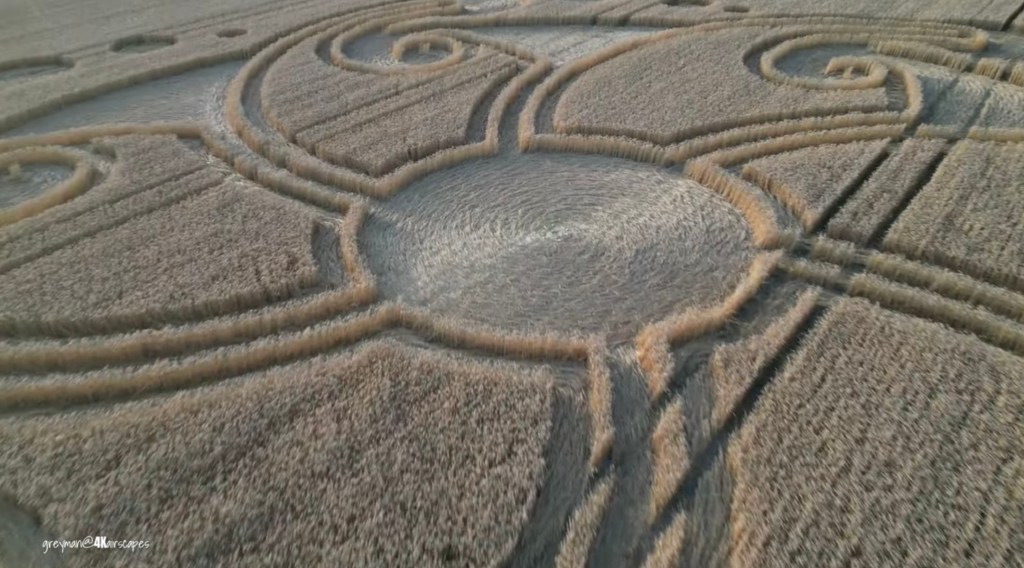
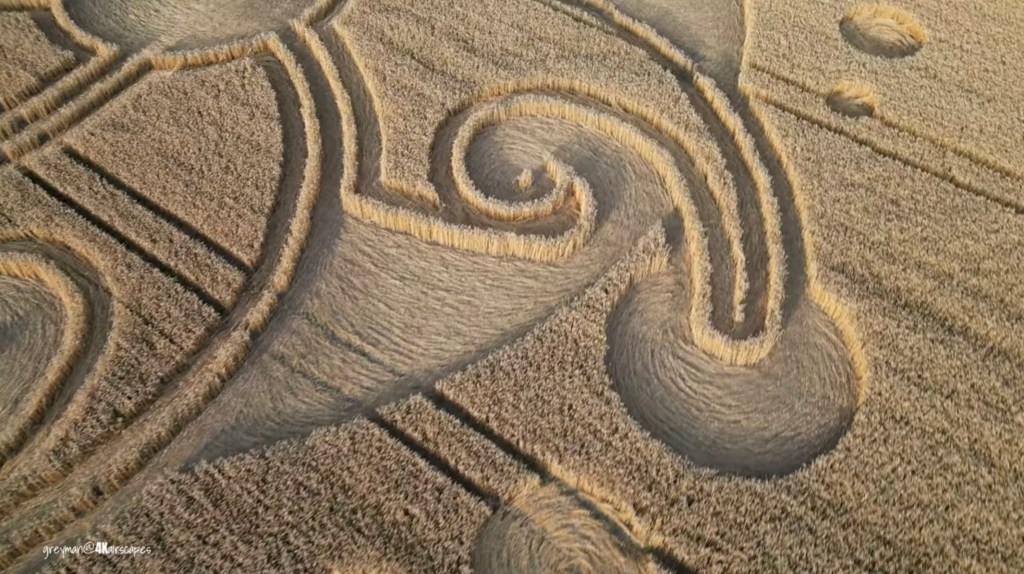
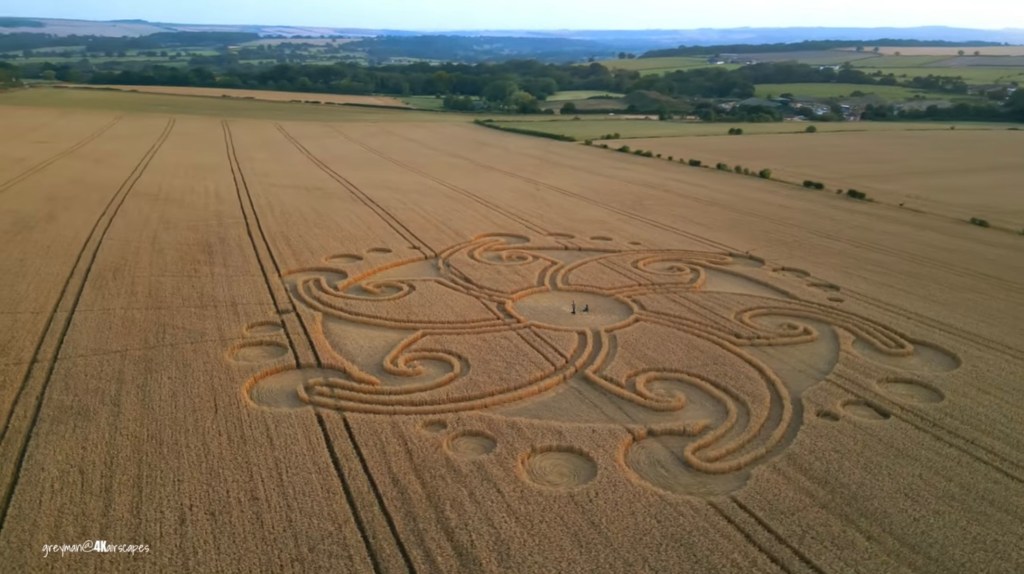
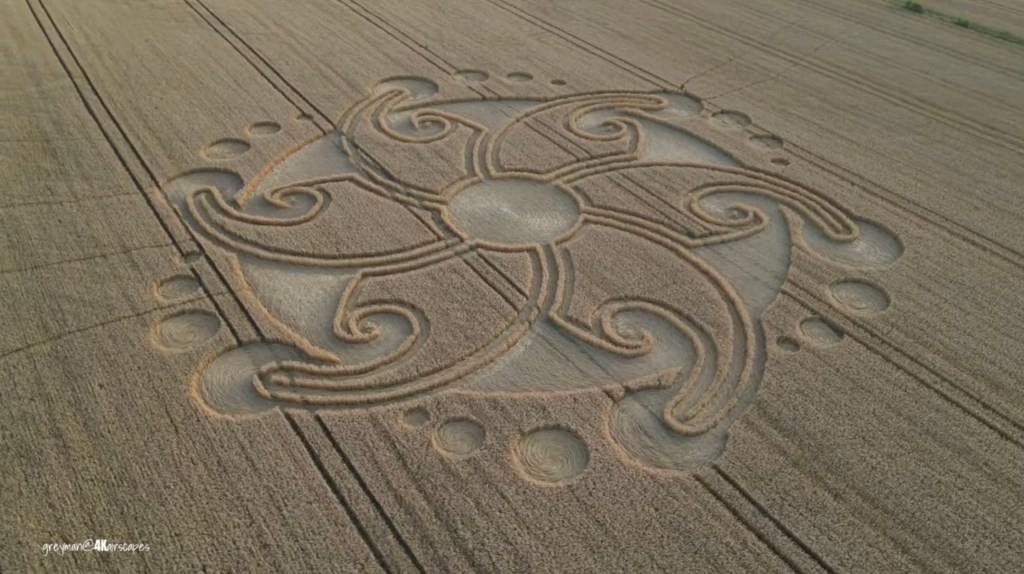
  • Spirals of Harmony: A Deeper Look into the Crop Circle of August 29th

    There’s something undeniably captivating about the crop circle that appeared on August 29th. As I gaze upon its intricate design, I’m drawn into a world where geometry and spirituality converge, where the mysteries of the universe seem to be woven into the very fabric of the earth itself. This particular formation, with its flowing spirals and perfectly balanced symmetry, speaks to something deep within, inviting contemplation and reflection.

    At the center of the design lies a circle—simple, yet profound. In many spiritual traditions, the circle is a symbol of unity, wholeness, and the infinite. It represents the divine source, the singularity from which all creation emerges. This central circle seems to anchor the entire formation, grounding it in a sense of completeness and oneness, reminding us of the inherent unity in all things.

    From this central point, spirals extend outward, creating a dynamic and mesmerizing pattern. Spirals have long been recognized as powerful symbols of growth, evolution, and the journey of life. They are found in nature, from the spirals of galaxies to the curves of a seashell, each one a reflection of the natural order and the continuous unfolding of the universe. In this crop circle, the spirals seem to convey a message of movement and expansion, perhaps representing the journey of consciousness as it evolves and grows, ever-reaching towards greater awareness.

    The symmetry of the design, with its radial balance, is a hallmark of sacred geometry. This balance is not just aesthetic; it speaks to the harmony that exists in the cosmos, the equilibrium that sustains life. The radial symmetry suggests a balanced flow of energy, a reminder that everything in the universe is interconnected and in perfect harmony. This design doesn’t just exist in the field—it radiates a sense of peace and order, encouraging us to find that same balance within ourselves.

    Surrounding the spirals are smaller circles, intricately placed around the main design. These circles could be seen as symbols of celestial bodies—planets, stars, or perhaps even atoms, reflecting the microcosm and the macrocosm. In the language of sacred geometry, such smaller circles often represent cycles or the idea of perpetual motion, the endless dance of creation and dissolution that characterizes the cosmos.

    As I reflect on this formation, I can’t help but see it as a symbol of cosmic harmony. The interplay of spirals and circles reminds me of the harmonious dance of celestial bodies, each one moving in perfect synchrony, reflecting the order and rhythm that underlie the universe. It’s as if this crop circle is a message about the natural balance and flow of life, a gentle reminder that everything has its place in the grand design.

    There’s also a sense of evolution and growth in this pattern. The spirals, radiating from the center, seem to symbolize the journey of the soul, the unfolding of higher awareness. It’s as if this crop circle is urging us to continue our spiritual journey, to keep expanding our consciousness, knowing that we are guided by a higher intelligence that watches over us.

    Given the feelings of guardianship and protection that crop circles often evoke, this formation could also be seen as a representation of protective forces surrounding us. The harmonious design suggests that these forces are not just watching over us, but guiding us along our spiritual path with balance and grace, ensuring that we remain connected to the divine order.

    Above all, this crop circle emphasizes the interconnectedness of all things. The spirals and circles are not isolated elements—they are intricately linked, each one contributing to the overall design. This reminds us of our own interconnectedness, not just with each other, but with the entire universe. We are all part of a larger, divine pattern, and each of us has a role to play in maintaining the harmony of the cosmos.

    As I continue to meditate on this beautiful formation, I’m filled with a sense of peace and wonder. It’s a reminder that there is so much more to life than what we see on the surface, that there are deeper truths waiting to be discovered if we only take the time to look. This crop circle, with its flowing spirals and harmonious design, invites us to pause, to reflect, and to reconnect with the mysteries of the universe. It is a reminder that we are never truly alone, that we are always part of something greater, something beautiful and infinitely wise.

    🙏🕊️🙏

    Screenshot
    Screenshot
    Screenshot
    Screenshot
    Screenshot
  • Ramayana No. 5: A Choice of Paths—Righteous vs. Unrighteous Motivation


    As we step further into the Ramayana, Chapter 2 presents us with a clear, timeless dichotomy—a choice point that reflects the world we live in today. On one side, we have a king driven by desire and ambition, his motivations clouded by attachment and greed. On the other, we have a sage, steadfast in his righteousness, his actions rooted in dharma and pure intention.

    These two characters symbolize the fundamental choice we all face in life: to act with righteous motivation or to be driven by unrighteous desires. The king, despite his power and the boons he receives, finds himself frustrated. His motivations, being self-serving, lead him down a path that is ultimately unsatisfying and fraught with obstacles. The sage, however, remains aligned with dharma, embodying the strength and peace that come from acting with integrity and compassion.

    This chapter doesn’t resolve the conflict between good and evil—it merely sets the stage, much like the world we find ourselves in. We live in an unfinished story, where the battle between righteousness and unrighteousness is ongoing. In our daily lives, we see the results of both paths, often interwoven in complex ways. The choice between these two paths is not just a one-time decision, but a series of choices we make continually, shaping the direction of our lives.

    The Ramayana offers us a realistic portrayal of this struggle, one that is echoed in the world around us. It acknowledges that while righteous motivation does not guarantee a life free from hardship or betrayal, it does align us with a greater sense of purpose and peace. Unrighteous motivation, on the other hand, may lead to temporary gains but ultimately brings frustration and imbalance.

    In reading this chapter, we are invited to reflect on our own motivations. Are our actions driven by a desire for power, control, or self-interest? Or are they rooted in a genuine intention to do good, to act in alignment with dharma? This is the choice point that the Ramayana places before us—a choice that is as relevant today as it was in ancient times.

    As we continue through the Ramayana, let us keep this choice in mind. The sage and the king stand as symbols of the paths available to us all. Which path we choose, and the motivations that drive our actions, will shape our journey, both in this story and in the lives we lead.

    🙏🕊️🙏

    You can explore this epic story in the edition of the Ramayana used in this series, written by Valmiki and translated by Suparna Ghosh, on Amazon here

    Alternatively, you can choose from several other versions and translations that are available. It is even available as an abridged audiobook on Audible, narrated by Ram Dass here

    🙏🕊️🙏

  • A Prayer for Universal Peace and Harmony

    O Divine Source of all creation,
    The One who is known by many names,
    And who dwells in every heart,
    We come before you with humble hearts,
    Seeking your blessing of peace and harmony.

    May your love flow through us like a river,
    Washing away all hatred, division, and fear,
    And filling our hearts with compassion for all beings.

    Teach us to see beyond our differences,
    To honor the divine in every person,
    And to live as instruments of your peace in this world.

    May we walk the path of righteousness,
    Guided by your wisdom and grace,
    So that our actions may bring healing and unity
    To a world that so deeply longs for peace.

    Let all nations and peoples come together,
    In a spirit of understanding and respect,
    Embracing the truth that we are all your children,
    And that in your eyes, we are one family.

    Grant us the courage to forgive,
    The strength to love without condition,
    And the wisdom to seek justice and mercy
    For every living being.

    May your light shine in our hearts,
    And may we carry that light into the world,
    Bringing hope to the weary,
    And peace to all who suffer.

    In your holy name, we pray,
    For goodwill on earth, and peace among all beings.

    Amen.
    Om Shanti Shanti Shanti.
    Salaam.
    Shalom.

    🙏🕊️🙏