Tag: self-compassion

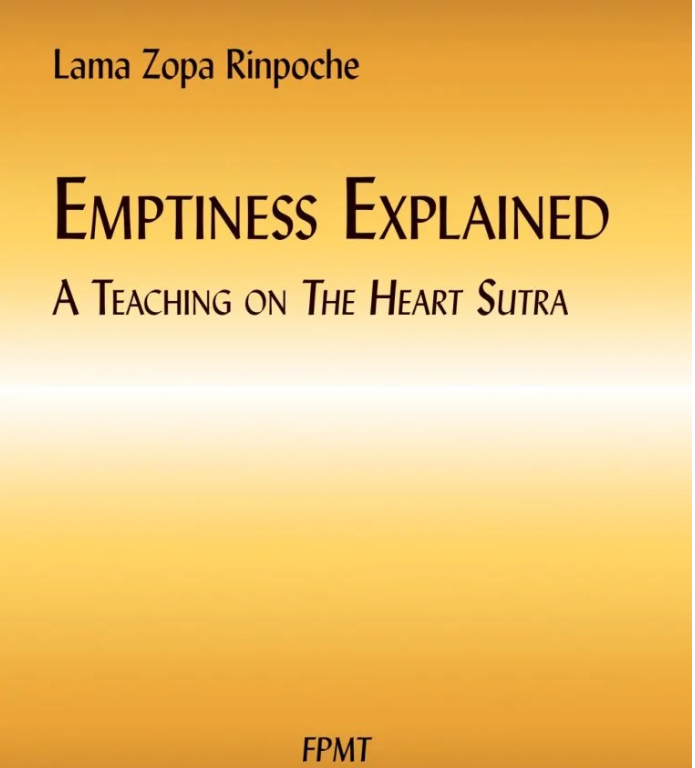
  • Emptiness Explained: Insights from Lama Zopa Rinpoche on the Heart Sutra

    Emptiness Explained: Insights from Lama Zopa Rinpoche on the Heart Sutra

    Transforming Suffering Into Happiness: How the Teachings on Emptiness from the Heart Sutra Support Mental Health and Well-Being

    The Heart Sutra stands as one of the most profound and essential teachings in Buddhism, offering a path to understanding emptiness—the ultimate nature of reality. Lama Zopa Rinpoche’s commentary on this timeless sutra illuminates its teachings, guiding us toward a deeper understanding of how emptiness can transform not only our spiritual practice but also our daily lives.

    In this post, I’ll share key reflections from Rinpoche’s teaching, focusing on the practical wisdom and spiritual inspiration it offers. Whether you’re a seasoned practitioner or simply curious about the philosophy of emptiness, I hope these insights will resonate with your heart.

    What Is Emptiness?

    Lama Zopa Rinpoche explains that emptiness does not mean that things don’t exist—it means that things are empty of inherent existence. All phenomena, including ourselves, arise dependently, shaped by causes, conditions, and labels. This is the essence of the middle way, which avoids the extremes of nihilism (nothing exists) and eternalism (things exist inherently and permanently).

    As the Heart Sutra famously states:

    “Form is emptiness, emptiness is form. Emptiness is not other than form; form is also not other than emptiness.”

    In these words, we see that emptiness and dependent arising are inseparable. While things exist conventionally, their ultimate nature is empty of any independent, fixed essence.

    Practical Ways to Meditate on Emptiness

    Rinpoche offers accessible methods to integrate the understanding of emptiness into both formal meditation and daily life:

    1. Recognizing the Object to Be Refuted

    The first step is identifying the false concept of an independent, inherently existent “I” or object. This is often described as the “I on the I”—the subtle sense that there is a solid self beyond the ever-changing interplay of body and mind. By recognizing this misconception, we can begin to dissolve it.

    2. Meditating on Dependent Arising

    Reflect on how the “I” arises only in dependence on the body, mind, and other aggregates. As Rinpoche teaches, the “I” is merely a label created by the mind. Understanding this dependence helps us see the emptiness of the “I” without negating its conventional existence.

    3. Mindfulness in Daily Life

    Emptiness isn’t confined to sitting meditation. Rinpoche encourages us to bring mindfulness of emptiness into every activity—walking, cooking, working, even shopping. He likens this to recognizing a dream as a dream:

    “While driving a car, see yourself, the car, and the action of driving as hallucinations. They appear solid, but they are not inherently existent. Practicing this awareness is incredibly powerful.”

    Overcoming Fear and Misunderstanding

    The experience of emptiness can sometimes evoke fear, especially the sense of “losing the I.” Rinpoche reminds us that this fear arises from our deep attachment to a false sense of self. However, far from being nihilistic, emptiness reveals the interdependent nature of all things.

    “When bodhisattvas of high intelligence realize emptiness, they experience bliss; for others, deep fear can arise. This fear is a sign of touching the truth of selflessness—it is part of the journey.”

    By grounding our understanding in dependent arising, we can navigate this fear with confidence and clarity.

    Applying Emptiness in Relationships

    Rinpoche’s teaching also provides practical tools for transforming relationships. When we feel hurt or offended, understanding emptiness can soften our reactivity. The other person’s actions—and our own sense of self—are dependently arisen, shaped by countless conditions.

    This awareness allows us to respond with compassion rather than attachment or aversion. As Rinpoche says:

    “Recognize that the ‘I’ that feels hurt is a mental construct. See the other person’s words or actions as arising dependently. This opens the door to greater understanding and kindness.”

    The Transformative Power of Emptiness

    Even the smallest step toward understanding emptiness has profound benefits. Rinpoche explains that simply doubting the solidity of appearances—thinking, “Perhaps things are empty”—can begin to break the chains of samsara.

    “Listening to teachings on emptiness for even a moment plants seeds for liberation. Reflecting on emptiness throughout your day turns ordinary actions into a path to enlightenment.”

    A Living Practice

    The teachings of the Heart Sutra are not just intellectual concepts—they are a living practice. Whether in formal meditation or everyday life, the wisdom of emptiness invites us to see the world with fresh eyes. By letting go of our rigid attachments and false perceptions, we open the door to profound freedom and compassion.

    As Lama Zopa Rinpoche reminds us, we are unbelievably fortunate to encounter these teachings. May we take them to heart and use them to benefit all beings.

    Further Exploration

    To delve deeper into Lama Zopa Rinpoche’s teachings on the Heart Sutra and emptiness, you can download the original PDF here.

    I’d love to hear your thoughts on emptiness and the Heart Sutra! How do these teachings resonate with your own spiritual journey? Feel free to share your reflections in the comments below.

    🙏🕊️🙏

  • Pristine Mind and the Cosmos: Shifting the Center of Gravity in Consciousness

    Pristine Mind and the Cosmos: Shifting the Center of Gravity in Consciousness

    How Metaphors from Dark Energy, Black Holes, and Cosmic Radiation Illuminate the Path to a Spacious, Peaceful Mind

    Pristine Mind and the Cosmos: An Exploration of Inner and Outer Space

    In the silent expanse of the cosmos, where galaxies drift through the vast sea of space, an invisible force—dark energy—stretches the fabric of existence. It is quiet, unseen, and yet its presence allows everything to move, to expand, to be. What if this spaciousness, this invisible presence holding the stars, has a counterpart within us?

    There exists, too, a space within the mind—pristine, vast, a place untouched by thought yet embracing it all. This awareness is like a black hole at the center of our consciousness, pulling mental events into its silent center, offering them a place to dissolve and return to peace. It is the quiet gravity within, a center that we may come to know as our own foundation.

    And, like the Cosmic Microwave Background—a faint glow of the universe’s beginning—this pristine mind is always here, a background presence, quietly radiating through each moment.

    Just as dark energy permeates the universe, allowing galaxies to move freely in their dance, so too does our inner awareness create space within us. It is a quiet spaciousness, an openness that does not cling or control. This pristine mind, unbound by the weight of thought, exists not as a concept or idea, but as a subtle, pervasive presence that allows every thought, every feeling, to arise and dissolve.

    The Gravity of Awareness: Pristine Mind as the Center of Consciousness

    Imagine this awareness as a black hole, yet unlike any we can know with our eyes or measure with instruments. It is the center of our gravity, dense with a stillness so profound that it draws everything into its core. Mental events—thoughts, emotions, worries—spin in orbit around this center, momentarily flaring like particles brought into existence by sheer movement, only to dissolve back into silence.

    This awareness has its own pull, a gentle gravity that asks us to return, to let go of the fleeting content and rest in what is always present. Each thought, like cosmic dust drawn toward the heart of a galaxy, moves toward this stillness, meeting it and dissolving in an instant of peace. The mind, in its natural state, holds everything without attachment—boundless yet grounded, expansive yet rooted in its own profound silence.

    Dark Energy and Spacious Awareness: The Vastness Within

    To recognize this presence, one need only pause. In the pause, there is an echo, like the Cosmic Microwave Background—an ever-present reminder of a beginning beyond memory, a quiet hum that permeates all. This is the pristine mind, a background hum of consciousness that has been here long before the first thought and will remain when all thoughts have drifted away. It is neither past nor future, neither gain nor loss. It is simply here, holding all things within itself as effortlessly as the universe holds the stars.

    To rest in this awareness is to find ourselves in the infinite. For just as the universe is held in the fabric of space, so are we held in the space of awareness. Every thought, every sensation, is like a star appearing briefly before it fades, leaving behind only the spaciousness that allowed it to shine.

    The Cosmic Background of Consciousness: Pristine Mind as Ever-Present

    Within this awareness, we find a spaciousness that mirrors the universe itself. Like the dark energy that allows galaxies to drift apart, our pristine mind creates a field where every thought, every feeling, is given room to move, to soften, and to dissolve. “Flow with whatever may happen,” Chuang Tzu reminds us, “and let your mind be free. Stay centered by accepting whatever you are doing. This is the ultimate.”

    Each experience, then, is like a star in the sky of awareness, appearing briefly, offering its light, and then fading back into the vastness. And just as stars arise from cosmic dust, so do our thoughts arise from the silent core of pristine mind, that spacious center in which all things come to rest. “Just as a snake sheds its skin,” the Buddha said, “we must shed our past over and over again.” This gentle shedding, this soft release, is the nature of awareness—it does not cling but allows each moment to pass, revealing the quiet freedom beneath.

    Becoming the Witness: Resting in the Silent Center of Awareness

    For pristine mind is a presence that does not hold or bind; it is a space that welcomes all and lets all go. In resting here, we come to understand what Lao Tzu meant when he said, “Empty yourself of everything. Let the mind become still. The ten thousand things rise and fall while the Self watches their return.” To rest in this awareness is to become the witness, the silent center, where all thoughts arise and fall without struggle, without effort.

    And in this stillness, we find ourselves woven into the very fabric of the cosmos. Carl Sagan reminds us, “The cosmos is within us. We are made of star-stuff. We are a way for the universe to know itself.” To rest in pristine mind is to touch this knowing, to experience the universe’s boundless nature within us, and to realize that we, too, are spacious, that we, too, are made of light, held in the infinite quiet of awareness.

    Here, in the boundless presence of pristine mind, we find a peace that transcends both the movement of thoughts and the quiet between them. For as Nisargadatta Maharaj said, “Wisdom tells me I am nothing. Love tells me I am everything. Between the two, my life flows.” In this flow, in this balance of presence and spaciousness, we find ourselves both as the space and the stars, the silence and the song, resting in the harmony of the universe itself.

    Returning to Peace: Shifting the Center of Gravity to Pristine Mind

    As we reflect on these metaphors, the vastness of the cosmos, and the boundless presence of awareness, there is an invitation here—to sense, even for a moment, where our own center of gravity lies. Does it feel that our awareness orbits around the fleeting mental events, letting thoughts, emotions, and sensations pull us into their gravity? Or can we, with gentleness, shift our narrative center of gravity back to pristine mind, that spacious and steady presence, which remains ever-present and unchanging?

    This journey into pristine mind invites us to rest in the stillness beneath the passing thoughts, to find our true center in the vastness of awareness itself. And perhaps, as we come to recognize this quiet presence, we allow it to become the true gravity within us—a place of peace, of openness, and of infinite freedom. May we each find our way to rest in this boundless awareness, where the mind can finally let go, held in the quiet embrace of the universe itself.

    🙏🕊️🙏

    Orgyen Chowang’s Our Pristine Mind: A Practical Guide to Unconditional Happiness is a profound, accessible work that offers readers an experiential understanding of “pristine mind”—a state of inner clarity, peace, and freedom from the turbulence of thoughts and emotions. Chowang draws on Dzogchen, an ancient Tibetan Buddhist teaching, to guide readers toward recognizing the mind’s natural state, free from the conditioning of mental events. This book aligns beautifully with the themes in Pristine Mind and the Cosmos, illuminating how we can shift our awareness from transient thoughts to the unchanging center of consciousness. Our Pristine Mind serves as both a companion and a guide for readers inspired to deepen their journey into spacious awareness, making it an ideal complement to the cosmic metaphors and contemplations in this article.

    🙏🕊️🙏

    If you enjoyed this article and would like to explore more on these themes, you can find a collection of related posts in the category Metaphysics and Modern Science: Dark Energy, Awareness, and Expansion.

  • The Art of Pacing: Managing Chronic Fatigue Syndrome with Skillful Means

    The Art of Pacing: Managing Chronic Fatigue Syndrome with Skillful Means

    There is a rhythm to living with chronic illness, one that requires a kind of surrender. Those who walk the path with myalgic encephalomyelitis or chronic fatigue syndrome soon learn that pacing is not merely a strategy—it becomes an art form, a way of listening, of harmonizing with the body’s quiet whispers before they become cries. To pace oneself is to acknowledge the body’s finite energy, to move in step with the breath of fatigue, gently, humbly, knowing that to overstep the body’s boundaries is to invite collapse.

    It is not an easy lesson, this slow dance with limitations, yet it is one that teaches a profound wisdom. For those of us living with this condition, pacing is a compass, guiding us through days where the terrain can feel treacherous, unpredictable. It is, in its essence, the practice of recognizing when to move forward and when to step back. We become more attuned to the varied signals of our bodies—perhaps tremors of exhaustion, increasing tinnitus, irritation, a flutter of dizziness, nausea, insomnia, headaches or the dimming of cognitive clarity. In these moments, we learn that to heed these signs is to honor the body’s wisdom, to respect its limits as one might respect the changing seasons.

    Pacing, though practical, is deeply spiritual as well. In the Tibetan Buddhist tradition, there is a teaching of upaya, or skillful means, which echoes the heart of pacing. Skillful means refers to the wisdom of knowing what action is most appropriate in any given moment, guided by compassion for ourselves and others. For those of us managing a chronic illness, pacing is our skillful means, the practice of compassion extended inward, toward the tender, vulnerable places within us that need rest, gentleness, and care.

    This is not weakness. On the contrary, there is a quiet strength in pacing, a strength that arises from restraint, from knowing that our worth is not measured by the speed at which we move or the number of tasks we complete. Instead, it is measured by how we listen to the body’s call for stillness, how we cultivate patience in the face of limitations, how we respond to the world with wisdom rather than haste.

    In the same way that skillful means in Buddhist practice requires a deep awareness of the present moment, pacing invites us to be fully present with our bodies, to sense when we are nearing our edge and to pull back with kindness. It requires discernment, the ability to prioritize what truly matters, letting go of the unnecessary so that we may preserve our energy for what is essential. And, perhaps most importantly, pacing asks us to be flexible. What works for us today may not work tomorrow. Like the ebb and flow of the tide, we must continuously adjust, staying attuned to the changing nature of our energy levels, adapting with grace to whatever arises.

    To pace well is to cultivate trust in ourselves, to believe that our bodies—though fragile—are capable of guiding us toward balance. It is to let go of the constant push toward productivity, embracing instead a quieter, more sustainable rhythm of being. This trust grows over time, as we learn to befriend our bodies rather than seeing them as enemies. We begin to see pacing not as a limitation, but as an opportunity to deepen our relationship with ourselves, to practice self-compassion in the most tangible of ways.

    And so, we move slowly, deliberately. We choose rest when it is needed, even when the world outside rushes by. We choose to pause, to breathe, to trust that this moment of stillness is as important as any action we might take. In this way, pacing becomes not only a survival strategy but a path to peace. It teaches us to live in harmony with our bodies, to respect the boundaries they set, and to find beauty in the gentleness of our compassion.

    Pacing, like skillful means, is not something mastered overnight. It is a practice that deepens over time, shaped by patience, by trial and error, by learning to let go of perfectionism. But with each step, we become more attuned to the wisdom that already resides within us. We learn that pacing is not a sign of giving up, but of holding on—holding on to our health, our well-being, and our sense of self in the midst of struggle.

    Pacing, in its truest form, is an act of compassion toward ourselves, a recognition that while life with post viral ME/CFS has taken much from us, it has not taken everything. It is not a dance of perfection, but rather a delicate balancing act between what was and what is. The grief over what we have lost is real, and it deserves to be honored. We grieve our former selves, the life we once knew, and all the possibilities that seem to have slipped away.

    But after the grieving, something else begins to emerge. Slowly, through the quiet practice of listening to our bodies and respecting our limits, we begin to discover a new way of living—not the life we once imagined, but a life nonetheless. And within this new life, there are still moments of joy, moments of lightness. These moments may look different from what they once were, but they are no less real. They come from acceptance, from doing more of what works and less of what doesn’t. They come from the simple peace of knowing we are doing our best within the constraints we face.

    To pace is to acknowledge these constraints, to know that while we may not live fully in the way we once dreamed, we can still live meaningfully. We can still find purpose, connection, and even happiness within this new rhythm. It is not a rhythm we would have chosen, but it is ours now, and there is strength in learning to move with it rather than against it. In this process, we find that joy and peace are still possible—not despite the illness, but alongside it, within the space that remains.

    And so, with time, we learn to rest in the assurance that we are whole in our own way, capable of living a life that, while different, still holds beauty, meaning, and moments of joy.

    Following the breath,
    We learn the art of patience,
    Peace within each step.

    🙏🕊️🙏

    Book Recommendation: Pema Chödrön, The Wisdom of No Escape and the Path of Loving-Kindness

    In The Wisdom of No Escape, Pema Chödrön presents teachings on accepting life as it is, rather than wishing it were different. Her words remind us that even in the midst of suffering, there is always the potential for transformation—not by running from our difficulties, but by turning toward them with compassion and curiosity. For those living with chronic fatigue syndrome, this book is a beautiful companion, offering insights on how to stay present with what is, without judgment or resistance. Chödrön’s gentle wisdom helps us find peace in the uncomfortable and reminds us that within every limitation, there is the possibility of growth. This aligns perfectly with the practice of pacing—of learning to live within constraints, not with bitterness, but with an open heart.

    Book Recommendation: Tony Bernhard, How to Be Sick

    Another indispensable resource is Tony Bernhard’s How to Be Sick. As someone who has lived with chronic fatigue syndrome herself, Bernhard offers a deeply compassionate, Buddhist-inspired approach to living with illness. Her book provides practical advice on how to cultivate equanimity, mindfulness, and self-compassion while dealing with the daily struggles of chronic illness. Bernhard’s words echo the heart of pacing—teaching us how to manage our energy, honor our limitations, and find meaning even when life feels limited. For anyone searching for a path through the often overwhelming challenges of ME/CFS, How to Be Sick is both a guide and a comfort, offering tools to help transform suffering into wisdom and peace.

  • Finding Healing in the Fires Within: Shifting from the Ordinary Mind to the Pristine Mind with Chronic Fatigue Syndrome

    Finding Healing in the Fires Within: Shifting from the Ordinary Mind to the Pristine Mind with Chronic Fatigue Syndrome

    Discover how the quiet fire of the pristine mind can soothe the restless blaze of chronic fatigue, offering a path to inner peace and gentle transformation.

    I sit here today, tenderly aware of a fire burning within me—not the feverish blaze of energy or ambition, but a fire that comes with chronic fatigue, a fire that seems to consume my energy, that feeds on thoughts of worry, longing, frustration. This fire has been with me for as long as I’ve known this illness, and for many years, it seemed the fire was all I had—scorching, demanding, leaving me exhausted.

    But in recent days, I’ve come to see a new way of being with this fire, a gentle shift. There are, I believe, two fires within: one that belongs to the ordinary mind and another that belongs to the pristine mind.

    The fire of the ordinary mind is a hungry, restless flame. It feeds on what we give it—thoughts, fears, the inner whisper of “not enough.” It clings to the past and worries for the future, each thought a piece of wood thrown into the blaze, each worry an ember reignited. It takes, and takes, and when I stay too long with this fire, I feel myself slipping into exhaustion, my strength given over to a fire that never settles, never finds rest.

    And yet, there is another fire. It is quieter, calmer, like the deep glow of coals after the flames have settled. This is the fire of the pristine mind. It does not demand fuel; it simply is. It does not need anything from me, nor does it take. Instead, it offers a kind of sacred purification. It allows the impressions, the pratyayas, those old echoes of worry, disappointment, expectation, to rise up, to be seen, and then to burn themselves out gently, naturally, leaving a clean, quiet space in their wake.

    When I find myself caught in the ordinary fire—my mind racing, my heart feeling heavy—I take a breath and remember that there is another way. I sit with my awareness, letting go of each thought, letting each worry pass without adding to it. I let the flames burn low, and, slowly, I shift to the fire of the pristine mind, where each thought that arises can dissolve without reaction. I do not need to hold on to any of it, nor fuel it. In this place, I am simply present, letting what arises pass without attachment.

    This is, I’ve come to believe, a healing fire. Not a fire that consumes, but one that illuminates. When I rest here, I feel myself soften, as though I am held in a vast quiet. The pratyayas, those ancient patterns, have no hold here. They are seen, and then they drift away like ashes.

    Perhaps, if you too feel that restless blaze within, you can find this other fire. Sit with yourself, as gently as you would sit with a friend, and watch each thought arise and drift away. Do not reach to hold it, to make it stay, or to change it. Let it come, and let it go. Rest in the calm glow of the pristine mind, where there is nothing to fuel and nothing to fear. In this quiet, you are enough, you are whole.

    This journey, I realize, is very much a work in progress. Shifting from the ordinary fire to the pristine fire is not a one-time practice but an ongoing exploration—a gentle unfolding that reveals itself with patience and time. I invite anyone who feels drawn to this process, who wishes to explore this gentle technology of the mind, to sit with it and see if it offers benefit. Let it be an experiment, a curiosity, a way of tending to your inner world.

    This understanding has been inspired by the teachings in Our Pristine Mind by Orgyen Chowang Rinpoche. His work offers a profound look into the nature of the mind and the potential for peace that lies within each of us. If you feel drawn to explore this practice further, I highly recommend his book. It provides both guidance and wisdom for those seeking to discover the healing light of their own pristine mind.

    🙏🕊️🙏

    <!– /wp:spacer →

    🙏🕊️🙏

  • Finding Peace in Solitude: A Journey Through Chronic Fatigue

    Finding Peace in Solitude: A Journey Through Chronic Fatigue

    Navigating Loss and Connection While Embracing Spiritual Growth Amidst Life’s Transitions

    Dear Diary,

    Today, I find myself reflecting on my journey with chronic fatigue syndrome, a path often marked by feelings of isolation and longing. In the quiet moments, I feel a nostalgia for the connections that once filled my life, now distant and faded. This solitude reminds me of the loss and grief I carry for those connections, particularly with friends and family who do not understand what I am experiencing, and who, by their misunderstanding, make my own acceptance and adjustment that much more difficult.

    As I prepare to move into a new apartment, I feel a mix of excitement and apprehension. Starting anew in a different community presents both challenges and opportunities for growth. I realize that living with this condition has not only shaped my experience but has also become a vital part of my spiritual journey.

    Making friends with my unresolved feelings has become essential. I acknowledge the grief of lost connections and the isolation that accompanies it. This solitude is not merely an absence; it is a necessity for maintaining my well-being and allows me to cultivate a deeper connection with myself. I find inspiration in the challenges this illness presents, recognizing that they prompt me to grow in compassion and understanding—both for myself and others.

    As I approach this transition, anxiety rises within me. Moving into a new space means confronting the reality of my invisible illness in a community where no one knows my story. I grapple with the desire for genuine connections, yet I know from experience that sharing my struggles often leads to misunderstanding. I don’t have the energy to endlessly explain my need for solitude, nor do I want to feel the weight of others’ expectations. This conflict heightens my apprehension about the move, leaving me to process a blend of nostalgia and acceptance as I prepare to navigate new interactions.

    In embracing these feelings, I also choose to see them as stepping stones on my spiritual path. Each challenge offers me the opportunity to reflect and grow, reminding me that my journey holds purpose, even in its complexity. I aspire to be a positive contribution to the world, despite my limitations, and I believe that by sharing my experiences, I can help others feel less alone on their own paths.

    Let us continue to inspire one another as we navigate this journey together. Through our shared experiences, we can create a community of understanding and support, where we celebrate resilience and discover joy even in difficult times.

    With warmth and gratitude,

    Richard

    🙏🕊️🙏

  • Embracing Mindfulness on the Journey of Chronic Fatigue Syndrome ME/CFS

    Embracing Mindfulness on the Journey of Chronic Fatigue Syndrome ME/CFS

    For those of us living with post-viral Myalgic Encephalomyelitis/Chronic Fatigue Syndrome (ME/CFS), mindfulness can be an invaluable tool. When energy feels scarce and symptoms overwhelming, mindfulness offers a gentle, non-judgmental way to relate to our experience. It’s not about forcing ourselves to be positive or ignoring the very real challenges we face, but about creating space within our hearts and minds for what is happening right now. It’s about simply being present with our thoughts, emotions, and sensations without adding layers of frustration or resistance.

    I remember early in my practice when I first realized how much energy I was spending resisting my illness. I fought against it, mentally and emotionally, with every fiber of my being. That resistance, though understandable, made me sicker. But over time, through the teachings of mindfulness, I began to soften that resistance and learned to sit with my experience as it was—without the layers of anger or frustration. That shift changed everything.

    One of the most beautiful things mindfulness teaches us is how to cultivate self-compassion. It allows us to look at ourselves with kindness, to acknowledge that we are doing the best we can, given the circumstances. Chronic illness can often bring feelings of isolation, inadequacy, or even guilt. But through mindful awareness, we can learn to treat ourselves as we would a dear friend—with warmth, understanding, and patience.

    In my own journey, self-compassion became a practice of offering myself a soft place to land amid the storm of chronic fatigue. I learned that it was okay to have limits and that pacing was not a failure but an act of wisdom. Through mindfulness, I could honor the ebb and flow of my energy without judgment, allowing myself to rest when needed and cherish the moments of peace when they arose.

    The spiritual path of transforming suffering into enlightenment has been a guiding light for me over the years. Drawing from the teachings of Buddhist masters like Dodrupchen Jigme Tenpe Nyima, I’ve come to see how our relationship to suffering—and to happiness—shapes our inner world. For so long, my relationship to ME/CFS was fraught with resistance, and that resistance was its own kind of suffering. But through mindfulness, I’ve slowly learned to soften into my experience, to meet it with equanimity, and to allow each moment to become an opportunity for growth.

    Mindfulness is not a cure for chronic fatigue syndrome, but it offers a way to live with greater peace and resilience. It is a daily practice of acceptance, of meeting ourselves where we are, and of nurturing a sense of compassion for the journey we are on. Whether you are new to mindfulness or have been practicing for years, there is always room to deepen this practice, to cultivate a gentle presence that supports healing, both emotionally and spiritually.

    For me, the journey is ongoing, but each step I take is filled with the intention that this path is not just for my own peace and well-being but for everyone whose lives I touch. Together, as we cultivate more mindfulness and self-compassion, we build a bridge toward greater understanding, peace, and inner liberation.

    A Haiku on Self-Compassion

    In stillness, we rest,
    Soft whispers of kindness grow,
    Healing in our hearts.


    I hope these words bring solace, support, and a reminder that we are not alone on this journey. Together, we are cultivating a way of being that embraces both the challenges and the beauty of life, one mindful breath at a time.

    🙏🕊️🙏

  • ME/CFS & Long Covid Positive Affirmations:

    ME/CFS & Long Covid Positive Affirmations:

    With each breath, I honor my body’s pace and wisdom. Rest is a profound act of strength, nurturing my spirit and guiding me toward balance. In stillness, I find resilience and peace, knowing each small step is part of my healing journey.

    With each breath, I honor my body’s pace and wisdom. Rest is a profound act of strength, nurturing my spirit and guiding me toward balance. In stillness, I find resilience and peace, knowing each small step is part of my healing journey.

    • Positive Affirmation


    🙏🕊️🙏

  • The Six Types of Courage in the Journey with Chronic Fatigue Syndrome

    The Six Types of Courage in the Journey with Chronic Fatigue Syndrome

    For those of us living with post-viral chronic fatigue syndrome (ME/CFS), the path we walk is not a simple one. Each day brings its own set of challenges, often invisible to the outside world but deeply felt within. Yet, amid the fatigue, the uncertainty, and the pain, there are moments where we are called to draw on reserves of strength we didn’t even know we had. Courage, in its many forms, becomes a quiet companion on this journey.

    As I reflect on the Six Types of Courage, I am reminded that courage isn’t always the grand, heroic act we see in stories. Sometimes it is found in the smallest actions, the quietest moments, and the internal shifts of perspective that allow us to keep moving forward. Let me share how each of these types of courage has come to life in my experience, and perhaps in yours, as we navigate the complexities of chronic illness.

    Physical Courage

    Living with ME/CFS requires a deep well of physical courage. On the days when even getting out of bed feels like a monumental task, there is a certain bravery in simply continuing. To keep going, not by pushing beyond our limits, but by embracing our body’s need for rest, balance, and awareness, is its own form of resilience. The courage to honor what our body is telling us, to move slowly and deliberately through the fatigue, is often invisible to others—but it is no less powerful.

    I’ve learned, often the hard way, that physical courage isn’t about “fighting” the illness. Instead, it’s about recognizing that even the act of getting through a day, with gentle awareness of my body’s limits, is a courageous act of self-care.

    Social Courage

    One of the most difficult aspects of living with chronic illness is feeling misunderstood by those around us. Social courage asks us to be unapologetically ourselves, even when we feel like our world is shrinking. It takes bravery to share our reality with others, to say, “This is who I am right now,” even when we worry about judgment or pity.

    For me, social courage has meant being honest about my limitations, even when it’s uncomfortable. It’s meant declining invitations or stepping back from commitments without feeling the need to apologize. In a world that often celebrates busyness and productivity, social courage allows us to stand firm in our truth, even when it doesn’t align with society’s expectations.

    Moral Courage

    Moral courage comes into play when we choose to do what’s right for our well-being, even when it’s not popular or easy. It might mean saying no to well-meaning advice that doesn’t resonate, or it might mean standing up for ourselves in medical settings, advocating for the care we know we deserve.

    In my own journey, I’ve had to practice moral courage by trusting my intuition, even when others disagreed. Whether it was turning down treatments that didn’t feel right for me, or advocating for pacing and rest in a world that pushes us to keep going, moral courage has been about honoring my inner knowing and standing up for my own health and well-being.

    Emotional Courage

    Emotional courage asks us to feel everything—without guilt or attachment. Living with chronic illness brings a rollercoaster of emotions, from frustration and sadness to moments of peace and even joy. It takes real bravery to allow ourselves to feel the depth of these emotions, without judgment.

    For those of us living with ME/CFS, there is often a fear of being consumed by the negative emotions that come with illness. But emotional courage teaches us that by allowing ourselves to fully experience these feelings, we create space for healing. It’s okay to feel angry, to feel sad, to grieve the life we once had. And it’s equally okay to feel moments of joy, to savor the small victories without fear of losing them. Emotional courage is the bridge between feeling and acceptance.

    Intellectual Courage

    There is a constant need to learn, unlearn, and relearn when living with chronic illness. Intellectual courage encourages us to stay open, to question what we think we know about our illness, and to be willing to adapt as new information comes to light.

    In my own life, this has meant learning to let go of certain beliefs—like the idea that I must always be productive to have value. It has meant embracing new ways of thinking about rest, about healing, and about what it means to live a meaningful life, even in the face of limitations. Intellectual courage reminds us that growth is always possible, even when we feel stuck.

    Spiritual Courage

    Spiritual courage is perhaps the most profound of all. It asks us to live with purpose and meaning, even when our outer world feels small. For me, spiritual courage has been about embracing the stillness that chronic illness brings, finding the deeper meaning in quiet moments, and trusting that this path, though difficult, has its own beauty.

    Living with ME/CFS has drawn me inward, toward a heart-centered approach to life. Spiritual courage has helped me see that even when my body is weak, my spirit can remain strong. It’s about connecting with something larger than myself, whether that’s through mindfulness, prayer, or simply finding peace in the present moment. It’s about living with purpose, even when the world outside feels far away.

    As I reflect on these six types of courage, I am reminded that each of them plays a role in the journey we are on. Courage doesn’t always roar. Sometimes, it is the quiet voice at the end of the day saying, “I will try again tomorrow.” For those of us living with chronic fatigue syndrome, courage is found not in grand gestures, but in the small, everyday acts of resilience, hope, and self-compassion.

    We are all courageous, in ways both seen and unseen. Let us honor that courage in ourselves and in each other, as we continue to walk this path with grace, gentleness, and the quiet strength that comes from within.

    🙏🕊️🙏

  • 10: Embracing Your Own Pace: The Conclusion of Our Post-Viral ME/CFS Exercise Journey

    10: Embracing Your Own Pace: The Conclusion of Our Post-Viral ME/CFS Exercise Journey

    Dear Friends,

    As we come to the conclusion of this series on exercising with post-viral ME/CFS, I want to offer you a heartfelt reflection on the journey we’ve been exploring together. It’s been a path of discovery, patience, and above all, compassion—compassion for yourself, your body, and your unique experience with ME/CFS.

    We’ve discussed everything from imagining workouts while lying in bed, to sitting in the parking lot of a gym, to slowly integrating light movements and mindful gym sessions. This spectrum of activity is not only about physical exercise but about honoring your current energy levels, emotions, and overall well-being.

    Your Unique Path of Wellness

    Living with post-viral ME/CFS, we understand that each day can be different. Some days, simply imagining a gentle workout, breathing mindfully, or visualizing movements while resting in bed might be the most appropriate and loving action for your body. On other days, maybe you can manage a shower, do a few dishes, or perhaps stretch or go for a very short, slow walk. These moments are victories. They are gentle movements toward health, and they count just as much as lifting weights or running miles.

    As you know, post-viral ME/CFS requires a delicate balance between rest and activity, and this balance changes depending on how your body is feeling from day to day. The most important practice we’ve emphasized throughout this series is listening to yourself, checking in frequently, and not pushing beyond what feels sustainable. Your body is guiding you, and it knows what it needs.

    From Visualizations to Gentle Movements

    Remember, if you are visualizing a workout or even imagining your body moving while lying down, this is still a powerful practice. It connects your mind with your muscles and breath, keeping your awareness sharp and your spirit engaged. Some days, this practice might feel like the perfect balance—bringing you peace, relaxation, and a sense of accomplishment without straining your energy.

    On other days, the thought of leaving the house or driving to the gym might feel achievable, even if the workout doesn’t happen. Simply being in that environment—sitting in the parking lot or spending time among others exercising—can offer motivation and encouragement. It’s an act of being present, of showing up for yourself without expectation.

    Every Step is Progress

    For those days when you feel you can engage in more, maybe it’s a small set of physical movements at home. Doing a few dishes, a brief stretching session, or just getting up to do light housework is meaningful. These activities are achievements. By mindfully engaging in these everyday actions, you bring a sense of calm and purpose to your day.

    Some of you may eventually reach a point where you feel strong enough to go to the gym or engage in a consistent exercise routine, but the key is to always move forward at your own pace—gently, kindly, and without judgment.

    Well Wishes for Your Journey

    The most important takeaway from this series is that exercise can mean many different things, and it’s essential that you define it in a way that respects your body’s unique rhythms and needs. Exercise isn’t about how much you can push or accomplish; it’s about how well you can listen to your body and respond to its cues with love and care.

    You are not alone in this journey. There is a community of people who understand, who are walking a similar path, and who honor each victory, no matter how small it may seem. Whether you are visualizing a workout from bed, taking a short walk, or simply taking the time to breathe mindfully, you are engaging in a practice of self-care and healing.

    I wish you strength, patience, and compassion on this path. May your journey be one of growth, self-love, and acceptance. Celebrate every step you take, and remember that wellness is not about perfection—it is about finding peace and balance within yourself.

    With heartfelt encouragement and well wishes,

    Richard Silverman

    🙏🕊️🙏

  • Dear Diary: Observing the Clouds of Emotion

    Dear Diary: Observing the Clouds of Emotion

    How Mindful Observation of Emotions Brings Inner Peace and Clarity

    Dear Diary,

    I write to you today, not with answers, but with the tenderness that comes from watching the sky change, hour by hour, and wondering what it all means. Have you noticed, as I have, how emotions can rise like a storm? Sometimes, they begin softly—like a gray mist that hangs just above the earth—and at other times, they roll in like thunderclouds, filling the horizon. It is so tempting, in these moments, to reach out, to try and push them away, or to brace ourselves for the deluge we think must come. But what if, instead, we learned to be still?

    I have come to realize that our emotions are not permanent; they are travelers, passing through. And though they demand our attention, we are not them. We are not the sadness or the frustration, nor are we the joy that sometimes feels so fleeting. We are the sky, vast and unshakable, watching with quiet patience as each cloud forms, darkens, and eventually dissipates.

    To witness without judgment is a practice, one that asks of us not resistance, but gentleness. It is in this gentleness that we find our true strength—not in control, but in allowing. We can observe the emotions without being drawn into their storm. When anger swells, or grief lingers, we remind ourselves that they are like clouds: they have shape and form, but they will pass. And we remain, unbound, beneath it all.

    I share this with you because I, too, am learning. Each day, I remind myself that I am not the shifting weather, but the sky itself. And I hope, in your own moments of storm and stillness, you might find comfort in this, knowing that the vastness within you remains untouched, no matter how strong the winds may blow.

    Yours in quiet reflection,

    Richard

    🙏🕊️🙏

  • Navigating the Unexpected: A Journey Through Post-Viral ME/CFS

    When post-viral ME/CFS first appeared in my life over 30 years ago, it was like a sudden, uninvited guest that turned everything upside down. The plans I had carefully laid out—the career, the teaching, the travel—came to a screeching halt. My body, which once felt like a reliable vehicle for my ambitions, became a source of constant limitation.

    For many people today, especially in the aftermath of COVID, the experience of long COVID or post-viral ME/CFS can feel like a similar trainwreck. The life you knew, the expectations you had, are suddenly out of reach, and you’re left grappling with a new reality—one that modern medicine often struggles to explain, let alone resolve.

    I remember the early days well. The confusion, the depression, the overwhelming frustration that came with the unrelenting fatigue. In the beginning, it was hard to see any way forward. It felt like I was being asked to surrender everything I had worked for, again and again. Every time I hit a new limit, I had to lower the bar, lower it again, and lower it even further. It was a painful process of letting go, not just of my physical abilities, but of my identity and the future I had imagined for myself.

    But over time, and through countless moments of surrender, I began to see that while the path I had planned was no longer possible, there was another way forward. It was a quieter path, more inward, but it was no less valuable. Writing became my outlet, my way of contributing to the world, even while living in solitude and spending much of my time in bed.

    For those of you reading this who are newly facing the reality of post-viral ME/CFS, I want to acknowledge that this is not an easy journey. It’s okay if you need to take breaks, both from reading and from the mental and emotional load of processing what this diagnosis means. Be gentle with yourself, and if you find the post too long, take it in pieces, come back when you’re ready. The key is to pace yourself, in life and in reading.

    Surrendering to a New Reality

    One of the hardest lessons I had to learn was surrender—over and over again. Post-viral ME/CFS teaches you that you can’t control everything, no matter how hard you try. Every time I felt like I was getting close to managing the illness, there would be a setback. My energy would crash, and I’d find myself in bed for days or weeks at a time. At first, it felt like defeat. I had to give up so many aspects of life I’d taken for granted.

    But over time, I realized that surrendering wasn’t about giving up. It was about accepting what is, rather than constantly struggling against it. The more I fought the reality of my illness, the more frustration I experienced. Letting go didn’t mean that I had to stop hoping or working toward better health, but it did mean that I had to stop resisting what I couldn’t change in that moment.

    Surrendering, in this sense, became a way to make peace with the limits of my body, to find moments of ease even when everything else felt out of control. It was an ongoing practice, one that I still revisit, especially on difficult days.

    Navigating Others’ Reactions

    In addition to learning how to surrender, one of the most difficult challenges I faced early on was dealing with other people’s reactions. In those early days, many people didn’t even believe post-viral ME/CFS existed. I heard things like, “You just need to drink more coffee,” or, “Have you thought about taking naps?” Even when I was officially diagnosed as disabled by the government, my own mother thought I was just lazy and needed to be more active.

    This kind of misunderstanding, disrespect, and dismissal is, unfortunately, a common experience for many who suffer from post-viral ME/CFS. Family, friends, and even doctors would question or deny my experience. I’ve heard stories of doctors telling their patients not to even talk about ME/CFS because it “doesn’t exist.” It was often treated as a garbage-pail diagnosis, or dismissed entirely.

    While there is more understanding of post-viral ME/CFS today, the stigma still remains. Making peace with this aspect of the illness has been a long journey. What helped me most was cultivating compassion, not just for myself but for others. As Jesus said, “Forgive them, for they know not what they do.” Having compassion for the people in your life who may deny or diminish your experience is a key part of finding peace.

    An Evolving Perspective on Post-Viral ME/CFS

    In the early days of my journey with post-viral ME/CFS, I found myself going through what felt like the stages of grief as described by Elizabeth Kubler-Ross. At times, I thought I might be dying, and I cycled through stages of anger, grief, depression, and confusion. Acceptance didn’t come quickly, and it took years of processing and reflection before I could reach that place.

    One of the major steps toward acceptance came when I read How to Be Sick by Toni Bernhard. This book resonated deeply with me, and for the first time, I felt like someone truly understood what I was going through. Toni’s reflections on illness gave me a new sense of validation and self-respect, and her practical tips helped me develop a healthier way of relating to my experience. I highly recommend this book to anyone struggling with post-viral ME/CFS.

    Then, during a meditation class organized by students of Sogyal Rinpoche, based on The Tibetan Book of Living and Dying, I began to find deeper peace. It was around this time that I discovered a Tibetan sutra titled Transforming Suffering and Happiness onto the Path of Enlightenment. This teaching profoundly shifted my perspective once again.

    As I read the sutra, I realized that my anger, frustration, and negative emotions were not only draining my energy but also exacerbating my symptoms. It became clear to me that these stressful emotions were making my condition worse, and that when I was able to relax, let go, and find inner peace, I had greater capacity and longer periods of activity without crashing—or without crashing as severely. This was an important revelation: cultivating acceptance, forgiveness, and inner peace didn’t just feel better, it actually minimized my symptoms.

    Shifting Perspective: The Sutra That Changed Everything

    One passage from the Tibetan sutra resonated deeply with my experience of post-viral ME/CFS:

    “Whenever we are harmed by sentient beings or anything else, if we make a habit out of perceiving only the suffering, then when even the smallest problem comes up, it will cause enormous anguish in our mind.”

    This teaching hit home because, for a long time, I had been focusing only on the suffering. Everything in my life had become an enemy—my body, my circumstances, even the people around me. The more I centered my awareness on the pain and limitations, the heavier everything felt. Even the smallest setback would feel unbearable.

    The sutra showed me that the more we focus on suffering, the more it grows and colors everything we experience. By recognizing this, I began to understand that shifting my focus away from the suffering and toward acceptance could help me find peace. It wasn’t about denying the reality of the illness, but about no longer letting it dominate my entire perspective.

    The true transformation came not only by making peace with suffering but by learning to approach both suffering and happiness with the same equanimity. I had to remind myself that when I’m unhappy, this too shall pass, and when I’m happy, this too shall pass. This reminder became a useful way to stay balanced through the ebb and flow of life—the good days and the bad days, the good months and the bad months.

    Additionally, I found comfort in William Blake’s words: “He who kisses the joy as it flies lives in eternity’s sunrise.” It reminded me to appreciate the little moments of happiness, to savor them without attachment, knowing that they, too, are fleeting. This perspective helped me not to be disturbed by the constant changes and to find a sense of peace amidst it all.

    Discovering a New Path: Writing as Healing

    As I continued to navigate the ups and downs of post-viral ME/CFS, I eventually found a new passion that helped me stay connected to the world and give expression to my inner journey: writing. Although much of my life is spent in solitude, and my physical abilities are limited, writing has become my outlet, a way to contribute and share what I’ve learned.

    Through writing, I’ve been able to explore the lessons of impermanence, forgiveness, and acceptance, not just for my own growth but as a way to offer encouragement to others walking a similar path. Chronic fatigue may limit what I can do in the physical world, but it has opened up this creative space where I can still connect, reflect, and contribute.

    In this way, writing became not just a coping mechanism but a practice of karma yoga, an offering. It’s a way to kiss the joy as it flies, even amidst the challenges of chronic illness, and to embrace each moment—whether in suffering or happiness—as an opportunity for growth.

    🙏🕊️🙏

    “He who binds to himself a joy
    Does the winged life destroy;
    But he who kisses the joy as it flies
    Lives in eternity’s sunrise.”


    — William Blake, Eternity

  • The Art of Pacing: How to Live Gently with Chronic Illness and Protect Your Energy

    A gentle exploration of how pacing can help you find balance and protect your well-being while living with chronic illness—along with thoughtful tools and guidance for those seeking support on this journey.

    Pacing is the quiet art of learning to live gently within the rhythms of your body, an act of surrender not to defeat, but to wisdom. It asks you to listen closely, with reverence, to the invisible boundaries your energy sets each day—boundaries that shift like tides, at times quietly receding, at times closing in. For those living with post-viral ME/CFS or long COVID, pacing is not about building stamina or pushing through; it is a way of navigating the unpredictable waters of illness, steering not toward exhaustion but toward balance.

    Think of your energy as a delicate thread stretched between moments. Some threads are finer than others, fraying at the edges after only the smallest tug. On certain days, your energy is enough to string together simple acts—getting out of bed, speaking a few words, tending to a meal. On others, even holding a thought in your mind feels like a weight too great to bear. There is no map for how far your thread will extend each day, and so the practice of pacing requires patience: learning when to weave activity into that thread and when to set it down altogether.

    It begins with noticing. As the morning unfolds, ask yourself: How does your body feel today? What whispers does it send about the tasks ahead—are your limbs heavy, your mind clouded? Or does the day offer a rare clarity, a lightness in your chest? This gentle inquiry is the starting point of pacing, the first invitation to move in harmony with yourself. If you learn to honor your limits before they are breached, you begin to discover that rest, too, is a form of action—an act of preservation, of quiet resistance to the demands of doing.

    There will be moments when you falter. Some days, buoyed by the hope of feeling better, you may do too much, only to find yourself crashed in bed the next morning, as though your body is reminding you: even good days must be tended with care. And yet, these moments are not failures but teachers, guiding you back to the path of gentleness. The gift of pacing is not in perfection but in the willingness to adjust, again and again, to the ebb and flow of your energy. It teaches that every step back into rest is not a retreat but a recalibration—a way of finding your balance anew.

    In practice, pacing asks that you break life into smaller pieces. No task need be completed all at once; no activity is so urgent that it cannot be paused. It may mean spreading chores across hours or days, resting between each small effort. You might find that simply sitting still before you are exhausted—what some call “micro-rests”—becomes a way to protect your energy, much like tending a fragile flame so it does not burn too fast.

    It also teaches the value of saying no, of drawing boundaries not out of reluctance but out of care for yourself. The world may ask more of you than you can give, but your worth is not measured by what you accomplish. Pacing offers you the grace to step back when needed, to protect the little energy you have, and to understand that in rest there is healing, even if that healing is slow and subtle.

    Through this practice, you begin to understand that your life with chronic illness is not a race to reclaim the old ways of being, but an invitation to live differently—deliberately, thoughtfully, and with compassion for yourself. Some days will still carry setbacks, and your thread may feel thin and worn, but you learn to trust that even in these moments, you are practicing something essential: the art of living well within your limits.

    If this way of being resonates with you, I invite you to explore pacing as a tool for navigating life with long COVID, post-viral ME/CFS, or any chronic illness. It is not a cure, but a guide—a way to live with care, softness, and respect for the boundaries your body sets.

    And if you are looking for a gentle companion in this journey—someone to offer guidance on pacing, energy conservation, and emotional support—I invite you to try out this free GPT assistant. This tool provides thoughtful advice, helps you manage the challenges of chronic illness, and offers a steady, compassionate voice tailored to your unique needs.

    Link to GPT Model:

    https://chatgpt.com/g/g-YSGKIl3IT-post-viral-me-cfs-support-guide

    🙏🕊️🙏