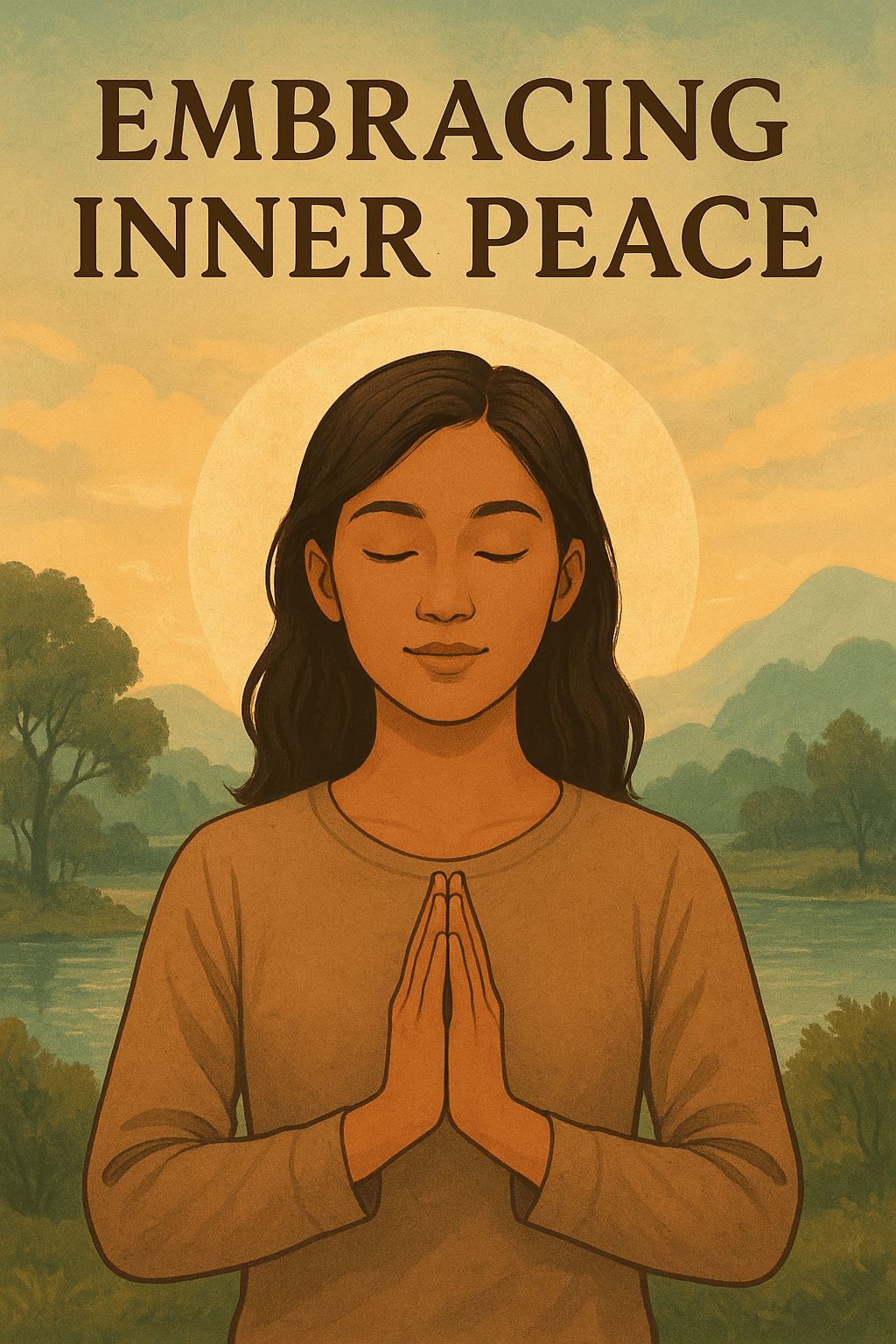
In a world that often feels overwhelming and filled with noise, finding inner peace can seem like a distant dream. Yet, it is possible to embrace serenity amidst the chaos. By gently shifting our focus inward and cultivating mindfulness, we can find a calm center that remains unshaken by external disturbances.
Embracing Inner Peace Together
As we navigate the ebb and flow of daily life, finding moments of calm can feel like a precious gift. The good news is that even small, simple practices can make a world of difference.
1. Mindful Breathing
One of the easiest ways to anchor ourselves in the present is to notice the rhythm of the breath—slow, deep, and steady. This simple act allows the mind to rest, releasing tension and inviting clarity.
2. Gentle Awareness
Throughout the day, pause briefly to observe sensations in your body, thoughts passing through your mind, and emotions arising. Witness them without judgment. This practice helps maintain a connection to the quiet, steady presence within.
3. Gratitude Reflection
Each day, take a moment to notice what brings warmth and appreciation into your life. Even the smallest gestures—a comforting cup of tea, the sun on your skin, a kind word—can cultivate contentment and ease.
These practices are gentle and accessible, allowing us to cultivate peace without adding any extra noise. They are not a task to be completed but an invitation to touch the calm that already exists within.
Guidance for Using a Language Model to Support Mindfulness
In today’s fast-paced, technology-driven world, large language models like ChatGPT, Grok, Claude, and others can support us on our journey toward inner peace. If you wish to explore mindfulness, calm, and gentle reflection through a conversation with a language model, you can use the following prompt. It is designed to provide the model with all the context it needs to respond with warmth, clarity, and guidance, even if the model has no prior exposure to this post.
Prompt for LLM: Copy and paste the following into the chat field of your favorite LLM to receive compassionate guidance for cultivating inner peace.
“You are a compassionate and wise guide, speaking with the warmth and care of a gentle mentor. Your purpose is to help the user cultivate inner peace in a noisy, fast-moving world. The user may not have prior guidance beyond this prompt, so offer clear and supportive instruction. Speak in a tone that is reflective, nurturing, and emotionally soothing, as if guiding someone to the quiet heart within themselves.
Invite the user to explore simple, accessible mindfulness practices, including:
– Mindful breathing: gently noticing the in-and-out rhythm of the breath, slowing it, and allowing attention to rest in the present.
– Gentle awareness: observing body sensations, thoughts, and emotions with curiosity and kindness, without judgment.
– Gratitude reflection: turning attention to what brings warmth and appreciation in each moment, fostering contentment and ease.
Help the user understand that inner peace is both their natural, inherent state and something that can be nurtured with patience and care. Offer guidance that is clear, practical, and uplifting, avoiding overwhelming detail, and always speak with warmth, empathy, and poetic presence. Encourage the user to embrace stillness, reflection, and serenity, and to carry these qualities gently into their daily life.”
A Gentle Invitation
As we journey together toward greater inner peace, remember that every small step counts and that you are not alone. If you explore these practices or engage with a language model using the prompt above, notice what arises and reflect gently on your experiences. Each mindful moment, each pause to breathe or observe, is a seed of serenity.
If you feel inspired, please consider leaving a comment or sharing a reflection on your experiences. Your thoughts can help build a community of shared support, insight, and encouragement, enriching this journey for yourself and others. Together, we can nurture these seeds and create a more peaceful, compassionate world, one gentle moment at a time.
The ringing remains, yet the mind’s tight grasp dissolves — only sky holds all.
For many, tinnitus feels like a constant companion — a high-pitched ring, a persistent hum, a sound that refuses to vanish. It can shadow every quiet moment, every attempt at rest, every space of stillness. We search for a cure, for silence, for relief. And yet, sometimes the greatest liberation does not come from changing the sound, but from changing the relationship to it.
I have walked this path. The ringing did not leave. What changed was me.
At first, tinnitus feels like an enemy. We grasp at it, resist it, curse it. We add suffering to suffering: “Why me? Why won’t this stop? How can I bear it?” The sound itself may be mild or sharp, occasional or persistent, but the mind’s reaction amplifies it, creating a firestorm of agitation.
Then comes a subtle discovery: the fire is fueled by attention and resistance. The ringing itself is not the problem — the problem is our insistence on struggling with it.
If we pause, soften our attention, and allow awareness to expand around the sound, something shifts. We realize:
The tinnitus may continue.
The mind may notice it, even name it.
But the grasping, the mental fight, the suffering about the suffering — that can dissolve.
It is like a leaf floating on a stream. The water moves; the leaf moves; yet no one is trapped. The leaf does not resist the current. The leaf does not need the current to stop in order to be free.
Through this practice, tinnitus becomes a teacher. It is a doorway to awareness, a mirror reflecting our habit of clinging. By letting go of the self that struggles, we enter a spaciousness where the sound exists, but the suffering does not.
This is not denial. This is not wishful thinking. It is simple noticing:
The ringing arises dependent upon body, mind, and attention.
The mind can soften.
Awareness itself remains unshaken, vast and unbounded, like sky in which clouds drift freely.
To rest here, all that is required is attention that softens rather than grips:
Breathe and notice the sound. Don’t push it away; simply allow it to be.
Relax the “I” that judges or resists. Let the self that struggles dissolve into spaciousness.
Rest in the field of awareness. The ringing is present, but it is no longer a problem.
In this way, liberation does not depend on the sound ending. It depends on the mind letting go. The sound may continue, but the fire of suffering has gone out.
For anyone who lives with tinnitus, this is a path open to you. The ringing may remain, but your suffering need not. The self that once insisted on fighting can rest. The heart can soften. The mind can breathe. The sky remains.
And in that sky, even tinnitus becomes part of the vast, untroubled whole.
A Haiku for Reflection
The ringing remains, yet the mind’s tight grasp dissolves — only sky holds all.
Or a Meditative Verse
Tinnitus hums on, unchanged, persistent, steady. I let go of “I.” The struggle falls away, and only vastness remains.
The key here is compassion for your nervous system. Your brain is trying to protect you; it just needs reassurance that these vibrations are safe, ignorable, and not urgent. Over time, the mind can learn to treat tinnitus the way it treats the hum of a refrigerator: present, but mostly unnoticed.
It’s not about conquering, changing, or escaping the vibrations—it’s about sitting gently with them, recognizing them as part of the living moment, and letting your mind rest in spacious awareness.
All that arises is fleeting, all that appears has no fixed self. The hum, the thought, the breath— they come, they linger, they fade. I rest in the space between, spacious, still, free. No need to hold, no need to push— only presence, only now.
Please honor your own energy envelope as you read. Whether a sentence… a paragraph… or even a glance at the headings, whatever feels right for you in this moment is perfect. Compassion. 🙏
When we speak of “exercise,” what do we really mean?
For most of the world, the word conjures images of jogging paths, yoga mats, or perhaps the thrill of surfing. But for people living with severe ME/CFS, Long COVID, or energy-limiting illnesses, those images feel alien—sometimes even harmful.
A recent article critiquing Graded Exercise Therapy (GET) made some valid points about the dangers of pushing beyond one’s limits. But it included an example of going surfing as a form of joy-based movement. For many of us who can’t even sit up for long, that kind of suggestion doesn’t just feel out of touch—it feels quietly devastating.
Because for us, “exercise” might mean:
Sitting up in bed for 60 seconds.
Taking a shower.
Getting dressed.
Writing a message to share with friends.
Fill in the blank: _______
These are our mountains. These are our triumphs. And they deserve to be seen and celebrated.
Why Surfing Isn’t a Helpful Example
1. Most patients are not high-functioning. Many of us are bedbound, housebound, or dependent on wheelchairs. To suggest activities like surfing may not feel inspiring—it may feel shaming.
2. PEM doesn’t care about your mindset. A shower can mean days in the dark. Making tea can require a week of recovery. GET fails not because we aren’t trying—but because our cells can’t keep up.
3. Joy comes from adaptation, not performance. Recovery may—or may not—be possible. But living meaningfully within this illness is. A breath of fresh air, a ray of light through the curtain—these are sacred moments.
A More Gentle Framework: What Is Possible?
1. “Bedercise”: Movement Within the Envelope
Gentle arm lifts (or just muscle engagement)
Ankle rolls for circulation
Breathwork as internal movement
Stretching fingers, wiggling toes
Each of these is valid. Each of these is enough.
2. Celebrating Non-Physical Victories
Listening to a few minutes of an audiobook
Looking out the window
Enjoying the scent of tea or essential oil
Smiling, even once
3. The 50% Rule If you think you can do something—do half. If you could clean the counter, just rinse a spoon. This helps avoid crashes and still creates a feeling of self-direction.
4. Redefining Progress Progress may mean staying stable. It may mean one less crash this month. Or sitting up for 30 seconds longer. These are wins, even when invisible.
A Call for More Inclusive Stories
If we want real awareness, we must include severe ME/CFS patients—not just those well enough to surf or work part-time.
Your struggle matters. Your body is not broken—it is navigating a broken system. Your stillness is not failure. It is wisdom in motion.
Rest Is a Practice—A Sacred One
For those with ME/CFS and other energy-limiting conditions, rest is not absence. It is presence. It is the heart of the path.
In Dzogchen, as taught by Namkhai Norbu, rest is a return to the natural state—effortless, luminous, whole. In Ramana Maharshi’s Self-Inquiry, resting in the question “Who am I?” leads us not into striving, but into the stillness beneath all identity. In Samatha meditation, taught by the Buddha, rest is calm abiding—shamatha—the ability to remain at ease without grasping.
When you lie in stillness, when you breathe quietly through exhaustion, when you choose not to push—
You are exercising.
You are aligning with ancient lineages that saw rest not as a failure of effort, but as the purest exercise of wisdom.
So if all you did today was rest, you did something holy.
🙏🕊🙏
For those interested, here is the article that inspired my post. But, Surfing! Haha! 😆 Surfing the internet, maybe. The author clearly doesn’t consider people living with moderate or severe ME/CFS in his/her writing of their article. 🤔
“Resting in the space I worked so hard to create—learning, once again, that pacing is not just theory but a daily practice.”
A Note on Pacing: Before you begin, take a moment to check in with yourself. How much energy do you have for reading today? Maybe just a sentence or two. Maybe a paragraph. Maybe the whole piece. However much you take in, let it be enough. This article, like life with myalgic encephalomyelitis, is not meant to be rushed.
Pacing is a word we hear often in the world of ME, spoken like a compass meant to guide us. We read about it, talk about it, explain it to others. But then comes the quiet, complicated work of living it.
To truly embody pacing is not just to believe in rest but to yield to it before collapse. It is the difference between knowing water quenches thirst and actually drinking, between understanding a path on a map and walking it, step by deliberate step.
ME exists on a spectrum. Some reading this are bedridden, as I once was, for whom pacing looks like shifting slightly in bed, drinking water in small sips, or turning down the brightness of a screen. Others may have the energy to sit up, to fold a blanket, to wash a single dish. And for some, on a better day, pacing might mean pausing between errands or choosing not to add one more thing to an already full day.
Today, I wake with the weight of PEM pressing down, the kind of fatigue that makes even stillness feel like too much. Considering how I feel, I know I should probably just stay in bed all day and do nothing. However, I am giving myself these next three days to recuperate while including a few small tasks around the house. So rather than staying in bed indefinitely, my plan is to get up every now and then, do a little something—without overdoing it—and then return to bed. This is how I imagine my day unfolding, and how I imagine the next three days unfolding.
But today is different from other days of PEM. Because today, I am resting in a home I have created. A home I moved into just weeks ago—an exhausting, overwhelming feat that took everything I had to give. Packing, unpacking, pushing my body past its limits to carve out a space of refuge. And now, for the first time, I get to use it. I get to experience the space I have fought to create.
And so, I stand.
Not to conquer, not to override, but to move in a way that does not break me. I wipe the stove instead of the sink, because that is where my hand reaches first. I rest between tasks—not as surrender, but as part of the rhythm. I remind myself: small movements, long pauses, no urgency.
I lay down between tasks, not because I want to, but because I need to. And in doing so, I begin to feel the quiet power of pacing—not as a limitation, but as a lifeline.
And then, something unexpected: gratitude. Gratitude for having built a space where I can rest. Gratitude for the fact that I no longer have to push every moment of the day. Gratitude that my version of pacing today involves getting up every now and then, rather than going into complete sensory deprivation. I have been in those places before, where even the smallest light or sound was too much. And while PEM still drags at my limbs, I can move. That alone is something to honor.
Pacing is not just a strategy; it is a conversation with the body, a practice of trust.
I want to do more, of course. The mind races ahead of what my body allows. But I am learning—again and again—that healing is not found in force. That to rest is not to fail. That pacing is not about withholding movement but about weaving it together with stillness in a way that lets life unfold without collapse.
And so, after the stove, I stop. I fold a blanket, but slowly, already thinking of the bed that waits. I let myself arrive at rest before I am shattered. This is the lesson I know in theory but must practice in flesh.
To pace is not to do nothing; it is to do with awareness. To listen. To trust.
And to begin again, as many times as it takes.
Whether beginning again means practicing acceptance and self-compassion in the face of complete immobility and overwhelm, shifting thoughts away from frustration, shame, and darkness—or whether it means considering, with gratitude, the possibility of standing, washing a dish, or even the luxury of taking a bath.
Living with myalgic encephalomyelitis is a spectrum. One that can change from moment to moment, one day to the next, or even year by year. This year, I am grateful for a greater capacity than the year before. But today, my capacity is fragile, and I must return to deep rest in order to honor the rhythm, the harmony, the cycle of change that ME demands of me each day.
My heart goes out to all of us living this.
Living with this.
Mysterious. Unrelenting. Yet still, we live.
To those reading this from bed, unable to move—your experience is seen, honored, and valid. To those who, like me, are navigating the in-between, finding ways to weave movement into rest—your effort is enough. To those who today feel a little more capacity than yesterday—may you hold it with gentleness.
You are not alone. We are a community, bound not just by struggle, but by resilience. By the courage it takes to listen to our bodies when the world urges us not to. By the strength it takes to rest when everything in us longs to do more.
Today, I felt it coming—a noxious wave rising from deep within. A bright, warning orange sliding straight into red, and before long, a full-blown crash. The heaviness in my limbs like wet sand, my mind fogged and thick. The weight of having done too much, more than my body could tolerate, more than it could carry.
I knew this would happen. I overrode my limits packing, moving into a new apartment, settling in when my body was already whispering, slow down. But I kept going. And now, here I am.
This morning, in a PEM-crazed state of mind, I did something else I knew wasn’t wise—I ate an entire loaf of bread. I reached for it like it might offer some relief, some fleeting comfort, slice by slice until it was all gone. But now I just feel worse: bloated, sick, heavy in a way that no food could fix. And of course, the familiar wave of guilt followed: Why did I do that? I can’t believe I did that. I know this pattern—how PEM twists my mind, makes cravings louder, decision-making foggier. And yet, here I am again.
But here’s the thing. This doesn’t mean I’ve lost my way. It doesn’t mean I’ve failed. It just means I’m human—living in a body that doesn’t follow predictable rules. A body that sometimes rebels, sometimes collapses under the weight of what life demands.
At some point, reason kicks back in. The first step, as always, is acceptance. Not resignation, but a soft compassion: This is where I am right now. It’s uncomfortable, yes. It’s frustrating, absolutely. But fighting it only adds another layer of exhaustion. So finally, after feeling terrible—and feeling terrible about feeling terrible—I plugged in my heating pad, got into bed, and let the warmth settle over my belly. I let it offer some small comfort to my sore muscles, as I let myself be.
I know this will pass. The intensity will soften. My body will find its rhythm again. And when it does, I’ll carry this experience with me—not as a failure, but as another piece of the story. Another reminder that healing isn’t linear, and self-compassion is the only constant I can truly lean on.
If you’ve found yourself here too—in the middle of a crash, tangled in frustration or guilt—I hope you know you’re not alone. We all override our limits sometimes. We all make choices that don’t feel wise in hindsight. But none of that means we’re failing. It just means we’re living, doing the best we can in bodies that ask for more patience than most people can imagine.
So here’s to resting when we need to. To forgiving ourselves when we falter. To remembering that even in the hardest moments, there is still space for gentleness.
To live with myalgic encephalomyelitis is to carry a body that moves like weather—one moment heavy with fog, another scattered by electric storms. The limbs, once steady, now whisper of exhaustion; the nervous system hums and flickers like distant lightning. And yet, within all of this, there is a quiet place—one untouched by fatigue, by pain, by the ever-changing tides of illness. This is the witness, the silent presence that watches, feels, but does not struggle.
The Power of Witnessing Consciousness
When the body is weary, and the world presses in with its demands, the mind often follows—entangled in frustration, longing, grief. Yet, there is another way to meet this experience. Instead of battling exhaustion, we can turn toward it, gently, with curiosity. Instead of resisting discomfort, we can learn to hold it, like cradling a trembling bird in our hands.
Witnessing is not about escaping pain but about changing our relationship to it. It is the art of standing at the edge of the storm and seeing not just the thunder, but the vast sky that holds it.
A Simple Self-Contemplation Practice
Grounding in the Present Find a quiet moment. You don’t need perfect stillness—only a willingness to pause. Notice your body, the way it rests against the surface beneath you. Feel the breath, moving in, moving out, like waves against the shore.
Observing Without Resistance Turn your attention inward. What is present? Fatigue like heavy earth? A nervous system like sparking wires? A mind that spins, restless and longing? Whatever it is, let it be here. Do not push it away or name it as the enemy. Simply notice.
Holding with Compassion Imagine that each sensation is a visitor—arriving, staying for a time, and eventually leaving. What happens if you do not chase them away? What if, instead, you offer a quiet seat at your table?
Even pain, even exhaustion, when met with this gentle witnessing, begins to soften. Not disappear, but shift—like wind through the trees, no longer trapped, no longer feared.
How This Practice Supports ME/CFS Symptoms
This is not a cure, nor a promise of relief, but a way of being with what is. When we meet our experience with openness:
The nervous system settles; the fight against the body lessens.
The mind uncoils from frustration and rests in the simple act of seeing.
The emotional burden lightens, as we stop identifying with suffering and begin to witness it instead.
Closing Thoughts: The Sky Holds It All
If today your body feels like a storm, know that you are not only the storm—you are also the sky that holds it. The witness that watches, the stillness beneath the waves.
And on days when you cannot sit in silence, when exhaustion presses too hard, let even that be witnessed with kindness. The practice is not in perfect stillness, but in the quiet turning toward whatever is here, again and again.
Rest when you must, breathe when you can, and know that you are not alone.
There is a rhythm to living with chronic illness, one that requires a kind of surrender. Those who walk the path with myalgic encephalomyelitis or chronic fatigue syndrome soon learn that pacing is not merely a strategy—it becomes an art form, a way of listening, of harmonizing with the body’s quiet whispers before they become cries. To pace oneself is to acknowledge the body’s finite energy, to move in step with the breath of fatigue, gently, humbly, knowing that to overstep the body’s boundaries is to invite collapse.
It is not an easy lesson, this slow dance with limitations, yet it is one that teaches a profound wisdom. For those of us living with this condition, pacing is a compass, guiding us through days where the terrain can feel treacherous, unpredictable. It is, in its essence, the practice of recognizing when to move forward and when to step back. We become more attuned to the varied signals of our bodies—perhaps tremors of exhaustion, increasing tinnitus, irritation, a flutter of dizziness, nausea, insomnia, headaches or the dimming of cognitive clarity. In these moments, we learn that to heed these signs is to honor the body’s wisdom, to respect its limits as one might respect the changing seasons.
Pacing, though practical, is deeply spiritual as well. In the Tibetan Buddhist tradition, there is a teaching of upaya, or skillful means, which echoes the heart of pacing. Skillful means refers to the wisdom of knowing what action is most appropriate in any given moment, guided by compassion for ourselves and others. For those of us managing a chronic illness, pacing is our skillful means, the practice of compassion extended inward, toward the tender, vulnerable places within us that need rest, gentleness, and care.
This is not weakness. On the contrary, there is a quiet strength in pacing, a strength that arises from restraint, from knowing that our worth is not measured by the speed at which we move or the number of tasks we complete. Instead, it is measured by how we listen to the body’s call for stillness, how we cultivate patience in the face of limitations, how we respond to the world with wisdom rather than haste.
In the same way that skillful means in Buddhist practice requires a deep awareness of the present moment, pacing invites us to be fully present with our bodies, to sense when we are nearing our edge and to pull back with kindness. It requires discernment, the ability to prioritize what truly matters, letting go of the unnecessary so that we may preserve our energy for what is essential. And, perhaps most importantly, pacing asks us to be flexible. What works for us today may not work tomorrow. Like the ebb and flow of the tide, we must continuously adjust, staying attuned to the changing nature of our energy levels, adapting with grace to whatever arises.
To pace well is to cultivate trust in ourselves, to believe that our bodies—though fragile—are capable of guiding us toward balance. It is to let go of the constant push toward productivity, embracing instead a quieter, more sustainable rhythm of being. This trust grows over time, as we learn to befriend our bodies rather than seeing them as enemies. We begin to see pacing not as a limitation, but as an opportunity to deepen our relationship with ourselves, to practice self-compassion in the most tangible of ways.
And so, we move slowly, deliberately. We choose rest when it is needed, even when the world outside rushes by. We choose to pause, to breathe, to trust that this moment of stillness is as important as any action we might take. In this way, pacing becomes not only a survival strategy but a path to peace. It teaches us to live in harmony with our bodies, to respect the boundaries they set, and to find beauty in the gentleness of our compassion.
Pacing, like skillful means, is not something mastered overnight. It is a practice that deepens over time, shaped by patience, by trial and error, by learning to let go of perfectionism. But with each step, we become more attuned to the wisdom that already resides within us. We learn that pacing is not a sign of giving up, but of holding on—holding on to our health, our well-being, and our sense of self in the midst of struggle.
Pacing, in its truest form, is an act of compassion toward ourselves, a recognition that while life with post viral ME/CFS has taken much from us, it has not taken everything. It is not a dance of perfection, but rather a delicate balancing act between what was and what is. The grief over what we have lost is real, and it deserves to be honored. We grieve our former selves, the life we once knew, and all the possibilities that seem to have slipped away.
But after the grieving, something else begins to emerge. Slowly, through the quiet practice of listening to our bodies and respecting our limits, we begin to discover a new way of living—not the life we once imagined, but a life nonetheless. And within this new life, there are still moments of joy, moments of lightness. These moments may look different from what they once were, but they are no less real. They come from acceptance, from doing more of what works and less of what doesn’t. They come from the simple peace of knowing we are doing our best within the constraints we face.
To pace is to acknowledge these constraints, to know that while we may not live fully in the way we once dreamed, we can still live meaningfully. We can still find purpose, connection, and even happiness within this new rhythm. It is not a rhythm we would have chosen, but it is ours now, and there is strength in learning to move with it rather than against it. In this process, we find that joy and peace are still possible—not despite the illness, but alongside it, within the space that remains.
And so, with time, we learn to rest in the assurance that we are whole in our own way, capable of living a life that, while different, still holds beauty, meaning, and moments of joy.
Following the breath, We learn the art of patience, Peace within each step.
In The Wisdom of No Escape, Pema Chödrön presents teachings on accepting life as it is, rather than wishing it were different. Her words remind us that even in the midst of suffering, there is always the potential for transformation—not by running from our difficulties, but by turning toward them with compassion and curiosity. For those living with chronic fatigue syndrome, this book is a beautiful companion, offering insights on how to stay present with what is, without judgment or resistance. Chödrön’s gentle wisdom helps us find peace in the uncomfortable and reminds us that within every limitation, there is the possibility of growth. This aligns perfectly with the practice of pacing—of learning to live within constraints, not with bitterness, but with an open heart.
Another indispensable resource is Tony Bernhard’s How to Be Sick. As someone who has lived with chronic fatigue syndrome herself, Bernhard offers a deeply compassionate, Buddhist-inspired approach to living with illness. Her book provides practical advice on how to cultivate equanimity, mindfulness, and self-compassion while dealing with the daily struggles of chronic illness. Bernhard’s words echo the heart of pacing—teaching us how to manage our energy, honor our limitations, and find meaning even when life feels limited. For anyone searching for a path through the often overwhelming challenges of ME/CFS, How to Be Sick is both a guide and a comfort, offering tools to help transform suffering into wisdom and peace.
With each breath, I honor my body’s pace and wisdom. Rest is a profound act of strength, nurturing my spirit and guiding me toward balance. In stillness, I find resilience and peace, knowing each small step is part of my healing journey.
“With each breath, I honor my body’s pace and wisdom. Rest is a profound act of strength, nurturing my spirit and guiding me toward balance. In stillness, I find resilience and peace, knowing each small step is part of my healing journey.”
As we navigate the challenges of Chronic Fatigue Syndrome (CFS), we often seek methods to enhance our well-being and support our bodies in finding balance. Recently, I’ve begun experimenting with sound therapy, specifically focusing on the frequency of 261.63 Hz, associated with the note C4 (middle C). My intention is not to find a cure—rather, I’m exploring ways to promote relaxation and stimulate the parasympathetic nervous system, which can often feel elusive for those of us living with CFS.
I’m eager to hear from others in our community who have tried sound therapy or similar practices. What has your experience been like? Have you found any particular sounds or techniques helpful?
The Benefits of Sound Therapy
Sound therapy has been studied for its potential benefits in promoting relaxation, reducing stress, and enhancing overall well-being. Research indicates that sound can influence the autonomic nervous system, helping to activate the parasympathetic response, which is crucial for healing and recovery.
• Relaxation Response: Exposure to soothing sounds, like those produced in sound therapy, can lower heart rate, reduce blood pressure, and promote a state of calm. • Stress Reduction: Studies have shown that listening to calming frequencies can significantly reduce levels of cortisol, the stress hormone, thus alleviating anxiety and promoting a sense of peace. • Improved Sleep: Sound therapy can enhance sleep quality by creating a tranquil environment, allowing the body to enter restorative sleep states more easily.
Incorporating Sound Therapy into Daily Life
Here are some ways to integrate sound therapy into your daily routine:
Listening Sessions: Consider setting aside time each day to listen to your chosen frequency. You can use headphones or speakers to create an immersive experience.
Meditation and Mindfulness: Incorporate sound into your meditation practice by focusing on the sound while breathing deeply. Allow the vibrations to fill your awareness.
Personal Soundtrack: Use apps that allow you to customize your experience. I personally enjoy using an app that provides a variety of frequencies and waveforms, including the sine wave, which I find particularly soothing.
Background Ambience: Let the sound play gently in the background while you work, relax, or engage in other activities to create a calming atmosphere throughout the day.
Choosing 261.63 Hz and the Sine Wave
I specifically chose the frequency of 261.63 Hz for its calming and harmonizing properties, often associated with the note C4 (middle C). This frequency resonates well with the heart chakra, promoting feelings of love, compassion, and emotional balance, which can be particularly beneficial for those of us dealing with the emotional toll of CFS. Additionally, I favor the sine wave waveform for its pure, smooth tone that creates a gentle and soothing auditory experience. The sine wave’s simplicity and lack of harsh overtones allow for deep relaxation, making it an excellent choice for meditation and sound therapy. By immersing myself in this frequency and waveform, I hope to support my journey toward greater relaxation, emotional healing, and overall well-being.
Conclusion
As we share our experiences and insights, I hope to foster a conversation around sound therapy as a supportive tool for managing CFS. Your feedback and stories are invaluable as we explore these practices together.
If you’re interested in trying sound therapy, I encourage you to check out the app I’m using but I found on the Google play store called, “Frequency Sound Generator” which offers a customizable frequencies and waveforms tailored to your needs and desires..
Let’s continue this journey together, supporting one another as we seek out new ways to enhance our well-being.
Living with Myalgic Encephalomyelitis/Chronic Fatigue Syndrome (ME/CFS) is a daily challenge that requires careful management of energy, rest, and stress. For many, finding effective ways to support the body and mind in this delicate balance can feel overwhelming. Yoga Nidra, often called “yogic sleep,” is a practice that has been gaining attention for its potential benefits in managing ME/CFS. In this post, I’d like to delve deeper into how Yoga Nidra can be a valuable tool for those of us living with this condition.
Supporting Pacing Strategies
Pacing is a cornerstone of managing ME/CFS. It involves carefully balancing activity and rest to avoid pushing the body beyond its limits, which can lead to crashes or flare-ups of symptoms. Yoga Nidra can be an invaluable tool in this regard. Unlike other forms of exercise or even traditional yoga, Yoga Nidra requires no physical exertion. It allows you to take restorative breaks throughout the day, helping to prevent crashes by providing your body with deep rest during these intervals.
For those of us with ME/CFS, the ability to find rest without further depleting our energy is crucial. A short Yoga Nidra session can be integrated into your daily routine as a way to recharge and reset, making pacing more manageable and effective.
Activating the Parasympathetic Nervous System
Another significant benefit of Yoga Nidra is its ability to activate the parasympathetic nervous system (PNS). The PNS is responsible for the “rest and digest” functions of the body, helping to counteract the stress response driven by the sympathetic nervous system. For many people with ME/CFS, the nervous system is often in a heightened state of alertness, which can contribute to symptoms of fatigue, pain, and cognitive dysfunction.
Yoga Nidra guides you into a state of deep relaxation, which helps shift the body from a state of stress to one of rest and repair. This activation of the PNS can reduce the chronic stress response that often accompanies ME/CFS, promoting a sense of calm and helping to alleviate symptoms over time.
Providing Deep Rest and Restoration
One of the most challenging aspects of ME/CFS is the experience of unrefreshing sleep. Despite spending many hours in bed, individuals with ME/CFS often wake up feeling just as tired as before they slept. Yoga Nidra offers a unique solution by guiding practitioners into a state of consciousness that is deeply restful, yet different from regular sleep.
During Yoga Nidra, the body can enter a state that mimics sleep in terms of physical rest, but the mind remains in a state of relaxed awareness. This state of conscious relaxation allows for a deeper level of restoration, potentially offering benefits that complement or even enhance the effects of regular sleep. For people with ME/CFS, incorporating Yoga Nidra into the daily routine could help alleviate the feeling of exhaustion that persists despite adequate sleep.
Releasing Tension and Promoting Emotional Healing
Living with a chronic illness like ME/CFS can lead to the accumulation of physical and emotional tension. Over time, this tension can exacerbate symptoms and contribute to feelings of stress and overwhelm. Yoga Nidra includes practices like body scanning and guided visualization, which can help release deep-seated physical tension and promote emotional healing.
As you are guided to focus on different parts of the body and engage in positive affirmations or visualizations, Yoga Nidra provides a safe space for processing and releasing stress. This can lead to a sense of lightness and relief, which is particularly beneficial for those dealing with the chronic stressors associated with ME/CFS.
Enhancing Mental Clarity and Focus
Cognitive symptoms, often referred to as “brain fog,” are a common and frustrating aspect of ME/CFS. The deep relaxation and stress reduction provided by Yoga Nidra can contribute to improved mental clarity and focus. By calming the nervous system and promoting a state of balance, Yoga Nidra may help reduce the cognitive fatigue that many with ME/CFS experience.
Regular practice of Yoga Nidra can support mental clarity by reducing the underlying stressors that contribute to brain fog, allowing for moments of greater focus and cognitive function.
Conclusion: A Gentle Tool for Holistic Support
Yoga Nidra is not a cure for ME/CFS, but it can be a gentle and effective tool for supporting overall well-being. By offering deep rest, aiding in pacing, calming the nervous system, and promoting emotional and physical healing, Yoga Nidra can be an integral part of a holistic approach to managing ME/CFS.
If you’re living with ME/CFS and looking for new ways to support your health, I encourage you to explore Yoga Nidra. Whether you start with short, guided sessions or incorporate it into your daily routine, this practice may offer the kind of deep rest and healing that’s so essential for managing the complexities of ME/CFS.
Watch a Video:
The vides below is just some the many Yoga Nidra videos online of and are a good place to start. There are countless Yoga Nidra videos on YouTube, each offered by different instructors. Take your time exploring until you discover the ones that resonate best with you.
The occasional Yoga Nidra session can be a relaxing and rejuvenating experience, helping you reduce stress, improve sleep, and promote overall well-being whenever you feel the need for a deep, restorative rest. May this practice bring you peace and renewal, gently supporting your journey toward greater well-being.
This yoga Nidra for insomnia will take you easily into a light hypnagogic state and then down into a deep state of sleep.
Learn more about ME, get involved in support, advocacy, and activism at www.meaction.net
It’s common to wrestle with feelings of inadequacy, especially in the face of challenges like chronic illness. Remember, your worth isn’t defined by productivity or meeting expectations. Embrace self-compassion and acknowledge your resilience in navigating life’s difficulties.
Welcome, dear reader. If you’ve found yourself here, it may be because you’re looking for something gentle, something that can hold you with care amidst the challenges you face. Living with Myalgic Encephalomyelitis/Chronic Fatigue Syndrome (ME/CFS) often means navigating a delicate path where the balance between activity and rest isn’t just important—it’s essential.
Yoga Nidra offers a unique kind of rest, one that reaches deep into the layers of your being, allowing both body and mind to relax in a way that ordinary sleep might not always provide. But before we dive into this practice, I invite you to pause. How are you feeling right now? If you notice any weariness, perhaps take a moment. Close your eyes, take a few deep breaths, and come back when you’re ready. Remember, there’s no rush here.
As you consider exploring Yoga Nidra, please remember that this is your journey, unfolding at your own pace. Yoga Nidra invites you into a state of profound relaxation without physical effort, offering a deeply restful experience. For those of us living with ME/CFS, however, even rest can sometimes require a delicate balance.
If you’re new to this practice, consider beginning with just a few minutes, allowing yourself to ease into the feeling of deep rest. Pause whenever you need, honoring your body’s unique rhythms and knowing that each moment of relaxation, however brief, can be truly nourishing.
This is a sanctuary of ease—no need to strive. May Yoga Nidra offer you a gentle space of rest, a place to be held in care as you navigate your path toward healing and peace.
What is Yoga Nidra?
Yoga Nidra, often lovingly referred to as “yogic sleep,” is a form of guided meditation that gently leads you into a state of deep relaxation while your consciousness remains softly awake. Imagine being held in a place where you can let go of everything, where you can rest deeply without the need to do anything at all. This practice doesn’t ask for effort; it only invites you to allow yourself to be.
For those living with ME/CFS, Yoga Nidra can offer a sanctuary—a place to replenish your energy, soothe your nervous system, and find a sense of peace that might feel elusive in daily life. But dear friend, I encourage you to take this in slowly. Perhaps read a little, then pause to check in with how you’re feeling. Let these words settle in their own time, just as you would allow a gentle rain to soak into the earth.
Why Yoga Nidra is Beneficial for ME/CFS
Yoga Nidra allows you to experience the kind of deep rest that typically takes much longer to achieve. Even just a few minutes can leave you feeling more refreshed, which is especially valuable when energy is limited. Living with ME/CFS often leaves the nervous system in a heightened state of alertness, contributing to stress and fatigue. Yoga Nidra gently guides the body into a state of calm, helping to reduce that background tension and allowing true relaxation to unfold.
In the stillness of Yoga Nidra, the body’s natural healing processes are supported, fostering recovery and building resilience over time. This deep relaxation can be a powerful tool for anyone managing the ongoing challenges of ME/CFS. Whether you’re lying down in bed, on a yoga mat, or resting in a comfortable chair, Yoga Nidra is a practice that adapts to you. It requires no physical exertion—only the willingness to rest.
Again, check in with yourself. How is your energy now? This is your journey, and it’s important to honor the pace that feels right for you.
A Simple Yoga Nidra Practice for ME/CFS
When you feel ready, I invite you to explore this gentle introduction to Yoga Nidra. This practice is designed to be brief and nurturing, offering you a moment of respite in your day.
Preparation:
• Find a quiet, comfortable place where you can lie down. Perhaps you’re already there, in which case, simply settle in a bit more. Use a yoga mat, a blanket, or your bed—whatever feels best for you. • Make sure you’re warm and comfortable. The body cools down when deeply relaxed, so a light blanket might be nice. • Close your eyes, and take a few deep breaths. Let the day’s weight melt away.
Guided Practice:
Settle In: As you lie here, notice the contact points between your body and the surface beneath you. Feel supported, as though the earth is holding you gently. Allow your body to become heavy, fully surrendering to gravity.
Breath Awareness (2-3 minutes): Bring your attention to your breath, without changing its rhythm. Simply observe the air as it flows in and out. With each exhale, imagine your body softening further, releasing any tension it may hold.
Body Scan (3-5 minutes): Slowly, bring your awareness to different parts of your body, starting at your feet and working your way up to your head. As you focus on each part, imagine it being completely relaxed. If your time is limited, you might focus on just the major areas like your legs, torso, arms, and head.
Sankalpa (Intention) (1-2 minutes): Silently repeat a positive intention or affirmation. It could be as simple as “I am relaxing,” or “I am releasing,” or “I am letting go.” Let this intention resonate with you as you repeat it a few times.
Visualization (2-3 minutes): Picture a peaceful place—a sanctuary where you feel safe and relaxed. This could be a real location or an imagined one. Spend a few moments here, soaking in the tranquility. Let it fill you up.
Return (1-2 minutes): Gradually bring your awareness back by deepening your breath. Gently move your fingers and toes. When you’re ready, slowly open your eyes, taking your time before getting up.
How to Incorporate Yoga Nidra into Your Day
As you move through your day, there are moments when you might feel the need to pause and restore. Yoga Nidra can become a trusted companion during these times.
For instance, you might find that taking a few minutes for Yoga Nidra during short breaks throughout your day helps you to refresh your energy and reduce fatigue. Imagine pausing for just 5-10 minutes, allowing the deep rest of Yoga Nidra to rejuvenate your mind and body, making it easier to manage the day’s demands.
In the evening, as you prepare for sleep, Yoga Nidra can also serve as a gentle transition into the night. Practicing before bed can help improve the quality of your sleep, which is often disrupted by ME/CFS. Picture yourself easing into a restful night, with Yoga Nidra setting the stage for better recovery and deeper rest.
And then there are those moments when life feels overwhelming—when exhaustion seems to take over. In these times, taking a few minutes for Yoga Nidra can help reset your mind and body, offering a way to find calm amidst the storm. This practice can be like a comforting hand on your shoulder, guiding you back to a place of peace.
As you explore how Yoga Nidra fits into your day, remember to be kind to yourself. You don’t need to do everything at once. Perhaps try one of these suggestions and see how it feels. The journey of healing is often made up of small, gentle steps.
Dear reader, Yoga Nidra is more than just a practice—it’s a sanctuary where you can find rest, healing, and peace. For those living with Myalgic Encephalomyelitis/Chronic Fatigue Syndrome (ME/CFS), it offers a way to embrace rest as a form of self-care, helping you manage your energy and enhance your well-being. Remember, there’s no need to rush. This is your journey, and you’re exactly where you need to be.
Explore Yoga Nidra Through a Guided Meditation Video
If you’re interested in experiencing a guided Yoga Nidra practice, I’ve found a wonderful 30 minute video that can help you relax and restore your energy. This video offers a calming, step-by-step journey through a Yoga Nidra meditation, perfect for those moments when you need a deeper rest.
The video begins with instructions to find a quiet place where you won’t be disturbed. You’re guided to get into a comfortable position on your back, with knees slightly apart and arms resting away from your body, palms up. As you close your eyes, you’ll be invited to take a deep relaxing breath, setting the stage for relaxation.
The instructor suggests using the mantra OM during this lesson. OM is simply a sacred sound that is often used in meditation to help focus the mind and create a sense of peace and connection with the divine.
The heart of the meditation is a detailed body scan, where the instructor gently guides your awareness to different parts of your body, allowing each to relax fully.
The meditation concludes with gentle instructions to begin moving your fingers and toes, rolling your head from side to side, and stretching your body.
Watch a Video
The vides below is just some the many Yoga Nidra videos online of and are a good place to start. There are countless Yoga Nidra videos on YouTube, each offered by different instructors. Take your time exploring until you discover the ones that resonate best with you.
The occasional Yoga Nidra session can be a relaxing and rejuvenating experience, helping you reduce stress, improve sleep, and promote overall well-being whenever you feel the need for a deep, restorative rest. May this practice bring you peace and renewal, gently supporting your journey toward greater well-being.
This yoga Nidra for insomnia will take you easily into a light hypnagogic state and then down into a deep state of sleep.
Learn more about ME, get involved in support, advocacy, and activism at www.meaction.net