Tag: pure consciousness

  • Neti Neti Series No. 2: The Mantra That Dissolves into Silence

    Question:

    As I sit in meditation, repeating the mantra “Neti Neti,” I understand that this sacred phrase helps to strip away all that I am not. Thoughts arise, and I negate them. Emotions surface, and I let them go. Even the awareness of being a witness or the experience of stillness—these too, I recognize as not the ultimate reality.

    Yet, a subtle dilemma has emerged. I wonder, what happens when the very idea of “I” who is meditating dissolves? Is it not true that as long as there is an “I” who continues the practice, the mantra “Neti Neti” must also continue? And if this is the case, does the mantra cease only when the “I” itself disappears into the natural state of pure being? In such a moment, is it the case that the mantra stops on its own, not by my choosing, but because there is no longer an “I” to hold it?

    And then, when the sense of “I” returns, does the mantra begin again naturally, as the duality of subject and object re-emerges? I seek your wisdom on this matter, for I wish to understand the true nature of this practice and its ultimate purpose.

    Dear friend,

    Your question, born from a place of sincere inquiry, touches upon the very heart of the “Neti Neti” practice. I commend you for your diligence and the subtlety of your understanding, which reveals a mind that is both reflective and deeply engaged in the journey inward.

    Yes, you have grasped a key truth: the mantra “Neti Neti” is indeed a tool for continuous negation. It is a practice of peeling away the layers of illusion, gently, one by one, until nothing remains but the pure, unadorned awareness that is your true nature.

    As long as there is an “I” who perceives itself as meditating, this “I” exists within the realm of duality—where there is a subject (the meditator) and an object (the practice, the mantra, the thoughts). In this dualistic state, the mantra serves its purpose, guiding the mind to recognize that each arising thought, each sensation, each experience of stillness or witnessing, is not the ultimate reality. “Not this, not this,” the mantra whispers, reminding you that you are not these transient phenomena.

    But what happens when the sense of “I” begins to dissolve? When the boundary between perceiver and perceived starts to blur and fade? Herein lies a profound mystery: as the “I” that meditates melts into the ocean of pure being, the mantra, too, falls silent. For in the state of non-duality, where all distinctions have vanished, there is no need for the mantra—no “I” to repeat it, no “other” to negate. What remains is the natural state, the effortless being that is beyond all concepts, all forms, all practices.

    In this state, you do not stop the mantra; rather, the mantra ceases on its own, like a river merging with the sea, no longer distinguishable as a separate entity. This silence is not a void but a fullness, an infinite expanse of awareness where the true self—Atman—is realized, free from the confines of duality.

    And yet, the journey doesn’t end there. If and when the sense of ‘I’ re-emerges, as it often does, the mantra returns naturally. This is not a step backward but a return to the dualistic state where the mind resumes its habitual patterns. The mantra then resumes its sacred task of guiding you back toward the still, silent center where the distinctions between self and other can once again dissolve.

    So, dear friend, your understanding is indeed correct. The mantra “Neti Neti” is not something to be stopped by an act of will, but rather it fades away of its own accord when there is no longer an “I” to sustain it. And when the “I” returns, the mantra too returns, ready to lead you back into the depths of stillness and silence.

    Trust in this process, and allow the practice to unfold naturally, without forcing or grasping. The journey of “Neti Neti” is one of gentle negation, patient observation, and deep surrender. In time, you will come to rest more and more in the natural state, where the mantra is no longer needed, and the self is known in its true, infinite nature.

    🙏🕊️🙏
  • Introducing the Neti Neti Practice Series: A Journey of Self-Inquiry

    Welcome to the Practices of Neti Neti series, an exploration into one of the most profound methods of self-inquiry within the Advaita Vedanta tradition. This series is dedicated to the practice of Neti Neti—a Sanskrit phrase meaning “not this, not this”—which serves as a guide for stripping away all that is not the true Self, leading to the recognition of our pristine, unchanging nature.

    What is Neti Neti?

    Neti Neti is a process of negation that helps practitioners identify and discard false identifications with thoughts, emotions, and sensations. It is a method of peeling back the layers of the ego to reveal the stillness and silence of the pristine mind—the pure consciousness that is unaffected by the fluctuations of the mind. This practice is at the heart of Advaita Vedanta and is used to guide the seeker toward the realization of the Self, or Atman, which is ultimately one with Brahman, the universal consciousness.

    About This Series

    In this series, you will find a collection of questions and answers that delve deeply into the practice of Neti Neti. Each question is a reflection of the natural inquiries that arise during meditation and self-inquiry. The answers are written in a contemplative and encouraging style, as letters from a friend —offering wisdom, clarity, and support as you navigate your own journey of self-discovery.

    Why Questions and Answers?

    The format of questions followed by reflective answers is inspired by the teaching styles of great spiritual masters like Ramana Maharshi and Papaji. This approach allows for a dynamic exploration of the practice, addressing the doubts and insights that naturally emerge as one progresses on the path. By engaging with these questions, you’ll find that the answers are not merely intellectual responses, but invitations to deeper inquiry and realization.

    How to Use This Series

    This series is designed to be read sequentially, as the posts build upon each other, following the natural flow of practice and understanding. However, you are also welcome to explore the posts in any order, depending on where you are in your own practice.

    Each post presents a question that might arise during your meditation or reflection, followed by a letter that offers guidance on how to address it. These letters are not just answers—they are invitations to deepen your practice, to explore the subtleties of Neti Neti, and to connect with the stillness that lies beyond all mental events.

    Beginning the Journey

    As you embark on this journey through the Neti Neti practice, remember that this path is not about attaining something new, but about recognizing what has always been present. The goal is to gently guide the mind away from its distractions, allowing the pristine mind—your true nature—to shine through.

    Whether you are new to Neti Neti or looking to deepen your understanding, I invite you to explore these letters with an open heart and a quiet mind. May they serve as a steady guide on your path to self-realization.

    Engage and Explore Together

    I warmly encourage you to leave any questions or reflections in the comments section of each post. If a question resonates deeply or sparks a new line of inquiry, I may create additional blog posts to explore these topics further. Your engagement helps to create a community of shared learning, where we can all benefit from each other’s insights and experiences.

    Let us begin this journey together, one question and one insight at a time, as we uncover the truth of who we truly are.

    For those who wish to explore further the concept of pristine mind and its practices, I highly recommend Orgyen Chowang Rinpoche’s book, Pristine Mind: A Journey into Self-Awareness. Although this book does not specifically address the Neti Neti practice, it offers profound insights into the nature of pristine mind, a state of pure awareness that lies beyond the mental events and distractions that often cloud our perception. Rinpoche’s teachings provide a clear and accessible guide to realizing and resting in this natural state, which closely aligns with the ultimate goal of Neti Neti. You can explore the Kindle version of this book below, which may serve as a valuable companion on your journey of self-inquiry and spiritual awakening.

    🙏🕊️🙏

  • Neti Neti Series No. 1: Embracing the Practice of “Not This, Not This

    Question:

    How should I approach the practice of “Neti Neti” and what can I expect as I continue with it?


    Dear friend,

    “Neti Neti” is a path that is both ancient and profound, one that requires patience, a quiet heart, and a gentle perseverance. I’d like to share with you some thoughts and reflections that may guide you as you journey further into this sacred practice.

    The phrase “Neti Neti” translates simply as “not this, not this.” It is a mantra, yes, but it is also much more than that—it is a doorway to the understanding what lies beyond the confines of our ordinary thoughts and perceptions. When we repeat “Neti Neti,” we are not merely uttering words; we are engaging in a process of negation that strips away the layers of illusion and false identification, leading us closer to the core of our being.

    You may find that as you begin your practice, thoughts arise incessantly, like waves upon the shore. This is natural, my friend, and there is no need for concern. The mind, after all, is accustomed to constant movement. But as you sit in stillness and repeat “Neti Neti,” you are training your awareness to recognize that these thoughts—however persistent they may seem—are not who you are.

    In those moments when the mind is quiet, even for a brief instant, you may feel a sense of peace, a spaciousness that is untouched by the comings and goings of thoughts and emotions. This is the silence in which your true self resides. When you touch this silence, allow yourself to rest in it. Do not seek to hold on to it too tightly, for it is like a delicate breeze—best experienced by simply being present with it.

    And yet, if thoughts begin to stir again—and they often will—there is no need to worry or to chastise yourself. Simply return to the mantra, “Neti Neti,” with the understanding that what you are negating is not just the thought itself, but the identification with it. Each time you say “not this,” you are affirming that your true self is not these fleeting mental activities but something much deeper and more enduring.

    As you continue with this practice, you may begin to notice subtle changes in your inner landscape. The mind, once so restless, may start to settle more easily. You may find that the gaps between thoughts grow wider, and the stillness within you becomes more familiar, like a dear friend who visits often. This is the beginning of a profound transformation.

    In time, my friend, you may come to a place where the need to repeat the mantra diminishes, where silence and stillness are your natural state, and where the mind rests in its true home, free from the distractions that once held it captive. This is not a state to be forced or grasped at—it will come in its own time, as you continue to practice with patience and love.

    Remember, the journey of “Neti Neti” is not about eradicating thoughts or achieving some distant goal. It is about returning, again and again, to the awareness that lies beyond all concepts and forms. It is about recognizing that you are not the thoughts that arise, nor the emotions that ebb and flow. You are the awareness in which all these things occur, and this awareness is vast, infinite, and untouched by the passing of time.

    So, dear friend, as you continue with your practice, I encourage you to approach it with gentleness and an open heart. Trust in the process, even when it feels challenging. Trust in the silence that you find within, and know that this silence is the truest reflection of who you are.

    I look forward to hearing about your experiences as you deepen in this practice. May it bring you the peace and understanding that your soul seeks.

    🙏🕊️🙏

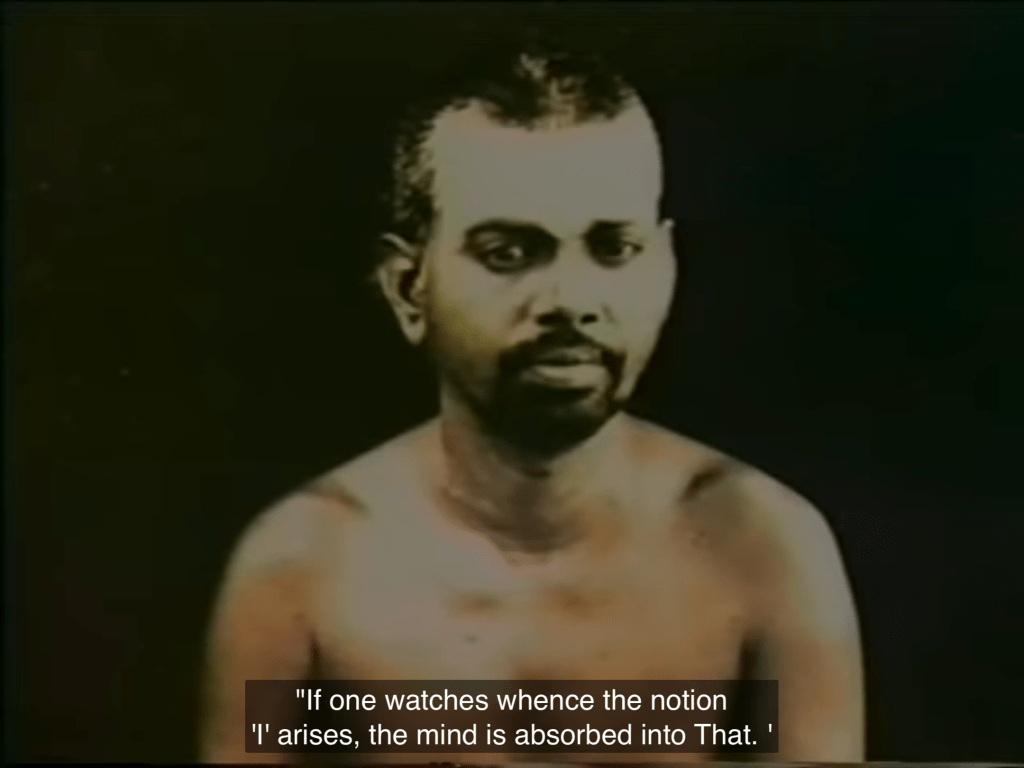
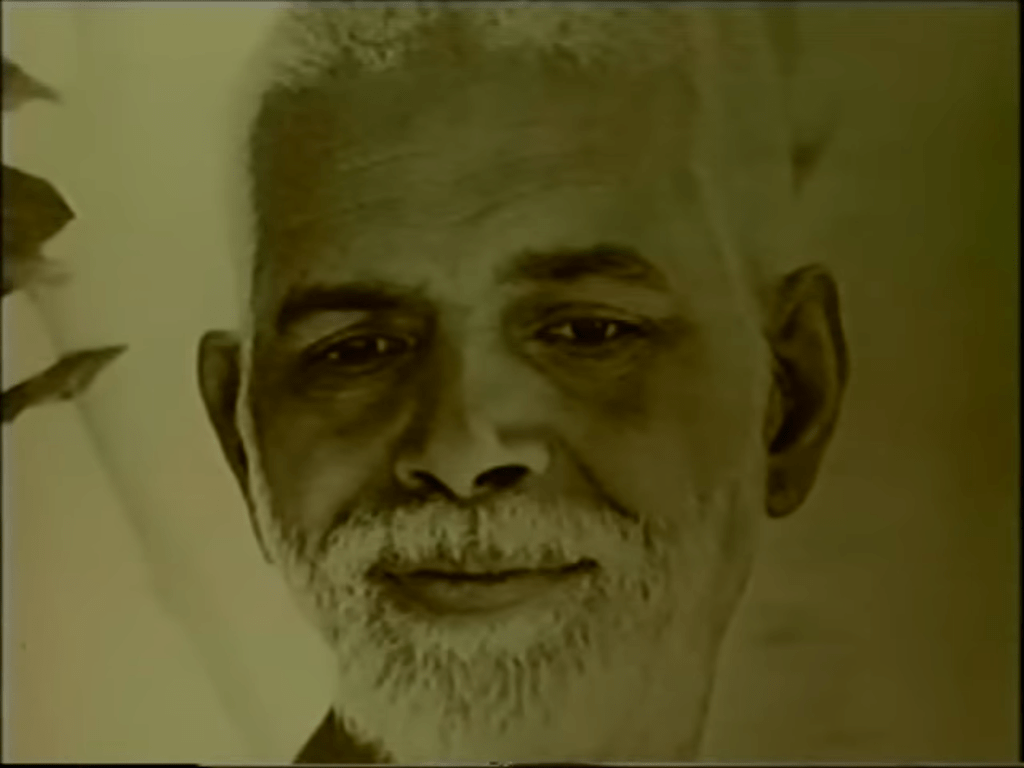
  • Who is Ramana Maharshi?

    Discovering the Self: Ramana Maharshi’s Guide to Self-Inquiry and True Realization

    Ramana Maharshi is one of the most revered spiritual teachers of the 20th century, known for his profound teachings on self-realization and non-duality. Born in 1879 in Tamil Nadu, India, he experienced a spontaneous awakening at the age of 16, during which he became acutely aware of the impermanence of the body and the eternal nature of the Self. Following this experience, he left his home and spent the rest of his life on the sacred mountain of Arunachala, where he became a guiding light for spiritual seekers from around the world.

    Ramana’s teachings are centered around the practice of Atma Vichara, or self-inquiry, which he considered the most direct path to realizing one’s true nature. Unlike other spiritual practices that involve rituals or external observances, Ramana emphasized turning inward to investigate the true nature of the ‘I’—the sense of individual self that we all experience.

    The Essence of Self-Inquiry

    Ramana Maharshi’s core teaching can be encapsulated in the question, “Who am I?” He taught that the sense of ‘I’ or ego, which we often associate with our thoughts, emotions, and bodily identity, is merely a superficial layer that veils our true Self, which is pure consciousness or awareness.

    The process of self-inquiry involves directing your attention inward, asking yourself where this sense of ‘I’ originates. Ramana explained that by persistently asking this question and observing the ‘I’ thought, one can trace it back to its source. This source is the true Self, the unchanging awareness that underlies all experience.

    If One Watches Whence the ‘I’ Arises

    In one of his teachings, Ramana Maharshi stated, “If one watches whence the notion ‘I’ arises, the mind is absorbed into That.” This teaching points to a subtle yet profound practice. The ‘I’ thought is the root of all mental activity and the sense of individuality. By turning attention to this root, rather than being entangled in the branches of thoughts and feelings, the mind can naturally dissolve into its source—pure awareness, which Ramana refers to as “That.”

    How to Practice Self-Inquiry

    If you find yourself puzzled by this teaching or struggle to sense “That” from which the ‘I’ arises, know that this is a common experience on the path of self-inquiry. The mind, accustomed to focusing outward, finds it challenging to turn inward and settle into stillness.

    Here’s how you can approach this practice:

    1. Sit Quietly: Begin by sitting quietly, with your eyes closed if that feels comfortable. Take a few deep breaths and allow your body and mind to relax.
    2. Turn Inward: Gently bring your attention to the sense of ‘I’. This ‘I’ could be a thought, a feeling, or simply the awareness that you exist.
    3. Ask the Question: Silently ask yourself, “Who am I?” or “Where does this ‘I’ arise from?” Don’t seek an intellectual answer. Instead, let the question be a pointer that guides your awareness inward.
    4. Observe: As you focus on the ‘I’, observe its nature. Does it have a shape, a location? Can you find its origin? Be curious, but not analytical.
    5. Rest in the Awareness: As you continue this enquiry, allow the mind to settle. If thoughts arise, simply notice them and gently bring your attention back to the feeling of ‘I’. Over time, the mind may begin to merge with the deeper awareness that is always present.

    Realizing the Self

    Through persistent practice, you may come to realize that the ‘I’ you have always identified with is not your true Self. The ‘I’ arises and dissolves in the vast expanse of pure awareness—‘That’ which Ramana Maharshi points to. This realization is not something to grasp intellectually, but a direct experience that brings about a profound inner peace and freedom.

    Ramana Maharshi’s teachings are a beacon for those seeking to transcend the ego and discover their true nature. The path of self-inquiry, though simple in its approach, can lead to the ultimate realization of the Self—the awareness that is ever-present, unchanging, and beyond all notions of individuality.

    🙏🕊️🙏

  • The Distinction Between Awareness and the Objects of Awareness: A Path to Self-Realization

    In the teachings of Pravrajika Devyanandaprana, we encounter a profound insight: “You are aware of your thoughts, but your thoughts are not aware of you. You are aware of your body, but your body is not aware of you.” These words invite us to explore a fundamental distinction in spiritual practice—the difference between awareness and the objects of awareness. Understanding this distinction is not only intellectually enriching but also a crucial step on the path to self-realization.

    Awareness vs. Objects of Awareness

    At the core of this teaching is the realization that awareness is the unchanging background in which all experiences arise. In contrast, the objects of awareness—thoughts, emotions, sensations, and even the body—are transient and constantly changing.

    • Awareness is the constant, unchanging presence that observes everything.
    • Objects of Awareness include all that we perceive, think, and feel—essentially everything that can be noticed or experienced.

    When Swamiji says, “You are aware of your thoughts, but your thoughts are not aware of you,” she emphasizes that awareness is distinct from the content of the mind. Thoughts come and go, but the awareness that perceives them remains steady and unchanged. Similarly, the body is an object of awareness; it can be observed, felt, and experienced, but it is not aware of the awareness that perceives it.

    The Implications for Self-Realization

    Understanding this distinction between awareness and the objects of awareness has profound implications for self-realization:

    1. Disidentification from the Mind and Body:
    • Most of us identify strongly with our thoughts, emotions, and physical body, believing them to be the core of who we are. However, by recognizing that these are merely objects within our awareness, we can begin to disidentify from them. This disidentification is a crucial step towards realizing that our true nature is not the ever-changing mind or body but the unchanging awareness that perceives them.
    1. Realizing the True Self:
    • The true Self, often referred to as Atman in Vedanta, is pure awareness—unchanging, eternal, and beyond the fluctuations of the mind and body. When we deeply understand that we are the awareness observing all experiences, we begin to shift our identity from the transient objects of awareness to the true Self. This realization is the essence of self-realization.
    1. Freedom from Suffering:
    • Much of human suffering arises from our identification with thoughts and bodily sensations. When we believe we are our thoughts, we suffer from anxiety, fear, and other mental afflictions. When we believe we are our body, we suffer from physical pain and the fear of death. However, by recognizing that we are the awareness in which these experiences arise, we can cultivate a sense of detachment. This detachment leads to a profound sense of peace and freedom, as we no longer cling to or fear the transient experiences of the mind and body.
    1. Living with Awareness:
    • With this understanding, we can begin to live our lives with a greater sense of awareness. Instead of being lost in the content of our thoughts or overwhelmed by physical sensations, we can remain anchored in the awareness that perceives these experiences. This practice leads to a more centered, peaceful, and purposeful life, aligned with the true nature of our being.

    Practical Steps to Cultivate Awareness

    To cultivate this awareness and move towards self-realization, consider incorporating the following practices into your daily routine:

    1. Mindful Observation:
    • Spend a few minutes each day simply observing your thoughts without getting involved in them. Notice how they arise and dissolve within your awareness. Practice the same with physical sensations in your body. This helps in recognizing that you are the awareness in which these experiences occur.
    1. Meditation:
    • Engage in a daily meditation practice focused on observing the breath or a simple mantra. As you meditate, gently bring your attention to the awareness that is observing the breath or mantra. This practice helps in disidentifying from the mind and deepening your connection to the true Self.
    1. Self-Inquiry:
    • Regularly ask yourself, “Who am I?” or “What am I?” Not to find a verbal answer, but to turn your attention inward towards the awareness that perceives the mind and body. This inquiry helps in uncovering the true Self beyond all objects of awareness.
    1. Living in the Present Moment:
    • Cultivate the habit of bringing your attention back to the present moment throughout the day. Whether you are eating, walking, or engaged in conversation, try to remain aware of the awareness itself, noticing how it observes the unfolding experiences.

    Conclusion: The Journey to Self-Realization

    Swamiji’s teaching on the distinction between awareness and the objects of awareness offers a clear pathway to self-realization. By deeply understanding and living this distinction, we begin to experience life from the perspective of the true Self—pure awareness, unchanging and eternal.

    This shift in perspective is not merely an intellectual exercise but a transformative realization that brings profound peace, freedom, and fulfillment. As we continue to cultivate this awareness, we gradually dissolve the false identifications with the mind and body, awakening to our true nature as the eternal, unchanging Self.

    Below is the original source video of the lecture with Swami Parvajika Devyanandaprana, from which these blog posts were inspired. Here you can explore the insightful teachings that have profoundly shaped the content and perspectives shared in this blog.

    🙏🕊️🙏

  • Glossary of Terms

    This is the beginning of our glossary

    Pure Awareness (Atman): The true essence of the self, often referred to as Atman in Advaita Vedanta. It is the unchanging witness of all experiences, untouched by the fluctuations of the mind. In nondual teachings, pure awareness is recognized as the core of our being, the aspect of ourselves that is ever-present and eternal.

    Pure Consciousness (Brahman): The ultimate, infinite reality that underlies everything, often referred to as Brahman in Advaita Vedanta. Pure consciousness is the vast, all-encompassing reality that transcends all dualities. Pure consciousness is the source and essence of all that exists. Realizing this truth is the goal of many spiritual paths, leading to liberation and peace.

    Ego: The aspect of the self that provides a sense of individuality and self-preservation, shaping our identities and interactions with the world. While the ego is a necessary part of human experience, overly identifying with it can limit our awareness and lead to suffering. The balance of the ego with pure awareness (Atman) leads to a more peaceful and fulfilled life.

    Mind: The collection of thoughts, emotions, perceptions, and memories that constitute our mental experience. The mind is active and constantly changing. In spiritual teachings, the mind is often seen as external to pure awareness. It is the activity that arises within consciousness but does not define the true self.

    Nonduality: A spiritual perspective that emphasizes the oneness of all existence, transcending the dualistic view of separation between self and other, mind and body, or individual and universal. Nonduality teaches that pure awareness (Atman) and pure consciousness (Brahman) are not separate but one and the same, leading to the realization of the interconnectedness of all things.

    Lila (The Play of Life): A concept in Hindu philosophy that describes life as a divine play or sport, where all experiences, including challenges and suffering, are seen as part of the cosmic dance. Recognizing life as Lila helps to cultivate acceptance and reduces resistance to life’s challenges, leading to a more graceful navigation through difficulties.

    Maya (Illusion): The illusion or appearance of the material world, which veils the true nature of reality. Maya creates the perception of separation and individuality. In Advaita Vedanta, overcoming the illusion of Maya is essential to realizing the oneness of Atman and Brahman, and seeing the world as it truly is.

    Heart Sutra: A key text in Mahayana Buddhism that emphasizes the emptiness of all phenomena and the transcendent nature of reality. The Heart Sutra teaches that by going “beyond, beyond, beyond,” one transcends all dualistic notions and realizes the ultimate truth.

    Individuation: A concept from Carl Jung’s psychology, referring to the process of integrating the various parts of the self into a harmonious whole. Individuation resonates with the idea of balancing the ego with pure awareness, leading to a more complete and authentic experience of self.

    Unconscious: The vast, all-encompassing reservoir of the mind that includes all mental processes, memories, instincts, and potentialities that lie outside of our conscious awareness. The unconscious contains both positive and negative aspects, known and unknown, including latent talents, creativity, and profound wisdom.

    Shadow: A specific part of the unconscious, primarily consisting of the aspects of ourselves that we have repressed or rejected—traits, emotions, and impulses that we find uncomfortable or unacceptable. The shadow can also include disowned positive qualities. It represents the darker, hidden aspects of the unconscious but is not limited to negative content.