Tag: pristine mind

  • Ramayana No. 19: Revisiting the Ramayana with Venkatesananda’s Take: Lessons from Valmiki’s Experience

    Ramayana No. 19: Revisiting the Ramayana with Venkatesananda’s Take: Lessons from Valmiki’s Experience

    As we begin our exploration of the Ramayana through Venkatesananda’s version, it’s fascinating to revisit the early stages of this epic tale, particularly through the lens of Valmiki’s own transformation. In this version, we are reminded of how the sage first heard the Ramayana from Narada and later expanded upon it after a transformative experience with the hunter and his divine encounter with Brahma. This opening passage introduces us not only to the story of Rama but also to the profound personal growth of Valmiki, a theme that resonates deeply with our own spiritual journeys.

    One particular quote stands out:
    “Yet, the mystery that even he could lose his temper and thus risk losing the merit of his asceticism intrigued him.”

    This moment captures a crucial aspect of the human condition—our struggle to control our emotions, even after years of spiritual practice. For Valmiki, witnessing the hunter’s cruelty toward the birds brought forth both compassion and anger, leading him to curse the hunter. It’s a reminder that even great sages can lose their temper, risking their spiritual merit. For me, the Dalai Lama’s teachings on anger come to mind here—anger is often seen as the opposite of love, and when we give in to it, we lose touch with our pristine, true nature. But the important lesson is that we can always return to our senses, regain our inner peace, and continue on the path of righteousness.

    This story, to me, also inspires compassion for ourselves. If even Valmiki, with all his ascetic discipline, could slip into anger, we too can forgive ourselves for the times we fall short. The key is recognizing these moments, learning from them, and using them as opportunities to realign with our higher purpose. Valmiki’s regret and his ability to transform his curse into a verse is a powerful reminder that even our missteps can lead to something greater, if approached with the right mindset.

    In this retelling, Valmiki’s divine encounter with Brahma affirms the purpose of his story. Brahma reassures him that the verse he uttered, born out of both anger and compassion, is a blessing. From this moment of emotion, a profound epic was born—a story that would inspire righteousness, compassion, and wisdom for generations. This theme of duality—anger and compassion, curse and blessing—reflects the constant struggle humanity faces with its own dual nature.

    What I find particularly compelling in this passage is how the Ramayana is positioned as medicine for a world in turmoil, a story that speaks to the heart of our modern struggles. Today, as in Valmiki’s time, people are often disconnected from their conscience, their true nature, and their pristine mind. This disconnect creates inner chaos, much like the mental fluctuations Valmiki experienced. The Ramayana, with its timeless wisdom, offers a path back to harmony with the divine. It reminds us that even in moments of anger or despair, there is always a way to transform that energy into something positive.

    Valmiki’s transformation from anger to inspiration is a beautiful metaphor for our own lives. In the same way that he found his path through a moment of passion, we too can use our struggles as stepping stones toward greater understanding and compassion. The passion that Valmiki felt for the hunter’s cruelty was ultimately transformed into the creation of a story that would inspire righteousness and compassion for millennia.

    As we continue this journey through the Ramayana, let us reflect on how we, too, can transform our moments of anger or frustration into opportunities for growth. The challenges we face—both internally and externally—are all part of our spiritual journey. Valmiki’s story is a powerful reminder that the path to self-realization is not without struggle, but each step along the way can lead us closer to our true selves.

    In future posts, we’ll continue to explore the wisdom within this and other versions of the Ramayana, diving deeper into how these timeless stories offer guidance for our modern lives. Let’s stay open to the lessons each passage holds and, like Valmiki, allow our moments of weakness to be transformed into opportunities for growth and inspiration.

    🙏🕊️🙏

  • Metaphysics and Modern Science: Dark Energy, Awareness, and Expansion

    Metaphysics and Modern Science: Dark Energy, Awareness, and Expansion

    How the Mysterious Forces Shaping Our Cosmos Reflect the Boundless Potential of Awareness, Transformation, and Free Will in the Mind

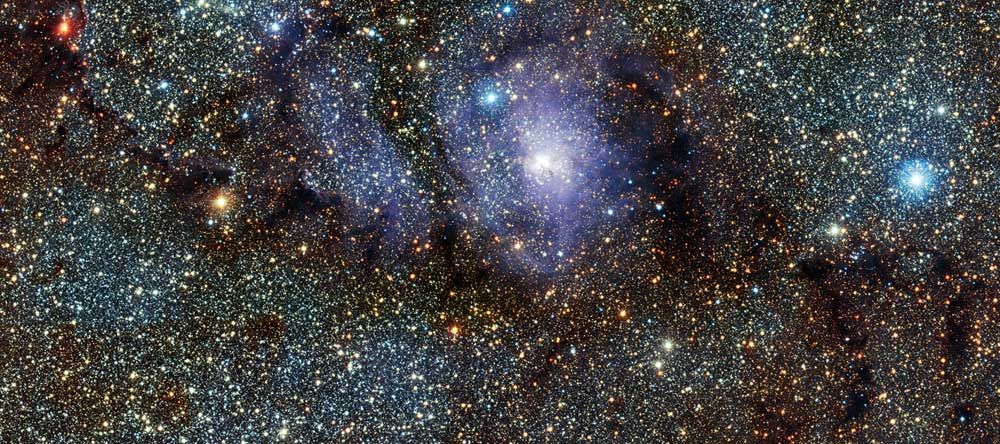
    In the vast reaches of the cosmos, scientists have discovered a force they call dark energy. It is a mystery, one that baffles and intrigues, for it behaves in a way that defies everything we know about matter and gravity. Dark energy doesn’t pull things together; rather, it creates space. This elusive force opens up the cosmos, expanding it, pushing galaxies apart, allowing for movement and growth. And yet, in calling it “dark,” we perhaps miss its true essence. What if, instead, we saw it as a spaciousness, a boundlessness that allows the universe to breathe and evolve?

    Much like this cosmic spaciousness, there exists within us a similar vastness—a pristine awareness that holds everything we experience. This awareness is not the “content” of our minds—our thoughts, emotions, or memories. It is the space in which these mental events arise, dance, and dissolve, as naturally as stars come to life and fade in the night sky. Just as dark energy creates the room for galaxies to move, our awareness creates a space within for our thoughts to drift, soften, and eventually find peace.

    Gravity and Dark Energy: The Yin and Yang of the Cosmos

    In the universe, gravity and dark energy perform a subtle dance, each one essential to the other. Gravity, with its contractive force, brings form and structure to matter, pulling stars and planets into familiar orbits, giving shape to galaxies. It is the cosmic yang—a force of density and cohesion. Without it, there would be no structure, no foundation upon which the stars could shine.

    And yet, if there were only gravity, the universe would collapse into itself, bound and heavy. Enter dark energy—the cosmic yin, a spacious force that does not bind but liberates, that does not constrict but expands. Together, gravity and dark energy form a balance, a yin-yang of contraction and expansion, holding the cosmos in a delicate equilibrium that allows both stability and growth.

    The Pristine Mind: Inner Spaciousness as Anti-Gravity

    So, too, in our inner world, we find a similar duality. Within each of us lies a set of patterns, habits, and conditioning—our own inner gravity, drawing our minds into familiar cycles and reactive patterns, binding us to repetitive thoughts and emotions. These are the mental sanskaras, the engrained impressions and reactions that pull us toward familiar paths. This inner gravity, like its cosmic counterpart, shapes our minds, creating a certain order but often at the cost of freedom and flexibility.

    And yet, there is also an anti-gravitational force within us—a spacious awareness that holds everything without attachment, without pulling or pushing. When we rest in this pristine mind, we create inner space, an ether-like quality that softens our attachments, loosening the pull of our conditioned thoughts. Here, our minds expand, just as the universe expands through dark energy. This inner spaciousness allows our mental patterns to dissolve naturally, creating room for compassion, wisdom, and kindness to arise in place of habitual reactivity.

    The Element of Ether and the Throat Chakra: Creating Space in the Inner Cosmos

    In the traditional chakra system, this expansive force is represented by the Throat Chakra, or Vishuddha, often associated with ether—the element of space. Yet, the Throat Chakra isn’t about the physical throat; it’s a placeholder for this concept of inner spaciousness, a bridge between the tangible and the intangible, the material and the immaterial. Here, at the level of ether, the mind gains the freedom to open, allowing thoughts and emotions to move apart and breathe.

    When we cultivate this spacious awareness, we’re touching into the vastness of ether, where mental events no longer feel crowded or heavy. Instead, they float within a boundless inner field, much like galaxies drifting in an expansive universe. In this space, we rest not in the content of our thoughts but in the openness that holds them—a quiet, liberating freedom.

    Rethinking Dark Energy as Cosmic Spaciousness

    What if we thought of dark energy not as something “dark” but as cosmic spaciousness? Rather than framing it as a mysterious force, we could see it as a liberating presence, a space-creating force that mirrors the quality of the spacious mind. Perhaps it would be more fitting to call it cosmic ether or the space-generating force, something that emphasizes its role in making room for movement, for expansion, for the ongoing dance of creation.

    In both the universe and our inner world, this spaciousness allows for freedom and growth. Just as dark energy creates space for galaxies to drift apart and evolve, our own inner spaciousness allows our thoughts and emotions to expand and transform, to loosen their grip and settle into peace. This, perhaps, is the true gift of dark energy—not as a mystery but as a reminder of the boundless spaciousness available to us when we rest in awareness.

    The Inner Dance of Yin and Yang—Balancing Gravity and Spaciousness

    As we embrace this inner spaciousness, we find a balance between the structured and the unstructured, the contracted and the expansive. Gravity and dark energy, yin and yang, remind us that true harmony comes from both grounding and freedom, both stability and fluidity. Within our minds, this means holding space for our thoughts while remaining unattached, creating room for compassion and wisdom to arise naturally.

    In both the outer universe and our inner cosmos, spaciousness and gravity dance together. We find our true nature in this balance—rooted yet open, structured yet boundless. By resting in awareness, in this inner anti-gravity, we touch into a field of freedom that allows us to let go of old patterns, to expand into our fullest potential, and to rest in the peace and spaciousness of our boundless minds.

    A Final Thought on Humor and Cosmic Spaciousness

    As we reflect on the spacious forces of the cosmos and our minds, perhaps we can see dark energy as the universe’s own sense of humor. Humor, after all, creates space where there was none before, loosening our grip, lightening our load, and opening us to the vastness of possibility. In the same way, the spaciousness within us allows thoughts and emotions to dissolve, to spread out, to be seen with a gentler perspective.

    Maybe humor is the subtle spaciousness woven into the fabric of everything—a reminder that even the cosmos knows how to laugh, expanding ever outward with a boundless spirit. And in that spirit, may we each find the freedom to rest in our own spaciousness, meeting life’s patterns and cycles with a little more lightness and joy.

    Related Quotes on Spaciousness, Awareness, and the Universe

    Rainer Maria Rilke

    “I live my life in widening circles that reach out across the world. I may not complete this last one, but I give myself to it.”

    Rilke’s words remind us of life’s expansive nature, a continuous unfolding that mirrors the boundlessness of awareness.

    Chuang Tzu

    “Flow with whatever may happen and let your mind be free. Stay centered by accepting whatever you are doing. This is the ultimate.”

    This quote speaks to the fluidity that arises when we rest in spacious awareness, letting each experience come and go without attachment.

    The Buddha

    “Just as a snake sheds its skin, we must shed our past over and over again.”

    Like the spaciousness of dark energy that allows for expansion, this quote reflects the spacious quality of mind that allows us to release and grow, unburdened by old patterns.

    Albert Einstein

    “The most beautiful thing we can experience is the mysterious. It is the source of all true art and all science.”

    Einstein’s words celebrate the mystery of the universe, reminding us of the wonder that arises when we embrace the unknown, much like dark energy or spacious awareness.

    Nisargadatta Maharaj

    “Wisdom tells me I am nothing. Love tells me I am everything. Between the two, my life flows.”

    This profound reflection mirrors the balance between spaciousness (nothingness) and the content of our experience (everything), held together in the dance of awareness.

    Lao Tzu

    “Empty yourself of everything. Let the mind become still. The ten thousand things rise and fall while the Self watches their return.”

    Lao Tzu captures the essence of resting in spacious awareness, where thoughts, like stars, arise and dissolve in an infinite, open space.

    Rumi

    “You are not a drop in the ocean. You are the entire ocean in a drop.”

    Rumi’s words point to the boundless quality of awareness, where each of us holds the whole of existence within, reflecting the spaciousness of both mind and cosmos.

    Dōgen Zenji

    “To study the self is to forget the self. To forget the self is to be enlightened by all things.”

    Dōgen’s teaching invites us into the spacious mind that sees beyond individual identity, resting in the vast, interconnected awareness that holds all experience.

    Carl Sagan

    “The cosmos is within us. We are made of star-stuff. We are a way for the universe to know itself.”

    Sagan’s words capture the interconnectedness between the universe and consciousness, hinting at the idea of spaciousness as both a cosmic and inner truth.

    Thich Nhat Hanh

    “Breathing in, I calm my body and mind. Breathing out, I smile. Dwelling in the present moment, I know this is the only moment.”

    This quote beautifully reflects the simplicity of resting in awareness, where each moment opens into the spaciousness of now.

    🙏🕊️🙏

    If you enjoyed this article and would like to explore more on these themes, you can find a collection of related posts in the category Metaphysics and Modern Science: Dark Energy, Awareness, and Expansion.
  • Neti Neti Series No. 11: The Ego’s Journey Towards Mirroring the Pristine Mind

    Neti Neti Series No. 11: The Ego’s Journey Towards Mirroring the Pristine Mind

    Question:

    Is it true that the I-sense, or ego, will never actually experience the pristine mind, since the I-sense doesn’t exist in that state? And, can spiritual practice bring the ordinary mind and ego closer to mirroring the pristine mind, even if they can never fully experience it directly?

    Dear friend,

    You have touched upon a profound and subtle truth in your reflection—the realization that the “I-sense,” the very sense of being a separate self, will never directly experience the pristine mind, for in the pristine mind, there is no “I” to experience anything at all.

    The “I-sense,” as you have observed, is the part of us that identifies with the individual self—with the body, the mind, the personality. It is the ego, the center of our personal world, through which we navigate the dualities of life—self and other, subject and object, right and wrong. This “I-sense” is deeply embedded in the fabric of our everyday experience, always seeking, always striving to maintain its sense of identity.

    And yet, beyond this “I-sense” lies the pristine mind, a state of pure, unconditioned awareness. In this state, there is no separation, no duality, no “I” that stands apart from the whole. The pristine mind is simply being itself, free from all concepts, all identifications. It is the ground of all existence, the true nature of consciousness that underlies every thought, every sensation, every experience.

    As you so rightly observed, the “I-sense” cannot directly experience the pristine mind because the very presence of an “I” implies duality, and in the pristine mind, there is no duality. The ego, by its very nature, is a construct that stands apart, that defines itself in relation to others. To dissolve into the pristine mind is to let go of this sense of separateness, to merge with the whole in a state of pure being.

    Yet, there is a way in which the ordinary mind, the ego, can approach this state, can come to reflect it as closely as possible. Through spiritual practice, the mind becomes refined, quieted, and purified. Meditation, mantra, mindfulness—all of these practices serve to soften the boundaries of the “I-sense,” to still the constant movement of thought and identification.

    In this stillness, the mind begins to mirror the qualities of the pristine mind—peace, clarity, non-attachment. While the ego may never directly experience the pristine mind, it can come to a place where it reflects this deeper reality, where the sense of separation diminishes, and the boundaries of the self become porous, transparent.

    It is in these moments, dear friend, that you may catch a glimpse of the truth that lies beyond the “I,” a truth that cannot be grasped or held, but only reflected in the clear, quiet mind. Continue with your practice, allowing it to guide you ever closer to this state of reflection, where the ordinary mind becomes a mirror for the pristine mind, and the boundaries of the self dissolve into the whole.

    🙏🕊️🙏

  • Finding Healing in the Fires Within: Shifting from the Ordinary Mind to the Pristine Mind with Chronic Fatigue Syndrome

    Finding Healing in the Fires Within: Shifting from the Ordinary Mind to the Pristine Mind with Chronic Fatigue Syndrome

    Discover how the quiet fire of the pristine mind can soothe the restless blaze of chronic fatigue, offering a path to inner peace and gentle transformation.

    I sit here today, tenderly aware of a fire burning within me—not the feverish blaze of energy or ambition, but a fire that comes with chronic fatigue, a fire that seems to consume my energy, that feeds on thoughts of worry, longing, frustration. This fire has been with me for as long as I’ve known this illness, and for many years, it seemed the fire was all I had—scorching, demanding, leaving me exhausted.

    But in recent days, I’ve come to see a new way of being with this fire, a gentle shift. There are, I believe, two fires within: one that belongs to the ordinary mind and another that belongs to the pristine mind.

    The fire of the ordinary mind is a hungry, restless flame. It feeds on what we give it—thoughts, fears, the inner whisper of “not enough.” It clings to the past and worries for the future, each thought a piece of wood thrown into the blaze, each worry an ember reignited. It takes, and takes, and when I stay too long with this fire, I feel myself slipping into exhaustion, my strength given over to a fire that never settles, never finds rest.

    And yet, there is another fire. It is quieter, calmer, like the deep glow of coals after the flames have settled. This is the fire of the pristine mind. It does not demand fuel; it simply is. It does not need anything from me, nor does it take. Instead, it offers a kind of sacred purification. It allows the impressions, the pratyayas, those old echoes of worry, disappointment, expectation, to rise up, to be seen, and then to burn themselves out gently, naturally, leaving a clean, quiet space in their wake.

    When I find myself caught in the ordinary fire—my mind racing, my heart feeling heavy—I take a breath and remember that there is another way. I sit with my awareness, letting go of each thought, letting each worry pass without adding to it. I let the flames burn low, and, slowly, I shift to the fire of the pristine mind, where each thought that arises can dissolve without reaction. I do not need to hold on to any of it, nor fuel it. In this place, I am simply present, letting what arises pass without attachment.

    This is, I’ve come to believe, a healing fire. Not a fire that consumes, but one that illuminates. When I rest here, I feel myself soften, as though I am held in a vast quiet. The pratyayas, those ancient patterns, have no hold here. They are seen, and then they drift away like ashes.

    Perhaps, if you too feel that restless blaze within, you can find this other fire. Sit with yourself, as gently as you would sit with a friend, and watch each thought arise and drift away. Do not reach to hold it, to make it stay, or to change it. Let it come, and let it go. Rest in the calm glow of the pristine mind, where there is nothing to fuel and nothing to fear. In this quiet, you are enough, you are whole.

    This journey, I realize, is very much a work in progress. Shifting from the ordinary fire to the pristine fire is not a one-time practice but an ongoing exploration—a gentle unfolding that reveals itself with patience and time. I invite anyone who feels drawn to this process, who wishes to explore this gentle technology of the mind, to sit with it and see if it offers benefit. Let it be an experiment, a curiosity, a way of tending to your inner world.

    This understanding has been inspired by the teachings in Our Pristine Mind by Orgyen Chowang Rinpoche. His work offers a profound look into the nature of the mind and the potential for peace that lies within each of us. If you feel drawn to explore this practice further, I highly recommend his book. It provides both guidance and wisdom for those seeking to discover the healing light of their own pristine mind.

    🙏🕊️🙏

    <!– /wp:spacer →

    🙏🕊️🙏

  • Post 11: A Moment of Reflection: Integrating the Yoga Sutras So Far

    Post 11: A Moment of Reflection: Integrating the Yoga Sutras So Far

    As we come to this point in our journey through the Yoga Sutras, it is important to pause for a moment. These sutras are not just words to be read; they are seeds, planted within the soil of your mind, each one carrying the potential for deep transformation. And like all seeds, they need time, space, and the right conditions to grow.

    Take a breath. Feel the stillness in the space around you. Notice the quiet beneath the surface of your thoughts. There is a place within you—a place of silence—that is always there, waiting to be discovered, waiting to be touched. It is here, in this silence, that the teachings of the Yoga Sutras truly begin to take root.

    You have been walking alongside Patanjali, exploring the nature of the mind and learning to witness its fluctuations with clarity and detachment. But now, it is time to look not only at the words but at how they have woven themselves into the fabric of your being. How have these teachings touched you? How have they begun to shift the way you move through the world, the way you sit in meditation, the way you witness your thoughts?

    An Invitation to Reflect

    As you sit with these questions, allow yourself to soften. There is no rush to find answers, no need to judge or evaluate where you are on this path. Simply notice. How has the practice of Neti, neti. I am the witness. I am the Seer shaped your understanding of who you are? Have you begun to feel the space that exists between your thoughts, that stillness where you rest in the awareness of the Seer?

    Patanjali’s teachings are an invitation to remember who you are beyond the mind’s fluctuations. Perhaps you have felt moments of clarity, where you touched this deeper awareness. Or perhaps the mind has resisted, pulling you back into its familiar patterns. Either way, you are exactly where you need to be. The journey through the Yoga Sutras is not about perfection, but about presence.

    A Space for Questions and Contemplation

    Take this time to contemplate any questions that may have arisen in your practice. Have there been sutras that resonated deeply with you? Or perhaps certain ideas that feel more challenging, more difficult to integrate? Sit with these questions, knowing that they are a natural part of the process.

    Sometimes, it is in the asking of the question that we find our deepest understanding. Allow the questions to arise without needing immediate answers. Trust that the clarity will come, not through force, but through the gentle unfolding of your practice.

    A Guided Meditation: Resting in the Seer

    Let’s take a few moments together to deepen into this practice. Find a comfortable place to sit, allowing your body to soften, your breath to slow. Close your eyes, and begin to feel the rise and fall of your breath, noticing the gentle rhythm that brings you back to the present moment.

    As thoughts arise, gently say to yourself, Neti, neti. I am the witness. I am the Seer. Let the thoughts pass by like clouds drifting through the sky. There is no need to follow them, no need to push them away. Simply observe, allowing yourself to rest in the stillness that lies beneath the mind’s activity.

    Feel the spaciousness that opens as you release each thought, each sensation. This is the space of pure awareness, the space of the Seer. As you sit in this awareness, notice how the fluctuations of the mind begin to soften, how the stillness becomes more apparent. You are the witness. You are the Seer.

    Rest here, in this stillness, for as long as you need. There is nowhere else to go, nothing else to do. Just this moment. Just this breath.

    Moving Forward with Compassion

    As we prepare to move forward in our journey through the Yoga Sutras, remember that this path is one of compassion—toward yourself, toward your practice, toward the fluctuations of the mind. You are learning to meet yourself with clarity and kindness, to sit in the presence of whatever arises without judgment.

    Allow yourself to take this pause before we dive deeper into the next set of sutras. Let the teachings settle within you, like seeds planted in rich soil. Trust that in time, they will blossom into the wisdom and understanding that you seek.

    Coming Up Next:

    In our next post, we will return to Patanjali’s teachings, exploring Sutras 1.19 and 1.20. These sutras delve deeper into the nature of samadhi, the highest state of meditative absorption, and the paths through which it can be attained. We will reflect on the qualities needed to reach this state, including faith, energy, mindfulness, and wisdom. Join me as we continue this journey toward deeper understanding and inner peace.

    🙏🕊️🙏

  • The Infinite Dance: Uniting God, Spirituality, and the Mystery of Existence

    The Infinite Dance: Uniting God, Spirituality, and the Mystery of Existence

    “In the twilight of life, God will not judge us on our earthly possessions and human successes, but rather on how much we have loved.”


    — St. John of the Cross

    There is a current of truth that runs beneath all the fragmented voices of humanity. From the sacred texts of ancient traditions to the discoveries of modern science, we find ourselves drawn again and again toward the same mystery, a nameless and formless reality that underlies all things. It is the silent presence in which every being, every atom, and every thought is held. We have called it by many names: God, Hashem, YHVH, Allah, Brahman, Ein Sof, Tao, the Implicate Order, and the Field to name just a few. Yet, no name can truly capture the infinite, formless source from which all that is arises.

    In the stillness of Jewish mysticism, Ein Sof—the ungraspable, infinite One—calls to mind the same ineffability as the Tao in the East, the “way” that is beyond words, yet ever-present. In the traditions of the Vedas, Brahman echoes this eternal truth, a limitless ocean of being from which all forms emerge and into which they dissolve. It is a truth that cannot be contained by the human mind, but which the heart longs to know, to touch, and to become one with.

    Modern science, too, peers into the depths of this mystery, sometimes not even realizing it. The discovery of the Higgs boson, the so-called God particle, though a triumph of physics, is only a step closer to understanding the field that makes existence possible. And what of the dark matter and dark energy that account for most of the universe’s substance, yet remain unseen? These forces remind us that what we know is but a glimmer of the vast, unmanifest reality that lies just beyond the limits of our senses.

    There is a profound resonance here, a common ground where mysticism and science converge. In the hidden recesses of the quantum field, in the Implicate Order that David Bohm spoke of, we begin to glimpse the same boundless reality that the sages and poets have spoken of for millennia. The Pristine Mind of Buddhist thought, the Buddha Nature that resides in each of us, reveals this same underlying truth: that beneath the flux of the manifest world, there is a stillness, a wholeness, from which all arises.

    We are all connected to this vast, unknowable field, whether we call it God, Brahman, or simply the mystery. The words and symbols we use are mere pointers, trying to evoke something beyond form and beyond thought. It is the source of all that was, is, and ever will be—the field from which life unfurls like a blossom and into which it returns.

    And here is where our deepest unity lies. Whether you stand in the cool silence of a temple, gazing at the stars, or contemplating the equations of quantum physics, you are connected to this same reality. It binds all faiths and traditions, all discoveries and philosophies, not in opposition, but in harmony. The Tetra­grammaton of Jewish mysticism—the ineffable name of God—is no different from the Brahman of Vedanta, which is no different from the Field in quantum theory. All of them point to the same ineffable mystery that gives rise to all things.

    This is our shared ground, our common truth. We, as human beings, as seekers, as scientists, and as spiritual practitioners, all live in the radiance of this same underlying reality. It is within us, and around us. It is the thread that ties together the Tao of the East, the Ein Sof of Kabbalah, the Great Spirit of indigenous traditions, and the Unified Field that physicists pursue.

    In our hearts, we know this. The boundaries we construct between religions, between science and spirituality, between self and other, are but veils drawn over the face of the infinite. If we could still ourselves for a moment, if we could release the need to name and categorize, we might catch a glimpse of this truth, shimmering just beneath the surface.

    We are all made of the same cosmic dust, woven from the same quantum fabric, and bathed in the same mystery. Beneath the dualities that define our everyday lives, there is a oneness that holds us all—Brahman, Ein Sof, the Implicate Order, the Field. We need not divide ourselves over the different names we use for this reality. The divine is beyond name, beyond form, beyond comprehension, yet it permeates every aspect of existence. It is the space in which we unfold, and it is the silence that calls us home.

    In recognizing this, we can come together—not just in tolerance, but in celebration. We can acknowledge the beauty and depth of every tradition, every path that points to the same infinite source. Whether you come from a place of prayer or from the study of the stars, whether you seek through silence or through science, we are all reaching toward the same truth. This truth is not distant. It is as close as your breath, as intimate as your own heartbeat. It is, in fact, what you are.

    So, let us stand in awe of this great mystery. Let us honor the many ways it reveals itself to us—through science, through scripture, through silence. And let us know, deep in our hearts, that we are all bound together in this great unfolding. In this realization, we find the possibility for true interfaith harmony, for an enduring sense of unity, not just with one another, but with the entire fabric of existence.

    For in the end, what is all this but a dance of the formless into form, of the infinite into the finite, of Brahman into the world—and back again? We are the expressions of this great mystery, each one of us a note in the song of creation, a ripple in the vast, timeless ocean. And in recognizing this, we are free.

    🙏🕊️🙏

    “The kingdom of God is within you.”
    — Luke 17:21

    “Be still and know that I am God.”
    — Psalm 46:10

    “God is the center of my soul. He is so profoundly hidden that I can neither see Him nor touch Him. But the closer we approach Him, the more He expands in us.”
    — St. John of the Cross

    “It is love alone that gives worth to all things.”
    — St. Teresa of Avila

    “At the center of our being is a point of nothingness which is untouched by sin and by illusion, a point of pure truth. This little point is the pure glory of God in us.”
    — Thomas Merton

    “The infinite is concealed from all the living. It is not attained by the intellect, nor by any created thing, but only by the soul’s journey into the unknown.”
    — Kabbalistic Saying

    “Wherever you turn, there is the face of God.”
    — Quran 2:115

    “In some sense, man is a microcosm of the universe; therefore, what man is, is a clue to the universe. We are all in this together.”
    — David Bohm

    “The Supreme Reality is beyond both the unmanifest and the manifest. It is eternal and all-pervading. Knowing this, the wise understand their true nature as the same.”
    — Bhagavad-Gita 8:20

    “Your own Self-Realization is the greatest service you can render the world. The deeper you go into the Self, the more the world and the ego disappear, leaving only the formless reality.”
    — Ramana Maharshi

    “There is only one truth—God. All the rest is a fleeting shadow. Fix your mind on the highest, and let the world go.”
    — Swami Sivananda

    “You realize your true nature by casting off the little self and recognizing yourself as the vast Spirit, free from all limitations of form, thought, and time.”
    — Swami Paramahansa Yogananda

    “What we think, we become. All that we are arises with our thoughts. With our thoughts, we make the world.”
    — The Buddha

    “We are here to awaken from the illusion of our separateness.”
    — Thich Nhat Hanh

    “Out beyond ideas of wrongdoing and rightdoing, there is a field. I’ll meet you there. When the soul lies down in that grass, the world is too full to talk about.”
    — Rumi

    “The Tao that can be told is not the eternal Tao; the name that can be named is not the eternal name.”
    — Lao Tzu, Tao Te Ching

    “The Great Spirit is in all things: he is in the air we breathe. The Great Spirit is our Father, but the Earth is our Mother. She nourishes us; that which we put into the ground, she returns to us.”
    — Big Thunder (Bedagi), Wabanaki Algonquin

    These quotes bring together voices from various traditions, adding depth to the contemplation of unity and the infinite mystery that runs through the heart of existence.

    🙏🕊️🙏

  • Post 10: Stages of Meditative Absorption: Patanjali’s Sutras 1.17 and 1.18

    Post 10: Stages of Meditative Absorption: Patanjali’s Sutras 1.17 and 1.18

    In the previous post, we explored the power of detachment and how cultivating non-distraction allows us to rest in the awareness of the Seer. Now, Patanjali takes us deeper into the process of meditation by introducing the stages of meditative absorption, where the mind gradually becomes still and clear. In Sutras 1.17 and 1.18, Patanjali outlines the progressive levels of absorption (samadhi) that arise as the mind moves from engagement with mental events to pure awareness.

    1.17: The first stage of meditative absorption is characterized by reflection, contemplation, bliss, and a sense of individuality.
    1.18: The higher stage of meditative absorption is characterized by the cessation of mental events, revealing a state of pure awareness.

    The Four Layers of Absorption

    Sutra 1.17 describes the initial stages of meditative absorption, where the mind moves through four layers of experience: reflection (vitarka), contemplation (vicara), bliss (ananda), and a subtle sense of individuality (asmita). These layers are not linear but overlapping, offering different aspects of deepening concentration and stillness.

       •   Reflection: At this level, the mind still engages with objects of focus, such as the breath or a mantra, but there is an increasing sense of calm and centeredness. The fluctuations of the mind are present, but they are observed without being disruptive.
       •   Contemplation: As the mind settles further, reflection deepens into contemplation. Here, there is less attachment to external objects and more focus on the inner experience. The mind becomes absorbed in its own stillness.
       •   Bliss: The third layer is characterized by a sense of bliss or joy that arises as the mind releases its habitual attachments. This bliss is not emotional but an inner feeling of contentment and peace.
       •   Sense of Individuality: Even at this stage, there remains a subtle awareness of oneself as an individual, the witness of the experience. This is a more refined level of the ego, still present but not as dominant as in ordinary states of awareness.

    These four layers of absorption allow the mind to rest in deeper levels of concentration, but they are still within the realm of mental events. At this stage, the practitioner is aware of the experience but has not yet transcended the subtle identification with the mind.

    Moving Toward Pure Awareness

    In Sutra 1.18, Patanjali introduces a higher stage of meditative absorption, one that is free from the pull of mental events. Here, the fluctuations of the mind have ceased, and what remains is pure awareness—often described as nirvikalpa samadhi. In this state, there is no longer any identification with thoughts, emotions, or even a subtle sense of self. The Seer abides in its pure, natural state.

    This level of absorption is not easily attained. It is the culmination of disciplined practice, non-attachment, and sustained meditation. It requires the mind to become so still that it no longer engages with even the subtlest of mental events. In this state, there is no longer a division between the Seer and what is seen; there is only pure awareness.

    This experience of pure awareness is often described as the goal of yoga. It is the state where the practitioner experiences freedom from the mind’s fluctuations and rests in the infinite stillness of the pristine mind.

    Bringing It Into Practice: Deepening Your Meditation

    As we practice, we can begin to notice these layers of absorption in our own meditation. At the beginning of meditation, the mind may still be engaged in reflection or contemplation. By gently repeating “Neti, neti. I am the witness. I am the Seer,” we allow the mind to gradually release its attachment to these mental events and move into deeper stillness.

    Over time, as the mind settles, we may experience moments of bliss or peace. These are natural signs that the mind is letting go of its habitual distractions. However, even in these moments, it’s important to remember that the goal is not to cling to these experiences but to continue moving toward deeper levels of absorption.

    The practice of cultivating pure awareness—free from the mind’s fluctuations—requires patience and persistence. Each time we return to the stillness of the Seer, we strengthen our ability to remain in that state for longer periods, eventually moving beyond the subtle sense of individuality and into the state of pure awareness.

    The Path to Pure Awareness

    The stages of meditative absorption are a gradual process, unfolding through disciplined practice and consistent effort. While the initial layers of reflection, contemplation, and bliss are important steps along the path, they are not the final goal. The ultimate aim is to experience the state of pure awareness, where the mind’s fluctuations cease, and the Seer abides in its true nature.

    As we progress on this path, it’s essential to remain patient and compassionate with ourselves. The journey toward pure awareness is not linear, and there will be times when the mind is more active or distracted. The key is to maintain a steady practice, trusting that each moment of mindfulness brings us closer to the stillness of the pristine mind.

    Coming Up Next:

    In our next post, we will take a moment to pause and reflect on the journey through the Yoga Sutras so far. This will be an opportunity to contemplate how the teachings have shaped your practice and explore a guided meditation for deeper integration. After this reflective pause, we will continue the series with the next set of sutras, diving deeper into the path of self-realization.

    🙏🕊️🙏

  • Post 9: The Power of Detachment: Patanjali’s Sutras 1.15 and 1.16

    Post 9: The Power of Detachment: Patanjali’s Sutras 1.15 and 1.16

    In the previous post, we explored the importance of discipline and consistent effort in mastering the mind. Now, Patanjali introduces the concept of detachment as a natural extension of that discipline. In Sutras 1.15 and 1.16, he reveals the deeper layers of non-attachment and how they lead to freedom from desires and aversions.

    1.15: Detachment is the conscious effort to let go of desires for objects or experiences, both seen and unseen.
    1.16: The highest level of detachment is achieved when there is freedom from the pull of even the most subtle mental events, leading to the experience of pure consciousness.

    The Practice of Detachment

    Detachment (vairagya) is the conscious practice of letting go of desires and aversions. In Sutra 1.15, Patanjali defines detachment as the effort to release attachments to both seen and unseen objects or experiences. This includes everything from physical possessions to emotional desires and even subtle expectations we might have about the future.

    Detachment doesn’t mean indifference or suppression of desires. Instead, it is about witnessing these desires as mental events without becoming attached to them. By observing them with clarity, we free ourselves from the push and pull of likes and dislikes. The practice of Neti, neti. I am the witness. I am the Seer helps us recognize these desires as fluctuations of the mind, not reflections of our true self.

    This conscious effort to release attachment is a key part of cultivating equanimity. The more we practice detachment, the more we are able to rest in the pristine mind—a state of awareness that is unaffected by the mind’s desires.

    The Highest Level of Detachment

    In Sutra 1.16, Patanjali describes the highest form of detachment: the ability to remain unaffected by even the most subtle mental events. At this level, we are free from the pull of both desires and aversions, and we rest in pure awareness.

    This is not a state of cold detachment, but a profound experience of freedom. When we are no longer swayed by the mind’s constant fluctuations, we experience a deep sense of peace and clarity. This is the state of kaivalya—pure consciousness—where the Seer abides in its true nature, untouched by mental events.

    Sogyal Rinpoche, a renowned meditation master, often emphasized that meditation is about cultivating non-distraction. The state of meditation is, at its core, a state of non-distraction—remaining present and aware, without being swept away by the mind’s fluctuations. This ties directly into Patanjali’s teaching on detachment. By practicing Neti, neti. I am the witness. I am the Seer, we cultivate non-distraction, allowing us to remain steady in the awareness of the Seer, free from the pull of desires and aversions. Meditation, in this sense, is the practice of being undistracted by mental events, resting in the stillness of the pristine mind.

    The highest level of detachment doesn’t come overnight. It is cultivated through disciplined practice and sincere commitment, as outlined in the previous sutras. As we grow in our ability to let go of desires, we move closer to this state of pure consciousness, where the mind’s fluctuations no longer hold sway over us.

    Bringing It Into Practice: Cultivating Detachment

    Detachment is a practice that we can cultivate daily. Each time we notice a desire or aversion arising, we can pause and observe it as a mental event. Using the phrase “Neti, neti. I am the witness. I am the Seer,” we create space between ourselves and the desire, allowing it to pass without engaging with it.

    This practice of letting go doesn’t mean we should avoid enjoying life or fulfilling our needs. Rather, it’s about maintaining a sense of equanimity, where we are not defined by our desires or driven by them. We can enjoy what life brings while remaining unattached to the outcomes, staying rooted in the awareness of the Seer.

    Over time, this practice of detachment brings a deep sense of freedom. We begin to experience life more fully, without the constant push and pull of desires, aversions, and expectations. The mind’s fluctuations lose their power, and we rest in the stillness of the pristine mind.

    The Joy of Non-Attachment

    As we grow in our practice of detachment, we discover that non-attachment is not about losing joy but about gaining freedom. When we are no longer caught up in the mind’s desires, we experience a deeper, more authentic sense of happiness. This joy arises from being present in the moment, fully engaged with life yet unattached to any particular outcome.

    Non-attachment also allows us to respond to life with greater compassion and wisdom. When we are not driven by our own desires, we can see situations more clearly and act from a place of inner stillness. This is the power of detachment—a freedom that allows us to experience life in its fullness, without becoming entangled in its fluctuations.

    Coming Up Next:

    In our next post, we will explore Sutras 1.17 and 1.18, where Patanjali describes the various stages of meditative absorption and the transition from mental events to deeper states of awareness. Join me as we continue this journey toward deeper clarity, peace, and self-realization.

    🙏🕊️🙏

  • Post 8: The Importance of Discipline: Patanjali’s Sutras 1.13 and 1.14

    Post 8: The Importance of Discipline: Patanjali’s Sutras 1.13 and 1.14

    As we have seen in the previous sutras, Patanjali emphasizes the nature of mental events—fluctuations that arise in the mind—which can either distract us or be observed with clarity. Now, in Sutras 1.13 and 1.14, Patanjali shifts our attention to the importance of disciplined practice, showing us how consistent effort is essential in gaining mastery over the mind.

    1.13: The practice of yoga is the effort to remain steady in the awareness of the Seer.
    1.14: This practice becomes firmly grounded when pursued for a long time, without interruption, and with sincerity.

    These two sutras bring into focus the essential qualities of discipline in yoga: persistence, consistency, and sincerity. Patanjali emphasizes that mastery over the mind is not achieved through occasional effort but through sustained, dedicated practice over time.

    The Effort to Remain Steady

    Sutra 1.13 defines the practice of yoga as the effort to remain steady in the awareness of the Seer. This is where discipline truly comes into play. In our day-to-day life, the mind is constantly drawn into the fluctuations of thoughts, emotions, and external distractions. The practice of yoga, as Patanjali teaches, is the ongoing effort to maintain our awareness of the Seer—the true self—amid these fluctuations.

    This is not a passive state of relaxation but an active practice of mindfulness. Each time we notice a mental event, we have the opportunity to reaffirm our awareness of the Seer. Using the phrase “Neti, Neti. I am the witness. I am the Seer,” we can gently return to the present moment, reminding ourselves that we are not the fluctuations of the mind but the one who observes them.

    The effort here is not about forcefully suppressing thoughts or emotions, but about gently bringing the mind back to stillness each time it becomes distracted. Over time, this practice strengthens our ability to remain steady and centered, even in the face of mental events.

    The Power of Consistency

    Patanjali elaborates further in Sutra 1.14, reminding us that this practice becomes firmly grounded only when it is pursued for a long time, without interruption, and with sincerity. Consistency is key in yoga. The mind’s fluctuations are relentless, and it takes sustained effort to cultivate the steadiness of the Seer.

    Patanjali’s emphasis on long-term practice is important. Mastery over the mind doesn’t happen overnight, nor is it achieved through sporadic practice. The discipline of yoga requires us to show up again and again, each time renewing our commitment to remain present. Over time, this consistency bears fruit, allowing us to experience greater clarity, peace, and self-awareness.

    This is why sincerity is also essential. It’s not just about going through the motions of meditation or mindfulness; it’s about truly committing to the practice with an open heart. When we practice sincerely, we develop a deep sense of trust in the process, knowing that each moment of mindfulness strengthens our ability to remain in the awareness of the Seer.

    Bringing It Into Practice: Building a Steady Practice

    In practical terms, this means making space in our daily lives for consistent practice. Whether it’s through meditation, mindful breathing, or simply taking moments throughout the day to return to the awareness of the Seer, the key is to remain dedicated.

    When distractions arise, and they inevitably will, gently bring your awareness back with “Neti, Neti. I am the witness. I am the Seer.” This simple phrase helps you cultivate the steadiness that Patanjali describes, allowing you to witness the mind’s activity without becoming entangled in it.

    The power of this practice lies in its repetition. The more we engage with the process, the more natural it becomes to return to stillness. Over time, we develop a firm foundation of mindfulness that can weather even the most persistent mental events.

    Maintaining Discipline Through Sincerity

    As we practice, it’s essential to approach the discipline with sincerity. This doesn’t mean pushing ourselves harshly or becoming frustrated when the mind wanders. Instead, it’s about maintaining a gentle, loving commitment to the process. Each time we bring the mind back to the Seer, we do so with a sense of gratitude for the opportunity to deepen our awareness.

    In this way, discipline becomes less of a burden and more of an act of devotion. We are not forcing the mind into stillness; we are guiding it, with patience and sincerity, toward a deeper connection with our true nature. Over time, this practice becomes a source of joy, as we witness the mind’s fluctuations without becoming attached to them, remaining steady in the awareness of the Seer.

    Coming Up Next:

    In the next post, we will explore Sutras 1.15 and 1.16, where Patanjali introduces the concept of detachment and deeper levels of non-attachment. We will reflect on how this practice of detachment can free us from the grip of desires and aversions, allowing us to remain centered in the Seer. Join me as we continue this journey toward mastery over the mind and deeper self-awareness.

    🙏🕊️🙏

  • Verse 3: The Mirror of True Knowledge — Insights from Ramana Maharshi

    Verse 3: The Mirror of True Knowledge — Insights from Ramana Maharshi

    “Having known the Self, which is awareness, there is nothing more to know. That which is, is consciousness itself. To seek it elsewhere is to wander far away.”

    — Ramana Maharshi, Forty Verses on Reality

    There comes a moment in each of our lives when the questions that have followed us, haunting our thoughts, cease to carry the same weight. It is as though we have been wandering through a vast wilderness, searching endlessly for something, only to realize that it has been with us all along. This, Ramana tells us, is the moment of true knowledge—the moment when we recognize the Self, and in doing so, find that there is nothing more to seek.

    This knowledge is not like the knowing of facts or the gathering of worldly wisdom. It is the unveiling of the very essence of awareness, that which sees all, yet remains unseen. To touch this awareness is to come home, to realize that the search has always been for ourselves.

    And how often we search elsewhere! How often we cast our gaze into the far distance, imagining that the truth lies in some distant land, or hidden in the words of another. But Ramana reminds us that to seek it elsewhere is to wander further from the source. The truth we seek does not live in far-off places; it lives in the heart of our own being, as close as breath, as present as this very moment.

    Like a mirror reflecting all without judgment, true knowledge is the simple, clear awareness of what is. When we come to see that all that exists is consciousness itself, we are no longer captivated by the shadows on the wall. We see, instead, the light—the steady, unwavering light of awareness, which has been with us from the beginning.

    To know the Self is to realize that there is nowhere else to go. The seeking ends, and in its place arises a quiet, unshakable peace. It is not the end of curiosity or wonder, but the end of searching outside ourselves for what can only be found within.

    To know that there is nothing more to seek is not to say there is nothing more to do. In the realization that the Self has always been present, there is still the practice of abiding, of resting in the gentle awareness that is always here. It is this abiding, this quiet discipline of being, that becomes the ongoing practice.

    Yes, the search has ended, but the journey of returning, over and over again, to the pristine mind continues. For in this ordinary mind—this space filled with distractions, thoughts, and the pull of the world—there is the temptation to forget, to stray from the simplicity of awareness. And so, we practice. Not as seekers anymore, but as those who have touched the truth and wish to live in its light.

    The practice now is not one of effortful striving, but of allowing—of surrendering into the effortless effort, the gentle doing of non-doing. This is where the paradox lives: to rest in what is, and yet remain disciplined in that rest. It is not that there is nothing more to do, but rather that what is to be done is a continual letting go, a surrendering to the ever-present awareness that requires nothing from us but our willingness to be with it.

    And so, we abide. With each breath, with each passing moment, we return—not to search, but to rest. And though the Self needs no searching, the practice of staying with it remains. In this, there is the dance of wu-wei, the graceful action of inaction, the peaceful unfolding of all that is.

    Perhaps one day the effort, too, will fall away, and only the abiding will remain.

    Coming Up Next: Verse 4

    In the next verse, we will reflect on the nature of thought and the root of all actions. How do our thoughts shape our reality, and what lies at the core of true understanding? Join us as we continue this journey through the depths of Ramana Maharshi’s teachings.

    🙏🕊️🙏

  • Post 7: Memory and Non-Attachment: Patanjali’s Sutras 1.11 and 1.12

    In the previous post, we explored the nature of imagination and sleep as mental events, recognizing their potential to distract us or be witnessed with clarity. Now, Patanjali takes us further into the exploration of mental events, focusing on memory and the practice of non-attachment.

    1.11: Memory is the retention of mental impressions from past experiences.
    1.12: Non-attachment is the practice of detaching from mental events, leading to mastery over them.

    These sutras offer a profound reflection on how the mind holds onto the past and how cultivating non-attachment can free us from the grip of these mental events. Memory, while useful, can often bind us to patterns of thought that shape our perception of the present. Non-attachment becomes the key to releasing these patterns and living more fully in the pristine mind.

    Memory: A Mental Event That Holds Us in the Past

    Memory (smriti) is a powerful mental event that allows us to recall past experiences, feelings, and thoughts. On a practical level, memory is essential for learning and functioning in daily life. However, when we become overly attached to our memories, they can cloud our present awareness, trapping us in patterns of the past.

    For example, we often replay old memories in our minds, reliving past successes, failures, or emotional moments. These memories can influence our current perception, making it difficult to see the present clearly. They create mental events that may feel real but are rooted in the past, shaping how we engage with the world around us.

    Just as with imagination and sleep, memory is simply another mental event. The more we engage with it, the more it pulls us away from the present moment. However, by recognizing memory as a mental event, we can observe it without becoming attached, allowing it to arise and pass without coloring our awareness of the now.

    Non-Attachment: The Key to Mastering Mental Events

    Patanjali introduces the practice of non-attachment (vairagya) in Sutra 1.12 as the means by which we gain mastery over the fluctuations of the mind. Non-attachment doesn’t mean suppressing or avoiding mental events; rather, it is the practice of witnessing them without becoming identified with them.

    In the case of memory, non-attachment allows us to remember the past without letting it control the present. By practicing Neti, Neti. I am the witness. I am the Seer., we remind ourselves that we are not the memory, but the one who observes it. This simple practice of non-attachment creates space between us and the mental event, freeing us from the patterns of the past.

    Non-attachment is not something that happens overnight. It is cultivated through disciplined practice, returning to the awareness of the pristine mind again and again. As we grow in our ability to observe mental events without attachment, we strengthen our capacity to remain present, no matter what arises in the mind.

    Bringing It Into Practice: Letting Go of Memory’s Grip

    When memories arise during meditation or daily life, it’s important to acknowledge them without getting caught in their narrative. You can simply remind yourself, “Neti, Neti. I am the witness. I am the Seer.” This helps create the mental space to witness the memory and let it go without attachment.

    In doing so, we train ourselves to let go of the past and stay rooted in the present. We begin to see memory as just another mental event, not as something that defines who we are or how we must respond to life. With each practice of non-attachment, we loosen the grip that memories have over us, freeing ourselves from the patterns that bind us to the past.

    This practice doesn’t diminish the importance of memory but helps us place it in its proper context—as a useful tool rather than an overwhelming influence. As we continue to practice non-attachment, we experience more freedom, clarity, and presence in our everyday life.

    Maintaining Discipline in Non-Attachment

    The discipline of non-attachment requires patience and consistency. The mind will naturally want to hold onto memories, but each time we observe them without attachment, we take a step closer to mastery. Non-attachment isn’t about becoming indifferent; it’s about becoming fully present, without being swayed by the mental events that arise.

    Through this discipline, we can cultivate a deeper awareness of the pristine mind—a state of clarity, peace, and presence that is untouched by the mind’s fluctuations. The more we practice non-attachment, the easier it becomes to witness mental events and remain centered in the Seer.

    Coming Up Next:

    In our next post, we will explore Sutra 1.13 and 1.14, where Patanjali explains the importance of disciplined practice in achieving mastery over the mind. We’ll reflect on how consistent effort and non-attachment work together to bring us closer to the realization of our true nature. Join me as we continue this journey toward deeper self-awareness and inner peace.

    🙏🕊️🙏

  • Post 6: Navigating Imagination and Sleep: Patanjali’s Sutras 1.9 and 1.10

    In our previous posts, we explored the nature of right knowledge and wrong knowledge as mental events, recognizing them as fluctuations of the mind that can distract us from the clarity of the Seer. Now, Patanjali takes us further into the types of mental events, focusing on imagination and sleep.

    1.9: Imagination is the mental event that arises when words or concepts are not based on reality.
    1.10: Sleep is the mental event that occurs when there is an absence of awareness.

    These two sutras reveal important aspects of the mind’s activity that can either lead to further distraction or be witnessed with clarity. Both imagination and sleep are natural, but without mindfulness, they can obscure our ability to remain in the awareness of the Seer.

    Imagination: The Mind’s Tendency to Create

    Imagination (vikalpa) is the mind’s ability to create images, scenarios, or concepts that are not rooted in actual experience. This can be a powerful tool for creativity, but when we become entangled in imaginative thoughts, they pull us away from the present moment and the reality of what is. Imagination is a type of mental event that can lead to confusion when we mistake it for truth.

    For instance, how often do we find ourselves lost in a daydream or a scenario that has no bearing on reality? Whether it’s imagining a future outcome or reliving a past experience, imagination can easily become a source of distraction. Yet, when we recognize imagination as just another mental event, we can let it pass without getting caught up in it. The key is to observe it without judgment or engagement, remembering that we are the Seer, not the mental event.

    Sleep: Absence of Awareness—and the Potential for Lucid Dreaming

    Interestingly, Patanjali includes sleep (nidra) as a mental event. While sleep is essential for physical and mental rejuvenation, it is still a state of mind where awareness is typically absent. In the context of yoga, sleep represents a gap in our mindfulness—a temporary state where the mind is not engaged with external reality but is still present in a subtle way.

    However, there’s another dimension to sleep that Patanjali may be pointing toward: the practice of remaining aware even while dreaming. This is known as lucid dreaming, where the dreamer becomes conscious of the fact that they are dreaming. Just as we practice mindfulness in waking life, it’s possible to cultivate awareness during dreams, allowing us to witness the dream without becoming absorbed in the content.

    In dreams, we are often fully engaged in the mental events that arise, much like we are in our waking life. Yet, with practice, we can maintain a sense of the Seer—the witness of the dream itself. Neti Neti can become a spontaneous practice even in the dream world, reminding us that we are the dreamer, not the dream. For those who are interested, this practice can be cultivated over time, offering a deeper level of awareness during the state of sleep.

    Bringing It Into Practice: Staying Present Amid Mental Events

    As with the other mental events we’ve discussed, both imagination and sleep can be observed without judgment. Rather than getting caught up in the content of our imaginations or losing ourselves in unconscious moments, we can use the practice of Neti, neti to return to the present. By simply acknowledging these as mental events, we free ourselves from their pull.

    When you find yourself lost in an imaginative thought, you can gently remind yourself, “Neti, Neti. I am the witness. I am the Seer.” This allows you to return to a place of stillness and clarity, observing the imagination without engaging with it. Similarly, if you notice moments of mindlessness or dullness creeping in during your day—or even in the dream state—the same practice can bring you back into awareness, helping you stay present.

    This practice doesn’t require us to suppress imagination or fight against sleep; instead, we recognize these mental events as temporary and return to the awareness of the pristine mind. By observing these fluctuations without attachment, we maintain the discipline necessary to cultivate equanimity and inner stillness.

    Maintaining Discipline in Mindfulness

    As we’ve seen before, discipline plays a crucial role in this process. The mind naturally drifts toward imaginative scenarios and moments of dullness. But through disciplined practice, we strengthen our ability to remain anchored in the awareness of the Seer. Each time we recognize imagination or mindlessness and return to stillness, we reinforce the clarity of the pristine mind.

    Over time, this discipline allows us to witness mental events without becoming distracted by them, no matter how subtle or engaging they may be. By maintaining this mindfulness, we can rest in the simplicity of awareness, untouched by the mind’s fluctuations.

    Coming Up Next:

    In our next post, we will explore Sutras 1.11 and 1.12, where Patanjali continues to describe mental events, focusing on memory and the practice of non-attachment. We’ll reflect on how memory shapes our perception of the present and how cultivating non-attachment frees us from the patterns of the past. Join me as we continue this journey toward deeper self-awareness and peace.

    🙏🕊️🙏