Tag: philosophy

  • From Separation to Union: Rediscovering the Boundless Presence of God

    From Separation to Union: Rediscovering the Boundless Presence of God

    “In the beginning, Elohim created the heavens and the earth.” (Genesis 1:1)

    Introduction: The Question of Elohim

    These opening words of the Bible are familiar to millions. Yet hidden within them lies a mystery often overlooked. Why does the text use Elohim, a plural form, rather than a singular name for God? Is this merely a grammatical curiosity, or does it point toward something deeper—something vast, formless, beyond the limitations of human thought?

    For centuries, many have understood God as a being—separate, external, anthropomorphized. The image of an old man on a throne has dominated religious imagination, reinforcing the belief in a distant deity who governs creation from afar. But what if this is only a veil over a deeper truth? What if Elohim points not to a being among beings, but to the boundless reality itself—the Ein Sof of Kabbalah, the nameless and formless essence beyond all concept?

    This essay is an invitation to step beyond the veil. To move from separation to union, from belief to direct experience. To rediscover what the mystics across traditions have always known: that God is not elsewhere. God is here, now, and always—within and beyond, closer than breath, vaster than thought.

    The Illusion of Separation

    Throughout history, religion has provided humanity with stories, images, and rituals to help navigate the mystery of existence. Yet, in doing so, it has often externalized the divine, creating a subject-object duality—God as a being, separate from creation, separate from us.

    This duality is at the root of suffering. When we see ourselves as apart from the divine, we feel exiled, adrift in a world where God is distant and we are left to struggle alone. This belief in separation has led to fear, to longing, to a desperate seeking for something outside of ourselves that can restore what feels missing.

    But what if nothing was ever missing? What if the separation is only a misunderstanding, a veil drawn over the truth of our oneness with the Infinite?

    The Path of Direct Experience

    The great mystics—those who have peered beyond the veil—have all spoken of a reality beyond belief.

    St. John of the Cross, in his Dark Night of the Soul, describes a journey where all concepts, images, and even the felt presence of God are stripped away. This is not a loss but a purification, a burning away of false idols so that the soul may awaken to the unmediated presence of the divine.

    In the Jewish tradition, the Kabbalists speak of bitul, the nullification of ego, where one dissolves into the infinite Ein Sof, realizing that there never was a separate self to begin with. Similarly, in the contemplative traditions of Buddhism, the stillness of shamatha leads to the recognition of the pristine mind—that which has always been pure, unconditioned, free.

    In every tradition, we find this same invitation: to stop seeking outward and to turn inward, to surrender not to belief, but to direct encounter. To see that God is not an external entity, but the very ground of our being.

    The Return to Oneness

    When we let go of the illusion of separation, what remains?

    Not the loss of self, but its fulfillment. Not an annihilation into emptiness, but a merging into fullness—the great I Am. The “yoga” of the Vedic tradition means precisely this: union. It is the recognition that we were never apart from God, only dreaming that we were.

    This is not an esoteric teaching reserved for monks and mystics. It is the birthright of every human being. It is what Jesus meant when he said, “The kingdom of God is within you.” It is what the Psalmist knew when he wrote, “Be still, and know that I am God.” It is what every human heart longs for—not a distant deity, but the felt truth of divine presence, here and now.

    Tikkun Olam: Healing the World Through Remembrance

    When we remember our oneness with the divine, we heal not only ourselves but the world.

    The Kabbalistic tradition of Tikkun Olam, the healing of the world, is not merely about fixing external problems. It is about restoring divine unity—within ourselves, within society, within creation. The suffering of the world is the suffering of separation. The healing of the world is the return to wholeness.

    This is why this message matters. Not as an intellectual exercise, not as a theological debate, but as the most urgent and necessary work of our time. The world does not need more beliefs about God. It needs people who have remembered their divinity. People who, knowing themselves as inseparable from the infinite, act with wisdom, love, and compassion.

    This is the path of return. Not by striving, not by effort, but by surrendering to the truth that has always been. The Elohim of Genesis was never a separate being. Ein Sof has never been absent. The I Am has never ceased to be what it is.

    All that remains is to awaken.

    Conclusion: The Invitation

    If these words stir something in you, it is because they are already known. The recognition of divine oneness is not something to be attained—it is something to be remembered.

    Wherever you are, whatever your path, the invitation is the same:

    Be still. Let go. And know that you are already home.


    Addendum: Searching for What Is Already Here

    This morning, I took the cream cheese out of the fridge, opened it up, and placed a bagel into the toaster, getting everything prepared for a delicious breakfast. A simple task.

    Then, as my bagel toasted, I opened the fridge again to grab the cream cheese. But it wasn’t there.

    I checked every shelf. Nothing.

    I stood there, puzzled. I know I had cream cheese yesterday. Did I finish it? Did it somehow disappear?

    And then I turned around.

    There it was—right on the counter, exactly where I had left it, sitting open and waiting for me.

    I couldn’t help but laugh.

    How often do we search for something that was never missing? How often do we look for God as if He were distant—forgetting that the divine presence, like my misplaced cream cheese, has been right here all along?

    The moment we stop searching, we arrive.

    And sometimes, the path to enlightenment is as simple as laughing at yourself while spreading cream cheese on a bagel.

    🙏🕊🙏

  • Nothing Is Happening: The Profound Simplicity of Sitting Practice

    Nothing Is Happening: The Profound Simplicity of Sitting Practice

    In the practice of sitting at the door of contemplation, we often expect something to happen—insight, peace, or even enlightenment. But the deeper truth of the practice is this: nothing is happening.

    This doesn’t mean the practice is empty or pointless. Quite the opposite. It invites us to rest in the simplicity of just sitting, letting go of the need for results or experiences. Whether thoughts arise or stillness emerges, the essence of the practice remains untouched.

    Even when “something” seems to happen—discursive thoughts, emotions, or sensations—it’s all part of the flow. In the vastness of awareness, these waves rise and fall, and yet nothing truly happens. The mind seeks meaning or progress, but the practice reminds us that the profound is found in the ordinary.

    The Zen saying “Enlightenment is nothing special” echoes this wisdom. By resting in the present moment without striving, we discover the extraordinary within the mundane. Whether the mind is busy or still, whether the body is at ease or in discomfort, the practice holds steady.

    So, when you sit at the door, let go of the need for something to happen. Trust in the simplicity of the posture, the breath, and the stillness. By allowing the moment to be as it is, you discover the quiet power of simply being.

    In sitting practice, the phrase “Nothing is happening” becomes a mantra of freedom. It liberates us from striving and invites us to rest in the truth of the present.

    How does it feel to embrace the idea that nothing is happening?

    #Zen
    #Zazen
    #LivingTheDream
    #MindfulnessMatters

  • The Beauty of the Mind: Who Has the Most Beautiful Minds in America?

    The Beauty of the Mind: Who Has the Most Beautiful Minds in America?

    In a world that often glorifies external beauty—whether through physique, art, or music—what if we shifted our gaze inward? What if we celebrated the beauty of the mind instead?

    This post invites you to pause and consider: What makes a mind beautiful? Who do you believe exemplifies this kind of beauty, and why?

    What Is a Beautiful Mind?

    When we think of a “beautiful mind,” what comes to mind? Perhaps it’s someone whose intellect transforms the way we see the world. Or maybe it’s their creativity, empathy, or ability to inspire others through their words and actions.

    A beautiful mind might be defined by:

       •   A deep curiosity that seeks understanding without judgment.

       •   A creative spirit that brings fresh perspectives to life.

       •   An open heart that connects with others and nurtures kindness.

       •   A wisdom that balances intellect with compassion.

    What qualities would you add to this list? How do you define a beautiful mind?

    Celebrating Beautiful Minds

    This question is not just about philosophers, scientists, artists, or leaders—though it could be. A beautiful mind might belong to someone who quietly shapes the lives of those around them: a teacher, a friend, a family member, or a stranger who touched your life in a meaningful way.

    Who do you know that has a beautiful mind? Perhaps it’s someone whose ideas have inspired you, whose words or actions have stayed with you, or who taught you to see the world in a new way. What about their mind do you find so beautiful?

    Your Turn: Who Do You Nominate?

    We’d love to hear from you. Share your thoughts in the comments:

       •   What does it mean to have a beautiful mind?

       •   Who do you think exemplifies this, and why?

       •   Is there someone in your life—famous or not—whose mind you deeply admire?

    Let’s create a collective celebration of the beauty of thought, creativity, and compassion, one nomination at a time.

    🙏🕊️🙏

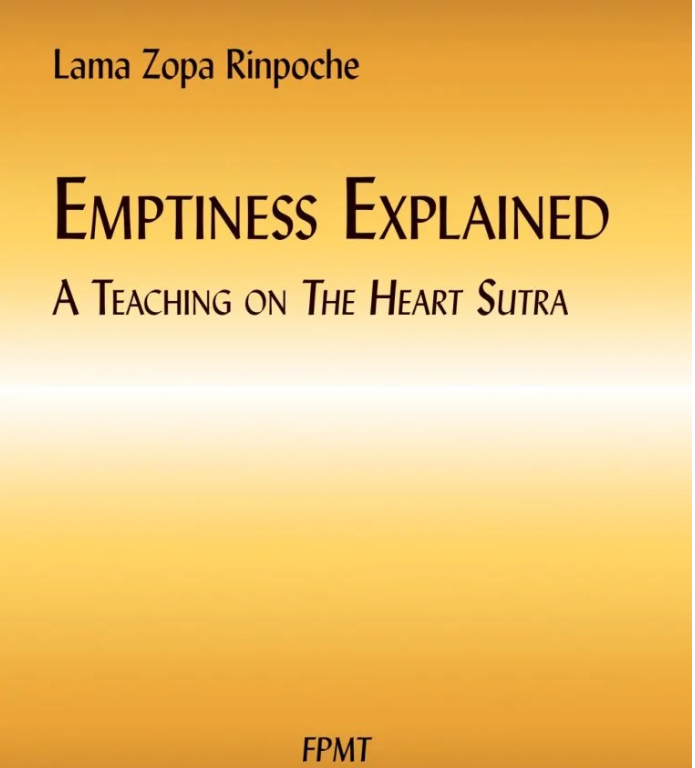
  • Emptiness Explained: Insights from Lama Zopa Rinpoche on the Heart Sutra

    Emptiness Explained: Insights from Lama Zopa Rinpoche on the Heart Sutra

    Transforming Suffering Into Happiness: How the Teachings on Emptiness from the Heart Sutra Support Mental Health and Well-Being

    The Heart Sutra stands as one of the most profound and essential teachings in Buddhism, offering a path to understanding emptiness—the ultimate nature of reality. Lama Zopa Rinpoche’s commentary on this timeless sutra illuminates its teachings, guiding us toward a deeper understanding of how emptiness can transform not only our spiritual practice but also our daily lives.

    In this post, I’ll share key reflections from Rinpoche’s teaching, focusing on the practical wisdom and spiritual inspiration it offers. Whether you’re a seasoned practitioner or simply curious about the philosophy of emptiness, I hope these insights will resonate with your heart.

    What Is Emptiness?

    Lama Zopa Rinpoche explains that emptiness does not mean that things don’t exist—it means that things are empty of inherent existence. All phenomena, including ourselves, arise dependently, shaped by causes, conditions, and labels. This is the essence of the middle way, which avoids the extremes of nihilism (nothing exists) and eternalism (things exist inherently and permanently).

    As the Heart Sutra famously states:

    “Form is emptiness, emptiness is form. Emptiness is not other than form; form is also not other than emptiness.”

    In these words, we see that emptiness and dependent arising are inseparable. While things exist conventionally, their ultimate nature is empty of any independent, fixed essence.

    Practical Ways to Meditate on Emptiness

    Rinpoche offers accessible methods to integrate the understanding of emptiness into both formal meditation and daily life:

    1. Recognizing the Object to Be Refuted

    The first step is identifying the false concept of an independent, inherently existent “I” or object. This is often described as the “I on the I”—the subtle sense that there is a solid self beyond the ever-changing interplay of body and mind. By recognizing this misconception, we can begin to dissolve it.

    2. Meditating on Dependent Arising

    Reflect on how the “I” arises only in dependence on the body, mind, and other aggregates. As Rinpoche teaches, the “I” is merely a label created by the mind. Understanding this dependence helps us see the emptiness of the “I” without negating its conventional existence.

    3. Mindfulness in Daily Life

    Emptiness isn’t confined to sitting meditation. Rinpoche encourages us to bring mindfulness of emptiness into every activity—walking, cooking, working, even shopping. He likens this to recognizing a dream as a dream:

    “While driving a car, see yourself, the car, and the action of driving as hallucinations. They appear solid, but they are not inherently existent. Practicing this awareness is incredibly powerful.”

    Overcoming Fear and Misunderstanding

    The experience of emptiness can sometimes evoke fear, especially the sense of “losing the I.” Rinpoche reminds us that this fear arises from our deep attachment to a false sense of self. However, far from being nihilistic, emptiness reveals the interdependent nature of all things.

    “When bodhisattvas of high intelligence realize emptiness, they experience bliss; for others, deep fear can arise. This fear is a sign of touching the truth of selflessness—it is part of the journey.”

    By grounding our understanding in dependent arising, we can navigate this fear with confidence and clarity.

    Applying Emptiness in Relationships

    Rinpoche’s teaching also provides practical tools for transforming relationships. When we feel hurt or offended, understanding emptiness can soften our reactivity. The other person’s actions—and our own sense of self—are dependently arisen, shaped by countless conditions.

    This awareness allows us to respond with compassion rather than attachment or aversion. As Rinpoche says:

    “Recognize that the ‘I’ that feels hurt is a mental construct. See the other person’s words or actions as arising dependently. This opens the door to greater understanding and kindness.”

    The Transformative Power of Emptiness

    Even the smallest step toward understanding emptiness has profound benefits. Rinpoche explains that simply doubting the solidity of appearances—thinking, “Perhaps things are empty”—can begin to break the chains of samsara.

    “Listening to teachings on emptiness for even a moment plants seeds for liberation. Reflecting on emptiness throughout your day turns ordinary actions into a path to enlightenment.”

    A Living Practice

    The teachings of the Heart Sutra are not just intellectual concepts—they are a living practice. Whether in formal meditation or everyday life, the wisdom of emptiness invites us to see the world with fresh eyes. By letting go of our rigid attachments and false perceptions, we open the door to profound freedom and compassion.

    As Lama Zopa Rinpoche reminds us, we are unbelievably fortunate to encounter these teachings. May we take them to heart and use them to benefit all beings.

    Further Exploration

    To delve deeper into Lama Zopa Rinpoche’s teachings on the Heart Sutra and emptiness, you can download the original PDF here.

    I’d love to hear your thoughts on emptiness and the Heart Sutra! How do these teachings resonate with your own spiritual journey? Feel free to share your reflections in the comments below.

    🙏🕊️🙏

  • Metaphysics and Modern Science: Dark Energy, Awareness, and Expansion

    Metaphysics and Modern Science: Dark Energy, Awareness, and Expansion

    How the Mysterious Forces Shaping Our Cosmos Reflect the Boundless Potential of Awareness, Transformation, and Free Will in the Mind

    In the vast reaches of the cosmos, scientists have discovered a force they call dark energy. It is a mystery, one that baffles and intrigues, for it behaves in a way that defies everything we know about matter and gravity. Dark energy doesn’t pull things together; rather, it creates space. This elusive force opens up the cosmos, expanding it, pushing galaxies apart, allowing for movement and growth. And yet, in calling it “dark,” we perhaps miss its true essence. What if, instead, we saw it as a spaciousness, a boundlessness that allows the universe to breathe and evolve?

    Much like this cosmic spaciousness, there exists within us a similar vastness—a pristine awareness that holds everything we experience. This awareness is not the “content” of our minds—our thoughts, emotions, or memories. It is the space in which these mental events arise, dance, and dissolve, as naturally as stars come to life and fade in the night sky. Just as dark energy creates the room for galaxies to move, our awareness creates a space within for our thoughts to drift, soften, and eventually find peace.

    Gravity and Dark Energy: The Yin and Yang of the Cosmos

    In the universe, gravity and dark energy perform a subtle dance, each one essential to the other. Gravity, with its contractive force, brings form and structure to matter, pulling stars and planets into familiar orbits, giving shape to galaxies. It is the cosmic yang—a force of density and cohesion. Without it, there would be no structure, no foundation upon which the stars could shine.

    And yet, if there were only gravity, the universe would collapse into itself, bound and heavy. Enter dark energy—the cosmic yin, a spacious force that does not bind but liberates, that does not constrict but expands. Together, gravity and dark energy form a balance, a yin-yang of contraction and expansion, holding the cosmos in a delicate equilibrium that allows both stability and growth.

    The Pristine Mind: Inner Spaciousness as Anti-Gravity

    So, too, in our inner world, we find a similar duality. Within each of us lies a set of patterns, habits, and conditioning—our own inner gravity, drawing our minds into familiar cycles and reactive patterns, binding us to repetitive thoughts and emotions. These are the mental sanskaras, the engrained impressions and reactions that pull us toward familiar paths. This inner gravity, like its cosmic counterpart, shapes our minds, creating a certain order but often at the cost of freedom and flexibility.

    And yet, there is also an anti-gravitational force within us—a spacious awareness that holds everything without attachment, without pulling or pushing. When we rest in this pristine mind, we create inner space, an ether-like quality that softens our attachments, loosening the pull of our conditioned thoughts. Here, our minds expand, just as the universe expands through dark energy. This inner spaciousness allows our mental patterns to dissolve naturally, creating room for compassion, wisdom, and kindness to arise in place of habitual reactivity.

    The Element of Ether and the Throat Chakra: Creating Space in the Inner Cosmos

    In the traditional chakra system, this expansive force is represented by the Throat Chakra, or Vishuddha, often associated with ether—the element of space. Yet, the Throat Chakra isn’t about the physical throat; it’s a placeholder for this concept of inner spaciousness, a bridge between the tangible and the intangible, the material and the immaterial. Here, at the level of ether, the mind gains the freedom to open, allowing thoughts and emotions to move apart and breathe.

    When we cultivate this spacious awareness, we’re touching into the vastness of ether, where mental events no longer feel crowded or heavy. Instead, they float within a boundless inner field, much like galaxies drifting in an expansive universe. In this space, we rest not in the content of our thoughts but in the openness that holds them—a quiet, liberating freedom.

    Rethinking Dark Energy as Cosmic Spaciousness

    What if we thought of dark energy not as something “dark” but as cosmic spaciousness? Rather than framing it as a mysterious force, we could see it as a liberating presence, a space-creating force that mirrors the quality of the spacious mind. Perhaps it would be more fitting to call it cosmic ether or the space-generating force, something that emphasizes its role in making room for movement, for expansion, for the ongoing dance of creation.

    In both the universe and our inner world, this spaciousness allows for freedom and growth. Just as dark energy creates space for galaxies to drift apart and evolve, our own inner spaciousness allows our thoughts and emotions to expand and transform, to loosen their grip and settle into peace. This, perhaps, is the true gift of dark energy—not as a mystery but as a reminder of the boundless spaciousness available to us when we rest in awareness.

    The Inner Dance of Yin and Yang—Balancing Gravity and Spaciousness

    As we embrace this inner spaciousness, we find a balance between the structured and the unstructured, the contracted and the expansive. Gravity and dark energy, yin and yang, remind us that true harmony comes from both grounding and freedom, both stability and fluidity. Within our minds, this means holding space for our thoughts while remaining unattached, creating room for compassion and wisdom to arise naturally.

    In both the outer universe and our inner cosmos, spaciousness and gravity dance together. We find our true nature in this balance—rooted yet open, structured yet boundless. By resting in awareness, in this inner anti-gravity, we touch into a field of freedom that allows us to let go of old patterns, to expand into our fullest potential, and to rest in the peace and spaciousness of our boundless minds.

    A Final Thought on Humor and Cosmic Spaciousness

    As we reflect on the spacious forces of the cosmos and our minds, perhaps we can see dark energy as the universe’s own sense of humor. Humor, after all, creates space where there was none before, loosening our grip, lightening our load, and opening us to the vastness of possibility. In the same way, the spaciousness within us allows thoughts and emotions to dissolve, to spread out, to be seen with a gentler perspective.

    Maybe humor is the subtle spaciousness woven into the fabric of everything—a reminder that even the cosmos knows how to laugh, expanding ever outward with a boundless spirit. And in that spirit, may we each find the freedom to rest in our own spaciousness, meeting life’s patterns and cycles with a little more lightness and joy.

    Related Quotes on Spaciousness, Awareness, and the Universe

    Rainer Maria Rilke

    “I live my life in widening circles that reach out across the world. I may not complete this last one, but I give myself to it.”

    Rilke’s words remind us of life’s expansive nature, a continuous unfolding that mirrors the boundlessness of awareness.

    Chuang Tzu

    “Flow with whatever may happen and let your mind be free. Stay centered by accepting whatever you are doing. This is the ultimate.”

    This quote speaks to the fluidity that arises when we rest in spacious awareness, letting each experience come and go without attachment.

    The Buddha

    “Just as a snake sheds its skin, we must shed our past over and over again.”

    Like the spaciousness of dark energy that allows for expansion, this quote reflects the spacious quality of mind that allows us to release and grow, unburdened by old patterns.

    Albert Einstein

    “The most beautiful thing we can experience is the mysterious. It is the source of all true art and all science.”

    Einstein’s words celebrate the mystery of the universe, reminding us of the wonder that arises when we embrace the unknown, much like dark energy or spacious awareness.

    Nisargadatta Maharaj

    “Wisdom tells me I am nothing. Love tells me I am everything. Between the two, my life flows.”

    This profound reflection mirrors the balance between spaciousness (nothingness) and the content of our experience (everything), held together in the dance of awareness.

    Lao Tzu

    “Empty yourself of everything. Let the mind become still. The ten thousand things rise and fall while the Self watches their return.”

    Lao Tzu captures the essence of resting in spacious awareness, where thoughts, like stars, arise and dissolve in an infinite, open space.

    Rumi

    “You are not a drop in the ocean. You are the entire ocean in a drop.”

    Rumi’s words point to the boundless quality of awareness, where each of us holds the whole of existence within, reflecting the spaciousness of both mind and cosmos.

    Dōgen Zenji

    “To study the self is to forget the self. To forget the self is to be enlightened by all things.”

    Dōgen’s teaching invites us into the spacious mind that sees beyond individual identity, resting in the vast, interconnected awareness that holds all experience.

    Carl Sagan

    “The cosmos is within us. We are made of star-stuff. We are a way for the universe to know itself.”

    Sagan’s words capture the interconnectedness between the universe and consciousness, hinting at the idea of spaciousness as both a cosmic and inner truth.

    Thich Nhat Hanh

    “Breathing in, I calm my body and mind. Breathing out, I smile. Dwelling in the present moment, I know this is the only moment.”

    This quote beautifully reflects the simplicity of resting in awareness, where each moment opens into the spaciousness of now.

    🙏🕊️🙏

    If you enjoyed this article and would like to explore more on these themes, you can find a collection of related posts in the category Metaphysics and Modern Science: Dark Energy, Awareness, and Expansion.
  • Finding Harmony in a Divided World: A Universal Practice of Loving-Kindness

    In a world where division, blame, and anger seem to dominate, the Jewish Holy Days offer a timeless and much-needed call for compassion, forgiveness, and unity. Rosh Hashanah, the Jewish New Year, and the Days of Awe invite us all—regardless of background or faith—to pause and reflect on the power of renewal. These days ask us to consider not only our relationship with the divine but also with one another, encouraging us to move beyond blame and finger-pointing toward a place of mutual understanding and healing.

    While rooted in Jewish tradition, the themes of Rosh Hashanah resonate universally. This is a time to recognize that our actions impact those around us, and it offers us the opportunity to choose a different path: one of compassion and forgiveness. In today’s divided world, the call to forgive, to seek peace, and to foster harmony feels more urgent than ever.

    A Universal Practice of Loving-Kindness

    Though this practice has its roots in many spiritual traditions, the desire for peace, compassion, and loving-kindness is not confined to any one faith or belief system. Across the world, differences arise not only in religion but in political ideologies, governance, and cultural values. In our time, conflicts over how societies should be organized and governed—whether democratic, republican, socialist, communist, capitalist, or authoritarian—further divide us. Yet, the essence of loving-kindness transcends these differences, calling us to extend compassion to all beings, regardless of their background, beliefs, or systems of control.

    Across religious, political, and ideological divides, there is a shared teaching: to extend love and compassion to all beings.

       •   Judaism: The Torah teaches, “Love your neighbor as yourself” (Leviticus 19:18), reminding us that love and compassion are central to how we live in community with others.
       •   Christianity: Jesus invites us to love beyond boundaries, “Love your enemies and pray for those who persecute you” (Matthew 5:44), challenging us to extend love even where it seems most difficult.
       •   Islam: The Qur’an speaks of God’s mercy, “And My Mercy encompasses all things” (Surah Al-A’raf 7:156), a reminder of the boundless compassion that we are called to reflect in our own lives.
       •   Buddhism: The Buddha teaches, “Radiate boundless love towards the entire world, above, below, and across, unhindered, without ill will, without enmity” (Karaniya Metta Sutta), inviting us to extend loving-kindness to all beings without exception.
       •   Hinduism: In the Bhagavad Gita, the concept of Ahimsa—non-violence—is central, “The one who has no ill will towards any being, who is friendly and compassionate, free from possessiveness and ego, even-minded in pain and pleasure, and forgiving, is dear to me” (Bhagavad Gita 12:13).

    Even those who do not identify with any faith—agnostics and atheists—can find meaning in the universal human longing for peace, harmony, and goodwill. The practice of Metta, or loving-kindness, invites us to step into this shared human experience, transcending borders, belief systems, and divisions. It calls us to cultivate compassion for ourselves and others, regardless of differences.

    Whether grounded in faith or humanism, the call to compassion and loving-kindness transcends all belief systems and ideologies. It is a reflection of our shared humanity, a truth that we all long for peace, healing, and connection.

    Whether you are steeped in a religious tradition or simply seeking a way to contribute to peace in the world, the practice of Metta provides an accessible path to compassion. By focusing on our shared humanity, we can soften our hearts and extend kindness to all beings, embracing the potential for a world of harmony.

    Take a few moments now to try this practice, and reflect on how cultivating compassion within yourself can ripple outwards into your family, community, and the world.

    Personal Metta Practice: Cultivating Compassion from Within

    The practice of loving-kindness starts with the self. Before we can extend compassion to others, we must first cultivate it within ourselves.

    1. May I be happy.
    May I be healthy.
    May I be at peace.
    May I be free from suffering and the conditions of suffering.


    2. A loved one: Now, think of someone dear to you.


    May you be happy.
    May you be healthy.
    May you be at peace.
    May you be free from suffering and the conditions of suffering.


    3. A neutral person: Think of someone toward whom you have no strong feelings.


    May they be happy.
    May they be healthy.
    May they be at peace.
    May they be free from suffering and the conditions of suffering.


    4. A difficult person: Finally, extend loving-kindness to someone you find challenging.


    May they be happy.
    May they be healthy.
    May they be at peace.
    May they be free from suffering and the conditions of suffering.

    Global Metta Practice: Expanding Compassion to the World

    After cultivating compassion within yourself and your immediate circle, it’s time to extend your loving-kindness to the world. This is especially important now, as we face global challenges that require unity and compassion more than ever.

    Countries: Starting with your own country and its people expand to all countries and all people

    1. May the people of my country be happy.
    May they be healthy.
    May they be at peace.
    May they be free from suffering and the conditions of suffering.


    2. A country you love: Now, think of a country that holds special meaning for you.


    May the people of [country] be happy.
    May they be healthy.
    May they be at peace.
    May they be free from suffering and the conditions of suffering.


    3. A neutral country: Extend your compassion to a country you feel neutral about.


    May the people of [country] be happy.
    May they be healthy.
    May they be at peace.
    May they be free from suffering and the conditions of suffering.


    4. A difficult country or political system: Now, think of a country or political system that you find challenging or disagree with.

    Even when we find ourselves at odds with others politically or ideologically, loving-kindness invites us to look beyond our differences and see the shared humanity that binds us all.


    May the people living under [system or country] be happy.
    May they be healthy.
    May they be at peace.
    May they be free from suffering and the conditions of suffering.


    5. All nations, all political systems, and all beings: To complete the practice, extend your loving-kindness to all people, regardless of political, cultural, or religious differences.


    May we all be happy.
    May we all be healthy.
    May we all be free from suffering and the conditions of suffering.
    May we all live in peace and harmony throughout time and space.

    Concluding Thoughts: Our Shared Planet, Our Shared Humanity

    As we reflect on the practice of loving-kindness and compassion, it is essential to remember that we all share one planet—our home, Earth. Regardless of where we live or the beliefs we hold, we breathe the same air, drink from the same waters, and rely on the same earth beneath our feet. Our lives are intricately woven together with the lives of others, from the people in our communities to those in distant lands. Every action we take ripples outward, impacting not just human beings, but all forms of life on this planet.

    The earth, too, is alive with its own forms of consciousness: the plants that give us oxygen, the animals that share our space, the minerals that form the foundation of our world. In the spirit of loving-kindness, we must extend our compassion beyond humanity to embrace the entirety of creation. Our well-being is inseparably linked to the well-being of the earth and all its inhabitants. This is a call not only for individual transformation but for the collective growth of humanity.

    As we strive to heal the divisions in our world, we must also cultivate a deep respect for the natural environment and the living beings with whom we share this fragile planet. In doing so, we acknowledge that every life—human, animal, plant, and even the minerals that form the bones of the earth—deserves compassion and care. By fostering love and respect for all forms of life, we take one step closer to creating a world of peace, unity, and harmony.

    In every heart, across every border, may compassion arise and guide us toward a world of peace and unity.


    May the world be healed through acts of loving-kindness,
    and may peace, compassion, and unity reign in all hearts.

    🙏🕊️🙏

  • The Computer and AI Metaphor: Understanding Plurality Through the Lens of Atoms and Atman

    In the rapidly advancing world of technology, computers and artificial intelligence (AI) have become powerful tools that can perform a multitude of comple tasks. But at the heart of these sophisticated systems lies a simple, fundamental reality: atoms. Just as computers and AI are composed of atoms arranged and manipulated to produce diverse outcomes, so too does the concept of Upadhi in Advaita Vedanta explain how a singular reality (Atman or Brahman) manifests as the pluralistic world we perceive.

    Atoms as Atman: The Fundamental Building Blocks

    At the most basic level, everything in the physical universe is composed of atoms. These tiny, indivisible units combine in various ways to form all matter—from the simplest elements to the most complex structures. Similarly, in Advaita Vedanta, Atman is the fundamental reality that underlies all existence. Atman, or pure consciousness, is the singular essence from which the diversity of life and the universe arises.

    Upadhis as Programs: Creating Complex Outcomes

    In the realm of technology, the operations of a computer or an AI system depend on the manipulation of electrical signals and the execution of complex algorithms. These algorithms, or programs, direct the flow of electrons through circuits, creating different outputs—images, sounds, data processing, and more. This is analogous to how Upadhis (limiting adjuncts or conditions) shape the expression of Atman, giving rise to the diversity of forms and experiences in the world.

    Just as a single computer can perform a vast array of tasks depending on the programs it runs, the singular reality of Atman can appear as the manifold world when filtered through different Upadhis. The differences we perceive—whether in computers as varied outputs or in life as distinct entities—are ultimately products of the underlying uniformity being expressed in diverse ways.

    The Illusion of Plurality: Seeing Beyond the Surface

    When we interact with technology, it’s easy to see only the surface-level outputs—text on a screen, music from a speaker, a car navigating the road autonomously—and forget that all these are fundamentally the same at the atomic level. Similarly, in life, we often perceive the world as filled with separate, distinct entities without realizing the underlying oneness of Atman.

    The diversity and complexity we experience are like the different functions of a computer: they are real in their context, but they don’t change the fundamental nature of the atoms (or Atman) that make them possible. This is the essence of the illusion of plurality. It’s not that the diversity isn’t there—it’s that the diversity is an expression of something deeper and singular.

    Application to Self-Inquiry and Advaita Vedanta

    Understanding this metaphor can be deeply enriching for those on the path of self-inquiry and Advaita Vedanta. It highlights the idea that while the world appears to be filled with diversity and complexity, it is all a manifestation of the same underlying reality—Atman or Brahman.

    • Self-Inquiry: Just as one might examine the workings of a computer to understand its fundamental nature, self-inquiry involves turning inward to examine the true nature of the self. By asking “Who am I?” or “What is the essence of my being?” we begin to see beyond the surface-level differences created by Upadhis and recognize the underlying oneness.
    • Meditation: Meditation allows us to quiet the “programs” of the mind and perceive the unity behind the diversity. In this state, we can experience the stillness of Atman, undisturbed by the fluctuations of the sensory world.
    • Seeing the Divine in Everything: Recognizing that all forms and experiences are expressions of the same underlying reality encourages us to see the Divine in everything. Whether it’s the complexity of AI or the simplicity of a single atom, all is an expression of Brahman.

    Conclusion: Embracing the Oneness Behind the Diversity

    The computer and AI metaphor provides a modern, relatable way to understand the ancient concept of Upadhi in Advaita Vedanta. It shows us how a single, undifferentiated reality can manifest as a vast array of forms and functions, all while remaining fundamentally the same. By recognizing this, we can begin to see through the illusion of plurality and appreciate the underlying oneness of all existence.

    This understanding not only enriches our spiritual practice but also deepens our appreciation of the world around us. Whether we are contemplating the nature of consciousness or simply observing the outputs of a computer, we are reminded that everything is an expression of the same fundamental essence. In this realization, we find both peace and profound connection to the infinite reality that is Brahman.

    🙏🕊️🙏

  • Unlocking Life’s Ultimate Cheat Codes: Wisdom at Your Fingertips

    Stay Lit with Wisdom for a Bright Future

    Hey there, Gen Z crew, it’s your buddy Jesus, dropping in from our virtual hangout. I see you navigating this digital realm, where every tap and swipe seems like a quest for validation. It’s tough out there, I get it. But let me clue you in on something awesome—right here in your hands, you’ve got access to the ultimate cheat codes for life.

    Think about it: while you’re scrolling through feeds and stories, you’ve also got the power to dive into the most profound teachings and wisdom humanity has ever recorded. It’s like having a superpower—tapping into the thoughts of ancient sages, exploring the depths of philosophical insight, and discovering the beauty of diverse cultures and spiritual traditions. Imagine the adventure of unlocking truths that have guided generations, waiting to inspire and shape your path forward.

    Beyond the noise of social media, there’s a whole universe of knowledge waiting to be explored. From the poetry of Rumi to the philosophy of Aristotle, from the mindfulness of Buddhism to the serenity of Taoism—you’ve got front-row seats to the greatest minds and the deepest truths. This isn’t just about getting likes or followers; it’s about leveling up your understanding of life, love, and what truly matters.

    So, maybe take a breather from the usual scroll and dive into something profound today. Swap a meme session for a moment of reflection. Exchange the virtual hustle for a journey of discovery. You’re not just scrolling through timelines—you’re charting your own course through a sea of wisdom that spans centuries.

    Want to get started? Try these search queries: Who is Thich Nhat Hanh? Who is the Dalai Lama of Tibet? What is the happiest country in the world and why are they so happy? And here’s a mind-blower: Which country has the least amount of carbon emissions? (Hint: It’s Bhutan, producing more oxygen than carbon!) These queries can lead you to discover hidden secrets of the universe and perspectives that will blow your mind.

    Keep vibing with love, keep spreading positivity, and keep seeking the real in a world that loves filters. Together, we can turn this digital playground into a place where kindness reigns, where every voice is heard, and where your generation’s spirit shines brighter than any screen glow.

    Remember, fam: Love always wins. Stay blessed, stay real, and keep shining your light in this crazy, beautiful world.

    Peace out,
    Jesus 🙏🌟