Tag: peaceful living

  • Resting in the Silence of Being: A Journey Into Stillness


    “The quieter you become, the more you can hear.”

    – Ram Dass

    There is a quiet truth that lives within each of us, a place that is untouched by the noise of the world, a stillness that is ever-present. It’s not reserved for moments of crisis or for the end of life. It’s here, now—waiting for us to settle into its embrace.

    Yet how often do we run from this stillness? We search for peace in the future, hoping it will come once we’ve completed our tasks, achieved our goals, or silenced our minds. But peace is already here, calling us back to the simplicity of being.

    The Practice:

    The practice begins with a simple mantra: “I am That.”

    When we say these words, we invite ourselves to rest in the truth of who we are. It’s not about searching or striving—it’s a return to the natural state, where we belong. Repeat the mantra aloud, or silently in your heart, and allow yourself to rest. After each repetition, sit in silence for as long as you like, letting the mantra echo softly within.

    And when you are ready, say it again: “I am That.”

    There is no rush, no goal, no expectation—just the simple unfolding of awareness.

    As thoughts arise, as distractions call, simply return to the mantra, letting it be like a lullaby for the restless mind.

    Reflections Along the Way:

    Follow the rhythm of the mantra, thoughts may come, feelings may arise. Let them pass like clouds, and rest beneath them, in the vast expanse of awareness.

    You are that light,
    shining through all things.
    Rest…
    in the knowing.

    Effortless and true,
    you return to what you are.
    Rest…
    in your nature.

    Like a drifting cloud,
    the ego searches in vain.
    Rest…
    beneath the sky.

    In quiet grace, he guides,
    showing the way back to self.
    Rest…
    in deep gratitude.

    Thoughts, desires, restlessness—all falls away when we stop chasing after them. Rest in the simplicity of being.

    In this way, dear reader, the mantra becomes not just words, but the very breath of being. So, rest in this mystic presence, this silence that is always there, gently touching the surface of awareness.

    In the dance of both,
    stillness and movement arise.
    Rest…
    in the balance.

    A passing thought, no more,
    like a ripple in still waters.
    Rest…
    in your knowing.

    Being is the truth felt,
    beyond what eyes can hold.
    Rest…
    in the knowing of being.

    Like seasons that turn,
    each step comes in its own time.
    Rest…
    and let it flow.

    Resting in Silence

    The journey, dear reader, is not about forcing the mind to be still or silent. It is about allowing the natural stillness and silence of our true self to be seen, felt and appreciated, unclouded by thought, unburdened by desire. By continuing to rest in this silence, we come to realize that the peace we seek has always been here. We become “Self-Realized.”

    The practice of resting in the silence is a gift we give ourselves while we are alive. It’s not reserved for the end of life; it is the way to live fully, in peace, right here, right now. The mantra is a guide, and the silence is the true teacher.

    Rest in silence. Rest in peace. Rest in your true nature. You are That.

    “The end of all wisdom is love, love, love.”

    – Ramana Maharshi

    🙏🕊️🙏

  • Tenzin, the Solitary Hermit

    Tenzin, the Solitary Hermit

    A mindful bedtime story of a solitary monk’s journey to inner peace, offering reflections on tranquility, solitude, and the wisdom found in nature’s embrace.

    High in the misty cliffs of the Tibetan mountains lived a monk named Tenzin. He had chosen a life of solitude, making his home in a small cave carved into the rock, far from any village. From the mouth of his cave, he could see the wide valley below, where rivers shimmered, and clouds drifted lazily.

    Though he lived alone, Tenzin never felt lonely. His days were filled with simple practices—meditation, chanting, and tending to the small tasks of life in the mountains. Each morning, he would sit at the opening of his cave, cross-legged, watching the sun rise over the peaks. The golden light touched the snow-capped mountains first, then slowly warmed the valley below. As the light spread, Tenzin felt connected to everything—the mountains, rivers, and the vast sky. Even the distant villages he couldn’t see seemed close to him.

    Tenzin’s practice was to focus on his breath. He felt the breath flow in and out, like the wind through the trees. When his mind wandered, as minds tend to do, he would gently bring it back to the present moment. There was no rush, no goal—just the moment, just being.

    One day, while Tenzin was in deep meditation, the wind outside his cave grew stronger. It howled through the trees, making the air feel sharp and cold. He opened his eyes and saw that dark clouds had gathered in the sky. A storm was approaching. The peaceful valley below had vanished under thick fog.

    But Tenzin didn’t worry. He had learned, over time, that storms—like thoughts and emotions—come and go. Some days were clear, others were cloudy, but nothing lasted forever. He pulled his woolen robe tighter around him, lit a small fire, and returned to his meditation.

    The storm raged on, but Tenzin remained calm. His breath, slow and steady, was his anchor. Inside his cave, there was no storm—only stillness. The walls of his cave sheltered him from the wind, but it was his practice that sheltered him from the restlessness of the world.

    Several days passed, and the storm finally cleared. When Tenzin stepped outside, the valley below was washed clean by the rain, sparkling in the sunlight. Birds sang from the trees, and the air smelled fresh.

    Tenzin smiled to himself. The storm had been fierce, but he hadn’t resisted it. He had simply let it come and go, knowing that everything—like the weather—was temporary. The calm always returned.

    The seasons passed, each one bringing its own beauty. Tenzin never wished for company, for he had found that the quiet, the mountains, and the rhythm of his breath were friends enough. In the deep silence of his cave, Tenzin had discovered the greatest happiness—the peace of simply being.

    🙏🕊️🙏


    If you’d like to explore more bedtime stories for children, including tales that nurture compassion and mindfulness, you can find our collection here.


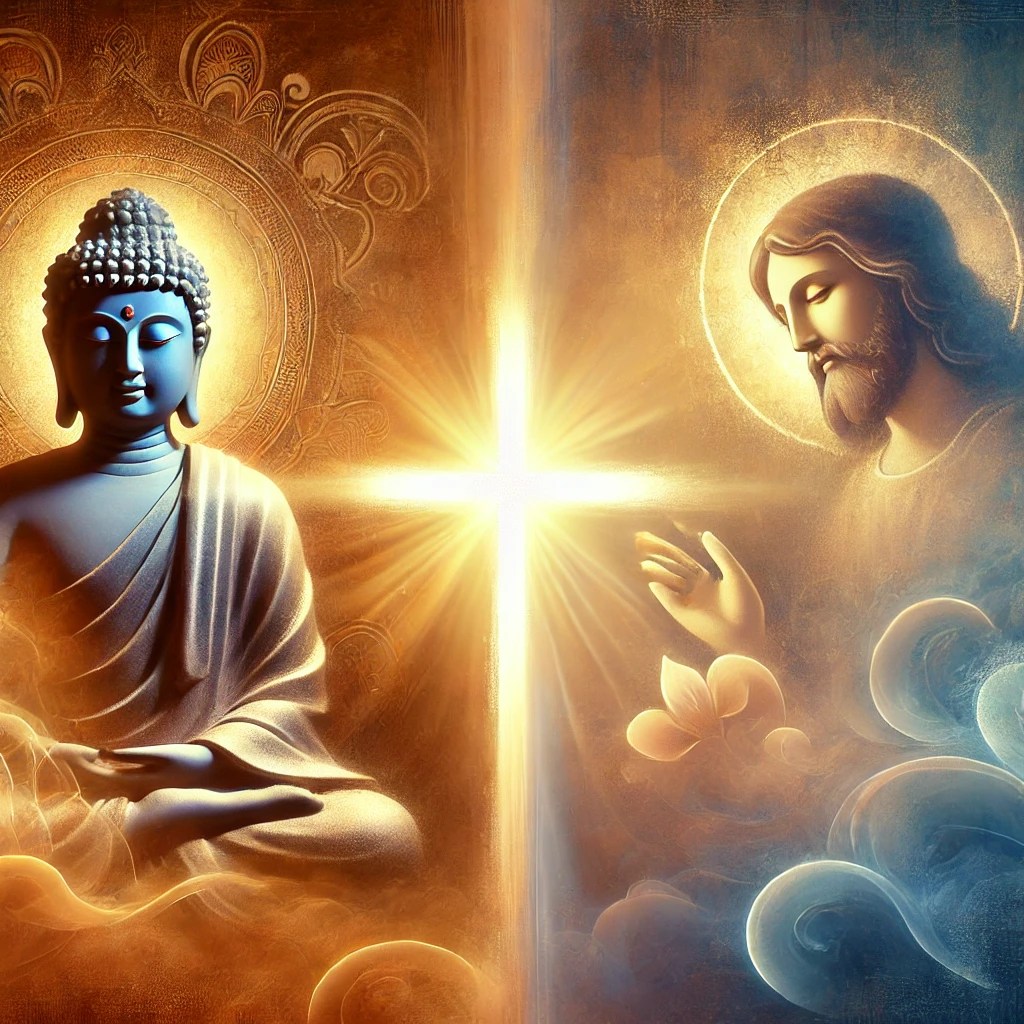
  • Buddhism and Christianity: Finding Common Ground in Compassion and Ethical Living

    Buddhism and Christianity: Finding Common Ground in Compassion and Ethical Living

    To many, the word Buddhism may conjure images of statues or rituals that seem foreign or difficult to understand, particularly for those from a conservative Christian background. However, at its heart, Buddhism is not about worshiping an idol or a false god, as some might mistakenly believe. Rather, it is a path of inner transformation that shares many core values with Christianity—values like compassion, ethical living, and the sincere effort to become a better person.

    In Buddhism, practitioners turn to the Three Jewels: the Buddha, who represents the potential for awakening within all of us; the Dharma, the teachings that show the way to live with love, wisdom, and peace; and the Sangha, the community of practitioners who support one another in their spiritual journey. In this sense, the Buddha is not a deity to be worshiped but a teacher, much like how Christians might revere the wisdom of Jesus Christ. The focus is not on idol worship, but on following a path that leads to moral and spiritual growth.

    At first glance, the colorful rituals, sacred music, and intricate costumes may seem confusing or overwhelming. Yet these outward forms are simply expressions of an inner practice that remains deeply practical and profound: the training of the mind. Tibetan Buddhism is not a religion in the conventional sense of belief or dogma but rather a transformative path aimed at purifying the mind. Through meditation, visualization, mantra, and ritual, the practice cultivates clarity, compassion, and liberation from egoic tendencies.

    Just as Christians seek to become more like Christ—striving for kindness, humility, and love—Buddhists seek to become the best version of themselves, nurturing virtues such as compassion, patience, and wisdom. To be a Buddhist is to make a commitment to ethical living, to ensure that one’s actions bring benefit rather than harm to others. This mirrors the Christian commandment to “love thy neighbor as thyself.”

    At the heart of both traditions lies a dedication to improving one’s character and living in a way that reflects love and goodness. For Buddhists, this means confronting the mind directly—meeting thoughts and emotions with honesty and care. Instead of avoiding or denying the difficulties of life, Buddhists engage with their minds head-on, seeking to transform fear, anger, or selfishness into peace, kindness, and clarity. This inner work echoes the Christian call to examine one’s heart, repent, and strive for purity in thought and deed.

    In his teachings, Dilgo Khyentse Yangsi Rinpoche offers a striking and relatable metaphor that bridges ancient wisdom with modern technology. He likens the practice of Dharma to the way we sync our wireless earbuds with our phones. Just as the earbuds must be paired and in sync with the phone to receive the signal and work properly, our minds must be aligned with the Dharma to receive its benefits.

    This idea resonates with many spiritual traditions. For Christians, the same concept applies to our relationship with the Holy Spirit or with Christ’s teachings. God is always present within us and around us, but if we are distracted by anger, impatience, or worldly concerns, we lose that vital connection. Simply believing in Jesus’ sacrifice isn’t enough if we are not living in sync with his teachings. By aligning our hearts and minds with Christ’s message of love, forgiveness, and humility, we can fully experience the divine presence and live in harmony with God’s will.

    Far from being a pagan religion, Buddhism is, at its core, a path of deep moral reflection and inner peace. Like Christianity, it calls for a transformation of the heart—one that aligns us with love, compassion, and a life of service. While the outward expressions of these paths may look different, the goal is the same: to become more loving, wise, and true to the divine nature that exists within each of us.

    For Christians who might feel uncertain about Buddhism, it can be helpful to remember that the values of both traditions are not in conflict but in harmony. Whether we call this journey “walking with Christ” or “following the Dharma,” both paths seek the same destination—a life lived with integrity, compassion, and love for others. By finding these common threads, we can open our hearts to one another, honoring the diversity of ways that humans seek truth and goodness.

    I invite you to watch the video below, which served as the inspiration for this post. It offers a beautiful glimpse into the teachings of Dilgo Khyentse Yangsi Rinpoche and the heart of Tibetan Buddhism. This film explores not only the path of mind training but also the deep compassion and wisdom that unite Buddhist and Christian values. Whether you are new to these teachings or have been walking your own spiritual path for years, this video provides an opportunity to reflect on the shared human quest for love, kindness, and awakening.

    🙏🕊️🙏