Tag: Orgyen Chowang Rinpoche

  • Letters to Rinpoche: Reflections on Ngöndro

    Letters to Rinpoche: Reflections on Ngöndro

    The following is a personal reflection written during my practice of Dzogchen Ngöndro, shared here as part of my ongoing journey with these teachings.


    I am very new to studuing and learning Orgyen Chowang Rinpoche and his teachings. My first introduction was through reading Our Pristine Mind a few years ago, which proved extremely helpful. The way ordinary mind and mental events are described brought clarity, resolving many years of confusion I had about sems and sems nyid.

    I have been studying and practicing Tibetan Buddhism as a lay practitioner since 1985–1986, after receiving the Kalachakra initiation with His Holiness the Dalai Lama in Bodhgaya, India. At this stage, I am not sure I can yet call myself Rinpoche’s student, as I understand that in the Tibetan tradition there is often a period of mutual discernment, where teacher and student come to know one another. For now, I am simply following his request to practice Ngöndro, and through this I am seeking to cultivate the beginnings of a student–teacher relationship, should that become appropriate.


    Insight from Contemplating the Eight Freedoms

    “The hungry ghost is not merely a being with desire, but a being entirely without contentment.”

    While reflecting on the Ngöndro contemplations, I focused on the second freedom—not born as a hungry ghost.

    As a human, I also experience desire, but I have the capacity for contentment. Even small moments—a quiet breath, the peace of stillness—remind me that not everything is consumed by craving.

    This insight brought me to a thought: perhaps it is not desire itself that causes suffering, but rather the inability to rest in contentment. Contentment softens desire, transforms it, and allows the heart to rest.

    Contemplative pause:
    Take a moment to notice where contentment may already exist in your life, even amid desire or difficulty.

    I am deeply grateful that such insights arise through the Ngöndro practice, and I wanted to record and share this reflection as part of my ongoing journey.


    Updates on Practice and Retreat Plans

    Although I had registered for the five-day Dzogchen retreat in August, I was not aware of the Ngöndro prerequisite and will therefore be withdrawing. I am now following Rinpoche’s guidance by studying and practicing the online Dzogchen Ngöndro program.

    I look forward to seeing him on October 11th at the one-day online Dzogchen retreat.


    Living with My Practice in Daily Life

    I have been living with a chronic illness called myalgic encephalomyelitis for many years. At first it brought great suffering, but over time I have come to see it as a powerful teacher on the path—almost like a spiritual friend.

    Because of this condition I am mostly homebound, and so I am deeply grateful for the opportunity to study and practice with Rinpoche through the modern blessing of online communication.

    Even when our circumstances feel limiting, spiritual connection and insight can arise through patience, presence, and accessible practices.

    🙏✨️💛✨️🙏

    If you would like to learn more about the teachings of Orgyen Chowang Rinpoche and explore Dzogchen practice in greater depth, you can visit his website at pristinemind.org.


    In this talk at Google, Rinpoche offers instruction and a guided meditation based on his book Our Pristine Mind: A Practical Guide to Unconditional Happiness. He introduces a unique form of meditation called Pristine Mind meditation and explains how cultivating a Pristine Mind can transform every aspect of our lives.


    By resting gently in the fullness of the present moment, allowing the mind to settle naturally, and recognizing its luminous, pristine nature, one opens to profound serenity and enduring contentment.

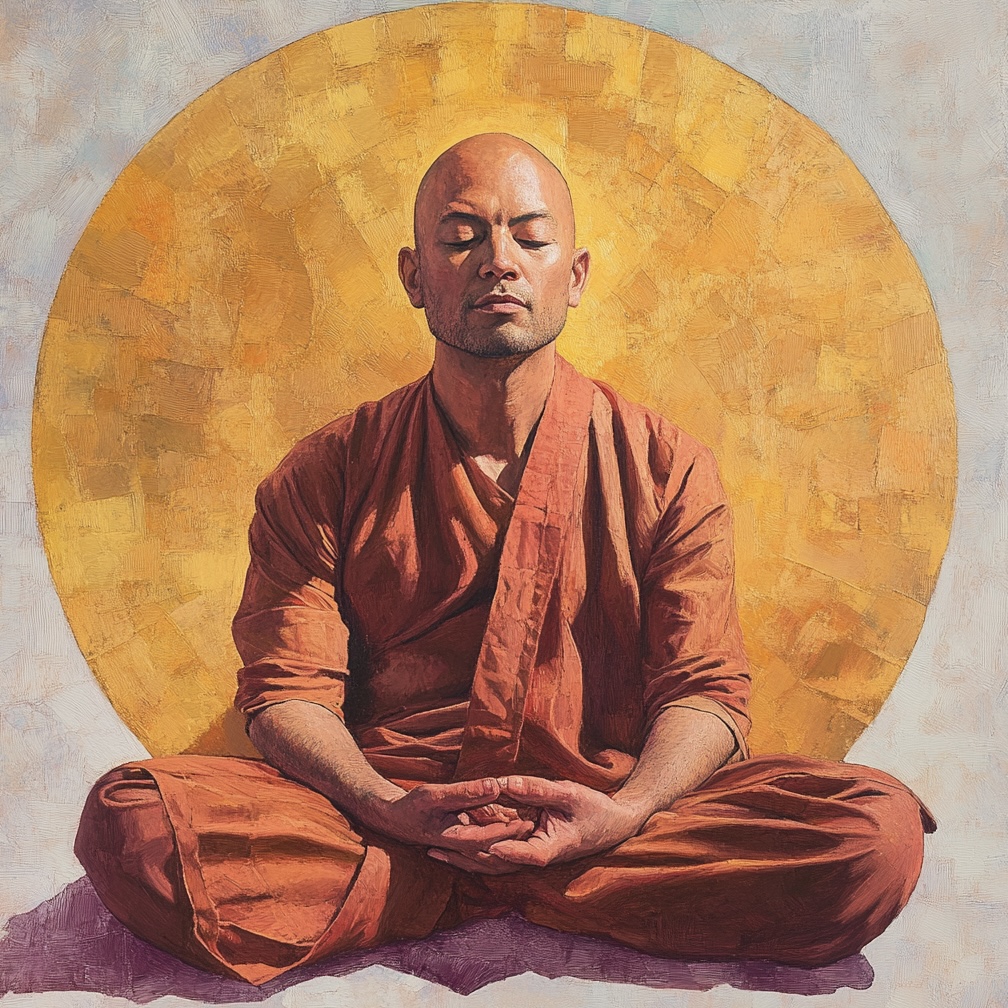
  • Exploring Pristine Mind Meditation for Chronic Fatigue Syndrome: A Path to Effortless Rest

    Exploring Pristine Mind Meditation for Chronic Fatigue Syndrome: A Path to Effortless Rest

    “Discover how pristine mind meditation may offer a gentle, restorative state of awareness without the energy costs that often come with post-exertional malaise.”

    Living with Chronic Fatigue Syndrome means every action, every exertion, has a cost. For many, even a few minutes of focus or effort can lead to post-exertional malaise—a profound worsening of symptoms that can last for days. But what if there was a way to rest deeply, to allow the mind to settle in a way that doesn’t deplete but actually nourishes? This is where the practice of pristine mind meditation comes in, offering an effortless awareness that exists beyond thought, beyond strain, and without the toll of traditional exertion.

    Pristine mind meditation is rooted in the idea of simply being. Rather than trying to clear the mind or enter a specific state, it invites you to rest in pure, unaltered awareness. This isn’t an act of concentration or focus, but a gentle allowing—a way to let thoughts and sensations come and go without attaching or resisting. The experience of resting in the pristine mind is often described as spacious, calm, and effortlessly open. For someone with ME/CFS, this could mean a path to real rest without the demand on physical energy that so often comes with other practices.

    Theoretically, because pristine mind meditation is free from physical or mental strain, it offers a way to access peace and stillness without triggering the kind of post-exertional fatigue that can worsen symptoms. It’s an invitation to explore a new way of being with chronic fatigue, where healing is not about doing but about resting in the quiet awareness that’s already within you.

    This journey is a gentle experiment, a compassionate practice of meeting yourself exactly as you are. Whether you experience even a few moments of pristine awareness or simply rest in the intention, the practice becomes a way of honoring the body’s limits and nourishing the mind. Take this path slowly, with openness, knowing that each step is its own quiet gift.

    If you’re curious, I invite you to join in this exploration, allowing yourself to simply rest in the pristine mind, noticing what it brings without expectation or need for change. This is a practice of ease, not of effort—a resting place for the soul amidst the demands of daily life with Chronic Fatigue Syndrome.

    For those interested in going deeper, much of this understanding is inspired by the teachings in Our Pristine Mind by Orgyen Chowang Rinpoche. His book provides a profound exploration of this approach to awareness, offering guidance on accessing the clear, effortless state of the pristine mind. If this resonates with you, I’ll leave a link below to help you find the book and discover more about this gentle, transformative practice.

    In the name of honoring my chronic fatigue syndrome, I’m experimenting with a different approach to healing. I’m trying out the idea that it doesn’t have to be complicated or effortful—that maybe simplicity and gentle choices can be enough. By tending to myself in this way, I’m exploring what it means to honor both my needs and my limitations, and I’m finding that this, too, might be a path to healing.

    I don’t know all the answers, but I’m noticing that healing isn’t always about pushing or doing more. Sometimes, it’s about making a quiet, deliberate choice to conserve energy, to rest, and to be. This journey toward simplicity and ease feels like a step toward well-being, and I’m curious to see where it leads.

    🙏🕊️🙏

    <!– /wp:spacer →

    🙏🕊️🙏

  • Exploring Dzogchen’s Transformative Path: A Journey into Our Pristine Mind

    Exploring Dzogchen’s Transformative Path: A Journey into Our Pristine Mind

    Reflections on Pristine Awareness, Dzogchen, and Finding Clarity in Challenging Times

    As I sit with Our Pristine Mind in my hands, I am aware that I am not merely reading a book. I am entering a silent conversation with an ancient wisdom, one that gently unfolds its layers with each page, as if lifting the veils of my own mind. In the quiet of early morning or beneath the faint glow of a reading lamp at night, the words begin to sink into the places where thought usually moves too quickly, too restlessly.

    Dzogchen—a word I’ve heard in passing, sometimes as an exotic echo from distant mountains, sometimes as an answer whispered through stories of sages and scholars—is not simply an idea here. It emerges like a breath I have almost forgotten to take, a reminder that within my mind lies a pure, boundless awareness untouched by the cycles of confusion, emotion, or distraction. Dzogchen does not demand; it simply reveals.

    The teacher, Orgyen Chowang Rinpoche, through his voice in Our Pristine Mind, speaks to the essential nature of awareness with a softness that does not impose but invites. I am reminded of Rilke, who once spoke of patience and of growing quietly in one’s own way, like a tree. Here, too, the practice of Dzogchen is like that tree, patient and grounded, yet ever-revealing. It asks nothing from me but presence, a willingness to recognize that what I have been searching for has always been here, beneath the surface of my rushing thoughts.

    Rinpoche speaks to our current world—the difficulties, the fractures, the relentless march of modern life. Dzogchen, he says, has come forward in these times not because it is new, but because we are perhaps ready to see its simplicity. To see that the vastness of pristine awareness is not somewhere far away or reserved for saints and sages. It is here, in the quiet pause between breaths, in the stillness that accompanies an unfiltered experience of now.

    The metaphor of the “brilliant moon in dark times” comes alive as I read, a reminder that even in moments when life feels overcast and filled with turmoil, there exists within us a clear, illuminating presence. Dzogchen does not banish the darkness; rather, it reveals a light that has been hidden within it all along.

    This practice, this profound teaching, calls us to approach life differently—to walk, speak, even think with the awareness that we are not separate from each other, from the world, or from the mind that perceives it all. It is an invitation to cultivate what Rinpoche calls “pristine awareness” in daily life, and this awareness transforms not only how we experience joy but also how we engage with suffering. Even anger, fear, and sorrow are welcomed as parts of the unfolding dance, teachers in their own right.

    The path of Dzogchen, I am learning, is not about leaving this world behind or aspiring to some distant perfection. Instead, it is an opening into a fuller, clearer life here and now—a kind of blossoming from the cold winter of searching into the warm spring of presence.

    If you feel the weight of the world’s challenges or the heaviness of inner obstacles, there is a softness, a kindness in Dzogchen that may resonate. As I explore these teachings, I feel them steadying me, offering a compass to navigate the storms of distraction and disconnection that modern life so often brings.

    And so, I share these reflections with the hope that you, too, may find something here that speaks to your own journey—a word, a phrase, a quiet reminder of the freedom that rests quietly within, waiting to be seen.

    🙏🕊️🙏

    If you’re interested in exploring this transformative approach further, I highly recommend Orgyen Chowang’s book The Pristine Mind. His teachings provide a clear, compassionate path toward uncovering the inherent purity of our mind, offering a source of deep fulfillment and lasting peace.

  • Finding Healing in the Fires Within: Shifting from the Ordinary Mind to the Pristine Mind with Chronic Fatigue Syndrome

    Finding Healing in the Fires Within: Shifting from the Ordinary Mind to the Pristine Mind with Chronic Fatigue Syndrome

    Discover how the quiet fire of the pristine mind can soothe the restless blaze of chronic fatigue, offering a path to inner peace and gentle transformation.

    I sit here today, tenderly aware of a fire burning within me—not the feverish blaze of energy or ambition, but a fire that comes with chronic fatigue, a fire that seems to consume my energy, that feeds on thoughts of worry, longing, frustration. This fire has been with me for as long as I’ve known this illness, and for many years, it seemed the fire was all I had—scorching, demanding, leaving me exhausted.

    But in recent days, I’ve come to see a new way of being with this fire, a gentle shift. There are, I believe, two fires within: one that belongs to the ordinary mind and another that belongs to the pristine mind.

    The fire of the ordinary mind is a hungry, restless flame. It feeds on what we give it—thoughts, fears, the inner whisper of “not enough.” It clings to the past and worries for the future, each thought a piece of wood thrown into the blaze, each worry an ember reignited. It takes, and takes, and when I stay too long with this fire, I feel myself slipping into exhaustion, my strength given over to a fire that never settles, never finds rest.

    And yet, there is another fire. It is quieter, calmer, like the deep glow of coals after the flames have settled. This is the fire of the pristine mind. It does not demand fuel; it simply is. It does not need anything from me, nor does it take. Instead, it offers a kind of sacred purification. It allows the impressions, the pratyayas, those old echoes of worry, disappointment, expectation, to rise up, to be seen, and then to burn themselves out gently, naturally, leaving a clean, quiet space in their wake.

    When I find myself caught in the ordinary fire—my mind racing, my heart feeling heavy—I take a breath and remember that there is another way. I sit with my awareness, letting go of each thought, letting each worry pass without adding to it. I let the flames burn low, and, slowly, I shift to the fire of the pristine mind, where each thought that arises can dissolve without reaction. I do not need to hold on to any of it, nor fuel it. In this place, I am simply present, letting what arises pass without attachment.

    This is, I’ve come to believe, a healing fire. Not a fire that consumes, but one that illuminates. When I rest here, I feel myself soften, as though I am held in a vast quiet. The pratyayas, those ancient patterns, have no hold here. They are seen, and then they drift away like ashes.

    Perhaps, if you too feel that restless blaze within, you can find this other fire. Sit with yourself, as gently as you would sit with a friend, and watch each thought arise and drift away. Do not reach to hold it, to make it stay, or to change it. Let it come, and let it go. Rest in the calm glow of the pristine mind, where there is nothing to fuel and nothing to fear. In this quiet, you are enough, you are whole.

    This journey, I realize, is very much a work in progress. Shifting from the ordinary fire to the pristine fire is not a one-time practice but an ongoing exploration—a gentle unfolding that reveals itself with patience and time. I invite anyone who feels drawn to this process, who wishes to explore this gentle technology of the mind, to sit with it and see if it offers benefit. Let it be an experiment, a curiosity, a way of tending to your inner world.

    This understanding has been inspired by the teachings in Our Pristine Mind by Orgyen Chowang Rinpoche. His work offers a profound look into the nature of the mind and the potential for peace that lies within each of us. If you feel drawn to explore this practice further, I highly recommend his book. It provides both guidance and wisdom for those seeking to discover the healing light of their own pristine mind.

    🙏🕊️🙏

    <!– /wp:spacer →

    🙏🕊️🙏