Nourished and filled with love—
tiny green leaves reach for light,
life feeds life in love. 🌿
🙏✨️🙂✨️🙏

Nourished and filled with love—
tiny green leaves reach for light,
life feeds life in love. 🌿
🙏✨️🙂✨️🙏
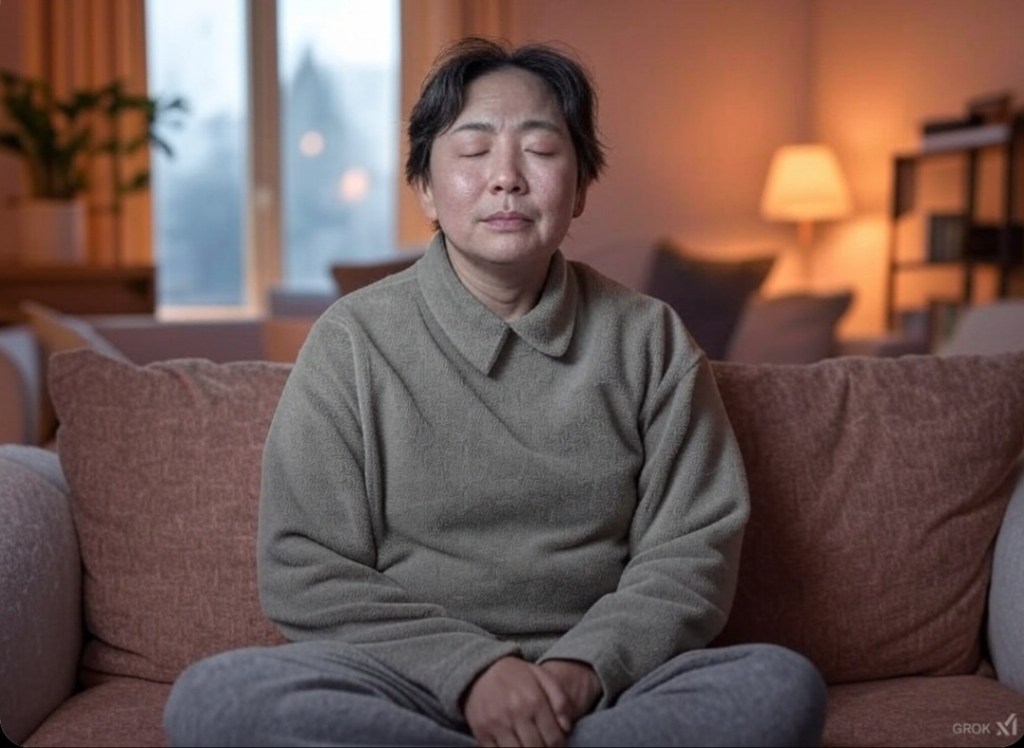
There is a kind of life that moves beneath the surface of what others might call living—a life that hums in the pauses, in the spaces where action halts and breath lingers. For those of us with Myalgic Encephalomyelitis/Chronic Fatigue Syndrome (ME CFS), life unfolds not in grand gestures but in the delicate negotiation between movement and stillness, between doing and being.
It is a life measured in moments of energy so fleeting and precious that they slip through our fingers like water if we are not careful. And so, we learn to hold them gently. We learn the art of pacing—a quiet, intricate dance with the body, the mind, and time itself.
At first, pacing may seem like a restriction, a bridle holding you back from the gallop of life. But in time, if you listen closely—no, not just listen, but feel—you realize it is not a prison but a kind of language your body speaks. A whisper beneath the noise.
There is a moment, just before the crash comes, when the body begins to murmur. A soft weight behind the eyes, a flicker of thought that stumbles, a breath that feels heavier than the last. These are the early signals, the body’s gentle plea: pause.
It is in this space, between the whisper and the roar, that pacing lives.
Pacing is not about doing less; it’s about doing differently. It is the re-imagining of time, the reshaping of how a day unfolds. Where once you might have filled your hours with tasks and plans, now you learn to weave rest into the rhythm of your day, like threads of gold through ordinary cloth.
You might wash the dishes, but not all at once. You pause midway, let the water cool on your hands, and sit quietly, letting your breath find its rhythm again. You might write an email, but only after resting first, and you’ll rest again afterward—because even thinking, even hoping, takes energy you no longer have in abundance.
And rest—ah, rest is not always what the world thinks it is. Rest is not just lying in bed, staring at the ceiling while the mind races ahead of the body’s capacity. Rest can be the soft drift of music filling the room, or the slow tracing of light as it moves across the wall in the late afternoon. Rest can be found in the spaces between thoughts, in the warmth of a cup of tea held in still hands.
Rest becomes an art of presence, of being where you are without pushing against the boundaries of what is possible today.
Some days, you find new ways to move within these limits, like an artist working within the edges of a canvas. You might use technology as a bridge—a voice-activated assistant that changes the song when you’re too tired to lift a finger, or a reminder app that gently nudges you when it’s time to pause.
You might practice the delicate balance of task rotation: a bit of writing, then a moment watching the sky; folding laundry, but only after you’ve closed your eyes for a while. You discover the gift of delegation, the quiet courage in asking for help, and the grace in receiving it.
Some days, even the lightest touch of movement—a stretch, a breath, the soft turning of your neck toward the window—feels like enough. And it is.
But there is more than the body to tend to. There is the heart, too, learning to live with the grief of lost abilities. There are days when you long for the world you once knew, for the ease of spontaneity, for the thoughtless rush of energy that now feels like a distant memory.
Yet, in the slowing down, in the careful pacing, you may find something unexpected: a deeper presence, a richer noticing of life’s quiet details. The way the morning light catches in the folds of your blanket. The softness in the voice of a friend who understands. The tender resilience that blooms in the space where struggle meets acceptance.
Pacing is not a giving up. It is a learning to live differently. It is an intimate conversation with yourself, a deep knowing of what you can do and when to stop. It’s about honoring the ebb and flow of your energy, like tides that you no longer fight but learn to move with.
And in this dance, in this art of balancing effort and ease, you find that life still holds beauty—not in spite of the limits but sometimes because of them. The smallest joys become treasures, and the quiet moments shimmer with meaning.
Because even within the narrowest confines, life finds a way to bloom.
🙏🕊🙏

In a small village nestled between quiet hills and flowing rivers, there lived a kind, gentle teacher named Sage. Everyone in the village loved Sage because he carried a peaceful presence, like a calm breeze on a warm day. People often came to him for guidance, and he always had time to sit with them, no matter how small or big their worries were.
One day, a group of children gathered by the firelight in Sage’s little house. These children, like you, had bodies that often felt tired—too tired to run and play like other children. Some days, their legs felt as heavy as stones, and even getting out of bed was hard. Other days, the sounds and lights of the world felt too loud and overwhelming, and they needed quiet spaces just to rest.
They had come to Sage with questions. “Why do our bodies feel like this?” one of them asked softly. “How can we find peace when we feel so tired and sad?”
Sage smiled gently, his eyes filled with warmth. “Come,” he said. “Let me tell you a story about a little river, a floating cloud, and a flower seed. Each of these can teach us how to find peace, even on the hardest days.”
The children nestled into their blankets, their bodies relaxing as they listened to Sage’s voice, soft and soothing.
“Once upon a time,” Sage began, “there was a little river. The river flowed gently through the valley, singing quietly as it went. But one day, it rained so hard that the river became muddy and rough. The river thought, ‘Oh no! I can’t sing anymore. Everything is so heavy.’
A passing cloud saw the river’s sadness and whispered, ‘Dear river, you don’t need to be clear right now. Just flow, even if it feels heavy. The mud will settle when it’s ready. You are still a river, just as you are.’
The river listened to the cloud and let itself flow, even though it felt muddy and tired. And slowly, without trying, the mud began to settle. The river’s song returned, not because it had rushed to fix itself, but because it had trusted in the flow of life.”
Sage looked at the children with kindness. “When your body feels tired, like the muddy river, you don’t need to fight it or force yourself to feel better. Just breathe gently and say, It’s okay to feel this way. I will let my body rest. With time, the heaviness will shift, just like the mud settles in the river.”
The children closed their eyes and breathed softly: It’s okay to feel this way. I will let my body rest. Their shoulders softened, and a small sense of ease began to bloom inside them.
“Next,” Sage continued, “there was a little cloud that floated high in the sky. One day, the cloud began to feel very lonely. It looked down and saw other clouds floating by, but it couldn’t keep up with them. The cloud thought, ‘I wish I could float faster and be with the others.’
Then the sun spoke gently to the cloud. ‘Dear cloud,’ the sun said, ‘you are already perfect just as you are. You don’t need to rush. Wherever you float, you bring shade to the earth and water to the rivers. That is enough.’
The cloud felt a little lighter, knowing it didn’t need to rush. It drifted slowly through the sky, enjoying the way the breeze carried it along.”
Sage paused for a moment, letting the story sink in. “Sometimes, it’s easy to feel like you need to do more, or be like everyone else. But just like the cloud, you are enough exactly as you are, even when you need to rest. With each small breath, you are already giving your love to the world.”
The children breathed quietly, feeling a small spark of kindness for themselves, whispering: I am enough, just as I am.
“Now,” Sage said softly, “I will tell you about the little flower seed. This seed lay hidden under the earth, waiting quietly through winter. It wanted to bloom, but the snow felt so heavy on top of it. The seed whispered, ‘When will I ever grow? I want to be a flower, but I feel stuck.’
The earth wrapped the seed in its warm embrace and said, ‘You are already growing, little one, even though you cannot see it yet. Each day, even as you rest, the roots inside you grow deeper. Trust the process, and when the time is right, you will bloom.’
And so the little seed rested through the winter, trusting in the earth. When spring finally came, it bloomed into the most beautiful flower the world had ever seen.”
Sage smiled at the children. “Sometimes, it feels like you are waiting, like the flower seed under the snow. But even on the days when you can’t see it, you are growing. Every time you care for yourself, every time you rest with kindness, you are planting seeds of strength inside you. And when the time is right, those seeds will bloom.”
The children snuggled deeper into their blankets, their breaths slow and soft, like gentle waves on the shore. Sage placed his hands gently on their heads, offering a quiet blessing.
“Now,” Sage whispered, “as you drift off to sleep, you can imagine yourself as the river, the cloud, and the flower seed. There is no need to rush. Just flow, just float, just rest. You are already enough, and your roots are already growing deep. With each breath, you are planting seeds of love, kindness, and peace—not just for yourself, but for the whole world.”
The children closed their eyes, their little hearts filled with the warmth of Sage’s words. As they drifted into sleep, they carried the stories with them, like seeds planted in the soft soil of their dreams.
Sage whispered a final blessing, his voice as soft as a lullaby:
“Breathing in, I rest.
Breathing out, I am at peace.
With each breath, I grow in love.
With each dream, my heart blooms in kindness.”
And with that, the children drifted into a deep, peaceful sleep, their dreams filled with rivers flowing gently, clouds floating freely, and flowers blooming in the sunlight. They carried these teachings in their hearts, knowing that even on the hardest days, they could flow, float, and grow at their own pace.
May your hearts always be filled with kindness, and may you grow into beautiful flowers, spreading peace and love wherever you go. Sleep well. The seeds of mindfulness and compassion are already blooming within you.
Goodnight, little ones. ❤️
If you’d like to explore more bedtime stories for children, including tales that nurture compassion and mindfulness, you can find our collection here.
Strength blooms in stillness,
Compassion’s universal grace,
Wisdom whispers peace.

 Home Page: Inspirations of Love and Hope