Tag: Mindfulness

  • Building a Temple Across Lifetimes: A Spiritual Journey

    Building a Temple Across Lifetimes: A Spiritual Journey


    The photograph above shows Tiger’s Nest Monastery in Bhutan, a powerful symbol of unwavering spiritual dedication across lifetimes. Perched high on a cliff, this sacred site has been home to many monks and spiritual practitioners, including Dilgo Khyentse Rinpoche, who spent many, many years meditating here.


    In the Tibetan tradition, there’s a story of a monk whose life’s work was to build a temple in a remote area. It was an enormous and solitary task, and though people mocked his aspirations, the monk remained steadfast in his dedication. But the temple was never finished in his lifetime. And so, the story goes, he reincarnated—returning again and again, each time picking up where he left off, continuing to work on the temple until, many lifetimes later, it was finally complete.

    This story speaks to a deep spiritual truth: some work cannot be accomplished in a single lifetime. Whether it’s the construction of a temple or the transformation of the heart, these endeavors require dedication that spans across time—an unbroken thread of aspiration that remains, even when the body changes. This sense of continuity is at the heart of many spiritual traditions, particularly the Tibetan belief in tulkus, enlightened beings who return to continue their work for the benefit of all beings.

    The Tulku Tradition: Continuing Spiritual Work Through Reincarnation

    One such tulku is Dilgo Khyentse Yangsi Rinpoche, the recognized reincarnation of the great master Dilgo Khyentse Rinpoche. His reincarnation serves as a living example of how the work of wisdom, compassion, and teaching carries on through lifetimes. From a young age, Yangsi Rinpoche received transmissions from his elders—wisdom that he himself had imparted to them in a previous life—so that he could continue his path of service in this life. This conscious continuation of spiritual work can also be seen in the 14th Dalai Lama, who, from the age of two or three, was recognized and trained to carry on his responsibilities from previous incarnations.

    These stories show the power of aspiration, clarity, and dedication in shaping not just one life but many.

    Aspiration for Future Lives: Carrying Dharma Practice Forward

    Reflecting on the tradition of tulkus, I find myself drawn to the idea that the momentum of my Dharma practice in this life could carry forward into the next. While I may not possess the level of realization that allows a tulku to consciously choose their parents and circumstances, I hold the aspiration that my practice—my dedication to understanding and embodying the Dharma—will create conditions in a future life that allow me to encounter the teachings early and continue this work. My hope is that the clarity I seek now will guide me then, like spiritual breadcrumbs leading me back to the path I walk today.

    The 500-Year Plan: A Vision Beyond One Lifetime

    But the idea of building something greater than ourselves doesn’t apply only to spiritual practice. Many years ago, while at a Zen monastery, I heard a young environmentalist speak about his dedication to protecting the earth. He spoke of his work in terms of what he called “The 500-Year Plan.” He understood that the efforts he was making—writing books, building networks, raising awareness—might not bear fruit in his lifetime. It could take 200 years just to turn the corner on some of the environmental issues he was addressing. Yet, that didn’t deter him. His vision extended far beyond his immediate circumstances. His short-term thinking was, in fact, a 500-year plan.

    This kind of perspective echoes the long view held in the Tibetan tradition: that the work we do—whether it’s spiritual or in service to the planet—reaches beyond a single lifetime. It’s about planting seeds, knowing that we may not live to see them grow into trees, but trusting that others—or perhaps even our future selves—will benefit from the roots we lay today.

    Spiritual Breadcrumbs: Leaving a Trail for Future Selves

    What’s fascinating about the tulku tradition, and perhaps even about my own hope for reincarnation, is that we’re not only thinking about the next generation or the next few decades. We’re thinking about how the seeds of wisdom, compassion, and right action planted today might guide us—even across lifetimes—toward a more awakened and compassionate world.

    By sharing these reflections and writings online, the work is not confined to this moment in time. In fact, the beauty of the Internet is that these teachings can continue to be discovered, even hundreds of years from now. And who knows—perhaps, dear reader, you are the reincarnation of myself, encountering these words 100 or even 500 years into the future. The paradox here is that I may not remember writing these words, but I may feel a deep connection with them—an ignition of something within that tells me I’ve walked this path before. It’s an interesting thought: someone reading this years from now could be my future self, rediscovering the teachings I left behind.

    The Power of Dedication: Planting Seeds for Future Generations

    Whether it’s a temple that takes centuries to complete, an environmental movement that spans generations, or the continued unfolding of a Dharma practice across lifetimes, there is a deep truth here: some work is bigger than one life, but that doesn’t diminish its value. Instead, it enhances it. The dedication to something greater than ourselves, something that transcends the limitations of time, is the foundation upon which lasting transformation is built.

    For myself, I may not see the fruits of my practice fully in this lifetime. But I trust that the work I do now—the clarity I cultivate, the wisdom I seek—will carry me forward. Perhaps in a future life, I’ll stumble upon this very blog, and it will be a reminder of the path I’ve already walked, the aspirations I’ve already set. In that moment, I’ll recognize the steps I need to take, not as new, but as familiar—part of a journey I’ve been on for lifetimes.

    Poem: A Trail of Light Across Time

    If I return to this world again,
    may I stumble upon these words,
    left like footprints in soft sand,
    to remind me of who I once was
    and all I once knew.

    A lighthouse on a distant shore,
    my own hand building the beacon,
    so when the fog of forgetting settles,
    I will find my way back
    to the heart I’ve always known.

    For what is wisdom
    but a note written in the margins of life,
    waiting patiently for another reader
    to understand the truth
    that has always been theirs?

    Closing Reflection: The Power of Aspiration

    The power of our aspirations is immense. Whether we are building temples, protecting the environment, or cultivating wisdom, the dedication we offer today echoes through time. We may not see the completion of our work in this life, but we trust that it will continue—through future generations, or even our own future selves. The seeds we plant now will bear fruit in ways we cannot yet imagine, and perhaps, like the monk or the tulkus, we’ll return to complete the work we began long ago.

    I invite you to watch this beautiful and moving documentary on Dilgo Khyentse Yangsi Rinpoche, which explores the life of a reincarnated spiritual leader, the wisdom he continues to impart, and the profound power of his practice.

    🙏🕊️🙏

    This video is a documentary about the life of Dilgo Khyentse Yangsi Rinpoche, a Tibetan Buddhist monk who is considered to be one of the most important spiritual figures of our time. The film follows Rinpoche from his childhood, when he was recognized as the reincarnation of the great master Dilgo Khyentse, through his years of study and practice, to his present day role as a spiritual leader and teacher.

    The video provides a fascinating glimpse into the life of a Tibetan Buddhist monk. We see Rinpoche as a young boy, struggling to adjust to his new life in a monastery. We watch him as he grows into a wise and compassionate teacher, who is able to connect with people from all walks of life. And we witness the incredible power of his spiritual practice, which allows him to heal the sick, help people overcome their suffering, and even communicate with the dead.

    The video is beautifully shot and edited, and the music is both haunting and uplifting. The interviews with Rinpoche’s friends, family, and students provide a rich and nuanced portrait of this extraordinary man. If you are interested in learning more about Tibetan Buddhism or the life of a spiritual leader, this video is a must-see.

    Overall, this video is a powerful and inspiring documentary that will leave you with a sense of wonder and awe. It is a testament to the power of the human spirit, and a reminder that it is possible to live a life of compassion, wisdom, and enlightenment.


  • A Call for Unity and Peace in Times of Change

    A Call for Unity and Peace in Times of Change

    A Message of Unity, Compassion, and Hope Post-Election 2024: Guiding Toward Healing

    As our nation enters a new chapter, feelings of uncertainty and apprehension may naturally arise. Moments of great change often invite a range of emotions, from hope to fear, and everything in between. But no matter where we find ourselves on this journey, we are united by our shared humanity, a bond that transcends our differences and invites us to walk this path together with kindness, compassion, and respect.

    This is a time for each of us to look within, to cultivate a sense of peace, and to reach out to others with understanding. There is strength in unity, a quiet courage in compassion, and a powerful resilience in the bonds that connect us as one human family.

    Embracing Compassion and Understanding

    As we meet others who may feel differently or view this moment through a different lens, let us remember that each person’s perspective is shaped by unique experiences and aspirations. True compassion invites us to listen deeply, to respond with empathy, and to create a space where all voices can be heard and valued.

    “Be kind, for everyone you meet is fighting a hard battle.” — Attributed to Philo of Alexandria

    This simple truth reminds us that compassion can be the bridge between divided hearts. Each person carries their own worries and hopes, and when we meet them with kindness, we become part of their healing journey, and they, in turn, become part of ours.

    Cultivating Peace Within and Without

    Inner peace, like the stillness of a calm lake, allows us to respond to life’s storms without being overwhelmed by them. As we take time to nurture this peace within ourselves—through reflection, meditation, or prayer—we become more capable of bringing peace into the lives of those around us.

    “Peace comes from within. Do not seek it without.” — Buddha

    This insight encourages us to draw strength from our inner resources, so that we may become a calming presence in the world. By holding peace within ourselves, we radiate it outward, helping to ease the anxieties and fears of those who may feel unsettled.

    Acting with Justice and Integrity

    We are all stewards of justice and truth, called to act with integrity and fairness. In times of change, it is essential to root ourselves in these values, to seek justice not through division but through unity, compassion, and courage.

    “The best way to find yourself is to lose yourself in the service of others.” — Mahatma Gandhi

    This wisdom reminds us that our greatest purpose lies in serving the common good, that by dedicating ourselves to lifting others, we discover deeper meaning and connection. In a time when many feel uncertain, we can serve by offering hope, reassurance, and an example of calm, compassionate integrity.

    Seeking Unity in Diversity

    In the spirit of interfaith harmony, we honor the rich diversity of beliefs, practices, and traditions that make our world vibrant and beautiful. Unity does not mean uniformity; it means celebrating our differences and finding strength in our shared values of love, peace, and kindness.

    “We are not isolated beings, but like waves of the same sea, leaves of the same tree, flowers of the same garden.” — Seneca

    This truth, expressed through many spiritual and philosophical lenses, reminds us that our lives are interconnected. When we remember that we are “waves of the same sea,” we can face any change or challenge with a sense of solidarity and support.

    Walking Together in Hope and Trust

    Amid uncertainty, hope is a guiding light, illuminating the path toward a better future. Each small act of kindness, every effort toward understanding, every choice to respond with love instead of fear, builds a world in which we can all thrive.

    “Faith is the bird that feels the light and sings when the dawn is still dark.” — Rabindranath Tagore

    Hope, like faith, gives us strength to keep moving forward, even when the outcome is not yet clear. This is a time for us to trust in the power of love, kindness, and shared vision to lead us to a brighter day.

    Let us take this moment to breathe, reflect, and commit to walking this path with open hearts. Each of us has the power to bring calm, courage, and compassion to our communities. Together, as one human family, we can create a nation guided by wisdom, unity, and peace.

    In the spirit of unity, let us keep this in our hearts:

    May we find strength in our compassion, resilience in our hope, and peace in our shared humanity. May our actions be a reflection of the love, kindness, and understanding that the world needs now more than ever. And may we walk together, with purpose and harmony, toward a brighter tomorrow.

    🙏🕊️🙏

  • Neti Neti Series No. 12A: The Ego’s Journey Toward the Pristine Mind

    Neti Neti Series No. 12A: The Ego’s Journey Toward the Pristine Mind

    Question:

    I’ve realized that the I-sense, or ego, cannot directly experience the pristine mind because it exists beyond duality. What now?

    Dear Friend,

    You have touched upon a profound and subtle truth in your reflection—the realization that the “I-sense,” the very sense of being a separate self, will never directly experience the pristine mind, for in the pristine mind, there is no “I” to experience anything at all.

    The “I-sense,” as you have observed, is the part of us that identifies with the individual self—with the body, the mind, the personality. It is the ego, the center of our personal world, through which we navigate the dualities of life—self and other, subject and object, right and wrong. This “I-sense” is deeply embedded in the fabric of our everyday experience, always seeking, always striving to maintain its sense of identity.

    And yet, beyond this “I-sense” lies the pristine mind, a state of pure, unconditioned awareness. In this state, there is no separation, no duality, no “I” that stands apart from the whole. The pristine mind is simply being itself, free from all concepts, all identifications. It is the ground of all existence, the true nature of consciousness that underlies every thought, every sensation, every experience.

    As you so rightly observed, the “I-sense” cannot directly experience the pristine mind because the very presence of an “I” implies duality, and in the pristine mind, there is no duality. The ego, by its very nature, is a construct that stands apart, that defines itself in relation to others. To dissolve into the pristine mind is to let go of this sense of separateness, to merge with the whole in a state of pure being.

    Yet, there is a way in which the ordinary mind, the ego, can approach this state, can come to reflect it as closely as possible. Through spiritual practice, the mind becomes refined, quieted, and purified. Meditation, mantra, mindfulness—all of these practices serve to soften the boundaries of the “I-sense,” to still the constant movement of thought and identification.

    In this stillness, the mind begins to mirror the qualities of the pristine mind—peace, clarity, non-attachment. While the ego may never directly experience the pristine mind, it can come to a place where it reflects this deeper reality, where the sense of separation diminishes, and the boundaries of the self become porous, transparent.

    It is in these moments, dear friend, that you may catch a glimpse of the truth that lies beyond the “I,” a truth that cannot be grasped or held, but only reflected in the clear, quiet mind. Continue with your practice, allowing it to guide you ever closer to this state of reflection, where the ordinary mind becomes a mirror for the pristine mind, and the boundaries of the self dissolve into the whole.

    🙏🕊️🙏

  • Tibetan Buddhism: A Path of Mind Training and Intrinsic Wisdom

    Tibetan Buddhism: A Path of Mind Training and Intrinsic Wisdom

    In our journey of exploring spirituality across traditions, it is time to welcome the teachings of Tibetan Buddhism. At first glance, the colorful rituals, sacred music, and intricate costumes may seem confusing or overwhelming. Yet these outward forms are simply expressions of an inner practice that remains deeply practical and profound: the training of the mind. Tibetan Buddhism is not a religion in the conventional sense of belief or dogma but rather a transformative path aimed at purifying the mind. Through meditation, visualization, mantra, and ritual, the practice cultivates clarity, compassion, and liberation from egoic tendencies.

    A recent film about Dilgo Khyentse Yangsi Rinpoche, the reincarnation of the revered master Dilgo Khyentse Rinpoche, offers a glimpse into the heart of this tradition. Watching the young tulku receive teachings and grow within a vibrant Tibetan community reveals how this ancient wisdom lives on, passed from one generation to the next as a thriving, living practice. The film gently invites viewers into a deeper understanding of the teachings, dissolving the outer complexities to reveal a path focused on inner transformation.

    One recurring theme throughout the film is that all Buddhist practice, no matter its form, is centered on mind training. The rituals and prayers, while beautiful, are not the essence; rather, they serve as vehicles to refine awareness and soften the grip of delusion. The practice is about gently cleaning the mind, sweeping away negativity and confusion like a gardener tending to weeds, leaving space for the natural qualities of wisdom and compassion to emerge.

    Vajrayana Buddhism offers a unique method for engaging with life’s challenges. Instead of rejecting or avoiding difficulties, the practice transforms even negative thoughts and emotions into opportunities for awakening. It becomes a skillful means of shifting the mind’s energy toward positive states. This approach is not about suppressing thoughts but about meeting them with awareness, transforming suffering into insight and confusion into clarity.

    Tibetan Buddhism emphasizes the reduction of ego grasping, fostering a spirit of nonviolence, and cultivating compassion. It shifts attention away from religious belief and toward the inner work of softening the heart and taming the restless mind. These teachings are not confined to cultural forms but reflect a universal truth—the journey of every human soul toward peace and freedom. The path’s essence aligns beautifully with the teachings of Advaita Vedanta and even echoes the mystical experiences of figures like St. John of the Cross. While each tradition expresses itself differently, the underlying message is the same: the liberation of the mind from illusion, opening into a state of oneness.

    In this light, Tibetan Buddhism can be seen as a cultural version of the Yoga Sutras of Patanjali, offering practices that lead to inner stillness and self-realization. It is, in essence, a kind of spiritual atonement—a process of purification and return to the true nature of mind, much like the mystical experiences found in other traditions.

    What makes Tibetan Buddhism particularly rich is its capacity to embrace complexity. It does not reject thoughts, emotions, or even suffering. Instead, it teaches practitioners to meet these experiences with skill and openness, transforming them into pathways toward deeper insight. Watching the young tulku learn within the community demonstrates this beautifully—how every moment, even the difficult ones, can become part of the practice.

    We invite you to explore this film, which offers a rare and intimate view into the life of Dilgo Khyentse Yangsi Rinpoche and the vibrant Tibetan community that nurtures his path. Beneath the ornate rituals lies a simple but profound truth: Tibetan Buddhism, like all genuine spiritual traditions, is ultimately a path of mind training. It offers not only the possibility of individual liberation but also a way to cultivate compassion and wisdom for the benefit of all beings.

    🙏🕊️🙏

  • Neti Neti Series No. 11: The Ego’s Journey Towards Mirroring the Pristine Mind

    Neti Neti Series No. 11: The Ego’s Journey Towards Mirroring the Pristine Mind

    Question:

    Is it true that the I-sense, or ego, will never actually experience the pristine mind, since the I-sense doesn’t exist in that state? And, can spiritual practice bring the ordinary mind and ego closer to mirroring the pristine mind, even if they can never fully experience it directly?

    Dear friend,

    You have touched upon a profound and subtle truth in your reflection—the realization that the “I-sense,” the very sense of being a separate self, will never directly experience the pristine mind, for in the pristine mind, there is no “I” to experience anything at all.

    The “I-sense,” as you have observed, is the part of us that identifies with the individual self—with the body, the mind, the personality. It is the ego, the center of our personal world, through which we navigate the dualities of life—self and other, subject and object, right and wrong. This “I-sense” is deeply embedded in the fabric of our everyday experience, always seeking, always striving to maintain its sense of identity.

    And yet, beyond this “I-sense” lies the pristine mind, a state of pure, unconditioned awareness. In this state, there is no separation, no duality, no “I” that stands apart from the whole. The pristine mind is simply being itself, free from all concepts, all identifications. It is the ground of all existence, the true nature of consciousness that underlies every thought, every sensation, every experience.

    As you so rightly observed, the “I-sense” cannot directly experience the pristine mind because the very presence of an “I” implies duality, and in the pristine mind, there is no duality. The ego, by its very nature, is a construct that stands apart, that defines itself in relation to others. To dissolve into the pristine mind is to let go of this sense of separateness, to merge with the whole in a state of pure being.

    Yet, there is a way in which the ordinary mind, the ego, can approach this state, can come to reflect it as closely as possible. Through spiritual practice, the mind becomes refined, quieted, and purified. Meditation, mantra, mindfulness—all of these practices serve to soften the boundaries of the “I-sense,” to still the constant movement of thought and identification.

    In this stillness, the mind begins to mirror the qualities of the pristine mind—peace, clarity, non-attachment. While the ego may never directly experience the pristine mind, it can come to a place where it reflects this deeper reality, where the sense of separation diminishes, and the boundaries of the self become porous, transparent.

    It is in these moments, dear friend, that you may catch a glimpse of the truth that lies beyond the “I,” a truth that cannot be grasped or held, but only reflected in the clear, quiet mind. Continue with your practice, allowing it to guide you ever closer to this state of reflection, where the ordinary mind becomes a mirror for the pristine mind, and the boundaries of the self dissolve into the whole.

    🙏🕊️🙏

  • Finding Healing in the Fires Within: Shifting from the Ordinary Mind to the Pristine Mind with Chronic Fatigue Syndrome

    Finding Healing in the Fires Within: Shifting from the Ordinary Mind to the Pristine Mind with Chronic Fatigue Syndrome

    Discover how the quiet fire of the pristine mind can soothe the restless blaze of chronic fatigue, offering a path to inner peace and gentle transformation.

    I sit here today, tenderly aware of a fire burning within me—not the feverish blaze of energy or ambition, but a fire that comes with chronic fatigue, a fire that seems to consume my energy, that feeds on thoughts of worry, longing, frustration. This fire has been with me for as long as I’ve known this illness, and for many years, it seemed the fire was all I had—scorching, demanding, leaving me exhausted.

    But in recent days, I’ve come to see a new way of being with this fire, a gentle shift. There are, I believe, two fires within: one that belongs to the ordinary mind and another that belongs to the pristine mind.

    The fire of the ordinary mind is a hungry, restless flame. It feeds on what we give it—thoughts, fears, the inner whisper of “not enough.” It clings to the past and worries for the future, each thought a piece of wood thrown into the blaze, each worry an ember reignited. It takes, and takes, and when I stay too long with this fire, I feel myself slipping into exhaustion, my strength given over to a fire that never settles, never finds rest.

    And yet, there is another fire. It is quieter, calmer, like the deep glow of coals after the flames have settled. This is the fire of the pristine mind. It does not demand fuel; it simply is. It does not need anything from me, nor does it take. Instead, it offers a kind of sacred purification. It allows the impressions, the pratyayas, those old echoes of worry, disappointment, expectation, to rise up, to be seen, and then to burn themselves out gently, naturally, leaving a clean, quiet space in their wake.

    When I find myself caught in the ordinary fire—my mind racing, my heart feeling heavy—I take a breath and remember that there is another way. I sit with my awareness, letting go of each thought, letting each worry pass without adding to it. I let the flames burn low, and, slowly, I shift to the fire of the pristine mind, where each thought that arises can dissolve without reaction. I do not need to hold on to any of it, nor fuel it. In this place, I am simply present, letting what arises pass without attachment.

    This is, I’ve come to believe, a healing fire. Not a fire that consumes, but one that illuminates. When I rest here, I feel myself soften, as though I am held in a vast quiet. The pratyayas, those ancient patterns, have no hold here. They are seen, and then they drift away like ashes.

    Perhaps, if you too feel that restless blaze within, you can find this other fire. Sit with yourself, as gently as you would sit with a friend, and watch each thought arise and drift away. Do not reach to hold it, to make it stay, or to change it. Let it come, and let it go. Rest in the calm glow of the pristine mind, where there is nothing to fuel and nothing to fear. In this quiet, you are enough, you are whole.

    This journey, I realize, is very much a work in progress. Shifting from the ordinary fire to the pristine fire is not a one-time practice but an ongoing exploration—a gentle unfolding that reveals itself with patience and time. I invite anyone who feels drawn to this process, who wishes to explore this gentle technology of the mind, to sit with it and see if it offers benefit. Let it be an experiment, a curiosity, a way of tending to your inner world.

    This understanding has been inspired by the teachings in Our Pristine Mind by Orgyen Chowang Rinpoche. His work offers a profound look into the nature of the mind and the potential for peace that lies within each of us. If you feel drawn to explore this practice further, I highly recommend his book. It provides both guidance and wisdom for those seeking to discover the healing light of their own pristine mind.

    🙏🕊️🙏

    <!– /wp:spacer →

    🙏🕊️🙏

  • Buddhism and Christianity: Finding Common Ground in Compassion and Ethical Living

    Buddhism and Christianity: Finding Common Ground in Compassion and Ethical Living

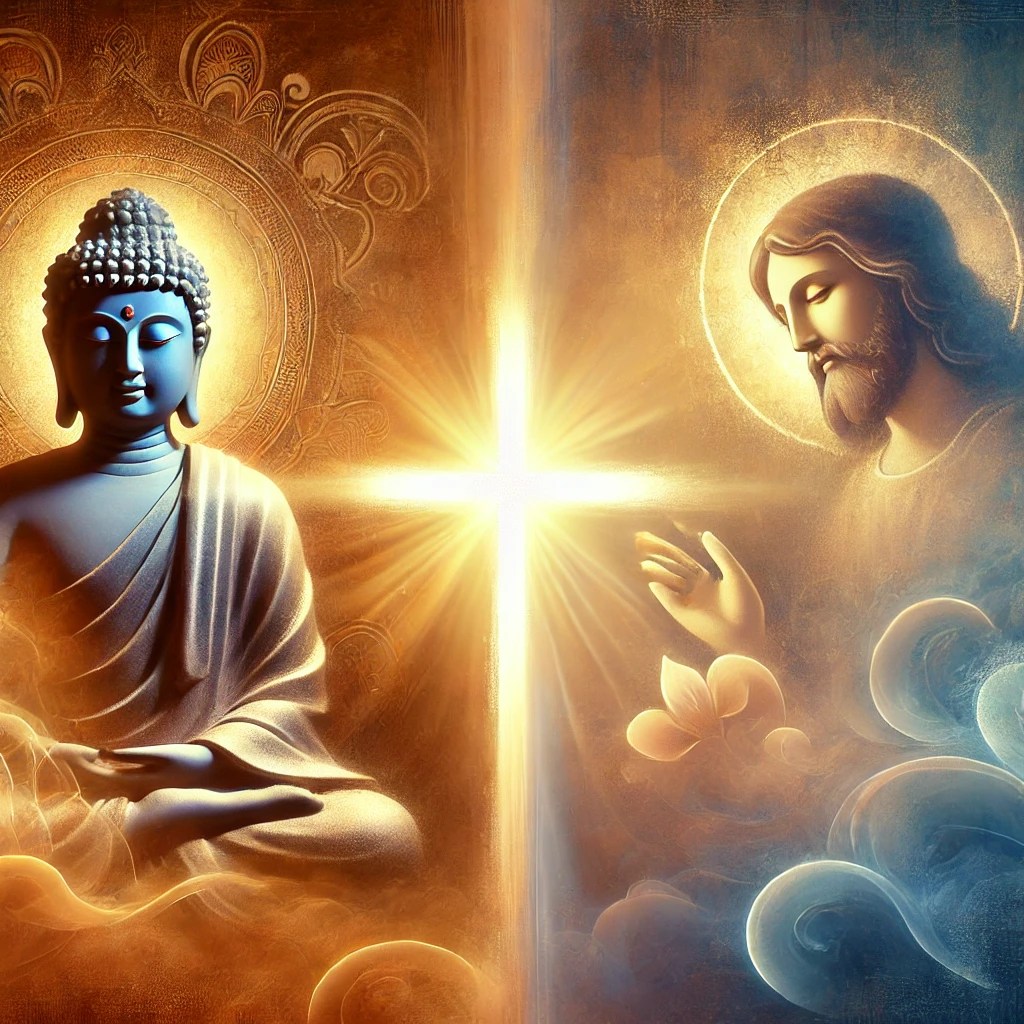
    To many, the word Buddhism may conjure images of statues or rituals that seem foreign or difficult to understand, particularly for those from a conservative Christian background. However, at its heart, Buddhism is not about worshiping an idol or a false god, as some might mistakenly believe. Rather, it is a path of inner transformation that shares many core values with Christianity—values like compassion, ethical living, and the sincere effort to become a better person.

    In Buddhism, practitioners turn to the Three Jewels: the Buddha, who represents the potential for awakening within all of us; the Dharma, the teachings that show the way to live with love, wisdom, and peace; and the Sangha, the community of practitioners who support one another in their spiritual journey. In this sense, the Buddha is not a deity to be worshiped but a teacher, much like how Christians might revere the wisdom of Jesus Christ. The focus is not on idol worship, but on following a path that leads to moral and spiritual growth.

    At first glance, the colorful rituals, sacred music, and intricate costumes may seem confusing or overwhelming. Yet these outward forms are simply expressions of an inner practice that remains deeply practical and profound: the training of the mind. Tibetan Buddhism is not a religion in the conventional sense of belief or dogma but rather a transformative path aimed at purifying the mind. Through meditation, visualization, mantra, and ritual, the practice cultivates clarity, compassion, and liberation from egoic tendencies.

    Just as Christians seek to become more like Christ—striving for kindness, humility, and love—Buddhists seek to become the best version of themselves, nurturing virtues such as compassion, patience, and wisdom. To be a Buddhist is to make a commitment to ethical living, to ensure that one’s actions bring benefit rather than harm to others. This mirrors the Christian commandment to “love thy neighbor as thyself.”

    At the heart of both traditions lies a dedication to improving one’s character and living in a way that reflects love and goodness. For Buddhists, this means confronting the mind directly—meeting thoughts and emotions with honesty and care. Instead of avoiding or denying the difficulties of life, Buddhists engage with their minds head-on, seeking to transform fear, anger, or selfishness into peace, kindness, and clarity. This inner work echoes the Christian call to examine one’s heart, repent, and strive for purity in thought and deed.

    In his teachings, Dilgo Khyentse Yangsi Rinpoche offers a striking and relatable metaphor that bridges ancient wisdom with modern technology. He likens the practice of Dharma to the way we sync our wireless earbuds with our phones. Just as the earbuds must be paired and in sync with the phone to receive the signal and work properly, our minds must be aligned with the Dharma to receive its benefits.

    This idea resonates with many spiritual traditions. For Christians, the same concept applies to our relationship with the Holy Spirit or with Christ’s teachings. God is always present within us and around us, but if we are distracted by anger, impatience, or worldly concerns, we lose that vital connection. Simply believing in Jesus’ sacrifice isn’t enough if we are not living in sync with his teachings. By aligning our hearts and minds with Christ’s message of love, forgiveness, and humility, we can fully experience the divine presence and live in harmony with God’s will.

    Far from being a pagan religion, Buddhism is, at its core, a path of deep moral reflection and inner peace. Like Christianity, it calls for a transformation of the heart—one that aligns us with love, compassion, and a life of service. While the outward expressions of these paths may look different, the goal is the same: to become more loving, wise, and true to the divine nature that exists within each of us.

    For Christians who might feel uncertain about Buddhism, it can be helpful to remember that the values of both traditions are not in conflict but in harmony. Whether we call this journey “walking with Christ” or “following the Dharma,” both paths seek the same destination—a life lived with integrity, compassion, and love for others. By finding these common threads, we can open our hearts to one another, honoring the diversity of ways that humans seek truth and goodness.

    I invite you to watch the video below, which served as the inspiration for this post. It offers a beautiful glimpse into the teachings of Dilgo Khyentse Yangsi Rinpoche and the heart of Tibetan Buddhism. This film explores not only the path of mind training but also the deep compassion and wisdom that unite Buddhist and Christian values. Whether you are new to these teachings or have been walking your own spiritual path for years, this video provides an opportunity to reflect on the shared human quest for love, kindness, and awakening.

    🙏🕊️🙏

  • Neti Neti Series No. 10: Harmonizing Breath, Mantra, and Movement for Deeper Meditation

    Neti Neti Series No. 10: Harmonizing Breath, Mantra, and Movement for Deeper Meditation

    Question:

    During my practice, I experimented with integrating breath and the mantra of silently saying “In” on the inhale and “Out” on the exhale, while incorporating gentle yogic movements in a lotus posture. I coordinated the mantra and breathing with specific neck movements—turning my head left and right, extending and flexing my neck, and bringing each ear toward my shoulder. How might this combination of breath, mantra, and movement deepen my practice, and what should I be mindful of as I explore this approach further?

    Dear friend,

    Your willingness to explore new dimensions in your practice, integrating movement with breath and mantra, is a beautiful testament to your deepening engagement with this path. What you have discovered is a profound way to harmonize the different aspects of your being, bringing together body, mind, and spirit in a single, unified flow.

    By coordinating the gentle movements of your head with the rhythm of your breath and the repetition of the mantra, you are creating a sacred dance, a dance that unites the mind and body in a shared rhythm. This synchronization is more than just a physical exercise; it is a way of bringing all of yourself into the present moment, where the mind’s chatter is quieted, and the body’s tension is released. In this unified flow, you find a deeper sense of wholeness, a wholeness that reflects the unity of your true nature.

    The gentle micro-movements you have chosen—turning your head, flexing and extending your neck, bringing your ears to your shoulders—are simple yet profound gestures that engage the body in the meditation. As you move, you become more aware of the sensations within your body, more attuned to the subtle messages it offers. This physical awareness grounds your practice, making it not just an exercise of the mind, but a fully embodied experience. It is in this embodiment that you find a deeper connection to yourself, a connection that transcends the boundaries of thought and feeling.

    The coordination of movement, breath, and mantra sharpens your focus, creating a structured and rhythmic flow that keeps the mind anchored in the present. As you move and breathe and recite the mantra, the distractions of the mind fade into the background, replaced by a clear and steady concentration. This concentration is not forced; it arises naturally from the harmony of the practice, leading you deeper into the stillness and silence that are the heart of meditation.

    The gentle yogic movements you have integrated into your practice are more than just physical stretches; they are a way of balancing the energy within your body, of releasing tension and opening up the flow of prana. As you turn your head, flex and extend your neck, bring your ears to your shoulders, you are not only stretching the muscles but also freeing the energy that is often trapped in these areas. This release brings a sense of ease and lightness, a feeling of being more centered and at peace.

    My dear friend, this experiment you have undertaken is a beautiful and powerful addition to your practice. Continue to explore this integration of movement, breath, and mantra, allowing it to guide you ever deeper into the unity of body, mind, and spirit. Trust in the wisdom of your body, the rhythm of your breath, and the power of the mantra, and let them carry you into the stillness that lies within.

    🙏🕊️🙏

  • Finding Peace in Solitude: A Journey Through Chronic Fatigue

    Finding Peace in Solitude: A Journey Through Chronic Fatigue

    Navigating Loss and Connection While Embracing Spiritual Growth Amidst Life’s Transitions

    Dear Diary,

    Today, I find myself reflecting on my journey with chronic fatigue syndrome, a path often marked by feelings of isolation and longing. In the quiet moments, I feel a nostalgia for the connections that once filled my life, now distant and faded. This solitude reminds me of the loss and grief I carry for those connections, particularly with friends and family who do not understand what I am experiencing, and who, by their misunderstanding, make my own acceptance and adjustment that much more difficult.

    As I prepare to move into a new apartment, I feel a mix of excitement and apprehension. Starting anew in a different community presents both challenges and opportunities for growth. I realize that living with this condition has not only shaped my experience but has also become a vital part of my spiritual journey.

    Making friends with my unresolved feelings has become essential. I acknowledge the grief of lost connections and the isolation that accompanies it. This solitude is not merely an absence; it is a necessity for maintaining my well-being and allows me to cultivate a deeper connection with myself. I find inspiration in the challenges this illness presents, recognizing that they prompt me to grow in compassion and understanding—both for myself and others.

    As I approach this transition, anxiety rises within me. Moving into a new space means confronting the reality of my invisible illness in a community where no one knows my story. I grapple with the desire for genuine connections, yet I know from experience that sharing my struggles often leads to misunderstanding. I don’t have the energy to endlessly explain my need for solitude, nor do I want to feel the weight of others’ expectations. This conflict heightens my apprehension about the move, leaving me to process a blend of nostalgia and acceptance as I prepare to navigate new interactions.

    In embracing these feelings, I also choose to see them as stepping stones on my spiritual path. Each challenge offers me the opportunity to reflect and grow, reminding me that my journey holds purpose, even in its complexity. I aspire to be a positive contribution to the world, despite my limitations, and I believe that by sharing my experiences, I can help others feel less alone on their own paths.

    Let us continue to inspire one another as we navigate this journey together. Through our shared experiences, we can create a community of understanding and support, where we celebrate resilience and discover joy even in difficult times.

    With warmth and gratitude,

    Richard

    🙏🕊️🙏

  • ME/CFS & Long Covid Positive Affirmations:

    ME/CFS & Long Covid Positive Affirmations:

    With each breath, I honor my body’s pace and wisdom. Rest is a profound act of strength, nurturing my spirit and guiding me toward balance. In stillness, I find resilience and peace, knowing each small step is part of my healing journey.

    With each breath, I honor my body’s pace and wisdom. Rest is a profound act of strength, nurturing my spirit and guiding me toward balance. In stillness, I find resilience and peace, knowing each small step is part of my healing journey.

    • Positive Affirmation


    🙏🕊️🙏

  • Neti Neti Series No. 9: Overcoming Self-Doubt in Meditation

    Neti Neti Series No. 9: Overcoming Self-Doubt in Meditation

    Question:

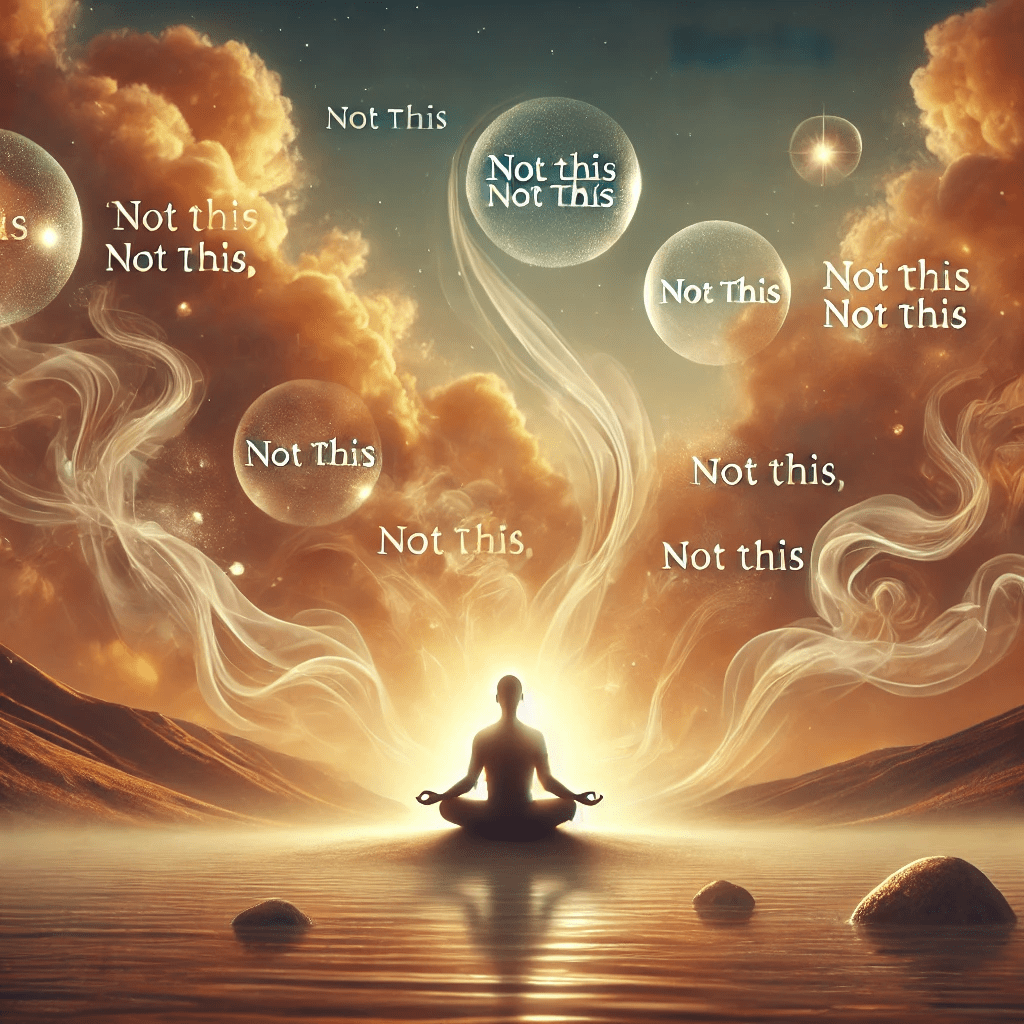
    For many years, the mental events that disturbed me the most were those that questioned, “Am I doing this right or wrong? Am I achieving anything beneficial, or am I just wasting my time?” But today, these doubts had no effect. I simply said, “Not this, not this,” recognizing them as just mental events arising. This mantra is bringing me a freedom from years of anxiety and self-doubt. It’s a significant release. How can I nurture and deepen this newfound freedom in my meditation?

    Dear friend,

    What a significant and liberating insight you have encountered! For many years, those persistent questions—”Am I doing this right?” “Am I wasting my time?”—have cast a shadow over your practice, pulling you into a cycle of doubt and anxiety. And yet, in this round, you have discovered a simple and profound truth: these doubts are nothing more than mental events, no different from any other thoughts that arise in the mind.

    Doubt, particularly the kind that questions whether we are on the right path, can be one of the most insidious obstacles in our practice. It arises from the ego’s need for certainty and validation, from a fear of failure or the unknown. These doubts can be particularly disturbing because they strike at the very heart of our efforts, making us question whether we are moving forward or merely spinning our wheels.

    But now, you have seen through the illusion. By applying the mantra “Not This, Not This” to these doubts, you have recognized them for what they are—simply thoughts, passing phenomena in the mind. They have no more substance or power than any other mental event. In meeting these doubts with “Not This, Not This,” you have taken away their sting, their ability to disturb your peace. They are no longer something to fear or wrestle with; they are just another ripple on the surface of the mind’s vast ocean.

    This realization brings with it a profound freedom. No longer are you bound by the need to do things “right” or the fear of doing them “wrong.” Instead, you can rest in the simplicity of the practice, free from judgment, free from the constant questioning that once held you back. This freedom is not a small thing; it is a significant release, a letting go of years of accumulated doubt and anxiety. It is a gift that allows you to move forward with greater ease and confidence, trusting in the process without the need for constant validation.

    Indeed, this is a significant moment in your journey. The doubts that once plagued you have lost their power, and in their place, you have found a deeper sense of peace and self-acceptance. This is the true power of the mantra “Not This, Not This”—it transforms not just your meditation, but your entire relationship with yourself. It frees you from the chains of doubt and allows you to walk your path with a lighter heart and a clearer mind.

    My dear friend, this is a beautiful and important step on your journey. Continue with this practice, allowing the mantra to guide you ever deeper into the heart of stillness and clarity. Trust in yourself, and know that you are moving in the right direction, free from the burdens of doubt and self-judgment.

    🙏🕊️🙏

  • The Six Types of Courage in the Journey with Chronic Fatigue Syndrome

    The Six Types of Courage in the Journey with Chronic Fatigue Syndrome

    For those of us living with post-viral chronic fatigue syndrome (ME/CFS), the path we walk is not a simple one. Each day brings its own set of challenges, often invisible to the outside world but deeply felt within. Yet, amid the fatigue, the uncertainty, and the pain, there are moments where we are called to draw on reserves of strength we didn’t even know we had. Courage, in its many forms, becomes a quiet companion on this journey.

    As I reflect on the Six Types of Courage, I am reminded that courage isn’t always the grand, heroic act we see in stories. Sometimes it is found in the smallest actions, the quietest moments, and the internal shifts of perspective that allow us to keep moving forward. Let me share how each of these types of courage has come to life in my experience, and perhaps in yours, as we navigate the complexities of chronic illness.

    Physical Courage

    Living with ME/CFS requires a deep well of physical courage. On the days when even getting out of bed feels like a monumental task, there is a certain bravery in simply continuing. To keep going, not by pushing beyond our limits, but by embracing our body’s need for rest, balance, and awareness, is its own form of resilience. The courage to honor what our body is telling us, to move slowly and deliberately through the fatigue, is often invisible to others—but it is no less powerful.

    I’ve learned, often the hard way, that physical courage isn’t about “fighting” the illness. Instead, it’s about recognizing that even the act of getting through a day, with gentle awareness of my body’s limits, is a courageous act of self-care.

    Social Courage

    One of the most difficult aspects of living with chronic illness is feeling misunderstood by those around us. Social courage asks us to be unapologetically ourselves, even when we feel like our world is shrinking. It takes bravery to share our reality with others, to say, “This is who I am right now,” even when we worry about judgment or pity.

    For me, social courage has meant being honest about my limitations, even when it’s uncomfortable. It’s meant declining invitations or stepping back from commitments without feeling the need to apologize. In a world that often celebrates busyness and productivity, social courage allows us to stand firm in our truth, even when it doesn’t align with society’s expectations.

    Moral Courage

    Moral courage comes into play when we choose to do what’s right for our well-being, even when it’s not popular or easy. It might mean saying no to well-meaning advice that doesn’t resonate, or it might mean standing up for ourselves in medical settings, advocating for the care we know we deserve.

    In my own journey, I’ve had to practice moral courage by trusting my intuition, even when others disagreed. Whether it was turning down treatments that didn’t feel right for me, or advocating for pacing and rest in a world that pushes us to keep going, moral courage has been about honoring my inner knowing and standing up for my own health and well-being.

    Emotional Courage

    Emotional courage asks us to feel everything—without guilt or attachment. Living with chronic illness brings a rollercoaster of emotions, from frustration and sadness to moments of peace and even joy. It takes real bravery to allow ourselves to feel the depth of these emotions, without judgment.

    For those of us living with ME/CFS, there is often a fear of being consumed by the negative emotions that come with illness. But emotional courage teaches us that by allowing ourselves to fully experience these feelings, we create space for healing. It’s okay to feel angry, to feel sad, to grieve the life we once had. And it’s equally okay to feel moments of joy, to savor the small victories without fear of losing them. Emotional courage is the bridge between feeling and acceptance.

    Intellectual Courage

    There is a constant need to learn, unlearn, and relearn when living with chronic illness. Intellectual courage encourages us to stay open, to question what we think we know about our illness, and to be willing to adapt as new information comes to light.

    In my own life, this has meant learning to let go of certain beliefs—like the idea that I must always be productive to have value. It has meant embracing new ways of thinking about rest, about healing, and about what it means to live a meaningful life, even in the face of limitations. Intellectual courage reminds us that growth is always possible, even when we feel stuck.

    Spiritual Courage

    Spiritual courage is perhaps the most profound of all. It asks us to live with purpose and meaning, even when our outer world feels small. For me, spiritual courage has been about embracing the stillness that chronic illness brings, finding the deeper meaning in quiet moments, and trusting that this path, though difficult, has its own beauty.

    Living with ME/CFS has drawn me inward, toward a heart-centered approach to life. Spiritual courage has helped me see that even when my body is weak, my spirit can remain strong. It’s about connecting with something larger than myself, whether that’s through mindfulness, prayer, or simply finding peace in the present moment. It’s about living with purpose, even when the world outside feels far away.

    As I reflect on these six types of courage, I am reminded that each of them plays a role in the journey we are on. Courage doesn’t always roar. Sometimes, it is the quiet voice at the end of the day saying, “I will try again tomorrow.” For those of us living with chronic fatigue syndrome, courage is found not in grand gestures, but in the small, everyday acts of resilience, hope, and self-compassion.

    We are all courageous, in ways both seen and unseen. Let us honor that courage in ourselves and in each other, as we continue to walk this path with grace, gentleness, and the quiet strength that comes from within.

    🙏🕊️🙏