The ringing remains, yet the mind’s tight grasp dissolves — only sky holds all.
For many, tinnitus feels like a constant companion — a high-pitched ring, a persistent hum, a sound that refuses to vanish. It can shadow every quiet moment, every attempt at rest, every space of stillness. We search for a cure, for silence, for relief. And yet, sometimes the greatest liberation does not come from changing the sound, but from changing the relationship to it.
I have walked this path. The ringing did not leave. What changed was me.
At first, tinnitus feels like an enemy. We grasp at it, resist it, curse it. We add suffering to suffering: “Why me? Why won’t this stop? How can I bear it?” The sound itself may be mild or sharp, occasional or persistent, but the mind’s reaction amplifies it, creating a firestorm of agitation.
Then comes a subtle discovery: the fire is fueled by attention and resistance. The ringing itself is not the problem — the problem is our insistence on struggling with it.
If we pause, soften our attention, and allow awareness to expand around the sound, something shifts. We realize:
The tinnitus may continue.
The mind may notice it, even name it.
But the grasping, the mental fight, the suffering about the suffering — that can dissolve.
It is like a leaf floating on a stream. The water moves; the leaf moves; yet no one is trapped. The leaf does not resist the current. The leaf does not need the current to stop in order to be free.
Through this practice, tinnitus becomes a teacher. It is a doorway to awareness, a mirror reflecting our habit of clinging. By letting go of the self that struggles, we enter a spaciousness where the sound exists, but the suffering does not.
This is not denial. This is not wishful thinking. It is simple noticing:
The ringing arises dependent upon body, mind, and attention.
The mind can soften.
Awareness itself remains unshaken, vast and unbounded, like sky in which clouds drift freely.
To rest here, all that is required is attention that softens rather than grips:
Breathe and notice the sound. Don’t push it away; simply allow it to be.
Relax the “I” that judges or resists. Let the self that struggles dissolve into spaciousness.
Rest in the field of awareness. The ringing is present, but it is no longer a problem.
In this way, liberation does not depend on the sound ending. It depends on the mind letting go. The sound may continue, but the fire of suffering has gone out.
For anyone who lives with tinnitus, this is a path open to you. The ringing may remain, but your suffering need not. The self that once insisted on fighting can rest. The heart can soften. The mind can breathe. The sky remains.
And in that sky, even tinnitus becomes part of the vast, untroubled whole.
A Haiku for Reflection
The ringing remains, yet the mind’s tight grasp dissolves — only sky holds all.
Or a Meditative Verse
Tinnitus hums on, unchanged, persistent, steady. I let go of “I.” The struggle falls away, and only vastness remains.
The key here is compassion for your nervous system. Your brain is trying to protect you; it just needs reassurance that these vibrations are safe, ignorable, and not urgent. Over time, the mind can learn to treat tinnitus the way it treats the hum of a refrigerator: present, but mostly unnoticed.
It’s not about conquering, changing, or escaping the vibrations—it’s about sitting gently with them, recognizing them as part of the living moment, and letting your mind rest in spacious awareness.
All that arises is fleeting, all that appears has no fixed self. The hum, the thought, the breath— they come, they linger, they fade. I rest in the space between, spacious, still, free. No need to hold, no need to push— only presence, only now.
In the silence between particles, a subtle dance begins. Not chaos, but coherence. Quantum physicists have observed this remarkable phenomenon: when a system is cooled to near absolute zero, the noise of thermal energy fades, and what emerges is harmony—a unified, coherent state where particles move in synchrony, as if guided by an unseen conductor.
This is not metaphor. It is measurable. It is foundational to the functioning of quantum computers and the mysteries of entangled particles. In a coherent quantum state, multiple possibilities can exist at once, undisturbed, holding the full richness of potential before any collapse into a single outcome.
And something within me recognizes this—not as a physicist, but as a contemplative.
Swami Pravrajika Divyanandaprana, a Vedantic scholar and monastic teacher, speaks of meditation as a process of mental alignment. Not forcing the mind into silence, but training it gently to stabilize—a state where the vrittis (mental waves) become quiet, and a single pratyaya (object of focus) remains. When the mind holds this one-pointed focus steadily, something profound opens. The mind becomes coherent. The heart, luminous. The consciousness, calm and aware.
What I feel, quietly and strongly, is that this coherence of mind is not so different from quantum coherence.
In both cases, we are moving from noise to signal. From fragmentation to integration. From dissonance to harmony.
And just as quantum systems require stillness to enter coherence, so do we. In our modern lives—bombarded by notifications, media, distractions—we rarely allow the mind to rest long enough for true coherence to arise. We are pulled in many directions, each new input collapsing our inner potential into reactive fragments.
This is why I believe, deeply and urgently, that coherent consciousness is not a luxury—it is a survival skill for the 21st century.
Without it, we are drowning in information but starving for wisdom. Without it, we lose the capacity to respond rather than react, to create rather than consume, to see clearly rather than be blinded by constant stimulation.
Stillness is not withdrawal. It is preparation. It is the cooling field of the soul.
In the coherent mind, empathy arises. Insight dawns. Peace becomes possible—not as an escape from the world, but as the ground from which meaningful action emerges.
As individuals and as a species, we need to learn this coherence—not just in our machines, but in our minds.
In the winter’s chill, fatigue takes its toll, A silent struggle that steals its hold. In shadows of exhaustion, you stand, Seeking solace, a comforting hand.
Amidst the snowflakes and the gloom, Your heart whispers in the quiet room. Lost in the battle, weary and worn, Yet in your words, a resilience is born.
School’s path abandoned, relationships few, The isolation, a formidable view. But here, in this space, a kinship shared, A connection that proves we all have cared.
To those who wonder, “How do you endure?” In unity, our strength we assure. A journey marred by fatigue and strife, Yet together, we navigate this maze of life.
As winter’s grasp tightens its embrace, Here, find warmth in this shared cyberspace. Through the fog of weariness, light may gleam, In love, understanding, a supportive stream.
So, dear friend, in this communal space, Let compassion blossom, a comforting grace. For you are not alone in this plight, Together we stand, embracing the night.
May your journey continue to be filled with peace, wisdom, and compassion. 🙏
May we all embrace our journey with a compassionate and open heart, finding solace in the present moment on our path with ME/CFS. 🙏❤️🙏
Transforming Suffering Into Happiness: How the Teachings on Emptiness from the Heart Sutra Support Mental Health and Well-Being
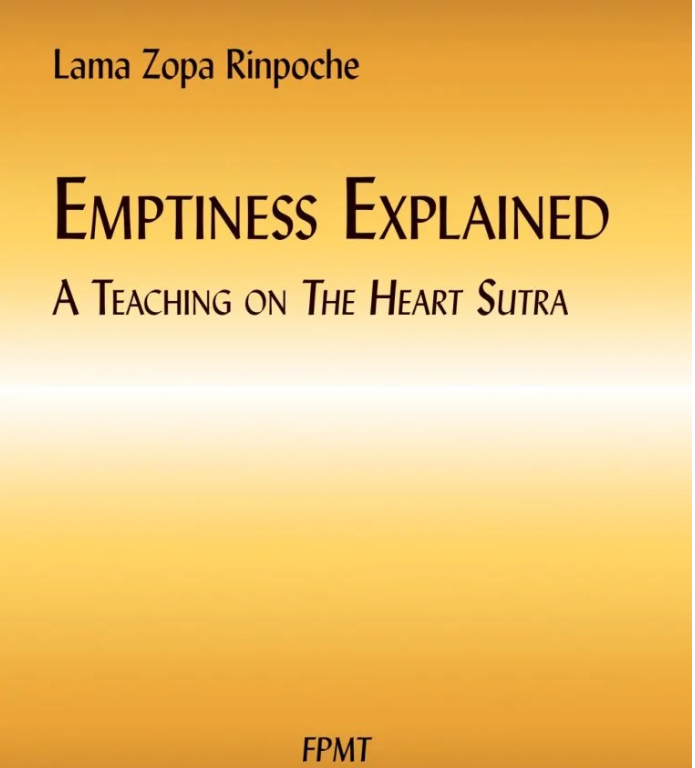
The Heart Sutra stands as one of the most profound and essential teachings in Buddhism, offering a path to understanding emptiness—the ultimate nature of reality. Lama Zopa Rinpoche’s commentary on this timeless sutra illuminates its teachings, guiding us toward a deeper understanding of how emptiness can transform not only our spiritual practice but also our daily lives.
In this post, I’ll share key reflections from Rinpoche’s teaching, focusing on the practical wisdom and spiritual inspiration it offers. Whether you’re a seasoned practitioner or simply curious about the philosophy of emptiness, I hope these insights will resonate with your heart.
What Is Emptiness?
Lama Zopa Rinpoche explains that emptiness does not mean that things don’t exist—it means that things are empty of inherent existence. All phenomena, including ourselves, arise dependently, shaped by causes, conditions, and labels. This is the essence of the middle way, which avoids the extremes of nihilism (nothing exists) and eternalism (things exist inherently and permanently).
As the Heart Sutra famously states:
“Form is emptiness, emptiness is form. Emptiness is not other than form; form is also not other than emptiness.”
In these words, we see that emptiness and dependent arising are inseparable. While things exist conventionally, their ultimate nature is empty of any independent, fixed essence.
Practical Ways to Meditate on Emptiness
Rinpoche offers accessible methods to integrate the understanding of emptiness into both formal meditation and daily life:
1. Recognizing the Object to Be Refuted
The first step is identifying the false concept of an independent, inherently existent “I” or object. This is often described as the “I on the I”—the subtle sense that there is a solid self beyond the ever-changing interplay of body and mind. By recognizing this misconception, we can begin to dissolve it.
2. Meditating on Dependent Arising
Reflect on how the “I” arises only in dependence on the body, mind, and other aggregates. As Rinpoche teaches, the “I” is merely a label created by the mind. Understanding this dependence helps us see the emptiness of the “I” without negating its conventional existence.
3. Mindfulness in Daily Life
Emptiness isn’t confined to sitting meditation. Rinpoche encourages us to bring mindfulness of emptiness into every activity—walking, cooking, working, even shopping. He likens this to recognizing a dream as a dream:
“While driving a car, see yourself, the car, and the action of driving as hallucinations. They appear solid, but they are not inherently existent. Practicing this awareness is incredibly powerful.”
Overcoming Fear and Misunderstanding
The experience of emptiness can sometimes evoke fear, especially the sense of “losing the I.” Rinpoche reminds us that this fear arises from our deep attachment to a false sense of self. However, far from being nihilistic, emptiness reveals the interdependent nature of all things.
“When bodhisattvas of high intelligence realize emptiness, they experience bliss; for others, deep fear can arise. This fear is a sign of touching the truth of selflessness—it is part of the journey.”
By grounding our understanding in dependent arising, we can navigate this fear with confidence and clarity.
Applying Emptiness in Relationships
Rinpoche’s teaching also provides practical tools for transforming relationships. When we feel hurt or offended, understanding emptiness can soften our reactivity. The other person’s actions—and our own sense of self—are dependently arisen, shaped by countless conditions.
This awareness allows us to respond with compassion rather than attachment or aversion. As Rinpoche says:
“Recognize that the ‘I’ that feels hurt is a mental construct. See the other person’s words or actions as arising dependently. This opens the door to greater understanding and kindness.”
The Transformative Power of Emptiness
Even the smallest step toward understanding emptiness has profound benefits. Rinpoche explains that simply doubting the solidity of appearances—thinking, “Perhaps things are empty”—can begin to break the chains of samsara.
“Listening to teachings on emptiness for even a moment plants seeds for liberation. Reflecting on emptiness throughout your day turns ordinary actions into a path to enlightenment.”
A Living Practice
The teachings of the Heart Sutra are not just intellectual concepts—they are a living practice. Whether in formal meditation or everyday life, the wisdom of emptiness invites us to see the world with fresh eyes. By letting go of our rigid attachments and false perceptions, we open the door to profound freedom and compassion.
As Lama Zopa Rinpoche reminds us, we are unbelievably fortunate to encounter these teachings. May we take them to heart and use them to benefit all beings.
Further Exploration
To delve deeper into Lama Zopa Rinpoche’s teachings on the Heart Sutra and emptiness, you can download the original PDF here.
I’d love to hear your thoughts on emptiness and the Heart Sutra! How do these teachings resonate with your own spiritual journey? Feel free to share your reflections in the comments below.
Navigating Loss and Connection While Embracing Spiritual Growth Amidst Life’s Transitions
Dear Diary,
Today, I find myself reflecting on my journey with chronic fatigue syndrome, a path often marked by feelings of isolation and longing. In the quiet moments, I feel a nostalgia for the connections that once filled my life, now distant and faded. This solitude reminds me of the loss and grief I carry for those connections, particularly with friends and family who do not understand what I am experiencing, and who, by their misunderstanding, make my own acceptance and adjustment that much more difficult.
As I prepare to move into a new apartment, I feel a mix of excitement and apprehension. Starting anew in a different community presents both challenges and opportunities for growth. I realize that living with this condition has not only shaped my experience but has also become a vital part of my spiritual journey.
Making friends with my unresolved feelings has become essential. I acknowledge the grief of lost connections and the isolation that accompanies it. This solitude is not merely an absence; it is a necessity for maintaining my well-being and allows me to cultivate a deeper connection with myself. I find inspiration in the challenges this illness presents, recognizing that they prompt me to grow in compassion and understanding—both for myself and others.
As I approach this transition, anxiety rises within me. Moving into a new space means confronting the reality of my invisible illness in a community where no one knows my story. I grapple with the desire for genuine connections, yet I know from experience that sharing my struggles often leads to misunderstanding. I don’t have the energy to endlessly explain my need for solitude, nor do I want to feel the weight of others’ expectations. This conflict heightens my apprehension about the move, leaving me to process a blend of nostalgia and acceptance as I prepare to navigate new interactions.
In embracing these feelings, I also choose to see them as stepping stones on my spiritual path. Each challenge offers me the opportunity to reflect and grow, reminding me that my journey holds purpose, even in its complexity. I aspire to be a positive contribution to the world, despite my limitations, and I believe that by sharing my experiences, I can help others feel less alone on their own paths.
Let us continue to inspire one another as we navigate this journey together. Through our shared experiences, we can create a community of understanding and support, where we celebrate resilience and discover joy even in difficult times.
With each breath, I honor my body’s pace and wisdom. Rest is a profound act of strength, nurturing my spirit and guiding me toward balance. In stillness, I find resilience and peace, knowing each small step is part of my healing journey.
“With each breath, I honor my body’s pace and wisdom. Rest is a profound act of strength, nurturing my spirit and guiding me toward balance. In stillness, I find resilience and peace, knowing each small step is part of my healing journey.”
As we navigate the challenges of Chronic Fatigue Syndrome (CFS), we often seek methods to enhance our well-being and support our bodies in finding balance. Recently, I’ve begun experimenting with sound therapy, specifically focusing on the frequency of 261.63 Hz, associated with the note C4 (middle C). My intention is not to find a cure—rather, I’m exploring ways to promote relaxation and stimulate the parasympathetic nervous system, which can often feel elusive for those of us living with CFS.
I’m eager to hear from others in our community who have tried sound therapy or similar practices. What has your experience been like? Have you found any particular sounds or techniques helpful?
The Benefits of Sound Therapy
Sound therapy has been studied for its potential benefits in promoting relaxation, reducing stress, and enhancing overall well-being. Research indicates that sound can influence the autonomic nervous system, helping to activate the parasympathetic response, which is crucial for healing and recovery.
• Relaxation Response: Exposure to soothing sounds, like those produced in sound therapy, can lower heart rate, reduce blood pressure, and promote a state of calm. • Stress Reduction: Studies have shown that listening to calming frequencies can significantly reduce levels of cortisol, the stress hormone, thus alleviating anxiety and promoting a sense of peace. • Improved Sleep: Sound therapy can enhance sleep quality by creating a tranquil environment, allowing the body to enter restorative sleep states more easily.
Incorporating Sound Therapy into Daily Life
Here are some ways to integrate sound therapy into your daily routine:
Listening Sessions: Consider setting aside time each day to listen to your chosen frequency. You can use headphones or speakers to create an immersive experience.
Meditation and Mindfulness: Incorporate sound into your meditation practice by focusing on the sound while breathing deeply. Allow the vibrations to fill your awareness.
Personal Soundtrack: Use apps that allow you to customize your experience. I personally enjoy using an app that provides a variety of frequencies and waveforms, including the sine wave, which I find particularly soothing.
Background Ambience: Let the sound play gently in the background while you work, relax, or engage in other activities to create a calming atmosphere throughout the day.
Choosing 261.63 Hz and the Sine Wave
I specifically chose the frequency of 261.63 Hz for its calming and harmonizing properties, often associated with the note C4 (middle C). This frequency resonates well with the heart chakra, promoting feelings of love, compassion, and emotional balance, which can be particularly beneficial for those of us dealing with the emotional toll of CFS. Additionally, I favor the sine wave waveform for its pure, smooth tone that creates a gentle and soothing auditory experience. The sine wave’s simplicity and lack of harsh overtones allow for deep relaxation, making it an excellent choice for meditation and sound therapy. By immersing myself in this frequency and waveform, I hope to support my journey toward greater relaxation, emotional healing, and overall well-being.
Conclusion
As we share our experiences and insights, I hope to foster a conversation around sound therapy as a supportive tool for managing CFS. Your feedback and stories are invaluable as we explore these practices together.
If you’re interested in trying sound therapy, I encourage you to check out the app I’m using but I found on the Google play store called, “Frequency Sound Generator” which offers a customizable frequencies and waveforms tailored to your needs and desires..
Let’s continue this journey together, supporting one another as we seek out new ways to enhance our well-being.
Harnessing Inner Peace: A Pacing Toolkit Tool for Those Living with ME/CFS or Long Covid
As I reflect on the approaching Hurricane Milton, I’m reminded of the powerful moment when Jesus calmed the storm on the Sea of Galilee. His disciples, gripped by fear, watched as He simply said: “Peace! Be still!” and the storm settled. In this moment, I feel called to do the same—to access the peace of God within me and speak to the storm, “Peace! Be still.” I truly believe this is what Jesus asks of us, to practice this promise, and to remember that even faith the size of a mustard seed can move mountains.
But this call to peace and stillness isn’t just about the external storm. As someone who lives with chronic fatigue, I know how much of a difference it makes to calm the storms within as well. The mental and emotional stress can often intensify symptoms like post-exertional malaise (PEM). So, I remind myself to relax my mind and heart, to let go of worry and concern, and to give my body the space it needs to heal.
One of the tools I turn to in these moments is Pristine Mind Meditation, as taught by Orgyen Chowang in his book Pristine Mind: Journey to Unconditional Happiness. Pristine Mind is the pure, natural awareness that exists within all of us, untouched by thoughts or emotional turmoil. By resting in this space, I find that it helps me manage my symptoms, reduce stress, and pace myself more effectively. It’s an essential part of my pacing toolkit, allowing me to not only physically rest, but also calm my mind and emotions, preventing flare-ups of PEM and other symptoms.
In this moment, I invite us all to join together in saying to the storm—whether it’s the physical hurricane or the inner storms we face—“Peace! Be still.” Let’s tap into the divine promise that’s always been ours and use the tools we have to cultivate peace, clarity, and healing within ourselves.
Let us, from a place of faith and trust, send love to this storm and say to it: “Peace, be still.”
For those of us living with post-viral myalgic encephalomyelitis (ME/CFS), the experience of life often feels like moving through a landscape filled with unseen obstacles. There is the fatigue—so heavy, so relentless—that it can feel like a weight we will never shake. There are the moments when even the simplest tasks become insurmountable, and the pain becomes a constant companion, whispering in the background of every day.
When I first encountered the teaching “Transforming Suffering and Happiness into Enlightenment” by Dodrupchen Jigme Tenpe Nyima, it felt like someone had gently opened a door I hadn’t known existed. At the time, I was entrenched in my own struggle—fighting the fatigue, resisting the pain, angry at the injustice of it all. I didn’t see it then, but my resistance, my frustration, and my desperate need for things to be different were only making me sicker. Each day felt like another battle against my body, and it was exhausting in every sense of the word.
The teaching introduced me to an entirely different way of relating to my experience. It was an invitation, not to fight against my suffering, but to sit with it, to gently turn toward it with a kind of curiosity. At first, the idea seemed absurd—how could I welcome something that was robbing me of so much? But as I read further, I began to understand that the more I resisted, the more I labeled my suffering as the enemy, the stronger it became. Everything around me had started to feel like an enemy—my body, the illness, even the world itself.
The first time I truly absorbed the idea that suffering, like anything else, grows stronger with the attention we give it, it was a revelation. I started to realize that I had been feeding my suffering through my resistance. In a way, I was making myself worse by constantly pushing against the reality of what I was experiencing. This was the first eye-opener: that my own mind was contributing to the intensity of my suffering.
I remember vividly when I decided to start putting this teaching into practice. I had signed up for a meditation class, feeling both hopeful and uncertain, and around that time, I also came across Tony Bernhardt’s book How to Be Sick. Little by little, I began to change how I approached the fatigue and pain. It didn’t happen overnight. In fact, it felt like planting seeds in the darkest soil—there were days when nothing seemed to grow, and I wondered if this new approach would ever bear fruit. But gradually, something did begin to shift.
The more I learned to observe my suffering without immediately pushing it away, the more space I created around it. It wasn’t that the fatigue disappeared—far from it—but my relationship to it began to change. Instead of seeing every wave of exhaustion as something to fight, I started to meet it with a kind of quiet acceptance. This didn’t mean I liked it, but I stopped resisting it quite so fiercely. In time, the constant anger and frustration began to soften.
As I practiced more, something else began to emerge—equanimity. I began to realize that the less I resisted both the suffering and the rare moments of joy, the steadier I felt inside. Over the years, my confidence in my ability to face difficulties has grown. There’s a quiet knowing now, a calmness that wasn’t there before, that when challenges arise, I can meet them without being completely swept away.
Of course, this is still a work in progress, and I expect it will be for the rest of my life. Some days are harder than others, but the difference is that I no longer see the hard days as failures. They are simply part of the ebb and flow. And in learning to embrace both the suffering and the moments of peace, I’ve discovered a kind of strength that doesn’t come from fighting but from surrendering—surrendering to the reality of my experience without letting it define me.
This teaching has shown me that suffering, far from being something to avoid, can become a profound teacher. When we allow ourselves to meet it with openness, we can begin to transform it. It doesn’t mean the pain or the fatigue will disappear, but our relationship to it changes. We become less fragile, more resilient. Over time, the suffering no longer feels like something that has complete power over us.
For those of us living with ME/CFS, this teaching offers a way to shift the narrative. Instead of seeing our illness as something that has taken everything from us, we can begin to see it as part of our path. By practicing mindfulness, by gently turning toward our suffering instead of away from it, we begin to cultivate a heart that is steady, a heart that can hold both the fatigue and the fleeting moments of ease without being shaken by either.
It’s a slow process, and it requires patience—patience with ourselves and with the process of healing. But there is a quiet beauty in this work. Each time we meet our suffering with compassion, we are planting a seed. And while the fruits may take time to blossom, they do eventually grow.
For those of you who are interested in exploring this teaching more deeply, I encourage you to take your time with it. Let it sit with you, and consider how it might apply to your own experience. And if you’d like to read the full teaching by Dodrupchen Jigme Tenpe Nyima, you can find it freely available online here.
This journey isn’t easy, but together we can learn to transform our suffering into something that doesn’t just weigh us down but also lifts us toward a deeper understanding of ourselves and the world around us.
🙏🕊️🙏
Biography of Dodrubchen Jigme Tenpai Nyima
Dodrubchen Jigme Tenpai Nyima, the Third Dodrubchen, was born in 1865 in the sacred Ma valley of Golok, Tibet, into a family deeply rooted in the spiritual lineage of his father, Dudjom Lingpa. From the very beginning, his life was marked by extraordinary recognition, with his teachers and mentors seeing in him the incarnation of profound wisdom. But his journey was not without struggle. As a young boy, he found study difficult, often frustrated to the point of tears. Yet, through perseverance and the support of his teachers, his understanding blossomed, revealing a deep capacity for spiritual insight.
What makes Dodrubchen Jigme Tenpai Nyima so relatable is his humanity. Even as a master of Tibetan Buddhist teachings, he encountered challenges that shaped him into the teacher he became—a man of great compassion, who dedicated his life to training countless students in both Nyingma and Sarma traditions. His accomplishments were vast: he rebuilt his monastery, composed celebrated commentaries, and gave teachings tirelessly. And though he eventually retreated into seclusion due to his failing health, he continued to guide his closest disciples with unwavering dedication. His life, both ordinary and extraordinary, stands as a testament to the power of persistence, humility, and the profound depth of spiritual commitment.
About Lotsawa House
Lotsawa House is a rich and invaluable resource for those seeking authentic Tibetan Buddhist teachings. The website offers an extensive collection of translations from Tibetan texts, including teachings from many great masters such as Dodrubchen Jigme Tenpai Nyima. This is where the teaching “Transforming Suffering and Happiness into Enlightenment” can be found, along with countless other treasures, all freely available for anyone to access.
Whether you are new to Tibetan Buddhism or have been practicing for years, Lotsawa House provides a space to explore the wisdom of these great teachings. The site is dedicated to making the profound texts of Tibetan Buddhism accessible to a global audience, offering translations in English and other languages, so that anyone, regardless of background, can benefit from these ancient spiritual insights. It’s a place where the wisdom of the Tibetan masters is preserved and shared, so that all who seek it may find the path to peace and understanding.
You can explore the full collection of teachings and discover more about the great teachers who brought them to life by visiting Lotsawa House.
“The luminous nature of mind, like the changeless sky, is unaffected by temporary events.”
— Bodhisattva Maitreya
Imagine for a moment a vast, clear sky—limitless, unbounded, and pure. No matter how many clouds pass through, how fierce the storms, or how thick the fog, the sky itself remains unchanged. It is always there, spacious and untouched by the ever-changing weather. This metaphor, beautifully articulated by Orgyan Chowang in his book The Pristine Mind, offers us a powerful insight into the nature of our own mind. While the events of our ordinary mind—our thoughts, emotions, and experiences—may shift and change, the pristine mind, like the sky, remains clear and constant. This realization is fundamental to our spiritual growth and inner peace.
The Metaphor of the Sky and Clouds:
Chowang’s analogy is simple yet profound. The sky represents our pristine mind—our true nature, which is inherently pure and spacious. The clouds, on the other hand, symbolize the thoughts and emotions that arise within us. These clouds can be dark and stormy or light and fleeting, but no matter their nature, they never alter the sky itself. The sky doesn’t cling to the clouds or resist them; it simply allows them to pass through. In the same way, our pristine mind is untouched by the transient mental events that arise and dissolve within it.
The Ordinary Mind vs. the Pristine Mind:
In our day-to-day lives, we often operate from what Chowang calls the “ordinary mind.” This is the aspect of our consciousness where thoughts, emotions, and perceptions arise. It’s where we experience the ups and downs of life, the stress, the joy, the anxiety, and the pleasure. This ordinary mind is reactive, constantly shifting in response to external stimuli. But beneath this ever-changing surface lies the pristine mind—clear, stable, and unchanging. It’s the essence of who we are, untainted by the mental chatter and emotional turbulence that often dominate our awareness.
Realizing the Pristine Mind:
The journey toward realizing and connecting with our pristine mind begins with awareness. By observing our thoughts and emotions without attachment, we can start to see them as clouds passing through the sky of our mind. Meditation is a powerful tool in this process. By sitting in stillness and watching our thoughts come and go, we begin to disidentify with them. We realize that while our thoughts and emotions are transient, there is a deeper part of us that remains unchanged—this is our pristine mind. With practice, we learn to rest in this unchanging awareness, experiencing a profound sense of peace and clarity.
The Importance of This Realization:
Understanding that our true nature is the pristine mind brings immense benefits. It allows us to navigate life’s challenges with greater ease and resilience. When we recognize that the storms of thoughts and emotions are temporary, we are less likely to get caught up in them. We can face difficulties with equanimity, knowing that, like clouds, they will pass. This realization also fosters compassion—for ourselves and others. When we understand that everyone’s ordinary mind is subject to the same fluctuations, we can approach each other with greater kindness and understanding.
Practical Application:
To begin connecting with your pristine mind, try this simple meditation: Close your eyes and take a few deep breaths. Imagine your mind as a vast, clear sky. As thoughts and emotions arise, visualize them as clouds passing through this sky. Don’t try to push them away or hold onto them; simply observe them as they come and go. Notice that no matter what clouds appear, the sky—your pristine mind—remains unchanged. Practice this regularly, and gradually, you’ll find yourself less caught up in the drama of your ordinary mind, and more grounded in the peace of your true nature.
Closing Reflection:
In the hustle and bustle of daily life, it’s easy to get swept away by the ever-changing events of our ordinary mind. But by remembering and connecting with our pristine mind—the clear, spacious awareness that remains untouched by life’s storms—we can find a deep and abiding sense of peace. This realization, as Orgyan Chowang so beautifully explains, is one of the most fundamental insights on the path of spiritual growth. As we move through life, let us strive to remember the sky within us, always present, always pure, no matter the clouds that may pass through.
“The luminous nature of mind, like the changeless sky, is unaffected by temporary events.” As we deepen our understanding and connection to this luminous, unchanging aspect of our being, may we find peace and clarity even in the midst of life’s storms. Like the sky that holds all weather, may we learn to hold all our experiences with the spaciousness of our pristine mind. May this awareness illuminate our path and our interactions, bringing light and compassion to ourselves and others.
🙏🕊️🙏
If you’re interested in exploring this transformative approach further, I highly recommend Orgyen Chowang’s book The Pristine Mind. His teachings provide a clear, compassionate path toward uncovering the inherent purity of our mind, offering a source of deep fulfillment and lasting peace.
In our fast-paced modern era, where intellect and achievement often overshadow deeper personal growth, emotional intelligence emerges as a cornerstone for a truly satisfying life. Pravrajika Divyanandaprana, affectionately known as Swamiji, articulates this beautifully in her enlightening teachings, presenting emotional intelligence not just as a skill but as a transformative force in our lives.
Emotional intelligence involves more than just managing emotions; it includes understanding them deeply, controlling our reactions, nurturing empathy, maintaining motivation, and honing our social skills. These competencies are essential for resilience, building meaningful relationships, and achieving personal and professional success.
Swamiji places special emphasis on the twin pillars of emotional intelligence: self-awareness and self-regulation. These are not just abstract concepts but are, in fact, the foundation upon which a balanced and fulfilling life is built.
Self-awareness is the ability to recognize and understand our own emotions, thoughts, and behaviors. It involves an honest reflection on our internal landscape, where we learn to identify our emotional triggers, the patterns that shape our reactions, and the underlying beliefs that drive our actions. When we are self-aware, we gain insight into our true selves—our strengths, weaknesses, values, and aspirations. This heightened awareness allows us to act consciously rather than react impulsively, making decisions that align with our deeper goals and values. It is through self-awareness that we begin to see the connections between our emotions and our actions, enabling us to navigate life with greater clarity and purpose.
Self-regulation, on the other hand, is the ability to manage our emotions, especially in stressful or challenging situations. It is the skill of maintaining control over our emotional responses, preventing our feelings from overwhelming our reason and leading us astray. Self-regulation involves practices such as mindfulness, breathing techniques, and cognitive reframing, which help us pause and reflect before reacting. By mastering self-regulation, we can maintain emotional balance, even in the face of adversity, allowing us to respond to life’s challenges with poise and equanimity. This emotional discipline not only protects our mental health but also fosters resilience, enabling us to recover more quickly from setbacks and maintain a positive outlook.
Together, self-awareness and self-regulation create a powerful synergy. When we understand our emotions and can manage them effectively, we are better equipped to make thoughtful, deliberate decisions that support our overall well-being. This combination empowers us to navigate the complexities of life with greater ease, reducing stress and increasing our capacity for joy and fulfillment. Through these practices, we can create a life that is not only successful in external terms but also deeply satisfying and aligned with our inner values and true purpose.
Interestingly, Swamiji suggests that emotional intelligence, much like physical strength or endurance, can be cultivated through deliberate practice and conscious effort. This perspective shifts emotional intelligence from being seen as an innate trait—something you either have or don’t—to a set of skills that can be developed and refined over time.
Deliberate practice in the context of emotional intelligence involves consistently engaging in activities and exercises that strengthen our ability to understand and manage our emotions. Just as an athlete might follow a structured training regimen to improve their performance, individuals can adopt specific practices to enhance their emotional intelligence.
For example, self-awareness can be developed through mindfulness practices, journaling, or regular self-reflection. These activities encourage us to pause and examine our emotions as they arise, helping us to identify patterns, triggers, and the deeper motivations behind our actions. Over time, this practice sharpens our awareness of our emotional landscape, making us more attuned to our internal states and more capable of navigating them effectively.
Cultivating equanimity, the ability to remain calm and composed in the face of life’s challenges, plays a crucial role in the development of emotional intelligence. Equanimity allows us to maintain emotional balance, even in stressful situations, which enhances our capacity for self-regulation and thoughtful decision-making. By fostering a steady and centered mind, equanimity helps us to respond to our emotions with clarity and wisdom, rather than being swept away by impulsive reactions. This inner stability not only supports our mental and emotional well-being but also strengthens our relationships, as we are better able to empathize with others and engage in compassionate, constructive interactions. In essence, equanimity acts as the anchor that holds all aspects of emotional intelligence together, enabling us to navigate life’s ups and downs with grace and resilience.
Self-regulation can be strengthened through techniques such as deep breathing, meditation, or cognitive reframing. These practices teach us to pause before reacting, allowing us to choose our responses rather than being driven by our immediate emotional impulses. By consistently practicing these techniques, we can develop greater control over our emotions, reducing the likelihood of outbursts or decisions made in the heat of the moment.
Empathy can also be cultivated through deliberate practice. Engaging in active listening, putting ourselves in others’ shoes, and practicing compassion in daily interactions are all ways to build this crucial component of emotional intelligence. As we practice empathy, we become more adept at understanding others’ perspectives and emotions, leading to deeper connections and more harmonious relationships.
Swamiji’s approach to emotional intelligence as a skill set that can be honed through practice is empowering. It suggests that we are not at the mercy of our emotions or our current level of emotional intelligence. Instead, we have the capacity to grow and evolve, improving our emotional intelligence just as we would improve any other ability. This growth mindset opens the door to continuous self-improvement and personal development, leading to a more fulfilling and emotionally balanced life.
By embracing and enhancing our emotional intelligence, we open doors to not just personal happiness but also to making a profound impact on the world around us. Let us commit to nurturing these essential skills that promise to enrich not only our own lives but also those of everyone we encounter.
The video below is the source of the inspiration for the content of this blog. If you’d like to get direct teaching from Swamiji on this topic, I encourage you to watch the video and deepen your understanding.
Our conscious experience is not merely a passive reflection of the world around us; it is actively constructed by where we direct our attention. The elements we choose to focus on play a crucial role in shaping our perception of reality. Understanding this dynamic can help us create a more fulfilling and balanced life.
The Nature of Constructed Reality
Selective Attention:
Every moment, our brains filter vast amounts of information, prioritizing what seems most relevant. This selective attention allows us to concentrate on specific aspects of our environment, thoughts, or feelings, creating our conscious experience.
2. Shaping Perception:
By focusing on certain elements, we construct our perception of reality. For instance, consistently noticing and appreciating beauty around us can make our world appear more pleasant. On the other hand, focusing on problems and challenges can make life seem more daunting.
Positive Construction and Well-Being
Building a Positive Perception:
Focusing on positive elements, such as acts of kindness, moments of joy, and personal achievements, can foster a sense of well-being. This practice enhances our mood and contributes to a more optimistic outlook on life.
2. Creating Resilience:
A positive focus helps us see opportunities and strengths in ourselves and others. This perspective builds resilience, enabling us to handle life’s challenges more effectively and bounce back from setbacks.
Negative Construction and Its Consequences
Clouding Our Perspective:
If our attention is dominated by negative aspects like worries, failures, or fears, our outlook becomes clouded. This negative focus can lead to increased stress, anxiety, and a pessimistic view of life.
2. Breaking the Cycle:
Dwelling on negative thoughts creates a vicious cycle. The more we focus on negativity, the more entrenched it becomes, making it harder to shift our attention to positive aspects. Breaking this cycle requires conscious effort and mindfulness.
Strategies for Positive Construction
Mindfulness Practices:
Mindfulness helps train the mind to stay present and focus on positive aspects. Regular mindfulness practice can increase our awareness of thought patterns and enable us to choose where to direct our attention more effectively.
2. Gratitude Journaling:
Writing down things we’re grateful for each day reinforces our focus on positive aspects of life. This practice helps nurture a sense of appreciation and contentment, gradually shifting our overall outlook.
3. Positive Affirmations:
Using positive affirmations can help redirect our focus from negative self-talk to empowering thoughts. Repeating affirmations regularly can create new mental pathways that support a positive mindset.
4. Engaging in Joyful Activities:
Participating in activities that bring joy and fulfillment, such as hobbies, exercise, and spending time with loved ones, naturally draws our focus to positive experiences. These activities help balance our attention and enhance our well-being.
Conclusion
The influence of focus in constructing reality is profound. By consciously directing our attention, we can shape our perceptions, emotions, and reactions, leading to a more positive and fulfilling life. Recognizing the impact of focus empowers us to make deliberate choices about where to direct our attention, ultimately shaping our experience of reality. Embrace the practice of positive construction, and observe how it transforms your consciousness and enhances your well-being.
Below is the original source video of the lecture with Swami Parvajika Devyanandaprana, from which these blog posts were inspired. Here you can explore the insightful teachings that have profoundly shaped the content and perspectives shared in this blog.








 Home Page: Inspirations of Love and Hope