Tag: Meditation practice

  • Neti Neti Series No. 10: Harmonizing Breath, Mantra, and Movement for Deeper Meditation

    Neti Neti Series No. 10: Harmonizing Breath, Mantra, and Movement for Deeper Meditation

    Question:

    During my practice, I experimented with integrating breath and the mantra of silently saying “In” on the inhale and “Out” on the exhale, while incorporating gentle yogic movements in a lotus posture. I coordinated the mantra and breathing with specific neck movements—turning my head left and right, extending and flexing my neck, and bringing each ear toward my shoulder. How might this combination of breath, mantra, and movement deepen my practice, and what should I be mindful of as I explore this approach further?

    Dear friend,

    Your willingness to explore new dimensions in your practice, integrating movement with breath and mantra, is a beautiful testament to your deepening engagement with this path. What you have discovered is a profound way to harmonize the different aspects of your being, bringing together body, mind, and spirit in a single, unified flow.

    By coordinating the gentle movements of your head with the rhythm of your breath and the repetition of the mantra, you are creating a sacred dance, a dance that unites the mind and body in a shared rhythm. This synchronization is more than just a physical exercise; it is a way of bringing all of yourself into the present moment, where the mind’s chatter is quieted, and the body’s tension is released. In this unified flow, you find a deeper sense of wholeness, a wholeness that reflects the unity of your true nature.

    The gentle micro-movements you have chosen—turning your head, flexing and extending your neck, bringing your ears to your shoulders—are simple yet profound gestures that engage the body in the meditation. As you move, you become more aware of the sensations within your body, more attuned to the subtle messages it offers. This physical awareness grounds your practice, making it not just an exercise of the mind, but a fully embodied experience. It is in this embodiment that you find a deeper connection to yourself, a connection that transcends the boundaries of thought and feeling.

    The coordination of movement, breath, and mantra sharpens your focus, creating a structured and rhythmic flow that keeps the mind anchored in the present. As you move and breathe and recite the mantra, the distractions of the mind fade into the background, replaced by a clear and steady concentration. This concentration is not forced; it arises naturally from the harmony of the practice, leading you deeper into the stillness and silence that are the heart of meditation.

    The gentle yogic movements you have integrated into your practice are more than just physical stretches; they are a way of balancing the energy within your body, of releasing tension and opening up the flow of prana. As you turn your head, flex and extend your neck, bring your ears to your shoulders, you are not only stretching the muscles but also freeing the energy that is often trapped in these areas. This release brings a sense of ease and lightness, a feeling of being more centered and at peace.

    My dear friend, this experiment you have undertaken is a beautiful and powerful addition to your practice. Continue to explore this integration of movement, breath, and mantra, allowing it to guide you ever deeper into the unity of body, mind, and spirit. Trust in the wisdom of your body, the rhythm of your breath, and the power of the mantra, and let them carry you into the stillness that lies within.

    🙏🕊️🙏

  • Neti Neti Series No. 9: Overcoming Self-Doubt in Meditation

    Neti Neti Series No. 9: Overcoming Self-Doubt in Meditation

    Question:

    For many years, the mental events that disturbed me the most were those that questioned, “Am I doing this right or wrong? Am I achieving anything beneficial, or am I just wasting my time?” But today, these doubts had no effect. I simply said, “Not this, not this,” recognizing them as just mental events arising. This mantra is bringing me a freedom from years of anxiety and self-doubt. It’s a significant release. How can I nurture and deepen this newfound freedom in my meditation?

    Dear friend,

    What a significant and liberating insight you have encountered! For many years, those persistent questions—”Am I doing this right?” “Am I wasting my time?”—have cast a shadow over your practice, pulling you into a cycle of doubt and anxiety. And yet, in this round, you have discovered a simple and profound truth: these doubts are nothing more than mental events, no different from any other thoughts that arise in the mind.

    Doubt, particularly the kind that questions whether we are on the right path, can be one of the most insidious obstacles in our practice. It arises from the ego’s need for certainty and validation, from a fear of failure or the unknown. These doubts can be particularly disturbing because they strike at the very heart of our efforts, making us question whether we are moving forward or merely spinning our wheels.

    But now, you have seen through the illusion. By applying the mantra “Not This, Not This” to these doubts, you have recognized them for what they are—simply thoughts, passing phenomena in the mind. They have no more substance or power than any other mental event. In meeting these doubts with “Not This, Not This,” you have taken away their sting, their ability to disturb your peace. They are no longer something to fear or wrestle with; they are just another ripple on the surface of the mind’s vast ocean.

    This realization brings with it a profound freedom. No longer are you bound by the need to do things “right” or the fear of doing them “wrong.” Instead, you can rest in the simplicity of the practice, free from judgment, free from the constant questioning that once held you back. This freedom is not a small thing; it is a significant release, a letting go of years of accumulated doubt and anxiety. It is a gift that allows you to move forward with greater ease and confidence, trusting in the process without the need for constant validation.

    Indeed, this is a significant moment in your journey. The doubts that once plagued you have lost their power, and in their place, you have found a deeper sense of peace and self-acceptance. This is the true power of the mantra “Not This, Not This”—it transforms not just your meditation, but your entire relationship with yourself. It frees you from the chains of doubt and allows you to walk your path with a lighter heart and a clearer mind.

    My dear friend, this is a beautiful and important step on your journey. Continue with this practice, allowing the mantra to guide you ever deeper into the heart of stillness and clarity. Trust in yourself, and know that you are moving in the right direction, free from the burdens of doubt and self-judgment.

    🙏🕊️🙏

  • Post 11: A Moment of Reflection: Integrating the Yoga Sutras So Far

    Post 11: A Moment of Reflection: Integrating the Yoga Sutras So Far

    As we come to this point in our journey through the Yoga Sutras, it is important to pause for a moment. These sutras are not just words to be read; they are seeds, planted within the soil of your mind, each one carrying the potential for deep transformation. And like all seeds, they need time, space, and the right conditions to grow.

    Take a breath. Feel the stillness in the space around you. Notice the quiet beneath the surface of your thoughts. There is a place within you—a place of silence—that is always there, waiting to be discovered, waiting to be touched. It is here, in this silence, that the teachings of the Yoga Sutras truly begin to take root.

    You have been walking alongside Patanjali, exploring the nature of the mind and learning to witness its fluctuations with clarity and detachment. But now, it is time to look not only at the words but at how they have woven themselves into the fabric of your being. How have these teachings touched you? How have they begun to shift the way you move through the world, the way you sit in meditation, the way you witness your thoughts?

    An Invitation to Reflect

    As you sit with these questions, allow yourself to soften. There is no rush to find answers, no need to judge or evaluate where you are on this path. Simply notice. How has the practice of Neti, neti. I am the witness. I am the Seer shaped your understanding of who you are? Have you begun to feel the space that exists between your thoughts, that stillness where you rest in the awareness of the Seer?

    Patanjali’s teachings are an invitation to remember who you are beyond the mind’s fluctuations. Perhaps you have felt moments of clarity, where you touched this deeper awareness. Or perhaps the mind has resisted, pulling you back into its familiar patterns. Either way, you are exactly where you need to be. The journey through the Yoga Sutras is not about perfection, but about presence.

    A Space for Questions and Contemplation

    Take this time to contemplate any questions that may have arisen in your practice. Have there been sutras that resonated deeply with you? Or perhaps certain ideas that feel more challenging, more difficult to integrate? Sit with these questions, knowing that they are a natural part of the process.

    Sometimes, it is in the asking of the question that we find our deepest understanding. Allow the questions to arise without needing immediate answers. Trust that the clarity will come, not through force, but through the gentle unfolding of your practice.

    A Guided Meditation: Resting in the Seer

    Let’s take a few moments together to deepen into this practice. Find a comfortable place to sit, allowing your body to soften, your breath to slow. Close your eyes, and begin to feel the rise and fall of your breath, noticing the gentle rhythm that brings you back to the present moment.

    As thoughts arise, gently say to yourself, Neti, neti. I am the witness. I am the Seer. Let the thoughts pass by like clouds drifting through the sky. There is no need to follow them, no need to push them away. Simply observe, allowing yourself to rest in the stillness that lies beneath the mind’s activity.

    Feel the spaciousness that opens as you release each thought, each sensation. This is the space of pure awareness, the space of the Seer. As you sit in this awareness, notice how the fluctuations of the mind begin to soften, how the stillness becomes more apparent. You are the witness. You are the Seer.

    Rest here, in this stillness, for as long as you need. There is nowhere else to go, nothing else to do. Just this moment. Just this breath.

    Moving Forward with Compassion

    As we prepare to move forward in our journey through the Yoga Sutras, remember that this path is one of compassion—toward yourself, toward your practice, toward the fluctuations of the mind. You are learning to meet yourself with clarity and kindness, to sit in the presence of whatever arises without judgment.

    Allow yourself to take this pause before we dive deeper into the next set of sutras. Let the teachings settle within you, like seeds planted in rich soil. Trust that in time, they will blossom into the wisdom and understanding that you seek.

    Coming Up Next:

    In our next post, we will return to Patanjali’s teachings, exploring Sutras 1.19 and 1.20. These sutras delve deeper into the nature of samadhi, the highest state of meditative absorption, and the paths through which it can be attained. We will reflect on the qualities needed to reach this state, including faith, energy, mindfulness, and wisdom. Join me as we continue this journey toward deeper understanding and inner peace.

    🙏🕊️🙏

  • Neti Neti Series No. 8: Embracing Amusement as a Sign of Growing Detachment

    Neti Neti Series No. 8: Embracing Amusement as a Sign of Growing Detachment

    Question:

    During my recent practice, something new occurred. Instead of feeling disturbed by the usual mental events, memories, and thoughts, I found myself experiencing a sense of amusement and relaxation as they arose and passed away. It was as if I could observe the busyness of my mind with a lighthearted detachment, seeing these thoughts as just part of the mind’s activity. Is this sense of amusement a positive development in my practice, or is it just another mental event to be noticed and let go?

    Dear friend,

    What a beautiful shift you have experienced in your practice! The transition from feeling disturbed by the mind’s activities to watching them with a sense of amusement is indeed a significant one, and it speaks to the deepening of your understanding and awareness.

    You have touched upon a subtle but profound truth: that the mind, in its busyness, is simply doing what it has always done—arising and passing away, presenting thoughts, memories, and experiences. And now, rather than being entangled in these mental events, you observe them with a light heart, a sense of amusement. This amusement is not trivial; it is a reflection of your growing detachment, your ability to see the mind’s activities for what they are—transient phenomena that do not define you.

    This sense of relaxation that accompanies the amusement is a sign of your deepening practice. No longer do you resist or try to control the flow of thoughts. Instead, you allow them to arise and pass away, knowing that they are but fleeting ripples on the surface of a much deeper stillness. This relaxation is the fruit of your perseverance, a gentle release that allows you to rest more fully in the present moment.

    While it is true that amusement is itself a mental event, it is one that points toward equanimity—a state of balance where the mind’s activities are met with calm and openness, rather than resistance or attachment. This is a significant step on your journey, as it reflects a mind that is beginning to find peace amidst the fluctuations of thought and feeling. You are learning to greet whatever arises not with annoyance or disturbance, but with a kind of playful acceptance.

    Indeed, dear friend, this experience is a step in the right direction. It shows that your practice is maturing, leading you to a place where the mind’s busyness no longer holds the same sway over you. You are learning to watch the mind with a sense of lightness, knowing that its activities are not a reflection of your true self, but simply the passing clouds of thought that move across the sky of your awareness.

    Continue with this practice, allowing the amusement and relaxation to guide you further into the stillness that lies beneath all mental activity. Trust in the process, and know that you are moving ever closer to the peace and clarity that are your true nature.

    🙏🕊️🙏

  • Post 10: Stages of Meditative Absorption: Patanjali’s Sutras 1.17 and 1.18

    Post 10: Stages of Meditative Absorption: Patanjali’s Sutras 1.17 and 1.18

    In the previous post, we explored the power of detachment and how cultivating non-distraction allows us to rest in the awareness of the Seer. Now, Patanjali takes us deeper into the process of meditation by introducing the stages of meditative absorption, where the mind gradually becomes still and clear. In Sutras 1.17 and 1.18, Patanjali outlines the progressive levels of absorption (samadhi) that arise as the mind moves from engagement with mental events to pure awareness.

    1.17: The first stage of meditative absorption is characterized by reflection, contemplation, bliss, and a sense of individuality.
    1.18: The higher stage of meditative absorption is characterized by the cessation of mental events, revealing a state of pure awareness.

    The Four Layers of Absorption

    Sutra 1.17 describes the initial stages of meditative absorption, where the mind moves through four layers of experience: reflection (vitarka), contemplation (vicara), bliss (ananda), and a subtle sense of individuality (asmita). These layers are not linear but overlapping, offering different aspects of deepening concentration and stillness.

       •   Reflection: At this level, the mind still engages with objects of focus, such as the breath or a mantra, but there is an increasing sense of calm and centeredness. The fluctuations of the mind are present, but they are observed without being disruptive.
       •   Contemplation: As the mind settles further, reflection deepens into contemplation. Here, there is less attachment to external objects and more focus on the inner experience. The mind becomes absorbed in its own stillness.
       •   Bliss: The third layer is characterized by a sense of bliss or joy that arises as the mind releases its habitual attachments. This bliss is not emotional but an inner feeling of contentment and peace.
       •   Sense of Individuality: Even at this stage, there remains a subtle awareness of oneself as an individual, the witness of the experience. This is a more refined level of the ego, still present but not as dominant as in ordinary states of awareness.

    These four layers of absorption allow the mind to rest in deeper levels of concentration, but they are still within the realm of mental events. At this stage, the practitioner is aware of the experience but has not yet transcended the subtle identification with the mind.

    Moving Toward Pure Awareness

    In Sutra 1.18, Patanjali introduces a higher stage of meditative absorption, one that is free from the pull of mental events. Here, the fluctuations of the mind have ceased, and what remains is pure awareness—often described as nirvikalpa samadhi. In this state, there is no longer any identification with thoughts, emotions, or even a subtle sense of self. The Seer abides in its pure, natural state.

    This level of absorption is not easily attained. It is the culmination of disciplined practice, non-attachment, and sustained meditation. It requires the mind to become so still that it no longer engages with even the subtlest of mental events. In this state, there is no longer a division between the Seer and what is seen; there is only pure awareness.

    This experience of pure awareness is often described as the goal of yoga. It is the state where the practitioner experiences freedom from the mind’s fluctuations and rests in the infinite stillness of the pristine mind.

    Bringing It Into Practice: Deepening Your Meditation

    As we practice, we can begin to notice these layers of absorption in our own meditation. At the beginning of meditation, the mind may still be engaged in reflection or contemplation. By gently repeating “Neti, neti. I am the witness. I am the Seer,” we allow the mind to gradually release its attachment to these mental events and move into deeper stillness.

    Over time, as the mind settles, we may experience moments of bliss or peace. These are natural signs that the mind is letting go of its habitual distractions. However, even in these moments, it’s important to remember that the goal is not to cling to these experiences but to continue moving toward deeper levels of absorption.

    The practice of cultivating pure awareness—free from the mind’s fluctuations—requires patience and persistence. Each time we return to the stillness of the Seer, we strengthen our ability to remain in that state for longer periods, eventually moving beyond the subtle sense of individuality and into the state of pure awareness.

    The Path to Pure Awareness

    The stages of meditative absorption are a gradual process, unfolding through disciplined practice and consistent effort. While the initial layers of reflection, contemplation, and bliss are important steps along the path, they are not the final goal. The ultimate aim is to experience the state of pure awareness, where the mind’s fluctuations cease, and the Seer abides in its true nature.

    As we progress on this path, it’s essential to remain patient and compassionate with ourselves. The journey toward pure awareness is not linear, and there will be times when the mind is more active or distracted. The key is to maintain a steady practice, trusting that each moment of mindfulness brings us closer to the stillness of the pristine mind.

    Coming Up Next:

    In our next post, we will take a moment to pause and reflect on the journey through the Yoga Sutras so far. This will be an opportunity to contemplate how the teachings have shaped your practice and explore a guided meditation for deeper integration. After this reflective pause, we will continue the series with the next set of sutras, diving deeper into the path of self-realization.

    🙏🕊️🙏

  • Post 9: The Power of Detachment: Patanjali’s Sutras 1.15 and 1.16

    Post 9: The Power of Detachment: Patanjali’s Sutras 1.15 and 1.16

    In the previous post, we explored the importance of discipline and consistent effort in mastering the mind. Now, Patanjali introduces the concept of detachment as a natural extension of that discipline. In Sutras 1.15 and 1.16, he reveals the deeper layers of non-attachment and how they lead to freedom from desires and aversions.

    1.15: Detachment is the conscious effort to let go of desires for objects or experiences, both seen and unseen.
    1.16: The highest level of detachment is achieved when there is freedom from the pull of even the most subtle mental events, leading to the experience of pure consciousness.

    The Practice of Detachment

    Detachment (vairagya) is the conscious practice of letting go of desires and aversions. In Sutra 1.15, Patanjali defines detachment as the effort to release attachments to both seen and unseen objects or experiences. This includes everything from physical possessions to emotional desires and even subtle expectations we might have about the future.

    Detachment doesn’t mean indifference or suppression of desires. Instead, it is about witnessing these desires as mental events without becoming attached to them. By observing them with clarity, we free ourselves from the push and pull of likes and dislikes. The practice of Neti, neti. I am the witness. I am the Seer helps us recognize these desires as fluctuations of the mind, not reflections of our true self.

    This conscious effort to release attachment is a key part of cultivating equanimity. The more we practice detachment, the more we are able to rest in the pristine mind—a state of awareness that is unaffected by the mind’s desires.

    The Highest Level of Detachment

    In Sutra 1.16, Patanjali describes the highest form of detachment: the ability to remain unaffected by even the most subtle mental events. At this level, we are free from the pull of both desires and aversions, and we rest in pure awareness.

    This is not a state of cold detachment, but a profound experience of freedom. When we are no longer swayed by the mind’s constant fluctuations, we experience a deep sense of peace and clarity. This is the state of kaivalya—pure consciousness—where the Seer abides in its true nature, untouched by mental events.

    Sogyal Rinpoche, a renowned meditation master, often emphasized that meditation is about cultivating non-distraction. The state of meditation is, at its core, a state of non-distraction—remaining present and aware, without being swept away by the mind’s fluctuations. This ties directly into Patanjali’s teaching on detachment. By practicing Neti, neti. I am the witness. I am the Seer, we cultivate non-distraction, allowing us to remain steady in the awareness of the Seer, free from the pull of desires and aversions. Meditation, in this sense, is the practice of being undistracted by mental events, resting in the stillness of the pristine mind.

    The highest level of detachment doesn’t come overnight. It is cultivated through disciplined practice and sincere commitment, as outlined in the previous sutras. As we grow in our ability to let go of desires, we move closer to this state of pure consciousness, where the mind’s fluctuations no longer hold sway over us.

    Bringing It Into Practice: Cultivating Detachment

    Detachment is a practice that we can cultivate daily. Each time we notice a desire or aversion arising, we can pause and observe it as a mental event. Using the phrase “Neti, neti. I am the witness. I am the Seer,” we create space between ourselves and the desire, allowing it to pass without engaging with it.

    This practice of letting go doesn’t mean we should avoid enjoying life or fulfilling our needs. Rather, it’s about maintaining a sense of equanimity, where we are not defined by our desires or driven by them. We can enjoy what life brings while remaining unattached to the outcomes, staying rooted in the awareness of the Seer.

    Over time, this practice of detachment brings a deep sense of freedom. We begin to experience life more fully, without the constant push and pull of desires, aversions, and expectations. The mind’s fluctuations lose their power, and we rest in the stillness of the pristine mind.

    The Joy of Non-Attachment

    As we grow in our practice of detachment, we discover that non-attachment is not about losing joy but about gaining freedom. When we are no longer caught up in the mind’s desires, we experience a deeper, more authentic sense of happiness. This joy arises from being present in the moment, fully engaged with life yet unattached to any particular outcome.

    Non-attachment also allows us to respond to life with greater compassion and wisdom. When we are not driven by our own desires, we can see situations more clearly and act from a place of inner stillness. This is the power of detachment—a freedom that allows us to experience life in its fullness, without becoming entangled in its fluctuations.

    Coming Up Next:

    In our next post, we will explore Sutras 1.17 and 1.18, where Patanjali describes the various stages of meditative absorption and the transition from mental events to deeper states of awareness. Join me as we continue this journey toward deeper clarity, peace, and self-realization.

    🙏🕊️🙏

  • Post 3: Discovering the True Self: Reflections on Patanjali’s Sutras 1.3 and 1.4

    In the previous post, we explored the importance of discipline and of calming the mind’s fluctuations, or vrittis, as described in Sutra 1.2. This brings us to the next essential question: What happens when the mind becomes still? What is revealed in that stillness, and what occurs when we remain caught in the waves of thought?

    Patanjali’s Sutras 1.3 and 1.4 address these questions directly:

    1.3: Then, the Seer abides in its true nature.
    1.4: At other times, the Seer identifies with the fluctuations of the mind.

    These sutras point to the core of Patanjali’s teachings. When the mind is quiet and still, we experience our true self—often referred to as the Seer, the one who witnesses without attachment. In this state of presence, we are not our thoughts, emotions, or the external world. We simply are—a reflection of pure consciousness, free from the distortions created by mental activity.

    However, as Sutra 1.4 reminds us, when the mind is restless, we tend to identify with its movements. Instead of recognizing ourselves as the calm, observing presence, we become entangled in our thoughts and emotions. This misidentification is the source of much of our suffering, as we lose sight of our true nature and become caught in the illusions of the mind.

    The True Self and Misperception

    Patanjali is pointing to a fundamental distinction: there is the Seer, the pure awareness that we are, and there are the vrittis, or the mental fluctuations that obscure this awareness. When we are identified with the fluctuations, we see through a distorted lens. Our thoughts, emotions, and external circumstances take on an exaggerated sense of reality, and we mistake them for who we are. This is misperception, the root of suffering in yoga philosophy.

    However, when we practice calming the mind and returning to stillness, the vrittis subside, and we begin to experience life from a place of pure awareness. In this state, we are no longer bound by our thoughts or emotions. Instead, we recognize them as temporary movements of the mind, while our true essence remains constant and untouched.

    Applying This Wisdom in Practice

    The challenge, of course, is that the mind rarely stays still for long. Thoughts, emotions, and distractions are always arising, pulling us away from the calm, observing presence. However, the goal of yoga is not to eliminate these mental movements entirely but to shift our relationship to them.

    Through practice, we learn to observe the fluctuations of the mind without identifying with them. This is the essence of Raja Yoga—the royal path of self-mastery. As we cultivate stillness, we gain the strength to remain centered in our true nature, even as the mind continues its movements.

    Each time we sit in meditation or reflect on these teachings, we are training ourselves to return to this place of stillness, to abide in the awareness of the Seer. In doing so, we gradually loosen the grip of misperception and move closer to the realization of our true nature.

    A Reflection on Swami Vivekananda’s Translation

    Swami Vivekananda’s translation of these sutras adds another layer of clarity. His teachings emphasize the importance of self-discipline and mental focus in realizing the true self. Vivekananda reminds us that yoga is not just a path of knowledge but one of direct experience. It is through disciplined practice that we experience the Seer and begin to see through the illusions of the mind.

    Moving Forward: The Practice of Abiding in Stillness

    As we reflect on Sutras 1.3 and 1.4, we can take a practical approach to integrating their wisdom. Begin by setting aside time each day to sit in stillness, observing the movements of the mind without attachment. When thoughts arise, gently remind yourself that you are the Seer, not the fluctuations. Over time, this practice will deepen, and the distinction between the Seer and the vrittis will become clearer.

    But more than just observing, the practice invites us to abide in stillness. The word “abide” carries a richness that implies more than simply being present—it suggests resting deeply, dwelling in a state of ease, and allowing the true nature of the Seer to unfold without resistance. To abide is to sink into the natural state of awareness, where there is no striving, no force—only a quiet, steady presence.

    As Joseph Goldstein has spoken of in his commentary on the Satipatthana Sutra, abiding is not passive but an active engagement with our true nature. It is a continual resting in awareness, a soft yet unwavering commitment to remain as the witness. In this way, the Seer abides in its true nature, not as an abstract concept, but as a living, breathing experience.

    By consistently returning to stillness, we strengthen the muscle of awareness and begin to live more fully from our true nature. The journey is ongoing, but each step brings us closer to the realization of who we truly are.

    Coming Up Next:

    In the next post, we will explore Sutras 1.5 and 1.6, where Patanjali elaborates on the nature of the vrittis. We’ll learn about the five types of mental fluctuations and how they either lead to suffering or liberation. Join me as we continue this journey into the depths of the mind and the path to freedom.

    When thoughts arise, gently remind yourself that you are the Seer, not the fluctuations.

    🙏🕊️🙏

  • Introducing the Neti Neti Practice Series: A Journey of Self-Inquiry

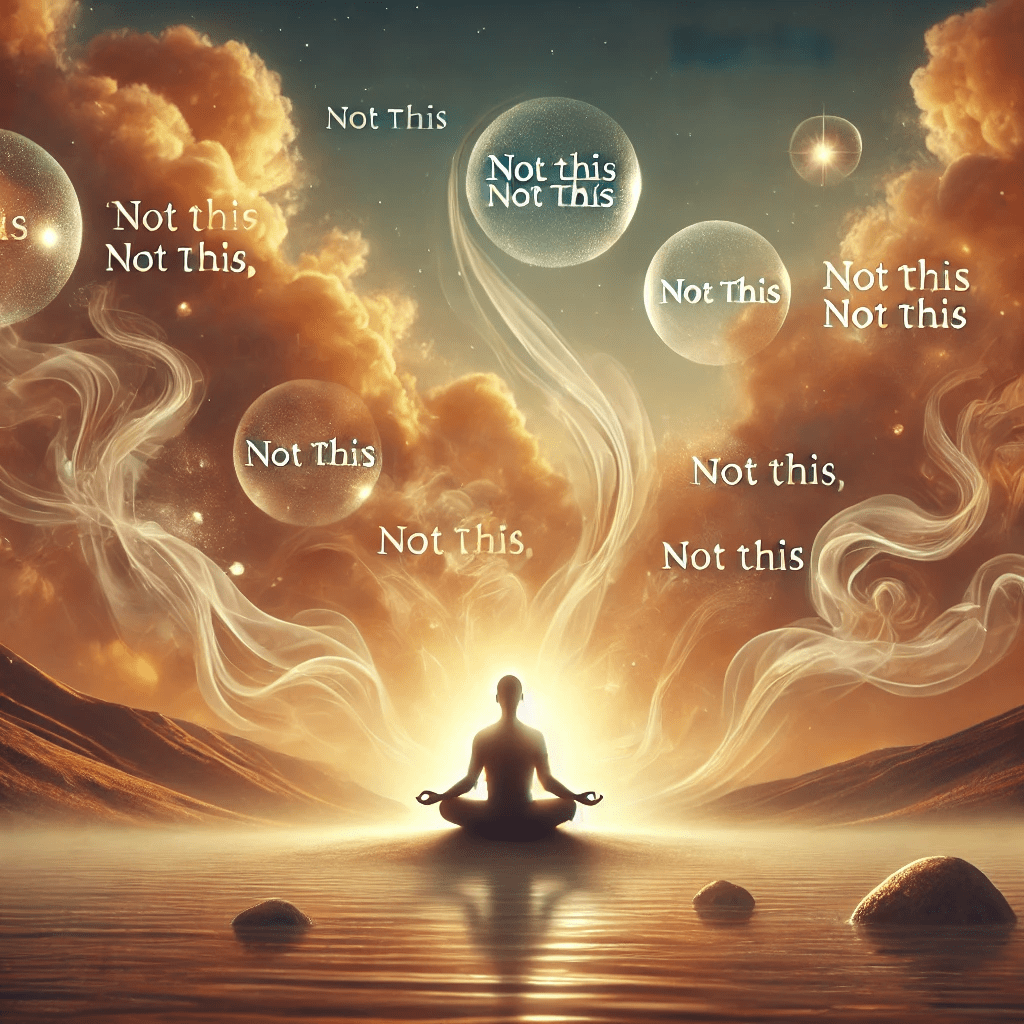
    Welcome to the Practices of Neti Neti series, an exploration into one of the most profound methods of self-inquiry within the Advaita Vedanta tradition. This series is dedicated to the practice of Neti Neti—a Sanskrit phrase meaning “not this, not this”—which serves as a guide for stripping away all that is not the true Self, leading to the recognition of our pristine, unchanging nature.

    What is Neti Neti?

    Neti Neti is a process of negation that helps practitioners identify and discard false identifications with thoughts, emotions, and sensations. It is a method of peeling back the layers of the ego to reveal the stillness and silence of the pristine mind—the pure consciousness that is unaffected by the fluctuations of the mind. This practice is at the heart of Advaita Vedanta and is used to guide the seeker toward the realization of the Self, or Atman, which is ultimately one with Brahman, the universal consciousness.

    About This Series

    In this series, you will find a collection of questions and answers that delve deeply into the practice of Neti Neti. Each question is a reflection of the natural inquiries that arise during meditation and self-inquiry. The answers are written in a contemplative and encouraging style, as letters from a friend —offering wisdom, clarity, and support as you navigate your own journey of self-discovery.

    Why Questions and Answers?

    The format of questions followed by reflective answers is inspired by the teaching styles of great spiritual masters like Ramana Maharshi and Papaji. This approach allows for a dynamic exploration of the practice, addressing the doubts and insights that naturally emerge as one progresses on the path. By engaging with these questions, you’ll find that the answers are not merely intellectual responses, but invitations to deeper inquiry and realization.

    How to Use This Series

    This series is designed to be read sequentially, as the posts build upon each other, following the natural flow of practice and understanding. However, you are also welcome to explore the posts in any order, depending on where you are in your own practice.

    Each post presents a question that might arise during your meditation or reflection, followed by a letter that offers guidance on how to address it. These letters are not just answers—they are invitations to deepen your practice, to explore the subtleties of Neti Neti, and to connect with the stillness that lies beyond all mental events.

    Beginning the Journey

    As you embark on this journey through the Neti Neti practice, remember that this path is not about attaining something new, but about recognizing what has always been present. The goal is to gently guide the mind away from its distractions, allowing the pristine mind—your true nature—to shine through.

    Whether you are new to Neti Neti or looking to deepen your understanding, I invite you to explore these letters with an open heart and a quiet mind. May they serve as a steady guide on your path to self-realization.

    Engage and Explore Together

    I warmly encourage you to leave any questions or reflections in the comments section of each post. If a question resonates deeply or sparks a new line of inquiry, I may create additional blog posts to explore these topics further. Your engagement helps to create a community of shared learning, where we can all benefit from each other’s insights and experiences.

    Let us begin this journey together, one question and one insight at a time, as we uncover the truth of who we truly are.

    For those who wish to explore further the concept of pristine mind and its practices, I highly recommend Orgyen Chowang Rinpoche’s book, Pristine Mind: A Journey into Self-Awareness. Although this book does not specifically address the Neti Neti practice, it offers profound insights into the nature of pristine mind, a state of pure awareness that lies beyond the mental events and distractions that often cloud our perception. Rinpoche’s teachings provide a clear and accessible guide to realizing and resting in this natural state, which closely aligns with the ultimate goal of Neti Neti. You can explore the Kindle version of this book below, which may serve as a valuable companion on your journey of self-inquiry and spiritual awakening.

    🙏🕊️🙏

  • An Introduction to Advaita Vedanta and Self-Inquiry: A Journey to the True Self

    The purpose of this post is to offer a gentle introduction to the philosophy of Advaita Vedanta and the practice of self-inquiry. These teachings invite us to explore the true nature of the Self, to go beyond the surface identities we cling to, and to rest in the awareness that unites all of existence. For those who wish to dive deeper into these topics, I’ve included links to several related posts below, which offer further insights and practical guidance.

    The Journey into Advaita Vedanta and Self-Inquiry:

    In the quiet mystery of life, there are moments when the questions we ask begin to turn inward, drawing us closer to the core of our being. For those of us who sense the call of something deeper, something beyond the surface of everyday experience, Advaita Vedanta offers a path of profound inquiry and realization. It is a philosophy, an invitation to explore the oneness of all existence, and a reminder that our true nature lies beyond the identities we so often carry—beyond our thoughts, emotions, and physical forms.

    Advaita Vedanta, rooted in the ancient wisdom of India, whispers to us that the Self, or Atman, is not separate from the ultimate reality, often called Brahman. In Jewish mysticism, this ultimate reality is known as Ein Sof, the boundless, infinite source of all that is. In Buddhism, it is pointed to as Buddha Nature, the inherent purity and potential for awakening in every being. The Dzogchen tradition speaks of Pristine Mind, the natural state of awareness, while many Indigenous traditions refer to the Great Spirit or Grandfather as the essence that permeates all life. Though the names may differ, they all point to the same underlying truth: that we are not separate from the divine or the infinite source. This insight offers a profound shift in how we understand ourselves and the world.

    Advaita Vedanta and Self-Inquiry:

    The world, as we perceive it, is seen as a veil—a temporary illusion that hides the underlying unity of all that is. This illusion, known as Maya, clouds our awareness and leads us to believe that we are separate individuals, bound by the limitations of time, space, and our bodies. But the teachings of Advaita Vedanta remind us that the true Self, or Atman, is not bound by these limitations. Atman is one with Brahman, the unchanging, eternal reality that underlies all existence.

    The practice of self-inquiry is central to uncovering this truth. It involves turning inward and asking the fundamental question: “Who am I?” At first glance, this question may seem simple, but its implications are profound. When we ask this question sincerely, we begin to notice that the identities we typically associate with ourselves—our name, our body, our thoughts—are all temporary and subject to change. If we are not our body, not our thoughts, not our emotions, then who are we?

    This process of questioning leads us deeper and deeper into the nature of the Self. Rather than seeking an intellectual answer, self-inquiry encourages us to observe the experience of “I”—the feeling of being, of awareness itself. By turning our attention inward, we can trace the sense of “I” back to its source, discovering that our true essence is pure awareness, untouched by the fluctuations of the mind or the conditions of the world.

    Ramana Maharshi, one of the great sages of modern times, taught that the practice of self-inquiry is the most direct path to realizing this truth. He encouraged seekers to continually ask, “Who am I?” and to follow this inquiry until the ego, or the false sense of self, dissolves into the pure awareness of the Self. This awareness is not a distant goal to be achieved but is ever-present, simply waiting to be recognized beneath the layers of thought and identification.

    The Benefits of Engaging in Self-Inquiry:

    For those new to this practice, the benefits of self-inquiry may not be immediately obvious. It’s easy to get caught up in the mind’s need for answers and certainty. However, the more we engage with this inquiry, the more we begin to experience a profound shift in how we relate to ourselves and the world around us. The practice of self-inquiry gradually dissolves the boundaries between the self and the other, leading to a direct experience of oneness, or non-duality.

    This realization brings about a sense of inner peace and freedom that is not dependent on external circumstances. By understanding that we are not the fluctuating thoughts, emotions, or experiences of the body, we become less attached to the ups and downs of life. Self-inquiry allows us to rest in the awareness that remains unchanged and undisturbed, no matter what arises in the mind or in the world.

    Furthermore, as we deepen our practice, we begin to see that the same awareness that we discover within ourselves is present in all beings. This insight fosters compassion, kindness, and a sense of connection with others, as we realize that, at the deepest level, we are all expressions of the same underlying reality.

    🙏🕊️🙏

    Here are some related posts for diving deeper into this topic:

    Seeing Beyond Our Senses: Expanding Perception in the Practice of Self-Inquiry and Advaita Vedanta

    For those beginning their journey, you might find it helpful to explore how our sensory perceptions are limited, as described in the post “Seeing Beyond Our Senses: Expanding Perception in the Practice of Self-Inquiry and Advaita Vedanta”. Explore the limits of human perception and discover how self-inquiry and Advaita Vedanta can help you see beyond the physical senses to realize the true nature of the self. This blog post delves into the teachings of Pravrajika Divyanandaprana, emphasizing the importance of expanding consciousness beyond the sensory world in the pursuit of self-realization and non-dual awareness.

    An Introduction to Ramana Maharshi’s Forty Verses on Reality

    In the teachings of Ramana Maharshi, self-inquiry is seen as the most direct path to uncovering our true Self. His work, “An Introduction to Ramana Maharshi’s Forty Verses on Reality” outlines how we can dissolve the ego through the persistent practice of asking “Who am I?” and tracing the source of the ‘I’ thought. Discover the essence of self-inquiry (Atma Vichara) and non-duality as elucidated by one of the greatest spiritual masters of the 20th century. This introduction provides an overview of the key themes, including the illusion of the ego, the nature of the true Self, and the path to self-realization. Whether you’re a seeker of Advaita Vedanta or interested in spiritual awakening, this guide offers valuable insights into the timeless wisdom of Ramana Maharshi.

    Penetrating the Five Sheaths: A Path to Self-Inquiry and Realization

    For a more practical understanding of self-inquiry, you may want to read “Penetrating the Five Sheaths: A Path to Self-Inquiry and Realization” which explains the layers of identity that must be transcended to reach the core of the Self. This post guides you through the koshas—the sheaths that veil our true essence. Explore the transformative practice of self-inquiry in Advaita Vedanta through the penetrating process of the five sheaths (koshas). Discover how questioning “Who am I?” or “What am I?” can help transcend physical, mental, and emotional identities to uncover the true Self, or Atman. Learn practical applications, integration with meditation, and the profound journey towards self-realization and pure awareness. Join our community in understanding the deeper layers of existence and achieving spiritual growth.

    Introduction to Raja Yoga: The Path of Meditation and Mental Discipline

    Similarly, in “Introduction to Raja Yoga: The Path of Meditation and Mental Discipline” we explore how mental discipline can complement self-inquiry by calming the mind and preparing it for deeper introspection. Meditation helps us quiet the mind so we can observe the fluctuations and see the truth beyond. Explore Raja Yoga, the “Royal Path” of meditation and mental discipline, in this introductory post. Learn how the eightfold path (Ashtanga) of Raja Yoga, as outlined in the Yoga Sutras of Patanjali, guides practitioners toward self-realization and spiritual enlightenment. Discover the key principles of mental clarity, emotional stability, and inner peace, and how Raja Yoga integrates aspects of other yoga paths to lead to ultimate spiritual awakening. This post offers insights rooted in the teachings of Advaita Vedanta and spiritual leaders like Ramakrishna, Swami Sivananda, and Swami Vivekananda, making it ideal for those seeking a comprehensive understanding of meditation and the deeper aspects of yoga.

    Self-Inquiry and Meditation: A Pathway to Inner Awareness

    In “Self-Inquiry and Meditation: A Pathway to Inner Awareness” you’ll find insights on how combining meditation with self-inquiry sharpens our awareness and leads to the realization of our true Self. Discover the transformative power of self-inquiry and meditation in this comprehensive guide based on Pravrajika Divyanandaprana’s teachings. Learn how the ancient practice of asking “Who am I?” or “What am I?” can dissolve the ego, increase awareness, and lead to profound inner peace. This blog post delves into the integration of self-inquiry with meditation, offering practical steps for spiritual awakening and personal growth. Ideal for those exploring Advaita Vedanta, mindfulness, and non-dual awareness, this guide provides a pathway to uncover your true self.

    Deepening the Practice of Self-Inquiry

    If you are ready to deepen your practice even further, you may enjoy “Deepening the Practice of Self-Inquiry” which explores how the question “Who am I?” can be applied to everything we experience. It encourages us to witness all thoughts and sensations from a place of stillness and curiosity. Explore the profound practice of Self-Inquiry (Atma Vichara) to deepen your understanding of non-duality and the nature of the ‘I-thought.’ This comprehensive guide provides key insights, practical steps, and reflection points to help you recognize all experiences as expressions of Brahman or pristine mind. Learn how to cultivate a unified awareness, dissolve the separation between the observer and the observed, and rest in the underlying awareness that remains constant amidst mental fluctuations. Whether you’re new to self-inquiry or seeking to deepen your practice, this post offers valuable guidance for your journey towards self-realization and inner peace.

    Witnessing the Journey: Strengthening the Seer in Life’s Transitions

    In life’s many transitions, it can be helpful to recognize the steady witness within us. In “Witnessing the Journey: Strengthening the Seer in Life’s Transitions” we reflect on how this witnessing presence remains unchanged even as external circumstances shift. In this reflective blog post, explore the deepening of witness consciousness, non-duality, and spiritual growth through life’s transitions. Drawing on insights from Buddhist teachings, Advaita Vedanta, and Jewish mysticism, we discuss how to strengthen the seer within by balancing trust, detachment, and awareness. Whether you’re navigating challenges like moving, illness, or emotional fluctuations, this post offers practical guidance for cultivating inner peace, mindfulness, and the presence of awareness. Learn how the journey from the mind to the heart opens the door to the divine and leaves behind wisdom for others on the path. A profound exploration of karma yoga, meditative mind, and the union of Atman and Brahman.

    Caravan of Love: The Universal Path of Righteousness Across All Traditions

    For an exploration of the universal values that connect spiritual traditions across cultures, “Caravan of Love: The Universal Path of Righteousness Across All Traditions” delves into the shared principles of righteousness and compassion, uniting people from all walks of life. This post explores the universal values shared across major world religions, highlighting how concepts like Sadhu Dharma, Tzaddikim, and being a Mensch align with the teachings of Jesus and the principles of Islam and Buddhism. It invites readers to reflect on the shared human quest for a life of righteousness, compassion, and inner peace, offering a path to greater interfaith harmony.

    Embracing the Eternal Now: Cultivating Spiritual Presence in Daily Life

    The post “Embracing the Eternal Now: Cultivating Spiritual Presence in Daily Life” offers insights into how we can cultivate mindfulness and equanimity, bringing the practice of presence into every moment of life. Discover the transformative power of living in the present moment with Embracing the Eternal Now: Cultivating Spiritual Presence in Daily Life. This blog post explores how mindfulness, equanimity, and spiritual connection can bring profound peace and clarity to your everyday life. Through practices rooted in Christian and Jewish traditions, learn how to listen to the ‘still small voice’ within, connect with the Holy Spirit, and respond to life’s challenges with balance and calm. Dive deep into the wisdom of ‘Hineni’ and uncover the sacred space where true spiritual awakening begins.

    🙏🕊️🙏

  • Patanjali No. 2: The First Steps of Yoga: Stillness and Strength in Practice

    “Now, the discipline of yoga begins.”
    —Patanjali, Yoga Sutra 1.1

    With this simple declaration, Patanjali invites us into the present moment. “Atha Yoganushasanam” is a call to awaken to the path of yoga, the path of inner discipline and self-realization. It is a call to begin, no matter where we are in our lives. Yoga, in its deepest sense, is the discipline of mind, body, and spirit—and it begins now.

    For many of us, beginning the practice of yoga means stepping into an unfamiliar space. It is more than just physical postures; it is the cultivation of a stillness that transcends the waves of thought, emotion, and distraction. As Patanjali tells us in the second sutra:

    “Yoga is the cessation of the fluctuations of the mind.”
    —Patanjali, Yoga Sutra 1.2

    These fluctuations, or vrittis, are the constant movement of our thoughts and emotions. They pull us away from the present moment and cloud our perception of who we truly are. Yoga, then, is the practice of calming these fluctuations, of finding a stillness that allows us to return to the essence of our being.

    But this stillness does not come easily. It requires strength—not the strength of the body, but the strength of the spirit. To sit in presence, to resist the pull of distractions, is an act of great resilience. The calmness we seek in yoga is not a passive state of relaxation but a superior strength, born from inner mastery.

    The Discipline of Yoga

    At the very beginning, Patanjali emphasizes that yoga is not just a practice but a discipline. This distinction is essential. A practice can be casual or done intermittently, but discipline requires consistent effort, commitment, and focus. The word discipline itself conveys the idea of training, of shaping or controlling something to achieve a higher goal. In the context of yoga, this means training the mind to remain present and unaffected by distractions or fluctuations.

    Discipline in yoga is about developing the ability to observe the mind and body without becoming identified with them. It’s not an easy task—our minds are naturally restless, constantly moving from one thought to the next. This is where discipline comes in. The discipline of yoga requires us to cultivate patience, perseverance, and a dedication to returning to stillness, even when the mind resists.

    Patanjali’s use of the word anushasanam in Sutra 1.1 can be translated as “discipline” or “instruction,” highlighting that yoga is a structured and methodical path. To realize the ultimate goal of yoga—union with the true self—requires a discipline that integrates not only the physical body through postures (asanas) but, more importantly, the mind through meditation, mindfulness, and awareness.

    Why Discipline Matters in Yoga

    Discipline in yoga is the key to taming the fluctuations of the mind. It takes effort and intention to stop identifying with every passing thought or emotion. Through disciplined practice, we create a space between the mind’s activity and the true self, the Seer. This space allows us to witness the mind without being consumed by it. The goal of yoga, as Patanjali explains in Sutra 1.2, is to still the fluctuations of the mind so that we can experience the true self—the state of yoga, or union.Without discipline, the mind will continue to sway between desires, distractions, and doubts. It is through dedicated, disciplined practice that we train the mind to remain calm and present, allowing the deeper realization of yoga to unfold. Discipline doesn’t mean harshness or rigidity; rather, it means consistency and commitment. It is a steady return to the present moment, a steady return to the awareness of the Seer.

    In my own practice, I’ve come to realize that cultivating this calm presence is much like strengthening a muscle. Just as we go to the gym to build physical strength, we sit in practice to build the strength of awareness. Each time we resist the pull of thoughts and emotions, each time we gently return to the present moment, we are training ourselves in the discipline of yoga.

    It is important to approach this process with self-compassion. Too often, we judge ourselves for the mind’s restlessness. But just as we wouldn’t criticize a muscle for being weak before it’s been trained, we shouldn’t criticize the mind for its natural tendencies. Instead, we honor the effort it takes to stay still, to remain present.

    As we begin this journey through the Yoga Sutras of Patanjali, we are reminded that yoga is not about perfection, but about practice. The fluctuations of the mind will always be there—it is our relationship to them that changes. Through consistent practice, we build the strength to calm the mind and experience the peace that lies beneath the surface.

    This is the beginning of the path, the first step in our exploration of Patanjali’s teachings. As we move forward, we will reflect on how these sutras can shape our lives and help us cultivate a deeper sense of awareness, peace, and purpose.

    Coming Up Next:
    In our next post, we will explore Sutras 1.3 and 1.4, which build upon this foundation of stillness. These sutras reveal what happens when the mind becomes still and how we experience our true nature. We will also look at what occurs when the mind remains caught in its fluctuations, giving rise to misperception. Join me as we continue this journey, moving deeper into the essence of yoga and self-realization.

    🙏🕊️🙏

  • Transforming the Suffering of ME/CFS into a Path of Healing

    For those of us living with post-viral myalgic encephalomyelitis (ME/CFS), the experience of life often feels like moving through a landscape filled with unseen obstacles. There is the fatigue—so heavy, so relentless—that it can feel like a weight we will never shake. There are the moments when even the simplest tasks become insurmountable, and the pain becomes a constant companion, whispering in the background of every day.

    When I first encountered the teaching “Transforming Suffering and Happiness into Enlightenment” by Dodrupchen Jigme Tenpe Nyima, it felt like someone had gently opened a door I hadn’t known existed. At the time, I was entrenched in my own struggle—fighting the fatigue, resisting the pain, angry at the injustice of it all. I didn’t see it then, but my resistance, my frustration, and my desperate need for things to be different were only making me sicker. Each day felt like another battle against my body, and it was exhausting in every sense of the word.

    The teaching introduced me to an entirely different way of relating to my experience. It was an invitation, not to fight against my suffering, but to sit with it, to gently turn toward it with a kind of curiosity. At first, the idea seemed absurd—how could I welcome something that was robbing me of so much? But as I read further, I began to understand that the more I resisted, the more I labeled my suffering as the enemy, the stronger it became. Everything around me had started to feel like an enemy—my body, the illness, even the world itself.

    The first time I truly absorbed the idea that suffering, like anything else, grows stronger with the attention we give it, it was a revelation. I started to realize that I had been feeding my suffering through my resistance. In a way, I was making myself worse by constantly pushing against the reality of what I was experiencing. This was the first eye-opener: that my own mind was contributing to the intensity of my suffering.

    I remember vividly when I decided to start putting this teaching into practice. I had signed up for a meditation class, feeling both hopeful and uncertain, and around that time, I also came across Tony Bernhardt’s book How to Be Sick. Little by little, I began to change how I approached the fatigue and pain. It didn’t happen overnight. In fact, it felt like planting seeds in the darkest soil—there were days when nothing seemed to grow, and I wondered if this new approach would ever bear fruit. But gradually, something did begin to shift.

    The more I learned to observe my suffering without immediately pushing it away, the more space I created around it. It wasn’t that the fatigue disappeared—far from it—but my relationship to it began to change. Instead of seeing every wave of exhaustion as something to fight, I started to meet it with a kind of quiet acceptance. This didn’t mean I liked it, but I stopped resisting it quite so fiercely. In time, the constant anger and frustration began to soften.

    As I practiced more, something else began to emerge—equanimity. I began to realize that the less I resisted both the suffering and the rare moments of joy, the steadier I felt inside. Over the years, my confidence in my ability to face difficulties has grown. There’s a quiet knowing now, a calmness that wasn’t there before, that when challenges arise, I can meet them without being completely swept away.

    Of course, this is still a work in progress, and I expect it will be for the rest of my life. Some days are harder than others, but the difference is that I no longer see the hard days as failures. They are simply part of the ebb and flow. And in learning to embrace both the suffering and the moments of peace, I’ve discovered a kind of strength that doesn’t come from fighting but from surrendering—surrendering to the reality of my experience without letting it define me.

    This teaching has shown me that suffering, far from being something to avoid, can become a profound teacher. When we allow ourselves to meet it with openness, we can begin to transform it. It doesn’t mean the pain or the fatigue will disappear, but our relationship to it changes. We become less fragile, more resilient. Over time, the suffering no longer feels like something that has complete power over us.

    For those of us living with ME/CFS, this teaching offers a way to shift the narrative. Instead of seeing our illness as something that has taken everything from us, we can begin to see it as part of our path. By practicing mindfulness, by gently turning toward our suffering instead of away from it, we begin to cultivate a heart that is steady, a heart that can hold both the fatigue and the fleeting moments of ease without being shaken by either.

    It’s a slow process, and it requires patience—patience with ourselves and with the process of healing. But there is a quiet beauty in this work. Each time we meet our suffering with compassion, we are planting a seed. And while the fruits may take time to blossom, they do eventually grow.

    For those of you who are interested in exploring this teaching more deeply, I encourage you to take your time with it. Let it sit with you, and consider how it might apply to your own experience. And if you’d like to read the full teaching by Dodrupchen Jigme Tenpe Nyima, you can find it freely available online here.

    This journey isn’t easy, but together we can learn to transform our suffering into something that doesn’t just weigh us down but also lifts us toward a deeper understanding of ourselves and the world around us.

    🙏🕊️🙏

    Biography of Dodrubchen Jigme Tenpai Nyima

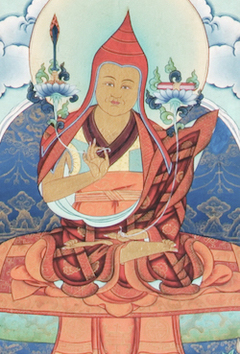
    Dodrubchen Jigme Tenpai Nyima, the Third Dodrubchen, was born in 1865 in the sacred Ma valley of Golok, Tibet, into a family deeply rooted in the spiritual lineage of his father, Dudjom Lingpa. From the very beginning, his life was marked by extraordinary recognition, with his teachers and mentors seeing in him the incarnation of profound wisdom. But his journey was not without struggle. As a young boy, he found study difficult, often frustrated to the point of tears. Yet, through perseverance and the support of his teachers, his understanding blossomed, revealing a deep capacity for spiritual insight.

    What makes Dodrubchen Jigme Tenpai Nyima so relatable is his humanity. Even as a master of Tibetan Buddhist teachings, he encountered challenges that shaped him into the teacher he became—a man of great compassion, who dedicated his life to training countless students in both Nyingma and Sarma traditions. His accomplishments were vast: he rebuilt his monastery, composed celebrated commentaries, and gave teachings tirelessly. And though he eventually retreated into seclusion due to his failing health, he continued to guide his closest disciples with unwavering dedication. His life, both ordinary and extraordinary, stands as a testament to the power of persistence, humility, and the profound depth of spiritual commitment.

    About Lotsawa House

    Lotsawa House is a rich and invaluable resource for those seeking authentic Tibetan Buddhist teachings. The website offers an extensive collection of translations from Tibetan texts, including teachings from many great masters such as Dodrubchen Jigme Tenpai Nyima. This is where the teaching “Transforming Suffering and Happiness into Enlightenment” can be found, along with countless other treasures, all freely available for anyone to access.

    Whether you are new to Tibetan Buddhism or have been practicing for years, Lotsawa House provides a space to explore the wisdom of these great teachings. The site is dedicated to making the profound texts of Tibetan Buddhism accessible to a global audience, offering translations in English and other languages, so that anyone, regardless of background, can benefit from these ancient spiritual insights. It’s a place where the wisdom of the Tibetan masters is preserved and shared, so that all who seek it may find the path to peace and understanding.

    You can explore the full collection of teachings and discover more about the great teachers who brought them to life by visiting Lotsawa House.

  • Patanjali No. 1: Introduction to the Yoga Sutras of Patanjali: A Journey Into the Heart of Yoga

    The Yoga Sutras of Patanjali are among the most revered and profound texts in the history of spiritual practice. Written over two thousand years ago, they offer a timeless guide to understanding the nature of the mind, the path of self-realization, and the true essence of yoga. Though often studied by practitioners of yoga, these sutras transcend any single tradition and speak to all who seek clarity, peace, and spiritual growth.

    Patanjali, the ancient sage credited with composing these teachings, distilled the essence of yoga into 196 short aphorisms, or sutras. These sutras are not just theoretical—each one provides practical wisdom, offering guidance on how to quiet the mind, transcend suffering, and realize our highest potential. Together, they form a comprehensive system for inner transformation, known as Raja Yoga or the “royal path” to self-mastery.

    Why, then, should we study the Yoga Sutras? In today’s world, we are often overwhelmed by the constant fluctuations of the mind—our thoughts, emotions, and external distractions. Patanjali’s teachings offer a way to navigate this inner turbulence, helping us cultivate stillness and awareness. The Yoga Sutras provide a roadmap to liberation, inviting us to look beyond the surface of our daily experience and discover the deeper truth of who we are.

    The sutras reveal that yoga is far more than physical postures or breathing techniques; it is a disciplined practice of calming the mind and awakening to our inherent state of peace. By studying and reflecting on these teachings, we can bring more clarity, wisdom, and purpose into our lives. As Patanjali himself declares at the very beginning of his work:

    “Now, the discipline of yoga begins.”

    In this series, we will explore the Yoga Sutras using the translation offered by Swami Vivekananda, a renowned spiritual teacher and philosopher who introduced the wisdom of yoga to the West in the late 19th century. Vivekananda’s translation is both accessible and profound, capturing the essence of Patanjali’s teachings while making them relevant to modern seekers. His interpretation illuminates the deeper meanings behind the sutras, providing a bridge between ancient wisdom and contemporary understanding.

    As we journey through these sutras together, we will take time to reflect on each one, understanding how it applies to our own lives and practices. The path of yoga is not just about reading words on a page—it is about living them, integrating the teachings into the way we think, act, and experience the world.

    Let this be the beginning of our journey into the heart of yoga. As we explore the Yoga Sutras of Patanjali, we will open ourselves to the possibility of inner transformation, guided by the light of these ancient teachings.

    Coming Up Next:
    In our next post, we will dive into the first two sutras: Atha Yoganushasanam and Yogash Chitta Vritti Nirodhah. Together, we will reflect on what it means to begin the practice of yoga and how the cessation of the fluctuations of the mind becomes the essence of our journey toward inner stillness. We’ll explore how these teachings apply to our daily lives and the strength it takes to cultivate presence and calmness in the face of life’s challenges. Join us as we take the first step in our exploration of Patanjali’s wisdom.

    🙏🕊️🙏